High hopes and security fears for next-gen nuclear reactors

Fuel for advanced reactors is raising nuclear proliferation concerns.
The Verge, By Justine Calma, a senior science reporter covering energy and the environment with more than a decade of experience. She is also the host of Hell or High Water: When Disaster Hits Home, a podcast from Vox Media and Audible Originals, Jul 20, 2024
Next-generation nuclear reactors are heating up a debate over whether their fuel could be used to make bombs, jeopardizing efforts to prevent the proliferation of nuclear weapons.
Uranium in the fuel could theoretically be used to develop a nuclear weapon. Older reactors use such low concentrations that they don’t really pose a weapons proliferation threat. But advanced reactors would use higher concentrations, making them a potential target of terrorist groups or other countries wanting to take the fuel to develop their own nuclear weapons, some experts warn.
They argue that the US hasn’t prepared enough to hedge against that worst-case scenario and are calling on Congress and the Department of Energy to assess potential security risks with advanced reactor fuel.
Other experts and industry groups still think it’s unfeasible for such a worst-case scenario to materialize. But the issue is starting to come to a head as nuclear reactors become a more attractive energy source, garnering a rare show of bipartisan support in Congress.
……. Earlier this month, President Joe Biden signed bipartisan legislation into law meant to speed the development of next-generation nuclear reactors in the US by streamlining approval processes.
………….The US Nuclear Regulatory Commission (NRC) certified an advanced small modular reactor design for the first time last year. And we’re likely still years away from seeing commercial plants in action. But if the US ever wants to get there, it’ll also have to build up a supply chain for the fuel those advanced reactors would consume. The Inflation Reduction Act includes $700 million to develop that domestic fuel supply.
Today’s reactors generally run on fuel made with a uranium isotope called U-235. Naturally occurring uranium has quite low concentrations of U-235; it has to be “enriched” — usually up to a 5 percent concentration of U-235 for a traditional reactor. Smaller advanced reactors would run on more energy-dense fuel that’s enriched with between 5 to 20 percent U-235, called HALEU (short for high-assay low-enriched uranium).
That higher concentration is what has some experts worried. “If the weapons usability of HALEU is borne out, then even a single reactor would pose serious security concerns,” says a policy analysis penned by a group of nuclear proliferation experts and engineers published in the journal Science last month (including an author credited with being one of the architects of the first hydrogen bomb).
Fuel with a concentration of at least 20 percent is considered highly enriched uranium, which could potentially be used to develop nuclear weapons. With HALEU designs reaching 19.75 percent U-235, the authors argue, it’s time for the US to think hard about how safe the next generation of nuclear reactors would be from malicious intent.
“We need to make sure that we don’t get in front of ourselves here and make sure that all the security and safety provisions are in place first before we go off and start sending [HALEU] all around the country,” says R. Scott Kemp, associate professor of nuclear science and engineering and director of the MIT Laboratory for Nuclear Security and Policy.
That 20 percent threshold goes back to the 1970s, and bad actors ostensibly have more information and computational tools at their disposal to develop weapons, Kemp and his coauthors write in the paper. It might even be possible to craft a bomb with HALEU well under the 20 percent threshold, the paper contends……………………………………………………………………………………..
Aside from asking Congress for an updated security assessment of HALEU, the paper suggests setting a lower enrichment limit for uranium based on new research or ramping up security measures for HALEU to more closely match those for weapons-usable fuels.
…………………………“Unless there’s a really good reason to switch to fuels that pose greater risks of nuclear proliferation, then it’s irresponsible to pursue those,” says Edwin Lyman, director of nuclear power safety at the Union of Concerned Scientists and another author of the paper. Lyman has also raised concerns about the radioactive waste from nuclear reactors over the years. “There is no good reason.” https://www.theverge.com/24201610/next-generation-nuclear-energy-reactors-security-weapons-proliferation-risk
This week – nuclear news to 22 July
Some bits of good news. Support for parents and children from birth. Montenegro signs the Declaration on Children, Youth and Climate Action
TOP STORIES.
Nuclear industry faces acute cybersecurity threats – report.
International Court of Justice Tells Israel to End Occupation of Palestinian Territories, Pay Reparations.
- History of Ionizing Radiation and Human Health.
- ‘Low level’ ionizing radiation, and the history of debate about its effects.
- Time to confront to cover-up of the harm of low-level radiation.
- History of the medical profession’s role in illnesses and death caused by nuclear radiation. (Originals at https://ionizingradiationandyou.blogspot.com/)
From the archives. An unacceptable risk to children
Climate. 27 Ways Heat Can Kill You – Update 2024
Noel’s notes. The cover-up of the danger of nuclear radiation and health, but who is speaking for our grandchildren? Nuclear power -costs, wastes, etc, but what about the children? More American media madness.
********************************************
AUSTRALIA. Lots m of Australian nuclear news at https://antinuclear.net/2024/07/17/australian-nuclear-news-headlines-week-to-22-july/
………………………………………….
NUCLEAR ITEMS.
| ART and CULTURE. The chilling map that shows the devastation of a nuclear attack on Scotland. | ATROCITIES. Israeli soldiers tell story of savage cruelty in Gaza – one given blessing by the West. | CIVIL LIBERTIES. Never Forget Julian Assange. https://www.youtube.com/watch?v=5ZLbFkv7I4k |
| ECONOMICS. Premier of New Brunswick Higgs suggests New Brunswick’s Small Nuclear Reactors may not win race to commercialization. ALSO AT https://nuclear-news.net/2024/07/19/2-b1-premier-of-new-brunswick-higgs-suggests-n-b-s-smrs-may-not-win-race-to-commercialization/ France’s EDF faces fresh setback after losing Czech nuclear bid. | ENERGY. China is installing the wind and solar equivalent of five large nuclear power stations per week. Nuclear does not mean reliable power for Australia – by Peter Farley. What are the steps (and the COSTS) to building nuclear power stations – by Peter Farley |
| ENVIRONMENT. EDF’s plans to create new saltmarsh. | EVENT. Cold War Scotland – Exhibition National Museum of Scotland24 July. Rally – Washington – Stop the Gaza Genocide . |
| HEALTH. Radiation.New Book. The Scientists Who Alerted us to Radiation’s Dangers.Mounting evidence of cancer risk from low dose radiation in childhood, or in the uterus.Specific Radioactive Elements and Their Effects on Health – (Original at https://ionizingradiationandyou.blogspot.com/) | INDIGENOUS ISSUES. In New Mexico, a Walk Commemorates the Nuclear Disaster Few Outside the Navajo Nation Remember. | LEGAL. Overwhelming ICJ Ruling against Israeli Occupation Highlights Need for UN Action. ActionAid welcomes the historic judgment of the International Court of Justice. |
| MEDIA. With Media Enamored by US Presidential Race, Israeli Massacres in Gaza Get Even Deadlier. | OPPOSITION to NUCLEAR . Anti-nuclear weapons activists to camp outside RAF base for ten days. Nuclear Free Local Authorities challenge UK government on New Cleo’s application for “justification” of its small nuclear “fast” reactor. Nuclear convoys travelling to Coulport should be peacefully stopped |
| PERSONAL STORIES. Testimonies from the Mawasi massacre: 90 people buried in the sand. | PLUTONIUM . North Korea’s Yongbyon Nuclear Complex: New evidence of increased activity |
| POLITICS.J.D. Vance unlikely to advance peace advancing to Vice Presidency. UK: Ed Miliband unveils plans for mini-nuclear reactors ALSO AT https://nuclear-news.net/2024/07/22/1-b1-uk-ed-miliband-unveils-plans-for-mini-nuclear-reactors/Campaigners against Sizewell C hopeful new MPs will take their concerns to parliament. Absent but not missed: No mention of nuclear in King’s Speech. 80 CANADIAN ORGANIZATIONS CALL ON FEDERAL GOVERNMENT TO RESCIND APPOINTMENT OF NUCLEAR REGULATORY AGENCY PRESIDENT. | POLITICS INTERNATIONAL and DIPLOMACY.AUKUS – Australia-United Kingdom-United States nuclear pact endangers us all. Behind the plans for Australia to become a nuclear dumping ground and leverage synergies with the US military alliance and civilian nuclear. Saudi Arabia wants to fully recognize Israel in exchange for arms, nuclear facility — Biden.Nuclear-weapon states are disregarding political commitments accepted under the nuclear Non-Proliferation Treaty (NPT), |
| SAFETY. Major failure at southern Russia’s largest nuclear plant, 1 power unit shut down.‘Near miss’ incident reported at nuclear waste site near Carlsbad. High hopes and security fears for next-gen nuclear reactors | SPACE. EXPLORATION, WEAPONS. Space-Based Warfare: America’s Dominance Challenged.Please, No Weapons and Wars in Space. |
| SPINBUSTER. Shiny New MP’s Fizzingly Push For More Nuclear Waste – Hotter the better! And a Complaint to Advertising Standards – Standards? What Standards!. | TECHNOLOGY. Massive IT outage spotlights major vulnerabilities in the global information ecosystem. Small Modular Nuclear Reactors (SMRs)– Dirty Dangerous Distractions from Real Climate Action. | WASTES. Pacific leaders, Japan, agree on Fukushima nuclear wastewater discharge (not everyone is happy). Fukushima plant ends 7th round of treated water release into sea. |
| WAR and CONFLICT. Nuclear War Is Imminent. Exposing the Myth of the ‘Good War’US Ally South Korea Threatens Nuclear-Armed North Korea With Regime Destruction. | WEAPONS and WEAPONS SALES.Democrats to Keep Unconditional Military Aid to Israel in Party Platform. NATO’s Obscure Relations With Israel and its weapons industry. NATO/US Complicity in Israel’s Relentless Genocide of Gaza. Israel using water as weapon of war as Gaza supply plummets by 94%, creating deadly health catastrophe: Oxfam. North Korean nuclear weapons, 2024. China Stops Arms Control Talks With the US Over Arms Sales to Taiwan. Russia Says It May Deploy Nuclear Missiles in Response to New US Missile Deployment to Germany. |
Nuclear industry faces acute cybersecurity threats – report.

many nuclear plants rely on software that is “built on insecure foundations and requiring frequent patches or updates” or “has reached the end of its supported lifespan and can no longer be updated”.
with operators opting to run the facility by a central computer system without human presence. Increased reliance on cloud systems to run infrastructure is bound to enhance the cybersecurity risks.
Think tank Chatham House claims that the global nuclear industry has to take measures to ease cybersecurity concerns.
Power Technology, Alfie Shaw, July 19, 2024
As nuclear power establishes itself as an ever more important source of energy for nations across the world, cybersecurity risks are also becoming increasingly menacing, according to a new report by UK think tank Chatham House.
The Sellafield NPP debacle was a conspicuous case of nuclear cybersecurity going awry.
The site on the English coast has been hacked multiple times by actors with close ties to Russia and China since 2015 but this was “consistently covered up by senior staff”, the Guardian reported last December.
According to the Guardian, information and data on Sellafield’s most sensitive activities could have been fed back to foreign parties through “sleeper malware” that has lurked in the background of its computer systems for as long as ten years.
While Sellafield is used primarily as a nuclear waste and decommissioning site, rather than for active nuclear production, the site has the world’s largest stores of plutonium, a highly reactive metal used to make nuclear weapons. It also contains a set of emergency planning documents that detail the steps the UK Government would take should the country come under foreign attack, meaning foreign hackers could have accessed the “highest echelons of confidential material at the site”.
The case therefore illustrated how not only energy security, but national security can be comprised by nuclear cybersecurity threats.
According to Chatham House’s ‘Cybersecurity of the civil nuclear sector’ report, there are several reasons the nuclear power industry is particularly vulnerable to cybersecurity breaches.
An unprepared and oblivious industry
Firstly, a lot of the existing nuclear power infrastructure is dated and does not possess up-to-date cybersecurity technology.
Chatham House notes that, currently, many nuclear plants rely on software that is “built on insecure foundations and requiring frequent patches or updates” or “has reached the end of its supported lifespan and can no longer be updated”. The think tank pointed out that civil nuclear industries are thus playing catch up with other critical national infrastructure (CNI) industries when it comes to cybersecurity.
The fact that nuclear infrastructure is considered to be CNI also makes it an attractive target for hackers. As demonstrated by the Sellafield incident, nuclear sites can have implications beyond energy, including national security. Foreign actors could target another state’s nuclear industry to not only jeopardise the state’s energy security but also gain a military advantage, says Chatham House.
Another vulnerability highlighted by the report is the industry’s reliance on ‘security by obscurity’. Hubristic systems managers have often neglected adequate security measures due to the assumption that ICT (information and communication technology) systems in older NPPs are too small-scale to have well-known vulnerabilities that can be exploited.
The SMR threat
The Chatham House report also details how the uptake of small modular reactors (SMRs) could lead to increased cybersecurity risks.
Due to their diminutive size, SMRs can be deployed in disparate areas that lack the physical conditions necessary for the deployment of large-scale energy infrastructure. The inherent versatility of the advanced technology has made it popular among governments across the world as they seek to widen access to more forms of renewable energy.
However, SMR-centred nuclear infrastructure would look different to that of traditional reactors, requiring different security measures.
For one, there will be a larger number of SMRs in more locations due to their easily deployable nature. It might not be practical to have staff at each site, with operators instead opting to run the facility by a central computer system without human presence. Increased reliance on cloud systems to run infrastructure is bound to enhance the cybersecurity risks, Chatham House says.
Furthermore, SMRs present additional supply chain pinch-points for cybersecurity, as the materials for SMRs tend to be prefabricated by a larger number of varying suppliers than in traditional nuclear plants, according to Chatham House.
Combination of cyber and physical threats
Chatham House notes that while NPPs are not designed to operate in war zones, they do have several layers of physical safety built in to protect reactors from kinetic threats. However, physical threats combined with cybersecurity breaches could create far more menacing risks for plant operators that could overwhelm operating staff and enable unauthorised access to nuclear materials.
For instance, in Serbia during the Balkan wars of the 1990s, this combination of threats was realised at the Vinca research reactor, where research staff feared that highly enriched uranium fuel could be stolen. The International Atomic Energy Agency (IAEA) was forced to carry out several inspections between 1995 and 1999. The plant was saved, but for some time the threat nearly escalated into catastrophe.
More recently, the Zaporizhzhia NPP has raised similar concerns. Since November 2022, Russia has controlled the NPP, which sits on the front line of Russian-occupied Ukraine. “Reckless attacks” on the power plant have “significantly increased the risk of a major nuclear accident”, Rafael Mariano Grossi, director-general of the IAEA, told the UN Security Council in April, although Russia and Ukraine have accused each other of carrying out the attacks.
Where does the industry go from here?
……………………………………….With states rushing to grapple with rapaciously evolving cyber technologies, nuclear regulators may have their work cut out safeguarding the digital side of their industry. As the world becomes increasingly digitalised, and more reliant on decentralised, cloud-based systems, it is fair to expect cybersecurity to become a pressing issue for regulators in the near future. https://www.power-technology.com/news/nuclear-industry-faces-menacing-cyber-security-threats-according-to-chatham-house/?cf-view&cf-closed
J.D. Vance unlikely to advance peace advancing to Vice Presidency
Walt Zlotow, West Suburban Peace Coalition, Glen Ellyn IL, 21 July 24
Newbie Senator J.D. Vance will become America’s 50th Vice President next January 20 if current polling holds up.
Most criticism of Vance focuses on the 39 year old’s scant experience of just 18 months in government. His memoir ‘Hillbilly Elegy’ fame, billionaire Sugar Daddy support, and idolatry of Trump, vaulted Vance into the Senate and possibly now the Vice Presidency. Succeeding 78 year old President Trump on Inauguration Day before his second term expires is certainly possible.
But little to nothing has been raised about Vance’ mostly reckless views on foreign affairs that imperil prospects for peace during our current, perilous road to war in the Middle and Far East.
Even Vance’s opposition to our senseless proxy war against Russia destroying Ukraine is in furtherance of a bellicose foreign policy. He wants to divert the endless billions squandered on Ukraine’s lost cause to massively increase armaments to Taiwan and other Far East allies to contain China. Just like weaponizing of Ukraine in their Donbas civil war precipitated the Russian invasion, China is not likely to sit around twiddling their thumbs while America encircles them with weapons.
Vance has joined the unhinged GOP chorus threatening to take out Iran for exercising influence in the Middle East. He said we need to “Punch back hard” to put Iran in its place…subservient to US hegemony in the region. That is nuts.
Back home Vance supports GOP policy of sending in the Marines to wipe out the Mexican drug cartels. “I want to empower the president of the United States, whether that’s a Democrat or Republican, to use the power of the U.S. military to go after these drug cartels.” To paraphrase Forrest Gump, ‘Stupid is …when Vance talks on foreign policy’.
But most disturbing of Vance’s foreign policy views is his full support for Israel’s genocidal ethnic cleansing of Palestinians in Gaza. President Biden’s 24,000 tons of bombs are not enough for Vance’s lust to wipe out the Palestinians there. Like his mentor Trump, Vance wants Israel to “finish the job” while criticizing Biden for “micromanaging” the ghoulish slaughter there.
It is not improbable that a Trump victory will eventually find Vance in the Oval Office before the ’28 Election. Lets’ hope that if so, the memoir of a Vance presidency is not ‘Armageddon Elegy’.
Massive IT outage spotlights major vulnerabilities in the global information ecosystem

the world may finally be realizing that modern information-based society is based on a very fragile foundation.
Richard Forno, Principal Lecturer in Computer Science and Electrical Engineering, University of Maryland, Baltimore County: July 20, 2024 https://theconversation.com/massive-it-outage-spotlights-major-vulnerabilities-in-the-global-information-ecosystem-235155
The global information technology outage on July 19, 2024, that paralyzed organizations ranging from airlines to hospitals and even the delivery of uniforms for the Olympic Games represents a growing concern for cybersecurity professionals, businesses and governments.
The outage is emblematic of the way organizational networks, cloud computing services and the internet are interdependent, and the vulnerabilities this creates. In this case, a faulty automatic update to the widely used Falcon cybersecurity software from CrowdStrike caused PCs running Microsoft’s Windows operating system to crash. Unfortunately, many servers and PCs need to be fixed manually, and many of the affected organizations have thousands of them spread around the world.
For Microsoft, the problem was made worse because the company released an update to its Azure cloud computing platform at roughly the same time as the CrowdStrike update. Microsoft, CrowdStrike and other companies like Amazon have issued technical work-arounds for customers willing to take matters into their own hands. But for the vast majority of global users, especially companies, this isn’t going to be a quick fix.
Modern technology incidents, whether cyberattacks or technical problems, continue to paralyze the world in new and interesting ways. Massive incidents like the CrowdStrike update fault not only create chaos in the business world but disrupt global society itself. The economic losses resulting from such incidents – lost productivity, recovery, disruption to business and individual activities – are likely to be extremely high.
As a former cybersecurity professional and current security researcher, I believe that the world may finally be realizing that modern information-based society is based on a very fragile foundation.
The bigger picture
Interestingly, on June 11, 2024, a post on CrowdStrike’s own blog seemed to predict this very situation – the global computing ecosystem compromised by one vendor’s faulty technology – though they probably didn’t expect that their product would be the cause.
Software supply chains have long been a serious cybersecurity concern and potential single point of failure. Companies like CrowdStrike, Microsoft, Apple and others have direct, trusted access into organizations’ and individuals’ computers. As a result, people have to trust that the companies are not only secure themselves, but that the products and updates they push out are well-tested and robust before they’re applied to customers’ systems. The SolarWinds incident of 2019, which involved hacking the software supply chain, may well be considered a preview of today’s CrowdStrike incident.
CrowdStrike CEO George Kurtz said “this is not a security incident or cyberattack” and that “the issue has been identified, isolated and a fix has been deployed.” While perhaps true from CrowdStrike’s perspective – they were not hacked – it doesn’t mean the effects of this incident won’t create security problems for customers. It’s quite possible that in the short term, organizations may disable some of their internet security devices to try and get ahead of the problem, but in doing so they may have opened themselves up to criminals penetrating their networks.
It’s also likely that people will be targeted by various scams preying on user panic or ignorance regarding the issue. Overwhelmed users might either take offers of faux assistance that lead to identity theft, or throw away money on bogus solutions to this problem.
What to do
Organizations and users will need to wait until a fix is available or try to recover on their own if they have the technical ability. After that, I believe there are several things to do and consider as the world recovers from this incident.
Companies will need to ensure that the products and services they use are trustworthy. This means doing due diligence on the vendors of such products for security and resilience. Large organizations typically test any product upgrades and updates before allowing them to be released to their internal users, but for some routine products like security tools, that may not happen.
Governments and companies alike will need to emphasize resilience in designing networks and systems. This means taking steps to avoid creating single points of failure in infrastructure, software and workflows that an adversary could target or a disaster could make worse. It also means knowing whether any of the products organizations depend on are themselves dependent on certain other products or infrastructures to function.
Organizations will need to renew their commitment to best practices in cybersecurity and general IT management. For example, having a robust backup system in place can make recovery from such incidents easier and minimize data loss. Ensuring appropriate policies, procedures, staffing and technical resources is essential.
Problems in the software supply chain like this make it difficult to follow the standard IT recommendation to always keep your systems patched and current. Unfortunately, the costs of not keeping systems regularly updated now have to be weighed against the risks of a situation like this happening again.
Small Modular Nuclear Reactors (SMRs)- Dirty Dangerous Distractions from Real Climate Action.

Dale Dewar, 21 July 24
The current hype about Small Modular Nuclear Reactors (SMRs) is that they are safe, carbon neutral, emissions’ free, have no effect upon the environment or human health, have little or no waste and are essential to address the threat of climate change. Nuclear industry executives claim that these ingenious things can be built and running within the next decade.
No nuclear power plant has ever been built on time or within budget. What of the other claims?
Safety. In order to make this claim, the nuclear industry overlooks the effects of radioactivity on both the environment and human health. Catastrophic accidents are ignored. Who speaks for the children? Over 60 research papers identify an increase in leukemia in children in the vicinity of nuclear power plants.
Carbon neutral. Do claims of carbon neutrality include mining, refining, trucking, enriching, fuel rod manufacture, site construction, decommissioning, and waste management? To be fair, these should be included in other sources of energy as well, but enrichment itself is an unusually energy-intensive process.
Emissions’ free. Nuclear power plants release radioactive gasses as a regular part of their operations and sometimes by accident. Tritium is a particularly noxious emission because it can be incorporated into every cellular function and structure in biological organisms. It is likely the culprit in the increased incidence of leukemia in children. Other gasses include krypton and radon. Minute amounts of cesium-137, strontium-90, iodine-131 and carbon-14 are also found in the released gas.
No effect upon the environment. Reactors that use water as their coolant return the water to the rivers and lakes at a higher temperature. A cascade of effects involves fish populations, algae growth and changed mineral content. The proposed SMR for Saskatchewan is a Boiling Water Reactor which will require coolant.
No effect upon human health. A prominent scientific panel in the United States which periodically reviews ionizing radiation and health stated in 2005 that “the smallest dose has the potential to cause a small increase in risk” of cancer in humans.
Have little or no waste. While the volume of waste may be small, it is not easily contained. Recycling, reprocessing and pyroprocessing are not simple processes, nor are they “clean”. Locations where they have been done remain extremely contaminated. (eg. Mayak in Russia and Hanford in the USA). Furthermore, the treatment removes only the plutonium which is an extremely small proportion of the waste.
Essential to address climate catastrophe. Nothing could be further from the truth. Countries that have avoided the nuclear energy money pit have been able to address their carbon footprint with new and innovated ways to provide their energy needs. The belief that it would provide “baseload” energy is a myth at best because it cannot be powered up and down in the nimble fashion required.
Up and running within the decade. SMRs are a new technology (or an old, discarded technology being brushed off for new sales) and, based upon the record to date, even less likely to fulfill this promise.
Why are the Canadian and United States governments pouring federal tax dollars into the nuclear industry? We are already committed to over $50 million and Premier Moe says the commitment will go to $5 billion! What is the attraction?
The “Nuclear Age” was ushered into being for production of atomic bombs. Nuclear power was an afterthought. With the USA and the UK “modernizing” their nuclear arsenal, we should not overlook the possibility that plutonium extraction is still the motivating factor. It is our tax money that’s funding this project. Is this what we want?
‘Near miss’ incident reported at nuclear waste site near Carlsbad
Federal watchdog reports ongoing safety concerns at WIPP
JULY 19, 2024, Adrian Hedden, Carlsbad Current-Argus
Federal nuclear oversight staff reported several safety problems at the Waste Isolation Pilot Plant in a monthly report, despite a “safety stand down” in April that was intended to pause work while WIPP officials retooled various protocols.
The Defense Nuclear Facilities Safety Board (DNSFB) reported “ongoing safety culture challenges” in its June 7 report on WIPP activities as the facility near Carlsbad disposes of transuranic (TRU) nuclear waste from federal facilities around the country.
The monthly report covered observations and incidents from May, noting a “near miss” incident which saw a waste handler improperly using a forklift instead of a crane to reposition weights in the parking lot waste storage area.
The May 20 event saw the waste handler using two forklifts to reposition a “six-ton” calibration weight, read the report, without proper documentation or analysis or the awareness of a shift supervisor.
The forklift sling broke while rotating the weight, read the report, causing it to fall on its side and send a shackle flying “a significant distance” away from the lift and past a spotter.
In another incident, all routine work was paused May 23 to 28 after a bolter contacted an electrical box near WIPP’s exhaust shaft, read the report, causing a bulkhead to lose function, rendering sump pumps inoperable and creating potential exposure to “hazardous energy.”………………………………………………….. more https://www.currentargus.com/2024/07/near-miss-incident-reported-at-nuclear-waste-site-near-carlsbad/
In New Mexico, a Walk Commemorates the Nuclear Disaster Few Outside the Navajo Nation Remember
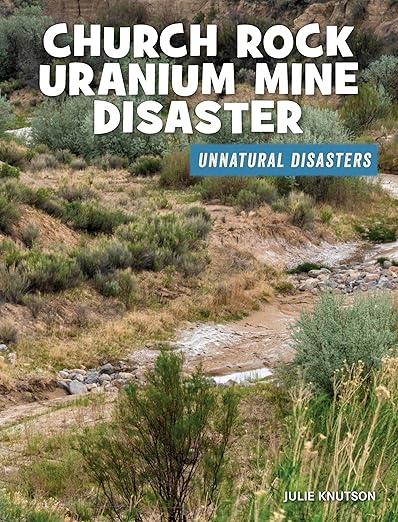
the Navajo Birth Cohort Study, which since 2010 has been looking at the relationship between uranium exposures, birth outcomes and child development on the Navajo Nation. Among the findings is that mothers were deficient in key nutrients for babies’ developing nervous systems.
The Church Rock spill released more radioactive material than the partial meltdown at Three Mile Island four months earlier. Last week’s walk highlights the continuing cleanup and the ongoing hazards uranium mining poses to tribal lands.
Inside Climate News, By Noel Lyn Smith, July 20, 2024
RED WATER POND ROAD, New Mexico—As Tony Hood walked along New Mexico Highway 566 last Saturday, he thought about where he was 45 years earlier, when an earthen dam broke at the site of a uranium mill operated by the United Nuclear Corp., releasing 94 million gallons of radioactive water and 1,100 tons of uranium waste across portions of New Mexico, Arizona and the Navajo Nation.
Hood was working inside a nearby underground mine owned by the Kerr-McGee Corp. when the dam broke on July 16, 1979. He didn’t learn about the spill until after returning to the surface.
As he walked in this month’s event commemorating the spill, he pointed to the spot where the dam was located.
“I guess they observed there was some cracks in the earthen dam but they didn’t do nothing about it,” he said. “Finally, the dam collapsed, breached.”
The dam failure at the processing mill north of Church Rock, New Mexico, released radioactive liquid that eventually flowed into the Rio Puerco and through areas on the Navajo Nation, nearby Gallup, New Mexico, and, finally, Arizona. Now known as the Church Rock spill, the accident released the most radioactive material in U.S. history—more than the notorious partial meltdown at the Three Mile Island Nuclear Generating Station four months earlier—yet remains largely unknown to the American public.
The nonprofit Red Water Pond Road Community Association tries to remedy that lack of awareness by organizing the annual walk by the site of the spill, during which current and former area residents, supporters and advocates remember what happened that day. They also talk about the aftermath, including what federal and tribal agencies have done and need to do to clean up the communities affected by the accident.
……………………………………………………………………………………………………….. A report in May 2014 by the U.S. Government Accountability Office found that “Navajo people continue to live with the environmental and health effects from mining operations: more than 500 abandoned mines are located across the reservation, some close to homes and communities, and an unknown number of homes and drinking water sources contain radioactive elements.”
Educational materials distributed by the Red Water Pond Road Community Association mention some health studies that residents participated in. One is the Navajo Birth Cohort Study, which since 2010 has been looking at the relationship between uranium exposures, birth outcomes and child development on the Navajo Nation. Among the findings is that mothers were deficient in key nutrients for babies’ developing nervous systems. The association notes that a comprehensive study still needs to be done about the effects of uranium on Navajo health.
“We sacrificed our lives, our bodies to mine that ore,” Hood said…………………………………………………………………………………………………………………………………. Link: https://insideclimatenews.org/news/20072024/new-mexico-walk-commemorates-navajo-nation-nuclear-disaster/
Please, No Weapons and Wars in Space
Honoring the Spirit of Apollo 11,
BILL ASTORE, JUL 21, 2024 https://bracingviews.substack.com/p/please-no-weapons-and-wars-in-space—
This weekend marks the 55th anniversary of humanity’s first trip to the moon, when Neil Armstrong and Buzz Aldrin got moon dust on their boots as Michael Collins waited in moon orbit to pick them up. It all went remarkably well, if not perfectly smoothly, for Apollo 11.
Humans haven’t been back to the moon to cavort on it for more than fifty years. Apollo 17 was the last mission in December of 1972. Once America beat the Soviets to the moon and explored it a few times, the program lost its impetus as people grew nonchalant if not bored with the Apollo missions. What a shame!
Apollo 11 left a plaque on the moon saying they went there in the name of peace and for all mankind. It’s a groovy sentiment, but tragically space has become yet another realm of war. Instead of occupying the moral high ground, the United States with its Space Force wants to dominate the military “high ground” of space. The dream of space as a realm for peace is increasingly a nightmare of information dominance and power projection.
A powerful trend is space exploitation by billionaires rather than space exploration funded and supported by the people. Privatization of space and its weaponization are proceeding together, even feeding off each other.
Of course, the military has always dreamed of weaponizing space. The new dream, apparently, is becoming super-rich by mining rare strategic minerals and the like, along with space tourism by the ultra-rich.
Again, the U.S. military sees space as its domain, working with a diverse range of countries, such as the UK, South Korea, and Sweden, among others, on new space ports, radar and launch sites, and related facilities. A key buzzword is “interoperability” between the U.S. and its junior partners in space, which, for you “Star Trek” fans, is akin to being assimilated by the Borg collective. (All of the Borg are “interoperable”; too bad they have no autonomy.)
We humans should not be exporting our violence and wars beyond our own planet. If you believe space should be reserved for peace, check out Space4Peace.org. Follow this link. It’s a global organization of people dedicated to the vision that space should remain free of weapons and wars. The group is kind enough to list me as one of its “advisers.”
Mark your calendars for the next “Keep Space for Peace” week from October 5-12. Together, let’s reject star wars and instead embrace peaceful star treks.
UK: Ed Miliband unveils plans for mini-nuclear reactors .
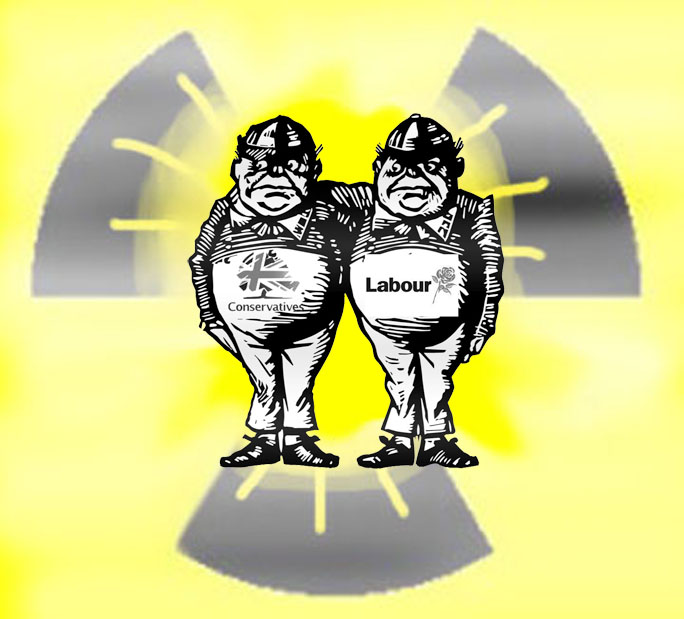
Ed Miliband will press ahead with a new generation of mini nuclear power
plants, with plans to unveil reactor designs by September. The energy
secretary has told MPs that he will give his “absolute support” to
plans to build a fleet of “small modular reactors” around Britain as
part of his clean energy drive.
Looser planning rules are expected to allow
these reactors almost anywhere outside built-up areas, ……………………………………………………….
He is now turning his attention to nuclear power, with a final decision on
Sizewell C due, alongside efforts to finish the Hinkley Point C plant.
Miliband has also committed to continuing the previous government’s drive
to make Britain a world leader in small modular reactors.
A decision on which designs to take forward is due by the end of the summer. Miliband
told MPs this week: “We will strive to keep to the timetable set out.”
Describing nuclear power as “very important for the future”, he said:
“This government were very clear in our manifesto about the role that
nuclear power — both large-scale nuclear and SMRs — can play.”
A final decision is also due this year on liberalising planning rules for
modular reactors. Currently nuclear power plants can be built only on eight
named sites but the previous government wanted developers to be able to
identify their own location based on a new list of safety and environmental
criteria.
Miliband is seen as unlikely to opt for tougher rules, after
repeatedly stressing to MPs this week that local concerns over development
would not be allowed to veto projects seen as vital to energy security and
economic growth. Under the draft rules, only “population density” and
“proximity to military activities” will rule out nuclear plants,
meaning they cannot be built in areas with more than 5,000 people per
square kilometres, covering most towns and cities. This is designed to
“minimise the risk to the public” in the event of a radioactive spill.
All other criteria would be discretionary, including size, flood risk,
proximity to civil airports, the natural beauty, ecological importance or
cultural heritage of the site.
Times 19th July 2024
**GB Energy**
‘Low level’ ionizing radiation, and the history of debate about its effects
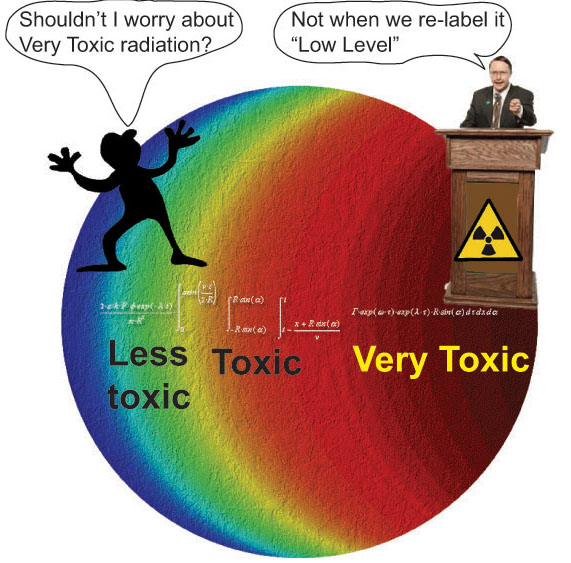
From Hiroshima to Fukushima to You, Dale Dewar, 4 July 2024
“……………………………………………………………………………………………………. Humans have lived with natural radiation for thousands of years – has it caused damage?
There are two distinct examples of natural radiation causing cancer: radon, largely in basements, and skin cancers from cosmic rays.
Cosmic rays were discovered in 1912 by an Austrian physicist, Victor Hess. He went up in a balloon and measured the ionizing radiation as he ascended and found that it was three times higher at 5300 meters elevation than at ground. Others discovered that cosmic rays were largely made up of protons (89%) and alpha particles (10%).
Alpha particles are stopped by skin, beta particles pass just through the skin and x-rays and gamma rays pass completely through a human body. This would make x-ray and gamma rays seem to be the most dangerous as they leave a trail of ions in their passage but if the particles become internal (by eating or breathing) they are up to 20 times more dangerous.
When any of these particles or rays interact with anything including biological matter, they cause ions. Sometimes the damage can be repaired, sometimes it cannot, and the cell dies or replicates the damage. Sometimes the damage affects the very process of replication itself.

This is what happens when a tumour is formed. A cell “goes wild” and doesn’t know when to turn off its growth.
If radioactive dust is inspired or eaten, the release of radioactivity occurs in the body. If it is radium dust, for example, the release of radioactivity continues for as long as the tiny bit of radium is present or 16,400 years (the half-life of radium x 10). The skeletal remains of the “radium girls” will still be radioactive for 16 millennia!
In 1927, an American, Hermann Muller was able to show the effect of radiation (he used x-rays) on genetic material. He had no doubt that it produced mutations in succeeding generations and remained a staunch defender of radiation protection measures and was opposed to atmospheric nuclear tests[iv].
To answer the question, how dangerous is the radiation that we call “background” radiation, the radiation that we cannot avoid? Some European researchers compared the incidence of cancers in children who lived in areas with low background radiation (0.70 mSv) to those who lived in areas with higher background radiation (2.3 mSv). Every tumour marker studied was higher in the children with the higher background radiation.[v]
Why do we know so little about radiation’s danger to health?
The nuclear industry has a singular interest in keeping populations ignorant. It continues to market nuclear energy as “safe” when no nuclear power plant can be operated without release of radiation in the form of tritiated hydrogen gas. By the time that Japan has released all its tritiated water (from Fukushima) into the Pacific Ocean, there will be no “unexposed” population with which to compare cancer rates.
In 1962 Dr. John Gofman was recruited by the US Atomic Energy Commission to head a biomedical unit. He was told that “the AEC was on the hot seat because a series [of atmospheric atomic bomb tests] had clobbered the Utah milkshed[vi]with radioiodine. And they have been getting a lot of flak. They think that maybe if we had a biology group working with the weaponeers at Livermore[vii], such things could be averted.”
The recruitment came with a very generous budget – 3 million dollars (almost three trillion dollars in 2020 dollars). John surrounded himself with scientists and technicians along with an outstanding colleague and Nobel laureate, Arthur Tamplin.
His first task as the chair of the biomedical unit was to squash a research paper[viii] by Dr. Harold Knapp that concluded a one hundred fold increase in the amount of radiation received from fallout by the people who lived in the downwind areas. Gofman and five other experts reviewed the data, asked technical questions and concluded that the research was scientifically sound and ought to be published.
The Atomic Energy Commission (AEC) balked,” We’ve told these people [in the fallout zone] all along that it’s safe and we can’t change our story now.”
Gofman’s committee remained firm.
It was clear that Gofman was not a lapdog hireling. When his department could not support the “Plowshares Project”[ix], the use of atomic bombs for “good”, they became known as the “enemy within”. Gofman thought that they were being teased and it was all in fun but this was the beginning of his demise as a go-to person for the AEC.
In 1969, Dr. Ernest Sternglass published research papers claiming that up to three hundred thousand children might have died from radioactive fallout from atmospheric bomb testing. It received popular coverage in Esquire under the title “The Death of all Children”. John’s colleague Arthur Tamplin re-calculated the data, and his result was an estimation of four thousand. Unfortunately, the AEC was still deeply displeased. The only answer they wanted was zero, that is, no children affected.
The Atomic Energy Commission had been promoting a “safe threshold” of radiation below which no health effects could be detected. A safe threshold made it possible to expose servicemen to atomic bomb tests, for workers in nuclear power plants to receive yearly doses of radiation and for people living near nuclear power plants to receive regular discharges of radiation. Drs Gofman and Tamplin estimated that the cancer risk from radiation was twenty times as bad as the most pessimistic estimate previously made.[x] Not only did they conclude that the risk was high, they also concluded that there was no safe amount of radiation and that it could be assumed that there was some risk all the way down to zero.” They presented their research at the Institute for Electrical Electronic Engineers (IEEE) meeting in October, 1969. A month later, John was invited to give the same paper to hearings convened by Senator Muskie.
Their research was picked up by the Washington Press. Their bosses in the AEC made a decision and started rumors. John heard that he “didn’t care about cancer at all and that he was trying to undermine national defense”[xi]. (He had already resigned his directorship of the laboratory but remained as a research associate.) Dr. Tamplin’s research staff was fired.
When John was called before the Joint Committee on Atomic Energy, a Congressional committee, he and Arthur reviewed all the data they could find. They concluded that “as a matter of fact, we’d underestimated the hazard of radiation when we’d given the Muskie testimony”. They wrote fourteen more research papers. John’s main research was now into chromosomes and their response to radiation. He applied elsewhere for funding to continue, including the Cancer Society but research funding had dried up. The AEC restructured its biomedical unit; it had discovered that doctors and health researchers were hard to control.
At the same time, two scientists with the Union of Concerned Scientists revealed that AEC didn’t know if the cooling system for a type of reactor worked. The credibility held by the AEC became questioable.
The government abolished it and created two new agencies: ERDA (Energy Research and Development Agency) and NRC (Nuclear Regulatory Commission), the former to oversee research and the latter to regulate the industry.
Drs John Gofman, Arthur Tamblin, and Harold Knapp were harassed, ridiculed, and sidelined because their research showed that radiation affected health. The industry didn’t stop there. Drs. Linus Pauling, Alice Stewart, Ernest Sternglass and Hermann Muller suffered similar fates. The US desire for nuclear arms required nuclear power plants. Nuclear radiation had to be safe………………………………………………………………………………………………………………………… https://ionizingradiationandyou.blogspot.com/
Overwhelming ICJ Ruling against Israeli Occupation Highlights Need for UN Action

The US government’s use of the veto must be shamed and condemned. The UN General Assembly must assert the will of the world.
SAM HUSSEINI, JUL 19, 2024, https://husseini.substack.com/p/overwhelming-icj-ruling-against-israel?utm_source=post-email-title&publication_id=201840&post_id=146793552&utm_campaign=email-post-title&isFreemail=true&r=9zi1x&triedRedirect=true&utm_medium=email
The International Court of Justice ruled today: the State of Israel has the obligation to make reparation for the damage caused to all the natural or legal persons concerned in the Occupied Palestinian Territory;
the State of Israel’s continued presence in the Occupied Palestinian Territory is unlawful;
the State of Israel is under an obligation to bring to an end its unlawful presence in the Occupied Palestinian Territory as rapidly as possible;
the State of Israel is under an obligation to cease immediately all new settlement activities, and to evacuate all settlers from the Occupied Palestinian Territory;
all States are under an obligation not to recognize as legal the situation arising from the unlawful presence of the State of Israel in the Occupied Palestinian Territory and not to render aid or assistance in maintaining the situation created by the continued presence of the State of Israel in the Occupied Palestinian Territory;- international organizations, including the United Nations, are under an obligation not to recognize as legal the situation arising from the unlawful presence of the State of Israel in the Occupied Palestinian Territory; and
- the United Nations, and especially the General Assembly, which requested the opinion, and the Security Council, should consider the precise modalities and further action required to bring to an end as rapidly as possible the unlawful presence of the State of Israel in the Occupied Palestinian Territory.
See video and background via here.
The UN Security Council has been prevented from action by the US (and British) veto.
As I have argued, the General Assembly must act, especially using Uniting for Peace. See my piece: “‘Uniting for Peace’ is Next Step in Invoking Genocide Convention Process to Protect Palestine.”
This is a major organizing challenge to people around the world; to get as many countries as possible to back as strong action as possible against Israel’s crimes.
Some resources are in my piece, above. Another key is action should be in NYC in front of the UN and various missions to the UN.
Never Forget Julian Assange
SCHEERPOST, JULY 19, 2024
Although Julian Assange is free and home in his native Australia, his story and decade-long suffering at the hands of the U.S. government must never be forgotten for the sake of the survival of the First Amendment. In this episode of the Scheer Intelligence podcast, host Robert Scheer is joined by Kevin Gosztola, who runs The Dissenter newsletter and has been reporting on the Assange case and whistleblowers in the U.S. for more than a decade. Together, they underscore the significance of the Assange case and delve into the details explored in Gosztola’s recent book, “Guilty of Journalism.”

Gosztola makes clear one of the main points of the whole ordeal, which is the inconsistency in the U.S.’s interpretation of its own laws. “The First Amendment and the Espionage Act are in conflict in this country. You can’t reconcile the two, at least the way that the Justice Department wants to use the Espionage Act against people who aren’t even just U.S. citizens. They’re trying to apply U.S. law to international journalists,” Gosztola told Scheer.
The U.S. response to the internet age and the powerful journalistic revelations of Assange and WikiLeaks was to criminalize such actions, sending a clear message: anyone attempting to blow the whistle or expose the U.S. government’s crimes would face severe punishment, including the use of the Espionage Act, which could imprison someone for life.
“Unlike Daniel Ellsberg, [Chelsea] Manning didn’t have to sit there at a Xerox machine making copies. [She] just sent the copies of the documents to WikiLeaks, and then WikiLeaks had all these files that they could share with the world,” Gosztola said.
Despite the online journalism revolution, many in the media space still remained quiet throughout the Assange debacle both because of their ties to government officials and their lack of professional rigor. Gosztola posed several questions to them:
“Where were you? Why weren’t you doing the investigations to uncover these details? Why did this WikiLeaks organization come along and reveal these details about Afghanistan, the Iraq War, the nature of US foreign policy? Why do you accept that all of this information that was classified should be classified?”
TRANSCRIPT – ……………………………………………………………………………. , https://scheerpost.com/2024/07/19/never-forget-julian-assange/
Shiny New MP’s Fizzingly Push For More Nuclear Waste – Hotter the better! And a Complaint to Advertising Standards – Standards? What Standards!
BY MARIANNEWILDART, https://mariannewildart.wordpress.com/2024/07/18/shiny-new-mps-fizzingly-push-for-more-nuclear-waste-hotter-the-better-and-a-complaint-to-advertising-standards-standards-what-standards/
Well we are now awash with new shiny MPs pushing the “clean” “green” nuclear myth and falling over themselves to write fizzingly enthusiastic letters “urging” the new Labour government to “deliver” new unlicensed untested nuclear crapola which the public would be paying for before during and well after any electricity production. Meanwhile Sellafield is bursting at the seams with nuclear wastes which keep on coming – nuclear wastes whose only “solution” is to “decommission” ie disperse, dump, incinerate and forget, make room for more.
How have we come to this – it has taken a lot of effort on the part of the industry and pro nuclear governments from Thatcher to Blair and now Starmer and a lot of forgetting on the part of mainstream environmental NGOs who were the ‘green’ conscience of the people and started out with fierce unequivocal opposition to nuclear but somehow got inveigled into demanding “climate jobs’ with no anti-nuclear caveats giving the now “climate friendly” nuclear industry exactly what it wants.
I wonder how the following adverts [on original] which were in local press over June will be viewed by humanity in future years, or by aliens?
Westinghouse the front end of the industry with its “clean” “climate friendly” uranium fuel and Sellafield, the arse end of the industry with its sponsorship of the “Pride of Cumbria Awards” the Shame of Cumbria is palpable with every radioactive particle that washes back from Sellafied’s radioactive sewers with the tide.
Full Page adverts over consecutive weeks in local press
Anyway more in hope than in expectation of Advertising Standards actually doing its job and making a ruling against breathtaking greenwashing by the most dangerous industry, here is a complaint – also sent to the Westmorland Gazette and Westinghouse on July 8th (no reply from either).
I would like to make a complaint about the advert run in the Westmorland Gazette (and Whitehaven News?) for Westinghouse.
The advert was produced on the same page (on consecutive weeks) with an advert for Sellafield “Proud to be sponsoring the Pride of Cumbria Awards 2024″”.The Westinghouse advert claims that its products: Nuclear Fuel, AP1000 reactors and assisting Sellafield in decommissioning, are “clean” and “carbon free.”
This can be easily refuted as falsehood.
The nuclear fuel produced by Westinghouse at the Springfields site has been burned in nuclear reactors across the UK (and abroad) since the mid-1940s.
Clifton Marsh Landfill
Some of the many waste streams from the manufacture of nuclear fuel are dispersed to the River Ribble and Clifton Marsh Landfill although in January 2022 “the Clifton Marsh low level waste landfill site, operated by Suez, stopped accepting consignments of radioactive waste for disposal. As most of the solid radioactive waste from Springfields is disposed at Clifton Marsh, this has significantly affected routine waste management operations on site. Together with ONR we have discussed and reviewed SFL’s contingency plans to manage waste in the short term, which includes temporary accumulation of radioactive waste on site, improvements to waste characterisation and alternative disposal options. It was anticipated that Clifton Marsh would become available for disposals during the second half of 2022, although this has not yet occurred,” Environment Agency report . Decommissioning Plans Include Incineration of Radioactive Wastes Three Miles from Preston by “Clean” Westinghouse are proposing an incineration plant on their Springfields site just 3 miles from Preston for ” a large, refractory lined oven designed to treat a wide range of low and intermediate-level radioactive materials.” The feed into the incinerator would include European radioactive wastes of up to 3 tonnes a day. Countries such as Germany have now rejected new nuclear on health, safety, climate and financial grounds but still have wastes to dispose of would be keen to use Westinghouse’s new incineration plant.https://www.world-nuclear-news.org/Articles/New-UK-waste-treatment-facility-planned#:~:text=Plans% 20to%20jointly%20develop%20a,for%20the%20European%20nuclear%20market.
River Ribble
“The Ribble estuary near Preston receives radioactive substances from liquid effluent, discharged directly from the nearby Springfields Fuels Ltd site, and also transported down the coast from the Sellafield Ltd site via the Irish Sea. Estuaries are complex environments, influenced by both the marine tidal processes and the freshwater input from rivers. Some of the radioactive substances eventually become deposited in sediment in the estuary and on the nearby salt marsh.” …”The amount of shielding provided by boat hulls varied from almost none in a small pleasure boat, to 50 percent in a medium sized houseboat. Thick, dense clothing materials like rubber boots reduced the dose received from beta radiation by around 80 percent, wax jacket by 20 to 40 percent, while thin, less dense materials like woollen jumpers did not provide any protection” Environment Agencyhttps://assets.publishing.service.gov.uk/media/5a7c323240f0b674ed20f75e/scho0211btkg-e-e.pdf
“Carbon Free”
The latest carbon emissions report for the Preston Springfields site by Westinghouse is 38,617 tonnes for 2019. This is the equivalent of 20,000 cars on the road. https://westinghousenuclear.com/media/5kulvl03/springfields-carbon-reduction-plan.pdf?ver=d5dd1Fr giH03Wqky98f_fA%3D%3D
The uranium fuel rod wastes from Westinghouse end up at Sellafield in Cumbria. The carbon footprint for looking after Westinghouse’s burnt uranium fuel rods last year was, according to Sellafield, 600,000 tonnes of CO2. This is far higher than all the emissions generated by all vehicles using the M6 through Cumbria every year according to Cumbria Action for Sustainability’s figures (CaFS give nuclear a free ride excluding figures despite their gargantuan C02 footprint)
AP1000 reactors – Bankruptcy, Crime and Failed Reactor Coolant Pumps
The advert states “Our AP1000 plant is setting operational records in its global fleet and is ready for deployment in the UK.” Yes it is setting operational records in being the most expensive, and fault ridden reactor to date causing Westinghouse to go into bankruptcy. “By 2016 Westinghouse began to grasp the scope of its dilemma, according to a document filed in its bankruptcy: Finishing the two projects would require Westinghouse to spend billions of dollars on labor, abandoning them would mean billions in penalties. Westinghouse determined it could not afford either option.” It chose Chapter 11 Bankruptcy. https://www.reuters.com/article/world/how-two-cutting-edge-us-nuclear-projects-bankrupted-westingho use-idUSKBN17Y0C7/ Alongside this were charges of Westinghouse executive with dozens of crimes including ” felony counts including conspiracy, wire fraud, securities fraud, and causing a publicly-traded company to keep a false record.”https://thebulletin.org/2021/08/us-attorney-details-illegal-acts-at-construction-projects-sealing-t he-fate-of-the-nuclear-renaissance/
Westinghouse’s “global fleet” is largely in China where AP1000 reactor coolant pumps have failed forcing shut down of the reactors. https://www.spglobal.com/commodityinsights/en/market-insights/latest-news/electric-power/031419-us -designed-chinese-nuclear-reactor-forced-to-shut-by-pump-defect
Scientists in China are concerned enough to have provided “environmental radiation impacts assessment for the hypothetical accident in Haiyang nuclear power plant” saying that “the impact of east wind in August will mainly affect the west area of HYNPP, but it also has an impact on Northeast China, the Korean Peninsula region and Kyushu, Japan. The research results are aimed at supporting emergency decision-making of nuclear accidents and improving nuclear emergency response capabilities in surrounding areas.” https://www.sciencedirect.com/science/article/abs/pii/S0149197020301153?via%3Dihub Former US nuclear regulator Arnie Gunderson has suggested that the AP1000 deployed in the UK could cause a catastrophe that would be “like Chernobyl on steroids.” https://www.independent.co.uk/climate-change/news/nuclear-expert-arnie-gundersen-warns-of-cherno byl-on-steroids-risk-in-uk-from-proposed-cumbria-plant-10109930.html
Clearly Westinghouse’s claim to be “clean” and “carbon free” is false.
yours sincerely
Marianne Birkby
on behalf of Lakes Against Nuclear Dump
Absent but not missed: No mention of nuclear in King’s Speech

https://www.nuclearpolicy.info/news/absent-but-not-missed-no-mention-of-the-n-word-in-kings-speech/ 18th July 2024
The UK/Ireland Nuclear Free Local Authorities could not help but notice that the first speech made by King Charles III at the State Opening of Parliament (17 July) was nuclear free as His Majesty was spared having to utter the word.
By tradition, the Sovereign reads the speech, written for him by Whitehall officials and signed off by Ministers, to a combined gathering of Lords and MPs. This sets out the legislative programme for the coming Parliament. Clearly with the return of a new Labour Government, elected with a huge majority, Ministers are keen to get on and exercise their mandate and the speech was brimming with forty proposals for new legislation[i].
On energy there was an emphasis on meeting the urgent
On energy there was an emphasis on meeting the urgent challenge of climate change whilst reducing customers’ bills through a ‘clean energy transition’, but His Majestry was notably not called upon to extole nuclear energy as a means to do so so; instead the speech referenced the need to ‘accelerate investment in renewable energy, such as offshore wind’ by creating a new vehicle Great Britain Energy which will be publicly owned and headquartered in Scotland. Nuclear was thankfully nowhere to be seen, seemingly stll on its summer holidays[ii].
Interestingly, the Background Briefing Notes issued to accompany the publication of the speech by Number 10 also makes no reference to nuclear.[iii]
Also interestingly, Ed Miliband shortly after his arrival at the Department for Energy Security and Net Zero issued a statement as Secretary of State to his staff – this too makes zero reference to nuclear as a component in the fight to achieve Net Zero.[iv]
Nuclear then appears late for the party, as per usual, or may even have been excluded from the invite list.
For it is notable that whilst Labour’s energy manifesto makes much of getting new nuclear projects at Hinkley and Sizewell ‘over the line’, extending the lifetime of existing plants, and backing new nuclear including Small Modular Reactors by the end of the government’s first term in 2030, mention of any of this has been noticably absent in the government’s recent pronouncements
The NFLAs hope that Ministers on being appraised of the huge costs and massive challenges of delivering a new nuclear programme has quietly opted to go for the common sense approach of choosing cheaper, practicable and achieveable renewables to deliver truly green energy, energy security, lower bills and Net Zero. Fingers crossed.
1 This Month.
5 January -Webinar-What is Trump’s Golden Dome?
REGISTER AT Massachusetts Peace Action Education


New book – https://www.amazon.com/dp/1923372157?utm_source=substack&utm_medium=email
Now until to February 10, 2026 Radioactive waste storage in France: the debate is finally open! How to participate?
-
Archives
- December 2025 (286)
- November 2025 (359)
- October 2025 (377)
- September 2025 (258)
- August 2025 (319)
- July 2025 (230)
- June 2025 (348)
- May 2025 (261)
- April 2025 (305)
- March 2025 (319)
- February 2025 (234)
- January 2025 (250)
-
Categories
- 1
- 1 NUCLEAR ISSUES
- business and costs
- climate change
- culture and arts
- ENERGY
- environment
- health
- history
- indigenous issues
- Legal
- marketing of nuclear
- media
- opposition to nuclear
- PERSONAL STORIES
- politics
- politics international
- Religion and ethics
- safety
- secrets,lies and civil liberties
- spinbuster
- technology
- Uranium
- wastes
- weapons and war
- Women
- 2 WORLD
- ACTION
- AFRICA
- Atrocities
- AUSTRALIA
- Christina's notes
- Christina's themes
- culture and arts
- Events
- Fuk 2022
- Fuk 2023
- Fukushima 2017
- Fukushima 2018
- fukushima 2019
- Fukushima 2020
- Fukushima 2021
- general
- global warming
- Humour (God we need it)
- Nuclear
- RARE EARTHS
- Reference
- resources – print
- Resources -audiovicual
- Weekly Newsletter
- World
- World Nuclear
- YouTube
-
RSS
Entries RSS
Comments RSS
 nuclear-news