‘ Regulated Asset Base’ system mulled in Japan to add nuke plant construction costs to rates
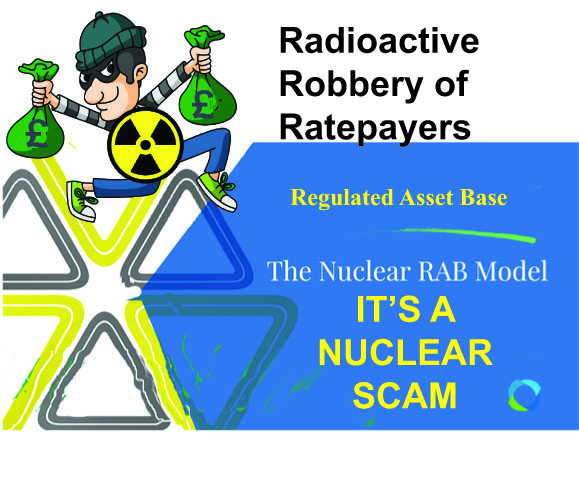
THE ASAHI SHIMBUN, by Chinami Tajika and Aki Fukuyama. July 24, 2024, https://www.asahi.com/ajw/articles/15359689
The Finance Ministry is considering introducing a system that would allow construction costs of new nuclear power plants to be added to electricity rates, which could be passed onto consumers.
By doing so, the ministry aims to promote the construction of new nuclear plants.
Electric power companies are reluctant to invest in nuclear plants because the cost of safety measures is ballooning due to the 2011 disaster in Fukushima, and they no longer have the means to ensure recouping construction costs.
The central government has said that it will increase decarbonized power sources to prepare for future increases in demand, but that could lead to a major increase in the burden on the public.
According to sources, the “RAB model,” a nuclear plant support measure devised in Britain, will be used as a reference.
When construction of a nuclear plant is approved by the government, the construction and maintenance costs are borne by the retail electricity company once construction has begun. The cost will be recovered through a hike in electricity rates.
Under the model, any increase in construction costs can be included in the fee if the cost is deemed necessary. If the project is suspended, the government will compensate by providing funds.
If the system is introduced directly to Japan, it will be up to retail companies, including new power companies, to decide whether to pass the charge directly to customers.
However, even those who opt for a 100 percent renewable electricity supply may pay for the construction of a nuclear power plant.
In the past, there was a mechanism to ensure that the construction costs of power plants and transmission and distribution networks could be recovered by factoring them into electricity prices.
But with the deregulation of the electric power industry that began in 2000, this system was gradually eliminated, and power plants that were not cost-effective were closed and investment in new power plants was suppressed.
No comments yet.
1 This Month
Chernobyl: The Lost Tapes – A good documentary on Chernobyl on SBS available On Demand for the next 3 weeks– https://www.sbs.com.au/ondemand/tv-program/chernobyl-the-lost-tapes/2352741955560

of the week–London Campaign for Nuclear Disarmament

Tell the Ukrainian Government to Drop Prosecution of Peace Activist Yurii Sheliazhenko
To see nuclear-related stories in greater depth and intensity – go to https://nuclearinformation.wordpress.com
-
Archives
- April 2026 (126)
- March 2026 (251)
- February 2026 (268)
- January 2026 (308)
- December 2025 (358)
- November 2025 (359)
- October 2025 (376)
- September 2025 (257)
- August 2025 (319)
- July 2025 (230)
- June 2025 (348)
- May 2025 (261)
-
Categories
- 1
- 1 NUCLEAR ISSUES
- business and costs
- climate change
- culture and arts
- ENERGY
- environment
- health
- history
- indigenous issues
- Legal
- marketing of nuclear
- media
- opposition to nuclear
- PERSONAL STORIES
- politics
- politics international
- Religion and ethics
- safety
- secrets,lies and civil liberties
- spinbuster
- technology
- Uranium
- wastes
- weapons and war
- Women
- 2 WORLD
- ACTION
- AFRICA
- Atrocities
- AUSTRALIA
- Christina's notes
- Christina's themes
- culture and arts
- Events
- Fuk 2022
- Fuk 2023
- Fukushima 2017
- Fukushima 2018
- fukushima 2019
- Fukushima 2020
- Fukushima 2021
- general
- global warming
- Humour (God we need it)
- Nuclear
- RARE EARTHS
- Reference
- resources – print
- Resources -audiovicual
- Weekly Newsletter
- World
- World Nuclear
- YouTube
-
RSS
Entries RSS
Comments RSS
 nuclear-news
Leave a comment