Humans should teach AI how to avoid nuclear war—while they still can

By Cameron Vega, Eliana Johns | July 22, 2024, https://thebulletin.org/2024/07/humans-should-teach-ai-how-to-avoid-nuclear-war-while-they-still-can/?fbclid=IwZXh0bgNhZW0CMTEAAR2M_EOXy8gbl1C9knrlD6Qox7m3ZMlORORVIO7cUXuQjvu7rt1RoN5mWLo_aem_0VOtqNpJ2N7mxCdvmakvNw#post-heading
When considering the potentially catastrophic impacts of military applications of Artificial Intelligence (AI), a few deadly scenarios come to mind: autonomous killer robots, AI-assisted chemical or biological weapons development, and the 1983 movie WarGames.
The the 1983 movie WarGames, features a self-aware AI-enabled supercomputer that simulates a Soviet nuclear launch and convinces US nuclear forces to prepare for a retaliatory strike. The crisis is only partly averted because the main (human) characters persuade US forces to wait for the Soviet strike to hit before retaliating. It turns out that the strike was intentionally falsified by the fully autonomous AI program. The computer then attempts to launch a nuclear strike on the Soviets without human approval until it is hastily taught about the concept of mutually assured destruction, after which the program ultimately determines that nuclear war is a no-win scenario: “Winner: none.”
US officials have stated that an AI system would never be given US nuclear launch codes or the ability to take control over US nuclear forces. However, AI-enabled technology will likely become increasingly integrated into nuclear targeting and command and control systems to support decision-making in the United States and other nuclear-armed countries. Because US policymakers and nuclear planners may use AI models in conducting analyses and anticipating scenarios that may ultimately influence the president’s decision to use nuclear weapons, the assumptions under which these AI-enabled systems operate require closer scrutiny.
Pathways for AI integration. The US Defense Department and Energy Department already employ machine learning and AI models to make calculation processes more efficient, including for analyzing and sorting satellite imagery from reconnaissance satellites and improving nuclear warhead design and maintenance processes. The military is increasingly forward-leaning on AI-enabled systems. For instance, it initiated a program in 2023 called Stormbreaker that strives to create an AI-enabled system called “Joint Operational Planning Toolkit” that will incorporate “advanced data optimization capabilities, machine learning, and artificial intelligence to support planning, war gaming, mission analysis, and execution of all-domain, operational level course of action development.” While AI-enabled technology presents many benefits for security, it also brings significant risks and vulnerabilities.
One concern is that the systemic use of AI-enabled technology and an acceptance of AI-supported analysis could become a crutch for nuclear planners, eroding human skills and critical thinking over time. This is particularly relevant when considering applications for artificial intelligence in systems and processes such as wargames that influence analysis and decision-making. For example, NATO is already testing and preparing to launch an AI system designed to assist with operational military command and control and decision-making by combining an AI wargaming tool and machine learning algorithms. Even though it is still unclear how this system will impact decision-making led by the United States, the United Kingdom, and NATO’s Nuclear Planning Group concerning US nuclear weapons stationed in Europe, this type of AI-powered analytical tool would need to consider escalation factors inherent to nuclear weapons and could be used to inform targeting and force structure analysis or to justify politically motivated strategies.
The role given to AI technology in nuclear strategy, threat prediction, and force planning can reveal more about how nuclear-armed countries view nuclear weapons and nuclear use. Any AI model is programmed under certain assumptions and trained on selected data sets. This is also true of AI-enabled wargames and decision-support systems tasked with recommending courses of action for nuclear employment in any given scenario. Based on these assumptions and data sets alone, the AI system would have to assist human decision-makers and nuclear targeters in estimating whether the benefits of nuclear employment outweigh the cost and whether a nuclear war is winnable.
Do the benefits of nuclear use outweigh the costs? Baked into the law of armed conflict is a fundamental tension between any particular military action’s gains and costs. Though fiercely debated by historians, the common understanding of the US decision to drop two atomic bombs on Japan in 1945 demonstrates this tension: an expedited victory in East Asia in exchange for hundreds of thousands of Japanese casualties.
Understanding how an AI algorithm might weigh the benefits and costs of escalation depends on how it integrates the country’s nuclear policy and strategy. Several factors contribute to one’s nuclear doctrine and targeting strategy—ranging from fear of consequences of breaking the tradition of non-use of nuclear weapons to concern of radioactive contamination of a coveted territory and to sheer deterrence because of possible nuclear retaliation by an adversary. While strategy itself is derived from political priorities, military capabilities, and perceived adversarial threats, nuclear targeting incorporates these factors as well as many others, including the physical vulnerability of targets, overfly routes, and accuracy of delivery vehicles—all aspects to further consider when making decisions about force posture and nuclear use.
In the case of the United States, much remains classified about its nuclear decision-making and cost analysis. It is understood that, under guidance from the president, US nuclear war plans target the offensive nuclear capabilities of certain adversaries (both nuclear and non-nuclear armed) as well as the infrastructure, military resources, and political leadership critical to post-attack recovery. But while longstanding US policy has maintained to “not purposely threaten civilian populations or objects” and “not intentionally target civilian populations or targets in violation of [the law of armed conflict],” the United States has previously acknowledged that “substantial damage to residential structures and populations may nevertheless result from targeting that meets the above objectives.” This is in addition to the fact that the United States is the only country to have used its nuclear weapons against civilians in war.
There is limited public information with which to infer how an AI-enabled system would be trained to consider the costs of nuclear detonation. Certainly, any plans for nuclear employment are determined by a combination of mathematical targeting calculations and subjective analysis of social, economic, and military costs and benefits. An AI-enabled system could improve some of these analyses in weighing certain military costs and benefits, but it could also be used to justify existing structures and policies or further ingrain biases and risk acceptance into the system. These factors, along with the speed of operation and innate challenges in distinguishing between data sets and origins, could also increase the risks of escalation—either deliberate or inadvertent.
Is a nuclear war “winnable”? Whether a nuclear war is winnable depends on what “winning” means. Policymakers and planners may define winning as merely the benefits of nuclear use outweighing the cost when all is said and done. When balancing costs and benefits, the benefits need only be one “point” higher for an AI-enabled system to deem the scenario a “win.”
In this case, “winning” may be defined in terms of national interest without consideration of other threats. A pyrrhic victory could jeopardize national survival immediately following nuclear use and still be considered a win by the AI algorithm. Once a nuclear weapon has been used, it could either incentivize an AI system to not recommend nuclear use or, on the contrary, recommend the use of nuclear weapons on a broader scale to eliminate remaining threats or to preempt further nuclear strikes.
“Winning” a nuclear war could also be defined in much broader terms. The effects of nuclear weapons go beyond the immediate destruction within their blast radius; there would be significant societal implications from such a traumatic experience, including potential mass migration and economic catastrophe, in addition to dramatic climatic damage that could result in mass global starvation. Depending on how damage is calculated and how much weight is placed on long-term effects, an AI system may determine that a nuclear war itself is “unwinnable” or even “unbearable.
Uncovering biases and assumptions. The question of costs and benefits is relatively uncontroversial in that all decision-making involves weighing the pros and cons of any military option. However, it is still unknown how an AI system will weigh these costs and benefits, especially given the difficulty of comprehensively modeling all the effects of nuclear weapon detonations. At the same time, the question of winning a nuclear war has long been a thorn in the side of nuclear strategists and scholars. All five nuclear-weapon states confirmed in 2022 that “a nuclear war cannot be won and must never be fought.” For them, planning to win a nuclear war would be considered inane and, therefore, would not require any AI assistance. However, deterrence messaging and discussion of AI applications for nuclear planning and decision-making illuminate the belief that the United States must be prepared to fight—and win—a nuclear war.
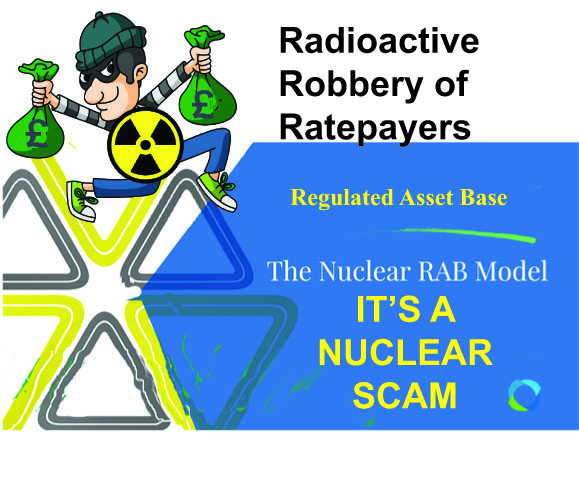
‘ Regulated Asset Base’ system mulled in Japan to add nuke plant construction costs to rates
THE ASAHI SHIMBUN, by Chinami Tajika and Aki Fukuyama. July 24, 2024, https://www.asahi.com/ajw/articles/15359689
The Finance Ministry is considering introducing a system that would allow construction costs of new nuclear power plants to be added to electricity rates, which could be passed onto consumers.
By doing so, the ministry aims to promote the construction of new nuclear plants.
Electric power companies are reluctant to invest in nuclear plants because the cost of safety measures is ballooning due to the 2011 disaster in Fukushima, and they no longer have the means to ensure recouping construction costs.
The central government has said that it will increase decarbonized power sources to prepare for future increases in demand, but that could lead to a major increase in the burden on the public.
According to sources, the “RAB model,” a nuclear plant support measure devised in Britain, will be used as a reference.
When construction of a nuclear plant is approved by the government, the construction and maintenance costs are borne by the retail electricity company once construction has begun. The cost will be recovered through a hike in electricity rates.
Under the model, any increase in construction costs can be included in the fee if the cost is deemed necessary. If the project is suspended, the government will compensate by providing funds.
If the system is introduced directly to Japan, it will be up to retail companies, including new power companies, to decide whether to pass the charge directly to customers.
However, even those who opt for a 100 percent renewable electricity supply may pay for the construction of a nuclear power plant.
In the past, there was a mechanism to ensure that the construction costs of power plants and transmission and distribution networks could be recovered by factoring them into electricity prices.
But with the deregulation of the electric power industry that began in 2000, this system was gradually eliminated, and power plants that were not cost-effective were closed and investment in new power plants was suppressed.
ICAN Statement on Nuclear Sharing to the 2024 Non-Proliferation Treaty Preparatory Committee.

https://www.icanw.org/ican_statement_to_npt_prepcom_2024 23 July 24
The Second Session of the Preparatory Committee for the Eleventh Nuclear Non-Proliferation Treaty (NPT) Review Conference is taking place in Geneva from July 22 to August 2nd. On the second day of the meeting, Naomi Zoka from Pax Christi Flanders (Belgium) delivered ICAN’s statement to the states parties. Please find the full statement below.
Distinguished Delegates,
Nuclear risks are on the rise. The chance of nuclear weapons use are higher than at any other time in my- and many others in this room’s- lifetime. Nuclear-armed States are launching threats faster than they are test-launching delivery systems, resulting in a less stable, less secure and more dangerous world.
That is not the world in which we want to live. We cannot abide by policies in which one -or nine – countries are allowed to hold the rest of the world hostage through weapons of mass destruction, because the use of those weapons knows no borders. A conflict involving nuclear weapons thousands of miles from this conference room will still cause chaos and catastrophe to all of us, our families, and our future.
We do not need to see nuclear weapons used in war again to know their impact. As W.J. Hennigan wrote in the New York Times, recently:
The United States and the Soviet Union might have narrowly avoided mutual destruction, but there was a nuclear war: The blitz of testing left a wake of illness, displacement and destruction, often in remote locations where marginalized communities had no say over what happened on their own land.
The over 2000 nuclear tests – conducted primarily by the nuclear weapons states in this room- forever altered the lives of these thousands of women, men and children, and of little girls in particular, as girls exposed to nuclear weapons use and testing got cancer at twice the rate as the boys. Even before their creation, nuclear weapons have facilitated suffering amongst the oppressed. From the Shinkolobwe mines in Eastern DRC where locals were forced into Uranium mines by their colonial rulers, to the multiple generations still battling life threatening diseases. Nuclear weapons have and always will be a tool for oppression regardless of which state possesses them.
Today, many survivors are demanding justice and accountability, and that nuclear weapons be eliminated once and for all, so that what happens to them, may never happen again.
Yet the nuclear-armed countries are recklessly embarking on a new nuclear arms race.
Every year, the International Campaign to Abolish Nuclear weapons, ICAN, exposes the unacceptable nuclear weapons. Despite their commitments under NPT’s Article VI, the nuclear-armed states in the NPT spent $86 billion dollars on their arsenals in 2023.
US spending accounts for 54% of the global total, at $51.5 billion, while China and Russia also spent exorbitant amounts at $11.8 billion and $8.3 billion respectively. The UK increased spending by 17% from the previous year. Across the board, every nuclear-armed state increased the amount spent on their arsenals. Meanwhile the profit-seeking private industry hires powerful lobbyists to secure billion dollar contracts to develop these weapons of mass destruction.
Runaway nuclear spending is increasing the risks of nuclear weapons use- as are the applications of emerging technologies to nuclear weapons command, control, communications and delivery systems. We are entering an era of AI assisted information gathering to facilitate decision making.
But reducing the time needed to reach the only conclusion in the interest of humanity puts catastrophe seconds, instead of minutes away, as Annie Jacobsen’s “Nuclear War: A Scenario” recently reminded us. The decision whether or not to use nuclear weapons doesn’t need artificial intelligence – common sense says that it must always be no.
Another growing concern is the proliferation of nuclear weapons deployed on foreign territories. With Russia’s stationing of weapons in Belarus, and the continued US deployment of weapons in Belgium, Germany, Italy, the Netherlands and Türkiye, the NPT is failing to meet its first principles.
Nuclear weapons deployed in Europe are designed to be used in Europe. But the consequences will not stay on this continent- and this continued deployment is decreasing security for others.
The weapons in Europe illustrate another problem with nuclear weapons, one that is often raised in these rooms- and that is the lack of transparency. As citizens in the countries hosting nuclear weapons, we have repeatedly called for the bombs to be removed, but our governments claim they cannot discuss the issue- that it is not something they can confirm or deny.
It seems that governments who support the use of nuclear weapons on their behalf believe in just enough transparency to make nuclear threats credible, but not enough transparency to enable effective democracy.
The practice of nuclear sharing has been allowed to continue for far too long, and now it is spreading. How will the governments currently defending the practice feel when weapons start to appear in countries outside of Europe? There are proposals out there that would spread nuclear weapons around the world- the very antithesis of the treaty we’re here to discuss. Nuclear sharing is unacceptable.
That is why the Treaty on the Prohibition of Nuclear Weapons is so clear on the matter. Under the TPNW, a state cannot put the population of another state in jeopardy by deploying nuclear bombs in their country. It is clear, and clarity provides safety, security and reassurance.
The TPNW is also where progress is happening on disarmament. The robust intersessional process, the dynamic and highly engaging Meetings of States Parties, and the commitment to the same tenets that underpin the NPT and form its preamble, are sincere.
It is in the TPNW that the girls harmed by nuclear weapons use and testing are finding a pathway to justice. It is in the TPNW that the security concerns of all states, not just a few, are taken seriously and given due consideration.
The path to a world without nuclear weapons lies through the TPNW, and we invite all states to join us as we move closer to it without delay.
Thank you.
Nuclear Free Local Authorities back joint statement condemning AUKUS nuclear proliferation

The UK/Ireland Nuclear Free Local Authorities have joined environmental and peace groups around the world in endorsing a statement that will be delivered to a conference at the United Nations.
The 2024 Nuclear Non-Proliferation Treaty Preparatory Committee will meet today to begin work to make preparations for the next conference of signing to the Nuclear Non-Proliferation Treaty (or NPT).
The statement will be delivered to committee delegates by Jemila Rushton, Acting Director of the International Campaign to Abolish Nuclear Weapons Australia. The NFLAs are a member of ICAN.
Particular reference is made to the adverse impact of AUKUS, the military alliance forged between Australia, the United Kingdom, and the United States in opposition to China, on geopolitics in the Pacific.
Amongst its more controversial elements is the provision of nuclear-powered submarines by the other partners to Australia. We share the concern of other signatories that AUKUS violates in spirit both the Nuclear Non-Proliferation Treaty and the Rarotonga – South Pacific Nuclear Free Zone Treaty. The submarines will be powered by weapons-grade nuclear fuel, supplied by the other partners and will operate from Australian bases within a nuclear free zone.
Although present plans provide for these submarines to be conventionally armed, it is not inconceivable that over time they could be rearmed with nuclear weapons. The Leader of the Opposition in the Australian Parliament, Peter Dutton, is currently actively lobbying for Australia to establish a civil nuclear programme and such a programme is critical to support the development of nuclear weapons capacity.
The statement has also been endorsed by our colleagues Labrats, CND Cymru and Together against Sizewell C.
For more information please contact the NFLA Secretary Richard Outram by email to richard.outram@manchester.gov.uk
U.S. media downplays and ignores ICJ ruling declaring Israeli occupation illegal
The New York Times and the rest of the U.S. mainstream media downplayed, covered up, and even ignored the historic ICJ opinion declaring the Israeli occupation illegal.
BY JAMES NORTH , https://mondoweiss.net/2024/07/u-s-media-downplays-and-ignores-icj-ruling-declaring-israeli-occupation-illegal/
The International Court of Justice’s landmark opinion that Israel’s “settlements” in the occupied Palestine West Bank violate international law should have been on the front page of the New York Times. Prominently.
But no. Instead, the Times, along with the rest of the U.S. mainstream media, downplayed, covered up, and even ignored the historic July 19 decision.
Let’s start with the Times. The print edition the day after ran the story at the bottom of page 5. Two days later, the report has already disappeared from the paper’s online home page.
This site has long and regularly explained how the New York Times tried to finesse its reporting about Israel’s illegal settlements. Here’s what we said last year: the paper’s tactic has been to “insinuate that there are ‘two sides’ about whether Israel was legally allowed to move hundreds of thousands of Jewish-only ‘settlers’ into the occupied territory.” The paper’s favorite word was “disputed;” some say yes, some say no, you decide.
No longer. The Times can certainly report that Israel disagrees with the Court’s decision and will not respect it. But “disputed” is over.
Here’s another suggestion. In a triumph of Orwellian language, Israel and its supporters have successfully labeled those 700,000 people as “settlers.” We have long argued that the word “colonists” is more accurate. But the court decision suggests a third possibility: “illegal settlers.” The phrase is not an insult, or an example of bias. After July 19, 2024, it’s just a fact.
Other news outlets
By contrast, the Washington Post was the only outlet that did an acceptable job on the news. Here was its headline: ‘Israel should evacuate settlements, pay reparations, ICJ [International Court of Justice] says.’
National Public Radio is notoriously biased in favor of Israel, and its coverage did not disappoint. Here’s the headline to NPR’s 3-minute on-air report: “Drone attack hits Tel Aviv; ICJ rules West Bank Israeli settlements are unlawful.” That drone attack, apparently carried out by Ansar Allah from Yemen, was certainly news — but in what universe is it more important than the World Court’s finding that Israel has been violating international law for nearly five decades, and that the 700,000 Jewish-only “settlers” are living in Palestine illegally, and should evacuate the territory? (NPR did produce a slightly longer report, but it only appeared on its online website.)
What about CNN? Not much there either — so far, a single online report that apparently did not appear on the air. MSNBC? Its site has a 1:37 report, with no indication of how often it was broadcast.
CBS News was the worst. The network, which once employed genuine journalists like Walter Cronkite and Dan Rather, has so far not aired a single report on the court’s decision.
Netanyahu’s Speech Was As American As It Gets

CAITLIN JOHNSTONE, JUL 25, 2024
Benjamin Netanyahu’s speech before Congress was everything you’d expect: packed full of lies and propaganda spin, yet simultaneously very illuminating and revealing.
The Israeli prime minister received no fewer than 58 standing ovations while speaking before both houses of Congress and spewing the most despicable lies you could possibly imagine in his conspicuously American accent. Depending on how politically aware you are, this spectacle could be perceived as either deeply un-American, or as American as it gets.
Netanyahu repeated evidence-free atrocity propaganda about what happened on October 7, falsely asserting that Hamas “burned babies alive” and killed two babies in an attic. He falsely claimed that Hamas “butchered 1,200 people”, pretending it’s not a well-established fact that many of the 1,139 Israeli deaths that day came from both indiscriminate IDF fire and deliberate targeting in implementation of the Hannibal Directive.
He made the completely baseless claim that Iran may be paying the anti-genocide demonstrators outside the Capitol Building during his speech, saying, “When the Tyrants of Tehran, who hang gays from cranes and murder women for not covering their hair, are praising, promoting and funding you, you have officially become Iran’s useful idiots.”
Netanyahu spent minutes ranting and raving about protests in America against his government’s atrocities in Gaza, during which he received a standing ovation from Congress that went on for nearly a minute.
He accused the International Criminal Court of “antisemitism” and “blood libel” for saying that Israel deliberately targets civilians, as though this hasn’t been conclusively established by mountains of evidence like the IDF’s Lavender AI system and statements from doctors describing what can only be deliberate sniper executions of children in Gaza.
He repeated Israel’s evidence-free claim that the only reason people are starving in Gaza is because Hamas is “stealing” all of the aid Israel allows in for itself.
Netanyahu went out of his way to frame Israel’s plight as civilized people against uncivilized barbarians, which only works if you harbor a supremely racist worldview. …………………………………………
This deluge of lies and racist invective received dozens and dozens of standing ovations. The same political class that’s spent the last eight years shrieking about the threat of misinformation, disinformation and foreign propaganda just normalized and applauded a foreign genocidal war criminal as he stood before Congress telling lie after lie after lie.
You couldn’t ask for a better example of everything Washington stands for than this. Both houses of Congress rising to feverishly applaud one of history’s worst genocidal monsters dozens of times as he lies over and over again is a much better representation of what the US government is about than anything you’ll see during the presidential race from now until November.
This is everything Israel is, and this is everything the US empire is. They’re showing you who they are. Believe them. https://www.caitlinjohnst.one/p/netanyahus-speech-was-as-american?utm_source=post-email-title&publication_id=82124&post_id=146981262&utm_campaign=email-post-title&isFreemail=true&r=1ise1&triedRedirect=true&utm_medium=email
EU sets date of transfer of Russian money to Ukraine for arms purchases
https://www.rt.com/news/601527-borrell-ukraine-tranche-russia-assets/— 23 July 24
Kiev will receive €1.4 billion, the interest accrued on frozen funds, early next month, the bloc’s top diplomat has said
The EU has revealed when it will begin sending Russian money to Ukraine. The bloc’s top diplomat Josep Borrell has claimed that the first tranche of interest accruing on some €300 billion in frozen Russian assets, totaling some €1.4 billion, will be sent to Kiev in the first week of August to fund arms purchases.
The EU’s top diplomat specified that the funds will be used to meet the key needs of Kiev’s military, including air defense, artillery, “and also, and this is new, procurement for the Ukrainian defense industry.”
“So, we are not going only to provide military support to Ukraine but from Ukraine itself. Which is certainly the most logical and efficient thing we can do,” Borrell concluded.
The EU and G7 group of nations blocked some $280 billion (€260 billion) of sovereign funds belonging to the Central Bank of Russia days after the escalation of the Ukraine conflict in 2022. The bulk of the frozen funds are held in the EU, primarily in the Belgium-based depositary and clearing house Euroclear.
Earlier this year, EU authorities approved a scheme enabling the appropriation of interest accrued on the frozen funds to back Ukraine’s recovery and military defense. Under the agreement, 90% of the money is expected to go into an EU-run fund for Ukrainian military aid, with the other 10% is to be allocated for supporting Kiev in other ways.
Moscow has repeatedly said that any steps taken to transfer its assets without its consent would amount to “theft,” insisting that tapping the funds or engaging in similar moves would violate international law and lead to retaliation.
Earlier this year, Kremlin spokesman Dmitry Peskov warned that the expropriation of Russian sovereign assets could create a dangerous precedent and become a “solid nail in the coffin” of the Western economic system. He stressed that Moscow would inevitably retaliate against such a move by launching legal proceedings against entities that tap its assets.
1 This Month
Chernobyl: The Lost Tapes – A good documentary on Chernobyl on SBS available On Demand for the next 3 weeks– https://www.sbs.com.au/ondemand/tv-program/chernobyl-the-lost-tapes/2352741955560

of the week–London Campaign for Nuclear Disarmament

Tell the Ukrainian Government to Drop Prosecution of Peace Activist Yurii Sheliazhenko
To see nuclear-related stories in greater depth and intensity – go to https://nuclearinformation.wordpress.com
-
Archives
- April 2026 (126)
- March 2026 (251)
- February 2026 (268)
- January 2026 (308)
- December 2025 (358)
- November 2025 (359)
- October 2025 (376)
- September 2025 (257)
- August 2025 (319)
- July 2025 (230)
- June 2025 (348)
- May 2025 (261)
-
Categories
- 1
- 1 NUCLEAR ISSUES
- business and costs
- climate change
- culture and arts
- ENERGY
- environment
- health
- history
- indigenous issues
- Legal
- marketing of nuclear
- media
- opposition to nuclear
- PERSONAL STORIES
- politics
- politics international
- Religion and ethics
- safety
- secrets,lies and civil liberties
- spinbuster
- technology
- Uranium
- wastes
- weapons and war
- Women
- 2 WORLD
- ACTION
- AFRICA
- Atrocities
- AUSTRALIA
- Christina's notes
- Christina's themes
- culture and arts
- Events
- Fuk 2022
- Fuk 2023
- Fukushima 2017
- Fukushima 2018
- fukushima 2019
- Fukushima 2020
- Fukushima 2021
- general
- global warming
- Humour (God we need it)
- Nuclear
- RARE EARTHS
- Reference
- resources – print
- Resources -audiovicual
- Weekly Newsletter
- World
- World Nuclear
- YouTube
-
RSS
Entries RSS
Comments RSS
 nuclear-news