AUKUS – Australia-United Kingdom-United States nuclear pact endangers us all.

Agreement is proliferation nightmare
By Jemila Rushton https://beyondnuclearinternational.org/2024/07/21/agreement-is-proliferation-nightmare/—
Australia arms up with UK and US help
The following is a statement to be delivered on July 23 at the 2024 Nuclear Non-Proliferation Treaty Preparatory Committee event in Geneva by Jemila Rushton, Acting Director, International Campaign to Abolish Nuclear Weapons, Australia. It was endorsed by a number of groups, including Beyond Nuclear. It has been adapted slightly for style as a written piece rather than oral delivery.
We gather in uncertain and dangerous times. All nine nuclear armed states are investing in modernizing their arsenals, none are winding back policies for their use. The number of available deployed nuclear weapons is increasing. We do not have the luxuries of time or inaction.
Against this background where the proliferation of nuclear weapons is an ongoing concern, Australia, the United Kingdom and the United States of America continue to further develop AUKUS, an expanded trilateral security partnership between these three governments.
AUKUS has two pillars. Pillar One was first announced in September 2021 and relates to information, training and technologies being shared by the US and UK to Australia to deliver eight nuclear powered submarines to Australia. Vessels which, if they eventuate, will utilize significant quantities of highly enriched uranium (HEU). It also allows Australia to purchase existing US nuclear submarines. Currently, Australia is committing billions of dollars to both US and UK submarine industry facilities as part of the AUKUS agreement, potentially enabling the further development of nuclear armed capability in these programs.
Two years ago, during the 2022 NPT Review Conference, many governments expressed concern that the AUKUS nuclear submarine deal would undermine the NPT, increase regional tensions, lead to proliferation, and threaten nuclear accidents in the ocean. There remains an urgent need to critique the nuclear proliferation risks posed by AUKUS.
The Australian decision to enter into agreements around nuclear powered submarines was made on the assumption that it would be permitted to divert nuclear material for a non-prescribed military purpose, by utilizing Paragraph 14 of the International Atomic Agency’s (IAEA) Comprehensive Safeguards Agreement (CSA). The ‘loophole’ of Paragraph 14 potentially allows non-nuclear armed states to acquire nuclear material, which would be removed from IAEA safeguards.
Australia’s proposed acquisition of large quantities of HEU outside of usual IAEA safeguards and scrutiny jeopardizes nonproliferation efforts and fissile material security. This conference has the mandate to prepare recommendations for the upcoming Review Conference to strengthen rather than weaken the global nonproliferation regime by moving to close the Paragraph 14 loophole. States represented here should negotiate the closure of the Paragraph 14 loophole in the NPT, as it permits Australia and other non-nuclear armed states to obtain nuclear-powered submarines and potentially weapons-grade HEU.
To eliminate the risk of non nuclear weapons states acquiring nuclear weapons grade HEU, all states, including AUKUS members, should refrain from sharing the technology and materials that will be transferred if Australia and others acquire nuclear-powered submarines. The paragraph 14 loophole undermines the NPT and needs to be closed.
Pillar Two of AUKUS plans to enhance the joint capabilities and interoperability between the partners, and may draw in other countries to AUKUS. This move is vastly out of step with a strong sense of Pacific regionalism and the long-standing commitment to a Nuclear Free Pacific. The South Pacific Nuclear Free Zone Treaty (Treaty of Rarotonga) is being put under strain in this agreement. It is of grave concern that currently Japan, Canada and Aotearoa/New Zealand are actively considering their engagement with AUKUS Pillar 2.
We are concerned that the AUKUS trilateral partnership, and any further expansions will exacerbate regional tensions, fuel an arms race and increase risks of war in the Asia-Pacific region, particularly involving China and the United States, and will increase the danger of nuclear escalation in any such conflict.
Within Australia, First Nations communities have expressed deep concern about the imposition of new military and radioactive waste facilities on their lands. First Nations and broader communities across Australia and throughout the Pacific have noted that AUKUS is part of a rapid militarization of the region, and raises the ever-present threat of nuclear conflict. Recognizing the disproportionate impacts of previous nuclear activities on First Nations or Indigenous Peoples, and the on-going legacies of nuclear weapons testing and activities in the region, there is deep concern for what AUKUS will mean for sovereignty of Small Island States and its impacts on Indigenous lands and Peoples.
The fuel for HEU naval propulsion reactors is weapons-grade, and the spent fuel is weapons-usable. HEU is the most suitable material for ready and rapid conversion into a nuclear bomb. While removing HEU from a submarine would not be an easy process, the possibility of diverting such material for weapons purposes cannot be ruled out. Meaningful safeguards are extremely limited when the material is on a stealth platform that can disappear for six months at a time.
With the entry into force of the UN Treaty on the Prohibition of Nuclear Weapons (TPNW), there is a mandate to strengthen existing non-proliferation mechanisms. By joining the TPNW, governments can legally confirm that they will not acquire or host nuclear weapons, nor assist with their use or threat of use. We affirm that AUKUS members should make firm their commitments to nuclear non-proliferation and disarmament by joining the TPNW as a matter of urgency.
Jemila Rushton is the Acting Director, International Campaign to Abolish Nuclear Weapons, Australia
We published an analysis from a leading economist on soaring nuclear costs. Facebook removed it

Facebook pages all still full of articles and videos making outrageous claims about renewables and nuclear. But that, it seems, is OK for the social media giant.
Giles Parkinson, Jul 22, 2024 https://reneweconomy.com.au/we-published-an-analysis-from-a-leading-economist-on-soaring-nuclear-costs-facebook-removed-it/—
On Sunday, Renew Economy published an analysis on the soaring cost of nuclear power by leading economist John Quiggin. On Monday we attempted to post it in our feed on social media.
Facebook removed the item, saying it was an attempt to generate clicks by providing misleading information. We’d like to know on what basis this decision was made, but Facebook has yet to provide an answer.
It’s a concerning development, and not the first time one of our posts has been removed by Facebook.
Social media platforms including Facebook, X, YouTube, TikTok, and Instagram – are full of unchecked and misleading information about climate change and energy technologies. Much of it is complete nonsense creating FUD – fear, uncertainty and doubt – about new technologies.
It appears to be part of a well-funded and orchestrated plan by vested interests, and the fossil fuel industry in particular, to demonise renewables, electric vehicles, battery storage and other emerging competitors.
Much of this is amplified in mainstream media, where outrageous claims against renewables – and claims of blackouts, economic collapse and environmental failure – are repeatedly given voice.
Social media platforms including Facebook, X, YouTube, TikTok, and Instagram – are full of unchecked and misleading information about climate change and energy technologies. Much of it is complete nonsense creating FUD – fear, uncertainty and doubt – about new technologies.
It appears to be part of a well-funded and orchestrated plan by vested interests, and the fossil fuel industry in particular, to demonise renewables, electric vehicles, battery storage and other emerging competitors.
Much of this is amplified in mainstream media, where outrageous claims against renewables – and claims of blackouts, economic collapse and environmental failure – are repeatedly given voice.
Quiggin notes that the Czechia deal suggests the opposite is true, and confirms the widely held view in the energy industry itself that GenCost underestimates rather than overestimates the costs of nuclear. Nuclear, he says, is really really expensive.
But Facebook has now ruled that such analysis is misleading, and it won’t allow its users to view such information. Over the last few months, this has happened on several occasions to Renew Economy and its sister site The Driven.
Just last week, another article on the certification of green hydrogen technologies in Australia was pulled down. Last month, it was a story on how households will be a driving force of the energy transition. A few months earlier, an analysis on nuclear costs by Jeremy Cooper, the former deputy chair of ASIC and chair of the 2009/10 Super System Review, was also removed.
Over on The Driven, a story on how EVs are actually suitable for farmers in regional communities, was also pulled down. No explanation was provided. Despite protests, the posts were not reinstated.
Yet Facebook allows media groups such as Sky News Australia to post misleading information about renewables and climate without a check.
It’s a shocking development, and one that points to the manipulation of information by naysayers and vested interests. Some attribute it to the work of the Atlas Network, a shadowy group with strong Australian fossil fuel links that has campaigned against renewables, the Voice referendum, climate action, and climate protests.
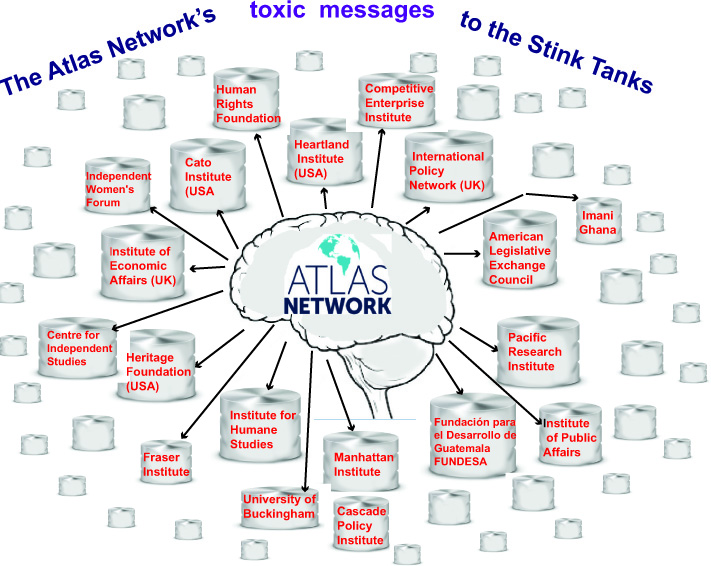
Researchers say that the whole point of the Atlas network of organisations and so called “institutes” and think tanks – which this article in New Republic says includes Australia’s Centre for Independent Studies, which has launched loud attacks against institutions such as the CSIRO, AEMO, and renewables in general – is to drown out actual academic expertise.
The Atlas Network does this, researchers say, to reduce the capacity for public and government influence with its own corporate propaganda that is dressed up as “research.”
George Monbiot, a columnist for the Guardian, calls many of the 500 institutions linked with the Atlas Network “junk tanks.” Jeremy Walker, from the University of Technology in Sydney, wrote in a paper that the network in Australia includes the CIS and the Institute for Public Affairs, both strongly anti renewable, and pro nuclear.
Their Facebook pages all still full of articles and videos making outrageous claims about renewables and nuclear. But that, it seems, is OK for the social media giant.
What the top UN court’s ruling means for Israel

Though non-binding, the ICJ’s rulings on the ongoing Gaza massacre strip away the Jewish state’s ability to obfuscate its crimes
Tarik Cyril Amar, a historian from Germany working at Koç University, Istanbul, on Russia, Ukraine, and Eastern Europe, the history of World War II, the cultural Cold War, and the politics of memory 22 July 24, https://www.rt.com/news/601411-icj-israel-palestine-genocide/
The 15 judges of the International Court of Justice (ICJ), the highest judicial organ of the United Nations, have issued what everyone agrees is a landmark finding. “Legal Consequences Arising from the Policies and Practices of Israel in the Occupied Palestinian Territory, including East Jerusalem,” is, in essence, a devastating condemnation of Israel’s policies and crimes in the territories which it conquered more than half a century ago, as a consequence of the Six Day War of 1967, which it still holds today.
The ICJ finding also, inevitably, means (whether the judges intend it or not) that not only Israel’s policy in these specific territories, but the Zionist project as such, is based on the irreparable injustice of violently depriving the Palestinians of their inalienable right to national self-determination. Make no mistake, this is not “merely” a blow to the crimes of Israeli occupation and annexation; it calls into question the foundations of Israel as a state, as it is built around the systematic defiance of justice, law, and elementary ethics.
One feature enhancing the impact of the ICJ finding is its comprehensiveness. The 80-page document is the outcome of a long and thorough process that started in late 2022, when the General Assembly of the UN requested what is known as an “advisory opinion.” Detailed and closely argued, the findings are based, among other things, on the combined expertise of some of the best jurists in the world and hearings that involved almost 60 states. (Israel, clearly aware that its position was less than promising and generally contemptuous of international law, shunned the opportunity to state its case, which adds to the absurdity of its current rage over the result.)
However, while similarly meticulous legal assessments tend to generate complicated outcomes, that is not the case here. As has been widely acknowledged, the findings are devastating for Israel and, at least in legal terms, a clear triumph for the Palestinians and Palestine. In the words of Erika Guevara Rosas, senior director for research, advocacy, policy, and campaigns at Amnesty International, the ICJ’s “conclusion is loud and clear.”
The ICJ has recognized without qualifications that Israel’s holding of territories it seized during the Six Day War – including East Jerusalem (which Israel has officially though unlawfully annexed) and the West Bank (which it pretends to “occupy” but is, in reality, annexing) is illegal and needs to end asap.
In particular, the ICJ made it clear that all settlement must cease and that the settlers already on these territories must leave. That decision alone means that between 700,000 and 750,000 Israeli illegals (here, that term is, for once, exactly correct) should not be where they are. Not only do all of them have to leave the over 100 settlements they never had a right to establish; the Israeli state has an obligation to evacuate them. Moreover, Israel’s expropriations of land are also illegal, that is, simply put, theft. The ICJ has ordered it to return what it has stolen, that is, tens of thousands of acres.
The Israeli state is, of course, deeply implicated in the illegal acts the ICJ has ordered it to stop and even reverse. Israel’s longstanding policies of incentivizing its Jewish citizens – including de facto colonial settlers from anywhere in the world – to move into the illegally held territories and steal Palestinian land and resources is fundamentally criminal, among other reasons, because it is inconsistent with international law, particularly the humanitarian law enshrined in the Geneva Conventions.
Regarding the Gaza Strip, long a de facto concentration camp for its Palestinian inhabitants and since October 2023 the site of Israel’s ongoing genocidal massacre against them, the ICJ has clearly rejected the all-too-frequently heard Israeli argument that its forces retreated from it in 2005.
In reality, as honest legal experts have long maintained and the ICJ has now confirmed explicitly, Israel has always exerted so much stifling control over this area that it has remained an occupying power, with all the attendant obligations, whether its forces were on the ground inside the Gaza Strip or abusing its inhabitants while stationed around it.
The ICJ also clarified the issue of apartheid. As should be well known, apartheid is a recognized crime under international law (it is not merely a name for one specific criminal regime once practiced in South Africa). Under, for instance, the Rome Statute of the International Criminal Court – not to be confused with the ICJ – the “crime of apartheid” is defined as a “crime against humanity” akin to, for instance, murder, extermination, enslavement, or torture. Also according to the Rome statute, what makes apartheid special is that it is “an institutionalized regime of systematic oppression and domination by one racial group over any other racial group or groups and committed with the intention of maintaining that regime.”
Put simply, apartheid is, literally, one of the worst crimes a regime and the people supporting and working for it can possibly commit. In the case of Israel, unbiased experts and various human rights organizations have long argued that it is committing this crime as well. The ICJ has addressed this issue, noting arguments “that Israel’s policies and practices in the Occupied Palestinian Territory amount to segregation or apartheid, in breach of Article 3 of CERD,” that is, the “Convention on the Elimination of All Forms of Racial Discrimination” (also known as the International Convention on the Elimination of All Forms of Racial Discrimination, ICERD).
Article 3 of the CERD imposes on states the duty not only to “condemn racial segregation and apartheid,” but also to “undertake to prevent, prohibit and eradicate all practices of this nature in territories under their jurisdiction.” The ICJ has concluded that Israel, by its “legislation” and “measures,” that is, really by everything it does as a state, is in breach of this key provision.
Israel is, in sum, a state practicing the crime against humanity of apartheid, de facto annexing and settling territories it has no conceivable legal claim on, and systematically denying a whole nation, the Palestinians, their right to self-determination. The court has also finished off any pretense that Israel can justify its continuing, pervasive criminality by alleged “security” needs. Those are only some of the ICJ’s key findings. Others concern Palestinian rights to restitution, return, and reparations, for instance. For anyone even vaguely familiar with how the Israeli state operates, it is obvious that these ICJ findings have declared its core principles illegal, as they are.
Many states, at least those with enough power, break international law, some quite habitually (the US, for instance), some “only” occasionally. Israel, however, is special: By virtue of its own, freely chosen policies informed by a nationalist ideology of supremacy and colonial settlement, it has made breaking international law its reason of state: without it, it is hard to even imagine how it can continue. Note, in this respect, that its minister of defense and its prime minister are on the verge of having warrants issued against them for crimes against humanity and war crimes by the International Criminal Court, while the ICJ has already found that genocide is a plausible possibility in Gaza and, since Israel has brutally disregarded all its injunctions, will most likely confirm that finding in a final judgment in the not-too-distant future.
One thing that the ICJ findings confirm is, of course, that the Palestinians have a right to armed resistance under international law. Another thing that follows is that many things that Israel and its Western backers pretend are up for negotiation are not: Palestinians have a right to get their land back; Israel has no right to use it, in any way, not even as a bargaining chip.
A third thing also follows, but from the Israeli response: The whole Israeli political spectrum, not only Prime Minister Netanyahu and the other extremists in his cabinet, has rejected the ICJ findings. Hence, the illusion that the problem with Israel is just a few radicals in power must be buried once and for all: Unfortunately, its delusions of domination and supremacy are widespread throughout its political sphere and its society. Israel is the worst rogue state in the world, and it is also a dead end. For that, it cannot, as its elites usually do, blame external enemies or “anti-Semitism.” In reality, its own arrogance and outrageous violence against the Palestinians and its neighbors are to blame.
Of course, these ICJ findings, as many cynics will remind us, will not compel Israel to change. Indeed, as UN Special Rapporteur Francesca Albanese has pointed out, Israel’s usual response to being called out is to commit even more crimes, as if to make a point about its defiance of international law. Yet it is shortsighted to believe that the ICJ’s condemnation is irrelevant.
For one thing, the ICJ has been explicit that all other states have a duty to “co-operate with the United Nations” to bring about “an end to Israel’s illegal presence in the Occupied Palestinian Territory and the full realization of the right of the Palestinian people to self-determination.” In addition, the judges also reiterated, in great detail, that not only other states, but also “international organizations, specialized agencies, investment corporations and all other institutions” must not “recognize, or cooperate with or assist in any manner in, any measures undertaken by Israel to exploit the resources of the occupied territories or to effect any changes in the demographic composition or geographic character or institutional structure of those territories.”
In essence, the ICJ has put all governments on this planet on notice that they are not free to do as they please about Israel and its crimes, but that they are bound by laws to help stop them and to abstain from being accomplices. That, of course, is an aspect of the findings that should concern the many hypocrites and accomplices in the EU and the US, such as German Chancellor Olaf Scholz, for instance, who cannot see anything but a “comprehensive compliance with international law” when he looks at Israel. But then, that’s the same Olaf Scholz, of course, who can’t figure out who blew up his country’s gas pipelines. Likewise, the leaders of the UK, with “Labour-friend-of-Israel” and, embarrassingly, human rights lawyer Keir Starmer in the lead, and those of the US, in the process of co-perpetrating the genocide in Gaza, should feel at least some discomfort: Standing by Israel will not be cost-free much longer.
Ultimately, the single most important result of these ICJ findings has to do with the enormous role that systematic obfuscation – in plain language: lying – plays for the Israeli regime and its society. All those who have long named Israel’s systemic crimes and called for resistance to them, whether outside or inside Palestine, now have, in effect, the highest court of the world on their side. There is no more room for debate about what Israel is doing, and once that has been settled, there is no argument left for defending it. The ICJ findings won’t suddenly change the world, but when the world does change, they will have played an important role.
Czech nuclear deal shows CSIRO GenCost is too optimistic, and new nukes are hopelessly uneconomic

John Quiggin, Jul 21, 2024, https://reneweconomy.com.au/czech-nuclear-deal-shows-csiro-gencost-is-too-optimistic-and-new-nukes-are-hopelessly-uneconomic/
The big unanswered question about nuclear power in Australia is how much it would cost. The handful of plants completed recently in the US and Europe have run way over time and over budget, but perhaps such failures can be avoided. On the other hand, the relatively successful Barakah project in the United Arab Emirates was undertaken in conditions that aren’t comparable to a democratic high-wage country like Australia. Moreover, the cost of the project, wrapped up in a long-term contract for both construction and maintenance, remains opaque. Most other projects are being constructed by Chinese or Russian firms, not an option for Australia.
In these circumstances, CSIRO’s Gencost project relied mainly on evidence from Korea, one of the few developed countries to maintain a nuclear construction program. Adjusting for the costs of starting from scratch, CSIRO has come up with an estimated construction cost for a 1000 MW nuclear plant of at least $A8.6 billion, leading to an estimated Levelised Cost of Energy (LCOE) of between $163/MWh-$264/MWh, for large-scale nuclear. But, given the limited evidence base, critics like Dick Smith have been able to argue that CSIRO has overestimated the capital costs.
Thanks to a recent announcement from Czechia, we now have the basis for a more informed estimate. Ever since the commissioning its last nuclear plant in 2003, Czech governments have sought commercial agreements for the construction of more nuclear power plants, with little success until recently.
Finally, after a process beginning in 2020, the Czech government sought tenders from three firms to build at least two, and possibly four 1000 MW reactors. After Westinghouse was excluded for unspecified failures to meet tender conditions, two contenders remained: EDF and KNHP. On 17 July it was announced that KNHP had submitted the winning bid, which, coincidentally, set the cost per GW at $8.6 billion.
Sadly for nuclear advocates, that figure is in $US. Converted to $A, it’s 12.8 billion, around 50 per cent more than the CSIRO Gencost estimate. At that price, the LCOE, even on the most favorable assumptions, will exceed $225/MWh.
And unlike the case in Australia, Czechia is offering a brownfield site, at no additional cost. The new plants will replace existing Soviet-era reactors at Dukovany. By contrast, in Australia under Dutton’s proposals, the costs of a nuclear plant would need to include the compulsory acquisition of existing sites, from mostly unwilling vendors.
The bad news doesn’t stop there. The (inevitably optimistic) target date for electricity generation is 2038, about the time Australia’s last coal plants will be closing. But the Czechs have at least a five year head start on Australia, even assuming that a Dutton government could begin a tender process soon after taking office. In reality, it would be necessary to establish and staff both a publicly owned nuclear generation enterprise and a nuclear regulatory agency with an appropriate legislative framework.
And there’s one more wrinkle. Westinghouse, excluded from the Czech bid is engaged on long-running litigation with KNHP, claiming a breach of intellectual property. It’s been unsuccessful so far, but a final ruling is not expected until 2025. If Westinghouse succeeds, the Czech project will almost certainly be delayed.
Summing up, taking the Czech announcement as a baseline, building two to four 1000 MW nuclear plants in Australia would probably cost $50-$100 billion, and not be complete until well into the 2040s.
If nuclear power is so costly, why have the Czechs chosen to pursue this technology. The explanation is partly historical. The former Czechoslovakia was an early adopter of nuclear power and, despite the usual delays and cost overruns, enthusiasm for the technology seems to have persisted.
More significant, however, is the influence of one man, Vaclav Klaus, a dominant figure in Czech politics from the dissolution of the Soviet bloc to the 2010s. Apart from sharing the same first name, Klaus has little in common with the architect of Czech freedom, Vaclav Havel. Klaus was, and remains an extreme climate science denialist, whose views are reflected by the rightwing party he founded, the Civic Democratic Party (ODS). Although Klaus himself left office under a cloud in 2013, ODS remained a dominant force.
The current Czech Prime Minister, Petr Fiala (also ODS) has followed the same evolution as other ‘sceptics’, shifting from outright denial to what Chris Bowen has described as “all-too-hard-ism”. And with high carbon prices in Europe, persisting with coal is even less tenable than in Australia. In political terms, nuclear power is the ideal solution to the problem of replacing coal without embracing renewables. It’s just a pity about the economics.
With luck, Australia can learn from the Czech lesson. Even under the favorable conditions of a brownfield site and an established nuclear industry, new nuclear power is hopelessly uneconomic.
John Quiggin is a professor of economics at the University of Queensland.
BBC correspondent exposes ‘collapse of journalistic norms’ after 7 Oct
BBC presenters interviewing Israeli guests consistently failed to interject when unverified claims were made on air following the events of 7 October
News Desk. 22 July 24 https://thecradle.co/articles-id/26046
Leaked emails published by Jadaliyya on 18 July reveal grievances expressed by BBC staff over the UK broadcaster’s coverage of Israel’s genocide of Palestinians in Gaza since 7 October.
In a 1 May email, BBC correspondent in Beirut, Rami Ruhayem, wrote to the broadcaster’s Director General Tim Davie and several other departments of its news staff, detailing “evidence of a collapse in the application of basic standards and norms of journalism that seems aligned with Israel’s propaganda strategy.”
He highlights that BBC staff did not respond to “a mass of evidence-based critique of coverage” on 7 October and the days that followed.
“Instead of putting together mechanisms for a thorough examination of output, and for inclusive, respectful, and professional discussions guided by [BBC] standards and values, it appears management has opted to oversee a continuation of the editorial direction the BBC has taken since October,” Ruhayem’s email added. JUL 22, 2024
Jadaliyya has also obtained the content of all of Ruhayem’s email attachments. In the first attachment, the BBC correspondent analyzes interviews with Israeli guests on the British news channel between 10 October and 25 October.
In the second, he analyzes BBC content relating to Hamas’ Operation Al-Aqsa Flood.
“This paper is not about what happened on that day and the days that followed; rather, it is an inquiry into whether – and to what extent – the BBC applied, misapplied or simply cast aside journalistic standards in treating various claims about what happened on that day. I’ve found a sustained collapse in some of the most basic standards and values, one which seems to complement Israel’s propaganda purposes and strategy,” Ruhayem wrote.
“From the start, it was evident that unverified claims of the most atrocious acts by Hamas fighters against Israelis were being circulated and repeated at the highest levels. Even though it was not possible to rule them out, especially at an early stage, a set of basic measures should’ve been initiated; one of them would’ve been to make sure presenters inquire about evidence when such claims are made on air and clarify that the BBC had not verified them,” he added.
He then gives examples of such claims, including the claim that a Hamas fighter cut open the stomach of a pregnant Israeli woman and killed the fetus after pulling it out. Ruhayem highlights that this claim was made at least twice during BBC interviews without interjection from the presenters.
Ruhayem then discusses the claim made in a number of interviews that Hamas fighters “went street to street,” shooting babies, raping girls, beheading, and burning people alive.
“A few basic questions could’ve shed some light on these claims, and helped other teams put together a comprehensive picture of verified atrocities to inform audiences. But in all of the examples above and more, no such questions were asked, and the allegations passed with no comment, clarification, or interjection of any sort.”
Comment: Whereas they were, unsurprisingly, quick and consistent in applying these standards to anti-genocide representatives.
“Once again, the BBC was implying to its audiences that it had verified all these claims, although in these cases, it wasn’t clear what – exactly – it had supposedly verified,” he added.
Since Operation Al-Aqsa Flood and the start of the Israeli genocide in Gaza, claims of atrocities committed by the Palestinian resistance have yet to be verified.
Comment: They haven’t been verified, and investigations into them reveal that this is likely because they did not happen.
Israel’s Haaretz newspaper confirmed earlier this month that the Israeli army ordered troops to kill their own soldiers and civilians on 7 October, turning the Gaza border into an “extermination zone” under the Hannibal Directive.
This had been reported extensively prior to the Haaretz report and has cast significant doubt over claims that Hamas fighters carried out mass killing and mass destruction on 7 October.
Stories of the mass rapes allegedly committed by the Palestinian resistance also remain unproven, including by Israeli police, who were unable to verify accounts of sexual assault committed by Palestinian fighters that day, according to a Haaretz report in January.
New Military Alliances Forming in the Pacific
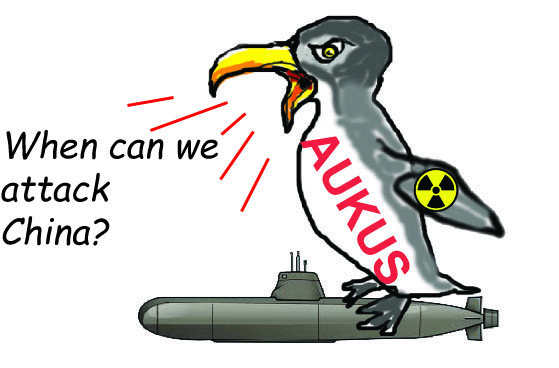
The US is now surrounding China with new bases recently established in the Pacific and forming AUKUS, a new military alliance with Australia, the UK and the US. The US has been breaking its agreement made with China in 1972 as we now are arming Taiwan despite promises made by Nixon and Kissinger to recognize China and remain neutral on the question of the future of Taiwan, to where the anti-communist forces retreated after the Chinese Revolution.
By Alice Slater, NEW YORK, Jul 22 2024 (IPS) – https://www.ipsnews.net/2024/07/new-military-alliances-forming-pacific/
On the heels of a new alliance announced this summer by Russia and North Korea for a pact pledging mutual defense, with the support of China, it is now shockingly being suggested in South Korea that it review its security policy with the US and end its reliance on the US guarantee, to employ on South Koreas’ behalf, US nuclear weapons as part of its “nuclear umbrella”.
The “umbrella” is offered to all NATO states as well as the Pacific states of Japan, Australia, and South Korea. Such questioning is evidence of the growing havoc faced in the world by the failure of the United States to make good on its legal obligation under the Non-Proliferation Treaty (NPT) for good faith efforts for nuclear disarmament.
The nuclear umbrella, to the extent that it includes the stationing of nuclear weapons in five NATO states (Germany, Italy, Netherlands, Belgium, Turkey) is in itself an illegal violation of the 1968 Non-Proliferation Treaty in which five nuclear weapons states, the US, Russia, UK, France, and China, promised to make “good faith efforts” for nuclear disarmament while all the other countries of the world agreed not to get nuclear weapons.
Everyone, including South Korea signed the NPT except for Israel, Pakistan and India who developed their own nuclear arsenals. The NPT had a Faustian bargain that if a country promised not to get nuclear weapons, they would have an “inalienable right” to so-called “peaceful” nuclear power.
Since every “peaceful” nuclear power plant produced the material needed to make nuclear weapons the NPT gives those nations the keys to the bomb factory, North Korea walked out of the NPT and used its nuclear power to produce a nuclear arsenal. Iran has been enriching its nuclear materials but has not yet made a bomb.
The fact that Russia is allying with North Korea and China at this time is a result of the failure of US diplomacy and the drive by the US military-industrial-congressional-media-academic-think tank complex (MICIMATT) to expand the US empire beyond its 800 US military bases in 87 nations.
The US is now surrounding China with new bases recently established in the Pacific and forming AUKUS, a new military alliance with Australia, the UK and the US. The US has been breaking its agreement made with China in 1972 as we now are arming Taiwan despite promises made by Nixon and Kissinger to recognize China and remain neutral on the question of the future of Taiwan, to where the anti-communist forces retreated after the Chinese Revolution.
The US, after the end of the Cold War in 1989 with Russia walked out of the Anti-Ballistic Missile Treaty in 1992 and put missile bases in Poland and Romania, walked out of the 1987 Intermediate Missile Forces Treaty negotiated by Reagan and Gorbachev in 1972, expanded NATO up to Russia’s border despite promises to Gorbachev that we wouldn’t expand NATO “one inch” eastward beyond a unified Germany.
Indeed, horrified by the NATO expansion, Putin at one point asked Clinton if Russia could be invited to join NATO which was refused, and announced often and pointedly in the years leading up to the Ukrainian War, that taking Ukraine into NATO was a “red line” for Russia!
The Empire was indifferent and kept expanding until we reached this sorry and perilous moment we are experiencing now. In retaliation, Putin just put Russian nuclear weapons in Belarus—a first incidence of Russian nuclear sharing!
Ironically, the underlying rationale for Nixon and Kissinger making peace with China was to prevent a more powerful alliance between Russia and China.
The US will be reaping the whirlwind if it doesn’t comply with its nuclear disarmament obligations and take the path to peace. More nuclear armed countries such as South Korea may proliferate. Saudi Arabia is currently seeking “peaceful” nuclear power without safeguards on its use.
With either nuclear annihilation or cataclysmic climate collapse facing our beleaguered planet, it’s time to cooperate with other countries—make peace not war!!
Alice Slater serves on the boards of World BEYOND War and the Global Network Against Weapons and Nuclear Power in Space, and is a UN NGO Representative for the Nuclear Age Peace Foundation.
IPS UN Bureau
Pacific leaders, Japan, agree on Fukushima nuclear wastewater discharge (not everyone is happy)
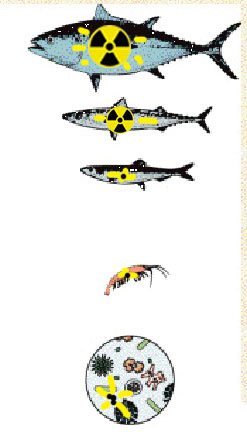
“The discharge, planned to continue for decades, is irreversible. Radionuclides bioaccumulate in marine organisms and can be passed up the food web, affecting marine life and humans who consume affected seafood,”
“The discharge, planned to continue for decades, is irreversible. Radionuclides bioaccumulate in marine organisms and can be passed up the food web, affecting marine life and humans who consume affected seafood,”
RNZ 19 July 2024 , By Pita Ligaiula in Tokyo
Consensus has been reached by Pacific leaders with Japan to address the controversial release of treated nuclear wastewater from the Fukushima nuclear power plant into the Pacific Ocean.
In August last year, Japan began discharging waste from about 1000 storage tanks holding 1.34 million metric tons of contaminated water collected after an earthquake and tsunami in 2011 that caused the meltdown of the Fukushima nuclear plant.
The agreement came at the Japanese hosted 10th Pacific Island Leaders Meeting (PALM10) on Thursday in the capital Tokyo attended by most of the Pacific Islands Forum (PIF) country leaders…………………………..
Pacific leaders emphasised the importance of a shared commitment to safeguarding the health, environment, and marine resources of the Pacific region and a need for transparency from Japan………………………………………….
TEPCO uses a process known as Advanced Liquid Processing System involving special filters which remove from the contaminated water most of the 62 types of radioactive materials, radionuclides such as cesium, strontium, iodine and cobalt but not tritium.
The leaders agreed to keep the ALPS treated water issue as a standing agenda item for future PALM meetings with Japan, supported by an ongoing review process. Their decision reflects concerns about addressing the long-term implications and ensuring continuous monitoring and evaluation.
While consensus was reached at the summit, the wastewater release continues to be questioned by some scientists.
Director of the Kewalo Marine Laboratory at the University of Hawaii, Research Professor Robert Richmond, said concerns remain regarding the efficacy of the ALPS treatment and the contents of the thousands of storage tanks of radioactive wastewater.
“The long-term effects of this discharge on Pacific marine ecosystems and those who depend on them are still unknown. Even small doses of radiation can cause cancer or genetic damage,” Richmond said in a statement to BenarNews after the agreement.
He criticised the current monitoring program as inadequate and poorly designed, failing to protect ocean and human health.
“The discharge, planned to continue for decades, is irreversible. Radionuclides bioaccumulate in marine organisms and can be passed up the food web, affecting marine life and humans who consume affected seafood,” Richmond said……………………………………………… https://www.rnz.co.nz/international/pacific-news/522582/pacific-leaders-japan-agree-on-fukushima-nuclear-wastewater-discharge—
Russia Says It May Deploy Nuclear Missiles in Response to New US Missile Deployment to Germany
by Dave DeCamp July 18, 2024, https://news.antiwar.com/2024/07/18/russia-says-it-may-deploy-nuclear-missiles-in-response-to-new-us-missile-deployment-to-germany/
The US is deploying missiles previously banned by the INF, a treaty between the US and Russia the Trump administration left in 2019
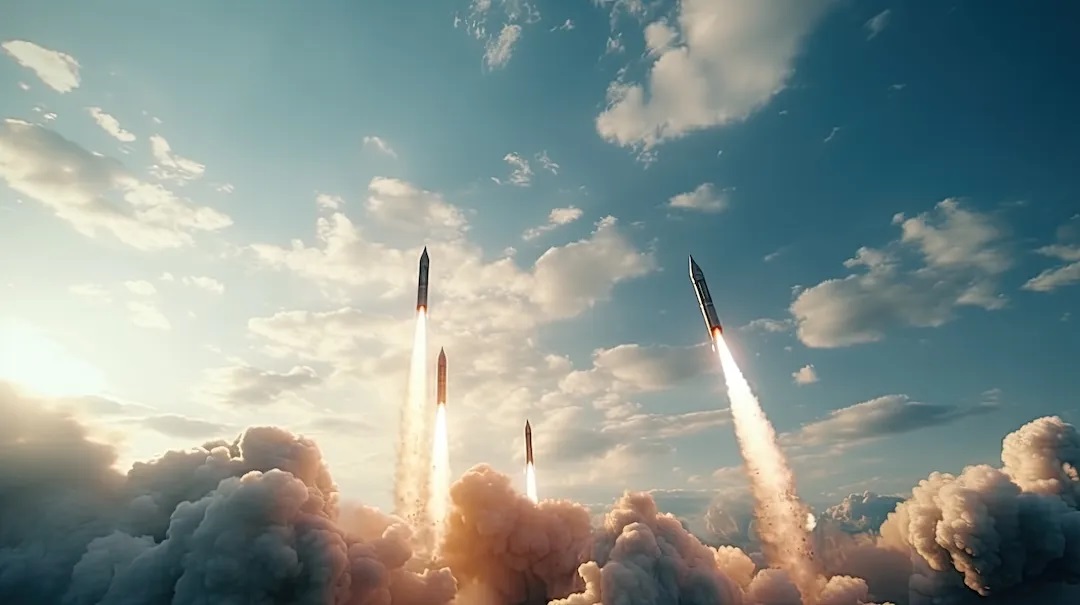
Russian Deputy Foreign Minister Sergey Ryabkov said Thursday that Moscow won’t rule out deploying nuclear missiles in response to the US planning to deploy missile systems to Germany in 2026 that were previously banned by the Intermediate-Range Nuclear Forces (INF) Treaty.
“I don’t rule anything out,” Ryabkov said when asked about the possibility of a nuclear deployment.
Ryabkov went on to reference Kaliningrad, the Russian Oblast on the Baltic Sea that’s wedged between Lithuania and Poland and separated from the rest of Russia. He said the territory “has long attracted the unhealthy attention of our opponents.”
Hinting Russia could respond to the US deployment by sending weapons to Kaliningrad, Ryabkov said, “Kaliningrad is no exception in terms of our 100 percent determination to do everything necessary to push back those who may harbor aggressive plans and who try to provoke us to take certain steps that are undesirable for anyone and are fraught with further complications.”
The INF, which the US withdrew from in 2019, prohibited land-based missile systems with a range between 310 and 3,400 miles. The planned US deployment to Germany includes a land-based version of nuclear-capable Tomahawk missiles, which have a range of about 1,000 miles and are primarily used by US Navy ships and submarines.
The US announced the deployment during last week’s NATO summit in Washington and said it would also include SM-6 missiles and “developmental hypersonic weapons.” Based on the statement, the US likely plans to deploy a Typhon launcher, a covert system concealed in a 40-foot shipping container that can fire Tomahawks and SM-6 missiles. The SM-6 can hit targets up to 290 miles away, below the levels previously banned by the INF.
When the US withdrew from the INF treaty, it claimed Russia was violating the agreement by developing the ground-launched 9M729 cruise missile. Russian officials denied the missile was a violation, saying it had a maximum range of 298 miles.
Russia also said the US was violating the INF by establishing Aegis Ashore missile defense systems in Romania and Poland. The systems use Mk-41 vertical launchers, which can fit Tomahawk missiles. During the NATO summit, the US also announced that its Aegis system in Poland is now operational.
The US refused to negotiate with Russia on the INF issues, and the Trump administration tore up the treaty in August 2019 and began testing previously banned missile systems almost immediately after. It was clear the US exited the treaty so it could deploy intermediate-range missiles near China, leading Russia to propose a moratorium on the deployment of INF missiles in Europe. But the US never accepted the offer.
How close are we to chaos? It turns out, just one blue screen of death

Keeping cash as a backup is a smart idea in the event of a payment systems outage,
David Swan, Technology editor, 22 July 24, https://www.theage.com.au/technology/how-close-are-we-to-chaos-it-turns-out-just-one-blue-screen-of-death-20240720-p5jv6t.html
In some places, Friday’s mass tech outage resembled the beginning of an apocalyptic zombie movie. Supermarket checkouts were felled across the country and shoppers were turned away, airports became shelters for stranded passengers, and live TV and radio presenters were left scrambling to fill airtime. The iconic Windows “blue screen of death” hit millions of devices globally and rendered them effectively useless.
The ABC’s national youth station Triple J issued a call-out for anyone who could come to their Sydney studio to DJ in person. One woman was reportedly unable to open her smart fridge to access her food.
All because of a failure at CrowdStrike, a company that most of us – least of all those who were worst hit – had never heard of before.
It’s thought to be the worst tech outage in history and Australia was at its epicentre: the crisis began here, and spread to Europe and the US as the day progressed. Surgeries were cancelled in Austria, Japanese airlines cancelled flights and Indian banks were knocked offline. It was a horrifying demonstration of how interconnected global technology is, and how quickly things can fall apart.
At its peak, it reminded us of some of the most stressful periods of the pandemic, when shoppers fought each other for rolls of toilet paper and argued about whether they needed to wear masks.
Many of us lived through the Y2K panic. We avoided the worst outcomes but it was an early harbinger of how vulnerable our technology is to bugs and faults, and showed the work required to keep everything up and running. The CrowdStrike meltdown felt closer to what’s really at risk when things go wrong.
As a technology reporter, for years I’ve had warnings from industry executives of the danger of cyberattacks or mass outages. These warnings have become real.
The cause of this outage was not anything malicious. It was relatively innocuous: CrowdStrike has blamed a faulty update from its security software, which then caused millions of Windows machines to crash and enter a recovery boot loop.
Of course Australians are no strangers to mass outages, even as they become more common and more severe.
The Optus network outage that froze train networks and disrupted hospital services just over six months ago was eerily similar to the events on Friday, not least because it was also caused by what was supposed to be a routine software upgrade.
The resignation of chief executive Kelly Bayer Rosmarin did little to prevent another Optus outage a month later. If anything, Friday’s CrowdStrike outage highlights how many opportunities there are for one failure to cripple millions of devices and grind the global economy to a halt. So many of the devices that underpin our economy have hundreds of different ways that they can be knocked offline, whether through a cyberattack or human error, as was likely the case with CrowdStrike.
The incident would likely have been even worse were it a cyberattack. Experts have long warned about the vulnerability of critical infrastructure – including water supplies and electricity – to malicious hackers. Everything is now connected to the internet and is therefore at risk.
And yet the potential damage of such attacks is only growing. We are now more reliant than ever on a concentrated number of software firms, and we have repeatedly seen their products come up short when we need them to just work.
In the US, the chair of the Federal Trade Commission, Lina Khan, put it succinctly.
“All too often these days, a single glitch results in a system-wide outage, affecting industries from healthcare and airlines to banks and auto-dealers,” Khan said on Saturday.
“Millions of people and businesses pay the price.”
Khan is right. The technology we rely on is increasingly fragile, and is increasingly in the hands of just a few companies. The world’s tech giants like Microsoft and Apple now effectively run our daily lives and businesses, and an update containing a small human error can knock it all over, from Australia to India.
The heat is now on CrowdStrike, as well as the broader technology sector on which we rely so heavily, and some initial lessons are clear. Airlines have backup systems to help keep some flights operational in the case of a technological malfunction. As everyday citizens, it’s an unfortunate reality that we need to think similarly.
Keeping cash as a backup is a smart idea in the event of a payment systems outage, as is having spare battery packs for your devices. Many smart modems these days, like those from Telstra and Optus, offer 4G or 5G internet if their main connection goes down. We need more redundancies built in to the technology we use, and more alternatives in case the technology stops working altogether.
For IT executives at supermarkets, banks and hospitals, the outage makes it clear that “business as usual” will no longer cut it, and customers rightly should expect adequate backups to be in place. Before the Optus outage, a sense of complacency had permeated our IT operations rooms and our company boardrooms, and it still remains. No longer.
The “blue screen of death”, accompanied by a frowny face, was an apt metaphor for the current state of play when it comes to our overreliance on technology. Our technology companies – and us consumers, too – need to do things differently if we’re to avoid another catastrophic global IT outage. There’s too much at stake not to.
NATO’s Obscure Relations With Israel and its weapons industry
With the exception of Canada, the Netherlands, Spain, and Belgium, the remainder of the 32 NATO members continue to sell/send weapons to Israel as Israel conducts genocide operations on Palestinians in Gaza.
Ann Wright, WorldBeyondWar , July 20, 2024
Ann Wright on the arms flowing between members of the military alliance and Israel, which despite its small size, ranks as the 15th top weapons importer in the world.
NATO has a long, close and relatively unknown relationship with Israel that in 2016 resulted in the establishment of an Israel office in the Brussels headquarters of the military alliance.
Underscoring the importance to Israel’s association with NATO, Prime Minister Benjamin Netanyahu said upon the opening of the office, “This is an important step that helps Israel’s security. It is further proof to the status of Israel and the willingness of many organizations to cooperate with us in the field of security.”
NATO’s invitation to Israel to take up residence in NATO headquarters was a result of pressure by other NATO members on Turkey to drop its veto of the invitation. The invitation arose through a new NATO partnership policy beginning in 2014 but Turkey vetoed the invitation until 2016.
Behind the scenes negotiations between Turkey and Israel in 2015 warmed the chilly relationship that had been essentially severed between the countries in 2010 over Israeli commandos killing 10 Turkish activists and wounding over 50 participants on the Mavi Marmara, a Turkish ship bound for Gaza as a part of the seven-ship Gaza Freedom Flotilla.
According to NATO documents, NATO and Israel have worked together for almost 30 years, cooperating in science and technology, counter terrorism, civil preparedness, countering weapons of mass destruction and women, peace and security.
To strengthen NATO naval interoperability NATO brought on Israel as a partner for its Operation Sea Guardian. Israel’s military medical academy now serves as a “unique asset” for NATO’s Partnership Training and Education Centers community.
Israel is not officially integrated in NATO but is part of the Mediterranean Dialogue, a program sponsored by NATO in cooperation with seven countries of the Mediterranean.
Arms Dealing
NATO’s long-standing working relationship with Israel has translated into NATO countries selling weapons to Israel and other countries buying weapons from Israel’s big weapons industry.
With the exception of Canada, the Netherlands, Spain, and Belgium, the remainder of the 32 NATO members continue to sell/send weapons to Israel as Israel conducts genocide operations on Palestinians in Gaza.
Due to a court case, Denmark may suspend export of F-35 fighter jet parts to the U.S., because the U.S. sells the jets to Israel.
Even Latvia sold weapons to Israel, while Lithuania bought weapons from Israel. Greece, Albania, Slovakia, and many other NATO countries have purchased military equipment from Israel.
The Action on Armed Violence has a comprehensive worldwide listing of weapons sales and transfers to Israel.
US Main Supplier of Foreign-Sourced Weapons
Israel has been the largest cumulative recipient of U.S. foreign aid since its founding in 1948, having received about $310 billion in economic and military assistance. Since Oct. 7, 2023, the U.S. has passed legislation that has provided at least $12.5 billion in military aid to Israel, which included $3.8 billion from legislation in March 2024 and $8.7 billion from a supplemental appropriation in April 2024.
Since Oct. 7, only two of the more than one hundred military aid transfers to Israel have reportedly met the congressional review threshold of $250 million to be made public, and since the records for the other weapons transfers have not been made public, we can’t be sure .
Additionally, the Israeli military received expedited deliveries of weapons from a strategic stockpile of weapons that is normally used to replenishment weapons for U.S. units in the Middle East. The U.S. has maintained massive warehouses for the stockpile of a huge variety and amount of weapons since the 1980s.
All of the Israeli Air Force’s manned aircraft that are bombing people in Gaza are American-made, with the exception of one helicopter built by France’s Airbus Helicopters. Israel is the first international operator of the U.S. F-35 Joint Strike Fighter, the most technologically advanced fighter jet ever made, and had taken delivery of 36 of 75 F-35s by the end of 2023, paying for them with U.S. assistance.
In 2016 the U.S. and Israel signed a third 10-year Memorandum of Understanding covering the 2018-2028 period providing for $38 billion in military aid; $33 billion in grants to buy military equipment; and $5 billion for missile defense systems.
Israel received 69 percent of its military aid from the U.S. in the 2019-2023 period, according to a March fact sheet issued by the Stockholm International Peace Research Institute (SIPRI).
Israel ranks 98th in world population, with a population of 9.4 million, only 0.11 percent of the world’s population, and ranks 154th of all countries in land mass. Despite its small population and land, a study by SIPRI ranks Israel as the world’s 15th top weapons importer, receiving 2.1 percent of all imports, according to globally available data from 2019-2023. Israel is the world’s 9th top weapons exporter, responsible for 2.4 percent of exports.
Germany 2nd Largest Supplier
Germany is the second largest weapons provider to Israel providing around 30 percent of all foreign weapons to Israel. In 2023, Germany approved military equipment and arms exports to Israel worth $353.70 million, a 10-fold increase compared with 2022, This includes four submarines. according to the German Economy Ministry data and data submitted to the International Court of Justice in Nicaragua’s case against Germany for complicity in the genocide of Gaza.
In April, Nicaragua argued that Germany had breached the U.N. Genocide Convention by sending military hardware to Israel, thereby aiding and abetting genocide and violating international humanitarian law in Gaza…………………………………………………………………………………………………..
German Member of Parliament Sevim Dagdelen spoke in Washington, D.C., on July 6 at the NO to NATO; YES to PEACE symposium and on July 7 at the rally for peace at the White House.
[See: 75 Years of NATO = 75 Years of Denial]
In her talks, she said that while from 2019 to 2023, 30 percent of weapons into Israel came from Germany, in 2023, the percentage of weapons sent to Israel dramatically increased to 47 percent from Germany while the U.S. supplied 53 percent.
Dagdelen spoke of three myths concerning NATO.
First myth: That NATO is a defensive alliance abiding by international law………………………….
Second myth: That NATO stands for democracy and the rule of law……………………………..
Third myth: That NATO is a community of shared values and stands for human rights…………………..
Italy, UK & France
From 2013-2023, Italy was the third highest weapons seller to Israel providing 4.7 percent of foreign weapons, according to SIPRI .
In 2023, Britain granted export licenses to sell at least $52.5 million of military equipment to Israel — mainly munitions, unmanned air vehicles, small arms ammunition and components for aircraft, helicopters, and assault rifles……………………………….
Not Just NATO Members
South Korea’s weapons trade with Israel has grown significantly, with $47 million worth of arms sales to Israel over the past 10 years. The Hyundai corporation has sold equipment to Israel that is used to demolish Palestinian homes for Israeli settlement.
Penny Wong, the Australian foreign affairs minister, has said her country has not supplied weapons since the start of the Gaza conflict yet data from the Department of Foreign Affairs and Trade (DFAT) shows that in February 2024 alone Australia directly exported over $1.5 million in “arms and ammunition” to Israel. At an Australian Senate Estimates hearing, the chief economist of DFAT acknowledged that Australia has exported $10 million worth of “arms and ammunition” to Israel over the past five years……………………………..
Washington Summit Statement Silent on Genocide
While NATO members are deeply complicit in the Israeli genocide of Gaza, the final statement of the NATO summit in Washington mentioned nothing about the Israeli genocide of Gaza,………………………………………………
Ann Wright served 29 years in the US Army/Army Reserves and retired as a colonel. She served 16 years as a U.S. diplomat and resigned from the U.S. government in 2003 in opposition to the U.S. war on Iraq. She is a co-author of Dissent: Voices of Conscience.
The original version of this article was published by WorldBeyondWar.
High hopes and security fears for next-gen nuclear reactors

Fuel for advanced reactors is raising nuclear proliferation concerns.
The Verge, By Justine Calma, a senior science reporter covering energy and the environment with more than a decade of experience. She is also the host of Hell or High Water: When Disaster Hits Home, a podcast from Vox Media and Audible Originals, Jul 20, 2024
Next-generation nuclear reactors are heating up a debate over whether their fuel could be used to make bombs, jeopardizing efforts to prevent the proliferation of nuclear weapons.
Uranium in the fuel could theoretically be used to develop a nuclear weapon. Older reactors use such low concentrations that they don’t really pose a weapons proliferation threat. But advanced reactors would use higher concentrations, making them a potential target of terrorist groups or other countries wanting to take the fuel to develop their own nuclear weapons, some experts warn.
They argue that the US hasn’t prepared enough to hedge against that worst-case scenario and are calling on Congress and the Department of Energy to assess potential security risks with advanced reactor fuel.
Other experts and industry groups still think it’s unfeasible for such a worst-case scenario to materialize. But the issue is starting to come to a head as nuclear reactors become a more attractive energy source, garnering a rare show of bipartisan support in Congress.
……. Earlier this month, President Joe Biden signed bipartisan legislation into law meant to speed the development of next-generation nuclear reactors in the US by streamlining approval processes.
………….The US Nuclear Regulatory Commission (NRC) certified an advanced small modular reactor design for the first time last year. And we’re likely still years away from seeing commercial plants in action. But if the US ever wants to get there, it’ll also have to build up a supply chain for the fuel those advanced reactors would consume. The Inflation Reduction Act includes $700 million to develop that domestic fuel supply.
Today’s reactors generally run on fuel made with a uranium isotope called U-235. Naturally occurring uranium has quite low concentrations of U-235; it has to be “enriched” — usually up to a 5 percent concentration of U-235 for a traditional reactor. Smaller advanced reactors would run on more energy-dense fuel that’s enriched with between 5 to 20 percent U-235, called HALEU (short for high-assay low-enriched uranium).
That higher concentration is what has some experts worried. “If the weapons usability of HALEU is borne out, then even a single reactor would pose serious security concerns,” says a policy analysis penned by a group of nuclear proliferation experts and engineers published in the journal Science last month (including an author credited with being one of the architects of the first hydrogen bomb).
Fuel with a concentration of at least 20 percent is considered highly enriched uranium, which could potentially be used to develop nuclear weapons. With HALEU designs reaching 19.75 percent U-235, the authors argue, it’s time for the US to think hard about how safe the next generation of nuclear reactors would be from malicious intent.
“We need to make sure that we don’t get in front of ourselves here and make sure that all the security and safety provisions are in place first before we go off and start sending [HALEU] all around the country,” says R. Scott Kemp, associate professor of nuclear science and engineering and director of the MIT Laboratory for Nuclear Security and Policy.
That 20 percent threshold goes back to the 1970s, and bad actors ostensibly have more information and computational tools at their disposal to develop weapons, Kemp and his coauthors write in the paper. It might even be possible to craft a bomb with HALEU well under the 20 percent threshold, the paper contends……………………………………………………………………………………..
Aside from asking Congress for an updated security assessment of HALEU, the paper suggests setting a lower enrichment limit for uranium based on new research or ramping up security measures for HALEU to more closely match those for weapons-usable fuels.
…………………………“Unless there’s a really good reason to switch to fuels that pose greater risks of nuclear proliferation, then it’s irresponsible to pursue those,” says Edwin Lyman, director of nuclear power safety at the Union of Concerned Scientists and another author of the paper. Lyman has also raised concerns about the radioactive waste from nuclear reactors over the years. “There is no good reason.” https://www.theverge.com/24201610/next-generation-nuclear-energy-reactors-security-weapons-proliferation-risk
1 This Month

of the week – Shut Down Drone Warfare!


Tell the Ukrainian Government to Drop Prosecution of Peace Activist Yurii Sheliazhenko

Petition to revoke the licensing of the Near Surface Nuclear Disposal Facility (NSDF) at Chalk River. https://www.ourcommons.ca/petitions/en/Petition/Details?Petition=e-7247
To see nuclear-related stories in greater depth and intensity – go to https://nuclearinformation.wordpress.com
-
Archives
- March 2026 (244)
- February 2026 (268)
- January 2026 (308)
- December 2025 (358)
- November 2025 (359)
- October 2025 (376)
- September 2025 (257)
- August 2025 (319)
- July 2025 (230)
- June 2025 (348)
- May 2025 (261)
- April 2025 (305)
-
Categories
- 1
- 1 NUCLEAR ISSUES
- business and costs
- climate change
- culture and arts
- ENERGY
- environment
- health
- history
- indigenous issues
- Legal
- marketing of nuclear
- media
- opposition to nuclear
- PERSONAL STORIES
- politics
- politics international
- Religion and ethics
- safety
- secrets,lies and civil liberties
- spinbuster
- technology
- Uranium
- wastes
- weapons and war
- Women
- 2 WORLD
- ACTION
- AFRICA
- Atrocities
- AUSTRALIA
- Christina's notes
- Christina's themes
- culture and arts
- Events
- Fuk 2022
- Fuk 2023
- Fukushima 2017
- Fukushima 2018
- fukushima 2019
- Fukushima 2020
- Fukushima 2021
- general
- global warming
- Humour (God we need it)
- Nuclear
- RARE EARTHS
- Reference
- resources – print
- Resources -audiovicual
- Weekly Newsletter
- World
- World Nuclear
- YouTube
-
RSS
Entries RSS
Comments RSS
 nuclear-news