In New Mexico, a Walk Commemorates the Nuclear Disaster Few Outside the Navajo Nation Remember
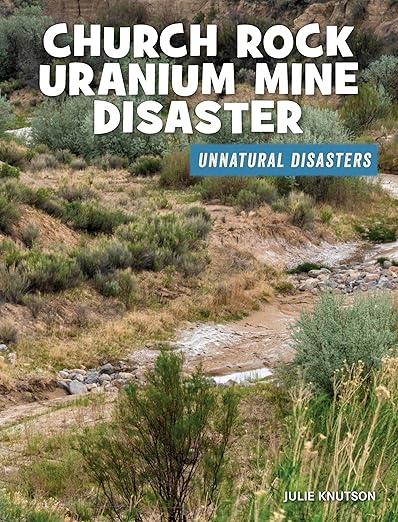
the Navajo Birth Cohort Study, which since 2010 has been looking at the relationship between uranium exposures, birth outcomes and child development on the Navajo Nation. Among the findings is that mothers were deficient in key nutrients for babies’ developing nervous systems.
The Church Rock spill released more radioactive material than the partial meltdown at Three Mile Island four months earlier. Last week’s walk highlights the continuing cleanup and the ongoing hazards uranium mining poses to tribal lands.
Inside Climate News, By Noel Lyn Smith, July 20, 2024
RED WATER POND ROAD, New Mexico—As Tony Hood walked along New Mexico Highway 566 last Saturday, he thought about where he was 45 years earlier, when an earthen dam broke at the site of a uranium mill operated by the United Nuclear Corp., releasing 94 million gallons of radioactive water and 1,100 tons of uranium waste across portions of New Mexico, Arizona and the Navajo Nation.
Hood was working inside a nearby underground mine owned by the Kerr-McGee Corp. when the dam broke on July 16, 1979. He didn’t learn about the spill until after returning to the surface.
As he walked in this month’s event commemorating the spill, he pointed to the spot where the dam was located.
“I guess they observed there was some cracks in the earthen dam but they didn’t do nothing about it,” he said. “Finally, the dam collapsed, breached.”
The dam failure at the processing mill north of Church Rock, New Mexico, released radioactive liquid that eventually flowed into the Rio Puerco and through areas on the Navajo Nation, nearby Gallup, New Mexico, and, finally, Arizona. Now known as the Church Rock spill, the accident released the most radioactive material in U.S. history—more than the notorious partial meltdown at the Three Mile Island Nuclear Generating Station four months earlier—yet remains largely unknown to the American public.
The nonprofit Red Water Pond Road Community Association tries to remedy that lack of awareness by organizing the annual walk by the site of the spill, during which current and former area residents, supporters and advocates remember what happened that day. They also talk about the aftermath, including what federal and tribal agencies have done and need to do to clean up the communities affected by the accident.
……………………………………………………………………………………………………….. A report in May 2014 by the U.S. Government Accountability Office found that “Navajo people continue to live with the environmental and health effects from mining operations: more than 500 abandoned mines are located across the reservation, some close to homes and communities, and an unknown number of homes and drinking water sources contain radioactive elements.”
Educational materials distributed by the Red Water Pond Road Community Association mention some health studies that residents participated in. One is the Navajo Birth Cohort Study, which since 2010 has been looking at the relationship between uranium exposures, birth outcomes and child development on the Navajo Nation. Among the findings is that mothers were deficient in key nutrients for babies’ developing nervous systems. The association notes that a comprehensive study still needs to be done about the effects of uranium on Navajo health.
“We sacrificed our lives, our bodies to mine that ore,” Hood said…………………………………………………………………………………………………………………………………. Link: https://insideclimatenews.org/news/20072024/new-mexico-walk-commemorates-navajo-nation-nuclear-disaster/
No comments yet.
1 This Month

of the week – Shut Down Drone Warfare!


Tell the Ukrainian Government to Drop Prosecution of Peace Activist Yurii Sheliazhenko

Petition to revoke the licensing of the Near Surface Nuclear Disposal Facility (NSDF) at Chalk River. https://www.ourcommons.ca/petitions/en/Petition/Details?Petition=e-7247
To see nuclear-related stories in greater depth and intensity – go to https://nuclearinformation.wordpress.com
-
Archives
- March 2026 (237)
- February 2026 (268)
- January 2026 (308)
- December 2025 (358)
- November 2025 (359)
- October 2025 (376)
- September 2025 (257)
- August 2025 (319)
- July 2025 (230)
- June 2025 (348)
- May 2025 (261)
- April 2025 (305)
-
Categories
- 1
- 1 NUCLEAR ISSUES
- business and costs
- climate change
- culture and arts
- ENERGY
- environment
- health
- history
- indigenous issues
- Legal
- marketing of nuclear
- media
- opposition to nuclear
- PERSONAL STORIES
- politics
- politics international
- Religion and ethics
- safety
- secrets,lies and civil liberties
- spinbuster
- technology
- Uranium
- wastes
- weapons and war
- Women
- 2 WORLD
- ACTION
- AFRICA
- Atrocities
- AUSTRALIA
- Christina's notes
- Christina's themes
- culture and arts
- Events
- Fuk 2022
- Fuk 2023
- Fukushima 2017
- Fukushima 2018
- fukushima 2019
- Fukushima 2020
- Fukushima 2021
- general
- global warming
- Humour (God we need it)
- Nuclear
- RARE EARTHS
- Reference
- resources – print
- Resources -audiovicual
- Weekly Newsletter
- World
- World Nuclear
- YouTube
-
RSS
Entries RSS
Comments RSS
 nuclear-news
Leave a comment