TODAY. The insanity of rampant mindless new technology
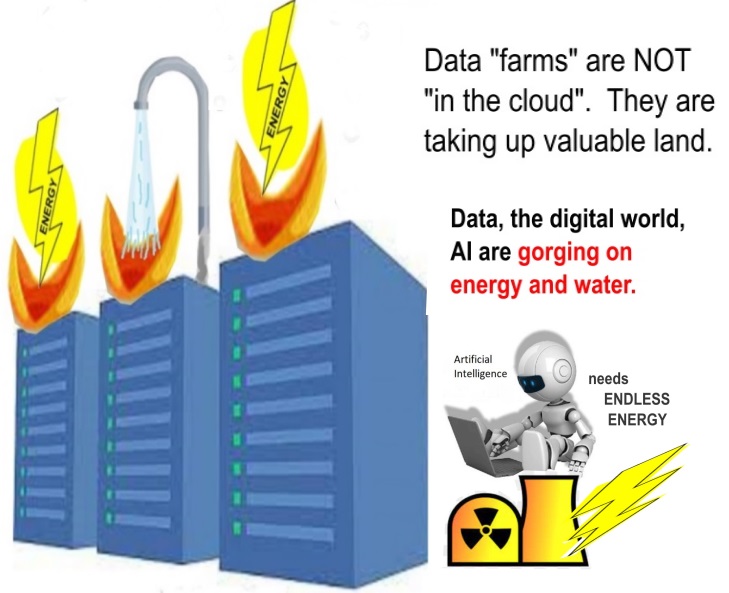
It’s not that I’m against new technology. It has many benefits. It’s just that there can be too much of a good thing.
As an illustration, I’m looking at the plan to employ “human-like” robots to provide companionship to lonely aged people, in particular, to those with dementia. In Australia, there’s a government-encouraged plan that is developing these robots. The robots are meant to provide cheery company and entertainment, to groups of old people and to individuals. They can initiate games, blow bubbles, and provide a stream of wisecracking banter (I heard a sample of this on Australia’s ABC Radio National).

above – “Nadine” – robot, Japan
Just what a dementia person needs- NOT! The last thing that a demented person needs is smart-aleck wisecracks. What they do need is a gentle touch, a human hand leading them for a walk, very little talk, and simple talk, not stuff that will add to their confusion. What they need is empathy – and that’s one thing that a robot cannot give.
Of course, the robot gobbles up electricity. And that must cost a bit, but presumably cheaper than paying a human to do this task?
The companion robot is just one example of the useless bits of new technology that waste not only our time, but also huge amounts of electricity and water.
Consider how many trillions of unnecessary emojis, emails, digital posts of all kinds, must be increasingly stored in those dirty great steel data containers that are deceptively called “the cloud” . The big deception is that we’re supposed to think that there’s some kind of innocuous beneficial vapour, into which all our digital rubbish just fades away.
That massive dirty digital steel rubbish “cloud” bank is forever guzzling electricity and the necessary cooling water.
As artificial intelligence races away, and the squillionares like Jeff Bezos rule the world, unhindered wasteful new technology is leading us towards a collective insanity. The nuclear lobbyists must be licking their lips – as electricity usage booms with AI, the argument for nuclear energy booms, too.
There would be many ways to limit our digital use, if only there was a general acceptance of the idea of moderate use, and the motivation to be more frugal in our digital management.
Rampant energy use for completely wasteful purposes not only destroys employment for humans, but it also leads to the toxic world of nuclear power, (and of course, its twin, nuclear weapons.)
NATO SUMMIT: Collectively Losing Their Minds.

Russia’s boldest red line is Ukraine joining NATO. As former C.I.A. analyst Ray McGovern wrote last week in a piece for Consortium News, Ukrainian negotiators understood this when they reached the outlines of a settlement of the war in April 2022, just weeks after it started. It was scuttled by the U.S. to keep the war going. Despite this, the NATO communicate vows to make Ukraine a member.
That is like challenging Moscow to a nuclear duel.
Soon after Russia entered Ukraine, the Pentagon corrected Antony Blinken for saying Kiev would get NATO fighter jets. Blinken was applauded at the NATO summit yesterday for saying F-16s would soon arrive in Ukraine. What changed? asks Joe Lauria.
By Joe Lauria, Consortium News, July 11, 2024 https://consortiumnews.com/2024/07/11/nato-summit-collectively-losing-their-minds/
On March 7, 2022, two weeks after Moscow entered the civil war in Ukraine, U.S. Secretary of State Antony Blinken told CBS News from Moldova that the U.S. would give NATO-member Poland a “green light” to send Mig-29 fighter jets to Ukraine.
Within days the Pentagon shot down the idea. Then U.S. House Speaker Nancy Pelosi and Senate Majority Leader Chuck Schumer also supported the Polish planes scheme, but the Pentagon rejected it because it “could result in significant Russian reaction that might increase the prospects of a military escalation with NATO,” according to then Pentagon spokesman John Kirby.
But yesterday Blinken was applauded when he told a public policy forum at the NATO summit in Washington: “As we speak the transfer of F-16 jets is underway coming from Denmark, coming from the Netherlands and those jets will be flying in the skies of Ukraine this summer to make sure that Ukraine can continue to effectively defend itself against the Russian aggression.”
It is not quite NATO declaring a no-fly zone over Ukraine, which was dismissed by President Joe Biden in March 2022 because “that’s called World War III, okay? Let’s get it straight here, guys. We will not fight the third world war in Ukraine.”
“President Biden’s been clear that … if you establish a no-fly zone, certainly in order to enforce that no-fly zone, you’ll have to engage Russian aircraft. And again, that would put us at war with Russia,” added Defense Secretary Lloyd Austin at the time.
Though not declaring a no-fly zone, these are still NATO fighter jets leaving from NATO countries to operate with Ukrainian pilots against Russian aircraft in Ukrainian airspace. More dangerously, NATO is permitting Ukraine to fly the F-16s to attack inside Russian territory.
Russia says it reserves the right to hit the airfield from which the planes take off, even if it’s in a NATO country, which risks escalation to direct conflict.
So what changed since March 2022 to allow the U.S. and NATO to risk, in the previous words of Biden, “World War III?”
What’s changed is that back then the White House and the Pentagon still thought the strategy of economic and information warfare plus a proxy ground war would defeat Russia in Ukraine, and ultimately bring down Vladimir Putin in Moscow.
But for more than a year now it’s been evident that the U.S. — and NATO — have lost the economic and information war, as well as the proxy fighting on the ground in Ukraine. One year into the war, French President Emmanuel Macron and German Chancellor Olaf Scholz told Ukrainian President Volodymyr Zelensky at a dinner in February 2023 that he had to face facts: Ukraine would lose the war and should negotiate a settlement with Moscow.
The Wall Street Journal quoted Macron as telling Zelensky that “even mortal enemies like France and Germany had to make peace after World War II.” Macron told Zelensky “he had been a great war leader, but that he would eventually have to shift into political statesmanship and make difficult decisions,” the newspaper reported.
U.S.-led NATO could not launch its economic, information and proxy war against Russia without cause. That cause would be Russia invading Ukraine to defend ethnic Russians in a civil war that had raged since 2014, sparked when the U.S. helped to overthrow the democratically-elected government that year.
The economic war, intended to spur Russians to overthrow their government, has failed spectacularly. The ruble did not collapse despite sanctions on the Russian central bank. Nor has the economy.
Instead an alternative economic, commercial and financial system that excludes the West has arisen with China, India and Russia in the lead, and most of Asia, Africa and Latin America taking part in what appears to be the final chapter of Western colonialism. The sanctions instead backfired on the West, especially in Europe.
The information war has failed across the world. Only the United States and Europe, which consider itself “the world,” believe their own “information.”
The proxy war is being lost on the ground, though more than $100 billion in U.S. aid to Ukraine has created a bloodbath. There will either be a negotiated settlement in which Ukraine loses territory; a total Russian victory; or potentially the final war.
The U.S. pushed Russia to the brink to provoke its intervention. It began with a 30-year NATO expansion eastward with NATO exercises on Russia’s borders while calling for Ukraine to become a member, a call reiterated at the summit yesterday.
In December 2021 the West rejected Russian treaty proposals to roll back NATO troop deployments and missile installations in Eastern Europe, creating a new security architecture in Europe.
NATO’s aim is to regain control of Russian resources and finances as the West enjoyed in the 1990s, when it asset-stripped formerly state-owned industries, enriching themselves and a new class of oligarchs while impoverishing the Russian people. Putin is now standing in their way.
Realizing it is losing, NATO has permitted Ukraine to attack Russian territory with its long-range missiles, which it had previously refused to do, and is now delivering the F-16s, which the Netherlands recklessly will allow Ukraine to fly inside Russia to strike targets there.
Accompanying these dangerous moves, putting the entire world at risk, NATO is ramping up the fantasy that Putin, like Hitler before him, is bent on conquering all of Europe, a continuation of the decades-long exaggerated Soviet threat that justified NATO’s existence to begin with.
Still desperate for direct NATO intervention, Zelensky’s hallucination at the summit was that the line of defense against Russia attacking the West lies in Ukraine. Macron has changed his tune from his dinner with Zelensky, now advocating sending French troops to the battlefield. And Biden, striving to appear lucid, made it a central theme of his address.
Faking Defense for Offense
In his speech to the summit, Biden on Tuesday couched NATO’s aggressive designs as defensive moves to counter a non-existent Russian threat to the rest of Europe. It’s similar to dressing up Israel’s genocide as “self-defence.” He said:
“In Europe, Putin’s war of aggression against Ukraine continues. And Putin wants nothing less — nothing less than Ukraine’s total subjugation; to end Ukraine’s democracy; to destroy Uraine’s cul- — Uraine — Ukraine’s culture; and to wipe Ukraine off the map.
And we know Putin won’t stop at Ukraine. But make no mistake, Ukraine can and will stop Putin — (applause) — especially with our full, collective support. And they have our full support.
Even before Russian bombs were falling on Ukraine, the Alliance acted. Or- — I ordered the U.S. reinforcements at NATO’s eastern flank — more troops, more aircraft, more capabilities. And now the United States has more than 100,000 troops on the continent of Europe.
NATO moved swiftly as well, not only reinforcing the four existing battle groups of the east but also adding four more in Bulgaria, Hungary, Romania, and Slovakia, essentially doubling NATO’s strength on the eastern flank.”
Biden ridiculed Putin recently, saying he couldn’t even take the Ukrainian province of Kharkiv and now we are supposed to believe Putin has the absurd desire and capability to take Paris and beyond.
Somebody Tell Washington the WWII Era Is Over
Until the U.S. and its Western allies accept that the World War II era is ended they will continue to lead the world towards a Third World War.
At the end of the second one, the U.S. was the only major combatant undamaged at home and left with military bases flung around the world. The U.S. stood astride a devastated globe. It was faced with a choice: make good on its rhetoric of international social progress, or fortify those bases into the nodes of a global military and economic empire. Over the decades since, the U.S. has sought to control world resources by installing the governments they need, through electoral interference, coups or invasions.
World War II was the last just American war. That is why Washington brings it up every time the U.S. is gearing for a fight. It whitewashes its true intent — which is not to spread democracy.
Before the 1989 war on Panama, Gen. Manuel Noriega was called Hitler; before the 1999 attack on Serbia, Slobodan Milosevic was compared to Hitler; as was Saddam Hussein before the 2003 invasion of Iraq. As tensions rose with Russia during her presidential campaign, Hillary Clinton called Putin Hitler, leaving the impression she too was itching for war.
World War II imagery and rhetoric has been so crucial to American imperial leaders since 1945 that they can’t let go. They have little else to sell themselves with.
[See: Misusing the Sacrifices of WW II – Consortium News]
They have also ritually inflated the role the U.S. played in defeating Nazi Germany. The Soviet Union’s outsized contribution to destroying the Nazis has been airbrushed out of history and U.S. allies are relegated to a supporting cast, fitting for the vassals they’ve since 1945 become.
But that era is ending. The U.S. can no longer use the Second World War to justify its aggression and demonize its enemies. Until the U.S. acknowledges it is no longer the preeminent power of the world and instead becomes a responsible international player, it will risk nuclear devastation to preserve its hubris.
NATO’s Dangerous Declaration
The joint communique of the 32 NATO members reads:
“We stand in unity and solidarity in the face of a brutal war of aggression on the European continent and at a critical time for our security. We reaffirm the enduring transatlantic bond between our nations. NATO remains the unique, essential, and indispensable transatlantic forum to consult, coordinate, and act on all matters related to our individual and collective security. NATO is a defensive Alliance. […]
The People’s Republic of China’s (PRC) stated ambitions and coercive policies continue to challenge our interests, security and values. The deepening strategic partnership between Russia and the PRC and their mutually reinforcing attempts to undercut and reshape the rules-based international order, are a cause for profound concern. We are confronted by hybrid, cyber, space, and other threats and malicious activities from state and non-state actors.
Russia’s boldest red line is Ukraine joining NATO. As former C.I.A. analyst Ray McGovern wrote last week in a piece for Consortium News, Ukrainian negotiators understood this when they reached the outlines of a settlement of the war in April 2022, just weeks after it started. It was scuttled by the U.S. to keep the war going. Despite this, the NATO communicate vows to make Ukraine a member.
That is like challenging Moscow to a nuclear duel.
We fully support Ukraine’s right to choose its own security arrangements and decide its own future, free from outside interference. Ukraine’s future is in NATO. Ukraine has become increasingly interoperable and politically integrated with the Alliance. We welcome the concrete progress Ukraine has made since the Vilnius Summit on its required democratic, economic, and security reforms.
As Ukraine continues this vital work, we will continue to support it on its irreversible path to full Euro-Atlantic integration, including NATO membership. We reaffirm that we will be in a position to extend an invitation to Ukraine to join the Alliance when Allies agree and conditions are met. The Summit decisions by NATO and the NATO-Ukraine Council, combined with Allies’ ongoing work, constitute a bridge to Ukraine’s membership in NATO.”
The Mad Path to Annihilation
All this adds up to a collective madness. After innumerable wars since history began, the world is being led to perhaps its final confrontation.
At the core is NATO’s apparent belief that Putin is bluffing about using nuclear weapons to defend Russia’s sovereignty. It is simply a bluff that cannot be tested.
The only solution is the two treaties Russia offered in December 2021 and a neutral Ukraine as it was under President Viktor Yanukovych, whom the U.S. helped overthrow in 2014 in part because of it.
NATO leaders haven’t demonstrated a willingness to give up any of their collective or individual power, which is devolving rapidly into collective and individual madness.
They don’t want to lose their role in Biden “running the world.”
Even if realists in Washington prevailed over the neocons in arguing that Ukraine can’t win this war, NATO leaders proclaim they can’t afford to lose it. Not because Putin will be at the Eiffel Tower by Christmas, but because so many political careers in the West would be ruined.From Keir Starmer to Olaf Scholz, to Giorgia Meloni, Emmanuel Macron and Joe Biden, a defeat in Ukraine would signify that they gambled their personal ambition — as well as their nations’ treasure and the lives of hundreds of thousands of Ukrainian men — and lost it all.
Instead of settling, they’re willing to drag us all into the existential crisis that could end it all.
16 July marks 79 years since the Trinity test

Nearly 79 years ago, on July 16th 1945, the US conducted the first ever nuclear test, the Trinity test. The first communities impacted by nuclear testing were those people living downwind of the first nuclear bomb explosion. They were not told about the test even as fallout ‘snowed’ over their farms, homes, and wells. To this day, the impact of this radioactive fallout continues to affect the families that lived close to the testing site, and they have not received any assistance or compensation.
| On 14 July, the Archdiocese of Santa Fe, Interfaith Power & Light, NM-EP, New Mexico Conference of Churches, Nuclear Watch New Mexico, Soka Gakkai International-USA and Tularosa Basin Downwinders Consortium are organising an interfaith remembrance of the Trinity Test, including exhibitions, music, speakers, and moments of reflection and prayer. All are welcome in person in Albuquerque, NM or online. Get the details and register here. |
| For decades, survivors of nuclear testing around the world have been calling on their governments for justice. Globally, survivors have pushed for recognition, compensation and environmental remediation and achieved the first international treaty to require countries that join it to help those affected by nuclear weapons use and testing and to take steps to address contaminated environments: the UN Treaty on the Prohibition of Nuclear Weapons. |
Learn more about the work of the Tularosa Basin Downwinders Consortium and their allies to fight for recognition and compensation in the film: “First We Bombed New Mexico,” being screened in Albuquerque, New Mexico on 16 July. A recent bill to extend and expand coverage of the US compensation scheme is still being ignored by Congress. U.S. citizens should urge their elected representatives to pass the bill that extends and expands the Radiation Compensation Exposure Act.
NATO: From Cold War Defensive Coalition to Global Military Behemoth
SCHEEPOST, By Editor, JULY 12, 2024
he 75th anniversary celebrating the creation of NATO, the North Atlantic Treaty Organization, creates an opportunity for those in the war machine to double down their commitment to war and for peace advocates to amplify their calls for non-violence. David Swanson, co-founder and executive director of World BEYOND War and long-time peace advocate, joins host Robert Scheer on this episode of Scheer Intelligence. Swanson talks about his new book with Medea Benjamin, “NATO: What You Need To Know,” and how it analyzes what NATO means today as a worldwide enforcer of U.S. led military power, having grown from a 12-member organization to 32 members and “partnerships” with more than 40 non-member countries and international organizations.
According to Swanson, NATO’s original function as a defensive alliance against the Soviet Union has outlived the fall of the communist state and transformed the organization into a rapidly expanding extension of the U.S. war machine. “You don’t have to ask informed historians or intelligent peace activists. The Secretary General of NATO says it; they now wage wars, not just in defense or what they call deterrence.”
What was once envisioned as an adjunct to the United Nations addressing war and peace has now evolved, with NATO extending its reach far beyond the Atlantic to forge partnerships with Asian countries in a militarized response to China’s rise.
Swanson does not make light of what this will mean for the future: “It’s the end of everything. It’s the end of all life on earth. There’s no small nuclear war. There’s no tactical nuclear war, and yet this is where we’re headed.”
Transcript …………………………………………………………………………………………………… https://scheerpost.com/2024/07/12/nato-from-cold-war-defensive-coalition-to-global-military-behemoth/
U.S. Solar and Wind Power Generation Tops Nuclear for First Time
By Charles Kennedy – Jul 11, 2024, https://oilprice.com/Latest-Energy-News/World-News/US-Solar-and-Wind-Power-Generation-Tops-Nuclear-for-First-Time.html?fbclid=IwZXh0bgNhZW0CMTEAAR36aY_qZHusiBuonQ8wnoYKA4biHRxGFjpdJPHNpgny-jFyIN5ZFM3NUL8_aem_2gvOQUW4tXrqTe8rUaH-xw
For the first time ever, U.S. electricity generation from utility-scale solar and wind exceeded nuclear power plants’ power output in the first half of 2024, according to data from energy think tank Ember quoted by Reuters columnist Gavin Maguire.
Electricity generation from solar and wind hit a record-high of 401.4 terawatt hours (TWh) between January and June 2024, surpassing the 390.5 TWh of power generated from nuclear power plants, Ember’s data showed.
Solar power generation jumped by 30% and electricity output from wind power rose by 10% in the first half of 2024, compared to the same period of last year.
In 2023, nuclear power accounted for 18.6% of U.S. electricity generation, while wind power output had a 10.2% share and solar accounted for 3.9% of total U.S. electricity output, according to data for 2023 from the U.S. Energy Information Administration (EIA).
Ember has estimated that the share of wind and solar grew to 16% in 2023, when nuclear was still the largest source of low-carbon electricity in the U.S.
However, expanding renewable energy capacity and record solar and wind power generation helped solar and wind combined to top nuclear as the biggest low-carbon electricity source during the first half of this year.
Early in 2024, the EIA said that wind and solar energy would lead growth in U.S. power generation for the next two years.
As a result of new solar projects coming on line this year, the administration forecast that U.S. solar power generation will surge by 75%, from 163 billion kilowatt-hours (kWh) in 2023 to 286 billion kWh in 2025. The EIA also expects that wind power generation will grow by 11% from 430 billion kWh in 2023 to 476 billion kWh in 2025.
In 2023, all renewable sources—wind, solar, hydro, biomass, and geothermal—accounted for 22% of total U.S. power generation.
First Nation challenges nuclear waste decision in federal court

By Natasha Bulowski & Matteo Cimellaro | News, Urban Indigenous Communities in Ottawa | July 12th 2024Observer
A First Nation concerned about approval of a nuclear waste disposal facility near the Ottawa River was before federal court this week to challenge the decision.
The Canadian Nuclear Safety Commission greenlit the project on Jan. 9 and less than one month later, Kebaowek First Nation filed for a judicial review.
Kebaowek’s legal challenge is centred on the United Nations Declaration Act (UNDA), which enshrined the United Nations Declaration on the Rights of Indigenous Peoples (UNDRIP) into Canadian law. The declaration specifically references the need for free, prior and informed consent when hazardous waste will be stored in a nation’s territory.
Kebaowek argued in court that Canadian Nuclear Laboratories — the private consortium responsible for managing the Chalk River nuclear site — did not secure the First Nation’s free, prior and informed consent during the licensing process, as mandated under Canadian law, when it was looking to store the waste at a site about a kilometre from the Ottawa River. The Ottawa River (known as the Kichi Sibi in Algonquin) holds immense spiritual and cultural importance for the Algonquin people and is a source of drinking water for millions.
Canadian Nuclear Laboratories wants to permanently dispose of one million cubic metres of radioactive waste in a shallow mound as a solution to waste accumulated over the last seven decades of operations and into the future. The company said the containment mound will only hold low-level waste.
A former employee at Chalk River told Canada’s National Observer a portion of the waste destined for the mound is a “mishmash” of intermediate- and low-level radioactivity because prior to 2000 there were inadequate systems to properly label, characterize, store and track what was produced at Chalk River or shipped there from other labs. Intermediate-level waste remains radioactive for longer than low-level waste and requires disposal deeper underground.
“It’s such a huge project that I don’t think most people are aware of just how big this is,” Coun. Justin Roy of Kebaowek First Nation told Canada’s National Observer in an interview after a press conference in Ottawa on July 10.
“We’re not talking about a pipeline that might not be there in a couple dozen years, or a mine that’s going to be up and running and close in 20 years, or a bridge that might be torn down one of these days. We’re talking about a huge mound that has a life expectancy, expectancy upwards of 500 years,” Roy said.
The First Nation is asking the Federal Court of Appeals to reject the nuclear safety commission’s decision to greenlight the facility and declare that the commission breached its duty to consult Kebaowek.
Kebaowek was in federal court July 10 and 11 to make its case that the project approval should be set aside or reconsidered. The First Nation argued two main points: First, that the nuclear safety commission refused to take the Canadian UNDRIP act into consideration, and that means the consultation process was flawed from the outset.
Second, the nation argues the project will rely largely on a forest management plan that has yet to be created to mitigate environmental impacts, Coun. Justin Roy of Kebaowek First Nation told Canada’s National Observer in an interview.
Canadian Nuclear Laboratories’ lawyers argued the commitment to create a forest management plan and have it approved by the nuclear safety commission is appropriate, and disagreed with Kebawoek’s description of it as a “blank piece of paper,” saying it is intended to be a “living document” and respond to different situations yet to arise. The company’s testimony on July 11 also highlighted different instances — letters, phone calls, in-person meetings — where it engaged with Kebaowek First Nation.
Justice Julie Blackhawk will issue a decision at a later date.
A ‘litmus test’
When Parliament was in its consultation process regarding the United Nations Declaration Act, First Nation leadership across Canada spoke up because chiefs thought the legislation “needed to have teeth,” Lance Haymond, Chief of Kebaowek First Nation said in an interview. However, the legislation was never re-written to give it weight, leading to a “failure of implementation from the beginning,” he explained.
“Here we are stuck with a piece of legislation that could be stronger,” Haymond said of testing the United Nations Declaration Act (UNDA) in court over the nuclear waste facility. The success or failure of the judicial review will serve as a litmus test of how much sway the new Canadian law holds in the courts, Haymond said.
“Our case will hopefully demonstrate how it can be applied in a real world situation,” he added.
This judicial review is one of three legal challenges against the near surface disposal facility.
At a July 10 press conference, Sébastien Lemire, Bloc Québécois MP for Abitibi-Témiscamingue, emphasized his party’s support for the legal challenge. Lemire also promised continued support at future press conferences, in Question Period and in work at committees like the Standing Committee on Indigenous and Northern Affairs.
Canadian Nuclear Laboratories is run by a consortium of private companies (including AtkinsRéalis, formerly known as SNC-Lavalin) and is contracted by the federal government to operate its laboratories and deal with waste.
Over 75 years, Chalk River Laboratories developed CANDU reactors, did nuclear weapons research, supplied the United States’ nuclear weapons program with plutonium and uranium, and at one time was the world’s largest supplier of medical isotopes used to diagnose and treat cancers.
About 60 people attended a public rally in front of the Supreme Court on July 10 to support the First Nation, according to Vi Bui with the Council of Canadians.
It’s not the first time the public has given their support.
Kebaowek’s legal fund has been largely crowdfunded and supported by Raven Trust, a charity that raises legal funds for Indigenous nations, Haymond said.
If Kebaowek loses, it’s still unclear if they will appeal the decision, he added.
“Our ancestors would probably roll over in their graves if they were to hear that we would just allow a nuclear waste dump that’s going to hold one million cubic metres of waste adjacent to the Ottawa River,” Roy said. “We are people who have been here since time immemorial; this mound, if it proceeds, it can maybe outlast all of us here.”
Anti-nuclear protestors to march from Norwich to Lakenheath

By Jude Holden, 12 July 24 https://www.edp24.co.uk/news/24449062.anti-nuclear-protestors-march-norwich-lakenheath/
A 10-day peace camp against nuclear weapons being stationed in Suffolk will begin with demonstrators walking 40 miles from Norwich to Lakenheath.
The protest follows reports that the United States Air Force base, RAF Lakenheath is preparing facilities to house and guard nuclear bombs.
Around 150 members from the Lakenheath Alliance for Peace are expected to walk and cycle from Norwich to Lakenheath on Saturday, July 13.
This is expected to take up to three days before the group establishes a vigil for peace at the base’s main gate.
A hand delivered letter is set to be delivered to the base commander with more people expected to arrive at the camp.
The Alliance aims to be at the base between July 15 until Thursday, July 25.
Lakenheath Alliance for Peace activist, Alison Lochhead said this will be a peaceful protest “We have absolutely no intention of being arrested whatsoever, we are there for a peaceful vigil”, she said.
But added: “However, if the powers that be decide to arrest us, well that’s another thing altogether.
“We’re there to raise awareness about the situation.”
Ms Lochhead continued: “Our cause is essential. All these proposals go on behind closed doors. They are bringing back nuclear weapons onto UK soil without any debate whatsoever.
“It is really important that people raise their voices in any way they can.
“That could mean joining us on the walk, or writing a letter to their MP or standing outside the base or even just talking to friends and relations about it.”
She added: “At the moment the military tensions in this world are so high. It is scary.
“We really don’t need to crank it up further and I think people just need to say please deescalate all of this, there are other ways to solve conflict.”
The walk will start outside Norwich City Hall at 10am and the group will then go via the Peace Pillar in Chapelfield Gardens, then on to Unthank Road, Newmarket Road, through Cringleford and on towards Hethersett and Wymondham.
The vigil, which will go on round the clock.
Blow to Miliband’s nuclear ambitions as top mini-nuke lab faces closure
Closure puts spanner in the works for net zero aim of quadrupling nuclear power by 2050
Jonathan Leake, 12 July
A state-backed nuclear laboratory at the heart of
Britain’s proposed mini-reactor revolution is facing closure in a
headache for new Energy Secretary Ed Miliband.
Researchers and staff at
Sheffield University’s Nuclear Advanced Manufacturing Research Centre
(AMRC) have been warned of possible redundancies amid a major overhaul. The
centre, which employs about 150 people, is focused on engineering the
specialist steel needed to build small modular reactors (SMRs) – a key
element of Britain’s strategy to quadruple nuclear power by 2050. Staff
have been told that only about 30 of them will be retained and they will be
absorbed into the larger university-run Advanced Manufacturing Research
Centre, which employs about 700 workers.
The plan represents a blow to
Britain’s nuclear ambitions and a challenge for Mr Miliband as he seeks
to chart a path towards a low-carbon future. ………………..
.SMRs were championed by the previous government……………………..
The AMRC closure means
dozens of engineering and nuclear specialists could be lost – with many
likely to be recruited by largely overseas companies now leading in nuclear
manufacturing. The centre is owned by the University of Sheffield but is
overseen by industrial partners such as Rolls-Royce and French energy giant
EDF, which have made multimillion-pound investments at its site on the
Sheffield-Rotherham border. The overhaul comes as Great British Nuclear
(GBN), a government arms-length body created to drive forward delivery of
new nuclear-generating capacity in the UK, runs a competition to select two
designs of SMR to take forward for development.
Telegraph 12th July 2024
https://www.telegraph.co.uk/business/2024/07/12/top-mini-nuclear-reactor-lab-closure-blow-miliband/
18 July -WEBINAR. NATO: An Aggressive, Destabilizing Danger to the World.
Thursday, July 18, 8 pm EDT, featuring Bruce Gagnon. from War Industry Resisters Network.You can register here: https://secure.everyaction.com/lZ7clV05a0SGx1_XaeDNLA2.

From its very beginning following World War II, NATO has been an aggressive and destabilizing force acting to ensure the dominance of the collective West.
NATO emerged in the wake of Operation Paperclip and Operation Gladio. Operation Paperclip was a secret United States intelligence program in which more than 1,600 German scientists, engineers, and technicians were taken from the former Nazi Germany to the U.S. for government employment after the end of World War II in Europe, between 1945–59. Operation Gladio was the codename for top-secret “stay-behind” operations of armed resistance that were organized by the West that interfered with elections across Europe to ensure that left-wing politicians were defeated and sometimes killed.
Today we see three key areas where the US/NATO is operating in an attempt to destabilize Russia and China and the growing multi-polar world.
The first is in Europe with the current point of emphasis being the proxy war in Ukraine.
The second is in the Arctic Region where the US/NATO has expanded operations in the High North of Norway, Sweden and Finland in a long-term operation to wrest control of the melting Arctic sea from Russia which has the largest land border with that region.
The third is in the Asia Pacific where US/NATO has expanded to include Australia, Japan, South Korea and New Zealand among others. New military bases, barracks for troops, ports of call and airfields are being built throughout the region allowing the US-NATO new capabilities in the planned war with China in the near future.
This webinar will discuss NATO’s history and its current actions which are clearly potential triggers for a nuclear confrontation.
Radioactive Waste: Symposium Primer
Samuel Lawrence Foundation, 12 July 24
An in-depth primer on the critical issues surrounding radioactive waste with speakers:
- Kate Brown, Professor, History of Science, MIT
- Stephanie Cooke, Journalist, Writer, New York Times, Associated Press, Nucleonics Week, NuclearFuel, Inside N.R.C., Business Week, Energy Intelligence, Nuclear Intelligence Weekly
- Paul Dorfman, Chair of NuclearConsult, Visiting Fellow, Science Policy Research Unit, Sussex Energy Group, University of Sussex
- Richard Gersberg, Professor / Head of the Division, Environmental Health in the School of Public Health, San Diego State University (SDSU)
- Gary Headrick, Co-Founder, San Clemente Green
- Susan Hito-Shapiro, Environmental Attorney
- Robert H. Richmond, Research Professor and Director, Kewalo Marine Laboratory, University of Hawaii at Manoa
- Leona Morgan, Co-Founder, Haul No! and Indigenous Organizer Fighting Nuclear Colonialism
Join our First Friday Webinar hour at 11:30 a.m. PST (2:30 p.m. EST) on July 12th (delayed a week due to July 4th) for an in-depth primer on the critical issues surrounding radioactive waste as we gear up for the July 24th symposium at UC San Diego “Radioactive Waste: Growing Dangers, Emerging Solutions,” hosted by the Samuel Lawrence Foundation in cooperation with the Scripps Institution of Oceanography. This stunning webinar serves as a crucial introduction to our upcoming (7/24) symposium, where attendees will gain a comprehensive understanding of the real dangers and challenges posed by 3.6 million pounds of radioactive waste on the beach at San Onofre, CA. We will explore actionable solutions for a safer future.
Scottish NFLA Convenor seeks ‘respect’ for Scotland’s stance on nuclear power.

12th July 2024, https://www.nuclearpolicy.info/news/scottish-nfla-convenor-seeks-respect-for-scotlands-stance-on-nuclear-power/
The Convenor of Scotland’s Nuclear Free Local Authorities has written to the new Secretary of State for Scotland seeking his ‘respect and understanding for devolution’, particularly for the Scottish Government’s ‘explicit policy’ of not supporting the construction of new nuclear power stations.
Councillor Paul Leinster was concerned that Scottish Secretary Ian Murray appeared not to exclude the possibility of imposing unwanted nuclear energy projects on Scotland when he was interviewed on Good Morning Scotland on 9 July. As Councillor Leinster makes plain in his letter to the minister this would be ‘against Scottish planning policy and against the will of the Scottish Government’.
The suspicion that Scotland might be under a nuclear threat has some foundations. The Labour Government is committed to establishing a new body Great British Energy with its headquarters in Scotland. Though this does have the commendable remit of generating clean, green, and cheaper energy, regrettably, in a contradictory move, the new government is committed to including nuclear in the energy mix. And following on from Andrew Bowie, it appears from a blog written by Tom Greatrex, Chief Executive of the Nuclear Industry Association, that another Scottish MP, Michael Shanks, representing Rutherglen has been given the nuclear power portfolio within the Department of Energy Security and Net Zero.[1]
Despite any divergence of opinion over nuclear power, the Convenor of the Scottish NFLAs would still welcome the opportunity to work with the new Scottish Secretary on projects to increase renewable energy generation in Scotland and boost jobs in the sector; for as Cllr Leinster says: ‘I share your ambition of a constructive relationship across these islands, working together for the good of the planet and for achieving our shared climate goals’.
The NFLA Secretary has received an acknowledgement that the letter has been received and we look forward to the Secretary of State’s full response.
1 This Month

of the week – Shut Down Drone Warfare!


Tell the Ukrainian Government to Drop Prosecution of Peace Activist Yurii Sheliazhenko

Petition to revoke the licensing of the Near Surface Nuclear Disposal Facility (NSDF) at Chalk River. https://www.ourcommons.ca/petitions/en/Petition/Details?Petition=e-7247
To see nuclear-related stories in greater depth and intensity – go to https://nuclearinformation.wordpress.com
-
Archives
- March 2026 (244)
- February 2026 (268)
- January 2026 (308)
- December 2025 (358)
- November 2025 (359)
- October 2025 (376)
- September 2025 (257)
- August 2025 (319)
- July 2025 (230)
- June 2025 (348)
- May 2025 (261)
- April 2025 (305)
-
Categories
- 1
- 1 NUCLEAR ISSUES
- business and costs
- climate change
- culture and arts
- ENERGY
- environment
- health
- history
- indigenous issues
- Legal
- marketing of nuclear
- media
- opposition to nuclear
- PERSONAL STORIES
- politics
- politics international
- Religion and ethics
- safety
- secrets,lies and civil liberties
- spinbuster
- technology
- Uranium
- wastes
- weapons and war
- Women
- 2 WORLD
- ACTION
- AFRICA
- Atrocities
- AUSTRALIA
- Christina's notes
- Christina's themes
- culture and arts
- Events
- Fuk 2022
- Fuk 2023
- Fukushima 2017
- Fukushima 2018
- fukushima 2019
- Fukushima 2020
- Fukushima 2021
- general
- global warming
- Humour (God we need it)
- Nuclear
- RARE EARTHS
- Reference
- resources – print
- Resources -audiovicual
- Weekly Newsletter
- World
- World Nuclear
- YouTube
-
RSS
Entries RSS
Comments RSS
 nuclear-news