Analyst Says Nuclear Industry Is ‘Totally Irrelevant’ in the Market for New Power Capacity

Power, Jul 8, 2024, by Aaron Larson
“…………………………………………….. Mycle Schneider, an independent international analyst on energy and nuclear policy, and coordinator, editor, and publisher of the annual WNISR, said, “in [new] capacity terms, the nuclear industry, from what is going on, on the ground, is totally irrelevant.”
Schneider was speaking as a guest on The POWER Podcast and prefaced his statement by comparing nuclear power additions to solar power additions in recent years. “Let’s look at China, because China is the only country that has been massively building nuclear power plants over the past 20 years,” he said.
“China connected one reactor to the grid in 2023—one gigawatt. In the same year, they connected, and the numbers vary, but over 200 gigawatts of solar alone. Solar power generates more electricity in China than nuclear power since 2022. And, of course, wind power generates more than nuclear power in China for a decade already,” Schneider said. Furthermore, he noted, the disparity has gone “completely unnoticed by the general public or even within the energy professionals that are in Europe or often also in North America.”
Schneider said the media often gives the impression that the nuclear industry is booming, but the facts suggest otherwise. “Over the past 20 years—2004 to 2023—104 reactors were closed down and 102 started up,” Schneider said. “But here is important that almost half, 49 of those new reactors started, were in China [where none closed], so the balance outside China is minus 51.”
Some nuclear advocates might suggest that things are changing. They might argue that small modular reactors (SMRs) or other advanced designs are poised to reinvigorate the industry. But Schneider disagrees. He noted that since the construction start of the second unit at Hinkley Point C in the UK in 2019—almost five years ago—there have been 35 nuclear project construction starts in the world. Twenty-two of those were in China and the other 13 were all implemented by the Russian nuclear industry in a few different countries. “Nothing else. Not an SMR here or an SMR there, or a large reactor here or a large reactor there by any other player,” reported Schneider.
Meanwhile, history has shown that the nuclear industry struggles to meet timeline targets. As examples, Schneider noted that on Jan. 1, 2022, 16 reactors were scheduled to come online during the following year. Only seven actually did. In 2023, nine were planned to come online, but only five made it to the grid. This demonstrates how bad the industry is at scheduling—it can’t even predict project completion at a high rate of accuracy during the final year of construction. “How precise could it possibly be if there are predictions for 2030, 2035, 2040, for reactors that don’t even have a [design] license yet?” asked Schneider.
Notably, timelines haven’t always improved on later units. Schneider said the EPR units have demonstrated a “negative learning curve.” Specifically, the first EPR units to enter commercial operation were at the Taishan site in China, which came online in 2018 and 2019. They had a shorter construction time than Olkiluoto 3 in Finland, which started construction about four years prior to Taishan but didn’t enter commercial operation until 2023. Flamanville 3 in France began construction in 2007 and hasn’t yet entered commercial operation. It could end up having a construction period even longer than Olkiluoto 3. To cap it all off, Schneider said the Hinkley Point C EPR units could be even longer than Flamanville 3.
“By the way, you can also show that through the building history of nuclear reactors in France—it’s actually a negative learning curve,” said Schneider. Furthermore, with so few reactors being constructed, learnings are limited.
Schneider noted that the vast majority of new capacity being added to the grid is from solar and wind energy. “These guys are building tens of thousands of wind turbines, and literally hundreds of millions of solar cells, so the learning effect is just absolutely stunning,” he said. “On the nuclear side, we’re talking about a handful. That’s very difficult. Very, very difficult—very challenging—to have a learning effect with so few units.”
Schneider said the nuclear discussion in general needs a “really thorough reality check.” He suggested the possibilities and feasibilities must be investigated. “Then, choices can be made on a solid basis,” he said.
To hear the full interview with Schneider, which contains more about the WNISR, what’s behind construction delays, how delays affect budgets, SMRs and why modular construction methods may not solve problems, and much more, listen to The POWER Podcast. Click on the SoundCloud player below to listen in your browser now or use the following links [listed on original] to reach the show page on your favorite podcast platform – https://www.powermag.com/analyst-says-nuclear-industry-is-totally-irrelevant-in-the-market-for-new-power-capacity/
First Nations and allies resist proposed radioactive waste repository

The site-selection process has been riddled with controversy. The nuclear industry funds the NWMO and appoints its board members. As a result, despite being structured as a not-for-profit corporation, the NWMO is effectively controlled by industry. In some cases, the large sums of money the NWMO has paid Indigenous and municipal governments as part of its site selection process have led to accusations of governments being bought off by the nuclear industry. Communities downstream from the repository site, as well as the many along the transportation route, are effectively excluded from the ‘willingness’ decision.
the process is unfolding in the context of ongoing poverty and economic deprivation in many Indigenous communities in Canada, making it incredibly difficult for many First Nations to say “no”
If Canada is to have a just transition away from fossil fuels, then it cannot be based on nuclear power
Canadian Dimension, Warren Bernauer, Laura Tanguay, Elysia Petrone, and Brennain Lloyd / June 28, 2024
On April 30, 2024, First Nations leaders organized a rally in Anemki Wequedong (Thunder Bay) to protest a proposed nuclear waste repository in northwestern Ontario between Ignace and Dryden. The speakers included representatives of Grassy Narrows First Nation, Kitchenuhmaykoosib Inninuwug, Ojibways of Onigaming First Nation, Gull Bay First Nation, and Fort William First Nation.
Michele Solomon, Chief of Fort William First Nation, welcomed all the participants to her traditional territory and stated that her community is “strongly opposed to the transportation of nuclear waste through our territory and we will stand by that, we will continue to stand by that, and we stand with all those who are also opposed.”
Another leader from the Robinson-Superior Treaty area, Chief Wilfred King of Gull Bay First Nation, told the crowd, “We fully support the First Nations that are against the burying of nuclear waste in our territories. …. we vehemently oppose the transportation of any nuclear waste through our territory.” According to King, his community’s position was grounded in concerns with potential accidents along the transportation route. “We have many rivers and tributaries that intersect the Trans Canada Highway and we feel that this will have a very serious impact to our resources and our territory should there be a spill.”
A similar position was expressed by Rudy Turtle, Chief of Grassy Narrows, whose traditional territories are situated in Treaty 3 and downstream from the proposed repository. “[A]s Grassy Narrows First Nation we are saying no to nuclear waste. We are saying no to any kind of dumping within our traditional territory.” Turtle continued, “I’m thinking ahead I’m thinking of two, three, four, generations ahead and I know I won’t be around, but I hope that one day one of my great-grandchildren will say great-grandpa stood up for us, great-grandpa stood up for us spoke up for us now we’re able to enjoy our Earth.”
Environmental injustice by design
The proposal for a repository in the Ignace area is being advanced by the Nuclear Waste Management Organization (NWMO), a not-for-profit corporation comprised of the nuclear power companies that generate and own the radioactive wastes. The 2002 Nuclear Fuel Waste Act required Canada’s nuclear power generation companies (Ontario Power Generation, New Brunswick Power Corporation and Hydro-Québec) to establish and fund the NWMO and tasked them with the long-term management of Canada’s used nuclear fuel. After an initial study, in 2005 the NWMO submitted a plan to the federal government to dispose of Canada’s used nuclear fuel in a deep geological repository (DGR). Two years later the federal government agreed.
The NWMO’s process to select a site for the DGR officially began in 2010, when it opened calls for “expressions of interest” from potential host communities. After initially examining over 20 communities, in 2020 the NWMO short-listed two Ontario municipalities as potential “hosts” for all of Canada’s high-level nuclear waste: Ignace and South Bruce. Both municipalities have signed hosting agreements with the NWMO, and have committed to deciding whether or not they are “willing hosts” by the end of 2024.
In both cases, the NWMO has indicated that the proposed DGR would only move forward with the support of adjacent Indigenous communities. South Bruce, neighbouring the Bruce Nuclear Generating Station, lies within the traditional territory of the Saugeen Ojibway Nation, which includes Saugeen First Nation and Chippewas of Nawash Unceded First Nation. Ignace, located on the Trans-Canada Highway, is a small community reliant on forestry and eco-tourism. It lies on the traditional territory of the Wabigoon Lake Ojibway Nation and the Ojibway Nation of Saugeen.
The site-selection process has been riddled with controversy. The nuclear industry funds the NWMO and appoints its board members. As a result, despite being structured as a not-for-profit corporation, the NWMO is effectively controlled by industry. In some cases, the large sums of money the NWMO has paid Indigenous and municipal governments as part of its site selection process have led to accusations of governments being bought off by the nuclear industry. Communities downstream from the repository site, as well as the many along the transportation route, are effectively excluded from the ‘willingness’ decision. In the case of the proposed DGR in northwestern Ontario, the NWMO’s “host” community of Ignace is 45 kilometres east of the proposed DGR site and is not just upstream but in a different watershed. There are smaller communities closer to the site who are not part of the NWMO’s “willingness process.” While the NWMO has stated that the DGR would not proceed without the support of Wabigoon Lake Ojibway Nation, other First Nations with historic and ongoing land use near or overlapping the project area are not being afforded the same respect.
The process is an example of structural injustice. By seeking ‘expressions of interest’ from individual communities, the industry made it inevitable that the poorest communities—including those with the fewest resources to represent their residents’ interests vis-à-vis the nuclear industry—would be the first to step forward. And the process is unfolding in the context of ongoing poverty and economic deprivation in many Indigenous communities in Canada, making it incredibly difficult for many First Nations to say “no” to most proposals for what is presented as development or the more benign sounding advance funding agreements to “learn more” about the project. The fact that a nuclear waste dump appears to be an opportunity to some people and municipalities in northwestern Ontario says more about the deplorable track record of capitalist development in the North than it says about the actual benefits associated with the NWMO’s proposal.
Environmental risk
One of the nuclear industry’s favourite promotional lines about deep geological repositories is that there is an “international consensus” about DGRs being the best option for containing nuclear fuel wastes. But it’s a consensus largely limited to the nuclear establishment, while the reality is that there is no approved and operating DGR for high level waste anywhere in the world, despite decades of effort and hundreds of millions of dollars spent in pursuit of an operating licence. These nuclear waste burial schemes create substantial risk—risk to the environment, and risk to human health—at each of the several steps between current storage and any eventual stashing of these hazardous materials deep underground.
Those risks will begin at the reactor site, when the waste must be transferred from the current storage systems into transportation casks. All of Canada’s commercial reactors are the CANDU design, where 18 months in the reactor core turns simple uranium into an extremely complex and highly radioactive mix of over 200 different radioactive ingredients. Twenty seconds exposure to a single fuel bundle would be lethal within 20 seconds. As a result, the fuel bundles are handled so there is no exposure to air. The bundles are moved underwater from the reactor core into the irradiated fuel bays. After a minimum of 10 years, dry storage containers are submerged for loading into that same pool that has been cooling and shielding the wastes until the temperature is low enough for transfer. The dry storage containers are then moved to on-site storage buildings.
However, the NWMO has been silent on how the transfers from the dry storage containers to the transportation containers (for shipment via road or rail) would be carried out, saying only that it’s up to the “waste owners.” Keep in mind that there has been no internal monitoring of the fuel bundles, and their condition after as long as several decades in dry storage is unknown. At this and later stages, defects in the fuel bundles is a significant concern, as the more damaged a fuel bundle is, the higher the radiation dose will be, potentially affecting both workers and the environment.
According to the NWMO’s conceptual transportation plans, the wastes will be shipped in two to three trucks per day for fifty years, in one of three potential containers. One, the “basket container” is still in the conceptual stage. The second potential container was designed for moving dry storage containers very short distances within the reactor stations. The third was designed by Ontario Hydro in the 1980s and subjected to limited and not wholly successful drop tests of a half-scale model before being certified by the Canadian Nuclear Safety Commission. This third design has since been warehoused by Ontario Hydro (with its certification renewed by its replacement utility, Ontario Power Generation) before being taken over by the Nuclear Waste Management Organization. None of these transportation packages have been subject to full scale testing.
There are two sets of risks during transportation. During normal operations there will be low levels of radiation emanating from each shipment. The NWMO did calculations in 2012 and 2015 and concluded that the levels of radiation exposure will be “acceptable.” Yet radioactive exposure is a combination of dose, distance and duration, so if any of the variables are different than those NWMO plugged into their calculation, the risk factors change. The second set of risks during transportation are those that would result from an accident, particularly one where the container was breached.
When the waste arrives at the repository site it will again be transferred, this time from the transportation containers to the containers for underground placement. Those transfers will happen in a facility euphemistically named the “Used Fuel Packaging Plant,” employing a series of hot cells in which the waste bundles will be exposed to air for the first time since they were created in the reactor core. These transfers will be technically challenging and potentially highly contaminating.
During operations of the deep geological repository, water will become contaminated during the washing down of the nuclear waste transportation packages. Contaminated water will be pumped from the underground repository. Operations will also generate low and intermediate level wastes, both solid and liquid.
Once deposited underground, the nuclear waste itself will contaminate the deep groundwater in the near or long term and that contamination will eventually reach surface water in the vast watershed.
The NWMO’s candidate site in Northwestern Ontario is located half-way between Ignace and Dryden. Because it is at the height of land for the Wabigoon and the Turtle River systems, there are concerns about releases to the downstream communities, including Rainy River and Lake of the Woods. If and when the radioactive releases occur from the deep geological repository, there will be no means to reverse the impacts.
Decades of opposition
This is not the first nuclear waste repository proposed in Northwestern Ontario. In the 1970s, 1980s, and 1990s, Atomic Energy Canada Limited (AECL)—a federal Crown corporation focused on nuclear technology—was directed by the governments of Canada and Ontario to develop a repository for spent nuclear fuel. Northern Ontario, with its supposedly stable rock formations, was deemed ideal for a DGR.
However, public opposition repeatedly put a wrench into AECL’s plans. Many municipal and First Nations governments passed resolutions and issued statements opposing the disposal of nuclear waste in the region. In 1998 a federal environmental assessment panel concluded that AECL’s concept lacked public acceptance and had not been demonstrated “safe and acceptable.” The proposal was subsequently shelved, until the NWMO, which was established four years later, revived it, adopting an approach very similar to the previous AECL concept as the basis of its 2005 recommendation to the federal government.
The establishment of the NWMO did not quell Indigenous, municipal, and grassroots resistance to nuclear waste disposal…………………………………………………………………………………………………..
A number of grassroots groups opposed to the disposal of nuclear waste in Northern Ontario have emerged over the past decade, including No Nuclear Waste in Northwestern Ontario, the Sunset Country Spirit Alliance, and Nuclear Free Thunder Bay. These groups have united with other groups and individuals to form We The Nuclear Free North, an alliance of Indigenous and non-Indigenous people and groups dedicated to stopping the proposed DGR that includes the longstanding groups Environment North and Northwatch, who have decades of experience as critics of the nuclear industry’s various attempts to move radioactive wastes from southern to northern Ontario.
A new Indigenous-led anti nuclear group, called Niniibawtamin Anishinaabe Aki (“standing up for the land”), was established in 2023. With members from Treaty 3, Treaty 9, and Robinson Treaty territories, Niniibawtamin Anishinaabe Aki’s mission is to support grassroots Indigenous activists opposing the NWMO’s proposal.
Plebiscites and online polls
This groundswell of Indigenous and public opposition notwithstanding, the position of the municipalities and First Nations adjacent to the proposed DGR sites is less certain. Ignace and South Bruce have both signed hosting agreements with the NWMO, which commit both municipalities to decide whether or not they are “willing hosts” in the coming months. The City of Dryden has signed a series of “Significant Neighbouring” agreements with the NWMO that includes funding and confidentiality provisions, and is currently in the process of negotiating a Benefits Agreement.
In late April, Ignace held an online poll to gauge local support for the proposed DGR. South Bruce and Saugeen Ojibway Nation will hold formal plebiscites on the issue later this year.
The Municipality of Ignace’s approach to the proposed DGR has drawn significant criticism from some observers. n 2021 the Township Council passed a resolution that it would be Council who made the decision and there would not be a municipal referendum, such as South Bruce is holding. The online poll results (which have not been released to the public) are to be combined in a consultants’ report with findings from the consultants’ interviews, and will then be delivered to an “ad hoc willingness committee” appointed by the township council in February 2024. That committee will then make a recommendation to Council, and Council will make the decision. There’s a $500,000 signing bonus if they deliver a “willingness decision” by the end of June 2024. In contrast, the South Bruce referendum is not until October 28, 2024 and Saugeen Ojibway Nation leadership has recently been reported by the media as saying they are unlikely to make their decision before the end of the year.
Hosting agreements
In March 2024, the municipality of Ignace and the NWMO signed a controversial and divisive hosting agreement for the proposed DGR. If ratified through a declaration of willingness, the agreement would require the municipality to support the DGR in perpetuity. This includes supporting the NWMO’s proposal in all future regulatory processes, as well as attending meetings to speak in support of the proposal at the NWMO’s behest. Even if the scope and nature of the proposal changes significantly, the agreement would still require the municipality to support the DGR publicly and though all future regulatory processes.
The hosting agreement would also give the NWMO significant control over how the municipality communicates with its residents and participates in future regulatory processes regarding the DGR.
…………………………………….Ignace is thereby ceding an excessive degree of control to the NWMO for a rather paltry sum of money. The total payments to Ignace during the life of the project will amount to roughly $170 million…………………………………………
Towards a nuclear phase-out
The NWMO claims that it is solving Canada’s high-level nuclear waste problem by moving it into a DGR. Yet the most dangerous wastes—those that have been freshly removed from a reactor and are too hot to transport for at least a decade—will remain dispersed at reactor sites. What’s more, the nuclear industry hopes to expand rapidly by siting new small modular reactors across Canada, including in remote and rural regions, further dispersing nuclear waste.
The only way to truly solve Canada’s problem with radioactive waste, however, is to stop making more of it. In other words, we need to phase out nuclear power.
………………………………………………Indigenous communities have always been at the forefront of struggles against the nuclear industry on Turtle Island. The current battles against nuclear waste disposal in northwestern Ontario are no different. If Canada is to have a just transition away from fossil fuels, then it cannot be based on nuclear power.
Warren Bernauer is a non-Indigenous member of Niniibawtamin Anishinaabe Aki and research associate at the University of Manitoba where he conducts research into energy transitions and social justice in the North.
Laura Tanguay is a doctoral candidate at York University researching the politics of nuclear waste in Ontario
Brennain Lloyd is project coordinator for Northwatch and member of We The Nuclear Free North.
Elysia Petrone is a lawyer and activist from Fort William First Nation and a member of Niniibawtamin Anishinaabe Aki. https://canadiandimension.com/articles/view/nuclear-waste-in-northwestern-ontario
Netanyahu Goes for Broke

In perfectly clear language, the Netanyahu government has effectively announced that its policy is to widen what is now the assault on Gaza, the IOF’s escalating aggressions in the West Bank and Israel’s provocations along Lebanon’s southern border.
If Netanyahu proceeds to provoke his many-front war, will the Biden regime or the administration that follows it continue to offer the “unconditional support” the U.S. has extended to Tel Aviv for many decades?
The Israeli prime minister has chosen this moment to mount a go-for-broke attempt to bring the U.S. into some kind of once-and-for-all conflict that would leave Israel supreme in the region
By Patrick Lawrence, Consortium News, 9 July, 24
It is a matter of record that the Zionist project has had extensive territorial designs on the lands known as Palestine since at least the early 20th century.
As others have argued, the Israelis’ openly racist assault on the Palestinians of Gaza is to be understood not as a sudden eruption of violence, a departure, but as an especially savage continuation of Zionist conduct for more than a century.
When history is brought to bear in this fashion, it becomes increasingly apparent that the invasion of Gaza since the events of last Oct. 7 ought not be seen in isolation. The more pathologically disturbed members of Benjamin Netanyahu’s freak-show regime — notably, but not only, Bezalel Smotrich and Itamar Ben–Givr, the finance and national security ministers — have never been shy on this point.
They are entirely dedicated to the restoration of Eretz Yisrael, the mystical Land of Israel, which, variously interpreted through the ages, could extend at the extreme from the Red Sea all the way to the Euphrates Valley.
But the crazed ultras to whom Netanyahu owes his political survival have not yet got far enough to turn their visions into articulated policy. Is this changing
This is our question, along with another: Is the Biden regime — or at this point its successor — prepared to “stand with Israel,” as American leaders like to put it, if extremist dreams of violent conquest turn into real, live political and military plans?I have been convinced for some time, as I gather that many Palestinians are, that when the Israel Occupation Forces are done in Gaza they will next turn to the West Bank. On this point I now correct myself: In my interpretation the IOF, in close collaboration with brutish Israeli settlers, has already begun its assault in the West Bank.
Attacking Hezbollah
Of late the Israelis have also been openly threatening to launch a full-scale attack on Hezbollah, the political and military movement that controls southern Lebanon. This, too, bears interpretation.
Douglas Macgregor, the retired colonel and now an energetic commentator on politico- military affairs, has no trouble putting together the 2–and–2 of this moment. Here he is last week on “Judging Freedom,” Andrew Napolitano’s webcast program:
“Whatever happened on the 7th of October, and I’m still not convinced that was not allowed to happen, … the decision then to attack had very little to do with what happened on the 7th of October and everything to do with a long-term strategic plan to begin the process of ethnically cleansing, expelling, or murdering, whatever you want to call it, the Arabs in Gaza and, ultimately, the Arabs on the West Bank.”
This seems right but short of the emerging reality. A few minutes later in his exchange with Macgregor, Napolitano played a clip of Netanyahu addressing a table of officials, at least some of whom are American, last Friday:
The first requirement is to cut that hand [he gestures as if to cut through his right forearm], Hamas. People who do these things to us are not going to be there. We will have a long battle, I don’t think it’s that long, but we’ll get rid of them. We also have to deter the other elements of the Iran terror axis. We have to deal with the axis.
“Iran is fighting us on a seven-front war. Obviously, Hamas and Hezbollah. The Houthis, militias in Iraq and Syria. Judea and Samaria on the West Bank. Iran itself.
They’d like to topple Jordan. Their goal is to have a combined ground offensive from their various fronts, coupled with combined missile bombardments. We’ve been given the opportunity to scuttle it. And we will.
The axis doesn’t threaten only us. It threatens you. It’s on the march to conquer the Middle East — conquer the Middle East — conquer. That means conquer Saudi Arabia, conquer the Arabian Peninsula, it’s just a question of time. And what’s standing in their way is a small Satan, that’s us, on the road to the middle-sized Satan, that’s the Europeans — they’re always offended when I tell them that — ‘You’re the great Satan!’ And we have to stop that.”
So far as I know — and more in this line may be said regularly in Netanyahu’s closed-door cabinet meetings — this is the Israeli prime minister’s most explicit statement to date of how apartheid Israel understands the Middle East and its place in it. The danger of this vision will be immediately obvious.
In perfectly clear language, the Netanyahu government has effectively announced that its policy is to widen what is now the assault on Gaza, the IOF’s escalating aggressions in the West Bank and Israel’s provocations along Lebanon’s southern border. However much these statements reflect political pressure the extremists in his cabinet are exerting on Netanyahu, official policy is moving in their direction.
We already see this pattern, as noted, in the West Bank territories. As The New York Times reported last week, illegal settlers, under IOF protection, have stolen more land from Palestinians so far this year, typically at gunpoint, than at any time since the Oslo Accords were signed in 1993. West Bank sources report that up to 9,000 Palestinians have been arrested since the events of last October — mostly boys and young men, those typically inclined to organize an armed resistance movement.
In my read this is the West Bank’s version of the assault on Gaza. No F–16s, tanks, or heavy artillery this time: Deploying these would risk serious international opprobrium. No, the West Bank campaign will be waged more or less invisibly — a farm or an olive grove, a village or a murdered teenager or a kilometer of road at a time.
The US & Israeli Supremacy
The larger war, the war beyond the West Bank, is of course another matter. Israel knows full well it is incapable of waging anything like a “seven-front war” on its own: It is failing in the Gaza Strip as we speak.
Netanyahu has chosen this moment to mount a go-for-broke attempt to bring the U.S. into some kind of once-for-all conflict that would leave Israel supreme in the region — and so would instantly threaten to be the world’s most dangerous war — since who knows when.
We come to the second of the questions noted earlier. If Netanyahu proceeds to provoke his many-front war, will the Biden regime or the administration that follows it continue to offer the “unconditional support” the U.S. has extended to Tel Aviv for many decades?
I wish this were a more interesting question than it actually is. If Donald Trump retakes the White House, whatever modest restraints Washington may now feel — as the barbarities in Gaza continue — will disappear. But what about Biden, on the very off chance he runs in November, and the very, very off chance he wins? What about a Democratic successor who defeats Trump?
There is the obnoxiously pronounced confidence Netanyahu displays when describing a wider war well beyond Israel’s capabilities. And there is the power the Israel lobby exerts in Washington, not least over Biden, who has received more funds from the American Israel Public Affairs Committee, AIPAC — more than $4 million during his Senate years alone — than anyone else holding elected office.
Late last month the U.S. Navy made one of those quiet logistical moves that sometimes seem to reveal more than intended. It sent an amphibious assault ship, the USS Wasp, into the waters of the eastern Mediterranean off the Lebanese coast. Among its other capabilities, the Wasp is designed to manage large-scale evacuations.
But an American official told The Associated Press, a little defensively I’d say, “It’s about deterrence,” implying the deployment is part of Washington’s diplomatic effort to prevent a dangerous war between Israel and Hezbollah.
Wait a minute. Just who is the Wasp intended to deter? Neither Hezbollah nor Iran wants a war with Israel any more than the U.S. wants to see one. No need of deterrence there.
And a ship off the Lebanese coast is not going to deter Israel: It stands unambiguously to encourage “the Jewish state” in its effort to bait the U.S. into the big war for which it spoils.
While one ship near Lebanese waters does not signal any grand new commitment to a grand new war — let us not over-interpret — the message seems clear: We don’t want a new war on our hands, Bibi, but if you provoke one, well, we’ll have to be there for you, “standing with Israel.”
I have written this previously but it bears repeating now: In Israel the U.S. has a Frankenstein’s monster on its hands, and there seems little prospect of anyone in Washington having the intelligence and courage to disconnect the electrodes.
However dangerous the Netanyahu regime makes the Middle East, will be precisely the danger in which the U.S. will find itself.
Patrick Lawrence, a correspondent abroad for many years, chiefly for The International Herald Tribune, is a columnist, essayist, lecturer and author, most recently of Journalists and Their Shadows, available from Clarity Press or via Amazon. Other books include Time No Longer: Americans After the American Century. His Twitter account, @thefloutist, has been permanently censored.
Sellafield bosses ignored and punished this whistleblower.

This whistleblower was a loyal Sellafield employee for decades- in a
potentially highly dangerous nuclear waste site where over 140 tons of
plutonium is stored including from nuclear military waste warheads – and
he was one of a large number of people employed to secure safety at the
plant.
Some eight years ago he began to raise safety issues leading to what
is said to be a highly critical issue. An email sent to the Office for
Nuclear Regulation, the watchdog body, outlines his story.
After raising this at a whistleblower pre meeting in 2022 followed by a meeting with the
former chief executive, Martin Chown, he suddenly found he was subject to
an internal disciplinary inquiry by Sellafield based on the bogus claim
that he had brought alcohol on the premises which is strictly forbidden at
Sellafield.
Terrified that they would try to pin this false claim on him,
the employee voluntarily went to a local police station and submitted to a
blood test, which revealed that he had zero alcohol in his system.
Westminster Confidential 8th July 2024
Point Lepreau nuclear power plant has a generator ‘issue,’ says NB Power. Utility doesn’t know how long it will take to fix.

Telegraph Journal, :Andrew Waugh, Jul 10, 2024
There’s a problem with the generator at the Point Lepreau nuclear power plant, and NB Power says it doesn’t know how long it will take to fix, or how much it will cost.
The aging facility provides about one third of New Brunswick’s electricity, but has been plagued with problems in the last few years.
“We are currently on day 94 of the planned 100-day outage at the Point Lepreau Nuclear Generating Station,” NB Power spokesperson Dominique Couture said in an email to Brunswick News.
“After successfully completing planned maintenance work for the spring 2024 outage, an issue was identified in the generator, which is on the conventional, non-nuclear side of the station, as it was being returned to service.
“The team, along with a number of industry equipment experts, are currently troubleshooting the problem. After investigation and troubleshooting is complete, we will have a better understanding of the impact on the outage schedule and budget………………………………………………………………….
News of the shutdown possibly needing to be extended comes as the New Brunswick Energy and Utilities Board considers NB Power’s request for the highest rate hikes for its customers in generations. It is seeking increases of 23 per cent for residential and big industrial customers over the next two years, slightly less for small and medium-sized businesses.
NB Power refurbished the nuclear side of the plant in 2012, at a cost of $2.5 billion, a project that was over budget by $1 billion and took 37 months longer to complete than expected. But NB Power didn’t do similar work to other important parts of the plant, leading to frequent breakdowns…………………… https://tj.news/new-brunswick/exclusive-point-lepreau-has-a-generator-issue-says-nb-power
Tracking Dissent: US Officials Who Have Resigned Over The War on Gaza
Until Israel’s assault on Gaza ends, this page will be a resource for tracking U.S. government officials and military officers who resign in protest
Support from President Joe Biden’s administration for the Israeli government’s war on Gaza has resulted in an unprecedented surge of dissent within United States agencies.
Several officials and military officers have resigned in opposition since the Israeli military launched a massive bombardment after Hamas fighters stormed Israel on October 7, 2023.
During the week of July 4, 2024, 12 individuals who resigned released a unified statement of opposition.
“America’s diplomatic cover for, and continuous flow of arms to, Israel has ensured our undeniable complicity in the killings and forced starvation of a besieged Palestinian population in Gaza,” the dissenters declared. “This is not only morally reprehensible and in clear violation of international humanitarian law and U.S. laws, but it has also put a target on America’s back.”
While outlining the “current crisis” and what they believe should be done, the dissenters appealed to their former colleagues to “amplify calls for peace” and hold their respective institutions accountable for the violence unfolding in Palestine.
“We recognize the systemic obstacles you face, both as you perform your work, and as you consider leaving it. We particularly embrace those of you representing America’s diversity who feel that your voices have been disempowered, ignored, and tokenized. We are with you, and we know that a better way is possible, but only when we are all brave enough to challenge institutions and outdated forces that attempt to silence us.”
The dissenters further declared, “We encourage you to keep pushing. In our experience, no decision point is too minor to challenge, so while you are in government service, use your voice, write letters to leaders in your agencies, and bring up your disagreements with your team. Speaking out has a snowball effect, inspiring others to use their voice.”
“There is strength in numbers, and we urge you to not be complicit. We encourage you to consult with your Inspectors General, with your legal advisors, with appropriate Members of Congress, and via other protected channels, to question the veracity and/or legality of specific actions or policies. There are resources, and you have advocates, including all of us, who can support you in speaking your truth,” they concluded.
Several of the dissenters are whistleblowers with firsthand knowledge of how Biden administration officials have enabled the Israeli government’s atrocities. All of them are courageous individuals, who have sacrificed their careers for peace, justice, and human rights.
Until the war ends, The Dissenter will keep this page updated and track U.S. officials and military officers who resign in protest. (If anyone is missing, please email newsletter@thedissenter.org)
Below is a list of all the people who have resigned from the U.S. government or military during the war on Gaza as of July 5 and in reverse chronological order.……………………………………………………………………………………
and more videos …………………………………………………more https://thedissenter.org/tracking-dissent-us-officials-resigned-over-war-on-gaza/
July 16 – New Mexico anniversaries – of first nuclear weapons test, and of Church Rock radioactive waste disaster
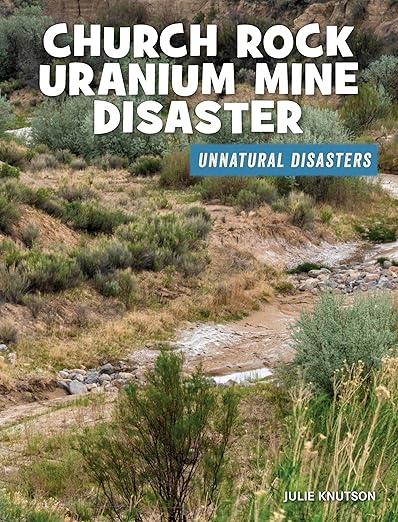
Alicia Inez Guzmán, Investigative Reporter https://mailchi.mp/searchlightnm.org/high-beam-98-6254036?e=a70296a261 10 Jul 24
As far as anniversaries go, July 16 marks not one but two grave events. At 5:30 a.m. on July 16, 1945, J. Robert Oppenheimer led a secret cadre of scientists to detonate the world’s first atomic bomb in the Chihuahuan Desert of south-central New Mexico. The light was so bright that a local blind woman could detect, briefly, the burst of illumination, local newspapers read. That same light was potent enough to bleach brown cows. The unearthly heat, meanwhile, turned sand into glass. But despite what was known about radiation at the time, nobody from the public was evacuated.
Exactly 34 years later, and at almost exactly the same time, an earthen dam holding uranium mill waste collapsed, unleashing 1,100 tons of solid radioactive waste and 94,000 gallons of tailings into northwestern New Mexico’s Rio Puerco. The Church Rock spill would release three times more radiation into the environment than the nuclear accident at Three Mile Island, most of it into the lands of the Navajo Nation. It was, as the Environmental Protection Agency deemed it, the largest radioactive spill in U.S. history. To my own shock and horror — and I’m certain the shock and horror of countless others — New Mexico’s governor at the time refused to declare the breach a federal emergency. Again, nobody was evacuated.
The two events are indelibly linked, not only by the day and time they share, but also by a kind of hubris unique to the nuclear age. By that, I mean a kind of hubris in which the lives and lands of New Mexicans were, and in many ways continue to be, deliberately disregarded. Thousands of people lived within a 50-mile radius of the Trinity Site. The waste at Church Rock? It flowed past some 1,700 homes.
For me, the date also marks just over one year since I began writing about nuclear affairs in New Mexico, the only “cradle-to-grave-state” in the nation. In that time, I’ve covered safety lapses in the plutonium pit factory at Los Alamos National Laboratory, the school-to-lab pipeline, allegations of fraud, waste and abuse at LANL, a secret autopsy program, legacy plutonium contamination and many other thorny issues.
Wall Street Journal finally admits high-tech Western weapons ‘useless’ in Ukraine conflict
https://www.rt.com/russia/600809-western-weapons-useless-ukraine/ 10 July 24
Satellite-guided shells are particularly vulnerable to Russian jamming technology, commanders in Kiev have told the newspaper.
Russia’s electronic warfare capabilities have rendered precision-guided Western munitions “useless” in the Ukraine conflict, the Wall Street Journal reported on Wednesday. With their guidance systems scrambled, some of these weapons have reportedly been retired within weeks of hitting the battlefield.
When the US announced the delivery of GPS-guided Excalibur artillery shells to Ukraine in 2022, pro-Kiev outlets predicted that the $100,000-per-shot projectiles would make “Ukrainian artillery a whole lot more accurate” and “cause Russia a world of pain.”
However, the Russian military adapted within weeks, Ukrainian commanders told the Wall Street Journal. Russian signal-jamming equipment was used to feed false coordinates to the shells and interfere with their fuses, causing them to veer off course or fall to the ground as duds.
“By the middle of last year, the M982 Excalibur munitions, developed by RTX and BAE Systems, became essentially useless and are no longer employed,” the newspaper stated, paraphrasing the Ukrainian commanders.
The Soviet Union invested heavily in electronic warfare (EW) during the 1980s, viewing jamming technology as a crucial bulwark against the guided missiles and shells that the US was beginning to develop at the time. While weapons such as the 1990s-era Excalibur shells were used by the US to devastating effect in Iraq and Afghanistan, officials and analysts in Washington have since concluded that they are far less effective against a peer-level opponent like Russia.
“The Russians have gotten really, really good” at interfering with guided munitions, US Deputy Secretary of Defense for Acquisition and Sustainment William LaPlante told the WSJ.
Retired US General Ben Hodges, who once predicted that Western weapons would help Ukraine seize Crimea by last winter, told the newspaper that “we probably made some bad assumptions because over the last 20 years we were launching precision weapons against people that could not do anything about it… and Russia and China do have these capabilities.”
Some of NATO’s most advanced weapons systems have met a similar fate in Ukraine. The newly-developed Ground-Launched Small Diameter Bomb (GLSDB), a joint project of Boeing in the US and Saab in Sweden, was given to Ukraine earlier this year, with Kiev’s troops firing these GPS-guided munitions before their American counterparts. However, it has since been pulled from the battlefield after it proved completely ineffective against Russian EW.
Likewise, Russian EW has significantly blunted the accuracy of Ukraine’s Western-provided GMLRS missiles, which are fired from the HIMARS multiple-launch rocket system, Ukrainian soldiers told the WSJ. As with the Excalibur shells, GMLRS missiles were once described by pro-Kiev pundits and analysts as a “game changer” that would swing the conflict in Ukraine’s favor.
Russia has long insisted that no amount of Western weapons systems will prevent it from achieving victory. Supplying these weapons is a “futile project” that will only encourage Kiev to “commit new crimes,” Moscow’s ambassador to Washington, Anatoly Antonov, warned last week.
Comment: Russia has followed two tracks in its military development: cheap, mass-production of drones, armoured vehicles and tanks, and cutting-edge research in electronic warfare first deployed in Syria. The two combined make the outcome of the Ukraine conflict inevitable.
- Ex-Pentagon official says US lags behind Russia in electronic warfare
- Another warning to U.S. warhawks? Russia unveils its Electronic Warfare systems
- Russia using super-advanced electronic warfare to keep NATO/ISIS blind in Syria
- WaPo reports Russian jamming technology is rendering much US-supplied weaponry ‘ineffective’
- New York Times reports Kiev’s drones losing electronic war to Russia
- Ukraine’s defense chief admits Russia is jamming HIMARS rockets
- Invisible Shield, Invisible Sword: Russia’s electronic warfare is ‘second to none’
Serbia’s Nuclear Energy Quest Opens Geopolitical Flash Point For China, Russia, And The West
Radio Free Europe , By Mila Manojlovic and Reid Standish, 10 July 24
BELGRADE — Driven by a need to diversify its energy sector and pivot away from cheap Russian gas, Serbia is moving to end the country’s decades-old policy banning the construction of nuclear power plants on its territory.
Several Serbian ministries announced on July 10 that the country is weighing whether to end the 35-year-old, Yugoslav-era ban on nuclear reactors and said public debate was being opened on the shake-up of Belgrade’s long-standing energy policy.
If successful, the Serbian government could also find itself on a new geopolitical fault line involving nuclear energy in Eastern Europe as countries look to move away from relying on Russia — which has dominated the nuclear energy sector — and consider alternative partnerships with countries like China, France, the United Kingdom, and the United States.
Serbian President Aleksandar Vucic is looking to navigate the new realities created by Russia’s full-scale invasion of Ukraine and deploy the same hedging strategy for the country’s nuclear future that’s been used by Belgrade to play the United States and the European Union against Russia and China on a host of security and foreign policy issues.
“Even though Serbia has not been hard on Russia like the European Union has, it’s looking to preserve a balancing act with the West,” Stefan Vladisavljev, program director at Foundation BFPE, a Belgrade-based think tank, told RFE/RL. “That means distancing away from Russia for big strategic projects, but where exactly that leads Belgrade remains to be seen.”……………………………………………………………………………………………………………………………………………………………
China and Russia are racing to pull ahead in the SMR field, but a collection of American and European firms are also making advances in the market.
Serbia’s presidential administration and the Chinese Embassy in Belgrade did not respond to RFE/RL’s request for comment about Beijing’s potential role.
One major obstacle for an SMR deal could be the cost.
In his March comments, Vucic said the price for four SMRs could total 7.5 billion euros ($8.1 billion) and that external funding would be required because he “doesn’t know how it would be financed.”………………………………………………………..
erbia balancing the technical and financial dimensions to any offer, as well as the strategic ones, as it pushes ahead in its pursuit for nuclear energy.
“This is about a civilian nuclear energy program,” the Atlantic Council’s Gordon said. “But whatever option Serbia chooses, it will have a geopolitical bearing.” https://www.rferl.org/a/serbia-nuclear-energy-hungary-china-rosatom-paks/33029040.html
1 This Month


Tell the Ukrainian Government to Drop Prosecution of Peace Activist Yurii Sheliazhenko

Petition to revoke the licensing of the Near Surface Nuclear Disposal Facility (NSDF) at Chalk River. https://www.ourcommons.ca/petitions/en/Petition/Details?Petition=e-7247


of the week – STOP SMALL MODULAR REACTORS IN CANADA
To see nuclear-related stories in greater depth and intensity – go to https://nuclearinformation.wordpress.com
-
Archives
- March 2026 (204)
- February 2026 (268)
- January 2026 (308)
- December 2025 (358)
- November 2025 (359)
- October 2025 (376)
- September 2025 (258)
- August 2025 (319)
- July 2025 (230)
- June 2025 (348)
- May 2025 (261)
- April 2025 (305)
-
Categories
- 1
- 1 NUCLEAR ISSUES
- business and costs
- climate change
- culture and arts
- ENERGY
- environment
- health
- history
- indigenous issues
- Legal
- marketing of nuclear
- media
- opposition to nuclear
- PERSONAL STORIES
- politics
- politics international
- Religion and ethics
- safety
- secrets,lies and civil liberties
- spinbuster
- technology
- Uranium
- wastes
- weapons and war
- Women
- 2 WORLD
- ACTION
- AFRICA
- Atrocities
- AUSTRALIA
- Christina's notes
- Christina's themes
- culture and arts
- Events
- Fuk 2022
- Fuk 2023
- Fukushima 2017
- Fukushima 2018
- fukushima 2019
- Fukushima 2020
- Fukushima 2021
- general
- global warming
- Humour (God we need it)
- Nuclear
- RARE EARTHS
- Reference
- resources – print
- Resources -audiovicual
- Weekly Newsletter
- World
- World Nuclear
- YouTube
-
RSS
Entries RSS
Comments RSS
 nuclear-news