German Parliamentarian in Washington Says No to NATO – Yes to Peace

Peace Instead of NATO
Speech by Sevim Dagdelen, Member of the German Bundestag at
„No to NATO – Yes to Peace“-rally in Washington DC on July 7th 2024.
As NATO marks its 75th anniversary on the eve of its Washington summit, three of its great myths are unravelling.
First myth: That NATO is a defensive alliance abiding by international law.
In reality, over the last quarter century, NATO has waged unprovoked, illegal wars of aggression against Yugoslavia and Libya; and the United States, the leader of the alliance, invaded and occupied Iraq, in a catastrophic adventure – to name three notorious examples.
Second myth: That NATO stands for democracy and the rule of law.
The reality is that NATO has never had a problem with counting military dictatorships or fascist regimes among its members. Portugal, one of NATO’s founding members, murdered thousands of Africans in its colonial wars and tortured hundreds to death in concentration camps. That was never a problem for this particular collective of shared values, just as Erdoğan’s Türkiye, with its support for jihadists terrorist groups in Syria, poses no particular ethical problem for it today.
Third myth: That NATO is a community of shared values and stands for human rights.
In reality the wars conducted by the United States and its Allies over the last 20 years alone have killed four and a half million people, as calculated by researchers at the esteemed Brown University. The torture and detention camp at Guantánamo Bay Naval Base is still in operation to this day. The journalist Julian Assange was tormented nearly to death for 14 years because he had published evidence of US war crimes. Benjamin Netanyahu’s far-right government continues to receive American and European support in the form of arms deliveries for its onslaught against Gaza, which cannot credibly be justified by recourse to the right of self-defense.
If you want to know what character NATO has, you only have to look at how NATO Stoltenberg torpedoes every initiative for peace in Brussels, and also do Washington and Berlin. The plan is escalation nor negotiations for peace! We say: We need to Stop the killings in Ukraine. Ceasefire now!
And we also say: we need to stop the killings in Gaza! Ceasefire now!
What is the role of Germany in this ongoing war in Gaza?
In fact, Germany is the second most important arms supplier for Israel after the USA. From 2019 to 2023, 30 percent of weapons came from Germany. In 2023, the figure was 47 percent while the USA supplied 53 percent. I think that is irresponsible and a shame to send weapons to an ongoing war.
The majority of the German population now no longer wishes to follow Berlin in its mindless escalation, and it likewise stands opposed to granting Ukraine NATO membership, and to funnelling endless sums of money to the corrupt, undemocratic regime in Kyiv.
It is completely irresponsible and insane to hold on to Ukraine’s NATO membership. A majority in Germany rejects this accession. 55 percent in the whole of Germany and 70 percent in eastern Germany reject it. Our governments are doing politics against the majority of the population.
It is an embarrassment and a travesty that the current German Government, like no other before it, carries out Washington’s commands at a moment’s notice, repeatedly, continuously – and shamefully, with its belligerence – puts at grave risk the well-being of the people who elected it.
We need peace instead of NATO.
We need, at long last, to stand up for democratic and popular sovereignty, and to reject the indignity of being a vassal to Washington, which is just about all we’ve gotten from the ruling coalition in Berlin.
Global NATO: Expansion and Escalation
Keynote speech by Sevim Dagdelen, Member of the German Bundestag at
„No to Nato – Yes to Peace“-Summit in Washington DC July 6th 2024
Just in time for its 75th anniversary, NATO has dropped its mask. And the NATO summit in Washington is one particularly illuminating moment in this revelation. The history of the Enlightenment teaches us never to accept a person’s or an organization’s self-image at face value. So do the early sources of Enlightenment ideas in ancient Greece. The Greeks already possessed that insight. Inscribed above the Temple of Apollo was the maxim: Know thyself.
……………………..For NATO, denial of its true nature is part of the essence of the organization. Or to put it another way, an almost meditative immersion in its own self-image is part of the essence of the military alliance. It is all the more astonishing, then, that Western media are so often content to reflect a thousand iterations of this self-image back to the public, without question and without pausing to consider whether the image adequately represents reality.
In fact, 75 years of NATO is equivalent to 75 years of denial, albeit with a dramatic expansion of scale and scope in recent years.
This is so in part because the three great myths of NATO are now fading……………………………………………………………………………
I am thrilled to be able to say finally that Julian Assange is now a free man. And Julian is undefeated.
The international campaign for Assange, all of the confidential talks and the like, were in the end successful. But we must also realize that the fight for Julian Assange’s freedom was also part of the struggle for freedom as such. And this struggle continues to rage here at the very heart of the NATO system.
Given the density of the propaganda, how tireless it operates in celebration of the NATO mythology, day in and day out, it is almost a miracle that not only is support for NATO crumbling worldwide, but that it is precisely those most exposed to its propaganda who are increasingly skeptical of the military pact………………………………………………………………
NATO is itself causing this crisis, and people sense that.
While its defenders speak of the alliance as if it were eternal, the organization’s drive toward escalation in Ukraine and its expansion into Asia is exceeding the Alliance’s own capacities. Just as with most empires, NATO is falling into a self-made trap of overextension. In this regard, NATO is a political fossil, unprepared to learn from the defeat of the German Empire in the First World War and appears to be repeating the gross miscalculations of the Kaiser’s Germany, only on a global scale.
The German Empire believed it could wage a war on two fronts. Today, a similar conviction is gaining traction within NATO that it must not only confront Russia and China, but that it is also to involve itself in the Middle East. This is a claim to global hegemony now under formulation. What hubris!
NATO evidently sees itself waging a war on three fronts. But if it were to do this, its defeat would be certain right from the start…………………………………………….
The NATO-Ukraine Council is next on the agenda. It is to discuss how the lavish financial transfers and pledges from NATO to Ukraine can be augmented, with an increase in arms deliveries and eventual NATO membership for Ukraine. Third, there will be a session with the AP4, or Asia-Pacific partners – Australia, Japan, New Zealand and South Korea – and a meeting with the leaders of the EU.
Seventy-five years after it was founded, NATO is to push for stepped-up belligerence in Ukraine and expansion into Asia. The intention is to advance the NATO-ization of Asia, and to put the strategy it believes it has already deployed successfully against Russia in place there.
For the moment, the primary focus in the Pacific is not on direct NATO accession for Asian countries, but rather on the expansion of NATO’s sphere of influence via bilateral security agreements – and not only with the AP4, but also with the Philippines, Taiwan and Singapore.
Just as Ukraine was erected as a frontline state against Russia, NATO is hoping to transform Asian countries like the Philippines into challenger states vis-à-vis China. The initial aim is to engage in a cold proxy war, but at the same time to prepare for a hot US and NATO proxy war in Asia……………………………………………………..
As already mentioned, public support for a NATO committed to escalation and expansion is crumbling in the West. In Germany, 55% of people reject Ukraine’s accession to NATO. The majority opposes supplying arms to Ukraine and desires an immediate ceasefire. In the United States, financial aid to Ukraine, USD 200 billion so far, has become extremely unpopular. Growing numbers of people want a stop on the flow of money to a system in Kyiv which is not only corrupt but honors a far-right state cult around the Nazi collaborator Stepan Bandera.
NATO’s myths are losing their luster. The Alliance’s strategies are succumbing to their own imperial overextension. What we need now is an immediate end to arms deliveries to Ukraine and, at long last, a ceasefire there. Those who seek peace and security for their own populations must halt the aggressive policy of expansion into Asia…… more https://worldbeyondwar.org/german-parliamentarian-in-washington-says-no-to-nato-yes-to-peace/
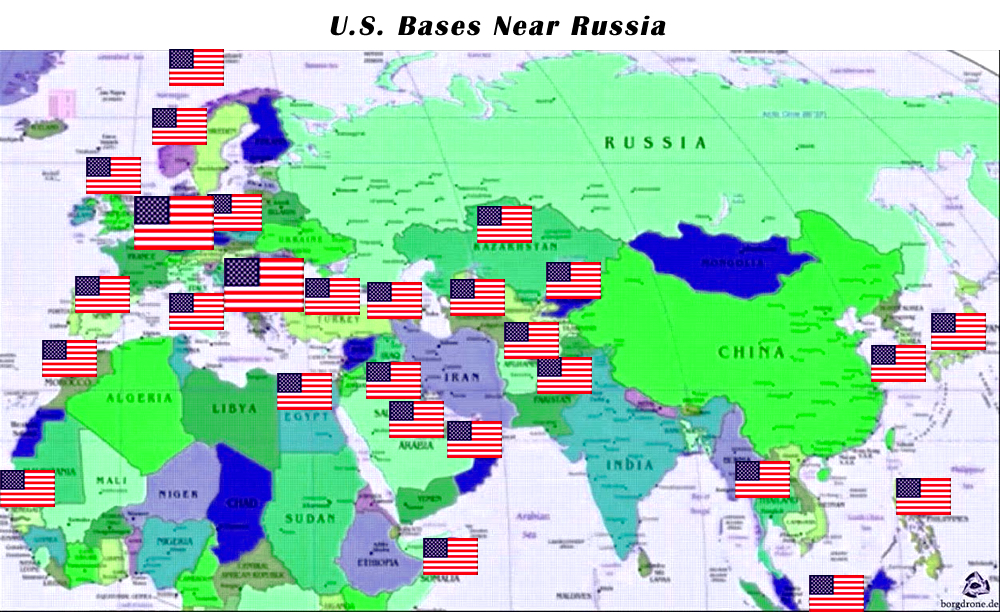
US bases in Europe on high alert for possible terrorist attack: DOD
Bradford Betz , Lucas Y. Tomlinson, Fox News, Sun, 30 Jun 2024 https://www.sott.net/article/492907-US-bases-in-Europe-on-high-alert-for-possible-terrorist-attack-DOD
U.S. military bases throughout Europe have been put on heightened alert status due to a potential terrorist attack, Fox News Digital has confirmed.
FILE – Sign in front of Ramstein Air Base, Germany.“There is credible intel pointing to an attack against U.S. bases over the next week or so,” a U.S. defense official told Fox News’ Lucas Tomlinson.
The official, who declined to be identified because he was not authorized to speak to the media, did not elaborate on the nature of the threat, but confirmed it was not tied to the French elections.
ISIS remains global threat a decade after declaring caliphate, US military official says
The official said all U.S. military bases in Europe have been placed on high alert, not a lock-down.
The U.S. bases have raised the status of the alert level to, “Force Protection Charlie,” which means the Pentagon has received credible intelligence indicating some form of a terrorist attack is in the works.
The new alert applies to all U.S. military facilities and personnel in Europe, including facilities in Germany, Italy, Romanian and Bulgaria, per reporting from Stars and Stripes.
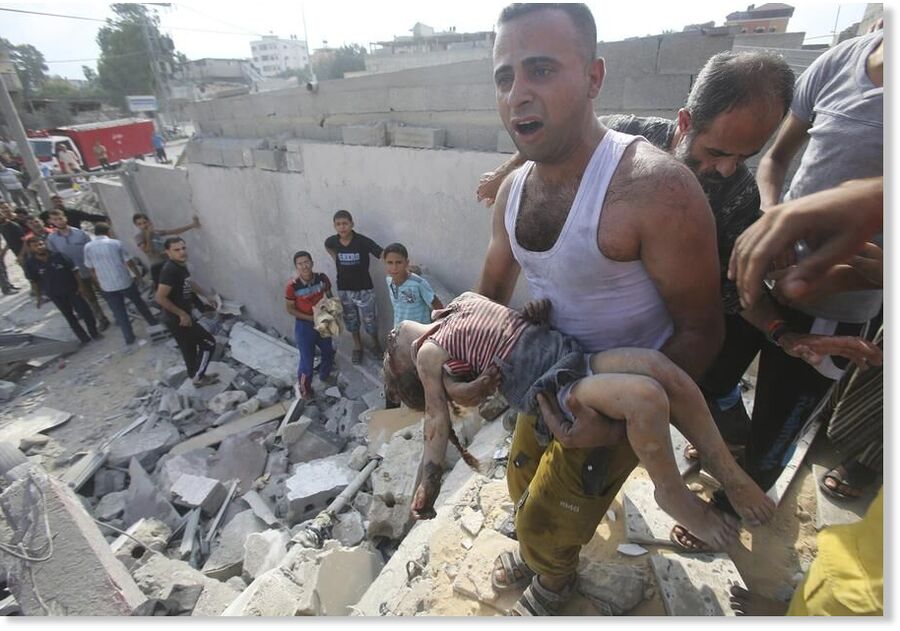
The Lancet study estimates death toll in Gaza 186,000 or even more
Maktoob Staff, 8 July 24, https://maktoobmedia.com/gaza-genocide/the-lancet-study-estimates-death-toll-in-gaza-186000-or-even-more/
Applying a conservative estimate of four indirect deaths per one direct death reported in Gaza, a new study published respected medical journal The Lancet said it is “not implausible” to estimate that up to 186,000 or even more deaths could be attributable to the genocidal war in Gaza.
The paper titled ‘Counting the dead in Gaza: difficult but essential’, published on 05 July, stated that using the 2022 Gaza Strip population estimate of 2,375,259, the estimated death toll would translate to 7·9% of the total population in the besieged enclave.
On Sunday, the Palestinian health ministry said that at least 38,153 Palestinians have been killed by Israel in Gaza since October 07 while more than 87,828 have been wounded in the besieged enclave. 15,983 of them are children.
The study by Rasha Khatib, Martin McKee and Salim Yusuf, used the data from June 19, with the official death toll of 37, 396. The official record maintained by the Gaza Health Ministry doesn’t include over 10,000 people missing or buried under the rubbles.
“The Ministry has had to augment its usual reporting, based on people dying in its hospitals or brought in dead, with information from reliable media sources and first responders. This change has inevitably degraded the detailed data recorded previously. Consequently, the Gaza Health Ministry now reports separately the number of unidentified bodies among the total death toll. As of May 10, 2024, 30% of the 35,091 deaths were unidentified,” observed the paper.
It also pointed out that armed conflicts have “indirect health implications beyond the direct harm from violence”.
“Even if the conflict ends immediately, there will continue to be many indirect deaths in the coming months and years from causes such as reproductive, communicable, and non-communicable diseases,” the paper read.
A report from Feb 7, 2024, at the time when the direct death toll was 28,000, estimated that without a ceasefire there would be between 58260 deaths (without an epidemic or escalation) and 85750 deaths (if both occurred) by Aug 6, 2024.
The interim measures set out by the International Court of Justice in January, require Israel to “take effective measures to prevent the destruction and ensure the preservation of evidence related to allegations of acts within the scope of … the Genocide Convention”.
“An immediate and urgent ceasefire in the Gaza Strip is essential, accompanied by measures to enable the distribution of medical supplies, food, clean water, and other resources for basic human needs,” the paper read.
Gaza deal must allow Israel to keep fighting – Netanyahu

https://www.sott.net/article/492916-Gaza-deal-must-allow-Israel-to-keep-fighting-Netanyahu 8 July 24
The Israeli prime minister’s statement comes after Hamas accepted a key part of a ceasefire proposal
Any potential ceasefire deal in Gaza must allow Israel to resume fighting until all of its war objectives are met, Prime Minister Benjamin Netanyahu said on Sunday. One of the main goals repeatedly voiced by the PM is the complete elimination of the Hamas militant group.
Netanyahu’s statement comes after Hamas approved a US proposal for a phased ceasefire deal, dropping a key demand for Israel to first commit to a permanent ceasefire before signing the deal, according to a Reuters source.
Hamas expects to end hostilities through talks during the first six-week phase of the deal aimed at settling the conflict in Gaza, the outlet said.
However, the Palestinian militant group wants written guarantees from international mediators that Israel will continue to negotiate a permanent ceasefire when the first phase of the deal comes into effect. The hostage issue will also be addressed after the first phase is implemented.
Hamas officials have said they are awaiting Israel’s response to the latest proposal. Netanyahu insisted on Sunday, however, that any deal must “allow Israel to go back to fighting until all the goals of the war are achieved.”
According to media reports, Netanyahu was scheduled to hold consultations on the next steps, but his latest statement has hindered the deal’s momentum.
“The plan that has been agreed-to by Israel and which has been welcomed by President Biden will allow Israel to return hostages without infringing on the other objectives of the war,” Netanyahu insisted.
Talks mediated by Qatar, Egypt and the US have so far failed to secure a truce in Gaza or the release of hostages since a weeklong ceasefire in November resulting in the freeing of 105 hostages from Gaza and 240 Palestinian prisoners.
Israel began its operation in Gaza in response to a cross-border incursion by Hamas last October in which at least 1,200 people were killed and 250 taken hostage. Some 116 captives are believed to be still held in Gaza.
Over 38,000 people have been killed so far and more than 87,000 others have been wounded in Israeli attacks on the Palestinian enclave, according to Gaza’s health ministry.
Comment: What kind of ceasefire is this if it must “allow Israel to go back to fighting until all the goals of the war are achieved.”?!
See also: Best of the Web: The Lancet study estimates death toll in Gaza 186,000 or even more and the reflections in SOTT Focus: The Burqa Ban Question
With global race to decarbonize electricity sector, demand for skilled nuclear workers heats up.

COMMENT. Most (or all?) of the funds available to these companies to hire “skilled workers” is coming directly from the public (taxpayers) through direct subsidies, contracts or tax refunds. For example, the story mentions that AtkinsRéalis is one of the top hiring firms. A few weeks back was another story stating that the AtkinsRéalis nuclear division got a $750M contract for work on a CANDU reactor in Romania. A few months before that was another story that Canada had signed a $3 BILLION “export development deal” with Romania (i.e. a gift) to build its CANDU reactor, and that most of the funds would be spent on Canadian jobs. This all comes back to the nuclear industry’s current core problem: its products (new nuclear reactors) are hulking dinosaurs that suck up funds at an alarming rate and no private investor doing due diligence wants to be part of this costly scheme.
Globe and Mail, MATTHEW MCCLEARN, 8 July 24
Last month, U.S.-based nuclear reactor vendor Westinghouse opened a 13,000-square-foot engineering office in Kitchener, Ont. The company wants to sell its products, including its flagship AP1000 reactor, in Canada while also serving international customers.
Having hired most of its 250 Canadian staff in the last three years, it now seeks to hire 100 more engineers. It’s recruiting at a moment when, after a decades-long lull, skilled nuclear workers find themselves in high demand.
China and Russia have long dominated construction activity, while Western countries stagnated; Canada’s newest power reactor was completed in the early 1990s. But efforts to decarbonize the electricity sector have coalesced into support for designing and building new reactors, even as aging facilities are overhauled – leading to a proliferation of announced nuclear projects.
Whether there’s enough engineering talent to execute them all, however, is a question vigorously debated within the nuclear industry, here and abroad.
According to a survey the Canadian Nuclear Association conducted five years ago, the industry directly employs 33,000 people – up from 30,000 in 2012. Large employers include Ontario Power Generation and Bruce Power, which operate large nuclear plants, as well as uranium mining giant Cameco Corp. and Canadian Nuclear Laboratories, which operates the Chalk River research facility.
That survey is now being updated, and while results have not been finalized, employment appears to have grown another 10 to 15 per cent during the past five years. But the sheer volume of announced projects implies more rapid growth.
OPG recently began early work to refurbish four reactors at its Pickering station. The eight-reactor Bruce station, already one of the world’s largest, is in the early stages of a planned expansion that could add four new large reactors.
AtkinsRéalis, steward of Canada’s homegrown Candu technology, is racing to develop a modernized 1,000-megawatt reactor it calls the Monark. It’s among the most active hirers on Nuclear Jobs Canada, an industry job board.
Canadian Nuclear Laboratories is hiring at its Chalk River facilities, a Second World War-era facility that has been extensively modernized in recent years. It’s looking to populate its new laboratories and replace retiring workers.
“Nuclear was a little bit quiet for a while, and now it’s coming back,” said Janet Tosh, CNL’s vice-president of human resources.
“So we are having to build up that talent pipeline. But it’s not just science and technology people we’re looking for. We’re looking for technicians, machinists, certified trade workers.”
And then there’s relative newcomers to Canada, such as Westinghouse. Another U.S.-based reactor vendor, GE-Hitachi Nuclear Energy, has partnered with OPG to build up to four small modular reactors at Darlington station.
The picture is similar in other Western countries, including the U.S. and Britain, both of which have seen limited reactor construction for decades. Reports abound that nuclear employers, desperate for talent, have lured long-retired professionals back into the work force.
Last year, the U.S. National Academy of Engineering published a 250-page report examining the potential barriers to a major build-out of new “advanced” reactors. It identifies labour availability as a key constraint.
“Utilities have generally not retained the talent on their staff to execute these large projects given the limited deployment of nuclear technology in the past 30 years in the United States,” the report says.
“This shortfall in talent could become equally limiting across the supply chain, operations, and regulatory organizations that must support any large-scale growth in nuclear deployment.”
Akira Tokuhiro, a professor at Ontario Tech University, which has one of the largest nuclear engineering programs in North America, has noticed major nuclear employers pledging to hire hundreds of workers apiece on LinkedIn.
“And I thought, how can that be?” he recalled during an interview. “Because we’re producing 50 graduates a year.”
Prof. Tokuhiro added up the output from other programs across the continent, and determined that fewer than 1,000 people graduate with a degree in radiation science or nuclear engineering in North America. (He figures that for every such graduate, nuclear employers hire 10 times as many mechanical, chemical and other engineers who’ve not studied nuclear directly.)
He compares that against likely retirement rates for workers at major nuclear employers, as well as the many announced nuclear projects.
“We don’t have enough new graduates,” Prof. Tokuhiro concluded. “There’s a disconnect between what the industry needs, and what the universities are producing.”
Luca Oriani, Westinghouse’s global chief engineering services officer, disagrees. The reactor vendor almost exclusively hires graduates with little or no industry experience, he said, and then trains and retains them as long as possible, typically decades. The company has found the supply of engineering talent abundant, in Canada and elsewhere.
That’s not to say competition isn’t fierce. Westinghouse used to visit campuses a week ahead of job fairs for coming graduates to recruit before they met with competitors; now it’s offering them jobs as early as a year before graduation.
“I have over 2,000 engineers working for me,” Mr. Oriani said. “I still spend at least a week month just going to different universities and discussing with students, and trying to see how do we get them to come to us before they go somewhere else.”
In an interview earlier this year, OPG chief executive officer Ken Hartwick divided the industry’s labour into two groups: engineering and project management on one side; and trades, such as boilermakers and electricians, on the other. Availability of the first group, he said, has not been a problem, an aging work force notwithstanding.
“I’m less worried about the older person losing some of the experience, because the younger people coming through our universities are brilliant,” Mr. Hartwick said.
Tradespeople were another matter. OPG competes for them not just with other nuclear utilities such as Bruce Power, but with many other construction projects, including hospitals and roads.
“Can we ramp up our trades programs fast enough? That’s the biggest challenge.”
Some in Canada’s nuclear industry say talent isn’t as scarce here as it is in the U.S. and Britain, thanks to major multi-reactor reactor refurbishments at Ontario’s Darlington and Bruce stations over the past decade. They’re major capital projects in their own right, requiring significant manpower to execute.
That’s kept a lot of building trades very engaged, and it’s kept the regular work force [of utilities] engaged,” said Bob Walker, national director of the Canadian Nuclear Workers’ Council, an umbrella organization of nuclear sector unions.
He confirmed that retirees are re-entering the work force, but added that most nuclear employers offer generous pension plans, allowing workers to retire relatively early.
“That’s been a running joke for as long as I can remember: No one ever retires, they just change positions,” Mr. Walker said. “The industry plans on people coming back, and people plan on retiring and coming back.”……………….. https://www.theglobeandmail.com/business/article-after-decades-of-dormancy-competition-for-nuclear-engineering-talent/
Masoud Pezeshkian: Iranian reformer who wants to end Tehran’s nuclear stand-off
Heart surgeon turned president pledges reform of system millions of his compatriots believe cannot be changed
Ft.com Najmeh Bozorgmehr in Tehran, 7 July 24
Only four months ago it was unclear whether reformist Masoud Pezeshkian would even be allowed to run for Iran’s parliament: hardliners controlled all the centres of power, with other factions consigned to the political wilderness.
But now Pezeshkian is set to become the Islamic republic’s first reformist president in two decades, after pulling off an unexpected victory in Friday’s election run-off. The 69-year-old defeated his hardliner rival, Saeed Jalili, with promises of change to Tehran’s domestic and foreign policies.
Pezeshkian’s electoral success has rejuvenated the marginalised reformist camp, which was initially amazed that the leadership approved his candidacy following a string of elections in which other reformers were barred………………………………………………….
During the campaign, Pezeshkian vowed to re-engage with the US and European states to negotiate an end to Iran’s nuclear stand-off with the west, and to secure sanctions relief to help the economy……………………………………………..
As president, his ability to push through change will depend heavily on his relations with Khamenei, analysts said, as Pezeshkian is expected to encounter stiff resistance from hardliners elsewhere…………………………………… more https://www.ft.com/content/5e7e80b3-4b46-4cce-a762-c95705201753
Biden: ‘I’m Running the World’.
July 6, 2024
The comment by the sitting U.S. president in Friday’s interview has been ignored by the mainstream, but its megalomania is at the heart of why Joe Biden is defying his party and remaining in the race, writes Joe Lauria.
By Joe Lauria
Special to Consortium News
About midway through what was billed as the most consequential interview of Joe Biden’s political career, he uttered the most consequential words in the interview: “I am running the world.”
Those five words explain why he refuses to withdraw from the race and confirm what most Americans deny, but which most of the world knows: U.S. presidents act as if they were world emperors.
The interview with ABC News’ George Stephanopoulos was supposed to be Biden’s chance to show the country he is mentally fit to remain in the presidency and run for a second term ………………………………………………………………….
PRESIDENT JOE BIDEN: Look. I have a cognitive test every single day. Every day I have that test. Everything I do. You know, not only am I campaigning, but I’m running the world. Not– and that’s not hi– sounds like hyperbole, but we are the essential nation of the world..
1 This Month
Chernobyl: The Lost Tapes – A good documentary on Chernobyl on SBS available On Demand for the next 3 weeks– https://www.sbs.com.au/ondemand/tv-program/chernobyl-the-lost-tapes/2352741955560

of the week–London Campaign for Nuclear Disarmament

Tell the Ukrainian Government to Drop Prosecution of Peace Activist Yurii Sheliazhenko
To see nuclear-related stories in greater depth and intensity – go to https://nuclearinformation.wordpress.com
-
Archives
- April 2026 (114)
- March 2026 (251)
- February 2026 (268)
- January 2026 (308)
- December 2025 (358)
- November 2025 (359)
- October 2025 (376)
- September 2025 (257)
- August 2025 (319)
- July 2025 (230)
- June 2025 (348)
- May 2025 (261)
-
Categories
- 1
- 1 NUCLEAR ISSUES
- business and costs
- climate change
- culture and arts
- ENERGY
- environment
- health
- history
- indigenous issues
- Legal
- marketing of nuclear
- media
- opposition to nuclear
- PERSONAL STORIES
- politics
- politics international
- Religion and ethics
- safety
- secrets,lies and civil liberties
- spinbuster
- technology
- Uranium
- wastes
- weapons and war
- Women
- 2 WORLD
- ACTION
- AFRICA
- Atrocities
- AUSTRALIA
- Christina's notes
- Christina's themes
- culture and arts
- Events
- Fuk 2022
- Fuk 2023
- Fukushima 2017
- Fukushima 2018
- fukushima 2019
- Fukushima 2020
- Fukushima 2021
- general
- global warming
- Humour (God we need it)
- Nuclear
- RARE EARTHS
- Reference
- resources – print
- Resources -audiovicual
- Weekly Newsletter
- World
- World Nuclear
- YouTube
-
RSS
Entries RSS
Comments RSS
 nuclear-news