Propaganda vs. Pragmatism: Can US ATACMS Clear the way for F-16 Warplanes in Ukraine?
Update on the conflict in Ukraine for June 16, 2024… – Western media reports the shortcomings of both F-16s and French Mirage 2000-5 warplanes being transferred to Ukraine;
– Attempts by Ukraine to use ATACMS to “isolate” Crimea continue to fall far short of the required frequency and scale necessary to actually do so;
– Western media reports admit that Russia’s large inventory of air defense systems will not run out any time soon despite Ukrainian claims of successfully targeting S-300 and S-400 systems across the battlefield;
– The idea of ATACMS clearing a path for F-16s to conduct strikes behind enemy lines is betrayed by the reality of even Ukraine’s much more limited air defense capabilities still preventing Russian air power from operating freely across the whole of Ukraine;
For Daily Reports on Ukraine: The Duran (Telegram): https://t.me/thedurancom Scott of Kalibrated (Telegram): https://t.me/kalibrated Mark Sleboda (Telegram): https://t.me/TheRealPolitick
Nuclear black hole could deal a knock-out blow to UK Labour’s renewable targets

Labour’s ambitious target for offshore wind could be quietly shelved to make way for the giant funding commitment to pay for Sizewell C nuclear power plant
DAVID TOKE, JUN 17, 2024, https://davidtoke.substack.com/p/nuclear-black-hole-could-deal-a-knock?utm_source=post-email-title&publication_id=1068034&post_id=145716547&utm_campaign=email-post-title&isFreemail=true&r=ln98x&triedRedirect=true&utm_medium=email—
Much of Labour’s manifesto commitments for clean energy, a state-owned ‘Great British Energy’ company to promote new technologies and funds to support buildings-based insulation and low carbon measures, have been widely flagged already. But there’s not much attention being given to two big, interlinked, threats to Labour’s clean energy strategy. One is the looming black financial hole that the incoming Labour Government will trigger as it gives the financial go-ahead for Sizewell C. The second is the problem of organising a much more rapid build-up of renewable energy than the Conservatives have managed to achieve. Both will involve the Treasury having to commit themselves to supporting forward spending, and we know that money is tight!
The central problem is that the cost of Sizewell C could sink the prospects of the renewables target. It is not difficult to see the problem. The costs of building Hinkley C, the sister plant of Sizewell C, have been growing and growing, and the plant has a long way to go before it is finished. The costs have reached an astonishing £33 billion for just 3.2 GW. Few independent analysts can be found who would bet against this cost increasing a lot further.
Unlike Hinkley C, Sizewell C is, to cut a longer story short, mostly going to have to be financed by the taxpayer or energy consumers. These costs will increase the numbers for the Public Sector Borrowing Requirement. The Treasury will have serious indigestion over this.
EDF is responsible for the costs of building Hinkley C. However it has refused to take responsibility for financing more than a small portion of Sizewell C. Moreover, it is proving very difficult to get any private investors to take responsibility for paying the costs of Sizewell C (no surprises there!). Essentially that means the Government are going to have to take responsibility for paying for the large bulk of the projects, and large cost overruns are all but inevitable. A lot of billions worth of red ink is going to have to be written into Treasury estimates if Sizewell C is to be given the financial go-ahead.
Offshore wind, onshore and solar farms will be a lot cheaper for the consumer than nuclear power from Sizewell C. Nevertheless, if the Treasury allows tens of billions to be allocated to underwrite the costs of Sizewell C then this could blow a huge hole in any efforts to get Labour’s renewable energy programme funded. To meet Labour’s manifesto target of quadrupling offshore wind capacity by 2030 then the Government will need to get lots and lots of contracts and offshore wind project contracts and leases issued pretty damn quick. That is as well as contracting lots of onshore wind and solar farms which are likely to be cheaper than offshore wind for the next few years at least.
The offshore wind commitment (for around 45 GW of new capacity by 2030) is going to require some funds to be underwritten by the Treasury. How much depends on what the Treasury chooses as the future price, say in 2030, of power from natural gas-fired power plant. This is because energy consumers will fund the difference between the guaranteed contract prices to be paid for offshore wind power production and the wholesale power price.
Since we do not know the price of gas in 2030 now, since we do not know what the global price of natural gas (in the form of LNG) will be, the Treasury has to make a choice. This choice, of course, is heavily laced with political implications. But at the moment the Treasury has chosen quite a low number for the future cost of natural gas. This makes offshore wind look relatively expensive to fund. I discussed this in a post I did in March, see here: How the Government is gaslighting us about the cost of offshore wind.
Renewable energy is much more popular with the public compared to nuclear power. But big energy corporations, not to mention the GMB union, are going to be piling in to try and make sure that approval of Sizewell C is given priority ahead of Labour’s apparently ambitious renewable energy commitment. That could mean that the bold offshore wind target is going to be quietly thrown in the waste bin.
EDF Warns of ‘Huge’ Contract Losses If Convicted in Paris Criminal Trial
- EDF lawyer says probity conviction may affect Czech, UK deals
- Ex-EDF CEO also tried alongside consultants including Messier
At the heart of the trial is EDF’s former boss, Henri Proglio, who is suspected of
having set up the system to hire the consultants.
Electricite de France SA legal team warned at a Paris trial that the utility could end up losing
“huge contracts” abroad if convicted in a case over accusations it
favoured several consultants by awarding them advisory deals without
putting them up for tender.
The favouritism court case that began on
Tuesday centres on awards worth more than €20 million ($21.7 million)
given to 44 consultants, including the firm set up by former Vivendi SE
boss Jean-Marie Messier.
Bloomberg 21st May 2024
Ukraine, Continued Aid, and the Prevailing Logic of Slaughter

June 15, 2024, by: Dr Binoy Kampmark, https://theaimn.com/ukraine-continued-aid-and-the-prevailing-logic-of-slaughter/
War always commands its own appeal. It has its own frazzled laurels, the calling of its own worn poets tenured in propaganda. In battle, the poets keep writing, and keep glorifying. The chattering diplomats are kept in the cooler, biding their time. The soldiers die, as do civilians. The politicians are permitted to behave badly.

With Ukraine looking desperately bloodied at the hands of their Russian counterparts, the horizon of the conflict had seemingly shrunk of late. Fatigue and desperation had set in. Washington seemed more interested in sending such musically illiterate types as the Secretary of State Antony Blinken to Kyiv for moral cuddling rather than suitably murderous military hardware.
Russian President Vladimir Putin, mindful of the losses inflicted on his own side in the conflict, thought it opportune to spring the question of peace talks. On June 14, while speaking with members of the Russian Foreign Ministry, he floated the idea that Russia would cease combat operations “immediately” if Ukraine abandoned any aspirations of joining NATO and withdrew its troops from the regions of Donetsk, Luhansk, Kherson and Zaporizhzhia.
Rather than refrigerate the conflict into its previous frozen phase, Putin went further. It would end provided that Kyiv accepted Moscow’s sovereign control over the four regions as “new territorial realities”. Russian-speaking citizens in Ukraine would also be afforded protections; sanctions imposed by Western states would be lifted. “Today,” he stated, “we have put forward another concrete, genuine peace proposal. If Kyiv and Western capitals reject it as they have in the past, they will bear political and moral responsibility of the ‘continuation of the bloodshed.’”
He further added that, as soon as Ukraine began withdrawing its military personnel from Donbas and Novorossiya, with an undertaking not to join NATO, “the Russian Federation will cease fire and be ready for negotiations. I don’t think it will take long.”
Length and duration, however, remain the signal attributes of this murderous gambit. Ukraine’s defeat and humbling is unacceptable for the armchair strategists in the US imperium, along with their various satellites. NATO’s obsessive expansion cannot be thwarted, nor can the projection of Washington’s influence eastwards from Europe. And as for the defence contractors and companies keen to make a killing on the killings, they must also be considered.
This was unpardonable for the interests of the Biden administration. The Washington War Gaming Set must continue. Empires need their fill, their sullied pound of flesh. Preponderance of power comes in various forms: direct assault against adversaries (potentially unpopular for the voters), proxy enlistment, or the one degree removed sponsorship of a national state or entity as a convenient hitman. Ukraine, in this sense, has become the latter, a repurposed, tragic henchman for US interests, shedding blood in patriotic gore.
In keeping with that gore, US President Joe Biden, in announcing a funding package for Ukraine from the G7 group, promised that “democracies can deliver”. The amount on the ledger: $US50 billion. “We are putting our money to work for Ukraine, and giving another reminder to Putin that we are not backing down.” That particular amount is derived from frozen Russian assets outside Russian territory, most of it from the Russian Central Bank amounting to US$280 billion. The circumstances of such freezing will, in future, be the subject of numerous dissertations and legal challenges, but that very fact suggests that Ukraine’s allies are tiring from drawing from their own budgets. We support you, but we also hate to see the money of our taxpayers continually splurged on the enterprise.
Biden’s remarks from the Hotel Masseria San Domenico in Fasano have a haunting quality of repetition when it comes to US support for doomed causes and misguided goals. The fig leaf, when offered, can be withdrawn at any given movement: South Vietnam, doomed to conquest at the hands of North Vietnam; Afghanistan, almost inevitably destined to be recaptured by the Taliban; Kurds the Marsh Arabs, pet projects for US strategists encouraged to revolt only to be slaughtered in betrayal.
Thus goes Biden: “A lasting peace for Ukraine must be underwritten by Ukraine’s own ability to defend itself now and to deter future aggression anytime […] in the future,” Biden explains, drawing from the echo of Vietnamisation and any such exultation of an indigenous cause against a wicked enemy. The idea here: strengthen Ukrainian defence and deterrence while not sending US troops. In other words, we pay you to die.
Biden’s remarks from the Hotel Masseria San Domenico in Fasano have a haunting quality of repetition when it comes to US support for doomed causes and misguided goals. The fig leaf, when offered, can be withdrawn at any given movement: South Vietnam, doomed to conquest at the hands of North Vietnam; Afghanistan, almost inevitably destined to be recaptured by the Taliban; Kurds the Marsh Arabs, pet projects for US strategists encouraged to revolt only to be slaughtered in betrayal.
Thus goes Biden: “A lasting peace for Ukraine must be underwritten by Ukraine’s own ability to defend itself now and to deter future aggression anytime […] in the future,” Biden explains, drawing from the echo of Vietnamisation and any such exultation of an indigenous cause against a wicked enemy. The idea here: strengthen Ukrainian defence and deterrence while not sending US troops. In other words, we pay you to die.
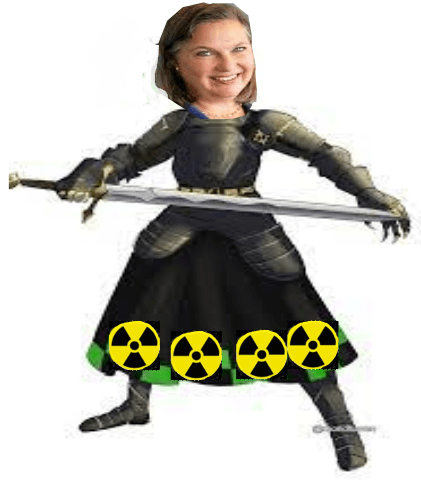
While Putin has turned his nose up at the UN Charter in its solemn affirmation of the sovereignty of states, Washington has taken its own wrecking ball to the text. It has meddled, fiddled and tampered with the internal affairs of states while accusing Russia of the very same thing. Spiteful of history and its bitter lessons, it has employed such saboteurs as former Assistant Secretary of State Victoria Nuland to undertake such tasks, poking the Russian Bear while courting and seducing the Ukrainian establishment. The horror is evident for all to see, and unlikely to halt.
Researchers have doubts, but Bill Gates is hyping his new liquid-sodium nuclear reactor
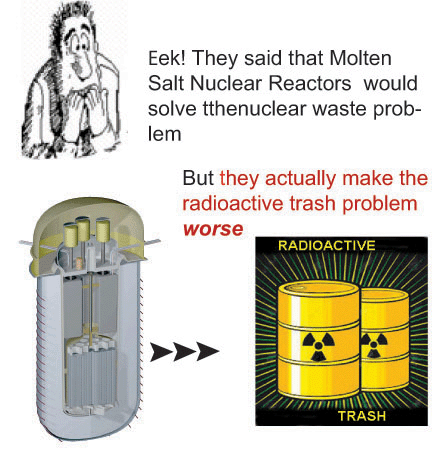
Research has poured cold water on some of the hype surrounding these proposed next-generation reactors, including liquid-sodium reactors. According to a report produced by the Union of Concerned Scientists in 2021, Natrium reactors may be less “uranium-efficient”, may not reduce the amount of nuclear waste produced, and may face safety risks that are unique to them and absent from their predecessors.
The new Natrium reactors promise to be more efficient and safer than traditional nuclear reactors, but is this the case?
Bill Gates Has Made Progress Towards Next-Generation Nuclear Reactors
IFLScience, DR. RUSSELL MOUL, Edited by Laura Simmons, 15 June 24
Bill Gates has helped “break ground” on the development of a new next-generation nuclear reactor. The project, which is run between TerraPower and the Department of Energy, plans to build a new sodium test reactor at a site in Kemmerer, Wyoming by 2030.
The nuclear industry has been in decline in the USA for decades. Despite the country being one of the first nations to generate nuclear energy for commercial civilian purposes, there have been few developments since the late 1970s. For instance, since 1978, only two nuclear power plants have started construction, and that only occurred in 2013.
This industry has stalled because of various broad challenges related to economics, regulatory frameworks, and technological problems, as well as declining respect within the public sphere.
All of the USA’s existing nuclear power plants are traditional pressurized water reactors, which rely on technologies developed over 40 years ago. They are expensive to build and even more so to maintain across their lifecycle. Costs do not just concern the initial construction, but also the ongoing price of fuels, operational costs, and engineering fees. And then there’s the problem of the nuclear waste, which in the US is mostly stored in tanks at sites owned by the Department of Energy.
The industry was also fatally wounded by the Three Mile Island partial meltdown in 1979, which caused new regulatory delays to the 51 new reactors that were under construction at the time. With the introduction of new safety procedures and back-fit requirements, the speed of construction was slowed down, and the costs skyrocketed for many reactors. After that, many contracts were canceled and the industry ground to a halt.
Today, nuclear power provides around one-fifth of the country’s electricity.
But in 2008, Bill Gates founded TerraPower with the aim of building a new generation of nuclear reactors in the US. The reactors, called Natrium, are 345-megawatt modular, pool type, liquid sodium reactors that run off low-enriched uranium (this is fuel that contains 5 to 20 percent fissile uranium). The reactors are also hooked up to a 1-gigawatt hour molten salt storage system…………………………………………………………..
Research has poured cold water on some of the hype surrounding these proposed next-generation reactors, including liquid-sodium reactors. According to a report produced by the Union of Concerned Scientists in 2021, Natrium reactors may be less “uranium-efficient”, may not reduce the amount of nuclear waste produced, and may face safety risks that are unique to them and absent from their predecessors. ……..https://www.iflscience.com/bill-gates-has-made-progress-towards-next-generation-nuclear-reactors-74667
Science Writer
Global spending on nuclear weapons up 13% in record rise
Global spending on nuclear weapons is estimated to have increased by 13%
to a record $91.4bn during 2023, according to calculations from the
International Campaign to Abolish Nuclear Weapons (Ican) pressure group.
The new total, which is up $10.7bn from the previous year, is driven
largely by sharply increased defence budgets in the US, at a time of wider
geopolitical uncertainty caused by Russia’s invasion of Ukraine and the
Israel-Hamas war.
All nine of the world’s nuclear armed nations are
spending more, Ican added, with China judged to be the second largest
spender with a budget of $11.9bn – though Beijing’s total is well below
the $51.5bn attributed to the US.
Guardian 17th June 2024
Australian Opposition leader plans for nuclear power, – (no mention of wastes) -opposes renewable energy.
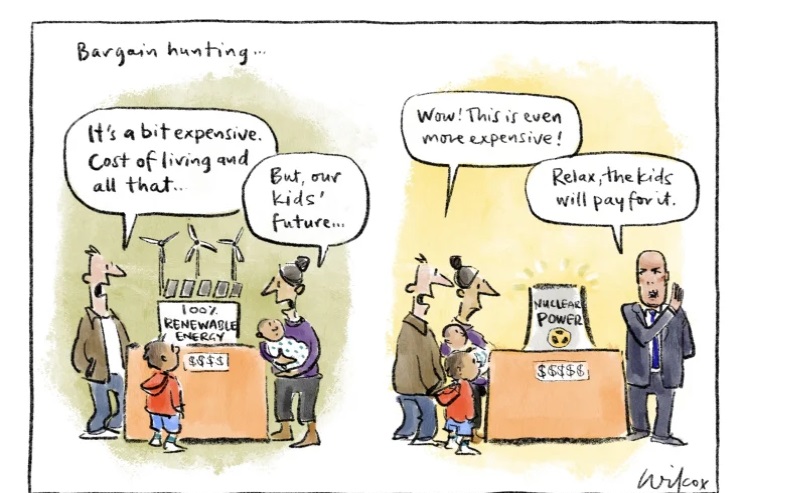
The Age’s cartoonist Cathy Wilcox sums it up!
We’ve barely scratched the surface of how energy efficiency can help the energy transition

SWITCHEDON Anne Delaney, SwitchedOn Editor, June 24
Amory Lovins, ‘the Einstein of energy efficiency,’ says energy efficiency is a continuous spectrum that keeps rapidly evolving, and better design is twice as efficient as the gains from just dropping fossil fuels.
Amory Lovins has been writing and talking about energy efficiency for over 50 years but he says the need to use energy more productively and efficiently is now more acute than ever.
At the same time, the scope for saving energy is also bigger than ever.
Lovins’ views have been crucial to our understanding of energy efficiency. He’s advised major firms and numerous governments, authored hundreds of papers and books, and taught at several universities most recently Stanford. Time magazine named him one of the world’s most influential people.
“We’ve barely scratched the surface of how much efficiency is available,” Lovins told the SwitchedOn podcast. “It’s about two to four times what I thought in the 70s, and as we learn more about it, especially what we can do with design, the potential just keeps getting bigger and cheaper.”
Whilst enormous gains have been made in energy efficiency through better operational practices and technical improvements – turning off appliances, insulating, plugging cracks and gaps, etc – Lovins says that energy efficiency is a continuous spectrum that keeps rapidly evolving.
He believes the key to better efficiency now is better design.
“What we haven’t yet really tackled is how to design buildings, factories, processes, equipment, vehicles, as whole systems for multiple benefits. That’s what we call integrative design,” says Lovins. “That is twice as powerful as the factor two or three efficiency gains that we can get just by switching from burning fossil fuels.”
In 1976 Lovins predicted that over the next 50 years, the US could nearly quadruple overall energy efficiency, but by 2010 in a study he called ‘Reinventing Fire,’ he found the savings were twice what he’d previously thought, but at a third of the cost.
“That’s now looking conservative as we learn more about integrative design…. the current evidence shows you could about quintuple end use efficiency by about 2060, or treble it by about 2040.”
A passive solar house in the middle of Colorado
Lovins has been walking the talk on integrative design for decades. In the 1980s he built a passive solar house, and banana farm, from where he spoke to the SwitchedOn podcast.
“It’s 2,200 metres up in the Rocky Mountains near Aspen, Colorado, where temperatures used to dip to minus 44 Celsius … and yet in the middle of the house, we’ve harvested so far 81 passive solar banana crops with no heating system.”
Lovins says it was cheaper to build his passive solar house, even 40 years ago, rather than a standard American home, because they saved on construction costs by not building a heating system.
“We optimised the building as a system, not the insulation as a component.”…………………………………………………………………………………………………………
Making energy efficiency great again
Energy efficiency has been regarded as the poor cousin of renewable technology, which is more likely to grab the headlines in stories about the energy transition.
“Energy is invisible and the energy you don’t use is almost unimaginable,” says Lovins. “So even though in the US the energy savings since 1975 add up to 25 times more than the increase in renewable supply, the renewables get practically all the headlines, because you can see them there on the rooftop and the skyline.”
Thinking about energy efficiency is also hampered by a belief that we can’t get more efficient, that “we must already have wrung out all the work from our energy that’s worth doing.”
The growing electrification movement is however enabling many more people to realise the importance of efficiency gains – it’s unlocking people’s understanding that what makes these electrification technologies superior is their greater energy efficiency.
“We see it with electric vehicles that are two to four times more efficient than the internal combustion engine, and the heat pump that is three to four times more efficient,” Daan Walter, Principle of Strategy at RMI (the Rocky Mountain Institute), told the SwitchedOn podcast.
Walter argues that electrification is the gateway into efficiency thinking – by encouraging us to move away from just thinking about the upfront costs of appliances, it provides an opportunity to change the narrative about efficiency……………………………………………………………………………………..
You can hear the full interview with Amory Lovins and Daan Walter on the SwitchedOn podcast here. https://switchedon.reneweconomy.com.au/content/weve-barely-scratched-the-surface-of-how-energy-efficiency-can-help-the-energy-transition
20 June WEBINAR: Nuclear Power and Weapons in a Time of Rising Tensions.

Nuclear Power and Weapons in a Time of Rising Tensions – William D. Hartung, Linda Pentz Gunter and Greg Mello speak out in the VFP No Nukes Webinar, Thursday, June 20, 7 pm Eastern, 5 pm Central, 3 pm Pacific
Three outstanding experts – William D. Hartung, Linda Pentz Gunter and Greg Mello – will share critically important insights at the VFP No Nukes Webinar, this Thursday, June 20, at 7 pm Eastern, 6 pm Central, 5 pm Mountain, 4 pm Pacific.
It is not too late to Register Here.
WILLIAM D. HARTUNGis a Senior Research Fellow at the Quincy Institute for Responsible Statecraft. He focuses on the arms industry and US military budget. He was previously the director of the Arms and Security Program at the Center for International Policy and the co-director of the Center’s Sustainable Defense Task Force. He is the author of Prophets of War: Lockheed Martin and the Making of the Military-Industrial Complex (Nation Books, 2011) and the co-editor, with Miriam Pemberton, of Lessons from Iraq: Avoiding the Next War (Paradigm Press, 2008). And Weapons for All (HarperCollins, 1995) is a critique of US arms sales policies from the Nixon through Clinton administrations.
Time to Rethink the US Nuclear ArsenalWilliam Hartung’s latest articlewarns about the particularly dangerous risks presented by the US basing of Inter-Continental Ballistic Missiles (ICBMs), which he says only serve the interests of those who profit off them.
LINDA PENTZ GUNTERfounded Beyond Nuclear in 2007 and serves as editor/curator of Beyond Nuclear International. Prior to her work in anti-nuclear advocacy, she was a journalist for 20 years in print and broadcast, working for USA Network, Reuters, The Times (UK) and other US and international outlets. Beyond Nuclear works to support grassroots, national and international efforts to phase out nuclear power in favor of safer energy choices with which to address the climate crisis. The organization also draws attention to the perpetual pathway between nuclear power and nuclear weapons and advocates for a global nuclear weapons ban. In creating Beyond Nuclear, Linda’s goal was to reach beyond the immediate circle of committed anti-nuclear activists and engage those environmentalists concerned with the climate crisis and peace and the necessity to move away from fossil and fissile energy use.
Nuclear Power Is Too Risky, Even in Peacetime.Ukraine is the Tip of the Iceberg.Linda Pentz Gunter writes: “Fears about fires at Ukraine’s power plant in war-torn Zaporishzhia underscore the broader dangers of nuclear energy.”
Greg Mello
GREG MELLOis a co-founder of the Los Alamos Study Group and has led its varied activities since 1989, which have included policy research, environmental analysis, congressional education and lobbying, community organizing, litigation, advertising, and the nuts and bolts of running a small nonprofit. From time to time Greg has served as a consulting analyst and writer for other nuclear policy organizations. Greg was originally educated as an engineer (Harvey Mudd College, 1971) and regional planner (Harvard, 1975). Greg led the first environmental enforcement at Los Alamos National Laboratory. He was a hydrogeologist for the New Mexico Environment Department and later a consultant to industry. In 2002 Greg was a Visiting Research Fellow at Princeton’s Program on Science and Global Security. Greg’s research, analysis, and opinions have been published in the New York Times, Washington Post, The Bulletin of the Atomic Scientists, Issues in Science and Technology, in the New Mexico press, and elsewhere.
Neocon Humiliation – or Nuclear Exchange?
The Centrality of War Resistance in Moral Politics
A recently updated blogon the Los Alamos Study Group website warns the Neocon obsession with defeating Russia in Ukraine is recklessly tempting nuclear war.
Global spending on nuclear weapons up 13% in record rise

States are on course to spend $100bn a year, driven by a sharp increase in US defence budgets
Dan Sabbagh Defence and security editor, Mon 17 Jun 2024 [good tables on original] https://www.theguardian.com/world/article/2024/jun/17/global-spending-on-nuclear-weapons-up-13-in-record-rise
Global spending on nuclear weapons is estimated to have increased by 13% to a record $91.4bn during 2023, according to calculations from the International Campaign to Abolish Nuclear Weapons (Ican) pressure group.
The new total, which is up $10.7bn from the previous year, is driven largely by sharply increased defence budgets in the US, at a time of wider geopolitical uncertainty caused by Russia’s invasion of Ukraine and the Israel-Hamas war.
All nine of the world’s nuclear armed nations are spending more, Ican added, with China judged to be the second largest spender with a budget of $11.9bn – though Beijing’s total is well below the $51.5bn attributed to the US.
Russia is the third largest spender, at $8.3bn, followed by the UK ($8.1bn) and France ($6.1bn), although estimates for authoritarian states or the three countries with undeclared nuclear programmes (India, Pakistan and Israel) are all complicated by a lack of transparency.
Susy Snyder, one of the author’s of the research, warned that nuclear states are “on course to be spending $100bn a year on nuclear weapons” and argued that the money could be used on environmental and social programmes instead.
“These billions could have been used for combating climate change and saving animals and plants that sustain life on Earth from extinction, not to mention improving health and education services around the world,” Snyder said.
Over the past five years, since Ican began its research, nuclear weapons spending has soared by 34%, or $23.2bn. Spending by the US increased by 45% during that time and by 43% in the UK, and on current trends will surpass $100bn in 2024.
Russia’s president, Vladimir Putin, has referred repeatedly to his country’s nuclear arsenal to warn the west of a direct military intervention in Ukraine since launching the full-scale invasion in February 2022. Russia also began a series of exercises simulating the use of tactical nuclear weapons near the Ukrainian border in May.
Other data, complied by the Stockholm International Peace Research Institute (Sipri), shows that the number of active nuclear warheads is also slightly higher, at 9,585, driven largely by China increasing its arsenal to 500 from 410.
The largest nuclear states remain, as they have done since the 1950s, the US and Russia, who possess about 90% of all warheads. Russia has 4,380 nuclear warheads deployed or in storage, compared with the US on 3,708, the researchers added.
The Sipri researchers said “Russia is estimated to have deployed about 36 more warheads with operational forces than in January 2023,” though they added there was no firm evidence that Moscow had deployed any of its nuclear missiles in Belarus, despite public statements from Putin and Belarus’s president Alexander Lukashenko.
Britain’s nuclear weapon arsenal is estimated to be unchanged at 225 (as is France’s on 290), but three years ago the UK said it would raise a cap on the number of warheads it was willing to stockpile to 260 Trident warheads to counter perceived threats from Russia and China.
Wilfred Wan, the director of Sipri’s weapons of mass destruction programme, said: “We have not seen nuclear weapons playing such a prominent role in international relations since the cold war.”
He contrasted the numbers of warheads deployed with a joint statement signed by the US, UK, France, China and Russia in 2022. Building on earlier statements, the five countries declared that “a nuclear war cannot be won and must never be fought”.
Kenya’s first nuclear plant: why plans face fierce opposition in country’s coastal paradise

Unease and anger are rising over proposals to build country’s first facility on Kilifi coast, home to white sand beaches, coral reefs and mangrove swamps
Guardian, By Caroline Kimeu in Kilifi, 17 June 24
Kilifi County’s white sandy beaches have made it one of Kenya’s most popular tourist destinations. Hotels and beach bars line the 165 mile-long (265km) coast; fishers supply the district’s restaurants with fresh seafood; and visitors spend their days boating, snorkelling around coral reefs or bird watching in dense mangrove forests.
Soon, this idyllic coastline will host Kenya’s first nuclear plant, as the country, like its east African neighbour Uganda, pushes forward with atomic energy plans.
The proposals have sparked fierce opposition in Kilifi. In a building by Mida Creek, a swampy bayou known for its birdlife and mangrove forests, more than a dozen conservation and rights groups meet regularly to discuss the proposed plant.
“Kana nuclear!” Phyllis Omido, an award-winning environmentalist who is leading the protests, tells one such meeting. The Swahili slogan means “reject nuclear”, and encompasses the acronym for the Kenya Anti-Nuclear Alliance who say the plant will deepen Kenya’s debt and are calling for broader public awareness of the cost. Construction on the power station is expected to start in 2027, with it due to be operational in 2034.
“It is the worst economic decision we could make for our country,” says Omido, who began her campaign last year.
A lawsuit filed in the environmental court by lawyers Collins Sang and Cecilia Ndeti in July 2023 on behalf of Kilifi residents, seeks to stop the plant, arguing that the process has been “rushed” and was “illegal”, and that public participation meetings were “clandestine”. They argue the Nuclear Power and Energy Agency (Nupea) should not proceed with fixing any site for the plant before laws and adequate safeguards are in place. Nupea said construction would not begin for years, that laws were under discussion and that adequate public participation was being carried out. Hearings are continuing to take place.
In November, people in Kilifi filed a petition with parliament calling for an inquiry. The petition, sponsored by the Centre for Justice Governance and Environmental Action (CJGEA), a non-profit founded by Omido in 2009, also claimed that locals had limited information on the proposed plant and the criteria for selecting preferred sites. It raised concerns over the risks to health, the environment and tourism in the event of a nuclear spill, saying the country was undertaking a “high-risk venture” without proper legal and disaster response measures in place. The petition also flagged concerns over security and the handling of radioactive waste in a nation prone to floods and drought. The senate suspended the inquiry until the lawsuit was heard.
………………..Peter Musila, a marine scientist who monitors the impacts of global heating on coral reefs, fears that a nuclear power station will threaten aquatic life. The coral cover in Watamu marine national reserve, a protected area near Kilifi’s coast, has improved over the last decade and Musila fears progress could be reversed by thermal pollution from the plant, whose cooling system would suck large amounts of water from the ocean and return it a few degrees warmer, potentially killing fish and the micro-organisms such as plankton, which are essential for a thriving aquatic ecosystem
It’s terrifying,” says Musila, who works with the conservation organisation A Rocha Kenya. “It could wreak havoc.”
At Mida, those making a living from the land and sea, including workers in tourism, fishers and several dozen beekeeping groups and butterfly farmers around Arabuko-Sokoke Forest, have concerns about their futures. The forest is a Unesco biosphere reserve.
Justin Kenga, 51, a tour operator from the town of Watamu, who has worked in the industry for decades, says: “In tourism, we depend on the biodiversity around us – our tourists are very conscious about the environment – so anything that can alter or destruct our environment, it will destroy our livelihoods.”…………………………………………………………………………………………………………………
……..tensions between anti-nuclear activists and the government are growing. The UN special rapporteur on human rights defenders, Mary Lawlor, expressed concern over police violence against people in Uyombo, a potential plant site, during a protest in April. Activists said their peaceful protest was met with excessive violence, beatings, arrests and intimidation………………………………………. https://www.theguardian.com/global-development/article/2024/jun/17/kenya-plans-first-nuclear-power-plant-kilifi-opposition-activists
Iran’s Nuclear Point Man : We Won’t Bow to Pressure

Friday, 06/14/2024, https://www.iranintl.com/en/202406149313—
Ali Shamkhani, advisor to the Supreme Leader and apparent nuclear negotiator, stated on Friday that Iran “won’t bow to pressure” amidst US warnings regarding its uranium enrichment activities.
“Iran’s nuclear program relies on national will and development strategy,” Shamkhani wrote on X. “The US and some Western countries would dismantle Iran’s nuclear industry if they could.”
The US issued a warning to Iran, stating they will “respond accordingly” if Iran continues to accelerate its nuclear program. This came shortly after the UN nuclear watchdog, the International Atomic Energy Agency (IAEA), highlighted Tehran’s expanding uranium enrichment.
The IAEA’s report revealed Iran’s response to a censure resolution, indicating expanded uranium enrichment at two underground sites. Iran rapidly installed more uranium-enriching centrifuges at its Fordow site and began work on additional ones at its Natanz facility, the report said.
A week ago, The IAEA’s Board passed a resolution urging Iran to cooperate and reverse its decision to bar inspector visits, with the US stressing the need for Iran’s compliance. Britain, France, and Germany tabled the resolution, which the US reportedly opposed but later endorsed. Only Russia and China voted against the measure.
Shamkhani, an old-guard military figure who served as the secretary of Iran’s Supreme National Security Council until last year, had previously warned of a “serious and effective response” if European nations pursued the resolution.
According to an IAEA assessment, Iran is enriching uranium to 60% purity, approaching the 90% threshold typical of weapons-grade material. Additionally, it has accumulated enough material for additional enrichment, potentially resulting in three nuclear warheads.
93 Nations Back ICC as Israel Faces Charges for War Crimes in Gaza

A joint statement calls on “all States to ensure full co-operation with the Court for it to carry out its important mandate of ensuring equal justice for all victims of genocide, war crimes, [and] crimes against humanity.”
Common Dreams, JON QUEALLY, Jun 15, 2024
Ninety-three nations on Friday, all them state parties to the Rome Statute that created the International Criminal Court, reiterated their support for the ICC as it assesses an application for arrest warrants of high level Israeli government officials accused of perpetrating war crimes in Gaza.
The 93 countries—including Canada, Bangladesh, Belgium, Ireland, Afghanistan, Costa Rica, Chile, Germany, France, Mongolia, Mexico, New Zealand, and scores of other—cited separate ICC statements defending its mandate for independence and upheld in their joint statement “that the Court, its officials and staff shall carry out their professional duties as international civil servants without intimidation.”
Though neither nation is named in the joint statement, both the United States and Israel have publicly condemned ICC chief prosecutor Karim Khan for his May 20 arrest warrant applications for Israeli Prime Minister Benjamin Netanyahu and Defense Minister Yoav Gallant over alleged “war crimes” and “crimes against humanity” in the Gaza Strip.
Khan also submitted arrest warrants for Hamas leaders Yahya Sinwar, Mohammed Diab Ibrahim Al-Masri, and Ismail Haniyeh for their alleged roles in the October 7 attack on southern Israel. Following Khan’s announcement in May, U.S. President Joe Biden said, “Whatever this prosecutor might imply, there is no equivalence—none—between Israel and Hamas. We will always stand with Israel against threats to its security.”
In April it was reported that the U.S. government was working behind the scenes to block the ICC from issuing any arrest warrants targeting Israel officials. Neither Israel nor the U.S. is party to the Rome Statute, though the United Nations has recognized the ICC’s jurisdiction over the Occupied Palestinian Territories (OPT), where the alleged war crimes by the occupying power, Israel, took place…………………………………………………………………………………………………………………………………..
With their show of unified support for the ICC and its mandate, the countries said they aim to “contribute to ending impunity for such crimes and preventing their recurrence while defending the progress we have made together to guarantee lasting respect for international humanitarian law, human rights, the of law and the enforcement of international criminal justice.” https://www.commondreams.org/news/icc-war-cimes-gaza
Congress will hold a hearing about the Sentinel missile’s exploding budget, but is it too little, too late?
Bulletin. By Chloe Shrager | June 14, 2024
The Pentagon’s new multibillion-dollar intercontinental ballistic missile (ICBM) program has come under fire as a continual offender of overspending, but there has been little reaction on the issue from Congress. The most recent cost overrun for the Sentinel ICBM (previously known as the Ground Based Strategic Deterrent or GBSD) put the program’s budget an unprecedented 37 percent higher than previous estimates and extended its operational schedule by at least two years. As a result, the Pentagon is critically reviewing the program to determine if it will continue or be canceled.
Critics have called the land-based missile modernization project “wasteful and dangerous.” But much to the dismay of Sentinel’s many naysayers, the costly program is expected to be recertified.
While experts and activists have long called for a thorough reevaluation of the program, most of Congress has been silent on the issue. It is only last month that the chairs of a congressional working group on nuclear arms called for an oversight hearing on the controversial program. The hearing, set for July 24, seeks to “raise the alarm about our unsustainable, reckless nuclear posture,” working group co-chair Don Beyer, a Democrat of Virginia, said of the current US nuclear policy.
The upcoming hearing will be the first—and maybe only—opportunity for lawmakers to critically reevaluate US spending on modernization of its ICBM force. But it will come after the program is poised to be recertified by the Defense Secretary on July 10. This raises the question of whether Congress truly has any oversight on the US nuclear modernization program, or if the hearing is merely a performance.
Sentinel’s history of budget breaches. The Sentinel program is meant to completely replace the 400 deployed Minuteman III missiles that constitute the land-based leg of the US nuclear triad, producing 400 new ICBMs and refurbishing the 450 launch silos capable of holding them. The program also includes the acquisition of more than 250 additional ICBMs and the modernization of over 600 command and control facilities. Of the 659 total ICBMs that Sentinel will produce, 400 will be actively deployed in silos and 50 will be kept “warm,” leaving 209 extras for testing and other purposes. However, the US Air Force has yet to publicly justify why it needs these 259 warm and extra missiles not included in the current generation of Minuteman III missiles or how they increase national security
The Sentinel was chosen in large part for its supposed cost-effectiveness, but its price has skyrocketed since initial cost analyses: It nearly doubled in size from its original projections of $62.3 billion back in 2015 to over $130 billion today. That total is almost as much as what is planned to be spent on Medicaid health services for low income families over the next 10 years. A new report from government watchdog group Taxpayers for Common Sense projects the price tag might reach $315 billion by 2075.
The most recent cost overrun happened when the production cost per unit jumped from $118 million to $162 million, a 37-percent increase that set off alarms in the Pentagon…………………………………………………………………………………………………………………………………………….
The July 24 hearing is a first step in the direction of more public accountability in government spending for nuclear weapons programs. But, unless representatives advocate for a full and candid review of Sentinel, the hearing will merely blow hot air at a decision already made. When announcing the oversight meeting on June 4, Garamendi remembered that “historically, nations have collapsed by overspending on outdated defense strategies, and I fear the United States is repeating these mistakes.” https://thebulletin.org/2024/06/congress-will-hold-a-hearing-about-the-sentinel-missiles-exploding-budget-but-is-it-too-little-too-late/?utm_source=Newsletter&utm_medium=Email&utm_campaign=ThursdayNewsletter06132024&utm_content=NuclearRisk_SentinelBudget_06142024
Guam’s fight for radiation exposure compensation ‘far from over’
RNZ, By Mar-Vic Cagurangan, Pacific Island Times, 17 June 24
Despite nearly two decades of relentless lobbying, Guam’s hopes to finally be included in the Radiation Exposure Compensation Act (RECA) crumbled anew when the US House Republican leadership let the program expire without extension or expansion.
While the RECA extension and expansion proposal received bipartisan support in the US Senate, House Speaker Mike Johnson shunned its inclusion in the 2025 National Defense Authorization Act.
Guam Delegate James Moylan said the House Rules Committee ruled his amendment to incorporate the RECA expansion language into the defense spending policy bill “out of order”. As a result, the language didn’t make it to the floor for the House vote.
“The primary reason was that offset costs were not provided, which were estimated at around US$50 billion,” Moylan said in a statement.
“This mirrors the message from House leadership when referencing the RECA measure passed by the Senate, and many in the House, including myself, have been requesting for a vote to take place on the floor.”
RECA, the 1990 legislation that provided financial compensation for atomic test downwinders in three states and pre-1971 uranium miners, expired on June 10.
The expanded version would have added Guam, Colorado, Idaho, Missouri, Montana and New Mexico to the list of areas currently included in RECA, namely Nevada, Arizona and Utah.
“The Republican leadership’s policy is that any new spending measure must have an offset provided, to prevent uncontrolled spending or an unfunded mandate,” Moylan said.
“There are others who believe the measure should be passed regardless, and thus allow the executive branch to identify the funds. We believe a combination of both is needed.”
The Pacific Association of Radiation Survivors led by Robert Celestial has been fighting for Guam’s inclusion in RECA, backed by the National Research Council’s 2005 report declaring the territory’s eligibility for compensation under the program.
“Guam did receive measurable fallout from atmospheric testing of nuclear weapons in the Pacific between 1946 and 1958,” read the council’s report, which recommended that people living on island during that period be compensated under RECA “in a way similar to that of persons considered to be downwinders.”
Despite the latest defeat, Moylan said the advocacy “is far from over” and “building more support along the way”.
He is banking on the Senate to include the language in its version of the NDAA in the coming weeks………………………………………… more https://www.rnz.co.nz/international/pacific-news/519741/guam-s-fight-for-radiation-exposure-compensation-far-from-over
1 This Month

petition to oppose the rapid increase of space-military industry threatening Jeju Island and the region.
[Petition by April 19th (KST)] Stop the joint military-Hanwha Systems-Jeju Provincial Government Sea Launch!
World Nuclear Power. Reactors 1951-2026, 75 Years of Nuclear Power.
Interactive Map– https://dv.worldnuclearreport.org/

Chernobyl: The Lost Tapes – A good documentary on Chernobyl on SBS available On Demand for the next 3 weeks– https://www.sbs.com.au/ondemand/tv-program/chernobyl-the-lost-tapes/2352741955560

of the week–London Campaign for Nuclear Disarmament

Tell the Ukrainian Government to Drop Prosecution of Peace Activist Yurii Sheliazhenko
To see nuclear-related stories in greater depth and intensity – go to https://nuclearinformation.wordpress.com
-
Archives
- April 2026 (194)
- March 2026 (251)
- February 2026 (268)
- January 2026 (308)
- December 2025 (358)
- November 2025 (359)
- October 2025 (376)
- September 2025 (257)
- August 2025 (319)
- July 2025 (230)
- June 2025 (348)
- May 2025 (261)
-
Categories
- 1
- 1 NUCLEAR ISSUES
- business and costs
- climate change
- culture and arts
- ENERGY
- environment
- health
- history
- indigenous issues
- Legal
- marketing of nuclear
- media
- opposition to nuclear
- PERSONAL STORIES
- politics
- politics international
- Religion and ethics
- safety
- secrets,lies and civil liberties
- spinbuster
- technology
- Uranium
- wastes
- weapons and war
- Women
- 2 WORLD
- ACTION
- AFRICA
- Atrocities
- AUSTRALIA
- Christina's notes
- Christina's themes
- culture and arts
- Events
- Fuk 2022
- Fuk 2023
- Fukushima 2017
- Fukushima 2018
- fukushima 2019
- Fukushima 2020
- Fukushima 2021
- general
- global warming
- Humour (God we need it)
- Nuclear
- RARE EARTHS
- Reference
- resources – print
- Resources -audiovicual
- Weekly Newsletter
- World
- World Nuclear
- YouTube
-
RSS
Entries RSS
Comments RSS
 nuclear-news