Nuclear culture wars – especially in Australia
Australia IS special – the only continent that is one single political state. Although Australia is really very multicultural, its government and business are determinedly white English-speaking.
But the white anglophones who identify with the USA, Britain, and Canada – live far away from those “kindred spirits”. Nearest neighbours are yellow and brown people, who don’t even speak English!
So – Australia has the “cultural cringe” – aw gee we’re not as good as those other anglophones. Only at sport -and even there, we’re losing touch. We MUST become as good as them – TECHNOLOGICALLY. Oh I know – we’d better get Nuclear Power, instead of that girly stuff – renewable energy.
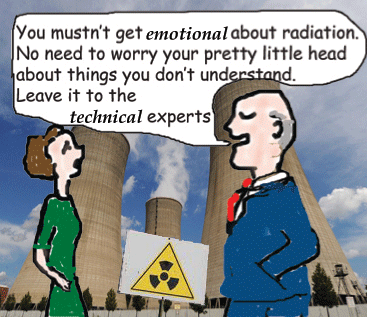
And I do mean “girly stuff”. Worldwide, it is a gender thing. Big strong men like nuclear power, weak uninformed women prefer energy conservation and renewable energy.
It really doesn’t matter which energy form is cheaper, more efficient, faster to implement, safer, cleaner …….. what is important is making Australia look important and technologically a leader, and also a strong opponent to China. We’re already a leader – in renewable energy – but that is sissy stuff, so it doesn’t count.
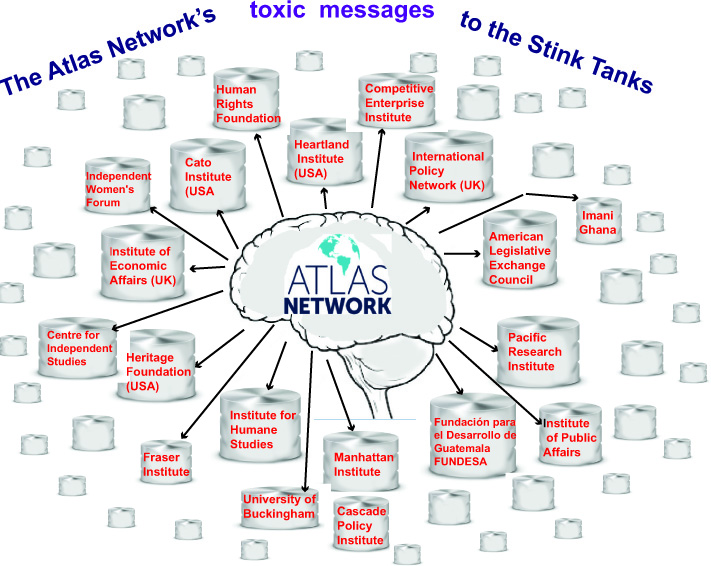
Now, there will need to be a grand propaganda campaign to get nuclear power into Australia. You see, we have compulsory voting here, which means that all those uniformed women will be voting. So it is going to be a big job to get nuclear into Australia. It will require all the skills of the Atlas Foundation, and its associated Think Tanks, to get the message across to the Australian public – including to wimpy-type men, as well as to women. But with the help of the Murdoch media, and social media – a good pro nuclear lobby should be up to it. Remember Australia’s referendum on an Aboriginal Voice to Parliament got defeated, with all that help last year.
Delusional Netanyahu joins delusional Zelensky in seeking total victory when none possible

Walt Zlotow, West Suburban Peace Coalition, Glen Ellyn IL 21 June 24 https://heartlandprogressive.blogspot.com/
Last November, Ukraine President Zelensky fired Valery Zaluzhny, his top military commander. Zaluzhny made the mistake, after the much touted Ukraine counteroffensive against Russia flopped, of suggesting the war was a stalemate that could not be won. Zelensky fired Zaluzhny, reminding him that the Ukraine war narrative was complete victory. Ukraine would win back all lost territory including Donbas, receive war reparations from Russia, and get Russia president Putin prosecuted for war crimes. Zelensky remains in delusion of achieving those goals for the past 7 months.
Just this week Zelensky has been joined in war delusion by Israeli Prime Minister Benjamin Netanyahu. In a stunning development, the Israeli Defense Force (IDF) has publicly announced, in direct contradiction of Prime Minister Netanyahu, that Israel cannot defeat Hamas in Gaza.
Reason? Hamas is an ideology, and no military, however strong, can defeat an ideology on the battlefield. Israeli IDF Rear Adm. Daniel Hagari could not have been more candid “This business of destroying Hamas, making Hamas disappear, it’s simply throwing sand in the eyes of the public. Hamas is an idea, Hamas is a party. It’s rooted in the hearts of the people – whoever thinks we can eliminate Hamas is wrong.”
Israel’s genocidal campaign upon the entire Palestinian population has backfired spectacularly, making Hamas stronger every day. Instead of destroying Hamas, Israel is self- destructing before our eyes. It has not only lost on the battlefield. It has lost support of the entire world outside the Biden administration in America. No matter how this ends, Israel will neither recover its moral standing in the world, nor claim Gaza for Greater Israel.
A sign of Israel’s disintegrating political position is Netanyahu’s dissolution of his war cabinet over the resignation of opposition leader Benny Gantz. Netanyahu is left surrounding himself with extreme right wing fanatics who either are as delusional as Netanyahu or are simply trapped into continuing their genocidal campaign as the only means of remaining in power.
Netanyahu and his fanatical war council are now threatening to pivot north to attack Hezbollah in Lebanon. Such a move could militarily devastate Israel, with no chance whatsoever of prevailing. Netanyahu’s war delusions appear to have no limits.
It doesn’t matter how many standing ovations Netanyahu receives when he addresses Congress July 24, that is, if he is still in power. It doesn’t matter how many tens of billions in weapons Biden gifts Netanyahu to obliterate tens of thousands more Palestinian
kids and moms in their futile quest for total victory. Nothing can save Israel from defeat Netanyahu so delusionally set in motion.
But possibly the most delusional of all is President Biden, lusting to fling another hundred billion of American treasure to maintain two lost wars in furtherance of his preposterous belief that America still rules the world.
Over budget and plagued with delays: UK nuclear lessons for Australia

The big challenges facing nuclear power in Britain, both for large reactors and SMRs, are not technological or economic, but largely administrative and logistical.
AFR, Hans van Leeuwen, Europe correspondent, Jun 21, 2024 –
Behind the shore of England’s south-western county of Somerset lie the Quantock Hills – as perfect a landscape of lush rolling pasture and rugged heathland, laced with woodland groves and nestled hedgerows, as you could possibly imagine. It’s also home, incongruously, to a very, very large crane.
Big Carl, as it is known, is, in fact, the world’s largest. It is six kilometres long, 250 metres high and has 96 wheels. It has spent the past few years at Hinkley Point, on the Bristol Channel. Big Carl hit a mini-climax of hydraulic achievement just before Christmas last year, as it hauled a 14-metre tall, 245-tonne steel dome onto the top of a 44-metre nuclear reactor.
Progress at last. The reactor’s name is Hinkley Point C – which sadly doesn’t quite have the same folksy ring as “Big Carl”. Fifteen years have elapsed since French giant EDF and its Chinese partner began trying to build it, and rouse Britain from decades of nuclear slumber.
Lining up the regulators and the finance took seven years. Construction is in its seventh year, and might be only just past the halfway mark. There are 10,000 workers and 3500 British companies involved in pulling this off, at a cost that may end up topping £46 billion ($88 billion) – almost thrice the original estimate of £16 billion.
This is the kind of monumental scale of project that Opposition Leader Peter Dutton wants to bring to Australia. Alongside it, he also envisages small modular reactors (SMRs): more petite, but equally dully monikered, nukes that are thrown together in a factory and then operate from what is really little more than an industrial shed.
Britain wants to build those too, and is in the last throes of a competition to put taxpayer money behind at least one contender. But even the most advanced would-be manufacturer, Rolls-Royce, doesn’t appear to expect an SMR to actually be up and running until the start of the 2030s………………………………………………………………………………………………….
Why so long, and so costly?
Greatrex offers a warning to Australia: the big challenge facing nuclear power in Britain, both for large reactors and SMRs, but most clearly in evidence at Hinkley Point C, is not technological or economic, but largely administrative and logistical.
“Issues around bottlenecks in the planning system, the time it takes for permitting on various things, the issues around access to grid and grid connections, they’re all real factors,” he says.
“There are a whole number of issues around planning and permitting that seem to be taking more time to deal with than the actual construction period.”
This has left Greatrex and his organisation fighting a rearguard action against public and media perceptions that the industry is foundering – particularly as the flagship Hinkley Point C reactor project suffers repeated cost and deadline blowouts.
Although the government has this year doubled down on building large reactors to keep nuclear’s share of British electricity generation at about 25 per cent, the negative stories keep coming……………………………………………………………………………
For 35 years after the plant starts operating, taxpayers will fill any gap between that price and the going market rate, likely resulting in a subsidy far higher than that for offshore wind or solar. The government is also guaranteeing the debt funding of almost half the capital costs of building it.
The original estimated cost of Hinkley Point C was £16 billion, and the anticipated date to get it open and running was 2023. Now, it’s £35 billion in today’s prices, which could be £46 billion by the time the work is completed between 2029 and 2031.
EDF this year took a €12.9 billion ($20.8 billion) impairment charge on the project. The Chinese partner, having been frozen out of future nuclear projects in Britain for geopolitical reasons, has reportedly been withholding its own contributions this year.
The company has blamed the blowout on design changes enforced by the regulator, along with labour shortages and supply chain issues.
Going first to restart the nuclear construction industry in Britain after a 20-year pause has been hard,” Hinkley Point C boss Stuart Crooks said in a letter to staff earlier this year.
But the British government is still pushing on with a second reactor, the 3.2-gigawatt Sizewell C on the country’s east coast, which EDF will also build. This has taxpayer backing of £2.5 billion, and the government is on the hunt for £20 billion of private capital, supposedly by the end of the year………………………………………………………………………………
Rolls-Royce rollout starts at home
But even if the Coalition has to look elsewhere than Britain and Europe for its mega-reactors, energy spokesman Ted O’Brien has explicitly name-checked Rolls-Royce as a potential partner on SMRs………………………………………..
At any rate, Rolls-Royce has to crack its home market first. The government will next month decide which of six horses to back with taxpayer largesse. https://www.afr.com/companies/energy/over-budget-and-plagued-with-delays-uk-nuclear-lessons-for-australia-20240621-p5jnkq
Why we are heading for a globally connected electricity system based on renewable energy

renewable globalism is coming, so home-sited renewables are needed to protect British energy security
DAVID TOKE, JUN 21, 2024, https://davidtoke.substack.com/p/why-we-are-heading-for-a-globally
Slowly but surely the world is creeping towards global interconnection. That could make a global 100 per cent renewable energy system work a lot better. There would be reductions in the amount of storage needed and consequent reductions in cost. That is what academics are saying, including work done by electrical engineers based at the University of Birmingham (UK). Put simply, different parts of the world could power each other at different times of the day and night.
Solar power will become the dominant energy source. As Professor Christian Breyer says: ‘yes, solar & battery will be the central backbone of global energy supply, even more so in the sunbelt where two-third of world population live’. ‘Globalism’ will rule the electricity delivery system. Globalism already exists in the form of the international oil, and increasingly, natural gas industry. However, now with the development of HVDC transmission systems which minimise grid-based power losses, electricity can be transported efficiently over very great distances.
But the incremental march of international electricity interconnections is gradually pushing us in the direction of a global electricity system. It is happening incrementally. A new globalism based on renewable energy has great advantages, according to academics who have modelled the concept.
Of course, we should strive for energy security in the UK. This means wind power especially in the UK, supplemented by as much solar power as we can generate. Other renewable energy resources are potentially substantial in the UK. This includes geothermal energy, tidal stream energy and wave power, all of which are in greater or lesser stages of development. Of course the more renewables are deployed in the UK, the more we shall be able to profit from international trading in renewable energy.
As I say in my recently published book ‘Energy Revolutions’ (pages 36-37):
‘One interesting approach is to imagine providing 100 per cent of energy from renewables in the context of a globally interconnected electricity system. This would have the advantage of connecting areas where it is daytime with areas where it is night, as well as more and less windy zones. In recent decades, new engineering solutions for interconnection involving high-voltage direct current have emerged. These allow the possibility of (economically) transmitting electricity across thousands of miles while minimising electricity losses. A group of researchers has modelled the possibilities for a global system to provide 100%RE. They concluded that, compared to systems that are not globally interconnected, a globally interconnected system would reduce storage costs for 100%RE by 50 per cent and reduce the costs by 20 per cent.’
Incremental progress towards global interconnection is happening. I’m not necessarily talking about much-publicised plans to connect up the UK directly with solar pv from North Africa – that may or may not happen in some form or other sometime in the future – and perhaps never at all in a direct sense. Really, discussion of plans like that trivialises discussion about increasing international links in electricity supply.
What I am rather talking about, for the moment are the plans, which have begun to be implemented, to connect up North Africa and with southern Europe. Developments like that could lead to greater linkage of British electricity systems. On the one hand, British international electricity interconnection with the continent of Europe is expanding and on the other hand, African interconnection with European states is also occurring. But this will be indirect, rather than direct, connections between the UK and Africa.
The latest incremental change in the progress towards completion of the interconnector between Crete and Attica. Meanwhile, the European Commission is offering financial backing to interconnector projects between Italy and Tunisia, one between Egypt and Greece, and another between Greece, Cyprus and Israel. This programme runs parallel with the European Commission target that member states should have interconnections worth at least 15 per cent of their national electricity consumption by 2015.
The UK, if anything, is expanding rather faster than this, with the bulk of our current (9.8 GW) of international interconnector capacity having been commissioned since 2010. According to OFGEM new international interconnectors are set to increase this capacity by over 50 per cent by 2030. These are all projects with our neighbours: Norway, Ireland, Denmark, France, Germany and Belgium.
Of course we are still some way off having a globally interconnected system. However the spread of renewable energy which is building up to an astonishingly rapid rate is turbocharging the growth of interconnectors. This is because the variable nature of renewable energy encourages greater interconnection.
Globalism is slowly happening in electricity interconnection, perhaps not through dramatic direct projects, but gradually. Britain has a stake in this in that it can export renewable energy production, thus reducing excess renewable energy production. We should continue our practice of issuing fixed price contracts for renewable energy to enure that UK consumers get a good deal. But a global system of interconnection will reduce the need to store so much energy because it can import excess renewable energy from other places – perhaps places which are thousands of miles away.
UK’s nuclear plant will cost nearly three times what was estimated

Australian Financial Review Tom McIlroy, Political correspondent, Jun 20, 2024
Recent overseas experience suggests an Australian nuclear energy program
would be vulnerable to delays and cost blowouts – the construction of
Britain’s latest plant is years behind schedule and modular technology is
still not commercially viable.
Opposition Leader Peter Dutton will not say
how much his plan to build seven nuclear power stations by 2050 will cost,
but promised on Thursday to release the numbers before the election.
Britain’s Hinkley C generator in Somerset is on track to cost about three
times its original budget. It was initially due to be operational in 2017
and to cost about $35 billion, but it is now not expected to open before
2031 and will cost about $90 billion. The blowout has been blamed on
inflation, the COVID-19 pandemic and Brexit. The first new reactors in
decades, built from scratch in the United States, also suffered lengthy
delays and budget upheavals.
Australian Financial Review 20th June 2024
UK nuclear power plants rollout may be hit by planning hurdles
Companies bidding for government contracts to build the UK’s first mini-reactors
may find there are factors beyond their control. Britain wants to revive
its nuclear industry. Both the Conservatives and Labour, jostling for
electoral success, see reactors as a way of decarbonising the energy
network, providing a reliable base alongside clean but intermittent wind
and solar power.
But there’s a problem. All but one of the country’s
existing nuclear power stations are set to be decommissioned by the end of
the decade and Hinkley Point C, the only new one being built, is suffering
from budget blowouts and delays. The solution, it seems, is not to think
big but to think conspicuously smaller.
Mini-plants are being touted as a
faster and cheaper way of boosting the country’s nuclear capacity. Six
companies are on a shortlist competing for £20 billion in government
funding to build the nation’s first small modular reactors and in the
next two weeks they will submit final bids. Two are expected to be selected
by the end of the year.
So far, so good, yet there are worries that the
first hurdle may be somewhat easier to clear than what follows. In recent
years planning has been the bane of construction companies of all stripes,
from housebuilders to infrastructure specialists, and there is talk that
the rollout of small modular reactors could be hampered by the same lengthy
regulatory and permission-seeking processes that have beset larger-scale
nuclear projects, in particular.
The first small modular reactor is not
expected to be up and running before 2035. “Planning is a major drain on
the time in the schedule,” said Alastair Evans, director of corporate and
government affairs at Rolls-Royce, the FTSE 100 engineering specialist that
has been promoting its water-cooled reactor for use in the UK for several
years. “There will be lessons that we can learn and the planning
inspectorate can learn from what they have just been through,” a
reference to the ten years taken for the Sizewell C development in Suffolk
to move from initial public consultation to gaining consent. Small modular
reactors can take up the space of one or two football pitches, have a
capacity of up to 500 megawatts and will employ between 1,000 and 2,000 on
site.
Yet it still takes an average of more than four years for so-called
national significant infrastructure projects, which include all power
stations over 50MW, to secure a development consent order, according to the
latest government estimates, an increase from about two and a half years in
2012. Research by Britain Remade, a pro-growth think tank, suggests that
the average construction cost for new nuclear infrastructure that has been
built in the UK since 2000 is £9.4 million per megawatt, adjusting for
inflation. That is more than four times the cost in South Korea, which has
adopted a fleet approach to expand its nuclear capacity. “A key problem
is, if you look at the planning system for nuclear power stations, it is
extremely bureaucratic, slow-moving and paperwork-intensive,” Sam
Dumitriu, head of policy at Britain Remade, said.
He cited the 44,000-page environmental impact assessment that Sizewell C produced as part of its planning application. …………………………….
Times 21st June 2024
Climate Emergency strikes Islam’s Holy Ritual, with nearly 600 dead of Heat stroke at 124.24° F. in Mecca

JUAN COLE, 06/19/2024Ann Arbor (Informed Comment)
– As the temperature in Mecca reached 125.24° F. (51.8° C.) on Tuesday, word leaked out that nearly 600 pilgrims had died of heat stroke and 2,000 have been hospitalized for treatment. A virtual clinic treated more thousands remotely. Some 324 of the dead were Egyptians,, while dozens were from Jordan. The season of the annual Hajj or pilgrimage to Mecca, the birthplace of Islam, just ended. Some 1.8 million pilgrims participated.
Eyewitnesses said that not all the dead were elderly, that young persons died, as well.
Pilgrims carry out a series of rituals during the pilgrimage, beginning with preparing themselves and establishing their pious intention. Many of the steps involve being outside and being active. They dress in white robes. They circumambulate the cube-shaped Kaaba shrine. They run between the nearby hillocks of Safa and Marwa seven times, in commemoration of the search of Abraham’s wife Hajar for water for her son with the patriarch, Ishmael. They walk or are taken in buses to Mina and spend some nights of the pilgrimage there. There, they throw stones at satan.
AFP explains that some pilgrims try to avoid paying the hefty visa fees by just showing up unregistered. They however, then lack access to air conditioned facilities and are at special risk of heat stroke.
The number of heat stroke deaths seems to have doubled since last year. Saudi Arabia is one of the world’s major oil producers, and burning petroleum to power vehicles puts the deadly heat-trapping gas, carbon dioxide, into the atmosphere, heating up the planet.
The G20 Climate Risk Atlas writes, “The science shows that Saudi Arabia will experience devastating climate impacts if it follows a high-emissions pathway. Without urgent action, Saudi Arabia will see an 88% increase in the frequency of agricultural drought by 2050. Heatwaves will last more than 4,242% longer and the combination of sea level rise, coastal erosion and fiercer weather will cause chaos for Saudi Arabia’s economy, which stands to lose around 12.2% of GDP by 2050.”……………………………………..more https://www.juancole.com/2024/06/climate-emergency-strikes.html
US greenlights new arms sale to Taiwan

RT News 20 June 24
The $360 million deal will provide Taipei with hundreds of armed drones and missiles, the State Department has said
The US State Department has approved a new weapons sale to Taiwan involving hundreds of armed drones and missiles worth $360 million, the Pentagon’s Defense Security Cooperation Agency (DSCA) has said.
Under the deal that was concluded on Tuesday, Taiwan will receive Altius-600M systems, which are unmanned aerial vehicles equipped with warheads, and related equipment at an estimated cost of $300 million, the agency said.
The US will also provide 720 Switchblade kamikaze drones known as “extended-range loitering munitions” along with accompanying fire control systems worth $60.2 million, according to the DSCA. Loitering munitions are small guided missiles that can fly around a target area until they are directed to attack.
………………………US defense contractor AeroVironment, which has been supplying Ukraine with the Switchblade suicide drones, said in April that the company had been “gratified by overwhelming user feedback and demand for additional systems.”
The Altius-600M drone can accommodate “multiple seeker and warhead options,” and can be launched from ground, air or sea, according to its manufacturer, Anduril………………………… https://www.rt.com/news/599548-us-approves-taiwan-arms-sale/—
Gavin Newsom’s $12 Billion Radioactive Diablo Scam Could Soon Be Twisting In The Wind

-by Harvey Wasserman, 20 June 24, https://www.downwithtyranny.com/post/gavin-newsom-s-12-billion-radioactive-diablo-scam-could-soon-be-twisting-in-the-wind
Diablo Canyon’s infamous $12 billion nuclear war is raging hot and heavy in Sacramento. Citizen action may soon decide the outcome.
In the midst of a massive budget crisis, Governor Gavin Newsom is slashing social programs left and right. But he still wants to subsidize PG&E’s two money-losing atomic reactors near San Luis Obispo. The cash he wants from the state comes as part of a $1.4 billion package he strong-armed through the legislature in 2022. Much of that is coming from the feds.
But now he wants $400 million from California taxpayers.
And the legislature— amidst a fierce public uproar— may be on the brink of a definitive “NO!” Safe energy groups like the San Luis Obispo Mothers for Peace are rallying public pressure to stop the bailout.
The fight is doubly galling, because when he was Lieutenant-Governor, Newsom co-signed a 2017 landmark plan to phase out Diablo’s twin uninsured reactors. They have a long history of structural and legal problems. They are surrounded by at least a dozen significant seismic faults… and sit just 45 miles from the San Andreas.
Now four decades of age, their innards are cracked, rotted and embrittled. They risk spewing apocalyptic clouds that could turn California into a radioactive wasteland. They regularly emit heat, chemical pollutants and radioactive carbon-14 into the eco-sphere.
Rooftop solar, off-shore wind and advancing battery technologies have long since left Diablo in the dust on safety, price, reliability, efficiency and job creation. For at least several hours on most days now, the state gets more than 100% of its electricity from renewables.
Photovoltaic panels in central California now regularly produce below-market electricity that is literally “too cheap to meter.” Without Diablo gumming up the grid, and with limits on how much locally-generated power can be sold out of state, rates would plummet with no serious threat of blackouts.
Independent experts now calculate that it would cost California more than $12 billion in over-market pricing to run Diablo through 2030. The company itself concedes the cost would exceed $8 billion. PG&E has also petitioned the Nuclear Regulatory Commission to run Diablo through 2045, with potential excess costs gouging the public for tens of billions, accompanied by enormous job losses.
Amidst a “Solartopian” tsunami of new renewables and storage batteries, Diablo expensively jams the grid and raises the risk of blackouts. It employs just 1500 workers, versus more than 70,000 in rooftop solar alone, not counting wind, efficiency and battery production.
To better serve PG&E, Newsom’s personally appointed Public Utilities Commission has thrown the state’s rate structure into chaos, slashing at least 17,000 solar jobs while sticking California with the nation’s second-highest electric rates (behind Hawaii).
In 2022, Newsom trashed the nuclear phase-out he signed in 2017. With no public hearings and a strong-armed midnight vote, he demanded a $1.4 billion “forgivable loan” for PG&E, whose record profits went in part to the company’s CEO, who in 2022 was paid some $40 million.
Most Californians get zero power from Diablo. But Newsom wants to soak all taxpayers to cover the PG&E bailout and to foot the multi-billion dollar bills for its on-going over-market costs.
Fierce legislative resistance has put Diablo’s future in doubt. Consumer and safe energy activists throughout the state are campaigning hard against the bailout. On June 15, the Legislature voted nearly unanimously to slash it by $400 million.
If the legislators and their green backers succeed, California’s transition to a non-radioactive carbon-free energy economy could create countless new jobs while saving the state billions… and ducking the next Three Mile Island, Chernobyl and/or Fukushima.
With the world’s fifth-largest economy, California could join the world’s fourth-largest economy— Germany, which shut 19 reactors on the road to converting to wind, solar and batteries— in a sustainable post-nuclear world.
Harvey Wasserman co-hosts California Solartopia which airs most Wednesdays, 5-6 pm, at KPFK/Pacifica, 90.7fm-Los Angeles. He wrote Solartopia! Our Green-Powered Earth. He was arrested at Diablo Canyon in 1984.
Former Official: Biden State Department Bending US Law to Send Israel Weapons

Earlier this year, Secretary of State Antony Blinken said he had determined that there were four Israeli units who had committed human rights violations,.. ………….only receiving three months of community service as a result. Though these units committed violations, the State Department determined that they were still eligible for U.S. assistance and required no further remediation.
“The bottom line on Secretary Blinken’s actions is this: there are no ineligible Israeli units, and therefore no list to Israel,”
State officials have carved out an entirely unique vetting system for Israel in US foreign assistance law.
By Sharon Zhang , TRUTHOUT, June 18, 2024
The Biden administration is in “non-compliance” with a U.S. law regarding foreign military assistance in allowing Israeli forces to dodge scrutiny over their brutality against Palestinians and otherwise, according to a new, scathing analysis by a former top State Department official.
A report written for Just Security by Charles Blaha, who retired from his position as the director of the State Department’s Office of Security and Human Rights last year after seven years in the role, says that top State officials have purposefully carved out an entirely unique vetting system for Israel’s compliance with human rights guidelines and eligibility to receive U.S. arms under the Leahy Law.
This system appears to be specifically designed to allow Israeli military units to commit gross human rights violations with little scrutiny from the U.S., and to allow U.S. officials to continue sending Israel weapons unconditionally. If Israeli units were found to be in violation of the Leahy Law, it would require the State Department to prohibit said units from receiving U.S. arms.
Blaha explains that the process undertaken by the Israel Leahy Vetting Forum (ILVF), which first met in 2020, to vet incidents by Israeli forces is extremely slow compared to the process for other countries. It requires in-person meetings involving higher-level officials and for allegations against units to undergo a request for information about the unit to the Israeli government.
“Department officials insist that Israeli units are subject to the same vetting standards as units from any other country. Maybe in theory. But in practice, that’s simply not true,” Blaha wrote. “[I]n actual ILVF practice, the standard for ineligibility is almost impossibly high. Information that for any other country would without question result in ineligibility is insufficient for Israeli security force units.”
Further, even if a determination is made by lower-level officials about a violation by an Israeli unit, the final decision about a unit’s eligibility lies with the Deputy Secretary of State. “This is true for no other country in the world,” wrote Blaha, who oversaw an office that is key in making determinations under the Leahy Law………………………………
The exception carved out for Israel is evident in recent determinations made by the Biden administration.
Earlier this year, Secretary of State Antony Blinken said he had determined that there were four Israeli units who had committed human rights violations, including one involved in an incident in which an Israeli soldier shot and killed a Palestinian man on the side of the road in the West Bank, only receiving three months of community service as a result. Though these units committed violations, the State Department determined that they were still eligible for U.S. assistance and required no further remediation.
In a fifth case, Blinken determined that a unit involved in killing a 78-year-old Palestinian American man, Omar Assad, would still be eligible for assistance.
This is despite the fact that Assad was killed in a brutal way — stopped by Israeli forces at a checkpoint, dragged out of his car, bound, blindfolded, and then left on the ground overnight. He died after having a heart attack; the soldiers abandoned him to avoid scrutiny after discovering he was dead.
As Blaha points out, Blinken said that the department would work with the Israeli government “on identifying a path to effective remediation” for the unit responsible for Assad’s death — something made up by Blinken to give the unit a pass.
“This language appears nowhere in the Leahy law; it appears invented to avoid finding this Israeli unit ineligible,” Blaha said. “For any other country, a unit found to have committed a violation is immediately ineligible until remediation is complete.”
“The bottom line on Secretary Blinken’s actions is this: there are no ineligible Israeli units, and therefore no list to Israel,” Blaha continued, referring to a list of ineligible Israeli units that the State Department is supposed to report to Congress under the Leahy Law. “Even a unit responsible for the death of an American is eligible for assistance. As long as this remains the status quo, the department remains in non-compliance with the law.”
Blaha’s report is a show of how far the Biden administration is willing to go to continue sending weapons to Israel as it continues its extermination campaign in Gaza and severe repression of Palestinians in the West Bank.
The administration has reportedly spent the last months covertly pressuring members of Congress to approve sending yet more military assistance to Israel.
Two Democrats in Congress, Rep. Gregory Meeks (New York) and Sen. Ben Cardin (Maryland) recently signed off on advancing a sale of F-15s and munitions, including JDAMs, to Israel after pressure from the administration, The Washington Post reported on Monday. Meeks and Cardin, the top Democrats of their chambers’ respective foreign relations committees, had held up the sale for months, both citing human rights concerns. https://truthout.org/articles/former-official-biden-state-department-bending-us-law-to-send-israel-weapons/
Sellafield operators plead guilty to criminal charges over security breaches

The state-owned operator of the UK’s largest nuclear waste site has pleaded
guilty to criminal charges brought by the industry regulator over IT
security breaches. Lawyers acting for Sellafield told a London court on
Thursday that they accepted cyber security was “not sufficiently adhered
to for a period”, although they insisted there had not been a successful
cyber-attack and that its systems were now secure.
One of the charges to which Sellafield pleaded guilty was that it failed in March last year to
“ensure that there was adequate protection of sensitive nuclear
information on its information technology network”. The other two charges
related to failures to arrange “annual health checks” for its systems.
Sellafield pleaded guilty to all three charges in the prosecution brought
by the Office for Nuclear Regulation under the Nuclear Industries Security
Regulations 2003. Sentencing will take place on August 8……………………………………
FT 20th June 2024
https://www.ft.com/content/a91cb392-0a32-48b4-bc7a-5b2a1debbc96
There Are 91.4 Billion Things Than Nuclear Weapons that Money Could Buy
June 20th, 2024
Nuclear weapons programs divert public funds from health care, education, disaster relief and other vital humanitarian services. The nuclear-armed countries spent over $91.4 billion on their arsenals in 2023. At the same time, the corporations fabricating these weapons of mass destruction and their investors made billions in profit annually.
On Monday, June 17th, the International Campaign to Abolish Nuclear Weapons (ICAN) released its fifth annual report on global nuclear weapons spending. The report, entitled “Surge: 2023 Global nuclear weapons spending,” shows that $10.7 billion more was spent on nuclear weapons in 2023 than in 2022. The report covers how the nuclear weapons industry buys influence by financing think tanks, hiring lobbyists, and holding high-level meetings with government officials. https://www.icanw.org/global_nuclear_weapons_spending_surges_to_91_4_billion
An international campaign with one clear message: “No Money for Nuclear Weapons” will launch on Monday, September 16th through Sunday, September 22nd. Please plan to join in the activities or create your own local event. Visit the ICAN website week of action page and be sure to sign up to receive updates. https://www.icanw.org/global_week_of_action_on_nuclear_spending
As mentioned above, in 2023, the nine nuclear-armed states spent a combined total of $91.4 billion on their arsenals, which is equivalent to $174,000 per minute. The nine nuclear-armed states are: China, France, India, Israel, North Korea, Pakistan, Russia, the United Kingdom, and the United States.
The U.S share of total spending, at $51.5 billion, is more than all the other nuclear-armed countries put together. The next biggest spender in 2023 was China at $11.8 billion, followed by Russia at $8.3 billion. The United Kingdom’s spending was up significantly for the second year in a row with a 17 percent increase to $8.1 billion. In the last five years, $387 billion has been spent on nuclear weapons globally.
In the last five years, the budget for nuclear weapons fabrication at Los Alamos National Laboratory (LANL) has nearly doubled from over $2.2 billion in fiscal year 2020 to $4 billion in fiscal year 2024 – an increase of over $1.7 billion. At the same time, New Mexico ranks 50th in child well-being and 50th in education. https://nukewatch.org/resources-and-information/economic-information/
Alicia Sanders-Zakre, a report co-author, noted: “The acceleration of spending on these inhumane and destructive weapons over the past five years is not improving global security but posing a global threat.”
Norway To Consider Developing Nuclear Energy
By Charles Kennedy – Jun 21, 2024,
Norway’s government appointed on Friday a committee tasked with
considering whether the country should develop nuclear energy as an
electricity source. Kristin Halvorsen, a former finance minister and
currently director of the Center for International Climate and
Environmental Research in Oslo, will lead the committee, which is set to
deliver its report with the findings by April 1, 2026. Norway ditched the
idea of nuclear as a power source in the 1970s, but it is now revisiting
the idea.
Oil Price 21st June 2024
https://oilprice.com/Latest-Energy-News/World-News/Norway-To-Consider-Developing-Nuclear-Energy.h
Why Won’t the US Help Negotiate a Peaceful End to the War in Ukraine?
In the course of 2014, Putin called repeatedly for a negotiated peace, and this led to the Minsk II Agreement in February 2015 based on autonomy of the Donbas and an end to violence by both sides. Russia did not claim the Donbas as Russian territory, but instead called for autonomy and the protection of ethnic Russians within Ukraine. The UN Security Council endorsed the Minsk II agreement, but the U.S. neocons privately subverted it. Years later, Chancellor Angela Merkel blurted out the truth. The Western side treated the agreement not as a solemn treaty but as a delaying tactic to “give Ukraine time” to build its military strength. In the meantime, around 14,000 people died in the fighting in Donbas between 2014 and 2021.
Jeffrey Sachs, 19 June 24, https://www.commondreams.org/opinion/role-of-us-in-russia-ukraine-
For the fifth time since 2008, Russia has proposed to negotiate with the U.S. over security arrangements, this time in proposals made by President Vladimir Putin on June 14, 2024. Four previous times, the U.S. rejected the offer of negotiations in favor of a neocon strategy to weaken or dismember Russia through war and covert operations. The U.S. neocon tactics have failed disastrously, devastating Ukraine in the process, and endangering the whole world. After all the warmongering, it’s time for Biden to open negotiations for peace with Russia.
Since the end of the Cold War, the U.S. grand strategy has been to weaken Russia. As early as 1992, then Defense Secretary Richard Cheney opined that following the 1991 demise of the Soviet Union, Russia too should be dismembered. Zbigniew Brzezinski opined in 1997 that Russia should be divided into three loosely confederated entities in Russian Europe, Siberia, and the far east. In 1999, the U.S.-led NATO alliance bombed Russia’s ally, Serbia, for 78 days in order to break Serbia apart and install a massive NATO military base in breakaway Kosovo. Leaders of the U.S. military-industrial complex vociferously supported the Chechen war against Russia in the early 2000s.
To secure these U.S. advances against Russia, Washington aggressively pushed NATO enlargement, despite promises to Mikhail Gorbachev and Boris Yeltsin that NATO would not move one inch eastward from Germany. Most tendentiously, the U.S. pushed NATO enlargement to Ukraine and Georgia, with the idea of surrounding Russia’s naval fleet in Sevastopol, Crimea with NATO states: Ukraine, Romania (NATO member 2004), Bulgaria (NATO member 2004), Turkey (NATO member 1952), and Georgia, an idea straight from the playbook of the British Empire in the Crimean War (1853-6).
Brzezinski spelled out a chronology of NATO enlargement in 1997, including NATO membership of Ukraine during 2005-2010. The U.S. in fact proposed NATO membership for Ukraine and Georgia at the 2008 NATO Bucharest Summit. By 2020, NATO had in fact enlarged by 14 countries in Central Europe, Eastern Europe, and the former Soviet Union (Czech Republic, Hungary, and Poland in 1999; Bulgaria, Estonia, Latvia, Lithuania, Romania, Slovakia, and Slovenia in 2004; Albania and Croatia, 2009; Montenegro, 2017; and Northern Macedonia, 2020), while promising future membership to Ukraine and Georgia.
The White House is dead wrong to evade negotiations just because of disagreements with Russia’s proposals. It should put up its own proposals and get down to the business of negotiating an end to the war.
In short, the 30-year U.S. project, hatched originally by Cheney and the neocons, and carried forward consistently since then, has been to weaken or even dismember Russia, surround Russia with NATO forces, and depict Russia as the belligerent power.
It is against this grim backdrop that Russian leaders have repeatedly proposed to negotiate security arrangements with Europe and the U.S. that would provide security for all countries concerned, not just the NATO bloc. Guided by the neocon game plan, the U.S. has refused to negotiate on every occasion, while trying to pin the blame on Russia for the lack of negotiations.
In June 2008, as the U.S. prepared to expand NATO to Ukraine and Georgia, Russian President Dmitry Medvedev proposed a European Security Treaty, calling for collective security and an end to NATO’s unilateralism. Suffice it to say, the U.S. showed no interest whatsoever in Russia’s proposals, and instead proceeded with its long-held plans for NATO enlargement.
The second Russian proposal for negotiations came from Putin following the violent overthrow of Ukraine’s President Viktor Yanukovych in February 2014, with the active complicity if not outright leadership of the U.S. government. I happened to see the U.S. complicity up close, as the post-coup government invited me for urgent economic discussions. When I arrived in Kiev, I was taken to the Maidan, where I was told directly about U.S. funding of the Maidan protest.
The evidence of U.S. complicity in the coup is overwhelming. Assistant Secretary of State Victoria Nuland was caught on a phone line in January 2014 plotting the change of government in Ukraine. Meanwhile, U.S. Senators went personally to Kiev to stir up the protests (akin to Chinese or Russian political leaders coming to DC on January 6, 2021 to rile up the crowds). On February 21, 2014, the Europeans, U.S., and Russia brokered a deal with Yanukovych in which Yanukovich agreed to early elections. Yet the coup leaders reneged on the deal the same day, took over government buildings, threatened more violence, and deposed Yanukovych the next day. The U.S. supported the coup and immediately extended recognition to the new government.
In my view, this was a standard CIA-led covert regime change operation, of which there have been several dozen around the world, including sixty-four episodes between 1947 and 1989 meticulously documented by Professor Lindsey O’Rourke. Covert regime-change operations are of course not really hidden from view, but the U.S. government vociferously denies its role, keeps all documents highly confidential, and systematically gaslights the world:
“Do not believe what you see plainly with your own eyes! The U.S. had nothing to do with this.” Details of the operations eventually emerge, however, through eyewitnesses, whistleblowers, the forced release of documents under the Freedom of Information Act, declassification of papers after years or decades, and memoirs, but all far too late for real accountability.
In any event, the violent coup induced the ethnic-Russia Donbas region of Eastern Ukraine to break from the coup leaders, many of whom were extreme Russophobic nationalists, and some in violent groups with a history of Nazi SS links in the past. Almost immediately, the coup leaders took steps to repress the use of the Russian language even in the Russian-speaking Donbas. In the following months and years, the government in Kiev launched a military campaign to retake the breakaway regions, deploying neo-Nazi paramilitary units and U.S. arms.
In the course of 2014, Putin called repeatedly for a negotiated peace, and this led to the Minsk II Agreement in February 2015 based on autonomy of the Donbas and an end to violence by both sides. Russia did not claim the Donbas as Russian territory, but instead called for autonomy and the protection of ethnic Russians within Ukraine. The UN Security Council endorsed the Minsk II agreement, but the U.S. neocons privately subverted it. Years later, Chancellor Angela Merkel blurted out the truth. The Western side treated the agreement not as a solemn treaty but as a delaying tactic to “give Ukraine time” to build its military strength. In the meantime, around 14,000 people died in the fighting in Donbas between 2014 and 2021.
Following the definitive collapse of the Minsk II agreement, Putin again proposed negotiations with the U.S. in December 2021. By that point, the issues went even beyond NATO enlargement to include fundamental issues of nuclear armaments. Step by step, the U.S. neocons had abandoned nuclear arms control with Russia, with the U.S. unilaterally abandoning the Anti-Ballistic Missile (ABM) Treaty in 2002, placing Aegis missiles in Poland and Romania in 2010 onwards, and walking out of the Intermediate Nuclear Force (INF) Treaty in 2019.
In view of these dire concerns, Putin put on the table on December 15, 2021 a draft “Treaty between the United States of America and the Russian Federation on Security Guarantees.” The most immediate issue on the table (Article 4 of the draft treaty) was the end of the U.S. attempt to expand NATO to Ukraine. I called U.S. National Security Advisor Jake Sullivan at the end of 2021 to try to convince the Biden White House to enter the negotiations. My main advice was to avoid a war in Ukraine by accepting Ukraine’s neutrality, rather than NATO membership, which was a bright red line for Russia.
The White House flatly rejected the advice, claiming remarkably (and obtusely) that NATO’s enlargement to Ukraine was none of Russia’s business! Yet what would the U.S. say if some country in the Western hemisphere decided to host Chinese or Russian bases? Would the White House, State Department, or Congress say, “That’s just fine, that’s a matter of concern only to Russia or China and the host country?” No. The world nearly came to nuclear Armageddon in 1962 when the Soviet Union placed nuclear missiles in Cuba and the U.S. imposed a naval quarantine and threatened war unless the Russians removed the missiles. The U.S. military alliance does not belong in Ukraine any more than the Russian or Chinese military belongs close to the U.S. border.
The fourth offer of Putin to negotiate came in March 2022, when Russia and Ukraine nearly closed a peace deal just weeks after the start of Russia’s special military operation that began on February 24, 2022. Russia, once again, was after one big thing: Ukraine’s neutrality, i.e., no NATO membership and no hosting of U.S. missiles on Russia’s border.
Ukraine’s President Vladimir Zelensky quickly accepted Ukraine’s neutrality, and Ukraine and Russia exchanged papers, with the skillful mediation of the Foreign Ministry of Turkey. Then suddenly, at the end of March, Ukraine abandoned the negotiations.
U.K. Prime Minister Boris Johnson, following in the tradition of British anti-Russian war-mongering dating back to the Crimean War (1853-6), actually flew to Kiev to warn Zelensky against neutrality and the importance of Ukraine defeating Russia on the battlefield. Since that date, Ukraine has lost around 500,000 dead and is on the ropes on the battlefield.
Now we have Russia’s fifth offer of negotiations, explained clearly and cogently by Putin himself in his speech to diplomats at the Russian Foreign Ministry on June 14. Putin laid out Russia’s proposed terms to end the war in Ukraine.
“Ukraine should adopt a neutral, non-aligned status, be nuclear- free, and undergo demilitarization and de-nazification,” Putin said. “These parameters were broadly agreed upon during the Istanbul negotiations in 2022, including specific details on demilitarization such as the agreed numbers of tanks and other military equipment. We reached consensus on all points.
“Certainly, the rights, freedoms, and interests of Russian-speaking citizens in Ukraine must be fully protected,” he continued. “The new territorial realities, including the status of Crimea, Sevastopol, Donetsk and Lugansk people’s republics, Kherson, and Zaporozhye regions as parts of the Russian Federation, should be acknowledged. These foundational principles need to be formalized through fundamental international agreements in the future. Naturally, this entails the removal of all Western sanctions against Russia as well.”
Let me say a few words about negotiating.
Russia’s proposals should now be met at the negotiating table by proposals from the U.S. and Ukraine. The White House is dead wrong to evade negotiations just because of disagreements with Russia’s proposals. It should put up its own proposals and get down to the business of negotiating an end to the war.
There are three core issues for Russia: Ukraine’s neutrality (non-NATO enlargement), Crimea remaining in Russian hands, and boundary changes in Eastern and Southern Ukraine. The first two are almost surely non-negotiable. The end of NATO enlargement is the fundamental casus belli. Crimea is also core for Russia, as Crimea has been home to Russia’s Black Sea fleet since 1783 and is fundamental to Russia’s national security.
The third core issue, the borders of Eastern and Southern Ukraine, will be a key point of negotiations. The U.S. cannot pretend that borders are sacrosanct after NATO bombed Serbia in 1999 to relinquish Kosovo, and after the U.S. pressured Sudan to relinquish South Sudan. Yes, Ukraine’s borders will be redrawn as the result of the 10 years of war, the situation on the battlefield, the choices of the local populations, and tradeoffs made at the negotiating table.
Biden needs to accept that negotiations are not a sign of weakness. As Kennedy put it, “Never negotiate out of fear, but never fear to negotiate.” Ronald Reagan famously described his own negotiating strategy using a Russian proverb, “Trust but verify.”
The neocon approach to Russia, delusional and hubristic from the start, lies in ruins. NATO will never enlarge to Ukraine and Georgia. Russia will not be toppled by a CIA covert operation. Ukraine is being horribly bloodied on the battlefield, often losing 1,000 or more dead and wounded in a single day. The failed neocon game plan brings us closer to nuclear Armageddon.
Yet Biden still refuses to negotiate. Following Putin’s speech, the U.S., NATO, and Ukraine firmly rejected negotiations once again. Biden and his team have still not relinquished the neocon fantasy of defeating Russia and expanding NATO to Ukraine.
The Ukrainian people have been lied to time and again by Zelensky and Biden and other leaders of NATO countries, who told them falsely and repeatedly that Ukraine would prevail on the battlefield and that there were no options to negotiate. Ukraine is now under martial law. The public is given no say about its own slaughter.
For the sake of Ukraine’s very survival, and to avoid nuclear war, the President of the United States has one overriding responsibility today: Negotiate.
Sweden opens doors to possible US nukes deployment
Wed, 19 Jun 2024 , https://www.sott.net/article/492419-Sweden-opens-doors-to-possible-US-nukes-deployment
The opposition is worried that a new defense pact does not prohibit acceptance of American nuclear weapons
Lawmakers in Stockholm have approved a controversial defense pact with Washington, which allows American troops onto 17 Swedish military bases and training sites. Critics have blasted the agreement for not explicitly barring US nuclear weapons from being deployed in the Nordic country.
The Defense Cooperation Agreement (DCA) was signed between Swedish Defense Minister Pal Jonson and US Defense Secretary Lloyd Austin in December of last year, but needed parliamentary approval to take effect.
On Tuesday, lawmakers in Stockholm overwhelmingly backed the DCA, with 266 members of parliament voting in favor and 37 against, while 46 were absent. As a high-stakes vote, a three-quarters supermajority with more than half of lawmakers present was required for the bill to pass.
The agreement was opposed by the Left and Green parties, who argued that the terms should explicitly state that Sweden would not host nuclear weapons.
“We want to see legislation that bans nuclear weapons from being brought onto Swedish soil,” Green Party MP Emma Berginger said in parliament during Tuesday’s proceedings, arguing that the pact “doesn’t close the door to nuclear weapons.”
The Swedish Peace and Arbitration Association, a major anti-war non-profit organization, slammed the move as one that increases tensions and security risks for Sweden, claiming it betrays voters’ expectations for a nuclear-free nation.
“Unlike in Norway and Denmark’s DCA pacts, the Swedish agreement contains no reservation against nuclear weapons,” the group’s leader, Kerstin Bergea, wrote in an op-ed after the vote. Sweden’s neighbor Finland, which joined NATO in 2022, has a national law barring nuclear weapons from its territory, and their DCA pact with the US refers to it, Bergea pointed out.
Sweden, a member of the US-led military bloc since March, will allow American troops, vehicles and aircraft unimpeded passage across the country. The Pentagon will also be allowed to set up its own facilities at existing Swedish military bases. The presence of US personnel will be regulated by the US rather than local laws.
Earlier this month, Kremlin spokesman Dmitry Peskov pointed out that numerous waves of NATO expansion have made Europe less safe. Moscow has no territorial disputes or points of tension with the bloc’s new members Sweden or Finland, he stressed, while acknowledging that NATO military infrastructure will no doubt be hosted on their soil. Stockholm and Helsinki “understand this would lead to consequences for their own security,” he said.
Comment:
1) If the agreement or surrender allows the US: “unimpeded passage across the country … set up its own facilities at existing Swedish military bases … will be regulated by the US rather than local laws.” then whether the agreement is explicit about the stationing of nuclear weapons could be said to be irrelevant, since there will be nobody to control what goes on in the US areas of the country except the US. Besides, with enough pressure even an informed government could be made to keep silent as Denmark and Sweden most likely did about the Nord Stream bombing, which was for the most part brushed under the carpet due to considerations of national security.
2) The move from the US has been well prepared. Sweden is a somewhat fragmented country with much energy spent on parallel society areas influenced by minority laws, whether religious, criminal or both. Still some mental preparations have been needed to get the Swedes formally into NATO.
Sweden won’t allow citizens referendum vote over NATO membership (April 2022) which has:
Sweden does not plan to hold a referendum on the subject of NATO membership if its parliament approves of the measure, Swedish Prime Minister Magdalena Andersson announced on Thursday, suggesting that putting the matter to a vote would be a “bad idea.”
“I don’t think it is an issue that is suitable for a referendum,” the Swedish leader told reporters, implying that Parliament’s support was sufficient. “There is a lot of information about national security that is confidential, so there are important issues in such a referendum that cannot be discussed and important facts that cannot be put on the table,” she explained.
The Swedish parliament is conducting an overview of security policy, with plans to release a report on the subject by the middle of next month. With a majority of Parliament reportedly backing membership in NATO, Andersson’s own party, the Social Democrats, is considered the primary obstacle to Stockholm signing on to the 30-country alliance. However, Ulf Kristersson, head of the leading opposition party, the Moderates, agrees that a referendum is a bad idea.
3) With the military US-SE agreement in the central country on the Scandinavian Peninsula the road is paved for more influence. As a possible example, from Russia there was this claim: US preparing major anti-Russia propaganda campaign in Scandinavia – Moscow (May 30)
At the same time, high-ranking Swedish and Finnish officials are being trained, “like diligent students,” to repeat the “Russophobic mantras of their American patrons without hesitation,” the service wrote.
Specifically, it mentioned the commander-in-chief of the Swedish Armed Forces, Micael Byden, who recently claimed that Russia is planning to invade the island of Gotland to establish control in the Baltic Sea; and Finnish President Alexander Stubb, who has claimed that Russia poses an “existential threat” and has insisted that the only way to achieve peace is “through the battlefield.”
If ‘the only way to achieve peace is “through the battlefield.”‘ the invitation for the Scandinavians to join the effort is open, even if for now the active game is by proxy and military-financial aid.
-
Archives
- February 2026 (220)
- January 2026 (308)
- December 2025 (358)
- November 2025 (359)
- October 2025 (376)
- September 2025 (258)
- August 2025 (319)
- July 2025 (230)
- June 2025 (348)
- May 2025 (261)
- April 2025 (305)
- March 2025 (319)
-
Categories
- 1
- 1 NUCLEAR ISSUES
- business and costs
- climate change
- culture and arts
- ENERGY
- environment
- health
- history
- indigenous issues
- Legal
- marketing of nuclear
- media
- opposition to nuclear
- PERSONAL STORIES
- politics
- politics international
- Religion and ethics
- safety
- secrets,lies and civil liberties
- spinbuster
- technology
- Uranium
- wastes
- weapons and war
- Women
- 2 WORLD
- ACTION
- AFRICA
- Atrocities
- AUSTRALIA
- Christina's notes
- Christina's themes
- culture and arts
- Events
- Fuk 2022
- Fuk 2023
- Fukushima 2017
- Fukushima 2018
- fukushima 2019
- Fukushima 2020
- Fukushima 2021
- general
- global warming
- Humour (God we need it)
- Nuclear
- RARE EARTHS
- Reference
- resources – print
- Resources -audiovicual
- Weekly Newsletter
- World
- World Nuclear
- YouTube
-
RSS
Entries RSS
Comments RSS
 nuclear-news