Can Israel defeat Hamas? Its own military doesn’t seem to think so, clashing with Netanyahu
The Israel Defense Forces’ top spokesman said “Hamas is an idea” that can’t be eliminated and that saying it could be was “throwing sand in the eye of the public.”
NBC News, June 20, 2024, By Chantal Da Silva
Israeli Prime Minister Benjamin Netanyahu may still be leading the country into its 258th day of war in Gaza, but on Thursday he stood increasingly alone — and at odds with his own military.
Long criticized at home as well as abroad, Netanyahu’s approach is now the subject of a deepening disagreement with his top brass, as well as his country’s top ally, the U.S.
Netanyahu dissolved his war Cabinet this week after former Defense Minister Benny Gantz, a political rival, stepped down, accusing Netanyahu of standing in the way of “real victory.”
Comment: Four politicians resigned recently, and, over recent months, various IDF officials have resigned.
And on Wednesday, the Israel Defense Forces’ top spokesman seemed to lay bare the rift at the top of the country’s leadership. The central stated goal of the war in Gaza — to destroy Hamas — was not possible, and to maintain it was meant “throwing sand in the eyes of the public,” Rear Adm. Daniel Hagari said.
“Hamas is an idea. Anyone who thinks we can eliminate Hamas is wrong,” Hagari said in an interview with Israeli broadcaster Channel 13. “The political echelon needs to find an alternative — or it will remain,” he said, referring to Hamas.
Netanyahu’s office quickly rebuffed the comments, saying in a statement that “the political and security cabinet headed by Prime Minister Netanyahu defined as one of the goals of the war the destruction of Hamas’ military and governmental capabilities.”…………………………………………………………..
Hagari’s comments reflected a growing push for Netanyahu to present an actionable plan for the day after the war in Gaza…………..
The absence of a postwar plan for Gaza was at the heart of Gantz’s reasoning for quitting Netanyahu’s war Cabinet, and it has also driven criticism from Defense Minister Yoav Gallant.
Comment: This idea of a post-war plan seems to be operating on the premise that there will be any Palestinians left in Gaza, whereas various officials have been clear that they intend to genocide all Palestinians that dare to remain.
Israeli forces pushed deeper into the southern Gaza city of Rafah, continuing a monthslong assault that local officials say has killed more than 37,000 people.
Comment: That estimate was valid months ago and it hasn’t increased much since then, which has led various analysts to put the number of, mostly women and children, slaughtered by Israel, at over 100,000.
……………………………………………… The U.S. sent an envoy to the region in a bid to prevent all-out war in Lebanon, but Netanyahu also sparked dismay in Washington when he accused it of “withholding weapons and ammunition.”
Comment: It seems that Israel intends to escalate the fighting between Hezbollah because it considers that as one way to drag the US into the conflict, which might be why the US sent an envoy to try to deter them (for the time being, anyway).
……………………………………………….. more https://www.nbcnews.com/news/world/israel-military-spokesman-hamas-defeated-netanyahu-war-gaza-rcna157991
Australia’s Opposition leader Dutton’s plan to nuke Australia’s renewable energy transition explained in full
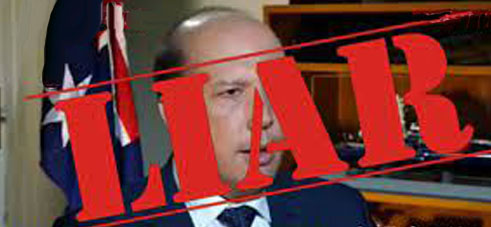
Giles Parkinson, Jun 21, 2024, https://reneweconomy.com.au/duttons-plan-to-nuke-australias-renewable-energy-transition-explained-in-full/
Opposition leader Peter Dutton has outlined his plan to bring the renewable energy transition in Australia to a halt, keep coal fired power stations open, build more gas and use taxpayer funds to build nuclear power plants in the 2030s and 2040s – if the Coalition wins the next election.
Here is an explanation of the plan as far as we know it.
What are the details?
There are not many, because the nuclear “policy” has been released in a one page press release. The Coalition says it wants to build seven nuclear power plants – all at the site of current or former coal fired power stations – in five states. It favours a mix of small modular reactors and large-scale nuclear. It wants the first reactor built by 2035.
Where exactly will they be built?
Two sites in NSW (Liddell in the Hunter and Mt Piper near Lithgow), two in Queensland (at the Tarong and Callide power plants), one in Victoria (Loy Yang in the Latrobe Valley), one in South Australia (Port Augusta), and one in Western Australia (Collie).
Are the site owners OK with that?
No, they say they haven’t been consulted and they say they have their own multi-billion dollar plans to build clean energy and industrial hubs. AGL CEO Damien Nicks says: “There is no viable schedule for the regulation or development of nuclear energy in Australia, and the cost, build time and public opinion are all prohibitive. ” However, the Coalition says if the site owners do not co-operate they will compulsory acquire the land needed.
Which technology will the Coalition use?
It’s not clear. Dutton wants to build small nuclear reactors at two sites, in South Australia and W.A. But SMRs do not exist yet, none have planning approval, and none even have licences to be built anywhere in the western world. Of the two large scale nuclear technologies cited, one (APR1400) has not been ordered anywhere in the world outside South Korea for 15 years. The other, the AP1000, sent its maker Westinghouse bankrupt in 2017 and was the technology used in the Vogtle reactor in the US whose massive delays and cost overruns might make it the last ever built in that country.
When is the timeline for the Coalition nuclear build?
The Coalition wants the first SMR up and running by 2035, and the first large-scale nuclear plant by 2037, with the rest in the 2040s.
Is that realistic?
No. SMRs – for all intents and purposes – haven’t been invented yet. There is no design in any western country that has even been licensed, let alone been given approvals or started construction. Globally, the industry is hopeful of getting the first up by the end of the decade. Even Canada, with a well established nuclear industry and an available site, says it is unlikely to have the second SMR up and running by 2035.
The timelines for large-scale nuclear are even longer. All four projects built or under construction in the last three decades in the US, France, Finland and the UK have suffered massive delays and cost over-runs. Australia has no regulatory platform, and no existing industry, apart from the small reactor at Lucas Heights in Sydney. Even pro-nuclear advocates like former chief scientist Alan Finkel say nuclear cannot realistically be delivered in Australia until the 2040s.
What are the costs?
The Coalition hasn’t said anything about costs, which is not surprising. SMRs have not been built and the only one that got close was cancelled by its would-be customers because it would have been hideously expensive. The Coalition’s timeline of 2035 means it wants to be an early adopter. The CSIRO puts the costs at more than $600/MWh, which might be palatable for a technology used only rarely for evening peaks, but such a price for “always on” power would be insane.
Would it lead to lower bills?
All Australian and international studies show that the Coalition’s choice of technologies – nuclear, gas and carbon capture – are by far the most expensive. See CSIRO, AEMO, Lazard, and BloombergNEF. Energy analysts say the growing reliance on gas power while renewables are stopped and coal kept on line would lead to soaring prices and an extra $1,000 on annual bills for the average household. The nuclear rollout will be entirely funded and subsidised by the taxpayer, which means that – as in France, Ontario and elsewhere – the costs of nuclear would be borne by the government and hidden from consumer bills.
What would happen to emissions?
Emissions will rise significantly if the Coalition puts its plan into action. One study suggests it would result in some 2.3 billion tonnes of additional carbon emissions over the Australian Energy Market Operator’s step change scenario.
What about Australia’s obligations to the Paris climate treaty?
The Coalition has made clear it will not seek to meet the current interim target of a 43 per cent cut in emissions. That means it is effectively ignoring the climate treaty, which requires no back-tracking on committed targets.
What about the net zero by 2050 target?
The Coalition says it still intends to meet that – but, by stopping wind and solar and building more gas, that target looks impossible under their plan.
The Coalition says the sites were chosen because they will not need new transmission. Is that true?
No. The site owners have their own plans. In Port Augusta, for instance, the grid capacity has already been mostly taken up by new wind, solar and batteries. “The myth that a nuclear reactor could just plug into the old Pt Augusta coal power station transmission lines is not true,” says South Australia energy minister Tom Koutsanstonis. “The transmission lines are already nearly full from new renewables. In truth, a nuclear reactor at Pt Augusta would need new transmission lines, the exact thing the LNP are complaining about.” And the large-scale nuclear reactors cited by Dutton will be twice the size of any existing unit in Australia, so it will need more grid infrastructure, and also more “back-up” in case those units fail.
The Coalition says the market operator has warned that the reliance on wind and solar will mean the lights will go out. Is that true?
No. The Australian Energy Market Operator says the biggest threat to energy reliability and security is the failure of ageing and increasingly unreliable coal fired generators.
The Coalition says wind and solar cannot power modern economies and businesses. Is that true?
No. The owners of Australia’s biggest smelters and refineries, including Rio Tinto and Ark Energy, are contracting multiple gigawatts of wind and solar to power their assets. South Australia says it has been flooded with inquiries from business with more than 2 GW of energy demand seeking to move to the state to access cheap wind and solar.
The Coalition says wind and solar cannot provide more than 10 per cent of the energy mix without causing problems. Is that true?
No. South Australia already enjoys a 75 per cent share of wind and solar, and the isolated W.A. grid has had 36 per cent wind and solar over the past year. The market operator says instantaneous levels of 100 per cent should be achieved in coming years.
The Coalition says the Labor government wants to build 28,000 km of new transmission lines by 2030. Is that true?
No. The market operator’s system plan envisages just over 5,000 km by 2030, one third of which have already been built, and some of the rest needed by growth in population and industry. The 28,000 km number comes from the “green export superpower” scenario and is for 2050. That assumes a switch from fossil fuel exports to green industries (steel, power, ammonia), and would likely be required whatever the technology.
Isn’t nuclear banned in Australia?
Yes, at federal and state levels. If the Coalition wants to repeal the laws it will need to get it through both houses of parliament, and who knows where the numbers will be after the next election, with the two-party preferred polls even stevens and any number of independents and minor parties also likely to emerge.
Do the states want nuclear?
No. The Labor governments in Queensland, NSW and Victoria have state laws against nuclear and intend to keep them. LNP Opposition leader David Crusafulli, favoured to take power in Queensland’s election in October, is also against nuclear. State governments in Western Australia, South Australia and even the Liberals in Tasmania are also opposed to nuclear, but legal experts say if the Commonwealth pulls rank, it is heading for the courts.
What if local communities object?
Nationals leader David Littleproud has spent the last few years defending the right of communities to oppose wind, solar, battery and transmission projects, and has demanded a pause and a “re-set.” But he says the Coalition will brook no opposition to its nuclear plans. If local communities don’t like it, tough luck. “We need strong leadership in this country, to have the courage of its convictions, to follow through and to make the tough calls in the national interest,” he told the ABC.
What will be the future of large-scale renewables under a Coalition government?
If the Coalition wins power, it won’t be good. Littleproud wants them stopped, and has vowed to rip up contracts written by the Commonwealth under the Capacity Investment Scheme, which could have 12 GW of capacity lined up over the next 12 months. States may plough on, but will face roadblocks and vetoes on projects. Investors say they need certainty.
So what is the real strategy here?
It’s pretty clear that the strategy is less about building nuclear and more about stopping renewables and protecting the fossil fuel industry, something that the Coalition has not been shy about for the last two decades. It will lead to higher costs, more emissions, squandered industry opportunities, and make the grid less reliable.
Will the strategy work?
Quite possibly. To people in the industry, pushing nuclear and walking away from Australia’s low cost wind and solar resources is nuts – from an engineering, economic and environmental point of view. But 95 per cent of people do not know, and are not interested in, the fine details of the complex energy system. They just want cheap power and the lights to stay on.
And to many of them the Coalition’s fear mongering may sound entirely plausible, particularly when the obvious misinformation is not contradicted by mainstream media – with a few notable exceptions such as The Guardian. See Trump, see Aboriginal voice referendum.
The fossil fuel industry is funding a massive campaign on social media to share simple and effective stories that make nuclear sound sensible and wind and solar as madness. They didn’t just think of this yesterday. If the renewable energy industry and Labor are not careful, they will lose this battle for hearts and minds.
Wow, that was exhausting. Do you need a lie down?
Yes.
France’s Orano loses operating licence at major uranium mine in Niger.
Niger has removed the mining permit of French nuclear fuel producer Orano
at one of the world’s biggest uranium mines, the company said Thursday,
highlighting tensions between France and the African country’s ruling
junta.
RFI 21st June 2024
Congress passes bill to jumpstart new nuclear power tech
ADVANCE Act heads for Biden’s signature, but it may be too little, too late.
JOHN TIMMER – Ars Technica 21st June 2024
Earlier this week, the US Senate passed what’s being called the ADVANCE
Act, for Accelerating Deployment of Versatile, Advanced Nuclear for Clean
Energy. Among a number of other changes, the bill would attempt to
streamline permitting for newer reactor technology and offer cash
incentives for the first companies that build new plants that rely on one
of a handful of different technologies. It enjoyed broad bipartisan support
both in the House and Senate and now heads to President Biden for his
signature. Given Biden’s penchant for promoting his bipartisan credentials,
it’s likely to be signed into law. But the biggest hurdles nuclear power
faces are all economic, rather than regulatory, and the bill provides very
little in the way of direct funding that could help overcome those
barriers.
Ars Technica 21st June 2024
https://arstechnica.com/science/2024/06/congress-passes-bill-to-jumpstart-new-nuclear-power-tech/
Israeli ‘extremist’ tells Australian audience Gaza should have been reduced to ashes
The Age, By Chip Le Grand, June 21, 2024
A former Israeli parliamentarian who once held a position in Benjamin Netanyahu’s government told an online gathering of Australian Jews this week that Israel should have abandoned adherence to international law and reduced Gaza to ashes.
In a series of incendiary claims, Moshe Feiglin, the leader of Israel’s far-right Zehut party, said there was no such thing as Palestinians, Palestinian statehood was the biggest lie of the 20th century and that Gaza should be resettled by Jewish Israelis and Arab families encouraged to leave.
“What Israel should have done to Gaza, on the 8th of October, was exactly what the British people did in Hamburg and Dresden, and exactly what the American people did in every Japanese city they could reach,” he told a Zoom meeting hosted by the Australian Jewish Association (AJA).
“They burnt them to ashes. No ridiculous humanitarian aid. They burnt those cities.
“If we had done that, we would have won the war in a few days and many of the hostages would be free today.”
The association’s invitation for Feiglin to speak, at a time when the war has bitterly divided Australian communities and unleashed antisemitic attacks on Jewish people, businesses and politicians, was condemned by Palestinian and Jewish community organisations……………………………………………………………………………………………………………………………..more https://www.theage.com.au/national/israeli-extremist-says-gaza-should-have-been-reduced-to-ashes-20240620-p5jnac.html
U.S. and China hold first informal nuclear talks in five years
By Greg Torode, Gerry Doyle and Laurie Chen, June 22, 2024
HONG KONG, (Reuters) – The United States and China resumed semi-official nuclear arms talks in March for the first time in five years, with Beijing’s representatives telling U.S. counterparts that they would not resort to atomic threats over Taiwan, according to two American delegates who attended.
The Chinese representatives offered reassurances after their U.S. interlocutors raised concerns that China might use, or threaten to use, nuclear weapons if it faced defeat in a conflict over Taiwan. Beijing views the democratically governed island as its territory, a claim rejected by the government in Taipei.
“They told the U.S. side that they were absolutely convinced that they are able to prevail in a conventional fight over Taiwan without using nuclear weapons,” said scholar David Santoro, the U.S. organiser of the Track Two talks, the details of which are being reported by Reuters for the first time.
Participants in Track Two talks are generally former officials and academics who can speak with authority on their government’s position, even if they are not directly involved with setting it. Government-to-government negotiations are known as Track One.
Washington was represented by about half a dozen delegates, including former officials and scholars at the two-day discussions, which took place in a Shanghai hotel conference room.
Beijing sent a delegation of scholars and analysts, which included several former People’s Liberation Army officers.
A State Department spokesperson said in response to Reuters’ questions that Track Two talks could be “beneficial”. The department did not participate in the March meeting though it was aware of it, the spokesperson said.
Such discussions cannot replace formal negotiations “that require participants to speak authoritatively on issues that are often highly compartmentalized within (Chinese) government circles,” the spokesperson said.
Members of the Chinese delegation and Beijing’s defence ministry did not respond to requests for comment.
The informal discussions between the nuclear-armed powers took place with the U.S. and China at odds over major economic and geopolitical issues, with leaders in Washington and Beijing accusing each other of dealing in bad faith…………………………………………………………………………………………………………………………………………………………. more https://www.reuters.com/world/us-china-hold-first-informal-nuclear-talks-5-years-eyeing-taiwan-2024-06-21/
Australia’s Opposition leader Peter Dutton launches highly personal attack on Prime Minister Albanese, calling him ‘a child in a man’s body’ while spruiking his new nuclear direction.

- Peter Dutton addressed party faithful in Sydney
- Painted PM Albanese as weak leader
By MICHAEL PICKERING FOR DAILY MAIL AUSTRALIA and WILLIAM TON and ANDREW BROWN FOR AUSTRALIAN ASSOCIATED PRESS, 22 June 2024
Opposition Leader Peter Dutton told Liberal Party faithful Prime Minister Anthony Albanese was ‘a child in a man’s body’ in a highly personal attack on Saturday.
Mr Dutton spoke to a federal council meeting of Liberal Party politicians, administrators and members in Sydney in which he painted Mr Albanese as ‘weak’ and a leader who told people ‘what they want to hear, not what needs to be said’.
‘He’s a man with a mind still captured in his university years; he’s a child in a man’s body,’ Mr Dutton said………. The opposition leader has cast the next federal election as defining Australia’s ‘future and fate’ with voters to decide the nation’s path forward on energy.
Australians will decide their energy future at the next election, says the opposition leader while slamming the government’s ‘reckless’ renewables policy and spruiking his nuclear pledge.
‘The next election will not only define the next political term, it will define the future and fate of this nation,’ he said.
Voters will have to choose the path they want to take including the nation’s energy future amid soaring power costs, Mr Dutton said.
‘A choice between Labor’s reckless renewables-only policy that will see the energy bills of Australians soar even more,’ he said.
‘Or the coalition’s plan for cheaper, cleaner and consistent energy, which includes our visionary plan to become a nuclear-powered nation and to do the right thing by the environment.’
It follows the coalition on Wednesday unveiling plans for seven nuclear reactors across five states on the sites of coal-fired power stations, should it win government.
The plan prompted safety concerns in regional areas where the reactors are due to be built, as well as criticism over the coalition not releasing any costings.
Prime Minister Anthony Albanese was panned for adhering to ‘unachievable’ renewable emissions targets, which the opposition said are blowing the budgets of Australians.
‘He’s more interested in appeasing the international climate lobby than sticking up for the interests of everyday Australians,’ Mr Dutton said.
‘I will be someone who doesn’t shirk the hard and necessary decisions which must be made in our national interest in these tough and precarious times.’
Opposition frontbencher Paul Fletcher dismissed fears the nuclear policy could make metropolitan electorates harder to win at the next election, saying it demonstrated the party’s commitment to achieving net zero by 2050.
The coalition faced significant challenges at the 2022 federal election in blue-ribbon, inner-city seats from teal independents, who pledged greater action on climate change.
While the reactors would be built in regional locations, Mr Fletcher said those in inner city areas would also embrace the idea of nuclear.
Under the plan, it would take until 2035 to 2037 at the earliest for the first facility to be built.
Assistant Climate Change and Energy Minister Jenny McAllister hit out at the nuclear policy which she said was expensive and risky.
‘Today Peter Dutton could’ve answered the many questions Australians have about his risky nuclear plan but all they got was more of the same nasty negativity and politics,’ she said.
‘Peter Dutton demands a mature debate but instead launches personal attacks. Peter Dutton demands lower power prices but opposes energy price relief and is unable or unwilling to say how much his nuclear plans will cost Australian taxpayers.
‘Australians deserve better.’
Scotland’s First Minister Swinney hits back at ‘hopelessly ideological’ attack from nuclear industry

By Martin Williams, @Martin1Williams, Senior News Reporter, Herald 20th June 2024
The First Minister has rejected an attack from the nuclear industry that his ban on new power plants is “hopelessly ideological”.
John Swinney doubled down on his rejection of new nuclear after he was challenged in the Scottish Parliament over his stance after the nuclear industry criticisms, revealed in the Herald on Sunday targeted his view that he was “not a fan of the nuclear industry” and that he “never have and never will” support investments in new power plants.
He has been responding to calls to lift the ban on nuclear as fears grow over hundreds of jobs being lost and skilled workers leaving Scotland for overseas.
The nuclear industry attacked the First Minister for being “hopelessly ideological and anti-science” after he said he was “not a fan” of the business and that he “never have and never will” support investment in the power plants……………………
When asked for his response to the nuclear industry in the Scottish Parliament, Mr Swinney said: “The Scottish Government does not support the building of new nuclear power stations in Scotland. We have abundant natural resources and a highly skilled workforce to take advantage of the many renewable energy opportunities. Evidence shows that new nuclear is more expensive than renewable alternatives.
“Nuclear energy also creates radioactive waste, which must be safely managed over many decades to protect the environment, requiring complex and expensive handling. The Scottish government is supporting continued growth in renewables, storage, hydrogen and carbon capture technologies to drive economic growth, support green jobs and provide secure, affordable and clean energy for Scotland.”
But in response, Scottish Conservative Central Scotland MSP Graham Simpson said: “So it is hopelessly ideological and anti science…………………..
The First Minister responded: “I gave a considered answer to Graham Simpson. I don’t think it could in any way be described as ideological, because I made the point that evidence shows that new nuclear is more expensive than renewable alternatives.
“We are facing a cost of living and public finance crisis, so any responsible First Minister will look to make sure that we make the most fiscally efficient approach to energy generation.
“This government, as a result of its clear policy leadership, has successfully decarbonised electricity generation within Scotland. We have developed renewable energy with policy certainty, and I want to give the same policy certainty to storage, to hydrogen to carbon capture technologies to drive economic growth and support green jobs……………………
And he added: “So I am afraid to say Graham Simpson has not got a leg to stand on this question. We have got a clear strategy on renewables. We will pursue that and will pursue it sustainably to deliver for the people of Scotland……………………….. https://www.heraldscotland.com/news/24400300.swinney-hits-back-hopelessly-ideological-attack-nuclear/
Saudi Arabia shuts pilgrims out of air-conditioned areas as more than 1,000 die in extreme heat
Unregistered worshippers who had not bought costly permits
for hajj pilgrimage make up more than half the deaths, as temperatures hit
51C.
Telegraph 20th June 2024
Nuclear culture wars – especially in Australia
Australia IS special – the only continent that is one single political state. Although Australia is really very multicultural, its government and business are determinedly white English-speaking.
But the white anglophones who identify with the USA, Britain, and Canada – live far away from those “kindred spirits”. Nearest neighbours are yellow and brown people, who don’t even speak English!
So – Australia has the “cultural cringe” – aw gee we’re not as good as those other anglophones. Only at sport -and even there, we’re losing touch. We MUST become as good as them – TECHNOLOGICALLY. Oh I know – we’d better get Nuclear Power, instead of that girly stuff – renewable energy.
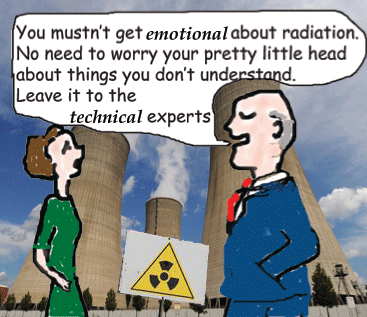
And I do mean “girly stuff”. Worldwide, it is a gender thing. Big strong men like nuclear power, weak uninformed women prefer energy conservation and renewable energy.
It really doesn’t matter which energy form is cheaper, more efficient, faster to implement, safer, cleaner …….. what is important is making Australia look important and technologically a leader, and also a strong opponent to China. We’re already a leader – in renewable energy – but that is sissy stuff, so it doesn’t count.
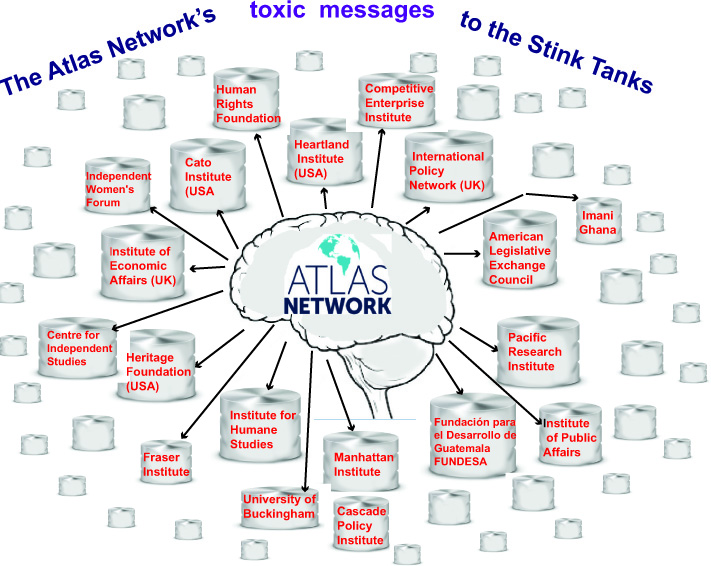
Now, there will need to be a grand propaganda campaign to get nuclear power into Australia. You see, we have compulsory voting here, which means that all those uniformed women will be voting. So it is going to be a big job to get nuclear into Australia. It will require all the skills of the Atlas Foundation, and its associated Think Tanks, to get the message across to the Australian public – including to wimpy-type men, as well as to women. But with the help of the Murdoch media, and social media – a good pro nuclear lobby should be up to it. Remember Australia’s referendum on an Aboriginal Voice to Parliament got defeated, with all that help last year.
1 This Month

of the week – Shut Down Drone Warfare!


Tell the Ukrainian Government to Drop Prosecution of Peace Activist Yurii Sheliazhenko

Petition to revoke the licensing of the Near Surface Nuclear Disposal Facility (NSDF) at Chalk River. https://www.ourcommons.ca/petitions/en/Petition/Details?Petition=e-7247
To see nuclear-related stories in greater depth and intensity – go to https://nuclearinformation.wordpress.com
-
Archives
- March 2026 (244)
- February 2026 (268)
- January 2026 (308)
- December 2025 (358)
- November 2025 (359)
- October 2025 (376)
- September 2025 (257)
- August 2025 (319)
- July 2025 (230)
- June 2025 (348)
- May 2025 (261)
- April 2025 (305)
-
Categories
- 1
- 1 NUCLEAR ISSUES
- business and costs
- climate change
- culture and arts
- ENERGY
- environment
- health
- history
- indigenous issues
- Legal
- marketing of nuclear
- media
- opposition to nuclear
- PERSONAL STORIES
- politics
- politics international
- Religion and ethics
- safety
- secrets,lies and civil liberties
- spinbuster
- technology
- Uranium
- wastes
- weapons and war
- Women
- 2 WORLD
- ACTION
- AFRICA
- Atrocities
- AUSTRALIA
- Christina's notes
- Christina's themes
- culture and arts
- Events
- Fuk 2022
- Fuk 2023
- Fukushima 2017
- Fukushima 2018
- fukushima 2019
- Fukushima 2020
- Fukushima 2021
- general
- global warming
- Humour (God we need it)
- Nuclear
- RARE EARTHS
- Reference
- resources – print
- Resources -audiovicual
- Weekly Newsletter
- World
- World Nuclear
- YouTube
-
RSS
Entries RSS
Comments RSS
 nuclear-news