‘I heard all of my friends’ last breath’: Testimonies from the Nuseirat massacre
The Israeli massacre in Gaza’s Nuseirat camp killed over 270 Palestinians and injured many more. Survivors say the horrors they witnessed will stay with them for the rest of their lives.
BY TAREQ S. HAJJAJ https://mondoweiss.net/2024/06/i-heard-all-of-my-friends-last-breath-testimonies-from-the-nuseirat-massacre/
The Israeli massacre in the Nuseirat camp to liberate four Israeli prisoners held by resistance factions in the Gaza Strip started at 11:00 in the morning on June 8. Although the scenes of Palestinians running for safety may have seemed sadly familiar, this invasion was different from others that have been carried out across the Gaza Strip.
This time, the Israeli military wore civilian clothes, rode in Palestinian cars, and moved among the people in disguise. There were no warnings to evacuate, or orders from the army to move elsewhere, and people were surprised by the Israeli special forces and tanks. A large number of special forces hidden among the people only revealed themselves once the deadly operation began as other special forces stormed the area traveling in cars loaded with luggage, the same luggage that the displaced people carry with them, such as mattresses, pillows, blankets, and bags. When the Palestinians detected them, the soldiers quickly called for support, and helicopters, fighter planes, artillery, and tanks descended. Reconnaissance aircraft and foot solders then began committing massacres against the civilian population.
The intensity of shelling and gunfire soon warned the residents that a massacre was unfolding. They left their homes and took to the streets running in search of safety, which could not be found.
The Israeli operation killed 274 Palestinians, including 64 children, and injured 689 Palestinians in total. “Some of the bodies that arrived at the hospital were body parts, as well as dismembered bodies,” the Gaza Ministry of Health reported when announcing the casualty numbers.
As the world celebrates the liberation of four Israeli hostages from the Gaza Strip, and the media focuses on their lives, freedom, and the happiness of their families there is barely a mention of the number of Palestinian casualties or consideration that each of those killed are also leaving behind a bereaved family.
Issam Hajjaj, 27, survived the massacre and spoke to Mondoweiss. “We were running away from bombing and killing. In all directions, there was either bombing, an Israeli tank, or Israeli gunmen shooting at anyone in their path,” he explained. “While we were running away from death, I saw dismembered bodies on the road as a result of the bombing, and I saw those who left their loved ones under the rubble and fled to save the rest of the family.”
“We did not know from which direction death would come for us.”
Anatomy of a massacre
Following the attack the Israeli army announced that the element of surprise had been crucial. This is why the military operation took place during daylight hours and in a densely populated area. This is also why there was such a high number of Palestinian casualties.
Hajjaj says that within minutes of the invasion starting, Israeli forces surrounded the targeted location from all sides and did not leave any route for people to escape except one road, Al-Zuhur Road connecting Nuseirat and Deir Al-Balah. However, just at the same time that the Nuseirat massacre took place, people near Al-Aqsa Martyrs Hospital in Deir Al-Balah were fleeing to Nuseirat, and people were using this street to arrive. The intense crowding in the street during the continuous bombing spread panic, and bodies soon began to fly as a result of the direct targeting of everything in that area.
“During our escape, we saw bodies being loaded into cars heading to Al-Aqsa Martyrs Hospital. Women were screaming in the streets, and children were crying and screaming,” Hajjaj recounted. “I saw a family that was fleeing together. A shell fell on the father and killed him in front of his wife and young daughter. After the mother got up and carried her daughter, she discovered that her husband was killed; she left him on the ground and fled to save her daughter and herself.”
Hajjaj explained that the targeted location was two buildings near Al Awda Hospital in the Nuseirat camp, but to reach these two buildings, the Israeli army destroyed an entire residential square. He says that while the Israeli army liberated more than four hostages, the intensity of fire from the Palestinian resistance stopped them from getting out more captives.
The Al-Qassam Brigades, the military arm of Hamas in the Gaza Strip, seemed to confirm this account in a video it published declaring that three Israeli prisoners were killed by the Israeli bombing of the Nuseirat camp.
“We inform you that in exchange for these, your army killed three prisoners in the same camp, one of whom held American citizenship,” Al-Qassam announced in the video. The resistance group stressed that the remaining Israeli prisoners would not be liberated until the Palestinian prisoners in Israeli prisons were freed as well.
Several Palestinians published photos and video from the scene in Nuseirat that confirmed the firsthand accounts collected by Mondoweiss showing an Israeli special force vehicle entering the camp at the beginning of the invasion which was followed by indiscriminate bombing as a form of support cover. Other videos show a car loaded with luggage entering the Block 5 area in the Nuseirat camp and killing a person at the door of one of the buildings. Israeli forces then used iron ladders to reach the upper floors, as shown in one of the pictures that spread on social media. Other details of the invasion are still being established. Many on social media have circulated photos that seem to indicate the floating pier constructed by the United States on the Gaza coast was used as a launching point for the operation, a claim the U.S. Central Command denied.
Clashes continued for more than three hours. During this time, the Israeli army used excessive force to demolish homes and kill hundreds of residents in the vicinity of the operation.
“I did not think for a moment that I might survive”
Tawfiq Abu Youssef, an 11-year-old child, sits in Nasser Hospital in Khan Younis where he was referred to for treatment. His face is bloodied and his eyes are swollen blue after he was pulled from under the rubble of their home in Nuseirat. He says he doesn’t know how he escaped death.
“Suddenly, the situation in the area changed, and people started running in fear, saying that special forces had stormed the area,” the boy recounted to Mondoweiss. “All of this was happening in front of our house, and we were stuck inside under fire and bombing. We tried to get out, but drones opened fire on us until the house was bombed and fell over our heads.”
“Before our house was bombed, we saw people in the street across from our house on the ground cut up. We saw missiles hitting the people fleeing in the streets, how they cut them off, and how the planes bombed everything moving in the streets – cars and people. The street was full of people, and suddenly, all of them… They were on the ground, and smoke and blood filled the place. Everywhere we looked, shelling and shrapnel were flying.”
As Tawfiq leaned his back against the hospital wall and sat on the floor to receive treatment, he said that he did not expect to survive this massacre. The scenes he saw were too difficult to believe.
“I stayed under the rubble for hours. I did not think for a moment that I might survive and see life again. I had lived through death enough while I was under the rubble. That was death. I do not think I will forget or get over these moments.”
The operation was carried out near a central market, where Amjad Abu Laban, 43, was selling some food items on the road. He survived death but suffered various injuries to his hand and foot.
He says that everything started at once: planes, tanks, shooting, and people were in the middle of bombing and death and did not know how to react or where to turn.
“Intense bombardment began in several areas in front of us, around us, and behind us, and people began falling to the ground by the dozens near Al-Awda Hospital in the Nuseirat camp. Before our eyes, we saw bodies being torn apart and scattered on the roads, and we saw soldiers hidden in civilian clothes and in people’s cars running and killing everyone they met on their way without distinguishing between a child, a woman, a young person, or an old person. We saw the bodies of our brothers cut up, without heads, lying on the ground,” Abu Laban told Mondoweiss.
“These massacres that occurred before my eyes cannot be described.”
In the same hospital, Mahmoud Al-Hawar, 27, lies on his back as a result of an injury to his leg. Al-Hawar witnessed the massacre as he bravely attempted to save his family and neighbors from the bombing.
“The planes bombed our neighbors’ house, and there was a girl under the rubble screaming to be saved. I went with my friends to try to save her, but the rubble was heavy, and we could not dig her out or even lift it to reach that girl, so we waited until the civil defense team arrived. A large number of young men gathered to try to rescue them. But the planes bombed us,” he told Mondoweiss.
Al-Hawar recounted that he felt the missile hit him and his group of friends and they were thrown to the ground. Minutes later, Mahmoud regained consciousness and found himself covered in blood and saw his friends next to him, on the verge of death.
“Before we were bombed, if I told you that I saw more than 10 drones above our heads, you would not believe it. We were looking at the sky and did not know what was happening.”
After the bombing, Al-Hawar tried to stand up to save himself and his friends. “I tried to stand up, but I couldn’t. I was covered in blood. I looked at my leg and it was cut off. I looked at my best friend next to me, and I found him taking his last breath.”
Their injuries were all severe, and when someone arrived who could take them to the hospital, the five friends were placed on top of each other in a small transport truck, with Al-Hawar underneath them all.
“I was in pain from my injury, but I was feeling more pain because I could hear my friends pronouncing their martyrdom and taking their last breaths. All my friends were dying above me, and I was hearing and feeling everything. They were all killed. Some of them were martyred on the road before my eyes, and some of them died later.”
Al-Hawar agreed that the scenes he saw of the dead in the streets will never be forgotten. “I have not slept since the incident. I cannot sleep. I cannot forget anything I witnessed and saw. I cannot forget the people who were running in panic and fear, searching for their relatives and families amidst the destruction and dismembered bodies.”
Rescue operations continue
Rescue teams are still working in Nuseirat with limited capabilities in an attempt to recover the bodies that remained under the rubble. Many residents remain missing due to the massive bombing in the area, and the many homes that were demolished, some on top of their residents. Many others were killed in the market as they tried to meet the needs of their families.
Anees Ghanima, an activist in the Nusreiat refugee camp, summarized the senseless killing on social media, ““This is what happens when we say that we are at risk of being killed at any moment. Imagine that most of those who just left were only in the market, trying to meet their families’ needs. Put yourself in the place of the child who spent all night deceiving his mother to buy him some necessities, and she was killed today during raids. How could we tell him about peace in this world?”
Hassan Sleieh contributed to this report.
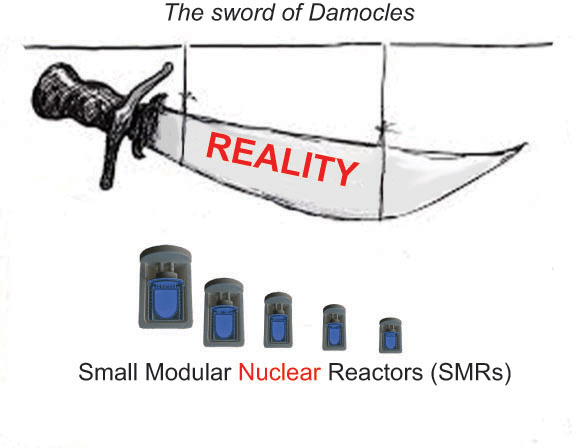
Are the prospects for Small Modular Reactors being exaggerated? Five key characteristics examined
June 11, 2024 by Ed Lyman, Ed Lyman is Director, Nuclear Power Safety, at the Union of Concerned Scientists
Small Modular Reactors (SMRs) are being presented as the next generation of nuclear technology. While traditional plants face cost overruns and safety issues, SMRs are seen by their champions as cheaper, safer, and faster to deploy. But Ed Lyman at UCS cites evidence that cast these claims into doubt.
In five sections of this article, he lists the reasons why. SMRs are not more economical than large reactors. SMRs are not generally safer or more secure than traditional large light-water reactors. SMRs will not reduce the problem of disposal of radioactive waste. SMRs cannot be counted on to provide reliable and resilient off-the-grid power (for facilities like data centres, bitcoin mining, hydrogen or petrochemical production). SMRs do not use fuel more efficiently than large reactors.
And where problems might be ironed out over time, the learning cycle of such technology is measured in decades during which costs will remain very high. SMRs may have a role to play in our energy future, says Lyman, but only if they are sufficiently safe and secure, along with a realistic understanding of their costs and risks.
Even casual followers of energy and climate issues have probably heard about the alleged wonders of small modular nuclear reactors (SMRs). This is due in no small part to the “nuclear bros”: an active and seemingly tireless group of nuclear power advocates who dominate social media discussions on energy by promoting SMRs and other “advanced” nuclear technologies as the only real solution for the climate crisis. But as I showed in my 2013 and 2021 reports, the hype surrounding SMRs is way overblown, and my conclusions remain valid today.
Unfortunately, much of this SMR happy talk is rooted in misinformation, which always brings me back to the same question: if the nuclear bros have such a great SMR story to tell, why do they have to exaggerate so much?
What are SMRs?
SMRs are nuclear reactors that are “small” (defined as 300 megawatts of electrical power or less), can be largely assembled in a centralised facility, and would be installed in a modular fashion at power generation sites. Some proposed SMRs are so tiny (20 megawatts or less) that they are called “micro” reactors. SMRs are distinct from today’s conventional nuclear plants, which are typically around 1,000 megawatts and were largely custom-built. Some SMR designs, such as NuScale, are modified versions of operating water-cooled reactors, while others are radically different designs that use coolants other than water, such as liquid sodium, helium gas, or even molten salts.
To date, however, theoretical interest in SMRs has not translated into many actual reactor orders. The only SMR currently under construction is in China. And in the United States, only one company — TerraPower, founded by Microsoft’s Bill Gates — has applied to the Nuclear Regulatory Commission (NRC) for a permit to build a power reactor (but at 345 megawatts, it technically isn’t even an SMR).
The nuclear industry has pinned its hopes on SMRs primarily because some recent large reactor projects, including Vogtle units 3 and 4 in the state of Georgia, have taken far longer to build and cost far more than originally projected. The failure of these projects to come in on time and under budget undermines arguments that modern nuclear power plants can overcome the problems that have plagued the nuclear industry in the past.
Developers in the industry and the US Department of Energy say that SMRs can be less costly and quicker to build than large reactors and that their modular nature makes it easier to balance power supply and demand. They also argue that reactors in a variety of sizes would be useful for a range of applications beyond grid-scale electrical power, including providing process heat to industrial plants and power to data centres, cryptocurrency mining operations, petrochemical production, and even electrical vehicle charging station
Here are five facts about SMRs that the nuclear industry and the “nuclear bros” who push its message don’t want you, the public, to know.
1. SMRs are not more economical than large reactors. 2. SMRs are not generally safer or more secure than large light-water reactors. 3. SMRs will not reduce the problem of what to do with radioactive waste. 4. SMRs cannot be counted on to provide reliable and resilient off-the-grid power for facilities, such as data centers, bitcoin mining, hydrogen or petrochemical production. 5. SMRs do not use fuel more efficiently than large reactors
Continue readingNuclear power is ‘overblown’ as an energy source for data centers, power company CEO says
CNBC Spencer Kimball, MON, JUN 10
KEY POINTS
- AES Corporation CEO Andrés Gluski said the “euphoria” over nuclear power has been a “little overblown.”
- AES is a major power provider for large tech companies building out data centers, with more than 40% of its backlog coming from customers including Amazon, Microsoft and Google.
- Gluski said renewables are the future, though natural gas will be needed as a transition fuel.
The euphoria over nuclear energy as a power source for data centers is “overblown,” the CEO of a major power provider for large tech companies told CNBC in an interview Monday.
AES Corporation CEO Andrés Gluski said renewable energy is the future, though natural gas will also play a role as a transition fuel. Nuclear power, on the other hand, faces challenges in meeting the growing power demand from data centers, Gluski said.
AES is a major power provider for large tech companies building out data centers, with more than 40% of its 12.7 gigawatt backlog coming from customers including Amazon, Microsoft and Google, according to its most recent earnings presentation to investors.
……………………Gluski said the “euphoria” over nuclear power is a “little overblown.” There is only so much existing nuclear energy that merchant power providers can re-contract to sites such as data centers, the CEO said.
“The question is, going forward, what’s the price of new nuclear,” Gluski said, adding that only one new nuclear plant has been built in the U.S. in decades and it came in far above budget.
‘The future is going to be renewable’
The second of two new nuclear reactors at Vogtle Plant in Georgia came online in April, but the project was seven years behind schedule and cost double the original projections, according to the Energy Information Administration. The reactors, operated by Georgia Power, are the first newly-constructed nuclear units built in the U.S. in more than 30 years, according to the Department of Energy.
……………………..Gluski pointed to the recent agreement between Microsoft and Brookfield Asset Management for 10.5 gigawatts of renewable energy between 2026 and 2030 as a sign of the future. Microsoft and Brookfield described the agreement as the largest renewable purchase ever between two corporate partners.
“It tells you that’s where most of the energy is going to be coming from,” Gluski said. “They are cheaper, they are clean and quite frankly easier to site, so the future is going to be renewable energy.”…………………………….
Solar, storage and wind represented about 95% of the power capacity in line waiting for connection to the grid at the end of 2023, while gas was just 3% and a grab bag made up the rest, according to Lawrence Berkeley National Laboratory. Renewables and storage in line for connection is nearly twice the installed capacity of the U.S. power plant fleet.
AES has already signed long-term contracts with data centers to provide them hourly matched renewable energy 24/7, Gluski said. “We’ve done that already for two years. So we can do that today,” he said.
AES signed an agreement with Google in 2021 to power its Virginia data center campus with 90% carbon-free energy on an hourly basis using a combination of wind, solar, hydro and battery storage resources.
The power company recently signed an agreement with Amazon for an additional gigawatt of solar and storage at a site in Kern County, California, bringing the project to a total of two gigawatts in a 15-year contract that is expected to come online in 2025 to 2026. AES has described the agreement as the largest solar and storage project in the U.S.
All told, the power company has signed agreements to provide Amazon with 3.1 gigawatts of power, Microsoft with 1.7 gigawatts, and Google with 800 megawatts, according to its first quarter earnings presentation.
“All of them want to be part of an energy transition,” Gluski said. “I don’t see anybody saying build me gas and coal plants to power my data centers, unless it’s a temporary situation, give me power from your gas plant until the renewables are available.”
AES stock is up 26% over the past three months and 6% year to date. Some 67% of Wall Street analysts rate AES the equivalent of a buy, 25% have a hold on the company’s stock and 8% rate it the equivalent of a sell. https://www.cnbc.com/2024/06/10/nuclear-is-overblown-as-energy-source-for-data-centers-aes-ceo-says.html
Scottish Greens brand Labour’s commitment to nuclear weapons ‘obscene and immoral’

Chris Jarvis 9 June 2024 https://bright-green.org/2024/06/09/scottish-greens-brand-labours-commitment-to-nuclear-weapons-a-obscene-and-immoral/
Labour’s commitment to the UK’s nuclear arsenal has been branded an ‘obscene and immoral waste of money’ by the Scottish Green Party. The party’s external affairs spokesperson Ross Greer went on to say that nuclear weapons are a ‘moral evil’ and urged voters who support a nuclear-free world to vote Green.
Greer said: “Nuclear weapons are a moral evil and an obscene and immoral waste of hundreds of billions of pounds. It is a vast money pit that could be far better spent eradicating poverty, tackling the climate crisis and transforming public services like the NHS.
“Trident does nothing to make us safer, and has no place in Scotland. The so-called ‘triple-lock’ that Labour is proposing is a multi-billion bung to a weapons industry already enjoying eye watering profits from the UK’s aggressive foreign policy.
The message from Sir Keir Starmer is very simple. If you care about peace and global security, don’t vote Labour.”
Greer added: “With Labour and Tories in lockstep on nuclear weapons, the only way we will disarm Scotland’s waters is as an independent nation.
“I look forward to the day when an independent Scotland can finally take its place on the world stage and join the dozens of other nations who have signed the Treaty on the Prohibition on Nuclear Weapons.”
US Drone Flights Over Gaza Supported Israeli Operation That Killed Over 200 Palestinians in Nuseirat
A team of US special operations soldiers and intelligence personnel based in Israel assisted in the operation
by Dave DeCamp June 9, 2024 , https://news.antiwar.com/2024/06/09/us-drone-flights-over-gaza-supported-israeli-operation-that-killed-over-200-palestinians-in-nuseirat/
Israel received intelligence support from the US in its Saturday operation in central Gaza’s Nuseirat camp that killed over 200 Palestinians and freed four Israeli hostages.
The intelligence support included information provided by US drone flights over Gaza. The US began flying MQ-9 Reaper drones over Gaza days after October 7 and deployed special operations forces to Israel, demonstrating that US military support for Israel goes beyond providing weapons.
The Washington Post reported that a team of US special operations soldiers and intelligence personnel based at the US Embassy in Jerusalem provided the intelligence support. Besides the drone flights, the US provided communications intercepts, and Israel also received intelligence support from the UK.
Local residents said the Israeli special forces who carried out the raid were disguised as displaced Palestinians from Rafah, and others entered the camp in an aid truck. The Israeli military denied it used an aid truck, but Israeli media reported Israeli soldiers meant to blend in as Arabs were part of the attack. Israeli warplanes pounded Nuseirat as the Israeli commandos on the ground moved to locate the hostages.
According to Gaza’s Health Ministry, 274 Palestinians were killed in the attack on Nuseirat, and 678 were wounded. Gaza’s Media Office said 64 of the dead were children, and 57 were women. The total death toll in Gaza since October 7 has surpassed 37,000.
Israel claimed it killed less than 100 people in the assault, while the US said it didn’t know how many people died. National Security Advisor Jake Sullivan celebrated the assault and also acknowledged that “innocent people” were killed.
“We, the United States, are not in a position today to make a definitive statement about that. The Israeli defense forces have put out one number. The Hamas-run Gaza Health Ministry has put out another number,” Sullivan said. “But we do know this … Innocent people were tragically killed in this operation.”
Hamas alleged that the Israeli attack killed three other Israeli hostages, including an American citizen. The Palestinian group released a video of three corpses, but they were unidentifiable.
Macron Says France Working To ‘Finalize’ Plan To Send Troops to Ukraine
The French leader says other NATO countries have agreed to send troops to train Ukrainian forces
by Dave DeCamp June 9, 2024, https://news.antiwar.com/2024/06/09/macron-says-france-working-to-finalize-plan-to-send-troops-to-ukraine/
On Friday, French President Emmanuel Macron said France was working to “finalize a coalition” of NATO countries that are willing to send troops to Ukraine to train Ukrainian forces, a step that would mark a huge escalation in the proxy war.
During a press conference with Ukrainian President Volodymyr Zelensky in Paris, Macron said Ukraine’s request for NATO trainers was “legitimate” and downplayed the risk of escalation.
“It’s much more efficient and practical for certain capacities in certain conditions to train on Ukrainian soil, it’s a legitimate request,” Macron said. “We’re going to use the coming days to finalize the broadest possible coalition.” He added that several NATO countries have already agreed to the plan.
Moscow has said that any French trainers deployed to Ukraine would be legitimate targets of the Russian military, but Macron dismissed the warning. “This is not deploying … European soldiers on the front line. It is recognizing the sovereignty of Ukraine over its territory,” he said. “Who would we be to give in to the invocations or threats of Russia?”
Reuters reported on May 30 that France planned to initially send a few dozen troops to asses the training mission before sending hundreds of soldiers. The talk of sending French troops to Ukraine has highlighted the fact that there are already a small number of NATO special operations soldiers inside Ukraine (97 as of March 2023), but a larger public deployment will take NATO involvement in the war to another level.
The advancement of France’s plans to send troops to Ukraine comes after the US gave Ukraine the greenlight to strike Russian territory with US-provided missiles, which also risks a major response from Russia. So far, the Biden administration has said it has no plans to send trainers to Ukraine, but it has taken escalatory steps that it’s previously ruled out throughout the conflict
Saving Gaza Is About More Than Saving Gaza. It’s Also About Saving Ourselves.

CAITLIN JOHNSTONE, JUN 10, 2024 https://www.caitlinjohnst.one/p/saving-gaza-is-about-more-than-saving?utm_source=post-email-title&publication_id=82124&post_id=145499466&utm_campaign=email-post-title&isFreemail=true&r=1ise1&triedRedirect=true&utm_medium=email
Saving Gaza is about more than saving Gaza. It’s also about saving ourselves.
Saving ourselves as individuals. Saving ourselves as a society. Saving ourselves as a species.
Saving ourselves from what we’ll become if we just watch this happening right in front of our eyes without doing everything we can to stop it.
Saving ourselves from what the sociopaths who rule over us are trying to turn us into.
Saving ourselves from the way the propagandists are trying to twist and train our minds.
Saving ourselves from the kind of future humanity will have if our rulers can get away with such a brazen act of extreme depravity.
Saving ourselves from the other horrors that will be unleashed upon our world if this kind of thing becomes normalized and accepted.
Saving ourselves from the dark dystopia we are plunging into at breakneck speed.
Saving ourselves from a world where journalism is dead and dissent is forbidden.
Saving ourselves from a world where the bastards will do the worst things imaginable without even having to hide it, and just stare us in the eyes daring us to do something.
Saving ourselves from a world where the powerful have decided to respond to the public’s widespread access to information and raw video footage by just committing their evil deeds right out in the open and forcing us to get used to it.
Saving ourselves from this relentless push by propagandists and politicians to amputate that sacred part of our humanity which screams “NO” to all this.
Saving our hearts.
Saving our compassion.
Saving our tenderness.
Saving our children.
Saving our humanity.
Saving our world.
Keir Starmer’s policy on nuclear weapons
Prof Nick Megoran
School of geography, politics and sociology, Newcastle University
It is ironic that news of Keir Starmer’s plan to restate Labour’s commitment to “a ‘triple lock’ for the UK’s nuclear deterrent” (Keir Starmer to declare Labour as ‘party of national security’, 2 June) emerged on the same day that Toshiko Tanaka, a survivor of the Hiroshima atomic bomb, addressed a spellbound meeting in London – organised by the Campaign for Nuclear Disarmament and the Quakers – about her childhood experiences in 1945.
She spoke of seeing the initial explosion that killed every one of her classmates. She recounted regaining consciousness with a mouth full of dirt, running home to a mother who could not recognise her own badly burnt daughter, and smelling the lingering stench of burning flesh as bodies were cremated. To this day, she struggles to sleep as new sores break out on her skin, and cannot see a grilled tomato without remembering the ghastly sight of skin peeling off the dying who staggered through her neighbourhood like zombies.
Through the nuclear non-proliferation treaty, the UK is committed to the goal of a nuclear-weapons-free world. Starmer should formulate policy based on our legal and moral obligations, not a calculating attempt to win votes by looking tougher than the Tories.
Norman Rimmell
Darley Dale, Derbyshire
Jeremy Corbyn is right – our political leaders are sticking their heads deeply in the sand. He could have added that if it’s possible for something to go wrong then you can be certain that one day it will. We may escape nuclear war, but accidental nuclear attack will, one day, happen. We’ve been extremely lucky to have escaped this so far, but eventually our luck will run out, unless we put a stop to this madness.
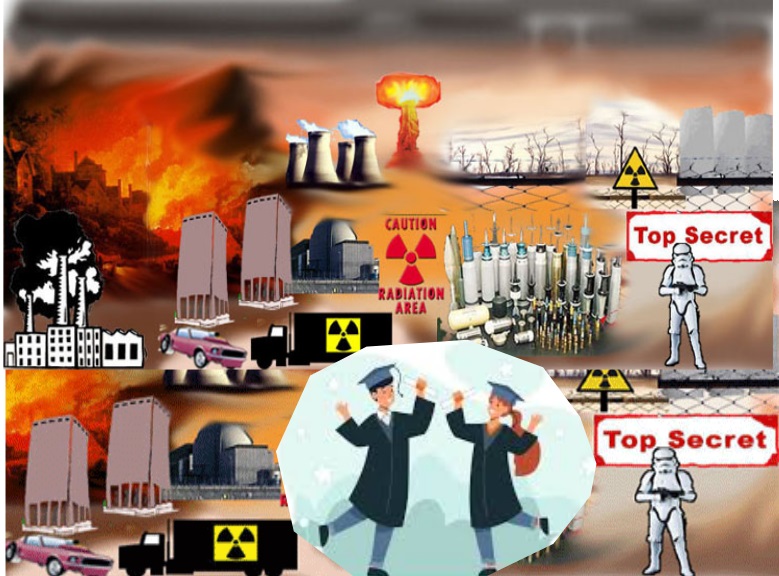
Nuclearisation of universities
Helping youngsters start a nuclear career
by Business Crack, June 9, 2024
“………..The Nuclear Sponsorship Scheme offers 50 students a series of summer placements after each year of their degree as well as funding worth £42,000 – £27,000 in university fees and a £15,000 subsistence bursary – £5,000 per year for three years.
The scheme is means-tested and aimed at increasing social mobility among young people from lower socio-economic backgrounds………………… https://businesscrack.co.uk/2024/06/09/helping-youngsters-start-a-nuclear-career/
MSP’s claim of support for nuclear power in Highlands challenged
By John Davidson , john.davidson@hnmedia.co.u, 09 June 2024 https://www.johnogroat-journal.co.uk/news/msp-s-claim-of-support-for-nuclear-power-in-highlands-challe-352590/
An anti-nuclear campaigner has hit out at a claim made by Highland MSP Edward Mountain that people in the region want nuclear power.
The Conservative MSP hosted an energy summit in Strathpeffer last Friday, bringing together industry experts and members of the public.
The aim was to discuss the future of energy production and provision in the Highlands, with panellists including representatives from SSEN, Storegga, Highland Fuels, Highland Renewables, and the Anaerobic Digestion and Bioresources Association.
More than 70 people attended the Let’s Talk Energy Summit at Strathpeffer Pavilion.
Mr Mountain, who convenes the Scottish parliament’s Net Zero, Energy and Transport Committee, said that these contributors would be useful to inform his work at Holyrood.
He said that people at the summit wanted to see a mixture of different energy systems, including nuclear, rather than just renewables.
“I was excited to host this well-attended event in Strathpeffer alongside an experienced panel of five industry professionals where we discussed the many complexities of renewable energy,” Mr Mountain said.
“I was interested to note the near-unanimous support for nuclear energy throughout the audience as part of our energy mix in the Highlands, and I feel that we ought to look at developing our power closer to where it is going to be used.
“People in the Highlands understand better than anyone the need for different energy sources, as well as energy security.
“However, these communities won’t be walked over when it comes to infrastructure, and big companies need to understand that they must be honest about what they are planning in the medium and long-term.”
Tor Justad, chairperson of Highlands Against Nuclear Power (HANP), challenged the assertion that the support for nuclear at the summit reflected public opinion.
He said: “In a recent survey, 62 per cent of the Scottish population supported renewable energy over nuclear.
“There may have been ‘near unanimous’ support from a handful of organisations and public at the ‘Energy Summit’ held in Strathpeffer recently, but presumably they weren’t provided with any downsides to nuclear.
“If HANP had been invited we could have provided a long list of reasons why nuclear has no place either in energy production or reaching a net zero target.
“A few of these include cost – as producing electricity through nuclear is three times as expensive as renewables; and the risks at all stages, including decommissioning, as we know from radioactive particles on shores near Dounreay, sodium tank leaks and previous accidents involving the shaft and silo.
“Nuclear is not clean as uranium has to be mined and there are massive carbon emissions during the average 13-year construction period of a nuclear plant.
“So the claim that Highlanders want nuclear power has no basis in fact and any support is likely to come from nuclear employees at Dounreay and their supporters, where it is claimed that the clean-up will take another 40 years at a cost to taxpayers of a staggering £8.7 billion – so not much chance of cheaper electricity any time soon.
“HANP will continue to actively oppose any new nuclear proposals for the Highlands, any part of Scotland and in other parts of the UK together with fellow NGO’s opposed to new nuclear.”
1 This Month


Tell the Ukrainian Government to Drop Prosecution of Peace Activist Yurii Sheliazhenko

Petition to revoke the licensing of the Near Surface Nuclear Disposal Facility (NSDF) at Chalk River. https://www.ourcommons.ca/petitions/en/Petition/Details?Petition=e-7247


of the week – STOP SMALL MODULAR REACTORS IN CANADA
To see nuclear-related stories in greater depth and intensity – go to https://nuclearinformation.wordpress.com
-
Archives
- March 2026 (204)
- February 2026 (268)
- January 2026 (308)
- December 2025 (358)
- November 2025 (359)
- October 2025 (376)
- September 2025 (258)
- August 2025 (319)
- July 2025 (230)
- June 2025 (348)
- May 2025 (261)
- April 2025 (305)
-
Categories
- 1
- 1 NUCLEAR ISSUES
- business and costs
- climate change
- culture and arts
- ENERGY
- environment
- health
- history
- indigenous issues
- Legal
- marketing of nuclear
- media
- opposition to nuclear
- PERSONAL STORIES
- politics
- politics international
- Religion and ethics
- safety
- secrets,lies and civil liberties
- spinbuster
- technology
- Uranium
- wastes
- weapons and war
- Women
- 2 WORLD
- ACTION
- AFRICA
- Atrocities
- AUSTRALIA
- Christina's notes
- Christina's themes
- culture and arts
- Events
- Fuk 2022
- Fuk 2023
- Fukushima 2017
- Fukushima 2018
- fukushima 2019
- Fukushima 2020
- Fukushima 2021
- general
- global warming
- Humour (God we need it)
- Nuclear
- RARE EARTHS
- Reference
- resources – print
- Resources -audiovicual
- Weekly Newsletter
- World
- World Nuclear
- YouTube
-
RSS
Entries RSS
Comments RSS
 nuclear-news