A global review of Battery Storage: the fastest growing clean energy technology today
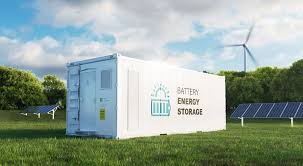
Energy Post 27th May 2024 by IEA
The IEA report “Batteries and Secure Energy Transitions” looks at the impressive global progress, future projections, and risks for batteries across all applications. 2023 saw deployment in the power sector more than double. Strong growth occurred for utility-scale batteries, behind-the-meter, mini-grids, solar home systems, and EVs. Lithium-ion batteries dominate overwhelmingly due to continued cost reductions and performance improvements. And policy support has succeeded in boosting deployment in many markets (including Africa).
Further innovations in battery chemistries and manufacturing are projected to reduce global average lithium-ion battery costs by a further 40% by 2030 and bring sodium-ion batteries to the market. The IEA emphasises the vital role batteries play in supporting other clean technologies, notably in balancing intermittent wind and solar.
New successes include the fact that solar PV plus batteries is now competitive with new coal-fired power in India and, in the next couple years, should become competitive with new coal in China and new natural gas-fired power in the U.S. Looking ahead, deployment must increase sevenfold by 2030. The prospects are good: if all announced plants are built on time this would be sufficient to meet the battery requirements of the IEA’s net-zero scenario in 2030. And although, today, the supply chain for batteries is very concentrated, the fast-growing market should create new opportunities for diversifying those supply chains.
Batteries are an essential part of the global energy system today and the fastest growing energy technology on the market
Battery storage in the power sector was the fastest growing energy technology in 2023 that was commercially available, with deployment more than doubling year-on-year.
Strong growth occurred for utility-scale battery projects, behind-the-meter batteries, mini-grids and solar home systems for electricity access, adding a total of 42 GW of battery storage capacity globally. Electric vehicle (EV) battery deployment increased by 40% in 2023, with 14 million new electric cars, accounting for the vast majority of batteries used in the energy sector.
Despite the continuing use of lithium-ion batteries in billions of personal devices in the world, the energy sector now accounts for over 90% of annual lithium-ion battery demand. This is up from 50% for the energy sector in 2016, when the total lithium-ion battery market was 10-times smaller. With falling costs and improving performance, lithium-ion batteries have become a cornerstone of modern economies, underpinning the proliferation of personal electronic devices, including smart phones, as well the growth in the energy sector. In 2023, there were nearly 45 million EVs on the road – including cars, buses and trucks – and over 85 GW of battery storage in use in the power sector globally.
Lithium-ion batteries dominate battery use due to recent cost reductions and performance improvements…………………………………………………………….
No comments yet.
1 This Month

of the week – Shut Down Drone Warfare!


Tell the Ukrainian Government to Drop Prosecution of Peace Activist Yurii Sheliazhenko

Petition to revoke the licensing of the Near Surface Nuclear Disposal Facility (NSDF) at Chalk River. https://www.ourcommons.ca/petitions/en/Petition/Details?Petition=e-7247
To see nuclear-related stories in greater depth and intensity – go to https://nuclearinformation.wordpress.com
-
Archives
- April 2026 (79)
- March 2026 (251)
- February 2026 (268)
- January 2026 (308)
- December 2025 (358)
- November 2025 (359)
- October 2025 (376)
- September 2025 (257)
- August 2025 (319)
- July 2025 (230)
- June 2025 (348)
- May 2025 (261)
-
Categories
- 1
- 1 NUCLEAR ISSUES
- business and costs
- climate change
- culture and arts
- ENERGY
- environment
- health
- history
- indigenous issues
- Legal
- marketing of nuclear
- media
- opposition to nuclear
- PERSONAL STORIES
- politics
- politics international
- Religion and ethics
- safety
- secrets,lies and civil liberties
- spinbuster
- technology
- Uranium
- wastes
- weapons and war
- Women
- 2 WORLD
- ACTION
- AFRICA
- Atrocities
- AUSTRALIA
- Christina's notes
- Christina's themes
- culture and arts
- Events
- Fuk 2022
- Fuk 2023
- Fukushima 2017
- Fukushima 2018
- fukushima 2019
- Fukushima 2020
- Fukushima 2021
- general
- global warming
- Humour (God we need it)
- Nuclear
- RARE EARTHS
- Reference
- resources – print
- Resources -audiovicual
- Weekly Newsletter
- World
- World Nuclear
- YouTube
-
RSS
Entries RSS
Comments RSS
 nuclear-news
Leave a comment