TODAY. Turning Point .The bomb and the cold war. Episode 4: The Wall – outlines the nuclear weapons race.
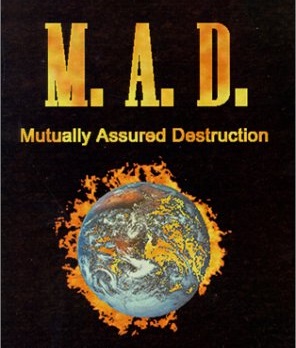
Introduction: 2019, with Donald Trump in power Mike Pompeo, Secretary of announces that USA is ls leaving the Arms Control Treaty – the Intermediate Range Nuclear Forces Treaty with Russia. Only the New Start Treaty remains, due to expire soon . USA-Russia relations at a low point because of Ukraine, Russia withdraws from nuclear communications. Now other nations also have nuclear weapons, increasing the danger of confrontation, not co-operation, and of nuclear war.
************************
The Soviets were always insecure about American power. Americans also afraid of Soviet might. So Kruschev exaggerated Soviet nuclear weapons, to impress Americans. So USA in 1956 devised U2 spy plane. 1957 – Soviets develop Sputnik satellite- a space win, increasing USA’s fear. CIA satellite spying showed Soviet nuclear weapons much fewer. Daniel Ellsberg (Rand Corporation analyst 1959- 64) shows that Soviets were not trying for a first strike capability, not trying to dominate the world militarily. That discovery should have led to a change in USA thinking.
But it didn’t. USA propaganda continued, with the fraudulent belief that Russia ‘s foreign policy was world domination
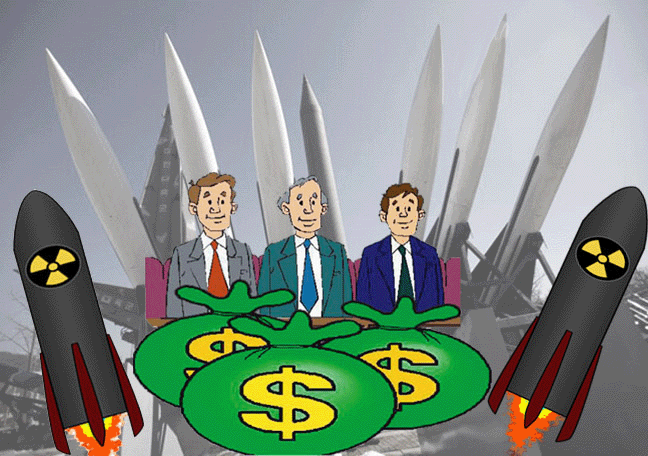
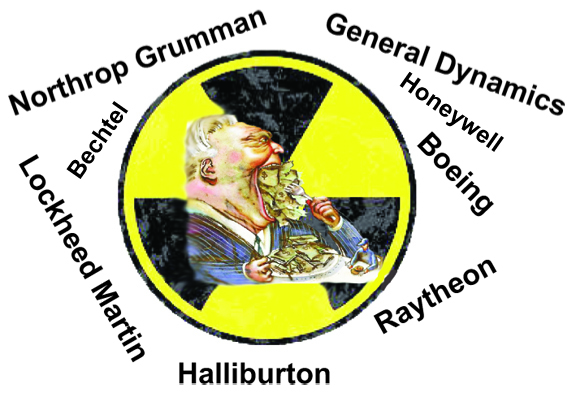
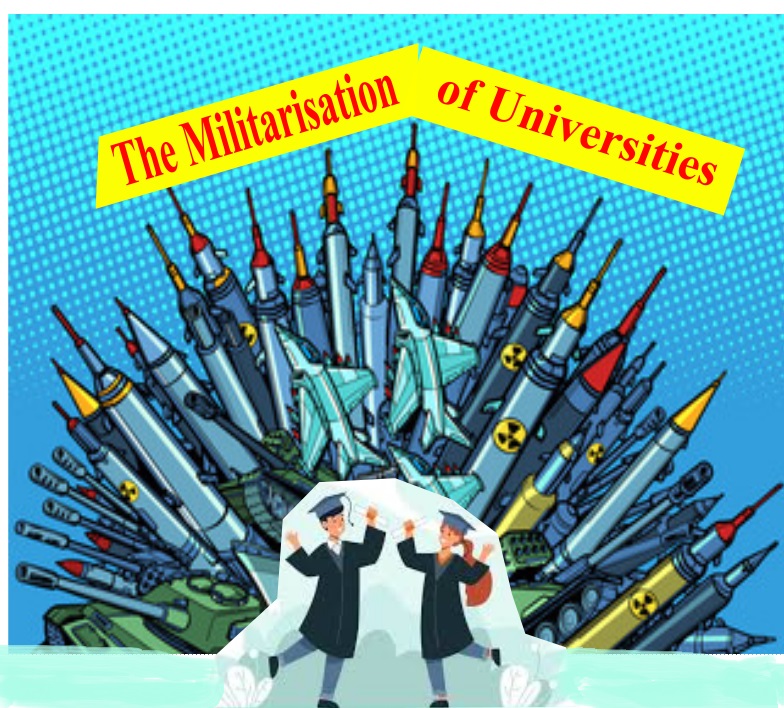
Why has this totally fraudulent belief persisted all this time? Because there are jobs in it, and it’s very profitable. So many companies – Boeing, Lockheed, IBM, Martin and more become reliant on the government and the defense industry, becoming “a nuclear-headed hydra”. It changed universities, with 75% of natural science funding coming from defense industries. Society becomes oriented around defense, security and nuclear weapons. Exponential increase in the number and diversity of weapons, with an unlimited budget. (Good visuals of many types of nuclear weapons) By 1961 23000 nuclear weapons, most of them thermonuclear- a thousand times more powerful than the one dropped on Nagasaki. Eisenhower finally realised what a threat that this permanent armaments industry was to democracy – and warned against the “military-industrial-complex”. So many congressmen were reliant on the armaments jobs in their district. Armaments were seen as good business by Republicans and Democrats.
Presidents Richard Nixon and then John Kennedy push for the weapons industry aiming to race the Soviets, beat the so-called “missile gap”. Confrontation increasing, between Kruschev and Kennedy, (told by Kruschev’s great-granddaughter). Focus on Berlin, – graphic coverage of the Wall going up, the guards, the repression, the “death strips” .
Meanwhile American missiles set up in Europe, aimed at Russia., in Turkey aimed at the Kremlin. So Soviets tried to set up a threat to USA in Cuba’s communist regime. A CIA-led insurgency there had failed, (told by veterans) .
Pressure on Kennedy to invade Cuba, but he was reluctant. Castro urged Kruschev to attack USA, but Kruschev was reluctant. Tortuous secret diplomacy. Privately both Kennedy and Kruschev wanted no nuclear war. But they were not really in control, and they publicly threatened with nuclear weapons. This crisis led to the PARTIAL NUCLEAR TEST BAN TREATY putting nuclear testing underground.
1963: Kennedy assassinated, 1964 – Kruschev deposed. Brezhnev took over, aiming to be ahead in nuclear missiles. Both USA and Soviet union raced for nuclear missile superiority, but aiming to never use these weapons – use would be a mutual suicide pact. They developed the policy of Mutually Assured Destruction. Use of thousands of these weapons within 30 minutes – would kill of the entire earth, cut out sunlight and plant growth, and coat the earth with radioactive fallout.
So – the battles between the Soviets and the USA were proxy battles in other countries, intervening in other countries ‘ civil wars – Nicaragua, Angola, North Yemen, Domenica, Bangladesh, East Timor, Mozambique. Congo, (brutish visuals) . In Vietnam China and Russia supported the North Vietnamese, while many Asian allies supported USA. USA used Latin American countries to mobilise the Cold War. In Chile USA orchestrated the overthrow of President Allende, and the takeover by fascist Augusto Pinochet. U.S. intervention left a chaotic rule in Guatemala , an authoritarian rule in Iran. Far from spreading democracy, USA “got into bed with anyone who called themselves anti-communist“.
1969 President Richard Nixon- publicly blustered about the evils of Soviet communism, but in reality, talked with the Soviets about negotiation, introducing “detente”. The Strategic Arms Limitation Agreement (SALT 1) 1n 1972, the first agreement to limit intercontinental ballistic missiles. The U.S. Anti Ballistic Missile System. But the number of warheads was increasing in both USA and Russia – to a total of 70.000 nuclear weapons. A movement in USA to not trust the Soviets will culminate in the 19080s with President Ronal Reagan. Still, Reagan’s hatred of nuclear weapons brought him and Russia’s Mikhail Gorbachev together.
Small modular nuclear reactors get a reality check in new report

New Atlas By Michael Franco, May 31, 2024
A new report has assessed the feasibility of deploying small modular nuclear reactors to meet increasing energy demands around the world. The findings don’t look so good for this particular form of energy production.
Small modular nuclear reactors (SMR) are generally defined as nuclear plants that have capacity that tops out at about 300 megawatts, enough to run about 30,000 US homes. According to the Institute for Energy Economics and Financial Analysis (IEEFA), which prepared the report, there are about 80 SMR concepts currently in various stages of development around the world.
While such reactors were once thought to be a solution to the complexity, security risks, and costs of large-scale reactors, the report asks if continuing to pursue these smaller nuclear power plants is a worthwhile endeavor in terms of meeting the demand for more and more energy around the globe.
The answer to this question is pretty much found in the report’s title: “Small Modular Reactors: Still Too Expensive, Too Slow, and Too Risky.”
If that’s not clear enough though, the report’s executive summary certainly gets to the heart of their findings.
“The rhetoric from small modular reactor (SMR) advocates is loud and persistent: This time will be different because the cost overruns and schedule delays that have plagued large reactor construction projects will not be repeated with the new designs,” says the report. “But the few SMRs that have been built (or have been started) paint a different picture – one that looks startlingly similar to the past. Significant construction delays are still the norm and costs have continued to climb.”
Too Expensive
The cost of SMRs is at the forefront of the report’s argument against the deployment of the reactors. According to some of the data it provides, all three SMRs currently operating (plus one now being completed in Argentina) went way over budget, as this graph shows.

The report authors also point out that a project in Idaho called NuScale had to be scrapped because during its development between 2015 and 2023, costs soared from $9,964 per kilowatt to $21,561 per kilowatt. Additionally, the costs for three other small plants in the US have all skyrocketed dramatically from their initial cost assessments.

Not only are the excessive costs of building SMRs problematic in and of themselves, says the IEEFA, but the money being poured into the projects is money that is not being spent on developing other sources of energy that are cleaner, quicker to deploy, and safer.
“It is vital that this debate consider the opportunity costs associated with the SMR push,” write the authors. “The dollars invested in SMRs will not be available for use in building out a wind, solar and battery storage resource base. These carbon-free and lower-cost technologies are available today and can push the transition from fossil fuels forward significantly in the coming 10 years – years when SMRs will still be looking for licensing approval and construction funding.”
Too Slow
That last bit gets to another of the report’s findings: that building SMRs simply takes too much time. The Shidao Bay project in China, for example, was supposed to take four years to build, but actually took 12; the Russian Ship Borne project had an estimated completion time of three years, but took 13; and the ongoing CAREM project in Argentina was supposed to be done in four years, but it’s now in its 13th year of development. (another excellent graph on original)………………………………………………………………………
Too Risky
Both the unpredictable costs and the extraordinary building delays makes SMR development just too big of a risk, says the IEEFA. But that’s not the only potential peril. Because the technology for this small-scale nuclear facility is fairly new and untested, risks could exist in terms of functionality and safety as well. For example, the authors question if the new SMRs will actually be able to output the kind of power they claim. Based on cost and development estimates going so widely afield, the sense in the report is that power output claims could also be off.
In terms of safety, the report quotes a 2023 study for the US Air Force that said: “Since SMR technology is still developing and is not deployed in the US, information is scarce concerning the various costs for [operations & maintenance], decommissioning and end-of-life dissolution, property restoration and site clean-up and waste management.”
The authors also point out that because many SMRs are being built using identical technologies, if a component of that tech fails, it could easily affect reactors around the world……………………………
Conclusion
So: too expensive, too slow, and too risky. And not at all where we should be focussing our, um – energy – these days, as the study authors make clear in their conclusion.
“At least 375,000 MW of new renewable energy generating capacity is likely to be added to the US grid in the next seven years,” they say. “By contrast, IEEFA believes it is highly unlikely any SMRs will be brought online in that same time frame. The comparison couldn’t be clearer. Regulators, utilities, investors and government officials should acknowledge this and embrace the available reality: Renewables are the near-term solution.”https://newatlas.com/energy/modular-nuclear-reactors/—
Fukushima nuclear debris removal to begin as early as August

Crucial work at devastated plant has been delayed for three years
AYAKA OTAKA, Nikkei staff writer, May 31, 2024,
TOKYO — Trial removal of melted fuel rods at the tsunami-hit Fukushima Daiichi nuclear plant will begin as early as August, Tokyo Electric Power Co. Holdings announced on Thursday, a critical step in a decommissioning process that is expected to take decades.
Removal of the fuel rods, which is now three years behind schedule, had been slated to start by October, but TEPCO now says it will happen between August and October. Necessary equipment will be set up at the plant in northeastern Japan as early as July.
“We will continue to proceed with the work carefully, with safety as our top priority, so as not to impact the surrounding environment,” said Akira Ono, the TEPCO official in charge of decommissioning efforts.
The radioactive debris consists of fuel and other materials that melted, then cooled and solidified, after the plant lost power in the devastating March 2011 tsunami. An estimated 880 tonnes of debris are in reactor units 1 to 3.
As the melted fuel is highly radioactive, people cannot come near it, and removal must be done in small amounts to prevent leakage during the process.
A device similar to a fishing rod will be used to carry out the work. On Tuesday, a video was released showing the device being tested at a Mitsubishi Heavy Industries shipyard in Kobe, using a full-scale model of a nuclear reactor.
According to TEPCO, a 3- to 4-meter cable with a mechanical claw will be hung from the device down towards the bottom of the reactor. Less than 3 grams can be collected at a time.
Shortening shifts to reducing workers’ exposure to radiation will be necessary. The trial removal is expected to take about two weeks.
Removal was originally to be carried out in 2021. The plan was to use a robot arm to remove the debris, but development of the arm was delayed. A large amount of non-fuel debris blocking access also caused delays………………………………
The government has said that it will take 30 years to 40 years from the 2011 incident to decommission the plant.
The reactor building cannot be dismantled unless the debris is removed. Cooling water, as well as rainwater, that comes in contact with the debris becomes contaminated.
TEPCO began releasing treated wastewater in August 2023, but as long as the debris remains, the cycle of water being contaminated and requiring treatment and release will continue.
Some critics say the government’s decommissioning plan is unrealistic. The process could take more than 100 years, say some scientists in the Atomic Energy Society of Japan. After the Chernobyl nuclear disaster in the former Soviet Union, decommissioning was abandoned, and a shelter structure was built to completely cover the area with radioactive waste.
There is also the issue of how to dispose of soil and rubble contaminated by scattered radioactive materials. The government has promised to transport this waste outside of Fukushima prefecture by 2045, but a destination has not been decided. https://asia.nikkei.com/Spotlight/Environment/Fukushima-nuclear-debris-removal-to-begin-as-early-as-August
Top Biden aides signal openness to letting Ukraine strike Russia with US weapons

No final decision has been made, but the consideration comes amid mounting pressure from allies and Democrats.
Politico, By MATT BERG, ALEXANDER WARD and NAHAL TOOSI, 05/29/2024
Two senior Biden administration officials Wednesday opened the door to allowing Ukraine to use American-donated weapons to strike inside Russia.
The move, if made, would come as European allies, lawmakers and Ukrainian officials exert pressure on the White House to lift the restrictions, and as Russia has made major advances on the battlefield. It also suggests that President Joe Biden and his team are increasingly worried about Kyiv’s ability to fend off Russia’s attacks, especially its latest advance in Ukraine’s second-largest city of Kharkiv.
Secretary of State Antony Blinken signaled the possible change during a visit to Moldova when pressed by reporters. A “hallmark” of the Biden administration’s approach toward Ukraine since Russia launched its full-scale invasion two years ago “has been to adapt as the conditions have changed, as the battlefield has changed, as what Russia does has changed.”
“We’ve adapted and adjusted, too, and we’ll continue to do that,” he continued.
Shortly afterward, National Security Council spokesperson John Kirby, while stating that there’s “no change” in the current policy that says Ukraine can’t use U.S.-supplied weapons to strike inside Russian territory, also noted that America’s “support to Ukraine has evolved appropriately.”
Two other Biden administration officials cautioned that no final decision has been made and that Blinken and Kirby were describing a general trend of American support for Ukraine during the war — one of initial caution followed by permission. They were not necessarily guaranteeing a forthcoming shift.
The topic is “under consideration,” a U.S. official familiar with the issue said. Both were granted anonymity to speak about sensitive internal deliberations.
Kyiv hasn’t seen concrete movement on the matter from the Biden administration, according to a person close to Ukraine President Volodymyr Zelenskyy’s office. Zelenskyy, during a visit to Belgium on Tuesday, begged Western governments to “please give us permission” to use their weapons to strike targets in Russia’s sovereign territory………………………………………..
This month, U.K. Foreign Minister David Cameron said Kyiv could use British weapons to strike sovereign Russian territory. Then on Monday, NATO’s parliamentary assembly adopted a resolution calling on Western countries to allow Ukraine to use weapons to strike military targets inside Russia.
The issue gathered momentum on Tuesday, when French President Emmanuel Macron opened the door to Ukraine using donated weapons to “neutralize” Russian military sites…………………………………………………………………
Many top U.S. lawmakers are publicly supportive of the idea……………………………………. more https://www.politico.com/news/2024/05/29/biden-aides-signal-openness-to-allowing-ukraine-to-strike-russia-with-us-weapons-00160462
SOS – An Antidote to Crackpot Neo-Nuclearism
“One cannot exist without the other. Without civil nuclear power, there can be no military nuclear power, and without military nuclear power, there is no civil nuclear power.” – French President Emmanuel Macron
“Imagine a death technology calling itself a nuclear renaissance. All it is, is a nuclear rebirth of an even more gouging crony capitalism, or corporate welfare system.” – Ralph Nader
Nuclear power in the US is in decline…42 reactor projects were abandoned, 41 built but closed, and scores now operate only thanks to government rescues…Nuclear power is a minor distraction, adding each year at best only as much electricity supply as renewables add every few days. It has no business case or operational need anywhere. – Amory Lovins
[C]ivilian nuclear power is merely a cover for producing more nuclear weapons.” – Alfred Meyer
By James Heddle By Mary Beth Brangan – EON, MAY 31, 2024, https://planetarianperspectives.substack.com/p/sos-an-antidote-to-crackpot-neo-nuclearism?utm_source=post-email-title&publication_id=518676&post_id=145178002&utm_campaign=email-post-title&isFreemail=true&r=cqey&triedRedirect=true&utm_medium=email
Psychopathological Nuclear Revivalism is on the Loose
At the last COP 28 Climate Summit, over 20 nuclear nations on four continents and their allies and vassal states pledged to triple their ‘nuclear capacities’ by the year 2050, thus multiplying planet-wide nuclear risks by orders of magnitude. Source
· The U.S., China and Russia each have plans to build nuclear reactors on the moon. The reactors would be constructed by robots, run remotely via AI, and be prototypes for subsequent installations on other planets in the first phase of the hubristic galactic imperialism agenda. Source
· Nuclear propulsion and energy production in space are considered essential for military uses like High Energy Laser (HEL) directed energy weapons, and for mining the resources on asteroids and other planets. Source
Although no working model of much-touted Small, Modular Nuclear Reactors (SMNRs) has yet made it off the drawing board, mass production of such reactors continues to be advocated both as a fictitious ‘solution’ for climate change, and as a necessary power source for the planned build-out of Artificial Intelligence (AI) facilities.
· This is the same specious rationale being used for extending the operating licenses of obsolete, aged, inadequately maintained old style nuclear reactors that are scheduled for shutdown and decommissioning – like Diablo Canyon. There is even a push to restart obsolete reactors already shutdown like Palisades in Michigan.
The burgeoning spent nuclear fuel management industry is dominated by companies with dubious, predatory companies like Holtec International, which have their eyes on the massive accumulated decommissioning funds at each reactor site, dumping radioactive waste water into adjacent water systems, and even repurposing decommissioning sites for installation of their own brand of SMNRs.

Former Secretary of Energy Ernest Moniz, now head of the Energy Futures Initiative Foundation justifies nuclear revivalism because it supports the Nuclear Navy, spear tip of American power projection around the planet.
· Nuclear energy, weapons and radioactive waste management industries are key, interlocking components of the Permanent War Economy, yet they could not survive without massive government subsidies and support (both overt and covert) with taxpayer dollars.
In her book Plutopia: Nuclear Families, Atomic Cities, and the Great Soviet and American Plutonium Disasters, M.I.T. professor and environmental historian Kate Brown reveals the schizoid cognitive and ethical contradictions of societies organized around the production of the deadly man-made element plutonium. It is a history with relevance today. As the developments listed above clearly show, Crackpot Nuclearism is having a heyday.
In the widest context, this is the implied scope of what we have dubbed in our film ‘the San Onofre Syndrome.’ It is the dedication of unlimited resources to a quintessentially totalitarian technology, the products and societal spin-offs of which are antithetical to democracy and to life in all its forms.
While our just released, multi-award-winning feature documentary SOS – The San Onofre Syndrome: Nuclear Power’s Legacy – focuses on the potential impacts of informed people power, and the universal conundrum of responsible radioactive waste management, our broadest intent is to use SOS screenings as a wake-up call and catalyst for discussions helping to make viewers aware of the enveloping presence of what is termed by proponents and critics alike the over-arching ‘the nuclear enterprise.’
The Nuclear Enterprise impacts virtually all sectors and institutions of our society and incorporates the mutually co-dependent nuclear energy and nuclear weapons production industries, their shared industrial base of extraction, milling, fabrication, transportation; an extensive infrastructure of education, research, labor training; the growing radioactive waste management industry; and a powerful lobbying arm with global reach. It is a ‘public-private partnership’ on steroids.
We have examined aspects of this Nuclear Energy-Weapons-Waste Complex and the geopolitical and cosmic context for the ‘Save Diablo’ PsyOp in previous articles including: The Real Nuclear Triad; Joined At The Hip; Nuclear Revivalism as a Cargo Cult; and The Hydra-Heads of Armageddon Man. Because of the widespread impacts of this Nuclear Industrial Complex, we now live in a literally MAD world in which the certainty of Mutually Assured Destruction of adversarial nuclear weapons states is seen as the main ‘deterrent’ to nuclear war. Is this clearly insane, or what?
Both government control of business (or ‘communism’), and business control of government (or ‘fascism’) are in the thrall of the nuclear enterprise – or nuclear energy-weapons-waste complex.
Our documentary SOS, The San Onofre Syndrome: Nuclear Power’s Legacy, portrays a microcosm of this general situation with universal implications. We show the reality of this monstrous death industry, and the state and federal agencies that provide for its support, structure, and funding through portraying the events at San Onofre and the ordinary citizens who grapple with them.
Our five main characters work tirelessly to first shut down the leaking reactors that they live close to, and then discover the horrifyingly inept waste management plans.
The waste is being stored only 108 ft. from the rising ocean, in a tsunami and flooding zone, surrounded by earthquake faults and only inches above rising groundwater.
The industry does not have a plan for how to remove the waste or to safely move it technically, yet it promises the public that if it only had a place to put it, it would be easily transportable. Billions are being dangled before impoverished – often minority – communities to allow them to be ‘consolidated interim storage’ sites, or CIS.
SOS specifically opposes the concept of Consolidated Interim Storage (CIS). CIS requires that the lethal waste be moved twice. We also oppose the storage and long-distance transport of Spent Nuclear Fuel (SNF) in unsafe containers. We oppose the idea of contaminating yet more land and communities, which are most of the time poor, minority people.
SOS explicitly advocates for ongoing, transgenerational stewardship of spent fuel on existing reactor sites (or as close by as is safely possible to avoid the horrendous transportation risks) using aspects of the Swiss model for interim storage.
The parts of the Swiss model technology that we need in the U.S. are:
1) a hot cell/dry handling facility for robotic handling; and
2) repackaging of the waste from inevitably short-term canisters into thick, monitored, inspectable, retrievable casks;
3) stored in secure, climate-controlled buildings as close to the site of generation as is safely possible;
4) with ongoing skilled maintenance for as long as it is necessary.
This of course, is needed at every reactor site in the U.S. (and beyond) that currently is storing the ever-increasing volume of this lethal material. Each site’s needs would be in the billions of dollars to do this properly. But the industry makes decisions based on profit and so far, believes it won’t profit from safely managing the waste.
Therefore, it thinks of the problems of radioactive waste and nuclear risks in general, as a Public Relations problem and that if they only solve the P.R. problem, they can keep on making the messes and making profits from supposedly ‘dealing’ with them the cheapest, fastest way. The billions in trust funds set aside for decommissioning from years of ratepayers’ fees are used by the industry with no adequate oversight or auditing.
So, this industry that must operate flawlessly to avoid catastrophic damage to the planetary DNA of all living creatures, makes decisions based on profits, not public health and safety.
Not even considering the any other adverse effects of this ultimate destructive force, the problem of the everlasting poisonous waste alone, in a sane society, would be enough to ban the use of this technology either for weapons or for boiling water to produce electricity.
For more information and viewing options:
Ukrainian Grad Students Complete Nuclear Internship Program in the United States
MAY 28, 2024
Eight university students from Ukraine recently completed their nuclear energy internship program with the U.S. Department of Energy (DOE).
The program was implemented through Argonne National Laboratory and is designed to assist Ukraine’s nuclear power industry in growing its nuclear energy workforce.
A Long Overdue Visit
The two-year internship program was tailored to Ukrainian university graduate students pursuing nuclear energy-related degrees that specialize in areas such as small modular reactors, accident tolerant fuels, and even misconceptions of nuclear energy.
The students selected for the program were supposed to spend their first summer in the United States taking extra courses and the second summer working with U.S. nuclear energy companies.
A Country Rebuilding
Ukraine’s 15 nuclear reactors generate more than half of the country’s electricity, but the plants are old and so is the country’s aging nuclear workforce.
The grad students returned to their country to continue their studies and careers in Ukraine’s nuclear energy program as they work to pursue new technologies independent of Russia.
Ukraine’s entire fleet of reactors is based on old Russian VVER pressurized water reactor technology. Six of the reactors were seized by Russian forces during the war and placed in cold shutdown.
The U.S.-Ukraine nuclear energy internship program was funded by the Office of Nuclear Energy’s Office of International Cooperation, which collaborates with international partners to support the safe, secure, and peaceful use of nuclear energy. https://www.energy.gov/ne/articles/ukrainian-grad-students-complete-nuclear-internship-program-united-states—
Drone sightings reported over British nuclear facilities

UK Defence Journal, By George Allison, May 29, 202
Recent data acquired under the Freedom of Information Act 2000 (FOIA 2000) unveils a number of drone sightings over UK nuclear facilities from 2021 to 2023.
The Ministry of Defence Police (MDP) has kept specific location details confidential, citing national security implications.…………………………………………………………………..
In the context of the UK, nuclear sites generally refer to a range of facilities associated with the nuclear energy industry and defence establishments. These can include:
- Nuclear Power Stations: These are plants where nuclear energy is converted into electricity. Examples include Hinkley Point, Sizewell, and Dungeness.
- Nuclear Research Facilities: These are centres where nuclear research takes place, such as the Culham Centre for Fusion Energy or the Dalton Nuclear Institute.
- Nuclear Reprocessing Plants: Sellafield in Cumbria is a prime example, where nuclear fuel is reprocessed.
- Nuclear Submarine Bases: The UK operates a fleet of nuclear-powered submarines, and these vessels are based at certain naval docks, notably HM Naval Base Clyde (sometimes referred to as Faslane).
- Defence Establishments: Some sites are associated with the development or storage of nuclear weapons, such as the Atomic Weapons Establishment (AWE) sites at Aldermaston and Burghfield.
- Nuclear Waste Storage and Disposal Sites: Locations where nuclear waste is stored, treated, or disposed of.
- Decommissioned Nuclear Sites: Former nuclear facilities which are no longer operational but might still have nuclear materials or be under decommissioning.
These sites are of strategic importance to the UK, both in terms of energy supply and national security. As such, they are heavily regulated, monitored, and protected. Any unauthorised activity, such as drone flights, in the vicinity of these sites is taken very seriously due to the potential security and safety risks involved.
What drives these flights near such sensitive areas? Are they a product of curiosity, deliberate reconnaissance, or mere coincidence? https://ukdefencejournal.org.uk/drone-sightings-reported-over-british-nuclear-facilities/
Rafah Invasion Was Once Biden’s “Red Line” — But Israel Continues to Cross It

Israel’s Rafah massacre has been widely condemned as a grave violation of international law, but there has been no clear criticism or outrage from the White House.
Israel bombed civilians it had previously ordered to move to a designated “safe zone” in the northwestern part of Rafah.
By Michel Moushabeck , TRUTHOUT, May 28, 2024
Two days after the International Court of Justice (ICJ) ordered Israel to halt its military offensive on Rafah, dozens of displaced Palestinians were killed in Israeli airstrikes. On Sunday night, the Israeli military bombed civilians whom it had previously ordered to move to the designated “safe zone” of Tal Al-Sultan in the northwestern part of Rafah.
Israel has bombed Rafah dozens of times since the ICJ ruling. But on Sunday, the bombardment of Palestinians in a tent encampment behind the UNHCR school in Rafah resulted in a large inferno and massive casualties, including children who were burned alive in a sea of flames. According to Al Jazeera, the Israeli airstrikes struck the camp at night. The fire from the bombs falling on the plastic tents spread rapidly, killing at least 45 Palestinians, injuring 249, and razing the tent camp to the ground. This was reportedly followed by an Israeli drone strike on the Kuwaiti Hospital entrance as medics were bringing in the dead and the wounded, killing two staff members.
Hospital director Suhaib al-Hams announced on Monday that the Kuwaiti Hospital would have to suspend services due to “the repeated and deliberate attacks on the hospital’s surroundings.”
The graphic images and cell phone video recordings that have been circulating on social media — a headless child, charred bodies of children, women and children frantically running in all directions trying to escape the fires — are painful to watch. They bring Israeli atrocities in Gaza to a new level of unspeakable cruelty and horror.
I don’t know how anyone can recover from this gruesome monstrosity. Do we mourn the dead infants or weep for those who have just been orphaned? Do we scream for those children who have been maimed, or for the parents who had to wrap their loved ones in white shrouds?
Israeli officials first said the strike was “based on precise intelligence” and claimed that the bombardment targeted a Hamas compound, killing two senior Hamas officials. After global condemnation, Israeli Prime Minister Benjamin Netanyahu instead started calling the strike “a tragic accident.”
The U.S.-made bombs that were dropped on the camp in Tal Al-Sultan came after Israeli airstrikes hit shelters in northern Gaza and Gaza City, killing 160 displaced Palestinians, according to Gaza health officials. In Jabalya, at least four people were reportedly killed when a missile hit a residential building during an intense night of shelling. Witnesses reported raging fires throughout the city. Elsewhere in the north, Israeli occupation forces continue to demolish residential neighborhoods, burying countless numbers of people under the rubble. Israeli soldiers were also seen firing on a group of Palestinians filling water containers in the Al-Faluja area.
Israel’s Rafah massacre has been widely condemned as a grave violation of international law, but there has been no clear criticism or outrage from the White House.
As the Biden administration emphasizes the deaths of Hamas leaders and utters the same words we’ve become accustomed to hearing over the past eight months — that the U.S. urges Israel to protect civilians and minimize civilian casualties — its statements have become a farce. The inaction on the part of the Biden administration and the continued flow of weapons to the Israeli state as it carries out such massacres in front of the eyes of the entire world — and in defiance of the ICJ ruling — show the extent of the U.S.’s complicity and participation in the Gaza genocide.………………………………………………………………. more https://truthout.org/articles/rafah-invasion-was-once-bidens-red-line-but-israel-continues-to-cross-it/—
“Truly the stuff of nightmares”: unprecedented low in Antarctic sea ice recorded

By Jeremy Smith, May 31, 2024, https://johnmenadue.com/truly-the-stuff-of-nightmares-unprecedented-low-in-antarctic-sea-ice-recorded/?fbclid=IwZXh0bgNhZW0CMTEAAR0LBw8Xpve2S05Os1FH_y7RYvvv8tqj0qhXrhsM-Z3e49hH1Uu2E44lQr4_aem_AbLMAUeHwooBl6H86wLEqHTtPllDKldX5fzB5e2_5LYTTkXQuf4y_brUHNORL5PsxpdKGuD227S1VVLTWCOjJj7N
Each winter the surface of the sea freezes around Antarctica, over a vast area, mostly to a depth of about one metre. But this is starting to change. Last year, the sea ice reached an unprecedentedly low maximum extent of only 17 million square kilometres.
Why aren’t we talking about sea ice? Perhaps it’s because most people haven’t even heard of it, which is a shame because it’s important.
Each winter the surface of the sea freezes around Antarctica, over a vast area, mostly to a depth of about one metre. The continent effectively doubles in size, with 18-20 million square kilometres being covered by floating ice. That’s an area 2.5 times that of Australia; 4% of Earth’s surface.
But this is starting to change. Last year, the sea ice reached an unprecedentedly low maximum extent of only 17 million square kilometres. Although this year looks like being a little less extreme, a clear and concerning trend appears to be under way. This is emphasised in the ice minimum values in late summer. By February each year the sea ice extent shrinks typically to about three million square kilometres (mostly in two large embayments, the Weddell Sea and the Ross Sea), but through most of the present decade it has dwindled to below two million.
Why does this matter? Well for a start, it is the underside of this huge area of sea ice where algae live and multiply, which feed the shrimp-like krill that in turn sustains an entire ecosystem: fish, seals, penguins, whales, the lot. The upper surface of sea ice is also crucially important. Its albedo, or reflectivity, means that 80-90% of the incoming summer sunshine is bounced back into space. Replace the ice with dark ocean and only about 9% is reflected, the rest going to warm the water. So the loss of sea ice is not only a symptom of climate change, it also contributes to it, in a feedback loop that might accelerate.
There’s more. When sea water freezes, the developing ice crystals comprise nearly pure water. Most of the salt is extruded as a heavy brine, and this cold, dense water sinks, becoming the Antarctic Bottom Current. This circulates around the Southern Ocean before spinning off into the other major ocean basins. As this deep cold flow moves north it displaces warmer water which then up-wells and forms the main surface currents. Without the annual ‘push’ of the Antarctic Bottom Current, these warmer currents might slow and cease.
The global ocean is so vast that it changes very slowly. We are only now beginning to see the results of the ocean’s absorbance of a century of industrial environmental heating, in the form of anomalously warm seas particularly this year. Any pronounced weakening of the ocean circulation due to sea ice loss will be slow – but inexorable.
The results, which are probably not going to happen in our own lifetimes but could well become part of our legacy to future generations, are likely to be dire. It could eventually mean goodbye to the Gulf Stream and the other currents which maintain benign climates on the European Atlantic coast, around Japan, and elsewhere in the northern hemisphere.
The possible consequences of such climate change for human societies are truly the stuff of nightmares.
‘Unliveable’: Delhi’s residents struggle to cope in record-breaking heat

Temperatures of more than 45C have left population of 29 million exhausted – but the poorest suffer most
Hannah Ellis-Petersen in Delhi 31May 24
The consensus among experts and residents is that the summer temperatures
are now regularly rising far above the norm as India bears the brunt of the
climate crisis. A heatwave has enveloped much of north India in May –
this week temperatures consecutively rose above 45C – making conditions
unbearable and even life threatening for the millions who cannot afford to
cool themselves down or are forced to work outside in construction or
labouring jobs. Some parts of the city recorded temperatures as high as 52C
on Wednesday, though officials later said that may have been a faulty
reading.
Guardian 30th May 2024
Italy opposes Ukraine using long-range weapons to strike Russia
https://www.rt.com/russia/598477-italy-opposes-ukraine-strike-russia-nato-weapons/ 31 May 24
Italian Foreign Minister Antonio Tajani has specified where missiles his country sends to Kiev can be used
Italy will never send troops to Ukraine and any weapons it has supplied to Kiev should not be used deep inside Russian territory, Italian Foreign Minister Antonio Tajani said on Thursday.
He made the remarks as pressure builds on NATO members to allow Kiev use long-range Western weapons to strike targets inside Russia. NATO Secretary General Jens Stoltenberg last week urged Western arms donors to allow attacks against targets behind the conflict zone on Russian soil.
“All the weapons leaving from Italy [to Ukraine] should be used within Ukraine,” Tajani said in an interview with public broadcaster RAI.
Italy, although a staunch supporter of Ukraine, has rebuked Stoltenberg over his call for more strikes on Russia with Italian Prime Minister Giorgia Meloni and other top officials accusing him of escalating tensions with Moscow.
“I don’t know why Stoltenberg said such a thing, I think we have to be very careful,” Meloni told Italy’s RAI 3 TV channel on Sunday.
Italian Deputy Prime Minister Matteo Salvini described the NATO chief as “dangerous.”
French President Emmanuel Macron however said on Tuesday that Kiev should be allowed to hit military sites deep inside Russia.
“We think we should allow them neutralize military sites from which missiles are fired, military sites from which Ukraine is attacked,” he told a joint news conference with German Chancellor Olaf Scholz.
The German leader now also supports Ukrainian strikes with Western long-range weaponry deep inside Russia, despite his earlier concerns about escalation with Moscow. Speaking alongside Macron, Scholz said that “if Ukraine is attacked, it can defend itself” under international law.
Latvian President Edgars Rinkevics told CNN on Monday that he sees “no rational pragmatic reason not to allow Ukraine to use those weapons against Russia in a way that is the most efficient.”
Ukrainian officials have claimed that the limitations imposed by the West are responsible for Russia’s recent advances in Kharkov Region. Vladimir Zelensky has repeatedly called for increased NATO involvement in the conflict and has argued that the West should not fear Russia’s reaction.
According to Moscow, claims that restrictions on the use of US munitions are in place are false and designed to maintain the illusion that the West is not part of the conflict.
The ghost of Concorde stalks the Franco-British nuclear renaissance
Critics fear history is repeating itself as Flamanville opens late and vastly over budget
AMBROSE EVANS-PRITCHARD, 29 May 2024
Critics fear history is repeating itself as Flamanville opens late and
vastly over budget. France’s first nuclear plant for a quarter century is
finally going ahead at Flamanville on the coast of Normandy, 12 years late
and six times over budget.
EDF has loaded the fuel of the giant European
Pressurised Reactor or EPR1. The first nuclear reaction will take place
within weeks, reaching full power of 1.65 gigawatts (GW) by year’s end.
It will be the most powerful reactor on the planet, to be joined eventually
by two sister reactors at Hinkley Point, and another at Sizewell C if
anybody can find the money.
To fans, Flamanville is an ultra-safe feat of
advanced engineering, with three layers of protective barriers. It can
withstand an earthquake, a tsunami, a head-on crash by an Airbus A380, or
even (arguably) a meltdown of the core. It is built to last 60 years,
perhaps a century.
To critics, it is a ruinous misadventure, the ultimate
over-refinement of obsolete fission technology that can never compete on a
commercial basis.
Delays have left France dependent on old reactors that
are literally falling apart. EDF has racked up debts of €54bn (£46bn)
and had to be renationalised in 2022. To those of us in the middle –
friendly to nuclear, if cheap enough – it is striking that Korea seems
able to roll out workhorse reactors relatively quickly at half the cost.
Korea Hydro & Nuclear Power’s modified APR1000 reactor was certified in
Europe last year. All is forgiven, apparently, even though a parallel EPR1
plant at Olkiluoto in Finland – opened last year – had similar delays
and cost overruns, and even though the Taishan I variant in China had to
shut down for a year due to damaged fuel rods.
Emmanuel Macron began his
presidency by closing a working reactor near the German border in order to
please Angela Merkel. He had a Damascene conversion after Putin’s
invasion of Ukraine. Mr Macron now wants to build 14 modified EPR2 reactors
– supposedly cheaper – in a repeat of France’s “dash for nuclear”
under premier Pierre Messmer in 1974.
It is a heroic undertaking for a
country with a structural budget deficit of 5pc of GDP and a debt ratio
stuck at 112pc, with rating agencies on the prowl. Much the same can be
said about Britain’s nuclear renaissance, targeting 24 GW by mid-century.
The bet is that the average cost per EPR will fall by 30pc as the series
rolls out a scale. That would cut the putative bill for Sizewell C to £85
MWh in today’s money, or lower if you treat it as a 60-year venture in
accounting terms. Reste à voir, as the French say.
Telegraph 29th May 2024
1 This Month


Tell the Ukrainian Government to Drop Prosecution of Peace Activist Yurii Sheliazhenko

Petition to revoke the licensing of the Near Surface Nuclear Disposal Facility (NSDF) at Chalk River. https://www.ourcommons.ca/petitions/en/Petition/Details?Petition=e-7247


of the week – STOP SMALL MODULAR REACTORS IN CANADA
To see nuclear-related stories in greater depth and intensity – go to https://nuclearinformation.wordpress.com
-
Archives
- March 2026 (183)
- February 2026 (268)
- January 2026 (308)
- December 2025 (358)
- November 2025 (359)
- October 2025 (376)
- September 2025 (258)
- August 2025 (319)
- July 2025 (230)
- June 2025 (348)
- May 2025 (261)
- April 2025 (305)
-
Categories
- 1
- 1 NUCLEAR ISSUES
- business and costs
- climate change
- culture and arts
- ENERGY
- environment
- health
- history
- indigenous issues
- Legal
- marketing of nuclear
- media
- opposition to nuclear
- PERSONAL STORIES
- politics
- politics international
- Religion and ethics
- safety
- secrets,lies and civil liberties
- spinbuster
- technology
- Uranium
- wastes
- weapons and war
- Women
- 2 WORLD
- ACTION
- AFRICA
- Atrocities
- AUSTRALIA
- Christina's notes
- Christina's themes
- culture and arts
- Events
- Fuk 2022
- Fuk 2023
- Fukushima 2017
- Fukushima 2018
- fukushima 2019
- Fukushima 2020
- Fukushima 2021
- general
- global warming
- Humour (God we need it)
- Nuclear
- RARE EARTHS
- Reference
- resources – print
- Resources -audiovicual
- Weekly Newsletter
- World
- World Nuclear
- YouTube
-
RSS
Entries RSS
Comments RSS
 nuclear-news