UK Nuclear Plant Sizewell Continues Fundraising Before Election

- Banks offered to lend as much as £12.5 billion for Sizewell C
By Will Mathis, May 24, 2024
The developer of the UK’s Sizewell C nuclear power plant is pushing ahead to complete
financing for the project this year even as a looming election risks
complicating the timeline.
A group of banks offered to lend as much as
£12.5 billion ($15.9 billion) to help finance the plant in eastern
England, according to a person familiar with the matter. They include HSBC
Holdings Plc, NatWest Group Plc and Banco Santander SA, the person said.
Debt will play a role in a multibillion-pound funding effort that also
includes an ongoing effort to raise equity from private investors.
“The two main political parties are committed to Sizewell C and we are carrying
on with the capital raise, preparing for a final investment decision and
mobilizing teams on our site,” a spokesperson for Sizewell said,
declining to comment on the debt specifically.
HSBC and Santander declined to comment. NatWest didn’t immediately comment.
The government had vowed
to reach a final investment decision on the proposed 3.2-gigawatt Sizewell
C station in the current parliament, a process that was on track to
complete this summer. That means the final stage of the fund-raising
process could be among Labour leader Keir Starmer’s first acts if he
becomes prime minister. “Sizewell needs to move forward at pace,”
Starmer said during a visit to another nuclear plant last year. “New
nuclear has to be part of that mix.”
Bloomberg 23rd May 2024
Blinken lobbying for strikes on Russia – NYT

23 May 2024 , https://www.sott.net/article/491680-Blinken-lobbying-for-strikes-on-Russia-NYT
The top US diplomat wants Ukraine to be given permission to use American weapons beyond its borders
US Secretary of State Antony Blinken is pushing the administration of President Joe Biden to allow Ukraine to attack targets deep inside Russia with American weapons, the New York Times reported on Thursday, referring to unnamed US officials.
The ban, according to the White House, was imposed out of concern that if US arms were used inside what Washington acknowledges as Russian territory it would trigger an escalation and potentially World War III. Blinken has been advocating for scrapping the restriction after making a “sobering” visit to Kiev earlier this month, the newspaper said, citing insider sources.
Ukrainian officials have claimed that being unable to target Russian forces across the border with American weapons led to the failure of its troops to prevent the recent Russian advances in Kharkov Region.
Russian President Vladimir Putin has said that the offensive is a response to months of Ukrainian artillery and drone attacks in Russia’s Belgorod Region and that a buffer zone is required to deprive Kiev of the capability to make such strikes. The Times said that Ukrainian weapons “don’t pack the power and speed of the American weapons.”
Kiev has launched a lobbying campaign on Capitol Hill to pressure the White House over the issue and has some allies among lawmakers. A group of representatives signed a letter to Secretary of Defense Lloyd Austin on Monday calling for the Ukrainian request to be granted.
During a hearing in Congress on Tuesday, Senator Michael McCaul displayed a map showing the strike range of ATACMS missiles – a weapon the US has donated to Ukraine – if Kiev were allowed to use them inside Russia. He called the outlined territory a “sanctuary zone” for Russian troops and accused the Biden administration of tying the hands of the Ukrainians behind their backs.
Ukraine’s Vladimir Zelensky has urged increased NATO involvement in the conflict and has argued that the West should not fear Russia’s reaction. Moscow believes that Zelensky’s goal is to trigger an escalation to maintain his position.
Russia is currently conducting a military drill to test its capability to use non-strategic nuclear weapons, which Putin ordered in response to hostile rhetoric by Western officials. One such remark identified by Moscow came from British Foreign Secretary David Cameron, who said earlier this month that Kiev “has the right” to use weapons donated by his nation to attack targets inside Russia.
Comment:
1) The above news was published the same day as Boris Johnson and British MPs met with representatives of the Azov Brigade. See Russia reacts to UK MPs applauding Ukrainian neo-Nazis On the occasion, Johnson gave a speech in which he made recommendation similar to those promoted by Anthony Blinken:
2) Regarding: “British Foreign Secretary David Cameron, who said earlier this month that Kiev “has the right” to use weapons donated by his nation to attack targets inside Russia.”
Indigenous opposition to nuclear waste being transported through their territory

Concerns growing surrounding nuclear waste management
Anishinabek, The voice of the Anishinabek nation. May 22, 2024, By Rick Garrick
FORT WILLIAM — Fort William’s Elysia Lone Elk is raising concerns about the transportation of nuclear materials through Northern Ontario if the proposed nuclear waste site near Ignace in Treaty #3 territory gets the go-ahead.
The Trans-Canada Hwy. was closed for about 20 hours in 2001 after a head-on collision between two transport trucks, one of which was transporting two canisters of radioactive material — iridium — about 25 kilometres east of Dryden, 105 kilometres west of Ignace. The collision resulted in “widespread destruction” and the deaths of four people, two from each vehicle, according to a news report. Officials from the Canadian Nuclear Safety Commission eventually arrived on site, found there was no leakage, and removed the canisters to a safe location.
“Water is life, it’s our most sacred resource,” Lone Elk says. “We need that to survive, animals need that to survive, and I don’t think we should be drilling underground and playing with aquifers with a very toxic harmful material that has a half-life beyond my conception of time.”
The Nuclear Waste Management Organization (NWMO) has been following a process to select a site for Canada’s plan to safely manage used nuclear fuel long-term since 2010, and has since narrowed down the potential sites to two areas for Canada’s deep geological repository, the Wabigoon Lake Ojibway Nation-Ignace area in northwestern Ontario, and the Saugeen Ojibway Nation-South Bruce area in southwestern Ontario. If the Wabigoon Lake Ojibway Nation-Ignace area is selected as the site, nuclear materials would have to be transported across Northern Ontario to the site.
“If it’s so safe, then why are you even transporting it, just bury it where it is? We know how dangerous those highways can be,” Lone Elk says. “The fact that no one on the [potential transportation] corridor gets a say is a democratic problem, very frustrating.”
Lone Elk adds that the nuclear material would be transported across Northern Ontario for the operating life of the proposed deep geological repository. The NWMO states on their website that based on current projections of Canada’s inventory of used nuclear fuel, transportation is anticipated to take about 40 years to complete. The NWMO adds that they are exploring road and/or rail options for transporting used nuclear fuel to the deep geological repository.
“The (Fort William) Band Council has passed two resolutions, one focusing on the proximity principle and then the other one specifically outright stating we do not support nuclear fuel being transported through our traditional territory,” Lone Elk says. “We’re trusting their scientists, we’re trusting industry scientists, we’re trusting industry factors; so when does the First Nation get to participate with Indigenous knowledge?”
Fort William Chief Michele Solomon says Fort William passed two resolutions in the last four years opposing nuclear waste being brought into Fort William territory.
“I think that it’s fair to say we stand with other First Nations in Robinson Superior Treaty territory to say that there’s nothing that gives us comfort that there would be any safety with this being transported through our communities,” Solomon says. “We see the increase in accidents on the highways going through our homelands so we’re strongly opposed to it.”
Solomon adds that their community has not been consulted on this issue.
Based on how the community has responded to other possible threats to our homelands, the people have been strongly opposed to other things that have been proposed for our territory,” Solomon says. “If the government wants to proceed with this, then they need to consult with the rights holders of this territory. So if it needs to pass through Robinson Superior territory, you need to consult with all of those communities.”
Solomon says it is not enough for the Nuclear Waste Management Organization to say that it is safe.
“I think there should be independent research done and that has not happened as far as I know,” Solomon says, noting that unhealthy things have been brought into her community’s airspace and waterways before. “So we are strongly opposed.”
The Assembly of First Nations is holding four Regional Dialogue Sessions: A Dialogue on the Transportation and Storage of Used Nuclear Fuel at locations across the country, including on May 22 at the Delta Hotels by Marriott in Thunder Bay.
--
Nuclear-free councils hit out at ‘mad delusion’ of new reactor

By Alan Hendry – alan.hendry@hnmedia.co.uk, 25 May 2024
Calls for a nuclear revival in Scotland – including the possibility of a new Dounreay reactor – have been dismissed as “folly” and a “mad delusion”.
Scottish Nuclear Free Local Authorities (NFLAs), a grouping of councils opposed to civil nuclear power, insisted that renewables “represent the only way forward to achieve a sustainable, net-zero future”.
The secretary of state for Scotland, Alister Jack, confirmed last week that he had asked the UK energy minister to plan for a new nuclear site north of the border as part of a nationwide strategy.
Dounreay had been put forward among the possible locations for a small modular reactor (SMR), a series of 10 power stations that engineering giant Rolls-Royce was planning to build by 2035.
Jamie Stone, the Liberal Democrat MP for Caithness, Sutherland and Easter Ross, was quick to press the case for Dounreay to be considered. After a conversation with the Scottish secretary, Mr Stone claimed there was “all to play for”.
Ross-shire Journal 25th May 2024
“Nuclear War: A Scenario”: An Absolute Must-Read

Jonathon Porritt, 24 May 24
Every single person of influence here in the UK (and globally) absolutely
ought to read Annie Jacobsen’s “Nuclear War: A Scenario”. We somehow
seem to have forgotten that we’re still living in a world which could be
entirely destroyed (by design or by accident) by a nuclear war. At any
point.
Even Putin’s occasional flourish of his “big nuclear stick”
seems to stir few fears – outside of a group of extraordinarily
well-informed security and defence experts. I suspect that may have been
Annie Jacobson’s motivation in writing “Nuclear War: A Scenario”.
How have we become so complacent? Why is nuclear disarmament the poor cousin of
any international security gathering – a ghost at every G20/G7 Summit?
Why will nuclear disarmament barely feature in the manifestos of the major
parties in the UK General Election – and, so much more importantly, in
the presidential campaigns of either Biden or Trump?
Jonathon Porritt 24th May 2024
Altman-Backed Oklo Sees Data Centers Boosting Nuclear Demand, (though OKLO design not yet approved)

Will Wade, Bloomberg News
Bloomberg) — A day after announcing a deal to provide nuclear energy to a data center, Oklo Inc. says it expects to sign additional contracts from the power-hungry industry.
About 80% of Oklo’s inbound inquiries are coming from data center operators, according to Jacob DeWitte, chief executive officer of the company that is backed by Sam Altman, CEO of the AI firm OpenAI Inc. It went public this month through a merger with Altman’s AltC Acquisition Corp.
Oklo agreed Thursday to deliver 100 megawatts of power to Wyoming Hyperscalar to run a data center campus. “This is just a scratch on the tip of an iceberg,” DeWitte said in an interview Friday at Bloomberg’s headquarters in New York. “There’s going to be a lot more.”
While utilities are racing to meet demand that’s forecast by some analysts to soar thanks to artificial intelligence and data centers, it will be years before Oklo can help meet that need. The Santa Clara, California-based company has yet to receive regulatory approval to build its reactor and DeWitte said it’s unlikely one will be in service before 2027.
Blinken’s blunders epitomize the bankruptcy of U.S. power and diplomacy
Strategic Culture Foundation, Fri, 24 May 2024, https://www.sott.net/article/491682-Blinkens-blunders-epitomize-the-bankruptcy-of-US-power-and-diplomacy
As the Iranian nation mourned the tragic death of President Ebrahim Raisi this week, the United States could not even muster a respectful offer of condolence.
The U.S. Secretary of State Antony Blinken, officially that country’s top diplomat, made a crass remark that the Iranian people would be “better off”. This as the Islamic Republic had declared five days of mourning for the late president whose funeral in the city of Mashhad was attended by millions of Iranians.
President Raisi was killed in a helicopter crash along with the country’s much-respected Foreign Minister Hossein Amirabdollahian and several other dignitaries who were also on board the aircraft. The fatal crash happened in treacherous weather over a mountainous region in northwest Iran as the president’s entourage returned from a visit to Azerbaijan.
Most of the world expressed shock and grief over the loss. The UN General Assembly held a minute’s silence and at the funeral, 68 nations were represented including officials from Russia and China.
The United States and Iran have been staunch adversaries for more than half a decade following the Iranian revolution in 1979. Nevertheless, it is a basic matter of diplomacy and etiquette for countries to show a token of sympathy at such a time of national mourning.
The disgraceful and cheap comments about the death of Iran’s president show how inadequate Blinken is as the supposed U.S. primary diplomat. But the failure is not merely a personal matter, it epitomizes the general collapse of Washington’s political quality and international standing. The United States presumes to be a world leader but it evidently has no class. Biden, the president and Blinken’s boss, is a foul-mouthed crank who regularly insults other leaders with ignorant prejudice.
On Blinken’s insult over the Iranian president’s death, Russia’s presidential spokesman Dmitry Peskov expressed the disgust of many observers around the world when he said: “It is hard to believe that a diplomat — let alone a high-ranking official of a country such as the United States — would make such a clumsy remark, to say the least. In essence, it was an insult directed at an entire nation.”
Apart from the lack of human decency, there is a total lack of politics. Blinken’s offensive comment comes at a moment of extreme tension in the Middle East amid a genocide perpetrated by the Israeli regime with support from the United States. The powder-keg situation could explode at any time into an international war engulfing the entire region. Israel and Iran have already exchanged military blows.
All diplomats worth their salt should be trying to calm tensions, not inflame them. Blinken’s contemptible insult to the Iranian people is a reckless provocation.
But such sensibility and respect are too much to expect from Blinken who has shown himself to be way out of his depth as a diplomat.
Last week, the “top diplomat” embarrassed his office by playing guitar on stage in a bar during an official visit to Kiev. Blinken was in the Ukrainian capital promising billions of dollars more in military aid to prolong a bloody and futile proxy war against Russia. Reliable estimates put the Ukrainian military death toll at over 500,000 in over two years of combat. Yet, here was Blinken strumming electric guitar with a local rock band. Even more cringe-making was his choice of song, Neil Young’s ‘Keep on Rockin’ in the Free World’. Not only was Blinken tone deaf to the horror of war, but he was oblivious to the fact that the song is an explicit condemnation of American imperialist barbarity.
How could anyone be so stupid and insensitive? That is the measure of Antony Blinken right there.
Lamentably, Blinken has a lot of dubious company in Washington. Their collective arrogance and incompetence are driving the world to calamity. It is reported this week that Blinken is among those in Washington advocating for the supply of long-range U.S. weapons to strike Russian territory. Others pushing this recipe for World War Three include Republican House Speaker Mike Johnson and former State Department official Victoria Nuland.
Blinken’s blunders should have seen him sacked long ago in disgrace. He was a chief cheerleader for arming the Kiev regime long before the conflict escalated in February 2022. He along with Nuland and others was instrumental in setting the course for this proxy war that runs the risk of spiraling into a nuclear war.
During his previous posts as national security advisor to President Obama and Biden when he was vice president, Blinken endorsed the NATO “human rights” war on Libya and the “pro-democracy” proxy war for regime change in Syria. The latter involved Washington arming sectarian terror gangs – until Russia and Iran put an end to that dirty operation.
This trail of disaster chartered by Blinken should have ensured his barring from ever ascending to the prominence of Secretary of State. However, that is assuming such appointments are made based on sanity and sound foreign policy.
No, Blinken is a war criminal whose ignorant narcissism knows no bounds. He is nothing but a useful tool for American imperialist warmongering. The guitar-playing, Harvard-educated Blinken is a manikin that provides a pseudo-liberal image to cover for the barbarity of US global power.
His ineptitude is leading the world to an abysmal state of confrontation in the Middle East and between nuclear powers over Ukraine.
What’s more though is the deplorable truth that Washington is full of clones like Blinken. The level of political culture in the U.S. establishment that spawns the likes of Blinken is so putrid and prevalent, that it is difficult to envisage any quality thinkers and leaders emerging.
The degeneration of politics and diplomacy in the United States has been on a long decline much like its global power. Some of Blinken’s more recent predecessors include Mike Pompeo (“we lie and cheat all the time”) and Hillary Clinton (who gloated about the murder of Muammar Gaddafi with “we came, we conquered, he died”); Condoleezza Rice (of Iraq war and rendition torture notoriety) and Colin Powell (who told barefaced lies to the UNSC over WMD). The list of degenerates goes on.
But in Blinken’s case, he’s probably the high point – or maybe that should be the low point – of polished incompetence.
Cometh the hour of U.S. failure, cometh the man who embodies abject failure.
Israel will not stop ‘this madness’ until we make it stop: UN rapporteur
May 25, 2024 more https://www.middleeastmonitor.com/20240525-israel-will-not-stop-this-madness-until-we-make-it-stop-un-rapporteur/
The UN’s special rapporteur on Palestine on Saturday urged member states to impose sanctions on Israel along with an arms embargo until it stops “this madness,” Anadolu reports.
“Let’s be clear. As the ICJ orders Israel to stop its offensive in Rafah, Israel intensifies its attacks on it,” Francesca Albanese said on X.
The International Court of Justice (ICJ) in its latest ruling ordered Israel to immediately halt its military offensive in Rafah, a city in southern Gaza where more than 1.5 million displaced Palestinians had sought refuge.
“The news I am receiving from the people trapped therein are terrifying,” she said.
“Be sure: Israel will not stop this madness until WE make it stop,” she added.
Albanese urged all UN member states to “impose #sanctions, arms embargo and suspend diplo/political relations with Israel till it ceases its assault.”
On Friday, the ICJ reaffirmed its previous orders and indicated further measures including, keeping the Rafah border crossing open and allowing access for investigators to the blockaded enclave.
Over 35,800 Palestinians have been killed in Gaza, the vast majority being women and children, and nearly 80,300 others injured since October following an attack by Hamas.
More than seven months into the Israeli war, vast swathes of Gaza lay in ruins amid a crippling blockade of food, clean water and medicine.
Officials set up road closures around Sunnyside Community Hospital for radiation concerns
Le’Ana Freeman NonStop Local Digital Journalist, May 26, 2024, SUNNYSIDE, Wash. https://www.nbcrightnow.com/news/sunnyside-police-warn-public-to-avoid-sunnyside-hospital-for-radiation-concerns/article_f8308f6e-1ba9-11ef-98e3-af76c9eab7ef.html
Sunnyside Police have confirmed they are blocking off the Sunnyside Hospital area from Franklin Ave to East Edison Ave to continue decontamination efforts.
Officials are asking the public to avoid the area.
Officials have asked the public to avoid the Sunnyside Hospital area.
According to the Sunnyside Police Department, construction workers arrived at the Sunnyside Hospital and reported radiation exposure from a construction site out of town. The hospital is decontaminating the emergency room and patients.
Police ask the public to divert from the hospital and avoid the area for safety.
SNPs Stephen Flynn claims Labour ‘will divert £20bn of Scotland’s oil cash’ to build nuclear power plants in England
John Ferguson, Sunday Mail political editor, 25 May 24
SNP Westminster leader Stephen Flynn has accused Labour of planning to divert £20billion of tax receipts from Scotland’s oil wealth to build nuclear power plants in England……………………………………………………………………… https://www.dailyrecord.co.uk/news/scottish-news/snps-stephen-flynn-claims-labour-32893362
Who was to blame for the failure to properly survey the geology at Hinkley?
Writing in Private Eye, Old Sparky says EDF has stepped up its PR efforts
with a whingeing puff piece in the Spectator which blames UK regulatory
agencies for all its woes. Old Sparky points out that EDF already knew
about the regulatory regime before it committed to building Hinkley. And he
asks why the delays at Flamanville were so bad if the ONR is to blame for
everything on this side of the channel. Who was to blame for the failure to
properly survey the geology at Hinkley?
Private Eye 24th May 2024
TODAY. Turning Point, The Cold War and the Bomb. Episode 3- Institutional Insanity

This begins with Volodymyr Zelensky in 2022 and Russian attacks on Ukraine, and Ukraine’s strong resistance. Author Garret Graff calls this first successful resistance “probably the turning point of the entire war.” So – it became a full scale war.
Now back to the 1950s. In the early years of the cold war, the USA treated nuclear war as something that could be survived. Public education programs. The message was that the Soviet Union was an existential threat, but that you could survive, with school training, with fallout shelters.

Fear of communism led to developing bigger bombs against the communists.
The movement to the hydrogen bomb, the thermonuclear device. Scary film of testing this on Elugelab Island in 1952, horrifying many, including Robert Oppenheimer. Albert Einstein wrote “General annihilation beckons“. Eisenhower shocked and shaken – “the power to erase human life from this planet“. The Soviets feel that they must equal this – their first hydrogen bomb test August 1953. So the USA responds in 1954 with the super-large Castle Bravo hydrogen bomb test on Bikini Atoll – making a 4-mile wide fireball. The island populations were affected by the radiation – horrifying personal stories. A Japanese ship affected by the “death ash“. The fisherman’s dying message – “let me be the last person killed by this awful weapon”.
A series of nuclear tests in the USA and across the world. Daniel Ellsberg recalls how he worked with the very clever test designers – “It turns out that intelligence is not a very good guarantee of wisdom“. The movie Dr Strangelove has words directly taken from them, and Ellsberg describes that film as a documentary. “Everything in that film could have happened“. People other than the President could launch an attack. Ellsberg saw the war plans – “they were strange and horrible“. The plan was to hit every city in Russia and China with thermonuclear weapons- with 600 million deaths – one fifth of the world population then. The Soviets then followed with a similar policy. It opened up the world as the playground of the two powers.
Covert operations all around the world. The CIA was created in 1947 modelled on Britain’s MI6. The Soviets had the KGB, very repressive under Stalin. In the USA intelligence and operational planning, and action, were combined in the CIA. By 1949 the CIA were doing paramilitary operations against the nations of Central Europe that were Soviet satellites. They started with Ukraine, training Ukrainian exiles (graphic film here), creating and funding “Ukrainian resistance cells” from 1949 – 1953 . These were suicide missions, because the British counter-spy Kim Philby was informing the Soviets. Subsequent operations to Poland, Romania – were also disasters.
From 1953, U.S. foreign policy , as run by the Allen Dulles and John Foster Dulles, brothers, saw communism behind every nationalist movement, happy to spread American democracy via any government, however vicious brutal and corrupt. The Dulles brothers also were dedicated to furthering the interests of multinational corporations, which meant controlling the countries that supplied resources.
They started with Iran and Guatemala, overthrowing the elected governments. The CIA used money and propaganda, controlling the Iranian media, flooding it with “fake news”, and created “communist thuggery”. They succeeded in reinstalling the Shah. Western oil companies now ran the oil business. Guatemala followed the same pattern, a highly repressive regime was set up.
The cold war was a battle for minds and hearts. The CIA from the late 40s to the early 60s had hundreds of “influence operations”, co-opting overseas and some American media.
The Soviet Union’s KGB used “Active measures” – set up to use disinformation, planting major stories in overseas news media to cause disruption and confusion, forging documents slipped to journalists. These were often accepted especially in developing countries as genuine proof of American conspiracies. In the Soviet Union, Stalin had complete control of the media.
Stalin’s death in 1953. Nikita Kruschev ushered in a new period – the Thaw. His story here told by his great-granddaughter. Kruschev released many innocent victims of Stalin’s gulags, revealed Stalin’s crimes, set the Soviet Union on a different course, opened up the possibility of liberal reform, lessened censorship. But Kruschev also believed that the Soviet Union must show its strength to the USA, boasted of its military strength, with a disinformation campaign to scare Americans about a 100 megaton bomb, and the number and reach of its missiles.
USA’s military thinking moved to plans to evacuate high-ranking officials, expecting that in a coming nuclear war most of America will die, but the government will survive in a mountain bunker.
Daniel Ellsberg reported on the secret doomsday machines, in the Pentagon Papers, and copied all his nuclear reports, published “Confessions of a nuclear war planner”. Now in 2022 we see him urging for cutting the defense budget, getting rid of ICBMs (intercontinental ballistic missiles) – to avoid armageddon.
The episode ends with the warning of how suddenly a crisis can arise, with the greatest danger to the world, as happened in 1962 – when the Russians placed intermediate range nuclear missiles on the island of Cuba.
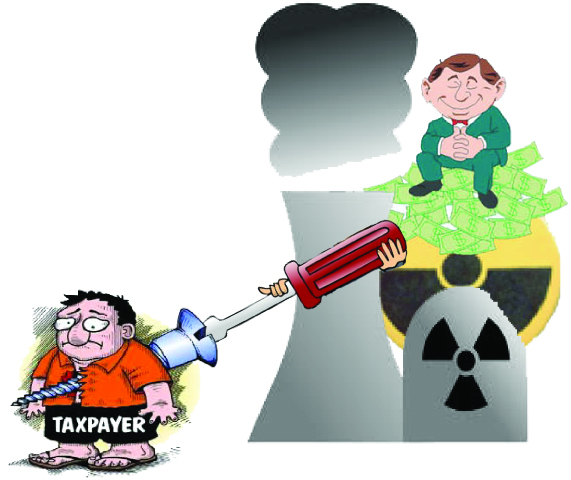
Taxpayer contribution to Sizewell C nuclear plant could double
24 May, 2022 By Rob Hakimian https://www.newcivilengineer.com/latest/taxpayer-contribution-to-sizewell-c-nuclear-plant-could-double-24-05-2022/
Construction of the Sizewell C nuclear plant in Suffolk could cost taxpayers more than double what the government has suggested, according to new research
Construction of Sizewell C has not yet been confirmed, with the planning decision having recently been pushed back to July.
However, with the UK set to lose all of its functional advanced gas-cooling reactor (AGR) nuclear plants by 2028, the government is keen to push through plans for new plants as it has made nuclear energy a crux point of its net zero strategy and energy security strategy. It has already committed £100M to Sizewell C and, crucially, agreed to use the regulated asset base (RAB) funding model to pay for it.
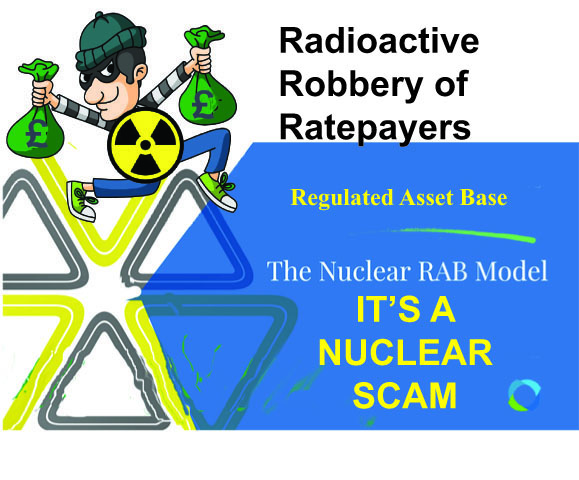
The RAB model, which has previously been used to fund Tideway and Heathrow Terminal 5, allows investors to recoup some of their money during the construction phase of the project through taxation. The taxpayer pays for the plant through monthly surcharge on their taxes before they reap the rewards. The government says that, while the taxpayer will have to pay the surcharge during construction, they will save £10 a month through this method once the plant is operational.
However, if a project suffers delays and cost increases, this means the risk falls on the shoulders of the taxpayer. As seen by continual delays and cost hikes on Hinkley Point C, nuclear plants are particularly susceptible.
In its own analysis of using the RAB model to fund Sizewell C, the government has said that over the course of the plant’s 13-17 years construction it will add an average surcharge of £1 per month to household bills. However, the University of Greenwich School of Business says that the government’s calculations are based on 2021 prices and do not account for inflation over the course of the next two decades as the plant is built.
Taking into account inflation, based on the Treasury’s target level of 2%, Greenwich Business School has determined that the cost could be up to £2.12 per month on average over the course of the construction time. However, this is a relatively conservative estimate, as inflation could be much greater than 2% over the course of the next 20 years.
The government’s calculation is based on the median expectations for the construction of Sizewell C, i.e. that it will take 15 years (midway between the projected 13-17 years) and cost £35bn (midway between the estimated £26.3bn and £43.8bn).
Greenwich Business School has also looked at the best and worse case scenarios, adding 2% inflation. If the construction were to only last 13 years and cost £26.3bn, the taxpayer would fork out an additional £148.20 over the course (an average of 95p per month). If it is to last 17 years and cost £43.8bn, the taxpayer will pay an additional £431.90 over the duration (an average of £2.12 per month).
This figure could be even higher if the project runs beyond 17 years, costs over £43.8bn and/or inflation rises by more than 2%, all of which are distinct possibilities.
The RAB model, which has previously been used to fund Tideway and Heathrow Terminal 5, allows investors to recoup some of their money during the construction phase of the project through taxation. The taxpayer pays for the plant through monthly surcharge on their taxes before they reap the rewards. The government says that, while the taxpayer will have to pay the surcharge during construction, they will save £10 a month through this method once the plant is operational.
This figure could be even higher if the project runs beyond 17 years, costs over £43.8bn and/or inflation rises by more than 2%, all of which are distinct possibilities.
Both the government’s and Greenwhich Business School’s calculations are based on illustrative figures. More accurate figures will be known once planning has been granted and investment partners found.
This presents another issue, as there are no clear investors champing at the bit. While the government is bullish about nuclear’s potential green benefits, many potential investors are uncertain of its environmental, social and governance (ESG) credentials. Aviva Investors has even called out the government for not providing enough detail for a proper assessment on nuclear’s ESG potential.
University of Greenwich emeritus professor of energy policy Stephen Thomas told NCE: “There are differences between Tideway and Sizewell C. One is scale: Tideway is said to be a huge project, but the cost is not much more than a 10th of what Sizewell C will be, so it will be a big strain on that market.
- You are here: Latest
Taxpayer contribution to Sizewell C nuclear plant could double
24 May, 2022 By Rob Hakimian
Construction of the Sizewell C nuclear plant in Suffolk could cost taxpayers more than double what the government has suggested, according to new research.
Construction of Sizewell C has not yet been confirmed, with the planning decision having recently been pushed back to July.
However, with the UK set to lose all of its functional advanced gas-cooling reactor (AGR) nuclear plants by 2028, the government is keen to push through plans for new plants as it has made nuclear energy a crux point of its net zero strategy and energy security strategy. It has already committed £100M to Sizewell C and, crucially, agreed to use the regulated asset base (RAB) funding model to pay for it.
The RAB model, which has previously been used to fund Tideway and Heathrow Terminal 5, allows investors to recoup some of their money during the construction phase of the project through taxation. The taxpayer pays for the plant through monthly surcharge on their taxes before they reap the rewards. The government says that, while the taxpayer will have to pay the surcharge during construction, they will save £10 a month through this method once the plant is operational.
However, if a project suffers delays and cost increases, this means the risk falls on the shoulders of the taxpayer. As seen by continual delays and cost hikes on Hinkley Point C, nuclear plants are particularly susceptible.
In its own analysis of using the RAB model to fund Sizewell C, the government has said that over the course of the plant’s 13-17 years construction it will add an average surcharge of £1 per month to household bills. However, the University of Greenwich School of Business says that the government’s calculations are based on 2021 prices and do not account for inflation over the course of the next two decades as the plant is built.
Taking into account inflation, based on the Treasury’s target level of 2%, Greenwich Business School has determined that the cost could be up to £2.12 per month on average over the course of the construction time. However, this is a relatively conservative estimate, as inflation could be much greater than 2% over the course of the next 20 years.
The government’s calculation is based on the median expectations for the construction of Sizewell C, i.e. that it will take 15 years (midway between the projected 13-17 years) and cost £35bn (midway between the estimated £26.3bn and £43.8bn).
Greenwich Business School has also looked at the best and worse case scenarios, adding 2% inflation. If the construction were to only last 13 years and cost £26.3bn, the taxpayer would fork out an additional £148.20 over the course (an average of 95p per month). If it is to last 17 years and cost £43.8bn, the taxpayer will pay an additional £431.90 over the duration (an average of £2.12 per month).
This figure could be even higher if the project runs beyond 17 years, costs over £43.8bn and/or inflation rises by more than 2%, all of which are distinct possibilities.
Both the government’s and Greenwhich Business School’s calculations are based on illustrative figures. More accurate figures will be known once planning has been granted and investment partners found.
This presents another issue, as there are no clear investors champing at the bit. While the government is bullish about nuclear’s potential green benefits, many potential investors are uncertain of its environmental, social and governance (ESG) credentials. Aviva Investors has even called out the government for not providing enough detail for a proper assessment on nuclear’s ESG potential.
University of Greenwich emeritus professor of energy policy Stephen Thomas told NCE: “There are differences between Tideway and Sizewell C. One is scale: Tideway is said to be a huge project, but the cost is not much more than a 10th of what Sizewell C will be, so it will be a big strain on that market.
“The second difference is that there is output to sell from Sizewell C. Thames Tideway gets its money by being there and providing a service; if it’s there and it’s not utterly failed then that’s it. Sizewell C has kilowatt hours to sell, and there are risks in that because you don’t know how reliable the plant is going to be, you don’t know what the running costs are going to be, you don’t know what the fuel costs are going to be. So there are risks involved in that.
“The RAB is a bit of an illusion, because the kilowatt hour costs that they will quote are based on whatever it costs to ensure investors make their agreed return, no matter how high the price. It will ignore the surcharge paid during the construction phase, which is a huge subsidy by consumers. It is a blank cheque signed by consumers. It’s a dreadful model.”
A Sizewell C spokesperson said: “The RAB model is a proven financing arrangement which has already been used to raise funds for more than £160bn of infrastructure. Applied to Sizewell C, it will bring the cost of finance down and deliver significant savings to consumers.”
A government spokesperson said: “We firmly stand by our assessment that a large-scale project funded under our Nuclear Act would add at most a few pounds a year to typical household energy bills during the early stages of construction, and on average about £1 a month during the full construction phase of the project.”
Ukraine war briefing: France flies nuclear-capable missile as Russia holds drills
Guardian, Warren Murray and agencies, Thu 23 May
- France has carried out its first test firing of an updated nuclear-capable missile, the ASMPA-R, designed to be launched by a Rafale fighter jet, according to the French defence minister, Sebastien Lecornu. It came a day after Russia said it began nuclear drills in its southern military district, which stretches from Russia into occupied Ukrainian territory. The announcement of Russian drills is partly directed at France after its president, Emmanuel Macron, said he would not rule out sending in troops on Ukraine’s side.
- Lecornu said the missile was fired without a warhead by a plane in an exercise “above national territory … at the end of a flight representing a nuclear air raid”. He congratulated “all the forces, [defence] ministry teams and industrial partners involved” in a “long-planned” operation. France plans to spend about 13% of its military budget over the coming years on its independent nuclear capability, including upgrading to next-generation air-launched missiles by 2035. ……………………………………..
- Russia said there were Ukrainian attacks on its Belgorod region across the border from Ukraine, and in the occupied eastern Ukrainian city of Lysychansk, killing up to three people.
- The Swedish government has announced additional military support to Ukraine totalling 75 billion crowns (US$7bn) over three years. Ukraine’s defence minister, Rustem Umerov, said Swedish-made weapons had “already proven themselves on the battlefield … Archers and CV-90s help Ukrainian defenders drive the enemy out of our land.” https://www.theguardian.com/world/article/2024/may/23/ukraine-war-briefing-france-flies-nuclear-capable-missile-as-russia-holds-drills
In 1939 the Soviet Union ‘planned to send a million troops to stop Hitler if Britain and France agreed pact’
Nick Holdsworth in Moscow, The Telegraph, Sat, 18 Oct 2008 https://www.sott.net/article/491642-Stalin-planned-to-send-a-million-troops-to-stop-Hitler-if-Britain-and-France-agreed-pact
Stalin was ‘prepared to move more than a million Soviet troops to the German border to deter Hitler’s aggression just before the Second World War’
Papers which were kept secret for almost 70 years show that the Soviet Union proposed sending a powerful military force in an effort to entice Britain and France into an anti-Nazi alliance.
Such an agreement could have changed the course of 20th century history, preventing Hitler’s pact with Stalin which gave him free rein to go to war with Germany’s other neighbours.
The offer of a military force to help contain Hitler was made by a senior Soviet military delegation at a Kremlin meeting with senior British and French officers, two weeks before war broke out in 1939.
The new documents, copies of which have been seen by The Sunday Telegraph, show the vast numbers of infantry, artillery and airborne forces which Stalin’s generals said could be dispatched, if Polish objections to the Red Army crossing its territory could first be overcome.
But the British and French side – briefed by their governments to talk, but not authorised to commit to binding deals – did not respond to the Soviet offer, made on August 15, 1939. Instead, Stalin turned to Germany, signing the notorious non-aggression treaty with Hitler barely a week later.
The Molotov-Ribbentrop Pact, named after the foreign secretaries of the two countries, came on August 23 – just a week before Nazi Germany attacked Poland, thereby sparking the outbreak of the war. But it would never have happened if Stalin’s offer of a western alliance had been accepted, according to retired Russian foreign intelligence service Major General Lev Sotskov, who sorted the 700 pages of declassified documents.
“This was the final chance to slay the wolf, even after [British Conservative prime minister Neville] Chamberlain and the French had given up Czechoslovakia to German aggression the previous year in the Munich Agreement,” said Gen Sotskov, 75.
The Soviet offer – made by war minister Marshall Klementi Voroshilov and Red Army chief of general staff Boris Shaposhnikov – would have put up to 120 infantry divisions (each with some 19,000 troops), 16 cavalry divisions, 5,000 heavy artillery pieces, 9,500 tanks and up to 5,500 fighter aircraft and bombers on Germany’s borders in the event of war in the west, declassified minutes of the meeting show.
But Admiral Sir Reginald Drax, who lead the British delegation, told his Soviet counterparts that he authorised only to talk, not to make deals.
“Had the British, French and their European ally Poland, taken this offer seriously then together we could have put some 300 or more divisions into the field on two fronts against Germany – double the number Hitler had at the time,” said Gen Sotskov, who joined the Soviet intelligence service in 1956. “This was a chance to save the world or at least stop the wolf in its tracks.”
When asked what forces Britain itself could deploy in the west against possible Nazi aggression, Admiral Drax said there were just 16 combat ready divisions, leaving the Soviets bewildered by Britain’s lack of preparation for the looming conflict.
The Soviet attempt to secure an anti-Nazi alliance involving the British and the French is well known. But the extent to which Moscow was prepared to go has never before been revealed.
Simon Sebag Montefiore, best selling author of Young Stalin and Stalin: The Court of The Red Tsar, said it was apparent there were details in the declassified documents that were not known to western historians.
“The detail of Stalin’s offer underlines what is known; that the British and French may have lost a colossal opportunity in 1939 to prevent the German aggression which unleashed the Second World War. It shows that Stalin may have been more serious than we realised in offering this alliance.”
Professor Donald Cameron Watt, author of How War Came – widely seen as the definitive account of the last 12 months before war began – said the details were new, but said he was sceptical about the claim that they were spelled out during the meetings.
“There was no mention of this in any of the three contemporaneous diaries, two British and one French – including that of Drax,” he said. “I don’t myself believe the Russians were serious.”
The declassified archives – which cover the period from early 1938 until the outbreak of war in September 1939 – reveal that the Kremlin had known of the unprecedented pressure Britain and France put on Czechoslovakia to appease Hitler by surrendering the ethnic German Sudetenland region in 1938.
“At every stage of the appeasement process, from the earliest top secret meetings between the British and French, we understood exactly and in detail what was going on,” Gen Sotskov said.
“It was clear that appeasement would not stop with Czechoslovakia’s surrender of the Sudetenland and that neither the British nor the French would lift a finger when Hitler dismembered the rest of the country.”
Stalin’s sources, Gen Sotskov says, were Soviet foreign intelligence agents in Europe, but not London. “The documents do not reveal precisely who the agents were, but they were probably in Paris or Rome.”
Shortly before the notorious Munich Agreement of 1938 – in which Neville Chamberlain, the British prime minister, effectively gave Hitler the go-ahead to annexe the Sudetenland – Czechoslovakia’s President Eduard Benes was told in no uncertain terms not to invoke his country’s military treaty with the Soviet Union in the face of further German aggression.
“Chamberlain knew that Czechoslovakia had been given up for lost the day he returned from Munich in September 1938 waving a piece of paper with Hitler’s signature on it,” Gen Sotksov said.
The top secret discussions between the Anglo-French military delegation and the Soviets in August 1939 – five months after the Nazis marched into Czechoslovakia – suggest both desperation and impotence of the western powers in the face of Nazi aggression.
Poland, whose territory the vast Russian army would have had to cross to confront Germany, was firmly against such an alliance. Britain was doubtful about the efficacy of any Soviet forces because only the previous year, Stalin had purged thousands of top Red Army commanders.
The documents will be used by Russian historians to help explain and justify Stalin’s controversial pact with Hitler, which remains infamous as an example of diplomatic expediency.
“It was clear that the Soviet Union stood alone and had to turn to Germany and sign a non-aggression pact to gain some time to prepare ourselves for the conflict that was clearly coming,” said Gen Sotskov.
A desperate attempt by the French on August 21 to revive the talks was rebuffed, as secret Soviet-Nazi talks were already well advanced.
It was only two years later, following Hitler’s Blitzkreig attack on Russia in June 1941, that the alliance with the West which Stalin had sought finally came about – by which time France, Poland and much of the rest of Europe were already under German occupation.
-
Archives
- February 2026 (220)
- January 2026 (308)
- December 2025 (358)
- November 2025 (359)
- October 2025 (376)
- September 2025 (258)
- August 2025 (319)
- July 2025 (230)
- June 2025 (348)
- May 2025 (261)
- April 2025 (305)
- March 2025 (319)
-
Categories
- 1
- 1 NUCLEAR ISSUES
- business and costs
- climate change
- culture and arts
- ENERGY
- environment
- health
- history
- indigenous issues
- Legal
- marketing of nuclear
- media
- opposition to nuclear
- PERSONAL STORIES
- politics
- politics international
- Religion and ethics
- safety
- secrets,lies and civil liberties
- spinbuster
- technology
- Uranium
- wastes
- weapons and war
- Women
- 2 WORLD
- ACTION
- AFRICA
- Atrocities
- AUSTRALIA
- Christina's notes
- Christina's themes
- culture and arts
- Events
- Fuk 2022
- Fuk 2023
- Fukushima 2017
- Fukushima 2018
- fukushima 2019
- Fukushima 2020
- Fukushima 2021
- general
- global warming
- Humour (God we need it)
- Nuclear
- RARE EARTHS
- Reference
- resources – print
- Resources -audiovicual
- Weekly Newsletter
- World
- World Nuclear
- YouTube
-
RSS
Entries RSS
Comments RSS
 nuclear-news