TODAY. Turning Point, The Cold War and the Bomb. Episode 3- Institutional Insanity

This begins with Volodymyr Zelensky in 2022 and Russian attacks on Ukraine, and Ukraine’s strong resistance. Author Garret Graff calls this first successful resistance “probably the turning point of the entire war.” So – it became a full scale war.
Now back to the 1950s. In the early years of the cold war, the USA treated nuclear war as something that could be survived. Public education programs. The message was that the Soviet Union was an existential threat, but that you could survive, with school training, with fallout shelters.

Fear of communism led to developing bigger bombs against the communists.
The movement to the hydrogen bomb, the thermonuclear device. Scary film of testing this on Elugelab Island in 1952, horrifying many, including Robert Oppenheimer. Albert Einstein wrote “General annihilation beckons“. Eisenhower shocked and shaken – “the power to erase human life from this planet“. The Soviets feel that they must equal this – their first hydrogen bomb test August 1953. So the USA responds in 1954 with the super-large Castle Bravo hydrogen bomb test on Bikini Atoll – making a 4-mile wide fireball. The island populations were affected by the radiation – horrifying personal stories. A Japanese ship affected by the “death ash“. The fisherman’s dying message – “let me be the last person killed by this awful weapon”.
A series of nuclear tests in the USA and across the world. Daniel Ellsberg recalls how he worked with the very clever test designers – “It turns out that intelligence is not a very good guarantee of wisdom“. The movie Dr Strangelove has words directly taken from them, and Ellsberg describes that film as a documentary. “Everything in that film could have happened“. People other than the President could launch an attack. Ellsberg saw the war plans – “they were strange and horrible“. The plan was to hit every city in Russia and China with thermonuclear weapons- with 600 million deaths – one fifth of the world population then. The Soviets then followed with a similar policy. It opened up the world as the playground of the two powers.
Covert operations all around the world. The CIA was created in 1947 modelled on Britain’s MI6. The Soviets had the KGB, very repressive under Stalin. In the USA intelligence and operational planning, and action, were combined in the CIA. By 1949 the CIA were doing paramilitary operations against the nations of Central Europe that were Soviet satellites. They started with Ukraine, training Ukrainian exiles (graphic film here), creating and funding “Ukrainian resistance cells” from 1949 – 1953 . These were suicide missions, because the British counter-spy Kim Philby was informing the Soviets. Subsequent operations to Poland, Romania – were also disasters.
From 1953, U.S. foreign policy , as run by the Allen Dulles and John Foster Dulles, brothers, saw communism behind every nationalist movement, happy to spread American democracy via any government, however vicious brutal and corrupt. The Dulles brothers also were dedicated to furthering the interests of multinational corporations, which meant controlling the countries that supplied resources.
They started with Iran and Guatemala, overthrowing the elected governments. The CIA used money and propaganda, controlling the Iranian media, flooding it with “fake news”, and created “communist thuggery”. They succeeded in reinstalling the Shah. Western oil companies now ran the oil business. Guatemala followed the same pattern, a highly repressive regime was set up.
The cold war was a battle for minds and hearts. The CIA from the late 40s to the early 60s had hundreds of “influence operations”, co-opting overseas and some American media.
The Soviet Union’s KGB used “Active measures” – set up to use disinformation, planting major stories in overseas news media to cause disruption and confusion, forging documents slipped to journalists. These were often accepted especially in developing countries as genuine proof of American conspiracies. In the Soviet Union, Stalin had complete control of the media.
Stalin’s death in 1953. Nikita Kruschev ushered in a new period – the Thaw. His story here told by his great-granddaughter. Kruschev released many innocent victims of Stalin’s gulags, revealed Stalin’s crimes, set the Soviet Union on a different course, opened up the possibility of liberal reform, lessened censorship. But Kruschev also believed that the Soviet Union must show its strength to the USA, boasted of its military strength, with a disinformation campaign to scare Americans about a 100 megaton bomb, and the number and reach of its missiles.
USA’s military thinking moved to plans to evacuate high-ranking officials, expecting that in a coming nuclear war most of America will die, but the government will survive in a mountain bunker.
Daniel Ellsberg reported on the secret doomsday machines, in the Pentagon Papers, and copied all his nuclear reports, published “Confessions of a nuclear war planner”. Now in 2022 we see him urging for cutting the defense budget, getting rid of ICBMs (intercontinental ballistic missiles) – to avoid armageddon.
The episode ends with the warning of how suddenly a crisis can arise, with the greatest danger to the world, as happened in 1962 – when the Russians placed intermediate range nuclear missiles on the island of Cuba.
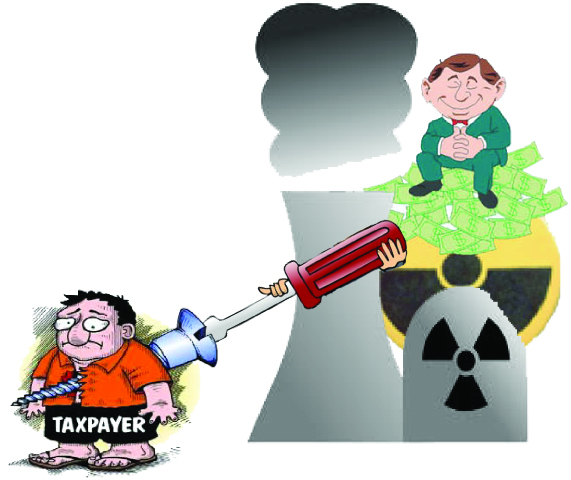
Taxpayer contribution to Sizewell C nuclear plant could double
24 May, 2022 By Rob Hakimian https://www.newcivilengineer.com/latest/taxpayer-contribution-to-sizewell-c-nuclear-plant-could-double-24-05-2022/
Construction of the Sizewell C nuclear plant in Suffolk could cost taxpayers more than double what the government has suggested, according to new research
Construction of Sizewell C has not yet been confirmed, with the planning decision having recently been pushed back to July.
However, with the UK set to lose all of its functional advanced gas-cooling reactor (AGR) nuclear plants by 2028, the government is keen to push through plans for new plants as it has made nuclear energy a crux point of its net zero strategy and energy security strategy. It has already committed £100M to Sizewell C and, crucially, agreed to use the regulated asset base (RAB) funding model to pay for it.
The RAB model, which has previously been used to fund Tideway and Heathrow Terminal 5, allows investors to recoup some of their money during the construction phase of the project through taxation. The taxpayer pays for the plant through monthly surcharge on their taxes before they reap the rewards. The government says that, while the taxpayer will have to pay the surcharge during construction, they will save £10 a month through this method once the plant is operational.
However, if a project suffers delays and cost increases, this means the risk falls on the shoulders of the taxpayer. As seen by continual delays and cost hikes on Hinkley Point C, nuclear plants are particularly susceptible.
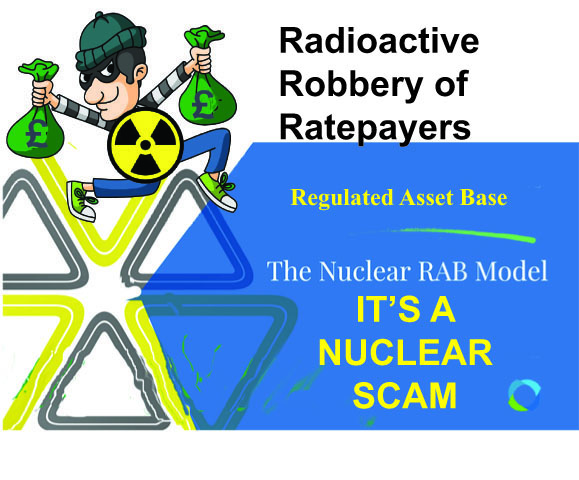
In its own analysis of using the RAB model to fund Sizewell C, the government has said that over the course of the plant’s 13-17 years construction it will add an average surcharge of £1 per month to household bills. However, the University of Greenwich School of Business says that the government’s calculations are based on 2021 prices and do not account for inflation over the course of the next two decades as the plant is built.
Taking into account inflation, based on the Treasury’s target level of 2%, Greenwich Business School has determined that the cost could be up to £2.12 per month on average over the course of the construction time. However, this is a relatively conservative estimate, as inflation could be much greater than 2% over the course of the next 20 years.
The government’s calculation is based on the median expectations for the construction of Sizewell C, i.e. that it will take 15 years (midway between the projected 13-17 years) and cost £35bn (midway between the estimated £26.3bn and £43.8bn).
Greenwich Business School has also looked at the best and worse case scenarios, adding 2% inflation. If the construction were to only last 13 years and cost £26.3bn, the taxpayer would fork out an additional £148.20 over the course (an average of 95p per month). If it is to last 17 years and cost £43.8bn, the taxpayer will pay an additional £431.90 over the duration (an average of £2.12 per month).
This figure could be even higher if the project runs beyond 17 years, costs over £43.8bn and/or inflation rises by more than 2%, all of which are distinct possibilities.
The RAB model, which has previously been used to fund Tideway and Heathrow Terminal 5, allows investors to recoup some of their money during the construction phase of the project through taxation. The taxpayer pays for the plant through monthly surcharge on their taxes before they reap the rewards. The government says that, while the taxpayer will have to pay the surcharge during construction, they will save £10 a month through this method once the plant is operational.
This figure could be even higher if the project runs beyond 17 years, costs over £43.8bn and/or inflation rises by more than 2%, all of which are distinct possibilities.
Both the government’s and Greenwhich Business School’s calculations are based on illustrative figures. More accurate figures will be known once planning has been granted and investment partners found.
This presents another issue, as there are no clear investors champing at the bit. While the government is bullish about nuclear’s potential green benefits, many potential investors are uncertain of its environmental, social and governance (ESG) credentials. Aviva Investors has even called out the government for not providing enough detail for a proper assessment on nuclear’s ESG potential.
University of Greenwich emeritus professor of energy policy Stephen Thomas told NCE: “There are differences between Tideway and Sizewell C. One is scale: Tideway is said to be a huge project, but the cost is not much more than a 10th of what Sizewell C will be, so it will be a big strain on that market.
- You are here: Latest
Taxpayer contribution to Sizewell C nuclear plant could double
24 May, 2022 By Rob Hakimian
Construction of the Sizewell C nuclear plant in Suffolk could cost taxpayers more than double what the government has suggested, according to new research.
Construction of Sizewell C has not yet been confirmed, with the planning decision having recently been pushed back to July.
However, with the UK set to lose all of its functional advanced gas-cooling reactor (AGR) nuclear plants by 2028, the government is keen to push through plans for new plants as it has made nuclear energy a crux point of its net zero strategy and energy security strategy. It has already committed £100M to Sizewell C and, crucially, agreed to use the regulated asset base (RAB) funding model to pay for it.
The RAB model, which has previously been used to fund Tideway and Heathrow Terminal 5, allows investors to recoup some of their money during the construction phase of the project through taxation. The taxpayer pays for the plant through monthly surcharge on their taxes before they reap the rewards. The government says that, while the taxpayer will have to pay the surcharge during construction, they will save £10 a month through this method once the plant is operational.
However, if a project suffers delays and cost increases, this means the risk falls on the shoulders of the taxpayer. As seen by continual delays and cost hikes on Hinkley Point C, nuclear plants are particularly susceptible.
In its own analysis of using the RAB model to fund Sizewell C, the government has said that over the course of the plant’s 13-17 years construction it will add an average surcharge of £1 per month to household bills. However, the University of Greenwich School of Business says that the government’s calculations are based on 2021 prices and do not account for inflation over the course of the next two decades as the plant is built.
Taking into account inflation, based on the Treasury’s target level of 2%, Greenwich Business School has determined that the cost could be up to £2.12 per month on average over the course of the construction time. However, this is a relatively conservative estimate, as inflation could be much greater than 2% over the course of the next 20 years.
The government’s calculation is based on the median expectations for the construction of Sizewell C, i.e. that it will take 15 years (midway between the projected 13-17 years) and cost £35bn (midway between the estimated £26.3bn and £43.8bn).
Greenwich Business School has also looked at the best and worse case scenarios, adding 2% inflation. If the construction were to only last 13 years and cost £26.3bn, the taxpayer would fork out an additional £148.20 over the course (an average of 95p per month). If it is to last 17 years and cost £43.8bn, the taxpayer will pay an additional £431.90 over the duration (an average of £2.12 per month).
This figure could be even higher if the project runs beyond 17 years, costs over £43.8bn and/or inflation rises by more than 2%, all of which are distinct possibilities.
Both the government’s and Greenwhich Business School’s calculations are based on illustrative figures. More accurate figures will be known once planning has been granted and investment partners found.
This presents another issue, as there are no clear investors champing at the bit. While the government is bullish about nuclear’s potential green benefits, many potential investors are uncertain of its environmental, social and governance (ESG) credentials. Aviva Investors has even called out the government for not providing enough detail for a proper assessment on nuclear’s ESG potential.
University of Greenwich emeritus professor of energy policy Stephen Thomas told NCE: “There are differences between Tideway and Sizewell C. One is scale: Tideway is said to be a huge project, but the cost is not much more than a 10th of what Sizewell C will be, so it will be a big strain on that market.
“The second difference is that there is output to sell from Sizewell C. Thames Tideway gets its money by being there and providing a service; if it’s there and it’s not utterly failed then that’s it. Sizewell C has kilowatt hours to sell, and there are risks in that because you don’t know how reliable the plant is going to be, you don’t know what the running costs are going to be, you don’t know what the fuel costs are going to be. So there are risks involved in that.
“The RAB is a bit of an illusion, because the kilowatt hour costs that they will quote are based on whatever it costs to ensure investors make their agreed return, no matter how high the price. It will ignore the surcharge paid during the construction phase, which is a huge subsidy by consumers. It is a blank cheque signed by consumers. It’s a dreadful model.”
A Sizewell C spokesperson said: “The RAB model is a proven financing arrangement which has already been used to raise funds for more than £160bn of infrastructure. Applied to Sizewell C, it will bring the cost of finance down and deliver significant savings to consumers.”
A government spokesperson said: “We firmly stand by our assessment that a large-scale project funded under our Nuclear Act would add at most a few pounds a year to typical household energy bills during the early stages of construction, and on average about £1 a month during the full construction phase of the project.”
Ukraine war briefing: France flies nuclear-capable missile as Russia holds drills
Guardian, Warren Murray and agencies, Thu 23 May
- France has carried out its first test firing of an updated nuclear-capable missile, the ASMPA-R, designed to be launched by a Rafale fighter jet, according to the French defence minister, Sebastien Lecornu. It came a day after Russia said it began nuclear drills in its southern military district, which stretches from Russia into occupied Ukrainian territory. The announcement of Russian drills is partly directed at France after its president, Emmanuel Macron, said he would not rule out sending in troops on Ukraine’s side.
- Lecornu said the missile was fired without a warhead by a plane in an exercise “above national territory … at the end of a flight representing a nuclear air raid”. He congratulated “all the forces, [defence] ministry teams and industrial partners involved” in a “long-planned” operation. France plans to spend about 13% of its military budget over the coming years on its independent nuclear capability, including upgrading to next-generation air-launched missiles by 2035. ……………………………………..
- Russia said there were Ukrainian attacks on its Belgorod region across the border from Ukraine, and in the occupied eastern Ukrainian city of Lysychansk, killing up to three people.
- The Swedish government has announced additional military support to Ukraine totalling 75 billion crowns (US$7bn) over three years. Ukraine’s defence minister, Rustem Umerov, said Swedish-made weapons had “already proven themselves on the battlefield … Archers and CV-90s help Ukrainian defenders drive the enemy out of our land.” https://www.theguardian.com/world/article/2024/may/23/ukraine-war-briefing-france-flies-nuclear-capable-missile-as-russia-holds-drills
In 1939 the Soviet Union ‘planned to send a million troops to stop Hitler if Britain and France agreed pact’
Nick Holdsworth in Moscow, The Telegraph, Sat, 18 Oct 2008 https://www.sott.net/article/491642-Stalin-planned-to-send-a-million-troops-to-stop-Hitler-if-Britain-and-France-agreed-pact
Stalin was ‘prepared to move more than a million Soviet troops to the German border to deter Hitler’s aggression just before the Second World War’
Papers which were kept secret for almost 70 years show that the Soviet Union proposed sending a powerful military force in an effort to entice Britain and France into an anti-Nazi alliance.
Such an agreement could have changed the course of 20th century history, preventing Hitler’s pact with Stalin which gave him free rein to go to war with Germany’s other neighbours.
The offer of a military force to help contain Hitler was made by a senior Soviet military delegation at a Kremlin meeting with senior British and French officers, two weeks before war broke out in 1939.
The new documents, copies of which have been seen by The Sunday Telegraph, show the vast numbers of infantry, artillery and airborne forces which Stalin’s generals said could be dispatched, if Polish objections to the Red Army crossing its territory could first be overcome.
But the British and French side – briefed by their governments to talk, but not authorised to commit to binding deals – did not respond to the Soviet offer, made on August 15, 1939. Instead, Stalin turned to Germany, signing the notorious non-aggression treaty with Hitler barely a week later.
The Molotov-Ribbentrop Pact, named after the foreign secretaries of the two countries, came on August 23 – just a week before Nazi Germany attacked Poland, thereby sparking the outbreak of the war. But it would never have happened if Stalin’s offer of a western alliance had been accepted, according to retired Russian foreign intelligence service Major General Lev Sotskov, who sorted the 700 pages of declassified documents.
“This was the final chance to slay the wolf, even after [British Conservative prime minister Neville] Chamberlain and the French had given up Czechoslovakia to German aggression the previous year in the Munich Agreement,” said Gen Sotskov, 75.
The Soviet offer – made by war minister Marshall Klementi Voroshilov and Red Army chief of general staff Boris Shaposhnikov – would have put up to 120 infantry divisions (each with some 19,000 troops), 16 cavalry divisions, 5,000 heavy artillery pieces, 9,500 tanks and up to 5,500 fighter aircraft and bombers on Germany’s borders in the event of war in the west, declassified minutes of the meeting show.
But Admiral Sir Reginald Drax, who lead the British delegation, told his Soviet counterparts that he authorised only to talk, not to make deals.
“Had the British, French and their European ally Poland, taken this offer seriously then together we could have put some 300 or more divisions into the field on two fronts against Germany – double the number Hitler had at the time,” said Gen Sotskov, who joined the Soviet intelligence service in 1956. “This was a chance to save the world or at least stop the wolf in its tracks.”
When asked what forces Britain itself could deploy in the west against possible Nazi aggression, Admiral Drax said there were just 16 combat ready divisions, leaving the Soviets bewildered by Britain’s lack of preparation for the looming conflict.
The Soviet attempt to secure an anti-Nazi alliance involving the British and the French is well known. But the extent to which Moscow was prepared to go has never before been revealed.
Simon Sebag Montefiore, best selling author of Young Stalin and Stalin: The Court of The Red Tsar, said it was apparent there were details in the declassified documents that were not known to western historians.
“The detail of Stalin’s offer underlines what is known; that the British and French may have lost a colossal opportunity in 1939 to prevent the German aggression which unleashed the Second World War. It shows that Stalin may have been more serious than we realised in offering this alliance.”
Professor Donald Cameron Watt, author of How War Came – widely seen as the definitive account of the last 12 months before war began – said the details were new, but said he was sceptical about the claim that they were spelled out during the meetings.
“There was no mention of this in any of the three contemporaneous diaries, two British and one French – including that of Drax,” he said. “I don’t myself believe the Russians were serious.”
The declassified archives – which cover the period from early 1938 until the outbreak of war in September 1939 – reveal that the Kremlin had known of the unprecedented pressure Britain and France put on Czechoslovakia to appease Hitler by surrendering the ethnic German Sudetenland region in 1938.
“At every stage of the appeasement process, from the earliest top secret meetings between the British and French, we understood exactly and in detail what was going on,” Gen Sotskov said.
“It was clear that appeasement would not stop with Czechoslovakia’s surrender of the Sudetenland and that neither the British nor the French would lift a finger when Hitler dismembered the rest of the country.”
Stalin’s sources, Gen Sotskov says, were Soviet foreign intelligence agents in Europe, but not London. “The documents do not reveal precisely who the agents were, but they were probably in Paris or Rome.”
Shortly before the notorious Munich Agreement of 1938 – in which Neville Chamberlain, the British prime minister, effectively gave Hitler the go-ahead to annexe the Sudetenland – Czechoslovakia’s President Eduard Benes was told in no uncertain terms not to invoke his country’s military treaty with the Soviet Union in the face of further German aggression.
“Chamberlain knew that Czechoslovakia had been given up for lost the day he returned from Munich in September 1938 waving a piece of paper with Hitler’s signature on it,” Gen Sotksov said.
The top secret discussions between the Anglo-French military delegation and the Soviets in August 1939 – five months after the Nazis marched into Czechoslovakia – suggest both desperation and impotence of the western powers in the face of Nazi aggression.
Poland, whose territory the vast Russian army would have had to cross to confront Germany, was firmly against such an alliance. Britain was doubtful about the efficacy of any Soviet forces because only the previous year, Stalin had purged thousands of top Red Army commanders.
The documents will be used by Russian historians to help explain and justify Stalin’s controversial pact with Hitler, which remains infamous as an example of diplomatic expediency.
“It was clear that the Soviet Union stood alone and had to turn to Germany and sign a non-aggression pact to gain some time to prepare ourselves for the conflict that was clearly coming,” said Gen Sotskov.
A desperate attempt by the French on August 21 to revive the talks was rebuffed, as secret Soviet-Nazi talks were already well advanced.
It was only two years later, following Hitler’s Blitzkreig attack on Russia in June 1941, that the alliance with the West which Stalin had sought finally came about – by which time France, Poland and much of the rest of Europe were already under German occupation.
Blinken Pushing To Let Ukraine Hit Russian Territory With US Weapons

Many members of Congress are also calling for President Biden to lift the ban, which risks a major escalation
by Dave DeCamp https://news.antiwar.com/2024/05/23/blinken-pushing-to-let-ukraine-hit-russian-territory-with-us-weapons/?utm_source=substack&utm_medium=email
Secretary of State Antony Blinken is leading a push within the Biden administration to allow Ukraine to use US-provided missile systems and other weapons to hit Russian territory, The New York Times reported on Wednesday.
The report said there is a “vigorous debate” within the administration in the wake of Russia’s new offensive in Kharkiv, which was launched from over the border in Russia’s Belgorod oblast.
It’s unclear how many other high-level officials agree with Blinken, but the pressure is growing on President Biden to lift the prohibition on Ukraine using US weapons on Russian territory, a ban that, according to the Times, is designed to “avoid World War III.”
House Speaker Mike Johnson (R-LA) and many other members of Congress are also calling to lift the ban. Ultra-hawk Victoria Nuland, who left the State Department in March, appeared on ABC News this week to make the pitch for Ukraine to extend its use of US weapons to Russian territory.
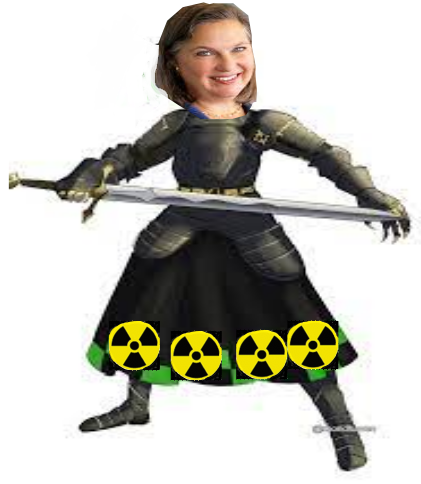
“I think there’s also a question of whether we, the United States and our allies, ought to give them more help in hitting Russian bases, which heretofore we have not been willing to do,” Nuland said.
“I think if the attacks are coming directly from over the line in Russia, that those bases ought to be fair game, whether they are where missiles are being launched from or where they are where troops are being supplied from,” she added.
Moscow recently warned the UK that if Ukraine used British weapons on Russian territory, Russian forces would target UK military sites in Ukraine “and beyond.” The warning came after British Foreign Secretary David Cameron said Ukraine had the “right” to use British arms in attacks on Russia.
Russia is currently conducting tactical nuclear drills that it launched in response to provocative rhetoric from Western officials about sending troops to Ukraine. The Times report said that the US was also considering deploying troops for training, although Chairman of the Joint Chiefs of Staff Gen. Charles Q. Brown said there were “no plans” to do so at the moment.
Joe Biden’s Deceptive Declarations on Gaza are contradicted by his actions

Ralph Nader 24 May 24,
As the keynote speaker at Morehouse College in Atlanta last week, Joe Biden listened to the class Valedictorian’s call for a permanent ceasefire in Gaza. The President nodded and applauded with others in the assembly. In contrast, he had just approved another billion dollars in killer weapons for the genocidal Netanyahu regime to blow up what’s left of the Death Camps in Gaza. “Stop it, stop it now, Joe,” declared his wife, Dr. Jill Biden months ago.
Countless times Joe Biden has publicly urged Netanyahu to allow the waiting trucks carrying – food, water, and medicine – blocked at the Egyptian and Israeli borders to deliver this humanitarian aid. But Biden declined to demand sanctions and an end to the Israeli military blocking hundreds of trucks, paid for by the U.S., into Gaza to help the dying population. He could have draped American flags over these trucks and dared the Israeli state terrorists to stop them. Biden showed lethal weakness from an unused position of great presidential power. “Stop it, stop it now, Joe,” implored his wife Dr. Jill Biden as thousands of children are being killed who could have been saved.
Biden asked early on that Netanyahu comply with international law. His government commits daily overt numerous war crimes targeting civilians, homes, schools, markets, hospitals and health clinics, ambulances, fleeing refugees, and even Mosques and Churches. The Israeli regime also violates the international law that requires the conquerors to protect the civilian population. Biden, Blinken and Austin have refused to condemn such “crimes against humanity,” halt arms shipments and thereby obey five federal laws prohibiting the U.S. from sending weapons to countries that are violating human rights or being used for offensive purposes.
When Biden took his oath of office, he swore to uphold the laws of the land. That oath requires action. His State Department, in a required compliance report this month to Congress, disgracefully punted. “Stop it, stop it now, Joe,” beseeched Dr. Jill Biden.
From the beginning, Biden has backed a two-state solution publicly and in private conversations with Netanyahu. These words support a peaceful settlement. Yet whether under Obama as vice president for eight years or since 2021, as president, Biden has not connected to any action advancing the two-state proposal. Worse, he has never called out Netanyahu, with consequences, for bragging year after year to his Likud Party that he has been supporting the Hamas regime and helping to fund it because Hamas, like Netanyahu, opposes a two-state solution.
Biden is still rejecting the recognition of a Palestinian state by 143 of the 193 member states of the United Nations. This week Spain, Norway and Ireland said they would recognize a Palestinian state. Biden bizarrely insists statehood be negotiated with Israel. He knows, of course, how many Israeli colonies (so-called settlements) exist in the West Bank and East Jerusalem. Israel rejects outright any such Free Palestine. Weak Joe Biden is okay with that brutal occupation. “Stop it, stop it now, Joe,” says Dr. Jill Biden.
Joe Biden is always condemning anti-semitism against Jews, while he spends billions of dollars weaponizing Netanyahu’s violent anti-semitism against Arab semites in Palestine. This “other” anti-semitism has been violently inflicted, with very racist epithets, on defenseless, subjugated Palestinian families for over fifty-five years. The violence includes U.S. fighter planes bombing, ground troops smashing homes, and refugee camps, blowing up homes, imprisoning and torturing thousands of men, women and children, without charges, and hundreds of dictates, checkpoints, and other maddening harassments. (See the New York Times Magazine Sunday, May 19, 2024 piece “The Unpunished: How Extremists Took Over Israel”). Biden and Netanyahu are arm-in-arm anti-semites against Arabs. (See the “Anti-Semitism Against Arab and Jewish Americans” speech by Jim Zogby and DebatingTaboos.org).
Throughout his fifty-year political career, Biden has never said that “Palestinians have a right to defend themselves.” Only the overwhelmingly more powerful, occupying Israelis have this right, as he has repeated hundreds of times. “Stop it, stop it now, Joe,” advises Dr. Jill Biden.
Biden has expressed doubt about the Hamas Health Ministry’s fatality count in Gaza – itself a huge undercount. (See my column March 5, 2024 column: Stop the Worsening UNDERCOUNT of Palestinian Casualties in Gaza). His actions enabling the Israeli annihilations (“over the top” he once blurted) are moving the real fatality toll, especially with the Rafah invasion and starvation, to the fastest rate ever recorded in 21st century conflicts, according to experts. This includes the bloody, accelerating deaths of babies and children.
It’s the ongoing massacre of these little innocents – in their mother’s or father’s arms or in crumbling hospitals that led Dr. Jill Biden to admonish: “Stop it, stop it now, Joe.”
Still, Joe Biden conveys weakness to Netanyahu, to Netanyahu’s Congress and its omnipresent “Israel-can-do-no-wrong” lobby. Being weak on such a high visibility and protested genocide in Gaza is bad for your re-election, Joe. Even though Der Führer Donald is worse. Look at the latest polls in the swing states! A true leader doesn’t zig and zag when innocent people are being killed. “Stop it, stop it now, Joe.”
European Investment Bank’s (EIB) financing for nuclear reactor construction remains off the agenda

By Paul Messad | Euractiv France, 24 May 24, https://www.euractiv.com/section/energy-environment/news/eib-financing-for-nuclear-reactor-construction-remains-off-the-agenda/
Despite a leak of the European Investment Bank’s (EIB) roadmap containing nothing new or concrete on nuclear financing, the industry continues to hold out for new money from the bank to support its planned expansion.
“The European Investment Bank is open to financing for nuclear”, said Yves Desbazeilles, Director General of NuclearEurope, the Brussels-based association for the defence of nuclear power, responding to the leak in comments to CarbonPulse last week.
The EIB document, which outlines its planned work for 2023-2027, does mention that ‘R&D for small modular reactors (SMRs)’ will be supported by the EIB. Desbazeilles argued that the new document is an open door for “several other” options for EIB support, such as for reactor construction, but no such reference seems likely in the final text.
However, several industry observers have told Euractiv that the document’s references are no more significant than those in the current roadmap (2021-2025), which already mentions R&D support for nuclear fission and fusion but nothing on electricity generation.
Technology-neutral approach
The financing of nuclear power is a live topic in Brussels, mainly since the President of the European Commission, Ursula von der Leyen, spoke positively about the technology at the Nuclear Summit (NES) in Brussels in March 2024. In recent months, the industry and several national governments have made a concerted push for EIB support for nuclear.
The EIB remains cautious about the prospect of financing nuclear energy.
The bank is the EU’s investment arm and between now and 2025, it plans to channel €1,000 billion into environmental and energy projects.
Within this framework, the bank is adopting a technology-neutral approach and is therefore not closed to supporting nuclear power, illustrated by a €145 million loan granted in December 2023 for safety operations in Romania.
However, irrespective of politics, investment in nuclear power is now less financially attractive than it was in the past.
Over the last 24 years, only €1 billion of EIB funds have been earmarked for nuclear power and only for parallel activities (R&D, safety, etc.). The last EIB investments in electricity generation occurred in 1987, for France’s two first Flamanville nuclear reactors.
Plant construction is where finance is most needed – installed nuclear capacity is set to triple between now and 2050 in Europe, including large and small reactors.
Profitability
The construction of reactors faces a severe problem regarding the prospects of EIB support: profitability.
Although it deploys public money, the EIB’s lending operations are intended to generate a return for the bank and the institution’s prestigious ‘AAA’ credit rating allows it to borrow on international markets at low interest rates.
To maintain this rating, the bank cannot lend where there is a significant risk that it will not get a return on the loan. Where the bank deploys riskier loans, it protects itself by seeking guarantees and demanding that the borrowers are financially solid.
While the solvency condition is more easily met when the applicant nuclear company, such as EDF in France, is state-owned, this provision is harder for start-ups and other private companies to satisfy.
Larger reactors built more recently have struggled with systematic cost overruns and delays. This has seriously tested the confidence of financiers, who worry that they will not get back their investments or that it will be too late.
This concern is despite expert arguments that the cost of future large reactors will fall by 20 to 30, as Europe will benefit from serially producing reactors again.
The business model for large reactors is well known, but for SMRs, “which have new applications, the models have yet to be invented”, Valérie Faudon, General Delegate of the French Nuclear Energy Society (SFEN), explained to Euractiv.
Ultimately, the risk of financing nuclear power remains high, as Thomas Ostros, Vice-President of the EIB, put it in mid-March during the Nuclear Energy Summit.
Le consensus
EIB loans must also be approved by national governments. Germany, Italy, Spain, and France have an important voice because of the significant capital they have subscribed to the bank.
As a result, France cannot rely on the support of the ten states members of the nuclear alliance alone, although it does enjoy the support of the institution’s president, Nadia Calvino of Spain. Italy has made positive noises to support SMR but has not yet provided concrete support for new EIB financing.
The EIB declined to comment on the leaked 2023-2027 roadmap.
[Edited by Donagh Cagney/Alice Taylor]
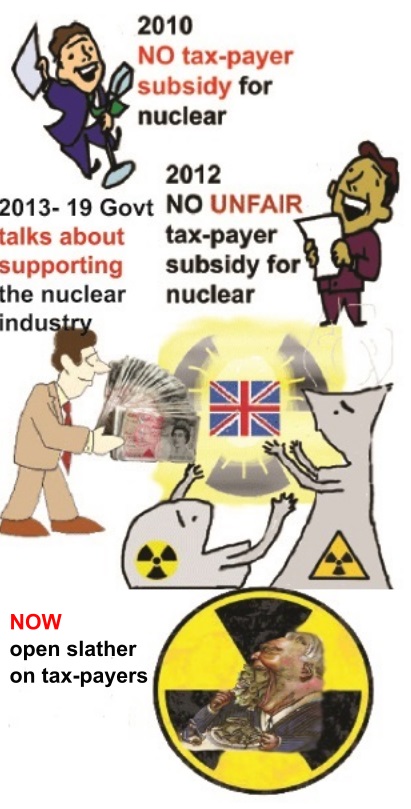
Wylfa nuclear power plan- a financial basket case- and no developer will take on the risks.
Dr Doug Parr, Chief Scientist for Greenpeace UK, said: “Government
announcements about new reactors have a theatrical quality that doesn’t
inspire confidence, particularly when the financial disaster movie of
Hinkley is still rolling in the background.
But Wylfa poses an additional
danger because, after the damage suffered by EDF, no developer will take on
the financial risks of construction. And so in the unlikely event of this
reactor being built, bill payers will be on the hook for billions of cost
overruns.
Just how badly that can play out is revealed by the one location
where the kind of funding structure favoured by the government has been
tried, in South Carolina in the USA. The bill payers of the state have seen
billions added to their bills even though the planned reactors have been
abandoned uncompleted. Even worse, this financial basket case is one of the
reactor designs the government is considering for Wylfa.”
Carmarthenshire News 23rd May 2024
UK Election! And no Final Investment Decision made on Sizewell nuclear project

https://mailchi.mp/stopsizewellc/election?e=c3c4307b44 24 May 24
Last night’s announcement of a snap election has convinced us that the government’s commitment to reach a Final Investment Decision (FID) on Sizewell C within the current parliament is essentially impossible to fulfil. We explain why below, and why Sizewell C’s future is dependent on the election outcome.
We are already making plans to set up actions that will enable you to contact parliamentary candidates about Sizewell C – certainly in Suffolk but hopefully countrywide – and planning an energy hustings in East Suffolk with our allies. Meanwhile we have sent the following comment and briefing to the media.
“The impossibility of a Final Investment Decision on Sizewell C being made before the election lets the Conservatives off the hook for signing away another HS2. It also presents a likely Labour government, looking to drive down bills and reach net zero by 2030, an opportunity to focus on more cost effective renewable projects. We are going to do everything in our power to ensure that this election signals the death knell for slow, expensive, risky Sizewell C.”
- Stop Sizewell C understands that the capital raise is still ongoing, and final bids have yet to be submitted, reportedly due by the end of June. A likely change in government may increase the risks perceived by investors and influence or even deter bids. The capital raise will be subject to a Value for Money (VfM) assessment. If, as reported, investors are seeking high returns, the VfM – and therefore the capital raise – is likely to fail.
- In this event, Ministers would have to decide whether to take a FID with the taxpayer as Sizewell C’s majority stakeholder. An additional VfM assessment will be required as well as multiple internal procedural steps and approvals.
While Labour’s stated position is in favour of Sizewell C, the implications of having to make a FID requiring billions of pounds of taxpayers’ money and which would additionally push much of the risk onto household bills via use of the RAB funding model, in addition to the impossibility of Sizewell C contributing to the goal of net zero by 2030, may give pause. Rising costs and inflation make the current government’s estimate of a Sizewell C RAB costing consumers on average £1 month improbable.
A new government would be expected to conduct a Spending Review ahead of an autumn budget, which seems likely to also lead to a pause before any decision about a Sizewell C FID was made.
Sizewell C Chair Rob Holden acknowledged the risk associated with a change in government telling the The Times recently “Clearly there has to be a risk there. There is with any big decision on this.” In the same interview Rob Holden also highlighted that further widening of the gap between Hinkley Point C and Sizewell C would reduce any replication “benefits”.
Even in the very unlikely event a FID could be fast-tracked, pre-election guidance states that Ministers should “observe discretion” in making big announcements. This must be especially pertinent if a large commitment of taxpayers’ money was necessary for a Sizewell C FID. Having sucked up £2.5bn in taxpayers’ money already, which we understand is all committed, it’s possible yet more funds will be allocated to keep the project going over this period of uncertainty.
Nuclear Free Local Authorities (NFLAs) join Stop Sizewell in urging 120 local authorities not to back Sizewell C
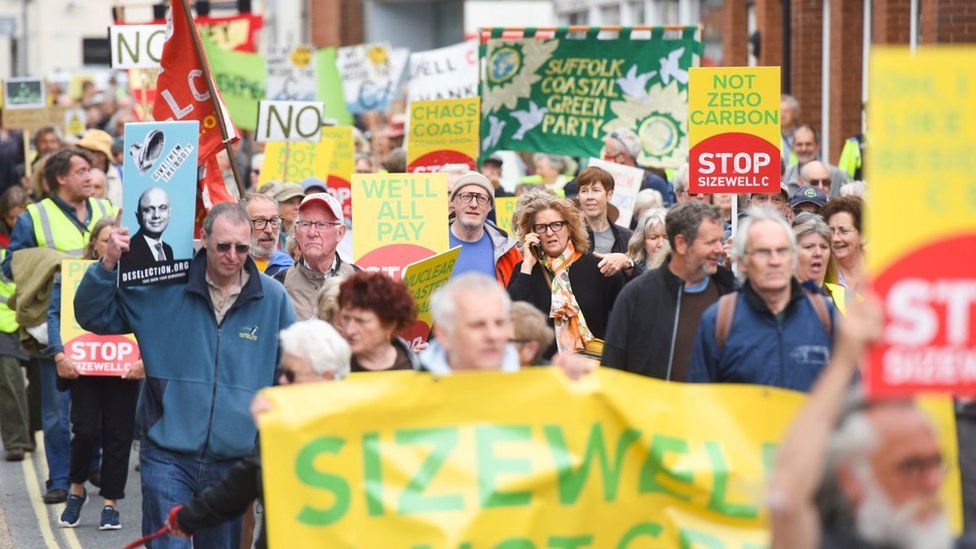
The UK/Ireland Nuclear Free Local Authorities have joined campaigners at Stop Sizewell in writing to pension fund administrators providing benefits to members in at least 120 UK local authorities urging them not to finance the Sizewell C nuclear power plant project in Suffolk.
In recent months, Government ministers and EDF have been busy courting pension funds seeking private sector finance. UK taxpayers have already been unwittingly forced to stump up £2.5 billion in pledges made by the government to kick start preparatory works on the site, but government will need billions more to commence construction.
The estimated cost of completing Sizewell C’s sister plant Hinkley Point C in Somerset could be as high as £46 billion, and civil nuclear projects are notorious for being delivered late and hugely over budget.
Now NFLA Secretary Richard Outram has joined Stop Sizewell Executive Director Alison Downes in writing to Council pension funds urging them to invest in renewables instead of nuclear, particularly in light of the many resolutions passed by Councils to take urgent action to tackle climate change.
Stop Sizewell have also prepared an excellent briefing outlining why backing Sizewell C would be a bad investment:
……………………………………………..more https://www.nuclearpolicy.info/news/nflas-join-stop-sizewell-in-urging-120-local-authorities-not-to-back-sizewell-c/
Huge nuclear ship spotted docked off Welsh coast
The huge ship has been anchored off the Welsh coast for more than 24 hours
WalesOnline, By Andrew Forgrave Countryside and tourism editor, Ffion Lewis, Senior reporter, 24 MAY 2024
A huge ship which has been spotted lingering off the coast of Anglesey has been identified as a nuclear fuel carrier. The vessel is known as the MV Pacific Grebe and has been anchored off Trearddur Bay for more than a day after circling the nearby waters.
It is understood the ship is scheduled to dock in Barrow-in-Furness, Cumbria, on May 29, having set sail from Montreal, Canada. It remains unclear why the ship has made a stop-off near Anglesey though it could simply be waiting for a berthing slot in Cumbria.
Another theory suggests that the Pacific Grebe may have sought shelter from the stormy weather of the past 24 hours. The vessel is one of three operated by Pacific Nuclear Transport Ltd (PNTL), a company primarily owned by the UK’s Nuclear Transport Solutions (NTS) but with French and Japanese involvement, reports NorthWalesLive………………………………………………………………………
The Pacific Grebe, which entered full service in 2011, is primarily used for transporting conditioned nuclear waste. Due to the nature of its cargo it was designed to be bulletproof while its cargo compartments are double-hulled with impact-resistant structures.
The ship’s arrival off Anglesey coincided with a UK Government announcement that Wylfa, on the island’s north coast, has been named as its preferred site for the UK’s third mega-nuclear power station. .The site has long been mooted for a new power plant. However to date a financial model to make such a project viable for private sector investment has proved elusive. Japanese industrial giant Hitachi abandoned its plans back in 2019, writing off £2.1bn in the process.
With only Hinkley Point C under construction the UK Government is desperately seeking a new wave of reactors alongside the potential for smaller but more agile and quicker-to-deliver modular nuclear reactors. The Westminster administration wants to see 24GW of nuclear capacity by 2050 compared to the current 6GW. New plant plans have already been put forward at Wylfa from a US consortium consisting of construction firm Betchel and nuclear venture Westinghouse using its AP1000 reactor technology.
Secretary of state for energy security and net zero, Claire Coutinho, said: “We are powering ahead with the biggest expansion of nuclear energy in 70 years. Anglesey has a proud nuclear history and it is only right that, once again, it can play a central role in boosting the UK’s energy security………………………..
https://www.walesonline.co.uk/news/wales-news/huge-nuclear-ship-spotted-docked-29228987
1 This Month
Chernobyl: The Lost Tapes – A good documentary on Chernobyl on SBS available On Demand for the next 3 weeks– https://www.sbs.com.au/ondemand/tv-program/chernobyl-the-lost-tapes/2352741955560

of the week–London Campaign for Nuclear Disarmament

Tell the Ukrainian Government to Drop Prosecution of Peace Activist Yurii Sheliazhenko
To see nuclear-related stories in greater depth and intensity – go to https://nuclearinformation.wordpress.com
-
Archives
- April 2026 (152)
- March 2026 (251)
- February 2026 (268)
- January 2026 (308)
- December 2025 (358)
- November 2025 (359)
- October 2025 (376)
- September 2025 (257)
- August 2025 (319)
- July 2025 (230)
- June 2025 (348)
- May 2025 (261)
-
Categories
- 1
- 1 NUCLEAR ISSUES
- business and costs
- climate change
- culture and arts
- ENERGY
- environment
- health
- history
- indigenous issues
- Legal
- marketing of nuclear
- media
- opposition to nuclear
- PERSONAL STORIES
- politics
- politics international
- Religion and ethics
- safety
- secrets,lies and civil liberties
- spinbuster
- technology
- Uranium
- wastes
- weapons and war
- Women
- 2 WORLD
- ACTION
- AFRICA
- Atrocities
- AUSTRALIA
- Christina's notes
- Christina's themes
- culture and arts
- Events
- Fuk 2022
- Fuk 2023
- Fukushima 2017
- Fukushima 2018
- fukushima 2019
- Fukushima 2020
- Fukushima 2021
- general
- global warming
- Humour (God we need it)
- Nuclear
- RARE EARTHS
- Reference
- resources – print
- Resources -audiovicual
- Weekly Newsletter
- World
- World Nuclear
- YouTube
-
RSS
Entries RSS
Comments RSS
 nuclear-news