TODAY. UK’s political omnishambles – a damper on the nuclear lobby

Oh dear, oh dear! What can UK PM Rishi Sunak be thinking of? Calling an election when his Conservative Party’s polling numbers are abysmal? And when the global nuclear lobby is boasting away about Britain’s splendid commitment to nuclear power!
Rishi is letting down his military-industrial-nuclear-media complex funders of the Tories.
But then, if this absolute basket-case of a UK government hangs on any longer – its credibility would no doubt go further down the toilet. A later election – even more of a Tory sensational disgusting morass. (Not that Rishi would care too much- would move on to a more lucrative job in private enterprise, as they all do)
Tory Energy secretary Claire Coutinho said: : “We intend to take a final investment decision on Sizewell C nuclear before the end of this Parliament.”
Sizewell nuclear station is planned for Wylfa, in Wales – “the best site in Europe for a big nuclear project”. Only problem is – they can’t seem to get investors for this project, into which the government has already poured £2.5bn of the needed circa £20bn.
Of course UK Labour is supposedly committed to the nuclear folly. The UK already faces a likely £48 billion cost for Hinkley Point C nuclear station. So, on paper, a Labour government is supposed to somehow cough up the finance for both of these gargantuan money-guzzlers.
The Tory government’s mess has stimulated a new word “omnishambles”.
It is quite possible that the coming Labour (or hung) government might want to show a bit of fiscal sanity and move away from this financially suicidal nuclear power push.
Top UN Court Orders Israel to Immediately Halt Rafah Assault in Landmark Ruling

The International Court of Justice aims to protect over a million people in the Southern Gaza city from the Israeli offensive.
By Diego Ramos ScheerPost, 24 May 24 https://scheerpost.com/2024/05/24/top-un-court-orders-israel-to-immediately-halt-rafah-assault-in-landmark-ruling/
On Friday, the United Nations’ top court ordered Israel to immediately halt its military offensive in Rafah, a city in southern Gaza where over 1.5 million people have sought refuge following monthslong Israeli attacks and mass displacement of Palestinians in the Gaza Strip.
As of May 18, the International Court of Justice (ICJ) cites that over 800,000 people have been displaced from Rafah after new Israeli evacuation orders were issued. A document released by the UN Friday cites the developments in Rafah have led to a “catastrophic humanitarian situation,” and the situation “is now to be characterized as disastrous.”
The document states that the ICJ deems Israel’s measures to purportedly protect civilians in the Gaza Strip, particularly those displaced from Rafah, as insufficient. The Court points to an analysis by Philippe Lazzarini, the Commissioner-General of the United Nations Relief and Works Agency for Palestine Refugees in the Near East (UNRWA), who stated on May 18:
“[t]he areas that people are fleeing to now do not have safe water supplies or sanitation facilities. Al-Mawasi as one example is a sandy 14 square kilometre agricultural land, where people are left out in the open with little to no buildings or roads. It lacks the minimal conditions to provide emergency humanitarian assistance in a safe and dignified manner.”
The ICJ holds no power to enforce the ruling and Al Jazeera reports that Israel is not planning to “respond to the decision of the court, both politically or militarily.”
According to NBC News, “Prime Minister Benjamin Netanyahu was meeting with legal advisors to review the ruling.”
Below [on original] is the document issued by the ICJ:
Ukrainian missiles hit Crimea as Russia launches nuclear drills in area
By Alessio Dell’Anna with AP, 24/05/2024 , https://www.euronews.com/my-europe/2024/05/24/ukrainian-missiles-hit-crimea-as-russia-launches-nuclear-drills-in-area
The exercise in the Southern Military District, which includes the occupied Ukrainian peninsula of Crimea, involves tactical nuclear weapons which can be used on a battlefield even in proximity of allied forces.
Ukraine struck two Crimean targets late on Thursday, the Russian head of the annexed peninsula said.
Two people were killed in a missile attack near Simferopol, Crimea’s main administrative centre. They also hit a building near Alushta, on Crimea’s Black Sea coast.
Moscow said the facility was empty, while Ukraine’s resistance group in Crimea Atesh has reported multiple casualties.
The attack comes as Russia gets underway drills in its Southern Military District, which also includes the occupied peninsula of Crimea.
The exercise involves tactical nuclear weapons, such as air bombs, warheads for short-range missiles and artillery munitions.
Tactical nuclear weapons are less powerful than conventional strategic nuclear weapons, but they can be employed on the battlefield, even with friendly forces nearby.
Russia regularly holds exercises involving tactical nuclear weapons. However, this is reportedly the first time the Kremlin has publicly announced it.
The announcement came after French President Emmanuel Macron reiterated that he doesn’t exclude sending troops to Ukraine, and UK Foreign Secretary David Cameron said Kyiv’s forces will be able to use British long-range weapons to strike targets inside Russia.
The Kremlin branded those comments as dangerous, further inflaming tensions between Russia and NATO.
Sizewell C nuclear: Uncertainty surrounds final investment decision as parliamentary session shortened
New Civil Engineer 24 MAY, 2024 BY TOM PASHBY
The final investment decision (FID) for Sizewell C has been thrown into limbo by the early dissolution of parliament, with prime minister Rishi Sunak having called an election for 4 July.
Conservative politicians were caught off guard by the announcement, made at around 5pm on 22 May. This means Parliament will dissolve on Thursday 30 May.
Earlier in the day of the General Election announcement, the energy secretary Claire Coutinho issued a written statement about the proposed nuclear power station at Wylfa in north Wales where she also commented on the in-development Suffolk nuclear station, saying: “We intend to take a final investment decision on Sizewell C before the end of this Parliament.”
It can be assumed that Coutinho was unaware that the end date of the current parliament was due to be brought forward by the calling of the general election.
Nuclear minister Andrew Bowie also said earlier this month that an FID would be announced by end of this Parliament.
With Parliament now to dissolve next Thursday, the period known as ‘wash-up’ is underway where the government tries to pass a selection of remaining pieces of legislation.
The government has to date invested £2.5bn in the project in numerous tranches but intends to find private investors to cover the majority.
The government commenced the search for investment partners in the circa £20bn project last September. It said it is seeking companies with “substantial experience in the delivery of major infrastructure projects” and added “ministers will be looking for private investors who can add value to the project and will only accept private investment if it provides value for money, while bolstering energy security”.
Potential investors were required to register their interest by early October 2023 but there has been little news in the more than half a year since.
The shortening of the current parliamentary period means there is now uncertainty about whether the government will have time to make an FID.
A government source confirmed to NCE that progress continues towards FID.
The source said the government would continue to fund the project in the pre-election period using investment funds which had already been made available and said operations at the site would be business as usual in the lead-up to polling day.
If the current government does not make an FID for Sizewell C, it will fall to the next government due to be elected on 4 July to do so. If there is a hung Parliament, there may be a further delay to the formation of a new government.
A Sizewell C spokesperson said: “We are continuing to engage with investors and prepare for FID and we are moving ahead as planned on our construction site.”
However, campaign group Stop Sizewell C believes it is now impossible for a FID to be made before the General Election.
A spokesperson for the group said that this “lets the Conservatives off the hook for signing away another HS2”.
They continued: “It also presents a likely Labour government, looking to drive down bills and reach net zero by 2030, an opportunity to focus on more cost effective renewable projects.
“We are going to do everything in our power to ensure that this election signals the death knell for slow, expensive, risky Sizewell C.”
The money invested in the Sizewell C project will look to be recouped through a regulated asset base (RAB) model for funding, which would see the investors money returned through a surcharge on consumer energy bills……………………. https://www.newcivilengineer.com/latest/sizewell-c-uncertainty-surrounds-final-investment-decision-as-parliamentary-session-shortened-24-05-2024/
Follow the Money: How Israel-Linked Billionaires Silenced US Campus Protests
Scheerpost, By Alan MacLeod / MintPress News, May 23, 2024
Thousands of students face severe consequences for protesting Gaza violence. Alan Macleod investigates the powerful financial and ideological ties to Israel driving the harsh responses from America’s top universities.
America’s universities are on fire. A protest movement against the violence in Gaza and U.S. colleges’ complicity in them has swept the nation, with encampments on college campuses in 45 of America’s 50 states. The crackdown has been swift; thousands of students have been arrested, charged, fined, lost their degrees, or even deported. Amid corporate media demanding a “Kent State 2.0”, riot police, armored vehicles and snipers have been deployed across the country to terrify those campaigning for justice into silence.
Why have overwhelmingly peaceful demonstrations against a foreign power’s actions been met with such a heavy-handed response? A MintPress News investigation finds that those same elite institutions have deep financial and ideological ties to the state of Israel, are funded by pro-Israel billionaires who have demanded they take action to crush the student movement, are partially funded by the Israeli government, and exist in a climate where Washington has made it clear that the protests should not be tolerated.
ISRAEL’S BILLIONAIRE BACKERS
The movement began on April 17 at Columbia University, where a modest Gaza solidarity encampment was established. Protestors hardly expected to be welcomed by university authorities but were shocked as university president Minouche Shafik immediately called in the NYPD – the first time the university had allowed police to suppress dissent on campus since the famous 1968 demonstrations against the Vietnam War.
Shafik’s decision was no doubt influenced by the enormous pressure put on her by the university’s top donors – many of whom have deep connections to the Israeli state and its military
The turning point, Kraft said, was watching a publicity stunt by Shai Davidai, an Israeli-American academic at Columbia, who claimed his access to campus was revoked. Davidai had previously called the student protestors “Nazis” and “terrorists” and called for the National Guard to be set upon the encampment, obliquely referencing the Kent State University Massacre while doing so.
Kraft is one of Columbia’s most important donors, giving the institution millions of dollars, including $3 million to fund the Kraft Center for Jewish Student Life.
He also has deep connections to Israel, having visited the country over 100 times, including to have private lunch with his friend, Prime Minister Benjamin Netanyahu, who said, “Israel does not have a more loyal friend than Robert Kraft.”
Netanyahu is correct. Kraft is one of the Israel lobby’s primary benefactors, donating millions to groups such as the American Israel Public Affairs Committee (AIPAC), The Israel Project and StandWithUs. He pledged a gigantic $100 million to his own Foundation to Combat Antisemitism – a group that presents critics of Israeli policy with the charge of anti-Jewish racism. He has also funded a host of pro-Israel politicians in races against progressive, anti-war challengers. A recent MintPress News investigation took a closer look at how Kraft is a key actor in trying to launder Israel’s image in America.
LEON COOPERMAN
Another billionaire benefactor pulling his Columbia funding is Leon Cooperman………………………………………
LEN BLAVATNIK
A third billionaire backer using his financial clout to pressure Columbia is Soviet-born oligarch Len Blavatnik, who demanded that the university protestors be “held to account.” Leaked messages reveal that for Blavatnik, this meant using the full weight of the law against protestors………………………………………….
IDAN OFER
From Columbia, the protests quickly spread across America, including to many of the country’s most prestigious institutions, including Harvard.
LESLIE WEXNER
Another billionaire apparently “stunned and sickened” by Harvard’s pro-Hamas positions is former Victoria’s Secret CEO Leslie Wexner. Apart from Wexner’s exceptionally close and well-publicized connections to child sex traffickers and Israeli intelligence asset Jeffrey Epstein, Wexner is a major donor to Israeli causes……………………………………………
MARC ROWAN
Nowhere, however, has the elite backlash to student protests been as bitter as at the University of Pennsylvania. Leading the charge to suppress pro-Palestine sentiment on campus there has been Marc Rowan. The billionaire investor demanded that his side must “exact a price” on students who express solidarity with Palestine. ……………………………………………………………………
ACADEMIC COLLABORATION
In addition to pressure from donors, elite U.S. universities have close academic and business ties to Israel………………………………………………………………………………………………………………………………
PAID FOR BY ISRAEL
However, more controversial than the academic collaboration is the Israeli government’s direct funding of American educational institutions. MIT, for example, is awash in Israeli cash. Scientists Against Genocide, a group at MIT, report that, since 2015, the university has received over $11 million in authorized research funding from the Israeli Ministry of Defense. This cash has reached various departments, including Electrical Engineering and Computer Science, Biological Engineering, Physics, Aeronautics and Astronautics, Materials Science and Engineering, and Civil and Environmental Engineering…………………………………………………………………….
TIES TO THE MILITARY INDUSTRIAL COMPLEX
It could be argued that MIT could reasonably be accused of directly abetting a genocide in Gaza. However, MIT and other elite institutions are under enormous governmental pressure from the other side. Its president, Sally Kornbluth, as well as Harvard president Claudine Gay and Pennsylvania’s Magill, were brought before Congress and grilled on their universities’ alleged support for Hamas and indifference to antisemitism. The case made national news and focused waves of pressure on universities nationwide………………………………………………….
While corporate media has demonized the students as out-of-touch supporters of terrorism, they enjoy widespread support among their peers. Students approved a resolution calling on MIT to cut all research and financial ties to the Israeli military, with 63.7% of undergraduates and 70.5% of graduates voting in favor of it. American adults aged between 18 and 44 support the nationwide protests by a ratio of 4:3.
THE CRACKDOWN
Authorities, however, have been in little mood to negotiate, and images of black-clad riot police beating up and dragging away students and faculty members have gone viral across the globe………………………………………………………………………………………..
SHREDDING THE FIRST AMENDMENT…………………………………………………………
Despite the campus demonstrations being overwhelmingly peaceful, authorities have chosen to crack down harshly upon them, shredding the First Amendment in the process. Why have both universities and the government shown virtually zero tolerance towards those protesting against genocide? Firstly, because so many big-money university benefactors are themselves committed Zionists and have deep ties to the Israeli state………………………………………… https://scheerpost.com/2024/05/23/follow-the-money-how-israel-linked-billionaires-silenced-us-campus-protests/—
Hinkley C – don’t say I didn’t warn you!

It is worth remembering that while construction costs are in the £42 to £48 billion range, the 35 years of electricity at £87.50 or £92.50/MW in 2012 money, adjusted for inflation will cost UK energy users a gargantuan £111 or £116 billion over the next 35 years. Could we use that money better? You bet.
2016 was a missed opportunity, most likely the last opportunity to scrap the benighted project, one of the worst blunders in the history of public procurement and of the UK’s energy industry
In 2016, I called for Hinkley C to be scrapped. Now its commissioning has been pushed back to the end of the decade and its costs have ballooned to as much as £48 billion in 2024 money. I was right.
Thoughts of Chairman Michael , MICHAEL LIEBREICH, JAN 25, 2024
by EDF in 2017), announced a “Nuclear Renaissance” and was lobbying for a new build programme in the UK to replace aging plants set for retirement. In the absence of evidence, they claimed new plants would produce power for £24 per MWh (£39/MWh in 2024 money, or $50/MWh).
The Labour Party, long dead set against nuclear power, were convinced. In January 2008, Prime Minister Gordon Brown declared, in the preface to a White Paper on nuclear power entitled “Meeting the Energy Challenge” that “nuclear should have a role to play in the generation of electricity, alongside other low carbon technologies.” The White Paper estimated the total cost of building a 1.6GW nuclear plant at £2.8 billion – which would translate into £5.6 billion for Hinkley C’s 3.2GW (£9.0 billion or $11.5 billion in 2024 money).
EDF’s UK CEO Vincent de Rivaz was cock-a-hoop, predicting that Brits would be cooking their turkeys with power from Hinkley C by Christmas 2017. But remember that figure – £9.0 billion for 3.2GW.
By October 2013, Osborne and Davey had agreed a Contract for Difference with EDF for electricity production at a strike price of £92.50/MWh in 2012 money (£132/MWh in today’s money or $169/MWh) – rising with inflation for 35 years, but dropping to £87.50 (£125/MWh in today’s money or $173/MWh) if a second EPR were to be built. That EPR is Sizewell C – of which more later.
At that point, Hinkley C was expected to cost £16 billion in 2015 money (£22 billion in 2024 money or $28 billion). It was due to come online in 2023 and continue cooking Christmas turkeys for 60 years.
Since then, on five separate occasions EDF has announced that costs have increased, and the commissioning date pushed back. The only delay which was not fully in the control of EDF and it suppliers in the nuclear and construction industries was Covid – which can be blamed for around a year of delay and a couple of billion of cost increase, but not more.
Last week – yet another delay and cost increase
So then last week, we learned that the plant would be lucky to open much before 2030 – that’s 13 years after de Rivaz’s 2017 promise – and costs would be between £31 and £35 billion in 2015 terms (2015 is used because the CfD figures were set in 2015 money). That is £42 to £48 billion in 2024 money, or up to $61.4 billion).
Remember, we were first promised it would cost £9 billion in today’s money, so that’s an increase of between 4.6 and 5.4 times.
Now, I know that supporters of the project and hard-core nuclear fans will be bursting blood vessels at this point, desperate to jump in an explain that most of the difference between £9 billion and nearly £50 billion is down to financing cost resulting from the use of the CfD mechanism, regulatory cost, delay in government decision-making and so on. But I’m going to say it: I don’t care.
If the nuclear industry says it can build something for £9 billion, it needs to build it for £9 billion. That’s what happens in other industries. If the right number, including finance costs was £22 billion, it should have said so all along. And if it knows that there is a good chance of cost over-runs more than doubling the cost, it should include an appropriate contingency when it promotes and negotiates projects.
How big things (don’t) get done
It is not like cost over-runs in nuclear projects are a big secret. The world’s leading academic expert on project management is Danish Professor Bent Flyvbjerg, author of How Big Things Get Done, who joined me on Cleaning Up last year. Having build a huge database of projects of different sources, he can definitively show that nuclear plants are worse only than Olympic Games in terms of cost over-runs. On average they go 120% over the budget, with 58% of them going a whopping 204% over budget.
The common trope among nuclear fans is that it is only in the western world that nuclear new build is either problematic or exorbitantly expensive, and this is driven by excessive regulation.
While excessive delays in emerging nuclear powers are certainly less common, there is no transparency over how this is achieved. There are ample examples of problems: the use of fake certification documents, the sealing of deals for reactor sales by military inducements, cutting corners on safety, failure to maintain control of the fuel supply chain, failure to disclose problems and accidents; unexplained accidents on aging plants.
There is also no transparency over the real cost of their plants. Put simply, these are are whatever their leaders say they are: it is they who decide the cost of capital, state guarantees, whether safety standards meet or exceed international standards, whether safety standards are enforced, the environmental standards applied to the supply chain, the speed projects proceed through licencing, the need or not to provision for decommissioning costs, the diversion of costs to military, energy or industrial budgets, and so on.
Back to 2016
Now let’s get back to Hinkley C, and 2016. One of the first things Theresa May did when she took over from David Cameron was to ask her security advisors to review the wisdom of allowing state-owned China General Nuclear to invest £6 billion in the project. In the end May backed down and allowed the investment to go ahead, but that is the background to my piece: the project’s future was in doubt, and it was the last realistic chance to kill it before tens of billions of pounds had been invested. And this is what I wrote: The case for Hinkley Point C has collapsed: It’s time to scrap it.
Perhaps of most interest, given the recent breathless announcements by French ministers of their desire to build a lot more new nuclear power stations, and the money being thrown by the UK government at Sizewell C before it has reached a final investment decision, is this section:
There are at least three ways in which [Greg Clark, the freshly-appointed Minister at BEIS] could potentially replace its supply contribution more cheaply, more quickly, and with more impact on UK industry and exports.
He could mandate more renewable generating capacity, paired with interconnections and a range of technologies to manage intermittency. He could push through a fleet of new gas power stations and get serious about carbon capture and storage. Or he could spend a lot less than £37bn on energy efficiency, simply removing the demand for 3.2 GW of base-load power.
Alternatively, if the government still has a nuclear itch, Clark needs to ask why Hinkley C is the right way to scratch it. After decades of technological stagnation, new nuclear technologies are approaching commercialisation, offering passive safety, so they can’t melt down in the event of a power failure, and smaller scale, so they shouldn’t take 15 years to see the light of day.
It is worth remembering that while construction costs are in the £42 to £48 billion range, the 35 years of electricity at £87.50 or £92.50/MW in 2012 money, adjusted for inflation will cost UK energy users a gargantuan £111 or £116 billion over the next 35 years. Could we use that money better? You bet.
Summary
So there you have it. 2016 was a missed opportunity, most likely the last opportunity to scrap the benighted project, one of the worst blunders in the history of public procurement and of the UK’s energy industry……………… https://mliebreich.substack.com/p/hinkley-c-dont-say-i-didnt-warn-you
Biden and Congress Are Destroying International Law for Israel
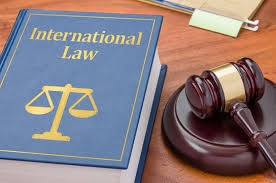
The current American threats to sanction the ICC could spell the death of International Law. Whatever little hope people had for a just international system will disappear.
MondoWeiss, BY MITCHELL PLITNICK MAY 23, 2024
“Let me be clear, we reject the ICC’s application for arrest warrants against Israeli leaders,” U.S. President Joe Biden told his audience at a Jewish American Heritage Month event at the White House on Monday.
Biden criticized the request for arrest warrants as creating a “false equivalence” between Israel and Hamas. By making that statement, Biden took a clear stance against the rule of law, under which any party, regardless of any other status, must be dealt with the same way.
He also clarified again, if anyone was still unclear on the point, that the United States rejects accountability for itself and its allies, but holds rigorous standards in that regard for its enemies. Just over a year ago, Biden said that an ICC arrest warrant against Russian President Vladimir Putin was “justified” because he had “clearly committed war crimes.”
The hypocrisy is par for the American course. But Biden is now faced with a dilemma. He and other senior officials in his administration have indicated that they will use more than words in response to the ICC Prosecutor’s request. Some in Congress are essentially calling for all-out war on the Court. But Biden is likely to be reluctant to go that far.
Republicans target the ICC
It had been clear for the past several weeks that the International Criminal Court (ICC) was preparing a case against Israeli leaders, and on Monday, the Chief Prosecutor of the Court, Karim Khan, requested arrest warrants for three Hamas leaders and two Israelis. The Israelis were Israeli Prime Minister Benjamin Netanyahu and Defense Minister Yoav Gallant.
Predictably, both Israeli and American leadership lapsed into hysterics. As usual, Netanyahu immediately labeled the request for the warrants “the new antisemitism.” He also claimed that the Prosecutor “should be worried about his status,” a thinly veiled threat of violence, and that Khan was “turning the ICC into a pariah institution” and was “pouring gasoline on the fires of antisemitism spreading around the world.”
That kind of reaction reflects a profound concern about the charges potentially being brought against him — and it should not be overlooked that his statement did not include a denial of those charges. Netanyahu ran through the entire tired propaganda playbook, yet in doing so, he only highlighted the legitimacy of Khan’s request. But this was far from the beginning of the war on the Court.
Last week, before the warrants had been requested, a group of twelve Republican senators threatened Khan directly in a letter against bringing charges against Netanyahu. The letter was signed by some of the most prominent Republicans in the Senate, including Minority Leader Mitch McConnell, Marco Rubio, Tom Cotton, Ted Cruz, and Tim Scott.
The letter threatened sanctions against the ICC and Khan himself, saying “Target Israel and we will target you.” This is language that should be more characteristic of the Mafia than of government officials, though increasingly, it is hard to tell the difference. It closed by stating flatly, “You’ve been warned.”
Khan also told CNN’s Christiane Amanpour that a “senior elected official” had told him ‘This court (the ICC) is built for Africa and for thugs like Putin.” It seems likely that such a blunt and racist bit of bullying came from an American leader……………………………………………………………………….. more https://mondoweiss.net/2024/05/biden-and-congress-are-destroying-international-law-for-israel/
Russian uranium ban reopens threat of uranium mining escalation in US

Executives from Uranium Energy, Terrapower, Centrus and Energy Fuels couldn’t contain their excitement. Nor can they wait to begin mining, milling, and enriching uranium again in the US, to the detriment most especially of Native American tribes living on the land already permanently scarred and poisoned by previous such operations and who are still waiting for adequate or any cleanup and reparations.
The Navajo Nation, who have banned uranium mining on their territory, was home to more than 500 uranium mines at peak operations, all of which are now abandoned but not cleaned up. (There are more than 4,000 abandoned uranium mine sites across the US.) Tribal members understand all too well what uranium mining can do to the health and wellbeing of a community.
Beyond Nuclear, By Linda Pentz Gunter, 24 May 24
When Russia first invaded Ukraine on February 24, 2022, no one knew how long the fighting would continue and what the outcome might be. Kyiv was expected to fall immediately. It didn’t. More than two years on, the war continues and the rumblings from Russia about nuclear weapons use grow frighteningly louder.
The rush by the United States and its NATO allies at the time of the invasion to help defend — and to some extent arm — Ukraine included a quick decision to sanction Russian fossil fuel imports. On March 8, 2022, just 12 days after the invasion, US president, Joe Biden, signed an Executive Order banning the import of Russian oil, liquefied natural gas, and coal to the United States. Russian uranium was not included.
At the time of the 2022 ban on Russian fossil fuels, many of us in the anti-nuclear movement were agitating for a Russian uranium ban as well. At least 12% of US uranium imports comes from Russia to fuel domestic US reactors. That number rises to close to 50% if you also factor in uranium sourced from Russian satellites Kazakhstan (25%) and Uzbekistan (11%). (Canada is the other major single-source supplier of uranium to the US at 27%.)
On May 13, 2024, President Biden finally signed into law a bipartisan bill — the Prohibiting Russian Uranium Imports Act — banning imports of Russian low-enriched uranium. According to the bill, the ban affects: “Unirradiated low-enriched uranium that is produced in the Russian Federation or by a Russian entity” (read Rosatom operating outside Russia).
When we were pushing for a Russian uranium boycott at the start of the war, it was in the context of highlighting the detriment of nuclear power and fed into our agenda to permanently end the use of this dangerous and discriminatory technology. We asked then why the nuclear sector was getting a pass. Now we have the answer. The bill is a poisoned pill, almost literally.
The bill’s enactment “releases $2.72 billion in appropriated funds to the Department of Energy to invest in domestic uranium enrichment further advancing a secure and resilient global nuclear energy fuel supply consistent with our international obligations,” said the US State Department.
This is all part of the absurd agenda to triple global nuclear capacity by 2050 (too late) and, said the State Department, “to establish a secure nuclear fuel supply chain, independent of adversarial influence, for decades to come.” It will do nothing of the kind.
While the new law may claim to end US dependency on Russian uranium, it does not end American addiction to a fatal energy source that victimizes the communities least resourced to fight back. Furthermore, it will make America’s path to a renewable energy economy all the harder, redirecting funds and precious time toward the most expensive and slowest way to address the climate crisis (nuclear) instead of faster, cheaper renewables.
There are no prizes for guessing who was cheering the loudest as Biden wielded his pen last week.
Executives from Uranium Energy, Terrapower, Centrus and Energy Fuels couldn’t contain their excitement. Nor can they wait to begin mining, milling, and enriching uranium again in the US, to the detriment most especially of Native American tribes living on the land already permanently scarred and poisoned by previous such operations and who are still waiting for adequate or any cleanup and reparations.
One of those places, the Grand Canyon, is already under threat from the Pinyon Plain uranium mine, a project of Canadian-owned Energy Fuels and which started operations in January 2024, against the strong opposition of the Havasupai tribe who live there.
“We have been against uranium mining for decades because of the known risks to land and air, water and people,” said Carletta Tilousi, a leader of the Havasupai tribe who is fighting to cancel the uranium operations at Pinyon Plain, which is located near Red Butte, a sacred site to the Havsupai people.
“Uranium mining in the southwest has scarred and left a horrifying legacy of death in our communities. Thousands of abandoned uranium mines on federal and tribal lands have not been cleaned up,” she said.
“Uranium will continue to poison the Grand Canyon including the aquifers that feed into the Colorado River,” added Tilousi. “Contaminants from the uranium mine are likely to make their way to the deep aquifers that feed Havasu Springs. The mine closure is the only way to avoid this risk.”
The Navajo Nation, who have banned uranium mining on their territory, was home to more than 500 uranium mines at peak operations, all of which are now abandoned but not cleaned up. (There are more than 4,000 abandoned uranium mine sites across the US.) Tribal members understand all too well what uranium mining can do to the health and wellbeing of a community.
“This decision by Biden is terrible news,” said former uranium mine worker, Larry King of the Navajo Nation, a member of Eastern Navajo Diné Against Uranium Mining that has advocated mine cleanup for decades. Added King: “They’ve never returned an aquifer to pre-mining stages,” after extracting uranium through in-situ leach mining, the predominant technique currently used. “The companies got what they want out of Navajo and moved on.”
Despite the ban, the Navajo Nation had already been under a renewed threat of resumed uranium mining when Uranium Resources tried to open a new in situ leach mine at Church Rock, a plan that was defeated by tribal opposition. But Toronto-based Laramide Resources has since bought out Uranium Resources and wants to mine uranium there because the land is surrounded by — but not within — the boundaries of the Navajo reservation.
King’s home lies within view of Laramide’s plans. “The environmental impact statement says there are certain dwellings within the diameter of the project and those people will have to move,” King said. “I’m not moving. This is where I’m from. I’m not moving a foot.”
After Biden signed the Prohibiting Russian Uranium Imports Act, the Washington Post ran a disgracefully slanted article, in which not a single Native American voice was heard. Reporter Maxine Joselow quoted executives from four nuclear corporations and two politicians, all of whom favored the legislation. She made only a glancing reference to mine opponents as “others” and “still others” after prefacing their anonymous mention with “Though some environmentalists support nuclear power…”
But she was more than happy to repeat the utter nonsense spewed by Energy Fuels senior vice president, Curtis Moore, who said the company’s Grand Canyon mine would have “zero” risk to water supplies there and that “Uranium is absolutely essential to the fight against climate change.”
Americans, and especially Native Americans, will pay the price for this bill which, instead of banning uranium imports and transitioning away from nuclear power, seeks instead to stimulate exponential domestic growth of this dirty industry………………………………………………….. more https://beyondnuclearinternational.org/2024/05/19/terrible-news/
Senators Quiz Navy Leaders on Proposed Sea-Launched Nuclear Cruise Missile
USNI News, JOHN GRADY, MAY 24, 2024
The questions on how to modify Virginia-class attack submarines to install nuclear-armed sea-launched cruise missiles and how much the changeover would cost are not easily answered, the Navy’s director of strategic systems programs told a key Senate panel this week.
Vice Adm. Johnny Wolfe on Wednesday, “we’ve started to look at that” and “we’ve asked for flexibility.” He added, “it would be premature to give a cost estimate of the modification.”
Sen. Mark Kelly (D-Ariz.) wondered if the modification meant “we would be giving up something we really need” – torpedoes against a larger navy for a weapon meant for deterrence. He also questioned the cost to other strategic weapon programs if the project moves forward……………………………………………………………………………………. more https://news.usni.org/2024/05/24/senators-quiz-navy-leaders-on-proposed-sea-launched-nuclear-cruise-missile
Australian opposition leader Dutton’s devoid-of-details nuclear plan an atomic failure
By Belinda Jones | 25 May 2024 https://independentaustralia.net/politics/politics-display/duttons-devoid-of-details-nuclear-plan-an-atomic-failure,18632
Given the absence of substance in Peter Dutton’s nuclear policy so far, his ‘lack-of-details’ cry over The Voice must surely come back to haunt him, writes Belinda Jones.
TWO YEARS AGO, Nationals Leader David Littleproud called for a national discussion on nuclear energy.
Said Littleproud:
‘Peak business groups and unions are calling for the moratorium on nuclear power to be lifted, amid a push to ensure Australia is “technology agnostic” during its transition to cut emissions. It’s time to have the discussion.’
Almost two years later, neither Littleproud nor Dutton has yet produced anything of substance on the issue for the Australian public to consider — just broken promises and delays over when details on the Coalition’s nuclear energy policy will be delivered.
Prime Minister Anthony Albanese has called on the Coalition to release details on its nuclear energy policy.
Dutton’s level of preparedness for a discussion on nuclear energy appears only to have extended to a tweet at this stage.
Since taking over the nuclear conversation, Dutton has incurred the ire of the Commonwealth Scientific and Industrial Research Organisation (CSIRO), which was forced to defend its reporting in a “rare intervention”
In March 2024, Dutton made incorrect claims about Australia’s national science agency’s costings and slammed its GenCost 2023/24 report, prompting a warning from CSIRO chief executive Douglas Hilton that public trust requires our political leaders refrain from disparaging science.
In a telling statement this week, Member for Wannon Dan Tehan pledged his support for the Coalition’s nuclear energy policy — just not in his electorate. This may be the reason for Dutton’s delay in releasing the policy details: a divided party room.
To be fair, mainstream media has attempted to elicit answers from Dutton for months now, to no avail. The public’s desire for detail on the Coalition’s nuclear policy is becoming more pressing as both the 2024 Queensland State and 2025 Federal Elections loom.
IA contacted Peter Dutton to try to get some direct answers for our readers, asking the following questions:
In terms of transmission of nuclear energy, what changes to existing power grids and transmission systems will have to be made to accommodate nuclear reactors or SMRs? What will be the cost and timeframe of those changes?
How many nuclear reactors or small nuclear reactors (SMRs) does the Liberal/National Coalition want to build?
What will be the average cost per nuclear reactor and SMR?
What is the estimated date of nuclear reactors or SMRs being operational?
Where will the proposed nuclear reactors or SMRs be located?
In proposed nuclear reactor or SMR locations, what steps has the Coalition taken to consult with the local community, environmental agencies and other levels of government about the impacts of the proposed nuclear reactor or SMR, and are any details of those consultations available to the public?
Does the Coalition plan for nuclear include significant taxpayer investment? If so, how much?
What budget measures will have to be taken to free up funding for nuclear reactors or SMRs, that is, what cuts in other areas of the budget will have to be made?
How many short-term jobs will be created during the construction phase of each proposed nuclear reactor or SMR? Will those jobs be mainly local jobs or FIFO?
Traditionally, government support of a new enterprise/industry is conditional on the creation of secure, new, ongoing jobs. Given the fact nuclear reactors and SMRs will likely be fully automated requiring very few jobs when operational, what is the quid pro quo for government funding? Will taxpayer funding secure an equity stake in nuclear businesses in return for government support in lieu of a significant number of jobs?
How will the nuclear reactors or SMRs be cooled? Do the proposed locations have enough water to support a nuclear reactor or SMR, especially during drought? Please provide evidence to support your answer.
Will the Coalition’s proposed nuclear reactors or SMRs draw water from the Great Artesian Basin at any time? If so, how much and what will be the impact?
What is the Coalition’s plan for the nuclear waste generated by nuclear reactors and SMRs and the long-term site repatriation costs and timeframe of any proposed nuclear reactor or SMR site?
What business groups, individual persons or businesses, or private investors have expressed interest to the Coalition in building nuclear reactors or SMRs? And what is the current estimate in dollar terms of that interest?
Are any of those business groups, individual persons or businesses, or private investors already invested in other industries associated with nuclear energy, such as mining and resources?
Two hours later we received a curt reply stating, ‘… we will announce further detail regarding our energy policy in due course’.
The email also suggested IA “continues its own research”.
This reply from Dutton’s office is wholly unsatisfactory, so IA will continue seeking answers from the Coalition to these important questions — answers that our readers have a right to know – until we get a more informative response. After all, it was the Coalition that called for a conversation on nuclear energy in the first place and its “plan” is to implement a nuclear policy if it wins office in less than 12 months.
Time is running out for Dutton to present his nuclear energy policy — important electoral dates approach.
But, clearly, the Coalition’s behaviour around the much-awaited policy details indicates how totally unprepared it is to hold government. It wants to lead the conversation and the country, yet it hasn’t put in the work. After almost two years of “discussion”, the Opposition still comes to the table empty-handed — no information, no plan, just a series of thought bubbles and meaningless L-NP talking points.
Dutton’s words –“When you deliberately keep the detail back, people become suspicious” – will no doubt come back to haunt him. Because when it comes to the Coalition’s nuclear energy policy — if Australians don’t know, they’ll vote no.
It’s so hot in Mexico that monkeys are dropping dead from trees.
At least 83 of the midsize primates were found dead in the Gulf coast state of Tabasco
Independent, Mark Stevenson, 22 May 24
It’s so hot in Mexico that howler monkeys are falling dead from the trees.
At least 83 of the midsize primates, who are known for their roaring vocal calls, were found dead in the Gulf coast state of Tabasco. Others were rescued by residents, including five that were rushed to a local veterinarian who battled to save them.
“They arrived in critical condition, with dehydration and fever,” said Dr. Sergio Valenzuela. ”They were as limp as rags. It was heatstroke.”
While Mexico’s brutal heatwave has been linked to the deaths of at least 26 people since March, veterinarians and rescuers say it has killed dozens and perhaps hundreds of howler monkeys.
In the town of Tecolutilla, Tabasco, the dead monkeys started appearing on Friday, when a local volunteer fire-and-rescue squad showed up with five of the creatures in the bed of the truck.
Normally quite intimidating, howler monkeys are muscular and can be around 2 feet (60 centimeters) tall, with tails as long again. They are equipped with big jaws and a fearsome set of teeth and fangs. But mostly, their lion-like roars, which bely their size, are what they’re known for.
“They (the volunteers) asked for help, they asked if I could examine some of the animals they had in their truck,” Valenzuela said Monday. “They said they didn’t have any money, and asked if I could do it for free.”
The veterinarian put ice on their limp little hands and feet, and hook them up to IV drips with electrolytes.
So far, the monkeys appear to be on the mend. Once listless and easily handled, they are now in cages at Valenzuela’s office. “They’re recovering. They’re aggressive … they’re biting again,” he said, noting that’s a healthy sign for the usually furtive creatures.
Most aren’t so lucky. Wildlife biologist Gilberto Pozo counted about 83 of the animals dead or dying on the ground under trees. The die-off started around May 5 and hit its peak over the weekend.
“They were falling out of the trees like apples,” Pozo said. “They were in a state of severe dehydration, and they died within a matter of minutes.” Already weakened, Pozo says the falls from dozens of yards (meters) up inflict additional damage that often finishes the monkeys off.
Pozo attributes the deaths to a “synergy” of factors, including high heat, drought, forest fires and logging that deprives the monkeys of water, shade and the fruit they eat.
For people in the steamy, swampy, jungle-covered state of Tabasco, the howler monkey is a cherished, emblematic species; local people say the monkeys tell them the time of day, by howling at dawn and dusk.
Pozo said the local people — who he knows through his work with the Biodiversity Conservation of The Usumacinta group — have tried to help the monkeys they see around their farms. But he notes that could be a double-edged sword.
“They were falling out of the trees, and the people were moved, and they went to help the animals, they set out water and fruit for them,” Pozo said. “They want to care for them, mainly the baby monkeys, adopt them.”
“But no, the truth is that babies are very delicate, they can’t be in a house where there are dogs or cats, because they have pathogens that can potentially be fatal for howler monkeys,” he said, stressing they must be rehabilitated and released into the wild……………………………………………………
“This is a sentinel species,” Pozo said, referring to the canary-in-a-coal mine effect where one species can say a lot about an ecosystem. “It is telling us something about what is happening with climate change.” https://www.independent.co.uk/climate-change/news/mexico-city-heat-drought-monkeys-b2548962.html
Zaporizhzhia nuclear plant’s main power line down for hours, no safety threat
MOSCOW, May 23 (Reuters) – Russia said the main power line supplying the Russian-controlled Zaporizhzhia nuclear power plant (ZNPP) in Ukraine was down for more than three hours on Thursday, though there was no threat to safety.
The six reactors at the Zaporizhzhia plant, held by Russia and located close to the front line of the conflict in Ukraine, are not in operation but it relies on external power to keep its nuclear material cool and prevent a catastrophic accident.
The Russian management said on their official channel on the Telegram app that the reasons for the outage, which had not caused any change in radiation levels, were being investigated.
It had initially said the main 750 kilovolt (kV) “Dniprovska” power line went down at 1:31 p.m. local time (1031 GMT), while the 330 kV “Ferosplavnaya” line was supplying power to the plant now.
It later reported that the Dniprovska line was restored at 4:49 p.m. local. Power supply to ZNPP is possible via both lines, it added.
The Dniprovska power line also went down for almost five hours on March 22, highlighting what the International Atomic Energy Agency (IAEA) said were “ever present dangers to nuclear safety and security” from the Russia-Ukraine war.
Russia and Ukraine have each accused the other at various times of shelling the Zaporizhzhia plant, which is Europe’s largest. Both deny such accusations.
The IAEA has said that the ZNPP has been experiencing major off-site power problems since the conflict began in early 2022, exacerbating the nuclear safety and security risks confronting the site.
1 This Month
Chernobyl: The Lost Tapes – A good documentary on Chernobyl on SBS available On Demand for the next 3 weeks– https://www.sbs.com.au/ondemand/tv-program/chernobyl-the-lost-tapes/2352741955560

of the week–London Campaign for Nuclear Disarmament

Tell the Ukrainian Government to Drop Prosecution of Peace Activist Yurii Sheliazhenko
To see nuclear-related stories in greater depth and intensity – go to https://nuclearinformation.wordpress.com
-
Archives
- April 2026 (152)
- March 2026 (251)
- February 2026 (268)
- January 2026 (308)
- December 2025 (358)
- November 2025 (359)
- October 2025 (376)
- September 2025 (257)
- August 2025 (319)
- July 2025 (230)
- June 2025 (348)
- May 2025 (261)
-
Categories
- 1
- 1 NUCLEAR ISSUES
- business and costs
- climate change
- culture and arts
- ENERGY
- environment
- health
- history
- indigenous issues
- Legal
- marketing of nuclear
- media
- opposition to nuclear
- PERSONAL STORIES
- politics
- politics international
- Religion and ethics
- safety
- secrets,lies and civil liberties
- spinbuster
- technology
- Uranium
- wastes
- weapons and war
- Women
- 2 WORLD
- ACTION
- AFRICA
- Atrocities
- AUSTRALIA
- Christina's notes
- Christina's themes
- culture and arts
- Events
- Fuk 2022
- Fuk 2023
- Fukushima 2017
- Fukushima 2018
- fukushima 2019
- Fukushima 2020
- Fukushima 2021
- general
- global warming
- Humour (God we need it)
- Nuclear
- RARE EARTHS
- Reference
- resources – print
- Resources -audiovicual
- Weekly Newsletter
- World
- World Nuclear
- YouTube
-
RSS
Entries RSS
Comments RSS
 nuclear-news