Australia risks being ‘world’s nuclear waste dump’ unless Aukus laws changed, critics say

Labor-chaired inquiry calls for legislation to rule out accepting high-level nuclear waste from US and UK submarines among other recommendations
Daniel Hurst Foreign affairs and defence correspondent, https://www.theguardian.com/world/article/2024/may/13/australia-aukus-deal-submarines-critics-nuclear-waste
Australia risks becoming the “world’s nuclear waste dump” unless the Albanese government moves to rewrite its proposed Aukus laws, critics say.
A Labor-chaired inquiry has called for the legislative safeguard to specifically rule out accepting high-level nuclear waste from the US and the UK. One of the members of a Senate committee that reviewed the draft laws, independent senator Lidia Thorpe, said the legislation “should be setting off alarm bells” because “it could mean that Australia becomes the world’s nuclear waste dump”.
The government’s bill for regulating nuclear safety talks about “managing, storing or disposing of radioactive waste from an Aukus submarine”, which it defines broadly as Australia, UK or US submarines.
In a report published on Monday, the Senate’s foreign affairs, defence and trade legislation committee said this wording did not reflect the government’s promise not to accept high-level nuclear waste.
It recommended that the government consider “amending the bill so that a distinction is made between Australia’s acceptance of low-level nuclear waste from Aukus partners, but non-acceptance of high-level nuclear waste”.
The government has left the door open to accepting low-level waste from US and UK nuclear-powered submarines when they conduct rotational visits to Western Australia in the first phase of the Aukus plan. Low-level waste contains small amounts of radioactivity and include items such as personal protective equipment, gloves and wipes.
“According to the Australian Submarine Agency, nuclear-powered submarines only generate around a ‘small skip bin’ of low-level naval nuclear waste per submarine per year and that intermediate- and high-level waste will not become a concern until the first naval nuclear reactor requires disposal in the mid-2050s,” the Senate committee report said.
The government has yet to decide on the location for the disposal of radioactive waste from the submarines.
But infrastructure works proposed for HMAS Stirling – the naval base in Western Australia – to support the increased rotational visits are expected to include an operational waste storage facility for low-level radioactive waste.
The Department of Defence has argued any changes to the definitions should not prevent “regulatory control of the management of low-level radioactive waste from UK or US submarines” as part of those rotational visits.
Thorpe, an independent senator, said the call to prohibit high-level nuclear waste from being stored in Australia was “backed by experts in the field and was one of the major concerns raised during the inquiry into the bill”.
“The government claims it has no intention to take Aukus nuclear waste beyond that of Australian submarines, so they should have no reason not to close this loophole,” Thorpe said.
“They also need to stop future governments from deciding otherwise. We can’t risk our future generations with this.”
The government’s proposed legislation would set up an Australian naval nuclear power safety regulator to oversee the safety of the nuclear-powered submarines.
The committee made eight recommendations, including setting “a suitable minimum period of separation” to prevent a revolving door from the Australian Defence Force or Department of Defence to the new regulator.
The main committee report acknowledged concerns in the community that Australia might become a “dumping ground” for the Aukus countries, but it said the term was “not helpful in discussing the very serious question of national responsibility for nuclear waste”.
It also said the bill should be amended to ensure the regulator was transparent about “any accidents or incidents” with the soon-to-be-established parliamentary oversight committee on defence.
The Labor chair of the committee, Raff Ciccone, said the recommendations would “further strengthen the bill” and help “ensure Australia maintains the highest standards of nuclear safety”.
In a dissenting report, the Greens senator David Shoebridge said the legislation was “deeply flawed”, including because the regulator would report to the defence minister.
“The proposed regulator lacks genuine independence, the process for dealing with nuclear waste is recklessly indifferent to community or First Nations interests and the level of secrecy is a threat to both the environment and the public interest,” Shoebridge said.
The defence minister, Richard Marles, was contacted for comment.
Constellation Energy looks to small nuclear reactors for the gross, ever-increasing energy needs of great steel data containers.
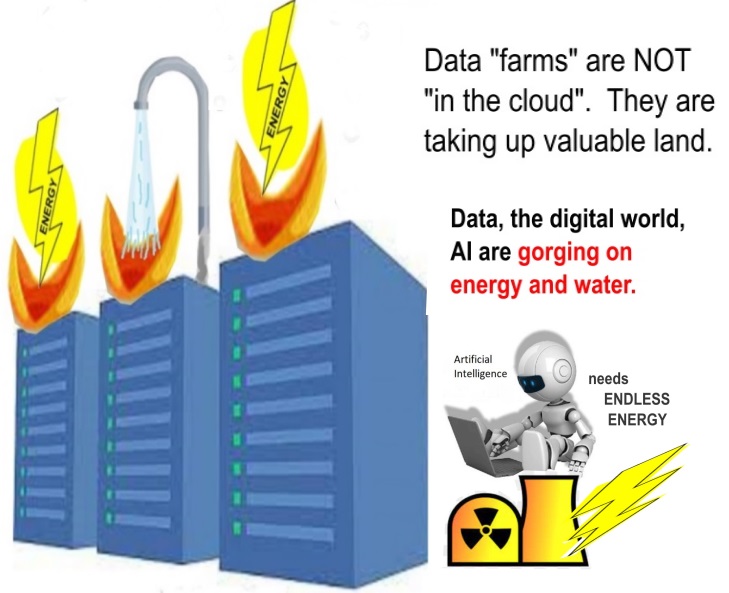
Constellation Energy eyes new nuclear for unprecedented data center power
demand.
Constellation Energy (CEG.O), opens new tab is considering building
next-generation nuclear plants on its existing sites to meet soaring demand
from data centers, executives with the Baltimore-based power company said
on Thursday. The largest operator of U.S. nuclear energy said it is looking
at adding new small modular reactors and other energy technologies to
deliver electricity to large load customers like data centers.
Reuters 9th May 2024
Sam Altman-backed nuclear start-up crashes after Wall Street debut

NEW YORK, https://www.malaymail.com/news/money/2024/05/11/sam-altman-backed-nuclear-start-up-crashes-after-wall-street-debut/133694 ― The share price of nuclear energy start-up Oklo, chaired by OpenAI boss Sam Altman, fell sharply yesterday on its first day of trading on Wall Street.
At around 3.40pm (1940GMT), the stock was down 53.9 per cent to US$8.40 (RM39.80).
Founded in 2013 by graduates of the Massachusetts Institute of Technology (MIT), Oklo went public by merging with AltC Acquisition Corp, a listed company.
The latter is a SPAC (special purpose acquisition company), a company whose sole purpose is to enable another firm to enter Wall Street through a merger.
Since the deal with Oklo was announced in July last year, AltC’s share price has soared, gaining over 72 per cent.
But transactions involving a SPAC are often highly volatile, partly because they are more exposed to speculation than traditional IPOs.
Altman is involved in several cutting-edge sectors and invested in Oklo in 2015, also becoming its chairman.
According to company documents, Altman directly controls around three per cent of the capital.
Oklo plans to build small modular reactors (SMRs), which are theoretically quicker to build than conventional power plants and less complicated to construct in remote areas. Oklo also wants to offer nuclear fuel recycling.
Conventional nuclear reactors are hugely expensive and take a long time to construct, with major projects having become notorious for their budget and schedule overruns.
The startup does not yet have a site of its own, and in January 2022 was refused a licence to build an SMR in Idaho by the Nuclear Regulatory Agency (NRC).
The NRC rejected the application on the grounds that there was a lack of information on the risks of accidents and the responses planned in such cases.
With the merger with AltC, Oklo raised US$306 million, which will be used to build the company’s first fission reactor, Aurora, in Ohio. ― AFP
“Nuclear comes last”

the tail-between-legs exit of the Nuclear Summit conferees declared in a headline: “Taxpayers are needed to foot the bill to achieve 2050 targets.”

Banks reject nuclear funding, stocks nosedive and the industry says it should, believe it or not, slow down
By Linda Pentz Gunter https://beyondnuclearinternational.org/2024/03/31/nuclear-comes-last/

NuScale, the company whose small modular reactor project collapsed so spectacularly last November, is “burning cash at the rate of $185 million per year”. On March 22, the company’s CEO, John Hopkins, sold 59,768 of his shares in the company. This is the same CEO who declared NuScale’s SMR project, aptly named VOYGR, “a dead horse.” It’s clearly on a journey to nowhere.

Wells Fargo, with an eye on prudent investments, has declared, “We think investor enthusiasm for SMR is misguided”. As The Motley Fool reported, “NuScale’s VOYGR nuclear power product has ‘no secure customers’ and is ‘not cost competitive’ says the analyst.”
The splashy cheerleading Nuclear Energy Summit organized by the International Atomic Energy Agency in Brussels on March 21 proved to be just that. The participants arrived floating on the hot air of their misplaced enthusiasm but “left humbled by the tepid reaction of bankers assessing the price tag of their ambitions”.
European Investment Bank Vice President Thomas Ostros, told Summit attendees to their face that “The project risks, as we have seen in reality, seem to be very high”. Representatives from the European and Latin American banking worlds said that “their lending priorities lean toward renewables and transmission grids” and that “nuclear comes last”.
Even the US Nuclear Regulatory Commission couldn’t quite bring itself to slam down its rubber stamp on Oklo’s chalet-in-the-woods micro reactor, the Aurora, which remains about as real as its namesake fairy tale princess.
In January 2022, the NRC denied Oklo’s license application outright because it “continues to contain significant information gaps in its description of Aurora’s potential accidents as well as its classification of safety systems and components,” wrote the NRC.
Oklo reapplied nine months later but according to the NRC docket there is “no further action”.
Nevertheless, Oklo brags on its website that it “made history” simply by developing “the first advanced fission combined license application to the U.S. Nuclear Regulatory Commission”, which sums up the second nuclear “renaissance” perfectly: Make a drawing. Hit ‘send’.
Meanwhile, the US military canceled its contract for an Aurora reactor originally intended for the Eielson Air Force Base near Fairbanks, Alaska.
And finally, an executive from the industry that has consistently delivered its latest new reactors decades late and billions over the original budget — in one case $20 billion over — suggested they should all just slow down. Said Ian Edwards, chief executive of Canadian reactor producer, Atkins Realis, “we all become too optimistic. We have this optimism bias towards being able to deliver faster. Really we should probably slow things down a little bit.”
But nuclear power is the answer to our current climate crisis! Ya think?
It’s tempting to ask whether things can get any worse for the nuclear power industry, but they almost certainly will. Unless we end up paying for it all. As the Bloomberg article that related the tail-between-legs exit of the Nuclear Summit conferees declared in a headline: “Taxpayers are needed to foot the bill to achieve 2050 targets.”
At the moment, a majority in the US Congress seem intent on making sure that is exactly what will happen. Because after all, why should multi-billionaire, Bill Gates, be forced to pay for his own nuclear toys when he can milk (read ‘bilk’) US taxpayers instead?
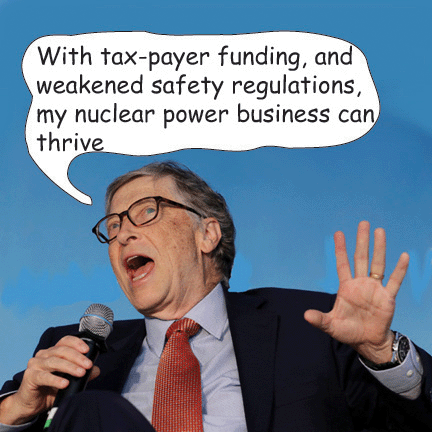
The US government has already pledged $2 billion of our money to Gates for his proliferation-friendly liquid sodium-cooled molten salt fast reactor produced by his company, TerraPower (more properly, TerrorPower). Gates can’t wait to export it the United Arab Emirates. Nuclear weapons anyone?
The strokey-white-beard-named ADVANCE Act, has been passed by the US House with 365 voting in favor and only 36 Democrats-with-a-conscience voting against it. By its own description, the ADVANCE ACT aims to “advance the benefits of nuclear energy by enabling efficient, timely, and predictable licensing, regulation, and deployment of nuclear energy technologies.” In other words, do away with burdensome — and expensive — safety regulations.
Indeed, New Mexico Democrat, Senator Martin Heinrich, told E&E News in January that “These regulatory timelines do not lend themselves to fighting the climate crisis.” Oh those wascally wegulations!
Meanwhile, Democratic senator Joe Manchin of West Virginia doesn’t want to seat any new NRC commissioners who might be “too focused on safety.”
The NRC’s motto is “protecting people and the environment,” a mandate it demonstrably endeavors to avoid already, but even some vestige of interest in safety is probably better than none. Not that safety oversight will be needed of course because, hey, SMRs are “walkaway safe” and “meltdown proof” and any new light water reactors are too “advanced” to be a safety risk.
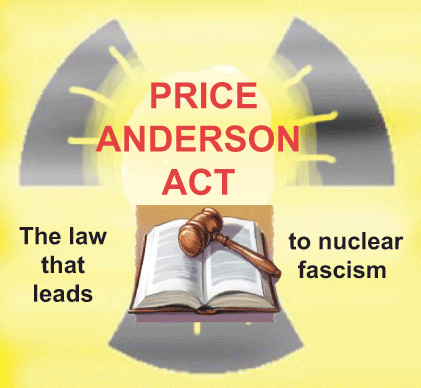
This makes the insistence by SMR manufacturers that they must be covered by the Price-Anderson Act (PAA) all the more curious. Price-Anderson, due to expire in 2025, was culled out of the ADVANCE ACT, now moving out of Senate committee and working its way through the reconciliation process, and handled separately. The Senate adopted the House version of the PAA, giving it a 40-year extension to 2026, and expanded limited liability for a major accident to just over $16 billion per reactor.
President Biden duly signed it into law, marking another misstep on what is becoming an increasingly problematic presidency.
Ed Lyman, Nuclear Power Safety Director at the Union of Concerned Scientists, told Nuclear Intelligence Weekly that “The nuclear industry’s push for a 40-year Price-Anderson Act extension is a sure sign that it doesn’t believe its own messaging about how safe the next generation of nuclear reactors is going to be.”
But in a joint statement, Senator Shelley Moore Capito (R-W.Va.) and Senator Tom Carper (D-Del.) declared that “The extension of the Price-Anderson Act in the minibus sends a clear message that we are committed to the advancement of this safe and reliable power source.”
The “clear message” this actually sends is that, in the event of a major nuclear accident, US taxpayers will be thrown under that minibus. The $16 billion coverage will be chicken feed and we will all be stuck with the bill. Let’s remember that the Chornobyl and Fukushima nuclear disasters are each racking up costs in the hundreds of billions of dollars and counting. We have been warned.
But a bi-partisan group of Representatives and Senators think it’s perfectly fine for all of us to pay for such an eventuality. Meanwhile, if you own a home and are forced to abandon it in the path of a nuclear accident, you cannot claim a dime off your homeowner’s insurance. It will just be a total loss. Think about that for a moment.
Are we outraged yet?
Linda Pentz Gunter is the international specialist at Beyond Nuclear
Indonesia civil society groups raise concerns over proposed Borneo nuclear reactor

by Irfan Maulana on 14 May 2024, https://news.mongabay.com/2024/05/indonesia-civil-society-groups-raise-concerns-over-proposed-borneo-nuclear-reactor/
- Indonesia’s largest environmental advocacy group, Walhi, staged demonstrations in Jakarta and West Kalimantan province to raise awareness about a proposed nuclear power plant in West Kalimantan’s Bengkayang district.
- In 2021, a U.S. agency signed a partnership agreement with Indonesia’s state-owned power utility to explore possibilities for a reactor in the province. Survey work is currently being conducted to determine the project’s viability and safety.
- Some environmental groups have questioned the merit of the plan on safety grounds and the availability of alternative renewable sources.
JAKARTA — Civil society organizations in Indonesia staged protests in late April to raise awareness of a planned nuclear plant near Pontianak, capital of West Kalimantan province on the island of Borneo.
“We are advocating that West Kalimantan be kept away from the threat of a nuclear radiation disaster. Indonesia is not Chernobyl,” said Hendrikus Adam, executive director of the West Kalimantan chapter of the Indonesia Forum for the Environment, a national NGO known as Walhi, referring to the site of a notorious 1986 nuclear meltdown in the Ukrainian Soviet Socialist Republic.
Indonesia’s first experimental nuclear reactor, the TRIGA Mark II, opened in the city of Bandung in February 1965. Since then, however, the world’s fourth-largest country has yet to open a full-fledged nuclear power station.
In March 2023, Indonesia and the U.S. Trade and Development Agency (USTDA) signed a partnership agreement to develop small modular reactor technology for the archipelago’s power network. The agreement included a $1 million grant to PLN, the state-owned power utility, to carry out feasibility studies on a nuclear reactor.
PLN has proposed a 462-megawatt facility in West Kalimantan, which would use technology supplied by NuScale Power OVS, a publicly traded company based in Oregon in the U.S.
In capacity terms, that represents almost one-tenth of the giant Paiton coal-fired complex in East Java province, a mainstay of the Java-Bali power grid.
NuScale says the modular design of its technology has additional resilience to earthquakes — a significant consideration for civil engineering projects in Indonesia, one of the most seismically active countries in the world.
However, the technology encountered controversy after John Ma, a senior structural engineer with the U.S. Nuclear Regulatory Commission (NRC), questioned the commission’s approval of the design’s earthquake resistance. That “differing professional opinion” was subsequently dismissed on review.
In 2021, Indonesia’s national research agency, known as BRIN, carried out a seismic study on a prospective site in the West Kalimantan district of Bengkayang.
That early work is part of research under the internationally agreed Probabilistic Seismic Hazard Assessment, which is recommended by the International Atomic Energy Agency as part of its safety regimen.
Risk assessment
At Walhi’s demonstration on April 26 in Jakarta, volunteers with the environmental group unfurled banners stating “Indonesia is not Chernobyl.” Lessons from the Chernobyl incident, as well as the 2011 Fukushima Daiichi nuclear plant meltdown in Japan — the latter triggered by an earthquake — inform much of the civil society campaign in Indonesia.
“The number of human and environmental tragedies shows that human-created technology such as nuclear power plants cannot be completely controlled,” Adam said.
He also questioned the government’s choice of Indonesian Borneo, known locally as Kalimantan, on the basis that it isn’t as seismically active as islands like Java, Sumatra and Sulawesi.
“The assumption that Kalimantan is safe from this disaster is of course not true,” Adam said. “Kalimantan has earthquake sources, such as the Meratus Fault, Mangkabayar Fault, Tarakan Fault, Sampurna Fault and Paternoster Fault.”
Walhi also pointed to slow uptake of solar and other renewable energy sources in Indonesia, which haven’t received the kinds of subsidies seen in other countries transitioning to clean energy.
“We have so many choices for energy transition, why do we have to choose technology that is actually dangerous?” said Fanny Tri Jamboree Christianto, Walhi’s energy campaign lead.
Dominic Cummings: Zelensky’s no Churchill and Ukraine’s corrupt
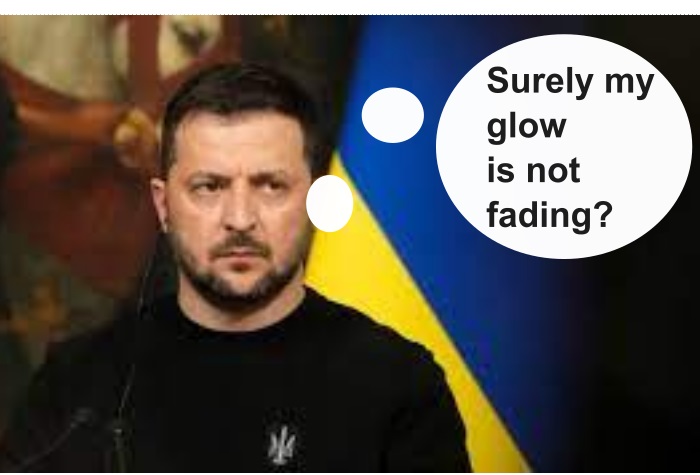
Former Brexit campaign chief says the West is ‘getting f**ked’ by supporting Ukraine.
BY NOAH KEATE, MAY 9, 2024 https://www.politico.eu/article/dominic-cummings-volodymyr-zelenskyy-ukraine-war-corruption/
LONDON — Boris Johnson’s former top adviser Dominic Cummings launched a sweary attack on Western support for Ukraine Thursday.
In an interview with the i newspaper, Cummings — who led Britain’s Vote Leave Brexit campaign and spectacularly fell out with Johnson in 2020 — declared that the West “should have never got into the whole stupid situation” and claimed sanctions against Russia have had a greater impact on European politics than in Moscow.
The former adviser was scathing of Ukrainian President Volodymyr Zelenskyy and comparisons with World War II.
“This is not a replay of 1940 with Zelenskyy as the Churchillian underdog,” he said.
“This whole Ukrainian corrupt mafia state has basically conned us all and we’re all going to get f**ked as a consequence. We are getting f**ked now right?”
In a follow-up tweet, Cummings later branded Zelenskyy a “potemkin” leader — but denied he’d called him a “pumpkin” as originally quoted in the interview.
He argued that war would only strengthen the relationship between Russia and China, saying Western nations “pushed [Russia] into an alliance with the world’s biggest manufacturing power.”
Cummings has long been critical of support for Ukraine, a stance that puts him sharply at odds with his old boss Johnson, a vocal supporter of Zelenskyy and Ukraine’s war effort.
He told the paper the West had failed to send Russian President Vladimir Putin a worthwhile signal which would deter him from invading another country.
“What lesson have we taught him? The lesson we’ve taught Putin is that we’re a bunch of total f**king jokers,” Cummings asserted, saying the war had “broadcast it to the entire world what a bunch of clowns we are.”
It comes as the former Vote Leave Brexit campaign chief tests the water for a new political party to replace the Tories.
POLITICO reported on Thursday that Cummings has organized a series of focus groups to get the public’s views about a new anti-establishment outfit.
Cummings told the i his “Start Up Party” would be “ruthlessly focused on the voters not on Westminster and the old media.”
Amidst genocide and war, anti-Zionism protesters are demonised as ‘extremists’
Independent Australia, By Martin Hirst | 13 May 2024
As human rights experts warn of an ongoing genocide in Gaza, any opposition to Zionism is being egregiously labelled as extremism, Dr Martin Hirst writes.
STUDENT PROTESTERS around the world are being demonised by politicians, bureaucrats and the news media for taking a stand against genocide.
This is just an updated version of the moral panic playbook that conservatives use to demonise young people who don’t toe the establishment line.
In the last six weeks, student protests have exploded around the world on a scale not seen since the Vietnam Moratorium almost 60 years ago. These students are protesting against what human rights experts are not hesitating to call a genocide in Gaza.
This reporter knows some of the Australian leaders of these protests quite well, organising politically with them as a long-term member of Left-wing group Socialist Alternative and a writer for its newspaper, Red Flag.
We know that none of these outstanding young activists are antisemitic. We know they are better educated about Palestine from a contemporary and historical perspective than our Prime Minister and most politicians…………………………………………………
We know that these young people are on the right side of history.
We also know that attempts by political leaders, intelligence agencies, Zionist hacks, the police and some university administrators to brand these brave students as violent, dangerous and antisemitic is a bald lie.
It is the lie itself that is dangerous because it actually emboldens Zionist thugs to launch ever-more violent attacks on student encampments, causing injury and mayhem.
It is also dangerous because it is a serious attempt – carried out with planning and intent – to criminalise anti-genocide activists and to criminalise their right to political speech.
What is happening in Australia, across Europe and in the United States is the creation of a state of emergency based on these dangerous lies. Right in front of our eyes, pro-Israel elements of the ruling class are establishing the conditions for a new wave of moral panic.
Students are being demonised as the 21st-Century version of the “folk devil“. The protests are being compared to 1930s Germany – which most people who make this comparison know absolutely fuck-all about – and they are being used to launch a McCarthyite witch hunt against students and academics who stand up for Palestine.
There’s nothing new about moral panics — the phrase was coined by British sociologist Stanley Cohen in the 1970s to describe the clamour for the state to take action against “Mods” and “Rockers” — two rival youth subcultures that enjoyed different types of music.
Interestingly, the Pogroms against Jews that swept Europe in the 1920s were a form of moral panic…………………………………………………………………………………………………
A moral panic only works when those in power – who feel threatened by resistance from below – can enlist loyal handmaidens in the media to prosecute their case and amplify their fear-mongering. Now, these tactics of intimidation are aimed at silencing dissent and any vocal opposition to the Israeli slaughter in Gaza.
Make no mistake, it is happening. Take it seriously because the Zionists and the political establishment are taking it seriously……………………………………………………
Failed Liberal Minister Josh Frydenberg helped to produce a “documentary” helpfully explaining to Sky News audiences how Australia is sliding into Nazi-era pogroms because of the threat to civil order posed by the student encampments and the wider anti-genocide movement.
In the last week alone, there has been a slew of opinion columns and news pieces in The Australian slandering student encampments while ignoring the attacks mounted on them by Zionist thugs.
Andrew Bolt and the usual list of suspects are apoplectic with rage that university administrators haven’t (yet) moved to shut down the protests.
However, the universities are beginning to move. The administration at Monash University in Melbourne is demanding students remove ‘Zionists not welcome’ signs from around their encampment because of some spurious “legal advice” that it is vilification.
Police have been allowed to install surveillance cameras overlooking the Monash encampment. Vice Chancellors from the Group of Eight — Australia’s richest universities — have asked Attorney-General Mark Dreyfus to advise them if the slogans used in the encampments are “hate speech”.
This is particularly egregious because Dreyfus himself is a Zionist. Dreyfus declined to provide legal advice but urged people who feel offended to lodge complaints under Section 18a of the Racial Discrimination Act. …………………………………………………..
It is too early to tell where all of this will end, but we can confidently predict that the Labor Party will support Sarah Henderson’s call for a Senate inquiry.
Anthony Albanese is fuelling the moral panic with apparent joy. He is reported to have told a room full of senior Zionist elders and student leaders that he believes the campus protests are led by outside agitators.
Helpfully, he was able to name them too. It’s all “the Trots‘ fault”.
This is deeply ironic for two reasons:
Russian revolutionary leader Leon Trotsky was a Jew and when he fell foul of the Stalinist regime, his Jewish heritage was used against him to launch a moral panic that even spread to Australia and poisoned the minds of many good Communist Party members, including the artist Noel Counihan who famously called Trotsky a “fascist gangster”.
Albanese has also been demonised as a Trotskyist by Murdoch hacks and (former Liberal MP Bronwyn Bishop) “Kerosene Bronny“…………….. https://independentaustralia.net/politics/politics-display/amidst-genocide-and-war-anti-zionism-protesters-are-demonised-as-extremists,18594
US bans China crypto-miner from nuclear base area
Yahoo! News, João da Silva – Business reporter, Tue, 14 May 2024
US President Joe Biden has ordered a Chinese-owned cryptocurrency miner and its partners to sell land they own near a US nuclear missile base, citing spying concerns.
MineOne Partners, which the White House says is majority-owned by Chinese citizens, has been given 120 days to sell the property, where it runs a crypto-mining operation.
The land is less than a mile (1.6km) away from an air force base in Wyoming, where intercontinental ballistic missiles are stored.
BBC News has contacted MineOne Partners and China’s embassy in the US for comment.
“The proximity of the foreign-owned Real Estate to a strategic missile base… and the presence of specialised and foreign-sourced equipment potentially capable of facilitating surveillance and espionage activities, presents a national security risk”, the White House said in a statement.
Francis E. Warren Air Force Base in Wyoming is home to Minuteman III nuclear intercontinental ballistic missiles.
MineOne bought the land close to the military base in 2022 and later installed cryptocurrency mining equipment.
The Committee on Foreign Investment in the US (CFIUS), a powerful body that scrutinises deals for national security security threats, was not notified about the purchase by the company, the White House said………………………………….. https://au.news.yahoo.com/us-bans-china-crypto-miner-011028473.html
1 This Month

of the week – Shut Down Drone Warfare!


Tell the Ukrainian Government to Drop Prosecution of Peace Activist Yurii Sheliazhenko

Petition to revoke the licensing of the Near Surface Nuclear Disposal Facility (NSDF) at Chalk River. https://www.ourcommons.ca/petitions/en/Petition/Details?Petition=e-7247
To see nuclear-related stories in greater depth and intensity – go to https://nuclearinformation.wordpress.com
-
Archives
- April 2026 (103)
- March 2026 (251)
- February 2026 (268)
- January 2026 (308)
- December 2025 (358)
- November 2025 (359)
- October 2025 (376)
- September 2025 (257)
- August 2025 (319)
- July 2025 (230)
- June 2025 (348)
- May 2025 (261)
-
Categories
- 1
- 1 NUCLEAR ISSUES
- business and costs
- climate change
- culture and arts
- ENERGY
- environment
- health
- history
- indigenous issues
- Legal
- marketing of nuclear
- media
- opposition to nuclear
- PERSONAL STORIES
- politics
- politics international
- Religion and ethics
- safety
- secrets,lies and civil liberties
- spinbuster
- technology
- Uranium
- wastes
- weapons and war
- Women
- 2 WORLD
- ACTION
- AFRICA
- Atrocities
- AUSTRALIA
- Christina's notes
- Christina's themes
- culture and arts
- Events
- Fuk 2022
- Fuk 2023
- Fukushima 2017
- Fukushima 2018
- fukushima 2019
- Fukushima 2020
- Fukushima 2021
- general
- global warming
- Humour (God we need it)
- Nuclear
- RARE EARTHS
- Reference
- resources – print
- Resources -audiovicual
- Weekly Newsletter
- World
- World Nuclear
- YouTube
-
RSS
Entries RSS
Comments RSS
 nuclear-news