This week’s Climate Military-Industrial-nuclear-media -complex news

Some bits of good news. Opposing The War Machine Is Cool Again – https://www.youtube.com/watch?v=Us1r9Wsvjts Hake Fisheries’ Remarkable Recovery Is a Sign of Hope for Our Oceans.
TOP STORIES. `
We’ve barely scratched the surface of how energy efficiency can help the energy transition.
The End of the World as We Know It. United States nuclear weapons, 2024 – (long) extracts at- https://nuclear-news.net/2024/05/10/2-a-united-states-nuclear-weapons-2024/ Don’t Believe the Washington War Machine: Putin Is Not Going to Invade Another NATO Ally.
China and the U.S. Are Numb to the Real Risk of War – ALSO AT https://nuclear-news.net/2024/05/12/1a-china-and-the-u-s-are-numb-to-the-real-risk-of-war/ Fusion reactor could create ingredients for a nuclear weapon in weeks.
Climate. ‘The stakes could not be higher’: world is on edge of climate abyss, UN warns. Floods in Brazil, Kenya, and Texas USA. Venezuela loses its last glacier as it shrinks down to an ice field. World’s oceans suffer from record-breaking year of heat. Afghanistan flash floods kill more than 300 as torrents of water and mud crash through villages.
Ghent students occupy university building in climate and Gaza protest.
Noel’s notes. Time to rise above the tit-for-tat mentality – “Turning Point: the Bomb and the Cold War” (and this is not an ad) https://www.youtube.com/watch?v=qHuuLo-CSRo&t=4s. What is special about “Turning Point -The Bomb and Cold War”?. “The empire” – an exaggerated, emotive, term?
**********************************************************
NUCLEAR ISSUES.
CLIMATE. Fixation on UK nuclear power may not help to solve climate crisis.
ECONOMICS
How long does it take to build a nuclear reactor? We ask France. NuScale, maker of small nuclear reactors, reported revenue of $1.4 million and net loss of $48.1 million for the three-month period ended March 31, 2024. Sizewell C nuclear station ‘absolutely not inevitable‘ says campaigner – Can investors be found?
Sam Altman’s nuclear energy company Oklo plunges 54% in New York Stock Exchange debut. Sam Altman-backed nuclear start-up crashes after Wall Street debut. NuScale Power Corporation (SMR) Reports Q1 Loss, Misses Revenue Estimates.
| EDUCATION. Nuclear lobby infiltrates West Lakes Academy and the Energy Coast University Technical College . | ENERGY. Energy Revolutions – time for a change. Constellation Energy looks to small nuclear reactors for the gross, ever-increasing, energy needs of great steel data containers. | ENVIRONMENT. Hinkley Point C: New public inquiry planned over environmental impact. UK Environment Agency ponders on its concerns over Hinkley Point C nuclear effects on fish and the marine habitat.Inside abandoned ghost town at Fukushima after nuclear power plant meltdown. |
| ETHICS and RELIGION. Let Israel’s Leaders Get Arrested for War Crimes. | LEGAL. The mad waste of public money by UK’s leading nuclear giants to pursue costs against a whistleblower at your expense. Forces of Impunity: The US Threatens the International Criminal Court. | MEDIA. Biden’s war on Gaza is now a war on truth and the right to protest. Israel Bans Al Jazeera Journalists, Network, Joining Syria and Iran as Repressive Regime.New Lines: How Washington is Weaponizing Media. |
| POLITICS.USA politicians threaten to invade International Criminal Court if Israel faces war crimes charges. The Summer of Student Activist Protests.UK’s Nuclear roadmap is a massive detour. UK Taxpayers to fund fast-tracked nuclear fusion reactors.Kremlin says nuclear weapon drills are Russia’s response to West’s statements.Polish industry minister announces massive delay in nuclear power plant project. Canada: Nuclear Waste Petition Tabled in Parliament. | POLITICS INTERNATIONAL AND DIPLOMACYIran warns it will change nuclear doctrine if ‘existence threatened’.France’s mini nuclear reactor plan – Nuward, gets another financial handout from the European Commission.Nuclear Energy: The New Geopolitical Battleground.South Korean state energy monopoly in talks to build new UK nuclear plant– ALSO AT https://nuclear-news.net/2024/05/12/1-b1-south-korean-state-energy-monopoly-in-talks-to-build-new-uk-nuclear-plant/Biden’s Shifting ‘Red Line’ Lets Israel Get Away With Murder. |
| RADIATION. Canada’s federal budget -calls nuclear energy “clean” – the height of absurdity! | SAFETY. Sizewell C in Suffolk granted nuclear site licence. |
| SPACE. EXPLORATION, WEAPONS. The detonation of even a single nuclear weapon in space could destroy a significant proportion of satellites in orbit around Earth: UK statement at the UN General Assembly.Astronomers in court against Federal Communications Commission and SpaceX. Russia, China plan nuclear power plant on Moon. | TECHNOLOGY. Warren Buffett compares AI to nuclear weapons in stark warning. The UK makes licensing for nuclear fusion easier: developers can lead site selection. Nano Nuclear wants to reinvent the nuclear power business—but it could take a while. Microsoft reportedly planning “Stargate”, a $100billion supercomputer to be powered by several nuclear plants |
| URANIUM. US Congress Restricts Russian Uranium Imports, Unlocks $2.7 Billion for Domestic Fuel.US nuclear industry clamors for waiver process details as Russian uranium ban looms. | WASTES. Nuclear waste at center of testy Nevada Senate race. Japan’s government asks Genkai mayor to accept site survey to host nuclear waste. |
| WAR and CONFLICT. Israeli Invasion of Rafah Appears Imminent After Evacuation Order. Ending the Logic of War. Rafah residents call on the world to act. NATO escalation in Ukraine threatens nuclear war with Russia. Moscow threatens to strike British military facilities following Cameron’s remarks. Medvedev says aim of nuclear exercises is to work out response to attacks on Russian soil. Exactly what happens in the seconds after a nuclear bomb is launched – https://www.youtube.com/watch?v=–dDjjOkY9A | WEAPONS and WEAPONS SALES.France wants to extend its nuclear umbrella to Europe.US Defenseless Against Russian Hypersonic Missiles and Iranian Drones – Explosive Defence Department Testimony.Military interests are pushing new nuclear power.Students Demanding Divestment: You’re on the Right Side of History.Token gesture: Biden puts hold on approved shipments of ammo to Israel. Hamas will not be defeated for another two to three years: Israeli military sources.Putin orders tactical nuclear weapons drills. Pentagon sees no change in Russia’s strategic nuclear force posture.The Great Ukraine Robbery Is Not Over Yet. The United States Is Expected to Announce a New $400 Million Package of Weapons for Ukraine. |
Telegraph: Microsoft reportedly planning “Stargate”, a $100billion supercomputer to be powered by several nuclear plants

Microsoft, OpenAI Reportedly Plans $100-Billion Supercomputer Fueled by Nuclear Power
Mark Nelson @energybants 13 May 24
The era of the great uranium brains approaches.
Microsoft (NASDAQ: MSFT) is reportedly gearing up to construct a colossal $100 billion data center, aptly named “Stargate.” Analysts speculate that this ambitious endeavor will be powered by multiple nuclear plants, marking a significant shift in the tech industry’s approach to energy sourcing.
The almost limitless piles of cash AI companies have to spend helps. Open AI and its major investor Microsoft developing plans for the world’s biggest $100billion project code-named Stargate. Analysts at Morgan Stanley speculated last week that this would be powered by several nuclear plants
New Lines: How Washington is Weaponizing Media

New Lines Magazine purports to be an independent media organization. Yet it constantly attacks genuine alternative media who stray from Washington’s official foreign policy line, all while employing many spooks, spies and other figures at the heart of the national security state.
Worse still, its parent organization, the New Lines Institute, has recently admitted to being directly funded by the U.S. government. MintPress News takes a closer look at this shady organization acting as Washington’s attack dog.
A Slick, Well-Funded Organization
If you read the Wikipedia entries for many alternative media outlets, they are written off as fringe conspiracy websites pushing debunked foreign propaganda. MintPress News, for example, is described as a “far-left news website” which “publishes disinformation and antisemitic conspiracy theories.” The Grayzone is similarly smeared as a “fringe” blog known for its “misleading reporting” and “sympathetic coverage of authoritarian regimes” such as Syria, Venezuela and China.
The evidence for these evidence-light smears comes primarily from the U.S. foreign policy journal, New Lines Magazine, a product of the New Lines Institute. New Lines is a very new organization that was established only in 2020. Despite this, it has already become a key player in setting U.S. agendas worldwide, boasting a staff of more than 50 and working with over 150 contributors. Headquartered on the prestigious Massachusetts Avenue NW (some of the most expensive real estate in the world), it sits between foreign embassies and many of America’s most prestigious think tanks, a stone’s throw – metaphorically and physically – from the White House.
New Lines describes its goal as “seeking to shape U.S. foreign policy” based on a “deep understanding of distinct regional geopolitics and value systems.” It began by focusing solely on the Middle East but quickly expanded to cover Ukraine, China, Venezuela and other political hotspots that most concern hawks in Washington. It certainly shapes public debate, and its research and experts are regularly quoted in influential outlets like The New York Times, Washington Post, and CNN.
A Rogue’s Gallery of U.S. Officials
New Lines presents itself as an independent organization, claiming that it is “one of the few think tanks in Washington with no foreign or local agendas.” Yet its higher ranks are packed with former state officials.
Chief amongst them is New Lines Institute founder and president Ahmed Alwani. Alwani served on the advisory board of the U.S. military’s Africa Command and influenced Washington’s Middle East positions. His New Lines biography boasts that he “met the commanding generals of Fort Jackson, Fort Hood, Fort Bragg, Naval Station Norfolk and Joint Base Andrews as well as then Secretary of Defense Donald Rumsfeld and his staff numerous times during the Iraq War to consult on U.S. policy” – something many might not consider a badge of honor.
Alwani also founded Fairfax University, a controversial private educational institution that Virginia state regulators considered shutting down in 2019. Auditors found that “teachers weren’t qualified to teach their assigned courses,” academic quality was “patently deficient,” plagiarism was “rampant,” and students’ English levels were “abysmally poor,” making Fairfax look far more like a degree mill than a legitimate university.
New Lines’ senior director, Faysal Itani, has a similarly notable past. Before joining the organization, Itani was simultaneously a senior fellow at the Atlantic Council – a NATO-funded think tank that serves as the brains of the military alliance, and an adjunct professor of security studies at Georgetown University – a department a previous MintPress News investigation exposed as a department filled with CIA agents that functions as a training ground for the next generation of American spies.
Another senior director, Nicholas Heras, was central to U.S. actions in Iraq and Syria…………………………………………………………………………………………
Spy Games
Perhaps the most notable New Lines Institute employee, however, is non-resident fellow Elizabeth Tsurkov. Tsurkov is a Russian-born Israeli who, before joining New Lines, worked at a number of hawkish think tanks, including the Atlantic Council and Freedom House……………………………………………………………………………………………………………………………………………………………………
In a video released in November, Tsurkov stated that she was actually in Iraq on behalf of the CIA and Israeli intelligence outfit Mossad. …………………………………………..
Attacking Alternative Media
Studying their output, it is clear that New Lines has two principal targets: nations the U.S. has deemed enemy states and alternative media outlets that question the narratives that New Lines and the U.S. government are trying to establish. Indeed, New Lines has spent years investigating alternative media, promoting a narrative that opposition to U.S. foreign policy equals being in the pay of official enemy countries……………………………………………………………………………………………
State-Funded Media
Considering its output, its constant support for U.S. policy and attacks on both domestic and international opponents of Washington, speculation was rife that the U.S. government was secretly funding New Lines. But the institute had always denied this, presenting itself as a neutral, agenda-free organization. That was, at least, until late last year when it announced that it had reached a “cooperative agreement” with the Modern War Institute at the United States Military Academy at West Point to “jointly develop actionable recommendations for U.S. global leadership to address pressing global security challenges.” In other words, to plan out American military strategy. The New Lines Institute also noted that they would now “serve as an intellectual resource for solving military problems.”
Days later, New Lines’ “About Us” section was updated, removing all reference to being funded by the Fairfax Foundation and inserting a clause admitting U.S. government financial support, strongly suggesting that the military is now bankrolling it. It now reads (emphasis added):
Funding for The New Lines Institute is provided by the The [sic] Washington Institute for Education and Research, a 501c(3) nonprofit organization registered in Washington DC.
New Lines Institute accepts research grants and charitable donations from U.S. individuals, registered U.S. legal entities, and the U.S. Government in support of its research priorities, and only insofar as such support is in compliance with U.S. laws and regulations; aligns with the institute’s vision, mission, purpose and principles; and falls within its core areas of expertise.
The news did not come as a shock to those paying close attention. “It will come as a surprise to no-one that New Lines is funded by the U.S. government,” wrote investigative journalist Matt Kennard on Twitter. There is a certain tenor to the articles of these cut-outs that is instantly recognizable. Slightly critical—to be convincing—but only up to a point which leaves state narratives robust.”
Sizewell C nuclear station ‘absolutely not inevitable’ says campaigner – Can investors be found?

The official cost of Sizewell C has been put at £20bn by the government, but many observers expect the final bill to be much higher due to increased building costs.
who would want to invest in an expensive project which will take 12 years to build, with no guarantee of a return for many more years?
Andrew Sinclair – Political editor, BBC East, Sun, 12 May 2024 https://au.news.yahoo.com/sizewell-c-absolutely-not-inevitable-091834059.html
A leading campaigner against the Sizewell C nuclear power station has said its construction is still not inevitable.
The planned energy plant, on the Suffolk coast, has just been granted its nuclear site licence.
But Alison Downes, director of campaign group Stop Sizewell C, has questioned whether the government will be able to attract enough private investment.
Ministers, who have already contributed £2.5bn to the project, have said they remain committed to the scheme.
The decision to grant Sizewell C a nuclear site licence on 7 May was described by the project team and local business groups as a “huge milestone”.
It came just months after the government granted a Development Consent Order to Sizewell C and pledged further funding to the project. Ministers have regularly referred to Sizewell C when discussing the country’s nuclear programme.
Andrew Bowie, Minister for Nuclear and Renewables, said: “Sizewell C will be the cornerstone of the UK’s clean energy transition, supplying six million homes with green energy for decades.”
But despite plenty of signs that the project could be coming closer to reality, Alison Downes insisted on BBC Politics East that “it’s absolutely not inevitable”.
“We still don’t know who is going to pay for it. The government is trying to raise funds at the moment, but there’s no guarantee it’ll be successful,” she said.
The government agreed to take a 50% stake in the development of Sizewell C after concerns about the involvement of Chinese investors and it is looking for investors to help fund the project.
Can investors be found?
The official cost of Sizewell C has been put at £20bn by the government, but many observers expect the final bill to be much higher due to increased building costs.
The prime minister told me last year that there had already been “encouraging early interest” from people wanting to invest.
But campaigners have questioned who would want to invest in an expensive project which will take 12 years to build, with no guarantee of a return for many more years.
Ms Downes, who also has concerns about the safety of the site from rising sea levels and the project’s impact on local habitats, said: “A lot of taxpayers’ money has gone into a project that has no absolute certainty of whether or not it’s going ahead.”
The argument for nuclear
But Richard Rout, the deputy leader of Suffolk County Council, told BBC Politics East that the demand for more homegrown green energy meant that Sizewell was essential.
“I think Sizewell C is now at a point where it has to happen. We need nuclear in this country to give us energy independence,” he said.
“We are now seeing Sizewell C move forward and for me [the priority now] is about minimising the impacts on the local community and maximising the benefits.”
But Alison Downes pledged to “absolutely keep fighting” .
A final decision on whether to go ahead with the project is expected to be taken by energy company EDF towards the end of 2024.
Exactly what happens in the seconds after a nuclear bomb is launched
Horror warnings about the impact of a nuclear launch haven’t stopped a select few leaders from threatening to unleash armageddon.
news.com.au, Alex Blair, 12 May 24
12,500.
That is the approximate number of nuclear bombs that exist on our planet today.
Nine countries, the US, India, China, Russia, France, the UK, Pakistan, Israel and North Korea, have become the major players in the most powerful arms race in history.
Officials say the build-up of nuclear weapons arsenals is purely an act of deterrence, but even the slightest of miscues, like the famous 1983 false alarm that almost rang in armageddon, could spark a butterfly effect feared ever since Hiroshima.
The horrific details over what would happen following a nuclear launch have been discussed ad nauseam by humanity’s best minds, who have warned for decades that the destruction of civilisation could be sparked by the press of a button.
But this hasn’t stopped leaders from flexing their might through words. Pundits in Russia have regularly threatened their nation’s nuclear arsenal as Vladimir Putin pushes on with his now two-year “special military campaign”………….
North Korea has similarly flexed its growing nuclear arsenal to the world, boldly defending its right to govern its citizens how the Kim dynasty sees fit, a topic that regularly flares tensions with its closest neighbours and the West.
Despite years of international scrutiny, Kim Jong-un has continued missile tests into 2024, some of which hurtling dangerously close to Japan’s sovereign territory.
Analyst Annie Jacobsen, author of the newly-released book Nuclear War: A Scenario, has broken down the current state of geopolitics and the very real risk nuclear conflict could “end the world as we know it in a matter of hours”.
While there are powerful entities like the UN’s Office for Disarmament Affairs collaborating information over the number of weapons held by the major nuclear players, Jacobsen warns the actual tally could be way off the official estimate.
The CIA will tell you North Korea has 50 nuclear weapons,” she said in a recent appearance on Chris Williamson’s Modern Wisdom podcast.
“But some non-government organisations will tell you that number is as high as 130.”
The world nuke tally peaked in 1986 at a whopping 70,000. From there, nations moved to reduce the amount of planet-destroying armaments. But it only takes one to kick things off.
There is also an issue in where the nuclear material ends up, with plants becoming immediate targets for foreign enemies in the event of conflict.
“Where does all that nuclear material go?” Jacobsen continued. “There’s a plant in Texas call Pentax, that’s where they do that. Not a lot of people know about it. But it is almost certainly on everybody’s nuclear strike target list. Because can you imagine the mayhem that would ensue if you struck that?
“There’s just so many precariously dangerous situations. Anything that touches a nuclear weapon becomes radioactive, both literally and figuratively.”
Endgame
The moment the button is pushed, a lightning speed chain reaction involving “hundreds of thousands” of officials begins.
Jacobsen describes this as “the ticking clock scenario”.
“The way it begins, interestingly, is in space,” she explains.
“That is because the US has spent trillions of dollars in the past few decades to be aware of when anyone launches a missile.” ICBM nukes are specifically designed to cross oceans and strike foreign nations. While they have never been used, the time frame from initial launch to impact is chilling.
“It takes 30 minutes in three phases,” Jacobsen explains, using a hypothetical attack on the US to explain the process.
“The first phase, boost phase, takes five minutes. Midcourse phase, 20 minutes and finally terminal phase, 100 seconds.
“That’s from a launch pad in Russia, 26 minutes and 40 seconds. From Pyongyang, it’s 33 minutes.”
“These satellite systems in space can park above an enemy nation and watch for the hot rocket exhaust on a ballistic missile launch, which it can see in less than a fraction of a second.”
She explains there are systems working around the clock specialised at interpreting the data at lightning speed before ultimately making the most dystopian of calls to the most powerful man on the planet.
“It becomes simply a matter of minutes before the President is notified about this,” she continued. “Within 150 seconds, the systems know whether the missile is directed at us or not.
“Letting the President know that very soon he has to make a decision very soon about a counterattack.”
“We don’t wait to absorb a nuclear blow. We launch. The theory is that whoever is launching at the US will try and take out the nuclear silos so we can’t respond, ’so therefore we must respond’.”………………….
Biden’s Shifting ‘Red Line’ Lets Israel Get Away With Murder

Biden threatened Israel with pulling military aid if it invades Rafah, but Israel is attacking anyway. It won’t face consequences so long as Biden remains vague on what amounts to sufficient grounds for suspending military aid.

with Biden and Secretary of State Antony Blinken driving the process, the prospects for real pressure were dubious.
the report made excuses and found that, while Israeli soldiers and officers engaged in human rights abuses, they did not amount to sufficient grounds to suspend military aid.
MITCHELL PLITNICK 11 May 24 https://scheerpost.com/2024/05/12/bidens-shifting-red-line-lets-israel-get-away-with-murder/
Over the seven months of Israel’s genocidal campaign in Gaza, the United States has worked vigorously to offer maximum support for Israel while trying to give the impression that it is concerned about the massive loss of Palestinian life. The performance has been difficult to maintain, as virtually every American action contradicts the occasional words of concern for the devastation being fully abetted and enabled by American policy.
In recent weeks, political pressures have forced President Joe Biden to try to take more concrete steps to deter what he considers “excessive” Israeli actions. Such Israeli actions — which apparently do not include killing over 34,000 people, wounding over 78,000 more, completely destroying the health, education, and civic infrastructure in Gaza, and a daily flow of war crimes — raise concerns in the White House that Israel’s image around the world is becoming one of a genocidal regime and that image is reflecting on its American patron.
Rafah has become the focal point of this concern. Biden was prepared to support the horrors of the past seven months, but with some 1.4 million people stuffed into Rafah (an area that was crowded when it was home to 275,000 people before Israel’s onslaught), he realizes that a full-scale ground invasion of the kind that we witnessed in most of Gaza will cause a horror show that even Americans and Europeans — most of them, anyway — will not be able to abide.
So Biden made a statement. “Civilians have been killed in Gaza as a consequence of those bombs and other ways in which they go after population centers,” Biden told CNN’s Erin Burnett. “I made it clear that if they go into Rafah — they haven’t gone in Rafah yet — if they go into Rafah, I’m not supplying the weapons that have been used historically to deal with Rafah, to deal with the cities — that deal with that problem.”
Those words, in typical Biden fashion, were as clear as a muddy lake and left massive amounts of wiggle room for the White House to continue to arm Israel’s genocidal war on Gaza. They also provided a roadmap for Israeli Prime Minister Benjamin Netanyahu to follow if he wishes to continue his genocidal campaign and not risk harming the one aspect of Israel’s relationship with the U.S. that Netanyahu cares about: the inexhaustible supply of arms.
Biden’s words are the latest in a series of statements and actions meant less to deter Netanyahu than to deter protesters and the voters who have been abandoning him in large numbers over his genocidal policy in Gaza. As we have seen over the past seven months, these words have, at best, pressed Israel to slow its genocidal attacks just a little and occasionally relent in some small, largely symbolic way, in its staunch efforts to block humanitarian aid from reaching the people in Gaza.
Problematically, those results may give the impression that Biden is trying to rein Israel in, at least in a limited way, but actually, they help support Israel’s genocidal program. By occasionally allowing a small amount of aid in for a brief period, Israel has a tool with which to fend off half-hearted Western criticism. And, by proceeding more slowly, Israel continues to move inexorably toward its genocidal goal, but because moving slower means slightly less horrific images, or at least fewer of them, Israel again keeps a debate going over its actions rather than making defending it completely impossible.
False promises, but consistent policy from Biden
Months ago, the pressure was already starting to build. Democratic thinkers and pundits were wringing their hands over the “divisions” in the party. In the Senate, as many as 18 Democratic senators were pushing a bill that would have required all counties receiving U.S. military aid to abide by American and international law and included a regular reporting requirement.
The bill was specifically aimed at Israel, though it applied to all aid recipients, and Biden desperately wanted to avoid a vote that would show stark divisions among Democrats, even though the bill had no chance of passing into law. The man who had sold himself in 2020 as a “unifier” did not want such damning evidence of his inability to even keep his own party unified.
So, Biden issued a directive that required written assurances from recipients of U.S. military aid that they would only use the weapons in accordance with U.S. and international humanitarian law, and also included a reporting requirement. The key difference is that the White House would control this process.
We’re seeing the result of that key difference right now.
The memorandum Biden issued — National Security Memorandum 20, or NSM-20 — was greeted with some cautious optimism and a good deal of skepticism. It did nothing to actually change U.S. law regarding the use of American military aid, but the specific reporting requirement might be hoped to bring the sort of scrutiny on how that aid was used that Israel has always avoided.
But with Biden and Secretary of State Antony Blinken driving the process, the prospects for real pressure were dubious. Israel fulfilled the first part of the memo, which was to submit written assurances about how it would use the aid. No need to tell the truth there. The proof would, ostensibly, be in its report two months later. That would be the test both for what could be done with the report politically by Israel’s critics and, more importantly, whether the White House was going to abide by its own laws regarding aid to Israel. Hopes for the latter were not high.
The report on Israel’s compliance was due to be presented to Congress on May 8. That day came and went with no report. State Department Spokesperson Matthew Miller said, when asked about it, “It will not be transmitted today. We continue to work to finalize the report. We expect to deliver it in the very near future, in the coming days.”
The vague timing of the report is noteworthy, considering the State Department knew from the day Biden issued NSM-20 when it would be due and they’ve been able to make definitive statements about Israeli behavior pretty consistently ever since, including some minor criticism and objections.
The delay was even more notable as the due date was the very same day that Biden decided to talk to CNN and announce that he intended to withhold certain offensive weapons if Israel launched a “full-scale” invasion of Rafah.
Finally, the report saw the light of day just after five o’clock on Friday. This is what government agencies do when they need to release something publicly but want the least possible attention drawn to it. Unsurprisingly, according to initial reports, Israel was found to have “likely” violated international law and, therefore, U.S. law in its use of American-supplied weapons; Israel was also found to have been less than forthcoming with the required information; but Israel wouldn’t be punished since “Israel does have a number of ongoing, active criminal investigations pending and there are hundreds of cases under administrative review.”
Israel routinely opens investigations but, with exceedingly rare exceptions, those cases either remain unresolved or, more usually, they are simply closed with no action taken.
Performative reports while Rafah starves
The affair feels very choreographed. Last week, Biden held up a shipment of heavy bombs of the type that Israel has routinely been using to annihilate civilian sites in Gaza. After Hamas accepted a ceasefire and hostage exchange proposal, Israeli Prime Minister Benjamin Netanyahu stepped up both his threats toward Rafah and his ongoing attacks there, both in the air and on the ground.
That context tends to be missing from reports about Biden threatening Israel if it should invade Rafah. Israel has already begun its invasion of Rafah, but it has not yet stepped up that invasion to the horrific levels that have been seen in other cities in Gaza. It would seem that this level of firepower, killing “only” dozens every day rather than hundreds is perfectly tolerable for Biden.
Israel has seized the Gaza side of the Rafah crossing and shut it down, cutting the area off from its leading source of aid. It also seals in critically ill and injured patients, who can only seek the medical care that is now unavailable in Gaza by going to Egypt. Rafah is the main access point for fuel supplies and most aid for the south, where the vast majority of Gazans are packed in. In other words, Israel is escalating its killing by other means, a tactic which also has the side effect of killing people who don’t get counted in the death toll statistics.
None of this rises to the point of stopping the flow of weapons to Israel, in the estimation of the United States government. When the State Department finally revealed its report on Israeli human rights abuses, it could not avoid being damning without completely fabricating Israeli behavior, something which isn’t possible given how many State Department staff members are already furious about Biden’s policy and the administration’s refusal to listen to anyone with actual knowledge of the region.
But the Secretary and President cannot be totally ignored, and thus the report made excuses and found that, while Israeli soldiers and officers engaged in human rights abuses, they did not amount to sufficient grounds to suspend military aid.
Biden has laid out the framework, and it will work out just fine for Netanyahu. Israel’s closing of the Rafah crossing; its assault that has forced over 100,000 Palestinians, who had already been displaced, many multiple times, to flee once again; and its devastation of an already devastated area does not meet the American standard of a “major ground operation,” according to White House mouthpiece John Kirby.
That means Israel can continue these actions indefinitely as far as Biden and Blinken are concerned. This allows Netanyahu to wage a prolonged war, and, crucially, to massively increase the already considerable number of fatalities among Palestinians from curable disease, malnutrition, starvation, lack of access to medical care for chronic conditions, and other causes that are not included in death tolls.
This also illustrates the danger of the credulity of too many in the foreign policy community who were so quick to applaud Biden for changing his policy. It’s true the public pressure is having an effect, but it has not yet forced Biden to change his policy in a material way that would affect Israel’s behavior. His statement this week did not represent that shift, though it was at least an indication that sufficient pressure and enough Israeli obnoxiousness could bring it about eventually. The pressure must continue and increase, a fact that, while it may be lost on some in the DC foreign policy bubble, has not escaped those brave students and other protesters.
US nuclear industry clamors for waiver process details as Russian uranium ban looms

companies with enriched uranium contracts with Russia can seek to continue to receive their material .
Questions were raised during the meeting about whether the names of those receiving waivers would be made public
https://www.spglobal.com/commodityinsights/en/market-insights/latest-news/electric-power/051024-us-nuclear-industry-clamors-for-waiver-process-details-as-russian-uranium-ban-looms Author, Andrea Jennetta William Freebairn 10 May 24
HIGHLIGHTS
DOE plans to issue notice on process shortly after bill enactment
Utilities worried about criteria for showing inability to obtain fuel
Waiver process important to entire industry, Centrus CEO says.
US nuclear operators and nuclear fuel market participants have asked a series of questions to the US Department of Energy in a meeting last week, eager to learn details of a system of waivers being developed in connection with the passage of a ban on Russian enriched uranium late last month. DOE officials, while guarded, told the industry it would be ready for speedy and reasoned adjudication of waiver claims, according to attendees.
The Senate unanimously approved the measure April 30, following passage of a similar bill in the House of Representatives in December. The ban takes effect 90 days after President Joe Biden signs the bill into law.
Under an as-yet disclosed waiver system, companies with enriched uranium contracts with Russia can seek to continue to receive their material by demonstrating they do not have viable alternate sources of fuel or that continued deliveries are in the national interest.
Two people who attended an April 30 meeting with DOE officials said the department indicated it will be ready to publish a Federal Register notice within 30 days of enactment of the legislation outlining the process for seeking waivers.
The legislation is designed to reduce US reliance on Russian uranium for nuclear fuel following Russia’s 2022 invasion of Ukraine. Russia supplies about 20% of US reactor operators’ enrichment needs, although most utilities have sought to reduce their dependence on Russian state nuclear company Rosatom in recent months.
However, a utility fuel buyer said there was skepticism among some participants that the department would be ready, as there are myriad complexities around the process and timetables.
“They still don’t have a lot of answers,” the fuel buyer said.
Biden has not signed the legislation, which was sent by Congress to the White House May 8, according to one meeting participant. The bill becomes law if the president does not veto it within 10 days of formal receipt from Congress, whether he signs it or not, several meeting participants said.
Questions were raised during the meeting about whether the names of those receiving waivers would be made public, whether uranium coming into the country for fabrication into fuel and export out of the US would require or receive waivers and what criteria would be used to permit utilities to receive Russian fuel, the people said. All those who spoke about the meeting did so on condition of anonymity to discuss the private meeting and avoid hurting their relationship with the DOE.
The rapid timeframes involved raise questions as well, the fuel buyer said. “How are they going to do this on a 90-day schedule, when there are ships literally on the water” containing enriched uranium, the person said.
A uranium producer in attendance said DOE officials indicated they would seek to act as rapidly as possible for requests on material in transit or requiring a decision regarding short-term deliveries.
An industry official who attended the meeting said DOE indicated it would take a “relaxed approach, particularly over the next couple of years,” in approving end-user waivers. Still, the department was noncommittal in its plans, the person said.
DOE plans to request detailed information on why a delivery should be allowed, with information on the impact on the national interest as well as the potential challenges in securing replacement material, the attendees said. Utilities would need to show that inventories are not sufficient to replace the imported material, one of the people said. DOE would adjudicate those claims, this person said.
The uranium producer said the passage of the legislation offered miners a better option than the potential for executive action which the White House had indicated could take place should Congress fail to act. He said DOE in its meeting seemed unaware that the legislation was about to be passed by the Senate later that day, and so some of the department’s comments were guarded because officials did not know whether an executive order barring the imports or the language of the House legislation would prevail.
Centrus preparing for waiver submittal
The applicant for the waivers must be the importer of record, one person who attended the meeting said. This would mean that in the case of re-sellers of Russian enrichment services, such as Centrus, the re-seller would apply on behalf of customers, this person said.
Centrus and its predecessor companies have for several years purchased from Russia’s state-owned Tenex an annual quantity of Russian enriched uranium under a quota set by the Russian suspension agreement, then sold the LEU to utility customers.
“We obviously have all the intentions to apply for a waiver at the first opportunity,” said Centrus President, CEO and Director Amir Vexler in a first quarter earnings call May 8. “Yes, we’ve been preparing. We’re going to make use of this process, and it is extremely important, not only to Centrus, but to the industry here in the US.”
The company could find itself in a precarious financial position without access to enriched uranium to deliver to customers……………………………….
International impact
US utilities are not the only ones affected by the ban, several people said. Any foreign utility that has Russian enriched uranium delivered to a US fuel fabricator for re-export as fuel would also need a waiver, they noted.
DOE mentioned that utilities should be aware of at least one such pending case, which two people said is likely a reference to Mexico’s Comision Federal de Electricidad, which operates two GE-supplied boiling water reactors that get fuel from the US.
DOE officials reminded participants in the meeting that any process and all waivers will still have to comply with US sanctions requirements, one attendee said, and that waiver requests will have to take into account the availability of the American Assured Fuel Reserve, a stockpile of government-owned enriched uranium designed to protect nuclear operators from a disruption of nuclear fuel availability.
DOE did not immediately respond to a request for comment.
Energy Revolutions – time for a change
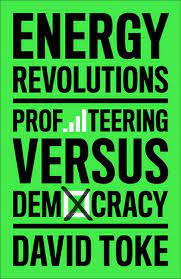
https://renewextraweekly.blogspot.com/2024/05/energy-revolutions-time-for-change.html
In this uncompromisingly radical Pluto book entitled Energy Revolutions, with the graphic subtitle Profiteering versus democracy, Dr David Toke argues that the energy crisis is an inevitable result of an industry run by and for corporate profit. He says ‘energy policy was never meant to favour sustainability or energy security – for decades, it has been shaped by corporate interests while hampering renewable alternatives. Now we suffer the cascading consequences’. He says there is an urgent need to radically increase state intervention, including public ownership, and deploy ‘energy democracy’ for the public interest.
However, he is not against market competition as such- it can speed change and help reduce costs. Thus, in his account of the early days of renewables, he says that, as a result of the adoption of Feed In Tariffs in the late 2000’s in Germany and elsewhere, markets were created that ‘meant that the wind and solar industries grew quickly. The costs of renewable energy plummeted, and today renewable energy is much cheaper than either fossil fuels or nuclear power. If things had been left as the anti-renewable incentive campaigners wanted, then of course the renewables industry would never have taken off. The world would be in a parlous position in terms of surviving the fossil fuel price spirals that we see in cycles (in both oil & natural gas price crises). Our ability to deal with the climate crisis would be almost destroyed’.
Toke though says that when markets are used to create monopolies, in pursuit of corporate profits and control, things go seriously awry- as we saw in 2022 and subsequently, with record profits being made by oil and gas companies. With energy prices escalating, Exxon made $55 bn, Shell $40 bn, Chevron $36.5 bn and Equinor $55 bn. Wind-fall taxes can claw back a tiny bit of this profiteering, but it is insignificant when you realise that, as Toke quotes an economist as saying ‘the oil and gas industry has delivered $2.8bn (£2.3bn) a day in pure profit for the last 50 years’. What’s needed is system change.
That of course is the familiar call of most radicals. Toke says, at present ‘the wealthy, who own the shares, get richer at the expense of ordinary people.’ In response, he says, while we can’t simply nationalise oil to solve this problem, since the compensation required would be huge, we can change the way the market works. Crucially, he says, ‘as the renewable energy revolution gathers pace, we need state intervention to ensure that the benefits of lower-cost green energy supplies go to the consumer & not the energy corporations’. In particular, ‘we need to extend government intervention & elements of state ownership of the retail energy supply sector to ensure that the consumer, not the big corporations, benefits from cheap renewable energy.’
The focus on ‘retail supply’ is linked to a proposed decentral shift away from seeing consumers as passive to one in which consumers may also be energy producers (via PV) and/or may also take an active role in managing their energy use (via DSM). Toke also sees them playing more of a role in shaping the system via an expansion of democratic participation, enabled by local energy co-ops, municipal projects & nationalisation of some of the energy systems. He says that public ownership ‘has an important role in delivering services in parts of energy systems where competition is itself either impossible or inefficient. It may be especially relevant to the retail electricity supply sector’. He adds ‘bringing in retail energy supply into public ownership should be cheap for the state to achieve since the companies involved have few tangible assets.’ But, he also looks to boosting competition ‘by the establishment of state companies to develop renewable energy alongside existing private companies’.
Some of this it may sound utopian or even naive, but Toke reminds us that the ‘alternative energy’ activists in the 1970s and 1980s ‘were seen as fringe oddballs by the energy mainstream. Today their vital role in developing niche renewable energy technologies and markets is airbrushed out of history since it contradicts the idea that big capitalism solves the big problems.’ Well yes, and now we live in a world in which renewables will soon dominate – supplying up to 100% of all global energy by 2050. However, as Toke says, it has to be done right. He provides us with, if not a blueprint of what to do, then at least a rough guide to the key political issues, with some very good insights on the situation in the UK, EU and USA. For example, it is amazing how expensive PV cells are in the US and how far France is behind on renewables due to its obsession with, now failing, nuclear.
In terms of technology choice, Toke backs most renewables strongly, though not all biomass, and seems convinced that domestic heat pumps are the best bet for using green power for home heating- whereas he says that green hydrogen, produced using renewable power, ‘needs to be used only for essential purposes, for example for storing renewable energy or for some industrial purposes for which electricity is not desirable. It should not be squandered in the provision of heating or cooling services’.
That’s now a common view: electric powered heat pumps are seen as much more efficient. Even if it does seem odd to abandon gas boilers and the existing gas pipeline system, which some wanted to repurpose for zero carbon green hydrogen use. Of course, some wanted to use fossil-derived blue hydrogen, a very different and very dire thing. But Toke notes that ‘the German coalition was divided when it came to debating a heating law about phasing out gas boilers in existing buildings. As part of a compromise, municipal authorities have been given the task of making plans for heat networks to be powered by large-scale heat pumps’. Well yes, as Toke admits, large heat pumps are more efficient. Although, dare I say, Combined Heat and Power plants, feeding heat nets and heat stores, can be even better and can help with grid balancing.
We can of course debate the pros and cons of each option and Toke takes us through some of the issues including, inevitably, nuclear, which he is clearly not fond of- not least since it is expensive and inflexible. Although his assertion that ‘once the current spurt of labour-intensive industrialism peters out in China, their drive in building nuclear power will fade, leaving nuclear in decline’, is maybe a bit too optimistic. Overall through, pronouncements like this aside, this is a good book if you want to get to grips with some of the key political and economic issues facing renewable energy and green politics- in a fast changing world.
The United States Is Expected to Announce a New $400 Million Package of Weapons for Ukraine
Associated Press | By Lolita C. Baldor and Matthew Lee, May 10, 2024, https://www.military.com/daily-news/2024/05/10/united-states-expected-announce-new-400-million-package-of-weapons-ukraine.html
WASHINGTON — The U.S. is expected to announce a new $400 million package of military aid for Ukraine on Friday, U.S. officials said, as Kyiv struggles to hold off advances by Russian troops in the northeast Kharkiv region.
This is the third tranche of aid for Ukraine since Congress passed supplemental funding in late April after months of gridlock. Ukrainian President Volodymyr Zelenskyy had warned Thursday that his country was facing “a really difficult situation” in the east, but said a new supply of U.S. weapons was coming and “we will be able to stop them.”
According to officials, the package includes High Mobility Artillery Rocket Systems and rockets for them, as well as artillery, air defense and anti-tank munitions, armored vehicles and other weapons and equipment. The officials spoke on condition of anonymity because the aid has not yet been announced. It will be provided through presidential drawdown authority, which pulls systems and munitions from existing U.S. stockpiles so they can be sent quickly to the war front.
Almost immediately after President Joe Biden signed the $95 billion foreign aid package, the Pentagon announced it was sending $1 billion in weapons through that drawdown authority,. And just days later the Biden administration announced a $6 billion package funded through the Ukraine Security Assistance Initiative, which pays for longer-term contracts with the defense industry and means that the weapons could take many months or years to arrive.
Russia has sought to exploit Ukraine’s shortages of ammunition and manpower as the flow of Western supplies since the outbreak of the war petered out while Congress struggled to pass the bill. Moscow has assembled large troop concentrations in the east as well as in the north and has been gaining an edge on the battlefield, Zelenskyy said.
Officials did not say if the latest package includes more of the long-range ballistic missiles — known as the Army Tactical Missile System — that Ukraine has repeatedly requested. The U.S. secretly sent a number of the missiles to Ukraine for the first time this spring and the White House has said it would send more. In one case, Ukraine used them to bomb a Russian military airfield in Crimea.
The new missiles give Ukraine nearly double the striking distance — up to 300 kilometers (190 miles) — than it had with the mid-range version of the weapon that it received from the U.S. in October.
FILM – 3 June. SOS – The San Onofre Syndrome: Nuclear Power’s Legacy
SOS is an empowering story of successful community action to shut down leaking reactors. But then they discover horrific amounts of high-level radioactive waste lethal for millions of years are being placed in thin canisters only 108 ft. from the rising sea. Criminal mismanagement of radioactive waste is a syndrome at all 93 reactors in the U.S. and beyond. Will safer alternatives be taken in time?
Featuring Canada’s Dr. Gordon Edwards.
Watch the film June 3 – 10 here:
https://watch.eventive.org/scnuclearfree/play/65df95a376a72b002f4c49af
Then join the webinar discussion with Gordon and others:
Mon. June 10, 8 p.m. ET
Hosted by SIERRA CLUB’s Nuclear Free Grassroots Network Team
https://sierraclub.zoom.us/webinar/register/WN_nlzk54JWTHyKg8cFlKP5Hw#/registration
1 This Month
10 March A LIVE WEBINAR THE REAL EFFECTS OF NUCLEAR POWER
What the Industry Isn’t Telling Us
1:00 PM Mountain, 2 pm Central, 3 pm Eastern. Live on the Keepers of the Water Facebook page



18 March Webinar @ 1 PM EST: An Assessment of SMR Projects: The Case of Canada
register for the zoom:
https://us02web.zoom.us/webinar/register/WN_o8BIIOUvQ2ONJR1nta65DQ#/registration


of the week – STOP SMALL MODULAR REACTORS IN CANADA
To see nuclear-related stories in greater depth and intensity – go to https://nuclearinformation.wordpress.com
-
Archives
- March 2026 (119)
- February 2026 (268)
- January 2026 (308)
- December 2025 (358)
- November 2025 (359)
- October 2025 (376)
- September 2025 (258)
- August 2025 (319)
- July 2025 (230)
- June 2025 (348)
- May 2025 (261)
- April 2025 (305)
-
Categories
- 1
- 1 NUCLEAR ISSUES
- business and costs
- climate change
- culture and arts
- ENERGY
- environment
- health
- history
- indigenous issues
- Legal
- marketing of nuclear
- media
- opposition to nuclear
- PERSONAL STORIES
- politics
- politics international
- Religion and ethics
- safety
- secrets,lies and civil liberties
- spinbuster
- technology
- Uranium
- wastes
- weapons and war
- Women
- 2 WORLD
- ACTION
- AFRICA
- Atrocities
- AUSTRALIA
- Christina's notes
- Christina's themes
- culture and arts
- Events
- Fuk 2022
- Fuk 2023
- Fukushima 2017
- Fukushima 2018
- fukushima 2019
- Fukushima 2020
- Fukushima 2021
- general
- global warming
- Humour (God we need it)
- Nuclear
- RARE EARTHS
- Reference
- resources – print
- Resources -audiovicual
- Weekly Newsletter
- World
- World Nuclear
- YouTube
-
RSS
Entries RSS
Comments RSS
 nuclear-news