New Nuclear Energy: Assessing the National Security Risks
https://blogs.gwu.edu/elliott-iistp/research-2/ 26 Apr 24
IISTP Research Professor Sharon Squassoni publishes a comprehensive report assessing the risks of nuclear energy and nuclear weapons.
Read the complete report: “New Nuclear Energy: Assessing the National Security Risks“.
GWU REPORT: NATIONAL SECURITY RISKS GROW WITH NEW NUCLEAR ENERGY
Drone strikes against Ukraine’s nuclear reactors highlight risks
WASHINGTON, DC – April 23, 2024 – Proliferation of nuclear weapons, nuclear terrorism, sabotage, coercion and military operations – these risks associated with nuclear energy can all be expected to grow as countries seek to implement their new nuclear energy objectives, according to a new report published today by George Washington University’s (GWU) Sharon Squassoni. The aim of 22 countries to triple nuclear energy capacity by 2050, announced on the margins of COP-28, was adopted with little thought to the national security implications. The promotion of small modular reactors (SMRs)– specifically tailored to developing countries – will heighten, not diminish risks.
The report by GW professor Sharon Squassoni, “New Nuclear Energy: Assessing the National Security Risks,” comes as drone strikes against Ukrainian nuclear power plants highlight nuclear reactor vulnerabilities. Other national security risks will accompany significant nuclear growth as renewed interest in nuclear energy to reduce greenhouse gas emissions sparks programs across the globe. Squassoni, a professor at GWU’s Elliott School of International Affairs, now researches risk reduction from nuclear energy and nuclear weapons after serving in the State Department, Arms Control and Disarmament Agency and the Congressional Research Service.
Proliferation and nuclear terrorism are the top two national security risks, but sabotage, coercion and military operations pose other risks. An attempt to reduce dependence on foreign suppliers – a national security risk itself — using nuclear energy could worsen the risk of proliferation by motivating fuel cycle independence. SMRs are still in development, with few restrictions on designs. Reactors fueled with highly enriched uranium or plutonium will increase risks of proliferation and terrorism because those materials are weapons-usable. Reactors designed to include lifetime cores will build up plutonium over time. Fast reactor designs that require reprocessing, especially continuous recycling of fuel, could ultimately confer latent nuclear weapons capabilities to many more states. In sum, the kinds of reactors now under consideration do nothing to reduce known risks, and some pose heightened risks. There appears to be no attempt to forge agreement among suppliers or governments to restrict reactor choices that pose greater proliferation risks.
If the mass production of small modular reactors lowers barriers to entry into nuclear energy, there will be many more states deploying nuclear power reactors, including those with significant governance challenges. Russian and Chinese programs to promote nuclear energy target many of those states. Cooperation among key states essential to minimize the safety, security and proliferation risks of nuclear energy is at an all-time low. The call to triple nuclear energy coincides with the disintegration of cooperation, the unraveling of norms and the loss of credibility of international institutions that are crucial to the safe and secure operation of nuclear power.
Blinken threatens China over Russia ties (VIDEO)
https://www.sott.net/article/490922-Blinken-threatens-China-over-Russia-ties-VIDEO 26 Apr 24
The US Secretary of State says Washington is prepared to impose more sanctions on Beijing over the alleged transfer of military components.
Washington is ready to introduce more sanctions against China over its alleged transfer of dual-use goods and components, which can supposedly be used by the Russian military industrial complex, US Secretary of State Antony Blinken said on Friday.
Speaking at a press conference in Beijing following his meeting with Chinese President Xi Jinping, the US official recalled that Washington has already imposed sanctions against more than 100 Chinese entities and is “fully prepared to act” and “take additional measures.”
Blinken claimed that China’s alleged support for the Russian defense industry raises concerns not only about the situation in Ukraine, but also about a “medium to long-term threat that many Europeans feel viscerally that Russia poses to them.”
Earlier this week, the Wall Street Journal had also reported that the US was drafting sanctions that could cut off some Chinese banks from the global financial system unless Beijing severs its economic ties with Russia.
Earlier this week, the Wall Street Journal had also reported that the US was drafting sanctions that could cut off some Chinese banks from the global financial system unless Beijing severs its economic ties with Russia.
The outlet claimed that US officials believe trade with China has allowed Russia to rebuild its military industrial capacity and could help it defeat Ukraine in a war of attrition.
Beijing has vehemently rejected accusations of “fueling” the Ukraine conflict and has instead blamed NATO for instigating the crisis by continuing its expansion in Europe and refusing to respect Russia’s national security concerns.
Following his meeting with Blinken, President Xi suggested that the US and China “should be partners, not rivals” and should strive towards achieving “mutual success and not harm each other.”
“I proposed three major principles: mutual respect, peaceful coexistence, and win-win cooperation. They are not only a summary of past experience, but also a guide to the future,” the Chinese leader was quoted as saying.
Beijing has maintained a policy of neutrality on the Ukraine conflict, with Chinese officials repeatedly stating that the country is not selling weapons to either Russia or Ukraine. Earlier this month, Chinese Foreign Ministry spokesman Mao Ning insisted that China “regulates the export of dual-use articles in accordance with laws and regulations,” urging “relevant countries” not to “smear or attack the normal relations between China and Russia.”
In December last year, US President Joe Biden issued a decree which enabled sanctions on foreign financial institutions that continue to deal with Russia. It targeted lenders outside US and EU jurisdictions that help Russia source sensitive items, which reportedly include semiconductors, machine tools, chemical precursors, ball bearings, and optical systems.
Nation gone ballistic -The Star Bungled Banner

So Congress has voted US$61 billion in “aid for Ukraine”.
The US has finally admitted that it has already supplied Ukraine with 100 ATACMS missiles, each one worth $1.5 million. A single Patriot battery is about $1 billion.
In other words, this war is really aid for MICIMATT. You gotta include the media, think tanks, and academia in this—in addition to the military-industrial complex and the political class. They are all stakeholders.
The $61 billion is part of a bigger package – $95 billion for aid to Ukraine, Israel and Taiwan. Similarly, this is really aid to the US defense industry– which sells unnecessarily sophisticated weaponry, whose “added value” often as not just means “added cost” and added impracticality. It’s US business underwriting the death of innocents.
JULIAN MACFARLANE, APR 26, 2024
The US is ballistic.
Like an old-fashioned ballistic missile, it blasted off with fire and fury, as people cheered. The first stage separated. The second stage took it beyond the atmosphere. Now momentum propels it through the ether.
People say, “how wonderful!”
No one really knows what its target is –or even if it has one — just that it has velocity and direction— a trajectory– but when it comes down there will be a huge explosion and a lot of people will probably die!
You see, the missile will circle the globe always returning to where it started, which is most likely where it will come down.
Sad, because this missile could be nuclear.
US foreign policy is ballistic
Basically, unguided once launched.
So it is that the US is engaged in a proxy war against Russia, using Ukrainians to fight for it and does not really know where the war is going – just that hoping it will end badly in a ball of fire for the “other side”.
But Russia is growing and prospering. And likely, in the end Ukraine will also do fine—since as part of Russia, it will have a bright future.
You will not be able to say the same for the US’s new colonies in Europe, Oceania, the Far East and the Americas—and, when the US has exhausted their resources, the US itself.
The US is a rocket without mind or purpose or meaning.
Oh, say can you see, by the dawn’s early light,
What so proudly we hailed at the twilight’s last gleaming?
Whose broad stripes and bright stars, through the perilous fight,
O’er the ramparts we watched, were so gallantly streaming?
And the rockets’ red glare, the bombs bursting in air,
Forewarned is forearmed
How do you deal with crazy people?
Carefully.
The Russian SMO is proceeding incrementally and slowly towards moral and military victory, supported by and simultaneously supporting the development of the Russian nation and the multipolar world.
In military terms, Russia advances at a snail’ s pace – a village at a time—for the battle is not for territory or even for lives — but for hearts and minds. Russia is successful. Ukrainian soldiers are deserting, surrendering, and joining the Russian army. The end of this conflict was decided long ago. It has always been in sight. Just now more visible.
The trajectory of US policy seems almost accidental. And, as I said, it is ballistic. It cannot be changed in flight.
So Congress has voted US$61 billion in “aid for Ukraine”. The overall amount provided to Ukraine for the purchase of weapons would be $13.8 billion. Ukraine would receive more than $9 billion of economic assistance in the form of “forgivable” loans.
“Forgivable” at the discretion of the president – which might be Trump .
As you know, I have dyscalculia– meaning I am bad at simple arithmetic— but it seems to me that this aid to Ukraine is not actually $61 billion—but about $23 billion— with 13.8 billion going to buy weapons, which, if past experience is any indication, will not arrive for two years or so, if ever.
In two years there maybe not independent Ukraine.
$9 billion goes to pay salaries and governmental expenses. LOL. You know what that means. Another villa for Zelensky.
Is it my bad math or is $37 billion left over?
That appears to go to US defense contractors to pay for weapons already supplied. Pay back plus alpha, of course. You have to add in the politicians cut . Er… Political donations from corporate budgets.
I think the idea is to “replenish” US stockpiles, which again might take a couple of years.
The US has finally admitted that it has already supplied Ukraine with 100 ATACMS missiles, each one worth $1.5 million. A single Patriot battery is about $1 billion.
In other words, this war is really aid for MICIMATT. You gotta include the media, think tanks, and academia in this—in addition to the military-industrial complex and the political class. They are all stakeholders.
The $61 billion is part of a bigger package – $95 billion for aid to Ukraine, Israel and Taiwan. Similarly, this is really aid to the US defense industry– which sells unnecessarily sophisticated weaponry, whose “added value” often as not just means “added cost” and added impracticality. It’s US business underwriting the death of innocents.
Not that weapons are as advertised.
We have seen the failure of US weaponry in the Ukraine. More recently, we have seen it in Israel.
Such outlay is intended to prolong the conflicts in Ukraine, Israel, and the South China Sea. But the rocket that is US policy is old in a faltering close Earth orbit and must eventually come down. Where? When?
For the time being the Russians – and the Chinese and the Iranians – just want the Americans to do what they do best – live beyond their means and destroy themselves.
In the case of the Ukraine, the intransigence of the US and its NATO thugs will mean that Russia can never be secure until it takes all of Ukraine and puts nuclear missiles on the Polish border.
As for the US, a new song is needed:
The star bungled banner hangs limply
O’er the Land of the Unfree
And the Home of the Shameless
War Parties, the Peace Candidate, and the November Election

On a bipartisan basis, the White House and Congress are driving the world towards a global war. Washington has absolutely no strategy for Ukraine to win the war, but is intent on arming Ukraine to kill as many Russians as possible, even as the war kills vastly more Ukrainians.
By Jeffrey D. Sachs* Other News, 28 Apr 24
The Democrats and the Republicans are outdoing each other to prove who can get us to World War III fastest. Joe Biden and the Congressional Democrats are making a convincing bid to be the leading warmongers. The Congressional Democrats just voted unanimously in a vote of 210 – 0 to extend the Ukraine War with another $61 Billion to kill more Russians and Ukrainians, and by a lopsided majority of 173-37 for another $14 Billion to extend Israel’s mass slaughter of Palestinians in Gaza. Donald Trump weighed in before the vote that Ukraine’s survival and strength is “important to us”, and that Europe should pay more. Republican Speaker Mike Johnson did his part for warmongering by calling Russia, China, and Iran the updated axis of evil. The slur was just in time for Secretary of State Blinken to fly to China to threaten more US sanctions if China trades with Russia in ways the US disapproves.
The strongest Presidential candidate for peace is Jill Stein of the Green Party, who is on track to appear on ballots across the country. The Green Party is well advanced in gaining full national access and is working very hard to complete that task. Cornel West, another passionate candidate for peace, is on the ballot in a few states but as an independent candidate faces prohibitive expenses for ballot access because of an unfair system rigged by the two main parties. Robert F. Kennedy Jr., alas, is only half a peace candidate, strong on ending the Ukraine War through diplomacy, but stridently backing Israel’s war in Gaza rather than the diplomacy that is urgently needed and capable of ending the war.
On a bipartisan basis, the White House and Congress are driving the world towards a global war. Washington has absolutely no strategy for Ukraine to win the war, but is intent on arming Ukraine to kill as many Russians as possible, even as the war kills vastly more Ukrainians.
From the start of Russia’s special military operation in Ukraine, I called for a negotiated peace, emphasizing Ukrainian neutrality and an end to NATO enlargement – which is vociferously, and understandably, opposed by Russia as an existential threat. Yet Biden and Congress continue to insist on NATO enlargement to Ukraine and hence on more war. The result? Ukraine has suffered hundreds of thousands of casualties and ongoing territorial losses.
At the same time, Biden is now arming Israel to commit unconscionable war crimes, with more support now on the way.
The US complicity in Israel’s slaughter of Gazans is strongly rejected by the American people, especially young people, yet Biden and Congress aren’t listening to the people. The Government of South Africa, in an application to the International Court of Justice (ICJ), has powerfully asserted that Israel is committing genocide. Yet when US students say the same, they are now being arrested. In fact, the ICJ quickly ruled that Israel’s actions might well violate the 1948 Genocide Convention, pending a final ruling that will take more time.
If all this were not enough, the US continues to escalate its many provocations towards China. ………………………………………………………………………………………………………
So, let’s add it all up regarding the alleged “axis of evil.” The US rejects negotiations with Russia because the US wants to use the Ukraine War to weaken Russia, even as the war destroys Ukraine in the process. The US refuses to take any action to rein in Israel’s mass slaughter in Gaza. The US flagrantly provokes China in multiple ways. The US punishes Iran for escalation started by Israel. There is no axis of evil. Rather, the US has pushed Russia, China, and Iran ever more tightly together in the face of unrelenting and misguided US militarism.
Americans are profoundly unhappy about all of this warmongering. Only 33 percent of Americans approve of Biden’s foreign policy. Biden is a life-long neocon, supporting NATO expansion, military adventures, and regime change operations for decades. He is also unfit to lead the country for another four years and should not be running for re-election in any event. Meanwhile, Trump as president armed Ukraine, dissed the Minsk II agreement that would have defused the crisis, and went out of his way to antagonize and abandon diplomacy with both China and Iran. The world is closer to nuclear Armageddon than ever, just 90 seconds to midnight according to the Doomsday Clock of the Bulletin of Atomic Scientists.
America’s two main parties offer Americans no real say on the life-and-death issues of war and peace. Both are war parties. Both continue to shovel in more money and munitions to try to hide their past reckless miscalculations. Both parties also serve the same paymasters: Wall Street, the military-industrial complex, and the mega-rich, who fund the two parties to deliver tax cuts and subsidies cuts for the wealthy, and NATO enlargement and arms contracts for the military industries. Peace and economic justice therefore go hand in hand.
The true hope for foreign policy sanity and a fair economy is the lead peace candidate, Jill Stein. The main work for peace activists in the next few weeks is to ensure that Stein is indeed on the ballot in every state in November, despite the brazen attempts by the two major parties to keep the Green Party and peace candidates off the ballot. As Americans in record numbers call for a political choice outside the failed parties of war and Wall Street, and for diplomatic solutions to the wars raging around the world, a voter surge for peace could well occur in November. If Stein is on the ballot across the nation, voters will have that choice.
*Professor at Columbia University, is Director of the Center for Sustainable Development at Columbia University and President of the UN Sustainable Development Solutions Network. He has served as adviser to three UN Secretaries-General, and currently serves as an SDG Advocate under Secretary-General António Guterres. Article sent to Other News by the author https://www.other-news.info/war-parties-the-peace-candidate-and-the-november-election/
TODAY. Japan – the return of the “Nuclear Village”?

A first in Japan – The municipal assembly of Genkai in southwestern Japan will request a survey to see if their area is suitable for an underground disposal site for highly radioactive waste. When the Mayor approves this survey, the Saga Prefecture town, will receive up to 2 billion yen ($12.9 million) in state subsidies for allowing the survey.
Local business associations had submitted separate requests for the survey to the assembly, hoping the subsidies and survey activity will prop up the local economy. The associations called on the town, as already a host of a nuclear power plant, to proactively cooperate with the central government.
That would be just the start. The nuclear lobby everywhere is well experienced in arranging “community benefits”. And in nowhere better than Japan.
It starts with the catch-cry of “Jobs Jobs” – first in the construction industry, then in the operations of the nuclear facility, local contractors, and then onward – to the promise of enlivening the local economy. But this wonderful goal is also to be achieved by all sorts of grants and subsidies – “incentives for acceptance” -in Japan Japan: “siting promotion subsidy” – community funds for local development.
For Japan, this could be back to the bad old days.
in the late 1990s, Iida Tetsunari3 coined the term ‘nuclear village’ to describe the ‘syndicate’ of actors pushing Japan’s nuclear power program – institutional and individual pro-nuclear advocates in the utilities, the nuclear industry, the bureaucracy, the Diet (Japan’s parliament), business federations, the media, and academia.
The influence of the nuclear industry over government and the judiciary was powerful and involved ‘regulatory capture’ – industry influence over safety regulation. In safety-related class-action lawsuits, the courts tended to decide in line with government interests to further develop Japan’s nuclear power program
Beyond just “normalisation” of areas hosting nuclear facilities, the “nuclear village” became a celebration of the wonderful, positive role of the nuclear industry in Japanese life, lauded in politics, business, and. education.
That worked out well for Japan, (and for the USA) – in Japan’s great industrial leap forward, and in overcoming and atoning for that old nuclear disaster – the atomic bombing of Hiroshima and Nagasaki. Japan’s success became a pointer towards other nuclear villages.
But then came the Fukushima nuclear catastrophe in 2011, – and it all ground nearly to a halt. Public opposition to nuclear power has held the industry back over the years since.
But the small global phalanx of nuclear promoters continues to work assiduously to control public opinion. It preys on people’s fear of global heating, and on fears of economic downturn, and promotes nuclear facilities as ‘the answer”. It looks as if that message might now be being heard by at least one municipality in Japan.
Could this be the start of Japan’s nuclear village all over again?
Thirty-eight years on, lessons from Chernobyl
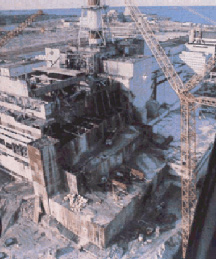
DAVE SWEENEY, Australian Conservation Foundation, 26 April 24 https://www.acf.org.au/38-years-on-lessons-from-chernobyl
—
On 26 April 1986, an exercise at the Chernobyl nuclear power plant in Ukraine went badly wrong.
Operators lost control of the reactor unit and the cooling systems failed.
The rapid rise in pressure and heat caused a fire and an explosion that blew apart the reactor’s containment shield.
Uncontrolled radiation spewed from the plant and was carried in the smoke of the dark night sky over a swathe of eastern and western Europe, and far beyond.
Firefighters and emergency service responders were the first to fall.
They were followed by numerous ‘liquidators’ – army conscripts with scant training or safety gear – who were sent in to contain the contamination.
Tens of thousands of community members were relocated – some forcibly – from areas near the stricken reactor.
But greater distance did not neatly translate into lesser danger. The radiation plume was erratic and unpredictable, but always damaging.
Chernobyl starkly demonstrated that radiation does not respect political borders or need a passport to travel.
The last leader of the then Soviet Union, Mikhail Gorbachev, reflected that Chernobyl “was perhaps the real cause of the collapse of the Soviet Union five years later” and that the disaster “showed the horrible consequences of nuclear power, even when it is used for non-military purposes. One could now imagine much more clearly what might happen if a nuclear bomb exploded.”
Thirty-eight years later, adverse health, economic and environmental impacts persist. The Chernobyl complex remains a radioactive running sore, complicated by the conflict between Russia and Ukraine.
There has also been active fighting at Zaporizhzhia, Europe’s largest nuclear plant and a disturbingly frequent battleground between Russian and Ukrainian forces.
Earlier this month the director-general of the pro-nuclear International Atomic Energy Agency spoke of a “major escalation of the nuclear safety and security dangers facing the Zaporizhzhia nuclear power plant” and a significant increase in “the risk of a major nuclear accident.”
Whether by accident in 1986 or artillery in 2024, there is no question nuclear power is the world’s most easily weaponised energy system. Reactors have been described as pre-deployed terrorist targets.
On a good day nuclear power means high level radioactive waste. On a bad day Chernobyl. And the very bad day of nuclear weapons is the stuff of nightmares.
On the anniversary of Chernobyl and against a backdrop of deep global uncertainty and conflict, we need to heed the lessons of history and build a safer future.
Nuclear-waste dams threaten Central Asia heartland
Dams holding large amounts of nuclear waste can be found in Kyrgyzstan’s
scenic hills. However, following a 2017 landslide they have become
unstable, threatening a possible Chernobyl-scale nuclear disaster if they
collapse.
Reuters 24th April 2024
The long path of plutonium: A new map charts contamination at thousands of sites, miles from Los Alamos National Laboratory
Plutonium hotspots appear along tribal lands, hiking trails, city streets and the Rio Grande River, a watchdog group finds

Searchlight New Mexico, by Alicia Inez Guzmán, April 25, 2024
For years, the public had no clear picture of Los Alamos National Laboratory’s plutonium footprint. Had the ubiquitous plutonium at LANL infiltrated the soil? The water? Had it migrated outside the boundary of the laboratory itself?
A series of maps published by Nuclear Watch New Mexico are beginning to answer these questions and chart the troubling extent of plutonium on the hill. One map is included below [on original] , while an interactive version appears on Nuclear Watch New Mexico’s website. The raw data for both comes from Intellus New Mexico, a publicly accessible clearinghouse of some 16 million environmental monitoring records offered in recent decades by LANL, the New Mexico Environment Department and the Department of Energy.
Approximately 58,100 red dots populate each map at 12,730 locations, marking a constellation of points where plutonium — a radioactive element used in nuclear weapons — was found in the groundwater, surface water or soil. What’s alarming is just how far that contamination extends, from Bandelier National Monument to the east and the Santa Fe National Forest to the north, to San Ildefonso tribal lands in the west and the Rio Grande River and Santa Fe County, to the south.
The points, altogether, tell a story about the porous boundary between LANL and its surrounds. So pervasive is the lab’s footprint that plutonium can be found in both trace and notable amounts along hiking trails, near a nursing home, in parks, along major thoroughfares and in the Rio Grande.
Gauging whether or not the levels of plutonium are a health risk is challenging: Many physicians and advocates say no dose of radiation is safe. But when questions about risk arise, one of the few points of reference is the standard used at Rocky Flats in Colorado, where the maximum allowable amount of plutonium in remediated soil was 50 picocuries per gram. Many sites on the Nuclear Watch map have readings below this amount. Colorado’s construction standard, by contrast, is 0.9 picocuries per gram.
Nuclear Watch’s driving question, according to Scott Kovac, its operations and research director, concerned a specific pattern of contamination: Had plutonium migrated from LANL dump sites into regional groundwater? The answer, Kovac believes, is yes.
That conclusion began to form when Nuclear Watch compiled data from between 1992 and 2023 for plutonium contamination below the soil, and plotted each point into the organization’s now-sprawling map. Red dots coalesce at LANL dump sites. They also appear in the finger-like canyons surrounding the Pajarito Plateau, namely in Los Alamos Canyon, “the main contaminant pathway to the Rio Grande,” a Nuclear Watch summary says.
Much of the contamination likely occurred from the 1940s to the 1960s, during the lab’s “Wild West,” in Kovac’s words — a time of little environmental oversight when the surrounding plateaus, canyons and the entire ancestral Pueblo of Tsirege doubled as a dumping ground, laboratory and wasteland………………..
A 1999 environmental impact statement and other documents reveal the extent of that contamination and the many places where LANL buried radioactive waste or dumped effluent, including landfills, canyons, drain lines, firing sites and spill locations.
“Plutonium and uranium have been released into canyons…since the Manhattan Project,” according to another 1999 report, this one focused on the lab’s contribution to radioactive contamination in Cochiti Lake. “In Los Alamos Canyon, these contaminants have been carried by flood flows several tens of kilometers” — more than 12 miles — “downstream into the Rio Grande.”
Airborne plutonium releases were also frequent and largely unchecked until the late 1970s, other reports show. The legacy of contamination has been the subject of some piecemeal remediation efforts on lab property and public lands. But the maps stand as forceful arguments for a “genuine cleanup” that is comprehensive and lasting, said Jay Coghlan, executive director of Nuclear Watch.
“We need to permanently protect precious, irreplaceable groundwater and the Rio Grande while providing high-paying cleanup jobs for decades,” Coghlan wrote Searchlight in an email. Instead, the lab is focusing on a historic expansion to produce plutonium pits for nuclear weapons. “New Mexicans,” he said, “don’t need more nuclear weapons.”
‘A full reckoning’ of detritus
The lab’s campus is undeniably riddled with plutonium, including beneath the deep groundwater aquifer in certain of its technical areas, the map shows. One concentration appears on the campus’s northern flank, around Material Disposal Area C, a 12-acre site that served as the primary dump for plutonium and other radioactive and toxic waste between 1948 and 1973. The unlined dump comprised seven disposal pits and 108 shafts that workers dug directly into the tuff, burying cyanide, mercury, sulfuric acid, beryllium, plutonium and other wastes four to 25 feet deep……………………………………………………………………………………………………….
The lab is juggling this legacy cleanup at the same time that it’s attempting to make 30 plutonium pits per year by 2030, a mission described as the “new Manhattan Project.” Worker shortages and supply-chain bottlenecks have already derailed the timeline; meanwhile, the cleanup of the lab’s Cold War sites is only half complete, the DOE reports. Indeed, as the lab barrels toward a new Cold War, there hasn’t been a full reckoning with the detritus of the last one.
Contamination near Buckman…………………………………………………………………………………………..
Why Iran may accelerate its nuclear program, and Israel may be tempted to attack it
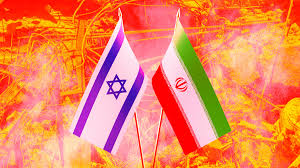
Iran’s nuclear sites will continue to present a tempting target for Israel in any further escalation of the conflict between the two.
The Bulletin, By Darya Dolzikova, Matthew Savill | April 26, 2024
On April 19, Israel carried out a strike deep inside Iranian territory, near the city of Isfahan. The attack was apparently in retaliation for a major Iranian drone and missile attack on Israel a few days earlier. This exchange between the two countries—which have historically avoided directly targeting each other’s territories—has raised fears of a potentially serious military escalation in the region.
Israel’s strike was carried out against an Iranian military site located in close proximity to the Isfahan Nuclear Technology Center, which hosts nuclear research reactors, a uranium conversion plant, and a fuel production plant, among other facilities. Although the attack did not target Iran’s nuclear facilities directly, earlier reports suggested that Israel was considering such attacks. The Iranian leadership has, in turn, threatened to reconsider its nuclear policy and to advance its program should nuclear sites be attacked.
These events highlight the threat from regional escalation dynamics posed by Iran’s near-threshold nuclear capability, which grants Iran the perception of a certain degree of deterrence—at least against direct US retaliation—while also serving as an understandably tempting target for Israeli attack. As tensions between Israel and Iran have moved away from their traditional proxy nature and manifested as direct strikes against each other’s territories, the urgency of finding a timely and non-military solution to the Iranian nuclear issue has increased.
A tempting target. While the current assessment is that Iran does not possess nuclear weapons, the Islamic Republic maintains a very advanced nuclear program, allowing it to develop a nuclear weapons capability relatively rapidly, should it decide to do so. Iran’s “near-threshold” capability did not deter Israel from undertaking its recent attack. But Iran’s nuclear program is a tempting target for an attack that could have potentially destabilizing ramification: The program is advanced enough to pose a credible risk of rapid weaponization and at a stage when it could still be significantly degraded, albeit at an extremely high cost.
Iran views its nuclear program as a deterrent against direct US strikes on or invasion of its territory, acting as an insurance policy of sorts against invasion following erroneous Western accusations over its nuclear program, ala Iraq in 2003. That’s to say, during an attempted invasion, Iran could quickly produce nuclear weapons. This capability allows Iran’s leadership to engage in destabilizing activities in the region with a (perceived) limited likelihood of retaliation against its own territory. Concerns over escalation and a potential Iranian push toward weaponization of its nuclear program may have been one of multiple considerations that contributed to the US refusal to take part in Israeli retaliatory action following Iran’s April 13 strikes on Israel.
Israel sees the Iranian nuclear program as an existential threat and has long sought its elimination. For this reason, reports that Israel might have been preparing to target Iranian nuclear sites as retaliation for Iran’s strikes against its territory came as little surprise. Israel’s attack on military installations near Iranian nuclear facilities—and against an air defense system that Iran has deployed to protect its nuclear sites—appears to have been calibrated precisely to make the point that Israel has the capability to directly attack heavily-protected nuclear sites deep inside Iran. Some commentators have speculated that subsequent strikes on Iranian nuclear sites may still be desirable or necessary.
In this context, Iran’s nuclear sites will continue to present a tempting target for Israel in any further escalation of the conflict between the two. Moreover, Israel may also conclude that its own undeclared nuclear capability has failed to act as a deterrent against two major assaults on its territory. The attacks by Hamas on October 7 and Iran on April 13 probably added to Israel’s sense of strategic vulnerability, although that perception may have been partly alleviated by the largely successful defense against Iran’s attempted drone and missile strikes.
Israel has historically targeted Iran’s nuclear program through relatively limited sabotage in the form of cyber-attacks, assassinations of scientists, and bombs placed at Iranian nuclear facilities. This strategy has allowed Israel to repeatedly roll the clock back on Iran’s nuclear progress while maintaining some level of credible deniability and avoiding further military escalation, therefore largely remaining within the “rules” established by Israel and Iran in conducting their shadow war. Now, with both countries openly striking each other’s territory, Israel may see this as an opportunity—or feel compelled—to target Iran’s nuclear facilities directly.
A range of bad options. The possibility of Iranian weaponization and Israeli attacks on Iran’s nuclear sites could lead to a serious escalation spiral and, potentially, a wider military conflict in the region……………………………………………………………………………………………………. more https://thebulletin.org/2024/04/why-iran-may-accelerate-its-nuclear-program-and-israel-may-be-tempted-to-attack-it/
Japan city assembly OKs request for nuclear waste site survey

If the mayor gives the green light, the Saga Prefecture town that hosts Kyushu Electric Power Co.’s four-reactor Genkai Nuclear Power Station will receive up to 2 billion yen ($12.9 million) in state subsidies for allowing the survey,
Three local associations in the construction, restaurant and accommodation sectors submitted separate requests for the survey to the assembly, with some hoping the subsidies and survey activity will prop up the local economy.
April 26, 2024 (Mainichi Japan) https://mainichi.jp/english/articles/20240426/p2g/00m/0na/027000c
SAGA, Japan (Kyodo) — The municipal assembly of Genkai in southwestern Japan gave the go-ahead Friday for the town to request a preliminary survey by the state to gauge its suitability to host an underground disposal site for highly radioactive waste.
The Genkai assembly is the first in the country hosting a nuclear plant to approve such a survey request. Mayor Shintaro Wakiyama said he plans to make the final decision in May regarding whether to request the survey, the first part of a three-stage, 20-year process to select a permanent storage site for waste from nuclear power generation.
If the mayor gives the green light, the Saga Prefecture town that hosts Kyushu Electric Power Co.’s four-reactor Genkai Nuclear Power Station will receive up to 2 billion yen ($12.9 million) in state subsidies for allowing the survey, which will check ground conditions and volcanic activity based on published geological sources.
After the nine-member assembly adopted the request by a majority vote, Wakiyama told reporters the decision “reflects the will of the people. I take it seriously.”
Saga Gov. Yoshinori Yamaguchi, meanwhile, expressed reluctance about locating a waste disposal site in Genkai. With the prefecture already hosting a nuclear plant, he told a press conference, “It would be unbalanced for (Saga) to shoulder such a burden.”
Three local associations in the construction, restaurant and accommodation sectors submitted separate requests for the survey to the assembly, with some hoping the subsidies and survey activity will prop up the local economy.
The associations called on the town, as a host of a nuclear power plant, to proactively cooperate with the central government.
Japan, like other countries, is struggling to find permanent disposal sites for nuclear waste. Only two municipalities — Suttsu and Kamoenai in Hokkaido in northern Japan — have approved preliminary site surveys, which commenced in 2020.
But the surveys have taken longer than the scheduled two years, and it remains unclear whether either process will move to the second stage as local opposition remains strong.
High-level radioactive waste, produced when extracting uranium and plutonium from spent fuel, must be stored in bedrock at least 300 meters underground for tens of thousands of years until radioactivity declines to levels that are not harmful to human health or the environment.
The waste, solidified by mixing with glass, is currently housed in metal containers stored at the Vitrified Waste Storage Center operated by Japan Nuclear Fuel Ltd. in Rokkasho, Aomori Prefecture.
US nuclear weapons in Poland would be priority military target – Moscow

Warsaw wants to host NATO arms under the bloc’s sharing scheme
https://www.rt.com/russia/596553-ryabkov-nuclear-weapons-poland/
Russia would consider foreign deployments of nuclear weapons in Poland a primary military target, Deputy Foreign Minister Sergey Ryabkov has warned.
Warsaw is in talks with Washington on potentially hosting nuclear arms as part of a NATO program. President Andrzej Duda reiterated Poland’s willingness to host the weapons in an interview this week.
Moscow considers any expansion of NATO’s nuclear-sharing arrangement as “deeply destabilizing” in nature, “and in fact threatening” Russia, Ryabkov was quoted as saying by TASS on Thursday.
This applies to joint missions, where non-nuclear members of the US-led bloc are trained to use American hardware, and even more so to the permanent stationing of such weapons “which hotheads in Warsaw are talking about,” he said.
Polish politicians vying for American nukes on their soil “must understand that any shift in that direction will not provide additional security to Poland, since relevant sites will definitely become targets. Our military planners will consider them a priority,” the senior diplomat added.
Duda told the Fakt newspaper on Monday that he had personally asked the US to station part of its nuclear arsenal in Poland.
”If our allies decide to deploy nuclear weapons as part of nuclear sharing also on our territory to strengthen the security of NATO’s eastern flank, we are ready for it,” he said.
Prime Minister Donald Tusk, who belongs to a rival political force, downplayed the president’s remarks on the same day, saying he would like Duda to clarify what his intentions were in making them.
”This idea is very massive, I would say very serious,” the prime minister added, explaining that Poland has no specific plans to host foreign nukes.
According to public sources, the US keeps some of its nuclear gravity bombs in five non-nuclear NATO states: Belgium, Germany, Italy, the Netherlands, and Türkiye. Poland’s previous conservative government led by Law and Justice (PiS), to which Duda belongs, has been seeking admission into this club for years. Tusk is the leader of Civic Platform, and returned to power as prime minister last December.
Acknowledging the Horrors of Gaza—Without Wanting to End Them
GREGORY SHUPAK, FAIR, 26 Apr 24
The International Court of Justice in January found it “plausible” that Israel is committing genocide in Gaza. The next month, in a lawsuit aimed at ending US military support for Israel, a federal court in California ruled that Israel’s actions in the Strip “plausibly” amount to genocide (Guardian, 2/1/24). Shortly thereafter, Michael Fakhri (Guardian, 2/27/24), the UN special rapporteur on the right to food, said of Israeli actions:
There is no reason to intentionally block the passage of humanitarian aid or intentionally obliterate small-scale fishing vessels, greenhouses and orchards in Gaza—other than to deny people access to food….
Intentionally depriving people of food is clearly a war crime. Israel has announced its intention to destroy the Palestinian people, in whole or in part, simply for being Palestinian. In my view as a UN human rights expert, this is now a situation of genocide. This means the state of Israel in its entirety is culpable and should be held accountable—not just individuals or this government or that person.
In March, UN Special Rapporteur on the Occupied Palestinian Territories Francesca Albanese released a report concluding “that there are reasonable grounds to believe that the threshold indicating Israel’s commission of genocide is met.” During its campaign in Gaza, Israel’s “military has been heavily reliant on imported aircraft, guided bombs and missiles,” and 69% of Israel’s arms imports between 2019 and 2023 have come from the US (BBC, 4/5/24).
In this context, corporate media, which have long been strong supporters of both the Israeli colonization of Palestine and the US imperial violence undergirding it, face a dilemma. At this stage, corporate media cannot simply conceal the daily horrors that are unfolding, particularly as much of their audience is exposed to it whenever they open a social media app. So media’s challenge is to frame the “plausible” genocide in a way that will not undermine long-term US/Israeli domination of Palestine. In this context, many corporate media analysts acknowledge the grave harm done to the Palestinians in Gaza—without also saying that it must end.
A Washington Post editorial (3/30/24), for example, lamented how “hunger threatens Gaza’s civilians, who, through displacement, disease and death, have already paid a horrible price.” (“Israel is forcing hunger on Gaza with US support” would be better, but I digress.) Subsequently, the paper noted that “objective conditions for the 2 million or so people in Gaza, most displaced from ruined homes, are horrendous.”
The editors’ prescription in “the short run” was “a six-week truce with Hamas, during which the militants would release at least some of their hostages and relief supplies could flow into Gaza more safely.” At that point, Palestinians can resume paying that “horrible price” in “horrendous” conditions, such as having “the biggest cohort of pediatric amputees in history” (New Yorker, 3/21/24).
‘The weapons it needs
Columnist David French likewise wrote in the New York Times (4/7/24) that “the terrible civilian toll and looming famine in Gaza are a human tragedy that should grieve us all,” but endorsed “giving Israel the weapons it needs to prevail against Hamas.” He favorably compared the Biden’s administration’s lavishing Israel with weapons to Donald’s Trump’s remark that Israel has “got to finish what they started, and they’ve got to finish it fast, and we have to get on with life.” French said:
…………… “Israel,” French asserted, “possesses both the legal right and moral obligation to its people to end Hamas’s rule and destroy its effectiveness as a fighting force.” French’s argument was that the US should keep arming Israel, but ensure that more aid reaches Palestinians in Gaza. The absurdity of this position is that Israel’s use of that “military aid” is what causes “the terrible civilian toll and looming famine in Gaza.”
At the time French was writing, at least 27 Palestinians in Gaza had already starved to death, 23 of them children (Al Jazeera, 3/27/24). As the Integrated Food Security Phase Classification System, a hunger-monitoring coalition of multinational and nongovernmental organizations, noted in December:
The cessation of hostilities and the restoration of humanitarian space to deliver…multi-sectoral assistance and restore services are essential first steps in eliminating any risk of famine.
Commenting on the report, famine expert Alex de Waal (Guardian, 3/21/24) said that
Israel has had ample warning of what will happen if it continues its campaign of destroying everything necessary to sustain life. The IPC’s Famine Review Committee report on 21 December authoritatively warned of starvation if Israel did not cease destruction and failed to allow humanitarian aid at scale.
………………………………..A Los Angeles Times editorial (4/9/24) expressed concern for “the level of death and destruction in Gaza” and wrote that, in a February news conference, “Biden was particularly critical—appropriately so—of the inability of humanitarian relief workers to get food and water to Gaza’s 2.3 million people, many of whom face famine.” The piece went on to call for “hostage releases and a lasting ceasefire.”
Yet the article’s penultimate paragraph read: “It is Hamas that keeps the war going by continuing to hold the hostages it brutally kidnapped in its October attack.”
…………………………………..the reality was exactly the opposite of what the LA Times said: The Israeli/US side wanted to take a short break from slaughtering Palestinians, whereas the Palestinian side was insisting on the “lasting ceasefire” that the paper claimed to favor. Whatever the editors purport to want, regurgitating anti-Palestinian propaganda that essentially blames Palestinians for their own genocide, rather than the US/Israeli perpetrators, is hardly an effective way to contribute to ending the killing.
I’ve cited four authoritative sources either saying that Israel is committing genocide, or that there are reasonable grounds for interpreting the evidence that way. Yet none of the opinion articles I’ve analyzed here contained the word “genocide,” even as each one suggested that it was worried about the well-being of Palestinians in Gaza. If corporate media were serious about that, they would accurately name what the US and Israel are doing. Instead, US media outlets are pretending that a genocide isn’t happening and, when the war on Gaza eventually ends, this approach will make it easier to act as if one hadn’t taken place, and as if the US and Israel have a right to rule Palestine. https://fair.org/home/acknowledging-the-horrors-of-gaza-without-wanting-to-end-them/
Chernobyl campaigner Adi Roche warns of global nuclear threat as power plant attacked in Ukraine
Irish Examiner , 26 Apr 24
The world must face the stark reality of a looming global nuclear threat following fresh drone strikes near the Zaporizhzhia power plant in Ukraine, Chernobyl campaigner Adi Roche has warned.
“It is a nightmare scenario,” Ms Roche said on the eve of UN Chernobyl remembrance day on Friday which recalls the horror of the 1986 nuclear disaster.
But that tragedy could pale into insignificance if Zaporizhzhia in southern Ukraine, Europe’s largest nuclear power plant, is damaged by or as a result of Russia’s invasion of Ukraine, she said.
“We have never had a situation in any war where something like this has happened. This war has changed the face of warfare,” she said.
“Putin is weaponising nuclear power facilities.
“The world was shocked by the scale of Chernobyl’s impact but I don’t think we even have a model for what might happen if there’s an incident at Zaporizhzhia.
“We are looking down the barrel of loaded gun and one of these days, our luck is going to run out.”
Drone strikes
Drone strikes were reported near the plant again on April 7 in what was the first direct military action against the plant since November 2022, when Russia assumed control of the facility.
International Atomic Energy Agency (IAEA) inspectors deployed to monitor the site reported three drone impacts, none of which damaged critical nuclear safety or security systems.
But Russia has recently announced plans to restart the plant, greatly increasing the danger of a nuclear accident………………………….. https://www.irishexaminer.com/news/munster/arid-41381947.html
1 This Month
23 April – WEBINAR – Why new nuclear reactors are the wrong tools for decarbonization Thursday, April 23 • 1 AM – 2 AM AEST
World Nuclear Power. Reactors 1951-2026, 75 Years of Nuclear Power.
Interactive Map– https://dv.worldnuclearreport.org/

Chernobyl: The Lost Tapes – A good documentary on Chernobyl on SBS available On Demand for the next 3 weeks– https://www.sbs.com.au/ondemand/tv-program/chernobyl-the-lost-tapes/2352741955560

of the week–London Campaign for Nuclear Disarmament

Tell the Ukrainian Government to Drop Prosecution of Peace Activist Yurii Sheliazhenko
To see nuclear-related stories in greater depth and intensity – go to https://nuclearinformation.wordpress.com
-
Archives
- April 2026 (220)
- March 2026 (251)
- February 2026 (268)
- January 2026 (308)
- December 2025 (358)
- November 2025 (359)
- October 2025 (376)
- September 2025 (257)
- August 2025 (319)
- July 2025 (230)
- June 2025 (348)
- May 2025 (261)
-
Categories
- 1
- 1 NUCLEAR ISSUES
- business and costs
- climate change
- culture and arts
- ENERGY
- environment
- health
- history
- indigenous issues
- Legal
- marketing of nuclear
- media
- opposition to nuclear
- PERSONAL STORIES
- politics
- politics international
- Religion and ethics
- safety
- secrets,lies and civil liberties
- spinbuster
- technology
- Uranium
- wastes
- weapons and war
- Women
- 2 WORLD
- ACTION
- AFRICA
- Atrocities
- AUSTRALIA
- Christina's notes
- Christina's themes
- culture and arts
- Events
- Fuk 2022
- Fuk 2023
- Fukushima 2017
- Fukushima 2018
- fukushima 2019
- Fukushima 2020
- Fukushima 2021
- general
- global warming
- Humour (God we need it)
- Nuclear
- RARE EARTHS
- Reference
- resources – print
- Resources -audiovicual
- Weekly Newsletter
- World
- World Nuclear
- YouTube
-
RSS
Entries RSS
Comments RSS
 nuclear-news