TODAY.”Lavender” Where’s Daddy” -Sweet euphemisms for a dehumanized, grotesquely technologized future in “the Cloud”

It’s not really new. It has always been part of the playful little-boy mentality of the clever men who design weapons. Think of “Little Boy” – the atomic bomb that devastated Hiroshima, and the less fun-named “Fat Man” plutonium bomb dropped on Nagasaki.
Perhaps, for the servicemen actually dropping those bombs, the fun names might have helped to ease them in any anxiety about killing many thousands of civilians – children, women and men.
Well, no need for servicemen to worry like that nowadays. With Artificial Intelligence making the kill decisions, no human need feel any guilt.
So – why do they bother with the cute sweet names?
Well, apart from the little-boy mentality of the weapons designers, there is the very much more important reason – to deceive the public, to obfuscate, cover-up, veil, the horror of the new AI weaponry. And where better to hide things these days, than in the cloud?
I’ve written before about the cloud. It’s such a light, pretty, concept. Just wafting away into the never-never – nothing to worry about, nothing for mere mortals to try to understand. Leave it to the grown-up little boys to work out what to do with the cloud, and the new cute war toys too.
The cloud is, of course, an ever-increasing set of dirty great data “farms” (another cutesy word) around the world – large areas on land, not in the sky, with huge steel containers, with servers and computers guzzling electricity and water.
There is nothing vague about these things, except for the language used.
“Lavender” – an accurate name would be “Finder for Kill Victims “
“Where’s Daddy” – an accurate name would be “Tracker for Killing Location”
George Orwell would be delighted with this 21st Century obfuscating language. He warned us about vague and meaningless language intended to hide the truth rather than express it.

And – it’s not as if these automatic killing systems are just being perfected so that the evil Hamas can be defeated. There’s another purpose for using them in Gaza . They’re a practise run for trying out this merchandise – a lucrative industry for Israel for the future: –
“intelligent” weapons proven effective in Gaza were major attractions when Israel marketed them last month at the Singapore Airshow, East Asia’s biggest arms bazaar”.
Leadership , (Doom is not inevitable)
There Is No Grudge That Cannot Be Resolved, China’s Xi Jinping Tells Former Taiwan President Ma Ying-jeou in Momentous Beijing Meeting ScheerPost, https://scheerpost.com/2024/04/10/there-is-no-grudge-that-cannot-be-resolved-chinas-xi-jinping-tells-former-taiwan-president-ma-ying-jeou-in-momentous-beijing-meeting/
OCTOBER 5, 2012, https://www.counterpunch.org/2012/10/05/nuclear-lies-cover-ups-and-secrecy/ Mangano observes: “Nuclear war, like any war, is not an inevitable force of nature, bit a conscious choice of leaders.” (p. 66) So too is any decision to build or maintain a nuclear site.
Patrick Lawrence: ‘Automated Murder’: Israel’s ‘AI’ in Gaza

In the Lavender case, the data it produced were accepted and treated as if they had been generated by a human being without any actual human oversight or independent verification.

A second AI system, sadistically named “Where’s Daddy?”—and how sick is this?—was then used to track Hamas suspects to their homes. The IDF intentionally targeted suspected militants while they were with their families, using unguided missiles or “dumb” bombs. This strategy had the advantage of enabling Israel to preserve its more expensive precision-guided weapons, or “smart” bombs.
“intelligent” weapons proven effective in Gaza were major attractions when Israel marketed them last month at the Singapore Airshow, East Asia’s biggest arms bazaar.
dehumanized, grotesquely technologized future
By Patrick Lawrence and Cara Marianna / Original to ScheerPost, April 9, 2024
ZURICH—“Technological change, while it helps humanity meet the challenges nature imposes upon us, leads to a paradigm shift: It leaves us less capable, not more, of using our intellectual capacities. It diminishes our minds in the long run. We strive to improve ourselves while risking a regression to the Stone Age if our ever more complex, ever more fragile technological infrastructure collapses.”
That is Hans Köchler, an eminent Viennese scholar and president of the International Progress Organization, a globally active think tank, addressing an audience here last Thursday evening, April 4. The date is significant: The day before Köchler spoke, +972 Magazine and Local Call, independent publications in Israel–Palestine, reported that as the Israel Defense Forces press their savage invasion of the Gaza Strip, they deploy an artificial intelligence program called Lavender that so far has marked some 37,000 Palestinians as kill targets. In the early weeks of the Israeli siege, according to the Israeli sources +972 cites, “the army gave sweeping approval for officers to adopt Lavender’s kill lists, with no requirement to thoroughly check why the machine made those choices or to examine the raw intelligence data on which they were based.”
Chilling it was to hear Köchler speak a couple of news cycles after +972 published these revelations, which are based on confidential interviews with six Israeli intelligence officers who have been directly involved in the use of AI to target Palestinians for assassination. “To use technologies to solve all our problems reduces our ability to make decisions,” Köchler asserted. “We’re no longer able to think through problems. They remove us from real life.”
Köchler titled his talk “The Trivialization of Public Space,” and his topic, broadly stated, was the impact of technologies such as digital communications and AI on our brains, our conduct, and altogether our humanity. It was sobering, to put the point mildly, to recognize that Israel’s siege of Gaza, bottomlessly depraved in itself, is an in-our-faces display of the dehumanizing effects these technologies have on all who depend on them.
Let us look on in horror, and let us see our future in it.
We see in the IDF, to make this point another way, a rupture in morality, human intelligence, and responsibility when human oversight is mediated by the algorithms that run AI systems. There is a break between causality and result, action and consequence. And this is exactly what advanced technologies have in store for the rest of humanity. Artificial intelligence, as Köchler put it, is not intelligence: “It is ‘simulated intelligence’ because it has no consciousness of itself.” It isn’t capable, he meant to say, of moral decision-making or ethical accountability.
In the Lavender case, the data it produced were accepted and treated as if they had been generated by a human being without any actual human oversight or independent verification. A second AI system, sadistically named “Where’s Daddy?”—and how sick is this?—was then used to track Hamas suspects to their homes. The IDF intentionally targeted suspected militants while they were with their families, using unguided missiles or “dumb” bombs. This strategy had the advantage of enabling Israel to preserve its more expensive precision-guided weapons, or “smart” bombs.
As one of +972’s sources told the magazine:
We were not interested in killing [Hamas] operatives only when they were in a military building or engaged in a military activity… . On the contrary, the IDF bombed them in homes without hesitation, as a first option. It’s much easier to bomb a family’s home. The system is built to look for them in these situations.
Once Lavender identified a potential suspect, IDF operatives had about 20 seconds to verify that the target was a male before making the decision to strike. There was no other human analysis of the “raw intelligence data.” The information generated by Lavender was treated as if it was “an order,” sources told +972—an official order to kill. Given the strategy of targeting suspects in their homes, the IDF assigned acceptable kill ratios for its bombing campaigns: 20 to 30 civilians for each junior-level Hamas operative. For Hamas leaders with the rank of battalion or brigade commander, +972’s sources said, “the army on several occasions authorized the killing of more than 100 civilians in the assassination of a single commander.”
In other words, Israeli policy, guided and assisted by AI technology, made it inevitable that thousands of civilians, many of them women and children, would be killed.
There appears to be no record of any other military deploying AI programs such as Lavender and Where’s Daddy? But it is sheer naïveté to assume this diabolic use of advanced technologies will not spread elsewhere. Israel is already the world’s leading exporter of surveillance and digital forensic tools. Anadolu, Turkey’s state-run news agency, reported as far back as February that Israel is using Gaza as a weapons-testing site so that it can market these tools as battle-tested. Antony Lowenstein, an author Anadolu quotes, calls this the marketing of “automated murder.”
And here we find ourselves: Haaretz, the Israeli daily, reported on April 5 that “intelligent” weapons proven effective in Gaza were major attractions when Israel marketed them last month at the Singapore Airshow, East Asia’s biggest arms bazaar. …………………………………………………………………………………………………………………………………………………….
the Biden regime is culpable in inflicting these multiple wounds on humanity in one other dimension we must not miss. With its incessant attempts to suspend us in a virtual reality of its making, distant from what it is doing in our names, it leads us into the dehumanized, grotesquely technologized future Köchler describes just as surely as the Israelis do as they murder human beings wholesale with AI weapons and kill innocent children with remotely controlled sniper drones. https://scheerpost.com/2024/04/09/patrick-lawrence-automated-murder-israels-ai-in-gaza/
Israel Prepares For Potential Strike On Iranian Nuclear Sites
https://www.iranintl.com/en/202404108916
In the wake of last week’s airstrike in Iran’s consulate in Damascus, Israel has reportedly indicated its readiness to target Iranian assets should Iran launch a direct retaliatory attack.
According to a report by the London-based Elaph News, citing an “anonymous Western security official,” Israel has been conducting air force drills, specifically preparing to target Iranian nuclear facilities and other critical infrastructure.
The airstrike killed Iranian Revolutionary Guard commander Mohammad Reza Zahedi, alongside six other senior members of the IRGC.
Although Israel has neither confirmed nor denied involvement in the strike, both Damascus and Tehran have blamed Israel.
However, unnamed US intelligence sources, as reported by CNN, suggest that Iran is unlikely to launch a direct attack, fearing retaliation from both the US and Israel.
Instead, Iran will more likely use its regional proxies, which since Iran-backed Hamas’s invasion of Israel on October 7, have launched attacks from Syria, Lebanon and Yemen.
Both Iran and its proxy groups, including Hezbollah, have pledged revenge for the strike. Iran’s supreme leader Ayatollah Ali Khamenei’s adviser has warned that Israeli embassies are no longer safe, while Hezbollah leader Hassan Nasrallah has promised an imminent Iranian response.
Israeli Prime Minister Benjamin Netanyahu said in a recent security cabinet meeting, “Iran has been acting against us for years — directly and via proxies. And, therefore, Israel acts against Iran and its proxies — defensively and offensively”.
As the Israeli military bolsters its manpower and defenses, Israeli Defense Minister Yoav Gallant announced that Israel has “completed preparations for a response against any scenario that would develop against Iran.”
Israel’s ‘Where’s Daddy?’ AI system helps target suspected Hamas militants when they’re at home with their families, report says
Business Insider, Rebecca Rommen , Apr 7, 2024,
- An Israeli AI system called “Where’s Daddy?” tracks suspected Hamas militants to their homes.
- Civilians are often “collateral damage” in the following strikes, one unnamed officer told +972 Magazine and Local Call.
- The IDF has said it “makes various efforts to reduce harm to civilians to the extent feasible.”
…………………………………………………. (Subscribers only) https://www.businessinsider.com/israel-ai-system-wheres-daddy-strikes-hamas-family-homes-2024—
New blast at Europe’s largest nuclear plant in Ukraine

EUROPE’S largest nuclear plant was attacked by drones again today,
posing no direct threat to its safety but underscoring the “extremely
serious situation” at the facility in Ukraine, the United Nations has
said. The International Atomic Energy Agency said its team was aware of an
explosion at a training centre next to the Zaporizhzhia Nuclear Power Plant
today.
Morning Star 9th April 2024
https://morningstaronline.co.uk/article/new-blast-europes-largest-nuclear-plant-ukraine
No surprise genocide promoter, Defense Secretary Lloyd Austin, denies genocide in Gaza

https://heartlandprogressive.blogspot.com/ Walt Zlotow 10Apr 24
As Defense Secretary, Lloyd Austin fervently fulfills his role as US pointman for America’s enabling Israeli genocide in Gaza.
The former commander of US forces in America’s senseless, criminal Afghan and Iraq wars, has never failed to embrace a monstrous US war destroying countries and the millions ruined in their wake.
After four decades making a great living engaged in those in those murderous follies, he joined the weapons makers making millions off his expertise in pulling the levers of defense influence peddling.
Now, as Secretary of Defense, he’s promoting tens of billions in weapons deliveries to continue the genocidal ethnic cleansing in Gaza of 2,300,000 Palestinians in the way of Israeli expansion on Palestinian land.
Austin knows his work is fueling genocide. But he told Superhawk Senator Tom Cotton at a Senate Armed Forces Committee hearing. ‘Genocide? Not a shred of evidence to support that charge.’
CODEPINK demonstrators with infinitely greater moral clarity than Austin, disrupted the hearing 25 times. CODEPINK co-founder Medea Benjamin responded to Austin’s ghoulish genocide denial with “We are obviously here to say stop the complicity, stop the sending of weapons, stop the sharing of intelligence, just killing so many people, just stop the blood on your hands.”
If there were justice, Austin would join his masters of war in Washington in the dock at The Hague. The Defense Secretary’s likely defense? ‘I was just following orders.’
Sound familiar?
There Is No Grudge That Cannot Be Resolved, China’s Xi Jinping Tells Former Taiwan President Ma Ying-jeou in Momentous Beijing Meeting
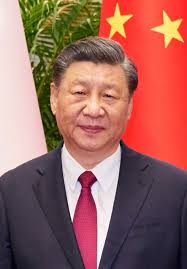
“[There is] [n]o problem that cannot be talked through. And there are no forces that can separate us,” Xi Jinping said.
By Diego Ramos ScheerPost, https://scheerpost.com/2024/04/10/there-is-no-grudge-that-cannot-be-resolved-chinas-xi-jinping-tells-former-taiwan-president-ma-ying-jeou-in-momentous-beijing-meeting/
In a historic meeting marking mainland China’s first reception of a former or serving Taiwanese president, President Xi Jinping and former Taiwanese president Ma Ying-jeou engaged in a dialogue of peace and unity in Beijing on April 10.
Amidst heightened tensions between China and Taiwan, mentions of war are commonplace but according to Ma, “If there’s war, it would be unbearable to the Chinese nation, and the two sides of the [Taiwan] strait have the wisdom to handle their disputes peacefully.”
This echoes Xi’s assertion that the two governments can converse and resolve issues: “Compatriots on the two sides are both Chinese. There is no grudge that cannot be resolved. No problem that cannot be talked through. And there are no forces that can separate us.”
Xi, alluding to reunification, also made reference to “foreign interference,” which, according to him, could not get in the way of a “family reunion.”
The meeting comes a month before William Lai Ching-te, current Taiwanese vice president and president-elect, is set to step into office. Despite being part of the independence-favoring Democratic Progressive Party, the South China Morning Post (SCMP) reports that Beijing does not see significance in the party’s electoral victory.
Zhu Songling, a Taiwan affairs specialist at Beijing Union University, told SCMP that the talks came at a favorable time, citing president-elect Lai’s approaching inauguration. Songling also said Ma’s reception in Beijing signaled the Chinese government’s willingness and resolve to peacefully settle the cross-strait issues.
“Since Ma is not in office, many of his ideas may not be implemented in concrete terms, but in general this [meeting] is still of great significance,” Zhu said, mentioning Ma’s continued influence in the Beijing-friendly Kuomintang (KMT) party.
Towards the end of Ma’s “journey of peace,” another KMT leader, former mayor of Taipei Hau Lung-bin, also plans to visit mainland China, with the possibility of meeting with Xi as well.
Hau is set to visit Zhengzhou and take part in the annual cultural spectacle that pays tribute to the Yellow Emperor. The tribute honors Chinese ancestry and heritage and Hau said his visit “emphasise[s] the fact that the people from both sides of the Taiwan Strait share the same root, the same origin, and the same historical and cultural backgrounds, which should go beyond political differences.”
“It would be unreasonable for the cross-strait relations to end up in a military crisis or dangerous war caused by political manipulation,” Hau also mentioned.
Nuclear Lies, Cover-Ups and Secrecy

Mangano observes: “Nuclear war, like any war, is not an inevitable force of nature, bit a conscious choice of leaders.” (p. 66) So too is any decision to build or maintain a nuclear site.
BY JANETTE D. SHERMAN, OCTOBER 5, 2012, https://www.counterpunch.org/2012/10/05/nuclear-lies-cover-ups-and-secrecy/
Do Governments and Corporations lie, cover-up and maintain secrecy as they harm our planet and us? Joe Mangano’s new book, Mad Science – The Nuclear Power Experiment, clearly lays it out that they have done so for more than half a century.
This book is a page-turner, filled with useful information that many of us don’t know or have forgot. His chapter “Tiny Atoms, Big Risks” explains the various forms of nuclear energy in terms that anyone can understand, and details the harm that has come to all life on our planet as a result of nuclear bombs and nuclear power plants.
Among the many nuclear catastrophes that Mangano chronicles – from Three Mile Island, the Nevada and Marshall Island nuclear bomb tests to Chernobyl and Fukushima- is the nuclear accident at the Santa Susana site in Ventura County, close to Los Angeles, CA. Santa Susana is one of the best-kept secrets in the history of nuclear power. The Santa Susana site had 10 sodium-cooled reactors the 1959 accident spewed radioactivity, tetralin – toxic naphthalene, and other chemicals into Simi Valley, the Pacific Ocean and eastward that are still detected over a half-century later.
A near meltdown of the Fermi-1 nuclear reactor nearly destroyed Detroit in 1968. It was a sodium-cooled reactor, as were the ones at Santa Susana. Located at the western end of Lake Erie, a Fermi meltdown would have crippled or destroyed much of the Great Lakes and St. Lawrence River as well. As has occurred since the Chernobyl meltdown, in the southern lake areas of Belarus, fish and boats travel upstream as well as down-stream.
As many as 16,000 workers were employed at Santa Susana by corporations that included, North American Aviation (a spin-of of General Motors), Rocketdyne, Atomics international and finally Boeing. Santa Susana was closed by 1980, but never fully decontaminated. Everyone in the Los Angeles area who has had a family member with cancer, a low birth-weight child, death of an infant, or thyroid disease should read the book. So should those who live down-wind of a nuclear test area or a nuclear power plant – which includes practically everyone in the United States and Canada.
It was Lewis Strauss, the first chairman of the Atomic Energy Commission who in 1954 touted nuclear power as “too cheap to meter.” Today we learn it is too costly to bury waste, clean up contaminated land and buildings, and too costly to build and maintain aging nuclear power and bomb plants.
Mangano observes: “Nuclear war, like any war, is not an inevitable force of nature, bit a conscious choice of leaders.” (p. 66) So too is any decision to build or maintain a nuclear site.
Since the Fukushima releases began, Japanese citizens are marching and protesting the continuation of nuclear power as they observe the obvious reality of contamination. How long will it take for U. S. citizens to demand a stop to nuclear power and its’ twin nuclear war weapons.
Janette D. Sherman, M. D., who died in 2019, was the author of Life’s Delicate Balance: Causes and Prevention of Breast Cancer and Chemical Exposure and Disease, and was a specialist in internal medicine and toxicology. She edited the book Chernobyl: Consequences of the Catastrophe for People and Nature, written by A. V. Yablokov, V. B., Nesterenko and A. V. Nesterenko, published by the New York Academy of Sciences in 2009. Her primary interest was the prevention of illness through public education.
The US and Japan’s Mission to Push Next Generation Nuclear Power
Japan ramps up the joint nuclear power agenda with the U.S. and Philippines, with an eye to deterring regional conflict.
By Thisanka Siripala, April 10, 2024
Japanese Prime Minister Kishida Fumio is on an official state visit to the United States with a firm eye on underscoring the importance of the Japan-U.S. alliance in Asia. Kishida’s trip marks the first state visit by a Japanese leader to the U.S. in nine years.
Kishida is expected to move forward with joint economic and security projects with the Philippines and the United States as clashes between Beijing and Manila escalate in the South China Sea. It’s the first time the countries will meet for a trilateral summit.
The visit gives Kishida a global platform to outline Japan’s vision for Japan-U.S. relations as he faces a precarious political outlook at home. His public support rate hovers around a record low amid looming Liberal Democratic Party leader elections in September 2024.
Kishida framed the highly anticipated summit with U.S. President Joe Biden on April 10 as a meeting of two “global partners” tackling global issues. This will be followed by three-way talks between Biden, Kishida, and Philippine President Ferdinand Marcos Jr. to discuss developing “multilayered’ ties on April 11. ……………………………………………….
For Japan and the United States, a next generation nuclear power plant is the answer to phasing out Asia’s dependency on fossil fuel. As part of their trilateral cooperation, both countries will facilitate the development of “miniature” nuclear power plants, called Small Modular Reactors (SMRs), in the Philippines.
Currently, the country struggles with chronic power outages. It relies heavily on coal, which generates 60 percent of its electricity. Marcos hopes to restart the only nuclear power plant facility in the Philippines, which was constructed and immediately abandoned in the 1980s. The government plans to have it operational by 2032.
Next generation nuclear plants like SMRs are considered much safer and cheaper than their predecessors. However, the U.S. start-up manufacturing the technology, NuScale Power, canceled its plan to construct an SMR facility in Idaho in November last year. They explained the project – which would have been the first in the United States – was economically unfeasible, as inflation and increased construction costs meant the price of energy generated by the plant would be too high.
Japan has shifted its policy on nuclear power since the devastating 2011 tsunami and earthquake disaster. …………. https://thediplomat.com/2024/04/the-us-and-japans-mission-to-push-next-generation-nuclear-power/
Death by Algorithm: Israel’s AI War in Gaza
April 10, 2024 by: Dr Binoy Kampmark, https://theaimn.com/death-by-algorithm-israels-ai-war-in-gaza/
Remorseless killing at the initiation of artificial intelligence has been the subject of nail-biting concern for various members of computer-digital cosmos. Be wary of such machines in war and their displacing potential regarding human will and agency. For all that, the advent of AI-driven, automated systems in war has already become a cold-blooded reality, deployed conventionally, and with utmost lethality by human operators.
The teasing illusion here is the idea that autonomous systems will become so algorithmically attuned and trained as to render human agency redundant in a functional sense. Provided the targeting is trained, informed, and surgical, a utopia of precision will dawn in modern warfare. Civilian death tolls will be reduced; the mortality of combatants and undesirables will, conversely, increase with dramatic effect.
The staining case study that has put paid to this idea is the pulverising campaign being waged by Israel in Gaza. A report in the magazine +972 notes that the Israeli Defense Forces has indulgently availed itself of AI to identify targets and dispatch them accordingly. The process, however, has been far from accurate or forensically educated. As Brianna Rosen of Just Security accurately posits, “Rather than limiting harm to civilians, Israel’s use of AI bolsters its ability to identify, locate, and expand target sets which likely are not fully vetted to inflict maximum damage.”
The investigation opens by recalling the bombastically titled The Human-Machine Team: How to Create Human and Artificial Intelligence That Will Revolutionize Our World, a 2021 publication available in English authored by one “Brigadier General Y.S.”, the current commander of the Israeli intelligence unit 8200.
The author advances the case for a system capable of rapidly generating thousands of potential “targets” in the exigencies of conflict. The sinister and morally arid goal of such a machine would resolve a “human bottleneck for both locating new targets and decision-making to approve the targets.” Doing so not only dispenses with the human need to vet, check and verify the viability of the target but dispenses with the need to seek human approval for their termination.
The joint investigation by +972 and Local Call identifies the advanced stage of development of such a system, known to the Israeli forces as Lavender. In terms of its murderous purpose, this AI creation goes further than such lethal predecessors as “Habsora” (“The Gospel”), which identifies purportedly relevant military buildings and structures used by militants. Even that form of identification did little to keep the death rate moderate, generating what a former intelligence officer described as a “mass assassination factory.”
Six Israeli intelligence officers, all having served during the current war in Gaza, reveal how Lavender “played a central role in the unprecedented bombing of Palestinians, especially during the early stages of the war.” The effect of using the AI machine effectively subsumed the human element while giving the targeting results of the system a fictional human credibility.
Within the first weeks of the war, the IDF placed extensive, even exclusive reliance on Lavender, with as many as 37,000 Palestinians being identified as potential Hamas and Palestinian Islamic Jihad militants for possible airstrikes. This reliance signalled a shift from the previous “human target” doctrine used by the IDF regarding senior military operatives. In such cases, killing the individual in their private residence would only happen exceptionally, and only to the most senior identified individuals, all to keep in awkward step with principles of proportionality in international law. The commencement of “Operation Swords of Iron” in response to the Hamas attacks of October 7 led to the adoption of a policy by which all Hamas operatives in its military wing irrespective of rank would be designated as human targets.
-ADVERTISEMENT-
Officers were given expansive latitude to accept the kill lists without demur or scrutiny, with as little as 20 seconds being given to each target before bombing authorisation was given. Permission was also given despite awareness that errors in targeting arising in “approximately 10 percent of cases, and is known to occasionally mark individuals who have merely a loose connection to militant groups, or no connection at all.”
The Lavender system was also supplemented by using the emetically named “Where’s Daddy?”, another automated platform which tracked the targeted individuals to their family residences which would then be flattened. The result was mass slaughter, with “thousands of Palestinians – most of them women and children or people not involved in the fighting” killed by Israeli airstrikes in the initial stages of the conflict. As one of the interviewed intelligence officers stated with grim candour, killing Hamas operatives when in a military facility or while engaged in military activity was a matter of little interest. “On the contrary, the IDF bombed them in homes without hesitation, as a first option. It’s much easier to bomb a family’s home. The system is built to look for them in these situations.”
The use of the system entailed resorting to gruesome, and ultimately murderous calculi. Two of the sources interviewed claimed that the IDF “also decided during the first weeks of the war that, for every junior Hamas operative that Lavender marked, it was permissible to kill up to 15 or 20 civilians.” Were the targets Hamas officials of certain seniority, the deaths of up to 100 civilians were also authorised.
In what is becoming its default position in the face of such revelations, the IDF continues to state, as reported in the Times of Israel, that appropriate conventions are being observed in the business of killing Palestinians. It “does not use an artificial intelligence system that identifies terrorist operatives or tries to predict whether a person is a terrorist.” The process, the claim goes, is far more discerning, involving the use of a “database whose purpose is to cross-reference intelligence sources… on the military operatives of terrorist organizations.”
The UN Secretary General, António Guterres, stated how “deeply troubled” he was by reports that Israel’s bombing campaign had used “artificial intelligence as a tool in the identification of targets, particularly in densely populated residential areas, resulting in a high level of civilian casualties.” It might be far better to see these matters as cases of willing, and reckless misidentification, with a conscious acceptance on the part of IDF military personnel that enormous civilian casualties are simply a matter of course. To that end, we are no longer talking about a form of advanced, scientific war waged proportionately and with precision, but a technologically advanced form of mass murder.
UK revamps Sizewell C nuclear funding to avoid delays
The UK Government has announced revisions to the funding model for the
Sizewell C nuclear plant project in response to concerns over potential
delays and cost overruns. Following a consultation process, adjustments
have been made to the funding mechanisms to ensure the timely completion of
the project while also protecting consumers from financial risks. Sizewell
C is considered critical for enhancing the UK’s energy security.
There have been concerns about the sustainability of the funding model,
particularly in light of challenges faced by similar projects such as
Hinkley Point C, which experienced delays and rising costs. The government
aims to strike a balance that encourages private investment while
minimising the impact on consumers.
Energy Live News 9th April 2024
TODAY. Australia is EVER so grateful to the global nuclear lobby!

First of all, we Australians LOVE spending money! Not on health, education, preserving our unique biodiversity, certainly not on shelter for our growing homeless.
With our relatively small population, we are still delighted to cough up nearly $400billion to buy a second-hand American nuclear submarine and to buy all the USA and UK nuclear submarine wastes that these dear friends vouchsafe to dump on us.
And, it was interesting to read today, that the UK has spurned paying $millions to Rolls Royce as the maker for its proposed fleet of small modular nuclear reactors.
No problem to the nuclear lobby. Rolls Royce now plans to flog them off to Australia instead – Opposition leader Peter Dutton has pledged, if elected, to deliver Rolls Royce small modular reactors into the grid by the mid-2030s.
Any old or useless stuff that the nuclear industry has to get rid of – no probs – Australia will buy it!
Attacks on Ukrainian nuclear facilities ‘must cease immediately’: UN atomic watchdog

United Nations, 8 April 2024, Peace and Security 8 Apr 24
The head of the UN nuclear watchdog agency reiterated that attacks against nuclear power plants in Ukraine are “an absolute no go”, following direct military action targeting the Zaporizhzhya Nuclear Power Plant (ZNPP) on Sunday.
Rafael Grossi, Director General of the International Atomic Energy Agency (IAEA), said the targeting marked a “major escalation” in the level of danger facing the power plant.
It was the first time since Russia’s full-scale invasion of Ukraine in February 2022 that the ZNPP – Europe’s largest nuclear power plant – has been directly targeted. It has been occupied by Russian forces since the early weeks of the fighting.
As of Sunday, while there were “no indications” of damage to critical nuclear safety or security systems, the strikes were “another stark reminder” of the threats to the power plant and other nuclear facilities during the ongoing war, IAEA said.
“Although the damage at unit 6 has not compromised nuclear safety, this was a serious incident that had the potential to undermine the integrity of the reactor’s containment system,” Director General Grossi said.
‘A major escalation’
“This is a major escalation of the nuclear safety and security dangers facing the Zaporizhzhya Nuclear Power Plant. Such reckless attacks significantly increase the risk of a major nuclear accident and must cease immediately,” Mr. Grossi said.
Reiterating that no one can “conceivably benefit” or get any military or political advantage from attacks against nuclear facilities, he stressed such attacks are “an absolute no go”.
“I firmly appeal to military decision makers to abstain from any action violating the basic principles that protect nuclear facilities.”
At least one casualty
According to IAEA, after receiving information from the ZNPP about the drone attacks, its experts stationed at the site went to three affected locations.
They were able to confirm the physical impact of the drone detonations, including at one of the site’s six reactor buildings where surveillance and communication equipment appeared to have been the target.
While they were at the roof of the reactor, Russian troops engaged what appeared to be an approaching drone, the agency said, adding that this was followed by an explosion near the reactor building.
“The IAEA team reported that they observed remnants of drones at this and two other impact locations at the site. At one of them, outside a laboratory, they saw blood stains next to a damaged military logistics vehicle, indicating at least one casualty,” it said.
IAEA experts further reported hearing explosions and rifle fire on the site throughout the day. The team also heard several rounds of outgoing artillery fire from near the plant………………………… https://news.un.org/en/story/2024/04/1148346—
What are the risks at Zaporizhzhia nuclear power plant after drone attack?
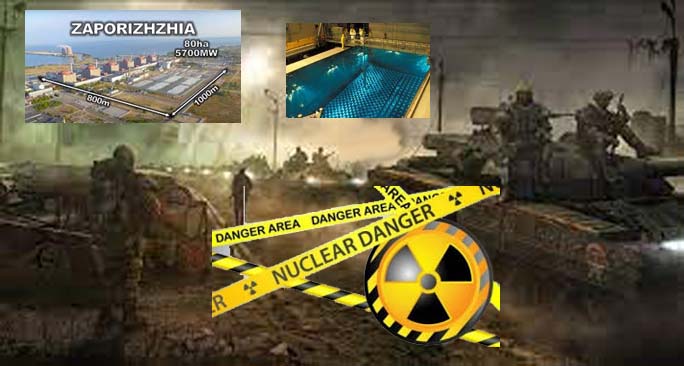
By Guy Faulconbridge and Francois Murphy, April 8, 2024, https://www.reuters.com/world/europe/nuclear-power-plant-eye-ukraine-war-2024-04-08/
MOSCOW/VIENNA, – Russia said Ukraine struck the Zaporizhzhia nuclear power station controlled by Russian forces three times on Sunday and demanded the West respond, though Kyiv said it had nothing to do with the attacks.
The International Atomic Energy Agency (IAEA) has long warned of the risks of a disaster at Zaporizhzhia, Europe’s largest nuclear plant, and urged an end to fighting in the area.
The plant is just 500 km (300 miles) from the site of the world’s worst nuclear accident, the 1986 Chornobyl disaster.
What nuclear material is at the Zaporizhzhia plant, what are the risks and why are Russia and Ukraine fighting over it?
WHAT IS IT AND WHAT WAS ITS CAPACITY?
The Zaporizhzhia nuclear power plant has six Soviet-designed VVER-1000 V-320 water-cooled and water-moderated reactors containing Uranium 235. They were all built in the 1980s, though the sixth only came online in the mid-1990s after the collapse of the Soviet Union.
All but one of the reactors are in cold shutdown. Reactor unit 4 is in “hot shutdown”, mainly for heating purposes.
IAEA Director General Rafael Grossi says that fighting a war around a nuclear plant has put nuclear safety and security in “constant jeopardy”.
WHAT HAPPENED ON APRIL 7?
Russia’s state nuclear corporation, Rosatom, said Ukraine attacked the plant three times on Sunday with drones, first injuring three near a canteen, then attacking a cargo area and then the dome above reactor No. 6.
IAEA experts at the site went to the three locations of the attacks and confirmed there had been an attack.
“Russian troops engaged what appeared to be an approaching drone,” the IAEA said. “This was followed by an explosion near the reactor building.”
“While the team so far has not observed any structural damage to systems, structures, and components important to nuclear safety or security of the plant, they reported observing minor superficial scorching to the top of the reactor dome roof of Unit 6 and scoring of a concrete slab supporting the primary make-up water storage tanks,” the IAEA said.
The IAEA did not say directly who was to blame for the attacks.
A Ukrainian intelligence official said Kyiv had nothing to do with any strikes on the station and suggested they were the work of Russians themselves.
WHAT ARE THE RISKS?
Russian forces took control of the plant in early March 2022, weeks after invading Ukraine. Special Russian military units guard the facility and a unit of Russia’s state nuclear company, Rosatom, runs the plant.
Nuclear reactors’ containment structures like Zaporizhzhia’s are made of steel-lined reinforced concrete designed to withstand the impact of a small plane crash so there is little immediate risk from a minor attack on those structures.
A 1989 study by the U.S. Department of Energy found that the model of containment structure used in Zaporizhzia “exhibits vulnerabilities to the effects of an aircraft crash” and a fighter jet crashing downwards into the dome, where the structure is thinner, could penetrate it, causing concrete chunks and aircraft engine parts to fall inside.
External power lines essential to cooling nuclear fuel in the reactors are a softer potential target. Cooling fuel even in reactors in cold shutdown is necessary to prevent a nuclear meltdown.
Since the war began the plant has lost all external power eight times, most recently in December last year, forcing it to rely on emergency diesel generators for power. Water is also needed to cool fuel.
Pressurised water is used to transfer heat away from the reactors even when they are shut down, and pumped water is also used to cool down removed spent nuclear fuel from the reactors.
Without enough water, or power to pump the water, the fuel could melt down and the zirconium cladding could release hydrogen, which can explode.
WHAT ABOUT THE SPENT FUEL?

Besides the reactors, there is also a dry spent fuel storage facility at the site for used nuclear fuel assemblies, and spent fuel pools at each reactor site that are used to cool down the used nuclear fuel.
Without water supply to the pools, the water evaporates and the temperatures increase, risking a fire that could release a number of radioactive isotopes.
An emission of hydrogen from a spent fuel pool caused an explosion at reactor 4 in Japan’s Fukushima nuclear disaster in 2011.
WHAT HAPPENS IN A MELTDOWN?
A meltdown of the fuel could trigger a fire or explosion that could release a plume of radionuclides into the air which could then spread over a large area.
The Chornobyl accident spread Iodine-131, Caesium-134, Strontium-90 and Caesium-137 across parts of northern Ukraine, Belarus, Russia, northern and central Europe.
Nearly 8.4 million people in Belarus, Russia and Ukraine were exposed to radiation, according to the United Nations. Around 50 deaths are directly attributed to the disaster itself.
But 600,000 “liquidators”, involved in fire-fighting and clean-up operations, were exposed to high doses of radiation. Hundreds of thousands were resettled.
There is mounting evidence that the health impact of the Chornobyl disaster was much more serious than initially presented at the time and in the years following the accident.
Incidence of thyroid cancer in children across swathes of Belarus, Russia and Ukraine increased after the accident. There was a much higher incidence of endocrine disorders, anaemia and respiratory diseases among children in contaminated areas.
1 This Month
23 April – WEBINAR – Why new nuclear reactors are the wrong tools for decarbonization Thursday, April 23 • 1 AM – 2 AM AEST
World Nuclear Power. Reactors 1951-2026, 75 Years of Nuclear Power.
Interactive Map– https://dv.worldnuclearreport.org/

Chernobyl: The Lost Tapes – A good documentary on Chernobyl on SBS available On Demand for the next 3 weeks– https://www.sbs.com.au/ondemand/tv-program/chernobyl-the-lost-tapes/2352741955560

of the week–London Campaign for Nuclear Disarmament


Tell the Ukrainian Government to Drop Prosecution of Peace Activist Yurii Sheliazhenko
To see nuclear-related stories in greater depth and intensity – go to https://nuclearinformation.wordpress.com
-
Archives
- April 2026 (231)
- March 2026 (251)
- February 2026 (268)
- January 2026 (308)
- December 2025 (358)
- November 2025 (359)
- October 2025 (376)
- September 2025 (257)
- August 2025 (319)
- July 2025 (230)
- June 2025 (348)
- May 2025 (261)
-
Categories
- 1
- 1 NUCLEAR ISSUES
- business and costs
- climate change
- culture and arts
- ENERGY
- environment
- health
- history
- indigenous issues
- Legal
- marketing of nuclear
- media
- opposition to nuclear
- PERSONAL STORIES
- politics
- politics international
- Religion and ethics
- safety
- secrets,lies and civil liberties
- spinbuster
- technology
- Uranium
- wastes
- weapons and war
- Women
- 2 WORLD
- ACTION
- AFRICA
- Atrocities
- AUSTRALIA
- Christina's notes
- Christina's themes
- culture and arts
- Events
- Fuk 2022
- Fuk 2023
- Fukushima 2017
- Fukushima 2018
- fukushima 2019
- Fukushima 2020
- Fukushima 2021
- general
- global warming
- Humour (God we need it)
- Nuclear
- RARE EARTHS
- Reference
- resources – print
- Resources -audiovicual
- Weekly Newsletter
- World
- World Nuclear
- YouTube
-
RSS
Entries RSS
Comments RSS
 nuclear-news