72 Minutes Until the End of the World?

Carl Sagan’s conclusion is that the enemy is not a foreign nation, it’s the weapons themselves.
The generals that I refer to in that section on the SIOP [Strategic Integrated Operational Plan, the 1960s-era plan for general nuclear war] believed they could fight and win nuclear war, even if it meant killing 600 million people across the globe. That is insane. No one would argue that now.
A new book lays out the frighteningly fast path to nuclear Armageddon.

By KATHY GILSINAN, 04/29/2024 https://www.politico.com/news/magazine/2024/04/29/the-frighteningly-fast-path-to-nuclear-armageddon-00154591
Nuclear war would be bad. Everyone knows this. Most people would probably rather not think through the specifics. But Annie Jacobsen, an author of seven books on sensitive national security topics, wants you to know exactly how bad it would be. Her new book Nuclear War: A Scenario, sketches out a global nuclear war with by-the-minute precision for all of the 72 minutes between the first missile launch and the end of the world. It’s already a bestseller.
It goes without saying that the scenario is fictional, but it is a journalistic work in that the scenario is constructed from dozens of interviews and documentation, some of it newly declassified, as a factual grounding to describe what could happen.
That’s this, in Jacobsen’s telling: A North Korean leader launches an intercontinental ballistic missile at the Pentagon, and then a submarine-launched ballistic missile at a nuclear reactor in California, for reasons beyond the scope of the book except to illustrate what one “mad king” with nuclear weapons could do. A harried president has a mere six minutes to decide on a response, while also being evacuated from the White House and pressured by the military to launch America’s own ICBMs at all 82 North Korean targets relevant to the nation’s nuclear and military forces and leadership. These missiles must fly over Russia, whose leaders spot them, assume their country is under attack (the respective presidents can’t get one another on the phone), and send a salvo back in the other direction, and so on until 72 minutes later three nuclear-armed states have managed to kill billions of people, with the remainder left starving on a poisoned Earth where the sun no longer shines and food no longer grows.
Some scholars, particularly among those who favor large nuclear arsenals as the best deterrent to being attacked with such weapons ourselves, have criticized some of Jacobsen’s assumptions. The U.S. wouldn’t have to court Russian miscalculation by overflying Russia with ICBMs when it has submarine-launched ballistic missiles in the Pacific. Public sources indicate that the president’s six-minute response window is still about in line with what Ronald Reagan noted with dismay in his memoirs. But that assumes he’s boxed into a “launch on warning” policy, something Jacobsen’s sources characterize as a constraint to move before enemy missiles actually strike, but which government policy documents insist is merely an option and not a mandate. (The president could also just decide, contra the deterrence touchstone of “mutual assured destruction,” not to nuke anybody at all in response.)
The book arrives at a time when the countries with the world’s largest nuclear arsenals, the U.S. and Russia, are violently at odds in Ukraine, a Russian state TV host is calling a Russia/NATO conflict “inevitable,” and the Council on Foreign Relations is gaming out scenarios in case the Russians use tactical nukes in Ukraine. Oh, and Iran is closer to a nuclear weapon than ever before. It’s a fair time to ask Jacobsen’s central question — what if deterrence fails? Even if we’d rather not think about it.
This conversation has been edited for length and clarity.
Kathy Gilsinan: The book starts with two missiles out of North Korea and ends with essentially the end of the world 72 minutes later. And the subtitle calls this “a scenario.” Is it a realistic scenario?
Annie Jacobsen: The scenario I chose was pieced together from interviews I did with 46 on-the-record sources and dozens of sources on background, and I ran by them various scenarios to come up with the most plausible scenario that unfolds once it begins. And this is what I came up with. And so far, I haven’t had anyone who actually runs these scenarios for NORAD take issue with the choices that I’ve made and the way in which the decision trees unfold, which makes it all the more frightening.
Gilsinan: Can you walk me through why it would be inevitable that the North Koreans hit us with two and we hit them back with 80?
Jacobsen: Let’s look at the words of General [John] Hyten, former STRATCOM commander, when he did an interview with CNN during former President Donald Trump’s “fire and fury” rhetoric days. And General Hyten said on the record, in a rather “don’t you dare” way, speaking almost directly to North Korea: “If somebody launches a nuclear weapon against us, we launch one back. They launch two, we launch two.”
To drill down a little bit further on that I looked to Dr. Bruce Blair, a former missileer himself. Now he’s deceased, but he became one of the world’s experts on nuclear command and control systems and authority. And he explained in a monograph I cite in the book that it’s far more likely that if North Korea hit the United with one missile, America would send 82 in return. [The monograph, written under the auspices of the anti-nuclear group Global Zero, points to about 80 “aimpoints” relevant to North Korea’s nuclear and other military forces as well as its leadership, but also notes that “graduated and flexible strikes” would be possible. Jacobsen says she relied on other sources to support the assumption the U.S. would attack all the targets.] Everything I did, I linked to an open-source scenario that had been thought through by experts who have dedicated their intellectual prowess to these issues for decades.
Gilsinan: In this scenario, the U.S. responds with ICBMs that have to fly over Russia, with predictable consequences. Why, according to the folks you’ve spoken to, would we risk flying missiles over a nuclear power if we could use submarine-launched missiles from the Pacific Ocean?
Jacobsen: I asked that same question to numerous people, and the most powerful answer came from former Secretary of Defense Leon Panetta himself: “There’s not a lot of thought given to who the hell else may be thinking about doing what … at a time like this.”
Gilsinan: Maybe this is the point of the book. I would like very much to believe that STRATCOM is smarter than me and has thought this through ahead of time.
Jacobsen: Part of the terrifying truth about nuclear war, or if a nuclear exchange were to unfold, is the insane time clock that was put on everything from the moment nuclear launch is detected. This is fact. And so is the fact that the president has only six minutes, that’s the rough time to make this decision. And in that time, the Black Book gets opened; he must make a choice from a counterattack list of choices inside the Black Book. Those choices have been thought through for multiple scenarios, but you can’t possibly take into consideration every contingency in real time, which makes so clear to readers exactly how insane the truth is about the unfolding of the scenario. And the unpredictability of it. And for example, one of the few people that actually read the contents of the Black Book and spoke to me about it in general terms so as not to violate security clearances is Ted Postol [a former assistant to the chief of naval operations]. He’s the one who said to me that every decision was a bad decision.
Gilsinan: Why do we think it’s six minutes specifically? I know that’s in Reagan’s memoirs, but why do we think that is still the case?
Continue readingAlarm over nuclear safety lapses on the Clyde
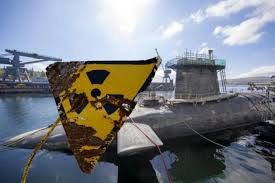
The Ferret Rob Edwards, April 28, 2024
The number of safety incidents that could have leaked radiation at the Trident nuclear base on the Clyde has risen to the highest in 15 years, according to information released by the Ministry of Defence (MoD).
One incident in 2023 at the Faslane base, near Helensburgh, was given the MoD’s worst risk rating. This is the first time this has happened since 2008.
Another four incidents at the base in 2023, and one in 2024, were given the second worst rating. The number in 2023 was the highest since 2006.
According to the MoD’s definitions, all six incidents had “actual or potential for radioactive release to the environment”. In total the MoD logged 179 nuclear safety incidents on the Clyde in 2023 and 2024, though most of them were deemed to be less serious.
The MoD insisted that there had been no “radiological impact” or harm to health from any of the incidents. But it declined to provide any further details for national security reasons.
Campaigners described the rise in serious safety incidents as “alarming” and “chilling”. They condemned the secrecy surrounding the incidents, and called for the MoD to give a “full account” of what happened.
The MoD has released new figures to MPs summarising the number of “nuclear site events” in 2023 and 2024 at Faslane and the nearby nuclear bomb store at Coulport.
A total of 158 incidents of all kinds were recorded for 2023, plus 21 so far in 2024. All but six of the incidents were in three less serious categories, suggesting they posed lower risks.
According to the MoD, the incidents included “equipment failures, human error, procedural failings, documentation shortcoming or near-misses”. But it gave no further descriptions of any of the six more serious incidents.
One incident at Faslane in 2023 was rated as “category A”, the highest risk rating used by the MoD. It has defined such incidents as having an “actual or high potential for radioactive release to the environment” in breach of safety limits.
The last category A incident reported by the MoD was in 2008 when radioactive waste leaked from a barge at Faslane into the Clyde. There were also spillages from nuclear submarines at the base in 2007 and 2006.
The MoD’s figures disclosed four “category B” incidents at Faslane in 2023. This is the highest number of such incidents at the site since 2006, when there were five.
There was another category B incident at Faslane in the first four months of 2024, as well as two in 2022 and three in 2021. The MoD has defined such incidents as having an “actual or high potential for a contained release”, or an “actual or potential for radioactive release to the environment” below safety limits.
Nuclear weapons infrastructure ‘dangerously rotting’

“If you watch media followup, you’ll see NO reporting on the substance, e.g the fact that our nuclear weapons infrastructure is dangerously rotting & is tens of billions secretly in the hole, with huge knockon effects beyond its destructive effects on MoD which has got *even worse* & *even more lying* during the war.
The entire puerile election debate will be based on fake budget numbers that will then be given to Starmer on above-STRAP3 yellow paper, with him given the same nudge to classify, punt and lie. Nobody will report on all this & MPs will continue to ignore it...Dominic Cummins, Substack 31 Dec 2023
The latest figures were released in response to a parliamentary question by the SNP MP for Edinburgh North and Leith, Deidre Brock. In previous questions, she has obtained information on nuclear safety events at Faslane and Coulport back to 2006.
“My annual questions to UK ministers have exposed steadily declining nuclear safety standards at Faslane and Coulport, but the increase in the severity of incidents last year is particularly alarming,” she told The Ferret.
“Reports detailing these incidents should be made public again so that people of Scotland – including those who live near the bases – can weigh up for themselves the risks created by the storage of these nuclear warheads.”
She accused the MoD of “playing down” the safety breaches, pointing out that in December 2023 the former Prime Minister Boris Johnson’s senior advisor, Dominic Cummins, described the UK’s nuclear weapons infrastructure as “dangerously rotting”.
Brock said she would be submitting further parliamentary questions asking for details of the more serious incidents in 2023 and 2024. “But it shouldn’t take the digging of individual MPs or journalists to get piecemeal bits of information from the MoD,” she argued.
The Scottish Campaign for Nuclear Disarmament branded the category A incident at Faslane as “chilling”. The UK’s nuclear weapons were a “catastrophe in waiting”, said the campaign chair, Lynn Jamieson.
She accused the UK government of wanting to suppress “bad news” about nuclear weapons.
The Nuclear Information Service, which researches and criticises nuclear weapons, called for the MoD to give a “full account” of what happened. “This is very concerning, and shows there are clearly problems with safety standards at Faslane,” said the service’s director, David Cullen.
He pointed out that there had been another “serious workplace safety failure” on a Trident submarine at Faslane in August 2021. The UK Office for Nuclear Regulation issued an improvement notice after an “electrical overload”………………………………………………… https://theferret.scot/nuclear-safety-lapses-clyde-alarm/
Why Iran may accelerate its nuclear program, and Israel may be tempted to attack it

Bulletin, By Darya Dolzikova, Matthew Savill | April 26, 2024
On April 19, Israel carried out a strike deep inside Iranian territory, near the city of Isfahan. The attack was apparently in retaliation for a major Iranian drone and missile attack on Israel a few days earlier. This exchange between the two countries—which have historically avoided directly targeting each other’s territories—has raised fears of a potentially serious military escalation in the region.
Israel’s strike was carried out against an Iranian military site located in close proximity to the Isfahan Nuclear Technology Center, which hosts nuclear research reactors, a uranium conversion plant, and a fuel production plant, among other facilities. Although the attack did not target Iran’s nuclear facilities directly, earlier reports suggested that Israel was considering such attacks. The Iranian leadership has, in turn, threatened to reconsider its nuclear policy and to advance its program should nuclear sites be attacked.
These events highlight the threat from regional escalation dynamics posed by Iran’s near-threshold nuclear capability, which grants Iran the perception of a certain degree of deterrence—at least against direct US retaliation—while also serving as an understandably tempting target for Israeli attack. As tensions between Israel and Iran have moved away from their traditional proxy nature and manifested as direct strikes against each other’s territories, the urgency of finding a timely and non-military solution to the Iranian nuclear issue has increased.
A tempting target. While the current assessment is that Iran does not possess nuclear weapons, the Islamic Republic maintains a very advanced nuclear program, allowing it to develop a nuclear weapons capability relatively rapidly, should it decide to do so. Iran’s “near-threshold” capability did not deter Israel from undertaking its recent attack. But Iran’s nuclear program is a tempting target for an attack that could have potentially destabilizing ramification: The program is advanced enough to pose a credible risk of rapid weaponization and at a stage when it could still be significantly degraded, albeit at an extremely high cost.
Iran views its nuclear program as a deterrent against direct US strikes on or invasion of its territory, acting as an insurance policy of sorts against invasion following erroneous Western accusations over its nuclear program, ala Iraq in 2003. That’s to say, during an attempted invasion, Iran could quickly produce nuclear weapons……………………………
Israel sees the Iranian nuclear program as an existential threat and has long sought its elimination. For this reason, reports that Israel might have been preparing to target Iranian nuclear sites as retaliation for Iran’s strikes against its territory came as little surprise……………………………………………………………………….
A range of bad options. The possibility of Iranian weaponization and Israeli attacks on Iran’s nuclear sites could lead to a serious escalation spiral and, potentially, a wider military conflict in the region……………………………………………………………
Following past instances of Israeli sabotage against the Iranian nuclear program, Tehran has doubled down—rebuilding damaged sites, hardening facilities, and ramping up its nuclear activity. The same is likely to be true should Iranian facilities be targeted directly this time, only to a greater degree. The shift from a proxy conflict between Iran and Israel to a direct engagement will only increase the value Iran places on its nuclear program as a deterrent against further direct attack on its territory and US military intervention. Should Iran assess that its regional proxies and its missile and drone capabilities have been insufficient to deter Israel from conducting direct strikes against its strategically significant nuclear program, Tehran may see the actual weaponization of its nuclear program as the only option left that can guarantee the security of the Iranian regime……………………………………………………………………………………………………………. more https://thebulletin.org/2024/04/why-iran-may-accelerate-its-nuclear-program-and-israel-may-be-tempted-to-attack-it/?utm_source=Newsletter&utm_medium=Email&utm_campaign=MondayNewsletter04292024&utm_content=NuclearRisk_IranNuclearProgramIsrael_04262024
Biden’s pledge to aid Palestinians is a big, murderous lie
Walt Zlotow, West Suburban Peace Coalition, Glen Ellyn IL 29 Apr 24
President Biden claims to be supporting food, water and medical aid to Palestinians now dying in Gaza from disease, starvation as well as being blown to bits by Biden’s 2000 lb. bombs.
But he knows full well Israel is violation his February 8th directive requiring assurances from Israel that it’s not using U.S. military aid to violate human rights law. Israel’s ongoing genocide of 2,300,000 Palestinians there puts Israel about as far from required compliance with Biden’s edict as the two sides of the Grand Canyon.
Biden’s February 8th directive states that Israel “will facilitate and not arbitrarily deny, restrict, or otherwise impede, directly or indirectly, the transport or delivery of United States humanitarian assistance.”
But Israel is not only blocking most aid from alleviating starvation and disease in Gaza, It’s using Biden’s bombs to attack Palestinian and foreign humanitarian workers from delivering that aid. When it comes to impeding, Israel know what works. Its already killed one American aid worker.
Biden knows this but maintains the fantasy, sadly swallowed whole by many of his reelection supporters, that he’s doing ‘everything he can to aid the staving, disease ridden Palestinians.’
’ Truth is he’s doing everything he can to enable Israel’s grotesque removal of the Palestinians from their Gaza land coveted by Israel.
He’s even conspiring with Israeli Prime Minister Netanyahu to derail the impending indictment of Netanyahu by the International Criminal Court. The indictment is expected this week unless the Netanyahu-Biden genocide tag team can prevent it.
President Biden has bigger problems that losing tens of millions of his 2020 voters, sealing his reelection defeat, by his enabling of Israeli genocide. He may end up a fellow indicted war criminal with Benjamin Netanyahu in the dock at The Hague.
Macron ready to ‘open debate’ on nuclear European defence
French President Emmanuel Macron is ready to “open the debate” about the role of nuclear weapons in a common European defence, he said in an interview published Saturday
https://www.france24.com/en/europe/20240427-macron-ready-to-open-debate-on-nuclear-european-defence 27/04/2024
It was just the latest in a series of speeches in recent months in which he has stressed the need for a European-led defence strategy.
“I am ready to open this debate which must include anti-missile defence, long-range capabilities, and nuclear weapons for those who have them or who host American nuclear armaments,” the French president said in an interview with regional press group EBRA.
“Let us put it all on the table and see what really protects us in a credible manner,” he added.
France will “maintain its specificity but is ready to contribute more to the defence of Europe”.
The interview was carried out Friday during a visit to Strasbourg.
Following Britain’s withdrawal from the European Union, France is the only member of the bloc to possess its own nuclear weapons.
In a speech Thursday to students at Paris’ Sorbonne University, Macron warned that Europe faced an existential threat from Russian aggression.
He called on the continent to adopt a “credible” defence strategy less dependent on the United States.
“Being credible is also having long-range missiles to dissuade the Russians.
“And then there are nuclear weapons: France’s doctrine is that we can use them when our vital interests are threatened,” he added.
“I have already said there is a European dimension to these vital interests.”
Constructing a common European defence policy has long been a French objective, but it has faced opposition from other EU countries who consider NATO’s protection to be more reliable.
However, Russia’s invasion of Ukraine and the possible return of the isolationist Donald Trump as US president has given new life to calls for greater European defence autonomy.
NNSA Delays Urgent Research on Plutonium “Pit” Aging But Spends Billions on Nuclear Weapons Bomb Cores

Concerned Citizens for Nuclear Safety, 28 Apr 24 http://nuclearactive.org/
This week, CCNS highlights portions of a recent press release by Nuclear Watch New Mexico, Tri-Valley Communities Against a Radioactive Environment (Tri-Valley CARES), and the Savannah River Site Watch about the National Nuclear Security Administration (NNSA). Their piece suggests NNSA does not have its priorities straight in neither producing up-to-date information on the way plutonium appears to age nor providing this information in a timely manner to the public. The entire press release is posted at http://nuclearactive.org/wp-content/uploads/2024/04/240417-NWNM-SRSW-TVC-Plutonium-Aging-PR.pdf
The press release reads: “Nearly three years after filing a Freedom of Information Act request, the public interest group Savannah River Site Watch has finally received [] the congressionally required Research Program Plan for Plutonium and Pit Aging.
However, the document is 40% blacked out, including references and acronyms.
Plutonium ‘pits’ are the radioactive cores of all U.S. nuclear weapons. The NNSA claims that potential aging effects are justification for a ~$60 billion program to expand production. However, the Plan fails to show that aging is a current problem. To the contrary, it demonstrates that NNSA is delaying urgently needed updated plutonium pit aging research.
“In 2006 independent scientific experts known as the JASONs concluded that plutonium pits last at least 85 years without specifying an end date. The average pit age is now around 40 years. A 2012 follow-on study by the Lawrence Livermore nuclear weapons lab concluded:
’This continuing work shows that no unexpected aging issues are appearing in plutonium that has been accelerated to an equivalent of [approximately] 150 years of age. The results of this work are consistent with, and further reinforce, the Department of Energy Record of Decision to pursue a limited pit manufacturing capability in existing and planned facilities at Los Alamos instead of constructing a new, very large pit manufacturing facility…’
“Since then NNSA has reversed itself. In 2018 the agency decided to pursue the simultaneous production of at least 30 pits per year at the Los Alamos National Laboratory (LANL) in northern New Mexico and at least 50 pits per year at the Savannah River Site (SRS) in South Carolina. Upgrades to plutonium facilities at LANL are slated to cost $8 billion over the next five years. The redundant Savannah River Plutonium Processing Facility in South Carolina will cost up to $25 billion, making it the second most expensive building in human history.
“Hundreds of billions of taxpayers’ dollars and future international nuclear weapons policies are at stake. …
IAEA clears Japanese reactor for 60-year lifetime
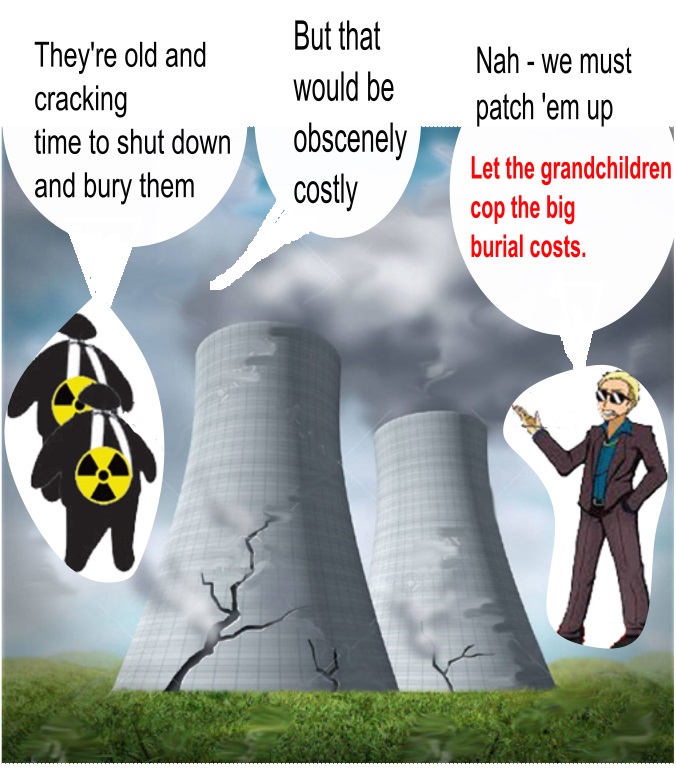
Following a review, unit 3 at the Mihama nuclear power plant (NPP) has been deemed fit for further operation.
Alfie Shaw, April 26, 2024
Ateam of experts from the International Atomic Agency (IAEA) has found that Japanese utility Kansai Electric Power Company is implementing timely measures for the safe long-term operation of unit 3 at its Mihama NPP.
Under regulations that came into force in July 2013, Japanese reactors have a nominal operating period of 40 years; 20-year extensions can be granted once, but this is contingent on exacting safety requirements.
Kansai’s Mihama unit 3, a 780MW pressurised water reactor that entered commercial operation in 1976, was granted an extension by Japan’s Nuclear Regulation Authority (NRA) in November 2016, giving the unit a licence to operate until 2036. Unit 3 at Mihama was the third Japanese unit to be granted a licence extension enabling it to operate beyond 40 years under the revised regulations, following Takahama units 1 and 2, which received NRA approval in June 2016.
Following the disaster at the Fukushima Daiichi plant in 2011, Mihama shut down, lying idle until restarting in June 2021. It became the first Japanese reactor to operate beyond 40 years…………………………………………….
Power Technology 26th April 2024 https://www.power-technology.com/news/mihama-nuclear-unit-sees-extension-to-60-year-lifetime/
.
Biden Wanted To Sanction An Israeli Battalion But He Didn’t Because Israel Said No
CAITLIN JOHNSTONE, APR 27, 2024
The Biden administration has reportedly canned its plans to issue sanctions on an extremist IDF unit for human rights violations in the occupied West Bank, following backlash from Israel and its high-powered supporters within the US government.
The State Department has put on hold its intention to impose sanctions on the Israel Defense Forces “Netzah Yehuda” battalion for human rights violations in the occupied West Bank and is reviewing the issue in light of information Israel provided in recent days, U.S. sources familiar with the issue said.
Why it matters: The review is part of a consultation process outlined in an agreement between the U.S. and Israel. But Secretary of State Antony Blinken has also been under extensive pressure from the Israeli government, members of Congress and some senior Biden administration officials to reconsider the possible sanctions.
The big picture: The Biden administration had intended to withhold U.S. military aid and training from the Netzah Yehuda battalion — an unprecedented move in the history of relations between the countries.

As Dr Assal Rad has highlighted on Twitter, this decision follows a sequence of events in which ProPublica revealed that Secretary of State Antony Blinken was ignoring his own State Department’s recommendation to sanction Israeli military units that have been credibly accused of human rights abuses like rape and torture, after which Blinken announced that he was preparing to issue sanctions after all. This announcement was met with outrage from Israel and its apologists, with Israeli Prime Minister Benjamin Netanyahu penning a furious screed calling the planned sanctions “the height of absurdity and a moral low”. Those planned sanctions are now canceled.
Or to put it more simply, the Biden administration had planned to sanction an IDF battalion, but it didn’t because Israel said no………………………………………………………………………………… more https://www.caitlinjohnst.one/p/biden-wanted-to-sanction-an-idf-unit?utm_source=post-email-title&publication_id=82124&post_id=144069670&utm_campaign=email-post-title&isFreemail=true&r=1ise1&triedRedirect=true&utm_medium=email
UK troops could be sent into Gaza to help with aid deliveries
Suggestion comes after US announces none of its own troops would be sent to the enclave
Middle East Eye, By MEE staff, 27 April 2024
British troops could be deployed in Gaza to assist with aid deliveries, after the US said it would not be sending any of its own ground forces.
The US previously said a “third party” would be responsible for driving trucks along a floating causeway onto the beach, a role the BBC has learned could be filled by British forces.
The BBC on Saturday quoted Whitehall as saying no decision had yet been made and that the issue had not yet been raised with Prime Minister Rishi Sunak.
US President Joe Biden first announced the plans for a floating pier in Gaza to deliver aid in March.
The US said it would coordinate the security of the temporary pier with Israel and that the temporary port would increase the amount of humanitarian assistance to Palestinians in the war-battered enclave by “hundreds of additional truckloads” per day.
A British defence source told AFP that a UK ship to house hundreds of US army personnel building the pier had set sail from Cyprus.
According to the Pentagon, Royal Navy support ship Cardigan Bay will help to support the international effort to construct the pier, which is set to be completed in May…………………………………………. https://www.middleeasteye.net/news/uk-troops-could-be-sent-gaza-help-aid-deliveries
1 This Month
Chernobyl: The Lost Tapes – A good documentary on Chernobyl on SBS available On Demand for the next 3 weeks– https://www.sbs.com.au/ondemand/tv-program/chernobyl-the-lost-tapes/2352741955560

of the week–London Campaign for Nuclear Disarmament

Tell the Ukrainian Government to Drop Prosecution of Peace Activist Yurii Sheliazhenko
To see nuclear-related stories in greater depth and intensity – go to https://nuclearinformation.wordpress.com
-
Archives
- April 2026 (139)
- March 2026 (251)
- February 2026 (268)
- January 2026 (308)
- December 2025 (358)
- November 2025 (359)
- October 2025 (376)
- September 2025 (257)
- August 2025 (319)
- July 2025 (230)
- June 2025 (348)
- May 2025 (261)
-
Categories
- 1
- 1 NUCLEAR ISSUES
- business and costs
- climate change
- culture and arts
- ENERGY
- environment
- health
- history
- indigenous issues
- Legal
- marketing of nuclear
- media
- opposition to nuclear
- PERSONAL STORIES
- politics
- politics international
- Religion and ethics
- safety
- secrets,lies and civil liberties
- spinbuster
- technology
- Uranium
- wastes
- weapons and war
- Women
- 2 WORLD
- ACTION
- AFRICA
- Atrocities
- AUSTRALIA
- Christina's notes
- Christina's themes
- culture and arts
- Events
- Fuk 2022
- Fuk 2023
- Fukushima 2017
- Fukushima 2018
- fukushima 2019
- Fukushima 2020
- Fukushima 2021
- general
- global warming
- Humour (God we need it)
- Nuclear
- RARE EARTHS
- Reference
- resources – print
- Resources -audiovicual
- Weekly Newsletter
- World
- World Nuclear
- YouTube
-
RSS
Entries RSS
Comments RSS
 nuclear-news