Bombs and viruses: The shadowy history of Israel’s attacks on Iranian soil
From cyberattacks and assassinations to drone strikes, Israel-linked plots have targeted Iran and its nuclear programme for years.
Israel’s leaders have signalled that they are weighing their options on how to respond to Iran’s attack early Sunday morning, when Tehran targeted its archenemy with more than 300 missiles and drones.
Iran’s attack, which followed an Israeli strike last week on the Iranian consulate in Damascus, Syria, that killed 13 people was historic: It was the first time Tehran had directly targeted Israeli soil, despite decades of hostility. Until Sunday, many of Iran’s allies in the so-called axis of resistance — especially the Palestinian group Hamas, the Lebanese group Hezbollah, Yemen’s Houthis and armed groups in Iraq and Syria — were the ones who launched missiles and drones at Israel.
But if Israel were to hit back militarily inside Iran, it wouldn’t be the first time. Far from it.
For years, Israel has focused on one target within Iran in particular: the country’s nuclear programme. Israel has long accused Iran of clandestinely building a nuclear bomb that could threaten its existence — and has publicly, and frequently, spoken of its diplomatic and intelligence-driven efforts to derail those alleged efforts. Iran denies that it has had a military nuclear programme, while arguing that it has the right to access civil nuclear energy.
As Israel prepares its response, here’s a look at the range of attacks in Iran — from drone strikes and cyberattacks to assassinations of scientists and the theft of secrets — that Israel has either accepted it was behind or is accused of having orchestrated.
Assassinations of Iranian scientists
- January 2010: A physics professor at Tehran University, Masoud Ali-Mohammadi, was killed through a remote-controlled bomb planted in his motorcycle. Iranian state media claimed that the US and Israel were behind the attack. The Iranian government described Ali-Mohammadi as a nuclear scientist.
- November 2010: A professor at the nuclear engineering faculty at Shahid Beheshti University in Tehran, Majid Shahriari, was killed in a car explosion on his way to work. His wife was also wounded. The president of Iran at the time, Mahmoud Ahmadinejad, blamed the United States and Israel for the attacks.
- January 2012: Mostafa Ahmadi Roshan, a chemical engineering graduate, was killed by a bomb placed on his car by a motorcyclist in Tehran. Iran blamed Israel and the US for the attack and said Ahmadi Roshan was a nuclear scientist who supervised a department at Iran’s primary uranium enrichment facility, in the city of Natanz.
- November 2020:Prominent nuclear scientist Mohsen Fakhrizadeh was killed in a roadside attack outside Tehran. Western and Israeli intelligence had long suspected that Fakhrizadeh was the father of an Iranian nuclear weapons programme. He was sanctioned by the United Nations in 2007 and the US in 2008.
- May 2022: Colonel Hassan Sayyad Khodaei of the Islamic Revolutionary Guard Corps (IRGC) was shot five times outside of his home in Tehran. Majid Mirahmadi, a member of Iran’s Supreme National Security Council, alleged the assassination was “definitely the work of Israel”.
Israel’s cyberattacks on Iran
- June 2010:The Stuxnet virus was found in computers at the nuclear plant in Iran’s Bushehr city, and it spread from there to other facilities. As many as 30,000 computers across at least 14 facilities were impacted by September 2010. At least 1,000 out of 9,000 centrifuges in Iran’s Natanz enrichment facility were destroyed, according to an estimate by the Institute for Science and International Security. Upon investigation, Iran blamed Israel and the US for the virus attack.
- April 2011: A virus called Stars was discovered by the Iranian cyberdefence agency which said the malware was designed to infiltrate and damage Iran’s nuclear facilities. The virus mimicked official government files and inflicted “minor damage” on computer systems, according to Gholamreza Jalali, the head of Iran’s Passive Defense Organization. Iran blamed Israel and the US.
November 2011: Iran said it discovered a new virus called Duqu, based on Stuxnet. Experts said Duqu was intended to gather data for future cyberattacks. The Iranian government announced it was checking computers at main nuclear sites. The Duqu spyware was widely believed by experts to have been linked to Israel.- April 2012: Iran blamed the US and Israel for malware called Wiper, which erased the hard drives of computers owned by the Ministry of Petroleum and the National Iranian Oil Company.
- May 2012: Iran announced that a virus called Flame had tried to steal government data from government computers. The Washington Post reported that Israel and the US had used it to collect intelligence. Then-Israeli Vice Prime Minister Moshe Yaalon did not confirm the nation’s involvement but acknowledged that Israel would use all means to “harm the Iranian nuclear system”.
- October 2018: The Iranian government said that it had blocked an invasion by a new generation of Stuxnet, blaming Israel for the attack.
- October 2021: A cyberattack hit the system that allows Iranians to use government-issued cards to purchase fuel at a subsidised rate, affecting all 4,300 petrol stations in Iran. Consumers had to either pay the regular price, more than double the subsidised one, or wait for stations to reconnect to the central
- distribution system. Iran blamed Israel and the US.
- May 2020: A cyberattack impacted computers that control maritime traffic at Shahid Rajaee port on Iran’s southern coast in the Gulf, creating a hold-up of ships that waited to dock. The Washington Post quoted US officials as saying that Israel was behind the attack, though Israel did not claim responsibility.
Israel’s drone strikes and raids on Iran
- January 2018: Mossad agents raided a secure Tehran facility, stealing classified nuclear archives. In April 2018, Israeli Prime Minister Benjamin Netanyahu announced that Israel discovered 100,000 “secret files that prove” Iran lied about never having a nuclear weapons programme.
- February 2022: Former Israeli Prime Minister Naftali Bennett admitted in an op-ed published in The Wall Street Journal in December 2023, that Israel carried out an attack on an unmanned aerial vehicle, and assassinated a senior IRGC commander in February of the previous year.
- May 2022: Explosives-laden quadcopter suicide drones hit the Parchin military complex southeast of Tehran, killing an engineer and damaging a building where drones had been developed by the Ministry of Defence and Armed Forces. IRGC Commander Hossein Salami pledged retaliation against unspecified “enemies”.
- February 2024: A natural gas pipeline in Iran was attacked. Iran’s Oil Minister Javad Owji alleged that the “explosion of the gas pipeline was an Israeli plot”.
- January 2023: Several suicide drones struck a military facility in central Isfahan, but they were thwarted and caused no damage. While Iran did not immediately place blame for the attacks, Iran’s UN envoy, Amir Saeid Iravani, wrote a letter to the UN chief saying that “primary investigation suggested Israel was responsible”.
Fujitsup-ing UK ‘s Post Office IT system, – and now its Nuclear Lab?
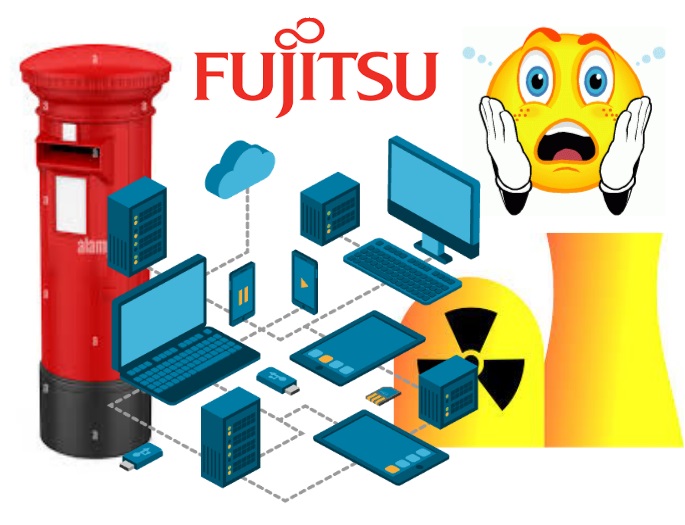
The UK government’s National Nuclear Laboratory has given Fujitsu a £155k contract for ‘software support’ IT – for nuclear science and experimental programmes in nuclear power and weapons.
Fujitsu? The Japanese software company that supplied, and apparently is still supplying, the British Post office with software – its bodgy Horizon IT programme being at the root of one of the most widespread miscarriages of justice in UK history.. Yes, that one!
It doesn’t fill you with confidence about the safety of the UK’s nuclear lab activities, does it?
The Post Office’s contract with Fujitsu was, (is) extremely complex, with the Post Office lacking the expertise to understand how the IT system works. Does the nuclear lab have the same problem?
These types of contracts deliberately lock the buyer in, with the supplier having control of all upgrades, fixing of any technical problems. The Post Office contract also limited the amount of information they could get from the system.
This created a dependance by the Post Office on the company Fujitsu. Is the British military and nuclear system also locked into dependance on Fujitsu? A source told the i newspaper that the Japanese firm has been managing a secretive computer system facilitating the “strategic command and control of UK Armed Forces” for decades.
The contract for the National Nuclear Laboratory is the first government contract with Fujitsu in 2024, – to the anger and frustration of many, as the inquiry into the Post Office software scandal is still underway, with more litigation likely to come.
Environmental impacts of underground nuclear weapons testing

While underground nuclear tests were chosen to limit atmospheric radioactive fallout, each test still caused dynamic and complex responses within crustal formations. Mechanical effects of underground nuclear tests span from the prompt post-detonation responses to the enduring impacts resulting in radionuclide release, dispersion, and migration through the geosphere. Every test of nuclear weapons adds to a global burden of released radioactivity (Ewing 1999).
Bulletin, By Sulgiye Park, Rodney C. Ewing, March 7, 2024
Since Trinity—the first atomic bomb test on the morning of July 16, 1945, near Alamogordo, New Mexico—the nuclear-armed states have conducted 2,056 nuclear tests (Kimball 2023). The United States led the way with 1,030 nuclear tests, or almost half of the total, between 1945 and 1992. Second is the former Soviet Union, with 715 tests between 1949 and 1990, and then France, with 210 tests between 1960 and 1996. Globally, nuclear tests culminated in a cumulative yield of over 500 megatons, which is equivalent to 500 million tons of TNT (Pravalie 2014). This surpasses by over 30,000 times the yield of the first atomic bomb dropped on Hiroshima on August 6, 1945.
Atmospheric nuclear tests prevailed until the early 1960s, with bombs tested by various means: aircraft drops, rocket launches, suspension from balloons, and detonation atop towers above ground. Between 1945 and 1963, the Soviet Union conducted 219 atmospheric tests, followed by the United States (215), the United Kingdom (21), and France (3) (Kimball 2023).
In the early days of the nuclear age, little was known about the impacts of radioactive “fallout —the residual and activated radioactive material that falls to the ground after a nuclear explosion. The impacts became clearer in the 1950s, when the Kodak chemical company detected radioactive contamination on their film, which was linked to radiation resulting from the atmospheric nuclear tests (Sato et al. 2022). American scientists, like Barry Commoner, also discovered the presence of strontium 90 in children’s teeth originating from nuclear fallout thousands of kilometers from the original test site (Commoner 1959; Commoner 1958; Reiss 1961). These discoveries alerted scientists and the public to the consequences of radioactive fallout from underwater and atmospheric nuclear tests, particularly tests of powerful thermonuclear weapons that had single event yields of one megaton or greater.
Public concerns for the effects of radioactive contamination led to the Limited (or Partial) Test Ban Treaty, signed on August 5, 1963. The treaty restricted nuclear tests from air, space, and underwater (Atomic Heritage Foundation 2016; Loeb 1991; Rubinson 2011). And while the treaty was imperfect with only three signatories at the beginning (the United States, the United Kingdom, and the Soviet Union), the ban succeeded in significantly curbing atmospheric release of radioactive isotopes.
After the entry into force of the partial test ban, almost 1,500 underground nuclear tests were conducted globally. Of the 1,030 US nuclear tests, nearly 80 percent, or 815 tests (See Table 1 on original ), were conducted underground, primarily at the Nevada Test Site.[1] As for other nuclear powers, the Soviet Union conducted 496 underground tests, mostly in the Semipalatinsk region of Kazakhstan, France conducted 160 underground tests, the United Kingdom conducted 24, and China 22. These underground nuclear tests were in a variety of geologic formations (e.g., basalt, alluvium, rhyolite, sandstone, shale) to depths up to 2,400 meters.

In 1996, after some international efforts to curb nuclear testing and promote disarmament, the Comprehensive Test Ban Treaty (CTBT) was negotiated, which prohibited all nuclear explosions (General Assembly 1996). Since the negotiation of the CTBT, India and Pakistan conducted three and two underground nuclear tests, respectively, in 1998. And today, North Korea stands as the only country to have tested nuclear weapons in the 21st century.
While underground nuclear tests were chosen to limit atmospheric radioactive fallout, each test still caused dynamic and complex responses within crustal formations. Mechanical effects of underground nuclear tests span from the prompt post-detonation responses to the enduring impacts resulting in radionuclide release, dispersion, and migration through the geosphere. Every test of nuclear weapons adds to a global burden of released radioactivity (Ewing 1999)…………………………………………………………………………
………………………………………………………………….. Containment failures and nuclear accidents
Underground nuclear tests are designed to limit radioactive fallout and surface effects. However, containment methods are not foolproof, and radioisotopes, which are elements with neutrons in excess making them unstable and radioactive, can leak into the surrounding environment and atmosphere, posing potential risks to ecosystems and human health.
Instances of radiation leaks were not uncommon…………………………………..
Unintended radioactive releases from underground nuclear tests occurred through venting or seeps, where fission products and radioactive materials were uncontrollably released, driven by pressure from shockwave-induced steam or gas. In rare cases, more serious nuclear accidents occurred due to incomplete geological assessments of the surrounding medium in preparation for the test. A notable example of accidental release is the Baneberry underground nuclear test on December 18, 1970, which, according to the federal government, resulted in an “unexpected and unrecognized abnormally high water content in the medium surrounding the detonation point” ……………………………………………………………………………………………
Mechanical and radiation effects of underground nuclear tests
Three main factors affect the mechanical responses of underground nuclear tests: the yield, the device placement (i.e., depth of burial, chamber geometry, and size), and the emplacement medium (i.e., rock type, water content, mineral compositions, physical properties, and tectonic structure). These factors influence the physical response of the surrounding geological formations and the extent of ground displacement, which, in turn, determine the radiation effects by influencing the timing and fate of the radioactive gas release.
Every kiloton of explosive yield produces approximately 60 grams (3 × 10¹² fission product atoms) of radionuclides (Smith 1995; Glasstone and Dolan 1977). Between 1962 and 1992, underground nuclear tests had a total explosive yield of approximately 90 megatons (Pravalie 2014), producing nearly 5.4 metric tons of radionuclides. ……………………………………………….
……………………………..The partitioning of radionuclides between the melt glass and rubble significantly impacts the subsequent transfer of radioactivity to groundwater.
…………………………Temperatures produced by large explosions can change the permeability, porosity, and water storage capacity by creating new fractures, cavities, and chimneys……………………. The explosion also affects the porosity of the surrounding rock. For example, a fully contained explosion of 12.5-kiloton yield in Degelen Mountain at the former Soviet Union’s Semipalatinsk test site resulted in up to a six-fold increase in porosity within the crush zone surrounding the cavity (Adushkin and Spivak 2015). Increased permeability and porosity of the surrounding rock can lead to more radionuclides being released, as more groundwater can pass through the geologic formation.
Hydrogeology and release of radioactivity
The main way contaminants can be moved from underground test areas to the more accessible environment is through groundwater flow. …………………………………………..
Given their long half-lives (Table 2 on original ), the ability of plutonium isotopes to migrate over time raises concerns about the long-term impacts and challenges in managing radioactive contamination.
In all these cases, colloid-facilitated transport allowed for the migration of radioactive particles through groundwater flow over an extended period—long after the nuclear tests or discharge occurred (Novikov et al. 2006). ………………………
The risks associated with the environmental contamination from underground nuclear tests have often been considered low due to the slow movement of the groundwater and the long distance that separates it from publicly accessible groundwater supplies. But these studies demonstrate that apart from prompt effect of radioactive gas releases from instantaneous changes in geologic formations, long-term effects persist due to the evolving properties of the surrounding rocks long after the tests. Long-lived radionuclides can be remarkably mobile in the geosphere. Such findings underscore the necessity for sustained long-term monitoring efforts at and around nuclear test sites to evaluate the delayed impacts of underground nuclear testing on the environment and public health.
Enduring legacy
Nearly three decades after the five nuclear-armed states under the CTBT stopped testing nuclear weapons both in the atmosphere and underground, the effects of past tests persist in various forms—including environmental contamination, radiation exposure, and socio-economic repercussions—which continue to impact populations at and near closed nuclear test sites (Blume 2022). The concerns are greater when the test sites are abandoned without adequate environmental remediation. This was the case with the Semipalatinsk test site in Kazakhstan that was left unattended after the fall of the Soviet Union in 1991, before a secret multi-million effort was made by the United States, Russia, and Kazakhstan to secure the site (Hecker 2013). The abandonment resulted in heavy contamination of soil, water, and vegetation, posing significant risks to the local populations (Kassenova 2009).
In 1990, the US Congress acknowledged the health risks from nuclear testing by establishing the Radiation Exposure Compensation Act (RECA), which provides compensation to those affected by radioactive fallout from nuclear tests and uranium mining. Still, there are limitations and gaps in coverage that leave many impacted individuals, including the “downwinders” from the Trinity test site without compensation for their radiation exposure (Blume, 2023). The Act is set to expire in July 2024, potentially depriving many individuals without essential assistance. Over the past 30 years, the RECA fund paid out approximately $2.5 billion to impacted populations (Congressional Research Service 2022). For comparison, the US federal government spends $60 billion per year to maintain its nuclear forces (Congressional Budget Office 2021).
As the effects of nuclear testing still linger, today’s generations are witnessing an increasing concern at the possibility of a new arms race and potential resumption of nuclear testing (Drozdenko 2023; Diaz-Maurin 2023). The concern is heightened by activities in China and North Korea and with Russia rescinding its ratification of the CTBT. Even though the United States maintains a moratorium on non-subcritical nuclear tests, its decision not to ratify the test ban treaty shows a lack of international leadership and commitment. As global tensions and uncertainties arise, it is critical to ensure global security and minimize the risks to humans and the environment by enforcing comprehensive treaties like the CTBT. Transparency at nuclear test sites should be promoted, including those conducting very-low-yield subcritical tests, and the enduring impacts of past nuclear tests should be assessed and addressed.
Endnotes………………………………………………………………more https://thebulletin.org/premium/2024-03/environmental-impacts-of-underground-nuclear-weapons-testing/?utm_source=Newsletter&utm_medium=Email&utm_campaign=MondayNewsletter04152024&utm_content=NuclearRisk_EnvironmentalImpactsNuclearTests_03072024
Abrdn and two more City giants shun Sizewell C nuclear project
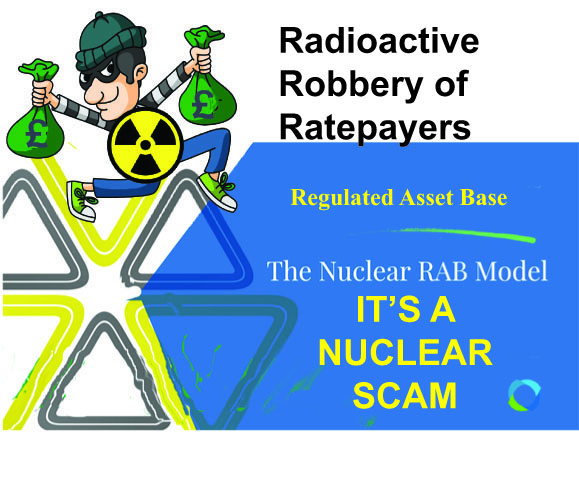
Three of the City’s largest investment firms have confirmed they are not buying into the delay-stricken Sizewell C nuclear project.
City AM, RHODRI MORGAN, 15 Apr 24,
Emails seen by City A.M. show that representatives from Abrdn, Aviva and Phoenix Group each told anti-Sizewell C campaign group, Stop Sizewell C, that they were not looking to bankroll the project, which is expected to reach around £20bn in costs.
Phoenix Group, which has around £280bn in assets under management, has previously expressed interest in nuclear projects.
The decisions mark a further blow against the UK government’s struggling nuclear programme.
In an effort to shore up cash flows to rescue the delay-ridden Sizewell and Hinkley Point C projects, the government revealed a framework, many years in the making: The Regulated Asset Base (RAB), which would allow institutional lenders to buy into nuclear development.
But Abrdn, Aviva and Phoenix Group’s failure to get onboard adds to a growing list of major financial houses, including pension funds of BT, Natwest and Nest, to snub the project.
“The strategy has not succeeded,” said Stop Sizewell C’s executive director Alison Downes.
“It is hardly a surprise considering the many uncertainties, including what the project will actually cost and we congratulate those pension funds that have steered clear of Sizewell C’s capital raise, and urge the handful that have not decided to hotfoot it out immediately.”
The government is currently the majority shareholder and is currently investing a total of £2.5bn in financial support for the project…………………………
Sizewell is not the only major reactor project hampered by sky-rocketing costs and time delays.
Hinkley Point C, initially due to be operational in 2017 with a £18bn bill is now expected to be completed by 2031 and cost up to £35bn.
Accounting for inflation, this could potentially rise to £46bn and France’s state energy company EDF is on the hook for an £11bn impairment charge on the project. https://www.cityam.com/abrdn-and-two-more-city-giants-shun-sizewell-c-nuclear-project/
You will not BELIEVE what the Tories just gave Fujitsu ANOTHER government contract for
The ‘fallout’ could be disastrous.
by Steve Topple, 11 April 2024, https://www.thecanary.co/trending/2024/04/11/fujitsu-nuclear-uk-contract/
Disgraced Fujitsu – the company behind the Horizon software that helped the Post Office wrongly convict hundreds of subpostmasters – has just been given ANOTHER government contract by the Tories. However, that’s not the worst part – because unbelievably, the deal is for software to support UK nuclear experiments.
Yes. The fallout could be disastrous.
As LBC reported:
The National Nuclear Laboratory, which is owned and operated by the government, has awarded the firm a £155k contract for ‘software support’ until 2025…
The contract, published by procurement data provider Tussell, is for “software support” and is due to run until 31 March 2025.
Hairbrained Tories: we’ve got a great idea… why not give Fujitsu a nuclear contract?
The National Nuclear Laboratory does all sorts of stuff with nuclear energy. As it says on its website, this includes:
four strategic areas: Clean Energy, Environmental Restoration, Health and Nuclear Medicine and Security and Non-Proliferation.
That is, the laboratory dabbles in nuclear science and experiments – including nuclear power and weapons; note its ironic oxymoron that it deals with ‘security’ and ‘non-proliferation’. So, you’d think that the government would want to make sure that the National Nuclear Laboratory was a safe and secure environment.
Clearly fucking not, though – as they’ve now given Fujitsu a contract.
People on X were rightly outraged: (several quotes here)
Christopher Head was the youngest victim of the Horizon Post Office scandal. He told LBC:
When there is a pledge not to bid for contracts you kind of expect them to adhere to that. But the problem is these companies have shareholders, and these shareholders demand profitability. It is frustrating.
Fujitsu made this pledge that they wouldn’t voluntarily bid for contracts within the government while the inquiry is going on – but we all know the size of these companies makes it difficult.
Post Office scandal: you must have been in a nuclear bunker if you missed it
Unless you’ve been in a nuclear bunker for the past 12 months, then you can’t have missed the Post Office scandal.
As the Canary previously reported, Mr Bates vs the Post Office has brought the ongoing scandal over the Horizon IT system, and Post Office and politicians conduct at the time, back into the public eye.
More than 700 people running small local post offices received criminal convictions between 1999 and 2005 after faulty accounting software made it appear that money had gone missing from their branches.
The scandal has been described at an ongoing public inquiry as “the worst miscarriage of justice in recent British legal history”.
Fujitsu: giving the UK its very own Hulk moment?
Yet here we are, with the Tories STILL giving Fujitsu another contract. Worse still, they’ve given it to them on the basis of providing tech support for nuclear technology. So, unless the government fancies itself as creating a league of superhumans, then it needs to revoke the contract.
Fujitsu cannot be trusted to run a piss up in a brewery – let alone software support for a nuclear experiments lab. It could barely handle the tech for provincial Post Offices. The Canary can see an Incredible Hulk moment coming on if this goes ahead – and we hope everyone has their nuclear bunkers ready.
Sign the petition against the contract here.
Biden Tells Netanyahu US Won’t Support Attack on Iran
White House National Security Council spokesman John Kirby said that Biden also told Netanyahu “that the United States is going to continue to help Israel defend itself,” signaling the US would intervene again to help Israel if it does choose to escalate the situation and comes under another attack.
The US is portraying the Iranian attack as an Israeli victory
by Dave DeCamp April 14, 2024, https://news.antiwar.com/2024/04/14/biden-tells-netanyahu-us-wont-support-attack-on-iran/
President Biden told Israeli Prime Minister Benjamin Netanyahu that the US wouldn’t join Israel in any offensive action against Iran, multiple media outlets have reported.
US officials are touting Israel’s defense of Iran’s attack as a victory, and that’s the message Biden conveyed to Netanyahu, a sign the US doesn’t want the situation to escalate. Iran fired over 300 missiles and drones at Israel, which was a response to Israel’s bombing of Iran’s consulate in Damascus on April 1.
“Israel really came out far ahead in this exchange. It took out the IRGC [Islamic Revolutionary Guard Corp] leadership in the Levant, Iran tried to respond, and Israel clearly demonstrated its military superiority, defeating this attack, particularly in coordination with its partners,” a senior Biden administration official told reporters, according to The Times of Israel.
In a statement on the attack released by the White House, Biden said he would convene with other G7 leaders to “coordinate a united diplomatic response to Iran’s brazen attack.”
Israeli officials claimed 99% of the Iranian missiles and drones were intercepted by Israeli air defense systems and with assistance from the US, Britain, and Jordan. Some missiles got through and damaged the Nevatim Airbase in southern Israel. Only one person was injured in the attack, a seven-year-old Bedouin girl in the Negev, and nobody was killed.
Iran gave Israel plenty of time to respond to the attack by announcing it fired the drones hours before they reached Israeli territory, and Tehran said it gave other regional countries a 72-hour notice. Iranian officials said the attack was “limited” and made clear they do not seek an escalation with Israel.
But Tehran is also warning it will launch an even bigger attack if Israel responds. “If the Zionist regime or its supporters demonstrate reckless behavior, they will receive a decisive and much stronger response,” Iranian President Ebrahim Raisi said in a statement on Sunday.
While the US is signaling it seeks de-escalation and won’t support a potential Israeli attack on Iran, it’s unclear what Israel will do next. The Israeli war cabinet convened to discuss the situation on Sunday, and Israeli media reports said they agreed a response would come but didn’t decide on where or when.
Israeli War Cabinet Minister Benny Gantz vowed Israel would respond but signaled it wouldn’t be imminent. Gantz said the “event is not over” and that Israel should “build a regional coalition and exact a price from Iran, in a way and at a time that suits us.”
White House National Security Council spokesman John Kirby said that Biden also told Netanyahu “that the United States is going to continue to help Israel defend itself,” signaling the US would intervene again to help Israel if it does choose to escalate the situation and comes under another attack.
Israel’s bombing of the Iranian consulate in Syria killed 13 people, including seven members of the IRGC. Israel has a history of conducting covert attacks inside Iran and killing Iranians in Syria, but the bombing of the diplomatic facility marked a huge escalation.
Israeli Firms Are Working Overtime to Sell Stolen Palestinian Land to US Jews
these land sale events “are illegal under the Fair Housing Act of 1968 and Civil Rights Act of 1965, since registration, entry, and participation are denied on the basis of identity (i.e., race, ethnicity, national origin, and religion).”
The real estate events peddling land in Israeli settlements in the West Bank appear to flout US and international law.
By Eleanor Goldfield , TRUTHOUT. April 13, 2024
our chance to own a piece of the Holy Land!” exclaims the cheerful advertising copy on a real estate website aimed at attracting buyers in the U.S. and Canada to purchase land located in Israel and in a number of Israeli settlements in the West Bank. The site describes five land sale events that occurred this spring in the U.S. and Canada.
Another land sale event held in Baltimore invited attendees to “Buy Your Home in Israel Now!” But, as with the other events, attendees couldn’t just be anyone interested in some freshly stolen land. You have to be Jewish, but not just any kind of Jewish.
Greg Kaplan, a local Jewish community member who wanted to learn more about these restrictive events and who tried signing up for the April 1 land sale event in Baltimore, which was hosted by the Jerusalem-based CapitIL Real Estate Agency, told me:
I got a call from Shmuly Eisenmann of CapitIL. He asked me where I daven, who the rabbi is there, and for the rabbi’s number, seeming incredulous that I wouldn’t just have the rabbi’s number stored in my phone. He said he would check on me with the rabbi and asked if the rabbi would know who I was. I said probably not because I don’t go to shul that much. He asked if there was someone at another shul who could vouch for me.
Kaplan was not allowed into the event, which was scheduled to take place at Shomrei Emunah, “a full-service shul and Jewish center” in Baltimore whose list of speakers and scholars in residence includes an IDF lieutenant colonel.
Gillian Stoll, a member of the New Jersey chapter of IfNotNow, who tried to register for the Teaneck, New Jersey, event on March 31, received a series of phone calls. On the first call, Stoll admits to being caught off guard by a slew of questions including the name of her temple and rabbi, his direct number as well as what the reading was at the temple that week. She gave the name of her old rabbi and temple, and the man calling seemed satisfied for the moment, offering that they had to cancel previously “because of protesters.” She then “got a second call from another not so nice guy saying he called the rabbi and he hadn’t heard of me … and asked how old I was … and if I’d been to Israel.” Stoll was also not allowed into the event.
Needless to say, I — as a secular Jew who hasn’t been to temple since about 2007 and whose most recent run-in with a rabbi involved one chanting alongside me at an anti-Zionist action — didn’t even get a phone call. And while these discriminatory practices might be necessary to avoid a bunch of anti-Zionist protesters in your midst, they are, in fact, illegal.
A recent press release from the Palestinian Assembly for Liberation (PAL) Law Commission pointed out that these land sale events “are illegal under the Fair Housing Act of 1968 and Civil Rights Act of 1965, since registration, entry, and participation are denied on the basis of identity (i.e., race, ethnicity, national origin, and religion).”
The commission added that these events violate not only U.S. law but also international law with regard to hosts “exhibiting and offering properties on West Bank settlements recognized as illegal by the U.S. Department of State and by international law” including “Article 49 of the Geneva Convention … Settlements have been found to be grave breaches of international law, and therefore war crimes, by the International Court [ICJ] of Justice in 2004, and are also currently under review by the ICJ in the context of the case of South Africa v. Israel for crimes of genocide, and by the International Criminal Court.”
PAL Law Commission has filed notices and complaints with attorneys general and real estate licensing authorities, and has also served formal cease and desist letters alongside notice and demand letters regarding their findings.
When asked about responses from hosts or organizers, PAL spokesperson Hena Zuberi said:
The response we’ve received is them shifting their events online and/or sponsors pulling out of the events, at least publicly. Although this hasn’t been a direct communication with us it came as an effect directly following our legal action and served as a major legal and grassroots victory for the case and the campaign overall. We’ve shut down several events and moved others online through this action.
One such event was scheduled to take place in Flatbush, Brooklyn, at the Khal Bnei Avrohom Yaakov Simcha Hall and was later moved online after both legal action and local protests. Indeed, it’s impossible to say whether legal action, direct action or a combination of the two has pushed the cancellation or relocation of land sale events. Either way, it’s clear that hosts and organizers are uncomfortable with the attention, as they should be.
On the site listing the event in Flatbush as well as events in Montreal; Toronto; Teaneck, New Jersey; and Lawrence, New York, a banner reads “Our expert speakers will address all your questions about purchasing real estate in Israel and focusing on: Jerusalem, Tel Aviv, Ramat Beit Shemesh, Modiin, Givat Shmuel, Raanana, Neve Daniel, Efrat, Motza, Haifa, Ma’ale Adumim, Ashkelon, Netanya.”
………………………………………………….. In short, be it 1948, 1967, 2014 or today, Palestine is occupied land, Israel upholds apartheid, and these land sale events are one of many tactics being used to disappear an Indigenous people and culture, to wipe them off the map literally and figuratively, much as was done here in the so-called United States with mass land sale events of so-called “Indian land” in the West.
……………………………………………. we heard news that the land sale event had been moved last minute to a new location. A small victory, but a victory nonetheless. Zuberi told me, “These victories would not have been possible without the relentless pressure mounted by the PAL legal team and the local PAL chapters’ and allies’ grassroots support and organizing.” This grassroots organizing included the Baltimore chapter of Jewish Voice for Peace (JVP), the Council on American-Islamic Relations’ office in Maryland, and American Muslims for Palestine (AMP) as well as individuals such as me who, though not affiliated with any one organization, felt the need to show up.
Cassidy Cohen with Jewish Voice for Peace’s Baltimore chapter added: “We come from a Jewish tradition that has for millennia opposed empire, colonization and nationalism, that values every human life, and is rooted in social justice…. As Jews, we oppose all displacement and genocide of Palestinians. We say never again for anyone.”
In other words, to act in solidarity with tireless Palestinian leadership in the struggle for their liberation is the mandate of all who believe in justice, especially us Jews. https://truthout.org/articles/israeli-firms-are-working-overtime-to-sell-stolen-palestinian-land-to-us-jews/
The short march to China’s hydrogen bomb
Bulletin, April 11, 2024. (very lengthy historic and technical detail. Good graphics)
On December 28, 1966, China successfully conducted its first hydrogen bomb test—only two years and two months after the successful explosion of its first atomic bomb. In so doing, China became the fastest among the five initial nuclear-weapon states (the United States, Russia, China, the United Kingdom, and France, collectively known as P5) to pass from its first atomic bomb explosion to a first hydrogen bomb detonation.
There is still very limited knowledge in Western literature about how China built its first H-bomb. Based on newly available information—including Chinese blogs, memoirs, and other publicly available publications—this account reconstructs the history of how China made a breakthrough in understanding hydrogen bomb principles and built its first H-bomb—without foreign help.
Beyond the previously untold story of China’s early exploration of the hydrogen bomb theory, the article also explores in detail the so-called “100 days in Shanghai”—a milestone of China’s hydrogen bomb development—and describes the efforts that led to a series of three nuclear tests that happened in 1966 and 1967 and that are often called “the trilogy” of the H-bomb development in China.
Early explorations
Moscow’s broken promise
China officially started its nuclear weapon program on January 15, 1955.[1] About two years later, China and the Soviet Union signed the New Defense Technical Accord in Moscow. Under that agreement, Moscow would provide Beijing with a prototype of an atomic bomb model and relevant technical materials. In June 1959, however, as many major relevant facilities in the Chinese nuclear weapon program were at the peak of construction, Soviet-Sino relations deteriorated,[2] and Moscow sent a letter to Beijing formally announcing it would not provide the promised model and data. From the second half of 1959 onward, the Second Ministry of Machine Building Industry—China’s government ministry overseeing the nuclear industry—followed central government policy and relied on the country’s own capabilities to complete the task of developing the atomic bomb.[3]
In early 1960, the weaponeers of the Beijing institute of nuclear weapon research—called the Ninth Institute and placed under the leadership of the Second Ministry[4]—started to explore atomic bomb science and technology. As those weaponeers started working hard on the atomic bomb program, then-Minister of the Second Ministry Liu Jie began considering ways to conduct the nation’s hydrogen bomb development. ……………………………………………………………………………………………………………………………………………………………………………………………………………………………
On January 7, 1965, Liu Jie delivered a speech at the meeting of the Second Ministry, conveying Mao’s new instructions to the audience: “If we have hydrogen bombs and missiles, wars may not be fought, and peace will be more secure. We make the atomic bombs but will not be too many. It will be used to scare [enemies] and embolden [ourselves].” Mao also said that “it still needs three years to have the hydrogen bomb, which is too slow.” [23]
……………………………………… On February 3, 1965, the Second Ministry set the goal of testing the first hydrogen bomb device in 1968.[25]………………………………………………
…………………From February 1965 onward, the weaponeers tried different routes and proposed different ideas, but none was successful. ………………………………………………………………………
Gathering in Shanghai
In late September 1965, Yu Min and over 50 researchers gathered in Shanghai for what may have been the most intense period in the development of the hydrogen bomb………………….
……………………………….For nearly 100 days—and nights—all the physicists, mathematicians, and research assistants gathered in Shanghai would arrange shifts and take turns in the computer room around the clock to solve problems.[43]
…………………………………………………………………………….The group in Shanghai also continued the optimization design work of the boosted three-phase hydrogen aerial bomb.
Finally, in early January 1966, the researchers returned to Beijing with the new hydrogen bomb principle they had sought so hard for nearly 100 days and nights in Shanghai.
Testing the Bomb
………………………………………………..A new two-year plan included preparations for three nuclear tests that aimed for a breakthrough in confirming the H-bomb principle.
………………………….Low-yield hydrogen bomb (device 629).………………………………………………………………………………………………On December 28, 1966, the hydrogen bomb device 629-1 successfully exploded.[70]
………………..Third test: Full-yield hydrogen bomb (device 639)
…………………………………………………………………………………………..On June 17, 1967, China successfully conducted its first hydrogen bomb (device 639) air-burst test, which was coded operation 21-73……………………………..
more https://thebulletin.org/2024/04/the-short-march-to-chinas-hydrogen-bomb/?utm_source=Newsletter&utm_medium=Email&utm_campaign=MondayNewsletter04152024&utm_content=NuclearRisk_ChinaHydrogenBomb_04112024
Post Office Horizon scandal: four reasons why the government’s model for outsourcing is broken
Alice Moore, Assistant Professor in Public Management and Public Policy, University of Birmingham, January 16, 2024 , https://theconversation.com/post-office-horizon-scandal-four-reasons-why-the-governments-model-for-outsourcing-is-broken-220919
For over a decade, the Post Office and its supplier, Fujitsu, insisted that the Horizon system used in its branches was completely “robust”. When discrepancies appeared in hundreds of branch accounts across the country, the Post Office refused to believe the system was at fault and didn’t challenge the information it got from Fujitsu. Instead, it blamed the shortfalls on sub-postmasters, made them pay the losses, and prosecuted over 700 of them.
The multimillion-pound contract between the Post Office and Fujitsu is at the heart of the scandal. The way the contract worked meant that Fujitsu was incentivised to fix bugs quickly rather than well. The Post Office didn’t have the expertise it needed to understand what was going wrong. The Post Office’s dependence on Fujitsu also meant that it protected its relationship with them at the expense of sub-postmasters and the public.
The problems with the Horizon contract underpin one of the most widespread miscarriages of justice in UK history. But they are also replicated across thousands of other government contracts, including for many essential services, from hip replacements on the NHS to school PE lessons.
These problems are in fact produced by fundamental features of the UK’s outsourcing model.
1. The systems are too complex to understand
The Horizon system was incredibly complex. It had to process all kinds of transactions, from selling travellers cheques to managing rent payments, across tens of thousands of disparate branches, using a complicated web of communications systems.
The problem is, by outsourcing such a complex service, the Post Office ended up without the expertise to understand how it worked and what Fujitsu was (or wasn’t) doing. The contract also limited the amount of information they could get from the system. This all meant that the Post Office lacked the understanding and information about Horizon it would have needed to challenge the story it was getting from Fujitsu.
In its most recent statement on the inquiry into what happened at the Post Office, Fujitsu said “the inquiry has reinforced the devastating impact on postmasters’ lives and that of their families, and Fujitsu has apologised for its role in their suffering … Fujitsu is fully committed to supporting the inquiry in order to understand what happened and to learn from it.”
2. Contracts generate perverse incentives
If a service is complex, like Horizon was, it is impossible to specify everything in a written contract. Any buyer has to miss things out. But then how do they get a supplier to do everything they need and not just the things in the contract?
One of the reasons Horizon had major problems was that it was impossible to say in advance how each bug in the system should be fixed. Instead, the contract just stipulated how quickly Fujitsu needed to resolve problems. Bugs either weren’t fixed properly or the fixes introduced different bugs into the system. This kind of “service level agreement” is still standard in many government contracts.
3. The buyer is locked in
Complex services also require a supplier to invest in things like software, equipment and training that are specific to that service. There’s an idea in economics that if a supplier needs to make these “specialised investments”, it’s very difficult to get rid of that supplier. They have a huge advantage over their competitors, because anyone else would need to make these investments all over again.
This is what happened with the Horizon contract. Once Fujitsu had built the system, it couldn’t be replaced by another supplier, even when things went wrong. In the original procurement, it scored bottom on eight of the ten quality criteria, but won the contract because it said it would pay for the up-front development costs. The contract has since changed, but Fujitsu carried on and has just had its contract renewed up to 2025.
Getting locked into complex contracts is quite common for government. In 2014 HMRC announced that it would end its £8 billion contract with Capgemini for the UK’s tax collection system. It had to assign a budget of £700 million just to pay for the cost of transferring the contract to new suppliers. Now, ten years on, Capgemini is still the supplier. Apparently unable to find an alternative, HMRC ended up extending the contract to at least 2025.
4. Suppliers are prioritised over workers and the public
Because it couldn’t replace them, the Post Office depended on Fujitsu. This was compounded by the fact that Horizon was also essential to the Post Office’s business. Horizon was responsible for processing all branch transactions and keeping track of all money coming in and going out.
Losing Fujitsu would cause huge cost and disruption to an essential system. The Post Office depended on keeping Fujitsu onside during contract negotiations and making sure they were financially healthy. Predictably, they protected that relationship over sub-postmasters, who were individually expendable. This also came at the public’s expense, who got a poor service and have had to foot the bill for the Post Office’s mistake.
Essential public services across the UK rely on a few “strategic suppliers”. Government bodies are dependent on protecting their relationships with these suppliers and are invested in their financial stability. The collapse of Carillion in 2018, at a time when it was contracted to build NHS hospitals, brought home just how bad things could be if a major supplier went under.
How far the government would go to protect other strategic relationships remains to be seen. But as long as UK government bodies outsource complex, essential services, it’s unlikely that the Horizon fiasco will be the last public scandal with a government contract at its heart.
Fujitsu ‘managing top-secret military system’ two years after contract expired
Firm embroiled in Post Office scandal reportedly continues to oversee contract that was handed to rival
Fiona Parker, SPECIAL PROJECT CORRESPONDENT, 18 March 2024 , https://www.telegraph.co.uk/news/2024/03/18/fujitsu-managing-top-secret-uk-military-system/
The IT company whose faulty software is at the centre of the Post Office scandal is reportedly still managing a top-secret UK military system.
Defects in Fujitsu’s Horizon platform led to more than 900 sub-postmasters being wrongfully prosecuted, after they were blamed for apparent shortfalls in their accounts, which did not actually exist.
However, a source told the i newspaper that the Japanese firm has been managing a secretive computer system facilitating the “strategic command and control of UK Armed Forces” for decades.
The UK intelligence source also claimed Fujitsu was still overseeing the contract, despite it being reallocated to another firm almost two years ago.
The delay in moving Fujitsu away from the project is reportedly because of the deep ties the IT giant has with UK Government departments, the highly sensitive nature of the contract and waits for new staff to receive security clearance
“The Government doesn’t want to go near them [Fujitsu] after the scandal and they now have the challenge of replacing them across some key areas of defence,” a UK intelligence source told the i.
“But they have been extended time and time again because the new suppliers haven’t been able to get going”.
The newspaper did not reveal further details about the military project, citing national security as a reason for not doing so.
Errors in the Horizon system were confirmed in a 2019 High Court judgement, on a case brought by former sub-postmaster Alan Bates and more than 500 others.
The ruling found that “bugs, errors and defects” in the system caused shortfalls in Post Office branch accounts, which saw some innocent postmasters jailed for theft and false accounting as a result.
Contracts worth billions
Earlier this year, Fujitsu informed the Cabinet Office that it would not bid for UK public contracts while the public inquiry into the Post Office scandal was ongoing.
Yet data published by the Treasury Committee in February showed public organisations affiliated with the Treasury have held more than £3.4 billion worth of contracts with Fujitsu since 2019.
Paul Patterson, the company’s European director, told MPs in January that he was “truly sorry” about the scandal and said the firm had accepted its part in the “appalling miscarriage of justice”.
A UK Government spokesperson told the i that it didn’t recognise the delays caused by security vetting, insisting instead that Fujitsu is “in the transition period between contracts, continuing to deliver their obligations as contractually agreed”.
They added: “More broadly, it is right that Fujitsu has withdrawn from bidding for new public sector contracts until the Post Office Horizon inquiry concludes.”
The Telegraph has contacted Fujitsu for a comment.
An additional eight days for the annual outage of Olkiluoto 3 nuclear reactor due to new faults
An additional eight days for the annual outage of Olkiluoto 3. According
to the updated schedule, the annual outage of Olkiluoto 3 ends on April 28.
The reason for the additional eight days is the new faults found during the
outage and technical problems with inspection equipment. The annual outage
of OL3 started on March 2. Approximately 1,100 external professionals are
involved in the outage.
TVO 12th April 2024
https://www.tvo.fi/en/index/news/pressreleasesstockexchangereleases/2024/4795089.html
1 This Month


Tell the Ukrainian Government to Drop Prosecution of Peace Activist Yurii Sheliazhenko

Petition to revoke the licensing of the Near Surface Nuclear Disposal Facility (NSDF) at Chalk River. https://www.ourcommons.ca/petitions/en/Petition/Details?Petition=e-7247


of the week – STOP SMALL MODULAR REACTORS IN CANADA
To see nuclear-related stories in greater depth and intensity – go to https://nuclearinformation.wordpress.com
-
Archives
- March 2026 (204)
- February 2026 (268)
- January 2026 (308)
- December 2025 (358)
- November 2025 (359)
- October 2025 (376)
- September 2025 (258)
- August 2025 (319)
- July 2025 (230)
- June 2025 (348)
- May 2025 (261)
- April 2025 (305)
-
Categories
- 1
- 1 NUCLEAR ISSUES
- business and costs
- climate change
- culture and arts
- ENERGY
- environment
- health
- history
- indigenous issues
- Legal
- marketing of nuclear
- media
- opposition to nuclear
- PERSONAL STORIES
- politics
- politics international
- Religion and ethics
- safety
- secrets,lies and civil liberties
- spinbuster
- technology
- Uranium
- wastes
- weapons and war
- Women
- 2 WORLD
- ACTION
- AFRICA
- Atrocities
- AUSTRALIA
- Christina's notes
- Christina's themes
- culture and arts
- Events
- Fuk 2022
- Fuk 2023
- Fukushima 2017
- Fukushima 2018
- fukushima 2019
- Fukushima 2020
- Fukushima 2021
- general
- global warming
- Humour (God we need it)
- Nuclear
- RARE EARTHS
- Reference
- resources – print
- Resources -audiovicual
- Weekly Newsletter
- World
- World Nuclear
- YouTube
-
RSS
Entries RSS
Comments RSS
 nuclear-news