TODAY. NATO/USA – dancing macabrely to World War 3?

The Danse Macabre consists of the dead, or a personification of death, summoning representatives from all walks of life to dance along to the grave, The effect is both frivolous and terrifying, beseeching its audience to react emotionally. – Wikipedia
I wonder did those lovely well-paid NATO representatives have a nice social time, too, in the Brussels Summit April 3 -4, surely a dinner, perhaps a dance? Well, they did, in a way, do a danse macabre, as they fell in like ninepins to the aims of Secretary General Jens Stoltenberg, and of my favourite sweetly spoken war-monger, Antony Blinken. ( All except Hungary, but they don’t count, as they’re on speaking terms with Russia.)
The danse macabre idea derived from the Middle Ages – when mass deaths happened from famine and plague – it was perhaps some kind of coping mechanism – and a way to face up to the fears of what was coming.
NATO representatives dutifully discussed $107b Ukraine military aid package, a multi-year financial commitment for Ukraine, dutifully agreeing that everyone must do more to ensure a Ukrainian victory against Russia, and “rock solid” that Ukraine will join NATO. “Our purpose at the summit is to help build a bridge to that membership,” – Antony Blinken.
NATO/USA aims to draw in “Indo-Pacific partners” – Australia, NZ. South Korea ,Japan, Singapore, Vietnam, Philippines, Saudi Arabia, Israel, Indonesia, Thailand, Taiwan. NATO/USA sees a Ukrainian victory as a necessity for global peace and freedom. And I guess that a Taiwanese victory over China will be visualised in the same way.
Did anyone raise matters like the situation of Ukrainian casualties, the crippling of Ukraine’s environment, economy, and social structure, the Russian success on the ground, the perils of Ukraine striking sites far inside Russia? Apart from Hungarian Foreign Minister Péter Szijjártó , did anyone suggest a negotiated end to the Ukrainian bloodbath?
The Ukrainian people are overwhelmed with the sufferings of fighting Russia on behalf of NATO/USA. But to NATO/USA – is it some sort of game of Russian roulette – how far can they push Russia? And is it preparatory to another game of Taiwan fighting China? And is it fun to toy with the chance of World War 3 ?
China’s quiet energy revolution: the switch from nuclear to renewable energy
By Derek Woolner and David Glynne Jones, Apr 6, 2024 https://johnmenadue.com/chinas-quiet-energy-revolution-the-switch-from-nuclear-to-renewable-energy/
There is now a policy dispute about the roles of nuclear and renewable energy in future Australian low emission energy systems. The experience of China over more than a decade provides compelling evidence on how this debate will be resolved. In December 2011 China’s National Energy Administration announced that China would make nuclear energy the foundation of its electricity generation system in the next “10 to 20 years”. Just over a decade later China has wound back those ambitious targets and reoriented its low emission energy strategy around the rapid deployment of renewable solar and wind energy at unprecedented rates.
Australia has seen a campaign against the use of renewable energy technologies and for the benefits of nuclear energy in developing Australia’s future low emission energy systems. The Federal Opposition has now adopted this position as their policy. The recent experience of China provides a compelling commentary on this decision.
In December 2011 China’s National Energy Administration (NEA) announced that China would make nuclear energy the foundation of its electricity generation system in the next “10 to 20 years”, adding as much as 300 gigawatts (GWe) of nuclear capacity over that period.
This was followed by a period of delay as China undertook a comprehensive review of nuclear safety in the aftermath of the Fukushima nuclear disaster.
Subsequently, moderated nuclear energy targets were established, aiming for a nuclear energy contribution of 15% of China’s total electricity generation by 2035, 20-25% by 2050 and 45% in the second half of the century.
However by 2023 it was becoming clear that China’s nuclear construction program was well behind schedule. The target for 2020 had not been achieved, and targets for subsequent 5-year plans were unlikely to be achieved.
In September 2023 the China Nuclear Energy Association (CNEA) reported that China was now aiming to achieve a nuclear energy contribution of 10% by 2035, increasing to around 18% by 2060.
The CNEA also indicated that ‘greenlighting’ of new construction would now be at the rate of 6-8 large nuclear power reactors per year – not the 10 per year previously targeted for 2020-2035 and beyond. This will result in new nuclear generation increasing by 60-80 terawatt-hours (TWh) annually.
Meanwhile the deployment of renewable energy (primarily solar and wind energy) was dramatically accelerated in 2023, with the installation of 217GWe of new solar capacity and 70GWe of new wind capacity.
This represents an increase of around 400TWh in annual low emission generation – the quantitative equivalent of 40 large nuclear power reactors, or four times the average annual output of the Three Gorges Dam hydroelectric system (the world’s largest power station).
In 2023 energy analysts started reporting that China was now expected to achieve or exceed its 2030 target of 1200GWe for the total installed capacity of solar and wind energy by 2025, and was now planning to triple the 2030 objective, to reach 3900GWe.
Previously China expected that its energy emissions would peak in 2030, but revised forecasts are now indicating that this could happen as early as 2024, 5-6 years ahead of target.
By the end of 2023 it was clear that nuclear energy was no longer going to be the foundation of China’s future electricity generation system, and that this task had shifted to renewable energy.
So what has happened? There’s no single answer, but two key factors appear to be at play.
The first is the emergence of renewable energy technologies at competitive scale and cost since 2011.
Between 2011 and 2022, the cost of solar PV modules declined by 85%, wind energy costs by 60-70%, and battery costs by 90%.
China now dominates the global production of solar PV panels, wind turbines and batteries, with costs expected to continue to decline significantly for the foreseeable future while performance improves.
The consequence is that renewable energy generation can now be deployed economically at rates five to eight times faster than nuclear energy, which is constrained by logistical and regulatory capability, safety, site availability and other factors.
The second is the slow delivery of new nuclear generation which contributed to continued ‘greenlighting’ of new coal-fired generation to underwrite energy security, as it became clear that deployment rates for new low emission electricity generation were insufficient to blunt demand from provincial governments for new coal-fired generators, even though many existing plants are operating at uneconomically low capacity factors
By 2035, under the original plan, combined nuclear, solar and wind generation would have been comparable to current coal generation but insufficient to meet significantly increased new electricity demand.
Under the new plans, combined solar, wind and nuclear generation is likely to match current coal generation and meet new demand, with solar and wind energy contributing around 85% of this low emission generation.
By 2030 another factor will come into play, with China’s battery giant CATL developing long duration utility battery systems that will provide dispatchable electricity from renewable sources at competitive or lower costs than either coal or nuclear generated electricity.
The central message here is that even in China – the world’s largest industrial economy and preeminent builder of advanced civil infrastructure in the 21st century – nuclear energy cannot compete with renewable energy to deliver low emission electricity generation at the deployment rates needed to meet mid-century emission targets.
1
M6.0 earthquake hits coast of Japan’s Fukushima: Japan Meteorological Agency
A magnitude-6.0 earthquake struck off the coast of Fukushima Prefecture in Japan on Thursday noon, said the Japan Meteorological Agency (JMA).
The quake hit at 12:16 local time at a depth of 40 kilometers, the JMA said.
No tsunami warnings have been issued and there’s no immediate information on damage or casualties.
Climate change and nuclear waste are a toxic stew

Building weapons and storing contaminated material safely is becoming harder
BY MARK GONGLOFF, BLOOMBERG, 4 Apr 24,
more https://www.japantimes.co.jp/commentary/2024/04/04/climate-change-nuclear-waste/
One of global warming’s more colorful dangers is the possibility that melting permafrost will revive prehistoric diseases and trigger horrific pandemics. But the more immediate candidates for a disastrous, climate-fueled comeback are newer and man-made.
A hotter and more chaotic atmosphere is making it harder to build nuclear weapons and store waste safely in an unhappy union of two of humanity’s biggest headaches. There’s little evidence we’re prepared for what could come next.
We got a stark reminder recently when one of the wildfires scorching the Texas Panhandle came perilously close to the Pantex nuclear-weapons facility just outside of Amarillo. The plant shut down briefly and workers scrambled to build a wildfire barrier — raising the question of why a nuclear-weapons facility in the parched Texas Panhandle didn’t already have a wildfire barrier.
Pantex builds and breaks down nuclear weapons and stores nuclear material on its 18,000-acre grounds in what is increasingly a tinderbox. Heavier-than-usual rainfall last year made undergrowth flourish in the Panhandle, creating more wildfire fuel. Then a freak winter heat wave fueled by hot, dry winds from Mexico made conditions perfect for the worst wildfires in Texas history.
This cycle — wetter wet seasons followed by hotter, drier dry seasons, leading to roaring wildfires — will become increasingly routine as the planet warms. The wildfire risk for Amarillo over the next 30 years ranges from “severe” to “extreme,” according to the climate-data group First Street Foundation. Such conditions will continue to threaten not only Pantex but nuclear sites around the world.
I am no J. Robert Oppenheimer, but I know enough about nuclear things to understand they do not mix well with fire. When the Rocky Flats Plant, a former nuclear weapons maker just outside of Denver, burned in 1957, it spewed plutonium and other radioactive dust across the city and its suburbs. Every wildfire that comes near nuclear material risks creating another Rocky Flats.
Consider Oppenheimer’s old stomping grounds, Los Alamos National Laboratory, which still builds nukes and stores waste in northern New Mexico. It’s also threatened by wildfires pretty often, most recently in 2000, 2011 and 2022. The 2000 fire burned a quarter of its land, though by some miracle it touched none of the nuclear material. Over the decades, the lab has moved most of its nuclear waste elsewhere and tried to bolster its fire protection. But a Department of Energy audit in 2021 found those steps were inadequate and there’s still more than enough waste at the facility to cause a serious environmental disaster.
Wildfires have also recently threatened the Idaho National Laboratory near Idaho Falls; the Santa Susana Field Laboratory outside of Los Angeles; and the Chernobyl cautionary tale in Ukraine (in 2020, before Vladimir Putin became its biggest threat). To name a few.
And then there are the many nuclear power plants that are also increasingly threatened by floods, hurricanes, wildfires and droughts. Most U.S. plants are unprepared for such disasters, according to the Nuclear Regulatory Commission, and about 60% of the country’s nuclear power capacity is directly threatened, according to the Army War College. Nuclear power could be a crucial part of a clean-energy transition, but not if it comes with a high risk of multiple Fukushima-like catastrophes.
That’s not all. Global warming could eventually thaw out nuclear waste the U.S. military buried deep in the ice in Greenland, a recent Government Accountability Office report pointed out. That same report warned rising sea levels could disturb and spread radioactive waste in the Marshall Islands, the site of dozens of Cold War bomb tests.
Worryingly, there is little evidence nuclear operations or governments are ready for such potential catastrophes, warns Nickolas Roth, senior director of nuclear materials security at the Nuclear Threat Initiative, a nonprofit group. He points to the COVID-19 pandemic as an example; few sites had planned for an extended crisis that made in-person management difficult. A rapidly changing climate makes such extended or serial crises more likely.
“We need to see more nuclear facilities developing resiliency mechanisms,” Roth told me. “Not just because of wildfires. We are entering an era where rapidly evolving risks are impacting nuclear operations.”
The first thing site managers can do is get nuclear waste to safer locations. That’s easier said than done; few places are exactly begging to import nuclear waste. But the time to look for alternatives was yesterday.
Operators can also help one another by freely sharing their experience and expertise, as Roth says happened during the pandemic. And they shouldn’t be left to fend for themselves. Some outfits are run by the U.S. government, but many others aren’t. All will need broad logistical and financial support to avoid disasters whose effects will reach across society.
Places like the Texas Panhandle face obvious climate risks, but we’re learning all the time there are no real safe havens when the atmosphere goes haywire. Everyone working with materials that could spoil the environment and human health for generations must get ready for the risks to come.
Ukraine aid will bankrupt future US generations – congressman
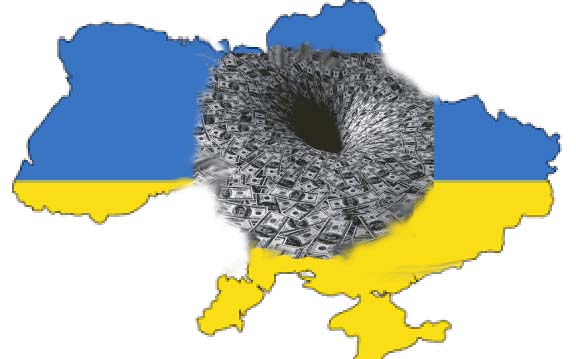
https://www.rt.com/news/595344-ukraine-aid-bankrupt-us/ 5 Apr 24
America risks getting bogged down in “yet another forever war,” Republican Eli Crane has warned.
The US should end its financial support for Ukraine and instead focus on how Kiev can settle the conflict, Republican congressman Eli Crane has said. His comments come as House Speaker Mike Johnson said the chamber is likely to vote soon on providing Kiev with new funding.
Several months ago, US President Joe Biden proposed a supplemental security package that would earmark around $60 billion in assistance to Ukraine, but it has since remained stalled in Congress as Republicans demand more focus on security at the Mexican border.
On Sunday, however, Johnson signaled that the package could come up for a vote soon, with “some important innovations.” Among these, he said, is a possibility of extending a loan to Ukraine – an idea favored by GOP presidential frontrunner Donald Trump – as well as seizing Russian sovereign assets frozen in the US and transferring the proceeds to Kiev.
Since the start of the Ukraine conflict, the West has frozen around $300 billion in Russian assets, most of which are under European control. While numerous Western officials have proposed seizing the funds to finance Ukraine, many have pointed out that there is no legal basis for doing so. Moscow, for its part, has called the blocking “theft,” warning of retaliation if its funds were to be confiscated.
Some GOP members, however, have argued against aiding Kiev. In this vein, Eli Crane told Fox News on Tuesday that Washington is “funding what appears to be yet another forever war.” This effort, the Arizona congressman suggested, “will bankrupt future generations – all while disregarding our own security as our southern border remains open.”
“It’s absurd that overnighting more tax dollars to Ukraine is even a consideration. It should be totally off the table and replaced with a push for peace talks,” he added.
This sentiment was also shared by Republican congresswoman Marjorie Taylor Greene of Georgia, who suggested on Tuesday that any talk of loaning money to Ukraine sounds “absolutely ridiculous.”
“It’s… laughable to even try to tell the American people that Ukraine will ever pay us back!.. Why isn’t our government brokering peace in Ukraine?” she said.
The US has provided Ukraine with $113 billion in various forms of assistance since the start of hostilities. Meanwhile, Russia has repeatedly condemned Western arms shipments to Ukraine, saying these will only prolong the conflict, while making the West a direct participant in the hostilities.
US Secretary of State Blinken says Ukraine will be NATO member

Ukraine, if/when it enters NATO, will have “unresolved” territorial issues. Crime and the Donbass are in Russian hands and will remain in Russian hands. If Ukraine enters NATO with that being the case, border conflicts over that territory could spark war, which would then drag in NATO through Article V. Such a war would be extremely bloody and potentially escalate to nuclear armageddon.
Reuters, Thu, 04 Apr 2024 https://www.sott.net/article/490373-US-Secretary-of-State-Blinken-says-Ukraine-WILL-be-NATO-member
U.S. Secretary of State Antony Blinken said on Thursday that Ukraine will eventually join NATO as support for the country remains “rock solid” among member states.
“Ukraine will become a member of NATO. Our purpose at the summit is to help build a bridge to that membership,” Blinken told reporters in Brussels.
Comment: For now, this appears to primarily be belligerent rhetoric, because at least some analysts say that Ukraine can’t join whilst involved in a conflict and with ongoing border disputes.
However, Russia has discussed creating a demilitarised zone, and so it is possible that this will compel it to neutralise Ukrainian regions even further West than they would have otherwise. Furthermore, this speaks more to the desperation of the West, and to Russia’s upper hand, which it could maintain so long as it doesn’t, precipitously, escalate the situation. And, amidst all this, the West ruins itself, its position on the global stage, and its ability to provoke the rising multipolar world.
Footage, and relevant snippet from the X post, below:
Will Tanner:
Secretary of State Blinken says that Ukraine will be joining NATO This is insane. This is insane. This is intentionally starting WWIII to help Hunter Biden’s paymasters level of insane 1) Ukraine, if/when it enters NATO, will have “unresolved” territorial issues.
1) Ukraine, if/when it enters NATO, will have “unresolved” territorial issues. Crime and the Donbass are in Russian hands and will remain in Russian hands. If Ukraine enters NATO with that being the case, border conflicts over that territory could spark war, which would then drag in NATO through Article V. Such a war would be extremely bloody and potentially escalate to nuclear armageddon.
2) This is Putin’s red line. In the 90s, when the USSR fell, America promised the Russians that NATO wouldn’t expand to the East. Then, in Russia’s weakness (created in large part by Goldman Sachs helping the oligarchs loot the country through privatization), it expanded to the East, doing just what it promised it wouldn’t, much to Russia’s chagrin. But Putin, while upset, has made it clear that Ukrainian membership in NATO is his red line that would mean war, potentially nuclear. It is utterly unacceptable and would have been like Ireland or Canada joining the Warsaw Pact. That’s why he launched the war; by “demilitarizing” Ukraine by shelling its army into oblivion and by creating a constant conflict, he wants to keep Ukraine out of NATO without going to war with NATO. He thought we wouldn’t be so dumb as to bring it into the alliance if it is fighting a war with Russia.
More NATO involvement in Ukraine doesn’t bode well, as the following highlights:
NATO chief, Jens Stoltenberg, admitting that the war did start in 2014. And from that same year, 2014, NATO has been busy training and arming the Ukraine armed forces
Russia declares ‘state of emergency’ after radiation detected in eastern city of Khabarovsk
Authorities in Russia’s far eastern city of Khabarovsk have declared a state of emergency in an area where a “radiation source” was found, TASS news agency reported on Friday, adding that elevated radiation levels were detected near a power pylon about 2.5 km (1.5 miles) from residential buildings.
Officials have not provided an explanation for the leak but have confirmed its containment and transfer to a secure radioactive waste storage site. A state of emergency is to persist for a minimum of three additional days as law enforcement continues investigations into the incident.
Reports indicate a delay of approximately one week before authorities responded to the leak. Video footage has surfaced depicting an individual in a nuclear protective mask, carrying a radiation reader, which displayed escalating readings as he traversed a designated “waste dump” area.
No one had been injured or exposed to radiation and “there is no threat to the health of citizens”, TASS quoted the local branch of Russia’s consumer safety watchdog as saying.
It said radiation levels would be monitored for the next two days and the source of the radiation would be investigated.
Doctor at Israeli Detention Camp for Gazans Blows Whistle on War Crimes
BRETT WILKINS, Apr 04, 2024, https://www.commondreams.org/news/gaza-detainees
A doctor at an Israeli field hospital inside a notorious detention center where hundreds of Palestinian prisoners are temporarily held is sounding the alarm about torture and horrific conditions at what some human rights defenders—including Israelis—are calling “Israel’s Guantánamo Bay” and even a “concentration camp.”
In a letter to Israel’s attorney general and defense and health ministers viewed byHaaretz—which reported the story Thursday—the anonymous physician describes likely war crimes being committed at the Israel Defense Forces’ Sde Teiman base near Beersheva. Palestinian militants captured by IDF troops, as well as many civilian hostages ranging in age from teenagers to septuagenarians, are held there in cages, 70-100 per cage, until they are transferred to regular Israeli prisons or released.
“From the first days of the medical facility’s operation until today, I have faced serious ethical dilemmas,” the doctor wrote. “More than that, I am writing to warn you that the facility’s operations do not comply with a single section among those dealing with health in the Internment of Unlawful Combatants Law.”
Gazans arrested and detained by Israeli forces are not legally considered prisoners of war by Israel because it does not recognize Gaza as a state. These detainees are mostly held under the Internment of Unlawful Combatants Law, which allows the imprisonment of anyone suspected of taking part in hostilities against Israel for up to 75 days without seeing a judge.
Human Rights Watch has warned that the law “strips away meaningful judicial review and due process rights.”
A doctor at an Israeli field hospital inside a notorious detention center where hundreds of Palestinian prisoners are temporarily held is sounding the alarm about torture and horrific conditions at what some human rights defenders—including Israelis—are calling “Israel’s Guantánamo Bay” and even a “concentration camp.”
In a letter to Israel’s attorney general and defense and health ministers viewed byHaaretz—which reported the story Thursday—the anonymous physician describes likely war crimes being committed at the Israel Defense Forces’ Sde Teiman base near Beersheva. Palestinian militants captured by IDF troops, as well as many civilian hostages ranging in age from teenagers to septuagenarians, are held there in cages, 70-100 per cage, until they are transferred to regular Israeli prisons or released.
“From the first days of the medical facility’s operation until today, I have faced serious ethical dilemmas,” the doctor wrote. “More than that, I am writing to warn you that the facility’s operations do not comply with a single section among those dealing with health in the Internment of Unlawful Combatants Law.”
Gazans arrested and detained by Israeli forces are not legally considered prisoners of war by Israel because it does not recognize Gaza as a state. These detainees are mostly held under the Internment of Unlawful Combatants Law, which allows the imprisonment of anyone suspected of taking part in hostilities against Israel for up to 75 days without seeing a judge.
Human Rights Watch has warned that the law “strips away meaningful judicial review and due process rights.”
Sde Teiman detainees are fed through straws and forced to defecate in diapers. They’re also forced to sleep with the lights on and have allegedly been subjected to beatings and torture. Other Palestinians taken by Israeli forces have described being electrocuted, mauled by dogs, soaked with cold water, denied food and water, deprived of sleep, and blasted with loud music at temporary detention sites.
The whistleblowing Sde Teiman physician said that all patients at the camp’s field hospital are handcuffed by all four limbs, regardless of how dangerous they are deemed. In December, Israeli Health Ministry officials ordered such treatment after a medical worker at the facility was attacked. Now the camp’s estimated 600-800 prisoners are shackled 24 hours a day.
At first, the cuffs were plastic zip ties. Now they’re metal. The doctor said that more than half of his patients at the camp have suffered cuffing injuries, including some that have required “repeated surgical interventions.”
“Just this week, two prisoners had their legs amputated due to handcuff injuries, which unfortunately is a routine event,” he told Haaretz.
The whistleblower also alleged substandard medical care at the facility, where there is only one doctor on duty, who is sometimes a gynecologist or orthopedist.
“This ends in complications and sometimes even in the patient’s death,” he said. “This makes all of us—the medical teams and you, those in charge of us in the Health and Defense ministries, complicit in the violation of Israeli law, and perhaps worse for me as a doctor, in the violation of my basic commitment to patients, wherever they are, as I swore when I graduated 20 years ago.”
The doctor claims in his letter that he warned the Health Ministry’s director-general about the appalling conditions at Sde Teiman, but that there have been “no substantial changes in the way the facility operates.”
An ethics committee visited the camp in February; the physician said that its members “are worried about their legal exposure and coverage in view of their involvement in a facility that is operated contrary to the provisions of the existing law.”
Last month, Haaretzrevealed that 27 detainees have died in custody at the Sde Teiman and Anatot camps or during interrogation in Israel since October 7. While some were Hamas or other militants captured or wounded while fighting IDF troops, others were civilians, including some with preexisting health conditions like the diabetic laborer who was not suspected of any offense when he was arrested and sent to his death at Anatot.
One former Sde Teiman detainee claims that he personally witnessed Israeli troops execute five prisoners in separate incidents.
“Israel’s indifference to the fate of Gazans, at best, and desire for revenge against them, at worst, are fertile ground for war crimes.”
Responding to the 27 detainee deaths and invoking the U.S. military prison in Cuba known for torture and indefinite detention, the Haaretz editorial board wrote last month that “Sde Teiman and the other detention facilities are not Guantánamo Bay and… the state has a duty to protect the rights of detainees even if they are not formally prisoners of war.”
“Israel’s indifference to the fate of Gazans, at best, and desire for revenge against them, at worst, are fertile ground for war crimes,” the editors said. “Indifference by Israelis and desire for revenge must not constitute license to shed the blood of detainees… The fact that Hamas is holding and abusing Israeli hostages cannot excuse or justify the abuse of Palestinian detainees.”
In December, the Geneva-based advocacy group Euro-Mediterranean Human Rights Monitor—which has also accused IDF troops of allowing Israeli civilians to witness the torture of Palestinian prisoners—demanded an investigation of what it called the “new Guantánamo.”
Israeli rights groups and individuals have also condemned the abuses at Sde Teiman, which, like Guantánamo, has been described as a “concentration camp.”
“Enough, just enough. We have to stop this gallop into the abyss,” urged Hebrew University senior lecturer Tamar Megiddo on Wednesday. “This war has to end. This government needs to end.”
Small Nuclear Reactors – free and comprehensive information from SMRs Education Task Force

The SMRs Education Task Force is a network of groups in Canada concerned and active on the nuclear file. Together we have many decades of experience providing information to Canadians about nuclear issues, including the proposed small modular nuclear reactors (SMRs). We are providing this bulletin free of charge to encourage more informed awareness of SMRs and their potential implications for communities across the country.
The cost of Europe’s new nuclear power plants.
By Paul Messad | Euractiv France, 5 Apr 24
An alliance of 15 pro-nuclear EU member states said the EU needs an additional 50 GW of nuclear power by 2050 to meet energy transition targets, requiring the construction of more than 30 new reactors.
The additional 50 GW of nuclear capacity is estimated to cost between €5 and €11 billion per GW, a range that “shows a great deal of uncertainty and a big difference in the assumptions”, energy economist Professor Jaques Percebois told Euractiv.
Basic assumptions
When costs are expressed in terms of electricity production (measured in kWh, GWh), they take into account the total cost of generating unit of power: investment in construction, operation (day-to-day running, maintenance, etc.) and fuel (loading, life cycle, etc.). This is the Levelised Cost of Energy (LCOE).
However, estimates often focus on the investment costs required to construct the plant (measured in kW, GW)
“Because it represents around 70% of the cost of a new reactor while operating costs represent only around 15% and fuel costs around 15% of the total amount,” explained Percebois.
Different estimates may include or exclude costs associated with decommissioning plants and treating the waste. Cost figures can also be strongly impacted by assumptions about external factors like future inflation rates………………………………..
Any country wishing to subsidise nuclear plant construction needs to navigate EU State aid rules. A number of member states are also calling for the possibility of dipping into European funds to finance nuclear power, or even to set up new dedicated funds.
Support for financing from publicly-backed banks, such as the European Investment Bank (EIB), can also prove decisive………………………………………………………………………………………………..
More clarity needed
This mix of factors explains the wide variations in cost estimates for new nuclear. However, at some point it will be necessary “to have figures” warns Percebois, if only to estimate funding requirements…………. https://www.euractiv.com/section/energy-environment/news/nucleaire-comment-definir-le-cout-des-futurs-reacteurs-en-europe/
‘Curious Timing’: What’s Behind US Security Council Resolution Proposing Ban on Nukes in Space?

Ilya Tsukanov. 5 Apr 24 https://sputnikglobe.com/20240405/curious-timing-whats-behind-us-security-council-resolution-proposing-ban-on-nukes-in-space-1117767963.html
Russia has promised to “form a position” on a US-sponsored Security Council resolution proposing a ban nuclear weapons in space in due course. Why is Washington suddenly so interested in the idea? What kinds of things could the resolution contain? Sputnik asked one of America’s top independent military and foreign affairs observers to comment.
Matters of strategic security are one of the few areas where potential for dialogue between Russia and the US exists, Kremlin spokesman Dmitry Peskov has said.
“The main potential area for dialogue between the United States and Russia is issues related to strategic security, which includes the space issue,” the spokesman told reporters on Friday, commenting on plans by the US and Japan to put forward a resolution before the United Nations Security Council next week proposing a ban on the deployment of nuclear weapons in space.
“As for the project, we need to wait, study the document, read it and then form a position,” Peskov said.
Peskov’s comments were preceded by remarks by White House National Security Council spokesman John Kirby on Thursday outlining Washington’s expectations for Moscow as far as the as yet untabled draft resolution is concerned.
“We have heard President Putin say that Russia has no intention of deploying nuclear weapons in space,” Kirby said. “So we look forward to Russia voting in favor of this resolution. There should be no reason why not to. And if they do [sic], then I think that should open up some really legitimate questions to Mr. Putin about what his intentions really are,” Kirby added, with his comments coming off as an attempt to force Moscow’s hand on the issue.
“Our position is quite clear and transparent,” Putin said in a meeting in the Kremlin with Defense Minister Sergei Shoigu back in February, commenting on claims by US officials that Russia had obtained some kind of “troubling” new “anti-satellite weapon capability” that might become operational soon.
“We have always been and remain categorically opposed to the deployment of nuclear weapons in space. Just the opposite, we are urging everyone to adhere to all the agreements that exist in this sphere,” Putin said, adding that Western powers “know” that Russia’s space-based capabilities are in line with those possessed by other nations, including the United States.
Russia has “many times suggested to strengthen joint cooperation in the area but for some reason, in the West, this topic has not come up again,” Putin said.
“We haven’t deployed any nuclear weapons in space or any elements of them to use against satellites or to create fields where satellites can’t work efficiently,” Shoigu said during the meeting, accusing Washington of talking up a Russian space threat to pressure Congress into approving more aid to Kiev, and to try to maneuver Russia into nuclear arms control negotiations suspended amid the crisis in Ukraine.
“The US and the West…are calling for Russia’s strategic defeat, while on the other hand saying they would like to have a dialogue on strategic stability, pretending that those things aren’t connected,” Putin said, stressing that such an approach “won’t work.”
What’s in the Resolution?
The US-Japanese joint resolution reportedly urges countries to commit not to “develop nuclear weapons or any other kinds of weapons of mass destruction designed to be placed in orbit,” reaffirming the expectation that nations “fully comply” with the 1967 Outer Space Treaty prohibiting nuclear arms in space.
Further details on the draft resolution have not been publicized, but Russian Deputy Ambassador to the UN Dmitry Polyansky commented on the proposal last month, calling it “divorced from reality” and accusing the US of “yet another propaganda stunt” via a “very politicized” draft document.
Curious Timing
“It’d be interesting to know the details of this proposed treaty by the United States,” Earl Rasmussen, a veteran independent military and foreign affairs commentator and retired US Army Lieutenant Colonel with 20 years of service under his belt, told Sputnik.
“I’m often kind of cautious when they propose something, because the US is probably the one country that has reneged or withdrawn unilaterally from more treaties than any other country,” Rasmussen said.
Saying the Outer Space Treaty could use an update after nearly 60 years, Rasmussen said he found the timing of the US proposal both “interesting” and “curious,” and the undisclosed details crucial to know, because a treaty dealing with the deployment of nuclear weapons in space already exists.
“I’m just curious what the intent behind this is,” the analyst pondered, wondering whether the resolution could be meant to reign in not just the deployment of nuclear weapons in outer space, but their development as well.
“I mean if we look at the [1972 Anti-Ballistic Missile] Treaty that the US pulled out of – they were developing missile defense systems prior to doing so and then they withdrew from the treaty and deployed them,” Rasmussen said, noting that there is nothing prohibiting countries from developing, but not fielding, powerful space-based weapons at the moment.
“I also think that the US probably has concerns over EMP,” the observer said, referring to electromagnetic pulse weapons which can knock out satellite electronics. “Nuclear weapons obviously can do that, but you don’t need a nuclear weapon. The US even admits that they’re not sure that Russia is developing a nuclear weapon for outer space, but I think they’re concerned about it.”
The US military machine is “highly dependent on satellites” for its operations, Rasmussen said. “So I’m thinking they’re probably concerned as far as not really having a good defensive capability to counter some type of satellite killer or disrupter or something. So that may be behind this.”
Whatever the case may be, “there’s got to be a benefit” to Washington to field the resolution now, or they wouldn’t be proposing it, the observer stressed.
If the resolution is honestly worded, and promotes proposals beneficial to everyone, Rasmussen doesn’t see a problem Russia and other countries considering it. “But if it angles and cuts off research and tries to skew proposals to the West’s benefit, then you could see China and Russia pushing back,” he predicted.
The US has repeatedly accused Russia of developing space-based superweapons capable of tilting the global strategic balance, most recently via the creation of nuclear-powered satellite killer technology.
At the same time that it has accused Russia of militarizing space, the Pentagon has gradually ramped up its own space warfare capabilities, formally establishing Space Force as a separate branch of the US military in 2019, taking steps to ramp up its space-based military activities with new satellite constellations, and openly discussing plans to turn space into a new “warfighting domain.” Last December, Marine Corps Lt. Gen. Matthew Glavy emphasized that the US must “win the space domain” to win wars.
In 2008, Russia and China introduced the Proposed Prevention of an Arms Race in Outer Space (PAROS) Treaty – a comprehensive draft arms control agreement designed to ban the deployment of weaponry, anti-satellite systems and other advanced technology used for military purposes in space.
Moscow and Beijing have returned to the treaty again and again in negotiations with Washington and its allies, with Russian Foreign Minister Sergey Lavrov emphasizing as recently as 2021 that “generally accepted, legally binding measures which can prevent a military confrontation in outer space” can be created, with PAROS serving as a jumping off point for talks. Successive US administrations have rejected PAROS as a “diplomatic ploy” by Russian and China to somehow give the countries a “military edge” over the US.
1 This Month

of the week–London Campaign for Nuclear Disarmament

Tell the Ukrainian Government to Drop Prosecution of Peace Activist Yurii Sheliazhenko
To see nuclear-related stories in greater depth and intensity – go to https://nuclearinformation.wordpress.com
-
Archives
- April 2026 (114)
- March 2026 (251)
- February 2026 (268)
- January 2026 (308)
- December 2025 (358)
- November 2025 (359)
- October 2025 (376)
- September 2025 (257)
- August 2025 (319)
- July 2025 (230)
- June 2025 (348)
- May 2025 (261)
-
Categories
- 1
- 1 NUCLEAR ISSUES
- business and costs
- climate change
- culture and arts
- ENERGY
- environment
- health
- history
- indigenous issues
- Legal
- marketing of nuclear
- media
- opposition to nuclear
- PERSONAL STORIES
- politics
- politics international
- Religion and ethics
- safety
- secrets,lies and civil liberties
- spinbuster
- technology
- Uranium
- wastes
- weapons and war
- Women
- 2 WORLD
- ACTION
- AFRICA
- Atrocities
- AUSTRALIA
- Christina's notes
- Christina's themes
- culture and arts
- Events
- Fuk 2022
- Fuk 2023
- Fukushima 2017
- Fukushima 2018
- fukushima 2019
- Fukushima 2020
- Fukushima 2021
- general
- global warming
- Humour (God we need it)
- Nuclear
- RARE EARTHS
- Reference
- resources – print
- Resources -audiovicual
- Weekly Newsletter
- World
- World Nuclear
- YouTube
-
RSS
Entries RSS
Comments RSS
 nuclear-news