Whaat! Romania’s state-owned Nuclearelectrica to partner with NuScale to build small nuclear reactors.

Romania expects to make a preliminary final investment decision next year
on whether to build a small modular reactor plant (SMR), which could become
Europe’s first project using the technology, Energy Minister Sebastian
Burduja said on Monday. State-owned nuclear power producer Nuclearelectrica
opens new tab said in 2021 it will partner with U.S. utility firm NuScale
Power (SMR.N), opens new tab to build reactors as part of its efforts to
boost low-emission power sources.
Reuters 18th March 2024
House Democrats Tell Biden To Enforce US Law and Suspend Military Aid to Israel
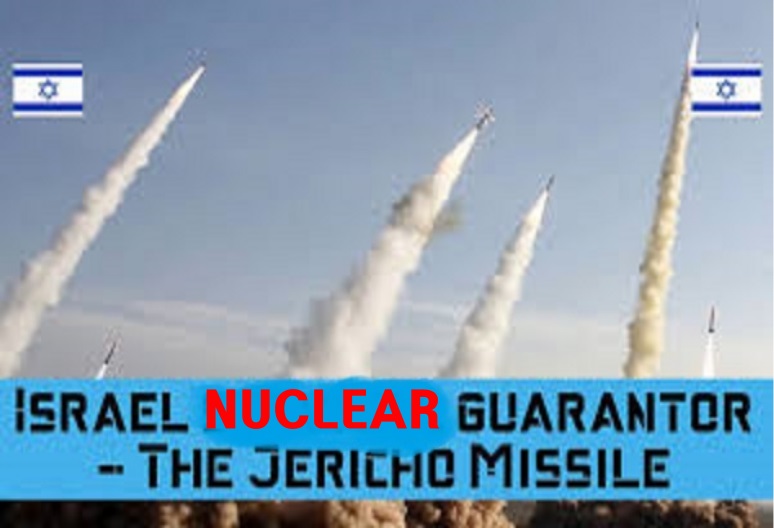
Israel’s undeclared nuclear weapons stockpile also violates US foreign assistance laws that prohibit US aid to nuclear-armed states that don’t sign the Non-Proliferation Treaty. The US gets around this law by not officially acknowledging that Israel has nukes
Foreign assistance laws prohibit military aid to countries that are blocking humanitarian aid
by Dave DeCamp March 24, 2024 https://news.antiwar.com/2024/03/24/house-democrats-tell-biden-to-enforce-us-law-and-suspend-military-aid-to-israel/
Six senior House Democrats sent a letter to President Biden on Saturday urging him to invoke US foreign assistance laws to suspend military aid to Israel due to the country’s starvation blockade on Gaza
“Given the catastrophic and devolving humanitarian situation in Gaza, we urge you to enforce the Humanitarian Aid Corridor Act (Section 620I of the Foreign Assistance Act) and, as required by that law, make clear to the Israeli government that so long as Israel continues to restrict the entry of humanitarian aid into Gaza, the continued provision of US security assistance to Israel would constitute a violation of existing US law and must be restricted,” the letter reads.
Section 620I of the Foreign Assistance Act says that no assistance shall be given “to any country when it is made known to the President that the government of such country prohibits or otherwise restricts, directly or indirectly, the transport or delivery of United States humanitarian assistance.”
Israel’s blockade and restrictions on aid have put Gaza’s population on the brink of famine. Secretary of State Antony Blinken recently acknowledged that 100% of Gaza’s population is “experiencing severe levels of acute food insecurity,” but the Biden administration continues to provide unconditional military support for the Israeli campaign.

The letter to Biden comes as Blinken is supposed to certify whether Israel has made credible and reliable written commitments to use US weapons according to US and international law. Israel submitted a letter this month claiming it will comply with the law, and the deadline for the US certification is Monday.
Subsection (b) of Section 620I says that the president can waive the restriction if he believes providing military aid is in the US’s “national security interest.” US support for the Israeli slaughter of Palestinians in Gaza provoked an uptick in attacks on US forces in the region and Houthi attacks on Israel-linked commercial shipping, which the US has responded to by launching a new bombing campaign in Yemen. The risk of a major regional war continues to rise, but American politicians still claim that supporting Israel’s genocidal campaign is in the US national interest.
The letter sent to Biden was signed by Reps. Joaquin Castro (D-TX), James P. McGovern (D-MA), Sara Jacobs (D-CA), Jan Schakowsky (D-IL), Barbara Lee (D-CA), and Chellie Pingree (D-ME). Sen. Bernie Sanders (I-VT) and seven Democratic senators sent a similar letter to Biden earlier this month.
Israel’s undeclared nuclear weapons stockpile also violates US foreign assistance laws that prohibit US aid to nuclear-armed states that don’t sign the Non-Proliferation Treaty. The US gets around this law by not officially acknowledging that Israel has nukes.
Air attacks on Ukraine have again put the Zaporizhzhia nuclear power plant(ZNPP), under Russian control, in danger

Air attacks on Ukraine have again put the Zaporizhzhia nuclear power plant
(ZNPP), under Russian control, in danger. The vital power supply to keep
the reactors cool is off; potential meltdown and a catastrophic nuclear
“accident” is only being prevented by ancient power generators.
Nobody needs reminding of the devastation to Ukraine and vast swathes of Europe
when the nuclear power plant at Chernobyl melted down and exploded in 1986.
Though ZNPP is newer than Chernobyl with more safety features, it is very
much larger and simply is not safe without power.
Meanwhile, Rafael Grossi,
head of the International Atomic Energy Agency (IAEA), has been cosying up
to President Assad in Damascus, offering to help Syria with nuclear power!
It is well known that Assad has been trying to make the “bomb” for
years.
I humbly suggest Mr Grossi should be in Ukraine or perhaps Moscow to
ensure the safety of ZNPP, rather than waving nuclear power under the nose
of another tyrant who will probably use it as a horrific weapon rather than
a valuable source of power for his people.
Times 25th March 2024
https://www.thetimes.co.uk/article/nuclear-plant-may-be-putins-new-weapon-prgdqxj0p
Day 171: ‘Horrific’ Eyewitness Accounts Continue to Emerge From Israel’s Siege on Gaza’s Hospitals
Eyewitness accounts continue to emerge from Gaza’s hospitals, including rape, torture, mass executions, and soldiers crushing Palestinian bodies with tanks. Hamas says Israel’s systematic attack on hospitals is central to its “war of extermination.”
Mondoweiss, BY LEILA WARAH ,
Casualties
- 32,333 + killed* and at least 74,694 wounded in the Gaza Strip.
- 435+ Palestinians killed in the occupied West Bank and East Jerusalem.**
- Israel revises its estimated October 7 death toll down from 1,400 to 1,147.
- 594 Israeli soldiers killed since October 7, and at least 3,221 injured.***
*Gaza’s Ministry of Health confirmed this figure on its Telegram channel. Some rights groups estimate the death toll to be much higher when accounting for those presumed dead.
** The death toll in the West Bank and Jerusalem is not updated regularly. According to the PA’s Ministry of Health on March 17, this is the latest figure.
*** This figure is released by the Israeli military, showing the soldiers whose names “were allowed to be published.”
Key Developments
- UNRWA: Israel says no more UNRWA food convoys to north Gaza.
- UNRWA chief: Israeli decision to deny all UNRWA food convoys to northern Gaza is “obstruct[ing] lifesaving assistance during a man-made famine.”
- Doctors Without Borders “deeply concerned” after medical staff arrested at al-Shifa Hospital amid “heavy air strikes by Israeli forces and fierce fighting” nearby.
- Tanks crushed bodies, ambulances at al-Shifa Hospital, reports AP News, citing witnesses.
- Footage emerges of Israeli soldiers assaulting Palestinian boy
- Casualties in Israeli attack on aid distributors at Kuwaiti roundabout in Gaza City, reports Al Jazeera.
- Israeli forces raid Al Aqsa mosque during nightly prayers, assault and expel worshipers, reports Al Jazeera journalist.
- WHO Chief: Israel must reverse decision on blocking north Gaza aid.
- Israeli war cabinet minister threatens to quit if bill exempting ultra-Orthodox Jews from conscription passes
- UNRWA: U.S. funding cut will ‘compromise access to food’ in Gaza.
- UN special rapporteurs decry underreporting of sexual violence against Palestinians.
- Israel blocks access to Jerusalem for West Bank Christians on Palm Sunday, reports Wafa.
- PRCS says it has lost radio contact with staff at al-Amal Hospital in Khan Younis.
- Euro-Med: Israel’s attacks on academics in line with Gaza ‘genocide’
- WAFA correspondent killed along with son Israeli airstrike on Gaza
- MAP report: Doctor says conditions inside European Gaza Hospital ‘unimaginable’
Gaza: Three Hospitals under military siege
The Israeli military has imposed ongoing sieges on at least three medical facilities in the besieged enclave, terrorizing, injuring, and killing thousands of civilians in the process.
Al-Shifa Hospital in northern Gaza has entered its seventh day under siege, and the civilians able to flee are reporting ruthless massacres in and around the medical complex.
A teenage Palestinian boy, Farouk Mohammed Hamd, told Al Jazeera he witnessed Israeli soldiers executing a group of eight people, including his father and brother, inside al-Shifa Hospital.
He said he and the others were stripped of their clothing and moved several times inside the al-Shifa Hospital building in central Gaza over the course of hours before being taken to the top floor of the facility.
“They left us for about three hours, then said, ‘You are safe. You can go south.”
“We stood up, but then they opened fire. We all laid down on the floor again. Then, the snipers entertained themselves by shooting us one after the other.”
Hamad said his father told him before being killed to run away if he could, and he managed to run, but not before seeing the unresponsive bodies of the executed group. ……………………………………………………………………………………………………………………………………………………
Underreporting of sexual violence against Palestinians
Witnesses at al-Shifa hospital have reported that “Palestinian women have been subjected to rape, torture, and execution by Israeli forces.”
Reem Alsalem, the UN special rapporteur on violence against women and girls, said in a post on X that it is “abhorrent” that reports of rape by Israeli forces keep coming out without any consequences.
“Rape and other forms of sexual violence can constitute war crimes, crimes against humanity or a constitutive act with respect to genocide! It must stop!”
Francesca Albanese, the UN special rapporteur on the occupied Palestinian territory, similarly said, “I lost count of how many renowned journalists interviewed me on the alleged mistreatment of/sexual abuse against Palestinian women by Israeli forces, and never published any article on this.”
“What we can see on the ground is a systematic creation of a corrosive environment in which Israel, with its destruction of neighborhoods and hospitals, is making Gaza unliveable for the majority of Palestinians,” said Al Jazeera co-respondent, Tareq Abu Azzoum from Gaza while reporting on the besieged hospitals.
“Horrific scenes” at European Hospital
Meanwhile, at Gaza’s European Hospital near Khan Younis, one of the last functioning medical facilities, medical staff report “horrific scenes” at the hospital with patients “dying from infections with evidence of serious malnutrition,” reported Medical Aid for Palestinians (MAP).
Husam Basheer, an orthopedic surgeon working at the hospital, says he and his staff are “managing with the bare minimum of resources” at the medical facility due to Israeli restrictions on medical aid entering the besieged enclave……………………………………………………………………………………………
Israel bars UNRWA from northern Gaza
The United Nations Relief and Works Agency for Palestine Refugees (UNRWA) announced on Sunday that Israel has officially barred it from making aid deliveries in northern Gaza, where the threat of famine is highest.
“This is outrageous [and] makes it intentional to obstruct lifesaving assistance during a man-made famine. These restrictions must be lifted,” the head of the UNRWA, Philippe Lazzarini, wrote in an X post.……………………………………………………………………………………………………………………
Israel is using famine as a “weapon of war” in Gaza to put pressure on the Palestinian people to leave the besieged enclave, Adel Abdel Ghafar, an analyst at the Middle East Council on Global Affairs, told Al Jazeera.
The “dream” of many far-right politicians in Israel is to make Gaza “uninhabitable” for Palestinians, with the goal of re-establishing settlements for the Israelis, Ghafar continued.
“The destruction of schools, hospitals, infrastructure [is making Gaza] almost unlivable and it will force the international community to take further refugees and thin out the population of Gaza,” he said.
“I think Israel wants to have a big chunk of the population leave and become refugees elsewhere.”
UN Resolution for ceasefire
On Monday, the UN Security Council is expected to vote on yet another resolution regarding Israel’s war on Gaza. Since October seven, only two of eight resolutions have been accepted, with both mainly dealing with humanitarian aid to the besieged enclave.
Guterres says the most recent UN Security Council resolution does not link a ceasefire in Gaza to the release of Israeli captives, reported Al Jazeera.
In the resolution, “a ceasefire is required together with, but not in a linkage with, the unconditional release of all hostages,” he said. “And we have also claimed the need for that release.”
Diplomats told the AFP news agency that the resolution had been worked on with the U.S. to avoid a veto, reported France 24. The U.S. has vetoed three resolutions calling for a ceasefire in Gaza.
“We expect, barring a last-minute twist, that the resolution will be adopted and that the US will not vote against it,” one diplomat told AFP.
Last Friday, the Security Council voted on a draft submitted by the U.S. that called for an “immediate” ceasefire linked to the release of captives. China and Russia vetoed the resolution, criticizing it for stopping short of explicitly demanding Israel halt its campaign.
No progress on negotiations.
Meanwhile, Israel and Hamas have continued negotiations mediated by Qatar with little progress. ………………………………………………..
IAEA Unaware Of Secret Iranian Nuclear Site Targeted By Israel
Iran International Newsroom, https://www.iranintl.com/en/202403252483—26 Mar 24
The International Atomic Energy Agency (IAEA) says it has no information about a purported Iranian nuclear site that was set on fire in Tehran’s Shadabad neighborhood in 2020.
This after Iran International’s investigative report revealed Tehran concealed an Israeli sabotage operation that targeted a covert nuclear facility owned by the Atomic Energy Organization of Iran.
Iran International’s in-depth investigative report relied on authenticated documents obtained from both the judiciary and the Ministry of Intelligence. These resources were made available through Ali’s Justice – a network of hacktivists known for their ongoing disclosure of Iranian government documents.
In late July 2020, the destruction of the nuclear site swiftly escalated into a critical national security concern for Iran, prompting reports to reach Ali Khamenei, the Supreme Leader of the Islamic Republic.
Of particular note, mere weeks after the incident, the IAEA’s Director General, Rafael Mariano Grossi, made a visit to Iran – seemingly oblivious to the events.
Following months of tension between Iran and the agency, Grossi had arrived in Tehran to negotiate access for inspectors to two suspected former atomic sites.
Though the IAEA did not identify the sites, Israeli intelligence officials pinpointed one as the Abadeh Nuclear Weapons Development Site.
Iran’s then-nuclear chief, Ali Akbar Salehi, lauded the talks with Grossi as “constructive,” heralding a supposed “new chapter of cooperation” between Iran and the agency.
Fast forward about four years: This month, Grossi informed the IAEA Board that his agency has lost crucial “continuity of knowledge” regarding Tehran’s activities.
The IAEA concluded a meeting earlier this month without passing a resolution against the Islamic Republic for advanced work on its atomic program and its refusal to cooperate with the IAEA.
While the US called on the IAEA Board to be ready for further action if Iran’s cooperation does not significantly improve, it remains to be seen whether this latest report could lead to Iran’s censure over its non-compliance.
The facility, undisclosed to the IAEA, raises serious concerns about Iran’s nuclear program and its compliance with safeguards obligations – and it prompts concerns about the existence of other undisclosed facilities and the extent to which Iran may be concealing other nuclear activities.
Israel And Iran’s Nuclear Program
According to judicial documents, the Islamic Republic considers the Israeli intelligence service, Mossad, as the main perpetrator of this sabotage operation.
Despite its belief that Israel was responsible, Tehran tried to conceal the sabotage.
Following Iran International’s reporting, a spokesman from the Israeli Prime Minister’s Office simply stated, “No comment: “We have no comment.”
Sabotage operations targeting Iranian nuclear facilities are not unprecedented.
From 2009 to 2011, five individuals associated with Iran’s nuclear industry, whom the Islamic Republic regarded as scientists, were assassinated.
Tehran has consistently accused Israel of these assassinations.
Arguably the most prominent instance of sabotage within Iran’s nuclear program was the assassination of Mohsen Fakhrizadeh, the former head of the Ministry of Defense’s Research and Innovation Organization, which occurred on November 27, 2020.
Israel had labeled Fakhrizadeh as a key figure within Iran’s “nuclear weapons program” two years prior to his assassination.
The 2020 sabotage at the nuclear warehouse in Shadabad in Tehran occurred approximately five months before Fakhrizadeh’s assassination.
In contrast, Israel did officially claim responsibility for the theft of Iran’s nuclear documents from a warehouse in Tehran’s Shourabad area in 2018 – with Benjamin Netanyahu revealing that Israel had obtained 55,000 pages and 55,000 digital files through an intelligence operation.
Weaponizing Reality: The Dawn of Neurowarfare

Stavroula Pabst explores the race to apply emerging neurotechnologies, such as brain-computer interfaces (BCIs), in times of both war and peace, expanding conflicts into a new domain — the brain — while perhaps forever changing humans’ relationship with machines.
Hangout, BYSTAVROULA PABST, MARCH 21, 2024
Billionaire Elon Musk’s brain-computer interface (BCI) company Neuralink made headlines earlier this year for inserting its first brain implant into a human being. Musk says such implants, which are described as “fully implantable, cosmetically invisible, and designed to let you control a computer or mobile device anywhere you go,” are slated to eventually offer “full-bandwidth data streaming” to the brain.
Brain-computer interfaces (BCIs) are quite the human achievement: as described by the University of Calgary, “A brain computer interface (BCI) is a system that determines functional intent – the desire to change, move, control, or interact with something in your environment – directly from your brain activity. In other words, BCIs allow you to control an application or a device using only your mind.”
Developers and advocates of BCIs and adjacent technologies emphasize that they can help people regain abilities lost due to aging, ailments, accidents or injuries, thus improving quality of life. A brain implant created by Swiss-based École Polytechnique Fédérale in Lausanne (EPFL), for example, has allowed a paralyzed man to walk again just by thinking. Others go further: Neuralink’s goal is to help people “surpass able-bodied human performance.”
Yet, great ethical concerns arise with such advancements, and the tech is already being used for questionable purposes. To better plan logistics and boost productivity, for example, some Chinese employers have started using “emotional surveillance technology” to monitor workers’ brainwaves which, “combined with artificial intelligence algorithms, [can] spot incidents of workplace rage, anxiety, or sadness.” The example showcases how personal the technology can become as it is normalized in daily life.
But the ethical ramifications of BCIs and other emerging neurotechnologies don’t stop at the consumer market or the workplace. Governments and militaries are already discussing — and experimenting on — the roles they could play in wartime. Indeed, many are describing the human body and brain as war’s next domain, with a 2020 NATO-backed paper on “cognitive warfare” describing the phenomenon’s objective as “mak[ing] everyone a weapon…The brain will be the battlefield of the 21st century.”
On this new “battlefield,” an era of neuroweapons, which can broadly be defined as technologies and systems that could either enhance or damage a warfighter or target’s cognitive and/or physical abilities, or otherwise attack people or critical societal infrastructure, has begun.
In this exploration of the race to apply the latest neurotechnologies to war and beyond, I investigated how the neuroweapons of tomorrow, including BCIs that may allow for brain-to-brain or brain-to-machine communication, have the capacity to expand conflicts into a new domain — the brain — while also bringing a new dimension to both hard- and soft-power struggles of the future.
In response to ongoing neurotechnology developments, some allege “neurorights” will protect peoples’ minds from possible privacy infringements and myriad ethical issues that new neurotechnologies may pose in the years to come. However, neurorights advocates’ close proximity to the very organizations advancing these neurotechnologies deserves scrutiny and potentially suggests that the “neurorights” movement is poised instead to normalize advanced neurotechnologies’ presence in daily life, perhaps forever changing humans’ relationship with machines.
The Military–Intelligence Complex’s Decades-Long Pursuit of Neurowarfare
Indeed, neuroscience’s very origins lie in war. As Dr. Wallace Mendelson explains in Psychology Today, “Just as American neurology was born in the Civil War, the roots of neuroscience are embedded in World War II.” He explains that while the bond between war and neuroscience has contributed to meaningful advances for the human condition, like the improved understanding of ailments like post-traumatic stress disorder (PTSD), it has left some worried about neuroscience’s possible military applications.
………………………………. Initiatives and research explored in this article, like the BRAIN Initiative and the United States Defense Advanced Research Projects Agency’s (DARPA) Next-Generation Nonsurgical Neurotechnology (N³), are often portrayed as altruistic strides towards improving brain health, helping people recover lost physical or mental abilities, and otherwise improving quality of life. Unfortunately, a deeper look reveals a prioritization of military might.
Enhance…
The military is intensely interested in emerging neurotechnologies. The Pentagon’s research arm DARPA directly or indirectly funds about half of invasive neural interface technology companies in the US. In fact, as Niko McCarthy and Milan Cvitkovic highlight in their 2023 writeup of DARPA’s neurotechnology efforts that DARPA has initiated at least 40 neurotechnology-related programs over the past 24 years. From the Interface describes the current state of affairs as DARPA funding “effectively driving the BCI research agenda.”
………………………………………………………………………………………………………………………………………………………….. Like many neurotechnology and adjacent initiatives, the BRAIN Initiative depicts itself as a research-forward, public effort that can improve human well-being. Yet, cash flows suggest that its priorities lie more in the military sphere: as per 2013 reporting from Scientific American, DARPA is the biggest funder of the BRAIN Initiative.
………………………………………… neurotech advancements include improving or “augmenting” the brain’s capacity to operate in myriad ways that will assist fighters on the battlefield. “Enhancements” that claim to improve soldiers’ battlefield performance are not a new phenomenon and have previously included currently illicit drugs, like cocaine. Recent developments in neuroscience have jumpstarted new possibilities, with technologies and techniques including BCIs, neuropharmocologies, and/or electric currents to stimulate the brain potentially, according to the Small Wars Journal, “improv[ing] warfighter performance by enhancing memory, concentration, motivation, and situational awareness while negating the physiological ills of decreased sleep, stress, pain, and traumatic memories.”
…………………………………….. any advancements made to boost a warfighter’s performance can often be applied towards destructive purposes. In neurowarfare, in other words, the brain is capable of being enhanced as well as attacked……………………………………………………………………………………………………………………………………………………………………………………………………………………………….. more https://unlimitedhangout.com/2024/03/investigative-reports/weaponizing-reality-the-dawn-of-neurowarfare/
NRC admits San Onofre Holtec nuclear waste canisters are all damaged
San Onofre Safety.org, 29/11/2018
The San Onofre Holtec nuclear waste thin-wall storage canisters and system are lemons and must be replaced with thick-wall casks. There are no other safe options.
The Nuclear Regulatory Commission (NRC) admits in their November 28, 2018 NRC Inspection Report and Notice of Violation, ML18332A357 (page 8 and 9) every Holtec canister downloaded into the storage holes is damaged due to inadequate clearance between the canister and the divider shell in the storage hole (vault). The NRC states canister
walls are already “worn”. This results in cracks. Once cracks start, they continue to grow through the wall.
The NRC stated Southern California Edison (and Holtec) knew about this since January 2018, but continued to load 29 canisters anyway. Edison’s August 24, 2018 press release states they plan to finish loading mid 2019.
The NRC states Edison must stop loading canisters until this issue is resolved. However, there is no method to inspect or repair cracking canisters and the NRC knows this.
The NRC should admit the Holtec system is a lemon — a significant defective engineering design. They should revoke both San Onofre and Holtec dry storage system licenses.
The NRC should require all San Onofre thin-wall canisters be replaced with thick-wall transportable storage casks.
These are the only proven dry storage systems that can be inspected, maintained, repaired and monitored in a manner to prevent major radiological releases and explosions.
California state agencies should revoke San Onofre permits and withhold Decommissioning Trust Funds until these issues are resolved.
The Navy should consider revoking the San Onofre Camp Pendleton lease until Edison agrees to replace thin-walled canisters with proven thick-wall transportable storage casks. This is a national security issue…………………………………………https://sanonofresafety.files.wordpress.com/2018/11/nrc-allholteccanistersdamaged2018-11-29.pd
For the EPR, the objective of loading fuel before the end of March is no longer tenable.
Officially, the loading of fuel on the Flamanville EPR (Manche) is still
planned by EDF before the end of March 2024. Officially, there is nothing
new to know about the Flamanville EPR (Hague). No new delay (even slight)
to announce, nor “white smoke” to be seen. However, the deadlines are
getting closer, and the calendar no longer matches.
La Presse de la Manche 19th March 2024
TODAY. UK High Court caving in before USA’s power, leaving decision on Julian Assange’s future up to USA’s “kindness”?
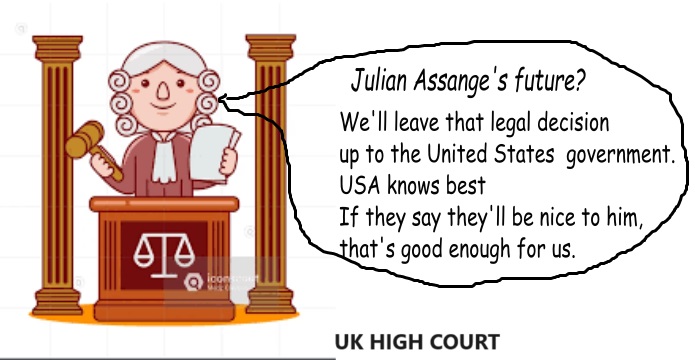
Well, well, what better example of America’s dominance over the anglophone world could you find?
The UK High Court was charged with making a decision on whether or not Julian Assange could appeal against the British government’s decision to extradite him to the USA on charges of ” complicity in illegal acts to obtain or receive voluminous databases of classified information and for agreeing and attempting to obtain classified information through computer hacking”, under the rarely used Espionage Act of 1917
This High Court case is the latest in the series of legal cases around the issue of extradition.
Julian Assange has languished for almost five years, in solitary confinement, in the notorious Belmarsh prison, Britain’s “Guantanamo Bay” for the worst criminals. Now he has to endure this for more weeks. Talk about death by a thousand cuts. ( Perhaps Russia is kinder – they just poison their problem people, or crash them in a plane – it’s quicker)
All this because Assange revealed and published the truth about America’s military atrocities.
So – now we know.
If a journalist anywhere in the world should have the temerity to reveal inconvenient facts about the USA military, then look out!
Not only are the Western political leaders, and especially in the anglophone countries, subservient to their master – the USA, but now we know that even their legal systems are subservient too.
Dame Victoria Sharp, took 66 pages to explain why the High Court couldn’t actually make a decision, without the blessing of the USA government.
So – the High Court will reconvene in three weeks, after receiving “assurances” from the USA government – about no death penalty (on the present charges, they could make new ones?), that he is permitted to rely on the First Amendment, – he is not ‘prejudiced at trial’ .
Of course the USA government will come up with kindly phrases – not worth the paper they are written on.
It’s a sad day for justice.
UK court orders delay to extradition of WikiLeaks founder Julian Assange to US on espionage charges
By Associated Press, By OLIVER PRICE , 27 March 2024 https://www.dailymail.co.uk/news/article-13239885/Julian-Assange-appeal-against-extradition-court-rules.html?fbclid=IwAR05bAhgRzHKwygiC0ljNnPEU_bL1uwPz2mIRy7vU9RzSU0J_Qbi4aOpK_M_aem_AahKjiDK6G3wRltDvIaC_MtPOcRzYRMwUFpdRPeR7yiJcdMyJyjQi03SWVMX6MWQenTiiAm9LmgWVamqopIy9ZT_
The United States must give assurances that Julian Assange will not face the death penalty before judges will consider dismissing the WikiLeaks founder’s bid to bring an extradition appeal, the High Court has ruled.
Assange, 52, faces prosecution in the US over an alleged conspiracy to obtain and disclose national defence information following the publication of hundreds of thousands of leaked documents relating to the Afghanistan and Iraq wars.
In a 66-page ruling, Dame Victoria Sharp said: ‘Before making a final decision on the application for leave to appeal, we will give the respondent an opportunity to give assurances.
‘If assurances are not given then we will grant leave to appeal without a further hearing.
‘If assurances are given then we will give the parties an opportunity to make further submissions before we make a final decision on the application for leave to appeal.’
These assurances are that Assange would be protected by and allowed to rely on the First Amendment – which protects freedom of speech in the US, that he is not ‘prejudiced at trial’ due to his nationality, and that the death penalty is not imposed.
The judges said the US authorities had three weeks to give those assurances, with a final hearing potentially taking place in late May.
In her ruling, Dame Sharp said any assurances from the United States would need to include ‘that the applicant (Julian Assange) is permitted to rely on the First Amendment, that the applicant is not prejudiced at trial, including sentence, by reason of his nationality, that he is afforded the same First Amendment protections as a United States citizen, and that the death penalty is not imposed’.
Speaking after the judgment, the Australian’s wife Stella Assange described the ruling as ‘astounding’.
She said: ‘What the courts have done has been to invite a political intervention from the United States… send a letter saying ‘its all ok’. I find this astounding.
‘This case is a retribution. It is a signal to all of you that if you expose the interests that are driving war they will come after you, they will put you in prison and will try to kill you.
‘The Biden administration should not issue assurances. They should drop this shameful case that should never have been brought.’
Addressing Julian Assange’s legal ground about freedom of speech guarantees in the US, Dame Victoria Sharp said: ‘The applicant wishes to argue, at any trial in the United States, that his actions were protected by the First Amendment.
‘He contends that if he is given First Amendment rights, the prosecution will be stopped. The First Amendment is therefore of central importance to his defence to the extradition charge.’
She continued: ‘If he is not permitted to rely on the First Amendment because of his status as a foreign national, he will thereby be prejudiced, potentially very greatly prejudiced, by reason of his nationality.’
Dame Victoria concluded: ‘It follows that it is arguable that the applicant might be treated differently at trial on the grounds of his nationality.
‘Subject to the question of whether this could be addressed by means of an assurance from the respondent, we would grant leave to appeal.’
WikiLeaks initially reacted positively to the news, saying Assange had been granted ‘leave to appeal’ his extradition, but he will only be allowed to do so if ‘assurances’ are not met.
Reacting to the ruling on X, formerly Twitter, this morning, WikiLeaks posted: ‘Julian Assange has been granted leave to appeal extradition to the US.
‘Having spent almost five years detained at the UK’s most secure prison the publisher will continue his long detention separated from his young family for revealing war crimes. #FreeAssangeNOW.’
WikiLeaks has now deleted this tweet.
WikiLeaks later added: ‘The court has given US Gov 3 weeks to give satisfactory assurances: That Mr. Assange is permitted to rely on the First Amendment to the US constitution; not prejudiced at trial by reason of his nationality; and that the death penalty is not imposed. #FreeAssange.’
The hearing at the Royal Courts of Justice today was attended by Assange’s wife Stella, dozens of journalists and members of the public, with hundreds observing remotely.
Dozens of people stood outside the central London courthouse to await the judgment, holding placards bearing the message ‘Free Julian Assange’ and chanting ‘There is only one decision, no extradition’.
Speaking at a press conference after Julian Assange’s bid to appeal against extradition to the US was delayed, Jennifer Robinson, WikiLeaks legal counsel, said the decision raised ‘fundamental concerns about free speech’.
She added: ‘It is absurd that we are five years into this case and the US has not offered assurance to protect him from (the death penalty).’
Ms Robinson added: ‘The judgment today demonstrates that if Julian was extradited to the United States there is a real risk and concern that he would not be afforded free speech protections.
‘We say the US should not be offering assurance in response to this judgment, they should be dropping the case and it is a case that should never have been brought in the first place.’
Speaking after the latest Julian Assange ruling, Michelle Stanistreet, general secretary of the National Union of Journalists, said: ‘A temporary reprieve is clearly preferable to an extradition that would have taken place in the coming days.
‘However, the conditionality around the grounds of appeal, which are contingent on the examination of US government assurances that he will not face the death penalty and has the right to free speech, mean the risks to Assange and press freedom remain stark.
‘Assange’s prosecution by the US is for activities that are daily work for investigative journalists – finding sources with evidence of criminality and helping them to get their stories out into the world.
‘If Assange is prosecuted, free expression the world over will be damaged.’
She added: ‘The nuanced nature of this appeal judgment makes an alternative ending to this situation even more pressing.
‘In recent months there has been increasing speculation about some kind of plea deal, to bring this saga to a swift and straightforward conclusion. I urge the US to return to these options.
‘Media freedom is under threat all over the world, compassion and common sense from the US Department of Justice would do much to restore Washington’s reputation as a bastion of free expression.’
Former Labour leader Jeremy Corbyn has called for the US to drop the charges against Julian Assange.
Speaking outside the Royal Courts of Justice, Mr Corbyn said Tuesday’s decision was ‘big step forward’ for Assange’s case but that it is ‘not the victory’ his supporters are looking for.
Mr Corbyn said: ‘Above all, the pressure has to be on the US administration to drop the charges against Julian Assange.
‘He’s a brave journalist who tells the truth.’
When asked why Assange’s case was important to him, the Corbyn said: ‘Because he’s told some very uncomfortable truths about the military activities in Iraq and Afghanistan and other places around the world, but also the effects of corporate greed on the natural world and environment.
‘If Julian goes down for that, then every serious journalist around the world is going to be feel a bit constrained, and that’s dangerous.’
n a January 2021 ruling, then-district judge Vanessa Baraitser said that Assange should not be sent to the US, citing a real and ‘oppressive’ risk of suicide, while ruling against him on all other issues.
But later that year, US authorities won their High Court bid to overturn this block, paving the way towards Assange’s extradition.
During a two-day hearing in February, lawyers for the 52-year-old asked for the go-ahead to challenge the original judge’s dismissal of other parts of his case to prevent his extradition.
And in a judgment today, Dame Victoria Sharp and Mr Justice Johnson dismissed most of Assange’s legal arguments but said that unless assurances were given by the United States, he would be able to bring an appeal on three grounds.
The judges said the US authorities had three weeks to give those assurances, with a final decision to be made in late May.
At the start of Assange’s bid last month, Mark Summers KC argued the US’s prosecution would be retribution for his political opinions, meaning it would be unlawful to extradite him under UK law.
However the two judges rejected this argument.
Dame Victoria said: ‘The applicant’s case before us amounts simply to a reassertion of his case on this issue, and a disagreement with the (district) judge’s conclusion.
‘It does not engage with the judge’s reasoning. Far less does it identify any flaw in her factual conclusions.’
Nuclear news this week – 25 March

Some bits of good news –
- Amid all the climate gloom, let’s not ignore the good news. also at https://nuclear-news.net/2024/03/23/1-b1-amid-all-the-climate-gloom-lets-not-ignore-the-good-news/
- Full Recovery for Coral Reef Within 4 Years – The Speed of Restoration They Saw was ‘Incredible.
- A leading university halted donations from big oil.
- Finland has retained its status as the ‘world’s happiest nation’ in the latest World Happiness Report.
TOP STORIES. Julian Assange and the Plea Nibble. Report: Justice Department Considering Plea Deal for Assange.
House Democrats Tell Biden To Enforce US Law and Suspend Military Aid to Israel.
Dozens of countries pledge support for nuclear power, despite lingering concerns.
Filling Nuclear Power’s $5 Trillion Hole Is Beyond the Banks.Glorious new financial jargon from the nuclear lobby – the “International Bank for Nuclear Infrastructure (IBNI)”.
The International Atomic Energy Agency (IAEA) Cannot Both Police Proliferation and Promote Nuclear Power.
BASE study: Alternative reactor concepts do not solve the repository problem.
Climate .
Mainstream climate scientists run the risk of becoming the new climate deniers. Hundreds of groups for climate action reject nuclear power at Brussels Summit.
State of the Global Climate 2023.
Environment. Where have all the insects gone?
Noel’s notes. Antony Blinken would get into bed with the devil, if it meant lucrative sales of USA weapons and nukes to Hell. Desperation of the nuclear lobby! Its new financial fantasy scheme, couched in impenetrable jargon!” In talking about nuclear matters, why is money the only game in town?
********************************************
NUCLEAR ISSUES
ARTS and CULTURE. A One-State Solution Could Transform the World.
ECONOMICS.
- Deadlines, costs, production: France’s nuclear company EDF in a moment of truth.
- Bulgarian nuclear experts question economic viability of new nuclear project.
- Money is “The Achilles Heal” of the nuclear state.
- New Brunswick’s Point Lepreau nuclear plant ranked as poor performer among international peers. IAEA’s Rafael Grossi in Iraq to market nuclear reactors.
- The West’s Nuclear Power Revival Could Be Slower Than Hoped.
- This is why Sizewell C construction poses ‘possible risk’ to new hospital build.
- The extraordinary financial costs of ‘small’ nuclear power stations.
- Australia moves to prop up Aukus with $4.6bn pledge to help clear Rolls-Royce nuclear reactor bottlenecks in UK. Australia’s Chief scientist backs renewables, calls nuclear power ‘expensive’ – https://www.youtube.com/watch?v=uxP-6vsditI&t=389s
| ENERGY. For France’s EPR at Flamanville, the objective of loading fuel before the end of March is no longer tenable. | ENVIRONMENT. Oceans. Fourth discharge of treated Fukushima water completed. Canadian officials found radiation levels in these northern Ontario homes ‘well above’ the safe limit. Their response: ‘¯\_(ツ)_/¯’ also at https://nuclear-news.net/2024/03/23/1-a-canadian-officials-found-radiation-levels-in-these-northern-ontario-homes-well-above-the-safe-limit-their-response-%c2%af_%e3%83%84_-%c2%af/ Canadian Coalition for Nuclear Responsibility – Re: Radiation in Elliot Lake homes . | ETHICS and RELIGION. Just Seeing Through The Propaganda Isn’t Enough – We’ve Got To Open Our Hearts As Well. |
| HEALTH. Nuclear test veterans demand compensation and medical records access. | INDIGENOUS ISSUES. Heavy resistance to Canada’s 1st nuclear waste repository, while Nuclear Waste Management Organization (NWMO) says it is safe.. | MEDIA. Normalizing starvation and massacres: Flour Massacre Called ‘Aid-Related Deaths’—Rather Than Part of Israel’s Engineered Famine. |
| PUBLIC OPINION. In Japan, Opposition to restarting nuclear power plants has grown, especially among women | SECRETS and LIES. “Anonymous” claims it has infiltrated Israel’s nuclear plant in Dimona. AUKUS: Red flag for arms industry corruption. | SPACE. EXPLORATION, WEAPONS. US and Japan seek UN resolution calling on all nations to ban nuclear weapons in outer space. Space tourists and crew suffer high radiation risks – regulation is needed to protect them. To Mars and Back: Will NASA’s Ambitious Endeavor Be Worth It? |
| SPINBUSTER. The Lying Piper of Nukeland: the IAEA’s nuclear fairy tales are leading nations — and all of us — into climate catastrophe. Zion Lights and her lying, climate-denying mentor Michael Shellenberger | TECHNOLOGY. The questionable promises behind new nuclear power. |
| WASTES. 100,000 years and counting: how do we tell future generations about highly radioactive nuclear waste repositories? Japan finishes first-year ocean discharge of nuclear-tainted wastewater amid backlash. Inside Fukushima: Eerie drone footage reveals first ever look at melted nuclear reactor with 880 tonnes of radioactive fuel still inside – 13 years after disaster. The Waste Isolation Pilot Plant (WIPP) Opened 25 Years Ago; It Was Supposed to Close Next Week. | WAR and CONFLICT. Ukraine’s losses ‘in the millions’ – retired Polish general. Atrocities. ‘We are the masters of the house’: Israeli channels air snuff videos featuring systematic torture of Palestinians | WEAPONS and WEAPONS SALES.How Biden’s budget plunged the Aukus submarines pact into doubt. Can the U.S. Develop A Nuclear Bomb Without Ever Testing It? We’re About to Find Out.US Air Force tests very expensive third-stage rocket motor for next nuclear missile NATO Builds Largest Europe Base Near Black Sea. Nuclear weapons: France to restart tritium production with EDF.Nuclear Deterrence At Sea – France Begins Work On ‘Cutting Edge’ Nuke-Powered Ballistic Missile Submarine.Canada to stop arms sales to Israel – Foreign Minister. UK launches ‘national endeavour’ to reinforce nuclear deterrent. Iranian Cleric Calls For Nuclear Arms. |
UK Court to Decide Tuesday If Julian Assange Can Appeal Extradition

The decision will be issued at 10:30 am London time
by Dave DeCamp March 25, 2024, https://news.antiwar.com/2024/03/25/uk-court-to-decide-if-julian-assange-can-appeal-extradition/
London’s High Court will rule on Tuesday whether WikiLeaks founder Julian Assange can appeal his extradition to the United States, where he would face trial for exposing US war crimes.
According to WikiLeaks, the written ruling is due to be delivered by 10:30 am London time.
Last month, Assange’s legal team presented its case for the appeal. His lawyers also introduced new evidence, including a bombshell report from Yahoo News that revealed the CIA in 2017, under Mike Pompeo at the time, considered kidnapping and even discussed assassinating Assange over WikiLeaks publishing detailed the CIA’s hacking tools, known as Vault 7.
Assange did not attend the two-day hearing due to his poor health, and he remains in London’s Belmarsh Prison, where he’s been held since 2019. Assange’s family and legal team believe he will die if extradited to the US.
The news of the High Court’s impending decision comes after The Wall Street Journal reported that the US was considering offering a plea deal to Assange and that Justice Department officials had preliminary talks with his legal team. However, Assange’s lawyer, Barry Pollack, said in response to the report that the US has “given no indication” that the US will take a deal.
Assange faces 17 counts under the Espionage Act and one charge for conspiracy to commit a computer intrusion for obtaining and publishing documents from a source, a standard journalistic practice. If Assange is convicted, it would set a grave precedent for press freedom in the US and around the world. A plea deal that criminalizes the journalist-source relationship could also set a dangerous precedent.
WikiLeaks has been asking Americans to put pressure on the Biden administration to stop its pursuit of Assange by contacting their House representatives and telling them to support H.Res.934, a bill introduced by Rep. Paul Gosar (R-AZ) that calls for the US to drop the charges against Assange.
UN Security Council ceasefire resolution a turning point in Gaza war
March 26, 2024, by: The AIM Network, m https://theaimn.com/un-security-council-ceasefire-resolution-a-turning-point-in-gaza-war/
Australian Council for International Development Media Release
Australia’s peak body for international humanitarian organisations welcomes the United Nations Security Council’s resolution calling for an immediate ceasefire in Gaza and release of all hostages as a crucial turning point in the war.
Australian Council for International Development (ACFID) CEO Marc Purcell said it marked a significant breakthrough despite the United States’ decision to abstain from voting.
“This passage of this binding resolution, following four failed attempts since the start of the war, shows global leaders are no longer willing to accept the deaths of tens of thousands of civilians, many of them children, as collateral,” he said.
“The US’ decision to abstain is disappointing, particularly since it put forward its own failed proposal for a ceasefire just days ago. It is essential the US use its influence and relationship with Israel to obtain a permanent ceasefire.
“We are hopeful the passage of this resolution overnight marks a crucial turning point in the war that has killed nearly 32,000 civilians through bombing, starvation and dehydration.
“It is vital that both the state of Israel and militant groups immediately lay down arms to allow for the passage of humanitarian assistance, which is still being blocked from entry into Gaza, and the release of all hostages.”
ACFID is urging the Australian government to commit additional and ongoing funding for the humanitarian response in Gaza and the West bank, including for Australian non-government organisations providing lifesaving assistance.
BASE study: Alternative reactor concepts do not solve the repository problem

A new scientific study commissioned by the Federal Office for the Safety of Nuclear Waste Management (BASE) indicates that the market launch of alternative reactor concepts (also known as “Generation IV”) is currently not on the horizon.
“Despite some intensive advertising by manufacturers, we currently see no development that would make the construction of alternative reactor types on a large scale likely in the coming years. On the contrary: “From a safety perspective, we should expect the potential advantages of these reactor concepts to be outweighed by the disadvantages and the questions that remain unresolved,” says BASE President Christian Kühn, and emphasises that “The concepts solve neither the need to find a repository for radio-active waste nor the pressing issues of climate protection.”
The alternative reactor concepts, which include SMRs, are also often linked to the hope that they can minimise or even resolve the safety risks and disposal problems associated with nuclear power. To examine these claims, BASE commissioned the “Analysis and evaluation of the development status, the safety and the regulatory framework for so-called novel reactor concepts” study. The scientific work was carried out by the Öko-Institut, the Technical University of Berlin and the Physikerbüro Bremen.
“No alternative reactor type would make a repository superfluous”
The study analysed seven technology lines for alternative reactor concepts, which have been discussed internationally for many years, and are sometimes referred to as “fourth-generation reactors”. These include, for example, so-called lead and gas-cooled reactors, molten salt reactors and accelerator-driven systems. “Anyone who is euphoric about alternative reactor concepts today is ignoring unanswered questions and safety risks. As far as the safety of nuclear waste management is concerned, one thing is clear: no alternative reactor type makes the construction of a repository superfluous,” thus BASE President Kühn.
According to their developers, the reactors of the generation IV reactors will offer advantages over today’s nuclear power plants in terms of fuel utilisation, safety and reliability, economic efficiency and nuclear non-proliferation. Another advantage is said to be that less high-level radioactive waste is produced or that even existing waste can be disposed of with the help of these reactors.
The study compared the reactor concepts in terms of their safety, efficiency, proliferation resistance and fuel consumption.
“Individual technology lines could – with a systematic design – achieve potential advantages over today’s light water reactors regarding some of the criteria. However, none of the technology lines can be expected to have an overall advantage; in some areas, disadvantages compared to today’s light water reactors are also possible,” says Christoph Pistner of the Öko-Institut.
An analysis of six countries revealed as follows: “Even in an international context, alternative reactor concepts neither call into question the current trend towards light water reactors, nor do they represent a feasible, economical option for future energy supply,” says Christian von Hirschhausen of TU Berlin. “The study explains this on the basis of six detailed country studies (USA, Russia, China, South Korea, Poland, Belgium). Especially the United States, who are often the subject of public discussion, have not achieved any breakthroughs in the development of non-light water reactors, and have even cancelled previously announced inventions (“travelling wave reactor”).”
Findings of the study
The BASE-funded research project draws the following conclusions:
- State of development: All the concepts that are currently being discussed as belonging to the term “Generation IV” have been under development for decades, in some cases since the 1950s, and have not yet reached market maturity. There is still a considerable need for research and development. If the technical hurdles and safety issues can be resolved, further development would most likely take several decades. Against this background, we cannot assume that such reactor concepts will be used on a relevant scale by the middle of this century. In particular, individual country studies show that a system change from light water reactors to alternative reactor concepts ready for series production is not in sight.
- Waste generation: The alternative reactors would still generate high-level radioactive waste, some of which would be very different to the waste from light water reactors, for example because it would not be present as solid fuel elements but as molten salt. This would make waste treatment much more difficult, as current repository plans are generally not designed for this kind of waste. The volume of high-level radioactive waste could be reduced in conjunction with reprocessing technologies, but the volume of intermediate and low-level radioactive waste would increase significantly.
Transmutation properties: Some of the reactor concepts studied could, in theory, be used to split (transmute) individual parts of the existing high-level radioactive waste. This would involve a great deal of effort over a long period of time. However, the foreseeable effect of these measures would only make a comparatively small contribution to reducing the space requirements of a repository and to its long-term safety. This is due, in particular, to the fact that the substances with the greatest impact on safety (long-lived fission products) are difficult to transmute, and are therefore not intended for this purpose.- Regulations: The regulations of international organisations (e.g. IAEA) and national regulations (USA, Canada and the UK) examined in this study sometimes make very detailed, technology-specific provisions based on decades of operating experience with light water reactors. These regulations are, therefore, not directly applicable to the alternative reactor concepts studied. Revisions are currently underway, but due to a significantly lower level of operating experience, the time required to produce a similarly well-founded set of rules is likely to be very long.
Transmutation properties: Some of the reactor concepts studied could, in theory, be used to split (transmute) individual parts of the existing high-level radioactive waste. This would involve a great deal of effort over a long period of time. However, the foreseeable effect of these measures would only make a comparatively small contribution to reducing the space requirements of a repository and to its long-term safety. This is due, in particular, to the fact that the substances with the greatest impact on safety (long-lived fission products) are difficult to transmute, and are therefore not intended for this purpose.- Regulations: The regulations of international organisations (e.g. IAEA) and national regulations (USA, Canada and the UK) examined in this study sometimes make very detailed, technology-specific provisions based on decades of operating experience with light water reactors. These regulations are, therefore, not directly applicable to the alternative reactor concepts studied. Revisions are currently underway, but due to a significantly lower level of operating experience, the time required to produce a similarly well-founded set of rules is likely to be very long.
Conclusion: The expectation expressed both in public debate and by developers that the alternative reactor concepts can make a significant contribution to solving today’s problems in nuclear technology cannot be considered realistic in view of the current state of development of these systems and the actually proven and expected advantages and disadvantages of the individual technology lines.
The summary of the study results (in German only)
Conclusion: The expectation expressed both in public debate and by developers that the alternative reactor concepts can make a significant contribution to solving today’s problems in nuclear technology cannot be considered realistic in view of the current state of development of these systems and the actually proven and expected advantages and disadvantages of the individual technology lines
Flour Massacre Called ‘Aid-Related Deaths’—Rather Than Part of Israel’s Engineered Famine -Normalizing starvation and massacres

If we compare corporate outlets to independent media, in which reporting was based on ground sources, humanitarian actors and aid workers, we find very different content.
ROBIN ANDERSEN, https://fair.org/home/flour-massacre-called-aid-related-deaths-rather-than-part-of-israels-engineered-famine/ 22 Mar 24
Over 100 Palestinians were killed and hundreds more wounded on February 29, when Israeli snipers opened fire on people approaching a convoy of trucks carrying desperately needed supplies of flour. The attack was quickly dubbed the flour massacre.
Corporate media reporting was contentious and confused, mired in accusations and conflicting details that filled the news hole, even as media downplayed the grave conditions in Gaza created by Israel’s engineered famine. With headlines layered in verbal opacity, the massacre prompted yet another egregious moment in media’s facilitation of Israel’s continuing genocide in Gaza.
Linguistic gymnastics
On the day of the massacre, the New York Times (2/29/24) published this contrivance:
“As Hungry Gazans Crowd a Convoy, a Crush of Bodies, Israeli Gunshots and a Deadly Toll”
It was met with ridicule as it slid across online platforms. Assal Rad (Twitter, 3/1/24), author and research director at the Iranian American Council, called the piece of work “a haiku to avoid saying Israel massacres Palestinians that they’re deliberately starving in Gaza.”
Another Times headline (2/29/24) read, “Deaths of Gazans Hungry for Food Prompt Fresh Calls for Ceasefire.” Nima Shirazi, co-host of the podcast Citations Needed (Twitter, 3/1/24), noted that “the New York Times just can’t bring itself to write clear headlines when Israeli war crimes are involved.” Shirazi offered this revision: “Israel Slaughters Starving People as It Continues Committing Genocide.”
Professor Jason Hickel (Twitter, 2/29/24), along with Mint Press‘s Alan MacLeod (2/29/24), flagged the use of the neologism “food aid–related deaths” when it turned up in a Guardian headline (2/29/24): “Biden Says Gaza Food Aid–Related Deaths Complicate Ceasefire Talks.” MacLeod noted, “Virtually the entire Western media pretend they don’t know who just carried out a massacre of 100+ starving civilians.”
Linguistic gymnastics—a longstanding plague pervading Western media coverage of Palestine (FAIR.org, 8/22/23)—were so popular in news headlines and reporting that Caitlin Johnstone (Consortium News, 3/1/24) compiled a list of them, adding “chaotic incident” (CNN, 2/29/24) and “chaotic aid delivery turns deadly” (Washington Post, 2/29/24) to those already mentioned.
Sana Saeed, media critic for Al Jazeera, decoded the latter kind of construction for AJ+ (3/29/24), arguing that such passive language has been used “consistently to sanitize the violence that a powerful state is unleashing against civilian populations.”
As the genocide enters its sixth month, media analysts, investigative reporters and social media users have become adept at recognizing pro-Israeli contortions and patterns of language that justify Israel’s war on Gaza. This has become an essential aspect in exposing Israel’s genocide.
‘Anarchy rules in Gaza’
The Economist (2/29/24), under the headline, “A New Tragedy Shows Anarchy Rules in Gaza: A Shooting and Stampede Kill 122 and Injure Hundreds,” went into the worst pro-Israel spin, with reporting that seemed to blame Palestinians for their own murders. Parroting Israeli press directives, the piece claimed Palestinians were killed by “trampling” each other in their own “stampede.”
The piece was written in literary prose: “Death descended on a coastal road in Gaza,” the reporter (not present at the scene) wrote. Then “catastrophe befell an aid convoy,” as if it merely happened upon bad luck.
Then the writer made a prediction: “As with many events in the war between Israel and Hamas, the facts are destined to remain fiercely contested.” That’s likely to come true, especially when major media outlets abdicate their responsibility for evaluating claims.
Timeline of changing denials
Many other writers and journalists have documented the string of vacillating Israeli statements that help explain the contorted reporting. Al Jazeera reporter Willem Marx (Twitter, 3/1/24) traced a timeline of how the Israeli military changed its story over the course of the day.
The IDF began by claiming there had been trampling and pushing that led to injuries around the aid truck. Then, hungry Palestinians had “threatened their soldiers,” or “appeared in a threatening manner,” so the IDF shot at them. Later that day, Israeli officials claimed there were two separate incidents, one that involved trampling and the other that led to shooting. By the end of the day, they alleged only to have provided support to a humanitarian convoy, and that no shots were fired at all by the military.
When the BBC (3/1/24) verified that a video released by the Israeli military exhibited four unexplained breaks in the footage and was therefore invalid, the outlet still used the passive voice, referring in the headline to “Gazans Killed Around Aid Convoy.” One sentence of the detailed, confused article quoted Palestinian journalist Mahmoud Awadeyah: “Israelis purposefully fired at the men…. They were trying to get near the trucks that had the flour.” Earlier, however, Awadeyah was problematized when identified “as a journalist for Al Mayadeen, a Lebanon-based news station whose broadcasts are sympathetic to groups fighting Israel.”
Independent and international mediaIf we compare corporate outlets to independent media, in which reporting was based on ground sources, humanitarian actors and aid workers, we find very different content.
Al Jazeera reporter Ismail al-Ghoul (2/29/24), who was at the scene of the massacre, said that “after opening fire, Israeli tanks advanced and ran over many of the dead and injured bodies. It is a massacre, on top of the starvation threatening citizens in Gaza.”
EuroMed staff (2/29/24) on the scene confirmed that the Israeli military had fired on starving Palestinians. EuroMed’s findings were summarized in a videotape by Palestinian news agency Quds News Network and posted by the Palestine Information Center (3/4/24).
Mondoweiss (3/4/24) reported details of the massacre from eyewitness accounts. One survivor recounted how an Israeli checkpoint “split the crowd in two,” preventing those who had entered the checkpoint from passing back to the northern side. Then Israeli soldiers opened fire on the crowd. International observers visited the injured survivors at al-Shifa’ Hospital, “confirming that the majority of wounds from the hundreds of injured people were due to live ammunition.”
In context of famine
Reporting in the alternative press also placed the massacre within the context of the rapidly increasing famine in Gaza.
The headline for the Electronic Intifada (2/29/24) read, “Palestinians Seeking Food Aid Killed as Israel Starves Gaza.” The outlet said an “engineered famine has taken hold in Gaza, with people resorting to eating wild plants with little nutritional value and animal feed to survive.”
Middle East Eye’s reporting (2/29/24) included the dire condition Palestinians are currently facing: “Much of Gaza’s population is on the brink of famine as a result of the Israeli blockade, according to the UN and other humanitarian organizations.”
The day of the massacre, Democracy Now! (2/29/24) opened its broadcast with a clear statement and the relevant context: “Israel Kills 104 Palestinians Waiting for Food Aid as UN Expert Accuses Israel of Starving Gaza.” Its first guest, UN special rapporteur on the right to food Michael Fakhri, said, “Every single person in Gaza is hungry.” He accused Israel of the war crime of intentional starvation. He emphasized that famine in the modern context is a human-made catastrophe:
At this point I’m running out of words to be able to describe the horror of what’s happening and how vile the actions have been by Israel against the Palestinian civilians.
Common Dreams (3/3/24) reported on Israel’s obstruction of aid convoys, and cited UNICEF on the deaths of children who died of starvation and dehydration at a hospital in northern Gaza as Israeli forces continue to obstruct and attack aid convoys, fueling desperation across the territory…. People are hungry, exhausted and traumatized. Many are clinging to life.
It concluded, “These tragic and horrific deaths are man-made, predictable and entirely preventable.”
In the days before the massacre, numerous outlets had been documenting the growing famine looming over Gaza. This is the material independent media made use of for contextualizing the massacre.
The New York Times, on the other hand, put the massacre into an entirely different context. A piece (3/2/24) headlined “Disastrous Convey Was Part of New Israeli Effort for More Aid in Gaza,” cited as confirmation “Western diplomats, who spoke on condition of anonymity.” It said that international aid groups “suspended operations” because of “rising lawlessness,” as well as Israel’s refusal to “greenlight aid trucks.” It blamed starving Gazans by claiming that aid convoys had been looted either by “civilians fearing starvation” or by “organized gangs.”
‘How is this not a bigger story?
As Common Dreams and Mondoweiss reported, the flour massacre was not the first time the IDF killed starving Palestinians, and it would not be the last. As Mondoweiss (3/4/24) put it: “In less than a week, Israel has committed several massacres against the hungry. On Sunday, March 3, Israel bombed an aid convoy, killing seven people”
Quds News Network (3/2/24) reported that Israel targeted hungry civilians again at Al Rasheed Street in northern Gaza while they were waiting for humanitarian aid. And Quds (3/4/24) reposted Al Jazeera footage that captured the moments when Israel’s military opened fire at other hungry Gazans, this time at the Al Kuwait roundabout, as they looked for food aid.
Al Jazeera (3/6/24) continues to document the murders of Palestinians desperate for aid as they come under Israeli fire. On a longer videotape, a spokesperson for Human Rights Watch says these attacks violate ICJ orders:
The idea that these people are being killed as they scavenge for meager rations of food is just appalling, and is a reminder why there must be international immediate action to prevent further mass atrocities.
Following the Al Jazeera report, Assal Rad (Twitter, 3/6/24) expressed dismay:
Israeli attacks on Palestinians waiting for or attempting to get aid have repeatedly happened this week, yet there has been no media coverage since the massacre that killed over 100 people. Israel is attacking civilians it’s deliberately starving. How is this not a bigger story?
Over 100 Palestinians were killed and hundreds more wounded on February 29, when Israeli snipers opened fire on people approaching a convoy of trucks carrying desperately needed supplies of flour. The attack was quickly dubbed the flour massacre.
Corporate media reporting was contentious and confused, mired in accusations and conflicting details that filled the news hole, even as media downplayed the grave conditions in Gaza created by Israel’s engineered famine. With headlines layered in verbal opacity, the massacre prompted yet another egregious moment in media’s facilitation of Israel’s continuing genocide in Gaza.
Normalizing starvation and massacres
Sana Saeed (Twitter, 3/4/24) observed
So just to be clear: Much like how Israel normalized attacking and destroying hospitals, and it was accepted by the international community, Israel is now normalizing shooting and killing the people it is starving as they seek food.
Media have failed to inform the US public on the horrific conditions experienced by starving civilians in Gaza. They blamed Palestinians for their own deaths, covering for the Israeli military as it carried out a massacre. They further dehumanized Palestinians by characterizing starving people as an unruly mob who trampled one another.
To paraphrase Patrick Lawrence (Floutist, 11/16/23) on the distortion of language in defense of Israel’s violence against Palestinians: It corrupts our public discourse, our public space, and altogether our ability to think clearly. This corruption is as vital as US bombs to the Israeli genocide against Palestine: Without these verbal distortions that justify, distract, deny and consume corporate information spaces, the genocide could not be carried out.
-
Archives
- February 2026 (220)
- January 2026 (308)
- December 2025 (358)
- November 2025 (359)
- October 2025 (376)
- September 2025 (258)
- August 2025 (319)
- July 2025 (230)
- June 2025 (348)
- May 2025 (261)
- April 2025 (305)
- March 2025 (319)
-
Categories
- 1
- 1 NUCLEAR ISSUES
- business and costs
- climate change
- culture and arts
- ENERGY
- environment
- health
- history
- indigenous issues
- Legal
- marketing of nuclear
- media
- opposition to nuclear
- PERSONAL STORIES
- politics
- politics international
- Religion and ethics
- safety
- secrets,lies and civil liberties
- spinbuster
- technology
- Uranium
- wastes
- weapons and war
- Women
- 2 WORLD
- ACTION
- AFRICA
- Atrocities
- AUSTRALIA
- Christina's notes
- Christina's themes
- culture and arts
- Events
- Fuk 2022
- Fuk 2023
- Fukushima 2017
- Fukushima 2018
- fukushima 2019
- Fukushima 2020
- Fukushima 2021
- general
- global warming
- Humour (God we need it)
- Nuclear
- RARE EARTHS
- Reference
- resources – print
- Resources -audiovicual
- Weekly Newsletter
- World
- World Nuclear
- YouTube
-
RSS
Entries RSS
Comments RSS
 nuclear-news