NATO bringing missiles closer to Russia – member state
US-made Patriot surface-to-air systems will be deployed in Lithuania this year, the defense chief said
https://www.rt.com/russia/593952-lithuania-deployment-patriot-missiles/–10 Mzr 24
NATO will station US-made Patriot anti-air missile systems in Lithuania during 2024, the Baltic country’s defense minister has announced.
Lithuania shares a border with Russia’s exclave of Kaliningrad, and with Russia’s ally Belarus.
“This year, the rotational air defense system will finally become operational, at least partially,” Arvydas Anusauskas said during a press conference in Vilnius on Thursday, as quoted by the state broadcaster LRT.
“Our goal is to have a rotation similar to the air policing mission,” the minister added, referring to the regular patrol flights by NATO aircraft in the airspace of Lithuania, Latvia and Estonia.
“This principle would not be a one-off thing for several months but would cover all of our calendar months and significantly increase our air defense capabilities,” Anusauskas said.
Last year, the US and its allies in Europe delivered several Patriot batteries to Ukraine as part of efforts to back Kiev during its conflict with Moscow.
The Washington-led bloc has deployed additional forces to Eastern Europe and the Baltic states in recent years, citing Russia’s military operation in Ukraine. NATO Secretary General Jens Stoltenberg warned last month that the Western alliance “must prepare for a confrontation that could last for decades.”
Russia, for its part, cited NATO’s continuing expansion eastward and the bloc’s cooperation with Kiev as one of the root causes of the current conflict. Russian officials have repeatedly stressed that Moscow views NATO military units near its border as a national security threat.
In January, Russian Foreign Ministry spokeswoman Maria Zakharova warned that the stationing of additional foreign forces in Lithuania “only leads to the escalation of military tensions.”
‘Sometimes I can’t sleep at night’: Adi Roche warns of nuclear risks of Ukraine conflict as she picks up peace award
“It’s a war crime to weaponise a nuclear facility,”
CCI’s medical volunteers treat children for illnesses such as “Chernobyl heart”, a cardiac condition prevalent in the region and thought to be caused by the fallout.
Founder of Chernobyl Children International, operations of which have been upended by Russian invasion, honoured by Ahmadiyya Muslim community
Mark Paul, Irish Times, Sat Mar 9 2024
Ukraine is “sitting on a nuclear powder keg” and the western world must not abandon it to its fate, said peace activist, charity founder and former presidential candidate Adi Roche as she received a major international peace award in London on Saturday.
Ms Roche, the founder of Chernobyl Children International (CCI), which has delivered more than €108 million of aid to Ukraine and neighbouring Belarus since the 1986 nuclear disaster in the region, has been awarded the Ahmadiyya Muslim Peace Prize.
The award is presented each year by the Ahmadiyya community, a south Asian Muslim movement, at a grand ceremony at one of Europe’s biggest mosques, the Baitul Futuh complex in south London.
Previous winners include Hiroshima bomb survivor and anti-nuclear campaigner Setsuko Thurlow and Buddhist nun Cheng Yen, the founder of the Tzu Chi humanitarian organisation in Taiwan.
Ms Roche was originally selected for the award in 2020 but the ceremony was postponed due to the pandemic.
Speaking to The Irish Times in advance of the peace symposium at the Baitul Futuh mosque, she said the award had “given her heart a little bit of a lift”, after CCI’s operations in Belarus and Ukraine were upended by Russia’s 2022 invasion of its neighbour.
But she also accused Russian president Vladimir Putin’s forces of issuing a discreet nuclear threat by invading Ukraine from Belarus on a route directly through the Chernobyl nuclear exclusion zone in the north of the country – the power plant was captured on the first day of the war.
“It’s a war crime to weaponise a nuclear facility,” she said. “The Hague Convention should be invoked. Russia issued a nuclear threat without having to say it by going through that area. It made them triumphalist and so they went on to Zaporizhzhia [a nuclear plant in southeast Ukraine that has been the scene of fighting and is now controlled by Russia].”
Before the war, CCI operated mostly in Belarus, working with medical teams to provide care for children in the region whose health was affected by the nuclear fallout from the Chernobyl disaster. Some of the kids were brought to Ireland each year to stay with host families.
Ms Roche said her Cork-headquartered charity has been unable to go into Belarus ever since sanctions were put in place against the regime there of Aleksandr Lukashenko, a close Putin ally.
The CCI operation in Belarus is now run entirely by 60 local staff.
Before the conflict, CCI also operated from the northeastern Ukrainian city of Kharkiv, which was captured by Russia early in the war and subsequently liberated by the Ukrainians. The charity has since had to shift its operations to the western Ukrainian city of Lviv to avoid the fighting.
“In Ukraine we have a different set of problems. We are on the frontline of child cardiac services there,” said Ms Roche.
CCI’s medical volunteers treat children for illnesses such as “Chernobyl heart”, a cardiac condition prevalent in the region and thought to be caused by the fallout.
“With Chernobyl heart, the children can’t live with it, and they’ll die without help. Our surgeons there tried to stay working in Kharkiv after the invasion but they had to pull out two years ago and move to Lviv. The risk was too great – it would have been suicidal to stay. The surgeons were literally chased from east to west by the war,” said Ms Roche………………………… https://www.irishtimes.com/ireland/2024/03/09/sometimes-i-cant-sleep-at-night-adi-roche-warns-of-nuclear-risks-of-ukraine-conflict-as-she-picks-up-peace-award
Biden is building for Israel a super weapon to replace the Iron Dome
U.S. Department of Defense
Contracts For Feb. 10, 2023
MISSILE DEFENSE AGENCY
InTSI LLC,* a Joint Venture, Huntsville, Alabama, is being awarded a competitive, cost-plus-fixed-fee, level-of-effort contract with a total value of $637,123,220. Under this new contract, the contractor will support the layered Missile Defense System (MDS) and help advance concepts for future MDS inclusion.
Activities will include supporting the government with: threat systems engineering; advanced technology; directed energy; hypersonic defense engineering; space systems engineering; U.S-Israeli Cooperative Program engineering; cybersecurity systems engineering; test analyses and reporting; lethality, hit assessment/kill assessment, and collateral effects and consequence management; and, concurrent test, training, and operations engineering.
The work will be performed at Redstone Arsenal, Alabama; Fort Belvoir, Virginia; Kirtland Air Force Base, New Mexico; Tel Aviv, Israel; and Schriever Space Force Base, Colorado. The performance period is from February 2023 to August 2030. This contract was competitively procured via publication on the SAM.gov website with two proposals received. Fiscal 2023 research, development, test and evaluation funds in the amount of $8,302,098.15 are being obligated at time of award. The Missile Defense Agency, Huntsville, Alabama, is the contracting activity (HQ0858-23-C-0001).
Aberdeen shipping logistics company warned over nuclear transport safety failings.
An inspection by the industry watchdog found that nuclear
material had been transported without the proper safety checks in place.
The UK’s nuclear watchdog has slammed an Aberdeen-based shipping
logistics company over risks posed by its transportation of radioactive
materials.
The Office for Nuclear Regulation (ONR), the UK nuclear
regulatory body, identified a series of failings with Streamline Shipping
Group’s risk assessments during a routine compliance inspection at their
site in Aberdeen on January 31. Among the alarming findings were the fact
that radioactive materials had previously been moved despite not being
identified in risk assessment documentation.
Aberdeen Live 8th March 2024
https://www.aberdeenlive.news/news/aberdeen-news/aberdeen-shipping-logistics-company-warned-9152174
Why the EU could be the biggest loser from the Ukraine conflict
SOTT, Fyodor Lukyanov, RTSat, 09 Mar 2024 , https://www.sott.net/article/489640-Fyodor-Lukyanov-Why-the-EU-could-be-the-biggest-loser-from-the-Ukraine-conflict
As alarms bells ring in the West, Emmanuel Macron’s talk of NATO troops in Ukraine reflects a fear of failure
French President Emmanuel Macron has acknowledged that the Fifth Republic will not send its troops to Ukraine in the near future. Earlier, he had stated that Western leaders had discussed the issue but failed to reach an agreement.
The evolution of the Ukraine crisis has had paradoxical consequences. Two years since the most acute phase began, Western Europe has found itself at the spearhead of the confrontation. Not only in terms of the costs it has incurred – which have been discussed from the very beginning. Now the possibility of a military conflict with Russia is being raised much more loudly in the Old World than on the other side of the Atlantic, and France is the instigator. Macron’s statement on the possibility of sending NATO troops into the war zone seemed spontaneous to many. But a week later, Paris insisted it was deliberate and well thought-out.
…………………………………………It seems that previously the constant incantation was to prevent NATO from being drawn into a direct, nuclear conflict with Russia. And now, suddenly, Paris is talking about “strategic ambiguity,” about a cunning game to confuse Russian President Vladimir Putin and make him afraid to take decisions because of possible irreversible consequences. Let him be afraid of the next steps, not us.
This is not yet being repeated in other major capitals, but a group of countries ready to cross swords with Moscow is beginning to take shape.………………………………
Western European ambiguity is likely to mean stepping up the substantial military assistance to Ukraine without announcing it, but also without hiding the growing signs. The risks are considerable because there is no reason to believe that Russia would somehow refrain from responding if it saw reason to do so.
The fear of Russia is not new in Western Europe, and is in its own way historically very sincere, so we should not write it off. All the more so because, after the Cold War, Europe collectively believed we could forget the previous problems with a clear conscience. But here we are again.
However, we dare to suggest that the current Western European reaction and the escalation of the Russian threat are also linked to another factor: the realisation that it is the EU that could be the main loser in the ongoing conflict. The gap between the demands of the population and the priorities of the political class is widening, according to opinion polls. Added to that, it’s unclear what to expect from the senior partner over in Washington. It turns out that ambiguity is everywhere, and there is nothing left but to make it the core of one’s policy. And insist on it.
On the eve of the Russian presidential election, Foreign Minister Sergey Lavrov invited EU ambassadors to a meeting, but they refused.
Comment: It appears as if Europe hasn’t learned important lessons of history which seriously puts us all in danger. It is clear though that the European leaders are making these decisions without consulting the people in their countries who are more interested in the domestic problems within EU. As always, war and/or the fear of war in a climate of engineered hysteria works wonders in distracting people towards an enemy ‘out there’ and thus protecting the real enemy ‘inside’.
See also:
Coalition Kill Chain for the Pacific: Lessons from Ukraine

U.S. Naval Institute, By Majors Dylan Buck and Steven Stansbury, U.S. Marine Corps, July 2023
Proceedings Vol. 149/7/1,445
Russia’s war in Ukraine offers a critical case study on why—and how—to build a more robust kill chain that leverages partners’ and allies’ capabilities. A more expansive satellite communications (SATCOM) network that enables a real-time integrated common operational picture (COP) will be necessary to generate the relative combat power advantage over the People’s Liberation Army (PLA). Russia initiated combat operations in Ukraine with cyberattacks on SATCOM to disrupt Ukraine’s kill chain—the methodology for finding, fixing, targeting, tracking, engaging, and assessing (F2T2EA) an adversarial objective.
Ukraine’s kill chain—the methodology for finding, fixing, targeting, tracking, engaging, and assessing (F2T2EA) an adversarial objective. The United States, alongside partners, allies, and industry, was able to blunt Russia’s invasion by reconstructing Ukraine’s SATCOM network and sharing critical intelligence. However, the kill chain architecture leveraged against Russia does not exist in the first island chain of the western Pacific.
…………… To achieve the capability required to deter the PLA, the Department of Defense (DOD) must further develop SATCOM architecture in the first island chain and expand partners and allies’ access to the COP to build a coalition kill chain that can mass fires.
……….. the United States had to create more permissive policy for intelligence sharing for more effective targeting. Furthermore, kill chains in the Pacific are more dependent on SATCOM as submarine internet cables are more vulnerable and likely already compromised by China.
……. First, to enhance U.S. SATCOM architecture, the DoD could begin to supplement geosynchronous orbit satellites by proliferating low-earth-orbit and medium-earth-orbit satellites. This would reduce vulnerabilities related to adversarial space operations and expand SATCOM range and resiliency. SpaceX’s Starlink functions off the same principle of a mesh networks of low-earth-orbit satellites.
Second, the United States could use partner and allies’ satellite networks and make policy more permissive with intelligence sharing. In March 2022, the Department of Defense announced its Joint All-Domain Command and Control Implementation Plan with the 5th line of effort to “Modernize Mission Partner Information Sharing.” The intent is to enhance the ability to integrate partner and allies’ data for all-domain coalition operations. After all, the value in integrating systems is only as good as the real-time tracks being shared. To build a coalition kill chain, U.S. policy will have to become more permissive with intelligence sharing among partners and allies.
Structure of the Multinational Kill Chain
The United States will also need to create a methodology for building a multinational COP and integrated fires network. Tactical-level forces across the partner and ally network must evolve to contribute more to operational and strategic-level fires and effects. This effort is twofold: first, the joint force could expand partners and allies’ access to Type-1 Link-16 cryptography, so they are built into the operational tasking link; and second, it could reduce constraints on protocols and pathways for sharing information.
The first effort would integrate partners and allies into the tactical data link router used by the U.S. joint force, also known as the Joint Range Extension Applications Protocol. This would require access to the joint Link 16 architecture by assigning partners and allies a cryptographic variable logic label via an operational tasking data link (OPTASK LINK). Access to the Link 16 architecture would provide a shared COP capable of integrating national technical means for finding and fixing targets and cuing assets to track them.
……………………………………………Once the multilateral kill chain is built, it must be rehearsed with common understanding of joint war-at-sea terminology among partners and allies. War-at-sea, zones of action, and zones of fire must be standardized in planning to achieve a common lexicon. The Global Area Reference System is also key to orientation and understanding the battlespace. Rehearsing multilateral plans for fire, specifically including protocols for authorities, and collaborating on battle damage assessments are necessary to achieve true integration………………………………………………….. https://www.usni.org/magazines/proceedings/2023/july/coalition-kill-chain-pacific-lessons-ukraine
Ralph Nader: Stop the Worsening Undercount of Palestinian Casualties in Gaza

By Ralph Nader, March 5, 2024
Since the Hamas raid penetrated the multi-tiered Israeli border security on October 7, 2023 (an unexplained collapse of Israel’s defensive capabilities), 2.3 million utterly defenseless Palestinians in the tiny crowded Gaza enclave have been on the receiving end of over 65,000 bombs/missiles plus non-stop tank shelling and snipers.
The extreme right-wing Netanyahu regime has enforced its declared siege of, in its genocidal words, “no food, no water, no electricity, no fuel, no medicine.”
The relentless bombing has destroyed apartment buildings, marketplaces, refugee camps, hospitals, clinics, ambulances, bakeries, schools, mosques, churches, roads, electricity networks, critical water mains – just about everything.
The U.S.-equipped Israeli war machine has even uprooted agricultural fields, including thousands of olive trees on one farm, bulldozed many cemeteries and bombed civilians fleeing on Israeli orders, while obstructing the few trucks carrying humanitarian aid from Egypt.
With virtually no healthcare left, no medications, and infectious diseases spreading especially among infants, children, the infirm and the elderly, can anybody believe that the fatalities have just gone over 30,000? With five thousand babies born every month into the rubble, their mothers wounded and without food, healthcare, medicine and clean water for any of their children, severe skepticism about the Hamas Health Ministry’s official count is warranted.
Netanyahu and Hamas, which he helped over the years, have a common interest in lowballing the death/injury toll. But for different reasons. Hamas keeps the figures low to reduce being accused by its own people of not protecting them, and not building shelters. Hamas grossly underestimated the savage war crimes by the vengeful, occupying Israeli military superpower fully and unconditionally backed by the U.S. military superpower.
The Health Ministry is intentionally conservative, citing that its death toll came from reports only of named deceased by hospitals and morgues. But as the weeks turned into months, blasted, disabled hospitals and morgues cannot keep up with the bodies, or cannot count those slain laying on roadsides in allies and beneath building debris. Yet the Health Ministry remains conservative and the “official,” rising civilian fatality and injury count continues to be uncritically reported by both friend and foe of this devastating Israeli state terrorism.
It was especially astonishing to see the most progressive groups and writers routinely use the same Hamas Health Ministry figures as did the governments and outside groups backing the one-sided war on Gaza. All this despite predictions of a human catastrophe in the Gaza Strip almost every day since October 7, 2023, by arms of the United Nations, other besieged international relief agencies on the ground, eyewitness accounts by medical personnel, and many Israeli human rights groups and brave local journalists in that Strip, the geographic size of Philadelphia. (Unguided Western and Israeli reporters and journalists are not allowed to enter Gaza by the Israeli government.) (See the open letter titled, “Stop the Humanitarian Catastrophe” to President Biden on December 13, 2023, by 16 Israeli human rights groups that also appeared as a paid notice in the New York Times.)
Then came the December 29, 2023, opinion piece in The Guardian by the Chair of Global Public Health at the University of Edinburgh, Devi Sridhar. She predicted half a million deaths in 2024 if conditions continue unabated. (See her piece here: https://www.theguardian.com/commentisfree/2023/dec/29/health-organisations-disease-gaza-population-outbreaks-conflict).
In recent days, the situation has become more dire. In the March 2, 2024, Washington Post, reporter, Ishaan Tharoor writes: “The bulk of Gaza’s more than 2 million people face the prospect of famine — a state of affairs that constitutes the fastest decline in a population’s nutrition status ever recorded, according to aid workers. Children are starving at the fastest rate the world has ever known. Aid groups have been pointing to Israel restricting the flow of assistance into the territory as a major driver of the crisis. Some prominent Israeli officials openly champion stymying these transfers of aid.”
Tharoor quotes Jan Egeland, chief of the Norwegian Refugee Council: “We must be clear: civilians in Gaza are falling sick from hunger and thirst because of Israel’s entry restrictions.” “Life-saving supplies are being intentionally blocked, and women and children are paying the price.”
Martin Griffiths, the United Nations lead humanitarian officer, said “Life is draining out of Gaza at terrifying speed.”
U.N. Secretary-General António Guterres, according to the Post, warned of an “‘unknown number of people’ – believed to be in the tens of thousands – lying under the rubble of buildings brought down by Israeli strikes.”
Volker Turk, the U.N. high commissioner for human rights, said “All people in Gaza are at imminent risk of famine. Almost all are drinking salty and contaminated water. Health care across the territory is barely functioning.” “Just imagine what this means for the wounded, and people suffering infectious-disease outbreaks. …many are already believed to be starving.” UNICEF, the International Rescue Committee, the Palestinian Red Crescent, and Doctors Without Borders are all relating that the same catastrophic conditions are getting worse fast.
Yet, and get this, in this article, the Post still stuck with the “more than 30,000 people in Gaza have been killed since the ongoing war began.”
Just like the entire mass media, many governments, even the independent media and critics of the war would have us accept that between 98% and 99% of Gaza’s entire population has survived – albeit the sick, injured and more Palestinians about to die. This is lethally improbable!
From accounts of people on the ground, videos and photographs of deadly episode after episode, plus the resultant mortalities from blocking or smashing the crucial necessities of life, a more likely estimate, in my appraisal, is that at least 200,000 Palestinians must have perished by now and the toll is accelerating by the hour.
Imagine Americans, if this powerful U.S.-made weaponry was fired on the besieged, homeless, trapped people of Philadelphia, do you think that only 30,000 of that city’s 1.5 million people would have been killed?
Daily circumstantial evidence of the deliberate Israeli targeting of civilians and civilian infrastructures requires more reliable epidemiological estimates of casualties.
It matters greatly whether the aggregate toll so far, and counting, is three, four, five, six times more than the Health Ministry’s undercount. It matters for elevating the urgency for a permanent ceasefire, and direct and massive humanitarian aid by the U.S. and other countries, bypassing the sadistic cruelty against innocent families of the Israeli siege. It matters for the columnists and editorial writers who have been self-censoring themselves, with some, like the Post’s Charles Lane fictionally claiming that Israel’s military doesn’t “intentionally target civilians.” It matters for accountability under international law.
Above all, it lets weak Secretary of State Antony Blinken and duplicitous President Joe Biden be less servile when Netanyahu dismisses the low death toll by taunting them: what about Dresden, Hiroshima and Nagasaki?
As a percentage of the total population being killed, Gaza can expose the Israeli ruling racist extremists to a stronger rebuttal for ending U.S. co-belligerent complicity in this never-to-be-forgotten slaughter of mostly children and women. (The terrifying PTSD on civilians, especially children will continue for years.)
Respecting the more accurate casualty toll of Palestinian children, mothers and fathers presses harder for permanent ceasefires and the process of recovery and reparations for the survivors of their Holocaust.
Buried Nuclear Waste May Soon Rise From the Grave
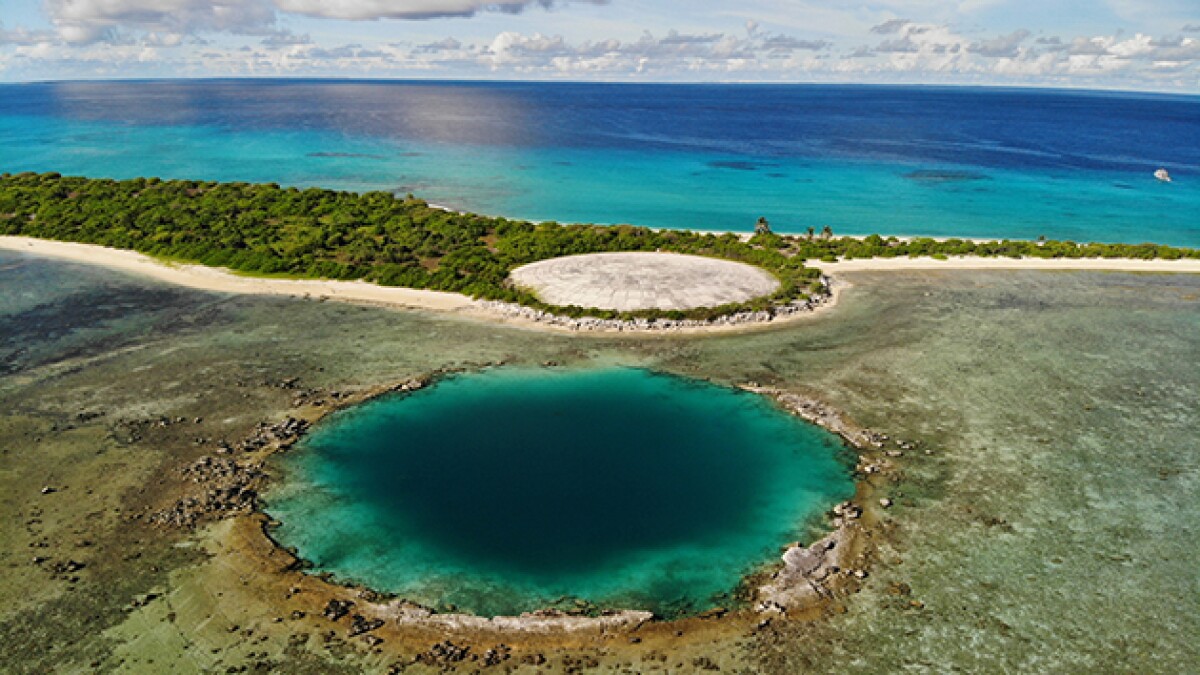
If we don’t get a handle on climate change soon, we may have a serious radioactive issue on our hands.
BY DARREN ORF MAR 07, 2024 https://www.popularmechanics.com/science/a60067341/gao-nuclear-waste-report/
- During the Cold War, the U.S. stashed nuclear waste—or accidentally dispersed it—in several sites around the world.
- The Government Accountability Office (GAO) recently released an update on three of those sites in Spain, Greenland, and the Marshall Islands.
- Two of those sites are currently under threat from climate change in the form of either melting ice or rising sea levels, which could eventually reveal these dump sites’ deadly contents.
During the Cold War, the U.S. and Soviet Union had the bright idea to irradiate the planet with nuclear bomb testing.
Of the 67 U.S. nuclear tests during this period, Castle Bravo—conducted on the Marshall Islands on March 1, 1954—was the biggest of them all. This denotation, along with all the others, came with an ecological and human toll on the surrounding area. And now, during the era of climate change, the specter of the most dangerous era of the nuclear age is haunting the world once again.
A new report by the Government Accountability Office (GOA) re-evaluated three sites around the world contaminated by U.S nuclear waste. One of these sites included Palomares, Spain—in 1966, a U.S. B-52G bomber carrying four thermonuclear bombs collided with a KC-135 tanker in the area. The collision didn’t cause the bombs to explode (you probably would’ve heard about that one time we accidentally bombed Spain) but it did disperse a lot of radioactive material. The report finds that the U.S. and Spain continue to monitor the contamination to this day.
However, the nuclear waste sites in Greenland and the Marshall Islands are currently a more direct threat to the world due to climate change. Entombed in ice under Greenland is roughly 47,000 gallons of radioactive waste produced by the Portable Mobile-2A (PM-2A) reactor, which powered the “city under the ice” known as the U.S. Camp Century base. Although the reactor was removed, the waste was left behind. Simply put, engineers at the time never thought it’d be exposed, but climate change—a term that wasn’t even coined yet when the base was built in 1960—is slowly melting the ice cap, which could reveal the radioactive waste hiding below.
“The scientists concluded that the contaminants should remain entombed in the ice at least through 2100,” the report reads. “The radioactive isotopes will continue to decay while entombed in the ice sheet and, as a result, will be less of a threat to human health the longer they remain locked in the ice.”
However, of most pressing concern is the nuclear waste currently impacting the Republic of the Marshall Islands. Runit Island houses a “nuclear coffin” that contains 110,000 cubic yards of radioactive contaminated soil and 6,000 cubic yards of contaminated debris, and it’s already been documented that rising sea levels are impacting this coffin. Nuclear radiation can also be measured at several atolls as well, including Bikini, Enewetak, Rongelap, and Utrik Atolls.
The U.S. Department of Energy and the RMI have disagreed over the impacts of the U.S.’s past nuclear testing on the people of this island, and the GOA believes that a new communication strategy could help alleviate mistrust—which isn’t exactly what the Marshallese people want to hear.
“What we need now is action and implementation on environmental remediation,” Ariana Tibon, chair of RMI’s National Nuclear Commission told the environmental website Grist. “If they know that it’s contaminated, why wasn’t the recommendation for next steps on environmental remediation?”
In other words, it’s time for the U.S. to stare down the ghosts of its nuclear past.
Could Fukushima’s radioactive water pose lasting threat to humans and the environment?
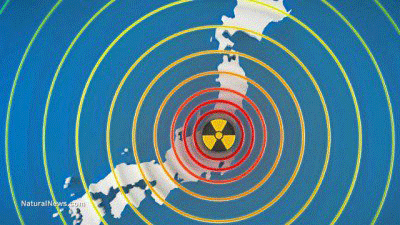
studies have highlighted how tritium can be absorbed into sediments and soils, raising concerns about its potential transfer to the water cycle and the food web.
research showing that fish have transported radioactive particles generated by the Fukushima incident far and wide. Like a number of other nuclear accidents before it, that makes what happened at Fukushima a global concern.”
by Alan Williams, University of Plymouth, https://phys.org/news/2024-03-fukushima-radioactive-pose-threat-humans.html
The meltdown of Japan’s Fukushima Daiichi power plant, caused by the devastating earthquake and tsunami of March 2011, represents the most severe nuclear power accident of the 21st century so far.
However, a new study highlights how the decision by the Japanese government to begin releasing the radioactive water stored within it—a decision approved by the International Atomic Energy Agency (IAEA)—has generated scientific and public debate, given its potential to cause environmental harm for decades to come.
Writing in the journal Environmental Science and Technology, researchers say the water cannot be stored indefinitely due to the ongoing risk of earthquakes and tsunamis in the region.
But they say not enough is known about the long-term impacts of tritium—the primary radionuclide present, with a half-life of 12.6 years—to ascertain if the release of more than one million tons of water can be considered safe or not.
As a result, they have called for assurances that regular monitoring will be carried out in different components of the region’s ecosystem to examine any impacts the release might be having on the environment.
They have also suggested more evidence is needed about the future effects of tritium in the presence of multiple and emerging stressors, such as hypoxia, rising ocean temperatures, and microplastics, given that environmental contamination can occur in many combinations.
The study was carried out at the University of Plymouth, where researchers have been examining the environmental impacts of radioactive material for almost three decades.
“The Japanese tsunami of 2011 was devastating for people living along this whole coastline. The presence of a nuclear power plant within the region left a lasting threat, and this study highlights some of the complex challenges that need managing and scientific questions that still need addressing.”
“Being in a region prone to earthquakes and tsunamis, there is an obvious danger in simply storing radioactive water there indefinitely. But based on our research, not enough is known about the impacts of tritium on both environmental and human health to say that releasing the water into the ocean is completely safe,” says Awadhesh Jha, professor in genetic toxicology and ecotoxicology and corresponding author on the research.
The new study includes a review of existing literature on the behavior of tritium in the environment and studies that have assessed its impact on individual species.
That includes studies that have highlighted how tritium can be absorbed into sediments and soils, raising concerns about its potential transfer to the water cycle and the food web.
There has also been research showing that tritium can cause DNA damage to certain fish species, which could impact their physical and reproductive fitness and—ultimately—the genetic diversity of a population.
However, the researchers say there is little data available on the distribution, behavior, and potential effects of tritiated water and organically-bound tritium, and therefore assessing the broad risks is almost impossible.
They also say the Fukushima situation cannot be compared with the Chornobyl accident, as some authorities have attempted to do, given the differing geographical locations of the two plants and the fact the long-term environmental impacts of Chornobyl are still being debated.
“Through our study, we have found research showing that fish have transported radioactive particles generated by the Fukushima incident far and wide. Like a number of other nuclear accidents before it, that makes what happened at Fukushima a global concern.”
“As such, we urgently need global research into the impacts of tritium—and how they might be managed—especially with the nuclear power industry set to expand significantly. If it does indeed expand, the construction of nuclear power plants, especially in coastal regions, should also take into account worst-case scenarios of flooding, earthquakes, and tsunamis as part of a fundamental goal to minimize radioactive discharges to the environment,” says Professor Jha.
13 Years On: Fukushima Governor Urges State to Clarify Soil Policy

Nippon Mar 9, 2024 1
Fukushima, March 9 (Jiji Press)–Fukushima Governor Masao Uchibori wants the Japanese government to clarify its policy on transferring soil from decontamination work following the March 2011 nuclear accident to final disposal sites outside the northeastern Japan prefecture.
“We’ll seize every opportunity to strongly call on the state to present a specific policy and a road map swiftly, in order not to create a blank period,” he has said in a recent interview.
Fukushima has decided to host interim storage facilities for the soil on the premise that the soil is stored at final disposal sites to be created outside the prefecture, Uchibori noted. This is the central government’s “legally prescribed responsibility,” he said.
A considerable amount of time will be needed to realize the soil transfer because there are a host of issues, including the selection of final disposal sites, but the remaining time is limited, Uchibori said………. https://www.nippon.com/en/news/yjj2024030701079/13-years-on-fukushima-governor-urges-state-to-clarify-soil-policy.html
Hinkley Point Responds to Environmental Concerns Over Bristol Channel Eel Populations

Hinkley Point addresses SEG’s concerns on eel populations in the Bristol Channel, proposing solutions for environmental conservation amidst development.
BNN, Nitish Verma, 05 Mar 2024
In a recent development, Hinkley Point has addressed concerns voiced by the Sustainable Eel Group (SEG) regarding the nuclear plant’s impact on eel populations in the Bristol Channel. The SEG, a prominent organization dedicated to the conservation of the European eel, has expressed reservations about supporting the Hinkley Point C development without significant changes to protect these migratory fish, especially the critically endangered European eel.
Environmental Alarms and Hinkley’s Rebuttals
The Bristol Channel is home to the most substantial population of migrating eels in the British Isles, with recent surveys suggesting an annual arrival of 75 million tonnes of glass eels. This has raised alarms about the potential threats posed by the Hinkley Point C development to this vital migratory route. The area’s designation as a RAMSAR reserve and Site of Special Scientific Interest underscores its global ecological importance. Chris Fayers, head of environment at Hinkley Point C, countered these concerns by highlighting extensive research conducted by the Centre for Environment, Fisheries and Aquaculture Science (Cefas), which suggests a minimal impact on fish populations, including eels. Furthermore, joint studies by the Universities of Bristol and Exeter have been cited to address risks related to noise pollution, a factor previously thought to significantly harm eel populations.
Proposed Solutions and SEG’s Stance
In response to the SEG’s concerns, Hinkley Point C has proposed the creation of a new salt marsh and the implementation of fish passes designed to be ‘eel friendly’ and benefit the overall eel population. These measures aim to mitigate the environmental impact of the nuclear plant’s operations on the local ecosystem. However, the SEG remains cautious, emphasizing the need for substantial evidence and effective implementation of these measures before lending their support to the development. The group’s focus on ensuring the survival and recovery of the European eel underscores the critical nature of this issue.
Looking Ahead: Conservation and Development Balance
The debate surrounding Hinkley Point C’s impact on eel populations in the Bristol Channel highlights the broader challenge of balancing infrastructure development with environmental conservation. As the largest and most high-profile NGO focusing on the recovery of the European eel, the SEG’s concerns carry significant weight. The outcome of this situation could set important precedents for how large-scale projects address and mitigate their environmental impacts. With both sides presenting arguments and potential solutions, the ongoing dialogue between Hinkley Point C and environmental groups will be crucial in determining the future of the Bristol Channel’s eel populations. https://bnnbreaking.com/world/uk/hinkley-point-responds-to-environmental-concerns-over-bristol-channel-eel-populations
Anglesey nuclear power plant plan resurrected almost four years after being shelved due to costs
This Is Money, By JOHN ABIONA , 7 March 2024
Plans for a nuclear power plant in North Wales look set to be revived almost four years after the project was shelved.
Jeremy Hunt said the Government has bought the Wylfa site on Anglesey and a second at Oldbury-on-Severn in south Gloucestershire from Hitachi for £160million.
The Japanese firm walked away from building the plant at Wylfa in September 2020 having suspended the project the year before due to rising costs.
But yesterday the Chancellor, who referred to the island by its Welsh-language and constituency name, said: ‘Ynys Mon has a vital role in developing our nuclear ambitions.’
Ministers are also pressing ahead with plans for small modular reactors (SMRs) with six companies including Rolls-Royce bidding to win the contract.
These will complement Somerset’s Hinkley Point C and Suffolk’s Sizewell C nuclear power stations…………………………………………….more https://www.thisismoney.co.uk/money/markets/article-13165945/Anglesey-nuclear-power-plant-plan-resurrected-four-years-shelved.html
The Biden doctrine in Gaza: bomb, starve, conceal, deceive
The White House unveils a new PR stunt for Gaza aid while hiding US arms transfers to Israel.
AARON MATÉ, MAR 9, 2024
At his State of the Union address Thursday night, President Biden announced that the US military will install a temporary pier off the coast of Gaza to deliver emergency aid to the besieged enclave, where more than 2.2 million Palestinians face a humanitarian crisis, including starvation. The pier, which will take weeks if not months to complete, will be built by US soldiers.
The US, Biden claimed, “has been leading international efforts to get more humanitarian assistance into Gaza” and believes that “protecting and saving innocent lives has to be a priority.”
In reality, the emergency project underscores Biden’s real priority: to prolong Israel’s rampage in Gaza, the US is even willing to deploy its own military for face-saving public relations stunts.
With criticism of Biden’s Gaza complicity increasing inside the Democratic Party, and threatening him at the ballot box, the pier is the latest in a series of token gestures aimed at feigning concern for Gazans while providing unfettered support to the Israeli government that is indiscriminately attacking them.
The White House has carried out air drops over Gaza that amount to a few trucks’ worth of aid – compared to the thousands of trucks that Israel is blocking with US support. “The food, water, and medical supplies so desperately needed by people in Gaza are sitting just across the border,” Doctors Without Border said Friday. “Israel needs to facilitate rather than block the flow of supplies.”
Even those trucks that can enter Gaza have been unable to make safe deliveries after Israel attacked their Hamas police escorts and crowds of desperate civilians lining up to receive aid. One air drop has even killed five Palestinian civilians and wounded others when a parachute failed to open.
The US military pier, Biden claimed, “will enable a massive increase in the amount of humanitarian assistance getting into Gaza every day.” His own aides acknowledge that this is a ruse. According to the Washington Post, administration officials quietly concede that “only by securing the opening of additional land crossings would there be enough aid to prevent famine.” And given that the pier will take at minimum 30 days to complete, that “[raises] questions about how famine in Gaza will be staved off in the critical days ahead,” the New York Times notes.
The White House has given the answer: rather than compel Israel to open those land crossings and prevent famine, it is instead adopting the Israeli position that the land crossings can be used as a tool of leverage against Hamas — and that Israel can control everything that gets in. In ceasefire talks, Israel has demanded that Hamas release hostages in exchange for, at best, a six-week pause to the massacre………………………………………………………………………………………………………………………………………………
it would be incongruent for the Biden administrating to publicly rebuke the Israeli government while privately rushing it weapons to help exterminate the Gazan “animals.”
Which explains why, five months into Israel’s genocidal campaign, the White House’s empty gestures have extended beyond mere empty words to costly, empty stunts by sea and air. https://www.aaronmate.net/p/the-biden-doctrine-in-gaza-bomb-starve?utm_source=post-email-title&publication_id=100118&post_id=142435082&utm_campaign=email-post-title&isFreemail=true&r=ln98x&triedRedirect=true&utm_medium=email
F-35A aeroplanes officially certified to carry thermonuclear bomb

The designation marks the first time that a stealth fighter can carry a nuclear weapon, in this case the B61-12 thermonuclear gravity bomb.
Breaking DEFENSE, By MICHAEL MARROW, March 08, 2024
WASHINGTON — The F-35A Joint Strike Fighter has been operationally certified to carry the B61-12 thermonuclear gravity bomb, a spokesman for the F-35 Joint Program Office (JPO) tells Breaking Defense.
In a statement, JPO spokesman Russ Goemaere said the certification was achieved Oct. 12, months ahead of a pledge to NATO allies that the process would wrap by January 2024. Certain F-35As will now be capable of carrying the B61-12, officially making the stealth fighter a “dual-capable” aircraft that can carry both conventional and nuclear weapons.
“The F-35A is the first 5th generation nuclear capable aircraft ever, and the first new platform (fighter or bomber) to achieve this status since the early 1990s. This F-35 Nuclear Certification effort culminates 10+ years of intense effort across the nuclear enterprise, which consists of 16 different government and industry stakeholders,” Goemaere said. “The F-35A achieved Nuclear Certification ahead of schedule, providing US and NATO with a critical capability that supports US extended deterrence commitments earlier than anticipated.”
Responding to follow-up questions from Breaking Defense, Goemaere said US disclosure policy prohibits the release of information on dual-capable aircraft among NATO partners. According to analysis by the Federation of American Scientists, as of 2023 approximately 100 older variants of B61 bombs are housed by NATO allies Belgium, Germany, Italy, the Netherlands and Turkey, who share the alliance’s nuclear strike mission. The first four nations are all planned F-35 operators, with the need to have a nuclear-capable aircraft a key reason for Germany signing onto the program.
The F-35A is certified to only carry the newer B61-12 variant, which will replace the older models………………………………………………………………………………………………………………………………
Hans Kristensen, director of the Nuclear Information Project with the Federation of American Scientists, noted the announcement is another milestone in America’s ongoing nuclear modernization effort.
“The stage is set for the tactical nuclear weapons upgrade in Europe with full-scale production of the B61-12 and four NATO allies and the US fighter wing at Lakenheath upgrading to operate the bomb on the F-35A,” he said……………….. more https://breakingdefense.com/2024/03/exclusive-f-35a-officially-certified-to-carry-nuclear-bomb/—
Plutonium pit ‘panic’ threatens America’s nuclear ambitions

The Hill, BY BRAD DRESS – 03/06/24
This is the second story in a series about Sentinel, the Air Force’s nuclear missile modernization project. Other stories touch on the challenges in the surrounding communities near Sentinel construction and with the Air Force’s budget issues.
At Los Alamos National Laboratory in New Mexico, where the U.S. built its first nuclear bomb, work on a key component of the next generation of nuclear missiles is already underway.
Workers have begun laying the groundwork for the first production later this year of plutonium “pits” — hollow spheres the size of a half grapefruit, made from the rare chemical element. They fit inside a warhead and create a nuclear explosion when compressed by explosives.
These pits are crucial: As a source of nuclear fuel, they will transform the Air Force’s new, modernized nuclear missiles, called Sentinel, into weapons of mass destruction. Sentinel is scheduled to be fielded in the Western rural U.S. in the 2030s, though that is likely to be delayed.
The pit work will first unfold at the nation’s only fully operational plutonium pit production facility, the Plutonium Facility at Technical Area 55, in a building known as PF-4 at Los Alamos.
Overseeing the production is the Department of Energy’s National Nuclear Security Administration (NNSA), which is pushing to get Los Alamos whirring to life this year to start making plutonium pits, with the hopes of eventually producing 30 per year at the site. The agency also plans to open a brand-new plutonium pit production plant in South Carolina, known as the Savannah River site, to meet an ultimate target goal of 80 pits a year.
But the NNSA hasn’t done large-scale pit production since the early 1990s, creating unease about restarting the process after decades of inactivity. And the agency is plagued by schedule delays, workforce challenges and budget concerns.
Sébastien Philippe, a research scientist at Princeton University who has closely tracked the Sentinel project, said the NNSA is struggling to meet its goals and raised concerns about the lack of a specific cost estimate for pit production.
“At this point, the deadline keeps moving, and the cost keeps growing,” he said.
The pit production is part of a U.S. scramble to modernize its entire triad after delaying such efforts for years due to the war on terrorism. The total modernizing effort is expected to exceed more than a trillion dollars.
Washington will replace its aging Minuteman III Intercontinental Ballistic Missiles and build new submarines and bomber planes capable of carrying nuclear weapons, with the latest 10-year projection cost putting the modernization effort at $750 billion……………………………………………………………..
The NNSA pit production effort has been flagged for several years by a government watchdog group, the Government Accountability Office (GAO). The GAO in a 2020 report said history has “cast doubt on NNSA’s ability to produce the required number of plutonium weapon cores on schedule.”
“We found NNSA’s plans for re-establishing pit production do not follow best practices and run the risk of cost increases and delays,” GAO said in an updated report last year. “The re-establishment of pit production capabilities is one of the most complex and potentially costly efforts presently operated by NNSA.”
The NNSA budget for pit production proposed in Congress for the next fiscal year is around $3 billion. The overall NNSA budget is expected to be boosted by 8 percent to $24 billion, based on congressional budget documents.
Sen. Elizabeth Warren (D-Mass.), a member of the Senate Armed Services Committee, grilled NNSA Administrator Jill Hruby in a 2022 hearing over budget and schedule concerns………………….
n last year’s National Defense Authorization Act, which was signed into law in December, lawmakers inserted several amendments due to concern about NNSA’s work.
Congress noted that reports have flagged the management and oversight of the plutonium modernization program with “serious deficiencies,” and required the NNSA to develop a master schedule and a life-cycle cost estimate. ……………………………………………………..
NNSA facing workforce challenges, lawsuit
…………………………………………………………..With the NNSA restarting pit production after so long, others are concerned about the potential for contamination and leakage from the hazardous practice.
Rocky Flats looms large over the debate. In 1957 and 1969, fires broke out at the facility and nearly created an environmental catastrophe on par with the meltdown in Ukraine’s Chernobyl plant.
The site was also known to have leaked barrels of radioactive waste into nearby fields. The FBI and the Environmental Protection Agency raided Rocky Flats in 1989 over environmental concerns.
The facility stopped production in 1992 and officially shut down in 1994. The Department of Energy took 10 years to clean up the area, which was designated as a hazardous waste site.
And Los Alamos itself has shut down in the past, from 2013-16, over safety concerns at PF-4.
The shaky history has spurred concerns in the communities around Los Alamos, where the “downwinders” — those who were affected by the winds carrying radioactivity after the Trinity test — have long kept a critical eye on NNSA operations.
As part of the new pit production, remaining plutonium after conversion to a new pit will be stored as waste. That waste will be sent to a disposal plant in Carlsbad, N.M.
Los Alamos said the facility has upgraded fire suppression systems and checked nuclear containers to ensure safety in case of an accident. Additionally, plutonium pits are handled inside of sealed compartments, which technicians insert gloves into to prevent harmful exposure.
But Jay Coghlan, executive director of Nuclear Watch New Mexico, wasn’t convinced the safety measures were sufficient.
“Los Alamos has a very checkered nuclear safety track record,” he said, and “production always causes more contamination and more radioactive waste.”
Coghlan sued the NNSA in 2021 for violating the National Environmental Policy Act (NEPA), which requires an environmental review and public input for government projects. He said the NNSA has not conducted a robust town hall or environmental review on the pit production.
“That is not just a paper document. It requires public hearings. It requires NNSA to essentially make its case,” he said. “It requires NNSA to respond to public comment.”……………………………………
Questions linger over Savannah River
At the Savannah River site in South Carolina, the NNSA will have to start up a facility that has never produced plutonium pits……………………………………………………………
The new Savannah site is only half-designed and is estimated to finish construction sometime between 2032 and 2035 — missing the goal of the Air Force, which wants to field its 400 Sentinel missiles in 2030.
At the same time, the budget for the site to complete construction has ballooned from about $3 billion in 2017 to an estimated cost of $11 billion.
Von Hippel, the nuclear policy scientist, and Curtis Asplund, an assistant professor in the department of physics and astronomy at San José State University, said it would be better to focus on small-scale pit production at Los Alamos first.
“Trying to build a second pit production facility at the Savannah River Site in a building designed for another purpose while simultaneously re-equipping Los Alamos’s plutonium facility and crowding it with hundreds of trainees for both facilities is a prescription for a fiasco,” they wrote in an opinion last year………………………………………………….
With the challenges facing the NNSA, critics question if the pits are even needed, given the tens of thousands made during the Cold War period. The pits used today are about 40 years old, and while around 100 years is considered the end of a pit’s life, that’s a best guess…………………………………………….. more https://thehill.com/policy/defense/4510010-plutonium-pits-us-nuclear-ambitions-sentinel/
1 This Month

petition to oppose the rapid increase of space-military industry threatening Jeju Island and the region.
[Petition by April 19th (KST)] Stop the joint military-Hanwha Systems-Jeju Provincial Government Sea Launch!
World Nuclear Power. Reactors 1951-2026, 75 Years of Nuclear Power.
Interactive Map– https://dv.worldnuclearreport.org/

Chernobyl: The Lost Tapes – A good documentary on Chernobyl on SBS available On Demand for the next 3 weeks– https://www.sbs.com.au/ondemand/tv-program/chernobyl-the-lost-tapes/2352741955560

of the week–London Campaign for Nuclear Disarmament


Tell the Ukrainian Government to Drop Prosecution of Peace Activist Yurii Sheliazhenko
To see nuclear-related stories in greater depth and intensity – go to https://nuclearinformation.wordpress.com
-
Archives
- April 2026 (211)
- March 2026 (251)
- February 2026 (268)
- January 2026 (308)
- December 2025 (358)
- November 2025 (359)
- October 2025 (376)
- September 2025 (257)
- August 2025 (319)
- July 2025 (230)
- June 2025 (348)
- May 2025 (261)
-
Categories
- 1
- 1 NUCLEAR ISSUES
- business and costs
- climate change
- culture and arts
- ENERGY
- environment
- health
- history
- indigenous issues
- Legal
- marketing of nuclear
- media
- opposition to nuclear
- PERSONAL STORIES
- politics
- politics international
- Religion and ethics
- safety
- secrets,lies and civil liberties
- spinbuster
- technology
- Uranium
- wastes
- weapons and war
- Women
- 2 WORLD
- ACTION
- AFRICA
- Atrocities
- AUSTRALIA
- Christina's notes
- Christina's themes
- culture and arts
- Events
- Fuk 2022
- Fuk 2023
- Fukushima 2017
- Fukushima 2018
- fukushima 2019
- Fukushima 2020
- Fukushima 2021
- general
- global warming
- Humour (God we need it)
- Nuclear
- RARE EARTHS
- Reference
- resources – print
- Resources -audiovicual
- Weekly Newsletter
- World
- World Nuclear
- YouTube
-
RSS
Entries RSS
Comments RSS
 nuclear-news