Weaponizing Reality: The Dawn of Neurowarfare
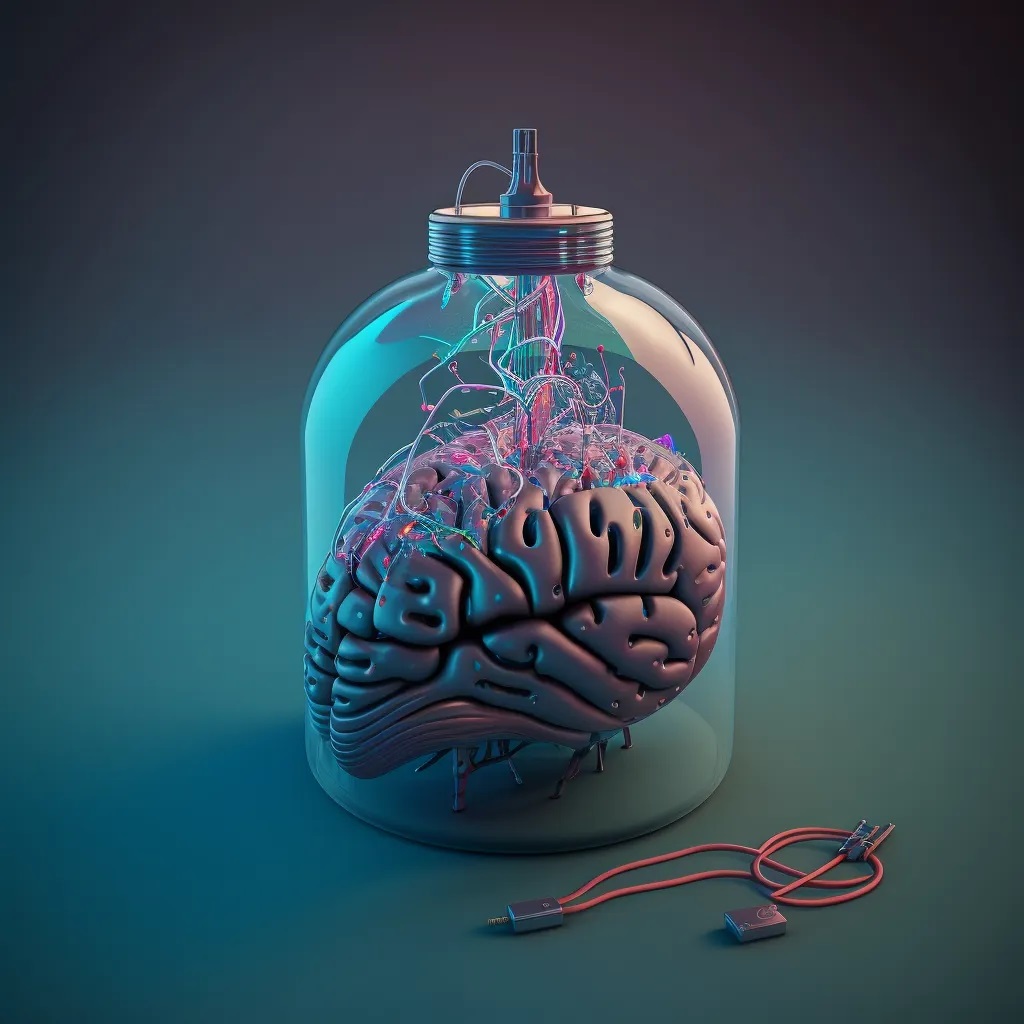
Stavroula Pabst explores the race to apply emerging neurotechnologies, such as brain-computer interfaces (BCIs), in times of both war and peace, expanding conflicts into a new domain — the brain — while perhaps forever changing humans’ relationship with machines.
Hangout, BYSTAVROULA PABST, MARCH 21, 2024
Billionaire Elon Musk’s brain-computer interface (BCI) company Neuralink made headlines earlier this year for inserting its first brain implant into a human being. Musk says such implants, which are described as “fully implantable, cosmetically invisible, and designed to let you control a computer or mobile device anywhere you go,” are slated to eventually offer “full-bandwidth data streaming” to the brain.
Brain-computer interfaces (BCIs) are quite the human achievement: as described by the University of Calgary, “A brain computer interface (BCI) is a system that determines functional intent – the desire to change, move, control, or interact with something in your environment – directly from your brain activity. In other words, BCIs allow you to control an application or a device using only your mind.”
Developers and advocates of BCIs and adjacent technologies emphasize that they can help people regain abilities lost due to aging, ailments, accidents or injuries, thus improving quality of life. A brain implant created by Swiss-based École Polytechnique Fédérale in Lausanne (EPFL), for example, has allowed a paralyzed man to walk again just by thinking. Others go further: Neuralink’s goal is to help people “surpass able-bodied human performance.”
Yet, great ethical concerns arise with such advancements, and the tech is already being used for questionable purposes. To better plan logistics and boost productivity, for example, some Chinese employers have started using “emotional surveillance technology” to monitor workers’ brainwaves which, “combined with artificial intelligence algorithms, [can] spot incidents of workplace rage, anxiety, or sadness.” The example showcases how personal the technology can become as it is normalized in daily life.
But the ethical ramifications of BCIs and other emerging neurotechnologies don’t stop at the consumer market or the workplace. Governments and militaries are already discussing — and experimenting on — the roles they could play in wartime. Indeed, many are describing the human body and brain as war’s next domain, with a 2020 NATO-backed paper on “cognitive warfare” describing the phenomenon’s objective as “mak[ing] everyone a weapon…The brain will be the battlefield of the 21st century.”
On this new “battlefield,” an era of neuroweapons, which can broadly be defined as technologies and systems that could either enhance or damage a warfighter or target’s cognitive and/or physical abilities, or otherwise attack people or critical societal infrastructure, has begun.
In this exploration of the race to apply the latest neurotechnologies to war and beyond, I investigated how the neuroweapons of tomorrow, including BCIs that may allow for brain-to-brain or brain-to-machine communication, have the capacity to expand conflicts into a new domain — the brain — while also bringing a new dimension to both hard- and soft-power struggles of the future.
In response to ongoing neurotechnology developments, some allege “neurorights” will protect peoples’ minds from possible privacy infringements and myriad ethical issues that new neurotechnologies may pose in the years to come. However, neurorights advocates’ close proximity to the very organizations advancing these neurotechnologies deserves scrutiny and potentially suggests that the “neurorights” movement is poised instead to normalize advanced neurotechnologies’ presence in daily life, perhaps forever changing humans’ relationship with machines.
The Military–Intelligence Complex’s Decades-Long Pursuit of Neurowarfare
Indeed, neuroscience’s very origins lie in war. As Dr. Wallace Mendelson explains in Psychology Today, “Just as American neurology was born in the Civil War, the roots of neuroscience are embedded in World War II.” He explains that while the bond between war and neuroscience has contributed to meaningful advances for the human condition, like the improved understanding of ailments like post-traumatic stress disorder (PTSD), it has left some worried about neuroscience’s possible military applications.
………………………………. Initiatives and research explored in this article, like the BRAIN Initiative and the United States Defense Advanced Research Projects Agency’s (DARPA) Next-Generation Nonsurgical Neurotechnology (N³), are often portrayed as altruistic strides towards improving brain health, helping people recover lost physical or mental abilities, and otherwise improving quality of life. Unfortunately, a deeper look reveals a prioritization of military might.
Enhance…
The military is intensely interested in emerging neurotechnologies. The Pentagon’s research arm DARPA directly or indirectly funds about half of invasive neural interface technology companies in the US. In fact, as Niko McCarthy and Milan Cvitkovic highlight in their 2023 writeup of DARPA’s neurotechnology efforts that DARPA has initiated at least 40 neurotechnology-related programs over the past 24 years. From the Interface describes the current state of affairs as DARPA funding “effectively driving the BCI research agenda.”
………………………………………………………………………………………………………………………………………………………….. Like many neurotechnology and adjacent initiatives, the BRAIN Initiative depicts itself as a research-forward, public effort that can improve human well-being. Yet, cash flows suggest that its priorities lie more in the military sphere: as per 2013 reporting from Scientific American, DARPA is the biggest funder of the BRAIN Initiative.
………………………………………… neurotech advancements include improving or “augmenting” the brain’s capacity to operate in myriad ways that will assist fighters on the battlefield. “Enhancements” that claim to improve soldiers’ battlefield performance are not a new phenomenon and have previously included currently illicit drugs, like cocaine. Recent developments in neuroscience have jumpstarted new possibilities, with technologies and techniques including BCIs, neuropharmocologies, and/or electric currents to stimulate the brain potentially, according to the Small Wars Journal, “improv[ing] warfighter performance by enhancing memory, concentration, motivation, and situational awareness while negating the physiological ills of decreased sleep, stress, pain, and traumatic memories.”
…………………………………….. any advancements made to boost a warfighter’s performance can often be applied towards destructive purposes. In neurowarfare, in other words, the brain is capable of being enhanced as well as attacked……………………………………………………………………………………………………………………………………………………………………………………………………………………………….. more https://unlimitedhangout.com/2024/03/investigative-reports/weaponizing-reality-the-dawn-of-neurowarfare/
No comments yet.
-
Archives
- February 2026 (233)
- January 2026 (308)
- December 2025 (358)
- November 2025 (359)
- October 2025 (376)
- September 2025 (258)
- August 2025 (319)
- July 2025 (230)
- June 2025 (348)
- May 2025 (261)
- April 2025 (305)
- March 2025 (319)
-
Categories
- 1
- 1 NUCLEAR ISSUES
- business and costs
- climate change
- culture and arts
- ENERGY
- environment
- health
- history
- indigenous issues
- Legal
- marketing of nuclear
- media
- opposition to nuclear
- PERSONAL STORIES
- politics
- politics international
- Religion and ethics
- safety
- secrets,lies and civil liberties
- spinbuster
- technology
- Uranium
- wastes
- weapons and war
- Women
- 2 WORLD
- ACTION
- AFRICA
- Atrocities
- AUSTRALIA
- Christina's notes
- Christina's themes
- culture and arts
- Events
- Fuk 2022
- Fuk 2023
- Fukushima 2017
- Fukushima 2018
- fukushima 2019
- Fukushima 2020
- Fukushima 2021
- general
- global warming
- Humour (God we need it)
- Nuclear
- RARE EARTHS
- Reference
- resources – print
- Resources -audiovicual
- Weekly Newsletter
- World
- World Nuclear
- YouTube
-
RSS
Entries RSS
Comments RSS
 nuclear-news
Leave a comment