Cancer “epidemic” in the Young as Radioactive Wastes are Increasingly Dispersed to the Environment meanwhile Nuclear given “green” status in Brussels.

BY MARIANNEWILDART https://mariannewildart.wordpress.com/2024/03/24/cancer-epidemic-in-the-young-as-radioactive-wastes-are-increasingly-dispersed-to-the-environment-meanwhile-nuclear-given-green-status-in-brussels/
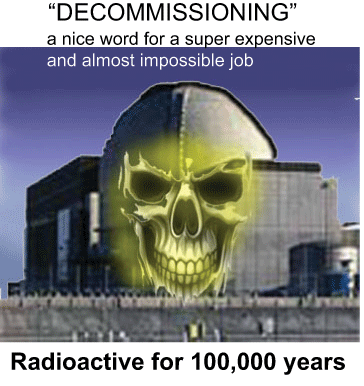
“Decommissioning” old and redundant nuclear plants sounds great and is greenwashed by the nuclear industry and Government as “Nuclear Restoration Services” . But in reality “decommissioning” means dispersal of nuclear wastes to the air, sea and land. Laws have been changed (despite opposition by Radiation Free Lakeland and others) to facilitate this by “moving waste up the heirarchy” ie what once was banned as too dangerous in landfill, incinerators and radioactive scrap metal is now routinely dispersed to the public realm. This also means that far higher level wastes are proposed for Geological Disposal than was the case in the 1990s when the NIREX inquiry stopped plans for intermediate and low level wastes in a deep nuclear dump.
In the same week the “Princess of Wales reveals diagnosis, doctors warn of mysterious cancer ‘epidemic” but the finger of suspicion never falls on the increase in radioactive wastes now being chucked into the public realm – nope the public are asked to fill in polls on whether they think processed food, lack of exercise, smoking is to blame for increase in cancers. In other words folks – “its your fault” despite the increased burden on your body from radiation and chemicals in the public realm.

Also in the same week EU ‘leaders’ in Brussels met to sign a Declaration pushing new nuclear “as part of the transition to a net-zero-emissions society”. The International Atomic Energy Agency’s Nuclear Energy Summit in Brussels on March 21 was protested by more than 40 organisations and we support that protest. But our support was tempered with the knowledge that rather than shouting about the radioactive and chemical toxic burden on the planet and people NGOs have for too long focussed on the narrative that nuclear is not a “climate solution.” NGOs “aim is to highlight that nuclear energy is a dangerous distraction from real climate solutions.” It is good to see opposition but by not pushing hard against the full consequences of nuclear (this is especially true of NGOs in the UK with few exceptions ) , the industry has been given a free ride to push its ‘climate solution’ agenda in the knowledge that it will not be overly tarnished by NGOs’ in the public ’s perception as Poison Power.
Of course it is a climate solution in the sense that the nuclear mafia agenda for the planet and its human and non-human inhabitants mean that we will not be in the least bit concerned about the climate.

Beyond Nuclear reported from Brussels and produced an excellent leaflet “The Lying Piper of Nukeland” :
The IAEA and 30 countries that met in Brussels on March 21, spun false nuclear fairy tales, then issued a suitably “solemn pledge” to expand nuclear power, effectively announcing their own funeral. Many European groups protested in Brussels at the expo center where the summit was held .
Man blames nuclear meltdown for deformities in city more radioactive than Chernobyl

Ozersk – code named City 40 – was the birthplace of the Soviet nuclear weapons programme, now it’s one of the most contaminated places on the planet with residents exposed to high radiation levels.
By Kelly Williams, Assistant News Editor (Live) https://www.dailystar.co.uk/news/world-news/man-blames-nuclear-meltdown-deformities-32405120
A man living in a secret city five times more radioactive than Chernobyl has been left with facial deformities he blames on huge nuclear meltdowns.
Vakil Batirshin has massively swollen lymph nodes said to be caused by radiation-related illness. He lives in Ozersk – code named City 40 in Russia – which was built in total secrecy around the huge Mayak nuclear power plant by the Soviets in 1946.
For the first eight years after City 40 was built, Ozersk residents were forbidden from communicating with the outside world. Like Chernobyl, it was designed as a place to house the scientists working at the plant who – unbeknownst to the world – were leading the Soviet Union’s nuclear weapons programme during the Cold War era.
Locals were told they were “the nuclear shield and saviours of the world,” and everyone on the outside was an enemy.
They also kept it a secret that the extreme exposure to radiation was affecting the health of the city’s inhabitants. They started to get sick and die and the authorities were clandestine about the mortality rate.
However, the city’s graveyard with all its young victims tells the story.
Ozersk, nicknamed “The graveyard of the Earth,” was surrounded by guarded gates and barbed wire fences and did not appear on any maps.
Its inhabitants’ identities were also erased from the Soviet census to guard their secret.
The Mayak nuclear plant went through Russia’s biggest nuclear disaster when the facility allegedly dumped 200million curies worth of radioactive material into the environment around Ozersk.
The residents also suffered the Kyshtym disaster in 1957, the worst nuclear disaster the world had seen before Chernobyl.
Radiation bathed the city when a cooling system exploded at Mayak with the force of 100 tons of dynamite.
One of the nearby lakes has been so heavily contaminated by plutonium that locals have renamed it the “Lake of Death” or “Plutonium Lake”.
In an interview which resurfaced earlier this week on X (formerly Twitter), Vakil Batirshin struggles to speak, his neck is painfully swollen from lymph nodes that have grown to triple their normal size.
His exact diagnosis remains steeped in mystery as doctors say it can be hard to trace any one condition to radiation.
But asked if he has any doubt his symptoms are related to radioactivity, he said: “Well, when I lived in my home village, I didn’t have anything. Everything was great.
“When I came here, it all started.”
Another resident, Gilani Dambaev is riddled with diseases doctors think are linked to a lifetime’s exposure to excessive radiation. He and his family have government-issued cards identifying them as residents of radiation-tainted territory.
He said: “Sometimes they would put up signs warning us not to swim in the river, but they never said why. After work, we would go swimming in the river. The kids would too.”
Although the secret is now out and Ozyorsk resembles “a suburban 1950s American town” according to The Guardian, residents know their water is contaminated, their crops are poisoned, and their children may be sick.
Half a million people in Ozersk and its surrounding area are said to have been exposed to five times as much radiation as those living in the areas of Ukraine affected by the Chernobyl nuclear accident.
But most refused to leave, because while the Soviet population were suffering from famine and living in extreme poverty, the city was regarded as a paradise as authorities gave them private apartments, plenty of food, good schools and healthcare, and a plethora of entertainment and cultural activities.
Even still, residents opt against leaving. The Guardian reported that “it is prestigious to live in Ozersk.”
Residents describe it as a town of “intellectuals”, where they are used to getting “the best of everything for free”.
Living in Mayak’s nuclear shadow and resigned to her fate, one said: “I don’t hope for anything anymore. If we get sick, we get sick.”
Some locals, however, claim that long term dumping by the nuclear plant’s management continues today.
The government has started resettling residents to new homes away from the river, but the process only began in 2008.
‘The graveyard of the Earth’: inside City 40, Russia’s deadly nuclear secret
The city’s residents know the truth, however: that their water is contaminated, their mushrooms and berries are poisoned, and their children may be sick. Ozersk and the surrounding region is one of the most contaminated places on the planet, referred to by some as the “graveyard of the Earth”.
City 40’s inhabitants were told they were “the nuclear shield and saviours of the world”

From the late 1940s, people here started to get sick and die: the victims of long-term exposure to radiation.
‘The graveyard of the Earth’: inside City 40, Russia’s deadly nuclear secret, https://www.theguardian.com/cities/2016/jul/20/graveyard-earth-inside-city-40-ozersk-russia-deadly-secret-nuclear Samira Goetschel, Wed 20 Jul 2016 Ozersk, codenamed City 40, was the birthplace of the Soviet nuclear weapons programme. Now it is one of the most contaminated places on the planet – so why do so many residents still view it as a fenced-in paradise?
“Those in paradise were given a choice: happiness without freedom, or freedom without happiness. There was no third alternative.” (From the dystopian novel We, by Yevgeny Zamyatin, 1924)
Deep in the vast forests of Russia’s Ural mountains lies the forbidden city of Ozersk. Behind guarded gates and barbed wire fences stands a beautiful enigma – a hypnotic place that seems to exist in a different dimension.
Codenamed City 40, Ozersk was the birthplace of the Soviet nuclear weapons programme after the second world war. For decades, this city of 100,000 people did not appear on any maps, and its inhabitants’ identities were erased from the Soviet census.
Today, with its beautiful lakes, perfumed flowers and picturesque tree-lined streets, Ozersk resembles a suburban 1950s American town – like one of those too-perfect places depicted in The Twilight Zone.
Continue readingWhaat! Romania’s state-owned Nuclearelectrica to partner with NuScale to build small nuclear reactors.

Romania expects to make a preliminary final investment decision next year
on whether to build a small modular reactor plant (SMR), which could become
Europe’s first project using the technology, Energy Minister Sebastian
Burduja said on Monday. State-owned nuclear power producer Nuclearelectrica
opens new tab said in 2021 it will partner with U.S. utility firm NuScale
Power (SMR.N), opens new tab to build reactors as part of its efforts to
boost low-emission power sources.
Reuters 18th March 2024
House Democrats Tell Biden To Enforce US Law and Suspend Military Aid to Israel
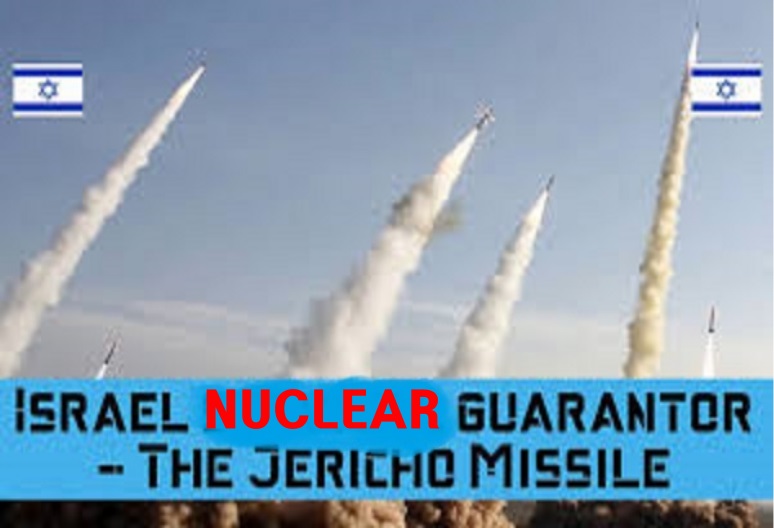
Israel’s undeclared nuclear weapons stockpile also violates US foreign assistance laws that prohibit US aid to nuclear-armed states that don’t sign the Non-Proliferation Treaty. The US gets around this law by not officially acknowledging that Israel has nukes
Foreign assistance laws prohibit military aid to countries that are blocking humanitarian aid
by Dave DeCamp March 24, 2024 https://news.antiwar.com/2024/03/24/house-democrats-tell-biden-to-enforce-us-law-and-suspend-military-aid-to-israel/
Six senior House Democrats sent a letter to President Biden on Saturday urging him to invoke US foreign assistance laws to suspend military aid to Israel due to the country’s starvation blockade on Gaza
“Given the catastrophic and devolving humanitarian situation in Gaza, we urge you to enforce the Humanitarian Aid Corridor Act (Section 620I of the Foreign Assistance Act) and, as required by that law, make clear to the Israeli government that so long as Israel continues to restrict the entry of humanitarian aid into Gaza, the continued provision of US security assistance to Israel would constitute a violation of existing US law and must be restricted,” the letter reads.
Section 620I of the Foreign Assistance Act says that no assistance shall be given “to any country when it is made known to the President that the government of such country prohibits or otherwise restricts, directly or indirectly, the transport or delivery of United States humanitarian assistance.”
Israel’s blockade and restrictions on aid have put Gaza’s population on the brink of famine. Secretary of State Antony Blinken recently acknowledged that 100% of Gaza’s population is “experiencing severe levels of acute food insecurity,” but the Biden administration continues to provide unconditional military support for the Israeli campaign.

The letter to Biden comes as Blinken is supposed to certify whether Israel has made credible and reliable written commitments to use US weapons according to US and international law. Israel submitted a letter this month claiming it will comply with the law, and the deadline for the US certification is Monday.
Subsection (b) of Section 620I says that the president can waive the restriction if he believes providing military aid is in the US’s “national security interest.” US support for the Israeli slaughter of Palestinians in Gaza provoked an uptick in attacks on US forces in the region and Houthi attacks on Israel-linked commercial shipping, which the US has responded to by launching a new bombing campaign in Yemen. The risk of a major regional war continues to rise, but American politicians still claim that supporting Israel’s genocidal campaign is in the US national interest.
The letter sent to Biden was signed by Reps. Joaquin Castro (D-TX), James P. McGovern (D-MA), Sara Jacobs (D-CA), Jan Schakowsky (D-IL), Barbara Lee (D-CA), and Chellie Pingree (D-ME). Sen. Bernie Sanders (I-VT) and seven Democratic senators sent a similar letter to Biden earlier this month.
Israel’s undeclared nuclear weapons stockpile also violates US foreign assistance laws that prohibit US aid to nuclear-armed states that don’t sign the Non-Proliferation Treaty. The US gets around this law by not officially acknowledging that Israel has nukes.
Air attacks on Ukraine have again put the Zaporizhzhia nuclear power plant(ZNPP), under Russian control, in danger

Air attacks on Ukraine have again put the Zaporizhzhia nuclear power plant
(ZNPP), under Russian control, in danger. The vital power supply to keep
the reactors cool is off; potential meltdown and a catastrophic nuclear
“accident” is only being prevented by ancient power generators.
Nobody needs reminding of the devastation to Ukraine and vast swathes of Europe
when the nuclear power plant at Chernobyl melted down and exploded in 1986.
Though ZNPP is newer than Chernobyl with more safety features, it is very
much larger and simply is not safe without power.
Meanwhile, Rafael Grossi,
head of the International Atomic Energy Agency (IAEA), has been cosying up
to President Assad in Damascus, offering to help Syria with nuclear power!
It is well known that Assad has been trying to make the “bomb” for
years.
I humbly suggest Mr Grossi should be in Ukraine or perhaps Moscow to
ensure the safety of ZNPP, rather than waving nuclear power under the nose
of another tyrant who will probably use it as a horrific weapon rather than
a valuable source of power for his people.
Times 25th March 2024
https://www.thetimes.co.uk/article/nuclear-plant-may-be-putins-new-weapon-prgdqxj0p
Day 171: ‘Horrific’ Eyewitness Accounts Continue to Emerge From Israel’s Siege on Gaza’s Hospitals
Eyewitness accounts continue to emerge from Gaza’s hospitals, including rape, torture, mass executions, and soldiers crushing Palestinian bodies with tanks. Hamas says Israel’s systematic attack on hospitals is central to its “war of extermination.”
Mondoweiss, BY LEILA WARAH ,
Casualties
- 32,333 + killed* and at least 74,694 wounded in the Gaza Strip.
- 435+ Palestinians killed in the occupied West Bank and East Jerusalem.**
- Israel revises its estimated October 7 death toll down from 1,400 to 1,147.
- 594 Israeli soldiers killed since October 7, and at least 3,221 injured.***
*Gaza’s Ministry of Health confirmed this figure on its Telegram channel. Some rights groups estimate the death toll to be much higher when accounting for those presumed dead.
** The death toll in the West Bank and Jerusalem is not updated regularly. According to the PA’s Ministry of Health on March 17, this is the latest figure.
*** This figure is released by the Israeli military, showing the soldiers whose names “were allowed to be published.”
Key Developments
- UNRWA: Israel says no more UNRWA food convoys to north Gaza.
- UNRWA chief: Israeli decision to deny all UNRWA food convoys to northern Gaza is “obstruct[ing] lifesaving assistance during a man-made famine.”
- Doctors Without Borders “deeply concerned” after medical staff arrested at al-Shifa Hospital amid “heavy air strikes by Israeli forces and fierce fighting” nearby.
- Tanks crushed bodies, ambulances at al-Shifa Hospital, reports AP News, citing witnesses.
- Footage emerges of Israeli soldiers assaulting Palestinian boy
- Casualties in Israeli attack on aid distributors at Kuwaiti roundabout in Gaza City, reports Al Jazeera.
- Israeli forces raid Al Aqsa mosque during nightly prayers, assault and expel worshipers, reports Al Jazeera journalist.
- WHO Chief: Israel must reverse decision on blocking north Gaza aid.
- Israeli war cabinet minister threatens to quit if bill exempting ultra-Orthodox Jews from conscription passes
- UNRWA: U.S. funding cut will ‘compromise access to food’ in Gaza.
- UN special rapporteurs decry underreporting of sexual violence against Palestinians.
- Israel blocks access to Jerusalem for West Bank Christians on Palm Sunday, reports Wafa.
- PRCS says it has lost radio contact with staff at al-Amal Hospital in Khan Younis.
- Euro-Med: Israel’s attacks on academics in line with Gaza ‘genocide’
- WAFA correspondent killed along with son Israeli airstrike on Gaza
- MAP report: Doctor says conditions inside European Gaza Hospital ‘unimaginable’
Gaza: Three Hospitals under military siege
The Israeli military has imposed ongoing sieges on at least three medical facilities in the besieged enclave, terrorizing, injuring, and killing thousands of civilians in the process.
Al-Shifa Hospital in northern Gaza has entered its seventh day under siege, and the civilians able to flee are reporting ruthless massacres in and around the medical complex.
A teenage Palestinian boy, Farouk Mohammed Hamd, told Al Jazeera he witnessed Israeli soldiers executing a group of eight people, including his father and brother, inside al-Shifa Hospital.
He said he and the others were stripped of their clothing and moved several times inside the al-Shifa Hospital building in central Gaza over the course of hours before being taken to the top floor of the facility.
“They left us for about three hours, then said, ‘You are safe. You can go south.”
“We stood up, but then they opened fire. We all laid down on the floor again. Then, the snipers entertained themselves by shooting us one after the other.”
Hamad said his father told him before being killed to run away if he could, and he managed to run, but not before seeing the unresponsive bodies of the executed group. ……………………………………………………………………………………………………………………………………………………
Underreporting of sexual violence against Palestinians
Witnesses at al-Shifa hospital have reported that “Palestinian women have been subjected to rape, torture, and execution by Israeli forces.”
Reem Alsalem, the UN special rapporteur on violence against women and girls, said in a post on X that it is “abhorrent” that reports of rape by Israeli forces keep coming out without any consequences.
“Rape and other forms of sexual violence can constitute war crimes, crimes against humanity or a constitutive act with respect to genocide! It must stop!”
Francesca Albanese, the UN special rapporteur on the occupied Palestinian territory, similarly said, “I lost count of how many renowned journalists interviewed me on the alleged mistreatment of/sexual abuse against Palestinian women by Israeli forces, and never published any article on this.”
“What we can see on the ground is a systematic creation of a corrosive environment in which Israel, with its destruction of neighborhoods and hospitals, is making Gaza unliveable for the majority of Palestinians,” said Al Jazeera co-respondent, Tareq Abu Azzoum from Gaza while reporting on the besieged hospitals.
“Horrific scenes” at European Hospital
Meanwhile, at Gaza’s European Hospital near Khan Younis, one of the last functioning medical facilities, medical staff report “horrific scenes” at the hospital with patients “dying from infections with evidence of serious malnutrition,” reported Medical Aid for Palestinians (MAP).
Husam Basheer, an orthopedic surgeon working at the hospital, says he and his staff are “managing with the bare minimum of resources” at the medical facility due to Israeli restrictions on medical aid entering the besieged enclave……………………………………………………………………………………………
Israel bars UNRWA from northern Gaza
The United Nations Relief and Works Agency for Palestine Refugees (UNRWA) announced on Sunday that Israel has officially barred it from making aid deliveries in northern Gaza, where the threat of famine is highest.
“This is outrageous [and] makes it intentional to obstruct lifesaving assistance during a man-made famine. These restrictions must be lifted,” the head of the UNRWA, Philippe Lazzarini, wrote in an X post.……………………………………………………………………………………………………………………
Israel is using famine as a “weapon of war” in Gaza to put pressure on the Palestinian people to leave the besieged enclave, Adel Abdel Ghafar, an analyst at the Middle East Council on Global Affairs, told Al Jazeera.
The “dream” of many far-right politicians in Israel is to make Gaza “uninhabitable” for Palestinians, with the goal of re-establishing settlements for the Israelis, Ghafar continued.
“The destruction of schools, hospitals, infrastructure [is making Gaza] almost unlivable and it will force the international community to take further refugees and thin out the population of Gaza,” he said.
“I think Israel wants to have a big chunk of the population leave and become refugees elsewhere.”
UN Resolution for ceasefire
On Monday, the UN Security Council is expected to vote on yet another resolution regarding Israel’s war on Gaza. Since October seven, only two of eight resolutions have been accepted, with both mainly dealing with humanitarian aid to the besieged enclave.
Guterres says the most recent UN Security Council resolution does not link a ceasefire in Gaza to the release of Israeli captives, reported Al Jazeera.
In the resolution, “a ceasefire is required together with, but not in a linkage with, the unconditional release of all hostages,” he said. “And we have also claimed the need for that release.”
Diplomats told the AFP news agency that the resolution had been worked on with the U.S. to avoid a veto, reported France 24. The U.S. has vetoed three resolutions calling for a ceasefire in Gaza.
“We expect, barring a last-minute twist, that the resolution will be adopted and that the US will not vote against it,” one diplomat told AFP.
Last Friday, the Security Council voted on a draft submitted by the U.S. that called for an “immediate” ceasefire linked to the release of captives. China and Russia vetoed the resolution, criticizing it for stopping short of explicitly demanding Israel halt its campaign.
No progress on negotiations.
Meanwhile, Israel and Hamas have continued negotiations mediated by Qatar with little progress. ………………………………………………..
IAEA Unaware Of Secret Iranian Nuclear Site Targeted By Israel
Iran International Newsroom, https://www.iranintl.com/en/202403252483—26 Mar 24
The International Atomic Energy Agency (IAEA) says it has no information about a purported Iranian nuclear site that was set on fire in Tehran’s Shadabad neighborhood in 2020.
This after Iran International’s investigative report revealed Tehran concealed an Israeli sabotage operation that targeted a covert nuclear facility owned by the Atomic Energy Organization of Iran.
Iran International’s in-depth investigative report relied on authenticated documents obtained from both the judiciary and the Ministry of Intelligence. These resources were made available through Ali’s Justice – a network of hacktivists known for their ongoing disclosure of Iranian government documents.
In late July 2020, the destruction of the nuclear site swiftly escalated into a critical national security concern for Iran, prompting reports to reach Ali Khamenei, the Supreme Leader of the Islamic Republic.
Of particular note, mere weeks after the incident, the IAEA’s Director General, Rafael Mariano Grossi, made a visit to Iran – seemingly oblivious to the events.
Following months of tension between Iran and the agency, Grossi had arrived in Tehran to negotiate access for inspectors to two suspected former atomic sites.
Though the IAEA did not identify the sites, Israeli intelligence officials pinpointed one as the Abadeh Nuclear Weapons Development Site.
Iran’s then-nuclear chief, Ali Akbar Salehi, lauded the talks with Grossi as “constructive,” heralding a supposed “new chapter of cooperation” between Iran and the agency.
Fast forward about four years: This month, Grossi informed the IAEA Board that his agency has lost crucial “continuity of knowledge” regarding Tehran’s activities.
The IAEA concluded a meeting earlier this month without passing a resolution against the Islamic Republic for advanced work on its atomic program and its refusal to cooperate with the IAEA.
While the US called on the IAEA Board to be ready for further action if Iran’s cooperation does not significantly improve, it remains to be seen whether this latest report could lead to Iran’s censure over its non-compliance.
The facility, undisclosed to the IAEA, raises serious concerns about Iran’s nuclear program and its compliance with safeguards obligations – and it prompts concerns about the existence of other undisclosed facilities and the extent to which Iran may be concealing other nuclear activities.
Israel And Iran’s Nuclear Program
According to judicial documents, the Islamic Republic considers the Israeli intelligence service, Mossad, as the main perpetrator of this sabotage operation.
Despite its belief that Israel was responsible, Tehran tried to conceal the sabotage.
Following Iran International’s reporting, a spokesman from the Israeli Prime Minister’s Office simply stated, “No comment: “We have no comment.”
Sabotage operations targeting Iranian nuclear facilities are not unprecedented.
From 2009 to 2011, five individuals associated with Iran’s nuclear industry, whom the Islamic Republic regarded as scientists, were assassinated.
Tehran has consistently accused Israel of these assassinations.
Arguably the most prominent instance of sabotage within Iran’s nuclear program was the assassination of Mohsen Fakhrizadeh, the former head of the Ministry of Defense’s Research and Innovation Organization, which occurred on November 27, 2020.
Israel had labeled Fakhrizadeh as a key figure within Iran’s “nuclear weapons program” two years prior to his assassination.
The 2020 sabotage at the nuclear warehouse in Shadabad in Tehran occurred approximately five months before Fakhrizadeh’s assassination.
In contrast, Israel did officially claim responsibility for the theft of Iran’s nuclear documents from a warehouse in Tehran’s Shourabad area in 2018 – with Benjamin Netanyahu revealing that Israel had obtained 55,000 pages and 55,000 digital files through an intelligence operation.
Weaponizing Reality: The Dawn of Neurowarfare

Stavroula Pabst explores the race to apply emerging neurotechnologies, such as brain-computer interfaces (BCIs), in times of both war and peace, expanding conflicts into a new domain — the brain — while perhaps forever changing humans’ relationship with machines.
Hangout, BYSTAVROULA PABST, MARCH 21, 2024
Billionaire Elon Musk’s brain-computer interface (BCI) company Neuralink made headlines earlier this year for inserting its first brain implant into a human being. Musk says such implants, which are described as “fully implantable, cosmetically invisible, and designed to let you control a computer or mobile device anywhere you go,” are slated to eventually offer “full-bandwidth data streaming” to the brain.
Brain-computer interfaces (BCIs) are quite the human achievement: as described by the University of Calgary, “A brain computer interface (BCI) is a system that determines functional intent – the desire to change, move, control, or interact with something in your environment – directly from your brain activity. In other words, BCIs allow you to control an application or a device using only your mind.”
Developers and advocates of BCIs and adjacent technologies emphasize that they can help people regain abilities lost due to aging, ailments, accidents or injuries, thus improving quality of life. A brain implant created by Swiss-based École Polytechnique Fédérale in Lausanne (EPFL), for example, has allowed a paralyzed man to walk again just by thinking. Others go further: Neuralink’s goal is to help people “surpass able-bodied human performance.”
Yet, great ethical concerns arise with such advancements, and the tech is already being used for questionable purposes. To better plan logistics and boost productivity, for example, some Chinese employers have started using “emotional surveillance technology” to monitor workers’ brainwaves which, “combined with artificial intelligence algorithms, [can] spot incidents of workplace rage, anxiety, or sadness.” The example showcases how personal the technology can become as it is normalized in daily life.
But the ethical ramifications of BCIs and other emerging neurotechnologies don’t stop at the consumer market or the workplace. Governments and militaries are already discussing — and experimenting on — the roles they could play in wartime. Indeed, many are describing the human body and brain as war’s next domain, with a 2020 NATO-backed paper on “cognitive warfare” describing the phenomenon’s objective as “mak[ing] everyone a weapon…The brain will be the battlefield of the 21st century.”
On this new “battlefield,” an era of neuroweapons, which can broadly be defined as technologies and systems that could either enhance or damage a warfighter or target’s cognitive and/or physical abilities, or otherwise attack people or critical societal infrastructure, has begun.
In this exploration of the race to apply the latest neurotechnologies to war and beyond, I investigated how the neuroweapons of tomorrow, including BCIs that may allow for brain-to-brain or brain-to-machine communication, have the capacity to expand conflicts into a new domain — the brain — while also bringing a new dimension to both hard- and soft-power struggles of the future.
In response to ongoing neurotechnology developments, some allege “neurorights” will protect peoples’ minds from possible privacy infringements and myriad ethical issues that new neurotechnologies may pose in the years to come. However, neurorights advocates’ close proximity to the very organizations advancing these neurotechnologies deserves scrutiny and potentially suggests that the “neurorights” movement is poised instead to normalize advanced neurotechnologies’ presence in daily life, perhaps forever changing humans’ relationship with machines.
The Military–Intelligence Complex’s Decades-Long Pursuit of Neurowarfare
Indeed, neuroscience’s very origins lie in war. As Dr. Wallace Mendelson explains in Psychology Today, “Just as American neurology was born in the Civil War, the roots of neuroscience are embedded in World War II.” He explains that while the bond between war and neuroscience has contributed to meaningful advances for the human condition, like the improved understanding of ailments like post-traumatic stress disorder (PTSD), it has left some worried about neuroscience’s possible military applications.
………………………………. Initiatives and research explored in this article, like the BRAIN Initiative and the United States Defense Advanced Research Projects Agency’s (DARPA) Next-Generation Nonsurgical Neurotechnology (N³), are often portrayed as altruistic strides towards improving brain health, helping people recover lost physical or mental abilities, and otherwise improving quality of life. Unfortunately, a deeper look reveals a prioritization of military might.
Enhance…
The military is intensely interested in emerging neurotechnologies. The Pentagon’s research arm DARPA directly or indirectly funds about half of invasive neural interface technology companies in the US. In fact, as Niko McCarthy and Milan Cvitkovic highlight in their 2023 writeup of DARPA’s neurotechnology efforts that DARPA has initiated at least 40 neurotechnology-related programs over the past 24 years. From the Interface describes the current state of affairs as DARPA funding “effectively driving the BCI research agenda.”
………………………………………………………………………………………………………………………………………………………….. Like many neurotechnology and adjacent initiatives, the BRAIN Initiative depicts itself as a research-forward, public effort that can improve human well-being. Yet, cash flows suggest that its priorities lie more in the military sphere: as per 2013 reporting from Scientific American, DARPA is the biggest funder of the BRAIN Initiative.
………………………………………… neurotech advancements include improving or “augmenting” the brain’s capacity to operate in myriad ways that will assist fighters on the battlefield. “Enhancements” that claim to improve soldiers’ battlefield performance are not a new phenomenon and have previously included currently illicit drugs, like cocaine. Recent developments in neuroscience have jumpstarted new possibilities, with technologies and techniques including BCIs, neuropharmocologies, and/or electric currents to stimulate the brain potentially, according to the Small Wars Journal, “improv[ing] warfighter performance by enhancing memory, concentration, motivation, and situational awareness while negating the physiological ills of decreased sleep, stress, pain, and traumatic memories.”
…………………………………….. any advancements made to boost a warfighter’s performance can often be applied towards destructive purposes. In neurowarfare, in other words, the brain is capable of being enhanced as well as attacked……………………………………………………………………………………………………………………………………………………………………………………………………………………………….. more https://unlimitedhangout.com/2024/03/investigative-reports/weaponizing-reality-the-dawn-of-neurowarfare/
NRC admits San Onofre Holtec nuclear waste canisters are all damaged
San Onofre Safety.org, 29/11/2018
The San Onofre Holtec nuclear waste thin-wall storage canisters and system are lemons and must be replaced with thick-wall casks. There are no other safe options.
The Nuclear Regulatory Commission (NRC) admits in their November 28, 2018 NRC Inspection Report and Notice of Violation, ML18332A357 (page 8 and 9) every Holtec canister downloaded into the storage holes is damaged due to inadequate clearance between the canister and the divider shell in the storage hole (vault). The NRC states canister
walls are already “worn”. This results in cracks. Once cracks start, they continue to grow through the wall.
The NRC stated Southern California Edison (and Holtec) knew about this since January 2018, but continued to load 29 canisters anyway. Edison’s August 24, 2018 press release states they plan to finish loading mid 2019.
The NRC states Edison must stop loading canisters until this issue is resolved. However, there is no method to inspect or repair cracking canisters and the NRC knows this.
The NRC should admit the Holtec system is a lemon — a significant defective engineering design. They should revoke both San Onofre and Holtec dry storage system licenses.
The NRC should require all San Onofre thin-wall canisters be replaced with thick-wall transportable storage casks.
These are the only proven dry storage systems that can be inspected, maintained, repaired and monitored in a manner to prevent major radiological releases and explosions.
California state agencies should revoke San Onofre permits and withhold Decommissioning Trust Funds until these issues are resolved.
The Navy should consider revoking the San Onofre Camp Pendleton lease until Edison agrees to replace thin-walled canisters with proven thick-wall transportable storage casks. This is a national security issue…………………………………………https://sanonofresafety.files.wordpress.com/2018/11/nrc-allholteccanistersdamaged2018-11-29.pd
For the EPR, the objective of loading fuel before the end of March is no longer tenable.
Officially, the loading of fuel on the Flamanville EPR (Manche) is still
planned by EDF before the end of March 2024. Officially, there is nothing
new to know about the Flamanville EPR (Hague). No new delay (even slight)
to announce, nor “white smoke” to be seen. However, the deadlines are
getting closer, and the calendar no longer matches.
La Presse de la Manche 19th March 2024
1 This Month

of the week – Shut Down Drone Warfare!


Tell the Ukrainian Government to Drop Prosecution of Peace Activist Yurii Sheliazhenko

Petition to revoke the licensing of the Near Surface Nuclear Disposal Facility (NSDF) at Chalk River. https://www.ourcommons.ca/petitions/en/Petition/Details?Petition=e-7247
To see nuclear-related stories in greater depth and intensity – go to https://nuclearinformation.wordpress.com
-
Archives
- April 2026 (57)
- March 2026 (251)
- February 2026 (268)
- January 2026 (308)
- December 2025 (358)
- November 2025 (359)
- October 2025 (376)
- September 2025 (257)
- August 2025 (319)
- July 2025 (230)
- June 2025 (348)
- May 2025 (261)
-
Categories
- 1
- 1 NUCLEAR ISSUES
- business and costs
- climate change
- culture and arts
- ENERGY
- environment
- health
- history
- indigenous issues
- Legal
- marketing of nuclear
- media
- opposition to nuclear
- PERSONAL STORIES
- politics
- politics international
- Religion and ethics
- safety
- secrets,lies and civil liberties
- spinbuster
- technology
- Uranium
- wastes
- weapons and war
- Women
- 2 WORLD
- ACTION
- AFRICA
- Atrocities
- AUSTRALIA
- Christina's notes
- Christina's themes
- culture and arts
- Events
- Fuk 2022
- Fuk 2023
- Fukushima 2017
- Fukushima 2018
- fukushima 2019
- Fukushima 2020
- Fukushima 2021
- general
- global warming
- Humour (God we need it)
- Nuclear
- RARE EARTHS
- Reference
- resources – print
- Resources -audiovicual
- Weekly Newsletter
- World
- World Nuclear
- YouTube
-
RSS
Entries RSS
Comments RSS
 nuclear-news