Dozens of countries pledge support for nuclear power, despite lingering concerns.

By Justine Calma, a senior science reporter covering climate change, clean energy, and environmental justice with more than a decade of experience. She is also the host of Hell or High Water: When Disaster Hits Home, a podcast from Vox Media and Audible Originals. https://www.theverge.com/2024/3/22/24108679/nuclear-energy-summit-pledge-30-countries
More than 30 countries have pledged to pursue nuclear energy as one way to meet global climate goals. Even so, nuclear energy is still a controversial energy source that’s bogged down by concerns about radioactive waste, safety, and high costs.
At a nuclear energy summit in Brussels yesterday, the countries pledged “to work to fully unlock the potential of nuclear energy by taking measures such as enabling conditions to support and competitively finance the lifetime extension of existing nuclear reactors, the construction of new nuclear power plants and the early deployment of advanced reactors,” The Associated Press reports. The US, China, Japan, France, Britain, and Saudi Arabia were among the 34 countries to sign the pledge.
It’s a bold statement to support a source of energy over which many governments and environmental groups are deeply divided. Nuclear energy doesn’t generate the greenhouse gas emissions heating up the planet, but the environmental footprint of its supply chain and waste creates other problems. And after decades of missteps, the technology still has to prove whether it can be an affordable, safe alternative to the fossil fuels causing climate change.
Nearly every nation on Earth has committed to fighting climate change as part of the Paris agreement. That requires a transition from fossil fuels to clean energy over the next few decades. Fortunately, renewables like solar and wind energy are already cheaper than coal and gas and are forecast to make up a majority of new electricity sources deployed in coming years. The challenge is in finding backup energy sources for times when winds die down and the sun sets.
Proponents of nuclear energy say it’s the perfect complement to renewables since nuclear reactors are able to generate electricity around the clock. “Nuclear energy is indispensable along with renewable energy … We must devise strategy to attract further investment which is necessary to enhance the use of nuclear energy,” Japan’s Parliamentary Vice-Minister for Foreign Affairs Komura Masahiro said during the Nuclear Energy Summit held yesterday by the International Atomic Energy Agency (IAEA).
It’s a remarkable turnaround from fears stoked more than a decade ago when an earthquake and tsunami triggered a catastrophic meltdown at the Fukushima Daiichi Nuclear Power Station in Japan. In December, Japan was one of more than 20 countries that agreed to triple renewable energy capacity globally by 2050. The country still plans to prioritize renewable energy, Masahiro said, and “at the same time, Japan will continuously reflect upon the lessons from the accident at the Fukushima Daiichi Nuclear Power Station and ensure that the use of nuclear power places safety as its top priority.”
There’s still skepticism over whether a nuclear renaissance is a good idea. Existing reactors and the radioactive waste they produce still pose risks. IAEA Director General Rafael Mariano Grossi has tried to broker agreements between Russia and Ukraine to prevent a meltdown at Ukraine’s Zaporizhzhya Nuclear Power Plant amid the ongoing war. In the US, tribes and environmental advocates have fought to stop a resurgence of uranium mining that has a legacy of polluting water sources in the past.
At the summit, John Podesta, US senior adviser to the president for clean energy innovation and implementation, touted the construction of the country’s first completely new power plant in decades. The Vogtle Unit 3 reactor in Georgia finally started operating last year, no less than $17 billion over budget after seven years of delays.
Next-generation nuclear reactors are supposed to be easier and cheaper to build. But they haven’t overcome the radioactive waste problem. They’ll require more highly enriched uranium, of which Russia has been the largest supplier. And a key demonstration project using advanced small modular reactors in Utah was canceled in November after costs soared.
Protesters with the environmental group Greenpeace attempted to block roads leading to the Nuclear Energy Summit yesterday, claiming they were able to delay the arrival of some delegates.
“All the evidence shows that nuclear power is too slow to build, too expensive, and it remains highly polluting and dangerous,” Greenpeace EU senior campaigner Lorelei Limousin said. “We are in a climate emergency, so time is precious, and the governments here today are wasting it with nuclear energy fairy tales.”
Greenpeace disrupts international nuclear summit in Brussels
By Paul Messad | Euractiv France, 22 Mar 24, https://www.euractiv.com/section/energy-environment/news/greenpeace-disrupts-international-nuclear-summit-in-brussels/
Greenpeace activists disrupted the one-day Nuclear Energy Summit in Brussels on Thursday (21 March), attended by some 40 delegations from across the world to explore the possibilities of collaborations in nuclear power.
On Thursday, Brussels hosted the international summit on nuclear energy (NES), which was organised by the Belgian EU Council presidency and the International Atomic Energy Agency.
Greenpeace, known for its anti-nuclear activism and attention-grabbing actions, had one of its activists – who was suspended in mid-air – hold up a sign reading “Nuclear, fairytale” over the press area where leaders and representatives of some 40 delegations were expected to arrive.
However, although no delegation representatives or leaders were in the area at the time of the activists’ protest, French President Emmanuel Macron was expected with the press area subsequently evacuated for “security reasons”, including journalists.
Greenpeace denounces a “fairy tale”
When asked about the reasons for his action, the activist didn’t answer.
“Europe must not give in to the lobbies of the nuclear industry and the French government, which are seeking funds to finance ‘new nuclear’, Greenpeace denounces the lack of credibility of the nuclear revival, the costs, and the deadlines of this phantasmagorical project,” said the NGO in response to Euractiv’s coverage on X.
In a later press release, Greenpeace presented a more detailed explanation saying the NGO denounces “a meeting divorced from reality that perpetuates the old myth of an all-powerful energy that could save the climate.
“‘New nuclear’, whether large reactors or small modular reactors (SMRs),
is the worst possible choice for our decarbonised future.”
In a report published on Tuesday (19 March), the NGO aimed to discredit nuclear power claiming France’s new program as too expensive and too slow, saying it could cost up to €100 billion – much more than the €50-70 billion currently estimated.
French energy giant EDF’s CEO, Luc Rémont, has refuted all these estimates currently published, instead, the state-owned company is currently working on its own calculations, since some studies are still to be carried out.
[Edited by Rajnish Singh]
Hundreds of groups for climate action reject nuclear power at Brussels Summit

Today, more than 600 civil society groups across the globe working on
climate action, including 130 from Canada launched a declaration in
Brussels, Belgium, stating that nuclear power expansion is not a solution
to the climate crisis. The groups declare: “We are living in a climate
emergency.
Time is precious, and too many governments are wasting it with
nuclear energy fairy tales. What we demand is a just transition towards a
safe, renewable and affordable energy system that secures jobs and protects
life on our planet.” The groups made their declaration public today at
the pro-nuclear Summit in Brussels where countries are meeting to bolster
the industry’s claim that investing in new nuclear plants must be a
priority to save the climate.
The International Atomic Energy Agency
(IAEA), whose principle mandate is to promote nuclear expansion, is
co-hosting the event, along with Belgium, which ironically passed a law in
2003 –still on the books –to phase out nuclear power completely.
Canadian Coalition for Nuclear Responsibility 21st March 2024
The extraordinary financial costs of ‘small’ nuclear power stations

By Alan Finkel, Cosmos, 21 Mar 24
Partial extract from an article to be posted in 360info.org
They’re being touted as the solution to kickstarting a nuclear power industry in Australia.
According to the Opposition’s Minister for Climate Change and Energy, Ted O’Brien, small modular reactors (SMR) could be built within ten-year period if it wins the next election.
However, it would likely take 20 years to commence commercial operation of any nuclear reactors in Australia from the time in-principle approval was reached. To reach that starting point and enable detailed consideration of the challenges and costs of nuclear power, the existing legislative ban on nuclear power in Australia will need to be removed.
There are other obstacles.
While there’s plenty of excitement about SMRs, the problem is there just isn’t enough data about them, mainly because there are none operating in any OECD country.
And it’s unknown when any might be. As Allison Macfarlane, former chair of the US Nuclear Regulatory commission, argues in her article,The end of Oppenheimer’s energy dream, the proposal for small modular reactors to help us in the clean energy transition is fanciful.
The SMR furthest along the US Nuclear Regulatory Commission (NRC) approval process, from the US company NuScale, cancelled its first planned installation in Utah last November when the initial cost blew out to USD$9 billion, corresponding to USD$20 billion per GW.
The only countries with working SMRs are China and Russia.
Micro and large reactors
Micro reactors are intended to generate electrical power up to 10 MW per unit. Although companies such as Rolls Royce are developing these, there do not appear to be any commercial micro modular reactors that have completed their design.
That leaves full-scale reactors, which have also been mentioned as part of a possible Australian nuclear power play.
Korean company KEPCO builds most of the nuclear reactors in Korea and has now built one at Barakah in the United Arab Emirates. This 5.6 GW plant, scheduled to open this year, has taken 16 years to complete and cost USD$24 billion (AUD$36 billion). At 5.6 GW, that is AUD$6.4 billion per GW. Given salaries and skills shortages in Australia, inflation, interest rates and our regulatory requirements, it would cost more and take longer in Australia.
The Hinkley C plant in the UK was supposed to be finished in 2017 but has been delayed again until 2031 – 23 years after approval. The estimated construction cost ballooned to AUD$89 billion. At 3.2 GW electrical power, that is AUD$28 billion per GW.
In the US, the most recent nuclear reactors to be built are the Vogtle 3 and 4built at the existing facility that is home to the Vogtle 1 and 2 reactors. Both were anticipated to be in service in 2016. Vogtle 3 began commercial operation in July 2023. Vogtle 4 is projected to commence operation in the second quarter of 2024 – 15 years after the construction contract was awarded.
Construction cost USD$34 billion (AUD$52 billion) for the combined 2.2 GW output of the two reactors, or AUD$24 billion per GW.
Construction of nuclear plants in the United States has declined dramatically over the years. Approximately 130 were built from the mid 1950s to the mid 1990s. Only four commenced operation in the 30 years from the mid 1990s to now, and at the time of writing there are no nuclear reactors under construction in the United States.
In France, only one nuclear power plant is under construction. The 1.65 GW Flamanville EPR reactor is hoped to be completed and begin to supply electricity later this year, 17 years after construction began. The most recent cost estimate was AUD$22 billion or AUD$13 billion per GW. No other nuclear power plants are planned in France.
These high costs and long delivery durations for full-scale reactors are the reasons SMRs are proposed as a way forward in Australia. However, SMRs are a new technology. There are none in operation or construction in any OECD countries, thus it is not possible to estimate the costs or delivery schedules. NuScale’s investment to date suggests that the capital cost for the first units to be delivered will be very high. ………… https://cosmosmagazine.com/technology/energy/the-extraordinary-financial-costs-of-nuclear-power/
The Waste Isolation Pilot Plant (WIPP) Opened 25 Years Ago; It Was Supposed to Close Next Week
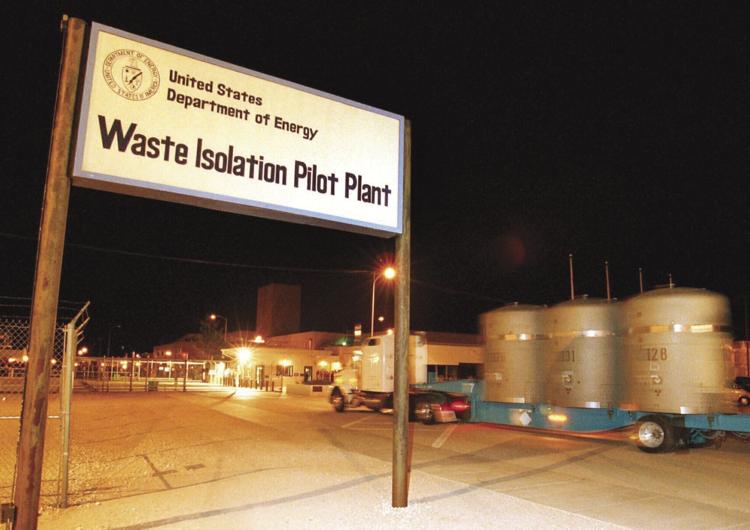
https://nuclearactive.org/ March 21st, 2024
Did you know that on Friday, March 26, 1999, the first shipment of plutonium-contaminated nuclear weapons waste from Los Alamos National Laboratory (LANL) reached the Waste Isolation Pilot Plant (WIPP)?
Earlier that week, on Monday, March 22, 1999, Federal Judge John Garrett Penn lifted a seven-year injunction allowing the shipment of purely radioactive waste to WIPP. The shipment did not contain any hazardous waste. In fact it wasn’t even Department of Energy (DOE) nuclear weapons waste. It was NASA waste from the production of the plutonium batteries for the Cassini space vehicle.
On Tuesday, March 23rd, LANL loaded waste drums into the three TRUPACT shipping containers.
On Wednesday, March 24th, final testing was done and the truck and trailer with three TRUPACTS was ready.
Peaceful protesters with signs had gathered at the intersection of Airport Road and 599 on the south side of Santa Fe. National Guard, police and other security personnel dressed in combat gear lined the intersection for about a block in each direction. Black Hawk helicopters flew over the area. A little snow fell. Nevertheless, tensions were high.
LANL checked the weather conditions and it was determined that the shipment could not leave LANL. To ship, a five-hour clear weather window was required. A dense fog had developed around Santa Rosa, New Mexico and the shipment did not depart from LANL.
LANL tried again, successfully, on Thursday, March 25th. Again peaceful protesters and security personnel were at the intersection.
Early on the morning of Friday, March 26th, the shipment arrived at WIPP to cheers from those waiting to see the truck and trailer. https://www.energy.gov/em/articles/fight-wipp-history-nations-deep-geologic-nuclear-waste-repository
Prior to the arrival of the first shipment at WIPP, DOE had promised the People of New Mexico that it would clean up all the transuranic, or plutonium-contaminated, waste across the nuclear weapons complex,
including LANL, and dispose of it in the underground salt bed at WIPP in 25 years and begin a 10-year closure of the facility. For example: http://nuclearactive.org/elected-officials-question-doe-plans-to-keep-wipp-operating-forever/ (Aug. 11, 2022); http://nuclearactive.org/doe-breaks-its-promises-to-new-mexico-part-i/ (Jan. 12, 2021); and http://nuclearactive.org/doe-breaks-its-promises-to-new-mexico-part-2/ (Jan. 19, 2021).
Next Tuesday, March 26, 2024, is the 25-year deadline. But DOE and WIPP will not make its deadline. In fact, DOE plans to keep WIPP open until 2083, basically forever, for LANL waste from fabricating new and provocative nuclear weapons. …………………………………………………more https://nuclearactive.org/
The Lying Piper of Nukeland:The IAEA’s nuclear fairy tales are leading nations — and all of us — into climate catastrophe

On March 21, more than 40 groups, mainly from Europe, protested the false promises and nuclear fairy tales being spun at the March 21 International Atomic Energy Agency’s Nuclear Energy Summit in Brussels. Prior to our fairy tale-themed rally close to the venue we issued a declaration signed by 621 organizations from across the world and issued a press release.
Our fairy tale handout parodied the story of nuclear power — see the text below. Beyond Nuclear also published a pamphlet exposing the hypocrisies and conflicts of interest of the IAEA. Feel free to download both and to distribute freely.
The IAEA’s nuclear fairy tales are leading nations — and all of us — into climate catastrophe
by By Linda Pentz Gunter beyondnuclearinternational, https://beyondnuclearinternational.org/2024/03/22/the-lying-piper-of-nukeland
At the end of the one-day summit, the IAEA and 34 countries issued a pledge “to work to fully unlock the potential of nuclear energy“, code for taking taxpayer money and going with a begging bowl to the World Bank.
Once upon a time… long ago, a Piper arrived in Carbonville. The people of Carbonville welcomed him warmly because they had heard that when he played his flute he had magical powers.
“Oh Piper!” they cried. “Here in Carbonville it is always dark and cold. It is smokey and polluted. Can you help us find a better way to create warmth and light?”
The Piper was happy to oblige. “I know just the answer,” he told them. “It’s called nuclear power! It’s safe, cheap and reliable. Very soon you will have warmth and light that is too cheap to meter!”
The people of Carbonville were so excited to get shiny new nuclear power plants that they took a vote and changed the name of their town to Nukeland.
The Piper began to play and very soon beautiful drawings of nuclear power plants started to appear for the people of Nukeland to admire. But several years passed and nothing else happened.
“What use are these drawings?” the people said. “We need warmth and light!”
“Be patient,” said the Piper. “I will bring you 15 nuclear power plants and you will have all the heat and light you need. I just need five gold coins to get them started.”
The people of Nukeland were very poor but they did without and saved up until they had five gold coins. They gave them to the Piper and once again he began to play.
The people of Nukeland watched as their fields were plowed under and their trees cut down and the land paved with concrete in readiness for the nuclear power plants. But still none appeared.
“I need more gold!” cried the Piper. “Just five more gold coins and your nuclear plants will be here”.
“You said it would only cost us five gold coins,” cried the people. “Now you’re charging us double!”
But all the same, the people paid the Piper another five gold coins. Many more years passed while the people of Nukeland froze in the dark, and then one day three nuclear power plants were finally done.
The people of Nukeland were shocked. Three nuclear power plants weren’t nearly enough to bring heat and light to everyone. “Why are there only three?” they asked the Piper. “You promised us 15. We paid for 15.”
The Piper just shrugged. “Now you will have the heat and light you wanted!” he exclaimed. “Those of you who can pay for it.”
So only the richest people who could afford the nuclear energy got light and heat even though everyone in the land had paid for the nuclear power plants.
And when the nuclear power plants opened, the Piper brought in all his friends and relatives to run them. “What about all the jobs you promised us?” demanded the people of Nukeland.
“You people are imbeciles,” snapped the Piper. “We need experts.” And even though the Piper’s friends and relatives knew as little as he did about nuclear power plants, they all got jobs at the plants, leaving the people of Nukeland to starve.
The Piper went to the newspapers to brag about his achievement. “Nuclear power is the answer to all your problems,” he cried. “Yes it is!” the editors agreed and wrote it in their newspapers.
But one reporter, the youngest of them all, wasn’t so sure. “Surely,” she said, “it would be easier, quicker and cheaper to harness the power of the sun when it is shining and capture the power of the wind when it is blowing?” she asked. “What if we turned that into heat and light?”
“Nonsense!” cried the Piper. “Nonsense!” agreed the editors, who never asked any questions. And they wrote it in their newspapers.
Soon, the Youngest Reporter began to notice that, along with the electricity for the rich people who could pay for it, the nuclear power plants also produced an evil, toxic waste. And no one knew what to do with it.
“What about all the waste?” she asked the Piper. “Not my problem,” said the Piper. “Someone else will come along later and deal with it.”
Then the Youngest Reporter discovered that the people working at the nuclear power plant and the people living nearby and especially the children, were falling sick with strange diseases never before seen in Nukeland.
”It’s the nuclear power plant that’s making you sick,” the Youngest Reporter told the people of Nukeland.
“Scaremonger!” cried the Piper. “Ignore her,” he told the people of Nukeland. “She’s too emotional. She doesn’t understand science.”
So the people ignored the Youngest Reporter even though most of them could not afford to buy the power from the nuclear plants and were still living in the cold and dark.
And then, one day, one of the nuclear power plants blew up and a great poison rained down on the land and many many more people got sick and many of them died.
And the Youngest Reporter who no one had listened to wept. “There was another way,” she said, “and it was right there in front of us all the time. The sun and the wind are free and safe and fast and cheap.”
And the people of Nukeland finally agreed. “We should never have listened to the Lying Piper,” they said. “He took our money and wasted our time. He made us sick and led us down a dead end. We made a terrible mistake.”
And they didn’t live happily ever after.
Linda Pentz Gunter is the international specialist at Beyond Nuclear and writes for and edits Beyond Nuclear International.
World Water Day Prompts Submission to Parliamentary Committee on Risks of NWMO’s Nuclear Waste Project to Water
Thunder Bay – A Northern Ontario alliance concerned about a risky project to transport and bury nuclear fuel waste has chosen World Water Day to submit their brief to a parliamentary committee studying freshwater.
We the Nuclear Free North submitted the ten-page brief to the Standing Committee on Environment and Sustainable Development today, outlining the set of risks the Nuclear Waste Management Organization (NWMO) project poses to the lakes, rivers and groundwater of Northern Ontario. The Committee is carrying out a comprehensive study of the role of the federal government in protecting and managing Canada’s freshwater resources in Canada.
The opposition group points to the risks during transportation, processing and burial of the highly radioactive nuclear fuel waste, including from operations at the site of the proposed deep geological repository.
“The NWMO plan is still largely theoretical, but according to their own limited descriptions of the operating period, it is evident that freshwater in the area of the site will be impacted”, explained Wendy O’Connor, one of the report authors.
“Water used for washing down the nuclear waste transportation packages will become contaminated with radionuclides. According to the NWMO’s published details, that water will be sent to a settling pond and then released to natural water bodies in the vicinity of the site, as will the contaminated water that will be pumped from the underground repository”, said O’Connor.
“Despite assurances from the nuclear industry, it remains entirely possible that the nuclear waste itself, deposited underground, will contaminate the deep groundwater in the near or long term – contamination that will eventually reach surface water in the vast watershed”.
The NWMO’s candidate site in Northwestern Ontario is located half-way between Ignace and Dryden. Because it is at the height of land for the Wabigoon and the Turtle River systems, there are concerns about releases to the downstream communities, including Rainy River and Lake of the Woods. The group notes that if and when the radioactive releases occur from the deep geological repository there will be no means to reverse the impacts.
World Water Day, held on 22 March every year since 1993, is an annual United Nations Observance focusing on the importance of freshwater.
“It’s ironic that the UN theme for World Water Day in 2024 is “Water for Peace”, given the level of division and conflict that the NWMO’s proposal has brought to our region”, commented Kathleen Skead, a member of Anishinaabe of Wauzhushk Onigum Nation, one of several downstream Treaty 3 communities.
“Hopefully people will pause today and recognize that water is life and the NWMO’s promise of money is not worth the risk. Water is vital for all forms of life.”
The brief is posted HERE.
| We the Nuclear Free North is an alliance of people and groups opposing a Deep Geological Repository for nuclear waste in Northern Ontario. We oppose the transport, burial and abandonment of this radioactive waste in our northern watersheds. |
Our alliance is honoured to have received the name Tataganobin: looking far ahead into the future. Learn more about who we are, and the origin and meaning of this name.
WHERE HAVE ALL THE INSECTS GONE? Satellites are taking them, every one.
The least noticed and greatest assault on Earthly life rains on us from the sky. Nature’s wires strung above us from horizon to horizon, carrying the electricity that helps power our bodies, and the information that informs our growth, healing, and daily lives, now carries dirty electricity — millions of frequencies and pulsations that confuse our cells and organs, and dim our nervous systems, be we humans, elephants, birds, insects, fish, or flowering plants.
The pulsations pollute the Earth beneath our feet, surround us in the air through which we fly, course through the oceans in which we swim, flow through our veins and our meridians, and enter us through our leaves and our roots. The planetary transformer that used to gentle the solar wind now agitates, inflames.
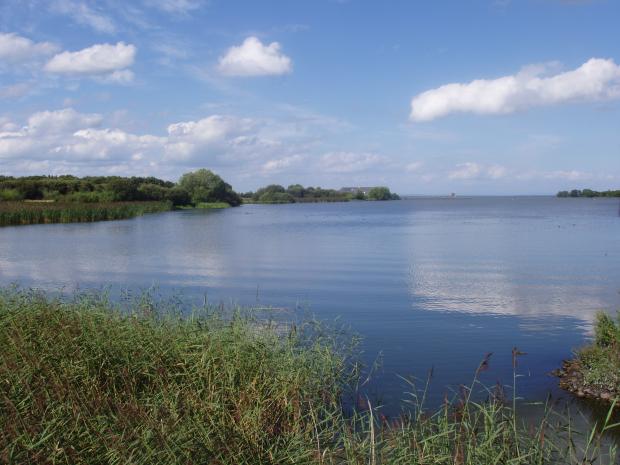
The lake pictured above is the United Kingdom’s largest. Located in Northern Ireland, Lough Neagh swarms so densely with flies every spring and summer that residents shut their windows against the living smoke. Clothes left out on a line are covered with them. So is any windshield on a vehicle traveling around the lough’s 90-mile shoreline. Until 2023.
Last year, unbelievably, no flies were to be seen. Windshields and hanging clothes were bare of them. None flew into open windows. Other species that used to eat them were gone as well — ducks, frogs, fish, eels, and predatory insects. Fly larvae were not there to keep the lake bottom clean. Little was alive in the lough except an overgrowth of algae. “Has the ecosystem of the UK’s largest lake collapsed?” asked The Guardian in a February 19, 2024 article.
Has the ecosystem of the entire Earth collapsed? we ask, for the same is happening all over, according to reports I have been receiving for a year from almost everywhere on every continent.
56 Years of Global Vandalism
On June 13, 1968, the United States completed its launch of the world’s first constellation of military satellites. Twenty-eight of them, more than twice as many satellites as were in orbit around the Earth until then, were lofted to an altitude of 18,000 miles, in the heart of the outer Van Allen radiation belt. The “Hong Kong” flu pandemic began two weeks later and lasted for almost two years.
For the next three decades, the skies slowly filled up with hundreds of satellites, mostly for military purposes. Then in the late 1990s, cell phones became popular.
On May 17, 1998, a company named Iridium completed its launch of a fleet of 66 satellites into the ionosphere, at an altitude of only 485 miles, and began testing them. They were going to provide cell phone service to the general public from anywhere on earth. Each satellite aimed 48 separate beams at the earth’s surface, thus dividing the planet into 3,168 cells. Reports of insomnia came from throughout the world………………………………………………………………
SpaceX has been launching rockets carrying dozens of satellites at a time on a weekly or biweekly basis, filling the heavens with luminous objects that interfere with astronomy, spewing chemicals that are destroying our planet’s protective ozone layer, filling the upper layers of the atmosphere with water vapor that should not be there and that is increasing the current in the global electric circuit and the violence of thunderstorms, and cluttering up space with satellites that are nothing but solar arrays and computers that are continually failing, wearing out, and having to be replaced, and which are deorbited to burn up in the lower atmosphere, filling it with metals and toxic chemicals for everyone to breathe — and altering the electromagnetic environment of the Earth that had not changed in three billion years and that life below depends on for its vitality and survival.
Last Thursday morning, from Boca Chica, Texas, SpaceX successfully launched its Starship — the largest rocket ever built, the one it wants to ferry men and women to Mars with — into space for the first time. And on Friday it launched yet another 23 Starlink satellites to bring its total polluting the ionosphere up to more than 6,000, now not only for internet communication with rooftop dishes but for direct communication with handheld cell phones. The 6,000 satellites are also now communicating directly with one another, wrapping the Earth with pulsating lasers carrying 42 million gigabytes of data every single day………
Since March 24, 2021, not only has human health deteriorated, but the biodiversity of the Earth, everywhere, has plummeted. People have not so much noticed the decline of the larger wildlife like wolves, bears, lions and tigers, which were already scarce, but they are shocked by the total disappearance of the smallest animals that were only recently so common you couldn’t open your windows without them flying in. They are shocked by the disappearance of all the frogs that used to swim in their ponds, the birds that used to nest in their trees, the worms that used to slither on the ground, the insects that used to fly through their windows and cover their clothes hanging on the line. My newsletters of March 29, June 21, September 20, October 17, and November 28, 2023 carried major stories about this from various parts of the world. My newsletters of December 5 and December 26, 2023, and January 9 and February 6, 2024 quoted from individuals all over the world who have emailed or called me, and I have a huge backlog of more such reports that you can read when I publish them in the future.
If we want to have a planet to live on, not only for our children but for ourselves, the [electromagnetic]radiation has to stop. Not only do the cell towers have to come down that are so ugly to look at, but also the cell phones that we hold in our hands and have become so dependent on, and the satellites that are squeezing all the life that remains out from under them. We are running out of time. https://cellphonetaskforce.org/where-have-all-the-insects-gone/

Australia moves to prop up Aukus with $4.6bn pledge to help clear Rolls-Royce nuclear reactor bottlenecks in UK

Funding revealed on eve of government talks is in addition to billions of dollars to be sent to US
Guardian, Daniel Hurst in Canberra, 21 Mar 24
The Australian government will seek to prop up the Aukus pact by sending A$4.6bn (£2.4bn) to the UK to clear bottlenecks at the Rolls-Royce nuclear reactor production line.
The funding – revealed on the eve of high-level talks between the Australian and UK governments on Friday – is in addition to billions of dollars that will be sent to the US to smooth over production delays there.
The Australian government will also announce on Friday that the government-owned shipbuilder ASC and the British defence firm BAE Systems will jointly build the nuclear-powered submarines for the Royal Australian Navy.
The nuclear reactors for the boats are to be manufactured at Rolls-Royce in the English city of Derby, but doubts have already been raised about whether reactor cores will be made in time for the UK’s first Dreadnought nuclear submarine.
Australia has now allocated £2.4bn over 10 years to expand the production capacity at Derby to deliver reactors for Australia’s submarines, to be known as SSN-Aukus……………………………………..
Cameron and the UK defence secretary, Grant Shapps, arrived in Canberra on Thursday for talks with their Australian counterparts, Penny Wong and Richard Marles.
They will hold an annual 2+2 meeting in Adelaide on Friday, with Aukus expected to be a major focus along with the war in Ukraine, the conflict in the Middle East and China’s position in the Indo-Pacific…………………..
Marles, the deputy prime minister and defence minister, said at the same media conference that the Australian government was “really aware of the stretched industrial base in the UK and in the US”.

Australia’s commitment to help clear backlogs in the US and the UK “was not without controversy” but was necessary for Aukus to succeed, Marles said.
Under the staged plans announced last March, Australia will buy at least three Virginia-class submarines from the US in the 2030s, prior to the domestically built SSN-Aukus entering into service from the 2040s.
But revelations that the US Navy plans to build only one Virginia-class nuclear-powered submarine next year have prompted renewed concerns about lagging performance on US production lines.
Marles, Shapps and the US defence secretary, Lloyd Austin, issued a joint statement on Thursday declaring the three countries remained “fully committed to this shared endeavour” and were “investing significantly” to ensure its success.
Australia plans to set up a joint venture between ASC and BAE Systems to build the SSN-Aukus submarines. This structure will allow the Australian government to be heavily involved in delivering the strategically important project.
But the finer details have yet to be locked in, and ASC and BAE will work cooperatively in the meantime to develop the new submarine construction yard at South Australia’s Osborne shipbuilding precinct.
ASC built Australia’s conventionally powered Collins-class submarines, but has not previously worked with nuclear-powered boats.
In 2014 the then defence minister, David Johnston, was censured by the Senate for saying he “wouldn’t trust them [ASC] to build a canoe”…………………………
Australia and the UK on Thursday also signed a new defence and security cooperation agreement that formalises a commitment to consult each other on threats to sovereignty and regional security.
It includes a status of forces agreement, clearing regulatory hurdles for their forces to operate in each other’s countries.https://www.theguardian.com/world/2024/mar/21/australia-moves-to-prop-up-aukus-with-46bn-pledge-to-help-clear-rolls-royce-nuclear-reactor-bottlenecks-in-uk
Groups demand broader consent for nuclear waste storage
A petition demands that Ottawa require the Nuclear Waste Management Organization to get consent from other communities, including those along the transportation route.
Gary Rinne, 22 Mar 24 https://www.tbnewswatch.com/local-news/groups-demand-broader-consent-for-nuclear-waste-storage-8471189.
THUNDER BAY — An alliance of Northern Ontario citizen groups wants the federal government to ensure an underground storage site for used nuclear fuel isn’t built without the consent of all impacted communities.
We The Nuclear Free North has launched an online petition asking Ottawa to require the Nuclear Waste Management Organization to demonstrate it has the permission not just of its designated “host community” but also of residents and communities in the region, along the transportation route, and downstream of the proposed repository.
NWMO has narrowed its search to the Ignace area in Northwestern Ontario and South Bruce in Southwestern Ontario, and plans to announce its preferred site before the end of this year.
In a news release Wednesday, North Bay-based Northwatch spokesperson Brennain Lloyd said NWMO has repeatedly stated it will only proceed with “an informed and willing host,” and argued that “the communities along the transportation route are ‘hosts’ to the same risks as Ignace,” but are shut out of the selection process.
“Residents living closer to the site and downstream live with the short-term and long-term risks of nuclear contamination but are not being asked if they are willing,” he added.
The alliance is also wary about five members of Ignace council having the ultimate power to decide if NWMO can label the community as an agreeable host.
“Now is the time for all of us to speak up,” said Dodie LeGassick, nuclear lead for Thunder Bay-based Environment North. “The federal government must intervene to bring some fairness and facts into the siting process. That’s what this petition is all about.”
The petition will be open to all residents of Canada until May 3.
Among other things, it notes that the federal government has affirmed the UN Declaration on the Rights of Indigenous Peoples, which requires that no hazardous materials shall be stored on the territories of Indigenous peoples without their free, prior and informed consent.
U.S. Troops Are One Mile From The Chinese Border
the most important news, March 21, 2024 [ The original has several substantial quotations from news media]
The U.S. cannot afford a war with China. The size of our military has been shrinking, and our resources are stretched way too thin. Today, the U.S. has military bases in 80 different countries, and we have troops stationed in 178 different countries. That is insane. No empire in the entire history of humanity has had forces spread all over the planet like this. Our ammunition levels are extremely low due to major conflicts in the Middle East and Ukraine, and every war game that our leaders have conducted has shown us losing a war to protect Taiwan. So we should be trying to avoid sparking a war with China, because we are holding a losing hand.
But our politicians seem determined to provoke one anyway. It is being reported that officials in Taiwan have confirmed that U.S. forces are now permanently stationed “on its islands in the Taiwan Strait”…
Taiwan’s main island is approximately 100 miles from China, but in some places the Kinmen islands and China are “barely more than a mile apart”…
What are our leaders thinking?
This doesn’t make war less likely.
It makes war more likely.
On Wednesday, China sent 32 warplanes toward Taiwan in a 24 hour period…
The Chinese do this sort of thing when they are upset.
And right now they are very, very upset.
And China has been feverishly preparing for the coming war…
When war with China finally erupts, will we be able to handle it?
Of course not.
Our forces are scattered all over the planet, and so many of our resources have already been poured into the war in Ukraine.
Even though there have been efforts to ramp up ammunition production in the U.S., it is being reported that “Russia is producing nearly three times as many artillery munitions as the United States and Europe combined”…
No matter how you feel about the war, that is just embarrassing.
One of the reasons why we won World War II was because the U.S. could simply outproduce everyone else by a wide margin.
But now we just look pathetic.
French President Emmanuel Macron and other western leaders have suggested that NATO troops should be sent into Ukraine if that is what is necessary to keep the Russians from winning.
If that actually happens, U.S. boys and girls will inevitably be sent to die in the trenches of eastern Ukraine too.
In anticipation of a wider war, the Russians are conducting another round of mobilization.
In fact, Russian Defense Minister Sergei Shoigu has just announced “the creation of 2 new ground armies, with 16 new brigades & 14 new divisions”.
Meanwhile, Israeli officials continue to insist that a major ground operation will happen in Rafah no matter what the Biden administration thinks about such a move…
When the IDF goes into Rafah, that could cause the entire region to erupt.
And so U.S. forces may be called on to intervene in the Middle East as well.
Spreading your resources way too thin is a sure way to lose.
Unfortunately, our politicians don’t seem to understand this, and their very foolish decisions will soon lead to absolutely disastrous consequences.
Michael’s new book entitled “Chaos” is available in paperback and for the Kindle on Amazon.com, and you can check out his new Substack newsletter right here. https://themostimportantnews.com/archives/u-s-troops-are-one-mile-from-the-chinese-border
Halting Biden’s Weapon Shipments to Israel
byEDITORMarch 22, 2024
The Chris Hedges Report with attorney Katherine Gallagher and Palestinian plaintiff Ayman Nijim on their lawsuit demanding the Biden administration halt weapons shipments to Israel.
By Chris Hedges / The Real News Network
The Center for Constitutional Rights has filed the lawsuit on behalf of the human rights organization, Defense for Children – Palestine; Al-Haq, a Palestinian human rights group based in the occupied West Bank; and eight Palestinians and US citizens with relatives in Gaza accusing President Joe Biden and other senior officials of being complicit in Israel’s “genocide” in Gaza. The case is being heard in a federal court in California.
Lawyers representing Biden, Secretary of State Antony Blinken and Secretary of Defense Lloyd Austin, have attended the proceedings along with the plaintiffs who accuse them of “failure to prevent and complicity in the Israeli government’s unfolding genocide.”
Since the October 7 incusrion by Hamas and other resistance groups, which left some 1,200 people dead, more than 30,000 Palestinians have been killed, thousands are missing, some 60,000 have been injured and nearly all of the Gaza Strip’s 2.3 million people have been displaced. Israel’s blocage of humanitarian supplies and food have cause a widespread famine and many are dying of starvation and infectious diseases.
The CCR complaint was filed in November last year. It charges that Biden, Blinken and Austin “have not only been failing to uphold the country’s obligation to prevent a genocide but have enabled the conditions for its development by providing unconditional military and diplomatic support [to Israel].”The CCR is asking the court to “declare that defendants have violated their duty under customary international law, as part of federal common law, to take all measures within their power to prevent Israel from committing genocide against the Palestinian people of Gaza”. The group is also calling for the US to use its influence over Israel to end the hostilities against Palestinians in Gaza. Joining me to discuss the case is Katherine Gallagher, a Senior Staff Attorney at the Center for Constitutional Rights, and plaintiff Ayman Nijim……………………………Transcript………………. https://scheerpost.com/2024/03/22/the-chris-hedges-report-halting-bidens-weapon-shipments-to-israel/
This is why Sizewell C construction poses ‘possible risk’ to new hospital build
Potential obstacles facing construction of new West Suffolk Hospital in
Bury St Edmunds by 2030 include funding shortfall and development of
Sizewell C
A shortfall in funding and a difficulty in finding a contractor
are among the potential obstacles facing plans to build a new hospital in
Bury St Edmunds by 2030. A report, published ahead of the West Suffolk NHS
Foundation Trust (WSFT) board meeting tomorrow, highlighted potential
issues with the Hardwick Manor project.
The building of a new nuclear power
plant, Sizewell C, on the Suffolk coast was mentioned as one of the reasons
finding a contractor could be challenging.
Suffolk News 21st March 2024
1 This Month

of the week – Shut Down Drone Warfare!


Tell the Ukrainian Government to Drop Prosecution of Peace Activist Yurii Sheliazhenko

Petition to revoke the licensing of the Near Surface Nuclear Disposal Facility (NSDF) at Chalk River. https://www.ourcommons.ca/petitions/en/Petition/Details?Petition=e-7247
To see nuclear-related stories in greater depth and intensity – go to https://nuclearinformation.wordpress.com
-
Archives
- April 2026 (34)
- March 2026 (251)
- February 2026 (268)
- January 2026 (308)
- December 2025 (358)
- November 2025 (359)
- October 2025 (376)
- September 2025 (257)
- August 2025 (319)
- July 2025 (230)
- June 2025 (348)
- May 2025 (261)
-
Categories
- 1
- 1 NUCLEAR ISSUES
- business and costs
- climate change
- culture and arts
- ENERGY
- environment
- health
- history
- indigenous issues
- Legal
- marketing of nuclear
- media
- opposition to nuclear
- PERSONAL STORIES
- politics
- politics international
- Religion and ethics
- safety
- secrets,lies and civil liberties
- spinbuster
- technology
- Uranium
- wastes
- weapons and war
- Women
- 2 WORLD
- ACTION
- AFRICA
- Atrocities
- AUSTRALIA
- Christina's notes
- Christina's themes
- culture and arts
- Events
- Fuk 2022
- Fuk 2023
- Fukushima 2017
- Fukushima 2018
- fukushima 2019
- Fukushima 2020
- Fukushima 2021
- general
- global warming
- Humour (God we need it)
- Nuclear
- RARE EARTHS
- Reference
- resources – print
- Resources -audiovicual
- Weekly Newsletter
- World
- World Nuclear
- YouTube
-
RSS
Entries RSS
Comments RSS
 nuclear-news