Exposing myths about building French nuclear power
How French nuclear construction times and costs have been getting longer and longer – for a long time
DAVID TOKE, MAR 16, 2024, https://davidtoke.substack.com/p/exposing-myths-about-building-french
It has been standard in the UK to talk about the wonders of the French nuclear programme and how if only we copied them nuclear power would get cheaper and cheaper. The story has gone ‘If only we built a series of nuclear power plant like they did’. But it turns out that the idea that the French nuclear programme was ever getting any cheaper was a myth.
In the UK Government policy documents would use their own language to describe nuclear prospects. Special terms are used that are not usually used to discuss other energy developments. These include the acronym ‘FOAK’ which stands for ‘First of a Kind’. In other words the first plant will be relatively more expensive than the plants of the same model that followed them. Another term used of course is ‘overnight’ costs – that is a wonderful piece of euphemism given that nuclear power plants are anything but built overnight. Its use obscures the fact that very large interest costs mount up during the time that the plant is being constructed, costs which are not included in the total cost estimates. That is because the plant in the spreadsheet is being built overnight (?!).
But when we examine the actual ‘overnight’ costs of French nuclear power, as reported, they have always been increasing. Look at the analysis by Arnulf Grubler published in the journal Energy Policy in 2010: [graph on original]
Grubler’s analysis did not include the length of time taken to construct the latest French nuclear power plant at Flamanville. This is an EPR (the same design as is being built at Hinkley C and planned for Sizewell C. Construction of the Flamanville EPR began in 2007 but it has still not been completed. Hence the Figure below includes the time taken to build Flamanville up until now, with the proviso that the plant still has not been completed.
It should be understood that, broadly speaking, the cost of building reactors is proportionate to the amount of construction time. So the cost has gone up, and in recent years cost has been going up at a rapid rate,.
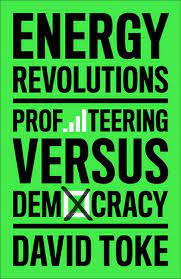
In my forthcoming book ‘Energy Revolutions – Profiteering versus Democracy’ I outliner four reasons for the increasing difficulties of building nuclear power plants:
‘First is the fact that nuclear power plant designers have incorporated safety features designed to minimise the consequences of nuclear accidents, but in doing so the plants have become much more complicated and difficult to build without great expense.
A second reason is that large construction projects of whatever type, at least in the West, tend to greatly overrun their budgets. In the West, improvements in health and safety regulations to protect construction workers have no doubt played a part in this.
A third factor is that, in the West at least, the cheap industrialised labour force that dominated the industrial economies of the past and which could be used to develop nuclear programmes (in the way that France did in the 1980s) has ceased to exist.
A fourth factor is simply that renewable energy technologies, especially wind and solar power, can be largely manufactured offsite in a modular fashion and their costs have rapidly fallen, leaving nuclear power increasingly uncompetitive.’ (page 30)
This book shows how we can move forward to an energy system powered by renewable energy rather than nuclear power or ‘carbon capture’ fossil fuels. It reveals how selective public ownership and targeted interventions, as part of an energy democracy programme will protect consumer interests better than the chaotic energy supply system that failed consumers so expensively in the recent energy crisis. We want no more of that!
Essentially, the idea of using nuclear power as a significant measure to engineer the global energy transition is at best a tremendous waste of resources. It is not just France that is seeing its nuclear power programme stall. It is a global phenomenon. Renewable energy is, by contrast, expanding at ever-incredible rates. As can be seen from the following graphs which is taken from my book ‘Energy Revolutions’. [on original]
No comments yet.
1 This Month
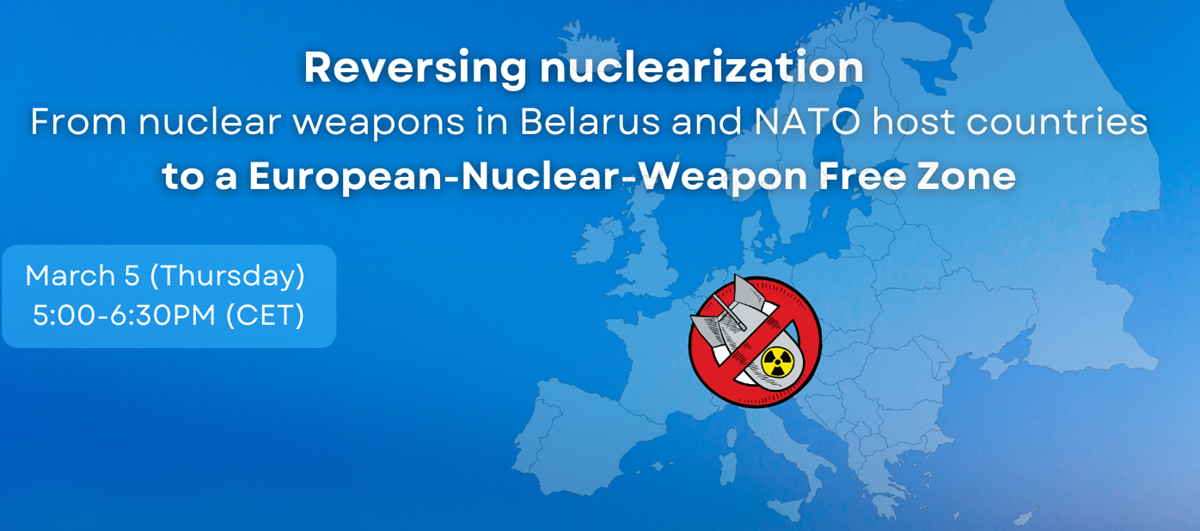
5 March -Online – Reversing nuclearization:
From nuclear weapons in Belarus and NATO host countries to a European-Nuclear-Weapon Free Zone
11am-12:30pm Eastern Time USA / 5pm-6:30pm CET

of the week – Advocating for a
nuclear free beach – https://www.samuellawrencefoundation.org/
The Samuel Lawrence Foundation advocates for a Nuclear Waste Free Beach at San Onofre, join us and take action!
10 March A LIVE WEBINAR THE REAL EFFECTS OF NUCLEAR POWER
What the Industry Isn’t Telling Us
1:00 PM Mountain, 2 pm Central, 3 pm Eastern. Live on the Keepers of the Water Facebook page

18 March Webinar @ 1 PM EST: An Assessment of SMR Projects: The Case of Canada
register for the zoom:
https://us02web.zoom.us/webinar/register/WN_o8BIIOUvQ2ONJR1nta65DQ#/registration

of the week – STOP SMALL MODULAR REACTORS IN CANADA
To see nuclear-related stories in greater depth and intensity – go to https://nuclearinformation.wordpress.com
-
Archives
- March 2026 (38)
- February 2026 (268)
- January 2026 (308)
- December 2025 (358)
- November 2025 (359)
- October 2025 (376)
- September 2025 (258)
- August 2025 (319)
- July 2025 (230)
- June 2025 (348)
- May 2025 (261)
- April 2025 (305)
-
Categories
- 1
- 1 NUCLEAR ISSUES
- business and costs
- climate change
- culture and arts
- ENERGY
- environment
- health
- history
- indigenous issues
- Legal
- marketing of nuclear
- media
- opposition to nuclear
- PERSONAL STORIES
- politics
- politics international
- Religion and ethics
- safety
- secrets,lies and civil liberties
- spinbuster
- technology
- Uranium
- wastes
- weapons and war
- Women
- 2 WORLD
- ACTION
- AFRICA
- Atrocities
- AUSTRALIA
- Christina's notes
- Christina's themes
- culture and arts
- Events
- Fuk 2022
- Fuk 2023
- Fukushima 2017
- Fukushima 2018
- fukushima 2019
- Fukushima 2020
- Fukushima 2021
- general
- global warming
- Humour (God we need it)
- Nuclear
- RARE EARTHS
- Reference
- resources – print
- Resources -audiovicual
- Weekly Newsletter
- World
- World Nuclear
- YouTube
-
RSS
Entries RSS
Comments RSS
 nuclear-news
Leave a comment