Nuclear news – week to 18 March

Some bits of good news. Notable wins in climate and environmental justice. Scotland made rewilding progress. The Danish City Reimagining Reuse.
TOP STORIES. Why the US is trying to imprison Assange: Report from inside the Court.
Reversing Europe’s and Australia’s slide into irrelevance & insecurity – National Press Club of Australia speech- Yanis Varoufakis.
There is no such thing as a “nuclear waste-eating” reactor .
Nuclear industry wants Canada to lift ban on reprocessing plutonium, despite proliferation risks.
Cold turkeys: The demise of nuclear power.
Conditions inside Fukushima’s melted nuclear reactors still unclear 13 years after disaster struck – also at https://nuclear-news.net/2024/03/14/3-a-conditions-inside-fukushimas-melted-nuclear-reactors-still-unclear-13-years-after-disaster-struck/
Climate. ‘Greenhushing’ Is On the Rise as Companies Go Silent on Climate Pledges.
Nuclear. Australia media – normally focussed on football, has a spasm about nuclear. Rest of the anglophone world gives climate, nuclear, a nod, amongst gaffes of UK royalty, and fashion, celebrities and sport. Gaza gets a mention, too,
Noel’s notes. Julian Assange, atrocities, nuclear war, AI, “Oppenheimer”, and the whole damn thing. AUKUS nuclear pact – a lame duck? Nuclear power and the ignorance of journalists – it’s almost criminal.
nb. Huge number of articles on nuclear in the Australian media. From next week, I will cut them back to just a representative few.
*******************************************
AUSTRALIA. (There are more articles than this – but I had to stop!)
- Decisions on the Northern Water Project could protect GAB Mound Springs from BHP impacts OR condemn the Springs to ‘ongoing degradation’
- NUCLEAR POWER STATIONS ARE NOT APPROPRIATE FOR AUSTRALIA – AND NEVER WILL BE. Pentagon sparks fresh AUKUS doubts on anniversary of Australia’s nuclear-powered submarine plans. AUKUS anniversary brings a sinking feeling. Dead in the Water- The AUKUS Delusion. – PIC Turnbull says Australia ‘mugged by reality’ on Aukus deal as US set to halve submarine build.
- Dutton’s blast of radioactive rhetoric on nuclear power leaves facts in the dust . Refuting Peter Dutton’s recycled nuclear contamination. Coalition will seek a social licence for nuclear: Dutton. Opposition eyeing off six sites for nuclear reactors, Dutton’s nuclear plan will require huge subsidies. AUKwardUS: Peter Dutton’s Albo nuclear wedge may cost us hundreds of billions, ABC interview- Sarah Ferguson and Tom O’Brien – a case study in exposing Trumpian-style deceptive spin. Nuclear power in Australia — a silver bullet or white elephant?
- Peter Dutton refuses to say where his nuclear reactors will go. CSIRO chief warns against ‘disparaging science’ after Peter Dutton criticises nuclear energy costings. ‘The most beige person’:T ed O’Brien, The man behind the Coalition’s nuclear plans. Surf Coast federal member rejects nuclear reactor in region.
- The Government will dictate where the high level nuclear dump will be.
- Australia’s biggest smelter to launch massive wind and solar tender, says nuclear too costly. Victorian Premier blasts nuclear plan as renewable appeals curbed.
NUCLEAR ISSUES
| ARTS and CULTURE. The ideology of war in Ukraine and Israel. | ECONOMICS. HSBC leads Sizewell C investment push as time ticks on final investment decision. NuScale nuclear power is among Top 5 Industrials Stocks That May Fall Off A Cliff In Q1. | EMPLOYMENT, Dounreay workers vote on strike action after pay talks stall, |
Hollywood stars put their name to a good message, but it’s the messengers who are problematic.
Film poses moral questions about 2011 Fukushima disaster displacement . The Film RADIOACTIVE: The women of Three Mile Island will start streaming on Apple TV and Amazon Prime Video from March 12. https://www.youtube.com/watch?v=Is3jlNhicFY
Keep Your Money Out of Nukes! Anti-Nuclear Financial Fitness w/Domini’s Mary Beth Gallagher: PODCAST.
UN report finds Israel deliberately targeted journalists – Reuters.
OPPOSITION to NUCLEAR . Bridgwater activists shine light on nuclear power in UK.
| POLITICS.Japan’s Nuclear Energy Policy Disaster. Japan Ramps Up Drive to Restart World’s Biggest Nuclear Plant. Ralph Nader: Open Letter to President Biden 3.12.24. Decision time Democrats: Oppose Biden’s genocide in Gaza or tacitly support it. UK Steps Up Sizewell Nuclear Push With State-Backed Loans. UK’s Spring budget a ‘myopic sop’ to nuclear obsessives. UK government plans to block foreign control of newspapers – what about foreign control of Sizewell nuclear project ?The U.S. Is Betting Big on Small Nuclear Reactors (done up with green paint) | POLITICS INTERNATIONAL and DIPLOMACY. French president Emmanuel Macron tells Putin ‘WE are a nuclear power and WE are ready’ in latest WW3 rhetoric. As ‘Oppenheimer’ wins big, we should worry about lowering of nuclear thresholds. |
PUBLIC OPINION.
‘Don’t hold your breath’ – people living in Wylfa’s shadow have say on nuclear development plans.
SAFETY. Incidents. Zaporizhzhia nuclear plant reports shelling by Ukraine army
Shelling continues near Zaporizhzhia Nuclear Power Station.
Observing the 45th Anniversary of the Worst U.S. Commercial Nuclear Power Plant Accident.
SECRETS and LIES.
The International Atomic Energy Agency recruiting spies?
SPACE. EXPLORATION, WEAPONS.
Musk’s SpaceX is building spy satellite network for US intelligence agency, sources say
SPINBUSTER. Exposing myths about building French nuclear power.
IAEA director’s visit to Japan widely questioned, seeks to downplay nuclear water dumping.
TECHNOLOGY. La Hague reprocessing plant: expansion and continued operation until at least 2100.
WAR and CONFLICT. Putin warns again that Russia is ready to use nuclear weapons if its sovereignty is threatened.
Will Biden’s, NATO’s military personnel in Ukraine cross the last red line to Armageddon?
Netanyahu approves Rafah ground invasion, despite Biden opposition.
War Games in Arctic: What’s Driving the West’s New Passion?
WEAPONS and WEAPONS SALES. Nuclear Regulatory Commission Paves Way for Increase in Production in Commercial Reactors of Tritium for Nuclear Weapons.
Huge UK £286bn nuclear submarine deal with US at risk for one reason warns ex Navy chief.
EU to use Russian assets to buy arms for Ukraine – Scholz.
100,000 years and counting: how do we tell future generations about highly radioactive nuclear waste repositories?
Sweden and Finland have described KBS-3 as a world-first nuclear-waste management solution.

Critical questions remain about the storage method, however. There have been widely publicised concerns in Sweden about the corrosion of test copper canisters after just a few decades. This is worrying, to say the least, because it’s based on a principle of passive safety. The storage sites will be constructed, the canisters filled and sealed, and then everything will be left in the ground without any human monitoring its safe functioning and with no technological option for retrieving it. Yet, over 100,000 years the prospect of human or non-human intrusion into the site – both accidental or intentional – remains a serious threat.

International attention is increasingly fixated on “impactful” short-term responses to environmental problems – usually limited to the lifespan of two or three future generations of human life. Yet the nature of long-lived nuclear waste requires us to imagine and care for a future well beyond that time horizon, and perhaps even beyond the existence of humanity.
International attention is increasingly fixated on “impactful” short-term responses to environmental problems – usually limited to the lifespan of two or three future generations of human life. Yet the nature of long-lived nuclear waste requires us to imagine and care for a future well beyond that time horizon, and perhaps even beyond the existence of humanity.
March 19, 2024 Thomas Keating. Postdoctoral Researcher, Linköping University, Anna Storm, Professor of Technology and Social Change, Linköping University https://theconversation.com/100-000-years-and-counting-how-do-we-tell-future-generations-about-highly-radioactive-nuclear-waste-repositories-199441
In Europe, increasing efforts on climate change mitigation, a sudden focus on energy independence after Russia’s invasion of Ukraine, and reported breakthroughs in nuclear fusion have sparked renewed interest in the potential of nuclear power. So-called small modular reactors (SMRs) are increasingly under development, and familiar promises about nuclear power’s potential are being revived.
Nuclear power is routinely portrayed by proponents as the source of “limitless” amounts of carbon-free electricity. The rhetorical move from speaking about “renewable energy” to “fossil-free energy” is increasingly evident, and telling.
Yet nuclear energy production requires managing what is known as “spent” nuclear fuel where major problems arise about how best to safeguard these waste materials into the future – especially should nuclear energy production increase. Short-term storage facilities have been in place for decades, but the question of their long-term deposition has caused intense political debates, with a number of projects being delayed or cancelled entirely. In the United States, work on the Yucca Mountain facility has stopped completely leaving the country with 93 nuclear reactors and no long-term storage site for the waste they produce.
Nuclear power plants produce three kinds of radioactive waste:
- Short-lived low- and intermediate-level waste;
- Long-lived low- and intermediate-level waste;
- Long-lived and highly radioactive waste, known as spent nuclear fuel.
The critical challenge for nuclear energy production is the management of long-lived waste, which refers to nuclear materials that take thousands of years to return to a level of radioactivity that is deemed “safe”. According to the US Nuclear Regulatory Commission (NRC), in spent fuel half of the radiation in strontium-90 and cesium-137 can decay in 30 years, while it would take 24,000 years for plutonium-239 to return to a state considered “harmless”. However, exactly what is meant by “safe” and “harmless” in this context is something that remains poorly defined by international nuclear management organisations, and there is surprisingly little international consensus about the time it takes for radioactive waste to return to a state considered “safe” for organic life.
“Permanent” geological repositories
Despite the seeming revival of nuclear energy production today, very few of the countries that produce nuclear energy have defined a long-term strategy for managing highly radioactive spent fuel into the future. Only Finland and Sweden have confirmed plans for so-called “final” or “permanent” geological repositories.
The Swedish government granted approval for a final repository in the village of Forsmark in January 2022, with plans to construct, fill and seal the facility over the next century. This repository is designed to last 100,000 years, which is how long planners say that it will take to return to a level of radioactivity comparable to uranium found in the earth’s bedrock.
Finland is well underway in the construction of its Onkalo high-level nuclear waste repository, which they began building in 2004 with plans to seal their facility by the end of the 21st century.
The technological method that Finland and Sweden plan to use in their permanent repositories is referred to as KBS-3 storage. In this method, spent nuclear fuel is encased in cast iron, which is then placed inside copper canisters, which are then surrounded by clay and bedrock approximately 500 metres below ground. The same or similar methods are being considered by other countries, such as the United Kingdom.
Sweden and Finland have described KBS-3 as a world-first nuclear-waste management solution. It is the product of decades of scientific research and negotiation with stakeholders, in particular with the communities that will eventually live near the buried waste.
Critical questions remain about the storage method, however. There have been widely publicised concerns in Sweden about the corrosion of test copper canisters after just a few decades. This is worrying, to say the least, because it’s based on a principle of passive safety. The storage sites will be constructed, the canisters filled and sealed, and then everything will be left in the ground without any human monitoring its safe functioning and with no technological option for retrieving it. Yet, over 100,000 years the prospect of human or non-human intrusion into the site – both accidental or intentional – remains a serious threat.
The Key Information File
Another major problem is how to communicate the presence of buried nuclear waste to future generations. If spent fuel remains dangerous for 100,000 years, then clearly this is a time frame where languages can disappear and where the existence of humanity cannot be guaranteed. Transferring information about these sites into the future is a sizeable task that demands expertise and collaboration internationally across the social sciences and sciences into practices of nuclear waste memory transfer – what we refer to as nuclear memory communication.
In a project commissioned by the Swedish Nuclear Waste Management Company (SKB), we take up this precise task by writing the “Key Information File” – a document aimed at non-expert readers containing only the most essential information about Sweden’s nuclear waste repository under development.
The Key Information File has been formulated as a summary document that would help future readers understand the dangers posed by buried waste. Its purpose is to guide the reader to where they can find more detailed information about the repository – acting as a “key” to other archives and forms of nuclear memory communication until the site’s closure at the end of the 21st century. What happens to the Key Information File after this time is undecided, yet communicating the information that it contains to future generations is crucial.
The Key Information File we will publish in 2024 is intended to be securely stored at the entrance to the nuclear waste repository in Sweden, as well as at the National Archives in Stockholm. To ensure its durability and survival through time, the plan is for it to be reproduced in different media formats and translated into multiple languages. The initial version is in English and, when finalised, it will be translated into Swedish and other languages that have yet to be decided.
Our aim is for the file to be updated every 10 years to ensure that essential information is correct and that it remains understandable to a wide audience. We also see the need for the file to be incorporated into other intergenerational practices of knowledge transfer in the future – from its inclusion into educational syllabi in schools, to the use of graphic design and artwork to make the document distinctive and memorable, to the formation of international networks of Key Information File writing and storage in countries where, at the time of writing, decisions have not yet been made about how to store highly radioactive long-lived nuclear waste.
Fragility and short-termism: a great irony
In the process of writing the Key Information File, we have discovered many issues surrounding the efficacy of these strategies for communicating memory of nuclear waste repositories into the future. One is the remarkable fragility of programs and institutions – on more than one occasion in recent years, it has taken just one person to retire from a nuclear organisation for the knowledge of an entire programme of memory communication to be halted or even lost.
And if it is difficult to preserve and communicate crucial information even in the short term, what chance do we have over 100,000 years?
International attention is increasingly fixated on “impactful” short-term responses to environmental problems – usually limited to the lifespan of two or three future generations of human life. Yet the nature of long-lived nuclear waste requires us to imagine and care for a future well beyond that time horizon, and perhaps even beyond the existence of humanity.
Responding to these challenges, even partially, requires governments and research funders internationally to provide the capacity for long-term intergenerational research on these and related issues. It also demands care in developing succession plans for retiring experts to ensure their institutional knowledge and expertise is not lost. In Sweden, this could also mean committing long-term funding from the Swedish nuclear waste fund so that not only future technical problems with the waste deposition are tackled, but also future societal problems of memory and information transfer can be addressed by people with appropriate capacity and expertise.
How Biden’s budget plunged the Aukus submarines pact into doubt
Alarm in Australia as the US suddenly struggles to fortify its own fleet
Matt Oliver, INDUSTRY EDITOR, 18 March 2024
A year on from the trio’s meeting, the Aukus partnership is suddenly
looking decidedly more fragile. Inside defence circles, there are growing
doubts about America’s ability and willingness to deliver following a
shock proposal from the Biden administration that cuts to the heart of the
deal.
Amid a row at home over government budgets, the White House this
month suggested halving the number of Virginia-class submarines it builds
next year – the very same type it has promised to Australia under Aukus.
That means the US faces a shortfall itself, raising the prospect it may
refuse to sell its existing vessels and leave Canberra in the lurch.
Telegraph 18th March 2024
Money is “The Achilles Heal” of the nuclear state

Paul Richards, 19 mar 24
Integrated, with the first lies, and weasel words, becoming memes out of public and private orations, Lewis Strauss, uttered during his term in the quasi-U.S. government, Atomic Energy Commission [AEC]1953 to 1958.
Even after being rebuked by, U.S. electricity cartels, behind the meter, Lewis Strauss, modified his orations.
“Our children will enjoy in their homes electrical energy too cheap to meter…
….will travel effortlessly over the seas and under them and through the air with a minimum of danger and at great speeds, and will experience a lifespan far longer than ours, as disease yields and man comes to understand what causes him to age….” Lewis Strauss. 1954 National Association of Science Writers Founder Day Dinner.
Strauss, then promised the Plutonium Economy overproduction of nuclear or carbon, fuelled heat, resulting in excess electricity, and the ensuing growth we have suffered in the 21C, the primary cause of global warming.
This legacy linear economy business model, reflects the fundamental flaw, in the so-called modern economic theory, putting profit before the Planet and people
Exposing myths about building French nuclear power
How French nuclear construction times and costs have been getting longer and longer – for a long time
DAVID TOKE, MAR 16, 2024, https://davidtoke.substack.com/p/exposing-myths-about-building-french
It has been standard in the UK to talk about the wonders of the French nuclear programme and how if only we copied them nuclear power would get cheaper and cheaper. The story has gone ‘If only we built a series of nuclear power plant like they did’. But it turns out that the idea that the French nuclear programme was ever getting any cheaper was a myth.
In the UK Government policy documents would use their own language to describe nuclear prospects. Special terms are used that are not usually used to discuss other energy developments. These include the acronym ‘FOAK’ which stands for ‘First of a Kind’. In other words the first plant will be relatively more expensive than the plants of the same model that followed them. Another term used of course is ‘overnight’ costs – that is a wonderful piece of euphemism given that nuclear power plants are anything but built overnight. Its use obscures the fact that very large interest costs mount up during the time that the plant is being constructed, costs which are not included in the total cost estimates. That is because the plant in the spreadsheet is being built overnight (?!).
But when we examine the actual ‘overnight’ costs of French nuclear power, as reported, they have always been increasing. Look at the analysis by Arnulf Grubler published in the journal Energy Policy in 2010: [graph on original]
Grubler’s analysis did not include the length of time taken to construct the latest French nuclear power plant at Flamanville. This is an EPR (the same design as is being built at Hinkley C and planned for Sizewell C. Construction of the Flamanville EPR began in 2007 but it has still not been completed. Hence the Figure below includes the time taken to build Flamanville up until now, with the proviso that the plant still has not been completed.
It should be understood that, broadly speaking, the cost of building reactors is proportionate to the amount of construction time. So the cost has gone up, and in recent years cost has been going up at a rapid rate,.
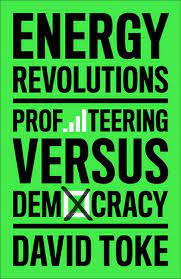
In my forthcoming book ‘Energy Revolutions – Profiteering versus Democracy’ I outliner four reasons for the increasing difficulties of building nuclear power plants:
‘First is the fact that nuclear power plant designers have incorporated safety features designed to minimise the consequences of nuclear accidents, but in doing so the plants have become much more complicated and difficult to build without great expense.
A second reason is that large construction projects of whatever type, at least in the West, tend to greatly overrun their budgets. In the West, improvements in health and safety regulations to protect construction workers have no doubt played a part in this.
A third factor is that, in the West at least, the cheap industrialised labour force that dominated the industrial economies of the past and which could be used to develop nuclear programmes (in the way that France did in the 1980s) has ceased to exist.
A fourth factor is simply that renewable energy technologies, especially wind and solar power, can be largely manufactured offsite in a modular fashion and their costs have rapidly fallen, leaving nuclear power increasingly uncompetitive.’ (page 30)
This book shows how we can move forward to an energy system powered by renewable energy rather than nuclear power or ‘carbon capture’ fossil fuels. It reveals how selective public ownership and targeted interventions, as part of an energy democracy programme will protect consumer interests better than the chaotic energy supply system that failed consumers so expensively in the recent energy crisis. We want no more of that!
Essentially, the idea of using nuclear power as a significant measure to engineer the global energy transition is at best a tremendous waste of resources. It is not just France that is seeing its nuclear power programme stall. It is a global phenomenon. Renewable energy is, by contrast, expanding at ever-incredible rates. As can be seen from the following graphs which is taken from my book ‘Energy Revolutions’. [on original]
Concerns and complaints continue as fourth Fukushima wastewater discharge completed

Concerns and complaints from home and abroad remain while Japan’s crippled Fukushima Daiichi Nuclear Power Plant has finished its first year of discharging nuclear-contaminated wastewater into the ocean.
The plant completed its fourth and final round of discharge for the current fiscal year, which ends in March, Tokyo Electric Power Company (TEPCO) said on Sunday.
As per the initial plan, approximately 31,200 tonnes of wastewater containing radioactive tritium has been released into the ocean since August 2023, with each discharge running for about two weeks.
Earlier this week, International Atomic Energy Agency Director-General Rafael Grossi emphasized continued efforts to monitor the discharging process.
Stressing that the discharge marks merely the initial phase of a long process, Grossi said that “much effort will be required in the lengthy process ahead,” and reiterated the organization’s stance on maintaining vigilance throughout the process.
While the Japanese government and TEPCO have asserted the safety and necessity of the process, there are still concerns from other countries and local stakeholders regarding environmental impacts.
Sophia from the U.S. complained that the release of nuclear-contaminated water into the sea made her fear for the future.
Najee Johnson, a college student from Canada, suggested the Japanese government find a different plan because it could pollute our ocean and harm our sea life.
Haruo Ono, a fisherman in the town of Shinchi in Fukushima, said “All fishermen are against ocean dumping. The contaminated water has flowed into what we fishermen call ‘the sea of treasure’, and the process will last for at least 30 years.”
“Is it really necessary, in the first place, to dump what has been stored in tanks into the sea? How can we say it’s ‘safe’ when the discharged water clearly consists of harmful radioactive substances? I think the government and TEPCO must provide a solid answer,” said Chiyo Oda, a resident of Fukushima’s Iwaki city.
The recent leakage of contaminated water from pipes at the Fukushima plant also fueled concerns among the Japanese public.
Besides, the promised fund of more than 100 billion yen (around $670 million) to compensate and support local fishermen and fishing industry remains doubtful as a court ruling last December relieved the government of responsibility to pay damages to Fukushima evacuees.
A Tokyo court ruled that only the operator of the tsunami-wrecked Fukushima nuclear power plant has to pay damages to the evacuees, relieving the government of responsibility. Plaintiffs criticized the ruling as belittling their suffering and the severity of the disaster. The court also slashed the amount by ordering the TEPCO to pay a total of 23.5 million yen to 44 of the 47 plaintiffs.
The ruling backpedaled from an earlier decision in March 2018, when the Tokyo District Court held both the government and TEPCO accountable for the disaster, which the ruling said could have been prevented if they both took better precautionary measures, ordering both to pay 59 million yen in damages.
As ‘Oppenheimer’ wins big, we should worry about lowering of nuclear thresholds
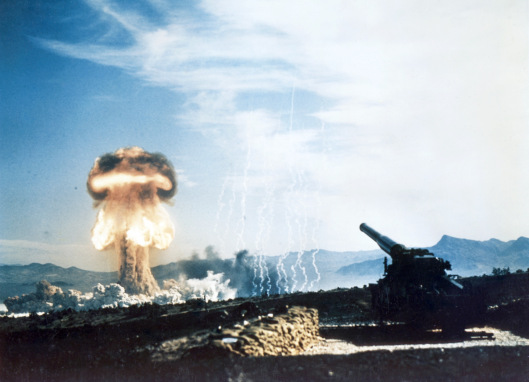

Amid rising global volatility and technological uncertainty, it’s imperative for states to explore non-nuclear solutions that emphasize international cooperation, diplomacy and societal resilience. And there’s an opportunity here for the U.K. and the U.S. to lead the way in international law and treaties that respond to non-nuclear strategic threats more effectively.
Just as Oppenheimer challenged Truman on U.S. nuclear strategy, we too must challenge our leaders’ attachment to nukes.
March 18, 2024 By Sophie-Jade Taylor and Graham Stacey Sophie-Jade Taylor is a senior network development and communications manager at the European Leadership Network nonprofit. Retired Air Marshall Sir Graham Stacey is a senior consulting fellow at the European Leadership Network. https://www.politico.eu/article/oppenheimer-win-awards-oscar-bafta-golden-globe-worry-about-lower-nuclear-thresholds/
Last summer, director Christopher Nolan’s “Oppenheimer” captivated the global public, making history as the highest ever grossing biopic. And having already won big at the Golden Globes and the BAFTAs, the film closed awards season by sweeping the Oscars last weekend.
The film brought fresh awareness of the unique, destructive power that J. Robert Oppenheimer’s creation unleashed. The first and only nuclear weapons ever used — the “Little Boy” dropped on Hiroshima and the “Fat Man” on Nagasaki — packed the equivalent of 15,000 and 21,000 tons of TNT respectively, killing over 100,000 people and causing long-term health, psychological, economic and environmental damage.
By comparison, the world’s most powerful nukes today yield over 1.2 megatons of TNT — 60 times more than Oppenheimer’s bombs.
And much like Oppenheimer, General Leslie Groves and then U.S. President Harry S. Truman, today’s leaders once again find themselves facing huge moral and strategic choices at the dawn of a new technological age. The full weight of nuclear devastation lies in the hands of just a select few. Their decisions have profound implications for humanity — and this shouldn’t be left to chance.
Recognizing the unimaginable horror a modern nuclear conflict would unleash, as recently as January 2022, all five leaders of the nuclear weapons states reaffirmed that a nuclear war couldn’t be won and must never be fought.
Yet, we have been witnessing Russian President Vladimir Putin’s irresponsible nuclear saber-rattling around Russia’s full-scale invasion of Ukraine. There have been worrying reports of rock-bottom thresholds for nuclear use — with enemy incursion into territory, the destruction of strategic weapons delivery systems, and even conventional weapons use deemed as posing an existential threat to Russian statehood.
And though Moscow outwardly rejects the policy, such ambiguity seemingly points toward communicating “first strike” capabilities, which rightly should be condemned and carefully assessed.
On the other hand, China continues to push states for political commitments toward the universalization of a No First Use Policy, while also furthering the development of its own arsenal under a worrying lack of transparency — a dilemma that has added complexity to an already intricate and perilous geopolitical chessboard.
Meanwhile, in the West — seemingly without much public discussion or comment — we’ve seen a worrying trend in declarations that states could use nuclear weapons to deter “non-nuclear threats,” again lowering the so-called nuclear threshold in an attempt to provide a quick fix to nuanced challenges.
At this very critical moment, “Oppenheimer” has brought discussions of nuclear weapons back into the public arena. And while the attention will undoubtedly recede, ongoing public engagement on these issues must not. Civic engagement shapes policymaking, and at a time of rising nuclear risks and growing temptation for states to become more reliant on their nuclear weapons, the public deserves a better understanding of when and why a catastrophic weapon may be deployed.
For example, in 2021, the British government stated that while it wouldn’t use nuclear weapons against any non-nuclear weapon state, it remained open to reviewing its policy should any threat from “emerging technologies” with “comparable impact” make nuclear weapon use necessary. Similarly, in 2022, the U.S. declared that the aim of its nuclear arsenal was to deter both nuclear and non-nuclear “strategic-level attacks.” Problematically, however, neither the U.K. nor the U.S. have detailed what “comparable impact” or “strategic-level attack” may mean.
These policies not only lower the nuclear-use threshold and increase global nuclear risks, but they may not even be feasib
While it’s near impossible for a nuclear strike to go undetected, the same isn’t true for emerging technologies such as AI and autonomous systems. By their very design, these technologies are largely democratized and untied to a single government. For instance, the challenge of attribution in cyber is well-documented, and while cyber-attacks have been linked to state-sponsored hacking groups, these groups couldn’t be easily deterred by the threat of a nuclear strike.e, given most contemporary threats against states now sit outside the military realm.
Increasing the already harrowing role of nuclear weapons in foreign policy undermines the moral and legal position of nuclear weapons states. The logic and evidence behind the current U.K. and U.S. policies of relying on nuclear weapons as a panacea must be subject to greater public and parliamentary scrutiny — as should be the case with open democracies who say they have transparent nuclear policies.
Amid rising global volatility and technological uncertainty, it’s imperative for states to explore non-nuclear solutions that emphasize international cooperation, diplomacy and societal resilience. And there’s an opportunity here for the U.K. and the U.S. to lead the way in international law and treaties that respond to non-nuclear strategic threats more effectively.
Instead of resorting to old playbooks, both policymakers and the public must appreciate that emerging technologies require a new mindset in their management and new legal constructs to regulate their proliferation, development and control. Recent international efforts like last November’s Bletchley AI Safety Summit and the agreement to begin a dialogue on AI risks by U.S. President Joe Biden and Chinese President Xi Jinping are important first steps. But much more needs to be done.
Just as Oppenheimer, haunted by his role in the bombings of Hiroshima and Nagasaki, challenged Truman on U.S. nuclear strategy, we too must challenge our leaders’ continued attachment to nukes — weapons that can only destroy — and push toward more diplomacy and resilience-based solutions to today’s complex challenges.
Failed ICJ Case Against Russia Backfires, Paves Way for Genocide Charges Against Ukraine

MintPress News KIT KLARENBERG 13 Mar 2
As January became February, the International Court of Justice (ICJ) delivered a pair of legal body blows to Ukraine and its Western backers. First, on January 31, it ruled on a case brought by Kiev against Russia in 2017, which accused Moscow of presiding over a campaign of “terrorism” in Donbas, including the July 2014 downing of MH17. It also charged that Russia racially discriminated against Ukrainian and Tatar residents of Crimea following its reunification with Moscow.
The ICJ summarily rejected most charges. Then, on February 2, the Court made a preliminary judgment in a case where Kiev accused Moscow of exploiting false claims of an ongoing genocide of Russians and Russian speakers in Donbas to justify its invasion. Ukraine further charged the Special Military Operation breached the Genocide Convention despite not itself constituting genocide. Almost unanimously, ICJ judges rejected these arguments.
Western media universally ignored or distorted the substance of the ICJ rulings. When outlets did acknowledge the judgments, they misrepresented the first by focusing prominently on the accepted charges while downplaying all dismissed allegations. The second was wildly spun as a significant loss for Moscow. The BBC and others focused on how the Court agreed that “part” of Ukraine’s case could proceed. That this “part” is the question of whether Kiev itself committed genocide in Donbas post-2014 was unmentioned.
Ukraine’s failed lawfare effort was backed by 47 EU and NATO member states, leading to the farce of 32 separate international legal teams submitting representations to The Hague in September 2023. Among other things, they supported Kiev’s bizarre contention that the Donetsk and Lugansk People’s Republics were comparable to Al-Qaeda. Judges comprehensively rejected that assertion. Markedly, in its submitted arguments, Russia drew attention to how the same countries backing Kiev justified their illegal, unilateral destruction of Yugoslavia under the “responsibility to protect” doctrine.
This may not be the only area where Ukraine and its overseas sponsors are in trouble moving forward. A closer inspection of the Court’s rulings comprehensively discredits the established mainstream narrative of what transpired in Crimea and Donbas following the Western-orchestrated Maidan coup in February 2014.
In sum, the judgments raise serious questions about Kiev’s eight-year-long “anti-terrorist operation” against “pro-Russian separatists,” following months of vast protests and violent clashes throughout eastern Ukraine between Russian-speaking pro-federal activists and authorities.
DAMNING FINDING AFTER DAMNING FINDING
In its first judgment, the ICJ ruled the Donbas and Lugansk People’s Republics were not “terrorist” entities, as “[neither] group has previously been characterized as being terrorist in nature by an organ of the United Nations” and could not be branded such simply because Kiev labeled them so. This gravely undermined Ukraine’s allegations of Russia “funding…terrorist groups” in Donbas, let alone committing “terrorist” acts there itself.
Other revelatory findings reinforced this bombshell. The ICJ held that Moscow wasn’t liable for committing or even failing to prevent terrorism, as the Kremlin had no “reasonable grounds to suspect” material provided by Ukraine, including details of “accounts, bank cards and other financial instruments” allegedly used by accused “terrorists” in Donbas, were used for such purposes. Moscow was also ruled to have launched investigations into “alleged offenders” but concluded they “d[id] not exist… or their location could not be identified”.
DAMNING FINDING AFTER DAMNING FINDING
In its first judgment, the ICJ ruled the Donbas and Lugansk People’s Republics were not “terrorist” entities, as “[neither] group has previously been characterized as being terrorist in nature by an organ of the United Nations” and could not be branded such simply because Kiev labeled them so. This gravely undermined Ukraine’s allegations of Russia “funding…terrorist groups” in Donbas, let alone committing “terrorist” acts there itself.
Other revelatory findings reinforced this bombshell…………………………………………………………………………………..
KIEV GOES IN FOR THE KILL
The ICJ has now effectively confirmed that the entire mainstream narrative of what happened in Crimea and Donbas over the previous decade was fraudulent. Some legal scholars have argued Ukraine’s acquittal on charges of genocide to be inevitable. Yet, many statements made by Ukrainian nationalists since Maidan unambiguously indicate such an intent.
Moreover, in June 2020, a British immigration court granted asylum to Ukrainian citizens who fled the country to avoid conscription. They successfully argued that military service in Donbas would necessarily entail perpetrating and being implicated in “acts contrary to the basic rules of human conduct” – in other words, war crimes – against the civilian population.
The Court’s ruling noted the Ukrainian military routinely engaged in “unlawful capture and detention of civilians with no legal or military justification…motivated by the need for ‘currency’ for prisoner exchanges.” It added there was “systemic mistreatment” of detainees during the “anti-terrorist operation” in Donbas. This included “torture and other conduct that is cruel, inhumane and degrading treatment.” An “attitude and atmosphere of impunity for those involved in mistreating detainees” was observed.
The judgment also recorded “widespread civilian loss of life and the extensive destruction of residential property” in Donbas, “attributable to poorly targeted and disproportionate attacks carried out by the Ukrainian military.” Water installations, it recorded, “have been a particular and repeated target by Ukrainian armed forces, despite civilian maintenance and transport vehicles being clearly marked…and despite the protected status such installations enjoy” under international law.
All of this could quite reasonably be argued to constitute genocide. Regardless, the British asylum judgment amply underlines who Ukraine was truly fighting all along – its own citizens. Moscow could furthermore reasonably cite recent disclosures from Angela Merkel and Francois Hollande that the 2014-15 Minsk Accords were, in fact, a con, never intended to be implemented, buying Kiev time to bolster its stockpiles of Western weapons, vehicles, and ammunition, as yet further proof of Ukraine’s malign intentions in Donbas………………………………………………………………………………………………………………………………………………..more https://www.mintpressnews.com/failed-icj-case-against-russia-backfires-paves-way-for-genocide-charges-against-ukraine/287028/
La Hague reprocessing plant: expansion and continued operation until at least 2100

Last week, the Élysée Palace confirmed that the French reprocessing
plant at La Hague is to be expanded. Extensive investments are planned in
this context. There have already been plans since 2020 to build another
storage pool on the plant site.
At La Hague, there is still radioactive
waste from Germany, which may be returned this year. It was actually just a
side note: The Conseil de Politique Nucléaire (Nuclear Policy Council),
which was founded in 2023 and met at the Elysée Palace last Monday,
confirmed the prospect of major investments at La Hague in order to extend
the lifespan of the facilities until at least 2100.
Corresponding press
reports were confirmed by the Elysée Palace on Tuesday: The Council had
“confirmed the major guidelines of French policy on the nuclear fuel cycle,
which combines reprocessing, reuse of spent fuel and closing the cycle”,
the La Hague site would “be the subject of major investment”. No specific
timetables or amounts were mentioned in this context.
GRS 12th March 2024
And Israel? Macron to propose ‘Olympic ceasefire’ for Ukraine conflict
17 Mar 2024 , https://www.sott.net/article/489864-And-Israel-Macron-to-propose-Olympic-ceasefire-for-Ukraine-conflict
French President Emmanuel Macron has said he will propose a ceasefire between Russia and Ukraine during the Summer Olympic Games, set to take place in Paris between July 26 and August 11.
In an interview with Ukrainian media on Saturday, Macron was asked whether France, as the host of the games this year, will follow tradition and seek “a ceasefire during the Olympics.” The journalist was apparently referring to the Olympic Truce, a period of conflict cessation which historically began seven days before the games and ended seven days after so that the athletes could safely travel to and from the Olympics.
“It will be requested,” the French leader responded.
“The rule of the host country is to move in step with the Olympic movement,” the French leader said when asked about his views on the situation in which Russian athletes are allowed to participate under a neutral flag.
“This is a message of peace. We will also follow the decision of the Olympic Committee,” he added.
Comment: Will Israeli athletes also be forced to attend under a neutral flag or be banned altogether by the IOC?
The International Olympic Committee (IOC) originally banned Russian and Belarusian athletes from competing internationally, following the escalation of the military conflict in Ukraine in February 2022. Last year, however, the blanket ban was reconsidered by the organization, and conditions were set to allow individuals, but not the teams, to participate provided that they do so under a neutral flag.
The decision prompted an outcry from Kiev, with President Vladimir Zelensky calling for a complete boycott of the games. However, Ukraine later softened its stance and permitted its athletes to compete as long as the Russians and Belarusians were only present as neutral athletes.
While Moscow condemned the IOC’s requirements, calling them “unreasonable, legally void and excessive”, the head of the Russian Olympic Committee, Stanislav Pozdnyakov, confirmed on Thursday that this year’s Olympics in Paris would not be shunned, despite the restriction.
“We will never take the path of boycotting (the Games). We will always support our athletes,” he told RIA Novosti.
Comment: The French president would likely want to buy some time so that the Western partners have more time to rearm Ukraine and train yet another army. That wish for a ceasefire is unlikely to be granted by Russia.
One wonders why the French president wasn’t asked about a ceasefire in Israel.
Macron has in the recent weeks done made sure to get some time in the limelight, but it hasn’t quite worked out and he might have shown himself to be delusional if not also untrustworthy. See also:
Macron leads the way to Western civilization’s suicideMajority disagree with Macron’s comments on sending NATO troops to Ukraine – poll
EU to use Russian assets to buy arms for Ukraine – Scholz
The German chancellor has clarified that profits obtained from Moscow’s funds held in the EU will be used to arm Kiev
German Chancellor Olaf Scholz has said that interest accrued from Russian assets frozen in the EU will be used to purchase weapons for Ukraine.
Soon after Russia launched its military operation against Ukraine in February 2022, Western countries froze approximately $300 billion of funds belonging to the Russian Central Bank. Of that sum, the Brussels-based clearinghouse Euroclear holds around €191 billion ($205 billion), which has accrued nearly €4.4 billion in interest over the past year.
Speaking at a joint press conference with French President Emmanuel Macron and Polish Prime Minister Donald Tusk in Berlin on Friday, Chancellor Scholz said: “We will use windfall profits from Russian assets frozen in Europe to financially support the purchase of weapons for Ukraine.
The German leader also announced plans to establish a “new capability coalition for long-range rocket artillery,” with procurement to take place “on the overall world market.”
The German chancellor did not provide specifics, and it remains unclear whether he was referring to an entirely new initiative, or to a “long-range” scheme announced by President Macron in February.
European Commission President Ursula von der Leyen last month suggested using the interest from frozen Russian assets to buy weapons for Ukraine. However, Politico, citing an anonymous EU official, reported on Thursday that Malta, Luxembourg and Hungary had “expressed reservations” about the plan earlier this week.
Moscow has repeatedly warned that any actions taken against its assets would amount to “theft.” It has stressed that seizing the funds or any similar move would violate international law and undermine Western currencies, the global financial system, and the world economy.
Former Prime Minister Turnbull says Australia ‘mugged by reality’ on Aukus deal as US set to halve submarine build

“Australian taxpayers should not be footing the bill for America’s dockyards.
We are on the hook to the tune of $3bn as soon as next year as a downpayment for subs that might never arrive and be useless on delivery,”
Former PM says the reality is the US will not make their submarine deficit worse by giving or selling submarines to Australia
Amy Remeikis, Wed 13 Mar 2024 , https://www.theguardian.com/world/2024/mar/13/turnbull-says-australia-mugged-by-reality-on-aukus-deal-as-us-set-to-halve-submarine-build
Australian taxpayers should not be footing the bill for America’s dockyards.
We are on the hook to the tune of $3bn as soon as next year as a downpayment for subs that might never arrive and be useless on delivery,”
The former prime minister Malcolm Turnbull said Australia has been “mugged by reality” over the Aukus submarine deal after the US announced it will halve the number of submarines it will build next year, throwing the Australia end of the agreement into doubt.
With the US president, Joe Biden, continuing to face a hostile Congress, the Pentagon budget draft request includes construction of just one Virginia-class nuclear submarine for 2025.
Under the Aukus agreement, production is meant to be ramped up to ensure Australia will have access to at least three Virginia-class submarines from the US in the 2030s. That is to fill a “capability gap” before nuclear-powered submarines to be built in Adelaide enter into service from the 2040s.
The prime minister, Anthony Albanese, played down the impact of the US budget announcement, insisting that “our plans are very clear”.
“We have an agreement that was reached with the United States and the UK,” Albanese told reporters in Darwin on Wednesday. “That legislation went through the US Congress last year. That was a product of a lot of hard work.”
The defence minister, Richard Marles, said earlier that the US remained committed to the deal.
“As we approach the one-year anniversary of Aukus, Australia, the United States and United Kingdom remain steadfast in our commitment to the pathway announced last March, which will see Australia acquire conventionally armed, nuclear-powered submarines,” he said.
“All three Aukus partners are working at pace to integrate our industrial bases and to realise this historic initiative between our countries.”
Greens senator David Shoebridge, who has been critical of the Aukus deal from the start, said the US budget announcement was the beginning of the end of Aukus.
“When the US passed the law to set up Aukus, they put in kill switches, one of which allowed the US to not transfer the submarines if doing so would ‘degrade the US undersea capabilities’. Budgeting for one submarine all but guarantees this,” he said on X.
4/ The failure is almost too big to wrap your head around.
We are providing billions of dollars to the US, have given up an independent foreign policy and made Australia a parking lot for US weapons. In exchange, we get nothing.
Nothing but a big target and empty pockets.— David Shoebridge (@DavidShoebridge) March 12, 2024
The US budget does include increased spending on the submarine industrial base, which was a key component of the Aukus pillar one deal, as it laid the groundwork to increase production in the coming years.
But Turnbull, an architect of the French submarine deal which was unceremoniously dumped by the Morrison government in favour of the Aukus deal, said Australia was now at the mercy of the United States for a key part of its defence strategy.
He said that the US needed to increase submarine production to meet its own needs before it was able to transfer boats to Australia, but were now only producing about half as many that were needed for the US navy and were struggling to maintain the boats they held, due to labour shortages.
“What does that mean for Australia? It means because the Morrison government, adopted by Albanese, has basically abandoned our sovereignty in terms of submarines, we are completely dependent on what happens in the United States as to whether we get them now,” he told ABC radio.
“The reality is the Americans are not going to make their submarine deficit worse than it is already by giving or selling submarines to Australia and the Aukus legislation actually sets that out quite specifically.skip past newsletter promotion
“So you know, this is really a case of us being mugged by reality. I mean, there’s a lot of Aukus cheerleaders, and anyone that has any criticism of Aukus is almost described as being unpatriotic. We’ve got to be realistic here.”
The ALP grassroots activist group, Labor Against War, want the Albanese government to freeze Aukus payments to the US so as not to “underwrite the US navy industrial shipyards”.
The national convenor of Labor Against War, Marcus Strom, said Australian taxpayers should not be footing the bill for America’s dockyards.
We are on the hook to the tune of $3bn as soon as next year as a downpayment for subs that might never arrive and be useless on delivery,” he said.
“This Labor government managed to junk Scott Morrison’s tax plan. Why would it be so stupid to continue with his war plan?”
While the Pentagon has sought to assure Australia its submarine production will be back on track by 2028, the looming threat of Donald Trump returning to the White House has raised further concerns the deal will be scuttled.
“On Aukus pillar 1 we are effectively in conflict with the needs of the US navy, and you know as well as I do the American government, when it comes to a choice between the needs of the US navy and the Australian navy, are always going to back their own,” Turnbull said.
Marles has previously denied Aukus will erode Australia’s sovereignty. In a speech to parliament last year, Marles said Australia would “always make sovereign, independent decisions on how our capabilities are employed”.
Additional reporting by Daniel Hurst
UK government plans to block foreign control of newspapers – what about foreign control of Sizewell nuclear project ?
Telegraph ruling raises questions over Sizewell funding
The government plans to block foreign control of newspapers – what about physical infrastructure?
Questions are being raised about the government’s willingness to allow essential physical infrastructure to fall into the hands of foreign states but not newspapers.
Government minister Lord Parkinson told the House of Lords yesterday: “We will amend the media merger regime explicitly to rule out newspaper and periodical news magazine mergers involving ownership, influence or control by foreign states.”
Legislation is being introduced specifically to prevent The Telegraph newspaper group from being bought by RedBird IMI, a fund backed by the United Arab Emirates.
It is not yet clear, however, how far the new law could stretch. The intention is that it applies only to newspapers and news magazines. But are they really more important than water companies, electricity companies and power stations?
The Chinese state was allowed to have an influence in the development of Hinkley Point C nuclear power station but has been blocked from further involvement in the UK nuclear programme amid security concerns.
However, the UK government has been wooing the UAE to step in to help fund Sizewell C in place of China.
Campaigners against Sizewell C see the Telegraph intervention as grounds to block UAE investment in British nuclear power, on the basis that nuclear power stations must be at least as important to national security as newspapers.
“If the government is prepared to ban foreign state ownership of newspapers because of the UAE’s bid for the Telegraph, ministers must now block UAE investment in Sizewell C in the interests of national security. That deal should also be dead in the water: there is no place in our critical national infrastructure for a regime that does not share our views and values,” said a spokesperson for Stop Sizewell C.
There already exists legislation that could be used to prevent a foreign state having influence in critical infrastructure – the National Security & Investment Act 2021 and the National Security Act 2023 have sought to respond to foreign state interference.
Lord Parkinson told parliament yesterday: “We intend to expand on the current definition of ‘foreign powers’ used in the National Security Act 2023 to ensure a broad definition that also covers officers of foreign governments acting in a private capacity and investing their private wealth.”
That could put the skids under a whole host of utility companies.
However, rather blurring the message, the minister concluded: “I should note that the government remain committed to encouraging and supporting investment into the United Kingdom and recognise that investors deploying capital into this country rely on the predictability and consistency of our regulatory regime. The UK remains one of the most open economies in the world, which is key for the prosperity and future growth of our nation. Our focus here is not on foreign investment in the UK media sector in general; this new regime is targeted and will apply only to foreign states, foreign state bodies and connected individuals, and only to newspapers and news magazines.”
Visa & Mastercard: The Real Threat To The Digital ID Control System
March 11, 2024 By Corey Lynn and The Sharp Edge
The question isn’t whether Visa and Mastercard are at the forefront of the Digital ID control system, the question is whether Visa, Mastercard and central banks will be able to pull it off without the implementation of central bank digital currencies (CBDCs). A “Digital ID” may sound convenient and harmless, but the intention behind it is far reaching – compiling and connecting data and biometrics while removing every form of privacy in order to control how one spends their money, achieves access to services, and ultimately takes control over all assets. This will have an impact on all areas of life, including education, healthcare, food, agriculture, transportation, real estate, and technology, which of course will all be controlled through the Digital ID connected to banks, and a person’s social credit score. This isn’t an imaginary scheme. These intentions are well documented by the Bank for International Settlements (BIS), central banks, the World Bank, financial institutions, credit card companies, and government.
In simple terms, the Bank For International Settlements’ (BIS) blueprint proposes that all private property in the real world, such as money, houses, cars, etc., would be “tokenized” into digital assets within an “everything in one place” global unified ledger. Of course, smart contracts on a “programmable” platform with rules on how each asset can and cannot be used are the key ingredient.
By using fear of cyber attacks on any single institution, big Gov and financial institutions want everyone to believe that consolidating all data and assets of a person’s life into tokens under a Digital ID will somehow protect them from attacks by having everything in one location.
Though many are under the impression that the battle is against the ushering in of CBDCs, it would seem that all of the appropriate financial rails and interoperability are already in place, or darn close to it, to expand on the mountain of identity verification processes already dialed in, to initiate the all-in-one Digital Identity and lock those dominoes into place.
This digital world they intend to manifest is being fashioned to look like a convenient and necessary way everyone must live, and as they build these “rails” of prison cells, consumers are sinking further into debt and relying more and more on credit cards. The Federal Reserve Bank of New York issued a report noting that credit card balances in Q4 of 2023 increased by $50 billion to a record high of $1.13 trillion, while also reporting a rise in delinquencies. The report states that credit card delinquencies increased over 50% in 2023. Total household debt also rose by $212 billion reaching $17.5 trillion in the fourth quarter of 2023, according to the report.
Visa and Mastercard are at the forefront of this takeover and if they succeed, the monitoring, tracking, and control will be immeasurable and there will be no going back. Consumers need to think twice before using credit cards and use cash as often as possible, while state legislators need to get on board with implementing creative legislation with independent systems that not only provide protection for the citizens of their state, but build strong financial freedom with the ability to operate utilizing cash, precious metals, and unique structures as pointed out in this article.
“I get why China would be interested. Why would the American people be for that?” – Neel Kashkari, President of the Minneapolis Federal Reserve, ‘The Threat of Financial Transaction Control,’ the Solari Report, February 24, 2024.
‘Don’t hold your breath’ – people living in Wylfa’s shadow have say on development plans
The UK Government recently announced it had bought the Anglesey site from Hitachi
North Wales Live, David Powell, Court reporter, 17 Mar 24
People living near the Wylfa power station on Anglesey have greeted the prospect of a fresh development at the site with excitement, anxiety and pessimism. Last week the UK Government announced that a £160m deal had been reached with Hitachi to buy sites at Wylfa and Oldbury in Gloucestershire – with a final sign off expected this summer.
The minister for nuclear Andrew Bowie says this is not another “false dawn” for Wylfa and that he was “supremely confident” that new nuclear would be developed at the site. North Wales Live this week visited nearby Cemaes to gauge opinions from people in the village on the proposals.
Cemaes resident William Huw Edwards, 80, used to work as a contractor atRio Tinto
, which ran Anglesey Aluminium, and on the runway at RAF Valley. He remembers disruption during construction work for the current Wylfa power station.
“There used to be two or three lorries at a time in convoys,” he recalled. As for the prospect of a new nuclear development, he said: “A lot of people are against it because of the traffic and the noise.”
He added: “It’s going to cost a lot and they will have to find the money.” He doubts it will be in the near future, saying: “It won’t be soon. Don’t hold your breath.”
But another resident Julie Clemence, 63, would support a new nuclear operation if it were smaller than its predecessor. “The American ones are really huge but I would support it if it’s smaller and less of a blot on the landscape than now,” she said.
………………………………………………………… Dylan Morgan, of Pobl Atal Wylfa B (PAWB), a campaign group against the proposal, said: “This government and anyone following it will face the same challenges regarding attracting any large new private investment to develop reactors at Wylfa or any other site in the global context of a shrinking nuclear industry.
“At the same time, renewable technologies are galloping ahead every year to take an increasing share of the worldwide electricity market.” He claimed 20 years has been “wasted” when money and resources could have been spent developing renewable energy…………………………………….
Meanwhile Katie Hayward, of Felin Honeybees, has said she is “completely broken” after learning the site might be redeveloped after she battled the proposed Wylfa B site for years.
https://www.dailypost.co.uk/news/north-wales-news/dont-hold-your-breath-people-28797236—
1 This Month

Petition to revoke the licensing of the Near Surface Nuclear Disposal Facility (NSDF) at Chalk River. https://www.ourcommons.ca/petitions/en/Petition/Details?Petition=e-7247


of the week – STOP SMALL MODULAR REACTORS IN CANADA
To see nuclear-related stories in greater depth and intensity – go to https://nuclearinformation.wordpress.com
-
Archives
- March 2026 (153)
- February 2026 (268)
- January 2026 (308)
- December 2025 (358)
- November 2025 (359)
- October 2025 (376)
- September 2025 (258)
- August 2025 (319)
- July 2025 (230)
- June 2025 (348)
- May 2025 (261)
- April 2025 (305)
-
Categories
- 1
- 1 NUCLEAR ISSUES
- business and costs
- climate change
- culture and arts
- ENERGY
- environment
- health
- history
- indigenous issues
- Legal
- marketing of nuclear
- media
- opposition to nuclear
- PERSONAL STORIES
- politics
- politics international
- Religion and ethics
- safety
- secrets,lies and civil liberties
- spinbuster
- technology
- Uranium
- wastes
- weapons and war
- Women
- 2 WORLD
- ACTION
- AFRICA
- Atrocities
- AUSTRALIA
- Christina's notes
- Christina's themes
- culture and arts
- Events
- Fuk 2022
- Fuk 2023
- Fukushima 2017
- Fukushima 2018
- fukushima 2019
- Fukushima 2020
- Fukushima 2021
- general
- global warming
- Humour (God we need it)
- Nuclear
- RARE EARTHS
- Reference
- resources – print
- Resources -audiovicual
- Weekly Newsletter
- World
- World Nuclear
- YouTube
-
RSS
Entries RSS
Comments RSS
 nuclear-news