Film poses moral questions about 2011 Fukushima disaster displacement
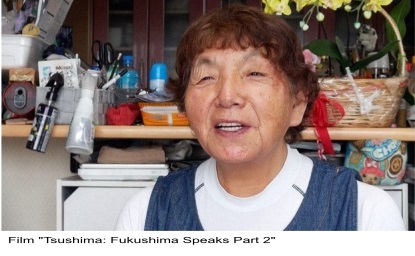
Japan Times, BY MIE SAKAMOTO, KYODO 12 Mar 24
A new documentary that questions whether it is right to sacrifice a community’s way of life for the betterment of the wider public has revealed the turmoil and hardships faced by those who were displaced in the wake of the 2011 Fukushima nuclear power plant disaster.
“Tsushima: Fukushima Speaks Part 2,” directed by freelance journalist Toshikuni Doi, features the testimonies of people seeking the return of their hometown, which was deemed uninhabitable for a century after the world’s worst nuclear accident since the 1986 Chernobyl meltdown.
The documentary explores the story of a minority group that must endure suffering for the happiness and convenience of others, a theme of global resonance, with Doi, 71, explaining that the film focuses on the impact the accident had on the daily lives of people forced to leave their homes.
Their hometown — Tsushima district in Namie, Fukushima Prefecture — is some 30 kilometers from the Fukushima No. 1 nuclear power plant, which was crippled by the massive earthquake and tsunami on March 11, 2011. Most of its 1,400 former residents remain unable to return due to the contamination left behind by radioactive materials.
The 187-minute film, whose version with English subtitles will be available online for one week from March 11 for audiences outside Japan, delves into people’s memories of their hometown, with many expressing deep affection for their tight-knit rural community, where residents were close to each other.
“Many people don’t care much about nuclear issues,” Doi said in an interview. “But if the film can show the impact the accident had on people’s lives and what they thought about being driven away and losing their hometown, the audience will be drawn to it, even if they are not deeply interested in such issues.”
Many of the film’s 18 interviewees — who took part in Doi’s project of preserving disaster victims’ testimonies for future generations — have special feelings for their hometown. Some shed tears as they spoke about their personal histories and how their lives were changed irrevocably following the disaster.
The film begins with Yoshito Konno, who was among those told by officials of the plant’s operator, Tokyo Electric Power Company Holdings Inc. (Tepco), and the central government in the fall of 2011 that people from Tsushima would likely be unable to return “for the next 100 years.”
“People were speechless,” Konno, 79, says in the film, continuing to say that it made him think there would be “no one left after 100 years,”
which prompted him to start compiling records on the histories of families who had lived in the area.
Kano Sudo, 72, lived in poverty with three children after she divorced her estranged husband. She worked hard at local factories to support her children, but even buying daily rice was a struggle.
“I had even thought about (suicide) with my three children,” she admits in the film, adding that she was only able to get through those times “because of the help of those around us.”
Her neighbors, she says, would routinely feed her kids and watch over them, to prevent them from being led astray as they grew up………………………………………………………………………………………..
“From an economic utility standpoint, the best policy would be to transfer us to another place and set up a compensation system so that we can make a living,” rather than spending massive amounts of the state’s budget so that some hundreds of Tsushima residents can return home, Konno says.
But he goes on to argue that it is wrong to sever the local residents’ ties to their former community while denying their basic rights to joy and fulfillment as human beings — in effect, turning a blind eye to the damage done to each individual whose life was upended.
“It is not only about Tsushima,” Konno says. “This issue should be common to all of Japan and the whole world.”
The film was released in Tokyo on March 2, which will be followed by screenings in other major cities, including in the prefectures of Osaka and Aichi. https://www.japantimes.co.jp/news/2024/03/12/japan/society/japan-fukushima-displacement/
No comments yet.
1 This Month

of the week – Shut Down Drone Warfare!


Tell the Ukrainian Government to Drop Prosecution of Peace Activist Yurii Sheliazhenko

Petition to revoke the licensing of the Near Surface Nuclear Disposal Facility (NSDF) at Chalk River. https://www.ourcommons.ca/petitions/en/Petition/Details?Petition=e-7247
To see nuclear-related stories in greater depth and intensity – go to https://nuclearinformation.wordpress.com
-
Archives
- April 2026 (34)
- March 2026 (251)
- February 2026 (268)
- January 2026 (308)
- December 2025 (358)
- November 2025 (359)
- October 2025 (376)
- September 2025 (257)
- August 2025 (319)
- July 2025 (230)
- June 2025 (348)
- May 2025 (261)
-
Categories
- 1
- 1 NUCLEAR ISSUES
- business and costs
- climate change
- culture and arts
- ENERGY
- environment
- health
- history
- indigenous issues
- Legal
- marketing of nuclear
- media
- opposition to nuclear
- PERSONAL STORIES
- politics
- politics international
- Religion and ethics
- safety
- secrets,lies and civil liberties
- spinbuster
- technology
- Uranium
- wastes
- weapons and war
- Women
- 2 WORLD
- ACTION
- AFRICA
- Atrocities
- AUSTRALIA
- Christina's notes
- Christina's themes
- culture and arts
- Events
- Fuk 2022
- Fuk 2023
- Fukushima 2017
- Fukushima 2018
- fukushima 2019
- Fukushima 2020
- Fukushima 2021
- general
- global warming
- Humour (God we need it)
- Nuclear
- RARE EARTHS
- Reference
- resources – print
- Resources -audiovicual
- Weekly Newsletter
- World
- World Nuclear
- YouTube
-
RSS
Entries RSS
Comments RSS
 nuclear-news
Leave a comment