F-35A aeroplanes officially certified to carry thermonuclear bomb

The designation marks the first time that a stealth fighter can carry a nuclear weapon, in this case the B61-12 thermonuclear gravity bomb.
Breaking DEFENSE, By MICHAEL MARROW, March 08, 2024
WASHINGTON — The F-35A Joint Strike Fighter has been operationally certified to carry the B61-12 thermonuclear gravity bomb, a spokesman for the F-35 Joint Program Office (JPO) tells Breaking Defense.
In a statement, JPO spokesman Russ Goemaere said the certification was achieved Oct. 12, months ahead of a pledge to NATO allies that the process would wrap by January 2024. Certain F-35As will now be capable of carrying the B61-12, officially making the stealth fighter a “dual-capable” aircraft that can carry both conventional and nuclear weapons.
“The F-35A is the first 5th generation nuclear capable aircraft ever, and the first new platform (fighter or bomber) to achieve this status since the early 1990s. This F-35 Nuclear Certification effort culminates 10+ years of intense effort across the nuclear enterprise, which consists of 16 different government and industry stakeholders,” Goemaere said. “The F-35A achieved Nuclear Certification ahead of schedule, providing US and NATO with a critical capability that supports US extended deterrence commitments earlier than anticipated.”
Responding to follow-up questions from Breaking Defense, Goemaere said US disclosure policy prohibits the release of information on dual-capable aircraft among NATO partners. According to analysis by the Federation of American Scientists, as of 2023 approximately 100 older variants of B61 bombs are housed by NATO allies Belgium, Germany, Italy, the Netherlands and Turkey, who share the alliance’s nuclear strike mission. The first four nations are all planned F-35 operators, with the need to have a nuclear-capable aircraft a key reason for Germany signing onto the program.
The F-35A is certified to only carry the newer B61-12 variant, which will replace the older models………………………………………………………………………………………………………………………………
Hans Kristensen, director of the Nuclear Information Project with the Federation of American Scientists, noted the announcement is another milestone in America’s ongoing nuclear modernization effort.
“The stage is set for the tactical nuclear weapons upgrade in Europe with full-scale production of the B61-12 and four NATO allies and the US fighter wing at Lakenheath upgrading to operate the bomb on the F-35A,” he said……………….. more https://breakingdefense.com/2024/03/exclusive-f-35a-officially-certified-to-carry-nuclear-bomb/—
Plutonium pit ‘panic’ threatens America’s nuclear ambitions

The Hill, BY BRAD DRESS – 03/06/24
This is the second story in a series about Sentinel, the Air Force’s nuclear missile modernization project. Other stories touch on the challenges in the surrounding communities near Sentinel construction and with the Air Force’s budget issues.
At Los Alamos National Laboratory in New Mexico, where the U.S. built its first nuclear bomb, work on a key component of the next generation of nuclear missiles is already underway.
Workers have begun laying the groundwork for the first production later this year of plutonium “pits” — hollow spheres the size of a half grapefruit, made from the rare chemical element. They fit inside a warhead and create a nuclear explosion when compressed by explosives.
These pits are crucial: As a source of nuclear fuel, they will transform the Air Force’s new, modernized nuclear missiles, called Sentinel, into weapons of mass destruction. Sentinel is scheduled to be fielded in the Western rural U.S. in the 2030s, though that is likely to be delayed.
The pit work will first unfold at the nation’s only fully operational plutonium pit production facility, the Plutonium Facility at Technical Area 55, in a building known as PF-4 at Los Alamos.
Overseeing the production is the Department of Energy’s National Nuclear Security Administration (NNSA), which is pushing to get Los Alamos whirring to life this year to start making plutonium pits, with the hopes of eventually producing 30 per year at the site. The agency also plans to open a brand-new plutonium pit production plant in South Carolina, known as the Savannah River site, to meet an ultimate target goal of 80 pits a year.
But the NNSA hasn’t done large-scale pit production since the early 1990s, creating unease about restarting the process after decades of inactivity. And the agency is plagued by schedule delays, workforce challenges and budget concerns.
Sébastien Philippe, a research scientist at Princeton University who has closely tracked the Sentinel project, said the NNSA is struggling to meet its goals and raised concerns about the lack of a specific cost estimate for pit production.
“At this point, the deadline keeps moving, and the cost keeps growing,” he said.
The pit production is part of a U.S. scramble to modernize its entire triad after delaying such efforts for years due to the war on terrorism. The total modernizing effort is expected to exceed more than a trillion dollars.
Washington will replace its aging Minuteman III Intercontinental Ballistic Missiles and build new submarines and bomber planes capable of carrying nuclear weapons, with the latest 10-year projection cost putting the modernization effort at $750 billion……………………………………………………………..
The NNSA pit production effort has been flagged for several years by a government watchdog group, the Government Accountability Office (GAO). The GAO in a 2020 report said history has “cast doubt on NNSA’s ability to produce the required number of plutonium weapon cores on schedule.”
“We found NNSA’s plans for re-establishing pit production do not follow best practices and run the risk of cost increases and delays,” GAO said in an updated report last year. “The re-establishment of pit production capabilities is one of the most complex and potentially costly efforts presently operated by NNSA.”
The NNSA budget for pit production proposed in Congress for the next fiscal year is around $3 billion. The overall NNSA budget is expected to be boosted by 8 percent to $24 billion, based on congressional budget documents.
Sen. Elizabeth Warren (D-Mass.), a member of the Senate Armed Services Committee, grilled NNSA Administrator Jill Hruby in a 2022 hearing over budget and schedule concerns………………….
n last year’s National Defense Authorization Act, which was signed into law in December, lawmakers inserted several amendments due to concern about NNSA’s work.
Congress noted that reports have flagged the management and oversight of the plutonium modernization program with “serious deficiencies,” and required the NNSA to develop a master schedule and a life-cycle cost estimate. ……………………………………………………..
NNSA facing workforce challenges, lawsuit
…………………………………………………………..With the NNSA restarting pit production after so long, others are concerned about the potential for contamination and leakage from the hazardous practice.
Rocky Flats looms large over the debate. In 1957 and 1969, fires broke out at the facility and nearly created an environmental catastrophe on par with the meltdown in Ukraine’s Chernobyl plant.
The site was also known to have leaked barrels of radioactive waste into nearby fields. The FBI and the Environmental Protection Agency raided Rocky Flats in 1989 over environmental concerns.
The facility stopped production in 1992 and officially shut down in 1994. The Department of Energy took 10 years to clean up the area, which was designated as a hazardous waste site.
And Los Alamos itself has shut down in the past, from 2013-16, over safety concerns at PF-4.
The shaky history has spurred concerns in the communities around Los Alamos, where the “downwinders” — those who were affected by the winds carrying radioactivity after the Trinity test — have long kept a critical eye on NNSA operations.
As part of the new pit production, remaining plutonium after conversion to a new pit will be stored as waste. That waste will be sent to a disposal plant in Carlsbad, N.M.
Los Alamos said the facility has upgraded fire suppression systems and checked nuclear containers to ensure safety in case of an accident. Additionally, plutonium pits are handled inside of sealed compartments, which technicians insert gloves into to prevent harmful exposure.
But Jay Coghlan, executive director of Nuclear Watch New Mexico, wasn’t convinced the safety measures were sufficient.
“Los Alamos has a very checkered nuclear safety track record,” he said, and “production always causes more contamination and more radioactive waste.”
Coghlan sued the NNSA in 2021 for violating the National Environmental Policy Act (NEPA), which requires an environmental review and public input for government projects. He said the NNSA has not conducted a robust town hall or environmental review on the pit production.
“That is not just a paper document. It requires public hearings. It requires NNSA to essentially make its case,” he said. “It requires NNSA to respond to public comment.”……………………………………
Questions linger over Savannah River
At the Savannah River site in South Carolina, the NNSA will have to start up a facility that has never produced plutonium pits……………………………………………………………
The new Savannah site is only half-designed and is estimated to finish construction sometime between 2032 and 2035 — missing the goal of the Air Force, which wants to field its 400 Sentinel missiles in 2030.
At the same time, the budget for the site to complete construction has ballooned from about $3 billion in 2017 to an estimated cost of $11 billion.
Von Hippel, the nuclear policy scientist, and Curtis Asplund, an assistant professor in the department of physics and astronomy at San José State University, said it would be better to focus on small-scale pit production at Los Alamos first.
“Trying to build a second pit production facility at the Savannah River Site in a building designed for another purpose while simultaneously re-equipping Los Alamos’s plutonium facility and crowding it with hundreds of trainees for both facilities is a prescription for a fiasco,” they wrote in an opinion last year………………………………………………….
With the challenges facing the NNSA, critics question if the pits are even needed, given the tens of thousands made during the Cold War period. The pits used today are about 40 years old, and while around 100 years is considered the end of a pit’s life, that’s a best guess…………………………………………….. more https://thehill.com/policy/defense/4510010-plutonium-pits-us-nuclear-ambitions-sentinel/
Israel Didn’t Even Try to Defend the Legality of Its Occupation to World Court

Israel’s system is “an even more extreme form of the apartheid” than South Africa’s was, South African ambassador said.
By Marjorie Cohn , TRUTHOUT, March 6, 2024
or six days, more than 50 countries, the League of Arab States, the African Union and the Organisation of Islamic Cooperation presented testimony to the International Court of Justice (ICJ, or World Court) about the legality of Israel’s occupation of Palestinian territory. The overwhelming majority of them, largely from the Global South, told the court that the occupation was illegal.
The historic hearing, which took place February 19-26, was held in response to the United Nations General Assembly’s December 30, 2022, request for an advisory opinion on the following questions:
(a) What are the legal consequences arising from the ongoing violation by Israel of the right of the Palestinian people to self-determination, from its prolonged occupation, settlement and annexation of the Palestinian territory occupied since 1967, including measures aimed at altering the demographic composition, character and status of the Holy City of Jerusalem, and from its adoption of related discriminatory legislation and measures?
(b) How do the policies and practices of Israel … affect the legal status of the occupation, and what are the legal consequences that arise for all States and the United Nations from this status?
The General Assembly asked the ICJ to discuss these issues with reference to international law, including the UN Charter; international humanitarian law; international human rights law; resolutions of the Security Council, General Assembly and Human Rights Council; and the 2004 advisory opinion of the ICJ finding that Israel’s wall on Palestinian land violated international law.
Israel regularly thumbs its nose at the World Court. It ignored the court’s ruling that the wall was illegal and refuses to implement the ICJ’s provisional order to refrain from committing genocidal acts and ensure humanitarian aid to Gaza.
Before the hearing, Israeli Prime Minister Benjamin Netanyahu blasted the court: “Israel does not recognize the legitimacy of the proceedings of the international court in The Hague regarding ‘the legality of the occupation’ — which are an effort designed to infringe on Israel’s right to defend itself against existential threats,” he said. “The proceedings in The Hague are part of the Palestinian attempt to dictate the results of the diplomatic settlement without negotiations.”
Although Israel didn’t appear at the hearing, it submitted a five-page statement which called the General Assembly’s questions “a clear distortion of the history and present reality of the Israeli-Palestinian conflict.” Israel didn’t even attempt to defend the legality of the occupation, focusing instead on why the ICJ should not issue an advisory opinion.
Israel complained that the ICJ “is asked simply to presume Israeli violations of international law — to accept, as given, plainly biased and flawed assertions directed against Israel alone.” Although consent of the parties is not required for the ICJ to render advisory opinions, Israel protested that it had “not given its consent to judicial settlement of its dispute with the Palestinian side.”
A handful of countries — including the U.S., Canada, U.K., Fiji, Hungary, Italy and Zambia — sided with Israel. Only Fiji argued that the occupation was lawful. The U.S. contended that an occupation can be neither lawful nor unlawful; it is rather governed exclusively by international humanitarian law, which only deals with acts by the occupying power, and doesn’t examine the legality of the occupation itself.
“The court should not find that Israel is legally obligated to immediately and unconditionally withdraw from occupied territory,” said Richard Visek from the U.S. State Department, urging the court to consider Israel’s “legitimate security needs.” Visek defended Israel in the ICJ the day after the U.S. vetoed a Security Council resolution demanding an immediate ceasefire in Gaza for the fourth time.
Israeli Genocide Is “Result of Decades of Impunity”
“The genocide underway in Gaza is the result of decades of impunity and inaction. Ending Israel’s impunity is a moral, political and legal imperative,” Palestine’s Foreign Minister Riyad al-Maliki told the court……………………………………………………………………………………………
Israel’s Occupation of Palestinian Territory Is Illegal
It is a peremptory norm of international law that territory cannot be acquired by force. In 1967, Israel launched a “preemptive” war against Egypt, Jordan and Syria, and seized the West Bank, Gaza, Jerusalem, the Golan Heights and the Sinai Peninsula. Israel has occupied those Palestinian territories ever since.
Visek from the U.S. State Department told the ICJ that Israel was defending itself in the 1967 war. But it was Israel that initiated the war. Rossa Fanning, Ireland’s attorney general, called it “the war [Israel] launched,” thus, an act of aggression. Wilde noted that Israel “claimed to be acting in self-defence, anticipating a non-immediately imminent attack,” but “even assuming, arguendo, its claim of a feared attack, States cannot lawfully use force in non-immediately imminent anticipatory self-defence.” Article 51 of the UN Charter forbids a state from using military force except in self-defense after an armed attack by another state.
…………………………………………………………….Israel asserts that it has not occupied the Gaza Strip since 2005, when it withdrew its military forces and settlements. But it continues to exercise military control over Gaza by continuous military operations in and against Gaza.
……………………….Gaza and its population remain under effective Israeli control and are, therefore, occupied. ………………………………………………………………………………………………………………………………
Apartheid “Goes Hand-in-Hand” With Violation of Right to Self-Determination
Israel maintains a system of apartheid in the occupied Palestinian territory, as confirmed by Amnesty International, Human Rights Watch and Israeli human rights group B’Tselem. Vusimuzi Madonsela, South Africa’s ambassador to the Netherlands, called Israel’s apartheid system “an even more extreme form of the apartheid that was institutionalized against Black people in my country.”
In the West Bank, Israel preserves its separation wall, segregated roads, checkpoints and restrictive permit requirements. While Israelis are subject to a civil legal system, Palestinians are controlled by a military system. They can be held indefinitely with no charges or due process in administrative detention and can be convicted based on secret evidence………………………………………………….
Israeli Settlements Constitute Illegal Annexation
More than 700,000 Israeli settlers — 10 percent of the nearly 7 million people in Israel — have been transferred into the occupied Palestinian territories, “continuously terrorizing and forcibly displacing Palestinians from even more of their territory and engaging in pogroms against them,” Shoman from Belize stated.
This constitutes a “disguised form of annexation,” Ireland’s Fanning said. “The prohibition on the acquisition of territory by force is firmly established in customary international law. Using force to occupy and maintain such occupation for the purposes of territorial acquisition or annexing an occupied territory by force in whole or in part, is each illegal.”
Israel’s policy of settling its civilians in occupied Palestinian territory and displacing the local population violates international humanitarian law, as the ICJ has ruled. Article 49 of the Fourth Geneva Convention says: “The Occupying Power shall not deport or transfer parts of its own civilian population into the territory it occupies.”
Legal Consequences for All States and the UN
“Israel must dismantle the physical, legal and policy regime of discrimination and oppression … evacuate Israeli settlers from Palestinian territories, permit Palestinians to return to their country and property, and lift the siege and blockade of Gaza,” Webb from Belize told the ICJ. “These consequences, taken collectively, mean that Israel must immediately, unconditionally, and totally withdraw from the entire Palestinian territory.”
…………………………………………………………………………………… The ICJ will likely issue its advisory opinion in about six months. https://truthout.org/articles/israel-didnt-even-try-to-defend-the-legality-of-its-occupation-to-world-court/
The horrors of nuclear weapons testing
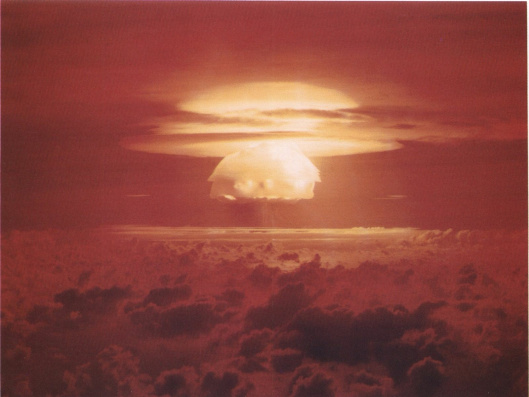
I think that enough time has gone by that the longer-term dangers of nuclear weapons, such as radioactive fallout, have largely disappeared from the public consciousness—much to the agony and despair of those afflicted to this day.
Radioactive fallout and its long-term effects—things that the average person today does not really appreciate—would be the result from any future nuclear weapons explosion that touched the Earth’s surface. Fallout does not just affect the target, but also the surrounding areas—which could be as far as hundreds of miles away. And the effects could last for years, if not decades thereafter.
Bulletin By Walter Pincus, March 7, 2024
There has been talk in the national security community lately about the so-called “merits” of resuming underground or even atmospheric nuclear weapons tests. I think this would be a grave mistake for many reasons—chief among them is that it forgets the horrific health effects that resulted from some previous nuclear tests.
To be clear, since 1963, atmospheric tests of nuclear weapons have been banned, as have tests in outer space and under water. And underground explosive tests have been banned ever since the 1996 Comprehensive Nuclear Test Ban Treaty, or CTBT. (Technically speaking, while the United States and China have signed the CTBT, neither has ratified it. Russia did both sign and ratify the treaty but on November 2, 2023 Russia announced it had rescinded its ratification. All three countries, however, have so far abided by the CTBT treaty.)
Meanwhile, sub-critical nuclear tests—which use tiny amounts of plutonium but do not create self-sustaining, exponentially-growing, nuclear chain reactions—have continued to this day, in laboratories or in specially constructed underground tunnels. The US is building new tunnels for sub-critical tests at the Nevada Nuclear Test Site where they are expected to help in designing the new, US W93 nuclear warhead now under development.
Presumably, then, what we are referring to when we talk about the possible resumption of nuclear testing is not the latter sub-critical testing, but some version of atmospheric, outer space, underwater, or underground explosives testing.
And here things get tricky.
Because I think that enough time has gone by that the longer-term dangers of nuclear weapons, such as radioactive fallout, have largely disappeared from the public consciousness—much to the agony and despair of those afflicted to this day.
I believe that the more people understand and even can visualize the immediate and long-term dangers of nuclear weapons use, the less likely it is that they may be used. Several nuclear scientists have told me they have memories of specific past nuclear atmospheric tests, most memorably two who were involved in the Manhattan Project—Harold Agnew and Hans Bethe.
Agnew photographed the Hiroshima mushroom cloud from the US aircraft that followed the Enola Gay that dropped the atomic bomb. Agnew almost always brought up the effect that had on him when we met.
For his part, Bethe, at 88—on the 50th anniversary of the birth of the atomic bomb—wrote: “I feel the most intense relief that these weapons have not been used since World War II, mixed with horror that tens of thousands of such weapons have been built since that time—one hundred times more than any of us at Los Alamos could ever imagine.”
In an interview years earlier at Cornell University where he was teaching, Bethe had told me something similar—and at 91, I have never forgotten those words.
The closer you are to nuclear weapons, the more you are aware of the dangers if they were to be used again. However, I believe, most people today have forgotten, if they ever knew, what a single nuclear weapon could do.
Seeing is believing. But believing in this case should make you work to oppose their use, as can be seen in a very rough sort of timeline of my own life…………………………………………………………………………………………………………………
It was in February 1966, well after the 1963 atmospheric test ban treaty, that I first wrote about the impact of nuclear weapons. It was a rather flip, three-paragraph note in The Reporter Magazine, which no longer exists. The story concerned a law that had passed Congress the previous month, a measure which required the US Government to pay $11,000 to each of the 82 men, women and children—or their survivors—who had been on Rongelap Atoll in the Marshall Islands in the central Pacific on March 1, 1954 when the United States detonated Test Bravo from a tower on an artificial island built within Bikini Atoll, more than 120 miles west of Rongelap.
Bravo was the first US test of a deliverable thermonuclear bomb and was expected to have a six-megaton yield, the equivalent of six million tons of TNT. In fact, the explosion was more than double that—15 megatons—and one thousand times more powerful than the atomic bomb that destroyed Hiroshima.
Thanks in good part to thousands of documents on nuclear weapons declassified and released during the Clinton Administration, I was able to describe details about the Bravo explosion two years ago in my book, Blown To Hell: America’s Deadly Betrayal of the Marshall Islanders, as follows:
In a few seconds the fireball, recorded at one hundred million degrees, had spread nearly three miles in diameter, then quickly spread to ten miles. The sandspit and nearby reef where Bravo had stood, along with coral island areas, were vaporized down almost two hundred feet into the sea, creating a crater about one mile in diameter.
It was estimated that three hundred million tons of vaporized sand, coral and water shot up into the air as the fireball rose, and one-hundred-mile-an-hour winds created by the blast pulled additional debris up into the fireball. Within one minute, the fireball had gone up forty-five thousand feet with a stem four miles wide filled with radioactive debris. It continued to zoom upward, shooting through the troposphere and into the stratosphere within five minutes.
Later data showed the cloud bottom was at fifty-five thousand feet, the secondary mushroom cloud bottom was at one-hundred-fourteen thousand feet, and the upper cloud hit one-hundred-thirty thousand feet.
Ten minutes after detonation the mushroom cloud had widened and measured seventy-five miles across just below the stratosphere.
Original projections had predicted Bravo radioactive fallout would emanate from a fifteen-mile-wide cylinder that could stretch into the stratosphere. Instead, it turned out to be a one-hundred-mile-wide cloud where “debris was carried up and dispersed over a much larger area than was thought possible,” wrote Dr. William Ogle, the test’s task force commander of the scientific group that dealt with radioactivity.
Radioactive fallout and its long-term effects—things that the average person today does not really appreciate—would be the result from any future nuclear weapons explosion that touched the Earth’s surface. Fallout does not just affect the target, but also the surrounding areas—which could be as far as hundreds of miles away. And the effects could last for years, if not decades thereafter. These effects are worth spelling out in detail, using what happened downwind of the test as an example.
That March 1, 1954 morning, the Japanese fishing boat Lucky Dragon, with a crew of 23 aboard, was trawling its nets 90 miles east-northeast of Bikini. A crewman at the stern rail saw a whitish flare in the west that briefly lit up the clouds and the water. It grew in size, turned to yellow-red, then orange. After a few minutes, the colors faded and shortly thereafter the ship was rocked by the blast of an explosion.
The Lucky Dragon’s captain and the fishing master, who had read ship warnings before they left port, realized they might have strayed into a nuclear test area. They quickly decided to haul in their fishing nets and head back to Japan, almost 2,500 miles away.
It was another two or three hours before a fine white dust began to come down on the boat. With a light rain, the radioactive dust continued to settle on crewmen and the fish on the deck as they worked for another two hours to bring in their lines.
On Rongelap about 30 miles further east, at about 11:30 a.m., a similar powdery, radioactive ash began falling in the area. It stuck to the Marshallese people’s skin, hair, and eyes; many walked barefoot and the powder stuck to their toes; it fell on fish drying on wooden racks that would be eaten that night. Rain briefly fell as the fallout continued into afternoon, dissolving the powdery ash on roofs and carrying it down drains into water barrels that provided drinking water to each household.
On parts of Rongelap Island, where most people lived, the almost five hours of fallout led to drifts of up to one-inch or more high on the ground, on roofs, and along the beach. People recalled that when the moon broke through the clouds that night, it looked like patches of snow on the ground.
It would be two days before the Marshallese were evacuated from Rongelap and taken to the Kwajalein Navy Base by a US Navy destroyer. By then, most of the Rongelapese people had suffered from acute radiation exposure and nausea; some had experienced skin lesions as well.
Since the Bravo test was highly classified, a decision was made in Washington to keep the fallout incident secret, although the Atomic Agency Commission (AEC) had released a statement on March 1, 1954 that a nuclear test had taken place in the Marshall Islands Pacific Proving Ground. That had generated a small front page story in the March 2, 1954, edition of The New York Times. It was not until March 11, 1954, that the AEC admitted people “unexpectedly exposed to some radioactivity” had been moved to Kwajalein “according to a plan as a precautionary measure.”
Two weeks passed before the Lucky Dragon returned to its home port in Japan. It was only then that on March 16, 1954, the first story appeared in the Japanese Yomiuri Shimbun newspaper of what had happened to the boat’s crew and their fish—not what happened to the Marshallese. That story immediately triggered initial worldwide attention to the dangers of fallout from nuclear weapons.
However, it was not until President Eisenhower’s March 31, 1954 press conference that AEC Chairman Lewis Strauss, who had just returned from observing post-Bravo nuclear tests, admitted publicly that the Bravo test was “in the megaton range” and “the yield was about double that of the calculated estimate.” ……………………………………………………………………………………………………….
The early part of the 1955 report described the blast and heat effects of early atomic bombs detonated in the air, before discussing fallout from Bravo and other detonations. “In the air explosion, where the fireball does not touch the earth’s surface, the radioactivity produced in the bomb condenses only on solid particles from the bomb casing itself and the dust which happens to be in the air. In the absence of materials drawn up from the surface, these substances will condense with the vapors from the bomb and air dust to form only the smallest particles. These minute substances may settle to the surface over a very wide area—probably spreading around the world—over a period of days or even months. By the time they have reached the earth’s surface, the major part of their radioactivity has dissipated harmlessly in the atmosphere and the residual contamination is widely dispersed.”
The report then turned to what fallout would occur if the fireball hit the ground. “If however the weapon is detonated on the surface or close enough so that the fireball touches the surface, then large amounts of material will be drawn up into the bomb cloud. Many of the particles thus formed are heavy enough to descend rapidly while still intensely radioactive. The result is a comparatively localized area of extreme radioactive contamination, and a much larger area of some hazard. Instead of wafting down slowly over a vast area, the larger and heavier particles fall rapidly before there has been an opportunity for them to decay harmlessly in the atmosphere and before the winds have had an opportunity to scatter them.”
It described the Bravo fallout as looking like snow “because of calcium carbonate from coral,” and then noted its “adhesive” quality thanks to moisture picked up in the atmosphere as it descended. In the end it contaminated “a cigar-shaped area extending approximately 220 statute miles downwind, up to 40 miles wide,” from Bikini. It “seriously threatened the lives of nearly all persons in the area who did not take protective measures,” the report said.
The report then talked about radioactive strontium in fallout as having a long, average lifetime of nearly 30 years, noting it could enter the human body either by inhaling or swallowing. Deposited directly on edible plants, the strontium could be eaten by a human or animal. While rainfall or human washing of the plants would remove most of the radioactive material, radioactive strontium deposited directly on the soil or in the ocean, lakes, or rivers could be taken up by plants, animals, or fish. There it would lodge in their tissue where it could later be eaten by humans…………….
The other radioactive element in fallout described specifically as a threat in the report was radioactive iodine. Even though the average life of radioactive iodine was only 11.5 days, it was described as a serious hazard because, if inhaled, it concentrated in the thyroid gland where it could damage cells, depending on dosage………………………………………………………………………………………………………………………………………………………………..
Back on Rongelap, despite some cleanup, there are few in residence. A study published in the Proceedings of the National Academy of Sciences in July 2019, done by researchers from Columbia University, found that levels of plutonium and cesium in the soil on Rongelap and other Marshall Island atolls were “significantly higher” than levels that resulted from fallout existing from the July 1986 Chernobyl nuclear power accident—which occurred 28 years after US nuclear tests had ended in the Marshalls.
The Rongelap Marshallese as well as the Japanese seamen who were exposed to fallout on March 1, 1954, can be seen as surrogates for anyone caught in a future nuclear war. Rongelap Atoll, as well as Bikini Atoll, for the most part still cannot be inhabited despite attempts to decontaminate them. Think of what today’s cities would be like if hit by a thermonuclear weapon whose fireball struck the ground and created radioactive fallout.
Within weeks it will be 70 years since the Bravo test. The more the US public and the world are reminded of that test and the resulting Rongelap story, the more they should work to deter any potential use of nuclear weapons. https://thebulletin.org/premium/2024-03/the-horrors-of-nuclear-weapons-testing/?utm_source=Newsletter&utm_medium=Email&utm_campaign=ThursdayNewsletter03072024&utm_content=NuclearRisk_NuclearTestingHorrors_03072024
Dose the US Need New Plutonium Pits?

Maintaining nuclear weapons is both dangerous and expensive.
Inkstick, ALICIA INEZ GUZMÁN, MARCH 4, 2024
Sprinkled across five western states, in silos buried deep underground and protected by reinforced concrete, sit 400 intercontinental ballistic missiles. Each of those missiles is equipped with a single nuclear warhead. And each of those warheads is itself equipped with one hollow, grapefruit-sized plutonium pit, designed to trigger a string of deadly reactions.
All of those missiles are on “hair-trigger alert,” poised for hundreds of targets in Russia — any one of which could raze all of downtown Moscow and cause hundreds of thousands of casualties.
Except — what if it doesn’t? What if, in a nuclear exchange, the pit fizzles because it’s just too old? In that case, would the weapon be a total dud or simply yield but a fraction of its latent power?
Outwardly, at least, that’s the question driving a whole new era of plutonium pit production at Los Alamos National Laboratory (LANL) and the Savannah River Plutonium Processing Facility in South Carolina……………………………………………………
Now, as the nuclear industrial complex awakens from its long slumber, the resumption of plutonium pit production has emerged as a deeply polarizing and political act. Anti-nuclear activists have accused the federal government of exploiting the uncertainty around aging to jumpstart a nearly $60 billion dollar manufacturing program. They assert that the real reason America has resumed the production of pits is for the purpose of introducing a new generation of warheads for a new generation of missiles — the first of which is the Sentinel, one of the most complex and expensive programs in the history of the US Air Force……………………………………………………..
“The issue of plutonium pit aging is a Trojan horse for the nuclear weaponeers enriching themselves through a dangerous new arms race,” said Jay Coghlan, executive director of Nuclear Watch New Mexico, an anti-nuclear group based in Santa Fe. “Future pit production is not about maintaining the existing, extensively tested stockpile. Instead, it’s for deploying multiple new warheads on new intercontinental ballistic missiles.”
……………………………………………..America’s plutonium pits are also estimated to hold their power for a good 85 years, and some estimates give them decades more. Much of the current stockpile is about 40 years old, which suggests there is no looming crisis.
The mystery of pit aging has nonetheless been at the heart of numerous studies conducted over decades at LANL and Lawrence Livermore National Laboratory (LLNL). In 2006, each lab released its findings to JASON, an independent and elite group of scientists that’s been advising the federal government since the Cold War, for review. JASON’s conclusion: “Most plutonium pit types have credible lifetimes of at least 100 years.” Half a dozen years later, researchers at LLNL were able to artificially age plutonium to 150 years. Those plutonium samples, researchers stated at the time “continue to age gracefully.”
But, come 2019, the political tide had changed. With President Donald Trump in office and a receptive Congress backing a plan to reinstate pit production, JASON was not convinced that enough studies on aging had been conducted in recent years. The group urged more studies. It also urged that “pit manufacturing be re-established as expeditiously as possible,” the brief report read………………………………………………………………………………………………….
Too Big to Fail”
The political machinations actually go back even further — to the 2010 concession that President Barack Obama made to a largely Republican bloc of Senators: arms control in exchange for a revival of the nuclear weapons complex.
“The deal was that in return for Senate ratification of the New [Strategic Arms Reduction Treaty], Obama would support a modernization plan that would modernize literally almost every aspect of the entire US nuclear arsenal,” explained Sharon Weiner, an associate professor at the School of International Service at American University.
At the time, the deal was heralded as a rare moment of bipartisan consensus. Today, experts look back on it as the beginning of a new era, a tectonic modernization of America’s nuclear triad — land, sea and air — now projected to cost close to $2 trillion over the next 30 years. That’s roughly the GDP of Canada.
Plutonium pits, of course, represent only a small fraction of the cost. That mind-boggling figure reflects a total reimagining of the nation’s entire nuclear program, complete with brand new ballistic missile submarines, 400 new Sentinel intercontinental ballistic missiles, tactical aircrafts, underground silos and 800 nuclear warheads.
The Sentinel program alone — cost, $131 billion — is a juggernaut. “I think this program has become too big to fail for an entrenched part of the military-industrial-congressional complex,” said Geoff Wilson, an expert on federal defense spending at the Independent watchdog, Project on Government Oversight.
And all of it together is being embraced in response to the same argument — that missiles, warheads, silos, and pits, nearly everything built during the Cold War — are getting too old. In a society defined by obsolescence, the language is potent.
……………………………………………………..A New Cold War
In the unthinkable scenario that a Sentinel is deployed, it would propel like a rocket beyond earth’s atmosphere and into space. As it reached its apogee, the missile would shed all its pieces and the warheads would descend toward their intended targets, half a world away.
For now, though, the Sentinel is barely a reality. The program is so complex and vastly over budget that some in the arms control community are calling for its complete cancellation. Experts question such a missile’s ability to deter China without provoking Russia. Other critics consider the plan to build new weapons as a dangerous return to the policies of the Cold War.
……………………………………even if all the timetables are met, intercontinental ballistic missiles will always be a “danger to the world as long as they are on launch-on-warning alert,” according to Frank N. von Hippel, senior research physicist and professor of public and international affairs emeritus with Princeton University’s Program on Science and Global Security.
The risk of a false alarm is enough reason to “do away with the ICBMs altogether,” as he and others — presidents, retired commanders, and at least one secretary of defense, alike — have long campaigned to do. “An accidental launch is a major contributor to the overall probability of an all out nuclear war.”
That’s because a president would have no more than a few minutes to decide whether a threat is real or false. As President George Bush was famously quoted, that wouldn’t give him enough time to get “off the crapper.”
And once an ICBM is launched, there would be no way to stop it, von Hippel emphasized.
It’s not the weapons so much that are archaic, but the thinking behind them, according to Wilson of the Project on Government Oversight. ICBMs were born in a different age, as was the entire nuclear triad: “a Cold War relic that the military-industrial complex has worked overtime to retroactively justify.”
In the world of today, Wilson is skeptical that ICBMs will actually protect Americans. “Practically, these weapons are strategic dinosaurs.”………………………………………. https://inkstickmedia.com/does-the-us-need-new-plutonium-pits/—
[Episode #219] – Nuclear Illusions
Energy Transition Show 6th March 2024 https://xenetwork.org/ets/episodes/episode-219-nuclear-illusions/—
In Episode #209, we peeled back the layers on civilian nuclear power, revealing its history as a facade for the nuclear weapons industry with a corresponding legacy of deception.
Yet, the allure of small modular reactors (SMRs) has recently been touted as the nuclear industry’s saving grace and a beacon of hope with the potential to sidestep a muddled past. Despite all the fanfare and substantial investments, the crumbling of prominent SMR initiatives exposes the continuation of the industry’s tradition of overpromising and underdelivering, a pattern all too familiar to those who’ve been watching closely.
Joining us in this episode is Jim Green from Friends of the Earth Australia, a seasoned nuclear journalist with three decades of experience in critiquing nuclear energy. Jim offers an unparalleled depth of insight into the industry’s persistent shortcomings and the realities behind the SMR hype. Together, we delve into the track record of conventional nuclear power, the latest trends in nuclear plant construction and retirements worldwide, and examine the companies at the forefront of the SMR push, offering a candid exploration of the nuclear power industry’s claims versus its actual performance.
Guest:
Jim Green is the National Nuclear-Free Campaigner with Friends of the Earth Australia, a member of the Nuclear Consulting Group (nuclearconsult.com), and former editor of the World Information Service on Energy’s ‘Nuclear Monitor’ newsletter. He has a First Class Honours degree in Public Health and a Doctorate in Science and Technology Studies for his thesis on the debates over the replacement of Australia’s nuclear research reactor.
Russia and China announce plan to build shared nuclear reactor on the moon by 2035, ‘without humans’
Live Science, By Harry Baker, 8 Mar 24
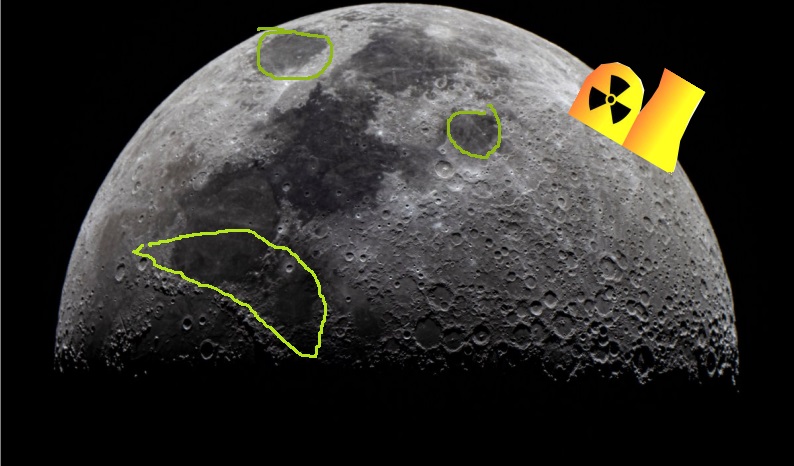
The proposed nuclear reactor, which could be transported and assembled without human assistance, would provide energy to a lunar base that Russia and China have agreed to build together.
Russia’s space agency Roscosmos has announced plans to work with China to build an automated nuclear reactor on the moon by 2035. The proposed reactor will help power a proposed lunar base that the two countries will jointly operate.
Back in 2021, Roscosmos and the China National Space Administration (CNSA) revealed that they intended to build a shared base on the moon, named the International Lunar Research Station (ILRS), which they claimed at the time would be “open to all interested countries and international partners.”
However, NASA astronauts are unlikely to be allowed to visit this base due to historically frosty relations with CNSA and a more recent split with Roscosmos, which will leave the International Space Station by 2025 in response to sanctions from the U.S. over Russia’s invasion of Ukraine in February 2022.
On Tuesday (March 5), Roscosmos announced that it will eventually attempt to build a nuclear reactor alongside CNSA, which would theoretically be able to power the ILRS.
“Today we are seriously considering a project — somewhere at the turn of 2033-2035 — to deliver and install a power unit on the lunar surface together with our Chinese colleagues,” Roscosmos director general Yury Borisov told state-owned Russian news site TASS.
Borisov added that the challenging construction job would likely be carried out autonomously “without the presence of humans” and that the necessary technological solutions to pull it off are “almost ready.”
Roscosmos is also looking to use massive nuclear-powered rockets to transfer cargo to the moon to build this base, but the agency has not yet figured out how to build these spacecraft safely, Reuters reported……………………………………..
Roscosmos and CNSA, neither of which have put humans on the moon’s surface, have contrasting track records when it comes to recent lunar exploration.
Last year, Russia’s first moon mission in 47 years ended in disaster when the Luna-25 lander crashed into the lunar surface, leaving behind a 33-foot (10 meter) wide crater.
However, China has had a presence on the moon since 2013, when the Chang’e 3 mission put a lander and rover on the lunar surface. The subsequent Chang’e 4 and Chang’e 5 missions, which occurred in 2019 and 2020 respectively, also successfully landed spacecraft on the moon. The most recent mission also successfully returned lunar samples to Earth — a feat that CNSA will attempt to repeat later this year.
Last week, CNSA also announced that it will start launching giant reusable rockets over the next two years as part of the agency’s plan to put boots on the moon by 2030.
However, NASA is still on track to return humans to the lunar surface before then, despite the first crewed Artemis mission being delayed until 2026. https://www.livescience.com/space/space-exploration/russia-and-china-announce-plan-to-build-shared-nuclear-reactor-on-the-moon-by-2035-without-humans
US Media and Factcheckers Fail to Note Israel’s Refutation of ‘Beheaded Babies’ Stories

DAVID KNOX, FAIR, 8 Mar 24
In late November, the Washington Post (11/22/23) factchecked President Joe Biden’s repeated claims that babies had been beheaded during Hamas’s October 7 attack in Israel.
Biden’s remarks during a November 15 news conference triggered the factcheck:
Hamas has already said publicly that they plan on attacking Israel again, like they did before, to where they were cutting babies’ heads off to burning women and children alive.
Despite acknowledging a lack of confirmation of such atrocities, the Post stopped short of branding Biden’s statements false, and declined to dole out any of its iconic Pinocchios.
“It’s too soon in the Israel/Gaza war to make a definitive assessment,” Post Factchecker Glenn Kessler wrote, noting that even the most basic facts weren’t yet known.
“The Israeli prime minister’s office has said about 1,200 people were killed on October 7, down from an initial estimate of 1,400,” he said, “but it’s unclear how many were civilians or soldiers.”
An authoritative count
That statement isn’t true. While the exact number killed amid the extreme violence and chaos of October 7 may never be finalized, an authoritative count of civilian deaths—as well as data that definitively refutes claims babies were beheaded—was available to anyone with access to the internet little more than a month after the attack.
That’s when Bituah Leumi, or National Insurance Institute, Israel’s social security agency, posted a Hebrew-language website (11/9/23) with the name, gender and age of every identified civilian victim and where each had been attacked.
Two days later Bituah Leumi (also transliterated as Bituach Leumi) posted an English-language news release (11/11/23) publicizing the website as a memorial to the civilian victims of the “Iron Swords” war—Israel’s name for Hamas’s attack and Israel Defense Forces’ response. (The news release refers to “695 identified war casualties,” but there are no wounded; all the victims are listed as “killed.”)
The journalistic importance of the memorial website was shown less than a month later, when Haaretz (12/4/23), Israel’s oldest newspaper, used the social security agency’s data to debunk some of the most sensational atrocities blamed on Hamas.
‘Proved untrue’
Haaretz’s 2,000-word, English-language article was cautious, with allowances for mistaken and exaggerated reports from traumatized observers describing horrific scenes of carnage. But unlike the Washington Post’s factcheck, the Israeli newspaper didn’t pull its punches, flatly concluding that some of the claims of atrocities “have been proved untrue.”
Chief among the claims disproved was that Hamas fighters deliberately slaughtered dozens of babies—beheading some, burning and hanging others.
“According to sources including Israel’s National Insurance Institute, kibbutz leaders and the police, on October 7 one baby was murdered, 10-month-old Mila Cohen,” the Haaretz article stated. “She was killed with her father, Ohad, on Kibbutz Be’eri.” The child’s mother survived.
In addition to a single infant, the social security agency’s list of victims includes only a few other young children. Haaretz’s reporters were able to determine the circumstances of each of their deaths:
According to the National Insurance Institute, five other children aged 6 or under were murdered, including Omer Kedem Siman Tov, 2, and his 6-year-old twin sisters Arbel and Shachar, who were killed on Kibbutz Nir Oz. There was also 5-year-old Yazan Zakaria Abu Jama from Arara in the southern Negev, who was killed in a Hamas rocket strike, and 5-year-old Eitan Kapshetar, who was murdered with his parents and his 8-year-old sister, Aline, near Sderot.
Haaretz also used the social security data to refute allegations made by Israeli Prime Minister Benjamin Netanyahu to Biden that Hamas targeted and tortured children:
There is no evidence that children from several families were murdered together, rendering inaccurate Netanyahu’s remark to US President Joe Biden that Hamas terrorists “took dozens of children, tied them up, burned them and executed them.”
‘Details still sparse’
The Washington Post (12/4/23) acknowledged the Haaretz story the same day it was published, with a one-paragraph “update” inserted into its November 22 factcheck. While crediting Haaretz with doing a “detailed examination of unverified accounts of alleged atrocities disseminated by Israeli first-responders and army officers,” the Post downgraded the Israeli newspaper’s conclusion, saying only that “no accounts of beheaded or burned babies could be verified.”
While the Post noted that Haaretz “could document only one case of a baby being killed in the Hamas attacks,” the update did not explain that the source of that critical fact was an agency of the Israeli government. Nor did the Post alter the factcheck’s inconclusive, mishmashed “Bottom Line”:……………………………………………………………………………………………………………………………
‘War on truth’
The first major news outlet outside of Israel to use data from the social security agency’s website was the French wire service Agence France-Presse.
The AFP’s 1,000-word, English-language dispatch, headlined “Israel Social Security Data Reveals True Picture of October 7 Deaths,” was picked up by France24 (12/15/23), the Times of India (12/15/23), the financial weekly Barron’s (12/15/23) and a scattering of small newspapers, including the Caledonian (Vermont) Record (12/15/23).
The AFP story covered much the same ground as Haaretz’s analysis, listing the same slain infant—Mila Cohen—and five other young victims under 7 years old in refuting claims of wholesale slaughter of babies.
While Google searches found no US mainstream media reporting on the Israeli social security agency’s data, several independent journalists did.
Gareth Porter, an American historian and journalist whose credentials go back to the Vietnam War, cited the social security data in an article in Consortium News (1/6/24) that argued that the Netanyahu government sought to build support for the invasion of Gaza by “inventing stories about nonexistent atrocities and planting them with credulous US news outlets.”
In February, Jeremy Scahill used that data to make the same case in a 8,000-word article, headlined “Netanyahu’s War on Truth,” in the Intercept (2/7/24), the investigative website he helped found.
Both journalists credit the December 15 AFP dispatch as the source of the Israeli social security data. (Porter’s story provides a link to the Times of India; Scahill links to France24.)
Earlier this week a third independent journalist, Glenn Greenwald (3/3/24), quoted the December 4 Haaretz report, which used the Israeli social security data, in a YouTube video, titled “October 7 Reports Implode: Beheaded Babies, NY Times Scandal & More.”
Emotion-inflaming stories
In the months since the Haaretz and AFP reports were published, Bituah Leumi has updated its civilian death count to 779, including 76 foreign workers, as more victims are identified (Jewish News Syndicate, 1/15/24.).
But a detailed examination this week of the 16-page list of victims on the memorial website found no additional infants or young children—only those already accounted for by Haaretz and AFP—and a total of 36 children under 18 years old.
Mila Cohen remains the only infant reported killed in the October 7 attack.
US corporate media’s failure to cite the social security agency’s data to forcefully refute claims of butchered babies and other outrages comes at a high cost. Such emotion-inflaming stories continue to foul the public debate over whether Israel’s invasion of Gaza, which has resulted in the deaths of more than 30,000 Palestinians (AP, 2/29/24)—two-thirds of those women and children (PBS, 2/19/24)—is a criminally disproportionate response to the Hamas attack………………………………………………………………………………………………………………………………..
Unfounded horror stories about Hamas’s infant victims that should have been debunked were still being repeated by Biden (12/12/23) at a campaign fundraiser more than two months after Israel was attacked:
I saw some of the photographs when I was there—tying a mother and her daughter together on a rope and then pouring kerosene on them and then burning them, beheading infants, doing things that are just inhuman—totally, completely inhuman.
This time the Washington Post didn’t factcheck Biden—even though the White House stated months earlier that the president had never seen such photos (CNN, 10/12/23).
Still no Pinocchios. https://fair.org/home/us-media-and-factcheckers-fail-to-note-israels-refutation-of-beheaded-babies-stories/
Was Victoria Nuland Fired for Her Role In the Ukraine Debacle?

UNZ Review, MIKE WHITNEY • MARCH 6, 2024
Victoria Nuland’s retirement is an admission that Washington’s premier foreign policy project has failed. No government official is more identified with the Ukraine fiasco than Nuland. She was on the ground micro-managing activities during the 2014 coup, and has overseen the State Department’s sordid involvement since the war began. Her career-path is inextricably linked to the ill-fated NATO-backed disaster which has resulted in the needless deaths of hundreds of thousands of Ukrainian regulars and the obliteration of much of the country. Thus, the question we need to ask ourselves is whether Nuland’s persistent machinations to drag NATO into an unwinnable war with Russia is the reason she ‘got the axe’, er, announced her retirement? Here’s an excerpt from the official State Department Press Statement:
But it’s Toria’s (Nuland) leadership on Ukraine that diplomats and students of foreign policy will study for years to come. Her efforts have been indispensable to confronting Putin’s full-scale invasion of Ukraine and marshaling a global coalition to ensure his strategic failure, and helping Ukraine work toward the day when it will be able to stand strongly on its own feet – democratically, economically, and militarily. On the Retirement of Under Secretary of State for Political Affairs Victoria Nuland, US State Department,
This is an extraordinary paragraph that places the blame for the Ukrainian debacle squarely on Nuland’s shoulders. Yes, she was “indispensable” in leading the drive to confront Putin just as she played a critical role in “marshaling a global coalition” to prosecute a proxy war on Russia. And, what this statement tells us is that Nuland was one of the main architects of the ongoing conflict, which means she is largely responsible for the widening chasm between the NATO leaders, the mounting carnage on the battlefield, and America’s strategic defeat to its primary geopolitical rival, Russia. In short, no other government official is more responsible for the Ukrainian quagmire than Victoria Nuland.
Also, Nuland leaves behind a gargantuan catastrophe for which there is no apparent remedy and no easy way out. We cannot expect the Biden administration to simply ‘cut and run’ in what is perceived to be a direct confrontation with Moscow. Biden will undoubtedly press-ahead as a face-saving gesture regardless of the costs, further straining relations with the allies while handing-over large chunks of east Ukraine to the Russian army. This is clearly a no-win situation for Washington which is why (we think) Nuland –who created this mess– got her ‘Pink Slip’. ……………………………………………….
Victoria Nuland is one of the most knowledgeable and experienced diplomats in the entire State Department, but –even so– they are throwing her under the bus during a time of extreme crisis because she failed in the biggest and most important assignment of her 35-year career. Isn’t that what they’re saying?
It is. You can be 100% certain that a combative street-fighter like Nuland would never throw in the towel unless she was explicitly ordered to leave. And, perhaps, she might have held-on to her job if there was any sign of progress in the war, but there isn’t any sign of progress. It’s as hopeless and dire a situation as we have ever seen. Even as we speak– the Ukrainian front lines are collapsing while the body count continues to rise. Ukraine is out-gunned, out-manned, and out-led. It’s a total mismatch and has been ever since Putin called up the reserves over a year ago. Young men are presently being slaughtered in droves and left to rot in mud-filled trenches that stink of gunpowder and death. All of this suggests that the end is near. And if the end is near, then someone will have to be blamed. Enter Nuland with a bullseye affixed to her back.
Nuland deserves whatever she gets. As a diehard Warhawk she has always played fast-and-loose with the facts building the case for war on half-truths and outright fabrications, all with the intention of plunging the country into another pointless bloodletting that would inevitably end in another humiliating defeat…………………………………………………
Nuland and her former colleagues, John Brennan and Hillary Clinton, have had a poisonous effect on our politics, elevating Russophobia to a state religion while dragging the nation’s reputation through the mud at every turn…………………………………
In any event, we think that Nuland’s retirement is anything but voluntary. We think that she’s being terminated by foreign policy elites who no longer believe in her blustery rhetoric and empty promises of beating Putin. By removing Nuland they are acknowledging that the proxy-war has failed and that a different strategy is needed. And while we don’t yet know what that policy-change will entail, we do know that Nuland won’t be involved in its implementation.
…………………………………………….. Ukraine’s chances of success are extremely poor unless they get more money, more troops and more firepower, all of which are now seriously in doubt…………………..the State Department has not convened any back-channel negotiations with Russia, so there’s no possibility of a surprise settlement either. And, now Nuland is telling them that neither she nor her colleagues have formulated a back-up plan in the event the war doesn’t turn out as they had anticipated. No Plan B.
……………………….Regrettably, we don’t think that ‘changing the messenger’ necessarily means a fundamental rethinking of the policy. Even so, it is a step in the right direction. As America’s ‘air of invincibility’ continues to erode, and its moral authority collapses (Gaza), Washington will be forced to pull in its horns and ‘play nice’ with its neighbors. That day is fast approaching.
Finally, no matter how you look at it, dumping Nuland is a positive development. Savor the moment. https://www.unz.com/mwhitney/was-nuland-fired-for-her-role-in-the-ukraine-debacle/
An Open Letter from Hollywood On Oppenheimer and Nuclear Weapons
Oppenheimer depicts the origin story of nuclear weapons, the history of the Manhattan Project, and Robert Oppenheimer’s subsequent warnings against an arms race and the development of even more powerful weapons.
Oppenheimer was right to warn us.
Today, 13,000 nuclear weapons are held by nine countries. Some are 80 times more powerful than the ones that destroyed Hiroshima and Nagasaki in 1945.
As President Kennedy told the United Nations in 1961:
Today, every inhabitant of this planet must contemplate the day when this planet may no longer be habitable.
Every man, woman, and child lives under a nuclear sword of Damocles, hanging by the slenderest of threads, capable of being cut at any moment by accident or miscalculation or by madness. These weapons of war must be abolished before they abolish us.
As artists and advocates, we want to raise our voices to remind people that while Oppenheimer is history, nuclear weapons are not.
At a time of great uncertainty, even one nuclear weapon—on land, in the sea, in the air, or in space—is too many. To protect our families, our communities, and our world, we must demand that global leaders work to make nuclear weapons history—and build a brighter future.
Please join us—before our luck runs out.
Rosanna Arquette
Jackson Browne
Ellen Burstyn
Yvette Nicole Brown
Alan Cumming
Misha Collins
Michael Douglas
Jane Fonda
Tony Goldwyn
Clark Gregg
Harry Hamlin
Paul Jay
Annie Lennox
Nicholas Meyer
Ellen Mirojnick
Matthew Modine
Julianne Moore
Viggo Mortensen
Graham Nash
Bill Nye
Charles Oppenheimer
Piper Perabo
June Diane Raphael
Lisa Rinna
Peter Sellars
Bobby Shriver
David Slack
Barbra Streisand
Kristen Stewart
Emma Thompson
Lily Tomlin
Christoph Waltz
Mia Wenjen
Janet Zucker
Jerry Zucker
Ernest J. Moniz
Co-chair and CEO, NTI
Sam Nunn
Co-chair, NTI
Ted Turner
Co-chair, NTI
Joan Rohlfing
President and COO, NTI
Fukushima fishers strive to recover catches amid water concerns
Amid voices of support from across the country for seafood products sourced from Fukushima Prefecture, the local fishing community is pushing ahead with efforts to revitalize the industry despite apprehension about the ongoing decommissioning of the crippled Fukushima No. 1 nuclear power plant.
While Fukushima Prefecture has yet to experience significant reputational repercussions, the fishing industry remains concerned about the decommissioning work, which is expected to take several decades, coupled with the discharge of the treated radioactive water from the crippled plant that began about half a year ago…………………………….
With government subsidies and other initiatives, the prefecture’s seven fishery cooperatives aim to increase the catch to surpass 50% of pre-disaster levels………………………………………………… https://www.japantimes.co.jp/news/2024/03/06/japan/society/fukushima-fishermen-fight-recover-catch/
UK Budget: Government confirms £160m deal to acquire Hitachi nuclear sites
Chancellor announces deal to purchase Wylfa and Oldbury sites, as part of
Budget dominated by pre-election tax cuts. The government has today
announced plans to revive the UK’s nuclear development pipeline, confirming
it has reached a £160m deal with Hitachi to acquire two prospective
nuclear power plant sites that were mothballed by the Japanese conglomerate
in 2020. In a Budget address that was largely focused on plans for
pre-election tax cuts, Chancellor Jeremy Hunt confirmed an agreement had
been finalised to acquire both the Wylfa site in North Wales and the
Oldbury site in South Gloucestershire.
Business Green 6th March 2024
1 This Month


Tell the Ukrainian Government to Drop Prosecution of Peace Activist Yurii Sheliazhenko

Petition to revoke the licensing of the Near Surface Nuclear Disposal Facility (NSDF) at Chalk River. https://www.ourcommons.ca/petitions/en/Petition/Details?Petition=e-7247


of the week – STOP SMALL MODULAR REACTORS IN CANADA
To see nuclear-related stories in greater depth and intensity – go to https://nuclearinformation.wordpress.com
-
Archives
- March 2026 (193)
- February 2026 (268)
- January 2026 (308)
- December 2025 (358)
- November 2025 (359)
- October 2025 (376)
- September 2025 (258)
- August 2025 (319)
- July 2025 (230)
- June 2025 (348)
- May 2025 (261)
- April 2025 (305)
-
Categories
- 1
- 1 NUCLEAR ISSUES
- business and costs
- climate change
- culture and arts
- ENERGY
- environment
- health
- history
- indigenous issues
- Legal
- marketing of nuclear
- media
- opposition to nuclear
- PERSONAL STORIES
- politics
- politics international
- Religion and ethics
- safety
- secrets,lies and civil liberties
- spinbuster
- technology
- Uranium
- wastes
- weapons and war
- Women
- 2 WORLD
- ACTION
- AFRICA
- Atrocities
- AUSTRALIA
- Christina's notes
- Christina's themes
- culture and arts
- Events
- Fuk 2022
- Fuk 2023
- Fukushima 2017
- Fukushima 2018
- fukushima 2019
- Fukushima 2020
- Fukushima 2021
- general
- global warming
- Humour (God we need it)
- Nuclear
- RARE EARTHS
- Reference
- resources – print
- Resources -audiovicual
- Weekly Newsletter
- World
- World Nuclear
- YouTube
-
RSS
Entries RSS
Comments RSS
 nuclear-news