As the climate crisis grows worse every year, alternative energy options are increasingly important. Much recent debate has focused on nuclear energy, which has an understandably troubled reputation after the disasters at Chernobyl, Three Mile Island and Fukushima, and is further tarnished by its association with the devastating potential of nuclear weapons. Nuclear energy is definitely “cleaner” than fossil fuels in terms of carbon emissions, but most experts Salon contacted were skeptical that it can offer a path to climate salvation.
Some climate activists “promote nuclear power as a possibility to battle climate change,” said Nikolaus Muellner, a professor of safety and risk sciences at the University of Natural Resources and Life Sciences in Vienna. while others are eager “to avoid the risks associated with nuclear power.”
M.V. Ramana, a physicist at the University of British Columbia’s School of Public Policy and Global Affairs and author of the upcoming book “Nuclear Is Not the Solution: The Folly of Atomic Power in the Age of Climate Change,” made clear in an email response to Salon that he falls into the latter camp. “If one evaluates nuclear energy as a way to deal with climate change,” Ramana said, it actually plays “a negative role in reducing emissions.”
There are two reasons for that, he continued: “First, the money invested in nuclear energy — even in the case of keeping old and possibly dangerous plants operational — would save far more carbon dioxide if it were invested in renewables and associated technologies.” So he sees “an economic opportunity cost to investing in nuclear energy.” Furthermore, building new nuclear reactors can take years or decades, compounding the opportunity cost, because “the reduction in emissions from alternative investments would not only be greater, but also quicker.”
Ramana also cited the “variety of risks and environmental impacts” associated with nuclear energy, including catastrophic accidents, the fact that fuel for nuclear power can be diverted to weapons programs, and the production of radioactive waste, which can remain hazardous to human health for thousands of years.
“Because of the inevitable production of long-lived radioactive wastes, nuclear power cannot be defined as sustainable,” Ramana said. As for accidents, he believes they are “inevitable … even with newer reactor designs,” and that the risk “is far higher than proponents of nuclear power admit.”
Also responding by email, Muellner offered a more nuanced and technical view, focusing on the much lower “calculated emission costs” of nuclear power generation compared to electricity generated with fossil fuels. Emissions over the life cycle of a nuclear plant, he said, “are of the same order of magnitude as life cycle emissions from renewable generated electricity.”
Still, Muellner did not deny that the environmental downsides are significant. “Nuclear power plants generate power by splitting uranium atoms — or, more precisely, nuclei — and the fragments of the split uranium are highly radioactive” and generate heat, he explained. In a severe accident such as the infamous Chernobyl disaster, that intense heat and radioactivity could “destroy the barriers that are designed to contain those fission products, the fission products could be released and large areas of land could become inhabitable.” Storing those dangerous fusion products, potentially for millennia into the future, “:is a highly challenging task.”
Benjamin K. Sovacool, director of the Institute for Global Sustainability at Boston University, sounded a similar note of caution, warning that “nuclear power has high future costs, made more expensive by accidents” and that the nuclear industry “still doesn’t have a solution to its waste problem.” Because the process of nuclear fission does not burn or oxidize anything, nearly all the fuel used in producing energy at nuclear plants becomes waste without reducing its mass.
“Typically, a single nuclear reactor will consume an average of 32,000 fuel rods over the course of its lifetime, and will also produce 20 to 30 tons of spent nuclear fuel per year,” Sovacooltold Salon. That equates to “about 2,200 metric tons annually for the entire U.S. nuclear fleet, and almost 10,000 metric tons of high-level spent nuclear fuel” around the world. Most of that waste, he observed, is not reprocessed, and ends up stored on site at nuclear power plants, “because no community wishes to host long-term nuclear storage facilities.” Finding a final resting site for all that nuclear waste is “a pernicious problem in search of a solution,” and plans to build a permanent underground storage repository at Yucca Mountain, Nevada, “have been indefinitely suspended.”
It’s no surprise that states, regions or communities are less than eager to host nuclear waste storage facilities, Sovacool noted. “The nuclear fuel cycle involves some of the most hazardous elements known to humankind, including more than 100 dangerous radionuclides and carcinogens,” he said. “These are the same toxins found in the fallout from nuclear weapons.”
Finally, there are the security risks of nuclear energy, also mentioned by Ramana. Several countries “have tried or succeeded in developing nuclear weapons under the guise of civilian nuclear weapons programs,” Sovacool said, quoting Nobel-winning physicist Hannes Alfven’s observation that “Atoms for peace and atoms for war are Siamese twins.” The four world nations with the largest nuclear reprocessing capacity, said Sovacool — those being Belgium, France, Germany and the U.K. — “have acknowledged that they possess at least 190 tons of separated plutonium,” enough material to manufacture more than 20,000 nuclear weapons.
“If we double the number of nuclear reactors worldwide,” Sovacool said, “we double the possibility that countries without nuclear weapons might obtain them. No other energy system has such an acute link to weapons of mass destruction.”
MOSCOW, March 5 (Reuters) – Russia and China are considering putting a nuclear power plant on the moon from 2033-35, Yuri Borisov, the head of Russia’s space agency Roscosmos said on Tuesday, something he said could one day allow lunar settlements to be built.
Borisov, a former deputy defence minister, said that Russia and China had been jointly working on a lunar programme and that Moscow was able to contribute with its expertise on “nuclear space energy”.
“Today we are seriously considering a project – somewhere at the turn of 2033-2035 – to deliver and install a power unit on the lunar surface together with our Chinese colleagues,” Borisov said.
Solar panels would not be able to provide enough electricity to power future lunar settlements, he said, while nuclear power could.
“This is a very serious challenge…it should be done in automatic mode, without the presence of humans,” he said of the possible plan.
Borisov spoke also of Russian plans to build a nuclear-powered cargo spaceship. He said all the technical questions concerning the project had been solved apart from finding a solution on how to cool the nuclear reactor.
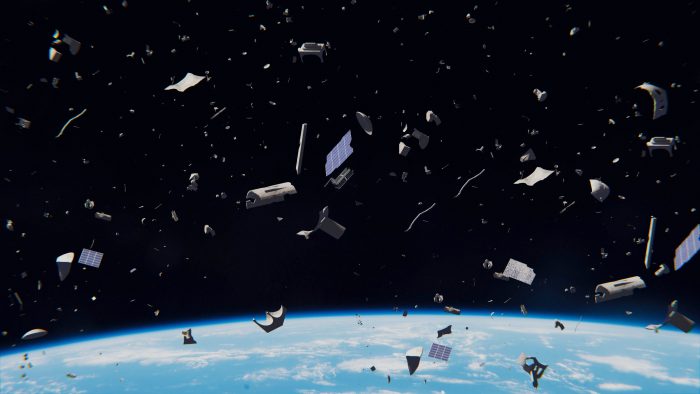
“We are indeed working on a space tugboat. This huge, cyclopean structure that would be able, thanks to a nuclear reactor and a high-power turbines…to transport large cargoes from one orbit to another, collect space debris and engage in many other applications,” Borisov said.
Russian officials have spoken before of ambitious plans to one day mine on the Moon, but the Russian space programme has suffered a series of setbacks in recent years.
Its first moon mission in 47 years failed last year after Russia’s Luna-25 spacecraft spun out of control and crashed.
Moscow has said it will launch further lunar missions and then explore the possibility of a joint Russian-China crewed mission and even a lunar base.
EDF has significantly increased the cost of its program to build six new EPR2 nuclear reactors, the newspaper Les Echos reported on Monday, citing new estimates from the company. According to Les Echos, EDF now estimates the cost of its program to build six new EPR2 nuclear reactors at 67.4 billion euros, compared to 51.7 billion euros in an estimate made public at the start of 2022, an amount expected to be subject to regular updates. That’s a jump of 30%.
the conjectured deployment of NATO troops in Ukraine – would provoke a military response from Moscow. The extreme risks of the ensuing hostilities spiraling out of control to the nuclear threshold are self-evident.
The West has set itself on a path of collective suicide — both moral and economic
Western leaders are experiencing two stunning events: defeat in Ukraine, genocide in Palestine. The first is humiliating, the other shameful. Yet, they feel no humiliation or shame. Their actions show vividly that those sentiments are alien to them – unable to penetrate the entrenched barriers of dogma, arrogance and deep-seated insecurities. The last are personal as well as political. Therein lies a puzzle. For, as a consequence, the West has set itself on a path of collective suicide. Moral suicide in Gaza; diplomatic suicide – the foundations laid in Europe, the Middle East and across Eurasia; economic suicide – the dollar-based global financial system jeopardized, Europe deindustrializing. It is not a pretty picture. Astoundingly, this self-destruction is occurring in the absence of any major trauma – external or internal. Therein lies another, related puzzle.
Some clues for these abnormalities are provided by their most recent responses as deteriorating conditions tighten the vise – on emotions, on prevailing policies, on domestic political worries, on ginger egos. Those responses fall under the category of panic behavior. Deep down, they are scared, fearful and agitated. Biden et al in Washington, Macron, Schulz, Sunak, Stoltenberg, von der Leyen. They lack the courage of their stated convictions or the courage to face reality squarely. The blunt truth is that they have contrived to get themselves, and their countries, in a quandary from which there is no escape conforming to their current self-defined interests and emotional engagement. Hence, we observe an array of reactions that are feckless, grotesque and dangerous.
Feckless
Exhibit 1 is French President Emmanuel Macon’s proposed plan to station military personnel from NATO members within Ukraine to serve as a tripwire. Arrayed as a cordon around Kharkov, Odessa and Kiev they are meant to deter advancing Russian forces from moving on those cities for fear of killing Western soldiers – thereby risking a direct confrontation with the Alliance. It is a highly dubious idea that defies logic and experience while tempting fate. France long has deployed members of its armed forces in Ukraine where they programed and operated sophisticated equipment – in particular, the SCALP cruise missiles. Scores were killed by a Russian retaliatory strike a few months ago that destroyed their residence. Paris cried ‘holy murder’ for Moscow’s unsporting conduct in shooting back at those attacking them. It was retaliation for the French participation in the deadly bombing of the Russian city of Belgorod. Why then should we expect that the Kremlin would abandon a costly campaign involving what they see as vital national interests if uniformed Western troops were deployed in a picket line around cities? Would they be intimated into passivity by spiffy uniforms assembled under outsized banners inscribed with the slogan: “DON’T MESS WITH NATO”?
Moreover, there already are thousands of Westerners bolstering the Ukrainian armed forces. Roughly 4 – 5,000 Americans have been performing critical operational functions from the outset. The presence of a majority predates by several years the onset of hostilities 2 years ago. That contingent was augmented by a supplementary group of 1,700 last summer which was as a corps of logistic experts advertised as mandated to seek out and eradicate corruption in the black-marketing of pilfered supplies. The Pentagon people are sown thought the Ukrainian military from headquarters planning units, to advisers in the field, to technicians and Special Forces.
It is widely understood that Americans have operated the sophisticated HIMARS long-range artillery and the Patriot air defense batteries. This last means that members of the U.S. military have been aiming – perhaps pulling the trigger on – weapons that kill Russians. In addition, the CIA has established a massive, multipurpose system able to conduct a wide range of Intelligence and operational activities- independently as well as in conjunction with the Ukrainian FSB. That includes tactical Intelligence on a day-by-day basis. We don’t know whether they had a role in the campaign of targeted assassinations inside Russia.
A critical role also has been played by Britain. Their specialized personnel have been operating the Storm Shadow missiles (counterpart to the French SCALP) employed against Crimea and elsewhere. Too, MI-6 has taken a lead role in designing multiple attacks on the Kerch Bridge and other critical infrastructure. The principal lesson to be drawn from this overview is that the positioning of European troops at key sites as human hostages in not wholly original. Their presence has not deterred Russia from attacking them in the field or, as in the French case, hunting them down in their residences.
Feckless: Exhibit 2 is the American airdrop of a paltry load of humanitarian aid in the sea off of Gaza. This bizarre action overlaps the silly and the grotesque. The United States has been the major accomplice in the Israeli ravaging of Gaza. Its weapons have killed 30,000 Gazans, wounded 70,000+, and devastated hospitals. Washington has actively blocked any serious attempt at aid by the UNWRO in withholding the funds necessary to finance its operations, while staying silent as Israel blocks entry points from Egypt and massacres residents awaiting the arrival of a food convoy. Furthermore, it has vetoed every attempt to end the carnage through ceasefire resolutions of the UN Security Council. This absurd gesture of kicking pallets out an airplane hatch simply underscores American disregard for Palestinian lives, its contempt for world opinion and its shameless subjugation to dictates from Israel.
Feckless: Exhibit 3 is provided by Rishi (Sage) Sunak, interim Prime Minister of the U.K. An ardent backer of Israel, he consistently has criticized Peace demonstrations protesting the assault on Gazans as obstacles to achieving a long-term ceasefire and political settlement. In this, he continues the long tradition of British fealty to its American overlord. Last week, he escalated the attack in denouncing them as tools of Hamas who have been taken over by terrorists – terrorists who threaten to tear the country apart. He likened it to ‘mob rule’ – as punctuated by the electoral victory of maverick George Galloway who crushed the Tories (and Labour) in a by-election. No evidence, of course, as to how half a million peaceable citizens are a Trojan horse for Muslim jihadis. This fecklessness is recognizable for those familiar with the haughty manner cultivated by the English upper crust – infecting even an arriviste in those exalted circles whose origins were in the Indian Raj. Condescension toward the lower ranks, instruction as to where the boundaries of acceptable behavior lie. That attitude often is laced with cute disparagements of groups or nationalities that don’t conform. The fact that Sunak himself is unabashed at now making snide accusations – however implied – about Muslims demonstrates the durability of cultural prejudices along with the historical openness of England’s upper class to those with money or cachet. These days, even a rishi. I suppose that’s social progress.
The dangerous element in Sunak’s unbecoming demagoguery is not its aggravating effect on the West’s culpability in the Palestine. The regional protagonists, as well as the rest of the world, smile at Britain’s grand rhetorical flourishes knowing that it counts only as America’s Tonto. Rather, it opens a breach in the country’s dedication to free speech and assembly. For it comes close to saying that any public disagreement with HMG’s policy is tantamount to treason.
Grotesque
Insofar as violent ethnic cleansing of the Palestinians is concerned, it is fair to say that the Western governments’ complicity via its arming and unqualified backing for Israel’s gruesome actions constitutes grotesque behavior. To single out individual elements among individual governments is superfluous. The entire episode is grotesque. So it is seen by nearly the entire world outside the countries of the collective West. That represents about 2/3 of humanity. Still, our nations’ political elites appear oblivious and/or disdainful of that judgment. It matters little to them that they are seen by the ‘others’ as inhumane, arch hypocrites and racists. Those strong impressions are reinforced in many places by traumatic memories of how they themselves were subjugated, trodden upon and exploited over the centuries by people who righteously instructed them on the superiority of Western values – just as they do today.
There are actions that manifestly represent a clear and future danger of an expanding war in Europe. Jens Stoltenberg, NATO’s belligerent Secretary-General, boldly stated last week that the Western allies should give Ukraine the green light to use the cruise missiles they have acquired to attack targets in Russia proper. Those weapons include the Storm Shadow, the Scalp, the long-range Tauras that Germany may soon dispatch and similar hardware to be provided by the U.S. (perhaps launched from the F-16s already arriving). Such a drastic move has been hinted at by other Western leaders, and pushed by hardline factions in Washington. Putin has warned that such escalation by the West – as with the conjectured deployment of NATO troops in Ukraine – would provoke a military response from Moscow. The extreme risks of the ensuing hostilities spiraling out of control to the nuclear threshold are self-evident.
Taken together, the actions by Western leaders – supported by their nations’ political elites – are indicative of a behavior pattern that has parted ways with reality. They derive deductively from dogmas unsubstantiated by objective fact. They are logically self-contradictory, impervious to events that shift the landscape, and radically unbalanced in weighting benefits/costs/risks and probabilities of success. How do we explain this ‘irrationality’? There are background conditions that are permissive or encouraging of this flight from sound reasoning. They include: the nihilistic socio-cultural trends in our contemporary post-modern societies; their susceptibility to collective hysteria/overwrought emotional reactions to unsettling events – 9/11, Islamic terrorism, the fable about Russian interference in the 2016 Presidential election among other political matters, the conjuring of the menacing Chinese dragon, scary predictions of inevitable war with the PRC, outlandish claims that Putin is planning to launch an all-out campaign to conquer Europe up to the English Channel.
The last two are fed by the free-floating anxieties, i.e. dread, engendered by the earlier bouts of mass psychopathology. Those allegations, in fact pure fictions, have gained currency among senior military figures, heads of government, and among strategic ‘thinkers.’
Back to the ingredients of panic. We noted fear – of both the identifiable and the unknown, and sub-conscious feelings of insecurity. Those feelings derive from a matrix of disorienting shifts in the global environment inhabited by Western societies. They, in turn, grow in reciprocation with unsetting domestic developments. The outcome is two-fold: a stultifying of any reasonable debate about dubious policies – leaving premises and purposes untested, and opening opportunities for willful persons or factions who harbor audacious objectives of remaking the world’s geo-political space according to American hegemonic specifications. To that end, our leaders manipulate and exploit conditions of emotional disorientation and political conformity. The outstanding example are the so-called ‘neo-cons’ in Washington (who number Joe Biden as a comrade-in-arms) who have crafted a network of like-minded true believers in London, Paris, Berlin and at both ends of Brussels.
What of the puzzle we noted as to the near complete absence of feelings of guilt or shame – especially over Gaza, of being humiliated in the eyes of the world? In conditions of nihilism, matters of conscience are moot. For the implicit rejection of norms, rules and laws frees the individual self to do whatever impulses or ideas or selfish interests impel it. With the superego dissolved, there is no felt obligation to judge oneself in reference to any external or abstract standard. Narcissistic tendencies flourish. A similar psychology obviates the requirement for experiencing shame. That is something that can only exist if we subjectively are part of a social grouping wherein personal status, and sense of worth, depend on how others view us and whether they grant us respect. In the absence of such a communal identity, with its attendant sensitivity to its opinion, shame can exist only in the perverse form of regret that one has been unable to meet the demanding, all-consuming need for self-gratification. That applies to nations as well as its individual leaders.
“We have a situation where the US is airdropping aid on day one, and Israel is dropping bombs on day two. And the American taxpayer is paying for the aid and the bombs.”
The spectacle, if it did not say it all, said much of it. Planes dropping humanitarian aid to a starving, famine-threatened populace of Gaza (the United Nations warnsthat 576,000 are “one step from famine”), with parachuted packages veering off course, some falling into the sea. Cargo also coming into Israel, with bullets, weaponry and other ordnance to kill those in Gaza on the inflated premise of self-defence. Be it aid or bullets, Washington is the smorgasbord supplier, ensuring that both victims and oppressors are furnished from its vast commissary.
This jarring picture, discordant and hopelessly at odds, is increasingly running down the low stocks of credibility US diplomats have in either the Israel-Hamas conflict, or much else in Middle Eastern politics. Comments such as thesefrom US Vice President Kamala Harris from March 3, made at Selma in Alabama, illustrate the problem: “As I have said many times, too many innocent Palestinians have been killed. And just a few days ago, we saw hungry, desperate people approach aid trucks, simply trying to secure food for their families after weeks of nearly no aid reaching Northern Gaza. And they were met with gunfire and chaos.”
Harris goes on to speak of broken hearts for the victims, for the innocents, for those “suffering from what is clearly a humanitarian catastrophe.” A forced, hammed up moral register is struck. “People in Gaza are starving. The conditions are inhumane. And our common humanity compels us to act.”
It was an occasion for the Vice President to mention that the US Department of Defense had “carried out its first airdrop of humanitarian assistance, and the United States will continue with these airdrops.” Further work would also be expended on getting “a new route by sea to deliver aid.
It is only at this point that Harris introduces the lumbering elephant in the room: “And the Israeli government must do more to significantly increase the flow of aid. No excuses.” They had to “open new border crossings”, “not impose any unnecessary restrictions on the delivery of aid” and “ensure humanitarian personnel, sites, and convoys are not targeted.” Basic services had to be restored, and order promoted in the strip “so more food, water, and fuel can reach those in need.”
In remarks made at Hagerstown Regional Airport in Maryland, President Joe Biden toldreporters that he was “working with them [the Israelis] very hard. We’re going to get more – we must get more aid into Gaza. There’s no excuses. None.”
In a New Yorkerinterview, White House National Security spokesman John Kirby keeps to the same script, claiming that discussions with the Israelis “in private are frank and very forthright. I think they understand our concerns.” Kirby proceeds to fantasise, fudging the almost sneering attitude adopted by Israel towards US demands. “Even though there needs to be more aid, and even though there needs to be fewer civilian casualties, the Israelis have, in many ways, been receptive to our messages.”
The other side of this rusted coin of US policy advocates something less than human. The common humanity there is tethered to aiding the very power that is proving instrumental in creating conditions of catastrophe. The right to self-defence is reiterated as a chant, including the war goals of Israel which have artificially drawn a distinction between Hamas military and political operatives from that of the Palestinian population being eradicated.
Harris isalways careful to couple any reproachful remarks about Israel with an acceptance of their stated policy: that Hamas must be eliminated. Hamas, rather than being a protean force running on the fumes of history, resentment and belief, was merely “a brutal terrorist organization that has vowed to repeat October 7th again and again until Israel is annihilated.” It had inflicted suffering on the people of Gaza and continued to hold Israeli hostages.
Whatever note of rebuke directed against the Netanyahu government, it is clear that Israel knows how far it can go. It can continue to rely on the US veto in the UN Security Council. It can dictate the extent of aid and the conditions of its delivery into Gaza, which is merely seen as succour for an enemy it is trying to crush. While alarm about shooting desperate individuals crowding aid convoys will be noted, little will come of the consternation. The very fact that the US Airforce has been brought into the program of aid delivery suggests an ignominious capitulation, a very public impotence.
Jeremy Konyndyk, former chief of the USAID’s Office of Foreign Disaster Assistance during the Obama administration gives his unflattering judgment on this point. “When the US government has to use tactics that it otherwise used to circumvent the Soviets and Berlin and circumvent ISIS in Syria and Iraq, that should prompt some really hard questions about the state of US policy.”
In his remarks to The Independent, Konyndyk finds the airdrop method “the most expensive and least effective way to get aid to a population. We almost never did it because it is such an in-extremis tool.” Even more disturbing for him was the fact that this woefully imperfect approach was being taken to alleviate the suffering caused by an ally of the United States, one that had made “a policy choice” in not permitting “consistent humanitarian access” and the opening of border crossings.
Even as this in extremis tool is being used, US made military hardware continues to be used at will by the Israel Defence Forces. The pointwas not missedon Vermont Democratic Senator Peter Welch: “We have a situation where the US is airdropping aid on day one, and Israel is dropping bombs on day two. And the American taxpayer is paying for the aid and the bombs.”
The chroniclers of history can surely only jot down with grim irony instances where desperate, hunger-crazed Palestinians scrounging for US aid are shot by made-in-USA ammunition.
HELSINKI — China holds a seemingly positive stance towards the use of space resources, according to a recent submission made by a Chinese delegation to the United Nations.
The delegation appears to state that China considers space resource utilization as permissible, but must be conducted in accordance with the Outer Space Treaty (OST) of 1967.
China’s submission treats the use of space resources as legal, but also calls for adherence to the existing frameworks of international space law, with the OST as the cornerstone.
The document was submitted to the Working Group on Legal Aspects of Space Resource Activities of the Legal Subcommittee of the Committee on the Peaceful Uses of Outer Space (COPUOS).
COPUOS is a body of the United Nations tasked with governing the exploration and use of space for the benefit of all humanity, overseeing matters related to space science and technology and their applications. The Working Group plays a critical role in addressing the legal challenges posed by the utilization of space resources, helping to shape the international legal framework that will govern these activities.
The submission could be seen as a beneficial development, helping to set the stage for a dialogue on the legal frameworks for governing the use of space resources.
“This engagement by China on the international discussion on space resources is a positive development,” Christopher Johnson, director of legal affairs and space law for the Secure World Foundation, told SpaceNews. “It tells us that China is taking international fora like COPUOS seriously, and seems to be engaging in good faith with the fora and with the process.
“Additionally, it’s welcome to have a clear statement of Chinese positions on these issues, and this informs other States in their approach and preparations to the international discussions going on at the UN.”
Johnson interprets the Chinese stance as seemingly largely aligned with the broader international consensus on the use of space resources. That is, the right to possess and use space resources is not only desirable by space agencies and national governments, but is also permissible under the current international law.
Discussion and consideration of the use and legality utilizing space resources has grown in recent years due to advancements in the space sector, the rise of commercial companies and renewed interest in the moon.
This has made international law and diplomacy related to the subject matters of key focus, with the distance between the respective stances of the U.S. and China likely to be pivotal. ……………….
There are a number of issues for the international community to settle going forward, some of which are noted in the Chinese submission. These include how space resources can be utilized in a sustainable fashion and in a way that fosters scientific investigations, while also ensuring peaceful relations in space between states and other actors in space.
Another key matter is the question of how states supervise their national activities, making sure private companies comply with the law. Additionally, all such activities will also need to preclude any national territorial annexation of the moon or other celestial bodies, as prohibited by Article II of the OST. ……………………………………………………………….. more https://spacenews.com/china-outlines-position-on-use-of-space-resources/
Ukraine forces are in retreat and the war is going badly from NATO’s perspective, Biden’s $60+ billion for Kiev is halted in the House, and the Democratic incumbent’s reelection chances are looking grim in November. And as if confirming there’s no light at the end of the tunnel, Victoria Nuland is stepping down as Under Secretary of State for Political Affairs of the United States.
The State Department announced Tuesday morning she is retiring. The Associated Press announcement interestingly enough underscores her hawkish legacy on Russia and Ukraine. “Victoria Nuland, the third-highest ranking U.S. diplomat and frequent target of criticism for her hawkish views on Russia and its actions in Ukraine, will leave her post this month, the State Department said Tuesday,” it wrote.
Her boss Antony Blinken said something a bit ironic on the occasion of unveiling her departure: “But it’s Toria’s leadership on Ukraine that diplomats and students of foreign policy will study for years to come.”
Indeed, many already know her as Victoria-‘Fuck the EU’-Nuland and for essentially running foreign policy in Europe, stretching back through the Obama years as then Assistant Secretary of State for Europe, where many of the problems which sparked the disastrous and tragic Russia-Ukraine war were first set in motion.
According to more praise from Secretary Blinken:
“Her efforts have been indispensable to confronting Putin’s full-scale invasion of Ukraine, marshaling a global coalition to ensure his strategic failure, and helping Ukraine work toward the day when it will be able to stand strongly on its own feet – democratically, economically, and militarily.”
Of course, Blinken’s boldly declaring Russia’s “strategic failure” seems a bit forced and premature (to put it mildly), considering too that even from a propaganda angle leading NATO countries are currently very much on the defensive. Things simply aren’t going well in NATO-land, by many accounts.
Western Europe has no conceivable interest in escalating the Ukraine war through a long-range missile exchange. While it should sustain its logistical support for Ukrainian forces, it has no strategic interest in Kyiv’s desire to drive Russia out of the majority Russian-speaking areas of Crimea or Donbas. It has every interest in assiduously seeking an early settlement and starting the rebuilding of Ukraine.
As for the west’s “soft power” sanctions on Russia, they have failed miserably, disrupting the global trading economy in the process. Sanctions may be beloved of western diplomats and thinktanks. They may even hurt someone – not least Britain’s energy users – but they have not devastated the Russian economy or changed Putin’s mind. This year Russia’s growth rate is expected to exceed Britain’s.
The crass ineptitude of a quarter of a century of western military interventions should have taught us some lessons. Apparently not.
Just over a week ago, she was talking about “tightening the noose” around Putin to CNN…………………………………………………
At this point we might say she’s wisely choosing to “quit while ahead”… but the reality of her disastrous interventionist policies in Eastern Europe is something more like quitting while you’re behind.
Recall too that she ran point for Obama’s regime change “democracy promotion” efforts in Ukraine. In 2014 leaked audio clip posted to YouTube caused deep embarrassment for the State Department amid accusations the US was coordinating coup efforts using the ongoing “Maidan Revolution” to oust then President Viktor Yanukovych.
Labor MP Andrew Charlton says the market has “made its decision” about nuclear energy being too expensive.
Mr Charlton joined Sky News Australia to discuss the latest developments in nuclear energy across the world.
“We saw recently the small nuclear reactor in Idaho was cancelled because of rising costs – that was a market decision to say no to nuclear,” he said.
“Let’s remember, this small nuclear reactor in Idaho is the one that the Liberal Opposition called the future of clean energy – it’s now being cancelled, it’s being scrapped.
“The truth is that the market has made its decision about nuclear energy; it knows that nuclear energy is by far the most costly type of new energy that we could add into the grid, and that’s why it’s not part of the government’s plan.”
Sometimes I wonder if very high education and learning can be an impediment to clear thinking. So many highly educated, prestigious, individuals calmly accept without question the numbers published by various authorities, on the deaths in Gaza. But when you ignore all the learned and official stuff – and just stop and think about this matter – they’re counting only the deaths that have been definitely identified, not the number who lie under the rubble of the bombing.
Fortunately, not all prestigious individuals are as complacent as that. U.N. Secretary-General António Guterres, warned of an “‘unknown number of people’ – believed to be in the tens of thousands – lying under the rubble of buildings brought down by Israeli strikes.”
And what about the deaths from disease, malnutrition, starvation? Are these deaths from “natural causes” – or from the actions of the Israeli campaign against the Gazans?
Ralph Nader gives an estimate – considering all factors, of a Palestinian death toll today of 200,000 – a number “accelerating by the hour”
And here’s another matter for clear thinking. The Israeli administration and their supporters are vociferous about the evil of Hamas. And I think that they are right about this . Hamas (Harakat al-Muqawama al-Islamiya ) can purport to respect other nations, and merely seek Palestinian rights, but in fact, their beliefs are profoundly anti-Jewish, denying the Holocaust, aiming to destroy the State of Israel and kill all Jews.
But – not all Gazans believe in that extreme philosophy. Many adults there have joined Hamas simply because that is necessary to get a decent job. And are we to believe that all children there understand and support that philosophy?
So – the Hamas philosophy is evil. Does that make Jewish Zionism good?
Zionism should not be confused with Judaism. Zionism is not the Jewish religion. It is a philosophy dedicated to the continuance of “the Jewish State” run by “the chosen people” at all costs, and the eradication of those untermenschen – the Palestinians. It’s very like Nazism – it’s OK to kill children , pregnant women, anyone -in revenge for Hamas’ violent actions.
Of course, there are historic reasons for the development of Zionism, and of Hamas. But that doesn’t make either of them OK.
Clear thinking is not black and white, supporting one side because we’ve decided that the other side is evil.
Clear thinking is about what is actually happening now. 200,000 Gazans have been killed, and that number is accelerating, – as the world-leader USA feigns regret, pretends to help the Gazans, while funding Israel and providing the weapons for the killing.
Meanwhile – the USA focusses on two individuals strutting about, trying to become the next President, each boasting about himself, and how bad his opponent is – both apparently oblivious to the reality of Gazan catastrophe that America is promoting – what a pathetic sight – American politics!









 nuclear-news