Rethinking Ukraine: Putin and the Mystery of National Identity
It has always been the case that the sooner Ukraine and the West settle, the better deal they will get, and that is more true every day. But prolonging the war is an end in itself to those who make money from it.
Put simply, Russia will outlast its opponents.
the formation and dissolution of national identities……………………………………. I should be interested to know where Ukrainian nationalists claim their cultural heritage lies as proof of early national identity.
There is a historical and a current strain of Nazism in Ukrainian nationalism, and it is far too tolerated by the Ukrainian state; that is certainly true. But to claim all Ukrainian nationalists are Nazis is a nonsense.
Rethinking Ukraine: Putin and the Mystery of National Identity
Craig Murray February 19, 2024
The genocide in Gaza – or more precisely the major NATO powers’ active and practical support for the genocide in Gaza – has forced me to re-evaluate my views on Ukraine in a manner more sympathetic to the Russian narrative.
The formation of national identity is a very curious thing Ivory Coast has just won the African Cup of Nations at soccer, beating Nigeria in the final. The competition arouses huge patriotic fervour throughout the continent of Africa. But the boundaries of all the African nations, except arguably Ethiopia, are entirely artificial colonial constructs. They cut right across ethnic, cultural and linguistic boundaries…………………………………………………………………………………………………………………………..
I am aware I need to read more on the creation of national identity, because most of my thought is based on simple observation. It is however entirely plain that national identity can appear, and can be genuine, and can do so in a period of merely decades. There is now a Ukrainian national identity, and those who subscribe to it have the right to their state.
That they have a right to the former boundaries of Soviet Ukraine is a different proposition. Given the reality that it is plain a significant minority of the population do not subscribe to Ukrainian national identity, that civil war broke out, and that this relates to historic geographic fracture lines, it seems that division of territory is now not only inevitable but desirable.
All people of good will should therefore wish to see an end to fighting and a peace settlement, of which the territorial elements are somewhere close to the current lines between the forces, with Russia giving back some territory in return for recognition of its gains. The alternative is more death, human misery and economic malaise.
In particular, I was complacent in my dismissive attitude to the argument that the Western powers would back ethnic cleansing and massacre in the Donbass, by forces including some motivated by Nazi ideology. The same powers who are funding and arming Ukraine are funding and arming a genocide by racial supremacist Israeli forces in Gaza. It is beyond argument that my belief in some kind of inherent decency in the Western political Establishment was naive.
I apologise.
This does not mean that I was wrong to call the Russian invasion of the Ukrainian state illegal. I am afraid it was. You see, the law is the law. It has only a tenuous connection to either morality or justice. A thing can be justified and morally right, but still illegal.
The proof of this is that we have an entire legal structure governing transactions which is designed to achieve massive concentration of wealth. In consequence, the world is predicted to have its first trillionaires inside the next five years, while millions of children go hungry.
That is plainly immoral. It is plainly unjust. But it is not only legal, it is the purpose of the system of law.
I am, however, content that the “Right to Protect” doctrine has not become accepted in international law, because it is in general application neo-imperialist.
It was developed by the Blair government initially to justify NATO bombing of Serbia and the British re-occupation of Sierra Leone, and was used by Hillary Clinton to justify the destruction of Libya on the basis of lies about an imminent massacre in Benghazi. We should be wary of the doctrine.
(That is the major theme of my book The Catholic Orangemen of Togo).
The causes of the Russian invasion of Ukraine are plain. Alarm at NATO expansionism and forward positioning of aggressive military assets encircling Russia. The Ukrainian coup of 2014. Exasperation at Ukrainian bad faith and the ignoring of the Minsk accords. The continuing death toll from shelling of Russian speakers in the Donbass.
The suppression of the Russian language, of Russian Orthodox religion and of the main pro-Russian opposition political party in Ukraine are simple facts. These I have always acknowledged: until I saw the positive enthusiasm of leaders of the Western states for massacre in Gaza, I was not convinced they could not have been addressed by diplomacy and negotiation. I now have to reassess that view in the light of new information, and I now think Putin was justified in the invasion.
It is not that any of the arguments are new. It is simply that before I did not believe that the West would sponsor mass ethnic cleansing and genocidal attack on the Donbass by extreme Ukrainian nationalist-led, Western-armed forces. I thought the “West” was more civilised than that. I now have to face the fact that I was wrong about the character of the NATO powers.
The alternative to Putin’s action probably was indeed massacre and ethnic cleansing.
The urgent need now is for negotiation to put an end to the war. On that my position has not changed. The war is a disaster for the people of Europe. The American destruction of Nord Stream has devastated the German economy and resulted in huge energy price increases for consumers all across Europe, including the UK. There was a step jump in food inflation which has not been pulled back.
The continuation of the war will of course prime the pump of the military-industrial complex. Massive defence spending is the most efficient way to ensure kickbacks to the political class who control the flow of state funds, through both legal and illegal forms of corrupt reward to politicians.
As Julian Assange said, the object is not to win wars: the object is forever wars, to keep the funds flowing.
The truth is that the longer the war persists, the less generous Russia will be over returning occupied territory to Ukraine. The deal which was torpedoed by the West nearly two years ago (and in truth the US played more of a role than Boris Johnson – I was actually there in Turkey) ceded only the Crimea to Russia, with a Minsk plus deal for the Donbass which would have remained Ukrainian. That is unthinkable now. The major question is how large a coastal corridor Russia will insist on keeping westward from Crimea, and whether Putin can be persuaded to accept less than the historical dividing line of the Dnieper.
I do not share the Russian triumphalism at the dwindling manpower resources of the Ukraine. With the obscene billions the West is pumping into remote warfare in Ukraine, that is not the factor you might expect. But the political will of the West to continue to pump in these billions is plainly sapping, as it becomes obvious there will be no successful Ukrainian offensive. Put simply, Russia will outlast its opponents.
It has always been the case that the sooner Ukraine and the West settle, the better deal they will get, and that is more true every day. But prolonging the war is an end in itself to those who make money from it.
Putin’s historical disquisition to Tucker Carlson opened some Western eyes to another national perspective, and gave rise to widespread claims by Western media that Putin was factually wrong. In fact almost all of his facts were correct. The interpretation of them, and the position of other facts which were omitted or given less weight, is of course the art of history.
There is no question I find more fascinating in history than the formation and dissolution of national identities.
My own perspective on this – and there is no subject on which it is more important to understand the vantage point of the person writing – is governed by two factors in particular. Firstly, I am a Scot and come from one of Europe’s oldest nation states, which then lost its independence and struggles to regain it after being submerged in a new “British” national identity.
Secondly, as a former diplomat I lived and worked in the political field in a number of countries with differing histories of national identity.
These include Poland, a nation state which the historian Norman Davies brilliantly quipped “Has emerged from time to time through the mists of history – but never in the same place twice”.
It includes Ghana, a state with an extremely strong sense of national identity but which was an entirely artificial colonial creation.
It includes Nigeria, another entirely artificial colonial creation but which has struggled enormously to build national identity against deep and often violent ethnic and cultural differences.
It includes Uzbekistan, a country which also has entirely artificial colonial borders but which the western “left” fail to recognise as an ex-colony because they refuse to acknowledge the Soviet Union was a continuation of the Russian Empire.
These include Poland, a nation state which the historian Norman Davies brilliantly quipped “Has emerged from time to time through the mists of history – but never in the same place twice”.
It includes Ghana, a state with an extremely strong sense of national identity but which was an entirely artificial colonial creation.
It includes Nigeria, another entirely artificial colonial creation but which has struggled enormously to build national identity against deep and often violent ethnic and cultural differences.
It includes Uzbekistan, a country which also has entirely artificial colonial borders but which the western “left” fail to recognise as an ex-colony because they refuse to acknowledge the Soviet Union was a continuation of the Russian Empire.
So I have seen all this, as someone with a training and interest as a historian, who has read a great deal of Eastern European history. I have also lived in Russia and was for a time both a fluent Russian and Polish speaker. I do not write this to claim I am right, but so that you know what has formed my view.
Putin argued at great length that there never was such a country as “Ukraine”. The BBC has run a “fact check” and claimed this is “Nonsense”.
There are several points to make about this. The first is that the BBC did not, as it claimed, go to “independent historians”. It went to Polish, Ukrainian and Armenian historians with their own very distinct agenda.
The second is that these historians did not actually take issue with Putin’s facts. For a fact-check it does not really examine any of Putin’s historical facts at all. What the historians did was put forward other facts they felt deserve more weight, or different interpretations of the facts referenced by Putin. But none argued convincingly for the former existence of a Ukrainian national state or even the long term existence of Ukrainian national identity.
In fact their arguments were largely consistent with Putin. The BBC quote Prof Ronald Suny:
Mr Suny points out that the inhabitants of these lands when they were conquered by Russia were neither Russian nor Ukrainian, but Ottoman, Tatar or Cossacks – Slavic peasants who had fled to the frontiers.
Which is absolutely true: 18th century Russia did not conquer a territory called “Ukraine”. Much of the land of Ukraine was under Muslim rule when conquered by Catherine the Great, and nobody called themselves “Ukrainian”.
The BBC then gives this quote:
But Anita Prazmowska, a professor emerita at the LSE, says that although a national consciousness emerged later among Ukrainians than other central European nations, there were Ukrainians during that period.
“[Vladimir Putin] is using a 20th Century concept of the state based on the protection of a defined nation, as something that goes back. It doesn’t.”
Which is hardly accusing Putin of speaking “nonsense” either. Prazmowska admits the development of Ukrainian national consciousness came “later than other Central European states”, which is very definitely true. Prazmowska herself has a very Central European take – the idea of the nation state in England, Scotland and France, for example, developed well ahead of the period of which she was speaking.
I should address the weakness in Putin’s narrative, around the origins of World War 2. Russian nationalists have great difficulty in accommodating the Stalin/Hitler pact into the narrative of the Great Patriotic War, and while Putin did briefly reference it, his attempt to blame World War 2 essentially on Poland was a low point. But even here, there was a historical truth that the standard Western narrative ignores.
The Rydz-Smigly–led military dictatorship in Poland after the death of Pilsudski was not a pleasant regime. Putin was actually correct about Munich: both the UK and France had asked Poland to allow the Soviet army to march through to bolster Czechoslovakia against Germany, and Poland refused (Ridz-Smigly did not trust Stalin, and frankly I don’t blame him). But this is an example of part of Putin’s narrative that countered the received Western tradition, that most well-informed people in the West have no idea happened, and is perfectly true.
The fusing back then of Ukrainian nationalism with Nazism, and the atrocities of Ukrainian nationalists in WW2 against not just Jews but also Poles and other minorities, were also perfectly true.
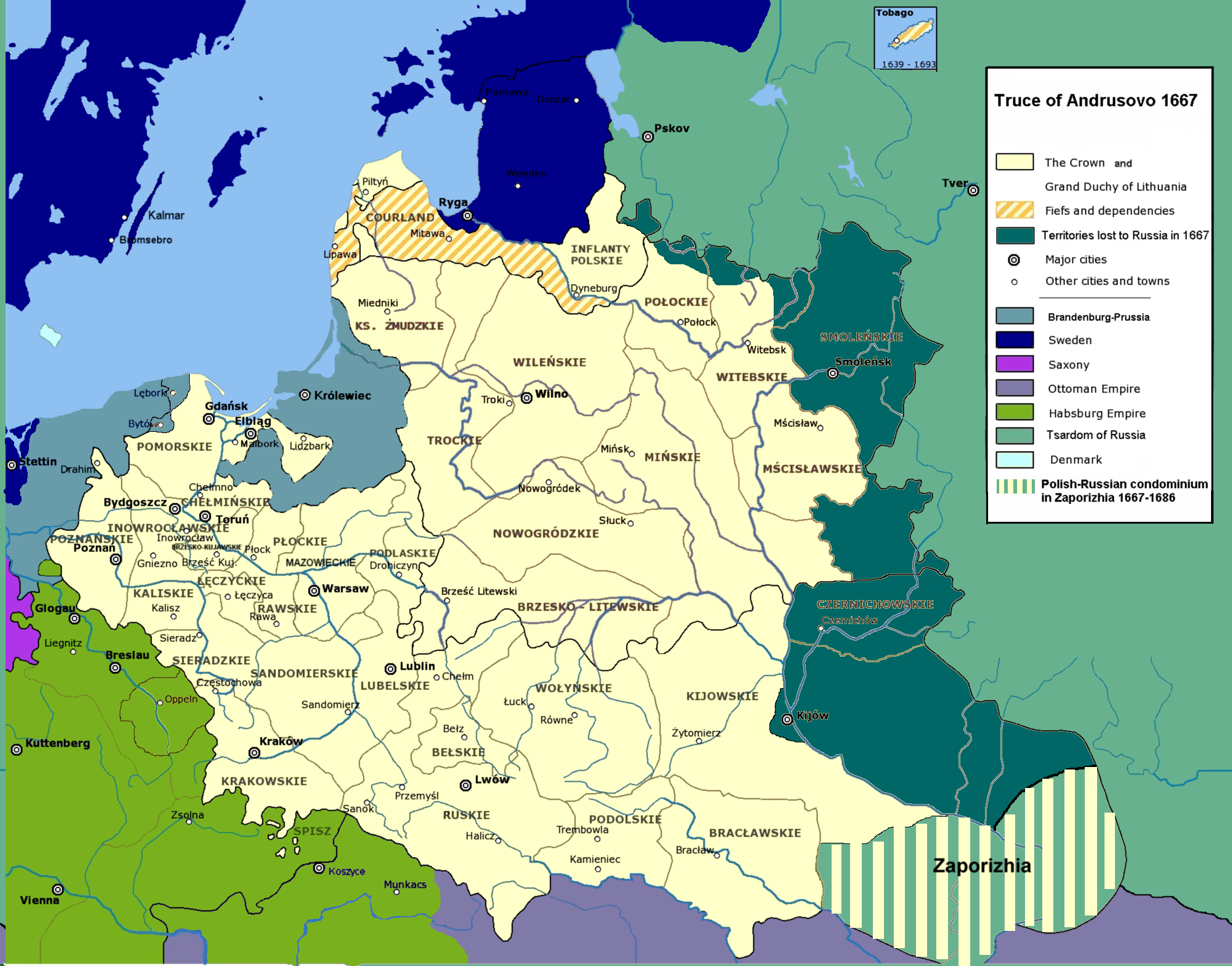
It is a simple and stark truth there never was a Ukrainian state before 1991. There just was not. Lands currently comprising Ukraine were at various times under the rule of Muslim Khans, of the Ottomans, of Cossack Hetmans (possibly the closest thing to proto-Ukrainians), the Polish-Lithuanian confederation and Russian Tsars.
As I have stated on this blog before, the boundary between Polish/Lithuanian and Russian influence became settled on the Dnieper. I have also published this map before, showing that history resonates through the current conflict. [map at top of page]
There is also the case of third-party recognition of the Ukrainian nationality. I have read, for example, the letters and memoirs, both published and unpublished, of scores of British soldiers and civil servants involved in the Imperial rivalry with Russia in Asia. Many had contact with Russian officers or diplomats. They did clearly recognise different ethnic identities within the Russian Empire. The Russian diplomat Jan Witkiewicz was described repeatedly by British officers as “Polish”, for example. “Cossack” and “Tartar” were frequently used. I cannot recall any of these British sources ever using the description “Ukrainian”.
Nor did British officers who actually passed through Ukraine, like Fred Burnaby and Arthur Connolly, describe it as such in their memoirs. Now I am not claiming that if British imperialists did not notice something, it did not exist. But if there were a centuries-old recognition by the rival Empire of the existence of a Ukrainian national identity, that would definitely mean something. There does not appear to be such.
I should be interested to know where Ukrainian nationalists claim their cultural heritage lies as proof of early national identity. What is the Ukrainian equivalent of Shakespeare’s John of Gaunt speech, of Scotland’s Blind Harry, or even of Poland’s Pan Tadeusz? (This is a genuine question. There may be areas of Ukrainian historic identity of which I am unaware).
Putin was not wrong about history (apart from the dodgy bit about origins of the second world war). But the correct question is whether any of this matters.
It is not whether Putin’s historical analysis is broadly correct, it is whether this matters. I am inclined to the view that Putin is correct that there is little evidence that the people living in Ukraine, hundreds of years ago, ever considered themselves a distinct national entity.
But they are all dead, so they don’t get a vote. The only thing that matters is the opinion of those living there now.
It seems to me beyond dispute that there is now a Ukrainian national identity. I know several Ukrainians who consider themselves joyously and patriotically Ukrainian, just as I know patriotic Ghanaians and even patriotic Uzbeks. The question of how this identity was forged and how recently is not the point.
I should add there are undoubtedly a great many Ukrainians whose sense of national identity is not linked to Nazism. There is a historical and a current strain of Nazism in Ukrainian nationalism, and it is far too tolerated by the Ukrainian state; that is certainly true. But to claim all Ukrainian nationalists are Nazis is a nonsense…………………………………………………………………………………………………
I am aware I need to read more on the creation of national identity, because most of my thought is based on simple observation. It is however entirely plain that national identity can appear, and can be genuine, and can do so in a period of merely decades. There is now a Ukrainian national identity, and those who subscribe to it have the right to their state.
That they have a right to the former boundaries of Soviet Ukraine is a different proposition. Given the reality that it is plain a significant minority of the population do not subscribe to Ukrainian national identity, that civil war broke out, and that this relates to historic geographic fracture lines, it seems that division of territory is now not only inevitable but desirable.
All people of good will should therefore wish to see an end to fighting and a peace settlement, of which the territorial elements are somewhere close to the current lines between the forces, with Russia giving back some territory in return for recognition of its gains. The alternative is more death, human misery and economic malaise.
https://www.craigmurray.org.uk/archives/2024/02/putin-history-and-the-mystery-of-national-identity/
No comments yet.
1 This Month

of the week – Shut Down Drone Warfare!


Tell the Ukrainian Government to Drop Prosecution of Peace Activist Yurii Sheliazhenko

Petition to revoke the licensing of the Near Surface Nuclear Disposal Facility (NSDF) at Chalk River. https://www.ourcommons.ca/petitions/en/Petition/Details?Petition=e-7247
To see nuclear-related stories in greater depth and intensity – go to https://nuclearinformation.wordpress.com
-
Archives
- April 2026 (114)
- March 2026 (251)
- February 2026 (268)
- January 2026 (308)
- December 2025 (358)
- November 2025 (359)
- October 2025 (376)
- September 2025 (257)
- August 2025 (319)
- July 2025 (230)
- June 2025 (348)
- May 2025 (261)
-
Categories
- 1
- 1 NUCLEAR ISSUES
- business and costs
- climate change
- culture and arts
- ENERGY
- environment
- health
- history
- indigenous issues
- Legal
- marketing of nuclear
- media
- opposition to nuclear
- PERSONAL STORIES
- politics
- politics international
- Religion and ethics
- safety
- secrets,lies and civil liberties
- spinbuster
- technology
- Uranium
- wastes
- weapons and war
- Women
- 2 WORLD
- ACTION
- AFRICA
- Atrocities
- AUSTRALIA
- Christina's notes
- Christina's themes
- culture and arts
- Events
- Fuk 2022
- Fuk 2023
- Fukushima 2017
- Fukushima 2018
- fukushima 2019
- Fukushima 2020
- Fukushima 2021
- general
- global warming
- Humour (God we need it)
- Nuclear
- RARE EARTHS
- Reference
- resources – print
- Resources -audiovicual
- Weekly Newsletter
- World
- World Nuclear
- YouTube
-
RSS
Entries RSS
Comments RSS
 nuclear-news
Leave a comment