Patrick Lawrence: The Crisis at The New York Times
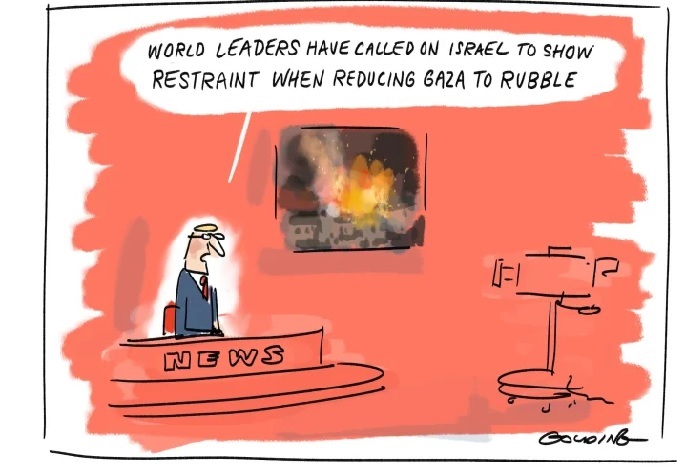
From Israeli Propaganda to Page One.
By Patrick Lawrence ScheerPost 12 Feb 24
It has been evident to many of us since the genocide in Gaza began Oct. 7 that Israel risked asking too much of those inclined to take its side. The Zionist state would ask what many people cannot give: It would ask them to surrender their consciences, their idea of moral order, altogether their native decency as it murders, starves and disperses a population of 2.3 million while making their land uninhabitable.
The Israelis took this risk and they have lost. We are now able to watch videos of Israeli soldiers celebrating as they murder Palestinian mothers and children, as they dance and sing while detonating entire neighborhoods, as they mock Palestinians in a carnival of racist depravity one would have thought beyond what is worst in humanity—and certainly beyond what any Jew would do to another human being. The Israeli newspaper Haaretz reports, as American media do not, that the Israel Defense Forces covertly sponsor a social media channel disseminating this degenerate material in the cause of maintaining maximum hatred.
It is a psychologically diseased nation that boasts as it inflicts this suffering on The Other that obsesses it. The world is invited—the ultimate in perversity, this—to partake of Israel’s sickness and said, in a Hague courtroom two weeks ago, “No.”
Post–Gaza, apartheid Israel is unlikely ever to recover what place it enjoyed, merited or otherwise, in the community of nations. It stands among the pariahs now. The Biden regime took this risk, too, and it has also lost. Its support for the Israelis’ daily brutalities comes at great political cost, at home and abroad, and is tearing America apart—its universities, its courts, its legislatures, its communities—and I would say what pride it still manages to take in itself. When the history of America’s decline as a hegemonic power is written, the Gaza crisis is certain to figure in it as a significant marker in the nation’s descent into a morass of immorality that has already contributed to a collapse of its credibility.
We come to U.S. media — mainstream media, corporate media, legacy media. However you wish to name them, they have gambled and lost, too. Their coverage of the Gaza crisis has been so egregiously and incautiously unbalanced in Israel’s behalf that we might count their derelictions as unprecedented. When the surveys are conducted and the returns are in, their unscrupulous distortions, their countless omissions, and—the worst offense, in my view—their dehumanization of the Palestinians of Gaza will have further damaged their already collapsing credibility.
We come, finally, to The New York Times. No medium in America has had further to fall in consequence of its reporting on Israel and Gaza since last October. And the once-but-no-longer newspaper of record, fairly suffocating amid its well-known hubris, falls as we speak. It has erupted, by numerous accounts including implicitly its own, in an internal uproar over reportage from Israel and Gaza so shabby—so transparently negligent—that it, like Israel, may never fully restore its reputation.
Max Blumenthal, editor-in-chief of The Grayzone, described the crisis on Eighth Avenue better than anyone in the Jan. 30 segment of The Hill’s daily webcast, Rising. “We’re looking at one of the biggest media scandals of our time,” he told Briahna Joy Gray and Robby Soave. Indeed. This well captures the gravity of The Times’s willful corruptions in its profligate use of Israeli propaganda, and Blumenthal deserves the microphone to say so. Since late last year The Grayzone has exhaustively investigated The Times’s “investigations” of Hamas’s supposed savagery and Israel’s supposed innocence.
This is more than “inside baseball,” as the saying goes. We now have a usefully intricate anatomy of an undeservedly influential newspaper as it abjectly surrenders to power the sovereignty it is its duty to claim and assert in every day’s editions. It would be hard to overstate the implications, for all of us, of what The Grayzone has just brought to light. This is independent journalism at its best reporting on corporate journalism at its worst.
What we find as we read The Times’s daily report from Israel, and from Gaza when its correspondents unwisely accept invitations to embed with the IDF, is a newspaper unwilling to question either its longstanding fidelity to Israel or its service to American power. These two ideological proclivities—well more than what its reporters see and hear—have defined the paper’s coverage of this crisis. This is bad journalism straight off the top.
It was inevitable, then, that The Times would serve as Israel’s apologist as soon as the IDF began its murder spree last October.
. This was not a rampage worthy of the Visigoths, as plentiful video footage carried on social media and in independent publications revealed it to be: It was dignified as “a war,” a war waged not against Palestinians but “against Hamas,” and Israel fought it in “self-defense.” Hamas is “a terrorist organization,” so there is no complexity or dimensionality to it, and therefore no need to understand anything about it.
It has been a question of minimizing and maximizing in the pages of The Times. Israel’s genocidal intent is indecipherable to anyone relying on its coverage. The physical destruction of Gaza is never described as systematic. The IDF does not target noncombatants. The newspaper has reported the shocking statements of Israeli officials, some openly favoring genocide, ethnic-cleansing, and the like, only when these have been so prominently reported elsewhere that The Times could no longer pretend such things were never said. ………………………………………………………………………………………………………………………………………………………………..
And so on. You have descriptions of all kinds of unimaginable, B–movie perversities—militiamen playing with severed breasts, militiamen walking around with armfuls of severed heads—that rest upon “witnesses” whose testimonies, given how often they shift or do not line up with what was eventually determined, simply cannot be counted as stable.
And then there are the official statements. Among the most categoric of these is one from the Israeli police, issued after The Times published “‘Screams Without Words’” Dec. 28 and asserting that they have found no eyewitnesses to rapes on Oct. 7 and see nothing in media reports such as The Times’s constituting evidence of systematic sexual violence.
And so on. You have descriptions of all kinds of unimaginable, B–movie perversities—militiamen playing with severed breasts, militiamen walking around with armfuls of severed heads—that rest upon “witnesses” whose testimonies, given how often they shift or do not line up with what was eventually determined, simply cannot be counted as stable.
And then there are the official statements. Among the most categoric of these is one from the Israeli police, issued after The Times published “‘Screams Without Words’” Dec. 28 and asserting that they have found no eyewitnesses to rapes on Oct. 7 and see nothing in media reports such as The Times’s constituting evidence of systematic sexual violence. ………………………………………………………………………………………………………… more https://scheerpost.com/2024/02/12/patrick-lawrence-the-crisis-at-the-new-york-times/
Nuclear Illusions Hinder Climate Efforts as Costs Keep Rising

a long line of nuclear illusionists advocating grandiose goals for nuclear energy without any evidence to suggest they could be achieved, and much to suggest why they never will be.
“In recent years the nuclear industry seems to have quietly changed its business model from making and selling products to harvesting subsidies for fantasies”
the timelines will shrink, and the mirage will fade. Money will be wasted and global warming will continue.
The federal government also continues to fund efforts to develop “new” designs for smaller reactors that are proving far less economic than larger ones and will struggle to succeed. Two government showcase projects have already collapsed for lack of customer interest.
Stephanie Cooke, 12 Feb 2024 Energy Intelligence Group, Stephanie Cooke, Washington, https://www.energyintel.com/0000018d-7a5e-d1ef-a5cd-fe7e077c0000
The price tag for new nuclear plants just got a lot higher — at up to £46 billion ($58 billion) for two French reactors under construction in the UK — but don’t expect that to deter enthusiasm for nuclear energy. According to former US Energy Secretary Ernest Moniz, the world “will soon need to build the equivalent of about 50 large nuclear power reactors per year until 2050” to mitigate climate change. Moniz admits that’s a challenge, but nevertheless possible if nations “rethink how to build, regulate and finance nuclear technology.” Moniz comes from a long line of nuclear illusionists advocating grandiose goals for nuclear energy without any evidence to suggest they could be achieved, and much to suggest why they never will be.
In 1998, when the future of nuclear energy looked grim, a group of nuclear worthies convened in Paris for an International Conference on Preparing the Ground for Renewal of Nuclear Power. It was the fourth such attempt since the initial conference on the topic in 1979. In opening remarks later published, a former General Electric executive, Bertram Wolfe, proclaimed that “if one assumes nuclear energy will be needed to provide one-third of the world’s energy by the middle of the next century,” 100-200 new reactors per year would have to be added over the next 50 years.
Global warming was seen as a potential, though still-distant threat, but enough of one to argue for more nuclear energy as a “precautionary” measure against it, according to another speaker, Chauncey Starr, who had founded and presided over the US Electric Power Research Institute. Starr dismissed renewables as the “visionary goal” of an “anti-nuclear environmental community” embraced by politicians that “either suffer from the childlike innocence of the ignorant” or “knowingly engaged in political duplicity.” By 2060, hydro and renewables would “very optimistically” account for only 23% of worldwide electricity consumption, Starr predicted, and they would be heavily dependent on subsidies. He was off by several decades. That benchmark was surpassed in 2016, according to the 2023 BP Statistical Review of World Energy.
It was the nuclear crowd that suffered from ignorance, and illusionary ideas. One prominent industry executive at the time, Shelby Brewer, proclaimed in Paris that recent deregulation of US wholesale electricity markets would have “a positive impact on nuclear power” because utilities no longer subject to state regulated rates of return would be more likely to build new reactors. “Power generators will focus explicitly on price competitiveness, cost effectiveness and equity return — a new set of dynamics for the industry.” He wound up by declaring that “the salvation of US nuclear power lies with Adam Smith, not Uncle Sam.”
Real World Experience
In the real world, annual reactor construction starts worldwide since then were far from 200, 100 or even 50 — the highest number was 15 (in 2010). In the 14 years since, construction began on a total of 84 reactors of which 41 were in China, meaning that outside China, just three were started per year on average.
Deregulation was hardly the panacea Brewer predicted either. When reactors in US deregulated markets couldn’t compete against natural gas or renewables, operators were forced to turn to Uncle Sam for subsidies or shut down. Despite subsidies on offer for new nuclear power plants, only one was ever built — in the regulated state of Georgia — with ratepayers forced to foot the bill for financing and construction. The only other US reactor start-up, Watts Bar-2, was commissioned in 2016, but construction on that started in the 1980s, stopped, and then restarted.
The federal government also continues to fund efforts to develop “new” designs for smaller reactors that are proving far less economic than larger ones and will struggle to succeed. Two government showcase projects have already collapsed for lack of customer interest.
“In recent years the nuclear industry seems to have quietly changed its business model from making and selling products to harvesting subsidies for fantasies,” says Amory Lovins, adjunct professor of civil and environmental engineering at Stanford, and cofounder and chairman emeritus of RMI (formerly Rocky Mountain Institute). “A dollar astutely invested in influence campaigns, and sometimes corruption, seems to be able to yield on the order of $10-$100+ in subsidies — for as long as they last. So long as the band plays on, it looks like good work if you can get it.”
Compared with the industry’s past cheerleaders, Moniz appears relatively modest in what he proposes, and he admits that 50 reactors per year is a tall order, “two-thirds more than were built at nuclear power’s peak in the early 1980s.”
His ideas for overcoming the challenges are worn: A “new system” to “deliver standardized products rather than costly and risky one-off multidecade projects.” Including small modular reactors and advanced reactors, there are probably 100 or more designs around the globe in various stages of development. How do you standardize out of that? The only “new nuclear” in the West are the four multidecade projects in Finland, France, the US and UK — all exorbitantly over-budget and by definition economically highly risky. Of the six reactors in question, only two are generating power — one each in Finland and the US.
Airline Industry Model
Moniz looks to the airline industry for a model in the way nuclear plants could be built and regulated. Smaller reactors especially could be produced by “assembly-line methods” and new reactor designs certified by an “international body charged with issuing a single globally accepted generic certification for reactor designs.”
This overlooks the fact that the nuclear power industry is driven by geopolitics and its historic and symbiotic relationship with nuclear weapons. Competition is intense in reactor export markets, with supplier countries jealously guarding their areas of influence and seeking the means for continued influence over decades, as reactors are sited, built and then decommissioned.
The aviation industry is driven by real demand. People who want to fly don’t have alternatives to boarding an airplane; customers who need electricity have many other low-carbon options besides reactors. No airline wants a fatal crash, so it makes sense that pilots, especially if they’re flying to other countries, follow a universal set of norms, and that aviation authorities from several countries are often involved in certifying new aircraft designs.
“To ignore or pretend to ignore that there is so much difference is an insult to readers’ intelligence,” writes Yves Marignac of Institut negaWatt in an email. “To even consider the possibility that things could change so that the conditions for this international free, standardized, ‘orderbook’ approach can be met, furthermore in a timeframe that is consistent with objectives such as delivering on 50 large reactors per year soon, is wishful thinking pushed to a record high!”
Along with the announcement of Hinkley Point C’s massive cost increase came news that the first of two reactors wouldn’t be commissioned until at least 2029, and possibly as far out as 2031. This is not stopping plans for more nuclear power in both the UK and France, with London promising eight new reactors by 2050, and Paris calling for six reactors by 2035, with as many as eight more after that. These goals, billed as part of the “global solution” to climate change, are no more than a distant mirage.
As the two countries haggle over who pays the exorbitant costs at Hinkley Point C, the timelines will shrink, and the mirage will fade. Money will be wasted and global warming will continue. “The costlier and slower new reactors are, the less fossil fuel they can displace per dollar and per year, compared to a like investment in renewables and efficient use — thereby making climate change worse, not better,” argues Lovins. “Climate effectiveness requires that we count carbon, cost and speed — not just carbon.”
It’s time to close the curtain on illusionist theater in energy policy-making. It’s a show that’s long since run its course.
Stephanie Cooke is the former editor of Nuclear Intelligence Weekly and author of In Mortal Hands: A Cautionary History of the Nuclear Age. The views expressed in this article are those of the author.
Surviving an Era of Pervasive Nuclear Instability
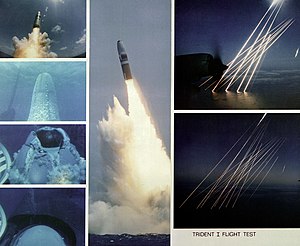
Today, we can identify at least four such potential flash points—Ukraine and NATO’s Eastern Front, Taiwan, the South China Sea, and the Korean Peninsula—with more likely to emerge in the coming months and years. Each has the potential to ignite a Cuban missile crisis–like confrontation.
Today, we can identify at least four such potential flash points—Ukraine and NATO’s Eastern Front, Taiwan, the South China Sea, and the Korean Peninsula—with more likely to emerge in the coming months and years. Each has the potential to ignite a Cuban missile crisis–like confrontation.
A call for grassroots activism.
The Nation, MICHAEL T. KLARE 12 Feb 24
Deapite two years of war in Ukraine, rising tensions over Taiwan, and a metastasizing conflict in the Middle East, our 21st-century world has yet to experience a major nuclear blowup—a moment when the risk of thermonuclear annihilation is real and imminent, as was the case during the Cuban missile crisis of 1962. Yes, we have experienced nuclear jitters over North Korea’s repeated threats to attack South Korea and Vladimir Putin’s threats to use nuclear weapons in Ukraine, but none of those incidents has brought us to the edge of extinction. If current trends persist, however, we are likely to encounter a succession of major nuclear crises in the months and years ahead, each potentially more dangerous than the one before. To prevent these from triggering a nuclear apocalypse, we will need wise and prudent leadership by our top officials—and a mass public campaign to insist on such prudence.
During the Cold War, of course, the potential for a catastrophic nuclear crisis was ever-present. We were all aware that any major US-Soviet confrontation could trigger a nuclear exchange, obliterating every one of us. The end of the Cold War was, therefore, an enormous psychic blessing, allowing us to live without the constant dread of imminent nuclear annihilation. For younger generations, moreover, other vital concerns—racism, global warming, economic insecurity—have come to replace nuclear anxiety. These concerns persist, as potent as ever. But now we must all brace ourselves for the return of incessant nuclear crises.
The reemergence of pervasive nuclear instability is the product of two interrelated factors: the outbreak of a tripolar military rivalry between the US, China, and Russia on one hand, and the proliferation of potential nuclear flash points on the other. Each is contributing to the risk of a nuclear conflict, but the combination is making the danger infinitely worse.
The Emerging Three-Way Nuclear Arms Race
Until very recently, the nuclear arms race was widely perceived as a two-way affair, involving the United States and the Soviet Union (later the US and Russia). During the Cold War, the two superpowers built up their atomic arsenals to terrifying heights and then, following the trauma of the Cuban missile crisis, took steps to control and reduce their respective stockpiles. Still, both sides continued to maintain vast nuclear stockpiles after the Cold War’s end, claiming that these munitions were needed to deter a possible nuclear strike by their opponent. They did, however, agree to further reductions in their atomic arsenals, culminating with the signing, in 2010, of the New Strategic Arms Reduction Treaty (New START).
…………… despite the gradual reduction in “deployable” warheads, the US-Russian arms race was actually gaining momentum, not slowing down.
………………….Still, before 2018, the nuclear arms race was largely considered a two-way affair
………………. But this two-way dynamic began to change in 2018, as the US adopted a new grand strategy identifying China, as much as Russia, as a vital threat to US security, while the Chinese—fearing an increased threat from the US—began the expansion and modernization of their own nuclear capabilities.
…………To prevail in future conflicts with these countries, the NDS affirmed, US forces would have to be equipped with the most advanced weaponry available—and be backed up by a modern, highly capable nuclear force. “Modernizing the Nation’s nuclear deterrent delivery systems…is the Department’s top priority,” Secretary of Defense James Mattis affirmed in a 2018 statement to the Senate Armed Services Committee (emphasis in the original).
In this, and every subsequent Pentagon presentation on the global security environment, US officials have stressed that the nuclear arms race is no longer limited to a US-Russia competition but has become a three-way affair, involving a growing threat from China. “The global situation is sobering,” Mattis testified in 2018. Not only is Russia modernizing its full range of nuclear systems, but “China, too, is modernizing and expanding its already considerable nuclear forces, pursuing entirely new capabilities” [emphasis added].
Misleading statements like these were repeated year after year—despite the fact that China then possessed a minuscule nuclear capability (at least when compared to those of the US or Russia) and had done little, before 2018, to expand or modernize its forces.
Nevertheless, the US military’s embrace of the 2018 National Defense Strategy, accompanied by the Trump administration’s increasingly hostile stance towards China, prompted top Chinese officials, led by President Xi Jinping, to conclude that China’s small nuclear force was inadequate to deter a disarming US nuclear attack and so had to be expanded, enabling it to survive a devastating US first strike and still manage to deliver a retaliatory attack on US territory.
…………………………………………………………………………… While China’s nuclear buildup can largely be viewed as a defensive response to the 2018 NDS with its call for enhanced US military capabilities, that buildup, in classic arms-racing fashion, is being cited by congressional hawks in their strident demands for an accelerated US nuclear modernization effort—and, increasingly, for the abandonment of New START warhead limits when that treaty expires in February 2026.
In October 2023, for example, the Congressional Commission on the Strategic Posture of the United States reported that “the size and composition of the [US] nuclear force must account for the possibility of combined aggression from Russia and China” and, given the expansion of the Chinese arsenal, US strategy must “no longer treat China’s nuclear forces as a ‘lesser included’ threat.” This requires that “The US strategic nuclear force posture should be modified to…[a]ddress the larger number of targets due to the growing Chinese nuclear threat.”
As in the 1960s, then, we face the prospect of an unbridled nuclear arms race involving the development and deployment of increasingly capable and lethal atomic munitions—except, this time, it’s a three-way contest, not just a two-way race. This is sure to enflame tensions among the major powers and make it exponentially harder to negotiate limits on nuclear stockpiles like those adopted in the Cold War era.
Proliferating Nuclear Flash Points
Complicating this picture even further is the proliferation of potential nuclear flash points—contested areas that encapsulate the strategic interests of two or more of the major powers and so possess the ability to ignite a major military encounter with ever-present nuclear implications.
During the Cold War, there were several such hot spots, with Berlin and Cuba the most prominent among them. Both of those sites prompted nuclear crises on more than one occasion, the most famous being the Cuban missile crisis of 1962, when both sides readied nuclear weapons for immediate attack. It was only through tortured diplomacy and sheer luck, notes historian Martin Sherwin in his magisterial account of the crisis, Gambling with Armageddon, that the world was spared a thermonuclear catastrophe. (The United States also threatened to use nuclear weapons in Korea, Vietnam, and during the Quemoy-Matsu crisis of 1954; those episodes were largely kept secret at the time.)
Today, we can identify at least four such potential flash points—Ukraine and NATO’s Eastern Front, Taiwan, the South China Sea, and the Korean Peninsula—with more likely to emerge in the coming months and years. Each has the potential to ignite a Cuban missile crisis–like confrontation.
Ukraine and NATO’s Eastern Front. At present, with both sides in the Ukraine conflict seemingly trapped in a war of attrition and neither side making appreciable gains on the battlefield, the likelihood of a nuclear exchange appears relatively low. Should battlefield conditions change, however, the nuclear risk could increase. Were Ukrainian forces to be on the verge of capturing Crimea, for example, Moscow might employ tactical nuclear weapons to prevent such an outcome, saying it was defending sovereign Russian territory. Nuclear tensions could also erupt along NATO’s border with Russia in east-central Europe, as the NATO powers bolster their military presence there and Moscow—voicing opposition to what it views as threatening Western behavior—takes steps to counter those efforts.
Taiwan. Of equal danger is the possibility of a US-China war erupting over Taiwan. That island, deemed a renegade province by China, has become a source of growing tension as Taiwanese leaders steer the country ever closer toward independence and Beijing threatens to counter such a move with force. ……………………………………………………
The South China Sea. The South China Sea dispute, like the conflict over Taiwan, could easily result in a full-scale US-China conflict……………………………………………………..
The Korean Peninsula. North Korea’s current dictator, Kim Jong Un, has repeatedly threatened to employ nuclear weapons in response to US and/or South Korean provocations, and regularly conducts tests of his various missile and artillery systems to back up these warnings…………………………………………………………
Other Potential Flash Points. These four hotspots currently represent the most likely sites of a future Cuban missile crisis–-like event, but others are sure to arise in the years ahead. Among those that appear most likely to fall into this category are the Arctic, South Asia, and the Middle East. The Arctic constitutes a potential nuclear flash point because both Russia and the NATO powers are building up their forces there—the accession of Finland and Sweden to NATO will surely accelerate this process………………………………………………..
What Is to Be Done?
The picture presented above is not an optimistic one. The combination of a seemingly intractable three-way arms race and the proliferation of potential nuclear flash points suggests we will face a never-ending cycle of nuclear crises in the years to come. Whether we will survive any of these, as we did the Cuban missile crisis, is entirely unforeseeable. ……………………………………………………..
If we hope to prevent the next nuclear crisis from ending in catastrophe, there are many specific things that could be done to reduce the risk of uncontrollable escalation. These include, for example, persuading the US and Russia to resume their “Strategic Stability Dialogue”—high-level talks intended to devise steps for reducing the risk of nuclear escalation—that was paused at the onset of the fighting in Ukraine. The US and China could also commence talks of this sort. All three countries could also agree to slow or freeze their nuclear expansion and modernization efforts.
But none of this will occur in the current political environment, with leaders of all three countries under pressure from powerful domestic forces to bolster their nuclear capabilities vis-à-vis their rivals. These include, among others, a deeply entrenched military-industrial-nuclear complex with a strong ties to elite governing circles. And these forces will not be overcome without a global grassroots movement calling for nuclear restraint and human survival.
I am no starry-eyed idealist. As a veteran of the 1960s Ban the Bomb movement and the 1980s Nuclear Freeze Campaign, I know how hard it is to build a mass movement around nuclear issues. It will be even harder today, with so many other existential perils competing for people’s attention, especially climate change. But I do not see how we humans can expect to survive the coming years of recurring nuclear crises without building such a movement.
Fortunately, there are many others who share this outlook. Here and there across America—and in the world as well—people are becoming more aware of the rising threat of nuclear war and taking steps to reduce that danger. I particularly commend the work of Peace Action New York State, Massachusetts Peace Action, and other local and statewide groups that have addressed the nuclear danger, and Back from the Brink, a national campaign seeking to mobilize grassroots activism on the issue. These are still undersized efforts; but they are a start, and they point us in the direction we must go if we are to ensure human survival. https://www.thenation.com/article/world/surviving-an-era-of-pervasive-nuclear-instability/—
Biodiversity: the first ever State of the World’s Migratory Species report released

The first-ever State of the World’s Migratory Species. report was
launched today by the Convention on the Conservation of Migratory Species
of Wild Animals (CMS), a UN biodiversity treaty, at the opening of a major
UN wildlife conservation conference (CMS COP14). The landmark report
reveals: While some migratory species listed under CMS are improving,
nearly half (44 per cent) are showing population declines. More than
one-in-five (22 per cent) of CMS-listed species are threatened with
extinction. Nearly all (97 per cent) of CMS-listed fish are threatened with
extinction.
Convention on Migratory Species 12th Feb 2024
Nuclear weapons and poison pills: Washington, Beijing warily circle AI talks

SCMP 13 Feb 24
- Bilateral dialogue on automated weapons and artificial intelligence is expected to take place this spring, with parameters yet to be established
- Both China and the US are wary of giving their adversary an advantage by limiting their own capability
The United States and China have a shared interest in sitting down to discuss automated weapons, artificial intelligence and its many potential and unforeseen abuses. Less clear is whether the two global AI superpowers and their huge militaries have common interests or goals coming into the talks, which are expected to take place this spring, according to analysts and experts involved in informal sessions between the two nations.
“The good news, which has been a really, really rare thing these days, is that the AI dialogue is seeing some hope,” said Xiaomeng Lu, director of with Eurasia Group’s geo-technology practice, who is involved with US-China “Track 2” talks among former government officials, experts and analysts. “Both sides have an interest in preventing unintended consequences.”
Washington and Beijing have agreed to sit down in the next few months and discuss AI issues, National Security Adviser Jake Sullivan said in late January after meeting with top Chinese diplomat Wang Yi in Thailand. Non-official Track 2 and semi-official Track 1.5 talks often act as a preamble to formal negotiations. The decision to establish a working group on AI was reached during the November summit between Presidents Xi Jinping and Joe Biden in northern California.
Beijing and Washington have both become increasingly uneasy about the effect that artificial intelligence could have on warfare, governance and society as the technology threatens to eclipse mankind’s ability to control or fully understand it, even as they are wary of giving their adversary an advantage by limiting their own capability.
Lu said both sides in the discussions she has participated in appear engaged and intent on defining what constitutes an autonomous weapon and what it means to have a human in the loop for weapons of mass destruction.
“I can sense the energy; we’re all trying to throw ideas at this,” she said. “The common threat to the US and China these days is what AI can unleash, let’s say nuclear weapons, like a nuclear missile. That’s a very dangerous threshold, and both sides have an interest in preventing unintended consequences.”
Less clear is how that would translate…………………………………………………………………………………………………..
So far, there’s no evidence of any army worldwide using or planning to use frontier AI models for military use, analysts said.
Separately, the world’s two largest economies – key to any meaningful global deal – are also circling around a framework for AI control in the commercial sphere, an issue former secretary of state Henry Kissinger raised last summer on a trip to Beijing four months before his death, reportedly in close consultation with former Google chief executive Eric Schmidt.
Track 2 talks in the commercial area have seen extremely limited progress, with the Chinese side arguing that the best way to ensure safety is for both sides to fully share their technology and halt export restrictions on key AI technologies.
“That’s a non-starter, a poison pill for the US,” said Lu.
This comes as Washington released a proposed rule in late January requiring cloud service providers such as Microsoft and Amazon to identify and actively investigate foreign clients developing AI applications on their platforms, seen as targeting China………………………………………………………….
Among the participants in recent AI Track 2 discussions were representatives from the Carnegie Endowment for International Peace, George Washington University, the Brookings Institution, several other US think tanks, Tsinghua University, and Chinese think tanks affiliated with the Ministry of Science and Technology and the Ministry of Industry.
Both sides have very different core interests, and also are competing for third-country support for their global AI security blueprints……………………………………………………………………
now both sides are scrambling trying to figure out what it is they are going to talk about.”
Also weighing on the talks are very different views of transparency, decision-making and centralised authority. In the past with the advance of new technologies, from mobile phones and fax machines to the internet and cryptocurrency, Beijing has moved slowly to study and control their use and ensure they do not represent a threat to the Communist Party.
The US, with its more decentralised system, has more often allowed companies and individuals to explore and exploit their uses, regulating their use after problems and abuses surface………………………………………….
hinese companies, which are reluctant to engage in international meetings without more guidance from Beijing, even as it remains unclear who has authority over international engagement on AI within the government. Beijing sent Wu Zhaohui, a vice-minister of science and technology, to the UK AI Summit, but the lead regulator is the cyberspace administration of China, which does not have much of an international presence, complicating efforts to engage on AI outside China……………………………………………………….
The Xi-Biden summit represented a bid to stem the rapid slide in bilateral relations and lower the temperature. “AI safety is not a bad place to figure out, can we establish some kind of dialogue,” said Rasser, a former intelligence analyst. “There’s so much distrust on both sides that it’s a very steep hill to climb to some sort of agreement.
“But if at minimum they’re having discussions, dialogue is better than no dialogue. All in all, it’s not a bad thing that they’re exploring the potential.” https://www.scmp.com/news/china/article/3251605/nuclear-weapons-and-poison-pills-washington-beijing-warily-circle-ai-talks
‘Holderness nuclear waste site seems ludicrous’ – expert warns of ‘significant’ risks
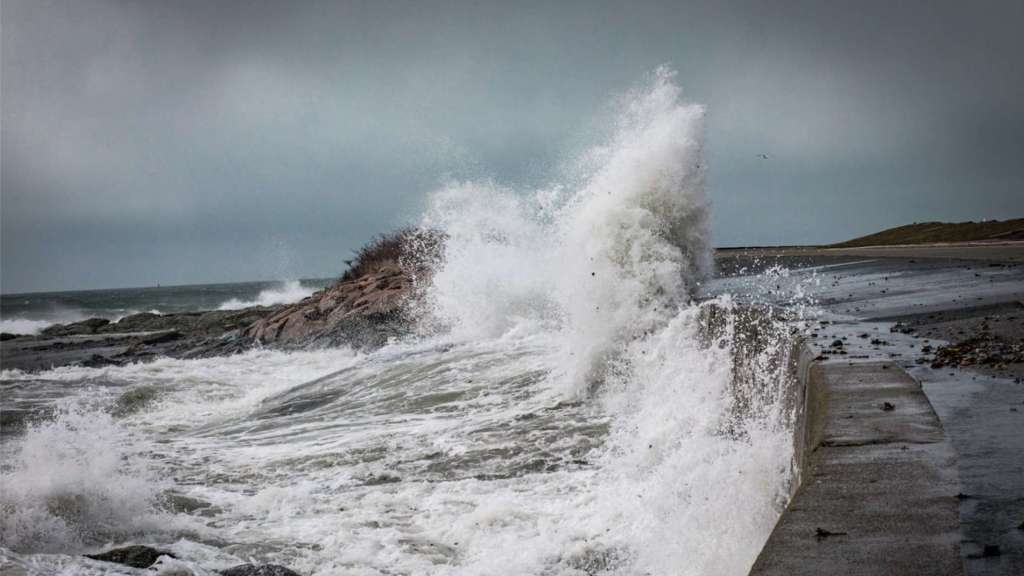
“Over the next 50 to 100 years the issue is sea level rise, but in the nearer term it’s storm surge risk. So why on earth are they looking at this location?
Dr Paul Dorfman is astonished that a Geological Disposal Facility is being considered for South Holderness
By Joseph Gerrard, Local Democracy Reporter 12 Feb 24
An expert has warned against proposals to build an underground radioactive nuclear waste site under Holderness.
Dr Paul Dorfman, an academic and former government adviser, told LDRS he was astonished that a Geological Disposal Facility (GDF) had been proposed for south Holderness. The researcher, who specialises in nuclear waste management, said the risks included flooding and rising sea levels. He also claimed that GDFs were decades away from being proven as a concept………………………………
Under the proposals, radioactive waste would be put into containers and stored hundreds of metres underground at a site which would operate for 175 years. The network of underground vaults and tunnels built within natural geological formations would then be back-filled and the surface site would be given over to other uses.
The establishment of the South Holderness Working Group, which includes East Riding Council, could see funding of up to £2.5m granted if the proposals progress. A facility would only be built if the majority of people in the affected area were shown to want it through a “Test of Support” – though the form that this would take has yet to be decided.
Since the announcement, opposition has been growing to the proposals including with the formation of a local GDF Action Group vowed to oppose it. Beverley and Holderness MP Graham Stuart has also backed a call from South East Holderness councillors Lyn Healing and Sean McMaster for the council to withdraw from the project.
‘Significant risks’
Dr Dorfman is a fellow of the University of Sussex’s Science Policy Research Unit and chairs the Greenpeace-backed Nuclear Consulting Group. His work has included advising the Government, including the Ministry of Defence, on nuclear waste management
Dr Dorfman said the proposals threw up problem after problem and the case for a GDF in south Holderness was knocked out of court when stacked against the evidence. The academic said: “There’s lots of discussions around nuclear energy, but that’s beside the point in this case, it’s about the site itself.
“This is an appalling site, it seems ludicrous, the area seems to have a socially disadvantaged community, and all that implies for why this location has been chosen. There’s lots of models, including the Environment Agency’s, which show this area is at risk of flooding.
“That’s because of sea levels and future sea level rises, there’s some uncertainty over how that will play out. But what there isn’t uncertainty over is the risk of storm surges.
“Over the next 50 to 100 years the issue is sea level rise, but in the nearer term it’s storm surge risk. So why on earth are they looking at this location?
“The other issue is that GDFs are largely conceptual. Yes, one’s been constructed in Sweden, but it’s still an ongoing experiment due to sets of ongoing questions around the containment, the backfill, and most importantly whether the highly radioactive waste can be securely isolated from the wider environment for tens of thousands of years.
“What would happen if there is an accident or incident at a GDF? Significant key underlying research hasn’t been completed, so the question remains, how you can start something like this before you know what you’re doing?
“The current European consensus supports the GDF concept. We have this shared problem of nuclear waste, and we must find a way of managing this extraordinarily toxic stuff. France has also been trying to build a GDF, but they’ve also had significant problems with community acceptance.
“It’s all very well saying let’s do this, but what if deep emplacement makes matters worse? The UK has an existential nuclear waste burden. What are we going to do with it? Well, at the end of the day, no one really knows.
“There may be no final solution, we may have to store it. With a GDF, there’s a huge amount of uncertainty around the underlying geology, would it remain stable for millennia? Then there’s a security issue. Once a GDF is operational, there’s still going to be an opening somewhere.
“And there’s going to be years of trying to emplace this highly radioactive stuff under the ground in containers. It has to be restated that high and mid-level radioactive waste is hugely toxic, and once emplaced, if something goes wrong, then we have a whole set of new problems.
“So, you’ve got problem after problem, and then on top of that you’ve got the issue in south Holderness of the significant risk of flooding. At that point we should just say forget it. This raises the question as to why this site was selected and all that implies for those who have been doing the site selection.
“As for me, I’m astonished the site is being considered. Clearly there will have been preliminary discussions on planning gain for the wider area, with the investment and jobs it would create.
“At a time when money is tight for local people and the local authority, any new money would be welcome. There’s always an upside to any new development, but this has to be weighed against the downside, which in this case is building a high-level nuclear waste site in an area of flooding risk, and the potential hazard to the local community over generations.
“I can’t put into words how amazed I am by this choice of location. As if there weren’t enough problems with a GDF already, south Holderness is a deeply problematic location.”……………………………………………………………………………… https://www.hulldailymail.co.uk/news/hull-east-yorkshire-news/holderness-nuclear-waste-site-seems-9090538
Law not War global meeting of participating organizations.

Online. February 20, 2024
Contact LAW not War if you are interested in participating in the meeting.
LAW not War is a global coalition and campaign to enhance the jurisdiction and use of the International Court of Justice (ICJ) in order to assist countries in resolving international disputes peacefully rather than through recourse to the threat or use of force.
The authority of the ICJ within the United Nations system, and the unique contribution the ICJ plays with respect to the application of the law, ensures that its decisions exert considerable influence and impact on the parties and other stakeholders in its cases. Better use of this authority should be made to end the scourge of war, as envisaged in the UN Charter.
LAW not War was launched in October 2023 by a coalition of seven co-sponsoring organizations and more than 80 participating organizations (see LAW not War for the list of organizations). This meeting will provide opportunities to learn more about the role of the ICJ and discuss strategies to encourage greater acceptance and use of ICJ jurisdiction.
The meeting is open for representatives of LAW not War participating organizations and organizations that are considering joining LAW not War.
Contact LAW not War if you are interested in participating in the meeting. It will be held in two sessions – one timed to suit participants from Asia/Pacific, the other timed to suit participants from the Americas/Africa/Europe/Middle East.
Public hearings on the International Court of Justice Advisory Opinion on Israel and Palestine February 19-26, 2024

On February 9, 2024, the ICJ announced that from February 19-26 it will hold public hearings on the request for an Advisory Opinion in respect of the Legal Consequences arising from the Policies and Practices of Israel in the Occupied Palestinian Territory, including East Jerusalem. Fifty-two States and three international organizations have expressed their intention to participate in the oral proceedings before the Court.
In it’s request for the Advisory Opinion, the UN General Assembly asks the ICJ:
- (a) What are the legal consequences arising from the ongoing violation by Israel of the right of the Palestinian people to self-determination, from its prolonged occupation, settlement and annexation of the Palestinian territory occupied since 1967, including measures aimed at altering the demographic composition, character and status of the Holy City of Jerusalem, and from its adoption of related discriminatory legislation and measures?
- (b) How do the policies and practices of Israel referred to in paragraph 18 (a) above affect the legal status of the occupation, and what are the legal consequences that arise for all States and the United Nations from this status?”
The hearings will be streamed live and on demand (VOD) in the two official languages of the Court on the Court’s website and on UN Web TV.
Congress takes aim at the Nuclear Regulatory Commission
By Victor Gilinsky | February 12, 2024, Victor Gilinsky is a physicist and was a commissioner of the US Nuclear Regulatory Commission during the Ford, Carter, and Reagan administrations. https://thebulletin.org/2024/02/congress-takes-aim-at-the-nuclear-regulatory-commission-its-a-deja-vu-all-over-again/?utm_source=Newsletter&utm_medium=Email&utm_campaign=MondayNewsletter02122024&utm_content=NuclearRisk_NuclearRegulartoryCommission_02122024
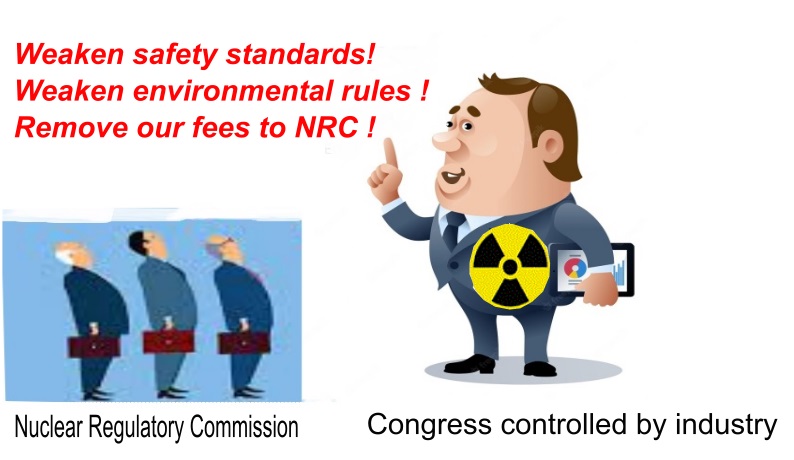
Politico reports that congressional promoters of “advanced” nuclear plants are blaming the Nuclear Regulatory Commission (NRC) as the main obstacle to their deployment. The report singles out Senate Energy and Natural Resources Committee Chairman Joe Manchin (D-WV) and cites his and his colleagues blocking the reappointment to the commission of Jeff Baran, who tended to lean toward safety more than his fellow commissioners, as the start of a campaign to bring the agency to heel. Such crude bullying of a safety agency, especially by people who don’t understand what it involves, is so obviously improper as not to need further comment. But there is more to the story.
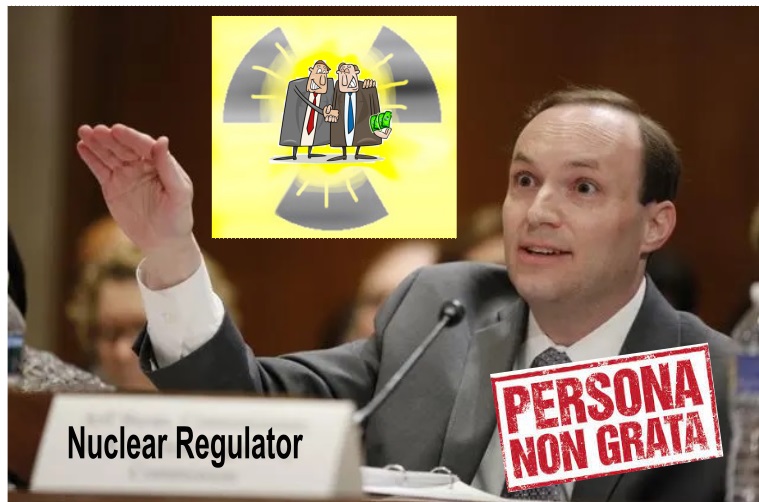
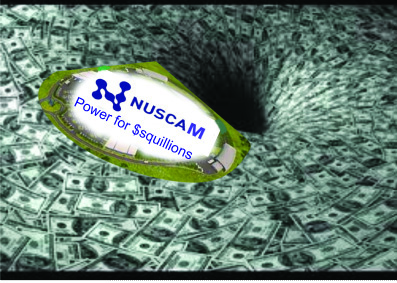
The triggering event for Sen. Manchin’s ire appears to be the faltering of NuScale, the leading firm touting the development of small modular reactors (SMRs), and the most likely to succeed commercially. The NuScale reactor design had some hiccups in satisfying the NRC’s requirements for a license, but its fundamental problem was its inability to attract customers. That commercial failure darkens the prospects of the rest of the nuclear industry’s stable of “advanced” designs, whose variety makes licensing more difficult. Safety is a subtle business (think of the Boeing door problem) and depends on design details.
More fundamentally, at risk is the dream of the nuclear industry and the US Energy Department—spun out in hearings before the Senate Energy Committee—of building large numbers of such reactors and exporting them around the world, with the United States regaining undisputed global leadership in nuclear technology.
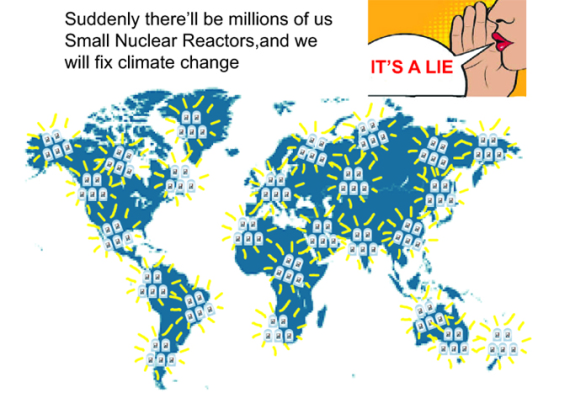
If this beautiful dream isn’t working out, somebody must be at fault, and who better to blame than the nuclear licensing authorities for paying too much attention to safety. If you think this way, the obvious fix is to reorient the NRC. Legislation to do that (ADVANCE Act, S-1111) has passed the Senate with strong bipartisan support. As Sen. Shelley Capito (R-WV), the act’s chief sponsor, put it: “we must establish regulatory pathways for next-generation nuclear designs to be approved quickly and without burdensome unnecessary costs.”
There is a sense here of “deja vu all over again.” The most prominent in the pipeline of “advanced” reactor designs are fast reactors. (Sidebar: They rely on fast neutrons and are cooled by liquid sodium, whereas all currently operating US power reactors rely on slow neutrons and are cooled by water.)
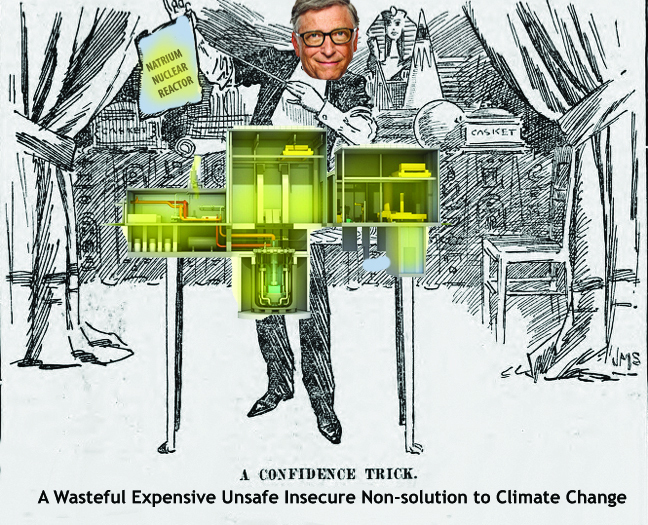
The most prominent design of this type is TerraPower’s (Bill Gates’s) Natrium reactor. Despite its “advanced” label, this type of power reactor was developed by the US Atomic Energy Commission in the 1960s and 1970s. The prototype Clinch River plant, about the same size as Natrium, was then the country’s largest energy project. The AEC’s central goal, backed at the time by the powerful Joint Committee on Atomic Energy, was to shift US electricity generation to such reactors, starting around 1980. The advantage of these reactors is that, fueled with plutonium, there are enough excess neutrons to convert uranium in the reactor into more plutonium than is being consumed; thus it is possible to “breed” plutonium, hence the name “breeder reactor.” Natrium can be fueled in this way and likely would be if it gained wide acceptability.
Just as supporters of new “advanced” reactors see NRC safety licensing as a threat, so the AEC’s fast reactor developers saw that agency’s semi-independent reactor licensing division as standing in the way and sought to undermine it. (“Regulatory,” as it was called then, was split off from the AEC in 1975 and became the NRC. In time, the rest of the AEC became the Energy Department.) The licensing division was treated by the AEC commissioners as a stepchild and kept weak so as not to threaten the big-budget reactor project.
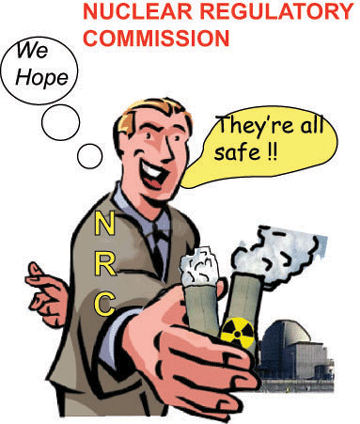
In the end, this strategy didn’t help the fast breeder reactor project. It got canceled because it didn’t make sense economically. But the weakness of the AEC regulatory organization had important consequences affecting the safety of the power reactors utilities bought in large numbers starting in the mid-1960s. Under pressure from the industry and commissioners, plants got licensed after rather skimpy safety reviews. So as not to constrain the licensing process, the AEC commissioners did not approve any safety regulations for power reactors until 1971. All but two of today’s 94 US operating power reactors were ordered before 1974. When it later became evident the early power reactors needed important safety upgrades, especially after the 1979 Three Mile Island accident, the nuclear industry resisted them.
In the late 1990s, it became evident that some of the plants’ safety documents—necessary for operation—were a mess. Then-NRC Chair Shirley Jackson tried to apply the NRC regulations strictly. The plant owners didn’t like this kind of oversight and got to New Mexico Sen. Pete Domenici, their senatorial godfather, who, in a private meeting, threatened Jackson with a huge budget cut. She got the point quickly, fired offending staff, hired Arthur Anderson management consultants to “improve” the licensing process, and ended the detailed public rating of nuclear power plants that the companies hated because Wall Street used the ratings for bond issues. After those changes, Domenici said he was happy. He boasted about coercing her in his book, A Brighter Tomorrow: “Since that meeting with Chairman Jackson, I have been very impressed with the NRC. They are now a solid, predictable regulatory agency.” There haven’t been many industry complaints since NRC fell into line—that is, until recently.
While the historical industry attacks on the NRC put self-interest above public safety, the agency, after its accommodating responses, didn’t come out looking good, either. A more recent change in the way the commission describes its responsibilities raises further questions about its priorities. It concerns the safety standard in the Atomic Energy Act (Sec. 182): “adequate protection of the public health and safety.” That phrase was cited by the agency for decades as the source of its authority and was the safety standard applied in commission actions.
Perhaps a dozen years ago, for reasons unknown but guessable, the commissioners began to use a modified version of the statutory standard, which now reads (for example, Strategic Plan 2022-2026) “reasonable assurance of adequate protection of public health and safety.” There is no denying that the added phrase waters down the Sec. 182 standard, which itself has not changed.
Do Nuclear Regulatory Commission actions under that modified standard even conform with the Atomic Energy Act? The Senate energy committee might usefully address itself to that question before it undertakes any more brow-beating of the already-timid NRC.
Planned UK nuclear reactors unlikely to help hit green target, say MPs
Guardian 13 Feb 24
Government plans to deliver SMRs ‘lack clarity’ say environmental committee, and will likely fail to meet clean-energy goal of 2035
MPs have warned that a planned fleet of small nuclear reactors are unlikely to contribute to hitting a key target in decarbonising Britain’s electricity generation, as the government opened talks to buy a site in Wales for a new power station.
The Environmental Audit Committee (EAC) said that ministers’ approach to developing factory-built nuclear power plants “lacks clarity” and their role in hitting a goal of moving the grid to clean energy by 2035 was unclear.
Last year a body, Great British Nuclear, was launched with the aim of delivering new power stations, including a fleet of small modular reactors (SMRs). The government has spent £215m on developing SMR design and is running a competition for companies to bid for government contracts.
However, in examining the role of SMRs, the EAC heard that a final investment decision on the first station in the UK is not expected until 2029. The timeline means it is unlikely to contribute to the 2035 target, or Labour’s pledge to run the grid on clean energy by 2030……………………..
The EAC said that the government plans to create as much as 24 gigawatts of nuclear power by 2050, but this figure could be as low as 12GW. Critics of nuclear power argue that it is costly and slow to build, and that projects to store wind and solar power in large batteries could undermine the need for it as a reliable power source.
…………….. despite pledging hundreds of millions of pounds in support for SMR projects and undertaking to invest in the construction of the UK’s first SMR, the government’s overall vision for the sector at this stage lacks clarity.
“The first SMR is unlikely to be in operation by 2035, the date ministers have set for decarbonising the electricity supply: so what role will SMRs have in an energy mix dominated by renewables and supplemented by existing and emerging large-scale nuclear?”…………………………………………………… https://www.theguardian.com/environment/2024/feb/13/planned-uk-nuclear-reactors-unlikely-to-help-hit-green-target-say-mps
Ohio Attorney General announces new indictments in FirstEnergy nuclear plant bailout scandal
Two former FirstEnergy executives and the former chairman of the Ohio Public Utilities Commission face 27 felony counts for their role in the House Bill 6 bribery scheme.
KEVIN KOENINGER / February 12, 2024, https://www.courthousenews.com/ohio-ag-announces-new-indictments-in-firstenergy-nuclear-plant-bailout-scandal/—
COLUMBUS (CN) — Ohio Attorney General Dave Yost promised to hold “the checkwriters and the masterminds accountable” Monday as he announced indictments against executives over a bribery scandal surrounding the taxpayer-funded bailout of several failing nuclear power plants.
Yost said the FirstEnergy executives — Chuck Jones, the former CEO, and Michael Dowling, former vice president of external affairs — worked with attorney Sam Randazzo, former chairman of the Public Utilities Commission of Ohio, or PUCO, to further their legislative interests and ensure their employer was not targeted by the commission.
The charges, filed in Summit County, are the first for Jones and Dowling, while Randazzo was previously indicted by the federal government and pleaded not guilty to multiple wire fraud charges in December 2023.
Jones and Dowling are expected to surrender to authorities later Monday.
“This indictment is about more than one piece of legislation,” Yost said at a news conference announcing the indictments. “It is about the hostile capture of a significant portion of Ohio’s state government by deception, betrayal and dishonesty.
“There can be no justice without holding the checkwriters and the masterminds accountable. Shout it from the public square to the boardroom, from Wall Street and Broad and High: Those who perversely seek to turn the government to their own private ends will face the destruction of everything they worked for,” he said.
The indictment names two shell companies run by Randazzo, alongside Jones, Dowling, and the former utilities commission chairman, and were integral to the defendants’ scheme, according to Yost.
The attorney general’s office writes in the charging document that Randazzo negotiated settlements with FirstEnergy on behalf of several clients associated with the Industrial Energy Users-Ohio trade association, but then used legal assignments to transfer those settlements to his shell companies, including Sustainability Funding Alliance of Ohio Inc.
According to Yost, Randazzo earned millions of dollars for consulting services at FirstEnergy — without his clients’ knowledge — and lobbied for the energy provider to secure subsidies eventually included in the ill-fated House Bill 6.
That legislation included a bailout of over $1 billion to save two struggling nuclear power plants owned by FirstEnergy in northern Ohio, and eventually resulted in the indictment, trial and conviction of former Ohio House Speaker Larry Householder.
The Republican politician was convicted of a single RICO charge in March 2023 and is serving a 20-year sentence in federal prison while his appeal is pending before the Sixth Circuit.
Matt Borges, former Ohio Republican Party Chairman, was convicted alongside Householder, and is serving a five-year sentence in federal prison.
FirstEnergy paid Randazzo over $13 million through his shell companies between 2016 and 2019, and he pocketed over $5.3 million of that money for himself, the attorney general writes in the indictment.
Jones and Dowling then agreed to make a one-time payment of $4.3 million from FirstEnergy to Randazzo on Jan. 2, 2019, weeks before the attorney became chairman, a position he abused to “bend the PUCO around FirstEnergy’s will,” according to Yost.
To conduct the investigation, the Ohio Organized Crime Commission organized a task force at the behest of Summit County Prosecutor Sherri Bevan Walsh.
“These individuals used FirstEnergy to break the law and betray the public’s trust,” Walsh said at Monday’s news conference. “This indictment is another step toward bringing justice for the residents of Summit County and Ohio.”
Randazzo was indicted on 22 felony counts, including engaging in a pattern of corrupt activity, aggravated theft, bribery and eight counts of money laundering, among others, while Jones and Dowling face 10 and 12 felony counts, respectively.
Environmental Audit Committee urges UK Government to clarify nuclear SMR strategy
Energy Live News.13 Feb 24
The Environmental Audit Committee has expressed concerns over the lack of clarity in the UK Government’s approach to small modular reactors, despite pledging significant funds.
The Environmental Audit Committee (EAC) has expressed concerns regarding the UK Government’s stance on small modular reactors (SMRs).
Despite allocating £215 million towards SMR technology, the committee highlights unclear policy direction regarding SMRs’ role in the country’s energy mix.
The EAC stresses the necessity of government clarity, especially concerning investment decisions and SMR project commissioning.
As the first SMR is not projected to contribute to the grid until 2035, questions arise regarding its integration with renewable energy sources for achieving decarbonisation goals.
Moreover, evidence presented to the committee indicates potential challenges concerning waste management and regulatory processes…………..
“The first SMR is unlikely to be in operation by 2035, the date Ministers have set for decarbonising the electricity supply: so what role will SMRs have in an energy mix dominated by renewables and supplemented by existing and emerging large scale nuclear………………… https://www.energylivenews.com/2024/02/13/government-urged-to-clarify-nuclear-smr-strategy/
Oxfam reaction to the Dutch court’s decision to stop military exports to Israel
February 13, 2024, by: The AIM Network, https://theaimn.com/oxfam-reaction-to-the-dutch-courts-decision-to-stop-military-exports-to-israel/—
Oxfam Novib, together with PAX, and the Rights Forum organisations, has won a lawsuit against the Dutch Government for exporting arms to Israel that are being used in the war in Gaza. The Dutch Court ordered the government of Netherlands to stop supplying F35 fighter jet parts to Israel within seven days, due to the clear risk of serious violations of international humanitarian law. The decision comes following the three organisations’ appeal to the court case against the Dutch government for supplying Israel with military equipment despite knowing they are used to commit war crimes in Gaza. The judge concluded, based on reports from Amnesty and the UN, that many civilians, including children, are being targeted.
In response to the ruling, Michiel Servaes – Oxfam Novib Executive Director – said:
“This positive ruling by the judge is very good news, especially for civilians in Gaza. It is an important step to force the Dutch government to adhere to international law, which the Netherlands has strongly advocated for in the past. Israel has just launched an attack against the city of Rafah, where more than half of Gaza’s population are sheltering, the Netherlands must take immediate steps.”
“It is a pity that this legal action was necessary and, unfortunately, has taken four months to come to this conclusion. The judge had ruled that the Dutch Minister of Foreign Trade and Development Cooperation was obliged to re-examine the arms export license to Israel, and that his decision was taken incorrectly. We hope that this verdict can encourage other countries to follow suit, so that civilians in Gaza are protected by international law.”
Latest Fukushima leak exposes failures in nuclear crisis management
Xinhua 2024-02-12, https://www.chinadaily.com.cn/a/202402/12/WS65c9eda7a3104efcbdaeab75.html
In a chilling revelation that sent shockwaves through the world, a new nuclear waste leak has unearthed the gaping crack in Japan’s professed claim of responsible handling the accident at the Fukushima Daiichi nuclear power plant.
The leakage of about 5.5 tons of water containing radioactive materials from the plant also highlights the need for international supervision of Japan’s controversial discharge of the Fukushima nuclear-contaminated water into the ocean.
It is estimated that 22 billion becquerels of radioactive materials such as cesium and strontium are contained in the leaked water, and the plant’s operator, Tokyo Electric Power Company (TEPCO), claimed on Wednesday that monitoring of a nearby drainage channel did not show any significant radiation level changes.
This begs the question: What constitutes a “significant” level?
Nearly 13 years after the catastrophic earthquake and tsunami, recurring leaking incidents still hint at the utility’s mismanagement and the Japanese government’s inadequacy in overseeing it.
On Oct. 26, 2023, just one week before Japan started the third round of release, two men were hospitalized after being accidentally splashed with radioactive liquid at the plant. On Aug. 11, 2023, days before the first round of discharge started, TEPCO found leaks in a hose used to transfer nuclear-contaminated water, which, as it said, would not affect the discharge plan.
Even more concerning, the causes of these incidents have fully exposed the chaos and disorder of TEPCO’s internal management. The leak on Wednesday stemmed from a valve left open during cleaning operations, while the October incident resulted from a loose hose channeling contaminated solutions. In August, TEPCO attributed a leak to cracks approximately four centimeters in length found in a hose.
The deficiencies in the fundamental equipment raise questions about the potential for similar occurrences and whether TEPCO conducts regular inspections of its equipment.
While TEPCO this time claimed that there is no risk to the public and that the surrounding environment remains unaffected by the leak, its history of cover-ups and opacity has eroded public trust.
For instance, it took TEPCO over two years after the 2011 tsunami to acknowledge that radioactive tritium had leaked into the Pacific Ocean, contradicting its initial assertions that the toxic water had been contained within the plant’s premises.
Also, in February 2015, TEPCO admitted that since April 2014, it had been aware of radioactive substances from a rainwater drainage ditch linked to one of its buildings being leaked into the sea when it rained.
Until meaningful reforms are enacted, the specter of Fukushima will continue to haunt Japan, serving as a sober reminder of the country’s failure to protect its citizens and the broader environment.
UK government keen to take control of Anglesey site for Westinghouse to build Wylfa nuclear power station
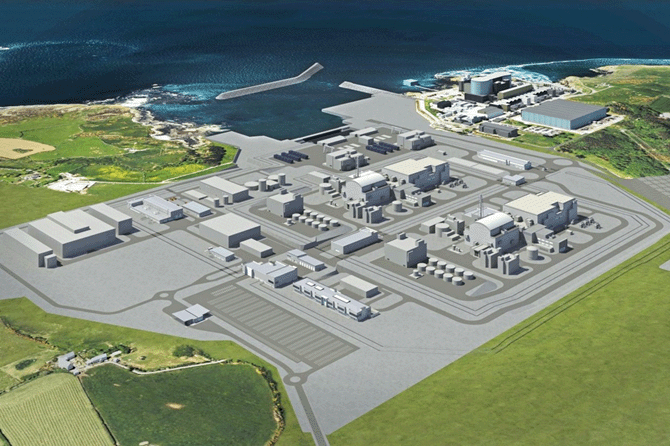
The British government is seeking to take control of a key site in Wales
earmarked for a nuclear power plant as part of wider plans to revamp
nuclear technology for the UK.
State-owned Great British Nuclear is in
early-stage discussions with Hitachi, owner of the land in Wylfa in
Anglesey, an island off north Wales, to buy the site with a view to finding
a new private sector partner to develop a station there.
The site has been
in limbo since Hitachi abandoned plans to build a new reactor there in
January 2019 after failing to strike a financial agreement with the British
government. The Japanese industrial group eventually wrote off £2.1bn on
the project. It also stopped work at a second site in Oldbury, South
Gloucestershire.
Ministers are now determined to revive plans to use the
Wylfa site for new nuclear power to help replace Britain’s current ageing
fleet of nuclear reactors. One minister confirmed that tentative
negotiations with Hitachi had already begun although they acknowledged the
deal might not be finalised until after the election later this year.
The land is thought to be worth about £200mn, but there are expectations that
Hitachi could settle for a lower price given the site is fallow. A
consortium led by the US nuclear company Westinghouse and construction
group Bechtel has proposed building a new plant there using
Westinghouse’s AP1000 reactor technology. It is thought the site could
also host small modular reactors.
FT 11th Feb 2024
https://www.ft.com/content/2e7928c7-ad7f-4ac4-88d8-8cde95ee1a00
Telegraph 11th Feb 2024
Bloomberg 11th Feb 2024
https://www.bnnbloomberg.ca/uk-in-talks-with-hitachi-over-welsh-nuclear-plant-site-ft-says-1.2033580
Energy Voice 12th Feb 2024
City AM 12th Feb 2024
1 This Month

of the week – Shut Down Drone Warfare!


Tell the Ukrainian Government to Drop Prosecution of Peace Activist Yurii Sheliazhenko

Petition to revoke the licensing of the Near Surface Nuclear Disposal Facility (NSDF) at Chalk River. https://www.ourcommons.ca/petitions/en/Petition/Details?Petition=e-7247
To see nuclear-related stories in greater depth and intensity – go to https://nuclearinformation.wordpress.com
-
Archives
- April 2026 (114)
- March 2026 (251)
- February 2026 (268)
- January 2026 (308)
- December 2025 (358)
- November 2025 (359)
- October 2025 (376)
- September 2025 (257)
- August 2025 (319)
- July 2025 (230)
- June 2025 (348)
- May 2025 (261)
-
Categories
- 1
- 1 NUCLEAR ISSUES
- business and costs
- climate change
- culture and arts
- ENERGY
- environment
- health
- history
- indigenous issues
- Legal
- marketing of nuclear
- media
- opposition to nuclear
- PERSONAL STORIES
- politics
- politics international
- Religion and ethics
- safety
- secrets,lies and civil liberties
- spinbuster
- technology
- Uranium
- wastes
- weapons and war
- Women
- 2 WORLD
- ACTION
- AFRICA
- Atrocities
- AUSTRALIA
- Christina's notes
- Christina's themes
- culture and arts
- Events
- Fuk 2022
- Fuk 2023
- Fukushima 2017
- Fukushima 2018
- fukushima 2019
- Fukushima 2020
- Fukushima 2021
- general
- global warming
- Humour (God we need it)
- Nuclear
- RARE EARTHS
- Reference
- resources – print
- Resources -audiovicual
- Weekly Newsletter
- World
- World Nuclear
- YouTube
-
RSS
Entries RSS
Comments RSS
 nuclear-news