In Assange’s Darkest Hour, Committee To Protect Journalists Yet Again Excludes Him From Jailed Journalist Index
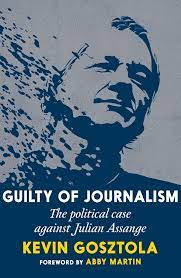
for another year, CPJ excluded the imprisoned former WikiLeaks editor-in-chief from their database of jailed journalists.
Assange is a member of the International Federation of Journalists, which is the world’s largest federation of journalists.
if Assange was brought to trial that it would “effectively criminalize journalists everywhere.”
Assange is and will always be a detained journalist so long as the Justice Department pushes onward with this political case. It is too bad CPJ staff cannot get past their professional hangups and include him in their annual index. It would strengthen their opposition to the prosecution in a way that would give their advocacy even more clarity.
Kevin Gosztola, 20 Jan 24, https://thedissenter.org/assange-darkest-hour-cpj-yet-again-excludes-jailed-journalist-index/
The Committee to Protect Journalists (CPJ) released its census report for 2023. Three hundred and twenty detained or imprisoned journalists were counted by the press freedom organization, as of December 1, 2023.
As indicated, that number is not far from the record high of 360 jailed journalists that was set in 2022.
The 2023 census takes on greater significance given the Israeli government’s war on Gaza and the military attacks and crackdown on Palestinian journalists. Seventeen journalists were jailed by Israel, the “highest number of arrests” since CPJ began tracking arrests in 1992. It is the first time that Israel has “ranked among the top six offenders.”
But at this moment, WikiLeaks founder Julian Assange and his legal team are preparing for a major hearing on February 20 before the High Court of the Justice in the United Kingdom. They view the hearing as a final opportunity to save him from extradition to the United States, where he was charged with violating the Espionage Act in 2019.
Assange needs press freedom organizations, especially those with U.S. headquarters, to strengthen their stand against the charges from the Justice Department. However, for another year, CPJ excluded the imprisoned former WikiLeaks editor-in-chief from their database of jailed journalists.
I emailed CPJ a request for comment and asked why Assange remains excluded from the organization’s annual jailed journalist census, especially given CPJ’s methodology. The response that a CPJ communications person sent me was disappointing.
“After extensive research and consideration, CPJ chose not to list Assange as a journalist, in part because his role has just as often been as a source and because WikiLeaks does not generally perform as a news outlet with an editorial process,” CPJ answered.
The statement was copied-and-pasted from a 2019 post that then-CPJ executive editor Robert Mahoney authored, where he defended the exclusion of Assange.
I pointed out to CPJ that this “extensive research and consideration” was completed in 2019, and I did so because perhaps it is time for CPJ to reassess their determination. To that, CPJ replied, “Yes, there have been many articles about our position on Assange. While you’re free to disagree, our position has been clear, transparent, and consistent for years.”
Indeed, CPJ’s position has been clear. The organization has been consistent in their exclusion of Assange from the press freedom organization’s annual census.
It is debatable whether the organization has been transparent. To my knowledge, the “extensive research and consideration” that they did to decide that Assange is not a journalist has never been shared with the public.
Also, it remains puzzling how a press freedom organization led primarily by journalists with experience in newsgathering can insist that Assange is a source. He has never held a security clearance or a position in the U.S. government that would give him access to classified documents.
The source of the documents at issue in the Espionage Act prosecution against Assange was a U.S. Army intelligence analyst known as Chelsea Manning. She had access to the classified military and government documents, submitted over 700,000 files to WikiLeaks, and Assange published them in 2010 and 2011.
My request for comment mentioned CPJ’s own methodology for labeling someone a journalist, however, CPJ ignored this part of my question.
According to CPJ, a journalist is someone who covers the news or comments on public affairs through any media—including in print, in photographs, on radio, on television, and online.”
Between 2010 and 2017, Assange appeared numerous times on news networks, such as CNN and Al Jazeera English, to comment on WikiLeaks publications as well as public affairs, like National Security Agency (NSA) whistleblower Edward Snowden, NSA surveillance, and internet freedom. He frequently appeared on the independent news program “Democracy Now!” to discuss Google, corruption within U.S. security agencies, and even the Catalonia independence movement in Spain.
Assange is a member of the International Federation of Journalists, which is the world’s largest federation of journalists. Twenty affiliates of the European Federation of Journalists (EFJ), including France, Germany, Italy, Spain, and the United Kingdom, granted Assange honorary membership.
Since 2010, Assange has also been a member of the Media, Entertainment, and Arts Alliance, a trade union in Australia.
CPJ partnered with various civil liberties, human rights, and press freedom organizations in December 2022 to send a letter to Attorney General Merrick Garland demanding that the Justice Department drop all charges against Assange.
On World Press Freedom Day in 2023, CPJ CEO Jodie Ginsberg spoke at an event hosted by the United Nations Educational, Scientific, and Cultural Organization (UNESCO) at the UN headquarters in New York.
Ginsberg called out lawfare targeting journalists and clearly stated, “One thing that the United States could concretely do is drop the charges against Julian Assange.” She noted if Assange was brought to trial that it would “effectively criminalize journalists everywhere.”
So, why the refusal to label Assange a journalist?
I asked CPJ if they have come under pressure from officials within the U.S. government and that is why they will not acknowledge Assange is a jailed journalist. After all, if the Chinese or Russian governments detained someone like Assange, that person would almost certainly be included in CPJ’s index.
The press freedom organization disregarded this portion of my request for comment.
Continue readingNuclear hype in meltdown

The latest nuclear power ‘renaissance’ is going in reverse.
Dr Jim Green , 23rd January 2024, https://theecologist.org/2024/jan/23/nuclear-hype-meltdown
Nuclear power went backwards last year and shrunk to below 10 percent of global electricity generation despite all the hype about a new nuclear ‘renaissance’. Meanwhile, renewables enjoyed record growth for the 22nd consecutive year and now accounts for more than 30 percent.
The nuclear renaissance of the late-2000s was a bust due to the Fukushima disaster and catastrophic cost overruns with reactor projects. The latest renaissance is heading the same way – nowhere.
There were five reactor start-ups and five permanent closures in 2023 with a net loss of 1.7 gigawatts (GW) of capacity. There were just six reactor construction starts in 2023, five of them in China.
Hype

Due to the ageing of the reactor fleet, the International Atomic Energy Agency (IAEA) anticipates the closure of 10 reactors (10 GW) per year from 2018 to 2050.
Therefore the industry needs an annual average of 10 reactor construction starts, and 10 reactor startups (grid connections), just to maintain its current output. Over the past decade (2014-23), construction starts have averaged 6.1 per year and reactor startups have averaged 6.7.
The number of operable power reactors is 407 to 413 depending on the definition of operability, well down from the 2002 peak of 438.
Nuclear power’s share of global electricity generation has fallen to 9.2 percent, its lowest share in four decades and little more than half of its peak of 17.5 percent in 1996.
Over the two decades 2004-2023, there were 102 power reactor startups and 104 closures worldwide: 49 startups in China with no closures; and a net decline of 51 reactors in the rest of the world.
In China, there were five reactor construction starts in 2023 and just one reactor startup. Put another way, there was just one reactor construction start outside China in 2023. One. So much for the hype about a new nuclear ‘renaissance’.
Deployment
Small modular reactors (SMRs) are the subject of endless hype but there were no SMR construction starts or startups last year.
Indeed, the biggest SMR news in 2023 was NuScale Power’s decision to abandon its flagship project in Idaho despite securing astronomical subsidies amounting to around US$4 billion from the US Government. The company is far more likely to go bankrupt than to break ground on its first reactor.
The pro-nuclear Breakthrough Institute noted in a November 2023 article that efforts to commercialise a new generation of ‘advanced’ nuclear reactors “are simply not on track” and it warned nuclear advocates not to “whistle past this graveyard”.
The Institute said: “The NuScale announcement follows several other setbacks for advanced reactors. Last month, X-Energy, another promising SMR company, announced that it was canceling plans to go public. This week, it was forced to lay off about 100 staff.
“In early 2022, Oklo’s first license application was summarily rejected by the Nuclear Regulatory Commission before the agency had even commenced a technical review of Oklo’s Aurora reactor.
“Meanwhile, forthcoming new cost estimates from TerraPower and XEnergy as part of the Department of Energy’s Advanced Reactor Deployment Program are likely to reveal substantially higher cost estimates for the deployment of those new reactor technologies as well.”
Installed
The International Energy Agency (IEA) has just released its ‘Renewables 2023’ report and it makes for a striking contrast with the nuclear industry’s malaise.
Nuclear power suffered a net loss of 1.7 GW capacity in 2023, whereas renewable capacity additions amounted to a record 507 GW, almost 50 percent higher than 2022. This is the 22nd year in a row that renewable capacity additions set a new record, the IEA states.
Nuclear power accounts for a declining share of global electricity generation (currently 9.2 percent) whereas renewables have grown to 30.2 percent.
The IEA expects renewables to reach 42 percent by 2028 thanks to a projected 3,700 GW of new capacity over the next five years in the IEA’s ‘main case’.
The IEA states that the world is on course to add more renewable capacity in the next five years than has been installed since the first commercial renewable energy power plant was built more than 100 years ago.
Milestones
Solar and wind combined have already surpassed nuclear power generation and the IEA notes that several other milestones are in sight:
‒ In 2025, renewables surpass coal-fired electricity generation to become the largest source of electricity generation
‒ In 2025, wind surpasses nuclear electricity generation
‒ In 2026, solar PV surpasses nuclear electricity generation
‒ In 2028, renewable energy sources account for over 42 percent of global electricity generation, with the share of wind and solar PV doubling to 25 percent.
An estimated 96 percent of newly installed, utility-scale solar PV and onshore wind capacity had lower generation costs than new coal and natural gas plants in 2023, the IEA states.
Tripling
The IEA states in its ‘Renewables 2023’ report that: “Prior to the COP28 climate change conference in Dubai, the International Energy Agency (IEA) urged governments to support five pillars for action by 2030, among them the goal of tripling global renewable power capacity.
“Several of the IEA priorities were reflected in the Global Stocktake text agreed by the 198 governments at COP28, including the goals of tripling renewables and doubling the annual rate of energy efficiency improvements every year to 2030.
“Tripling global renewable capacity in the power sector from 2022 levels by 2030 would take it above 11 000 GW, in line with IEA’s Net Zero Emissions by 2050 (NZE) Scenario.”
It adds: “Under existing policies and market conditions, global renewable capacity is forecast to reach 7300 GW by 2028. This growth trajectory would see global capacity increase to 2.5 times its current level by 2030, falling short of the tripling goal.”
In the IEA’s ‘accelerated case’, 4,500 GW of new renewable capacity will be added over the next five years (compared to 3,700 GW in the ‘main case’), nearing the tripling goal. The goal of tripling renewables by 2030 is a stretch but it is not impossible. Conversely, the ‘pledge’ signed by just 22 nations at COP28 to triple nuclear power by 2050 is absurd.
Military-strategic
China’s nuclear program added only 1.2 GW capacity in 2023 while wind and solar combined added 278 GW. Michael Barnard noted in CleanTechnica that allowing for capacity factors, the nuclear additions amount to about seven terrawatt-hours (TWh) of new low carbon generation per year, while wind and solar between them will contribute about 427 TWh annually, over 60 times more than nuclear.
Barnard commented: “One of the things that western nuclear proponents claim is that governments have over-regulated nuclear compared to wind and solar, and China’s regulatory regime for nuclear is clearly not the USA’s or the UK’s.
“They claim that fears of radiation have created massive and unfair headwinds, and China has a very different balancing act on public health and public health perceptions than the west. They claim that environmentalists have stopped nuclear development in the west, and while there are vastly more protests in China than most westerners realise, governmental strategic programs are much less susceptible to public hostility.
“And finally, western nuclear proponents complain that NIMBYs block nuclear expansion, and public sentiment and NIMBYism is much less powerful in China with its Confucian, much more top down governance system.
“China’s central government has a 30-year track record of building massive infrastructure programs, so it’s not like it is missing any skills there. China has a nuclear weapons programme, so the alignment of commercial nuclear generation with military strategic aims is in hand too. China has a strong willingness to finance strategic infrastructure with long-running state debt, so there are no headwinds there either.
“Yet China can’t scale its nuclear program at all. It peaked in 2018 with seven reactors with a capacity of 8.2 GW. For the five years since then then it’s been averaging 2.3 GW of new nuclear capacity, and last year only added 1.2 GW…”
This Author
Dr Jim Green is the national nuclear campaigner with Friends of the Earth Australia and a member of the Nuclear Consulting Group.
Hinkley Point C could be delayed to 2031 and cost up to £35bn, says EDF

As nuclear plant is hit by further delay, real cost will be far higher after inflation is included, as project uses 2015 prices
Guardian, Alex Lawson, Wed 24 Jan 2024
The owner of Hinkley Point C has blamed inflation, Covid and Brexit as it announced the nuclear power plant project could be delayed by a further four years, and cost £2.3bn more.
The plant in Somerset, which has been under construction since 2016, is now expected to be finished by 2031 and cost up to £35bn, France’s EDF said. However, the cost will be far higher once inflation is taken into account, because EDF is using 2015 prices.
The latest in a series of setbacks represents a huge delay to the project’s initial timescale. In 2007, the then EDF chief executive Vincent de Rivaz said that by Christmas in 2017, turkeys would be cooked using electricity generated from atomic power at Hinkley. When the project was finally given the green light in 2016, its cost was estimated at £18bn…………
Crooks said: “Running the project longer will cost more money and our budget has also been affected by rising civil construction costs. It is important to say that British consumers or taxpayers won’t pay a penny, with the increased costs met entirely by shareholders.”
EDF had previously said that the first reactor unit at the nuclear site would be due to be complete by June 2027, with a 15-month buffer period which was likely to be used – putting its completion at September 2028, and a further year for the second unit. It costs were estimated between £25bn and £26bn, and this was later revised up to £32.7bn in February 2023
EDF gave three scenarios, ranging from becoming operational is 2029, to delays pushing this back to 2031.
It said that the cost of completing Hinkley will be between £31bn and £34bn, although if completion is delayed to 2031 costs would rise to £35bn.
In December it emerged EDF’s partner in the project, China General Nuclear, had halted funding for Hinkley. The move came after the government took over CGN’s stake in Hinkley’s proposed sister site, Sizewell C in Suffolk, stripping the Chinese state-owned company of its role in the project.
The latest financial estimates are based on accounting in 2015 figures, meaning the total cost of the project could be far higher when inflation over the last decade is factored in. Hinkley’s ballooning costs have proved controversial with French taxpayers, which are picking up the tab.
Hinkley Point C and Sizewell C are expected to herald a new era of nuclear plants touted by the government.
Last year the government launched a delivery body, Great British Nuclear, with the aim of accelerating the development of new nuclear projects. Earlier this month ministers set out plans for out for the “biggest nuclear power expansion in 70 years”.
However, the Hinkley Point C delay will add to concerns over project delays and costs, as well as skills in an industry earmarked to deliver a quarter of the national electricity demand by 2050………………..
EDF said in January it would delay the shutdown of four of its UK nuclear reactors for at least two years and increase investment in its British nuclear fleet. https://www.theguardian.com/business/2024/jan/23/hinkley-point-c-could-be-delayed-to-2031-and-cost-up-to-35bn-says-edf—
EDF’s UK Hinkley Nuclear Costs Balloon as Plant Delayed Again – an “unmitigated disaster”?
A government spokesperson said the new plant is “not a government project” and as such “any additional costs or schedule overruns are the responsibility of EDF and its partners and will in no way fall on taxpayers”.
The government has also just doubled its own investment into Sizewell C to £2.5bn and is in the process of raising capital from private investors.
A government spokesperson said the new plant is “not a government project” and as such “any additional costs or schedule overruns are the responsibility of EDF and its partners and will in no way fall on taxpayers”.
The government has also just doubled its own investment into Sizewell C to £2.5bn and is in the process of raising capital from private investors.
Hinkley C: UK nuclear plant price tag could rocket by a third.
By Simon Jack, Business editor
The final cost of the Hinkley Point C nuclear plant being built in Somerset may soar by about a third, according to the French firm developing it.
EDF now estimates that the cost could hit £46bn, when taking price rises into account.
The completion date could also be delayed by three years………………………………
The French state-owned firm manages all five nuclear power stations that are currently generating electricity in the UK, along with three that are defueling, the first stage of winding down operations.
In 2022, the cost of the UK’s first new nuclear plant since the 1990s was estimated at £26bn, with a target date for completion of June 2027.
Previous cost estimates have been expressed in 2015 prices for easy comparison over time.
But taking inflation into account, the previous estimate on final costs of £26bn works out at £34bn today. The updated estimate of £31-35bn, could see costs hit £46bn in today’s prices – an increase of about a third.
In a letter to staff, seen by the BBC, Stuart Crooks, the managing director of Hinkley Point C, said there were 7,000 substantial design changes required by British regulations that needed to be made to the site, with 35% more steel and 25% more concrete needed than originally planned.
The revised estimates come after the government recently announced ambitions for the biggest expansion in nuclear power for 70 years.
The UK government has said in the past it wants nuclear to provide up to 25% of the UK’s electricity needs by 2050 as part of its plans to combat climate change.
A government spokesperson said the new plant is “not a government project” and as such “any additional costs or schedule overruns are the responsibility of EDF and its partners and will in no way fall on taxpayers”…………………………………….
Stuart Crooks, the managing director of Hinkley Point C, pointed out, however, that UK bill payers will not be directly affected by those building and cost time overruns.
The French firm EDF agreed to shoulder the risk and pay the full cost of construction, including any increases. This was in return for an agreed electricity price that was substantially higher than the average price in 2015 and would only rise in line with inflation.
“It is important to say that British consumers or taxpayers won’t pay a penny, with the increased costs met entirely by shareholders,” Mr Crooks’ letter read.
However, this price shock comes at a sensitive time for the UK government, which has agreed to allow construction costs for a new plant at Sizewell in Suffolk to be added to customers’ bills gradually over the decade which it will take to build.
The government has also just doubled its own investment into Sizewell C to £2.5bn and is in the process of raising capital from private investors.
Last week, the government triggered a “development consent order” that allows early-stage construction to begin in Suffolk despite several legal challenges from local and national opponents who have taken their fight to the Supreme Court.
Alison Downes of the campaign group Stop Sizewell C said that the announcement of additional funding was”inexplicable” following news of delays to one of the government’s key nuclear projects.
She described the Hinkley and Sizewell projects as an “unmitigated disaster”.
“The government should cancel Sizewell C instead of handing over scarce billions that could be used instead for renewables, energy efficiency or – in this [general] election year – schools and hospitals,” she added……………….. https://www.bbc.com/news/business-68073279
Doomsday clock stays at 90 seconds to midnight: What we know

The clock was set close to midnight due to worries about Russia’s nuclear arsenal, Israel’s war on Gaza and climate change.
Atomic scientists have kept their Doomsday Clock set at 90 seconds to midnight as they did last year, citing worry about Russia’s potential use of nuclear weapons amid its invasion of Ukraine, Israel’s war on Gaza and worsening climate change as factors driving the risk of global catastrophe.
Here is what we know about the Doomsday Clock and Tuesday’s announcement:
What did the Bulletin of the Atomic Scientists announce?
Scientists kept their Doomsday Clock close to midnight and the latest it’s ever been set in its 77-year history.
“Conflict hot spots around the world carry the threat of nuclear escalation, climate change is already causing death and destruction, and disruptive technologies like AI and biological research advance faster than their safeguards,” Rachel Bronson, the bulletin’s president and CEO, said, adding that keeping the hands of the clock unchanged from the prior year is “not an indication that the world is stable”.
What war and conflicts led to this announcement?………………………………………………………………………………………..
UK’s flagship nuclear plant could cost up to $59 billion, developer says
A major nuclear plant that Britain’s government hopes will generate affordable, low-carbon energy could cost up to 46 billion pounds, or $59 billion, and the completion date could be delayed to after 2029
abc news, By SYLVIA HUI Associated Press, January 25, 2024
LONDON — A major nuclear plant that Britain’s government hopes will generate affordable, low-carbon energy could cost up to 46 billion pounds ($59 billion), and the completion date could be delayed to after 2029, the firm developing it said Wednesday.
The U.K. government says nuclear projects like the Hinkley Point C plant are a key part of its plans to ensure greater energy independence and achieve its “net zero” by 2050 strategy.
But a re-evaluation showed that the final bill for the plant, being built in Somerset in southwest England, could soar to up to 34 billion pounds in 2015 prices — or 43 billion pounds in current value, French energy giant EDF said…………………………………. https://abcnews.go.com/Business/wireStory/uks-flagship-nuclear-plant-cost-59-billion-developer-106635464
As Trump looms, top EU politician calls for European nuclear deterrent
Center-right leader Manfred Weber says EU needs to prepare for war without US help and must build its own atomic shield.
Politico, BY JAKOB HANKE VELA AND NICOLAS CAMUT, JANUARY 25, 2024
Facing the potential return of Donald Trump to the White House, the head of the EU’s biggest political grouping is calling for Europeans to prepare for war without support from the United States and to build its own nuclear umbrella.
Manfred Weber, leader of the center-right European People’s Party (EPP) — currently tipped to come first in the European Parliament election in June — described Trump and Russian President Vladimir Putin as “the two who set the framework” for 2024.
Trump’s seemingly imminent coronation as Republican presidential contender after wins in Iowa and New Hampshire have spooked Europe, where he is remembered as a NATO skeptic, accusing EU countries of not paying their way and threatening not to come to Europe’s defense if it were attacked………………………………………… more https://www.politico.eu/article/europe-nuclear-warfare-detterence-manfred-weber-vladimir-putin-ukraine-russia-war/
Chris Hedges: The Four Horsemen of Gaza’s Apocalypse

Biden has always been an ardent militarist — he was calling for war with Iraq five years before the U.S. invaded.
Blinken, along with Biden, lobbied for the invasion of Iraq
Sullivan, Biden’s national security advisor, and McGurk, are consummate opportunists, Machiavellian bureaucrats who cater to the reigning centers of power, including the Israel lobby.
Joe Biden relies on advisors who view the world through the prism of the West’s civilizing mission to the “lesser breeds” of the earth to formulate his policies towards Israel and the Middle East.
By Chris Hedges ScheerPost 21 Jan 24
Joe Biden’s inner circle of strategists for the Middle East — Antony Blinken, Jake Sullivan and Brett McGurk — have little understanding of the Muslim world and a deep animus towards Islamic resistance movements. They see Europe, the United States and Israel as involved in a clash of civilizations between the enlightened West and a barbaric Middle East. They believe that violence can bend Palestinians and other Arabs to their will. They champion the overwhelming firepower of the U.S. and Israeli military as the key to regional stability — an illusion that fuels the flames of regional war and perpetuates the genocide in Gaza.
In short, these four men are grossly incompetent. They join the club of other clueless leaders, such as those who waltzed into the suicidal slaughter of World War One, waded into the quagmire of Vietnam or who orchestrated the series of recent military debacles in Iraq, Libya, Syria and Ukraine. They are endowed with the presumptive power vested in the Executive Branch to bypass Congress, to provide weapons to Israel and carry out military strikes in Yemen and Iraq. This inner circle of true believers dismiss the more nuanced and informed counsels in the State Department and the intelligence communities, who view the refusal of the Biden administration to pressure Israel to halt the ongoing genocide as ill-advised and dangerous.
Biden has always been an ardent militarist — he was calling for war with Iraq five years before the U.S. invaded. He built his political career by catering to the distaste of the white middle class for the popular movements, including the anti-war and civil rights movements, that convulsed the country in the 1960s and 1970s. He is a Republican masquerading as a Democrat. He joined Southern segregationists to oppose bringing Black students into Whites-only schools. He opposed federal funding for abortions and supported a constitutional amendment allowing states to restrict abortions. He attacked President George H. W. Bush in 1989 for being too soft in the “war on drugs.” He was one of the architects of the 1994 crime bill and a raft of other draconian laws that more than doubled the U.S. prison population, militarized the police and pushed through drug laws that saw people incarcerated for life without parole. He supported the North American Free Trade Agreement, the greatest betrayal of the working class since the 1947 Taft-Hartley Act. He has always been a strident defender of Israel, bragging that he did more fundraisers for the American Israel Public Affairs Committee (AIPAC) than any other Senator.
“As many of you heard me say before, were there no Israel, America would have to invent one. We’d have to invent one because… you protect our interests like we protect yours,” Biden said in 2015, to an audience that included the Israeli ambassador, at the 67th Annual Israeli Independence Day Celebration in Washington D.C. During the same speech he said, “The truth of the matter is we need you. The world needs you. Imagine what it would say about humanity and the future of the 21st century if Israel were not sustained, vibrant and free.”
The year before Biden gave a gushing eulogy for Ariel Sharon, the former Israeli prime minister and general who was implicated in massacres of Palestinians, Lebanese and others in Palestine, Jordan and Lebanon — as well as Egyptian prisoners of war — going back to the 1950s. He described Sharon as “part of one of the most remarkable founding generations in the history not of this nation, but of any nation.”
Continue readingBerkshire nuclear defence workers strike
Planet Radio 24 Jan 24
Workers at the Atomic Weapons Establishment (AWE) at Aldermaston and Burghfield are on a 24-hour strike after two months of other forms of industrial action in a dispute over pay.
Action short of a strike started in mid-November and will re-commence on Thursday January 25. ……………………………………….https://planetradio.co.uk/greatest-hits/berkshire-north-hampshire/news/workers-awe-aldermaston-burghfield-strike/
1 This Month


Tell the Ukrainian Government to Drop Prosecution of Peace Activist Yurii Sheliazhenko

Petition to revoke the licensing of the Near Surface Nuclear Disposal Facility (NSDF) at Chalk River. https://www.ourcommons.ca/petitions/en/Petition/Details?Petition=e-7247


of the week – STOP SMALL MODULAR REACTORS IN CANADA
To see nuclear-related stories in greater depth and intensity – go to https://nuclearinformation.wordpress.com
-
Archives
- March 2026 (204)
- February 2026 (268)
- January 2026 (308)
- December 2025 (358)
- November 2025 (359)
- October 2025 (376)
- September 2025 (258)
- August 2025 (319)
- July 2025 (230)
- June 2025 (348)
- May 2025 (261)
- April 2025 (305)
-
Categories
- 1
- 1 NUCLEAR ISSUES
- business and costs
- climate change
- culture and arts
- ENERGY
- environment
- health
- history
- indigenous issues
- Legal
- marketing of nuclear
- media
- opposition to nuclear
- PERSONAL STORIES
- politics
- politics international
- Religion and ethics
- safety
- secrets,lies and civil liberties
- spinbuster
- technology
- Uranium
- wastes
- weapons and war
- Women
- 2 WORLD
- ACTION
- AFRICA
- Atrocities
- AUSTRALIA
- Christina's notes
- Christina's themes
- culture and arts
- Events
- Fuk 2022
- Fuk 2023
- Fukushima 2017
- Fukushima 2018
- fukushima 2019
- Fukushima 2020
- Fukushima 2021
- general
- global warming
- Humour (God we need it)
- Nuclear
- RARE EARTHS
- Reference
- resources – print
- Resources -audiovicual
- Weekly Newsletter
- World
- World Nuclear
- YouTube
-
RSS
Entries RSS
Comments RSS
 nuclear-news