TODAY. Time that Israel stopped being a religious dictatorship

What is so badly needed right now ? The truth. Facts. A bit of logic.
Israel has no official religion. Yet the declaration of independence in 1948 made it clear that Israel is “The Jewish State”.
And now – all the Western powers seem to agree with Benjamin Netanyahu - yes Israel IS the Jewish State.
And why does that matter?
Well, look at the past , and the present. What does a theocracy mean for its people?
Well, for hundreds of years up to around the 500 BC time, the Israel lands, especially Judah, were controlled by a state ideology of “Zion theology,” the idea that Yahweh, the god of Israel, had chosen Jerusalem for his dwelling-place and that the Davidic dynasty would reign there forever. Then the Babylonian conquest happened, and the Hebrew Bible developed in the exiled community. The exiles saw themselves as a people distinct from other peoples.
Oppressed by the Romans, the Jews later became persecuted for centuries by the Christians. In theocratic Europe, the Inquisition developed, culminating in the horrors of the Spanish Inquisition, torturing and killing non-Christians.
So, we see what religiously controlled States did to people, in the past.
And today.
Iran’s Islamic Republic says it all – enforcement of sharia law, oppression of women, oppression of religious minorities, the Supreme Leader exerts ideological and political control over a system dominated by clerics who shadow every major function of the state.
Saudi Arabia is an Islamic theocracy and the government has declared the Qur’an and the Sunnah (tradition) of Muhammad to be the country’s Constitution. Laws are enforced against religious minorities. It has the Committee for Promoting Virtue and Preventing Vice, which carries out religious policing, including control over women’s clothing and their lives. There are severe punishments for blasphemy. Education is dominated by a religious focus.
How does Israel get away with pretending not to be a theocracy?
There’s a worldwide pretence that Jews are an ethnic minority. But Jews are all over the world, and do not have distinctive physical traits or genetic markers.
From the Balfour Declaration of 1917, to the Declaration of Independence in 1948, the world powers seemed to agree that the Palestine communities didn’t matter, and the land could be claimed by Jews who had previously bought properties there, and by the European Jews who survived the Holocaust.
This was grossly unfair to the Palestinians, – and to the Jews, who had little other choice.
But they’re there now. And can’t realistically be moved elsewhere. And Palestinians exist too.
So – everybody has to live with this. It would be a good start if everybody, especially Israeli citizens, recognised the humanity of all people, stopped banging on about “God’s chosen people”, and clearly stated Israel as a secular state.
Israel minister renews call for striking Gaza with ‘nuclear bomb’
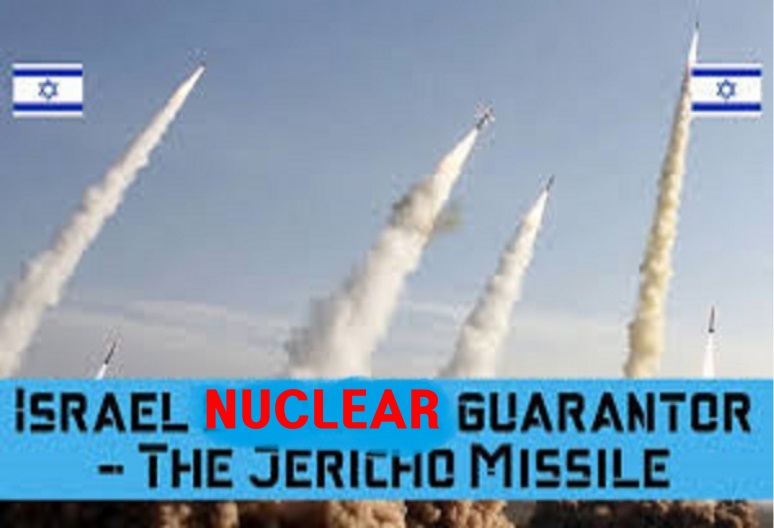
Israel’s far-right Heritage Minister Amichai Eliyahu today renewed his call for striking the Gaza Strip with a “nuclear bomb.”
“Even in The Hague they know my position,” the Times of Israel newspaper quoted Eliyahu as saying during a tour of the occupied West Bank city of Hebron, in reference to his previous call for using nuclear weapons in the Gaza Strip.
In November, Eliyahu said dropping a “nuclear bomb” on the Gaza Strip is “an option.”
The hardline minister also called for encouraging Gaza’s population to leave the enclave.
During the two-day public hearing at the International Court of Justice (ICJ) on 11-12 January, South Africa quoted extremist Israeli politicians, including Prime Minister Benjamin Netanyahu, who have time and again called for erraticating Palestinians, resettling Gaza and blocking the establishment of a Palestinian state, as evidence that Tel Aviv is committing genocide in the Gaza Strip.
France presses UK to help fill multibillion-pound hole in nuclear projects

Call comes day after EDF flagged more delays of construction of power plant at Hinkley Point
Sarah White in Paris and Jim Pickard and Rachel Millard in London, 25 Jan 24, https://www.ft.com/content/3320c06e-7ce3-4a6b-ab22-4b8201a4cfca
The French government is pressing the UK to help plug a multibillion-pound hole in the budget of nuclear power projects being built in Britain by France’s electricity operator EDF. The call for a contribution from the UK is likely to cause tensions between Paris and London, a day after state-owned EDF admitted its construction of a new nuclear power station at Hinkley Point in Somerset would suffer further costly delays, taking the bill to as much as £46bn. The UK has said it will not put cash into the project, which counts EDF as a majority shareholder, and is already backed by a government guarantee on its revenues once it is up and running.
But Paris is pushing for a “global solution” that would also encompass funding issues at another planned UK plant, Sizewell C, said a French economy ministry official and another person close to the talks. “It’s a Franco-British matter,” the French economy ministry official said. “The British government cannot at the same time say EDF has to figure it out alone on Hinkley Point and at the same time ask EDF to put money into Sizewell. We’re determined to find a global solution to see these projects through.”
Sizewell in Suffolk has a different financial set-up to Hinkley. The UK this week said it would inject another £800mn of state funds, bringing its total contribution to £2.5bn at the £20bn plant, where it is the top shareholder. Its partner EDF has no obligation to put more money in. French officials said discussions on various options had begun several months ago with British counterparts, although they acknowledged London had flagged budgetary constraints that would have to be taken into account. In the UK, a government official played down the talks, adding that on Hinkley Point: “Costs will be the responsibility of EDF.”
An EDF executive told the BBC on Wednesday that the French company picks up “the tab for the cost overruns”. EDF on Tuesday warned Hinkley Point would not now be completed until 2029 at the earliest, four years later than its original start date, while the two reactors could cost up to £46bn to build at today’s prices, compared with a £18bn budget in 2016.
Other factors might play into the discussions, however. Under Prime Minister Rishi Sunak, Britain took the political initiative to eject Chinese group CGN as an investor in Sizewell — leaving that project in need of fresh private capital, but also prompting CGN to pull back from Hinkley, where it is a 33.5 per cent shareholder. The Chinese group has fulfilled its contracted payments on Hinkley but has no obligation to fund over-costs and stopped doing so a few months ago.
“The French don’t have many levers here but the CGN issue is a very real one,” a third person close to the talks said. Finding private investors to make up the Hinkley shortfall may be tough, several people close to the group said, although formulas such as state guarantees could be discussed. EDF is only just coming out of a period of financial turmoil, and has big investments to make at home, too, in the coming decades. It was fully renationalised last year
“Our goal here . . . is for what’s happening at Hinkley Point, with the delays and the issue with the Chinese partner’s decision, not to impact EDF’s financial trajectory excessively,” the French economy ministry official said. However, one UK nuclear industry figure said that EDF’s plight at Hinkley was the consequence of signing up to a deal with the UK government a decade ago, which at the time was criticised for being too generous to the French group. Under a so-called contract for difference signed with the state, construction costs are not covered but future electricity production is backed up by subsidies in case power prices fall below a certain threshold.
UK nuclear plant hit by new multiyear delay and could cost up to £46bn.
Britain’s flagship Hinkley Point C nuclear plant has been delayed until
2029 at the earliest, with the cost spiralling to as much as £46bn, in the
latest blow to a project at the heart of the country’s long-term energy
plans.
The surging bill and slipping schedule, announced on Tuesday by the
French state-owned operator and constructor EDF, will put pressure on the
UK government to provide extra financial support for the project.
EDF, which has also experienced long delays on recent parallel projects in
Finland and France that use the same reactor technology, blamed the latest
problems at Hinkley in Somerset on the complexity of installing
electromechanical systems and intricate piping. Hinkley was previously
delayed due to construction disruption during Covid pandemic.
Under EDF’s latest scenario, one of the two planned reactors at Hinkley Point C could
be ready in 2029, a two-year hold-up compared with the company’s previous
estimate of 2027. But it could be further delayed to 2031 in adverse
conditions, EDF said. It did not give an estimate for the second reactor.
EDF said the cost would now be between £31bn-£35bn based on 2015 prices,
depending on when Hinkley Point C was completed.
In today’s prices, the cost would balloon to as much as £46bn. The initial budget was £18bn, with a scheduled completion date of 2025. Alison Downes of Stop Sizewell C, a
campaign group opposed to the planned Suffolk nuclear plant, said EDF was
an “unmitigated disaster”. She added the UK government should cancel
Sizewell C, saying state funding for the project could be better spent on
“renewables, energy efficiency or, in this election year, schools and
hospitals”.
FT 23rd Jan 2024
https://www.ft.com/content/1157591c-d514-4520-aa17-158349203abd
EDF’s UK Hinkley Nuclear Costs Balloon as Plant Delayed Again

Francois de Beaupuy, Bloomberg News, Jan 23, 2024
(Bloomberg) — Electricite de France SA’s nuclear project at Hinkley Point in the UK will cost as much as £10 billion ($13 billion) extra to build and take several years longer than planned, the latest in a series of setbacks for the budget and timetable of the country’s largest energy project.
EDF now expects the two reactors it’s building in southwest England to cost between £31 billion and £35 billion in 2015 terms, the French energy company said in a statement on Tuesday. That’s up from an estimate of £25 billion to £26 billion in 2022, and is the fifth budget increase in eight years. At today’s prices, the project would cost as much as £46 billion, according to the Bank of England’s inflation calculator. …………………
The UK is struggling to get its huge nuclear program off the ground. The government is aiming for as much as 24 gigawatts of capacity by 2050 and will have to accelerate rapidly to achieve that. Hinkley Point will be the first new atomic station to start generating in Britain since 1995. Construction of complex nuclear plants is notoriously slow, and the cost overruns and delays at Hinkley may damp investor enthusiasm for the sector…………………………………..
The setback comes just one day after the UK government pledged to invest an additional £1.3 billion in EDF’s second UK project at Sizewell C. Ministers are hoping the commitment will attract enough private capital to make a final investment decision this year and make progress toward its ambitious 2050 target.
EDF was already struggling with the budget for Hinkley after China General Nuclear Power Corp, its partner in the project, stopped funding, potentially leaving the French company to foot the bill until it is completed. The government-owned French company will also have to spend tens of billions of euros on new atomic plants at home in the coming decades.
Hinkley Point C is not a French government project and so any additional costs or schedule overruns are the responsibility of EDF and its partners and will in no way fall on taxpayers, said a spokesperson for the UK Department for Energy Security and Net Zero.
…….. EDF’s current fleet of five nuclear plants is scheduled to shrink to just three by the end of 2026. Last year, output slumped to the lowest in more than four decades.
While rising costs of metals, cement and labor are affecting industries including large offshore wind projects, the revised plan may revive a controversy over how expensive the technology is and whether further delays are inevitable. Still, the UK government said this month that the country will build another large-scale nuclear power plant, beyond current projects led by EDF.
t’s not the first time Hinkley has ballooned beyond its budget. EDF increased its estimates in 2017, 2019, 2021, and 2022 from an initial estimate of £18 billion when the contract was signed with the UK in 2016.
At the start of the project, the French utility expected the first unit to start by the end of 2025. However, Brexit, the Covid pandemic and the war in Ukraine have disrupted supply chains and boosted the cost of labor and essential materials like steel and cement.
“Going first to restart the nuclear construction industry in Britain after a 20-year pause has been hard,” said Stuart Crooks, Managing Director for Hinkley Point C. https://www.bnnbloomberg.ca/edf-s-uk-hinkley-nuclear-costs-balloon-as-plant-delayed-again-1.2025542
CAMPAIGNERS opposing the development of nuclear power in Bradwell-on-Sea say they believe ‘new nuclear’ in the area “remains dead in the water”.
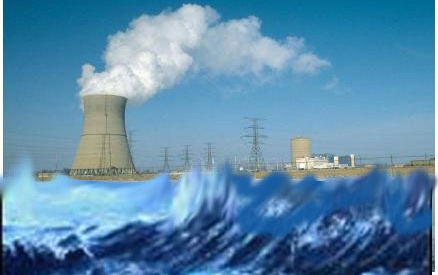
Blackwater Against New Nuclear Group (BANNG) has been fighting its cause for 15 years.
On January 11, the Government released its Civil Nuclear: Roadmap to 2050.
BANNG claims it means the original eight government-listed coastal sites, including Bradwell, are no longer the only sites earmarked for nuclear deployment.
They say new nuclear power stations will only be sited in “suitable locations” identified by developers based on a set of criteria.
BANNG chairman Professor Andy Blowers said: “This new approach to siting effectively rules Bradwell out of any further consideration.
“As we have strenuously demonstrated over the last 15 years, Bradwell is a most unsuitable site and the Blackwater communities are overwhelmingly opposed to nuclear development in such a fragile location, increasingly vulnerable to the impacts of climate change.”
He added: “BANNG welcomes the effective delisting of the Bradwell site. Delisting is something we have insisted on since the list was first compiled more than a decade ago.
“We are at a loss to understand what ‘certain advantages’ can conceivably be attributed to the site.
“Rather as the myriad evidence accumulated and published over the years shows, Bradwell is a wholly unsuitable and unsatisfactory site for the development of nuclear power at whatever scale and capacity.”
A BANNG spokesman said: “A major problem is the vulnerability of the site to flooding, and to storm surges and coastal processes that are intensifying as the impacts of climate change begin to take hold on this fragile coastline
They added: “There are other significant reasons why Bradwell should be off the Nuclear Road Map.
“The Blackwater area has precious environments in land, sea and sky which are protected, conserved and significant.
“The intrusion of a mega power station or a cluster of smaller reactors would prove intrusive, polluting and detrimental to habitats and to human wellbeing.
“Further, there would be dangerous highly radioactive wastes stored on the site for future generations to cope with, along with all the other problems of climate change.
“Above all, the communities around the Blackwater have over the years overwhelmingly declared against new nuclear development at the Bradwell site.
“New nuclear is not welcome here.”
Sizewell C opponents appeal to Supreme Court

Energy Live News, 24 Jan 24
1Opponents of the Sizewell C nuclear power plant, dismissed by the Court of Appeal, seek Supreme Court appeal as the government commits an extra £1.3 billion for project construction in Suffolk.
he government’s recent announcement of an extra £1.3 billion support for the project has prompted a renewed legal bid from the opponents, citing concerns about the project’s viability, sea defences, climate change and infrastructure sustainability.
Opponents of the Sizewell C nuclear power plant include campaign groups Together Against Sizewell C, Stop Sizewell C and Suffolk Coastal Friends of the Earth……..
https://www.energylivenews.com/2024/01/24/sizewell-c-opponents-appeal-to-supreme-court/—
UK Government’s nuclear power plans a roadmap to a dead-end – CND

“The debate and investment into trying to develop new nuclear energy projects divert funds and political motivation away from further developing truly renewable energy sources, which is the real solution.”
Sara Medi Jones, Campaign for Nuclear Disarmament (CND), assesses the government’s latest nuclear power announcement m https://labouroutlook.org/2024/01/23/governments-nuclear-power-plans-a-roadmap-to-a-dead-end-cnd/
It’s only mid-January and we have already had two major nuclear power announcements in 2024. A long-awaited “roadmap” of nuclear power expansion was unveiled earlier this month, with the government promising to accelerate new nuclear projects. And this week we’ve just heard that construction of the Sizewell C nuclear station in Suffolk should be a step closer.
But the problem is – nuclear is a dead-end technology that is not the answer to our climate or energy needs.
Plans for eight new nuclear sites laid out in 2011 have largely stalled, with the only two projects to have got off the ground – Hinkley Point C and Sizewell C – beset with problems. Costs at Hinkley Point have spiralled by 30% to £33 billion, and the start date has repeatedly been pushed back. Sizewell C is struggling to attract private financing, and despite building permission finally being granted now, there are still many hurdles to clear.
The nuclear roadmap’s main aims are to “explore” another nuclear site, develop small modular reactors, secure more investment, and engage the private sector more
But we are unlikely to see any meaningful progress because nuclear power in its very essence is a dangerous and economically unsustainable technology. It burdens future generations with a potential human and environmental disaster that is not compensated for by the expensive electricity provided.
Any new nuclear projects would take decades to build. But we need an answer to our cost of living struggle and to climate change now. Even if nuclear power capacity was doubled worldwide by 2050 (a hugely ambitious ask in itself), it would only result in a 4% reduction in emissions.
The debate and investment into trying to develop new nuclear energy projects divert funds and political motivation away from further developing truly renewable energy sources, which is the real solution.
We must also bear in mind the main reason this government is so in favour of nuclear power: it helps to ensure the infrastructure and skilled personnel is in place to maintain and manufacture Britain’s nuclear weapons system, Trident. During this time of global instability and increased nuclear risk, Britain would do well to forget about propping up their weapons of mass destruction and instead focus on delivering the things that people in this country need, including a functioning and sustainable energy system.
Rare nuclear bunker hits the market as America’s wealthiest people prepare for the worst
Real Estate Brendan Casey, Property Journalist and Editor, 23 Jan 2024, News Corp Australia Network
A rare bunker with roots in the Cold War era has found its way into the real estate market, carrying an asking price of $1.88m (US$1.24m).
Nestled in the city of Sprague in Washington state, this property, constructed in 1959, once safeguarded some of America’s most critical nuclear weapons during the tumultuous time, which spanned from 1945 to 1991, The Post reports.
The Cold War was marked by a strategic standoff between the United States and the Soviet Union, defined by political rivalries and the looming threat of nuclear warfare.
The intense global tension finally subsided in 1991 when Soviet president Mikhail Gorbachev and US president George H. W. Bush inked a historic treaty, putting an end to the conflict………………………………………………………………………………………………………………………………………
In recent years, bunkers have experienced a surge in popularity, reflecting a growing demand for doomsday shelters in the USA.
According to Post sources, the scarcity of such shelters has led to a significant spike in prices.
Some of America’s wealthiest individuals, including Mark Zuckerberg and Peter Thiel, are investing in bunkers for their own doomsday preparations.
Zuckerberg, the Facebook founder and CEO of Meta Platforms, is building a $100m compound in Hawaii, complete with an underground bunker and self-sustaining resources.
Financier Peter Thiel is awaiting approval for a bunker project in New Zealand, joining the ranks of other notable figures such as Sam Altman of OpenAI, and Larry Ellison of Oracle, who are also constructing their own ‘end-of-days retreats’. https://www.realestate.com.au/news/rare-nuclear-bunker-hits-the-market-as-americas-wealthiest-people-prepare-for-the-worst/?campaignType=external&campaignChannel=syndication&campaignName=ncacont&campaignContent=&campaignSource=herald_sun&campaignPlacement=spa
1 This Month


Tell the Ukrainian Government to Drop Prosecution of Peace Activist Yurii Sheliazhenko

Petition to revoke the licensing of the Near Surface Nuclear Disposal Facility (NSDF) at Chalk River. https://www.ourcommons.ca/petitions/en/Petition/Details?Petition=e-7247


of the week – STOP SMALL MODULAR REACTORS IN CANADA
To see nuclear-related stories in greater depth and intensity – go to https://nuclearinformation.wordpress.com
-
Archives
- March 2026 (204)
- February 2026 (268)
- January 2026 (308)
- December 2025 (358)
- November 2025 (359)
- October 2025 (376)
- September 2025 (258)
- August 2025 (319)
- July 2025 (230)
- June 2025 (348)
- May 2025 (261)
- April 2025 (305)
-
Categories
- 1
- 1 NUCLEAR ISSUES
- business and costs
- climate change
- culture and arts
- ENERGY
- environment
- health
- history
- indigenous issues
- Legal
- marketing of nuclear
- media
- opposition to nuclear
- PERSONAL STORIES
- politics
- politics international
- Religion and ethics
- safety
- secrets,lies and civil liberties
- spinbuster
- technology
- Uranium
- wastes
- weapons and war
- Women
- 2 WORLD
- ACTION
- AFRICA
- Atrocities
- AUSTRALIA
- Christina's notes
- Christina's themes
- culture and arts
- Events
- Fuk 2022
- Fuk 2023
- Fukushima 2017
- Fukushima 2018
- fukushima 2019
- Fukushima 2020
- Fukushima 2021
- general
- global warming
- Humour (God we need it)
- Nuclear
- RARE EARTHS
- Reference
- resources – print
- Resources -audiovicual
- Weekly Newsletter
- World
- World Nuclear
- YouTube
-
RSS
Entries RSS
Comments RSS
 nuclear-news