Are Nuclear-Armed Nations Entering a New Arms Race in 2024? Experts Weigh In.
Experts worry about a possible nuclear arms race as global instability and the threat of mass destruction loom large., By Jon Letman , TRUTHOUT.22 Jan 24
ike waking up with a bad hangover, 2024 began with geopolitical headaches and pains from the previous year’s conflicts, chaos and instability. Multiple wars in Africa, Europe and the Middle East; human-caused climate and environmental crises; and concerns about democratic backsliding, economic stress and social unrest marked the beginning of the new year.
In 2024, a record number of national and parliamentary elections portends a consequential, but uncertain year. Amidst compounding crises, the existential threat of nuclear weapons hangs over humanity, like a silent, menacing smog that won’t go away. Currently, five nuclear-armed nations (Russia, Israel, Pakistan, the United Kingdom and the United States) are actively involved in military hostilities with another country.
Today the world’s nine nuclear-armed nations have roughly 12,500 nuclear weapons (including those awaiting dismantlement) and while the overall number has been cut sharply since peaking at more than 70,000 warheads in the mid-1980s, all nine nations are upgrading or modernizing their arsenals. In 2022, they spent nearly $83 billion on nuclear weapons.
As the arsenals of nuclear-armed nations age, if they aren’t being retired and dismantled, they are being replaced, redesigned or otherwise modernized to remain usable. The United States is poised to spend possibly as much as $2 trillion in the next 30 years to modernize its nuclear triad (bombers, submarines, long-range ballistic missiles). All nine nuclear-armed nations are currently expanding or modernizing their arsenal.
With roughly 500 warheads, China’s nuclear stockpile, while still a fraction of the United States or Russia’s, is rapidly growing. Meanwhile, ongoing tensions between nuclear neighbors India and Pakistan, North Korea and South Korea, and China and Taiwan underscore the risk of a nuclear confrontation.
Despite this, John Erath, senior policy director for the Center for Arms Control and Non-Proliferation, says “the possibility of nuclear war is very small,” but hastened to add that the catastrophic dangers and potential consequences of even “limited use” of nuclear weapons cannot be ignored………………………………………………………………………………………………………………..
Beyond these challenges, Kimball says there’s growing concern about the ways in which artificial intelligence (AI) is being applied to military technology and how it could affect nuclear command and control. Kimball told Truthout that AI algorithms are likely to play a growing role in providing information that could influence nuclear decisions made by military and political leaders to assess multiple events and data inputs during a crisis. Kimball says it’s important that the U.S., Russia and China discuss the potential consequences of AI before a crisis emerges.
As concerned nations take preliminary steps toward UN negotiations on the question of a legally binding instrument to regulate AI to ensure humans remain in control of decisions regarding the use of lethal force, discussions have begun in a limited forum called the P5 Process, as the issue grows in importance in the year ahead.
Deterrence Deters Disarmament
Amid an international security environment rife with conflict and uncertainty, Seth Shelden, UN liaison for the International Campaign to Abolish Nuclear Weapons, told Truthout that in an atmosphere of deteriorating multilateralism and strained cooperation, the UN Treaty on the Prohibition of Nuclear Weapons (TPNW) stands out as a bright spot in which countries around the world are committed to building something that can reduce the risks of nuclear weapons.
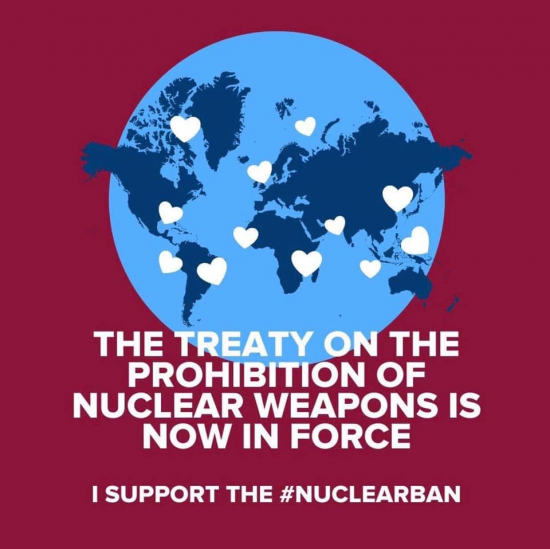
With widespread disappointment in recent Nuclear Non-Proliferation Treaty (NPT) conferences which failed to produce the customary summary or outcome document, the TPNW (also called the “ban treaty”) has gained widespread support from the majority of nonnuclear countries. Entering into force in January 2021, the TPNW prohibits all aspects of development, testing, production, possession, transfer, use or threat to use nuclear weapons. To date, 70 countries have ratified the treaty, including South Africa, Austria, Thailand, New Zealand, Ireland, Fiji, Kazakhstan, Mexico and the Philippines. Additionally, Indonesia, Brazil, and more than 20 other nations around the world are in the process of ratifying the treaty.
In late 2023, at the Second Meeting of States Parties to the TPNW, nonnuclear states challenged the theory of nuclear deterrence, rejecting the framing of security policies based on the threat to destroy humanity. Nuclear-armed nations and their client states dismiss this idea, arguing that the TPNW is counter to their security interests. In response, Shelden said ban treaty proponents ask, “What about our security interests?”
Shelden says the vast majority of the world does not believe that nuclear weapons ensure security, and that wars in Ukraine, Gaza, and elsewhere actually demonstrate that the notion of nuclear weapons preventing conflict is a “fallacious idea.” Rather, they embolden nuclear armed states to proceed with conflicts and violence, said Shelden. “The only thing that deterrence really deters is disarmament.”…………………………………………………………………… more https://truthout.org/articles/are-nuclear-armed-nations-entering-a-new-arms-race-in-2024-experts-weigh-in/
No comments yet.
1 This Month


Tell the Ukrainian Government to Drop Prosecution of Peace Activist Yurii Sheliazhenko

Petition to revoke the licensing of the Near Surface Nuclear Disposal Facility (NSDF) at Chalk River. https://www.ourcommons.ca/petitions/en/Petition/Details?Petition=e-7247


of the week – STOP SMALL MODULAR REACTORS IN CANADA
To see nuclear-related stories in greater depth and intensity – go to https://nuclearinformation.wordpress.com
-
Archives
- March 2026 (204)
- February 2026 (268)
- January 2026 (308)
- December 2025 (358)
- November 2025 (359)
- October 2025 (376)
- September 2025 (258)
- August 2025 (319)
- July 2025 (230)
- June 2025 (348)
- May 2025 (261)
- April 2025 (305)
-
Categories
- 1
- 1 NUCLEAR ISSUES
- business and costs
- climate change
- culture and arts
- ENERGY
- environment
- health
- history
- indigenous issues
- Legal
- marketing of nuclear
- media
- opposition to nuclear
- PERSONAL STORIES
- politics
- politics international
- Religion and ethics
- safety
- secrets,lies and civil liberties
- spinbuster
- technology
- Uranium
- wastes
- weapons and war
- Women
- 2 WORLD
- ACTION
- AFRICA
- Atrocities
- AUSTRALIA
- Christina's notes
- Christina's themes
- culture and arts
- Events
- Fuk 2022
- Fuk 2023
- Fukushima 2017
- Fukushima 2018
- fukushima 2019
- Fukushima 2020
- Fukushima 2021
- general
- global warming
- Humour (God we need it)
- Nuclear
- RARE EARTHS
- Reference
- resources – print
- Resources -audiovicual
- Weekly Newsletter
- World
- World Nuclear
- YouTube
-
RSS
Entries RSS
Comments RSS
 nuclear-news
Leave a comment