Cancelled NuScale contract weighs heavy on new nuclear
Paul Day, 11 Jan 24, https://www.reuters.com/business/energy/cancelled-nuscale-contract-weighs-heavy-new-nuclear-2024-01-10/
- Summary
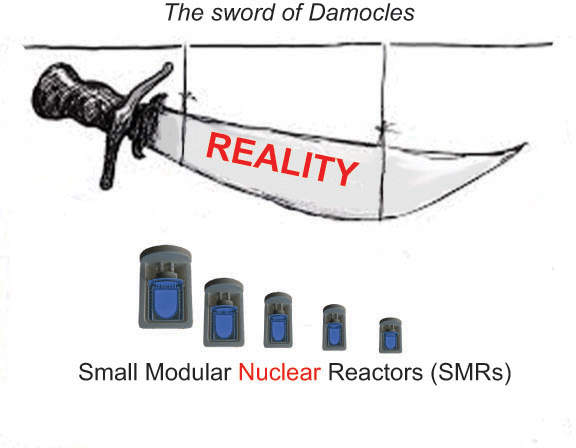
- The failure of a high profile small modular reactor (SMR) contract in the United States has prompted concerns that Gen IV nuclear may be further off than expected.
NuScale, the first new nuclear company to receive a design certificate from the Nuclear Regulatory Commission (NRC) for its 77 MW Power Module SMR, said in November it was terminating its Carbon Free Power Project (CFPP) with the Utah Associated Municipal Power Systems (UAMPS).
UAMPS serves 50 community-owned power utilities in the Western United States and the CFPP, for which the Department of Energy approved $1.35 billion over 10 years subject to appropriations, was abandoned after the project failed to attract enough subscriptions.
NuScale shares tumbled 37% to less than $2 on the day of the news, November 8, and have remained largely between $2.5 and $3.5 since then. The shares hit highs of nearly $15 in August 2022 just three months after going public.
The CFPP had aimed to build NuScale SMR units at a site near Idaho Falls to be operable by 2029 though concerns arose that some at UAMPS members may be unwilling to pay for power from the project after NuScale raised the target price to $89/MWh in January, up from a previous estimate of $58/MWh.
The cancellation came shortly after another advanced reactor developer, X-Energy and special purpose acquisition company Ares Acquisition Corporation, called off a $1.8-billion deal to go public citing “challenging market conditions (and) peer company trading performance.”
The work with UAMPS had helped advance NuScale’s technology to the stage of commercial deployment, President and CEO John Hopkins said.
However, the failure of the much-anticipated proof case for advanced nuclear alongside the X-Energy market retreat left many questioning whether next generation nuclear could live up to its promises.
“Almost all these kinds of MoUs and contracts, as we saw with the NuScale contract, are just not worth the paper they’re written on. There are so many off ramps and outs for both sides and no one’s willing to expose themselves to the downside risk of projects that go way over budget cost and take too long,” says Ted Nordhaus, Founder and Executive Director of The Breakthrough Institute.
Nordhaus co-wrote a piece for The Breakthrough Institute, ‘Advanced Nuclear Energy is in Trouble’, a scathing criticism of policy efforts to commercialize advanced nuclear which, it says, to date have been entirely insufficient.
The nuclear industry was keen to ‘whistle past the graveyard’ of recent developments and efforts to commercialize the new generation of reactors ‘are simply not on track’, the Breakthrough piece said.
Mounting challenges
There are five areas that pose mounting challenges for the industry, according to Breakthrough; high interest rates and commodity prices, constrained supply chains, a regulatory regime that penalizes innovation, project costs versus system costs, and fuel production.
High interest rate and commodity costs in the last couple of years have hit the industry especially hard due to long project lead times. Nuclear supply chains are struggling to rebuild as tight regulation forces many materials to be tracked from certified mine to certified manufacturer.
The regulatory regime, meanwhile, continues to cut and paste large nuclear reactor regulations on to the small reactor designs, whether it makes sense to do so or not, Nordhaus wrote.
Delivery costs for small nuclear are relatively low due to the relatively small volumes of steel and mortar needed, but system costs must factor in safety regulation which is stricter than other types of energy projects. Proponents argue this makes it harder to compete with fossil fuels and renewables, which pay little to no cost for polluting or intermittency, the Institute says.
Advanced nuclear fuel production, meanwhile, had been outsourced to Russia for decades and is only now being hastily reassembled in the United States for the new reactors, with developers such as Terrapower forced to push delay their commercialization timelines due to a lack of fuel.
“Taken together, these developments suggest that current efforts are unlikely to be sufficient to deliver on the promise of advanced nuclear energy,” The Breakthrough Institute said.
Investor case
e
Over recent years, nuclear power has been recognized as an environmental, social, and governance (ESG) investible asset, taking its place alongside renewables in the European taxonomy and successfully raising cash through green bonds in Canada.
Such classifications allow nuclear companies to attract funds from investors looking to build increasingly popular clean energy portfolios.
Nuclear will also benefit from government schemes such as the U.S. Inflation Reduction Act (IRA), which is expected to subsidize new nuclear through Production Tax Credits (PTC) and Investment Tax Credits (ITC) on first-of-a-kind (FOAK) and nth-of-a-kind (NOAK) builds.
With billions of dollars earmarked for clean technologies and mounting concerns over missing emission targets, certain aspects of the nuclear industry have attracted new investors; Uranium spot prices have nearly doubled in the last year as bets are made on rising demand.
However, with all this tailwind, new nuclear has not been attracting the cash it needs. That’s partly due to developers’ lack of focus on development activities, according to Fiona Reilly, CEO of energy consultancy FiRe Energy.
“They’re so focused on the technology that they’re often not focusing on the commercial aspect. How to be more efficient, how to be more effective. What’s your risk register look like; corporate risks as well as technical risks? What’s your legal structure? Where is the money coming from?” says Reilly.
“They seem to think that if they have this great technology, then the market will finance the projects. How the project will reach financial close and make a return for investors does not always appear to be a key feature.”
The NuScale failure with UAMPS and X-Energy’s cancelled offering are just further bad signs for the market, and came just as the international nuclear community said they need to triple capacity by 2050 at the COP28 summit in Dubai.
“We’ve got to start building a mix of large and small reactors for different applications and, once we can start proving projects can be built in a commercial and efficient way, then you can start talking about targets,” says Reilly.
“You can’t set targets like these when we’re not even building the first reactors in many countries.”
800+ Global Groups Back South Africa’s Genocide Case as ICJ Prepares for Hearing

byEDITORJanuary 9, 2024
“The very least states can do is to submit Declarations of Intervention as a small part of fulfilling their obligations under Article 1 of the Genocide Convention,” said a peace coalition.
SCHEERPOST, By Julia Conley / Common Dreams January 9, 2024
An international peace coalition announced Monday that more than 800 civil society organizations from across the globe have endorsed its sign-on letter distributed to world governments, urging leaders to join South Africa in formally accusing Israel of genocidal violence at the United Nations’ highest judicial body.
When Common Dreams first reported on the sign-on letter last Wednesday, just over 100 groups had joined the call.
The surge of support comes as the International Court of Justice (ICJ), also known as the World Court, is scheduled to hold a hearing on South Africa’s case on Thursday and Friday.
The International Coalition to Stop Genocide in Palestine (ICSGP)—which includes the National Lawyers Guild, the Black Alliance for Peace, World Beyond War, and Progressive International, among other groups—is calling on governments to “reinforce [South Africa’s] strongly worded and well-argued complaint by immediately filing a Declaration of Intervention” at the court.
The declarations could increase the likelihood that the ICJ sides with South Africa in the case, says the coalition.
In recent days, Turkey, Malaysia, and the Organization of Islamic Cooperation, which represents 57 member-states, have all endorsed South Africa’s 84-page claim, which details genocidal rhetoric in public statements made by high-level Israeli officials as well as the Israeli military’s actions in Gaza.
“The South African filing before the ICJ marks a critical juncture which tests the global will to salvage the laws and systems which were designed to safeguard not merely human rights, but to preserve humanity itself.”……………………………………………………………………………………………… more https://scheerpost.com/2024/01/09/800-global-groups-back-south-africas-genocide-case-as-icj-prepares-for-hearing/
Japan’s NRA orders probe on quake damage at Shika nuclear power plant
Japan Times, 11 Jan 24
The Nuclear Regulation Authority has ordered its secretariat to thoroughly investigate the cause of damage to a nuclear power plant from the 7.6 magnitude earthquake that struck the Noto Peninsula on Jan. 1.
The regulatory watchdog gave the order at a regular meeting on Wednesday.
According to Hokuriku Electric Power, the quake measured an upper 5 on the Japanese seismic intensity scale at the basement of the No. 1 reactor building of its Shika nuclear power plant in Ishikawa Prefecture.
The temblor caused oil to leak from two transformers. The company also could no longer measure radiation levels at up to 18 of its 116 monitoring posts around the plant after the earthquake.
At Wednesday’s meeting, the NRA secretariat presented data from Hokuriku Electric showing ground movements resulting from the quake at the plant’s two reactors had experienced sharper accelerations than the maximum levels expected for the facilities, although it did not find any immediate threats to safety.
Both reactors have been idled since 2011, the company said, adding that the quake did not cause any radiation leaks or have any effect on cooling operations in their spent fuel pools……………………………………………………………. https://www.japantimes.co.jp/news/2024/01/11/japan/science-health/japan-regulator-probe-on-nuke-plant/
Reporters without shame: Top ‘media rights’ organization ignores rampant killings of Gaza journalists

Eva Bartlett, RT, Sun, 07 Jan 2024
At the end of 2023, Reporters Without Borders (Reporters sans Frontieres, RSF), the international organization ostensibly advocating for freedom of information, released its annual report. The paper massively downplays the widespread and deliberate targeting of Palestinian journalists in the Israel-Gaza war.
The report’s announcement, titled, “Round-up: 45 journalists killed in the line of duty worldwide – a drop despite the tragedy in Gaza,” excludes most of the Palestinian journalists killed by Israel in 2023, particularly in the past few months. It claims 16 fewer journalists were killed worldwide in 2023 than in 2022. This doesn’t reflect reality.
The report claims that (as of December 1, 2023), only 13 Palestinian journalists were killed while actively reporting, noting separately that 56 journalists were killed in Gaza, “if we include journalists killed in circumstances unproven to be related to their duties.”
Other sources put the overall number of Palestinian journalists killed in the enclave much higher. The UN’s Office for the Coordination of Humanitarian Affairs (OCHA) reported on December 1 that 73 journalists and media workers had been killed, citing to the Palestinian Journalists’ Syndicate (PJS).
While The Committee to Protect Journalists’ (CPJ) December 20, 2023 numbers are lower (at least 61 Palestinian journalists killed since October 7), CPJ at least didn’t disregard dozens of slain Palestinian journalists like RSF did.
In fact, in contrast to RSF’s cheerful “things are much better for journalists than previous years” tone, CPJ emphasized that in the first 10 weeks of Israel’s war on Gaza, “more journalists have been killed than have ever been killed in a single country over an entire year.” It voiced its concern about, “an apparent pattern of targeting of journalists and their families by the Israeli military.”
It isn’t clear how RSF discerns which circumstances were “unproven to be related” to the duties of slain Gazan journalists, nor who is “actively reporting” when Gaza is under relentless Israeli bombardment and suffers frequent internet cuts. In fact, given the nonstop Israeli bombing (and sniping) throughout the strip, it would be nearly impossible to discern whether journalists were reporting (including from their homes) at the time of their death.
However, in the methodology section near the end of its more detailed report, RSF notes it “logs a journalist’s death in its press freedom barometer when they are killed in the exercise of their duties or in connection with their status as a journalist.”
Many Palestinian journalists in Gaza have received death threats from officers in the Israeli army precisely due to their status as journalists. And many of those threatened have subsequently been killed, along with family members, when Israeli airstrikes targeted their homes or places of shelter.
We also have the precedent in prior wars (in 2009, 2012, 2014, and 2021) of Israel bombing Gazan media buildings (including one I was in in 2009) with varying severity, damaging and finally destroying two major media buildings in 2021. This is clearly intended to stop the flow of reports from Gaza under Israeli bombs, and so is the killing of journalists.
On December 15, the Palestinian Journalists’ Syndicate criticized the RSF report, going as far as accusing RSF of complicity with Israel’s war crimes against Palestinian journalists through whitewashing.
This is the same PJS whose statistics the UN’s OCHA cites, statistics which PJS says are “accurate and based on professional and legal documentation that follows the highest standards in documenting crimes against journalists.” This documentation includes journalists who Israeli airstrikes targeted in their homes, killed precisely because they are journalists.
In response, RSF claimed it, “did not yet have sufficient evidence or indications,” to state that any more than 14 journalists in the Gaza Strip (as of December 23, the date of its response) “had been killed in the course of their work or because of it.”…………………………………………………………………………………………………………..
Israel threatens journalists, kills family members
Many Gaza journalists report being threatened by the Israeli army. CPJ noted it is “deeply alarmed by the pattern of journalists in Gaza reporting receiving threats, and subsequently, their family members being killed.”
One such incident followed a threat to Al-Jazeera Arabic reporter Anas Al-Sharif. CPJ noted he had received multiple phone calls from officers in the Israeli army instructing him to cease coverage and leave northern Gaza. Additionally, he received voice notes on WhatsApp disclosing his location. His 90-year-old father was killed on December 11 by an Israeli airstrike on their home in the Jabalia refugee camp.
On November 13, CPJ noted, “eight family members of photojournalist Yasser Qudih were killed when their house in southern Gaza was struck by four missiles. Qudih survived the attack.”
On October 25, an Israel airstrike on the Nuseirat refugee camp in the center of Gaza killed the wife, son, daughter, and grandson of Al-Jazeera’s bureau chief for Gaza, Wael Al Dahdouh.
The popular young independent journalist, Motaz Azaiza, reported receiving multiple threats from anonymous numbers urging him to cease his coverage, CPJ reported, noting that another Al-Jazeera correspondent, Youmna El-Sayed, said her husband received a threatening phone call from a man who identified himself as a member of the IDF and told the family “to leave or die.”
RSF bias: Not only in Palestine
Whereas RSF only reluctantly, as an afterthought, mentioned Palestinian journalists killed in “circumstances unproven to be related to their duties,” in a 2021 report on Syria, it stated, “at least 300 professional and non-professional journalists have been killed while covering artillery bombardments and airstrikes or murdered by the various parties to the conflict,” since 2011, going on to say, “this figure could in reality be even higher.……………………………………………………………………
In 2017, Stephen Lendman wrote of RSF’s attempt to shut down a panel sponsored by the Swiss Press Club in which British journalist Vanessa Beeley would be participating. “An organization that defends freedom of information is asking me to censor a press conference,” the club’s executive director Guy Mettan said at the time. He refused to cancel the event.
RSF’s 2023 roundup also didn’t include two Russian journalists killed this year, one by a Ukrainian cluster bomb strike and the other by a Ukrainian drone attack (targeting journalists).
Sputnik pursued the matter and reported that RSF, “refused to give any comments to Sputnik” citing “editorial policy.”
Journalist Christelle Neant likewise noted RSF’s glaring omission of the Russian journalists. She wrote about the body’s funding from various governments, and more notably from regime change agencies: the Open Society foundation, The Ford Foundation, and the National Endowment for Democracy, funded by the US Congress.
RSF’s notorious funders explain why it cherry picks or inflates its reports. The borderless organization has lines it won’t cross. It reports a grain of truth but otherwise whitewashes the crimes of Israel and Washington. https://www.rt.com/news/590224-gaza-journalists-israel-killed/
Japan’s Hokuriku Elec reports second oil leak from Shika nuclear plant
Reuters, January 11, 2024
TOKYO, – Japan’s Hokuriku Electric Power (9505.T) on Wednesday reported a second oil leak at its Shika nuclear power station which was shaken by a powerful earthquake on New Year’s Day.
External radiation levels were not affected, the company said.
The magnitude 7.6 quake, which killed more than 200 people in the Hokuriku region, shook the idled Shika power station, which is located around 65 kilometres (40 miles) from the quake’s epicentre.
After a first oil leak detected on Sunday, a film of oil was detected on Wednesday in several gutters surrounding the main transformer of the No.2 reactor, the company said.
Also, an oil slick measuring about 100 meters by 30 meters was found floating on the sea in front of the power station, near the area where the first slick was observed.
Hokuriku Electric said it had placed oil absorption mats in the gutters and on oil fences in the coastal areas, and closed the drainage gate for rainwater after the latest leak.
The gate was opened on Tuesday because no additional oil was detected during monitoring patrols conducted three times a day.
“We regret that we should have been more careful in our decision,” Masayuki Nunotani, general manager of Hokuriku Electric’s nuclear energy division, told reporters.
The utility believes the second oil leak originated from a transformer during the Jan. 1 quake, but said it was still analysing further details…………………….. more https://www.reuters.com/world/asia-pacific/japans-hokuriku-elec-reports-second-oil-leak-shika-nuclear-plant-2024-01-10/
2023 confirmed as world’s hottest year on record

The year 2023 has been confirmed as the warmest on record, driven by
human-caused climate change and boosted by the natural El Niño weather
event. Last year was about 1.48C warmer than the long-term average before
humans started burning large amounts of fossil fuels, the EU’s climate
service says. Almost every day since July has seen a new global air
temperature high for the time of year, BBC analysis shows.
Sea surface temperatures have also smashed previous highs. The Met Office reported last
week that the UK experienced its second warmest year on record in 2023.
These global records are bringing the world closer to breaching key
international climate targets. “What struck me was not just that [2023] was
record-breaking, but the amount by which it broke previous records,” notes
Andrew Dessler, a professor of atmospheric science at Texas A&M University.
The margin of some of these records – which you can see on the chart below
– is “really astonishing”, Prof Dessler says, considering they are averages
across the whole world.
BBC 9th Jan 2024
Ukrainians will benefit from Zelensky’s fall – exiled opposition leader
Signs of The Times (SOTT) 10 Jan 2024
President Vladimir Zelensky is doomed to be ousted this year, having antagonized all of his domestic and foreign allies, exiled Ukrainian opposition leader Viktor Medvedchuk has said. Zelensky’s demise, however, will be good for the Ukrainian people, he added.
Medvedchuk was the leader of the Opposition Platform – For Life party, which Zelensky’s government banned for allegedly being “pro-Russian.” He was arrested and forced out of Ukraine in a prisoner exchange with Moscow.
The politician has since been promoting a project, which would make his home nation a neutral state, prioritizing national interests, as opposed to being a Russian enemy.
In a column published on Wednesday, Medvedchuk blasted the incumbent Ukrainian president, branding him an “unfunny parody of a dictator,” whose weakness sends a signal to all “political predators to eat him.”
“Zelensky has antagonized everyone he could: big businessmen, whom he blacklisted as traitors and oligarchs, professional Nazis, who see his cowardice, the military, who sees his incompetence, and last but not least the people, who see his indifference and cruelty.”
Ukraine is in a deep crisis that is bound to lead to a national disaster once Western funding for the proxy war against Russia is reduced, he claimed.
Ukrainian citizens need to realize that Zelensky’s downfall “does not necessarily mean a defeat of the Ukrainian people.”Instead, the opposite is true, according to Medvedchuk. It will be a victory for them, since the president “has long betrayed them and is selling them out for cannon fodder.”
The column predicted hard times for the US, which Medvedchuk believes has lost its direction, and the EU, which he expects to be sacrificed by Washington to support the American economy.For Ukraine, it means no EU membership, and its citizens should know that “Europeans will have to give their financial goodies to the American elites, not Ukrainian refugees.”………………………………………………………………………………….https://www.sott.net/article/487699-Ukrainians-will-benefit-from-Zelenskys-fall-exiled-opposition-leader
CNN Admits ‘Disturbing’ Israel-Palestine Coverage Policy ‘Has Been in Place for Years’
“It’s Israel’s way of intimidating and controlling news,” said one critic.
Common Dreams, JULIA CONLEY, Jan 05, 2024
CNN has long been criticized by media analysts and journalists for its deference to the Israeli government and the Israel Defense Forces in its coverage of the occupied Palestinian territories, and the cable network admitted Thursday that it follows a protocol that could give Israeli censors influence over its stories.
A spokesperson for the network confirmed to The Intercept that its news coverage about Israel and Palestine is run through and reviewed by the CNN Jerusalem bureau—which is subject to the IDF’s censor.
The censor restricts foreign news outlets from reporting on certain subjects of its choosing and outright censors articles or news segments if they don’t meet its guidelines.
Other news organizations often avoid the censor by reporting certain stories about the region through their news desks outside of Israel, The Intercept reported.
“The policy of running stories about Israel or the Palestinians past the Jerusalem bureau has been in place for years,” the spokesperson told the outlet. “It is simply down to the fact that there are many unique and complex local nuances that warrant extra scrutiny to make sure our reporting is as precise and accurate as possible.”
The spokesperson added that CNN does not share news copy with the censor and called the network’s interactions with the IDF “minimal.”
But James Zogby, founder of the Arab American Institute, said the IDF’s approach to censoring media outlets is “Israel’s way of intimidating and controlling news.”
A CNN staffer who spoke to The Intercept on condition of anonymity confirmed that the network’s longtime relationship with the censor has ensured CNN‘s coverage of Israel’s bombardment of Gaza and attacks in the West Bank since October 7 favors Israel’s narratives.
“Every single Israel-Palestine-related line for reporting must seek approval from the [Jerusalem] bureau—or, when the bureau is not
staffed, from a select few handpicked by the bureau and senior management—from which lines are most often edited with a very specific nuance,” the staffer said.
Jerusalem bureau chief Richard Greene announced it had expanded its review team to include editors outside of Israel, calling the new policy “Jerusalem SecondEyes.” The expanded review process was ostensibly put in place to bring “more expert eyes” to CNN‘s reporting particularly when the Jerusalem news desk is not staffed.
In practice, the staff member told The Intercept, “‘War-crime’ and ‘genocide’ are taboo words. Israeli bombings in Gaza will be reported as ‘blasts’ attributed to nobody, until the Israeli military weighs in to either accept or deny responsibility. Quotes and information provided by Israeli army and government officials tend to be approved quickly, while those from Palestinians tend to be heavily scrutinized and slowly processed.”
Meanwhile, reporters are under intensifying pressure to question anything they learn from Palestinian sources, including casualty statistics from the Palestinian Ministry of Health.
The Ministry of Health is run by Hamas, which controls Gaza’s government. The United Nations agency for Palestinian refugees said in October, as U.S. President Joe Biden was publicly questioning the accuracy of the ministry’s reporting on deaths and injuries, that its casualty statistics have “proven consistently credible in the past.”
Despite this, CNN‘s senior director of news standards and practices, David Lindsey, told journalists in a November 2 memo that “Hamas representatives are engaging in inflammatory rhetoric and propaganda… We should be careful not to give it a platform.”………………………………………….
At least 22,600 people have been confirmed killed in Gaza and 57,910 have been wounded in Israeli attacks on Gaza since October 7. Thousands more are feared dead under the rubble left behind by airstrikes. In Israel, the death toll from Hamas’ attack stands at 1,139.
Jim Naureckas, editor of the watchdog group Fairness and Accuracy In Reporting, noted that the Israeli government is controlling journalists’ reporting on Gaza as it’s been “credibly accused of singling out journalists for violent attacks in order to suppress information.”
“To give that government a heightened role in deciding what is news and what isn’t news is really disturbing,” he told The Intercept.
Meanwhile, pointed out author and academic Sunny Singh, even outside CNN, “every bit of reporting on Gaza in Western media outlets has been given unmerited weight which not granted to Palestinian reporters.”
“Western media—not just CNN—has been pushing Israeli propaganda all through” Israel’s attacks, said Singh. https://www.commondreams.org/news/israel-cnn-censor—
Unplanned nuclear power outages are reducing UK’s electricity output
Unplanned outages at Hartlepool nuclear power plant’s two 620-MW reactors
are set to last until Feb. 4 and Feb. 6, UK operator EDF Energy said in
transparency notes Jan. 8. Production at the County Durham site in
northeast England had ceased Jan. 6 “for maintenance activities”, EDF
Energy said. No further details were available.
The outage at Hartlepool
compounds UK nuclear problems in the new year after an unplanned outage at
Heysham nuclear plant Dec. 29 took another 585-MW reactor out of service.
Failure of a steam valve at reactor 1 at Heysham 1 saw reactor 2 taken
offline for inspections. Reactor 1 is due back Jan. 24, EDF data showed.
An inspection of similar valves at reactor 2 at Heysham 1, meanwhile, is
expected to keep the unit offline until Jan. 16. Meanwhile, reactor 7 at
Heysham 2 has been offline since early December for planned refueling, due
back Jan. 27, with only reactor 8 (624 MW) currently online at the
Lancashire site on the northwest coast of England.
S&P Global 8th Jan 2024
Utility scale solar farms contribute to bird diversity
New research has shown that solar parks can play a positive role in promoting bird diversity in the agricultural landscape of Central Europe. The scientists said solar farms offer food availability and nesting sites.
JANUARY 9, 2024 LIOR KAHANA, PV Magazine
A European group of researchers has conducted a study on the impact of solar parks on birds in a Central European agricultural landscape. They surveyed 32 solar park plots and 32 adjacent control plots in Slovakia during a single breeding season.
“We selected ground-mounted photovoltaic power plants with an area of at least 2 hectares,” the researchers explained. “All of the studied solar parks had fixed-tilt solar racks, one of which also had panels mounted on biaxial trackers, and were developed at least eight years earlier. Seventeen solar parks were developed on arable land, and 15 parks were developed on grassland.”…………………………………………………………………..
According to the research group, bird species richness, diversity, and invertebrate-eater species richness and abundance were higher in the solar parks than in the control plots. Among the reasons provided by the research group is the food availability for insectivorous birds, as the PV panels attract various species of water-seeking aquatic insects.
“As food availability and accessibility is low in winter, it can be assumed that solar parks can have a positive impact on farmland birds outside the breeding season, as they can serve as stopover, foraging and roosting sites during migration and wintering as the ground under the solar panels can remain snow-free in winter,” the academics explained……………………………..
They presented their analysis in the study “Solar parks can enhance bird diversity in the agricultural landscape,” published in the Journal of Environmental Management. The research was a collaborative work of scientists from Slovakia’s Slovak Academy of Sciences, Gemer-Malohont Museum, Comenius University in Bratislava, Catholic University in Ružomberok, Slovak Ornithological Society/BirdLife Slovakia, and Belgium’s University of Antwerp. https://www.pv-magazine.com/2024/01/09/utility-scale-solar-farms-contribute-to-bird-diversity/
Setback for Japan’s Nuclear Revival as Reactor Restart Delayed

Shoko Oda, Bloomberg News, 9 Jan 24, https://www.bnnbloomberg.ca/setback-for-japan-s-nuclear-revival-as-reactor-restart-delayed-1.2019978
Japanese utility Tohoku Electric Power Co. has delayed the restart of a key nuclear power plant by several months, a setback to the nation’s climate goals and efforts to become more self-sufficient in energy.
The company said Wednesday that it needs more time to fireproof electric cables at its Onagawa No. 2 reactor, as part of safety work which it had planned to finish by next month. It had earlier expected to resume commercial operation of the unit around May and said it would publish an updated safety work and restart schedule later.
The Japanese government is doubling down on the use of nuclear in an effort to curb costly imports of fossil fuels, achieve energy security and cut emissions. The restart of Onagawa No. 2 is especially symbolic as it would be the first unit in the east of the nation to restart since the 2011 Fukushima disaster.
Japan currently has 33 commercially available reactors, and has restarted 12 units in the western part of the country since the Fukushima tragedy. Tohoku had in September also pushed back the completion of safety work, leading to a drop in its shares. The utility fell as much as 2.9% on Wednesday.
Analysis: Record opposition to climate action by UK’s right-leaning newspapers in 2023

Last year saw a record number of UK newspaper editorials opposing climate
action – almost exclusively from right-leaning titles – new Carbon
Brief analysis shows.
The analysis is based on hundreds of UK national
newspaper editorials, which are the formal “voice” of the publications.
The 354 editorials published in 2023 relating to energy and climate change
add to thousands more collected in a long-running project started by Carbon
Brief. Newspapers such as the Sun and the Daily Mail published 42
editorials in 2023 arguing against climate action – nearly three times
more than they have printed before in a single year.
They called for delays
to UK bans on the sale of fossil fuel-powered cars and boilers, as well as
for more oil-and-gas production in the North Sea. In response to such
demands, prime minister Rishi Sunak performed a “U-turn” in September
on some of his government’s major net-zero policies. Last year also saw a
surge in hostility towards climate protesters, with editorial attacks
doubling compared to recent years.
Carbon Brief 9th Jan 2024
UK’s dwindling nuclear fleet – four ageing reactors to be kept going beyond their planned closure date.
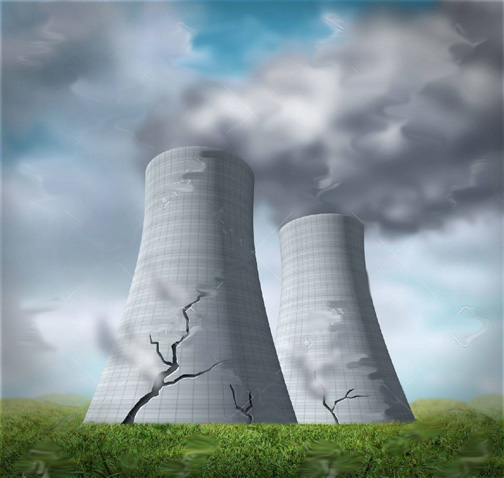
EDF looks to delay closure of four UK nuclear power plants
Four of Britain’s dwindling fleet of nuclear power plants look set to
remain on stream for at least a further two years, EDF Energy announced on
Tuesday, as the French state-owned operator said it aimed to halt seven
years of declining output.
The UK’s nuclear generating capacity has
fallen rapidly since the start of the decade as three of the country’s
eight ageing power stations closed. But EDF, which owns the country’s
nuclear fleet via a joint venture with Centrica, said it now planned to
explore keeping two of the power stations — Heysham 2 and Torness —
open beyond their planned closure date of 2028.
This follows an
announcement last year by the company of similar plans to keep the two
other power stations that use the same reactor design — Hartlepool and
Heysham 1 — open for at least two years beyond their scheduled closure
date of 2024. The company said a decision on the planned extensions for
Heysham 2 and Torness power stations, which have a joint generating
capacity of 2.4GW, will be taken by the end of the year, subject to plant
inspections and regulatory approvals.
The Office for Nuclear Regulation
said in a statement: “Several safety cases for the stations are likely to
require updating to achieve EDF’s stated ambitions, together with
investment in plant to sustain equipment reliability, all while ensuring
that the necessary people and skills are on site.” Other nuclear power
plants based on the same design as Hartlepool and Heysham have been forced
to close earlier than planned because cracks were found in the reactors’
graphite cores. But EDF said in 2022 that the graphite at both Hartlepool
and Heysham 1 remained intact, and regular inspections have continued since
then.
FT 9th Jan 2024
https://www.ft.com/content/06f524ac-2515-432c-97a1-e71aa25189e6
Housing unaffordability – implications for Somerset with huge increase in nuclear workers for Hinkley Point C
EDF Energy is once again in talks with Somerset Council to negotiate an
increase in workers on the site. Cllr Leigh Redman, Bridgwater Town Council
spokesperson for Nuclear Issues, said that the original development consent
order (DCO) signed by the secretary of state, indicated that at peak the
number of workers on site would be 5,600.
This number was since raised to
8,600 due to the conversion of Pontins in Brean to become an accommodation
site for Hinkley Point C workers, which is now full. Back in November 2023,
EDF Energy approached the council to bring the workforce to over 10,000 as
the project entered its ‘peak construction phase’.
There are now over
11,000 workers at Hinkley Point C, and EDF plans to bring in more staff in
the near future. Cllr Redman said that although he appreciates the good
things EDF Energy has brought to Bridgwater, he feels people are losing out
on housing due to the company’s ‘disregard for limits set and agreed’. The
Bridgwater Town Councillor also explained that he frequently receives
messages from people struggling to find affordable properties to rent
locally, including one family of three squashed into a third floor flat
with nowhere to go.
Bridgwater Mercury 9th Jan 2024
https://www.bridgwatermercury.co.uk/news/24036533.edf-talks-somerset-council-workforce-increase/
Somerset 9th Jan 2024
https://www.somersetcountygazette.co.uk/news/24036578.edf-talks-somerset-council-workforce-increase/
EDF Energy plans to extend life of four UK nuclear power plants
EDF Energy is planning to extend the life of four nuclear power stations
in the UK and step up investment in its British nuclear fleet. The French
energy company said it would make a decision on whether to extend the life
of the four UK plants with advanced gas-cooled reactors (AGR) – Torness,
Heysham 1 and 2, and Hartlepool – by the end of the year.
This would require regulatory approval. A spokesperson for the company said it would
depend on inspections, adding there would not be long lifetime extensions
but “incremental”. Last March, EDF extended lifetimes at Hartlepool and
Heysham 1 by a further two years to March 2026. Heysham 2 and Torness power
stations are now due to stay operational until March 2028.
Guardian 9th Jan 2024
https://www.theguardian.com/business/2024/jan/09/edf-energy-uk-nuclear-power-plants
1 This Month

Petition to revoke the licensing of the Near Surface Nuclear Disposal Facility (NSDF) at Chalk River. https://www.ourcommons.ca/petitions/en/Petition/Details?Petition=e-7247

18 March Webinar @ 1 PM EST: An Assessment of SMR Projects: The Case of Canada
register for the zoom:
https://us02web.zoom.us/webinar/register/WN_o8BIIOUvQ2ONJR1nta65DQ#/registration


of the week – STOP SMALL MODULAR REACTORS IN CANADA
To see nuclear-related stories in greater depth and intensity – go to https://nuclearinformation.wordpress.com
-
Archives
- March 2026 (152)
- February 2026 (268)
- January 2026 (308)
- December 2025 (358)
- November 2025 (359)
- October 2025 (376)
- September 2025 (258)
- August 2025 (319)
- July 2025 (230)
- June 2025 (348)
- May 2025 (261)
- April 2025 (305)
-
Categories
- 1
- 1 NUCLEAR ISSUES
- business and costs
- climate change
- culture and arts
- ENERGY
- environment
- health
- history
- indigenous issues
- Legal
- marketing of nuclear
- media
- opposition to nuclear
- PERSONAL STORIES
- politics
- politics international
- Religion and ethics
- safety
- secrets,lies and civil liberties
- spinbuster
- technology
- Uranium
- wastes
- weapons and war
- Women
- 2 WORLD
- ACTION
- AFRICA
- Atrocities
- AUSTRALIA
- Christina's notes
- Christina's themes
- culture and arts
- Events
- Fuk 2022
- Fuk 2023
- Fukushima 2017
- Fukushima 2018
- fukushima 2019
- Fukushima 2020
- Fukushima 2021
- general
- global warming
- Humour (God we need it)
- Nuclear
- RARE EARTHS
- Reference
- resources – print
- Resources -audiovicual
- Weekly Newsletter
- World
- World Nuclear
- YouTube
-
RSS
Entries RSS
Comments RSS
 nuclear-news
