Nuclear news for the first week of 2024

Some bits of good news . Wild and Wonderful Saiga is No Longer Endangered with a Million Roaming Now in Central Asia. 10 Things that Give us HOPE for 2024.
TOP STORIES. How Long Can Israel Defy the World?
Rokkasho redux: Japan’s never-ending nuclear reprocessing saga.
Bill Introduced in US Congress Calls for US to Drop Charges Against Julian Assange.
From the archives: Japan’s nuclear companies bribed local governments: consumers eventually pay.
Climate. What a farce! Another veteran of the oil and gas industry to lead the next round of COP 29 climate talks.
Nuclear. I try to stay off the topics of Israel and Ukrainian wars – but that’s tricky, as we teeter on the nuclear brink. Japan’s earthquake disaster lingers, – their nuclear reactors are OK, but it’s early days.
Noel’s notes: Japan’s earthquake: The world must not be conned by the irrational optimism of the nuclear lobby. The subtle ways that the nuclear lobby manipulates corporate media: example KISHA CLUBS OF JAPAN.
AUSTRALIA. Nuke policy quietly nuked: Australia to fund US nuclear weapon delivery program. Funding the imperium: Australia subsidises U.S. nuclear submarines.
US officials monitored pro-Assange protests in Australia for ‘anti-US sentiment’, documents reveal. Legendary Australian journalist John Pilger dies, aged 84. Uranium ship sneaks into ‘nuclear free’ Fremantle port, sparking concern by wharfies over safety.
*****************************************************
ECONOMICS. EDF using Pontins Brean Sands has ‘big determinantal impact’ on local economy, tourism firm fears. COP28’s Nuclear Energy Promise Is Still a Long Way Off. Nuclear Fuel: Russian Cutoff Would Upend Global Market.
EMPLOYMENT. Mass layoffs at small nuclear reactor companies. Nuclear Free Local Authorities (NFLAs) call upon nuke cops chief to issue statement on ‘toxic’ Sellafield allegations.
ENERGY. ‘Renewable surge powers all UK homes in 2023’. More than half of eligible schools enlist in new solar scheme in Ireland. Nuclear weapons test treaty fears sink plans for major wind farm. UK Nuclear Output Slumps to 42-Year Low . Swedish nuclear outage extended by 3 weeks . Germany’s coal power production drops to lowest level in 60 years in2023 after nuclear exit.
ENVIRONMENT. NRC still concerned with Air Force’s monitoring of thorium contamination at Kirtland. A ‘natural alternative’ plan for protecting fish from Hinkley nuclear station’s cooling system. Hinkley Point C proposes new wetland reserve to protect fish from cooling system.
HEALTH. Prolonged impact of the Fukushima Nuclear Power Plant Accident on health and society.
MEDIA. Burial review – deep dive into underworld of nuclear power and its toxic legacy. https://youtu.be/fw4Fp7e-9PM?si=SaQXhz1FobT2K3yb
BBC Panorama to feature RAF Lakenheath nuclear weapons saga- BBC Two on Thursday, January 18. https://www.youtube.com/watch?v=cZcg409HYIc
All CNN Gaza Coverage Seen by Bureau Monitored by Israeli Defense Force Before Publication.
PERSONAL STORIES. A Visit to Belmarsh Prison, Where Julian Assange Awaits His Final Appeal Against Extradition to the US.
POLITICS. Kim Jong Un announces launch of new spy satellites, nuclear resolutions for 2024.
POLITICS INTERNATIONAL and DIPLOMACY.
- The real reason why the USA pushed for the world to “triple nuclear power” at COP 28.
- Iran Says Prospect for Talks Over Nuclear Deal ‘Still Exists’.
- India, Pakistan exchange list of nuclear installations under 1988 bilateral pact.
- “The coming US-Saudi nuclear deal: Keep it honest,” The Bulletin of Atomic Scientists. “Improving Saudi-Israeli Ties Shouldn’t Breed Nuclear Bombs,” The Hill,
- European Parliament resolution of 12 December 2023 on small modular reactor.
SAFETY. Japan earthquake casts cloud over push to restart nuclear plants. Japan earthquake raises concerns over restarting country’s nuclear plants. We care about Japan’s disaster situation and are concerned about nuclear safety. Operational Ban Lifted on Major Japan Nuclear Plant.
Nuclear concerns as a magnitude-7.6 earthquake hits north central Japan, prompting tsunami warnings. How Japanese earthquake has chilling echoes of 2011 tsunami disaster that killed at least 20,000 and caused nuclear meltdown. In Quake-Scarred Japan, 2011 Fukushima Disaster Still Looms Large. Following earthquake, Japan’s nuclear reactors escaped serious problems – THIS TIME. “Forbidden news”- Water Containing Radioactive Materials Spills Over atKashiwazaki-Kariwa nuclear power plant . Japan Earthquake: Water Levels Rose At Shika Nuclear Plant After Monday’s Tsunami, Says Report. Systems to supply power to nuclear plant in Ishikawa partially unusable. Radioactive water spills over after quakes hit Japan.
- Fears after warning of ‘rotting’ nuclear infrastructure on Clyde.
- Nuclear disasters–in–waiting,
- IAEA says its inspectors are denied access to parts of Ukraine nuclear plant ..
- Incident: Hackers use LinkedIn to target UK nuclear waste firm.
- Volcanic hazard to planned Natrium fast nuclear reactor – even the NRC admits.
- Diablo Canyon nuclear plant must be shut down.
SECRETS and LIES. More nuclear corruption?
SPINBUSTER. Another Voice: Nuclear (yet again).
TECHNOLOGY. DOE docs: Carbon removal proposal bets on rare nuclear reactors.
WASTES. Nuclear waste site a potential danger to all who live here. Nuclear waste could threaten rare spot where endangered mussel thrives, experts say. UK’s Nuclear Waste Service (NWS) to grant £millions to the 3 Community Partnerships, to seek a site for nuclear waste dump. Challenging questions concerning UK’s Geological Disposal Facility (GDF)Test of Public Support.
WEAPONS and WEAPONS SALES. US Foreign Policy Is a Scam Built on Corruption. Once Again, Biden Bypasses Congress to Approve Arms Sale to Israel. Ukraine war – NATO provides a new bonanza for Raytheon and MBDA Germany weapons companies. American weapons company Lockheed Martin scores again with sale of more F-35s to South Korea. “Civil nuclear power” has always been a cover story for wasting public money on nuclear weapons. https://www.youtube.com/watch?v=tgQ1PtkZvGU
 | |||
| |||
The real reason why the USA pushed for the world to “triple nuclear power” at COP 28.
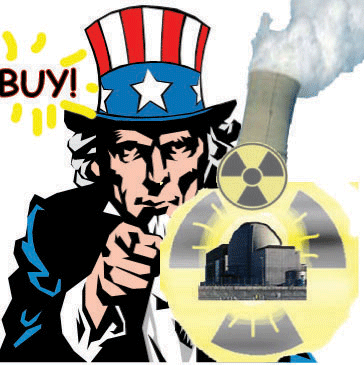
While China dominates the wind- and solar-power sectors, nuclear energy is one area where officials believe the U.S. could compete with its long menu of newer reactor types and fuels.
U.S. puts diplomatic clout behind sales of cutting-edge reactors that have yet to show commercial success
Washington Heats Up Nuclear Energy Competition With Russia, China
By William Mauldin and Jennifer Hiller, Jan. 6, 2024 https://www.wsj.com/politics/national-security/washington-heats-up-nuclear-energy-competition-with-russia-china-f2f18e75
WASHINGTON—To compete with its biggest geopolitical rivals, the U.S. government is looking toward small nuclear reactors.
Not a single so-called small modular reactor has been sold or even built in the U.S., but American officials are trying to persuade partner countries to acquire the cutting-edge nuclear reactors still under development by U.S. firms. The goal: to wrest nuclear market share from Russia—the global industry giant—and defend against China’s fast-growing nuclear-technology industry.

The U.S. hopes that putting its clout behind a new technology can cement future commercial and diplomatic relationships and chip away at China’s and Russia’s ability to dominate their neighbors’ energy supply.
The Biden administration also sees nuclear energy as a way to export reliable green (?) energy, since nuclear-power plants split atoms and don’t burn carbon-based fuels that contribute most to climate change. With Russia’s broad 2022 invasion of Ukraine sending Poland and other European countries looking for new energy partners, U.S. officials and industry leaders see a potential opening in the market for U.S. exports to compete with China’s growing nuclear ambitions.
While China dominates the wind- and solar-power sectors, nuclear energy is one area where officials believe the U.S. could compete with its long menu of newer reactor types and fuels. The U.S. aims to sign agreements for partnerships lasting 50 years or longer to provide U.S. technology to Moscow’s former energy partners and to fast-growing countries in Southeast Asia worried about overreliance on Chinese and Russian energy.
“If we’re the supplier, we support the energy security of our allies and partners,” said Ted Jones, head of national security and international programs at the Nuclear Energy Institute, a U.S. industry group. “We help prevent them from finding themselves in the situation of Europe with respect to Russian gas and nuclear.”
At the core of the U.S. campaign is a technology, yet-unproven in the U.S., called a small modular reactor, or SMR. SMRs generate about one-third the energy of a conventional nuclear reactor and can be prefabricated and shipped to the site. Among other potential advantages, they are intended to be cheaper than larger reactors, which often have to be custom designed, and they can be installed to meet growing demand for energy, according to the International Atomic Energy Agency.
‘Very, very long-term strategic partnership’
U.S. officials say they are working with developers of SMRs, and the government-run Export-Import Bank and the U.S. International Development Finance Corp., to win overseas orders that will bring down costs and build an order book for the new technology, all while linking the countries’ energy systems to the U.S. and its allies. By 2035, the U.S. Nuclear Energy Agency estimates that the global SMR market could reach 21 gigawatts of power, enough to power two billion LED lightbulbs.
“It’s important that the United States maintains that leadership in the transition from the laboratory to the grid and deployment and commerciality,” said Geoffrey Pyatt, the State Department’s assistant secretary of energy resources. “It’s about building a very, very long term strategic partnership.”
To make nuclear-energy exports a viable tool of foreign policy, U.S. companies will have to prove they can deliver smaller reactors for export on time and budget, a goal that has eluded larger nuclear-power plants in the West.
The U.S. has yet to build an SMR, and none is yet under construction in the U.S. The concept’s economics remain unproven, as does the timeline for building such a reactor. One company, Kairos Power, recently received construction approval for a demonstration project in Tennessee. It plans to focus on the domestic market. NuScale Power, one of the major U.S. players, recently canceled an SMR project in Idaho when a group of utilities in the Mountain West couldn’t get enough members to commit.
To make the concept work, most SMRs’ developers would need a pipeline of orders so they could move into factory-style production, lowering unit costs.
Among the potential customers U.S. industry and government officials are looking at are Polish energy company Orlen, which wants to build SMRs designed by GE Hitachi Nuclear Energy.
The U.S. Export-Import Bank and U.S. International Development Finance Corp. have offered to arrange up to $4 billion in financing for a plant planned by NuScale in Romania, with an aim of going online in 2029 or 2030. U.S. officials also say they are in discussions with Bulgaria, Ghana, Indonesia, Kazakhstan and the Philippines on new nuclear projects.
China is leading the world in reactor construction and recently started commercial operations of a plant with two SMRs. The country is now building 22 of the 58 reactors under construction around the world, according to the International Atomic Energy Agency. China has built reactors in Pakistan and aims to join Russia as a major exporter of nuclear technology.
Last year, China and the U.S. were jockeying to provide civilian nuclear technology to Saudi Arabia. Washington appeared close to a deal, part of a regional pact with Israel, but it was derailed by Hamas’s attack on Israelis in October and the subsequent war in Gaza.
U.S. sales pitch: We’re less risky than Russia and China
Russia’s state-owned Rosatom, meanwhile, is a major exporter of both reactors and nuclear fuel.
According to the latest World Nuclear Industry Status Report, it was building 24 reactors: 19 large reactors in countries from Turkey to Bangladesh, a barge to be equipped with two small reactors under construction in China but intended for use in Russia, and three reactors at home. Of the reactors under construction in Russia, two are large; the third is an SMR that would use liquid metal for cooling. Rosatom started commercial operations of two SMRs on a floating barge in 2020, though that project took longer and cost more than expected.
Washington is counting on partner countries’ interest in working with U.S. firms and what officials are selling as a less risky tie-up than working with Moscow and Beijing on projects that have a lifespan of 50 years or more.
“It’s never good if our allies are dependent on a potential adversarial country for energy,” said Bret Kugelmass, chief executive of nuclear-power startup Last Energy, which plans to build microreactors that would generate 20 megawatts of electricity and be sited near factories.
The process for hammering out a network of government and commercial deals can take years, with U.S. officials working alongside foreign counterparts, export credit agencies, nuclear-energy firms and utilities, not to mention the U.S. Congress. Russia and China have the advantage of state-led financial sectors to fund projects that can span a decade until power flows.
U.S. industry executives and government officials say they are now working on shortcuts to marketing reactors, including setting up a single government-to-government deal that includes corporate contracts and public and private financing assistance.
The new deals are designed to appeal to partner countries that want a simpler path to getting a reactor, without the heavy dose of Chinese financing that U.S. officials say might have strings attached.
Bill Introduced in House Calls for US to Drop Charges Against Julian Assange

Call your representative and tell them to support H.Res. 934
By Dave DeCamp / Antiwar.com January 7, 2024 https://scheerpost.com/2024/01/07/bill-introduced-in-house-calls-for-us-to-drop-charges-against-julian-assange/
Aresolution introduced in the House last month calls for the US to drop the charges against WikiLeaks founder Julian Assange, who faces up to 175 years in prison if extradited to the US and convicted for journalism that exposed US war crimes.
The bill, introduced by Rep. Paul Gosar (R-AZ), expresses “the sense of the House of Representatives that regular journalistic activities, including the obtainment and publication of information, are protected under the First Amendment and that the federal government should drop all charges against and attempts to extradite Julian Assange.”
Assange, who’s been held in London’s Belmarsh Prison since 2019, has a hearing scheduled at the UK High Court on February 20 and 21 to appeal his extradition to the US, which is likely his final chance. Ahead of the hearing, WikiLeaks and Assange’s supporters are asking Americans to contact their House representatives and urge them to support Gosar’s resolution.
Click here to find your representative, or call the House switchboard operator at (202) 224-3121. Tell them to support H.Res. 934 to protect the First Amendment and press freedom.
So far, the resolution has eight co-sponsors: Reps. James McGovern D-MA), Thomas Massie (R-KY), Marjorie Taylor Greene (R-GA), Anna Paulina Luna (R-FL), Eric Burlison (R-MO), Jeff Duncan (R-SC), Ilhan Omar (D-MN), and Clay Higgins (R-LA).
Pentagon ‘out of money’ for Ukraine
https://www.rt.com/news/590145-pentagon-no-money-ukraine/ 5Jan 24
The US Congress must approve additional funds to maintain the flow of arms to Kiev, a top general has said
The US government has exhausted its funds for military assistance to Ukraine, Pentagon spokesman Major General Patrick Ryder has said, noting that Washington is simply “out of money” unless lawmakers pass a new aid package.
Speaking to reporters at a Thursday briefing, Ryder explained that while the Pentagon is authorized to spend another $4.2 billion on weapons for Ukraine, the actual funds are not available and must be set aside by Congress.
“We have the authority to spend that [$4.2 billion] from available funds but wouldn’t have the ability to replenish the stocks by taking money out – or taking stuff out of our inventory,” the spokesman said, adding “We’re out of money.”
The admission came after Ukrainian Foreign Minister Dmitry Kuleba told CNN’s Christiane Amanpour that his country had no “plan B” without American military aid, reiterating demands for new combat drones, long-range missiles and air defense capabilities, among other gear.
Kuleba also noted growing political divisions In the US regarding Ukraine, as a vocal group of Republican critics have blocked the passage of additional aid funds while demanding sweeping immigration reforms. Though the party backed dozens of separate aid packages following the escalation of the Ukraine conflict in 2022, some GOP members have soured on the American largesse in recent months, creating a widening partisan divide on the issue.
While President Joe Biden has urged lawmakers to pass a massive aid package including some $61 billion for Kiev, Congress has remained deadlocked for weeks amid Republican opposition, though independent Senator Kyrsten Sinema has said lawmakers are “closing in” on a deal.
Nonetheless, State Department spokesman Matthew Miller told reporters on Thursday to expect decreases in US aid in the future, voicing hopes to eventually help Ukraine “build its own military industrial base so it can both finance and build and acquire munitions on its own.”
The United States has authorized nearly $45 billion in direct military assistance to Ukraine since the conflict with Russia escalated in early 2022, in addition to other indirect military aid and financial and humanitarian assistance. Moscow has repeatedly condemned Western arms shipments to Kiev, arguing they would only prolong the fighting and do little to deter its military aims.
Nuclear Fuel: Russian Cutoff Would Upend Global Market
Jan 5, 2024, Author, Grace Symes, London. Editor. Phil Chaffee
The global nuclear fuel market could be upended this year by one increasingly likely scenario: the possibility that Moscow cuts off all nuclear fuel supplies to the US in retaliation for a bill expected to pass this month in the US Congress.
That bill would ban imports of Russian low-enriched uranium with waivers through 2028, but US nuclear operators fear it would prompt more immediate Russian retaliation, which would in turn have far-reaching effects on the global nuclear fuel sector and leave US utilities in a precarious position, whether or not they were reliant on Russian fuel. US utilities are unlikely to have to actually stop operating reactors due to a lack of available fuel, , but sources expect such a scenario to push further north already high prices for uranium, conversion
and enrichment.
Energy Intelligence 5th Jan 2024
https://www.energyintel.com/0000018c-cabf-d61c-a7cc-fbbf5b580000
“The coming US-Saudi nuclear deal: Keep it honest,” The Bulletin of Atomic Scientists

Sharon Squassoni Henry Sokolski January 5, 2024, https://thebulletin.org/2024/01/the-coming-us-saudi-nuclear-deal-keep-it-honest/
With the daily parade of Gaza calamities, American, Saudi, and Israeli officials have quietly shelved normalizing Israeli-Saudi relations. But a Saudi-bankrolled “peace” deal and a generous US civilian nuclear agreement to get Riyadh to recognize Israel is really just a matter of time. For those within the Beltway, the deal is too audacious to let die.
The real problem is the nuclear bit, which raises the curtain on a Saudi bomb and a future nuclear food fight in the Middle East. Saudi Crown Prince Mohammed bin Salman wants Washington to green-light Saudi efforts to enrich uranium, which could bring the Kingdom within weeks of acquiring a bomb—just as enrichment capabilities already did for Iran. The Saudi crown prince, known as MBS, has been brutally frank: He will not hesitate to dump the Nuclear Nonproliferation Treaty (NPT) if he thinks Iran is building bombs. Of course, whatever Washington allows MBS to do with his nuclear program will prompt other Middle Eastern states Washington has nuclear cooperation agreements with—the United Arab Emirates, Turkey, and Egypt—to demand the same, creating not one, but potentially many nuclear weapons-ready states.
Ever eager to close a deal with Riyadh, nuclear enthusiasts will be quick to note that any cooperation would be safeguarded by the International Atomic Energy Agency (IAEA). Nuclear enthusiasts further suggest that Saudi uranium enrichment could be conducted under the watchful eyes not just of the IAEA but of Americans, and that key portions of the plant might be “black boxed” to keep the Saudis from diverting any sensitive technology. Others have suggested introducing remote shutdown mechanisms for the plant.
Cast in the context of a “breakthrough” Middle East peace package, Congress and the press will celebrate. Pro-Trump, pro-nuclear Republicans and pro-Israeli, net-zero carbon emissions Democrats will join in a bipartisan moment. The deal will be sealed.
What could go wrong? If Iran is MBS’s nuclear role model, plenty. The Islamic Republic exploited its “peaceful,” IAEA-safeguarded power reactor at Bushehr as a procurement front for illicitly acquiring bomb-making goods. By the time US and other Western intelligence agencies tracked this trade, it was too late to block. The Saudis understand this. The bottom line is clear: Even if Washington restricts its civilian nuclear cooperation with Riyadh to building IAEA-safeguarded light-water power reactors, the deal could literally bomb.
Wouldn’t our intelligence on ally Saudi Arabia be better than it has been on Iran? Perhaps, but so far, it’s been pretty awful. In 1988, the Central Intelligence Agency did discover that Riyadh bought SS-2 medium-range missiles from China but only after the deal was sealed. In 2003, when China exported DF-21 ballistic missiles to the Kingdom, the CIA again found out and was even allowed to verify the missiles were not nuclear-capable, but only after the missiles were delivered.
Several years later, when intelligence finally leaked out that China secretly built missile factories for the Saudis, the Trump administration was mum on whether there was an intelligence failure and allowed speculation that it had blessed the transaction. Then, in 2020, when US intelligence confirmed China was helping the Kingdom mill uranium domestically, it did so, again only after the mining and milling were well underway.
This track record of studied inadvertence, then, brings us to the next worry: MBS wants Washington to green-light the Kingdom enriching uranium, even though this IAEA-“safeguarded” activity is precisely what has brought Tehran to the brink of having several nuclear bombs. Will monitoring this process be enough? By the time anything suspicious gets detected, it’s too late to block the last few steps needed to make bombs. The tough part of the process—acquiring enough fissile material for a bomb—will be over. Weaponization is both faster and easier to conceal. Black-boxing key portions of this activity and employing American enrichment operators and observers would not change this calculation. On Saudi soil, foreign operators can be forced to leave. This is precisely what the Kingdom did in the 1970s when it expelled foreign oil companies.
What can be done? First, a normalization deal may be greased with US security inducements, but any nuclear carrots should be hived off from the package and treated like any other trade agreement: with a required Congressional majority approval. Currently, the Atomic Energy Act only requires the White House to announce nuclear agreements and wait 90 legislative days for them to come into force. This is a formula for congressional inattention. Instead, Congress should amend the Atomic Energy Act to require both houses to approve nuclear deals with countries that want to enrich uranium or separate out plutonium from spent fuel or that publicly announce their willingness to violate the NPT. This would cover Saudi Arabia but also other worrisome future cases.
Second, Congress should require the intelligence community to certify that it can reliably detect a potential nuclear military diversion early enough for authorities outside the Kingdom to intervene and prevent the construction of a bomb. In the nuclear field, this is called “timely warning.” The intelligence community should explain publicly how such warning can be achieved and what actions would prevent Saudi Arabia from acquiring a bomb.
These efforts may seem to be a lot, but doing anything less risks dropping the ball on blocking the bomb’s further spread.
Funding the imperium: Australia subsidises U.S. nuclear submarines

The gem in this whole venture, at least from the perspective of the U.S. military-industrial complex, is the roping in of the Australian taxpayer as the funder of its own nuclear weapons program.
By Binoy Kampmark | 6 January 2024. https://independentaustralia.net/politics/politics-display/funding-the-imperium-australia-subsidises-us-nuclear-submarines,18217
AUKUS, the trilateral pact between the United States, the United Kingdom and Australia, was a steal for all except one of the partners.
Australia, given the illusion of protection even as its aggressive stance (acquiring nuclear-powered submarines, becoming a forward base for the U.S. military) aggravated other countries; the feeling of superiority, even as it was surrendering itself to a foreign power as never before, was the loser in the bargain.
Last month, Australians woke up to the sad reminder that their government’s capitulation to Washington has been so total as to render any further talk about independence an embarrassment. Defence Minister Richard Marles, along with his deputy, Minister for Defence Industry Pat Conroy, preferred a different story.
Canberra had gotten what it wanted: approval by the U.S. Congress through its 2024 National Defense Authorisation Act (NDAA) authorising the transfer of three Virginia class nuclear-powered submarines to the Royal Australian Navy, with one off the production line, and two in-service boats. Australia may also seek congressional approval for two further Virginia class boats.
The measures also authorised Australian contractors to train in U.S. shipyards to aid the development of Australia’s own non-existent nuclear-submarine base, and exemptions from U.S. export control licensing requirements permitting the ‘transfer of controlled goods and technology between Australia, the United Kingdom, and the United States without the need for an export license’.
For the simpleminded Marles, Congress had “provided unprecedented support to Australia in passing the National Defense Authorisation Act which will see the transfer of submarines and streamlined export control provisions, symbolising the strength of our Alliance, and our shared commitment to the AUKUS partnership”.
Either through ignorance or wilful blindness, the Australian Defence Minister chose to avoid elaborating on the less impressive aspects of the authorising statute. The exemption under the U.S. export licensing requirements, for instance, vests Washington with control and authority over Australian goods and technology while controlling the sharing of any U.S. equivalent with Australia. The exemption is nothing less than appropriation, even as it preserves the role of Washington as the drip feeder of nuclear technology.
An individual with more than a passing acquaintance with this is Bill Greenwalt, one of the drafters of the U.S. export control regime.
As he told the ABC last November:
“After years of U.S. State Department prodding, it appears that Australia signed up to the principles and specifics of the failed U.S. export control system.”
In cooperating with the U.S. on this point, Australia would “surrender any sovereign capability it develops to the United States control and bureaucracy”.
The gem in this whole venture, at least from the perspective of the U.S. military-industrial complex, is the roping in of the Australian taxpayer as the funder of its own nuclear weapons program. Whatever its non-proliferation credentials, Canberra finds itself a funder of the U.S. naval arm in an exercise of modernised nuclear proliferation.
Even the Marles-Conroy media release admits that the NDAA helped ‘establish a mechanism for the U.S. to accept funds from Australia to lift the capacity of the submarine industrial base’. Airily, the release goes on to mention that this “investment” (would “gift” not be a better word?) to the U.S. Navy would also ‘complement Australia’s significant investment in our domestic submarine industrial base’.
A few days after the farcical spectacle of surrender by Australian officials, the Congressional Research Service provided another one of its invaluable reports that shed further light on Australia’s contribution to the U.S. nuclear submarine program. Australian media outlets, as is their form on covering AUKUS, remained silent about it. One forum, Michael West Media, showed that its contributors – Rex Patrick and Philip Dorling – were wide awake.
The report is specific to the Navy Columbia (SSBN-826) Class Ballistic Missile Submarine Program, one that involves designing and building 12 new SSBNs to replace the current, aging fleet of 14 Ohio class SSBNs. The cost of the program, in terms of 2024 budget submission estimates for the 2024 financial year, is US$112.7 billion (AU$168.2 billion).
As is customary in these reports, the risks are neatly summarised. They include the usual delays in designing and building the lead boat, thereby threatening readiness for timely deployment; burgeoning costs; the risks posed by funding the Columbia class program to other Navy programs; and ‘potential industrial-base challenges of building both Columbia-class boats and Virginia-class attack submarines (SSNs) at the same time’.
Australian funding becomes important in the last concern. Because of AUKUS, the U.S. Navy “has testified” that it would require, not only an increase in the production rate of the Virginia class to 2.33 boats per year, but ‘a combined Columbia-plus-Virginia procurement rate’ of 1+2.33. Australian mandarins and lawmakers, accomplished in their ignorance, have mentioned little about this addition.
But U.S. lawmakers and military planners are more than aware that this increased procurement rate:
‘…will require investing several billion dollars for capital plant expansion and improvements and workforce development at both the two submarine-construction shipyards (GD/EB [General Dynamics’ Electric Boat in Groton, Connecticut] and HII/NSS [Huntington Ingalls Industries’ Newport News Shipbuilding]) and submarine supplier firms.’
The report acknowledges that funding towards the 1+2.33 goal is being drawn from several allocations over a few financial years, but expressly mentions Australian funding ‘under the AUKUS proposed Pillar 1 pathway’, which entails the transfer component of nuclear-powered submarines to Canberra.
The report helpfully reproduces the 25 October 2023 testimony from the Navy before the Seapower and Projection Forces Subcommittee of the House of Armed Services Committee. Officials are positively salivating at the prospect of nourishing the domestic industrial base through, for instance, ‘joining with an Australian company to mature and scale metallic additive manufacturing across the SIB [Submarine Industrial Base]’.
The testimony goes on to note that:
‘Australia’s investment into the U.S. SIB builds upon ongoing efforts to improve industrial base capability and capacity, create jobs, and utilise new technologies. This contribution is necessary to augment VACL [Virginia class] production from 2.0 to 2.33 submarines per year to support both U.S. Navy and AUKUS requirements.’
The implications from the perspective of the Australian taxpayer are significant.
‘Australian AUKUS funding will support construction of a key delivery component of the U.S. nuclear strike force, keeping that program on track while overall submarine production accelerates.’
The funding also aids the advancement of another country’s nuclear weapons capabilities, a breach, one would have thought, of Australia’s obligations under the Treaty of Non-Proliferation of Nuclear Weapons.
Defence spokesman for the Australian Greens, Senator David Shoebridge, makes that very point to Patrick and Dorling:
“Australia has clear international legal obligations to not support the nuclear weapons industry, yet this is precisely what these billions of dollars of AUKUS funding will do.”
The Senator also asks:
“When will the Albanese Government start telling the whole truth about AUKUS and how Australians will be paying to help build the next class of U.S. ballistic missile submarines?”
For an appropriate answer, Shoebridge would do well to consult the masterful, deathless British series Yes Minister, authored by Antony Jay and Jonathan Lynn.
In one episode, the relevant minister, Jim Hacker, offers this response to a query by the ever-suspicious civil service overlord Sir Humphrey Appleby on when he might receive a draft proposal:
“At the appropriate juncture. In the fullness of time. When the moment is ripe. When the necessary procedures have been completed. Nothing precipitate, of course.”
In one word: never.
US Foreign Policy Is a Scam Built on Corruption

Despite these remarkable and costly debacles, one following the other, the same cast of characters has remained at the helm of US foreign policy for decades, including Joe Biden, Victoria Nuland, Antony Blinken, (both seen at left ), Jake Sullivan, Chuck Schumer, Mitch McConnell, and Hillary Clinton.
The more wars, of course, the more business.
by Jeffrey D. Sachs / Common Dreams, January 7, 2024 https://scheerpost.com/2024/01/07/us-foreign-policy-is-a-scam-built-on-corruption/
The $1.5 trillion in military outlays each year is the scam that keeps on giving—to the military-industrial complex and the Washington insiders—even as it impoverishes and endangers America and the world.
On the surface, US foreign policy seems to be utterly irrational. The US gets into one disastrous war after another — Afghanistan, Iraq, Syria, Libya, Ukraine, and Gaza. In recent days, the US stands globally isolated in its support of Israel’s genocidal actions against the Palestinians, voting against a UN General Assembly resolution for a Gaza ceasefire backed by 153 countries with 89% of the world population, and opposed by just the US and 9 small countries with less than 1% of the world population.
In the past 20 years, every major US foreign policy objective has failed. The Taliban returned to power after 20 years of US occupation of Afghanistan. Post-Saddam Iraq became dependent on Iran. Syria’s President Bashar al-Assad stayed in power despite a CIA effort to overthrow him. Libya fell into a protracted civil war after a US-led NATO mission overthrew Muammar Gaddafi. Ukraine was bludgeoned on the battlefield by Russia in 2023 after the US secretly scuttled a peace agreement between Russia and Ukraine in 2022.
To understand the foreign-policy scam, think of today’s federal government as a multi-division racket controlled by the highest bidders.
Despite these remarkable and costly debacles, one following the other, the same cast of characters has remained at the helm of US foreign policy for decades, including Joe Biden, Victoria Nuland, Jake Sullivan, Chuck Schumer, Mitch McConnell, and Hillary Clinton.
What gives?
The puzzle is solved by recognizing that American foreign policy is not at all about the interests of the American people. It is about the interests of the Washington insiders, as they chase campaign contributions and lucrative jobs for themselves, staff, and family members. In short, US foreign policy has been hacked by big money.
As a result, the American people are losing big. The failed wars since 2000 have cost them around $5 trillion in direct outlays, or around $40,000 per household. Another $2 trillion or so will be spent in the coming decades on veterans’ care. Beyond the costs directly incurred by Americans, we should also recognize the horrendously high costs suffered abroad, in millions of lives lost and trillions of dollars of destruction to property and nature in the war zones.
The costs continue to mount. US Military-linked outlays in 2024 will come to around $1.5 trillion, or roughly $12,000 per household, if we add the direct Pentagon spending, the budgets of the CIA and other intelligence agencies, the budget of the Veteran’s Administration, the Department of Energy nuclear weapons program, the State Department’s military-linked “foreign aid” (such as to Israel), and other security-related budget lines. Hundreds of billions of dollars are money down the drain, squandered in useless wars, overseas military bases, and a wholly unnecessary arms build-up that brings the world closer to WWIII.
Yet to describe these gargantuan costs is also to explain the twisted “rationality” of US foreign policy. The $1.5 trillion in military outlays is the scam that keeps on giving—to the military-industrial complex and the Washington insiders—even as it impoverishes and endangers America and the world.
To understand the foreign-policy scam, think of today’s federal government as a multi-division racket controlled by the highest bidders. The Wall Street division is run out of the Treasury. The Health Industry division is run out of the Department of Health and Human Services. The Big Oil and Coal division is run out of the Departments of Energy and Interior. And the Foreign Policy division is run out of the White House, Pentagon and CIA.
Each division uses public power for private gain through insider dealing, greased by corporate campaign contributions and lobbying outlays. Interestingly, the Health Industry division rivals the Foreign Policy division as a remarkable financial scam. America’s health outlays totaled an astounding $4.5 trillion in 2022, or roughly $36,000 per household, by far the highest health costs in the world, while America ranked roughly 40th in the world among nations in life expectancy. A failed health policy translates into very big bucks for the health industry, just as a failed foreign policy translates into mega-revenues of the military-industrial complex.
The more wars, of course, the more business.
The Foreign Policy division is run by a small, secretive and tight-knit coterie, including the top brass of the White House, the CIA, the State Department, the Pentagon, the Armed Services Committees of the House and Senate, and the major military firms including Boeing, Lockheed Martin, General Dynamics, Northrop Grumman, and Raytheon. There are perhaps a thousand key individuals involved in setting policy. The public interest plays little role.
The key foreign policy makers run the operations of 800 US overseas military bases, hundreds of billions of dollars of military contracts, and the war operations where the equipment is deployed. The more wars, of course, the more business. The privatization of foreign policy has been greatly amplified by the privatization of the war business itself, as more and more “core” military functions are handed out to the arms manufacturers and to contractors such as Haliburton, Booz Allen Hamilton, and CACI.
In addition to the hundreds of billions of dollars of military contracts, there are important business spillovers from the military and CIA operations. With military bases in 80 countries around the world, and CIA operations in many more, the US plays a large, though mostly covert role, in determining who rules in those countries, and thereby on policies that shape lucrative deals involving minerals, hydrocarbons, pipelines, and farm and forest land. The US has aimed to overthrow at least 80 governments since 1947, typically led by the CIA through the instigation of coups, assassinations, insurrections, civil unrest, election tampering, economic sanctions, and overt wars. (For a superb study of US regime-change operations from 1947 to 1989, see Lindsey O’Rourke’s Covert Regime Change, 2018).
In addition to business interests, there are of course ideologues who truly believe in America’s right to rule the world. The ever-warmongering Kagan family is the most famous case, though their financial interests are also deeply intertwined with the war industry. The point about ideology is this. The ideologists have been wrong on nearly every occasion and long ago would have lost their bully pulpits in Washington but for their usefulness as warmongers. Wittingly or not, they serve as paid performers for the military-industrial complex.
There is one persistent inconvenience for this ongoing business scam. In theory, foreign policy is carried out in the interest of the American people, though the opposite is the truth. (A similar contradiction of course applies to overpriced healthcare, government bailouts of Wall Street, oil-industry perks, and other scams). The American people rarely support the machinations of US foreign policy when they occasionally hear the truth. America’s wars are not waged by popular demand but by decisions from on high. Special measures are needed to keep the people away from decision making.
In theory, foreign policy is carried out in the interest of the American people, though the opposite is the truth.
The first such measure is unrelenting propaganda. George Orwell nailed it in 1984 when “the Party” suddenly switched the foreign enemy from Eurasia to Eastasia without a word of explanation. The US essentially does the same. Who is the US gravest enemy? Take your pick, according to the season. Saddam Hussein, the Taliban, Hugo Chavez, Bashar al-Assad, ISIS, al-Qaeda, Gaddafi, Vladimir Putin, Hamas, have all played the role of “Hitler” in US propaganda. White House spokesman John Kirby delivers the propaganda with a smirk on his face, signaling that he too knows that what he is saying is ludicrous, albeit mildly entertaining.
The propaganda is amplified by the Washington think tanks that live off of donations by military contractors and occasionally foreign governments that are part of the US scam operations. Think of the Atlantic Council, CSIS, and of course the ever-popular Institute for the Study of War, brought to you by the major military contractors.
The second is to hide the costs of the foreign policy operations. In the 1960s, the US Government made the mistake of forcing the American people to bear the costs of the military-industrial complex by drafting young people to fight in Vietnam and by raising taxes to pay for the war. The public erupted in opposition.
From the 1970s onward the government has been far more clever. The government ended the draft, and made military service a job for hire rather than a public service, backed by Pentagon outlays to recruit soldiers from lower economic strata. It also abandoned the quaint idea that government outlays should be funded by taxes, and instead shifted the military budget to deficit spending which protects it from popular opposition that would be triggered if it were tax-funded
It has also suckered client states such as Ukraine to fight America’s wars on the ground, so that no American body bags would spoil the US propaganda machine. Needless to say, US masters of war such as Sullivan, Blinken, Nuland, Schumer, and McConnell remain thousands of miles away from the frontlines. The dying is reserved for Ukrainians. Sen. Richard Blumenthal (D-Conn.) defended American military aid to Ukraine as money well spent because it is “without a single American service woman or man injured or lost,” somehow not dawning on the good Senator to spare the lives of Ukrainians, who have died by the hundreds of thousands in a US-provoked war over NATO enlargement.

This system is underpinned by the complete subordination of the U.S. Congress to the war business, to avoid any questioning of the over-the-top Pentagon budgets and the wars instigated by the Executive Branch. The subordination of Congress works as follows. First, the Congressional oversight of war and peace is largely assigned to the House and Senate Armed Services Committees, which largely frame the overall Congressional policy (and the Pentagon budget). Second, the military industry (Boeing, Raytheon, and the rest) funds the campaigns of the Armed Services Committee members of both parties. The military industries also spend vast sums on lobbying in order to provide lucrative salaries to retiring members of Congress, their staffs, and families, either directly in military businesses or in Washington lobbying firms.
It is the urgent task of the American people to overhaul a foreign policy that is so broken, corrupted, and deceitful that it is burying the government in debt while pushing the world closer to nuclear Armageddon.
The hacking of Congressional foreign policy is not only by the US military-industrial complex. The Israel lobby long ago mastered the art of buying the Congress. America’s complicity in Israel’s apartheid state and war crimes in Gaza makes no sense for US national security and diplomacy, not to speak of human decency. They are the fruits of Israel lobby investments that reached $30 million in campaign contributions in 2022, and that will vastly top that in 2024.
When Congress reassembles in January, Biden, Kirby, Sullivan, Blinken, Nuland, Schumer, McConnell, Blumenthal and their ilk will tell us that we absolutely must fund the losing, cruel, and deceitful war in Ukraine and the ongoing massacre and ethnic cleansing in Gaza, lest we and Europe and the free world, and perhaps the solar system itself, succumb to the Russian bear, the Iranian mullahs, and the Chinese Communist Party. The purveyors of foreign policy disasters are not being irrational in this fear-mongering. They are being deceitful and extraordinarily greedy, pursuing narrow interests over those of the American people.
It is the urgent task of the American people to overhaul a foreign policy that is so broken, corrupted, and deceitful that it is burying the government in debt while pushing the world closer to nuclear Armageddon. This overhaul should start in 2024 by rejecting any more funding for the disastrous Ukraine War and Israel’s war crimes in Gaza. Peacemaking, and diplomacy, not military spending, is the path to a US foreign policy in the public interest.
What a farce! Another veteran of the oil and gas industry to lead the next round of COP 29 climate talks

Cartoon courtesy of Simon Kneebone
Cop29, the next round of UN talks to tackle the climate crisis, will be
led by another veteran of the oil and gas industry.
Mukhtar Babayev, Azerbaijan’s ecology and natural resources minister, has been appointed
the president-in-waiting for the Cop29 climate talks when they take place
in the country in November. Before his entry into politics in the
autocratic country in western Asia, once a Soviet republic, Babayev spent
26 years working for the State Oil Company of the Azerbaijan Republic
(Socar).
Close observers of the Cop process will see parallels with the
appointment of Sultan Al Jaber, who moonlighted from his role as the chief
executive of the Abu Dhabi National Oil Company to preside over the summit
when it took place in Dubai last year.
Guardian 5th Jan 2024
BBC 5th Jan 2024
CNN And Washington Post Busted For Pro-Israel Propaganda Shenanigans

it turns out there’s only so much propaganda spin you can put on the murder of thousands of children.
CAITLIN JOHNSTONE, JAN 6, 2024, https://www.caitlinjohnst.one/p/cnn-and-washington-post-busted-for?utm_source=post-email-title&publication_id=82124&post_id=140416461&utm_campaign=email-post-title&isFreemail=true&r=1ise1&utm_medium=email
Both CNN and The Washington Post have been caught engaging in some pretty shady journalistic malpractice with their Israel reporting in recent days.
In a new article titled “CNN Runs Gaza Coverage Past Jerusalem Team Operating Under Shadow of IDF Censor,” The Intercept reports that all of CNN’s reporting on Israel and Palestine is funneled through a bureau in Jerusalem which slants reporting to benefit Israeli information interests and is subject to regulation by Israeli military censors. The Intercept also reports that last year CNN “hired a former soldier from the IDF’s Military Spokesperson Unit to serve as a reporter” at the onset of the war on Gaza.
Unnamed CNN staff told The Intercept that CNN’s iron-fisted protocols for regulating information related to the Israel-Palestine issue have had a “demonstrable impact on coverage of the Gaza war”.
“‘War-crime’ and ‘genocide’ are taboo words,” the anonymous CNN staff member said. “Israeli bombings in Gaza will be reported as ‘blasts’ attributed to nobody, until the Israeli military weighs in to either accept or deny responsibility. Quotes and information provided by Israeli army and government officials tend to be approved quickly, while those from Palestinians tend to be heavily scrutinized and slowly processed.”
The Intercept reports that the former IDF spinmeister has been bylined in dozens of CNN stories since the attack on Gaza began, with one report being “little more than a direct statement released from the IDF.”
Kind of makes you wonder why CNN doesn’t just cut out the middleman and run all its reporting directly through IDF headquarters in Tel Aviv. Seems like it would be a bit more efficient, and certainly a lot more honest.
Meanwhile The Washington Post has been caught assigning a reporter with a history of anti-Palestinian bias to write a smear piece on independent media outlets Electronic Intifada and The Grayzone for their critical reporting on Israel’s ongoing massacre in Gaza.
Both Electronic Intifada and The Grayzone received emails from a Washington Post reporter named Elizabeth Dwoskin, who said she’s writing a piece on “efforts to minimize or misdirect information about the Oct. 7 Hamas attacks on Israel” and interrogating them about their articles casting doubt on the official narrative about what exactly happened that day.
As Electronic Intifada’s Ali Abunimah highlighted on Twitter, when Dwoskin was at Columbia University twenty years ago she was authoring Nakba denialist claims that Palestine never existed and that prior to Israel’s formation the land was inhabited only by “desert Bedouins without a sense of national identity as we know it today.”
It’s bad enough for The Washington Post to be attacking independent media for asking the critical questions and doing the real journalism the Post itself should also be doing, but to assign someone with a public history of egregiously anti-Palestinian rhetoric to the task is especially lacking in journalistic integrity.
“If I’m following, a reporter that has denied the fact that Palestinians existed before the state of Israel is allowed to cover Israel/Palestine and write about ‘misinformation’ for Washington Post?” tweeted award-winning journalist Laila Al-Arian of Abunimah’s revelation.
Neither of these instances will come as a surprise to anyone who has been paying critical attention to the amazingly awful reporting the western mass media have been churning out about the Gaza assault these last three months, but they do offer some rare insight behind the curtain into how the sausage gets made.
The biggest misconception about propaganda is that it is something that happens to other people, and is done by other countries. Westerners like to think of themselves as free-thinking people whose worldviews are formed by facts and truth, contrasting themselves with nations like North Korea and China where populations are viewed as being subjected to conformity-enforcing propaganda. They believe that if propaganda does occur in the west, it comes here from nations like Russia trying to corrupt our minds and weaken our trust in our institutions, or if the propaganda is domestic in origin it only affects people in other political parties.
In reality the typical western mind has been marinating in domestic propaganda throughout its entire life, and its worldview has been manufactured for it by powerful manipulators who benefit from its intellectual compliance with their interests. The indoctrination into the mainstream western worldview began in school, and it continues throughout adulthood with the help of mainstream media outlets like CNN and The Washington Post.
If we’re ever to have a healthy civilization, we’re going to have to wake up from the propaganda-induced coma we’ve been placed in so we can begin pushing against the cage walls we’ve been indoctrinated our whole lives into ignoring and start using the power of our numbers to force real change in the systems which govern our world. Luckily the atrocities that have been taking place in Gaza have been rapidly waking people up, because it turns out there’s only so much propaganda spin you can put on the murder of thousands of children.
The more people become aware that our civilization is built on deception and everything we’ve been told about the world is a lie, the closer we get to living in a truth-based society where nothing like the Gaza massacre would ever be permitted to occur.
More nuclear corruption?

Georgia joins list of states acting against best interest of ratepayers
From: Georgia Wand, Nuclear Watch South, 7 Jan 24, https://beyondnuclearinternational.org/2024/01/07/more-nuclear-corruption/
The Georgia Public Service Commission (PSC) and Georgia Power are facing renewed accusations of collusion and possible corruption following the recent rate increase approved by the PSC for the Vogtle units 3 and 4 nuclear expansion project. Similar to recent high-profile nuclear corruption scandals in Ohio, Illinois and South Carolina, Georgia’s utility commissioners acted against the best interests of Georgia ratepayers, rubber-stamping cost recovery for mistakes made by Georgia Power.
Georgia Power, despite numerous warnings and opportunities to avert rate increases, secured rate base increases of $7.56 billion in cost overruns for Vogtle 3 and 4 during the December 19, 2023 hearing before the Georgia PSC. This rate increase, added to previous rate increases for Vogtle, will raise residential and small business electric rates by 26%. The full rate increase adopted by the PSC will go into effect when Vogtle 4 attains commercial operation. The December 19 PSC vote for $7.56 billion only included construction costs. Once Unit 4 enters commercial operation, Georgia Power will expand their rate base an astounding $11.1 billion to include financing costs of $3.5 billion, on which Georgia Power also profits.
Nuclear Watch South and Georgia WAND believe the SEC should investigate Georgia Public Service Commission and Georgia Power as it did for the failed Summer nuclear expansion in South Carolina and the recent bribery scandals in Ohio and Illinois. In October a Southern Company whistleblower brought the SEC to bear on the failed Kemper carbon capture coal plant being built by Southern Company’s Mississippi Power. Southern Company is also the parent of Georgia Power.
Glenn Carroll, Nuclear Watch South’s coordinator, said: “The Commission’s decision to saddle Georgia Power ratepayers with an additional $7.56 billion in costs for Vogtle Units 3 and 4 demonstrates the complete lack of meaningful regulatory oversight to protect consumer interests. From the very beginning, the PSC and Georgia Power have turned a blind eye to the construction problems and delays that have plagued this unneeded project. This level of contempt for hard working Georgians, who pay their electric bills under the assumption that they aren’t getting ripped off, is shameful and deserving of a federal investigation — similar to the investigation in Ohio that found its top utilities regulator accepting bribes from the utilities he was supposed to regulate.”
Earlier in December, former Ohio Public Utilities’ Commission (PUCO) chairman Samuel Randazzo was charged by federal prosecutors for bribery and embezzlement crimes related to the 2020 bailout (HB 6) of nuclear power plants in Ohio. Similar to the Vogtle expansion, the Ohio PUCO rubberstamped cost increases for ratepayers for (in this case existing) FirstEnergy-owned nuclear reactors, against the interests of Ohio ratepayers. Randazzo’s arrest followed the conviction of Ohio’s former statehouse speaker, Larry Householder, who was found guilty in the same corruption scheme laid forth by FirstEnergy.
Kimberly Scott, executive director of Georgia WAND, said: “This is another unconscionable financial hit to Georgia Power customers who have been consistently burdened with rate increases from a utility that realized $17 billion in profits during the span of Vogtle construction when construction costs were underestimated and behind schedule. Georgia Power executives admitted to mistakes in the planning and execution of the new reactors, but have refused to shoulder the financial burden of these mistakes, and instead have passed the increased costs off on to customers, with the approval of PSC Commissioners. This enormous rate hike is based on a stipulated agreement between PSC staff and Georgia Power which was struck before any public hearings or presentation of any evidence.
“There is an extensive history of corruption in the nuclear industry, most recently in Ohio where former house speaker Larry Householder was sentenced this year to 20 years in prison for racketeering related to a nuclear plant bailout. Illinois and South Carolina’s nuclear scandals resulted in numerous federal convictions. Nuclear power plants deliver enormous profits to utilities since state authorities almost always force customers to pay huge rate increases for the inevitable cost overruns. That is what happened to us in Georgia – and now it’s time for a full accounting of what happened behind closed doors.”
Patty Durand, former president of the Smart Energy Consumer Collaborative and a recent candidate for the Georgia PSC, spoke as an expert witness on behalf of the Concerned Ratepayers of Georgia in the recent Plant Vogtle prudency proceeding before the Georgia PSC. She wrote in a letter to the Atlanta Journal Constitution following the Georgia PSC’s approval of the rate increase: “The Georgia Public Service Commission allows Georgia Power to receive rich profits – far higher than industry norms, which violates their mandate of regulating in the public interest. And elected commissioners voted on Tuesday to make it worse by approving the largest rate increase in state history for Plant Vogtle, the most expensive power plant ever built on earth.
“Commissioners have known for years that the costs of construction for nuclear energy was far higher than other forms of generation, yet authorized this project with no cost cap or customer protections. As predicted, Vogtle construction costs went far over budget, yet commissioners do nothing to help vulnerable populations afford utility bills. Even before these huge cost increases take effect, over 240,000 Georgia Power customers were disconnected from power last year, with most of those disconnected belonging to minority households.
“The people of Georgia deserve a state agency that protects them from monopoly overreach instead of celebrating how business friendly they are, but that’s not what we have. Meanwhile, Public Service Commission elections have been on hold for over a year due to litigation related to violations of the Voting Rights Act, and two commissioners in expired seats continue to vote.”
Nuclear Free Local Authorities (NFLAs) call upon nuke cops chief to issue statement on ‘toxic’ Sellafield allegations

Following the disturbing revelations in The Guardian that a ‘toxic’
workplace culture exists within the Civil Nuclear Constabulary, the Nuclear
Free Local Authorities Chair has written to the force’s Chief Constable
‘offering him the opportunity’ to issue a statement.
The Guardian
published its allegations on 6 December, and this article included a
comment from Chief Constable Chesterman who said that he has ‘made it
clear that anyone holding misogynistic, racist, homophobic, or other
unacceptable views, or who carries out behaviour that breaches our
standards of professional conduct, has no place in the CNC.’
NFLA 3rd Jan 2024
Diablo Canyon nuclear plant must be shut down
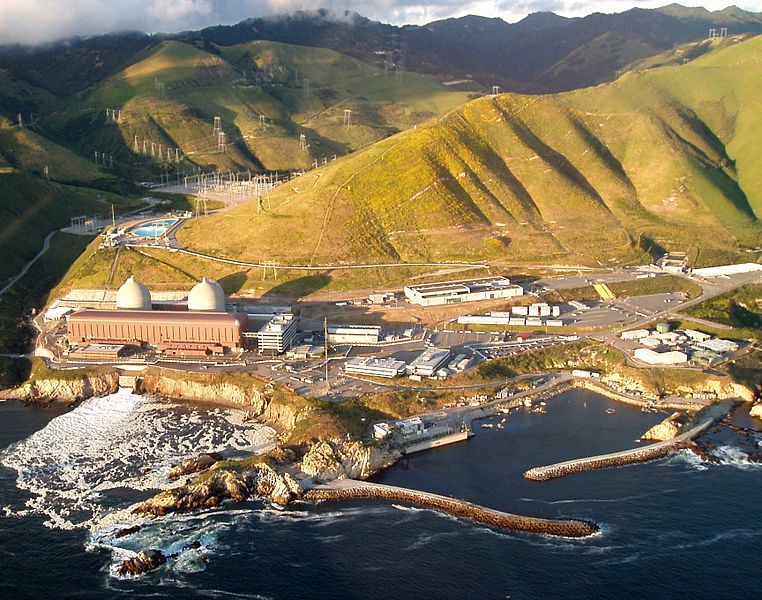
Santa Cruz Sentinel, January 7, 2024 Ron Pomerantz and Jane Weed-Pomerantz, Santa Cruz, https://www.santacruzsentinel.com/2024/01/07/letter-diablo-canyon-nuclear-plant-must-be-shut-down
Recently the Sentinel reported that the California Public Utility Commission (CPUC) approved extending operation of Diablo Canyon Nuclear Power Plant (Diablo) from a 2025 shutdown until 2030.
This is frightening and intolerable news allowing the continued Russian roulette operation of Diablo and confirming the CPUC a “captured agency.”
Many are outraged of the rate increases that PG&E is now allowed, costing ratepayers $8+billion dollars. Conservatively if spent on wind turbines and solar systems, 2-4 times electrical energy of Diablo could be produced! All with 100 percent renewable fuels and without public and environmental risk.
Diablo is old, embrittled, centered onshore near San Luis Obispo with numerous active earthquake faults. No solution exists for the storage of radioactive waste now on site.
Operation also furthers dependence on finite foreign sources of uranium with unstable and dangerous governments.
The reality is the nuclear fuel-cycle demands fossil fuels to process and distribute – hardly a green technology. Please contact the governor and state elected officials to set them straight by shutting-down Diablo and stop endangering lives and property..
Japan’s Hokuriku Elec reports oil leak from Shika nuclear plant
The magnitude 7.6 quake, which has killed more than 120 people in the Hokuriku region, shook the idled Shika power station, which is located around 65 kilometres (40 miles) from the quake’s epicentre.
The utility had already reported temporary power outages, oil leaks at the transformers, and water spill-over from spent nuclear fuel pools following Monday’s jolt, but no radiation leakage.
On Sunday, a small amount of oil film was detected in the gutter and on the road surrounding the main transformer of the No. 2 reactor, it said.
Additionally, an oil slick measuring about 5 meters by 10 meters was observed floating on the sea surface in front of the power station, Hokuriku Electric said, adding it promptly treated the oil film using a neutralizing agent.
The utility believes the oil slick resulted from a transformer insulating oil leak during the Jan. 1 quake, which triggered the fire extinguishing system, dispersing oil and spraying water around the transformer.
Subsequently, the oil appears to have entered the gutter due to rainfall, the company said, adding it was still analysing further details.
The oil slick is not within the radiation-controlled area and there are no external radiation effects, the company said.
Key external power supplies, monitoring facilities, and cooling systems at the plant are functioning normally, it added. (Reporting by Yuka Obayashi Editing by Mark Potter)
1 This Month


Tell the Ukrainian Government to Drop Prosecution of Peace Activist Yurii Sheliazhenko

Petition to revoke the licensing of the Near Surface Nuclear Disposal Facility (NSDF) at Chalk River. https://www.ourcommons.ca/petitions/en/Petition/Details?Petition=e-7247


of the week – STOP SMALL MODULAR REACTORS IN CANADA
To see nuclear-related stories in greater depth and intensity – go to https://nuclearinformation.wordpress.com
-
Archives
- March 2026 (193)
- February 2026 (268)
- January 2026 (308)
- December 2025 (358)
- November 2025 (359)
- October 2025 (376)
- September 2025 (258)
- August 2025 (319)
- July 2025 (230)
- June 2025 (348)
- May 2025 (261)
- April 2025 (305)
-
Categories
- 1
- 1 NUCLEAR ISSUES
- business and costs
- climate change
- culture and arts
- ENERGY
- environment
- health
- history
- indigenous issues
- Legal
- marketing of nuclear
- media
- opposition to nuclear
- PERSONAL STORIES
- politics
- politics international
- Religion and ethics
- safety
- secrets,lies and civil liberties
- spinbuster
- technology
- Uranium
- wastes
- weapons and war
- Women
- 2 WORLD
- ACTION
- AFRICA
- Atrocities
- AUSTRALIA
- Christina's notes
- Christina's themes
- culture and arts
- Events
- Fuk 2022
- Fuk 2023
- Fukushima 2017
- Fukushima 2018
- fukushima 2019
- Fukushima 2020
- Fukushima 2021
- general
- global warming
- Humour (God we need it)
- Nuclear
- RARE EARTHS
- Reference
- resources – print
- Resources -audiovicual
- Weekly Newsletter
- World
- World Nuclear
- YouTube
-
RSS
Entries RSS
Comments RSS
 nuclear-news