TODAY. The subtle ways that the nuclear lobby manipulates corporate media. Example KISHA CLUBS OF JAPAN
Media in other countries are controlled in a similar way, but Japan has the longest and most successful story of corporate media’s obedience to the pro nuclear dogma that prevails across the world.
Paul Richards 5 Jan 24
Starting with, the source: KISHA CLUBS OF JAPAN
Japan’s Press Club System, known as “kisha clubs,” is a unique arrangement that fosters close relationships between journalists and the institutions they cover. This system is prevalent in government offices, ministries, major corporations, and other influential entities.
1] STRUCTURE OF PRESS CLUBS
Exclusive Access:
Journalists from major media outlets join these clubs, gaining exclusive access to news briefings, announcements, and events hosted by specific institutions. Each institution typically has its own press club.
Regular Briefings:
Officials provide information to journalists within these clubs, fostering a symbiotic relationship. In return for access, journalists are expected to adhere to certain unwritten rules, which can include not reporting certain sensitive topics or leaks without permission.
2] HIERCAHICAL EFFECT
Access to Information:
Press club members receive information directly from sources, creating an information hierarchy where those outside the clubs might lack timely or direct access to crucial news.
Influence and Reporting Bias:
The system can create a situation where reporters develop close ties with the sources they cover. This might lead to a reluctance to publish critical or controversial information that could jeopardise their access or relationships. As a result, it can challenge the ability of the press to hold political power accountable.
3] CHALLENGING POLITICAL POWER
Limited Critical Reporting:
While the press club system provides access, it can also limit critical reporting. Journalists might self-censor to maintain access or avoid upsetting their sources, which can indirectly challenge the media’s ability to scrutinise political power thoroughly.
Alternative Media and Challenges:
Independent or smaller media outlets not part of these press clubs might face difficulties accessing information. However, these outlets sometimes challenge the established narrative and provide alternative perspectives, albeit with limited resources and access to official sources.
While the Press Club System provides journalists with unique access to information and sources, it also poses challenges to independent and critical reporting.
The hierarchical nature of information distribution in Japan within these clubs can lead to a cosy relationship between the press and political power, impacting the media’s ability to fully challenge or scrutinise those in authority.
There have been many concerns raised about the Japanese government’s ruling parties, and pressure on media outlets indirectly, such as withholding access to information or using informal means to influence coverage.
This might affect the independence and objectivity of reporting, though direct censorship is not a prevalent practice.
Overall, Japan maintains, it has a reputation for press freedom compared to many other countries.
However, concerns persist about self-censorship, indirect influences, and the limitations of the press club system that can impact the diversity and depth of news coverage.
The nature of political control over the press in Japan tends to be more subtle and indirect rather than overt and explicit.
Japan earthquake raises concerns over restarting country’s nuclear plants
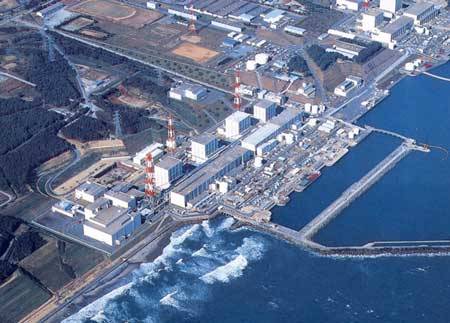
The earthquake struck days after Japan’s regulators lifted a two-year operational ban on a power plant run by Tokyo Electric Power Company (Tepco), which operated the wrecked Fukushima nuclear plant.
Ashima Sharma, January 5, 2024, https://www.power-technology.com/news/japan-earthquake-raises-concerns-over-restarting-countrys-nuclear-plants/?cf-view
The 7.6 magnitude earthquake that hit Japan’s western coast on 1 January has raised concerns over the push to bring the country’s nuclear capacity online.
The earthquake struck just days after the country’s regulators lifted a two-year operational ban on Tepco’s Kashiwazaki-Kariwa nuclear power plant.
Tepco’s plant is located around 120km from the earthquake’s epicentre but has been offline since 2012. Tepco was also the operator of the wrecked Fukushima nuclear plant and in 2021 was banned from transporting new uranium fuel to its Kashiwazaki-Kariwa nuclear plant.
The move was to prevent Tepco from restarting the facility’s seven nuclear reactors, ten years after two of its reactors incurred a triple meltdown at Fukushima.
Following the quake, Tepco reported water spillage from two nuclear fuel pools of the No. 7 and No. 2 reactors at the Kashiwazaki-Kariwa nuclear power plant.
The company ascertained that about 14 litres of water containing radioactive materials spilled from the pools, although it said the radiation levels were normal.
The Shika nuclear power plant, operated by another company, Hokuriku Electric, and located 65km from the epicentre, also reported spillage from spent nuclear fuel pools and oil leaks.
After the Fukushima nuclear disaster in March 2011, there was a strong public and political sentiment to phase out nuclear plants in the country. However, over the years, severe power crunches coupled with rising energy prices have pushed Japan towards restarting idle reactors.
In 2023, Japan’s Kansai Electric Power restarted its 12th nuclear reactor at the Takahama plant. The 826MW Takahama No. 2 was the country’s second-oldest operating reactor, having entered service in 1975.
We care about Japan’s disaster situation and are concerned about nuclear safety:

By Global Times, Jan 03, 2024
As of Tuesday evening, the 7.6-magnitude strong earthquake that occurred in Japan has caused at least 57 deaths, multiple casualties, building collapses, widespread power outages, and fires. The latest development is a collision between a Japan Airlines plane and a Japan Coast Guard aircraft at Tokyo’s Haneda Airport during landing, resulting in at least five deaths among the six crew members of the latter. The Japan Coast Guard aircraft was originally scheduled to transport relief supplies to the earthquake-stricken area in Ishikawa Prefecture. It was preparing for takeoff on the runway when the incident occurred. It’s not difficult to imagine the various chaos that this major earthquake has brought to Japan.
This is the strongest earthquake in Japan since the “3.11” earthquake in 2011. The Japan Meteorological Agency stated on Tuesday that since January 1 local time, there have been 155 earthquakes in Japan, including two strong earthquakes of over magnitude 6. It is uncertain whether there will be continuous aftershocks or even larger earthquakes. Despite Japan’s rich experience in dealing with disasters such as earthquakes and tsunamis, human society remains vulnerable in the face of unexpected natural disasters.
Meanwhile, we also notice that in this earthquake, there is some important information that may not have received enough attention. For example, Tokyo Electric Power Company (TEPCO) announced on the evening of January 1 that the water from the fuel pools at the top floors of the No. 7 and No. 2 reactors at the Kashiwazaki-Kariwa nuclear power plant in Niigata Prefecture spilled over due to strong earthquakes. These waters contain radioactive materials, and the radiation levels are currently being measured. In addition, there was a situation at the Shika Nuclear Power Station in Ishikawa Prefecture where some water had sloshed from a cooling pool for spent fuel rods. Regarding the issues at these two nuclear power stations, the Japanese authorities have promptly concluded that they are “currently safe,” stating that “no damage or leaks were confirmed” and that the fuel cooling at the Shika Nuclear Power Station was “unaffected.”
We certainly hope that this accurately reflects the current situation regarding the nuclear power plants. The information has garnered significant attention from netizens, leading to doubts about whether Japan will experience another catastrophic nuclear accident similar to the Fukushima incident following an earthquake. One reason for this concern is that Japan is one of the countries with the highest concentration of nuclear power plants in the world, coupled with its limited land area. Once a serious nuclear disaster occurs, Japan can hardly cope with it independently. The Fukushima nuclear accident serves as a painful reminder.
More importantly, the Japanese government and TEPCO have a bad track record of mishandling nuclear accidents. To some extent, they have lost credibility. Furthermore, Japan’s stubborn and irresponsible actions regarding the dumping of nuclear-contaminated water from Fukushima have caused great concerns among the Japanese people
Japan needs to take these legitimate concerns seriously. Although the epicenter of this earthquake was in the Noto Peninsula in Ishikawa Prefecture, its impact was widespread, ranging from Hokkaido to Kyushu. The coastal areas of northern Japan, where numerous nuclear facilities and power plants are located, have been affected to varying degrees. The Kashiwazaki-Kariwa nuclear power station, which has witnessed problems, is one of the largest in the world.
It is crucial to assess the condition of these nuclear facilities and the radiation levels in the surrounding sea. Does Japan have a comprehensive monitoring plan in place? Are other nuclear power plants along the coast in a safe state? How does Japan ensure transparency in information disclosure? These issues are directly related to the well-being of the Japanese people and the surrounding countries, and they require a serious response from Japan in the process of dealing with this earthquake………………. https://www.globaltimes.cn/page/202401/1304687.shtml
IAEA says its inspectors are denied access to parts of Ukraine nuclear plant .
The head of the U.N. nuclear power watchdog said on Wednesday his
inspectors had been denied access to parts of Ukraine’s Russian-occupied
Zaporizhzhia nuclear power station and had yet to receive 2024 maintenance
plans for the facility. The plant was seized by Russia in the days
following Moscow’s 2022 invasion of Ukraine. Each side has accused the
other of shelling around the station, Europe’s largest, though its six
reactors now produce no electricity.
Reuters 3rd Jan 2024
Nuclear weapons test treaty fears sink plans for major wind farm
UK Ministry of Defence objected to 315MW array over fears nuclear monitoring station would be affected by vibrations
5 January 2024 By Cosmo Sanderson , Recharge,
The UK’s obligations to monitor nuclear weapons testing have helped scupper a proposal for a Scottish wind farm over fears it could affect a nearby monitoring station.
The Scottish government rejected a proposal from British developer Community Windpower for a planned 315MW array made up of 45 turbines near the border with England last month.
The reasons for this included the potential impact of the wind farm on the nearby Eskdalemuir Seismic Array, a seismological monitoring station that forms part of the UK’s obligations under a multilateral treaty to ban nuclear weapons testing…………..(Subscribers only) more https://www.rechargenews.com/wind/nuclear-weapons-test-treaty-fears-sink-plans-for-major-wind-farm/2-1-1579329
A ‘natural alternative’ plan for protecting fish from Hinkley nuclear station’s cooling system
Plans for a salt marsh near a nuclear power station have been proposed as
a “natural” alternative to protect fish from its cooling systems.
Campaigners had called for changes amid fears Hinkley Point C’s cooling
tunnels could kill millions of fish. EDF Energy said it would carry out a
consultation on its proposal for the 800 acres of wetland near Bridgwater.
Chris Fayers from Hinkley Point C said it would be a natural alternative to
installing an acoustic fish deterrent.
The deterrent system would have used
280 speakers to make noise “louder than a jumbo jet” 24-hours a day for 60
years. The alternative plans for the wetland, being developed with Natural
England, Natural Resources Wales and the Environment Agency, are expected
to create new habitats for fish and animals, improve local water quality
and help prevent flooding.
BBC 5th Jan 2024
1 This Month


Tell the Ukrainian Government to Drop Prosecution of Peace Activist Yurii Sheliazhenko

Petition to revoke the licensing of the Near Surface Nuclear Disposal Facility (NSDF) at Chalk River. https://www.ourcommons.ca/petitions/en/Petition/Details?Petition=e-7247


of the week – STOP SMALL MODULAR REACTORS IN CANADA
To see nuclear-related stories in greater depth and intensity – go to https://nuclearinformation.wordpress.com
-
Archives
- March 2026 (183)
- February 2026 (268)
- January 2026 (308)
- December 2025 (358)
- November 2025 (359)
- October 2025 (376)
- September 2025 (258)
- August 2025 (319)
- July 2025 (230)
- June 2025 (348)
- May 2025 (261)
- April 2025 (305)
-
Categories
- 1
- 1 NUCLEAR ISSUES
- business and costs
- climate change
- culture and arts
- ENERGY
- environment
- health
- history
- indigenous issues
- Legal
- marketing of nuclear
- media
- opposition to nuclear
- PERSONAL STORIES
- politics
- politics international
- Religion and ethics
- safety
- secrets,lies and civil liberties
- spinbuster
- technology
- Uranium
- wastes
- weapons and war
- Women
- 2 WORLD
- ACTION
- AFRICA
- Atrocities
- AUSTRALIA
- Christina's notes
- Christina's themes
- culture and arts
- Events
- Fuk 2022
- Fuk 2023
- Fukushima 2017
- Fukushima 2018
- fukushima 2019
- Fukushima 2020
- Fukushima 2021
- general
- global warming
- Humour (God we need it)
- Nuclear
- RARE EARTHS
- Reference
- resources – print
- Resources -audiovicual
- Weekly Newsletter
- World
- World Nuclear
- YouTube
-
RSS
Entries RSS
Comments RSS
 nuclear-news