UN General Assembly votes to demand immediate ceasefire in Gaza
By Caitlin Hu, CNN, https://edition.cnn.com/2023/12/12/middleeast/ceasefire-vote-gaza-israel-un-intl
The United Nations General Assembly has voted to demand an immediate humanitarian ceasefire in war-torn Gaza, in a rebuke to the United States which has repeatedly blocked ceasefire calls in the UN’s Security Council.
A majority of 153 nations voted for the ceasefire resolution in the General Assembly’s emergency special session Tuesday, while 10 voted against and 23 abstained.
While a General Assembly vote is politically significant and seen as wielding moral weight, it is nonbinding, unlike a Security Council resolution. The US last week vetoed a ceasefire resolution in the smaller Security Council, which had been approved by a majority of the powerful 15-member body.
Tuesday’s brief resolution calls for a ceasefire, for all parties to comply with international law, and for humanitarian access to hostages as well as their “immediate and unconditional” release. It notably contains stronger language than an October vote in the assembly that had called for a “sustained humanitarian truce.”
The vote, hailed as “historic” by Palestinian Ambassador to the UN Riyad Mansour, comes as the war between Israel and Hamas enters its third month, and as medics and aid groups sound alarm bells on the humanitarian situation in besieged Gaza. More than 18,000 people have been killed in Gaza since fighting broke out, the Hamas-controlled health ministry in the enclave said Monday.
The resolution “does not ‘call for’ or ‘urges’ – it demands, and we will not rest until we see compliance of Israel with this demand,” Mansour said. A ceasefire is necessary to move the “massive” amounts of humanitarian assistance needed by Gaza’s besieged civilian population, he added.
Ahead of Tuesday’s vote, Israel’s UN Ambassador Gilad Erdan described the resolution as a “disgraceful” attempt to bind Israel’s hands, warning that “continuing Israel’s operation in Gaza is the only way any hostages will be released.”
Israel has rejected previous calls for a ceasefire, though it agreed to a seven-day truce for the release of Israeli hostages held in Gaza.
Israel voted against Tuesday’s resolution along with the US, Papua New Guinea, Paraguay, Austria, the Czech Republic, Guatemala, Liberia, Micronesia and Nauru.
‘One singular priority’
“We have one singular priority – only one – to save lives,” said General Assembly President Dennis Francis, opening the emergency session on Tuesday afternoon, warning that civilians in Gaza have nowhere safe to shelter from the fighting and aerial bombardment.
“Even war has rules, and it is imperative that we prevent any deviation from these principles and values – the validity of which resides in their universal application,” he said.
With vital infrastructure blasted to rubble and limited access to water, medicine and food, more Gaza civilians may end up dying of diseases than from bombs and missiles, UN officials have warned. Hunger is a growing issue in the enclave.
Addressing the assembly, US Ambassador to the UN Linda Thomas-Greenfield said that Washington does “agree that the humanitarian situation in Gaza is dire…and that civilians must be protected with international humanitarian law,” but urged nations to support an amendment to the resolution condemning Hamas, which did not pass.
”A ceasefire right now would be temporary at best, and dangerous at worst,” she said. “Dangerous to Israelis, who would be subject to relentless attacks, and also dangerous to Palestinians who deserve the chance to build a better future for themselves free from a group that hides behind innocent civilians.”
In a break with its southern neighbor, Canada cast its vote in support of the resolution, with Prime Minister Justin Trudeau issuing a joint statement with the leaders of Australia and New Zealand in support of “urgent international efforts towards a sustainable ceasefire.”
Australian Foreign Minister Penny Wong said Australian officials had been engaging with Canadian officials for some time on the issue, and more recently with New Zealand’s new government.
“We think that it’s important that very close allies and likeminded countries speak together in support of the position that we’ve articulated,” Wong told reporters Wednesday.
“We are democracies, and we expect of ourselves a high standard, and we expect that we will all work to comply with international humanitarian law, including the protection of civilian life,” she said.
Canadian ambassador to the UN Bob Rae called on Hamas to lay down its weapons and stop using civilians as “human shields.”
He added: “The price of defeating Hamas cannot be the continuous suffering of Palestinian civilians.”
South Africa’s representative Mathu Joyini meanwhile invoked her country’s “own painful past experience of a system of apartheid” to impress on fellow states the need to “take action in accordance with international law.”
Tuesday’s vote, she said, “presents an opportunity for us to illustrate that the organization that was created to give hope for peace is not tone-deaf to the suffering of the most vulnerable.”
In a short statement, Izzat Al-Rishq, a member of the Hamas Political Bureau, welcomed the resolution and condemned what he termed as a “war of genocide and ethnic cleansing” against the Palestinian people.
Does nuclear power generate GHG CO2 emissions?
Yes. More than what people expect. [Ref. 2 – Year 2021]
Quote:
“How climate-friendly is nuclear compared to other energies?
If the entire life cycle of a nuclear plant is included in the calculation, nuclear energy certainly comes out ahead of fossil fuels like coal or natural gas. But the picture is drastically different when compared with renewable energy.”
“According to new but still unpublished data from the state-run German Environment Agency (UBA) as well as the WISE figures, nuclear power releases 3.5 times more CO2 per kilowatt-hour than photovoltaic solar panel systems. Compared with onshore wind power, that figure jumps to 13 times more CO2. When up against electricity from hydropower installations, nuclear generates 29 times more carbon.”
Why does the IAEA state otherwise? It’s convenient, as simple as that.
IAEA statement at COP28: on Dec. 1st, 2023 [Ref. 1]
Fact check: Is nuclear energy good for the climate? NATURE AND ENVIRONMENTGLOBAL ISSUES. Joscha Weber. November 29, 2021. Supporters of nuclear energy say it can help us wean our economies off polluting fossil fuels. No surprise, it’s a heated issue. But what about the facts? Can nuclear power really help save the climate?
Link: https://www.dw.com/en/fact-check-is-nuclear-energy-good-for-the-climate/a-59853315
“Is nuclear power a zero-emissions energy source?
No. Nuclear energy is also responsible for greenhouse gas emissions. In fact, no energy source is completely free of emissions, but more on that later.
“When it comes to nuclear, uranium extraction, transport and processing produces emissions. The long and complex construction process of nuclear power plants also releases CO2, as does the demolition of decommissioned sites. And, last but not least, nuclear waste also has to be transported and stored under strict conditions — here, too, emissions must be taken into account.”
“How much CO2 does nuclear power produce?
Results vary significantly, depending on whether we only consider the process of electricity generation, or take into account the entire life cycle of a nuclear power plant. A report released in 2014 by the UN’s Intergovernmental Panel on Climate Change (IPCC), for example, estimated a range of 3.7 to 110 grams of CO2 equivalent per kilowatt-hour (kWh).
“It’s long been assumed that nuclear plants generate an average of 66 grams of CO2/kWh — though Wealer believes the actual figure is much higher. New power plants, for example, generate more CO2 during construction than those built in previous decades, due to stricter safety regulations.”
Studies that include the entire life cycle of nuclear power plants, from uranium extraction to nuclear waste storage, are rare, with some researchers pointing out that data is still lacking. In one life cycle study, the Netherlands-based World Information Service on Energy (WISE) calculated that nuclear plants produce 117 grams of CO2 emissions per kilowatt-hour
“Could we rely on nuclear energy to help stop global warming?
Around the world, nuclear energy representatives, as well as some politicians, have called for the expansion of atomic power. In Germany, for example, the right-wing populist AfD party has backed nuclear power plants, calling them “modern and clean.” The AfD has called for a return to the energy source, which Germany has pledged to phase out completely by the end of 2022.
Other countries have also supported plans to build new nuclear plants, arguing that the energy sector will be even more damaging for the climate without it. But Wealer from Berlin’s Technical University, along with numerous other energy experts, sees takes a different view.
“The contribution of nuclear energy is viewed too optimistically,” he said. “In reality, [power plant] construction times are too long and the costs too high to have a noticeable effect on climate change. It takes too long for nuclear energy to become available.”
Mycle Schneider, author of the World Nuclear Industry Status Report, agrees.
“Nuclear power plants are about four times as expensive as wind or solar, and take five times as long to build,” he said. “When you factor it all in, you’re looking at 15-to-20 years of lead time for a new nuclear plant.””
“He pointed out that the world needed to get greenhouse gases under control within a decade. “And in the next 10 years, nuclear power won’t be able to make a significant contribution,” added Schneider.
“Nuclear power is not being considered at the current time as one of the key global solutions to climate change,” said Antony Froggatt, deputy director of the environment and society program at the international affairs think tank Chatham House in London.
He said a combination of excessive costs, environmental consequences and lack of public support were all arguments against nuclear power.”
Ukraine was never going to win – US senator
Tommy Tuberville has also dismissed the notion that Russia could invade EU states as just a “selling point”
https://www.rt.com/news/588986-ukraine-never-win-senator/ 13 Dec 23
Ukraine always faced the prospect of losing the conflict with Russia in the event that Washington cut off its aid, US Republican Senator Tommy Tuberville has said.
His comments came after the US Senate last week blocked a bill by President Joe Biden that was intended to allocate a further $60 billion in funding to Kiev, on top of the $110 billion already spent. Republicans opposed to the package have demanded tougher immigration control on the US-Mexico border in exchange for approving the bill, rejected by the White House.
Speaking to CNN on Tuesday, Tuberville was asked whether cutting off funding to Kiev could result in Ukraine being defeated. The senator replied that he personally “never thought they can win to begin with,” especially with the way the US “eased into” the conflict.
Tuberville also dismissed claims by Kiev’s backers that Russia will advance elsewhere into western Europe once it defeats Ukraine’s forces. The Republican argued that Moscow “can’t beat Ukraine on the eastern side,” and questioned how it was expected to push further across Europe.
“I’ve never believed that scenario. I think it’s a good selling point to send more money,” Tuberville suggested.
The US has so far provided Ukraine with an estimated $111 billion in military and economic assistance since the outbreak of its conflict with Russia in February 2022. While Washington has increasingly warned that funds are beginning to run out, Ukrainian President Vladimir Zelensky has nevertheless continued to insist on receiving more money.
The Ukrainian leader traveled to Washington on Tuesday to hold a series of meetings with top US officials, in an attempt to save Biden’s $60 billion aid package. However, Zelensky appears to have failed to convince key Republicans to change their mind about opposing the bill. Instead, some senators left the meeting while describing it as “the same old stuff” and “very scripted.”
Biden has continued to urge Congress to approve the funding package and has also pledged an additional $200 million in emergency military aid for Kiev through the Presidential Drawdown Authority, which allows him to send weapons from US stocks without congressional approval.
Meanwhile, Moscow has brushed off Zelensky’s latest visit to Washington as inconsequential for the outcome of the conflict. Russia’s ambassador to the US, Anatoly Antonov, claimed that “everyone is tired of the Kievan beggarman.” Kremlin spokesperson Dmitry Peskov has also stressed that no amount of money would change the situation on the front lines.
China drops out of British nuclear power program.
China was providing 1/3 of the capital for the Hinkley Point 2xEPR reactor project in the UK, with the aim of smoothing the waters for China to build its own reactors in the UK (Bradwell). But the British govt effectively cancelled China’s plans to build reactors in the UK, for various reasons including cybersecurity.
Now, China, has pulled funding for Hinkley Point! France’s EDF, which is already carrying over A$100 billion in debt and was fully nationalised this year, may have to pick up the slack to keep Hinkley going. Or maybe the British govt increases its subsidies for Hinkley Point. Already, the UK National Audit Office estimates that British taxpayer subsidies for Hinkley Point could amount to £30 billion (A$56.4 billion).
Amazing.
‘China’s CGN Halts Funding for UK’s Hinkley Point Nuclear Plant’
‘Withdrawal comes after UK took over CGN stake in other project’
‘EDF may have to fund multibillion completion of plant alone’
Zelensky gives US TV viewers fake frontline facts
https://www.rt.com/russia/588976-zelensky-no-village-lost/—13 Dec 23
The Ukrainian president touted his country’s supposed military success on Fox News
Ukrainian President Vladimir Zelensky has contradicted frontline developments by claiming that Russian troops have failed to capture a single village from Kiev’s forces this year. The Ukrainian leader talked up his country’s supposed military achievements in an interview with Fox News anchor Bret Baier on Tuesday.
Zelensky is visiting Washington this week to urge continued military assistance for Kiev in 2024. Political clashes on Capitol Hill have caused a White House request for more than $110 billion in foreign security spending, including over $60 billion for Ukraine, to be blocked.
Speaking in English, Zelensky claimed that Ukrainian forces had “destroyed mostly [the] Russian fleet that was situated in our waters and near… occupied Crimea.” Kiev has launched several successful attacks on Russia’s Black Sea Fleet using Western-provided cruise missiles, although Moscow’s forces have repelled numerous other assaults.
Zelensky further claimed that Ukraine had killed 20,000 members of the now-disbanded Wagner private military company, and that “Russia did not occupied [sic] any Ukrainian village during this year.
The Ukrainian leader made the assertions despite evidence to the contrary on the battlefield, with Wagner fighters playing an important role in the fighting for the Donbass city of Artyomovsk (known as Bakhmut in Ukraine). The Zelensky government had declared the city an invincible “fortress” and reportedly ignored repeated US calls to pull troops out. After losing control of the city in May, Zelensky downplayed the significance of the settlement, declaring that it no longer existed and remained “only in our hearts.”
In early 2023, Kiev also lost control of Soledar in Donbass. Fox News host Baier did not dispute Zelensky’s claims that Russia had enjoyed no success in the conflict.
According to Western media, Kiev’s bid to retain Artyomovsk significantly impacted its summer counteroffensive, having needlessly drained Ukrainian manpower and resources. The push to break through Russian defensive lines, which started in June and according to Russia estimates cost Ukraine over 125,000 casualties, failed to yield significant territorial gains for Kiev.
Zelensky and his aides publicly clashed with Ukraine’s top general, Valery Zaluzhny, after he described the frontline situation as a “stalemate” in early November. The president’s office finally acknowledged that no progress was being made by the end of the month.
A profile of Zelensky published by Time magazine in late October said his close associates believe him to be delusional. His belief in a Ukrainian victory over Russia is “immovable, verging on the messianic,” according to the outlet.
Why can’t the US ever say no to Israel?
The American UN veto on a Gaza ceasefire is a low point of wag-the-dog international politics
Rt.com, Tarik Cyril Amar, 13 Dec 23
December 8, 2023, is a day that will live in infamy. The United States made history of the worst kind by using its permanent seat on the UN Security Council to veto a resolution calling for an immediate ceasefire in Gaza. The resolution was advanced by the United Arab Emirates (a US partner) and supported by more than 90 member states. It also had preponderant backing in the global organization’s privileged “upper chamber,” the Security Council, where 13 of its 15 members were in favor (while the UK abstained, abdicating its sovereignty to the US, again).
The American veto directly defied UN Secretary-General Antonio Guterres. Not a natural-born rebel, the UN chief had deployed a rarely used procedure to promote the ceasefire, putting his authority on the line. Referring to Article 99 of Chapter 15 of the UN Charter, he already implied that “international peace and security” were in danger. His spokesperson was explicit that Guterres was making a “dramatic constitutional move.” While maintaining diplomatic balance by also highlighting the Hamas attack on Israel, Guterres’ letter to the Security Council depicted the catastrophic suffering of the Palestinians under the ongoing Israeli attack and concluded that “nowhere” was safe in Gaza.
All to no avail. The US could not be swayed and maintained its de facto unconditional support for Israel, even while the latter is conducting an intensifying genocidal assault on Gaza and its civilian population. This is no longer up for debate, and is no secret either; Israeli leaders have repeatedly made statements that signal the kind of intent that is a crucial element in the crime of genocide, while their actions and those of their forces on the ground speak even louder than their words.
The world has taken note. It took no special bias for the Palestinian leadership – the one derived from the PLO, as well as Hamas – to identify the veto as “disastrous” and “a disgrace and another blank cheque given to the occupying state to massacre, destroy and displace.” China and Russia have denounced American double standards and the “death sentence” Washington has handed down on future Palestinian victims of the Israeli assault.
Amnesty International says Washington has “brazenly wielded and weaponized its veto to strongarm the UN Security Council… undermining its credibility” and displaying a “callous disregard for civilian suffering in the face of a staggering death toll.” Doctors without Borders did not mince its words either, accusing the US of standing “alone in casting its vote against humanity,” with America “complicit in the carnage in Gaza” and undermining not only its own credibility but also that of international humanitarian law.
Craig Mokhiber – an authority on international law and former head of the UN High Commissioner for Human Rights office in New York – tweeted that “on the eve of the 75th Anniversary of the Genocide Convention, the US has again vetoed a ceasefire in the UN Security Council… demonstrating its further complicity in the #genocide in #Palestine.”
This list of censure and condemnation could be prolonged almost ad infinitum, especially if we add voices from the Global South. The key point, however, should be clear already: The US stands isolated and disgraced by its very own, easily avoidable – or so it would seem – decision. This was, after all, not a vote asking for justice and restitution for the victims, or – perish that radical thought! – for prosecution of the perpetrators. All this was about was the barest of bare minimums, just a ceasefire, not even a peace deal. Still, that was too much to ask of the US……………………………..
Future historians will ask how this happened. How could the single most powerful nation in the world, which claims to lead not only by force but by “values,” side with the Israeli perpetrators of such an outrageous and open crime, while openly contravening much of the international community? Some will even ask the more cynical question how America, even if its elites are entirely bereft of ethics, could do so much harm to itself.
The simplest, almost technical answer to that question has to do with a historical irony. America owes its veto power – as one of the five permanent members of the Security Council – to what happened in World War II. And while World War II and the German Holocaust against the Jews of (mostly) Europe are not the same, they are part of the same history. Much US pride has been invested in being among the powers that brought down the Holocaust perpetrator state Germany. And yet, here we are: The same US is now using that very veto not only to shield another genocidal state but to help it continue its crime.
There are, of course, broader reasons for this great American failure. Many have been discussed before. Israel serves the function of an enforcer and imperial outpost in the Middle East and sometimes beyond. As current US President Joe Biden – by now often trending on X as #GenocideJoe – stated in 1986, when still an ambitious and pandering senator, if there were no Israel, America would have to invent one. Let’s set aside that even the callous realpolitik behind such thinking is flawed: If it ever was an asset, Israel is turning into a liability. Let’s just note that the American elite claims to believe that Israel is so useful that the commitment to it must be, in Vice President Kamala Harris’ words, “ironclad.”
But so it was for Ukraine only, as it were, yesterday. And yet Kiev is about to be dropped, as so many US clients before. What makes Israel different? Clearly, it is the long-standing top recipient of US financial and military support. Is it sunk cost fallacy then? Is America so over-committed to Israel that it simply won’t walk away?
Yet that hypothesis does not explain the striking one-sidedness of the US-Israel relationship. If there has ever been a case of wag-the-dog, this is it: One thing that the American veto on the Gaza ceasefire resolution shows is that it is Israel that is dominating US foreign policy, not the other way around. Otherwise, Washington would have sought to find a compromise between preserving its own credibility and interests by allowing at least this very modest resolution to pass, while still supporting Israel in multiple other ways.
Clearly, one thing that is determining this American dependence on another, much smaller country is the massive success of lobbying and foreign influence operations on behalf of Israel. Indeed, it is Israel that has run the most invasive and effective such attack on US politics in history. And for the avoidance of any misunderstandings: Noting this obvious fact has nothing to do with “anti-Semitism.” Indeed, trying to smear those who dare bring it up with that accusation is part of how that influence operation works. It’s time to entirely disregard such cheap tricks.
………………………………………………………………. If only we could return, at least, to a world where Americans could forget a little about their Russia obsession when thinking about foreign influence on their country and focus that concern where it matters, namely on Israel. If in addition they could think a little more about Russia as a viable partner – at least occasionally – in helping resolve severe international crises, we would all be much better off. We might even be able to stop a genocide here or there. https://www.rt.com/news/588952-us-israel-un-veto/
Bernie Sanders Votes No on Giving Israel Aid to Continue ‘Inhumane War’ on Gaza

“I do not believe that we should give the right-wing extremist Netanyahu government an additional $10.1 billion with no strings attached.”
By Jake Johnson / Common Dreams, more https://scheerpost.com/2023/12/13/bernie-sanders-votes-no-on-giving-israel-aid-to-continue-inhumane-war-on-gaza/
Sen. Bernie Sanders was the lone member of the Senate Democratic caucus to oppose advancing a $110.5 billion supplemental foreign aid measure on Wednesday, expressing opposition to the bill’s unconditional military assistance for the Israeli government.
“I voted NO on the foreign aid supplemental bill today for one reason,” Sanders (I-Vt.) said in a statement. “I do not believe that we should give the right-wing extremist Netanyahu government an additional $10.1 billion with no strings attached to continue their inhumane war against the Palestinian people.”
“Israel has the absolute right to defend itself against the Hamas terrorists who attacked them on October 7,” Sanders added. “They do not have the legal or moral right to kill thousands of innocent Palestinian men, women, and children.”
The aid package, which also includes billions in military assistance for Ukraine, failed to clear a procedural hurdle Wednesday, with every Republican voting no over the absence of immigration policy changes that progressives have condemned as draconian. Senate Majority Leader Chuck Schumer (D-N.Y.) flipped his initial yes vote to no in a maneuver that will allow him to bring the bill forward again at a later date.
According to a summary released by the Senate Appropriations Committee, the supplemental package contains over $10 billion in military aid for Israel, which already receives roughly $4 billion in assistance from the U.S. per year and has gotten tens of thousands of bombs, artillery shells, and other weaponry since the Hamas-led October 7 attack.
The measure is largely in line with a request issued in October by the Biden White House, which has sought to expedite U.S. arms shipments to Israel even as the nation’s military is using American-made weaponry to commit heinous war crimes in the Gaza Strip.
One human rights monitor estimated earlier this week that at least 90% of the people killed by Israeli forces in Gaza since October 7 have been civilians.
Sanders, who has faced progressive criticism and outrage for rejecting calls for a permanent cease-fire in Gaza, said in a Senate floor speech on Monday that Israel “must dramatically change its approach to minimize civilian harm and lay out a wider political process that can secure lasting peace.”
The senator conceded during his remarks that there is no evidence Israel has altered its approach in response to light pressure from top U.S. officials, pointing to recent bombings of United Nations schools and other civilian infrastructure.
“Israel’s indiscriminate approach is, in my view, offensive to most Americans, it is in violation of U.S. and international law, and it undermines the prospects for lasting peace and security,” said Sanders.
TODAY. The demise of Vladimir Zelensky – when will the USA throw him under a bus?
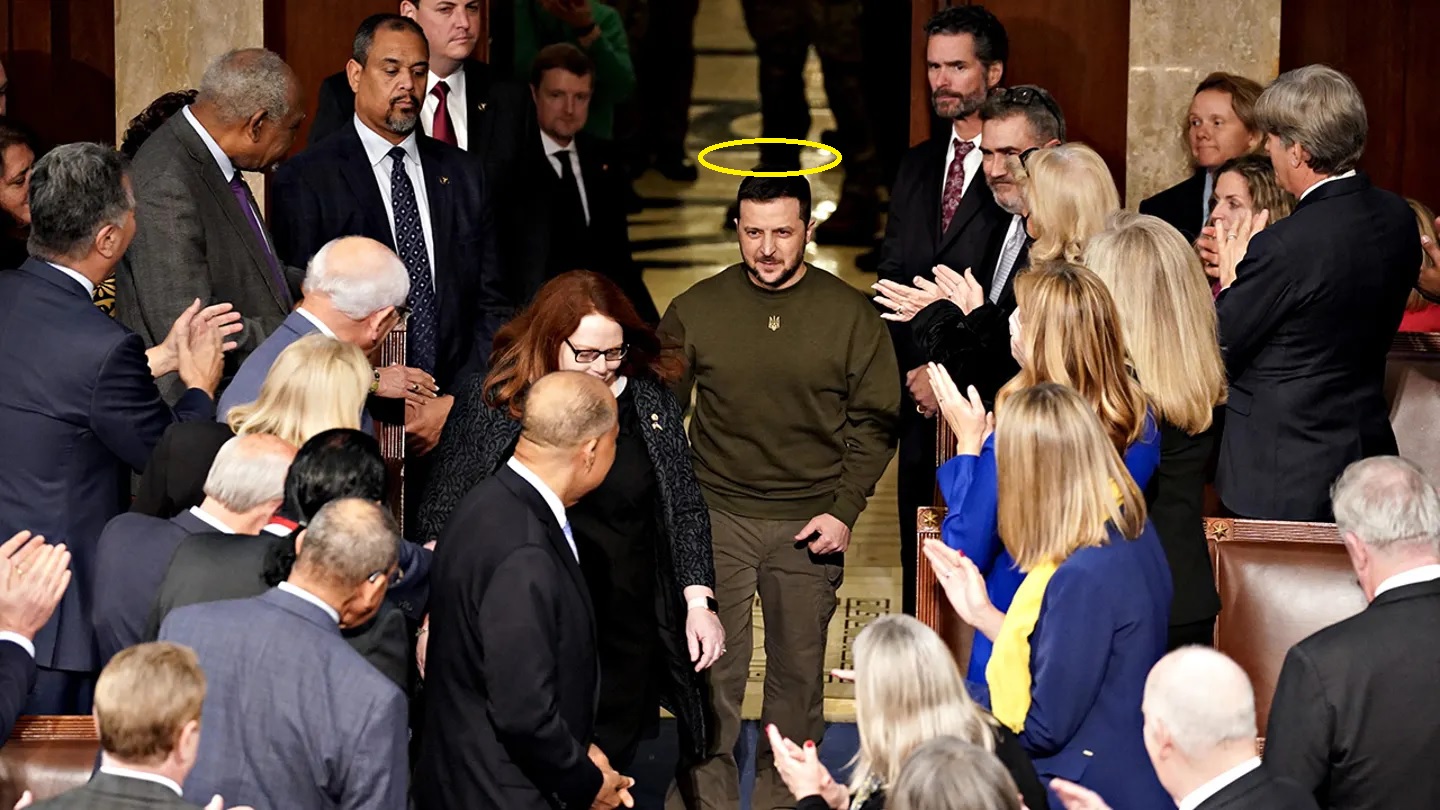
The augurs are not good for Ukraine’s President Zelensky .
Menacing clouds gather: Zelensky in his latest trip to Washington failed to get more $billions from USA – the Ukraine counter-offensive against Russia has failed – European support for Ukraine is faltering- huge losses of soldiers and civilians – continuing corruption in Ukraine – shutting down of Orthodox churches in closed trials, alienation of all except fascist and nazi -connected political parties – unhappiness of oppressed Russian-speaking citizens.
With complete disregard for Ukraine’s history, – its experiences during World War 2, the Minsk agreement, the 8 years of war against the Donbass region, and then disregard of Zelensky’s promises pre-election, – USA and the West swallowed the whole magical myth of Zelensky as messiah for Ukraine, saving the world from the satanic Putin.
It might have been wise to consider just who is this person they are choosing to lead Ukraine, USA, NATO into this super-expensive murderous mess. The comedic background sounds like fun - the clown who once pretended to play the piano with his penis. But not only did Zelensky lack a background in politics: he was really out of his depth in the complicated and corrupt world of Ukraine’s business and political system
What Zelensky did have was an inflated ego, a narcissistic personality, and a superb ability to charm, con and persuade people. So he’s brave, energetic, etc. But it has been a disastrous two-way street - Zelensky conning the West and the West conning Zelensky. into Ukraine’s suicidal aim to humiliate Russia, re-acquire Crimea and the Donbass, and become a NATO bastion.
In the meantime, the Ukrainian death toll mounts, and the USA weapons manufacturers profits mount.
But hey! – now we’ve got the Israel-Gaza crisis. That all needs USA weapons, too, to keep that massacre going. The spotlight is off Ukraine.
There must be many who resent Zelensky – to put it mildly. Perhaps there will be a negotiated way out of the Ukraine mess, and Zelensky might safely slide off to quiet retirement overseas.
Vladimir Zelensky has been very useful to the USA. But it’s time to discard him.
Gaza Is Deliberately Being Made Uninhabitable

CAITLIN JOHNSTONE, DEC 13, 2023 https://www.caitlinjohnst.one/p/gaza-is-deliberately-being-made-uninhabitable?utm_source=post-email-title&publication_id=82124&post_id=139740561&utm_campaign=email-post-title&isFreemail=true&r=1ise1&utm_medium=email
Infectious diseases are tearing through Gaza, whose healthcare system has been rendered almost nonexistent, and people are beginning to starve in massive numbers. All of this is due to concrete policy decisions made by Israel in its horrific assault on the Gaza Strip.
In an article titled “Gaza’s health system is ‘on its knees’ as Israel pushes into Khan Younis,” The Washington Post reports that the mass displacement of nearly two million Palestinians in Gaza has led to overcrowding and unsanitary living conditions that are rapidly giving rise to disease.
“Meanwhile, the Gaza Health Ministry and other medical workers said they were recording new cases of acute hepatitis, scabies, measles and upper respiratory infections, mostly among children,” the Post reports. “Infectious diseases are spreading fast, said Imad al-Hams, a physician at the Kuwaiti Hospital in Rafah, as people crowd into tiny slivers of land to escape advancing Israeli forces.”
In a recent interview with CNN, Doctors Without Borders emergency coordinator Marie-Aure Perreaut described conditions in Gaza as “apocalyptic”, saying living conditions at the Al-Aqsa Hospital she’s working from “can barely be described as living conditions anymore.”
“The healthcare system is completely collapsed at the moment,” Perreaut told Al Jazeera.
The UN World Food Programme reports that half of Gaza’s population is now starving due to Israeli siege warfare and the collapse of civilian infrastructure. In northern Gaza that figure goes up to nine in ten.
All of this aligns perfectly with Israeli policies of massive forced evacuations, attacking healthcare facilities, and laying complete siege to the Gaza Strip.
A doctor named Hafez Abukhoussa writes the following in a new article for Time titled “What I’ve Seen Treating Patients in Gaza’s Remaining Hospitals”:
Gaza’s health care system has almost completely collapsed as a result of Israel’s ongoing bombardment. Hospitals and ambulances have been repeatedly attacked. According to Gaza’s Ministry of Health, more than 250 medical workers have been killed so far, including two of my colleagues from Doctors Without Borders, who died while performing their duties in Al-Awda hospital in northern Gaza. Of Gaza’s 36 hospitals, only 11 are still functioning in any capacity, according to the World Health Organization. Hospitals in the north like Al-Shifa are barely functioning at all, as basic medicines and fuel have run out. My colleagues have been performing amputations by flashlight and without anesthesia. When Israeli soldiers raided Al-Shifa a few weeks ago — a move the head of the WHO called ‘totally unacceptable’ — doctors and staff were forced to abandon patients too sick or injured to evacuate. Some of those who refused to leave, including the hospital’s director, were arrested, alongside dozens of others. At Al-Nasr Children’s hospital, soldiers ordered staff to leave the patients, including four premature babies who required oxygen, who were later found dead.”
This all also aligns perfectly with the Netanyahu government’s reported agenda to “thin” the Palestinian population in the Gaza Strip “to a minimum,” and with all the other calls for ethnic cleansing we keep seeing pushed by Israeli officials and thought leaders over and over again.
It also aligns perfectly with the suggestions made last month by an influential Israeli national security leader named Giora Eiland, a retired major general for the IDF.
“The international community warns us of a humanitarian disaster in Gaza and of severe epidemics,” Eiland wrote. “We must not shy away from this, as difficult as that may be. After all, severe epidemics in the south of the Gaza Strip will bring victory closer and reduce casualties among IDF soldiers.”
Eiland was completely dismissive of the idea that there are innocent people in Gaza, a sentiment we’re seeing pushed harder and harder as Israel draws nearer and nearer to a very, very dark chapter in the history of human civilization.
“They are not only Hamas fighters with weapons, but also all the ‘civilian’ officials, including hospital administrators and school administrators, and also the entire Gaza population that enthusiastically supported Hamas and cheered on its atrocities on October 7th,” Eiland wrote, adding, “Who are the ‘poor’ women of Gaza? They are all the mothers, sisters or wives of Hamas murderers.”
“Behind every terrorist stand dozens of men and women, without whom he could not engage in terrorism,” Eiland adds. “Now this also includes the mothers of the martyrs, who send them to hell with flowers and kisses. They should follow their sons, nothing would be more just. They should go, as should the physical homes in which they raised the snakes. Otherwise, more little snakes will be raised there.”
When people talk about genocide in Gaza, they’re not just talking about the thousands of civilians who’ve been killed in Israeli airstrikes. The policies Israel has been deliberately putting in place have the potential to kill many, many more people than that in the coming months, and if Netanyahu and his goons get their way, that’s exactly what will happen.
Wins, losses and participation trophies for US nuclear power in 2023
From the long-awaited commissioning of Vogtle 3 to the NuScale pilot’s collapse, here are the biggest wins and losses for nuclear from this year.
By Eric Wesoff, 12 December 2023, https://www.canarymedia.com/articles/nuclear/wins-losses-and-participation-trophies-for-us-nuclear-power-in-2023
With this bumpy year for nuclear coming to a close and the world’s energy stakeholders having just gathered for the most nuclear-focused COP meeting ever, it’s a good time to assess the state of atomic power in the U.S.
Government pledges and consumer support for nuclear power in the U.S. have surged in recent years. Armed with this newfound policy support and financing, the relatively stagnant U.S. nuclear industry now has to start executing on its ambitious plans if the fuel is to play a meaningful role in decarbonizing the energy system.
So how did the U.S. nuclear sector fare in 2023? Here’s a list of its major wins and its losses.
A win on the world stage: Dubai hosts the first “nuclear COP”

More than 20 countries including the U.S., France, Japan and the U.K. pledged to triple global generation from nuclear energy by 2050 during this year’s COP28 global climate meeting in Dubai. Hitting that goal would require the world to install an average of 40 gigawatts of nuclear every year through 2050; presently, that annual installation figure is closer to 4 gigawatts.
Nuclear has received scant attention at previous COP meetings due to its financial challenges and the thorny issue of managing spent fuel, so the pledge is a marked departure from the policy status quo. All of this was enough to make this the year of the “nuclear COP.”
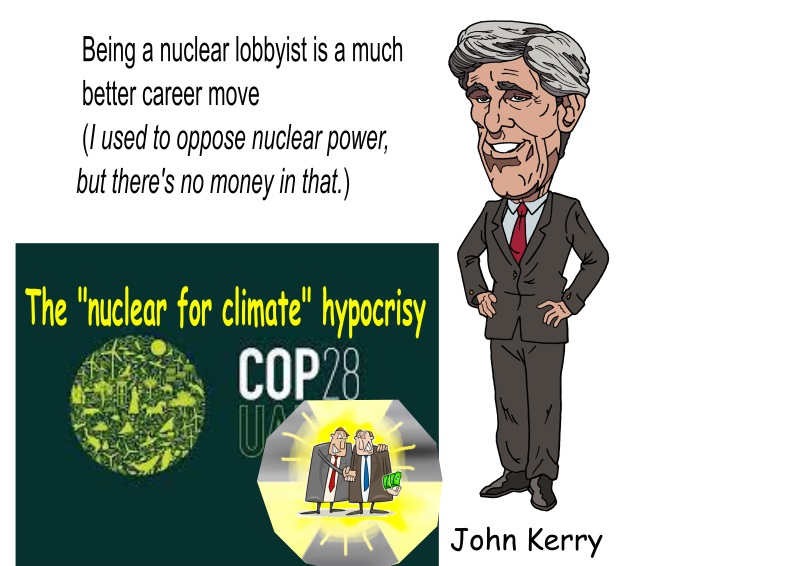
And although it’s a global pledge, President Biden’s climate envoy John Kerry helped spearhead the declaration, indicating the increasing embrace of nuclear power at the highest echelons of U.S. climate policy. Kerry said that the science has proven “you can’t get to net-zero 2050 without some nuclear.”
Participation trophy for Georgia Power: Vogtle 3 connects to the grid
It’s a bit of a stretch calling Vogtle 3’s long-awaited connection to the grid a “win” after a $16 billion cost overrun and a six-year overshoot of the target launch date, but the Department of Energy was looking forward to a new commercial reactor coming online this year, and the department ultimately did get its wish.
As of July 31, Georgia Power’s 1,100-megawatt Plant Vogtle Unit 3 nuclear reactor is supplying power to the grid — making it the first reactor to enter service since Tennessee’s Watts Bar Unit 2 began operating in 2016. Vogtle 4, a second 1,100-megawatt reactor, is nearing the finish line as well, with operations expected to start in early 2024, according to Georgia Power.

Thanks to then-Secretary Rick Perry, in 2019 the Department of Energy’s Loan Programs Office provided up to $12 billion in loan guarantees to help complete the Vogtle expansion amid a spate of spending freezes and lawsuits. The project generated more than 9,000 jobs during peak construction and will provide an additional 800 permanent jobs at the facility once fully operational.
Dan Yurman, publisher of Neutron Bytes, a blog on nuclear power, offered Canary Media this explanation for Vogtle’s major cost and schedule overruns: “The utility and the vendor kicked off a massive infrastructure project with major unaddressed risks in terms of supply chain, labor force skills, regulatory compliance and a 30-year gap in know-how to build large nuclear power plants. It is no surprise that the first-of-a-kind AP1000s came in at twice the cost and double the estimated time to complete them.”

The nuclear industry can call this a win — if it can learn from Vogtle and begin to remedy the missteps called out by Yurman.
A financial win: Nuclear funding and government support

The U.S. government is putting its money where its mouth is when it comes to supporting nuclear power: The (barely) Bipartisan Infrastructure Law added $3.2 billion for development of modular and advanced nuclear reactors, and the U.S. Department of Energy’s Loan Programs Office has devoted $11 billion in loan-making authority for advanced reactors and supply chains. What’s more, the epochal Inflation Reduction Act devotes $700 million to the HALEU Availability Program to support the development of a non-Russian supply of high-assay low-enriched uranium.
Additionally, the IRA offers a preposterously generous $15 per megawatt-hour production tax credit meant to keep today’s existing nuclear fleet competitive with gas and renewables, as well as a similarly generous investment tax credit to incentivize new plant construction.
Losing the global nuclear crown: China is sprinting ahead of the U.S. on nuclear
America has the world’s biggest nuclear power fleet at 93 reactors, but it’s on its way to losing that distinction.
China has built 37 new reactors over the last decade for a total of 55, according to the International Atomic Energy Agency. America has added a grand total of two reactors during that same period. China also aims to double its nuclear energy capacity by 2035, and it is well on its way; it has 22 nuclear plants currently under construction with more than 70 in the planning stages.
Outside of Vogtle 4, it’s unclear when — or if — another nuclear reactor will be connected to the U.S. grid.
And despite small modular reactors being held up as a cure-all to the U.S. nuclear industry’s significant challenges, the only country in the world that has actually built an SMR is China. It demonstrated a pair of smallish high-temperature, gas-cooled reactor units using a “pebble-bed” design and a more concentrated fuel format last year.
Notably, China is not a participant in the COP28 nuclear pledge — an ironic development as it’s the only country with any real chance of meeting the goal of tripling its capacity by 2050.
Huge win, disappointing loss for SMRs: NuScale’s ups and downs

The nuclear gods are fickle creatures. Small modular reactor pioneer NuScale Power made history in January 2023 when it scaled the highest regulatory peak in the U.S.: The Nuclear Regulatory Commission certified the design of its 50-megawatt module, the first small modular reactor and only the seventh reactor design ever approved for use in the U.S.
This was a long-fought victory for NuScale and advocates of SMRs: Utilities and developers can now reference NuScale’s SMR design when applying for a license to construct and operate a reactor. NuScale and the DOE spent more than 10 years and hundreds of millions of dollars to reach this regulatory milestone.
Armed with this historic design certification, NuScale landed a promising inaugural customer in the Utah Associated Municipal Power Systems and began working on a deployment near the Department of Energy’s national laboratory in Idaho. Project plans had called for one 77-megawatt unit to begin operation in 2029.
The Idaho project was once widely predicted to be not only the first small module reactor completed in the U.S., but the next nuclear reactor to be built in the country, period. However, it was not to be so.
The project was ultimately scrapped in November because it couldn’t secure enough subscriptions from utilities in the Western U.S. to make the project work financially.
The innovative SMR aspirant still has a pipeline of tentative agreements to deploy reactors across North America, Europe and the Middle East.
Win for domestic HALEU fuel: Bringing uranium enrichment capabilities back to the U.S.

Call this one a win because, for the first time in 70 years, America is home to a U.S.-owned enrichment facility producing the concentrated fuel needed by the many advanced reactors now in development.
Centrus, a company with roots in the Manhattan Project, began demonstration-scale enrichment operations at its facility in Piketon, Ohio in October. It marks the potential rebirth of a once-strong American enrichment industry. America was once the only source of uranium enrichment outside of the Soviet bloc, but over the last 30 years, it has surrendered that role to Russia and other countries.
The HALEU produced in Centrus’ centrifuges will be used to test new fuels and reactor designs, as well as to fuel the cores of the two demonstration reactors funded through the Bipartisan Infrastructure Law and supported by DOE’s Advanced Reactor Demonstration Program.
The U.S. currently depends on Tenex, part of Russian state-owned nuclear supplier Rosatom, to supply the low-enriched uranium fuel that’s used in our civilian fleet. And Russia (which is not blockaded on nuclear fuel exports) supplies all of America’s high-assay low-enriched uranium, the more concentrated material required by the new generation of advanced reactors.
It is a precarious situation for U.S. national and energy security.
The DOE is looking to jump-start the domestic market by directing IRA funding toward enrichment and fuel-processing facilities like Centrus’ plant in Ohio, as well as by acting as the initial customer, creating an inventory and providing a reliable customer and price.
It’s a win for the U.S., but it comes after years of stepping on rakes.
A win for preserving the existing nuclear fleet: Diablo Canyon lives on

Pacific Gas & Electric, one of the three large investor-owned utilities in California, decided to decommission both of the reactors at California’s Diablo Canyon Nuclear Power Plant in 2017.
But public outcry, political pressure and worries about grid failures seem to have helped get the plant’s operations extended an additional five years with the help of a state loan and up to $1.1 billion through the federal Civil Nuclear Credit Program designed to support economically ailing plants. It’s a win for California nuclear advocates and the emissions of the state’s grid.
PG&E has now filed an application with the Nuclear Regulatory Commission for a 20-year operating extension for the two 1,150-megawatt reactors at Diablo Canyon, which will trigger a review process expected to take a minimum of two years.
The U.S. nuclear fleet is the largest in the world, but it’s also one of the oldest: The average age of an American nuclear reactor is 42 years, compared to a world average of 31 years.
The majority of nuclear plant operators in the country have expressed interest in extending their operating licenses to allow operation up to 80 years, according to a poll of member utilities of Nuclear Energy Institute, a trade organization.
But even with such extensions, these older plants would all need to be replaced by around 2060, and nuclear power’s long lead times mean that decisions will have to be made about replacing their generation capacity in the late 2030s.
Neither a win nor a loss: Action in advanced reactors and microreactors
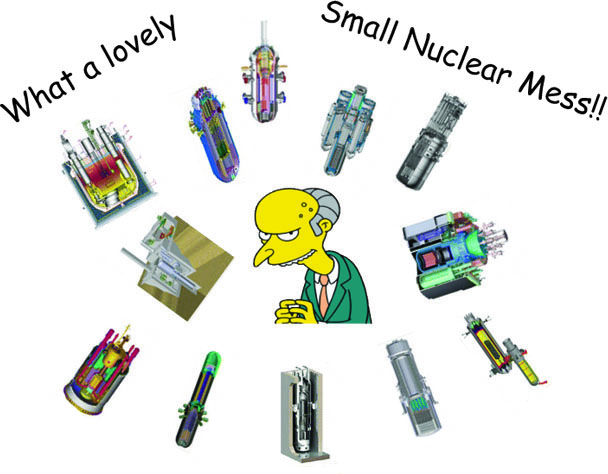
Encouraged by government funding, shifting societal sentiment and a cornucopia of new reactor designs, 2023 witnessed a raft of startups and established vendors making deals in the U.S. and abroad to build next-generation nuclear reactors.
Microreactors like Oklo’s 15-megawatt fast breeder reactor, Aalo Atomics’ 20-megawatt thermal design based on the Marvel reactor at Idaho National Labs, and Westinghouse’s 5MWe eVinci design are intended to provide electrical power and heat in remote or behind-the-meter industrial applications. Ultra Safe Nuclear has plans to construct a microreactor facility in Gadsden, Alabama. The Department of Defense’s Strategic Capabilities Office’s Project Pele program is looking to build and demonstrate a 1–5 MWe mobile, high-temperature, gas-cooled microreactor capable of powering U.S. military bases.
But none of these designs are approved by the Nuclear Regulatory Commission.
For its part, the DOE is betting big on TerraPower and X-energy, with the agency’s Advanced Reactor Demonstration Program providing initial funding of $80 million to each, along with future cost-sharing funds. These two demonstration projects are poised to use HALEU from Centrus’ newly commissioned 16-centrifuge cascade.
TerraPower, founded by Microsoft co-founder Bill Gates, is developing a 345-megawatt sodium-cooled fast reactor coupled with a molten salt energy storage system. The company has raised $750 million to build its operating demonstration reactor in Wyoming.
X-energy is developing its high-temperature gas-cooled advanced small modular reactor and plans the initial deployment at a Dow Chemical facility in Texas.
These reactor designs also are not approved by the NRC.
Despite the proliferation of tentative agreements, memorandums of understanding and handshake deals, all of these planned reactors — with the possible exception of NuScale’s — fall into the famous “paper reactor” category — meaning they are simple, light, small, cheap and quick to build. Importantly, they are also never actually going to be built.
The UN Nuclear Ban Treaty is Leading Resistance to Nuclear Autocracy

Robert Rust, December 13, 2023 Union of Concerned Scientists
During the week of November 27th, under a cloud of international conflict and unease, delegates, politicians, activists and academics convened for the Second Meeting of States Parties (2MSP) to the Treaty on the Prohibition of Nuclear Weapons (TPNW) at the UN Headquarters in New York. Attendees came together to examine the global state of disarmament and harm-reduction work and call for more states to sign the nuclear ban treaty and join the stand against nuclear weapons.
The TPNW is a broad coalition of nation states committed to building that framework through changing attitudes toward and the culture around nuclear weapons; currently, there are 93 signatories and 69 states parties. Unsurprisingly, none of the five nuclear-weapon states recognized by the Nuclear Non-Proliferation Treaty (United States, Russia, China, United Kingdom, and France) have signed, and only seven of 38 OECD countries (Austria, Chile, Colombia, Costa Rica, Ireland, Mexico, and New Zealand) have signed or ratified. Clearly, this is a movement by those who have less to demand better behavior from those who have more. Nuclear weapons harm and threaten the many for the benefit of the few; the many are working to end that.
Speaking at a session on the treaty’s obligations within victim assistance and remediation, Governor Hidehiko Yuzaki of Hiroshima made a key point about the way we think about security. Nuclear deterrence, he said, is an idea become dogma, not a hard truth; relying on it for security locks us into a system with inherent massive risks. We must stop thinking of security in these “narrow nationalistic frames”, and work to build a “collective, sustainable security framework.”
Voices from the frontline
The most important participants at the 2MSP were members of frontline communities directly impacted by mining, bombing, testing and storage across the world. The hibakusha, survivors of the atomic bombings of Hiroshima and Nagasaki, have experienced the horrors of nuclear weapons like no one else. The 2MSP heard how post-war US secrecy around the atomic bomb fostered significant discrimination towards hibakusha in Japan. Indeed, victim testimony at the museums dedicated to the bombings in Hiroshima and Nagasaki describes how US scientists and military personnel arrived to test and observe the bomb’s impact on the local environment, including its inhabitants.
That dehumanization and disregard for human life was also central in nuclear testing across the world. Just as they are among the first and most seriously impacted by the effects of climate change, indigenous communities have historically been on the front lines of nuclear testing and uranium mining.

Speaking at the 2MSP, Karina Lester, who is from the Anangu Pitjantjatjara Yankunytjatjara Lands (APY Lands) in the far Northwest of South Australia, spoke of her father and grandmother’s experiences of British nuclear testing in the area. She described how her father heard the ground shake and felt the “black smoke” move over their lands. The TPNW, she said, must continue to center the voices of those who have experienced the harm of nuclear weapons; the weapons must be made illegal, but governments must also work with those impacted to redress the harm caused.
The TPNW should act as both a forum and a tool for those countries and communities who have been harmed. Powerful states have to respect the sovereignty of smaller states, honor their obligations through international treaties and respect the decisions of multilateral organizations. They have a history of failing to do so.
For example, discussing the work towards a nuclear-free Pacific, one speaker pointed out that after Christmas Island (Kiribas) was selected as a site for the United Kingdom’s nuclear testing, Samoa, which was a trust territory of New Zealand at the time, petitioned the UN Trusteeship Council to halt the 1957 test, but the United Kingdom did not listen. Indeed, examination of British military reports prior to the test show racist attitudes that were callously dismissive of harm to local “primitive” populations. The United Kingdom, United States and France saw the Pacific and Australia as “empty space”, erasing local populations entirely. ……………………………………………………………. more https://blog.ucsusa.org/robert-rust/the-un-nuclear-ban-treaty-is-leading-resistance-to-nuclear-autocracy/
Why the Pentagon is a multitrillion-dollar fraud.
The defense budget of the United States is grotesquely large, its $877 billion dwarfing the $849 billion spent by the next ten nations with the largest defense expenditures. And yet, the Pentagon cannot fully account for the $3.8 trillion in assets and $4 trillion in liabilities it has accrued at US taxpayer expense,
https://www.rt.com/news/588750-us-pentagon-failed-annual-audit/ Scott Ritter, 12 Dec 23
The US Department of Defense has failed its sixth annual audit in a row, but taxpayer money will keep going down that drain
Recently, the Pentagon admitted it couldn’t account for trillions of dollars of US taxpayer money, having failed a massive yearly audit for the sixth year running.
The process consisted of the 29 sub-audits of the DoD’s various services, and only seven passed this year – no improvement over the last. These audits only began taking place in 2017, meaning that the Pentagon has never successfully passed one.
This year’s failure made some headlines, was commented upon briefly by the mainstream media, and then just as quickly forgotten by an American society accustomed to pouring money down the black hole of defense spending.
The defense budget of the United States is grotesquely large, its $877 billion dwarfing the $849 billion spent by the next ten nations with the largest defense expenditures. And yet, the Pentagon cannot fully account for the $3.8 trillion in assets and $4 trillion in liabilities it has accrued at US taxpayer expense, ostensibly in defense of the United States and its allies. As the Biden administration seeks $886 billion for next year’s defense budget (and Congress seems prepared to add an additional $80 billion to that amount), the apparent indifference of the American collective – government, media, and public – to how nearly $1 trillion in taxpayer dollars will be spent speaks volumes about the overall bankrupt nature of the American establishment.
Audits, however, are an accountant’s trick, a series of numbers on a ledger which, for the average person, do not equate to reality. Americans have grown accustomed to seeing big numbers when it comes to defense spending, and as a result, we likewise expect big things from our military. But the fact is, the US defense establishment increasingly physically resembles the numbers on the ledgers the accountants have been trying to balance – it just doesn’t add up.
Despite spending some $2.3 trillion on a two-decade military misadventure in Afghanistan, the American people witnessed the ignominious retreat from that nation live on TV in August 2021. Likewise, a $758 billion investment in the 2003 invasion and subsequent decade-long occupation of Iraq went south when the US was compelled to withdraw in 2011– only to return in 2014 for another decade of chasing down ISIS, itself a manifestation of the failures of the original Iraqi venture. Overall, the US has spent more than $1.8 trillion on its 20-year nightmare in Iraq and Syria.
These numbers are mind-numbingly large – so large that they become meaningless to the average person. The US defense enterprise is so massive that it is literally a mission impossible to speak of balancing the books. The American people might be willing to shrug off an accounting error or two. But the defense budget equates to American military power and the perceptions of national worth that translate into notions of American exceptionalism.
The fact of the matter is that our cavalier approach to defense spending has resulted in fraud of a massive scale. The American people were sold a bill of goods – a military capable of projecting power world-wide to sustain the so-called “rules based international order” upon which the notion of American exceptionalism has been premised. As it turns out, the US military is as hollow as the numbers on the Pentagon ledgers. The American people have bought an apparatus that is incapable of fighting and winning a major war against any of the potential opponents arrayed against it. We failed to defeat Al Qaeda, ISIS, and the Taliban. And we are not able to defeat either China or Russia, let alone regional powers like North Korea and Iran. And yet we will simply continue to invest, in seemingly unquestioning fashion, into this enterprise, expecting somehow that a system that cannot pass an audit will somehow magically produce a different result despite the fact that we, the American people, are doing nothing to demand such a result.
In short, the defense budget is the equivalent of “pay-to-play,” in which the American people pay the US government to produce the results necessary to sustain their overinflated sense of self-worth. We Americans have become so accustomed to being the biggest, baddest bully in the global arena that we assume that simply by pouring money into a system that had produced the desired results for more than seventy years that we could keep the good times rolling. But when you allocate money to a system that has been allowed to become conditioned to operate without accountability, don’t be surprised when the shiny mansion on the hill you thought you were buying turns out to be little more than a house of cards.
Grand plan to triple nuclear energy with small nuclear reactors, but where’s the funding?

1 US nuclear start-ups battle funding challenge in race to curb emissions.
Reactors pioneered by Oklo, X-energy and NuScale suffer financing setbacks
as well as regulatory headwinds.
US plans to build up its nuclear industry
face big funding and regulatory challenges which could delay a new
generation of smaller, more efficient reactors touted by advocates as
critical to fighting climate change.
Industry experts told the Financial
Times a declaration signed last week by Washington and 21 other nations at
the COP 28 climate summit to triple the amount of installed nuclear energy
by 2050 was a step forward, given the sector’s ability to provide
(?)emissions-free power.
But a sharp fall in market support for start-ups
developing so-called small modular reactors and other advanced nuclear
facilities threaten US ambitions, they said. Last month NuScale Power Corp
cancelled plans to build the first SMR in the US, despite receiving $1.4bn in government cost-sharing pledges.
Not enough power utilities expressed an
interest in purchasing electricity from the facility in Idaho when NuScale
increased power prices by more than 50 per cent over two years to $89 per
megawatt hour. The setback followed the collapse of a $1.8bn deal agreed
between X-energy and special purpose acquisition company Ares Acquisition,
which was intended to enable the developer of nuclear technologies to go
public.
Now the industry is focused on whether Oklo, a start-up chaired by
OpenAI chief executive Sam Altman, can successfully go public via a
blank-cheque company announced in July with AltC Acquisition Corp. The
merger was proposed at a valuation of $850mn and would provide Oklo with
$500mn to develop and commercialise its reactor design.
FT 12th Dec 2023
https://www.ft.com/content/c0700a01-c1e8-4e5e-8300-ac264bd25293
Cumbrian councils urged to poll public over controversial nuclear dump plan

The Nuclear Free Local Authorities have sent a joint letter to the parish and town councils located in the West Cumbria search areas under consideration for a Geological Disposal Facility urging them to consider polling their parishioners over the controversial plan.
The co-signatories are the NFLAs English Forum Chair, Councillor David Blackburn, Councillor Jill Perry, Green Party Group Leader on Cumberland Council and Jan Bridget, co-founder of Millom against the Nuclear Waste Dump.
Nuclear Waste Services, a division of the taxpayer-funded Nuclear Decommissioning Authority, is engaged in long-term investigations to determine the suitability of locating the GDF on the West Cumbrian coast. The facility would have a surface site to receive regular shipments of high-level radioactive waste from Sellafield and this waste would then be transported along tunnels out under the Irish Sea, before the GDF once filled is sealed.
Two search areas have been designated Mid-Copeland and South Copeland, with their boundaries drawn in conformity with Cumberland Council electoral wards, and NWS has established a Community Partnership in each, which provide some limited oversight to the process. Members of the Community Partnerships include elected members from Cumberland Council, deemed the Relevant Principal Local Authority under the guidance established for the plan, and representatives from each of the parish and town councils encapsulated in the search areas.
The UK Government and NWS are adamant that the final selection of the site will be determined by two factors – the suitability of the geology and the acceptance of the plan by the local host community.
Geological investigations may take up to 15 years to complete, with desktop, aerial and seismic surveys being augmented in the second stage by deep exploratory boreholes for rock sampling. NWS are expected to periodically sense check public perceptions of the plan until in the final stages a Test of Public Support is conducted to determine if local people are willing to see their area taken forward.
The so-signatories are unhappy that there is no mechanism built into the plan to conduct interim opinion polls to identify public feeling over time, and they are disappointed that most local councils have yet to conduct their own polls to determine if their appointed representatives to the Community Partnership are reflecting the opinions of their parishioners. They would like parish and town councils to follow the lead shown by Whicham which took the initiative, independently of NWS, and did so./………………………………………………….
more https://www.nuclearpolicy.info/news/cumbrian-councils-urged-to-poll-public-over-controversial-nuclear-dump-plan/
America’s War for the Greater Middle East (Continued)
Here We Go Again
SCHEERPOST, By Andrew Bacevich / TomDispatch, December 13, 2023
One way of understanding the ongoing bloodbath pitting Israel against Hamas is to see it as just the latest chapter in an existential struggle dating back to the founding of the Jewish state in 1948. While the appalling scope, destructiveness, and duration of the fighting in Gaza may outstrip previous episodes, this latest go-around serves chiefly to reaffirm the remarkable intractability of the underlying Arab-Israeli conflict.
Although the shape of that war has changed over time, certain constants remain. Neither side, for instance, seems capable of achieving its ultimate political goals through violence. And each side adamantly refuses to concede to the core demands of its adversary. In truth, while the actual fighting may ebb and flow, pause and resume, the Holy Land has become the site of what is effectively permanent conflict.
For several decades, the United States sought to keep its distance from that war by casting itself in the role of regional arbiter. While providing Israel with arms and diplomatic cover, successive administrations have simultaneously sought to position the U.S. as an “honest broker,” committed to advancing the larger cause of Middle Eastern peace and stability. Of course, a generous dose of cynicism has always informed this “peace process.”
On that score, however, the present moment has let the cat fully out of the bag. The Biden administration responded to the gruesome terrorist attack on October 7th by unequivocally endorsing and underwriting Israeli efforts to annihilate Hamas, with Gazans thereby subjected to a World War II-style obliteration bombing campaign. Meanwhile, ignoring tepid Biden administration protests, Israeli settlers continue to expel Palestinians from parts of the West Bank where they have lived for generations. If Hamas’s October assault was a tragedy, proponents of a Greater Israel also saw it as a unique opportunity that they’ve seized with alacrity. As for the peace process, already on life support, it now seems altogether defunct. Prospects of reviving it anytime soon appear remote.

More or less offstage, the fighting is having this ancillary effect: as Israeli Defense Forces (IDF) employ U.S.-provided weapons and munitions to turn Gaza into rubble, the “rules-based international order” touted by the Biden administration as the latest organizing principle of American statecraft has forfeited whatever slight credibility it might have possessed. Russia’s assault on Ukraine appears almost measured and humane by comparison.
As if to emphasize Washington’s own limited fealty to that rules-based order, President Biden’s immediate response to the events of October 7th focused on unilateral military action, bolstering U.S. naval and air forces in the Middle East while shoveling even more weapons to Israel. Ostensibly tasked with checking any further spread of violence, American forces in the region have instead been steadily edging toward becoming full-fledged combatants.
In recent weeks, U.S. forces have sustained dozens of casualty-producing attacks, primarily from rockets and armed drones. Attributing those attacks to “Iran-affiliated groups,” the U.S. has responded with air strikes targeting warehouses, training facilities, and command posts in Syria and Iraq.
According to a Pentagon spokesman, the overall purpose of American military action in the region is “to message very strongly to Iran and their affiliated groups to stop.” Thus far, the impact of such messaging has been ambiguous at best. Certainly, U.S. retaliatory efforts haven’t dissuaded Iran from pursuing its proxy war against American military outposts in the region. On the other hand, the scale of those Iran-supported attacks remains modest. Notably, no U.S. troops have been killed — yet.
For the moment at least, that fact may well be the administration’s operative definition of success. As long as no flag-draped coffins show up at Dover Air Force Base in Delaware, Joe Biden may find it perfectly tolerable for the U.S.-Iran subset of the Israel-Hamas war to simmer indefinitely on the back burner.
This pattern of tit-for-tat violence has received, at best, sporadic public attention. Where (if anywhere) it will lead remains uncertain. Even so, the U.S. is at risk of effectively opening up a new front in what used to be called the Global War on Terror. That war is now nearly dormant, or at least hidden from public view. The very real possibility of either side misinterpreting or willfully ignoring the other’s “messaging” could reignite it, with an expanded war that directly pits the U.S. against Iran making the Israel-Gaza war look like a petty squabble………………………………………………………………………………………………………………….
Alarm Bells, American-Style
Now, however, in the wake of the atrocities committed on October 7th and Washington’s tacit acquiescence in Israel’s maximalist war aims, the dubious notion that vital American interests are still at stake in the Greater Middle East has taken on new life. Dating from the 1980s, Washington had cycled through a variety of arguments for why that part of the world was worthy of spending American blood and treasure: the threat of Soviet aggression, U.S. reliance on foreign oil, radical Arab dictators, Islamic jihadism, weapons of mass destruction falling into hostile hands, potential ethnic cleansing and genocide. All of those were pressed into service at one time or another to justify continuing to treat the Middle East as a strategic U.S. priority.
………………………………………… allowing Israel’s conflict with Hamas to draw the United States into a new Middle Eastern crusade would be the height of folly. In fact, however, with little public attention and even less congressional oversight, that is precisely what may be happening. The Global War on Terror seems on the verge of absorbing the Gaza War into its current configuration.
………………………………….. In 1796, George Washington warned his countrymen of the dangers of allowing a “passionate attachment” to another nation to affect policy. That warning remains relevant today. The Gaza War is not and should not become America’s war. https://scheerpost.com/2023/12/13/americas-war-for-the-greater-middle-east-continued/
1 This Month

petition to oppose the rapid increase of space-military industry threatening Jeju Island and the region.
[Petition by April 19th (KST)] Stop the joint military-Hanwha Systems-Jeju Provincial Government Sea Launch!
23 April – WEBINAR – Why new nuclear reactors are the wrong tools for decarbonization Thursday, April 23 • 1 AM – 2 AM AEST
World Nuclear Power. Reactors 1951-2026, 75 Years of Nuclear Power.
Interactive Map– https://dv.worldnuclearreport.org/

Chernobyl: The Lost Tapes – A good documentary on Chernobyl on SBS available On Demand for the next 3 weeks– https://www.sbs.com.au/ondemand/tv-program/chernobyl-the-lost-tapes/2352741955560

of the week–London Campaign for Nuclear Disarmament


Tell the Ukrainian Government to Drop Prosecution of Peace Activist Yurii Sheliazhenko
To see nuclear-related stories in greater depth and intensity – go to https://nuclearinformation.wordpress.com
-
Archives
- April 2026 (211)
- March 2026 (251)
- February 2026 (268)
- January 2026 (308)
- December 2025 (358)
- November 2025 (359)
- October 2025 (376)
- September 2025 (257)
- August 2025 (319)
- July 2025 (230)
- June 2025 (348)
- May 2025 (261)
-
Categories
- 1
- 1 NUCLEAR ISSUES
- business and costs
- climate change
- culture and arts
- ENERGY
- environment
- health
- history
- indigenous issues
- Legal
- marketing of nuclear
- media
- opposition to nuclear
- PERSONAL STORIES
- politics
- politics international
- Religion and ethics
- safety
- secrets,lies and civil liberties
- spinbuster
- technology
- Uranium
- wastes
- weapons and war
- Women
- 2 WORLD
- ACTION
- AFRICA
- Atrocities
- AUSTRALIA
- Christina's notes
- Christina's themes
- culture and arts
- Events
- Fuk 2022
- Fuk 2023
- Fukushima 2017
- Fukushima 2018
- fukushima 2019
- Fukushima 2020
- Fukushima 2021
- general
- global warming
- Humour (God we need it)
- Nuclear
- RARE EARTHS
- Reference
- resources – print
- Resources -audiovicual
- Weekly Newsletter
- World
- World Nuclear
- YouTube
-
RSS
Entries RSS
Comments RSS
 nuclear-news