How green is the UK Government’s nuclear energy strategy?
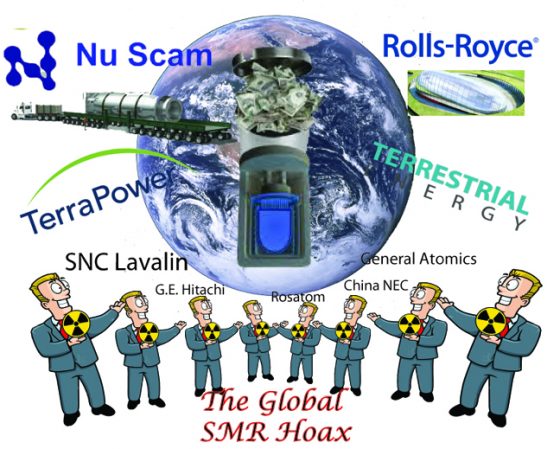
Small modular reactors have been touted as a solution to reaching net-zero – but how safe are they and will they do the job?
By Lucie Heath, Environment Correspondent, 28 Dec 23, https://inews.co.uk/news/how-green-is-the-governments-nuclear-energy-strategy-2824596
The Government has pledged to boost the country’s nuclear energy capacity, setting itself a target to power a quarter of the national grid with nuclear energy by 2050.
But i has revealed that the transition to nuclear energy has been beset by delays, prompting former prime pinister Boris Johnson to urge Rishi Sunak to “get on with it”.
Mr Johnson has been a vocal supporter of nuclear energy and has championed the development of new small modular nuclear reactors (SMRs).
SMRs have been touted as a key solution as the world transitions towards a net-zero future, but some have raised questions regarding the green credentials and viability of the technology.
Here i fact-checks the key claims with regards to SMRs.
Nuclear is low carbon
True or False: True

Ed. comment. That’s as long as you don’t count the CO2 emissions from the full nuclear fuel cycle, and the waste disposal methods.
Nuclear power is considered to be a low carbon source of energy. It has a minimal carbon footprint of around 15–50 grams of CO2 per kilowatt hour (gCO2/KWh), compared to an average footprint of around 450 gCO2/KWh for a gas powered generator and 1,050 gCO2/KWh for coal.
According to the International Energy Association (IEA), over the past 50 years the use of nuclear power has reduced CO2 emissions by over 60 gigatonnes – nearly two years’ worth of global energy-related emissions.
While nuclear produces far less CO2 than fossil fuels, environmentalists dispute its green credentials, not least due to the high volume of radioactive waste created as part of the fuel cycle.
SMRs will play a key role in the energy transition
True or False: Jury’s out
Small modular reactors have many potential benefits that overcome some of the hurdles of traditional nuclear reactor sites.
Their smaller size means that can be placed in locations not suited to large power plants and the modular nature of their design means they should be cheaper and quicker to build.
But as of 2023, only Russia and China have successfully built operational SMRs, and neither are in commercial use.
Mr Johnson’s plan to have the UK’s first SMRs contributing to the grid by 2030 looks increasingly unlikely. Rolls-Royce, which was one of the winners of a Government competition to develop them in the UK, recently told MPs its project could be contributing to the grid by 2031-32 at the very earliest.
MPs sitting on the Science, Innovation and Technology Committee recently published a report that described the Government’s nuclear strategy as more of a “wish list” and said ministers need to make it clearer what role SMRs will play in the energy transition.
SMRs are cheaper to build
True or False: Unclear
This section fails to mention the one and only commercial application of small nuclear reactors - the NuScale attempt in the USA, which was a financial fiasco, and had to be cancelled.
One of the largest hurdles to the deployment of nuclear energy are the huge costs of developing new plants. In theory, SMRs should be cheaper to build due to their size and modular nature, allowing for prefabrication.
However, it is not known exactly what the cost will be to the public purse of developing new SMRs in the UK.
The Environmental Audit Committee recently launched an inquiry into the topic, saying it was “currently unclear what financing models will be used to fund SMRs”.
Critics of nuclear argue it would be wiser to spend money on the deployment of renewable energy, which is cheaper to build.
SMRs are safer
True or false: True in theory
Safety has proved to be a massive issue preventing wider uptake of nuclear energy in the past. Incidents such as the 2011 Fukushima nuclear accident have sparked greater fears regarding the vulnerability of plants during a natural disaster, while nuclear stations can also be a risk during times of conflict, such as in Ukraine.
Proponents of SMRs say they are safer than traditional reactors, partly because their smaller core produces less heat, reducing the likelihood of overheating. A number of other innovations exist in their design which in theory should reduce the risk of failure.
While seen as being safer than large plants, SMRs are still associated with many of the same risks as traditional nuclear.
No comments yet.
1 This Month
Chernobyl: The Lost Tapes – A good documentary on Chernobyl on SBS available On Demand for the next 3 weeks– https://www.sbs.com.au/ondemand/tv-program/chernobyl-the-lost-tapes/2352741955560

of the week–London Campaign for Nuclear Disarmament

Tell the Ukrainian Government to Drop Prosecution of Peace Activist Yurii Sheliazhenko
To see nuclear-related stories in greater depth and intensity – go to https://nuclearinformation.wordpress.com
-
Archives
- April 2026 (126)
- March 2026 (251)
- February 2026 (268)
- January 2026 (308)
- December 2025 (358)
- November 2025 (359)
- October 2025 (376)
- September 2025 (257)
- August 2025 (319)
- July 2025 (230)
- June 2025 (348)
- May 2025 (261)
-
Categories
- 1
- 1 NUCLEAR ISSUES
- business and costs
- climate change
- culture and arts
- ENERGY
- environment
- health
- history
- indigenous issues
- Legal
- marketing of nuclear
- media
- opposition to nuclear
- PERSONAL STORIES
- politics
- politics international
- Religion and ethics
- safety
- secrets,lies and civil liberties
- spinbuster
- technology
- Uranium
- wastes
- weapons and war
- Women
- 2 WORLD
- ACTION
- AFRICA
- Atrocities
- AUSTRALIA
- Christina's notes
- Christina's themes
- culture and arts
- Events
- Fuk 2022
- Fuk 2023
- Fukushima 2017
- Fukushima 2018
- fukushima 2019
- Fukushima 2020
- Fukushima 2021
- general
- global warming
- Humour (God we need it)
- Nuclear
- RARE EARTHS
- Reference
- resources – print
- Resources -audiovicual
- Weekly Newsletter
- World
- World Nuclear
- YouTube
-
RSS
Entries RSS
Comments RSS
 nuclear-news
Leave a comment