Nuclear folks are exaggerating their “win” at COP 28

There was no COP28 pledge to triple nuclear.
After a fight, nuclear got listed as one of a number of possible technologies to use in accelerating transition from fossil fuels.
22 countries, including Canada tried to drive the triple nukes “pledge” but over 200 countries signed on to triple renewables and double energy efficiency ” the renewables pledge is IN the final GST decisions.
Shuttering the Nuclear Weapons Sites: There’s Gold in Those Warheads but the Scrap Metal is Radioactive
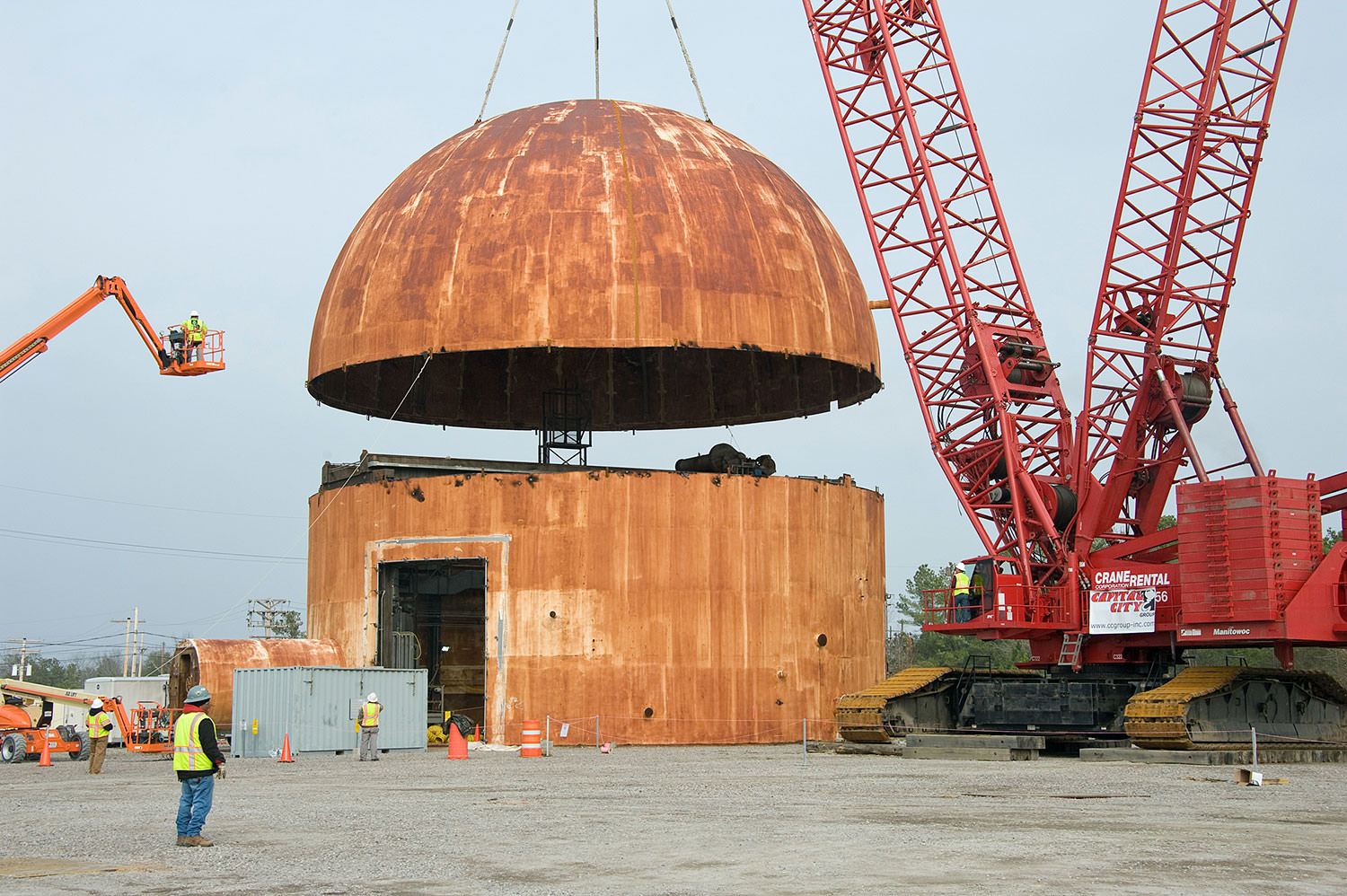
by Robert Alvarez, Dec 18, 2023, https://washingtonspectator.org/shuttering-the-nuclear-weapons-sites-theres-gold-in-those-warheads-but-the-scrap-metal-is-radioactive/
As one of my first tasks early in the first Clinton Administration as the newly appointed Deputy Assistant Secretary for Policy, I conducted the first (and only) asset inventory of the U.S. Department of Energy (DOE). In carrying it out, we departed from the usual reliance on DOE contractors, and established a team of federal employees throughout the DOE complex to scour the system for data. In doing this we saved a lot of money and time that would otherwise be consumed by DOE contractors that had perfected the art of cost maximization.
After six months we briefed Energy Secretary O’Leary on what we found. With real estate holdings of more than 2.4 million acres–an area larger than Rhode Island and Delaware combined–the DOE was the largest government-owned industrial energy supply and research enterprise in the country, responsible for:
- More than 20,700 specialized facilities and buildings, including 5,000 warehouses, 7,000 administrative buildings, 1,600 laboratories, 89 nuclear reactors, 208 particle accelerators, and 665 production and manufacturing facilities.
- More than 130,000 metric tons of chemicals, a quantity roughly equivalent to the annual output of a large chemical manufacturer.
- More than 270,000 metric tons of scrap metal—equivalent to more than two modern aircraft carriers in weight. (The dismantlement of three gaseous diffusion plants will generate about 1.4 million metric tons of additional scrap.)
- More than 17,000 pieces of large industrial equipment.
- More than 40,000 metric tons of base metals and more than 10,000 pounds of precious metals, such as gold, silver, and platinum.
- About 700,000 metric tons of nuclear materials, mostly depleted uranium but also including weapons-grade and fuel-grade plutonium, thorium, and natural and enriched uranium.
- About 320,000 metric tons of stockpiled fuel oil and coal for 67 power plants.
- About 600 million barrels of crude oil stored at the Strategic Petroleum Reserve.
- Electrical distribution systems for the Bonneville, Western Area, Southwestern, Southeastern, and Alaska power administrations.
If the Energy Department were a private concern with more than 100,000 employees, it would be one of the nation’s largest and most powerful corporations. And, we determined, if it were privately held, it would be filing for bankruptcy.
Major elements of Energy’s complex were closing down, leaving a huge unfunded and dangerous mess. After more than a half century of making nuclear weapons, the DOE possessed one of the world’s largest inventories of dangerous nuclear materials and it has created several of the most contaminated areas in the Western hemisphere.
We discovered that a significant percentage of overhead expenses at several shuttered sites were from hoarding fungible assets that were no longer needed. The challenge was to empty these warehouses and to generate an income for the U.S. government by selling off valuable excess materials.
Our first effort was aimed at the large amount of uncontaminated precious metals contained in nuclear weapons that would generate millions-of-dollars in revenue from warheads scheduled for dismantlement under the 1991 Strategic Arms Reduction Treaty (START). For the first time, nuclear disarmament would actually make money for the taxpayer.
We were astounded to find that for decades intact weapons components containing large amounts of precious metals were being disposed at great expense in a classified landfill under heavy guard. It took a direct order from the Secretary for DOE’s PANTEX weapons assembly and dismantlement facility near Amarillo, TX to obtain an industrial scale hydraulic hammer to smash non-nuclear components into little pieces so that the gold and other metals can be recovered without revealing design secrets.
Further complicating the process for dismantling weapons, the DOE had failed to properly maintain its system for assessing and evaluating each nuclear weapon for reliability, aging problems, and safe dismantlement. Known as configuration management (CM), this system is a fundamental element in the control of the nuclear stockpile and is based on careful documentation of “as built” drawings and product definitions made during the design, manufacture, assembly, and deployment of a nuclear weapons.
My staff discovered that DOE could not find nearly 60 percent of the “as built” drawings that document all changes made to active weapons selected for dismantlement. I threw a fit and reported it to the front office, which promptly took action.
Over the ensuing decade, we wound up sending about $50 million from the sale of precious metals extracted from dismantled weapons back to the treasury. As a side benefit, we also set up the DOE’s first electronic recycling center to recover fungible materials from DOE’s huge inventory of excess computers.
After receiving a Secretarial Gold Medal for our asset management program, I became increasingly isolated from the DOE front office, and spent most of my time involved with environment, safety and health problems afflicting the DOE nuclear weapons complex. As soon as Secretary O’Leary departed in late 1996, our asset inventory was buried and barred from public disclosure.
However, I drew the line when it came to the disposition of radiologically contaminated materials, such as the vast amount of scrap metal resulting from the decommissioning of nuclear weapons facilities.
In 1994, I blocked a deal that would have allowed some 10,000 tons of radiation-contaminated nickel from nuclear weapons operations to be recycled into the civilian metal supply, where some percentage of it would inevitably wind up in stainless steel items such as intrauterine devices, surgical tools, children’s orthodontic braces, kitchen sinks, zippers, and flatware. However, that confrontation was not to be the end of the scrap metal gambit.
The pressures to recycle 1.7 million metric tons of contaminated metal scrap (equivalent to 17 U.S. aircraft carriers in weight) at nuclear weapons facilities in Tennessee, Kentucky and Ohio were enormous.
I dug in my heels and opposed an effort, supported by Vice President Gore’s office, to release tens of thousands of tons of radiologically contaminated metals into commerce. By claiming cost savings associated with foregoing landfill disposal, DOE contractors would be able to pocket the profits from the sale of scrap. Going forward however, I was seen as obstructionist and was effectively shunned from decision-making circles.
After Hazel O’Leary left as Energy Secretary in late 1996, I lost my political “air cover” and was perceived in the words of a colleague by the incoming leadership of the agency (Secretary Frederico Pena’s team) as “too radioactive.”
Even though I was being excluded from policy decisions, I still persisted.
As a former environmental activist, I had no compunctions about going outside of the Department to convince an old friend at the Natural Defense Resource Council to file a lawsuit to block the free release of the contaminated metal.
I knew that if DOE and its contractors got their way, this practice would lead to a major public backlash. Not to mention the market impacts the contaminated material would create for the U.S. steel industry, which was almost totally dependent on recycled metal for its feedstock. Steel makers had been burned before by errant radiation sources and the last thing they wanted was for the public to realize that the stainless-steel fork on the dinner table had some plutonium in it from a nuclear weapons plant. But consideration of these consequences could easily get overlooked in the DOE, where decisions were made in isolation and secrecy.
The lawsuit stopped the train temporarily. Judge Gladys Kessler, in a strongly worded opinion, stated: “It is . . . startling and worrisome that from an early point on, there has been no opportunity at all for public scrutiny or input in a matter of such grave importance.” Calling the recycling effort “entirely experimental at this stage,” she concluded, “The potential for environmental harm is great, especially given the unprecedented amount of hazardous materials which the defendants seek to recycle.”
In the summer of 1998, I received a call from the White House indicating that I was being fired within the next 30 days. This was the third time my detractors sought to end my tenure as a senior political appointee in DOE’s Policy office. This time, it seemed to be final.
A week before my departure, I was summoned to meet with Bill Richarson – the newly installed Secretary of Energy. He was slouched on the sofa and disheveled after a long day. “I don’t know why you got on the list. You must have pissed-off quite a few people,” he said with a devilish smile. “But you have a lot of folks that want to keep you around. When I visited DOE sites, members of Congress, union officials, Indian tribes, and environmental activists, would ask me about this Alvarez guy.”
He then pulled out a news clipping from the Seattle Times about a walk-out staged by the members of a DOE advisory panel at the Hanford facility in protest to my sacking. “You must be a fighter, I like fighters,” he said approvingly. Richardson reversed the White House decision and appointed me as his Senior Policy Advisor, where I was tasked among other things to end the “hot scrap” recycling scam.
A senior scholar at the Institute for Policy Studies, Robert Alvarez served as senior policy adviser to the Energy Department’s secretary and deputy assistant secretary for national security and the environment from 1993 to 1999.
Catholic activists arrested for anti-nuclear protest outside UN
BY LIAM MYERS, National Catholic Reporter 18 Dec 23
Agroup of Catholic activists blocked the entrance to the United States Mission to the United Nations in New York City on Nov. 30, drawing attention to its lack of participation in UN meetings discussing nuclear disarmament that week.
This nonviolent direct action took place during the Nov. 27-Dec. 1 meeting of the nations who are party to the UN’s Treaty on the Prohibition of Nuclear Weapons, the first legally binding international agreement to prohibit nuclear arms.
Those gathered for the action included the Atlantic Life Community, Catholic Worker communities, NukeWatch, and War Resisters League.
The group met together at the Isaiah Wall — a monument near the UN headquarters inscribed with the famous quotation “They shall beat their swords into plowshares” — before processing toward the U.S. Mission to the UN. At the front of the group, they held aloft a sign that read “Everything to do with nuclear weapons now illegal,” referencing the 50-plus countries who have ratified the nuclear prohibition treaty.
The activists clearly called upon their Catholic faith throughout the action, as another sign featured a quote from Pope Francis: “The use of Nuclear Weapons as well as their mere possession is immoral.”
Upon arrival at the U.S. Mission, these groups created a human blockade of all three public entrances to the building. …………………………………………………………………………………………………………………………………………………………………
Throughout the blockade, which lasted over two hours, there were a number of people standing alongside the sidewalk and supporting those doing the blockade. These people were leafleting, shouting “Sign the Treaty!,” “No More Nukes,” and singing songs.
As the New York Police Department began to move in to make arrests, Bud Courtney, a member of the New York Catholic Worker, led everyone in song playing his guitar as they were being arrested, singing “All we are saying is give peace a chance.” https://www.ncronline.org/news/catholic-activists-arrested-anti-nuclear-protest-outside-un
GMB union says urgent action needed to tackle safety concerns at Sellafield
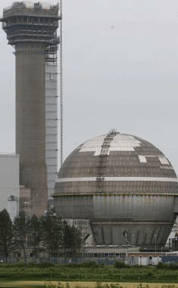
Guardian investigation has revealed areas that need attention at nuclear site in Cumbria
Guardian, Alex Lawson and Anna Isaac, 19 Dec 23
The GMB trade union has called on the government and nuclear authorities to take “urgent action” to address concerns over safety at Sellafield.
The union has written to the energy minister, the Nuclear Decommissioning Authority (NDA) and Sellafield’s chief executive to demand greater investment into keeping the 11,000 employees at the vast nuclear rubbish dump in Cumbria safe.
Earlier this month, the Guardian revealed a catalogue of concerns over safety at the sprawling 6 sq km (2 sq mile) site in north-west England.
Sources familiar with risk reports at the site have said they showed that more than 100 safety problems are a matter of serious regulatory concern. They include fire safety deficiencies such as a lack of functioning alarms in parts of the site that contain radioactive material. There have been work stoppages due to a lack of suitably qualified staff trained in nuclear safety and increasing numbers of contamination and radiation protection incidents
The issues emerged in Nuclear Leaks, a year-long Guardian investigation into problems spanning cyber hacking and toxic workplace culture at Sellafield, which also revealed the site has a worsening leak from a huge silo of radioactive waste.
The issues emerged in Nuclear Leaks, a year-long Guardian investigation into problems spanning cyber hacking and toxic workplace culture at Sellafield, which also revealed the site has a worsening leak from a huge silo of radioactive waste.
GMB, which represents tens of thousands of workers across the energy industry, said it was “deeply concerned” by the reports of leaks and cybersecurity failings at the site.
GMB national secretary Andy Prendergast said that its members at Sellafield had been raising concerns over a string of problems for years. These included a “lack of training and competence among staff, inadequate safety procedures and a culture of fear and intimidation”.
“GMB has repeatedly raised concerns over safety and staffing levels, which are mainly due to turnover and the age and demographic of the workforce,” Prendergast wrote.
A senior industry source has said that a hardcore of longstanding Sellafield employees who are resistant to change have been nicknamed “We Bees” – short for “we be here when you be gone”. Several sources have cited the area’s insular community and reliance on Sellafield for well-paid employment as a barrier to change.
In his letter to Claire Coutinho, secretary of state for energy security and net zero, which was also sent to Sellafield’s chief executive, Euan Hutton, and the NDA chief, David Peattie, Prendergast called for the trio to take “urgent action to address these concerns”.
In response to the Guardian’s reports, Coutinho wrote to Peattie this month saying allegations about failings in cybersecurity, site safety and workplace culture at Sellafield were “serious and concerning” and needed “urgent attention”.
Her intervention followed the revelation that Sellafield was hacked by groups linked to China and Russia and that the industry regulator, the Office for Nuclear Regulation, had put the site into “significantly enhanced attention” for cybersecurity……………………………………. more https://www.theguardian.com/business/2023/dec/19/gmb-union-says-urgent-action-needed-to-tackle-safety-concerns-at-sellafield
U.S. Nuclear Sector Set for Major Transformation
By ZeroHedge – Dec 18, 2023, https://oilprice.com/Alternative-Energy/Nuclear-Power/US-Nuclear-Sector-Set-for-Major-Transformation.html
- Suggests reducing government intervention in commercial nuclear operations and focusing on public health and safety regulation.
- Calls for the Department of Energy to exit the commercialization of nuclear technology and for states to play a larger role in nuclear regulation.
- Recommends private sector management of nuclear waste and potential insurance coverage options for nuclear reactor accidents outside the federal Price-Anderson program.
The silver lining of this month’s United Nations COP28 global warming conference is the growing consensus that nuclear energy is critical to meeting national carbon dioxide reduction goals.
Denying the world access to clean, affordable fuels like gas, oil, and coal is a real problem. But recognizing that nuclear energy must play a pivotal role in our energy future is a major step forward—one that should enjoy widespread support, regardless of one’s views on CO2 reductions.
But to go big on nuclear requires thinking big on nuclear energy policy, and that means questioning the subsidize-first mentality that has defined U.S. energy policy for decades
The goal should not be to build a few nuclear power plants. Rather, we should strive to create an economically sustainable, competitive, innovative and uniquely American nuclear industry.
This will require a realignment of responsibility. The government’s role should be to protect public health and safety. The private sector’s role should be to operate a competitive commercial nuclear sector.
That means getting rid of the subsidies, rethinking regulation and getting Washington out of nuclear waste management. Washington should have a regulatory role, but not its current role as Nuclear CEO.
The reason is simple: Governments are not good at business, because they make decisions based on politics rather than on good economic sense. This never yields a successful industry.
Some argue that nuclear energy requires more governmental control, suggesting that nuclear presents more financial, technical, and political risks than other industries.
But all big projects have financial risk. Private oil refineries can cost billions of dollars, and projects like skyscrapers, liquid natural gas export terminals and other large industrial projects all require massive capital outlays. Companies and individuals regularly take big financial risks.
Then there is technological risk. But nuclear is not really that different from other industries. With 440 nuclear reactors operating globally, technical risk for existing technology is relatively low. Industry knows how to build and operate nuclear plants.
Possible technological risks with new designs are not beyond the realm of those posed by innovation in other cutting-edge businesses, such as fracking or offshore energy exploration. e. Beyond that, as it pertains to nuclear energy, there is a vast federal research infrastructure in place that the private sector can access to help mitigate that risk.
Political risk, however, is real and uniquely high when it comes to nuclear energy, and it exacerbates financial and technical risk calculations.
Any justification for government intervention is based on mitigating government-imposed risk.
But here is the problem.
When government intervenes to mitigate a risk that it has created, it adds another layer of political risk. Worse, it creates dependence, distorts capital flows, incentivizes rent-seeking and lobbying, and forces firms to allocate resources to satisfy politicians and bureaucrats rather than improve its business.
This creates misalignments between responsibility and authorities and undermines economic efficiency.
Even worse, politics often changes, making it difficult to build a sustainable business model around political preferences. At best, this approach could yield a couple of reactors or keep some firms above water, but it won’t produce a robust, competitive, innovative nuclear industry. Failure is likely.
The major question is: How does America minimize political risk and allow the private sector to manage other risks, so that a robust industry can emerge?
It will require changing the Department of Energy’s role, bold regulatory reforms, and solving the problem of nuclear waste management.
We need to get the Energy Department totally out of the nuclear commercialization business. The problem is not that people are not doing their jobs, the problem is the nature of government.
The Department should not be funding grants, loans, or demonstration projects. Nor should it be attempting to improve operations or economics of existing plants or new technologies. The private sector can do these better than government.
The Energy Department has an important role to play in nuclear research and scientific discovery, but it needs to get as far from any commercialization or commercial operations as possible.
What about regulation?
Worthwhile attempts are being made to improve the Nuclear Regulatory Commission. An efficient, predictable, and affordable regulatory process for new reactor technologies is essential.
But America needs to think bigger.
For example, states could be authorized to take a larger role in nuclear power plant regulation. The Atomic Energy Act of 1954 already allows states to regulate some nuclear materials. That should be expanded. States could regulate existing reactor technology, and the NRC could focus on new technologies. Not all states will use this opportunity, but some will.
This is a reasonable proposition because U.S. utilities have been safely operating large light water reactors for over 50 years. America should not be regulating large light water reactors as new, scary technology, because it is neither new nor scary. The regulatory burden should be significantly lifted on those reactors.
NRC personnel should not be the only ones who can review permit applications and other regulatory review work. Private firms should be able to compete for this business. They would lighten the NRC’s load and likely do a quicker job at lower cost.
Lastly, companies should be allowed to build reactors outside the existing NRC regulatory regime if they obtain their own liability insurance against accidents. In exchange they would forgo participation in the federal Price-Anderson program that currently provides liability coverage.
Some might question whether private insurers would cover a nuclear reactor absent a government backstop. But given outstanding safety records of existing reactors and promises that new technologies are safer, this should be an option. Insurance comes in many forms, and no one can predict what could ultimately emerge.
Either way, the insurance industry is extraordinarily sophisticated and does a tremendous job at pricing risk. It will be effective at ensuring that only the safest nuclear plants are built.
Finally, there is the question of what to do with nuclear waste—or, more accurately, spent nuclear fuel.
The federal government took responsibility for managing the nation’s spent nuclear fuel in 1982. By removing responsibility from the spent fuel producers, the 1982 Nuclear Waste Policy Act removed any incentive for the nuclear industry to integrate spent fuel management into its long-term business planning and left it instead to Washington bureaucrats. It should surprise no one that the plan has failed.
Reforms are needed to reconnect the nuclear industry to waste management. Reforms would allow for a private spent fuel industry to emerge that would drive innovation in reactor technologies and spent fuel processing. They would allow the nuclear industry and communities to engage in real negotiations, bound by legal contracts, to build and operate spent fuel management facilities.
There is no question that these proposed reforms are a major departure from the status quo, but they are reasonable, not radical. They would foster good governance and economic progress in the industry. As COP28 representatives discuss how to reduce carbon while raising global living standards, nuclear energy should be on the front burner.
European nuclear Power Purchase Agreements (PPAs) may be unworkable – analysts
CAROLINE PAILLIEZ, Paris, France, SOPHIE TETREL, Paris, 18 Dec 2023
(Montel) Plans by France’s EDF to sell rights to its nuclear capacity to industrials across Europe via long-term power purchase agreements (PPA) while attractive may be unworkable, French analysts warned.
“If nuclear power is offered tomorrow in France at EUR 70/MWh, the whole of Europe will be interested,” said Peter Claes, head of Belgium’s Febeliec industry lobby, in light of a year of record high energy prices.
Yet the analysts, and even EDF itself, have warned that, in practice, the contracts were complex and potentially costly.
The PPAs were open to any big European power consumers wanting to…………………………..(Subscribers only) more https://www.montelnews.com/news/1533543/european-nuclear-ppas-may-be-unworkable–analysts
Documents Reveal Hidden Problems at Russia’s Nuclear Powerhouse
- Flagship reactor had unusual safety event in February 2022
- Rosatom said its reactors all meet highest safety standards
By Alberto Nardelli and Jonathan Tirone, December 18, 2023
As Russian troops poured into Ukraine at the start of Vladimir Putin’s invasion in February last year, alarm was rising at a flagship Kremlin nuclear project in neighboring Belarus, just a short distance from the European Union’s border.
Engineers at Rosatom Corp. preparing a new 1,200-megawatt reactor, which was not yet connected to the power grid, to generate electricity at the Astravets Nuclear Power Plant detected a mysterious and exceedingly rare problem. Resin was seeping into the primary circuit, threatening to seize up critical components, according to internal documents of the Russian state nuclear……………………….(Subscribers only) more https://www.bloomberg.com/news/articles/2023-12-18/documents-reveal-hidden-problems-at-russia-s-nuclear-powerhouse
1 This Month


Tell the Ukrainian Government to Drop Prosecution of Peace Activist Yurii Sheliazhenko

Petition to revoke the licensing of the Near Surface Nuclear Disposal Facility (NSDF) at Chalk River. https://www.ourcommons.ca/petitions/en/Petition/Details?Petition=e-7247


of the week – STOP SMALL MODULAR REACTORS IN CANADA
To see nuclear-related stories in greater depth and intensity – go to https://nuclearinformation.wordpress.com
-
Archives
- March 2026 (193)
- February 2026 (268)
- January 2026 (308)
- December 2025 (358)
- November 2025 (359)
- October 2025 (376)
- September 2025 (258)
- August 2025 (319)
- July 2025 (230)
- June 2025 (348)
- May 2025 (261)
- April 2025 (305)
-
Categories
- 1
- 1 NUCLEAR ISSUES
- business and costs
- climate change
- culture and arts
- ENERGY
- environment
- health
- history
- indigenous issues
- Legal
- marketing of nuclear
- media
- opposition to nuclear
- PERSONAL STORIES
- politics
- politics international
- Religion and ethics
- safety
- secrets,lies and civil liberties
- spinbuster
- technology
- Uranium
- wastes
- weapons and war
- Women
- 2 WORLD
- ACTION
- AFRICA
- Atrocities
- AUSTRALIA
- Christina's notes
- Christina's themes
- culture and arts
- Events
- Fuk 2022
- Fuk 2023
- Fukushima 2017
- Fukushima 2018
- fukushima 2019
- Fukushima 2020
- Fukushima 2021
- general
- global warming
- Humour (God we need it)
- Nuclear
- RARE EARTHS
- Reference
- resources – print
- Resources -audiovicual
- Weekly Newsletter
- World
- World Nuclear
- YouTube
-
RSS
Entries RSS
Comments RSS
 nuclear-news