Gaza Is Deliberately Being Made Uninhabitable

CAITLIN JOHNSTONE, DEC 13, 2023 https://www.caitlinjohnst.one/p/gaza-is-deliberately-being-made-uninhabitable?utm_source=post-email-title&publication_id=82124&post_id=139740561&utm_campaign=email-post-title&isFreemail=true&r=1ise1&utm_medium=email
Infectious diseases are tearing through Gaza, whose healthcare system has been rendered almost nonexistent, and people are beginning to starve in massive numbers. All of this is due to concrete policy decisions made by Israel in its horrific assault on the Gaza Strip.
In an article titled “Gaza’s health system is ‘on its knees’ as Israel pushes into Khan Younis,” The Washington Post reports that the mass displacement of nearly two million Palestinians in Gaza has led to overcrowding and unsanitary living conditions that are rapidly giving rise to disease.
“Meanwhile, the Gaza Health Ministry and other medical workers said they were recording new cases of acute hepatitis, scabies, measles and upper respiratory infections, mostly among children,” the Post reports. “Infectious diseases are spreading fast, said Imad al-Hams, a physician at the Kuwaiti Hospital in Rafah, as people crowd into tiny slivers of land to escape advancing Israeli forces.”
In a recent interview with CNN, Doctors Without Borders emergency coordinator Marie-Aure Perreaut described conditions in Gaza as “apocalyptic”, saying living conditions at the Al-Aqsa Hospital she’s working from “can barely be described as living conditions anymore.”
“The healthcare system is completely collapsed at the moment,” Perreaut told Al Jazeera.
The UN World Food Programme reports that half of Gaza’s population is now starving due to Israeli siege warfare and the collapse of civilian infrastructure. In northern Gaza that figure goes up to nine in ten.
All of this aligns perfectly with Israeli policies of massive forced evacuations, attacking healthcare facilities, and laying complete siege to the Gaza Strip.
A doctor named Hafez Abukhoussa writes the following in a new article for Time titled “What I’ve Seen Treating Patients in Gaza’s Remaining Hospitals”:
Gaza’s health care system has almost completely collapsed as a result of Israel’s ongoing bombardment. Hospitals and ambulances have been repeatedly attacked. According to Gaza’s Ministry of Health, more than 250 medical workers have been killed so far, including two of my colleagues from Doctors Without Borders, who died while performing their duties in Al-Awda hospital in northern Gaza. Of Gaza’s 36 hospitals, only 11 are still functioning in any capacity, according to the World Health Organization. Hospitals in the north like Al-Shifa are barely functioning at all, as basic medicines and fuel have run out. My colleagues have been performing amputations by flashlight and without anesthesia. When Israeli soldiers raided Al-Shifa a few weeks ago — a move the head of the WHO called ‘totally unacceptable’ — doctors and staff were forced to abandon patients too sick or injured to evacuate. Some of those who refused to leave, including the hospital’s director, were arrested, alongside dozens of others. At Al-Nasr Children’s hospital, soldiers ordered staff to leave the patients, including four premature babies who required oxygen, who were later found dead.”
This all also aligns perfectly with the Netanyahu government’s reported agenda to “thin” the Palestinian population in the Gaza Strip “to a minimum,” and with all the other calls for ethnic cleansing we keep seeing pushed by Israeli officials and thought leaders over and over again.
It also aligns perfectly with the suggestions made last month by an influential Israeli national security leader named Giora Eiland, a retired major general for the IDF.
“The international community warns us of a humanitarian disaster in Gaza and of severe epidemics,” Eiland wrote. “We must not shy away from this, as difficult as that may be. After all, severe epidemics in the south of the Gaza Strip will bring victory closer and reduce casualties among IDF soldiers.”
Eiland was completely dismissive of the idea that there are innocent people in Gaza, a sentiment we’re seeing pushed harder and harder as Israel draws nearer and nearer to a very, very dark chapter in the history of human civilization.
“They are not only Hamas fighters with weapons, but also all the ‘civilian’ officials, including hospital administrators and school administrators, and also the entire Gaza population that enthusiastically supported Hamas and cheered on its atrocities on October 7th,” Eiland wrote, adding, “Who are the ‘poor’ women of Gaza? They are all the mothers, sisters or wives of Hamas murderers.”
“Behind every terrorist stand dozens of men and women, without whom he could not engage in terrorism,” Eiland adds. “Now this also includes the mothers of the martyrs, who send them to hell with flowers and kisses. They should follow their sons, nothing would be more just. They should go, as should the physical homes in which they raised the snakes. Otherwise, more little snakes will be raised there.”
When people talk about genocide in Gaza, they’re not just talking about the thousands of civilians who’ve been killed in Israeli airstrikes. The policies Israel has been deliberately putting in place have the potential to kill many, many more people than that in the coming months, and if Netanyahu and his goons get their way, that’s exactly what will happen.
Wins, losses and participation trophies for US nuclear power in 2023
From the long-awaited commissioning of Vogtle 3 to the NuScale pilot’s collapse, here are the biggest wins and losses for nuclear from this year.
By Eric Wesoff, 12 December 2023, https://www.canarymedia.com/articles/nuclear/wins-losses-and-participation-trophies-for-us-nuclear-power-in-2023
With this bumpy year for nuclear coming to a close and the world’s energy stakeholders having just gathered for the most nuclear-focused COP meeting ever, it’s a good time to assess the state of atomic power in the U.S.
Government pledges and consumer support for nuclear power in the U.S. have surged in recent years. Armed with this newfound policy support and financing, the relatively stagnant U.S. nuclear industry now has to start executing on its ambitious plans if the fuel is to play a meaningful role in decarbonizing the energy system.
So how did the U.S. nuclear sector fare in 2023? Here’s a list of its major wins and its losses.
A win on the world stage: Dubai hosts the first “nuclear COP”

More than 20 countries including the U.S., France, Japan and the U.K. pledged to triple global generation from nuclear energy by 2050 during this year’s COP28 global climate meeting in Dubai. Hitting that goal would require the world to install an average of 40 gigawatts of nuclear every year through 2050; presently, that annual installation figure is closer to 4 gigawatts.
Nuclear has received scant attention at previous COP meetings due to its financial challenges and the thorny issue of managing spent fuel, so the pledge is a marked departure from the policy status quo. All of this was enough to make this the year of the “nuclear COP.”
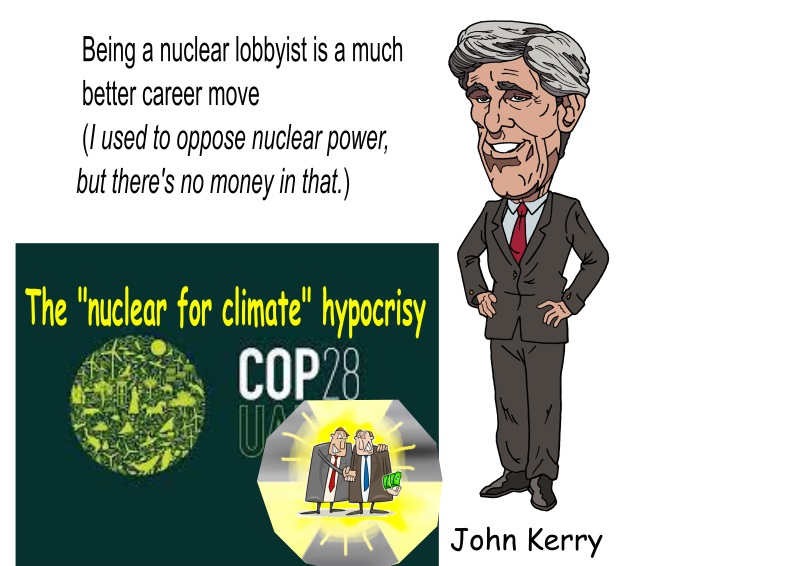
And although it’s a global pledge, President Biden’s climate envoy John Kerry helped spearhead the declaration, indicating the increasing embrace of nuclear power at the highest echelons of U.S. climate policy. Kerry said that the science has proven “you can’t get to net-zero 2050 without some nuclear.”
Participation trophy for Georgia Power: Vogtle 3 connects to the grid
It’s a bit of a stretch calling Vogtle 3’s long-awaited connection to the grid a “win” after a $16 billion cost overrun and a six-year overshoot of the target launch date, but the Department of Energy was looking forward to a new commercial reactor coming online this year, and the department ultimately did get its wish.
As of July 31, Georgia Power’s 1,100-megawatt Plant Vogtle Unit 3 nuclear reactor is supplying power to the grid — making it the first reactor to enter service since Tennessee’s Watts Bar Unit 2 began operating in 2016. Vogtle 4, a second 1,100-megawatt reactor, is nearing the finish line as well, with operations expected to start in early 2024, according to Georgia Power.

Thanks to then-Secretary Rick Perry, in 2019 the Department of Energy’s Loan Programs Office provided up to $12 billion in loan guarantees to help complete the Vogtle expansion amid a spate of spending freezes and lawsuits. The project generated more than 9,000 jobs during peak construction and will provide an additional 800 permanent jobs at the facility once fully operational.
Dan Yurman, publisher of Neutron Bytes, a blog on nuclear power, offered Canary Media this explanation for Vogtle’s major cost and schedule overruns: “The utility and the vendor kicked off a massive infrastructure project with major unaddressed risks in terms of supply chain, labor force skills, regulatory compliance and a 30-year gap in know-how to build large nuclear power plants. It is no surprise that the first-of-a-kind AP1000s came in at twice the cost and double the estimated time to complete them.”

The nuclear industry can call this a win — if it can learn from Vogtle and begin to remedy the missteps called out by Yurman.
A financial win: Nuclear funding and government support

The U.S. government is putting its money where its mouth is when it comes to supporting nuclear power: The (barely) Bipartisan Infrastructure Law added $3.2 billion for development of modular and advanced nuclear reactors, and the U.S. Department of Energy’s Loan Programs Office has devoted $11 billion in loan-making authority for advanced reactors and supply chains. What’s more, the epochal Inflation Reduction Act devotes $700 million to the HALEU Availability Program to support the development of a non-Russian supply of high-assay low-enriched uranium.
Additionally, the IRA offers a preposterously generous $15 per megawatt-hour production tax credit meant to keep today’s existing nuclear fleet competitive with gas and renewables, as well as a similarly generous investment tax credit to incentivize new plant construction.
Losing the global nuclear crown: China is sprinting ahead of the U.S. on nuclear
America has the world’s biggest nuclear power fleet at 93 reactors, but it’s on its way to losing that distinction.
China has built 37 new reactors over the last decade for a total of 55, according to the International Atomic Energy Agency. America has added a grand total of two reactors during that same period. China also aims to double its nuclear energy capacity by 2035, and it is well on its way; it has 22 nuclear plants currently under construction with more than 70 in the planning stages.
Outside of Vogtle 4, it’s unclear when — or if — another nuclear reactor will be connected to the U.S. grid.
And despite small modular reactors being held up as a cure-all to the U.S. nuclear industry’s significant challenges, the only country in the world that has actually built an SMR is China. It demonstrated a pair of smallish high-temperature, gas-cooled reactor units using a “pebble-bed” design and a more concentrated fuel format last year.
Notably, China is not a participant in the COP28 nuclear pledge — an ironic development as it’s the only country with any real chance of meeting the goal of tripling its capacity by 2050.
Huge win, disappointing loss for SMRs: NuScale’s ups and downs

The nuclear gods are fickle creatures. Small modular reactor pioneer NuScale Power made history in January 2023 when it scaled the highest regulatory peak in the U.S.: The Nuclear Regulatory Commission certified the design of its 50-megawatt module, the first small modular reactor and only the seventh reactor design ever approved for use in the U.S.
This was a long-fought victory for NuScale and advocates of SMRs: Utilities and developers can now reference NuScale’s SMR design when applying for a license to construct and operate a reactor. NuScale and the DOE spent more than 10 years and hundreds of millions of dollars to reach this regulatory milestone.
Armed with this historic design certification, NuScale landed a promising inaugural customer in the Utah Associated Municipal Power Systems and began working on a deployment near the Department of Energy’s national laboratory in Idaho. Project plans had called for one 77-megawatt unit to begin operation in 2029.
The Idaho project was once widely predicted to be not only the first small module reactor completed in the U.S., but the next nuclear reactor to be built in the country, period. However, it was not to be so.
The project was ultimately scrapped in November because it couldn’t secure enough subscriptions from utilities in the Western U.S. to make the project work financially.
The innovative SMR aspirant still has a pipeline of tentative agreements to deploy reactors across North America, Europe and the Middle East.
Win for domestic HALEU fuel: Bringing uranium enrichment capabilities back to the U.S.

Call this one a win because, for the first time in 70 years, America is home to a U.S.-owned enrichment facility producing the concentrated fuel needed by the many advanced reactors now in development.
Centrus, a company with roots in the Manhattan Project, began demonstration-scale enrichment operations at its facility in Piketon, Ohio in October. It marks the potential rebirth of a once-strong American enrichment industry. America was once the only source of uranium enrichment outside of the Soviet bloc, but over the last 30 years, it has surrendered that role to Russia and other countries.
The HALEU produced in Centrus’ centrifuges will be used to test new fuels and reactor designs, as well as to fuel the cores of the two demonstration reactors funded through the Bipartisan Infrastructure Law and supported by DOE’s Advanced Reactor Demonstration Program.
The U.S. currently depends on Tenex, part of Russian state-owned nuclear supplier Rosatom, to supply the low-enriched uranium fuel that’s used in our civilian fleet. And Russia (which is not blockaded on nuclear fuel exports) supplies all of America’s high-assay low-enriched uranium, the more concentrated material required by the new generation of advanced reactors.
It is a precarious situation for U.S. national and energy security.
The DOE is looking to jump-start the domestic market by directing IRA funding toward enrichment and fuel-processing facilities like Centrus’ plant in Ohio, as well as by acting as the initial customer, creating an inventory and providing a reliable customer and price.
It’s a win for the U.S., but it comes after years of stepping on rakes.
A win for preserving the existing nuclear fleet: Diablo Canyon lives on

Pacific Gas & Electric, one of the three large investor-owned utilities in California, decided to decommission both of the reactors at California’s Diablo Canyon Nuclear Power Plant in 2017.
But public outcry, political pressure and worries about grid failures seem to have helped get the plant’s operations extended an additional five years with the help of a state loan and up to $1.1 billion through the federal Civil Nuclear Credit Program designed to support economically ailing plants. It’s a win for California nuclear advocates and the emissions of the state’s grid.
PG&E has now filed an application with the Nuclear Regulatory Commission for a 20-year operating extension for the two 1,150-megawatt reactors at Diablo Canyon, which will trigger a review process expected to take a minimum of two years.
The U.S. nuclear fleet is the largest in the world, but it’s also one of the oldest: The average age of an American nuclear reactor is 42 years, compared to a world average of 31 years.
The majority of nuclear plant operators in the country have expressed interest in extending their operating licenses to allow operation up to 80 years, according to a poll of member utilities of Nuclear Energy Institute, a trade organization.
But even with such extensions, these older plants would all need to be replaced by around 2060, and nuclear power’s long lead times mean that decisions will have to be made about replacing their generation capacity in the late 2030s.
Neither a win nor a loss: Action in advanced reactors and microreactors
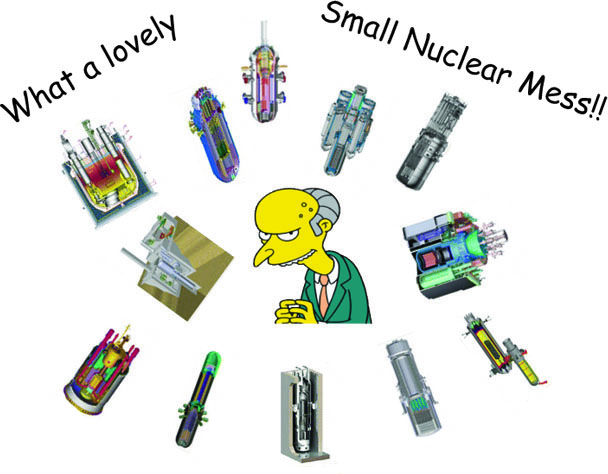
Encouraged by government funding, shifting societal sentiment and a cornucopia of new reactor designs, 2023 witnessed a raft of startups and established vendors making deals in the U.S. and abroad to build next-generation nuclear reactors.
Microreactors like Oklo’s 15-megawatt fast breeder reactor, Aalo Atomics’ 20-megawatt thermal design based on the Marvel reactor at Idaho National Labs, and Westinghouse’s 5MWe eVinci design are intended to provide electrical power and heat in remote or behind-the-meter industrial applications. Ultra Safe Nuclear has plans to construct a microreactor facility in Gadsden, Alabama. The Department of Defense’s Strategic Capabilities Office’s Project Pele program is looking to build and demonstrate a 1–5 MWe mobile, high-temperature, gas-cooled microreactor capable of powering U.S. military bases.
But none of these designs are approved by the Nuclear Regulatory Commission.
For its part, the DOE is betting big on TerraPower and X-energy, with the agency’s Advanced Reactor Demonstration Program providing initial funding of $80 million to each, along with future cost-sharing funds. These two demonstration projects are poised to use HALEU from Centrus’ newly commissioned 16-centrifuge cascade.
TerraPower, founded by Microsoft co-founder Bill Gates, is developing a 345-megawatt sodium-cooled fast reactor coupled with a molten salt energy storage system. The company has raised $750 million to build its operating demonstration reactor in Wyoming.
X-energy is developing its high-temperature gas-cooled advanced small modular reactor and plans the initial deployment at a Dow Chemical facility in Texas.
These reactor designs also are not approved by the NRC.
Despite the proliferation of tentative agreements, memorandums of understanding and handshake deals, all of these planned reactors — with the possible exception of NuScale’s — fall into the famous “paper reactor” category — meaning they are simple, light, small, cheap and quick to build. Importantly, they are also never actually going to be built.
The UN Nuclear Ban Treaty is Leading Resistance to Nuclear Autocracy

Robert Rust, December 13, 2023 Union of Concerned Scientists
During the week of November 27th, under a cloud of international conflict and unease, delegates, politicians, activists and academics convened for the Second Meeting of States Parties (2MSP) to the Treaty on the Prohibition of Nuclear Weapons (TPNW) at the UN Headquarters in New York. Attendees came together to examine the global state of disarmament and harm-reduction work and call for more states to sign the nuclear ban treaty and join the stand against nuclear weapons.
The TPNW is a broad coalition of nation states committed to building that framework through changing attitudes toward and the culture around nuclear weapons; currently, there are 93 signatories and 69 states parties. Unsurprisingly, none of the five nuclear-weapon states recognized by the Nuclear Non-Proliferation Treaty (United States, Russia, China, United Kingdom, and France) have signed, and only seven of 38 OECD countries (Austria, Chile, Colombia, Costa Rica, Ireland, Mexico, and New Zealand) have signed or ratified. Clearly, this is a movement by those who have less to demand better behavior from those who have more. Nuclear weapons harm and threaten the many for the benefit of the few; the many are working to end that.
Speaking at a session on the treaty’s obligations within victim assistance and remediation, Governor Hidehiko Yuzaki of Hiroshima made a key point about the way we think about security. Nuclear deterrence, he said, is an idea become dogma, not a hard truth; relying on it for security locks us into a system with inherent massive risks. We must stop thinking of security in these “narrow nationalistic frames”, and work to build a “collective, sustainable security framework.”
Voices from the frontline
The most important participants at the 2MSP were members of frontline communities directly impacted by mining, bombing, testing and storage across the world. The hibakusha, survivors of the atomic bombings of Hiroshima and Nagasaki, have experienced the horrors of nuclear weapons like no one else. The 2MSP heard how post-war US secrecy around the atomic bomb fostered significant discrimination towards hibakusha in Japan. Indeed, victim testimony at the museums dedicated to the bombings in Hiroshima and Nagasaki describes how US scientists and military personnel arrived to test and observe the bomb’s impact on the local environment, including its inhabitants.
That dehumanization and disregard for human life was also central in nuclear testing across the world. Just as they are among the first and most seriously impacted by the effects of climate change, indigenous communities have historically been on the front lines of nuclear testing and uranium mining.

Speaking at the 2MSP, Karina Lester, who is from the Anangu Pitjantjatjara Yankunytjatjara Lands (APY Lands) in the far Northwest of South Australia, spoke of her father and grandmother’s experiences of British nuclear testing in the area. She described how her father heard the ground shake and felt the “black smoke” move over their lands. The TPNW, she said, must continue to center the voices of those who have experienced the harm of nuclear weapons; the weapons must be made illegal, but governments must also work with those impacted to redress the harm caused.
The TPNW should act as both a forum and a tool for those countries and communities who have been harmed. Powerful states have to respect the sovereignty of smaller states, honor their obligations through international treaties and respect the decisions of multilateral organizations. They have a history of failing to do so.
For example, discussing the work towards a nuclear-free Pacific, one speaker pointed out that after Christmas Island (Kiribas) was selected as a site for the United Kingdom’s nuclear testing, Samoa, which was a trust territory of New Zealand at the time, petitioned the UN Trusteeship Council to halt the 1957 test, but the United Kingdom did not listen. Indeed, examination of British military reports prior to the test show racist attitudes that were callously dismissive of harm to local “primitive” populations. The United Kingdom, United States and France saw the Pacific and Australia as “empty space”, erasing local populations entirely. ……………………………………………………………. more https://blog.ucsusa.org/robert-rust/the-un-nuclear-ban-treaty-is-leading-resistance-to-nuclear-autocracy/
Why the Pentagon is a multitrillion-dollar fraud.
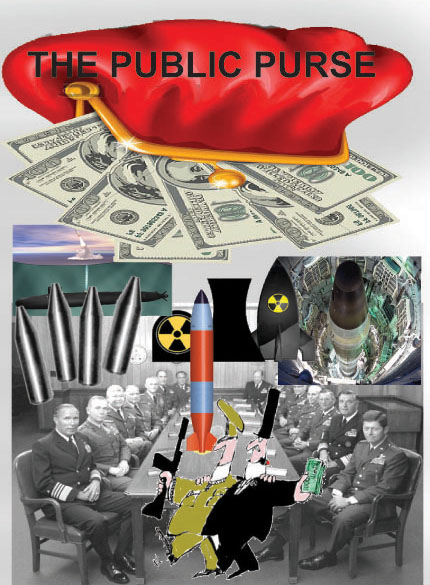
The defense budget of the United States is grotesquely large, its $877 billion dwarfing the $849 billion spent by the next ten nations with the largest defense expenditures. And yet, the Pentagon cannot fully account for the $3.8 trillion in assets and $4 trillion in liabilities it has accrued at US taxpayer expense,
https://www.rt.com/news/588750-us-pentagon-failed-annual-audit/ Scott Ritter, 12 Dec 23
The US Department of Defense has failed its sixth annual audit in a row, but taxpayer money will keep going down that drain
Recently, the Pentagon admitted it couldn’t account for trillions of dollars of US taxpayer money, having failed a massive yearly audit for the sixth year running.
The process consisted of the 29 sub-audits of the DoD’s various services, and only seven passed this year – no improvement over the last. These audits only began taking place in 2017, meaning that the Pentagon has never successfully passed one.
This year’s failure made some headlines, was commented upon briefly by the mainstream media, and then just as quickly forgotten by an American society accustomed to pouring money down the black hole of defense spending.
The defense budget of the United States is grotesquely large, its $877 billion dwarfing the $849 billion spent by the next ten nations with the largest defense expenditures. And yet, the Pentagon cannot fully account for the $3.8 trillion in assets and $4 trillion in liabilities it has accrued at US taxpayer expense, ostensibly in defense of the United States and its allies. As the Biden administration seeks $886 billion for next year’s defense budget (and Congress seems prepared to add an additional $80 billion to that amount), the apparent indifference of the American collective – government, media, and public – to how nearly $1 trillion in taxpayer dollars will be spent speaks volumes about the overall bankrupt nature of the American establishment.
Audits, however, are an accountant’s trick, a series of numbers on a ledger which, for the average person, do not equate to reality. Americans have grown accustomed to seeing big numbers when it comes to defense spending, and as a result, we likewise expect big things from our military. But the fact is, the US defense establishment increasingly physically resembles the numbers on the ledgers the accountants have been trying to balance – it just doesn’t add up.
Despite spending some $2.3 trillion on a two-decade military misadventure in Afghanistan, the American people witnessed the ignominious retreat from that nation live on TV in August 2021. Likewise, a $758 billion investment in the 2003 invasion and subsequent decade-long occupation of Iraq went south when the US was compelled to withdraw in 2011– only to return in 2014 for another decade of chasing down ISIS, itself a manifestation of the failures of the original Iraqi venture. Overall, the US has spent more than $1.8 trillion on its 20-year nightmare in Iraq and Syria.
These numbers are mind-numbingly large – so large that they become meaningless to the average person. The US defense enterprise is so massive that it is literally a mission impossible to speak of balancing the books. The American people might be willing to shrug off an accounting error or two. But the defense budget equates to American military power and the perceptions of national worth that translate into notions of American exceptionalism.
The fact of the matter is that our cavalier approach to defense spending has resulted in fraud of a massive scale. The American people were sold a bill of goods – a military capable of projecting power world-wide to sustain the so-called “rules based international order” upon which the notion of American exceptionalism has been premised. As it turns out, the US military is as hollow as the numbers on the Pentagon ledgers. The American people have bought an apparatus that is incapable of fighting and winning a major war against any of the potential opponents arrayed against it. We failed to defeat Al Qaeda, ISIS, and the Taliban. And we are not able to defeat either China or Russia, let alone regional powers like North Korea and Iran. And yet we will simply continue to invest, in seemingly unquestioning fashion, into this enterprise, expecting somehow that a system that cannot pass an audit will somehow magically produce a different result despite the fact that we, the American people, are doing nothing to demand such a result.
In short, the defense budget is the equivalent of “pay-to-play,” in which the American people pay the US government to produce the results necessary to sustain their overinflated sense of self-worth. We Americans have become so accustomed to being the biggest, baddest bully in the global arena that we assume that simply by pouring money into a system that had produced the desired results for more than seventy years that we could keep the good times rolling. But when you allocate money to a system that has been allowed to become conditioned to operate without accountability, don’t be surprised when the shiny mansion on the hill you thought you were buying turns out to be little more than a house of cards.
Grand plan to triple nuclear energy with small nuclear reactors, but where’s the funding?

1 US nuclear start-ups battle funding challenge in race to curb emissions.
Reactors pioneered by Oklo, X-energy and NuScale suffer financing setbacks
as well as regulatory headwinds.
US plans to build up its nuclear industry
face big funding and regulatory challenges which could delay a new
generation of smaller, more efficient reactors touted by advocates as
critical to fighting climate change.
Industry experts told the Financial
Times a declaration signed last week by Washington and 21 other nations at
the COP 28 climate summit to triple the amount of installed nuclear energy
by 2050 was a step forward, given the sector’s ability to provide
(?)emissions-free power.
But a sharp fall in market support for start-ups
developing so-called small modular reactors and other advanced nuclear
facilities threaten US ambitions, they said. Last month NuScale Power Corp
cancelled plans to build the first SMR in the US, despite receiving $1.4bn in government cost-sharing pledges.
Not enough power utilities expressed an
interest in purchasing electricity from the facility in Idaho when NuScale
increased power prices by more than 50 per cent over two years to $89 per
megawatt hour. The setback followed the collapse of a $1.8bn deal agreed
between X-energy and special purpose acquisition company Ares Acquisition,
which was intended to enable the developer of nuclear technologies to go
public.
Now the industry is focused on whether Oklo, a start-up chaired by
OpenAI chief executive Sam Altman, can successfully go public via a
blank-cheque company announced in July with AltC Acquisition Corp. The
merger was proposed at a valuation of $850mn and would provide Oklo with
$500mn to develop and commercialise its reactor design.
FT 12th Dec 2023
https://www.ft.com/content/c0700a01-c1e8-4e5e-8300-ac264bd25293
Cumbrian councils urged to poll public over controversial nuclear dump plan

The Nuclear Free Local Authorities have sent a joint letter to the parish and town councils located in the West Cumbria search areas under consideration for a Geological Disposal Facility urging them to consider polling their parishioners over the controversial plan.
The co-signatories are the NFLAs English Forum Chair, Councillor David Blackburn, Councillor Jill Perry, Green Party Group Leader on Cumberland Council and Jan Bridget, co-founder of Millom against the Nuclear Waste Dump.
Nuclear Waste Services, a division of the taxpayer-funded Nuclear Decommissioning Authority, is engaged in long-term investigations to determine the suitability of locating the GDF on the West Cumbrian coast. The facility would have a surface site to receive regular shipments of high-level radioactive waste from Sellafield and this waste would then be transported along tunnels out under the Irish Sea, before the GDF once filled is sealed.
Two search areas have been designated Mid-Copeland and South Copeland, with their boundaries drawn in conformity with Cumberland Council electoral wards, and NWS has established a Community Partnership in each, which provide some limited oversight to the process. Members of the Community Partnerships include elected members from Cumberland Council, deemed the Relevant Principal Local Authority under the guidance established for the plan, and representatives from each of the parish and town councils encapsulated in the search areas.
The UK Government and NWS are adamant that the final selection of the site will be determined by two factors – the suitability of the geology and the acceptance of the plan by the local host community.
Geological investigations may take up to 15 years to complete, with desktop, aerial and seismic surveys being augmented in the second stage by deep exploratory boreholes for rock sampling. NWS are expected to periodically sense check public perceptions of the plan until in the final stages a Test of Public Support is conducted to determine if local people are willing to see their area taken forward.
The so-signatories are unhappy that there is no mechanism built into the plan to conduct interim opinion polls to identify public feeling over time, and they are disappointed that most local councils have yet to conduct their own polls to determine if their appointed representatives to the Community Partnership are reflecting the opinions of their parishioners. They would like parish and town councils to follow the lead shown by Whicham which took the initiative, independently of NWS, and did so./………………………………………………….
more https://www.nuclearpolicy.info/news/cumbrian-councils-urged-to-poll-public-over-controversial-nuclear-dump-plan/
America’s War for the Greater Middle East (Continued)
Here We Go Again
SCHEERPOST, By Andrew Bacevich / TomDispatch, December 13, 2023
One way of understanding the ongoing bloodbath pitting Israel against Hamas is to see it as just the latest chapter in an existential struggle dating back to the founding of the Jewish state in 1948. While the appalling scope, destructiveness, and duration of the fighting in Gaza may outstrip previous episodes, this latest go-around serves chiefly to reaffirm the remarkable intractability of the underlying Arab-Israeli conflict.
Although the shape of that war has changed over time, certain constants remain. Neither side, for instance, seems capable of achieving its ultimate political goals through violence. And each side adamantly refuses to concede to the core demands of its adversary. In truth, while the actual fighting may ebb and flow, pause and resume, the Holy Land has become the site of what is effectively permanent conflict.
For several decades, the United States sought to keep its distance from that war by casting itself in the role of regional arbiter. While providing Israel with arms and diplomatic cover, successive administrations have simultaneously sought to position the U.S. as an “honest broker,” committed to advancing the larger cause of Middle Eastern peace and stability. Of course, a generous dose of cynicism has always informed this “peace process.”
On that score, however, the present moment has let the cat fully out of the bag. The Biden administration responded to the gruesome terrorist attack on October 7th by unequivocally endorsing and underwriting Israeli efforts to annihilate Hamas, with Gazans thereby subjected to a World War II-style obliteration bombing campaign. Meanwhile, ignoring tepid Biden administration protests, Israeli settlers continue to expel Palestinians from parts of the West Bank where they have lived for generations. If Hamas’s October assault was a tragedy, proponents of a Greater Israel also saw it as a unique opportunity that they’ve seized with alacrity. As for the peace process, already on life support, it now seems altogether defunct. Prospects of reviving it anytime soon appear remote.

More or less offstage, the fighting is having this ancillary effect: as Israeli Defense Forces (IDF) employ U.S.-provided weapons and munitions to turn Gaza into rubble, the “rules-based international order” touted by the Biden administration as the latest organizing principle of American statecraft has forfeited whatever slight credibility it might have possessed. Russia’s assault on Ukraine appears almost measured and humane by comparison.
As if to emphasize Washington’s own limited fealty to that rules-based order, President Biden’s immediate response to the events of October 7th focused on unilateral military action, bolstering U.S. naval and air forces in the Middle East while shoveling even more weapons to Israel. Ostensibly tasked with checking any further spread of violence, American forces in the region have instead been steadily edging toward becoming full-fledged combatants.
In recent weeks, U.S. forces have sustained dozens of casualty-producing attacks, primarily from rockets and armed drones. Attributing those attacks to “Iran-affiliated groups,” the U.S. has responded with air strikes targeting warehouses, training facilities, and command posts in Syria and Iraq.
According to a Pentagon spokesman, the overall purpose of American military action in the region is “to message very strongly to Iran and their affiliated groups to stop.” Thus far, the impact of such messaging has been ambiguous at best. Certainly, U.S. retaliatory efforts haven’t dissuaded Iran from pursuing its proxy war against American military outposts in the region. On the other hand, the scale of those Iran-supported attacks remains modest. Notably, no U.S. troops have been killed — yet.
For the moment at least, that fact may well be the administration’s operative definition of success. As long as no flag-draped coffins show up at Dover Air Force Base in Delaware, Joe Biden may find it perfectly tolerable for the U.S.-Iran subset of the Israel-Hamas war to simmer indefinitely on the back burner.
This pattern of tit-for-tat violence has received, at best, sporadic public attention. Where (if anywhere) it will lead remains uncertain. Even so, the U.S. is at risk of effectively opening up a new front in what used to be called the Global War on Terror. That war is now nearly dormant, or at least hidden from public view. The very real possibility of either side misinterpreting or willfully ignoring the other’s “messaging” could reignite it, with an expanded war that directly pits the U.S. against Iran making the Israel-Gaza war look like a petty squabble………………………………………………………………………………………………………………….
Alarm Bells, American-Style
Now, however, in the wake of the atrocities committed on October 7th and Washington’s tacit acquiescence in Israel’s maximalist war aims, the dubious notion that vital American interests are still at stake in the Greater Middle East has taken on new life. Dating from the 1980s, Washington had cycled through a variety of arguments for why that part of the world was worthy of spending American blood and treasure: the threat of Soviet aggression, U.S. reliance on foreign oil, radical Arab dictators, Islamic jihadism, weapons of mass destruction falling into hostile hands, potential ethnic cleansing and genocide. All of those were pressed into service at one time or another to justify continuing to treat the Middle East as a strategic U.S. priority.
………………………………………… allowing Israel’s conflict with Hamas to draw the United States into a new Middle Eastern crusade would be the height of folly. In fact, however, with little public attention and even less congressional oversight, that is precisely what may be happening. The Global War on Terror seems on the verge of absorbing the Gaza War into its current configuration.
………………………………….. In 1796, George Washington warned his countrymen of the dangers of allowing a “passionate attachment” to another nation to affect policy. That warning remains relevant today. The Gaza War is not and should not become America’s war. https://scheerpost.com/2023/12/13/americas-war-for-the-greater-middle-east-continued/
Graphic Videos and Incitement: How the IDF Is Misleading Israelis on Telegram
The IDF unit responsible for psychological warfare operations operates a Telegram channel called ’72 Virgins – Uncensored,’ which targets local audiences with ‘exclusive content from the Gaza Strip’
The IDF Operations Directorate’s Influencing Department, which is responsible for psychological warfare operations against the enemy and foreign audiences, operates a Telegram channel called 72 Virgins – Uncensored, which targets Israeli audiences and shows the bodies of Hamas terrorists with the promise of “shattering the terrorists’ fantasy.”…………………………………………… (subscribers only) more https://www.haaretz.com/israel-news/security-aviation/2023-12-12/ty-article/.premium/graphic-videos-and-incitement-how-the-idf-is-misleading-israelis-on-telegram/0000018c-5ab5-df2f-adac-febd01c30000
Causing Gaza Blackouts, Israel Benefits from Media Double Standards
JULIANNE TVETEN, https://fair.org/home/causing-gaza-blackouts-israel-benefits-from-media-double-standards/ 13 Dec 23
As part of its escalating siege and bombing campaign against Palestinians—in which more than 18,000 people have been killed and roughly 1.9 million displaced—Israel has repeatedly disabled internet and phone service throughout Gaza. Israel’s airstrikes and fuel blockades have devastated the region’s communications infrastructure, depriving more than 2 million Gazans of access to lifesaving information, emergency services and contact with those outside their immediate vicinity, while preventing journalists from reporting on the situation. Since the first blackouts occurred shortly after Hamas’s attacks on October 7, residents have suffered multiple outages.
Israel as innocent bystander
In recent weeks, Israel-allied media have minimized Israel’s culpability, portraying the shutoffs more as an unforeseeable act of nature than a deliberate act of military aggression.
News sources have rightfully informed readers of the telecommunications void in Gaza. A headline from the Washington Post (10/28/23) read, “No Text, No Talk: Palestinians Plunged Into Digital Darkness in Gaza.” The following month, an Associated Press (11/16/23) dispatch covering a separate shutoff announced that “Under a Communication Blackout, Gaza’s 2.3 Million People Are Cut Off From Each Other and the World.” But judging by these passive-voice alerts, one would have no idea Israel was involved.
Additionally, though the Post promptly alluded to the shutoffs as a “tool of war,” the paper waited 10 paragraphs to assign blame to Israel, noting that “Israel knocked out cell towers, cable lines and infrastructure…creating the near-blackout of connectivity.” AP also hedged and buried its mentions of Israel’s responsibility, explaining that a lack of fuel—caused by Israel’s obstruction of fuel deliveries to Gaza, which AP waited two dozen paragraphs to address—paralyzed the region’s internet and phone network.
To further obscure the cause-and-effect relationship of Israel’s violence and Gaza’s infrastructural ruin, media have presented the two as parallel occurrences. Wired (10/27/23) announced that cables, cell towers and other equipment “have been damaged or destroyed as Israel launched thousands of missiles in response to Hamas.” The New York Times (10/29/23) offered a similar construction: “As Israeli forces entered Gaza on Friday to fight Hamas, phone and internet service was severed.” NPR (10/30/23) contributed its own version, stating, “At the same time Israel intensified its assault on Gaza, internet and phone service suddenly dropped.”
‘Complete siege’
These framings are astonishingly charitable to Israel, given the available documentation of its actions. After promising a “complete siege” of Gaza in early October, Israeli officials ordered cuts to electricity, fuel supplies, food and water (Guardian, 10/11/23), amounting to a war crime. On October 10, the UN Office for the Coordination of Humanitarian Affairs confirmed that Israeli airstrikes “targeted several telecommunication installations” in Gaza. Days later, an Israeli Communications Ministry press release listed “an ongoing examination and preparation for the shutting down of cellular communications and internet services to Gaza” in a summary of its operations.
This aggression is enabled by Israel’s seizure and decades-long weakening of Palestinian communications infrastructure, which has rendered Palestinian networks highly vulnerable to damage. According to the Arab Center for the Advancement of Social Media:
Since the Israeli occupation of the Palestinian territories in 1967, Israel took complete control of the [Information and Communication Technologies] infrastructure and sector in the West Bank and Gaza, impeding development and blocking the establishment of an independent network, instead making Palestinians entirely dependent on the Israeli occupation authorities.
It should come as no surprise, then, that Palestinian telecom companies have attributed the outages to “deliberate actions perpetrated by Israeli authorities.”
Enemies as sinister masterminds
In contrast to their Israel coverage, US and US-allied media waste no time identifying alleged culprits of internet shutdowns in non-allied countries.
Reporting on protests over rising fuel prices, the New York Times (11/17/19) ran the headline “Iran Blocks Nearly All Internet Access.” The active voice in the story’s lead clearly indicated responsibility: “Iran imposed an almost complete nationwide internet blackout on Sunday,” in order to “cut off Iranians” amid “widespread government unrest.”
An adjective elsewhere in the lede—“draconian”—which, though it undoubtedly applies to Israel, is almost unimaginable in corporate media discussions of the 75-year US ally (FAIR.org, 10/20/23, 11/15/23, 11/17/23).AP (7/12/21) adopted equally decisive language in a piece scolding Cuba for supposedly blocking social media sites during a protest. The agency insisted that “restricting internet access has become a tried-and-true method of stifling dissent by authoritarian regimes around the world,” a category under which China and North Korea, too, evidently fell.
And, months into Russia’s invasion of Ukraine, media were swift to caution of the occupying force’s ambitions to wrest control of Ukrainian networks. According to Wired (6/15/22), Russia was “Taking Over Ukraine’s Internet” by rerouting Ukraine’s online traffic through “Vladimir Putin’s powerful online censorship machine.” The New York Times (8/9/22) echoed these charges, characterizing the action as “part of a Russian authoritarian playbook that is likely to be replicated further if they take more Ukrainian territory.”
Defying evidence (or lack thereof)
In many cases, US and Western media’s assertions of enemies’ digital repression lack or contradict evidence. The AP (7/12/21) report on Cuba, for example, called the disruption an instance of a “go-to tactic to suppress dissent.” The agency’s quantitative source was data from NetBlocks, a London-based internet monitoring organization commonly cited in Western reporting on global online access, including that in Gaza (Al Jazeera, 12/4/23).
But the referenced information didn’t support all of the AP’s claims. The tech-news site Rest of World (7/14/21)—hardly a Castroite publication—found no conclusive proof that the outage was planned. A source from network monitoring company Kentik told the site that the interruption “could either happen deliberately or due to a technical failure,” adding that “internet measurement data alone”—which NetBlocks and Kentik used to gauge online activity in Cuba—“can’t tell the difference.” (The AP also neglected to mention the US’s record of limiting Cuban internet access.)
In a particularly egregious example, Foreign Policy (2/21/23) accused China of muffling internet service for Taiwan’s Matsu Islands, in what “looks like targeted harassment by Beijing.” This assumption was based on reported incidents in which a Chinese fishing vessel and freighter cut undersea cables on separate occasions. No conspiracy was confirmed; Foreign Policy itself acknowledged that a Taiwanese official “told reporters that there was no indication the incidents were intentional.” Still, this didn’t deter the magazine from trumpeting, “China Is Practicing How to Sever Taiwan’s Internet.”
Meanwhile, Western media have access to ample evidence that Israel willfully throttles, disables and bombs the communications networks it has usurped—in part to mute those who might challenge its official narratives (Al Jazeera, 11/9/23; NBC News, 11/11/23)—and displaces and kills the people who depend on them.
And yet those same media contort and trivialize that evidence to obfuscate Israel’s offenses. Apparently, sabotage of essential lines of communication for a beleaguered population doesn’t constitute subjugation—as long as the saboteur is a friend of the right countries.
 | |||
| |||
Ukraine asking US for military aid that doesn’t exist – New York Times
https://www.rt.com/russia/588944-ukraine-us-military-aide/ 13 Dec 23
Kiev has “unrealistic expectations” about what Washington can provide, American officials told the outlet
Ukrainian commanders and civilian officials overestimate the ability of the US to supply the country with weapons and ammo amid the conflict with Russia and are asking for things that simply don’t exist, American officials have told the New York Times.
The administration of US President Joe Biden has provided Kiev with $111 billion in military and economic assistance since Moscow launched its military operation in Ukraine in February 2022. However, the White House recently warned that funds for the government of Vladimir Zelensky had almost run out, with hardline Republican lawmakers blocking the approval of another $106 billion ‘national security package’ for Ukraine and Israel.
Many in Kiev still “do not realize how precarious continued US funding for the war is,” the NYT said in an article on Monday. The unnamed US officials, who talked to the paper, insisted that “Ukraine will have to fight on a tighter budget.”
Some Ukrainian decision-makers have “unrealistic expectations about what the US will supply,” the sources said. “They are asking for millions of rounds of artillery, for example, from Western stockpiles that do not exist.”
After the failure of Kiev’s counteroffensive, the US and Ukraine are currently trying to work out “a new strategy,” the implementation of which is expected to begin in early 2024 in order to “revive Kiev’s fortunes,” the officials said.
According to the report, they are unable to find common ground so far. Washington wants Kiev to just focus on holding onto the territory it still controls, while building up forces and supplies over the course of the next year.
However, the Ukrainian military appears eager to continue to attack the Russian army on the ground or through airstrikes in order to “score symbolic victories” that they believe would attract more attention to the conflict around the globe, the sources explained.
“The stakes are huge” because “without both a new strategy and additional funding … Ukraine could lose the war,” the officials warned.
Amid discussions on the new strategy, the Pentagon has decided that Lieutenant General Antonio A. Aguto Jr, who oversees aid to Ukraine from a base in Germany, is going to spend lengthy periods of time on the ground in Kiev, they added.
Moscow has repeatedly warned that deliveries of weapons to Ukraine by the West will only prolong the fighting and increase the risk of a direct military confrontation between Russia and NATO. Russian officials have also argued that the provision of arms, intelligence-sharing, and training Ukrainian troops means that the US and its allies have already become de facto parties to the conflict.
Speaking about the dependence of Kiev on Western aid, Russian President Vladimir Putin said on Sunday that Ukrainian troops were “running out of [everything]” because “they don’t have their own base.”
“When you don’t have your own base, don’t have your own ideology, don’t have your own industry, don’t have your own money, don’t have anything of your own, then there is no future,” Putin stated.
Third EU state objects to Ukrainian membership talks
https://www.rt.com/news/588948-austria-ukraine-eu-membership/ 13 Dec 23
Austria has joined Hungary and Slovakia in opposing fast track procedures for accepting Ukraine and Moldova into the union
There should be no preferential treatment for Ukraine in regards to its path to becoming a member of the European Union, Austrian Federal Chancellor Karl Nehammer said during a government meeting on Monday.
His statement came in response to proposals from the European Commission to launch accession talks with Ukraine as soon as possible. However, after opposition from Hungary and Slovakia, EC President Ursula von der Leyen said on Sunday that the bloc’s leaders would only discuss “the opening of accession negotiations, not accession itself” at the upcoming European Council summit this week.
Answering questions from members of Austria’s EU Main Committee, Nehammer stated that his country was generally in favor of EU enlargement and agreed to offering Ukraine and the Republic of Moldova accession prospects.
However, he insisted that there should be no “fast-track procedure” for the two states and that internal EU reforms would also be needed to prepare the bloc for enlargement. He stressed that Austria would not agree to any accession talks with Ukraine under the current conditions.
Nehammer also noted that von der Leyen had not consulted with him or any other EU leaders before issuing a recommendation last month to open formal membership talks with Ukraine, arguing that it had made significant progress in internal reforms to warrant such a step.
This recommendation was also met with opposition by Slovakia and Hungary, whose Prime Minister Viktor Orban called it “unfounded and poorly prepared.” Slovak Foreign Minister Juraj Blanar also stated that he “couldn’t imagine” Kiev joining the union while it was still in a “state of war,” noting that its membership was still “terribly far away.”
Kiev, meanwhile, has insisted that it has already fulfilled all the key requirements in its bid to join the bloc and demanded that EU members “play fairly” and recognize its efforts.
“We can jump, we can dance if that is requested in addition,” said Ukrainian Foreign Minister Dmitry Kuleba, insisting that “If we are told to do something, and we do that, that must be registered as a result.”
For years, the Ukrainian government has cited accession to the bloc as one of its priorities, with little actual progress made. Ukraine officially applied for membership in February 2022, days after Russia launched its military operation.
Ukraine ready to ban country’s largest Christian church – parliament speaker
https://www.rt.com/russia/588975-ukraine-orthodox-church-ban/ 13 Dec 23
Legislation outlawing the Ukrainian Orthodox Church (UOC) over alleged links to Russia should apparently be passed in early 2024
A bill that would ban the Ukrainian Orthodox Church (UOC), the largest Christian church in the country, could be passed in early 2024, the speaker of the parliament in Kiev, Ruslan Stefanchuk, has said.
Ukrainian authorities have long accused the UOC of having ties with the Russian Orthodox Church, despite the religious organization condemning Russia’s military operation in Ukraine and announcing its autonomy from Moscow shortly after the escalation of the conflict in February 2022.
When asked about the legislation during a TV appearance on Rada TV on Tuesday, Stefanchuk said that “the committee must make the necessary decisions, carry out consultations, and accept it as a proposal in the second reading.”
“I hope that this issue might be settled in the beginning of the next year,” the speaker stressed.
The legislation, which had been prepared on the order of Ukrainian President Vladimir Zelensky, passed its first reading in the parliament, the Verkhovna Rada, in October. The bill would allow authorities to ban the UOC if an expert review panel confirms its connections with Russia. It garnered the support of 267 out of 450 MPs.
The Church, which has millions of followers across Ukraine, condemned the legislation, saying that it goes against the Ukrainian Constitution and violates religious freedom.
The head of the Russian Orthodox Church, Patriarch Kirill, has also called upon religious leaders and international organizations to intervene to stop “mass violations of religious rights of the followers of the UOC.” The actions of Ukrainian authorities were “on par with the most sinister God-fighting regimes of the past,” he insisted.
The administration of President Zelensky supports the Orthodox Church of Ukraine (OCU), which had been created by Ukrainian authorities shortly after the western-backed coup in 2014 that installed a pro-Western government. The emergence of the OCU, considered non-canonical by the Russian Orthodox Church, prompted years of religious tensions in the country.
Since the start of the conflict between Moscow and Kiev, Ukrainian authorities and activists have been seizing the UOC’s places of worship and handing them over to the government-backed OCU. For instance, the UOC’s monks were evicted from the country’s holiest Orthodox site, the Kiev Pechersk Lavra.
According to Tass news agency, the Security Service of Ukraine (SBU) has launched 65 criminal cases against UOC priests; 17 clerics have faced sanctions, and 19 of them were stripped of their Ukrainian citizenship.
As nuclear powers restart the arms race, unarmed nations call for reason
The Hill, BY STEPHEN BLANK, OPINION CONTRIBUTOR – 12/13/23
For advocates of arms control and nuclear nonproliferation, these are times of great foreboding. The arms control edifice, painstakingly erected by the U.S. and the USSR during the Cold War, seems to be dead in the water. Virtually all the existing treaties are being broken, ignored, bypassed or terminated.
In February, Russia suspended its participation in the New Strategic Arms Reduction Treaty, or New START, and revoked its ratification of the Comprehensive Nuclear Test Ban Treaty, which the U.S. Senate also refused to ratify. The Treaty on the Prohibition of Nuclear Weapons that has just entered into force is in danger of being sidelined by the permanent members of the United Nations Security Council. Simultaneously, the international nuclear security architecture is under pressure from the expanding nuclear arsenals and tense negotiations between Beijing and Washington.
The Treaty on the Prohibition of Nuclear Weapons was to be the result of the idealism of smaller, non-nuclear powers, such as Austria, Ireland, Kazakhstan, Mexico and South Africa, which would create a legal and actionable means of prohibiting nuclear weapons. Nobody can deny that moving humanity away from collective nuclear suicide is a good thing. In an ideal world, it would be a commendable step forward.
It is also no coincidence that this treaty’s signatories have suffered directly from nuclear testing and associated ecological damage. Their visceral understanding that nuclear testing is a threat to humanity is not just born out of a desire to improve international security architecture, but also a deep-seated reaction against past tragedy. The fallout of past nuclear tests provides stark evidence of what happens when nuclear nonproliferation becomes an afterthought.
One of the key champions of the new treaty is Kazakhstan. The country was home to Semipalatinsk, the massive test site for the Soviet nuclear program, and its ecology has been forever scarred by the Soviet Union’s wanton disregard for public health via mismanagement of the fallout and the disposal of nuclear waste.
When Russian President Vladimir Putin withdrew Russia’s ratification of the Non-Proliferation Treaty and hinted at restarting nuclear testing, Kazakhstan’s citizenry responded with a solemn warning: “Let us be a lesson.” Russia’s walkout from the Comprehensive Test-Ban Treaty reopens possibilities for it to test nuclear weapons in the open air. Indeed Putin has warned that he is prepared to resume nuclear testing.
This specific threat of atomic weapons testing and the more general growing threat of nuclear use caused the signatories of the Treaty on the Prohibition of Nuclear Weapons to come together. Their concern is not just ethical but quite realistic. In the face of rising nuclear buildups and doctrinal precepts pointing to potential nuclear use among the permanent five members of the U.N. Security Council, the signatories, especially countries like Kazakhstan that are adjacent to those nuclear-armed states, face a growing threat to their security.
To the extent that nuclear powers can be persuaded to adhere to this treaty — so far, an arduous quest by the signatories — it enhances their security and reduces the chance of their being vulnerable to and victims of nuclear threats. ………………………………………. more https://thehill.com/opinion/national-security/4356196-as-nuclear-powers-restart-the-arms-race-unarmed-nations-call-for-reason/
1 This Month

of the week – Shut Down Drone Warfare!


Tell the Ukrainian Government to Drop Prosecution of Peace Activist Yurii Sheliazhenko

Petition to revoke the licensing of the Near Surface Nuclear Disposal Facility (NSDF) at Chalk River. https://www.ourcommons.ca/petitions/en/Petition/Details?Petition=e-7247
To see nuclear-related stories in greater depth and intensity – go to https://nuclearinformation.wordpress.com
-
Archives
- March 2026 (244)
- February 2026 (268)
- January 2026 (308)
- December 2025 (358)
- November 2025 (359)
- October 2025 (376)
- September 2025 (257)
- August 2025 (319)
- July 2025 (230)
- June 2025 (348)
- May 2025 (261)
- April 2025 (305)
-
Categories
- 1
- 1 NUCLEAR ISSUES
- business and costs
- climate change
- culture and arts
- ENERGY
- environment
- health
- history
- indigenous issues
- Legal
- marketing of nuclear
- media
- opposition to nuclear
- PERSONAL STORIES
- politics
- politics international
- Religion and ethics
- safety
- secrets,lies and civil liberties
- spinbuster
- technology
- Uranium
- wastes
- weapons and war
- Women
- 2 WORLD
- ACTION
- AFRICA
- Atrocities
- AUSTRALIA
- Christina's notes
- Christina's themes
- culture and arts
- Events
- Fuk 2022
- Fuk 2023
- Fukushima 2017
- Fukushima 2018
- fukushima 2019
- Fukushima 2020
- Fukushima 2021
- general
- global warming
- Humour (God we need it)
- Nuclear
- RARE EARTHS
- Reference
- resources – print
- Resources -audiovicual
- Weekly Newsletter
- World
- World Nuclear
- YouTube
-
RSS
Entries RSS
Comments RSS
 nuclear-news