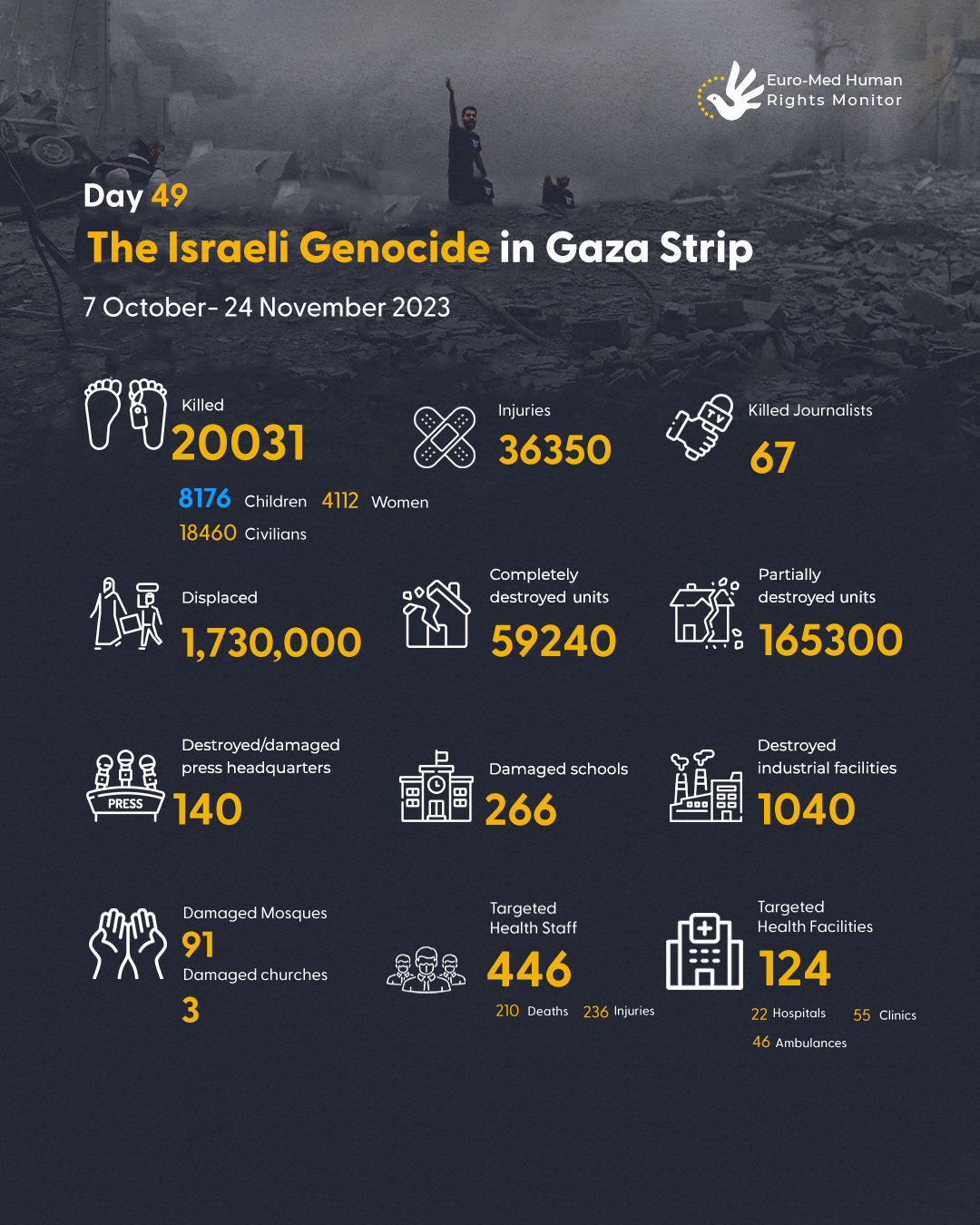
The International Atomic Energy Agency (IAEA) at COP 28. – let’s call it what it really is – a nuclear marketing company

IAEA Director General Rafael Grossi was at a COP28 event on 1 December 2023 in Dubai. He kicked off the nuke lobby push the IAEA Statement on Nuclear Power as a climate solution .
This slimy, silver-tongued propagandist is adept at couching the nuclear push in mealy-mouthed weasel words that are blandly acceptable to the public. The mantra will be “making use of all low-carbon energy sources”. The theme will be nuclear-not as the major star of climate action, but “part of the energy mix”, – and of course – requiring tax-payer funding.

You’ve got to hand it to Grossi – a master at deceptive language . He will cover himself, mouthing some concerns about proliferation, about the safety of the Zaporizhzhia Nuclear Power Station, but his essential message is that nuclear is safe, clean, and deserves government funding. He minimises nuclear power’s history of accidents.
This UN agency wields huge influence internationally. It was set up – post the Hiroshima bombing, to make the nuclear industry look good.
At the climate summit The UK and USA governments eagerly jumped on the bandwagon, pushing for a tripling of nuclear power by 2050. Another 20 governments joined the push, but 179 other governments did not.
The sad reality is – that Mr Grossi and all these currently powerful politicians do not know how to cope with the obscene costs and horror of scrapping the world’s old toxic crumbling nuclear facilities . So forf thdem, their best option is to push on with the nuclear madness.
After all, they’ll soon retire on their fat superannuations, and leave the next generation with this horrible problem in a heated world.
A damning new report on the present and future of nuclear power

Nuclear who? https://www.pv-magazine.com/2023/12/06/nuclear-who/
Authors of the “World Nuclear Industry Status Report 2023” define the future role of nuclear energy in the global energy mix as “irrelevant” and “marginal.” The authors add that there were 407 operational reactors producing 365 GW in the middle of the year, which is less than installed capacity predictions for solar by the end of the year.
DECEMBER 6, 2023 ANGELA SKUJINS AND EMILIANO BELLINI
The “World Nuclear Industry Status Report 2023” overseen by French nuclear energy consultant Mycle Schneider shows that despite the significant global presence of the nuclear industry, which produced 2,545 TWh of energy last year, the sector is shrinking, with renewables looming large due to cheap costs and popularity.
Schneider told pv magazine that as costs between solar and nuclear continue to widen PV continues to come out on top.
“In the longer term, soft costs determine solar electricity prices and their key factor is the density of installations,” he said.
“This is no doubt the main reason why China was able to add over two-thirds of its gigantic 85 GW 2022 solar additions as decentralized, mainly rooftop, installations, systematically implementing programs through entire counties thus super high density of projects.”
Diverging LCOEs
Schneider said the levelized cost of electricity (LCOE) for solar and wind projects is lower than nuclear. He cited 2022 data collected by US-based Lazard showing the LCOE for combined solar and wind can be $45–130/MWh which is well below nuclear’s estimated mean of $180/MWh.
Schneider said there has only been one nuclear reactor construction license awarded in the United States, given to the NuScale with Utah Associated Municipal Power Systems (UAMPS), but operations were terminated in November as the project “did not identify enough subscribers for the projected power output at the projected price.”
“Estimated construction costs, long before construction starts, as the design has not been certified yet by the safety authorities hit $20,000/kW, which is about twice the cost estimate of the most expensive European pressurized reactors (EPRs) in Europe,” he said.
Schneider said fourth-generation reactors, described as “PowerPoint Reactors”, would not be able to compete with renewables as they “hardly exist on the drawing board” and have not been certified by licensing authorities.
“How can we discuss potential competitiveness if there is no design, no existing fuel chain, no safety analysis?” he said. “However, these ideas are decades away from implementation at any scale if ever. Many of these conceptual ideas, like fast neutron reactors or molten salt reactors, have been talked about for decades. The probability that they will ever exist is shrinking with the widening cost gap of existing designs with renewables.”
New reactors
Schneider said renewable energy and nuclear energy will never be complementary energy sources. He used Olkiluoto-3, the first European enterprise resource planning project, as an example. The nuclear facility had “hardly” started commercial operations in April 2023 when its output was reduced in May due to unprofitable wholesale market energy prices. It could not compete with the flexibility of renewables, Schneider said.
“Increasing penetration of variable renewables like wind and solar need fine-tuned, flexible, complementary elements like demand-response, storage, efficiency, sufficiency, hydro, and biomass,” he said. “Nuclear power needs to run as many hours as possible to amortize the huge upfront investment.”
Schneider said wind and solar technologies work well together and can produce a large chunk of the energy grid’s base load. Not only this, he said, but they also “eat” into nuclear’s profitability. “There are many systemic characteristics that clearly illustrate that not only are renewables and nuclear not complementary but they are increasingly contradictory as renewables increase their share,” Schneider said.
What is in the “World Nuclear Industry Status Report 2023”
The report states that renewable technologies – consisting of solar, hydropower, and wind – are the main area of “optimism” for energy security. “Nuclear power remains, at best marginal and all too often irrelevant to the challenges ahead,” the document reads.
The report also states last year and this year were pivotal for examining and improving the international energy sector. Insecurities exposed by the Ukraine war and the climate emergency forced countries to develop new industrial and economic strategies to strengthen domestic supply chains and manufacturing.
As a result, solar’s total installed capacity at the end of 2022 reached 1,047 GW. The industry increased its annual production at an “unprecedented” speed, with an annual production of 1,309 TW/h. In more than a decade the LCOE for utility-scale solar projects has decreased by 83% but rose by 47% for nuclear, meaning that nuclear power is “the most expensive generator.”
“Aside from natural gas peaking plants at discount rates of less than 5.4 percent, nuclear turned out always the most expensive resource on an LCOE basis,” the analysts said. “The growth of renewable energy is now not only outcompeting nuclear power but is rapidly overtaking fossil fuels and has become the source of economic choice for new generation.”
Nuclear fleet
Global energy power generation for nuclear dropped by 4% last year, according to the report. This is despite a net addition of 4.3 GW in operating nuclear power capacity and four reactors being decommissioned.
As of the end of June, however, 58 new reactors were under construction, which is five more reactors than last year, the document states. The share of the nuclear global commercial gross electricity generation fell to 9%, which, according to the report authors, is the largest dip since 2012 – the year following the major Fukushima nuclear accident.
“At the end of 2022, the nominal net nuclear electricity generating capacity had peaked at 368 GW, two having added 5.3 GW during the year, 1 GW more than the previous 2006 record of 367 GW, but it dropped again to 364.9 GW by mid-2023,” the authors of the report stressed.
They also explained that at the end of June, 407 operational reactors in 32 countries produced 365 GW. This is less than the 413 GW of installed solar capacity expected to be reached by the end of 2023, according to forecasts provided by New York-based research firm BloombergNEF.
Construction time
Reactor construction times now average six years, which is a drop since last year, the report states. Despite the expedited process, however, other challenges loom, such as year-long delays, “lengthy” licensing procedures, complex financing negotiations and site preparations.
China is developing the most new nuclear facilities, clocking in 39 from 2012 to 2021. The country also deployed the only SMRs in 2023: the twin-High Temperature Gas Cooled Reactor units, according to the report. But the authors write they were subject to a “historical pattern of cost escalations and time overruns,” meaning it will be “less likely” for SMRs to be commercialized in the future
“Despite optimistic numerical targets for expansion, the proposed role for nuclear power in a decarbonized world faces continued competitive pressures on both cost and technical capabilities,” according to the report.
“This includes the economics of operating reactors and the funding of new ones.”
Nuclear lobby gets EU approval as ‘strategic net-zero’ technology: its next battle is to get EU funding

EU countries reinstate nuclear among ‘strategic’ net-zero technologies
By Paul Messad | EURACTIV.fr | translated by Daniel Eck 8 Dec 23
Following in the footsteps of the European Parliament last month, EU member states in the Council have also included nuclear energy alongside renewables among the technologies promoted by the EU’s Net-Zero Industry Act (NZIA).
…………………….As a result, nuclear power will benefit from streamlined licensing procedures: a one-stop-shop in each EU country and full digitisation of procedures to ensure that authorisations can be obtained within nine to 12 months………………..
France and eight other EU countries – Bulgaria, Croatia, Czechia, Hungary, Poland, Romania, Slovakia and Slovenia – submitted a joint declaration before the meeting reiterating the importance of supporting nuclear power and its financing at the EU level.
On the German side, the pill is harder to swallow…………………
As for other nuclear technologies that are not on the list of “strategic” technologies, these have been retained as “net zero” technologies and, as such, enjoy certain advantages.
Next battle: Financing
The key remaining battle now for pro-nuclear countries is to secure financing at EU level.
“Technological neutrality must also apply to financing,” French Industry Minister Roland Lescure told the Council, even though the NZIA “is not a financing text but a regulatory text,” as his office pointed out.
Indeed, “there are no financial provisions in the text, except that it does not contain any financial provisions, which Germany was keen to point out,” Lescure’s office added.
Germany, meanwhile, is leading the opposition.
“EU funds cannot be used for technologies that are not supported by all member states,” Giegold said. “It was, therefore, crucial for us to exclude funding issues from the NZIA and to leave existing European rules untouched,” he added.
The NZIA will, therefore, have no impact on whether or not EU funds can finance nuclear power or not.
But according to Lescure’s office, the status quo on this point is not a problem for now. Indeed, the door is still open for nuclear technologies to be financed by the European Investment Bank (EIB) and other upcoming EU funds, possibly the Strategic Technologies for Europe (STEP) platform for example, which is currently under discusssion.
“EU funds that do not finance nuclear power should do so in the future,” said a declaration adopted in July by the French-led Nuclear Alliance of 14 EU countries, which called for “impartiality” between nuclear power and renewables when it comes to EU funding.
In addition, the European Parliament’s position proposes that 25% of the revenues from the EU carbon market should be earmarked for financing the technologies listed in the NZIA.
The Council did not take up this possibility, which will be discussed at the forthcoming trilogue talks scheduled on 13 December.
“We can now begin negotiations and complete them before the European elections,” said Christian Ehler, Parliament’s rapporteur on the NZIA, on X.
[Edited by Frédéric Simon/Alice Taylor]
‘Israel-Hamas War’ Label Obscures Israel’s War on Palestinians

FAIR, GREGORY SHUPAK 8 Dec 23
Since October 7, the day the escalation in Israel/Palestine began (FAIR.org, 10/13/23), American media outlets have persistently described the fighting as an “Israel-Hamas war.” From October 7 through midday on December 1, the New York Times, Wall Street Journal and Washington Post have combined to run 565 pieces that use the phrase “Israel-Hamas war.”
This paradigm has been a dominant way of covering the violence, even though Israel has been clear from the start that its assault has not been narrowly aimed at Hamas. At the outset of the Israeli onslaught, Israeli Defense Minister Yoav Gallant (Times of Israel, 10/9/23) said: “I have ordered a complete siege on the Gaza Strip. There will be no electricity, no food, no fuel, everything is closed.” Oxfam later said that such restrictions on Palestinians’ ability to eat—which left 2.2 million people “in urgent need of food”—mean that Israel is deploying a policy wherein “starvation is being used as a weapon of war against Gaza civilians.”
A day later, Israeli military spokesperson Adm. Daniel Hagari (Guardian, 10/10/23) said that “hundreds of tons of bombs” had already been dropped on the Gaza Strip, and admitted that “the emphasis is on damage and not on accuracy.”
The indiscriminate nature of Israel’s assault is clear. The United Nations Office for the Coordination of Humanitarian Affairs reported on November 24 that “over 1.7 million people in Gaza, or nearly 80% of the population, are estimated to be internally displaced.” On November 25, the Swiss-based Euro-Mediterranean Human Rights Monitor reported that Israel had killed 20,031 Palestinians in Gaza, 18,460 of whom (or 92%) were civilians, since October 7.
Thus, while Israel has openly acknowledged that it is carrying out indiscriminate violence against Palestinians, US media outlets do Israel the favor of presenting its campaign as if it were only aimed at combatants. “Israel-Gaza war” comes closer to capturing the reality that Israel’s offensive is effectively against everyone living in Gaza. Yet “Israel-Gaza war” appears in 265 pieces in the three papers, exactly 300 fewer than the obfuscatory “Israel-Hamas war.”
Consider also the Euro-Mediterranean Human Rights Monitor finding that Israel has slaughtered 8,176 children. If 41% of all the Palestinians Israel has killed in the first seven weeks of its rampage have been children, and 8% have been combatants, then it is less an “Israel-Hamas war” than an Israeli war on Palestinian children.
Characterizing what has happened since October 7 as an “Israel-Hamas war” fails to adequately capture the scope and the character of Israel’s violence. Describing the bloodbath in Palestine this way obscures that grave violence is being visited upon virtually all Palestinians, whatever their political allegiances and whatever their relation to the fighting.
Cognitive dissonance
Corporate media have often stuck to the “Israel-Hamas war” approach even when the information the outlets are reporting shows how inadequate it is to conceive of Israel’s attacks in that way. For instance, the New York Times (10/20/23) ran a story about Israel ordering 1.2 million Gaza residents to evacuate their homes, and still classified the evacuation as part of the “Israel-Hamas war.” The Izz ad-Din al-Qassam Brigades, Hamas’ armed wing, is estimated to have 30,000–40,000 fighters (Axios, 10/21/23).
The Wall Street Journal published a short piece (11/6/23) that noted:
The United Nations said that the Israel-Hamas war has killed the highest number of UN workers in any single conflict. The UN said that over 88 workers in its Relief and Works Agency [UNRWA], the largest humanitarian organization in the Gaza Strip, have been killed since October 7.
But UNRWA did not itself use the “Israel-Hamas war” narrative in the report to which the Journal referred, instead opting for “escalation in the Gaza Strip.” Indeed, Israel killing UN workers at a rate of almost three each day would seem to fall outside the bounds of an “Israel-Hamas war,” but that’s how the paper categorizes the violence. (“Israel’s war on the UN” falls well outside the bounds of the ideologically permissible in the corporate media.)……………………………… more https://fair.org/home/israel-hamas-war-label-obscures-israels-war-on-palestinians/
UK preparing to push Ukraine toward peace talks – media
https://www.rt.com/news/588565-uk-ukraine-peace-talks/ 6 Dec 23
The West is reportedly disappointed with Kiev’s failed counteroffensive and doubts its ability to score a victory against Russia
British diplomats may soon start to put pressure on Ukraine to hold peace negotiations with Russia, Politico’s UK editor has suggested, citing “chatter” in diplomatic circles. Wider media reports suggest that the West has grown concerned at Kiev’s ability to score a battlefield victory.
Speaking on Monday on the latest episode of the ‘Politics at Jack and Sam’s’ podcast, Jack Blanchard noted that “Ukraine’s big counteroffensive was not anything like the success people hoped, and that is raising big questions about Ukraine’s ability to win this war in any meaningful military way.”
In light of this, Blanchard claimed that there are rumors in British “diplomatic circles” about “putting pressure on Kiev to sit down and negotiate.”
His comments come on the heels of a Washington Post article claiming that Ukraine ignored a counteroffensive strategy devised by American and British officers that recommended a focused attack on a single sector of frontline in April, and that it chose to delay the operation until June, and to spread its forces along multiple axes.
“Nothing went as planned,” the Post stated, adding that Ukraine’s insistence on following its own tactics and timeline generated “friction and second-guessing between Washington and Kiev.”
According to the latest figures from the Russian Defense Ministry, Ukraine has lost 125,000 service personnel and 16,000 pieces of heavy equipment in the six months since its counteroffensive began.
Blanchard is not the first journalist to claim that Kiev’s patrons are ready to push for peace. Last month, German tabloid Bild alleged that the US and Germany are rationing their weapons deliveries to Ukraine in a bid to nudge Ukrainian President Vladimir Zelensky into talks with Russia, without explicitly asking him.
The US State Department dismissed Bild’s report, with spokesman James O’Brien stating that the decision of when to sue for peace “is a matter for Ukraine to decide.”
Speaking at the Halifax Security Forum in Canada several days before that report was published, Aleksey Danilov, the secretary of Ukraine’s National Security and Defense Council, said that “Ukraine is concerned by the fact that discussions among certain partners have intensified regarding the need for negotiations…with the Russians.”
Danilov insisted, like Zelensky repeatedly has since the start of the conflict, that “Ukraine and the Ukrainian people will fight to the end. We are sure of our victory.”
Not a Penny Nor a Bullet Off the Table

Hundreds more civilians have been slaughtered since Blinken’s remarks. In other words, Israel ignored him. As long as it’s only talk, Israel can afford to.
So far not one bullet, nor one penny has been withheld from Netanyahu’s vicious regime
The U.S. vice president, secretary of state and defense secretary are using unusually blunt language against Israel’s massacres of Palestinians. But the money and weapons keep flowing, says Joe Lauria.
By Joe Lauria / Consortium News, December 8, 2023,,
more https://scheerpost.com/2023/12/08/not-a-penny-nor-a-bullet-off-the-table/
In the midst of an Old Testament-style genocide against the Palestinian people, there is a paraphrased line from the Book of Daniel that has come into full view for the Biden administration: “The writing is on the wall.”
Everywhere in the U.S. that prominent administration officials go, they are hearing it from a public increasingly alarmed about their complicity in genocide. It is not criticism they can easily ignore.
For one thing, if they have a shred of conscience left they cannot avoid seeing that Israel’s military campaign is “deliberately inflicting on the group [Gazans] conditions of life calculated to bring about its physical destruction in whole or in part,” as the Convention on the Prevention and Punishment of the Crime of Genocide defines the supreme crime.
But even if their hearts are stones, political warnings are scratched on the wall in a fast-approaching presidential election in which increasing numbers of Democrats are affixing “genocide” to Biden’s first name.
Thus Biden, though not Biden himself, was spurred in the past few days to dispatch his top deputies to deliver the sternest message to Israel.
At the climate summit in Dubai on Saturday, Vice President Kamala Harris told a press conference: “The United States is unequivocal: International humanitarian law must be respected. Too many innocent Palestinians have been killed.”
On the same day Harris spoke, in what appears to have been coordinated by the White House, Defense Secretary Lloyd Austin said in a speech at the Reagan National Defense Forum in Simi Valley, CA, that, “I have repeatedly made clear to Israel’s leaders that protecting Palestinian civilians in Gaza is both a moral responsibility and strategic imperative.”
“In this kind of a fight, the center of gravity is the civilian population,” Austin said. “And if you drive them into the arms of the enemy, you replace a tactical victory with a strategic defeat.” Even then, Austin couched his remarks in military and not moral terms. Still the message was clear to Israel: Stop killing so many civilians.
Harris’s and Austin’s remarks followed by two days comments by Secretary of State Antony Blinken during his third jaunt to Jerusalem since Oct. 7.
After meeting Israeli Prime Minister Benjamin Netanyahu, Blinken told the press:
“We discussed the details of Israel’s ongoing planning and I underscored the imperative for the United States that the massive loss of civilian life and displacement of the scale that we saw in northern Gaza not be repeated in the South. …
As I told the prime minister, intent matters, but so does the result. … Israel has one of the most sophisticated militaries in the world. It is capable of neutralising the threat posed by Hamas, while minimising harm to innocent men, women and children. …
That means taking more effective steps to protect the lives of civilians, including by clearly and precisely designating areas and places in southern and central Gaza, where they can be safe and out of the line of fire.”
Israel responded with some maps supposedly outlining safe areas for civilians to go to. But the bombing in the south of Gaza, where 1.8 million Gazans are displaced from the north, has been among the most intense in two months of Israeli attacks.
Hundreds more civilians have been slaughtered since Blinken’s remarks. In other words, Israel ignored him. As long as it’s only talk, Israel can afford to.
An unconfirmed report from Israel’s Channel 12 following Blinken’s meeting with Netanyahu said the secretary of state supposedly “linked American military support to certain conditions, including proof that the I.D.F. plans to take into consideration the civilian population in Gaza, reduce civilian evacuations from their homes to a minimum, and provide more safe areas for non-combatants.”
Leverage
On Monday, Sen. Bernie Sanders, a Biden ally, said according to the AP: “’The truth is that if asking nicely worked, we wouldn’t be in the position we are today,’ Sanders said in a floor speech. It was time for the United States to use its ‘substantial leverage’ with its ally, the Vermont senator said. ‘And we all know what that leverage is,’ he said, adding, ‘the blank-check approach must end.’”
Until such leverage is used — and Washington has let two months go by with more than 16,000 dead, 7,000 missing and 40,000 injured — these are mere words.
Such talk from these Biden officials and allies will not fool many people, except for fools, and will not scare Netanyahu.
So far not one bullet, nor one penny has been withheld from Netanyahu’s vicious regime.

This is Biden’s quandry: continue to support Israel’s genocide and see his poll numbers continue to plummet. The dilemma he must answer is: what would damage him more, sticking with Israel through its murderous campaign or risk the Israel Lobby’s consummate skill at destroying American politicians?
On Nov. 5, 2024, American voters will weigh Biden in the balance and, as Daniel told King Belshazzar, he may be found wanting.
 | |||
| |||
Digital Rights Groups Urge Meta to Stop Silencing Palestine

SCHEERPOST, By Jillian C. York / Electronic Frontier Foundation (EFF), December 8, 2023
In the wake of the October 7 attack on Israel and the ensuing backlash on Palestine, Meta has engaged in unjustified content and account takedowns on its social media platforms. This has suppressed the voices of journalists, human rights defenders, and many others concerned or directly affected by the war.
This is not the first instance of biased moderation of content related to Palestine and the broader MENA region. EFF has documented numerous instances over the past decade in which platforms have seemingly turned their backs on critical voices in the region. In 2021, when Israel was forcibly evicting Palestinian families from their homes in Jerusalem, international digital and human rights groups including EFF partnered in a campaign to hold Meta to account. These demands were backed by prominent signatories, and later echoed by Meta’s Oversight Board.
The campaign—along with other advocacy efforts—led to Meta agreeing to an independent review of its content moderation activities in Israel and Palestine, published in October 2022 by BSR. The BSR audit was a welcome development in response to our original demands; however, we are yet to see its recommendations fully implemented in Meta’s policies and practices.
The rest of our demands went unmet. Therefore, in the context of the current crackdown on pro-Palestinian voices, EFF and 17 other digital and human rights organizations are issuing an updated set of demands to ensure that Meta considers the impact of its policies and content moderation practices on Palestinians, and takes serious action to ensure that its content interventions are fair, balanced, and consistent with the Santa Clara Principles on Transparency and Accountability in Content Moderation.
Why it matters
The campaign is crucial for many reasons ranging from respect for free speech and equality to prevention of violence.
Free public discourse plays an important role in global conflicts in that it has the ability to affect the decision making of those occupying decisive positions. Dissemination of information and public opinion can reflect the majority opinion and can build the necessary pressure on individuals in positions of power to make democratic and humane decisions. Borderless platforms like Meta, therefore, have colossal power to shape narratives across the globe. In order to reflect a true picture of the majority public opinion, it is essential that these platforms allow for a level playing field for all sides of a conflict.
These leviathan platforms have the power and responsibility to refuse to succumb to unjustifiable government demands intended to skew the discourse in favor of the latter’s geopolitical and economic interests. There is already a significant imbalance between the government of Israel and the Palestinian people, particularly in their economic and geopolitical influence. Adding to that, suppression of information coming out of or about the weaker party has the potential to aid and abet further suffering.
……………………….. According to some estimates over 90% of pro-Palestinian content has been deleted following Israel’s requests since October 7………………………………………… more https://scheerpost.com/2023/12/08/digital-rights-groups-urge-meta-to-stop-silencing-palestine/
At Cop 28, 20-plus countries pledge to triple the world’s nuclear energy by 2050
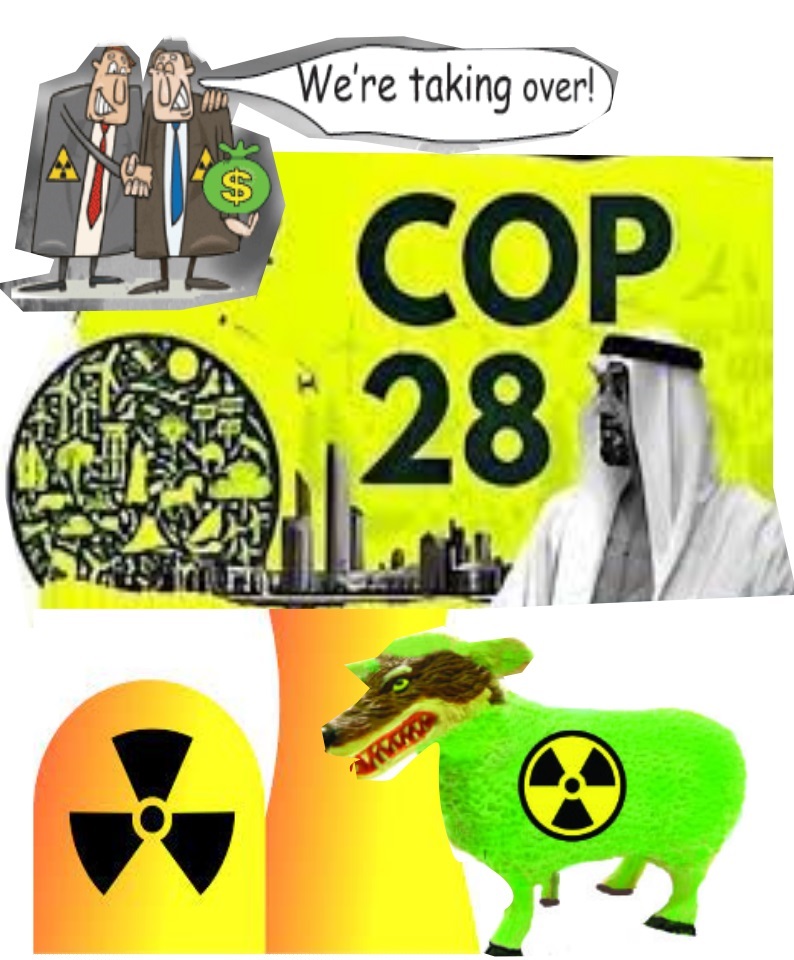
At COP28, many major players are banding together to plan a big ramp-up of nuclear power. But without China’s help, is the target realistic?
COP28 might be remembered as the “nuclear COP.”
More than 20 countries including the U.S., France, Japan and the United Kingdom have pledged to triple global nuclear energy generation by 2050 at the launch of COP28 in Dubai in the United Arab Emirates, the world’s annual climate summit.
John Kerry, former U.S. secretary of state and President Biden’s climate envoy, made the case for nuclear energy during the event’s launch ceremonies, saying that the science has proven “you can’t get to net-zero 2050 without some nuclear.”
While there are important methane, climate-finance and environmental-justice initiatives being hammered out at the conference, the nuclear goal stands out as a bit of a policy departure compared to previous COP meetings. Nuclear has received little attention at past COPs due to its cost challenges and lingering controversies surrounding its safety and other issues.
There’s another reason for this being considered the nuclear COP: The United Arab Emirates, COP28’s host, is on the verge of completing the second nuclear facility in the Middle East, which will provide one-quarter of the country’s electricity. Construction on the power plant began in 2012, and the last of its four 1.4-gigawatt reactors at the Barakah Nuclear Energy Plant has just received its operating license from regulators.
The leaders spearheading COP28’s ramped-up nuclear targets are heeding the prescriptions set forth in many major climate-change models, including the International Energy Agency’s, which call for massive growth in global nuclear energy capacity in order to have a chance of meeting net-zero goals and keeping global warming in check. (However, there are certainly opposing models showing a path to zero emissions without a significant scale-up of nuclear power.)
Today’s global fleet of approximately 440 nuclear reactors has a combined capacity of around 400 gigawatts — enough that nuclear energy provides about 10 percent of the world’s power. But less than a paltry 4 gigawatts of nuclear energy has been connected to the grid in 2023. The global solar industry is forecast to install more than 400 gigawatts of capacity in 2023 alone.
The goal of tripling the world’s nuclear output would require deploying an average of 40 gigawatts of nuclear power every year through 2050, according to the World Nuclear Association. (My back-of-the-envelope calculations point to an even higher number if replacing existing aged-out equipment is included in the mix.)
The COP28 declaration includes language about nuclear’s contribution in keeping a 1.5°C limit on temperature rise within reach and its energy-security benefits, as well as the claim that paring down the world’s nuclear power would make reaching net zero more difficult and costly. Nuclear’s potential role in hard-to-abate sectors such as hydrogen production and petrochemical processing is also highlighted.
The pledge also asks the signees to consider smaller and more innovative reactor designs in their grid planning and makes an appeal that they continue to maintain the existing reactor fleet, extending its lifetime if feasible and safe.
Over the past few decades, the hefty price tag of building nuclear plants has been the industry’s Achilles’ heel. This poses particular challenges in market-based economies, where periods of high interest rates and inflation threaten the viability of mega projects, be they offshore wind, high-speed rail — or nuclear reactors.
Importantly, the COP28 declaration looks to address some of these financial flaws and invites the World Bank and other regional and international banks to include nuclear energy in their lending policies.
Ironically absent from the pool of signees is China, the only country with any real chance of meeting the COP goal. China aims to double its nuclear energy capacity by 2035 and is well on its way; as of this year, 22 nuclear plants are under construction in China with more than 70 planned.
But while the U.S. saw its first newly built nuclear reactor in decades reach commercial operation this year in Vogtle 3 and could see Vogtle 4 go online next year, you’d be hard-pressed to find an American nuclear expert willing to predict when the next reactor will be up and running.
Confronting climate change requires bold, large-scale action — and tripling nuclear generation certainly qualifies in that regard. But before overestimating the influence or significance of the COP28 nuclear pledge, I would challenge you to name COP27’s or COP26’s theme.
Still, government agencies such as the U.S. Office of Nuclear Energy and a growing team of young influencers are understandably enthusiastic about nuclear’s spotlight and the aspirational growth targets unveiled at COP28. Perhaps the emphasis on nuclear at this year’s meeting reinforces the idea that we’re in the midst of a generational shift in sentiment about atomic power.
Cancelled NuScale contract weighs heavy on new nuclear

Reuters Events, By Paul Day Dec 7, 2023
The failure of a high profile small modular reactor (SMR) contract in the United States has prompted concerns that Gen IV nuclear may be further off than expected.
NuScale, the first new nuclear company to receive a design certificate from the Nuclear Regulatory Commission (NRC) for its 77 MW Power Module SMR, said in November it was terminating its Carbon Free Power Project (CFPP) with the Utah Associated Municipal Power Systems (UAMPS).
UAMPS serves 50 community-owned power utilities in the Western United States and the CFPP, for which the Department of Energy approved $1.35 billion over 10 years subject to appropriations, was abandoned after the project failed to attract enough subscriptions.
NuScale shares tumbled 37% to less than $2 on the day of the news, Nov. 8, though that had largely been recovered by the end of the month. The early December share price of $3.1, however, is a long way from highs of nearly $15 in August 2022 just three months after going public.
The CFPP had aimed to build NuScale SMR units at a site near Idaho Falls to be operable by 2029 though concerns arose that some at UAMPS members may be unwilling to pay for power from the project after NuScale raised the target price to $89/MWh from a previous estimate of $58 MW/h in January.
The cancellation came shortly after another advanced reactor developer, X-Energy and special purpose acquisition company Ares Acquisition Corporation, called off a $1.8-billion deal to go public citing “challenging market conditions (and) peer company trading performance.”
The work with UAMPS had helped advance NuSCale’s technology to the stage of commercial deployment, President and CEO John Hopkins said.
However, the failure of the much-anticipated proof case for advanced nuclear alongside the X-Energy market retreat left many questioning whether next generation nuclear could live up to its promises.
“Almost all these kinds of MoUs and contracts, as we saw with the NuScale contract, are just not worth the paper they’re written on. There are so many off ramps and outs for both sides and no one’s willing to expose themselves to the downside risk of projects that go way over budget cost and take too long,” says Founder and Executive Director of The Breakthrough Institute Ted Nordhaus.
Nordhaus co-wrote a piece for The Breakthrough Institute, ‘Advanced Nuclear Energy is in Trouble’, a scathing criticism of policy efforts to commercialize advanced nuclear which, it says, to date have been entirely insufficient.
The nuclear industry was keen to ‘whistle past the graveyard’ of recent developments and efforts to commercialize the new generation of reactors ‘are simply not on track’, the Breakthrough piece said.
Mounting challenges
There are five areas that pose mounting challenges for the industry, according to Breakthrough; high interest rates and commodity prices, constrained supply chains, a regulatory regime that penalizes innovation, project costs versus system costs, and fuel production.
High interest rate and commodity costs in the last couple of years have hit the industry especially hard due to long project lead times. Nuclear supply chains struggle to rebuild as tight regulation forces many materials to be tracked from certified mine to certified manufacturer………………………………………………………………..
new nuclear has not been attracting the cash it needs. That’s partly due to developers’ lack of focus on development activities, according to Fiona Reilly, CEO of energy consultancy FiRe Energy……………….
The NuScale failure with UAMPS and X-Energy’s cancelled offering are just further bad signs for the market, especially when, at the same time these projects are announcing problems, the international nuclear community is in Dubai during COP28 saying they need to triple capacity by 2050……..
“You can’t set targets like these when we’re not even building the first reactors in many countries.” https://www.reutersevents.com/nuclear/cancelled-nuscale-contract-weighs-heavy-new-nuclear?utm_campaign=NEI%2007DEC23%20NEI%20Database%20A&utm_medium=email&u
The Guardian view on Sellafield scandals: ministers must put public safety before secrecy

Editorial https://www.theguardian.com/commentisfree/2023/dec/07/the-guardian-view-on-sellafield-scandals-ministers-must-put-public-safety-before-secrecy
Effective governance of Britain’s nuclear industry is critical to saving a hazardous industry from itself
There will be many reasons why Britain’s energy secretary, Claire Coutinho, went public with her unease about “serious and concerning” allegations raised by the Guardian this week over cybersecurity, site safety and a “toxic” workplace culture in Sellafield. There was the “longstanding nature” of the matters in question, raising questions over the site’s management. Neighbouring governments have had serious concerns. The plant holds enough plutonium to potentially make thousands of atomic bombs of the size that obliterated Japan’s Nagasaki in 1945. By asking for assurances from its state-controlled owner and its regulator, Ms Coutinho emphasises that effective governance of Britain’s nuclear industry is a critical issue.
This is a sensible response to these scandals. The cabinet minister is right to publicise her concerns about a hazardous industry that can inflict catastrophic environmental damage and deaths. She has sent a helpful signal about valuing public safety over secrecy. Sellafield in Cumbria, and about 20 smaller sites, need to be monitored and protected, as the waste stored can remain radioactive for tens of thousands of years. Yet the nuclear establishment is at best opaque. Britain’s postwar development of nuclear weapons grew alongside the construction of nuclear energy reactors. The industry’s military connections have influenced its approaches to corporate governance for the worse.
There is an urgent problem of nuclear waste disposal. Britain was one of the first economies to generate nuclear energy. But that meant radioactive waste has been left for decades without a permanent storage solution. This has seen the cost of temporary storage soar and the risk of catastrophe increase. Sellafield is one of the most dangerous places in the world, a notoriety bolstered by crumbling buildings and tanks leaking irradiated sludge. It is no stranger to trouble, going as far as changing its name to distance itself from being the site of one of history’s worst nuclear accidents in 1957.
The consensus today for an enduring answer is to bury nuclear waste deep underground in “geological disposal facilities”. Finland will open one next year. Its spent nuclear fuel will be packed in copper canisters, and these entombed in the bedrock on the Gulf of Bothnia at a depth of 400m. France and Sweden are pursuing similar schemes. Britain has homed in on three sites, but finding an area willing to host a £53bn underground dump is not easy, given public safety concerns.
It would be better to have cheap, green energy that doesn’t create toxic waste. But demand for electricity is growing, and – without the battery technology to effectively store energy – this will have to be met at times when there is no sun or wind. Hence countries aim to use nuclear energy to try to cut fossil fuel dependence. But, say experts, ambitious government targets for more nuclear power stations could see Britain run out of room to store the radioactive waste produced. Opportunities arise too. Half of the world’s 420 nuclear reactors will need dismantling by 2050. Sellafield is at the heart of a billion-pound UK decommissioning industry. Its expertise could be sold worldwide. But that relies on a reputation for safety and competence, something that Ms Coutinho’s intervention doubtless seeks to salvage.
‘Spotlight on nuclear power’ – a questionable proposition
With five days left at COP28, the jury is still out on whether this
year’s UN climate talks will achieve real progress to address climate
change. But one thing is clear: the spotlight is on nuclear power. The (so-called)
low-carbon fuel has received an unprecedented amount of attention at this
year’s gathering, with nearly two dozen countries including the US, UK,
and United Arab Emirates signing a declaration over the weekend to triple
nuclear energy by mid-century.
Whether the world can deliver on these
nuclear promises is questionable — the sector is notorious for high
construction costs and lengthy project timelines, not to mention hazardous
waste. Despite the hype around the fuel in recent years, global nuclear
power generation declined 4 per cent year over year in 2022 to its lowest
level in four decades, according to a new World Nuclear Industry report,
calling the COP28 target “highly unrealistic”.
FT 7th Dec 2023
https://www.ft.com/content/bc486d67-8f92-46b3-9072-f0357d7f0336
Washington Post whitewashes the Ukraine debacle: ‘Miscalculations, divisions marked offensive planning by U.S., Ukraine’

U.S. intelligence officials, skeptical of the Pentagon’s enthusiasm, assessed the likelihood of success at no better than 50-50
Comment: Once more for those in the back:
- People Power! 95.7% of Crimeans vote to join Russia in preliminary results
- 95% of Crimea has no regrets reuniting with Russia – poll
In all, Ukraine has retaken only about 200 square miles of territory, at a cost of thousands of dead and wounded and billions in Western military aid in 2023 alone.
SOTT, Washington Post, Mon, 04 Dec 2023
Comment: The WaPo has put an enormous amount of resources into lipsticking this pig (2 parts!) and absolving the U.S., as best it could, of any blame. “It was all Ukraine’s fault!”
A slog to be sure, but if you want to see a shining example of high-end weasel masquerading as historical record, go for it. If that thought is too exhausting, here’s a tl:dr of Part 1, courtesy of Moon of Alabama:
Key elements that shaped the counteroffensive and the initial outcome include:
- Ukrainian, U.S. and British military officers held eight major tabletop war games to build a campaign plan. But Washington miscalculated the extent to which Ukraine’s forces could be transformed into a Western-style fighting force in a short period — especially without giving Kyiv air power integral to modern militaries.
- U.S. and Ukrainian officials sharply disagreed at times over strategy, tactics and timing. The Pentagon wanted the assault to begin in mid-April to prevent Russia from continuing to strengthen its lines. The Ukrainians hesitated, insisting they weren’t ready without additional weapons and training.
- U.S. military officials were confident that a mechanized frontal attack on Russian lines was feasible with the troops and weapons that Ukraine had. The simulations concluded that Kyiv’s forces, in the best case, could reach the Sea of Azov and cut off Russian troops in the south in 60 to 90 days.
- The United States advocated a focused assault along that southern axis, but Ukraine’s leadership believed its forces had to attack at three distinct points along the 600-mile front, southward toward both Melitopol and Berdyansk on the Sea of Azov and east toward the embattled city of Bakhmut.
- The U.S. intelligence community had a more downbeat view than the U.S. military, assessing that the offensive had only a 50-50 chance of success given the stout, multilayered defenses Russia had built up over the winter and spring.
- Many in Ukraine and the West underestimated Russia’s ability to rebound from battlefield disasters and exploit its perennial strengths: manpower, mines and a willingness to sacrifice lives on a scale that few other countries can countenance.
- As the expected launch of the offensive approached, Ukrainian military officials feared they would suffer catastrophic losses — while American officials believed the toll would ultimately be higher without a decisive assault.
His summary of Part 2 is further below.
On June 15, in a conference room at NATO headquarters in Brussels, Defense Secretary Lloyd Austin, flanked by top U.S. commanders, sat around a table with his Ukrainian counterpart, who was joined by aides from Kyiv. The room was heavy with an air of frustration.
Austin, in his deliberate baritone, asked Ukrainian Defense Minister Oleksii Reznikov about Ukraine’s decision-making in the opening days of its long-awaited counteroffensive, pressing him on why his forces weren’t using Western-supplied mine-clearing equipment to enable a larger, mechanized assault, or using smoke to conceal their advances. Despite Russia’s thick defensive lines, Austin said, the Kremlin’s troops weren’t invincible. Reznikov, a bald, bespectacled lawyer, said Ukraine’s military commanders were the ones making those decisions. But he noted that Ukraine’s armored vehicles were being destroyed by Russian helicopters, drones and artillery with every attempt to advance. Without air support, he said, the only option was to use artillery to shell Russian lines, dismount from the targeted vehicles and proceed on foot.
“We can’t maneuver because of the land-mine density and tank ambushes,” Reznikov said, according to an official who was present.
2023.The meeting in Brussels, less than two weeks into the campaign, illustrates how a counteroffensive born in optimism has failed to deliver its expected punch, generating friction and second-guessing between Washington and Kyiv and raising deeper questions about Ukraine’s ability to retake decisive amounts of territory.
As winter approaches, and the front lines freeze into place, Ukraine’s most senior military officials acknowledge that the war has reached a stalemate.
This examination of the lead-up to Ukraine’s counteroffensive is based on interviews with more than 30 senior officials from Ukraine, the United States and European nations. It provides new insights and previously unreported details about America’s deep involvement in the military planning behind the counteroffensive and the factors that contributed to its disappointments. The second part of this two-part account examines how the battle unfolded on the ground over the summer and fall, and the widening fissures between Washington and Kyiv. Some of the officials spoke on the condition of anonymity to discuss sensitive deliberations.
Key elements that shaped the counteroffensive and the initial outcome include:
● Ukrainian, U.S. and British military officers held eight major tabletop war games to build a campaign plan. But Washington miscalculated the extent to which Ukraine’s forces could be transformed into a Western-style fighting force in a short period — especially without giving Kyiv air power integral to modern militaries.
● U.S. and Ukrainian officials sharply disagreed at times over strategy, tactics and timing. The Pentagon wanted the assault to begin in mid-April to prevent Russia from continuing to strengthen its lines. The Ukrainians hesitated, insisting they weren’t ready without additional weapons and training.
● U.S. military officials were confident that a mechanized frontal attack on Russian lines was feasible with the troops and weapons that Ukraine had. The simulations concluded that Kyiv’s forces, in the best case, could reach the Sea of Azov and cut off Russian troops in the south in 60 to 90 days.
● The United States advocated a focused assault along that southern axis, but Ukraine’s leadership believed its forces had to attack at three distinct points along the 600-mile front, southward toward both Melitopol and Berdyansk on the Sea of Azov and east toward the embattled city of Bakhmut.
● The U.S. intelligence community had a more downbeat view than the U.S. military, assessing that the offensive had only a 50-50 chance of success given the stout, multilayered defenses Russia had built up over the winter and spring.
● Many in Ukraine and the West underestimated Russia’s ability to rebound from battlefield disasters and exploit its perennial strengths: manpower, mines and a willingness to sacrifice lives on a scale that few other countries can countenance.
● As the expected launch of the offensive approached, Ukrainian military officials feared they would suffer catastrophic losses — while American officials believed the toll would ultimately be higher without a decisive assault…………………………………………………………………………………………
…………………………………………………. Can Ukraine win?
With the group agreeing that the United States and allies could provide what they believed were the supplies and training Ukraine needed, Sullivan faced the second part of the equation: Could Ukraine do it?
Zelensky, on the war’s first anniversary in February, had boasted that 2023 would be a “year of victory.”His intelligence chief had decreed that Ukrainians would soon be vacationing in Crimea, the peninsula that Russia had illegally annexed in 2014. But some in the U.S. government were less than confident.
U.S. intelligence officials, skeptical of the Pentagon’s enthusiasm, assessed the likelihood of success at no better than 50-50. The estimate frustrated their Defense Department counterparts…………
Two weeks after Sullivan and others briefed the president, a top-secret, updated intelligence report assessed that the challenges of massing troops, ammunition and equipment meant that Ukraine would probably fall “well short” of its counteroffensive goals……………………………………………………………………………………………………………………………………………………………………….
………………………………………………………………………………………………….. More troops, more weapons
Biden finally yielded in May and granted the required permission for European nations to donate their U.S.-made F-16s to Ukraine. But pilot training and delivery of the jets would take a year or more, far too long to make a difference in the coming fight.
Comment: The potential pilots had to be taught English before they could even begin any flight training . . . . .
Kyiv hesitates
………………………………………………………………………… Promised equipment was delivered late or arrived unfit for combat, the Ukrainians said. “A lot of weapons that are coming in now, they were relevant last year,” the senior Ukrainian military official said, not for the high-tech battles ahead. Crucially, he said, they had received only 15 percent of items — like the Mine Clearing Line Charge launchers (MCLCs) — needed to execute their plan to remotely cut passages through the minefields.
And yet, the senior Ukrainian military official recalled, the Americans were nagging about a delayed start and still complaining about how many troops Ukraine was devoting to Bakhmut……………………………………………………………………………………..
The counteroffensive finally lurched into motion in early June. Some Ukrainian units quickly notched small gains, recapturing Zaporizhzhia-region villages south of Velyka Novosilka, 80 miles from the Azov coast. But elsewhere, not even Western arms and training could fully shield Ukrainian forces from the punishing Russian firepower.
Part 2: In Ukraine, a war of incremental gains as counteroffensive stalls…………………………………….
……………………………………………… This account of how the counteroffensive unfolded is the second in a two-part series and illuminates the brutal and often futile attempts to breach Russian lines, as well as the widening rift between Ukrainian and U.S. commanders over tactics and strategy. The first article examined the Ukrainian and U.S. planning that went into the operation.
This second part is based on interviews with more than 30 senior Ukrainian and U.S. military officials, as well as over two dozen officers and troops on the front line. Some officials and soldiers spoke on the condition of anonymity to describe military operations…………………………………..
……………………. In all, Ukraine has retaken only about 200 square miles of territory, at a cost of thousands of dead and wounded and billions in Western military aid in 2023 alone.
Comment: Moon of Alabama then sums up the counteroffensive debacle:
Key findings from reporting on the campaign include:
- Seventy percent of troops in one of the brigades leading the counteroffensive, and equipped with the newest Western weapons, entered battle with no combat experience.
- Ukraine’s setbacks on the battlefield led to rifts with the United States over how best to cut through deep Russian defenses.
- The commander of U.S. forces in Europe couldn’t get in touch with Ukraine’s top commander for weeks in the early part of the campaign amid tension over the American’s second-guessing of battlefield decisions.
- Each side blamed the other for mistakes or miscalculations. U.S. military officials concluded that Ukraine had fallen short in basic military tactics, including the use of ground reconnaissance to understand the density of minefields. Ukrainian officials said the Americans didn’t seem to comprehend how attack drones and other technology had transformed the battlefield.
- In all, Ukraine has retaken only about 200 square miles of territory, at a cost of thousands of dead and wounded and billions in Western military aid in 2023 alone.
…………………………………………………………………………………………………………… By day four, Gen. Valery Zaluzhny, Ukraine’s top commander, had seen enough. Incinerated Western military hardware — American Bradleys, German Leopard tanks, mine-sweeping vehicles — littered the battlefield. The numbers of dead and wounded sapped morale.
……………………………………………………. Months of planning with the United States was tossed aside on that fourth day, and the already delayed counteroffensive, designed to reach the Sea of Azov within two to three months, ground to a near-halt. Rather than making a nine-mile breakthrough on their first day, the Ukrainians in the nearly six months since June have advanced about 12 miles and liberated a handful of villages. Melitopol is still far out of reach.
This account of how the counteroffensive unfolded is the second in a two-part series and illuminates the brutal and often futile attempts to breach Russian lines, as well as the widening rift between Ukrainian and U.S. commanders over tactics and strategy. The first article examined the Ukrainian and U.S. planning that went into the operation.
This second part is based on interviews with more than 30 senior Ukrainian and U.S. military officials, as well as over two dozen officers and troops on the front line. Some officials and soldiers spoke on the condition of anonymity to describe military operations.
Key findings from reporting on the campaign include:
………………………………………………………………….. In all, Ukraine has retaken only about 200 square miles of territory, at a cost of thousands of dead and wounded and billions in Western military aid in 2023 alone.
…………………………………………………………………………………………………………………….. Chaotic battlefield conditions
The 47th claimed the liberation of Robotyne on Aug. 28. Air assault units in Ukraine’s 10th Corps then moved in, but have been unable to liberate any other villages.
The front line has also grown static along the parallel drive in the south, where Ukrainian marines led the push toward the Azov Sea city of Berdyansk. After retaking the villages of Staromaiorske and Urozhaine in July and August, there have been no further gains, leaving Ukrainian forces far from both Berdyansk and Melitopol.
………………………………………………………………..The Ukrainians were insistent that the West simply wasn’t giving them the air power and other weapons needed for a combined arms strategy to succeed.
…………………………………………………………………………………… Reported by Michael Birnbaum, Karen DeYoung, Alex Horton, John Hudson, Isabelle Khurshudyan, Mary Ilyushina, Dan Lamothe, Greg Miller, Siobhan O’Grady, Kostiantyn Khudov, Serhii Korolchuk, Ellen Nakashima, Emily Rauhala, Missy Ryan and David L. Stern. https://www.sott.net/article/486691-WaPo-whitewashes-the-Ukraine-debacle-Miscalculations-divisions-marked-offensive-planning-by-U-S-Ukraine
Fund for Nuclear Waste Exposure Victims in Limbo as Congress Balks at Cost
Bipartisan efforts to extend and expand a program granting compensation to victims of government-caused nuclear contamination are faltering. It is set to expire in June.
By Catie Edmondson, Reporting from the Capitol, Dec. 8, 2023,
More than two decades ago, Congress declared that victims of government-caused nuclear contamination who developed cancer and other serious illnesses — including uranium miners and those exposed to radiation from Manhattan Project-era atomic tests — should receive federal compensation.
“The health of the individuals who were unwitting participants in these tests was put at risk to serve the national security interests of the United States,” read the law enacted in 1990. “The United States should recognize and assume responsibility for the harm done to these individuals.”
Now that statute, known as the Radiation Exposure Compensation Act, is in peril, set to expire in June without a clear path for renewal.
And an effort to broaden it substantially beyond Cold War-era victims, to others who have been harmed by the aftereffects in the decades since, has run into a brick wall on Capitol Hill.
The Senate voted overwhelmingly in July to attach legislation renewing and expanding the program to the annual defense policy bill. But in the final version negotiated behind doors by congressional leaders, that measure, sponsored by Senators Josh Hawley, Republican of Missouri, and Ben Ray Luján, Democrat of New Mexico, was dropped………………………………………..
The original legislation was written with a narrow scope, meant to compensate those who participated in or were present for aboveground atomic bomb testing, a hallmark of the Manhattan Project in the 1940s, or uranium miners who worked between 1942 and 1971.
The law has paid out more than $2.5 billion in benefits to more than 55,000 claimants since its creation in 1990, according to congressional researchers. Claimants, who can include children or grandchildren of those who would have benefited from the program but have since died, receive a one-time payment ranging from $50,000 to $100,000.
The updated version by Mr. Hawley and Mr. Luján would expand the number of people eligible to receive compensation, and also increase the highest payout to $150,000. The law currently restricts eligibility for “down-winders,” or people who lived near one of the test sites, to those who resided in a handful of counties in Utah, Nevada and Arizona.
“The members that worked on this policy once upon a time, they left out states like New Mexico — and not just the entire state,” Mr. Luján, who has pushed to expand eligibility to individuals in most western states, said in an interview. “They left out the entire county where the first bomb was tested. That alone shows the people have been left out.”
The bill, which President Biden has endorsed, makes the case that the federal government should compensate anyone grievously sickened by the legacy of the nation’s nuclear weapons program.
It would extend access to the federal fund for 19 years and expand eligibility to Missourians sickened by radioactive waste that was never properly disposed of — and in some cases left out in the open near a creek — in St. Louis, the home of a uranium processing site in the 1940s.
A blockbuster report by The Missouri Independent, MuckRock and The Associated Press earlier this year found that generations of families growing up in the area have since faced “rare cancers, autoimmune disorders and other mysterious illnesses they have come to believe were the result of exposure to its waters and sediment.”
It wasn’t until 2016 that the Centers for Disease Control and Prevention advised residents to avoid the creek entirely, and cleanup is expected to take until 2038.
“It is true that the Manhattan Project is in the past and the Cold War-era nuclear testing is in the past,” Mr. Hawley said in an interview. “But people are still dealing with the consequences of that.”
Unless Congress passes new legislation extending the law, the fund will shut down in June. Republican leaders in both the House and Senate objected to including it in the annual defense bill, citing a report by the Congressional Budget Office estimating that the proposed renewal would introduce $140 billion in new, mandatory spending. https://www.nytimes.com/2023/12/08/us/politics/nuclear-exposure-compensation.html
Recent Nuclear Declassifications and Denials: The Good, the Bad and the Ugly
The Good: New Documents on the Cuban Missile Crisis, JFK and Germany, South Korea, Taiwan, and Other Nonproliferation Issues
The Bad and the Ugly: Defense Department Denials on Dimona 1963, U.S. Aid to British SLBMs, SAC Censors Film on Airborne Command Posts
National Security Archive Washington, D.C., December 6, 2023 – Recent U.S. government decisions on the declassification of historical records on nuclear proliferation demonstrate the good, the bad and the ugly in the current national security secrecy system.
On the plus side are releases that add historically valuable information to the public record, such as the opening of documents that were reclassified after having been released at the National Archives, a newly declassified Kissinger-Nixon telcon, and U.S. embassy messages from 1980 on nuclear nonproliferation policies.
In contrast to these good releases are a number of bad and just plain ugly responses from the Pentagon and the U.S. Air Force, among others, highlighting a persistent problem where government agencies—for whatever reason—try to maintain security classification restrictions even in cases where the information has already been released, sometimes decades earlier.
Some of the documents now released in full had been held up for 20 years by the review process initiated by the Kyl-Lott Amendment and related provisions, under which the Department of Energy effectively reclassified many historical records already opened to the public at the National Archives, although other organizations, such as the U.S. Air Force and some of the intelligence agencies, also got in on the act using their own authorities.
Another key document, the CIA’s own internal assessment of its intelligence failures (and successes) before and during the Cuban Missile Crisis, includes details that were censored in 2012, and withholds details that the CIA published in 1992.
The ugliest cases demonstrate the Pentagon’s overreach. Defense Department objections led to the withholding of key parts of a Kissinger-to-Nixon memo about the British submarine-launched missile program, a document that was declassified and published in full in the Foreign Relations of the United States series nearly ten years ago. The Pentagon also censored multiple 60-year-old documents about the Israeli nuclear program, apparently completely unaware of the huge number of declassified records already available on U.S. concerns about Israel’s nuclear intentions and the Dimona reactor in particular.
The examples included in today’s publication illustrate the deep and fundamental problems that plague the U.S. secrecy declassification system…………………………………………………………………………………………………………………………………. more https://nsarchive.gwu.edu/briefing-book/nuclear-vault/2023-12-06/recent-nuclear-declassifications-and-denials-good-bad-and
COP28: Is a tripling of nuclear energy workable?
DW Nik Martin, 7 Dec 23
Twenty countries agreed at the COP28 climate summit to triple their nuclear energy capacity by 2050 to reduce carbon emissions. How feasible is the target given the complexities and cost of building new nuclear plants?
The nuclear industry is delighted; environmentalists are divided. Twenty countries signed a pledge last weekend at the COP28 climate summit in Dubai to triple their nuclear energy capacity by 2050.
The decision, by mostly European and North American countries, will mean that nuclear energy could go from meeting 10% of the world’s current electricity needs to almost a third within 25 years…………..
The signature nations said they believe the world will not get to Net Zero without building more nuclear power stations, while the industry body World Nuclear Association hailed the move as “very significant.
Dozens of new power plants
Under the pledge, countries will adopt several measures, including extending the life of existing nuclear reactors up to 80 years. Between them, they’ll also build both new large-scale reactors and advanced small modular reactors (SMR) as touted by TerraPower, the nuclear firm backed by Microsoft founder Bill Gates and British jet engine firm Rolls Royce.
But the tripling of nuclear capacity is no easy feat. It will require governments to speed up approvals for new nuclear plants and huge financial commitments. Existing nuclear reactors have often faced long construction delays and were delivered way over budget. So naturally, many nuclear watchers are somewhat skeptical about whether the plan is workable.
“It’s very challenging, but not impossible,” Jim Smith, a professor of environmental science at the UK’s University of Portsmouth, told DW. “The French did it from the late 1960s to 1980 or so, but it’s very difficult given how long modern reactors seem to take to get online.”
Smith said the scaling up of nuclear is still more likely than nuclear fusion or green hydrogen over the next two decades as the two other technologies have several hurdles to overcome………………………………………………………
The European Union’s labeling last year of nuclear as a green and clean energy was a major boon for the sector’s renewal, despite the lack of a permanent site for the safe disposal of radioactive waste. Indeed, European countries make up 13 of the 20 signatories to the COP28 nuclear pledge, including France, Britain, Bulgaria, Ukraine, Poland, Hungary and Sweden.
Last year, France alone said it planned to build six new nuclear reactors and is considering building a further eight………………………
Will Germany U-turn on nuclear?
Even if some environmentalists can be persuaded about nuclear’s utility, the German government could be more tricky to convince. Earlier this year, Germany switched off its three remaining nuclear power plants as part of a decade-long commitment to denuclearize its electricity supply……….
Although the German government did delay the decommissioning of the last nuclear plants due to last year’s energy crisis, ministers say they remain committed to life without nuclear energy.
Does nuclear energy make financial sense?
(The article makes no attempt to really answer that question)
https://www.dw.com/en/cop28-is-a-tripling-of-nuclear-energy-workable/a-67655770
1 This Month
Chernobyl: The Lost Tapes – A good documentary on Chernobyl on SBS available On Demand for the next 3 weeks– https://www.sbs.com.au/ondemand/tv-program/chernobyl-the-lost-tapes/2352741955560

of the week–London Campaign for Nuclear Disarmament

Tell the Ukrainian Government to Drop Prosecution of Peace Activist Yurii Sheliazhenko
To see nuclear-related stories in greater depth and intensity – go to https://nuclearinformation.wordpress.com
-
Archives
- April 2026 (133)
- March 2026 (251)
- February 2026 (268)
- January 2026 (308)
- December 2025 (358)
- November 2025 (359)
- October 2025 (376)
- September 2025 (257)
- August 2025 (319)
- July 2025 (230)
- June 2025 (348)
- May 2025 (261)
-
Categories
- 1
- 1 NUCLEAR ISSUES
- business and costs
- climate change
- culture and arts
- ENERGY
- environment
- health
- history
- indigenous issues
- Legal
- marketing of nuclear
- media
- opposition to nuclear
- PERSONAL STORIES
- politics
- politics international
- Religion and ethics
- safety
- secrets,lies and civil liberties
- spinbuster
- technology
- Uranium
- wastes
- weapons and war
- Women
- 2 WORLD
- ACTION
- AFRICA
- Atrocities
- AUSTRALIA
- Christina's notes
- Christina's themes
- culture and arts
- Events
- Fuk 2022
- Fuk 2023
- Fukushima 2017
- Fukushima 2018
- fukushima 2019
- Fukushima 2020
- Fukushima 2021
- general
- global warming
- Humour (God we need it)
- Nuclear
- RARE EARTHS
- Reference
- resources – print
- Resources -audiovicual
- Weekly Newsletter
- World
- World Nuclear
- YouTube
-
RSS
Entries RSS
Comments RSS
 nuclear-news