Israel demolishes Gaza parliament (VIDEO)
Rt.com 17 Nov 23
IDF troops posed inside the Palestinian Legislative Council before blowing it up
Israeli troops destroyed the Palestinian parliament building in Gaza on Wednesday, describing the act as part of the war against Hamas.
Prime Minister Benjamin Netanyahu’s Arabic-language spokesman, Ofir Gendelman, posted a minute-long video of the demolition on X (formerly Twitter). It showed the heavily damaged building exploding in a pillar of smoke and dust, as Israel Defense Forces (IDF) troops in nearby trenches laughed and cheered.
“Today, our ground forces blew up the headquarters of the Hamas Legislative Council in the Gaza Strip as part of destroying the Hamas regime of oppression and terrorism,” wrote Gendelman.
The Palestinian Legislative Council (PLC) building was located on Omar al-Mukhtar Street in central Gaza City.
On Monday, soldiers of the IDF’s Golani Brigade posed inside with Israeli flags, “after conquering the area,” according to the Israeli news outlet i24NEWS.
The PLC has been largely inactive since 2007, when Hamas took power in Gaza and split from the Fatah movement in the West Bank……………………………more https://www.rt.com/news/587354-israel-demolishes-gaza-parliament/
Herzog: Israel will maintain ‘very strong force’ in Gaza, Translation: We’re not leaving. Ever.
James Shotter and Andrew England, Financial Times, Thu, 16 Nov 2023 https://www.sott.net/article/486055-Herzog-Israel-will-maintain-very-strong-force-in-Gaza-Translation-We-re-not-leaving-Ever
Israeli President Isaac Herzog has said that his country cannot leave a vacuum in Gaza and would have to maintain a “very strong force” in the coastal enclave for the near future to prevent Hamas re-emerging in the besieged strip.
In an interview with the Financial Times, Herzog said the government was discussing many ideas about how Gaza would be run once the war between Israel and Hamas ended, adding that he assumed the US and “our neighbours in the region” would have some involvement in the post-conflict order.
“If we pull back, then who will take over? We can’t leave a vacuum. We have to think about what will be the mechanism; there are many ideas that are thrown in the air,” Herzog said. “But no one will want to turn this place, Gaza, into a terror base again.”
Herzog’s comments come as international pressure mounts on Israel over the soaring death toll in Gaza and the deepening humanitarian crisis in the strip, which is home to 2.3mn people and has been controlled by Hamas since 2007.
Western officials are also concerned that Israel has no clear plan for what comes next in Gaza after vowing to eliminate Hamas, which is deeply embedded in Palestinian society and has political and military wings.
The Biden administration has said there might be a need for a transition period, but it has also warned Israel not to reoccupy the strip — from which it withdrew in 2005 — or to reduce the size of the territory with new security barriers or buffer zones.
Comment: Good luck with that. The Zionists are off the leash and they know it.
Prime Minister Benjamin Netanyahu has previously said Israel would maintain indefinite “overall security responsibility” over Gaza.
Herzog, who has no executive powers but is briefed on the war effort, said: “In order to prevent terror from coming up again, we have to have a very strong force to make sure that it’s committed enough and it [the attack] doesn’t happen [again].”
Herzog was speaking hours before Israeli forces launched a raid on al-Shifa hospital, Gaza’s largest medical facility, which is home to patients and thousands of Palestinians who have sought sanctuary from Israel’s bombardment.
The Israel Defense Forces described its raid on al-Shifa as a “precise and targeted operation” in a “specified area” of the hospital. The IDF accuses Hamas of using hospitals for military operations, and the White House on Tuesday supported Israel’s claims that Palestinian militants stored weapons in medical facilities.
Comment: Precise and targeted means we won’t drop a missile right on your head, but bomb you right up to the front door:
Hamas has denied these claims. A spokesman for the government in Gaza described the raid on al-Shifa as a war crime.
The UN has said that the health system in Gaza has collapsed, with all but one of the hospitals in northern Gaza no longer functioning.
Asked about Israel’s military operations around hospitals, Herzog said: “We are doing it in a very, very cautious way.”
He also insisted that Israel was seeking to protect civilians.
Israeli forces launched an air and land offensive on Gaza after Hamas’s October 7 attack killed about 1,200 people, according to Israeli officials, in its most ferocious ever assault on the strip.
More than 11,200 people have been killed in Israel’s bombardment, according to Palestinian health officials, and the UN says more than 1.5mn people have been displaced.
Israel has repeatedly ordered Palestinians to leave the densely populated north of Gaza, which is the focus of its military operations, and to move south.
“I care about the Palestinian deaths . . . it breaks my heart,” Herzog said. “But I always remember, I have first and foremost [to ensure] the security to defend our people.”
Even Israel’s staunchest allies have raised concerns about the death toll in Gaza, with US secretary of state Antony Blinken saying last week that “far too many Palestinians have been killed”.
This week, French President Emmanuel Macron told the BBC that Israel must “stop the bombing”.
Herzog said Israel respected its allies and listened to the US “very carefully”. But he added that “at the end of the day, we have a duty to protect our people”.
The president said “first and foremost” Israel wanted to secure the release of about 240 hostages that Hamas captured during its October 7 attack on southern Israel.
He said the international community understood that, and supported Israel’s right to defend itself. But he said: “How do I have the right to defend myself if I cannot eradicate the military capabilities of Hamas? It’s right there. It’s right there in the [Gaza] city.”
Qatar, which hosts Hamas’s political office, has been facilitating indirect talks between Israel and the militant group to secure a deal to release civilian hostages.
Herzog blamed Hamas for the lack of an agreement, saying “we haven’t even received one piece of information about our hostages”.
“So we have to fight and get them,” he said.
He said Israel, which has laid siege to Gaza and allowed only a limited amount of aid into the strip — triggering acute shortages of food, water and fuel — was working to allow more humanitarian assistance into the enclave.
Herzog added that the government was discussing “a major effort” with Cyprus to deliver aid via the sea, saying Cypriot officials would be visiting Israel on Thursday to follow up on the initiative.
“It’s under serious negotiations with the Cypriot government,” he said.
“It’s true there are areas in Gaza that are in a very dire situation. That’s because it’s a war zone,” he said. “But we are trying.”
Biden and Israel Refuse to Provide Proof of Hamas Base at Gaza Hospital

my comment:
Even if there were Hamas base, Hamas officials, underneath the hospital – that does not justify the mass killing of children women, men in the hospital
Neither Israel nor the U.S. have put forth concrete evidence that Hamas set up its headquarters under al-Shifa, Gaza’s largest medical facility.
By Jake Johnson / Common Dreams https://scheerpost.com/2023/11/16/biden-refuses-to-provide-proof-of-hamas-base-at-gaza-hospital/—
U.S. President Joe Biden on Wednesday repeated the Israeli government’s claim that Hamas located its headquarters under Gaza’s largest hospital but refused to provide any evidence when pressed by a reporter amid Israel’s raid of the facility, which drew international alarmand condemnation.
During a press conference in California, Biden said that “you have a circumstance where the first war crime is being committed by Hamas by having their headquarters, their military hidden under a hospital.”
“And that’s a fact,” the president added. “That’s what’s happened.”
But at the end of the press conference, Biden declined when asked to detail the evidence the U.S. has seen showing that Hamas has a command center beneath al-Shifa, which is been under assault by Israeli forces for weeks.
“No, I can’t tell you,” Biden replied. “I won’t tell you.”
Trita Parsi, executive vice president of the Quincy Institute for Responsible Statecraft, wrote in response to Biden’s remarks that “a U.S. official tells me that the ‘U.S. intel’ is simply based on what Israel has provided, i.e. ISRAELI intel.”
“This may be why a dissent cable accused Biden of misleading the American public,” Parsi added, referring to an internal memo signed by dozens of U.S. foreign service officials.
Gaza health officials have repeatedly denied that Hamas has a command center inside or beneath al-Shifa, where thousands of patients, medical workers, and displaced people remain. Israel has used the claim to justify its attacks on the hospitals, which human rights groups have called a war crime.
Following its initial raid on Wednesday, the Israel Defense Forces (IDF) released photos and video footage purporting to show Hamas weapons and combat equipment at al-Shifa, but Israel has yet to provide any evidence of a secret Hamas base or tunnels under the hospital.
As The Washington Postreported, Israel said “no further evidence of Hamas activities in the hospital was scheduled to be made public for now” following the Wednesday release of the photos and video footage.
“Israel had hoped the controversial raid would turn up firm evidence of substantial militant activity in al-Shifa, a European diplomat told the Poston Thursday,” the newspaper added. “But the absence of clear proof to date has already led Western allies, including the United States, to increase pressure on Israel to accept a pause in fighting, said the diplomat.”
On Thursday, Israeli troops raided al-Shifa from the south, according to Al Jazeera, destroying a wall and interrogating the hospital’s workers.
Mohammed Zaqout, the director-general of Gaza’s hospitals, told Al Jazeera that “there is no member of Hamas in al-Shifa Hospital.”
“There is no military activity in al-Shifa,” Zaqout added. “All that happened is around the hospital but inside the hospital, all of the people are civilians.”
An IDF spokesperson claimed Wednesday that Hamas “knew we were coming” and “tried to hide evidence of their war crimes,” but analysts have expressed growing skepticism about the government’s insistence that Hamas used al-Shifa as a major command center.
“Did 200 Hamas forces, who IDF intelligence claims were present at Shifa Hospital after Hamas’ October 7 attack on Israel, vanish out of thin air?” Yonah Jeremy Bob, the Jerusalem Post‘s senior military correspondent, asked Wednesday.
“All of the following could change radically if the IDF finds a larger smoking gun overnight Wednesday or on Thursday, but at press time, the IDF had presented a much weaker case to the world about Hamas’ presence at the hospital than expected,” he added. “The IDF announced zero arrests and even foreign media only mentioned two arrests, with five Hamas terrorists being killed just outside the hospital, but none inside—not even a single gunfight.”
The US and China re-engage on arms control. What may come next
Bulletin, By Daryl G. Kimball | November 15, 2023
For more than six decades, the United States has been worried about China’s regional influence, military activities—and its nuclear potential. For instance, in 1958, US officials considered using nuclear weapons to thwart Chinese artillery strikes on islands controlled by Taiwan, according to a document leaked by Daniel Ellsberg in 2021. Now, as then, a nuclear conflict between the United States and China would be devastating for both sides and the world.
The United States has a decades-long experience of nuclear arms control and strategic stability talks with the Soviet Union, and later Russia. However, there has not been a sustained bilateral dialogue between Washington and Beijing on how to reduce the risk of conflict, nuclear escalation, and nuclear arms control and disarmament. Until recently, China had rebuffed US overtures for bilateral talks on nuclear risk reduction and arms control, and on other security issues.
Adding to the tensions, China has embarked since the early 2000s on a major buildup of its relatively smaller nuclear arsenal and has resisted calls for a global halt on the production of fissile material for nuclear weapons. In response, some current and former national security insiders, as well as many in Congress, suggest that the US arsenal “should be supplemented” to add more capability and flexibility to counter two “near-peer” nuclear adversaries. In other words, the potential for an unconstrained, three-way arms race is growing.
But things started to change on November 6 with the meeting in Washington between US Assistant Secretary of State for the Bureau of Arms Control, Verification and Compliance Mallory Stewart and China’s Ministry of Foreign Affairs Director-General of Arms Control Sun Xiaobo.
A modest yet important breakthrough. The US-Chinese discussion on arms control—the first of its kind since 2018—was described by the US side as a “candid and in-depth discussion on issues related to arms control and nonproliferation.” According to the State Department’s readout of the meeting, “the United States highlighted the need to promote stability, help avert an unconstrained arms race, and manage competition so that it does not veer into conflict.” The Chinese Foreign Ministry’s readout also said the “[t]he two sides had an in-depth, candid and constructive exchange of views” on nuclear weapons matters, as well as an exchange on “regular arms control.”
Several participants told me that the meeting was “wide-ranging” and “positive in tone,” but that it did not involve much substantive exchange of views on the issues, which is not surprising. Tangible progress will require time and sustained give-and-take from both sides.
The next step, ideally, will be for Presidents Joe Biden and Xi Jinping, who are set to meet this week, to direct their teams toward concrete nuclear risk reduction and arms control measures that enhance mutual security.
More nuclear capabilities imply more responsibilities.……………………………………………….
China’s arsenal is not only growing (it had less than 200 nuclear warheads in 2000), but it is also diversifying and modernizing. It is now well-documented that China has started to deploy new solid-fueled missiles that can be launched more quickly than its older liquid-fueled missiles. …………………………………………………………………………..
Of course, China’s nuclear arsenal is still modest by comparison to the US and Russian arsenals, each of which are about nine times larger than China’s. But China’s nuclear modernization efforts could have significant strategic implications that make it even more important for the “Big Three” (the United States, Russia, and China) to pursue meaningful progress on nuclear arms control to avoid a destabilizing and dangerous nuclear arms race.
Toward a more serious, sustained dialogue. In response to China’s nuclear buildup, US officials—Republicans and Democrats alike—have prioritized engagement with China in talks to identify measures to reduce nuclear risks and prevent destabilizing and costly strategic weapons competition………………………….
Sullivan’s June 2 address provides some important clues about the types of issues the US side likely raised in the arms control talks. Sullivan suggested that the United States and China, along with the other NPT nuclear-armed states, could engage in new nuclear arms control and risk reduction efforts such as establishing more robust crisis communications channels and “formalizing a missile launch notification regime” for all five permanent members of the UN Security Council—the United States, Russia, China, the United Kingdom, and France. “It’s a small step that would help reduce the risk of misperception and miscalculation in times of crisis,” Sullivan added.
These suggestions don’t happen in a vacuum: The United States and Russia have a ballistic missile launch notification agreement already in place, and Russia and China have their own bilateral agreement too.
In his remarks, Sullivan also called for talks on “maintaining a ‘human-in-the-loop’ for command, control, and employment of nuclear weapons” to reduce the risk of miscalculation in a crisis. This would require that the US and China—and other nuclear-armed states—agree to pursue technical discussions designed to reach common understandings on how the use of artificial intelligence, particularly high-risk, cutting-edge deep learning models, can be banned or at least limited so the use of nuclear weapons is effectively kept under human control. This proposal seems to have reached the highest level with Presidents Biden and Xi reportedly discussing limits on the employment of artificial intelligence in the control and deployment of nuclear weapons.
In future meetings, US and Chinese diplomats should go one step further and set out a process for formulating a joint understanding that cyberwarfare capabilities will not be used to try to interfere with other states’ nuclear command and control systems, which could also severely alter decision-making in a crisis……………………………………………………..
From talks to concrete actions. Further down the road, an even more ambitious approach that might be considered in the multilateral, nuclear-five setting would be for Washington and Moscow to propose that China, France, and the United Kingdom freeze the size of their nuclear stockpiles so long as the United States and Russia maintain the current limits on their strategic arsenals—even after New START expires—and make good faith efforts to negotiate deeper verifiable reductions in their stockpiles…………………………………………………………………
With US-Russian relations at rock bottom, the Kremlin still wedging its war on Ukraine, and the last remaining treaty limiting US and Russian strategic nuclear arsenals set to expire in early 2026, the risk of nuclear escalation and a nuclear arms race with Russia is already too high. That makes it all the more important for Xi and Biden to direct their team to work harder and more steadily to reduce tensions and head off the possibility of a costly, dangerous, unconstrained three-way nuclear race that no one can win.
TODAY. Nuclear lobby targets young women, in the leadup to their propaganda blitz at COP 28

Women are more concerned about global heating than men are. They also often face higher risks and greater burdens from the impacts of climate change in situations of poverty and due to existing roles, responsibilities and cultural norms.

Happily for the completely amoral nuclear lobby, this suits them very well. Already this year, they were targeting young women anyway – as part of their campaign “for the cool young people, not the fuddy duddy old nuclear sceptics“
Apart from their rather wacky publicists like Zion Lights, the nuke lobby has a few female champions to tote their toxic wares. There’s Kamala Harris, pushing nuclear to the Philippines, and the individual women being promoted to high office in nuclear industries.
The Nuclear Energy Agency’s report this year focussed on women, with its top recommendation:
“Attract women into the sector through public communications campaigns, enhancing the educational pipeline“
Of course, the nuke lobby is a huge fan of STEM education (Science Technology, Engineering and Maths) And, don’t get me wrong – girls definitely do need STEM education.
But they also need the humanities education – now downgraded in the current educational unbalanced glorification of the “hard science”

As for the “softer” sciences – biology, ecology …. the worrying thing is that for women, ionising radiation is more harmful than it is for men. A woman’s risk of cancer, especially breast cancer is a real hazard. And the risk to a pregnant woman is great, too, for damage to the foetus.
Zelensky comments on ‘frozen conflict’ prospects

Zelensky stated that his country would continue fighting until it recaptured all territories within its 1991 borders, despite large swathes now being part of Russia, even if the US withdraws support.
https://www.rt.com/news/587383-zelensky-ukraine-wants-peace-frozen-conflict/ 17 Nov 23
According to the president, though his country has “already lost too many people,” Ukraine cannot afford to even think about freezing the conflict, “however hard it may be.”
“If we want to end the war, we must end it,” he proclaimed, insisting that Russia must be “put in its place,” or else it would strike again later on.
The Ukrainian president told visiting reporters that Kiev has “already lost too many people”
The next generation of Ukrainians, or their offspring, may end up fighting if Ukraine’s conflict with Russia becomes ‘frozen’ at this stage, President Vladimir Zelensky has told a group of visiting journalists in Kiev. He also said his government is working to prevent such an outcome.
The Ukrainian head of state’s latest comments, made on Wednesday, follow an admission by the country’s top military commander, General Valery Zaluzhny, that Kiev and Moscow are locked in a “stalemate,” with neither side apparently in a position to launch a decisive offensive.
Asked about the prospects, Zelensky insisted that “if there is a stalemate and a frozen conflict, we have to honestly say that our children, or our grandchildren, will have to fight” – something Kiev wants to avoid, he added.
According to the president, though his country has “already lost too many people,” Ukraine cannot afford to even think about freezing the conflict, “however hard it may be.”
“If we want to end the war, we must end it,” he proclaimed, insisting that Russia must be “put in its place,” or else it would strike again later on.
In an interview with Reuters last week, Zelensky stated that his country would continue fighting until it recaptured all territories within its 1991 borders, despite large swathes now being part of Russia, even if the US withdraws support. Earlier last week, he claimed that Kiev had a “plan” that would help bring some “results” on the battlefield by the end of the year.
The president’s recent series of statements follow a bombshell article in The Economist by Ukraine’s top military commander, General Valery Zaluzhny earlier this month, in which he conceded that Kiev’s military was unlikely to carry out a “deep and beautiful breakthrough.” The general also said the conflict in its present form could “drag on for years.”
Zaluzhny quickly came under fire from the Zelensky administration, with several media outlets having claimed since the clash that, behind closed doors, Western officials may be pushing Ukraine to finish the conflict, even if that means territorial concessions.
Speaking last Thursday, Kremlin spokesperson Dmitry Peskov insisted that there was no way the Russian military could be defeated, adding that it was not deadlocked, contrary to Zaluzhny’s assessment.
As for the prospects for peace, the Russian leadership has never ruled out talks with Kiev and President Vladimir Putin repeatedly pointed out that it is Ukraine that is unwilling to engage in dialogue. A decree signed by President Zelensky, which bans any such negotiations, is cited by Moscow as evidence of this.
Last month, Former German Chancellor Gerhard Schroeder claimed that, in March 2022, weeks after the outbreak of fighting, the US government wouldn’t allow Kiev to reach a peace agreement with Moscow – a version of events supported by Russian officials.
Wars end in defeat for everyone: A reflection on Gaza
The selection of images is at the heart of the implacable demand from both sides for uncritical solidarity, for support for the right to self-defense and legitimation of the means used against the other. In this battle for public opinion, many stand with Israel and many others with the Palestinians.
The portrayal of the other side as demonic justifies the means used to fight it. The enemy is dehumanized, commonly likened to savage animals that have lost any shadow of humanity, morality or logic, killing machines that can only be stopped by brutal and merciless war.
Violence and victory
Fed by what seems like an unquenchable thirst for revenge, both sides to the conflict propose that violence will bring victory. The belief that victory is attainable by defeating the enemy in pitiless warfare is at the heart of the rhetoric of war. This is perhaps the most venomous myth in any conflict.
America, the Jesuit Review David Neuhaus, November 16, 2023
In the early morning of Saturday, Oct. 7, 2023, for Jews not only Sabbath but also Simchat Torah, a holy day celebrating the reading of the Torah, hundreds of armed Palestinian militants from Hamas broke through the barriers between the Gaza Strip and Israel or floated above them, pouring into Israel. They were accompanied by a barrage of missiles fired into Israel. They sowed terror and wreaked havoc, killing about 1,200, wounding thousands more and kidnapping over 240 Israeli soldiers and civilians.
The planning, implementation and ferocity of the attack took Israel by surprise—not only because Israeli intelligence had not uncovered the plot beforehand but also because the army took such a long time to neutralize the threat. Israelis were left shocked and horrified, while many Palestinians watched with a certain sense of vindication and some even rejoiced. Israel immediately responded with an intensive bombardment of Gaza, calling up its military reserves and massing its troops on the border with Gaza. The pounding intensity of the Israeli response was not only a reaction to the horrors that had been committed but also an attempt to restore some sense of security in military superiority after the shameful negligence that had allowed the attacks to take place.
The next day, Sunday, Oct. 8, Pope Francis addressed the world in his Angelus address:
I am following apprehensively and sorrowfully what is happening in Israel where violence has exploded yet more ferociously, causing hundreds of deaths and injured. I express my closeness to the families of the victims. I am praying for them and for all who are living hours of terror and anguish. May the attacks and weapons stop. Please! And may it be understood that terrorism and war do not lead to any resolutions, but only to the death and suffering of many innocent people. War is a defeat! Every war is a defeat. Let us pray that there be peace in Israel and in Palestine.
The Israeli Embassy to the Holy See reacted to this statement and those that followed with unease, claiming that the Holy Father and Cardinal Pietro Parolin, the Holy See’s secretary of state, were using a discourse that manifested “linguistic ambiguities and terms that allude to a false symmetry.” In insisting that Israel had a legitimate right to self-defense but should not indiscriminately bomb Gaza, the Holy See, the Israeli Embassy argued, was “suggesting parallelisms where they do not exist.”
The issue raised is a serious one. What language should one use to talk about the Israeli-Palestinian conflict? This is especially urgent at this time when the conflict takes on dimensions of violence that are unprecedented and emotions run high. How does one try to formulate a discourse that can encourage moderation, support dialogue and promote reconciliation even in the midst of battle? The issues involved are complex, but one must first recognize the morally problematic discourse that is being used by both sides in the conflict in order to dominate the narrative and garner uncritical support.
Whose side are you on?
The two sides to the decades-long conflict, Israelis and Palestinians, not only oppose each other with military arsenals but also attempt to mobilize public opinion at home and abroad in order to justify their actions. The military battle is parallel to the battle to control the images, sounds and words that are broadcast from the battlefield.
On the one hand, terrifying images of armed and masked Hamas militants pouring into Israel and wreaking destruction, killing, raping and maiming in a drunken orgy of vengeance began to appear in the media. These images capture the massacres of the Israeli men, women and children who were mowed down in the area bordering the Gaza Strip, among them hundreds of young people killed while at a music festival and dozens slaughtered, including babies in their cribs, in the taking of the small village of Kfar Aza. The scenes show bodies strewn in public places and in homes, with countless body bags displayed for all to see the enormity of the carnage. Photographs and short videos document the elderly women and young children taken hostage by Hamas, dragged back into the Gaza Strip together with dozens of others, provoking profound terror and searing rage.
On the other hand, Israel’s pummeling of the Gaza Strip with its sophisticated armory of precision weapons has provided a parallel and very different canon of images. Neighborhoods have been erased and high-rise buildings reduced to rubble in seconds, with thousands of Gazan men, women and children buried in the ruins. Hundreds of thousands of Gazans fleeing their homes provide more images of panic and desperation. On Oct. 13, the Israeli army ordered Gazans to evacuate the entire northern part of the Gaza Strip. Images of the flow of people carrying a few precious belongings added to the collection of heart-rending scenes.
The military battle is parallel to the battle to control the images, sounds and words that are broadcast from the battlefield.
This roll of images shows daily the extraction of an unending stream of bodies of men, women and children from their bombed homes, the writhing agony of the wounded carried off to overcrowded, underdeveloped and grossly overloaded hospitals, the non-stop shrieks of parents or children of the dead, their relatives and friends, gathered around the corpses of their loved ones.
The selection of images is at the heart of the implacable demand from both sides for uncritical solidarity, for support for the right to self-defense and legitimation of the means used against the other. In this battle for public opinion, many stand with Israel and many others with the Palestinians.
In the aftermath of the initial Hamas attack, President Biden declared that his country’s support for Israel was “rock solid and unwavering.” Leaders from major Western European countries followed suit. Israeli suffering was showcased to explain these unilateral manifestations of support. Israeli victims have names, faces, families and voices that cry out their pain in the media. Massive demonstrations have supported Israel, screaming out their condemnation of Hamas, some using expressions redolent of racism, anti-Arab sentiment and Islamophobia.
Palestinian suffering, although seemingly passed over by those who support Israel, is showcased in Arab, Muslim and many other countries, again galvanizing the sense that the world is unjust, that the powerful side with the powerful and the poor continue to be mercilessly exploited. Massive demonstrations of supporters of the Palestinians screamed out their condemnation of Israel, some using expressions redolent of antisemitism, and manifested a fury at what was termed the hypocrisy of mourning Jewish victims and ignoring Palestinian ones.
Who started it?
Israelis and Palestinians produce very different narratives concerning who is to blame for what is happening. In times of war, it is comforting to know who are the good and who are the bad; that way, the aggressor and the aggressed can be clearly separated from one another, one cheered on and the other excoriated.
On Oct. 7, Benjamin Netanyahu, prime minister of Israel, proclaimed: “We will take mighty vengeance,” as Israel launched its military campaign, named “Operation Swords of Iron.” For those supporting Israel, it is clear that the narrative begins on that black Saturday morning. Israeli President Isaac Herzog stated the following in his meeting with the press on October 12 : “There was no reason at all for this flaring up which ended in the worst tragedy that was ever inflicted in the history of Israel, and the highest number of Jews killed since the Holocaust, including Holocaust survivors
………………………………………………………… . The proportions of what happened on Oct. 7, however, not only raised a very acute question about the invincibility of Israel’s military and intelligence network but also raised the terrifying question about whether the state of Israel is after all a safe haven for Jews fleeing violence in a world in which they were a marginal and often persecuted minority.
Muhammad Dayf, the supreme commander of Hamas’s military wing, named this stage of the ongoing conflict “Al-Aqsa Storm” and declared: “Enough is enough!” Hamas declared that this incursion into Israel was itself a response to an ongoing occupation and repression that have been going on for decades. More precisely, Palestinians pointed to increasing Israeli attacks and repressive policies directed against Palestinians throughout the territories Israel had occupied since the Netanyahu rightwing coalition came to power, as well as the intensifying activity of Jewish extremists in the area of Jerusalem’s Haram al-Sharif (what Jews often call the Temple Mount). For those supporting the Palestinians, the success of Hamas’s attack surprised them as much as it did Israel. Well planned, well executed and devastatingly successful in its initial aims, the attack is not seen as a beginning but as a response to a long series of Israeli acts of violence.
Cardinal Pierbattista Pizzaballa, the Latin Patriarch of Jerusalem, said a few days before the present events that the Gaza Strip was “an open-air prison.”
The attack is justified by Hamas supporters as a reaction to the regime that has kept them enclosed in an overpopulated strip of land, mostly filled with sprawling refugee camps; Israel, they argue, has kept the Gaza Strip under a stranglehold siege. Refugees in Gaza constitute about 70 percent of the population, people driven out of the territories of the new state of Israel in 1948 and their descendants. The dire living conditions since then, worsened by periodic periods of confrontation with Israel since Hamas came to power in 2006, have left it battered and bruised, its population bleeding and its infrastructure regularly devastated. Furthermore, since 2006, the strip has been under a siege that deprives its residents of minimal conditions for life, prosperity and development. The newly-instituted Cardinal Pierbattista Pizzaballa, the Latin Patriarch of Jerusalem, whose diocese includes Gaza, said a few days before the present events that the Gaza Strip was “an open-air prison.”
……………………………………………………………………………… The two sides are eager to show the other as demonic.
The Israeli point of view
In the media battle, supporters of Israel portray Hamas as Nazis, as ISIS, as servants of the evil empire of Islamic Iran. The use of images of some Palestinians rejoicing in the horrors visited upon Israelis solidifies the sense of horror and the contempt. Supporters of Israel point out that the people of Gaza elected Hamas and so argue that they are responsible for their own misfortune. Pointing to the long history of antisemitism and contempt for Jews in so many parts of the world, supporters of Israel present Israelis as the victims of unprovoked violence at the hands of bloodthirsty Palestinian terrorists, continuity in the suffering of the Jews throughout history.
……………………………………………………………………………………………. In the light of the fight against evil, the divisions that marked Israeli society in the past months have evaporated. Furthermore, the marked reservations that the Biden administration expressed with regard to Mr. Netanyahu and his right-wing coalition have also vanished, as Mr. Biden not only regularly calls in to express his support for Israel but also sends a steady stream of officials to manifest that support concretely, bringing assurances of diplomatic, military and economic assistance.
The Palestinian point of view
However, in the Arab and Muslim worlds and in many countries that have known colonialism, racism and exclusion, the Palestinians have succeeded in linking their struggle to a worldwide liberation struggle against colonialism, imperialism and white supremacy. Israelis are presented as colonial supremacists engaged in decades of ethnic cleansing of Palestinians from their homeland. Hamas justifies the cruelty of its militants by portraying Israelis as colonial settlers whose only interest is the oppression and eventual extinction of Palestinians. Hamas has explained that it does not target civilians, chillingly adding that the elderly, babies, children and youth are all part of the colonial Zionist project to deprive Palestinians of their rights and banish them from the stage of history.
The portrayal of the other side as demonic justifies the means used to fight it. The enemy is dehumanized, commonly likened to savage animals that have lost any shadow of humanity, morality or logic, killing machines that can only be stopped by brutal and merciless war.
Violence and victory
Fed by what seems like an unquenchable thirst for revenge, both sides to the conflict propose that violence will bring victory. The belief that victory is attainable by defeating the enemy in pitiless warfare is at the heart of the rhetoric of war. This is perhaps the most venomous myth in any conflict.
……………………………………………… . Might the intensity of the present conflict and the terrible losses on both sides take us beyond the horizon of endless war with a growing recognition that victory is illusive and continued violence is ultimately suicidal?
The word of the church
The international community seems to have given up on trying to play a moderating role in the conflict, and those peace plans that were proposed by various international parties have gone nowhere…………………………………………………………..
In this context, the presence of the Catholic Church is particularly needed. Free of the constraints of political interests and avoiding as much as possible the games of international diplomacy, the church can be prophetic in reminding all that every human being—yes, even a Hamas militant or a Zionist settler—is created in the image and likeness of God.
………………………………………….. In a dramatic response to a question from a journalist, Cardinal Pizzaballa offered himself in exchange for the Israeli children held hostage by Hamas. In solidarity with the suffering, he would no doubt also offer himself in exchange for the Palestinian children buried under the bombs dropped in Gaza. In a letter he addressed to the faithful on Oct. 24, 2023, Cardinal Pizzaballa expressed his anguish:……………………………………………………………………………………………. more https://www.americamagazine.org/faith/2023/11/16/gaza-israel-palestine-war-narratives-246530?utm_source=piano&utm_medium=email&utm_campaign=2928&pnespid=vag3FzocbKcfiuORqCylQp_J5RnxT4Jqd.rsx7th9gNmlvjlt_Lr8Z_7o_sm2symfUDQ03iQFg
What a Catholic peace studies expert thinks is the way out of war in Gaza
America, the Jesuit Review Kevin Clarke, November 17, 2023
“So how do you draw people off, to stop thinking that their only possibilities are to become martyrs, [that] it doesn’t matter if they die or they take everyone in Gaza with them? Some of their supporters have to get through to them.”
The patrons of the combatants—the United States and Germany for Israel, and Iran and Qatar for Hamas, must pressure their clients to accept a cease-fire, she said. The agony at Al-Shifa Hospital in northern Gaza, where 36 infants cling to life after the hospital lost power to run their incubators, could prove a pivotal moment when maximum leverage can be brought to bear, according to Dr. O’Connell.
Kevin Clarke, November 17, 2023
As tensions mount across the Middle East because of the continuing bloodshed in Gaza, the remnant forces of the United States in Syria and Iraq have come under fire from militant groups in sympathy with Hamas. More than 50 U.S. service members have suffered what have been described as minor injuries in the rocket attacks. On Nov. 11, U.S. aircraft conducted the third in a recent series of raids on Iran-backed militants in retaliation—this latest U.S. strike on a training facility and a safe house was perhaps the most devastating, and likely produced casualties.
Mary Ellen O’Connell, a professor of law at the University of Notre Dame and of international peace studies at the university’s Kroc Institute, believes this tit-for-tat strategy is precisely the wrong response if regional de-escalation is indeed the desire of the Biden administration. “The airstrikes in Syria and Iraq by the United States need to stop immediately,” she said, describing them as “blatant violations of international law.”
If regional containment of the conflict remains a primary objective, she said, U.S. forces should refrain from military strikes outside acknowledged armed conflict zones. And, she said, the United States needs to be clear with Israel that U.S. assistance “is premised on Israel complying with international law across the board.”
An air strike on targets in Syria is precisely the wrong response if regional de-escalation is indeed the desire of the Biden administration.
But how to restore peace in Israel and Gaza after this historic outbreak of violence and mutual suffering? Dr. O’Connell said that it will take outside pressure on both parties. Israeli leadership seems determined—at least for now—to ignore a worldwide outcry over the human suffering it is creating in response to the Hamas attack on Oct. 7. And for its part, Hamas appears to be “in suicide mode.”
“So how do you draw people off, to stop thinking that their only possibilities are to become martyrs, [that] it doesn’t matter if they die or they take everyone in Gaza with them? Some of their supporters have to get through to them.”
The patrons of the combatants—the United States and Germany for Israel, and Iran and Qatar for Hamas, must pressure their clients to accept a cease-fire, she said. The agony at Al-Shifa Hospital in northern Gaza, where 36 infants cling to life after the hospital lost power to run their incubators, could prove a pivotal moment when maximum leverage can be brought to bear, according to Dr. O’Connell.
Patients and staff have endured for days without electricity and basic medical necessities as fighting raged around the hospital compound. The spectacle provoked a surge of negotiations in Riyadh, Doha and Cairo aimed at conflict pauses and hostage exchanges. On Nov. 15, I.D.F. soldiers seized control of Al-Shifa, searching for evidence of a Hamas presence inside and beneath the facility.
What in the end puts a stop to conflict is “always a negotiation,” Dr. O’Connell said. “It’s always trusted partners who come in.”
Over the long term, however, in Gaza and other hotspots in the Middle East like northern Iraq and Syria, peace will be the outcome of processes that require time and patience. Dr. O’Connell called “good governance” the real solution to the problem of terrorism because it “builds an economy where young people have a job, [where they] have a chance for a future.”
She lays partial blame for the violations of international norms evident in the Hamas assault on southern Israel and Israeli tolerance for high numbers of noncombatant casualties in its Gaza campaign on the example set by the United States. During its prosecution of the so-called war on terror and in follow-up campaigns in Iraq and Afghanistan that effort set in motion, violations of international law in “targeted killing of all kinds” by U.S. forces became routine, she charged.
The United States has created a template for such military strikes, she said, deploying dubious appeals to international law to rationalize use of force. The strategy, she said, has been demonstrably counterproductive. “If we need to carry out this kind of warfare for 22 years, it’s obviously not effective,” Dr. O’Connell said.
Not only has the approach “not suppressed terrorism,” she said, it has “helped create a metastasizing new set of virulent organized armed groups across the north of Africa, into Somalia and other places,” including “the great catastrophe in Afghanistan.”
It has also significantly weakened esteem for the international rule of law related to human rights and war-making, according to Dr. O’Connell, connecting that decline to the utter disregard for norms demonstrated by the Russian Federation in Ukraine. “People don’t even understand anymore what the provisions of the U.N. Charter are, and they don’t take them seriously anymore because of these constant attempts at justifying [use of force] using looser and looser arguments under international law.”
The best sociological research on reversing the diminishing adherence to norms like the Geneva Conventions and international humanitarian law, according to Dr. O’Connell, calls for “a leading sovereign state modeling norm compliance.” She hopes the United States may accept that role.
Specialists on peacemaking like Dr. O’Connell could be forgiven if they grow frustrated that their expertise is only sought when conflicts turn hot or when the persisting geopolitical insistence on a “realist” use of force fails yet again. But Dr. O’Connell said she remains undeterred……………………………………………………………………………….. more https://www.americamagazine.org/politics-society/2023/11/17/hamas-israel-gaza-al-shifa-hospital-246524?utm_source=piano&utm_medium=email&utm_campaign=2928&pnespid=qrpnUCZIJrkL2.TZtDWsGJPRohi2WJ0tLvqmwrN0.kBmd2Cx.K9U3PLA_pRIgzMAF7MdqdfHEQ
Ukraine war a ‘good investment’ for US – Trump rival
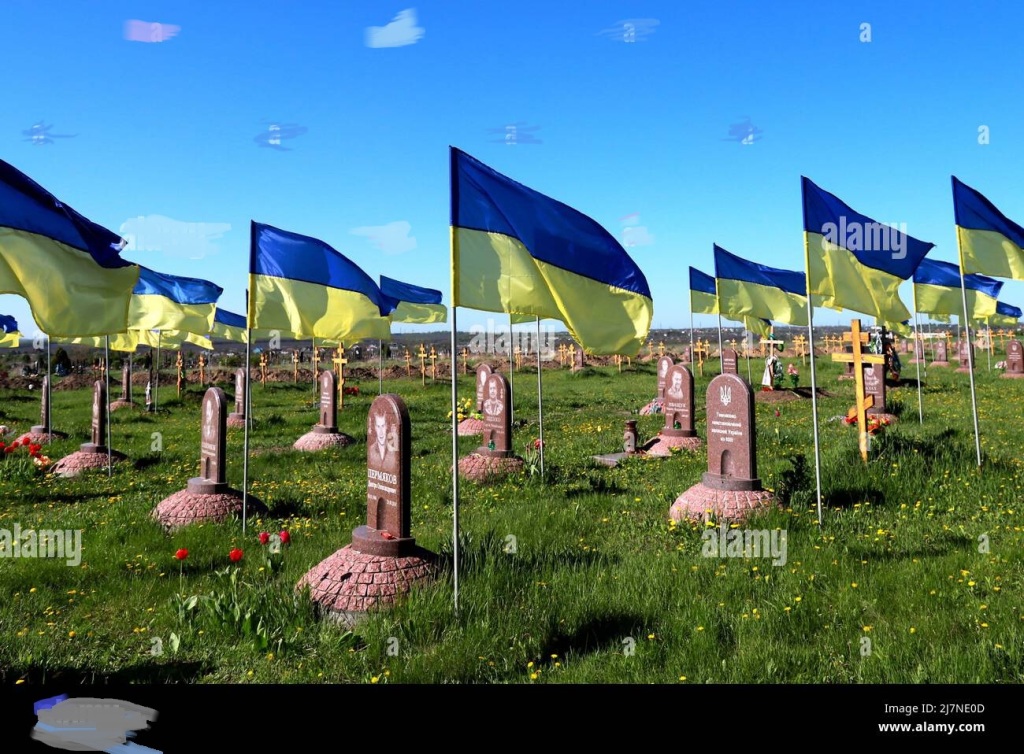
“the Ukrainian army has degraded 50% of the Russian military capability without one drop of American blood. Seems to me that’s a pretty good return on investment for us, and one we should double down on,“
Chris Christie made the case for “doubling down” on funding for Kiev
Former New Jersey governor and aspiring Republican presidential candidate Chris Christie has condemned “isolationism” and urged Americans to double down on funding the Ukrainian war effort, describing it as a good “return on investment.”
Speaking at the Hudson Institute in Washington on Wednesday, Christie argued he was the only “serious” Republican presidential candidate showing “moral clarity” to the world, often praising US President Joe Biden while taking potshots at GOP frontrunner Donald Trump.
Our strategy in Ukraine is driven by a principled commitment to support Ukrainians fighting and dying for their country,” Christie said at one point. He added that he would have provided “more weapons, and sooner” than Biden…….
Christie pointed out that he has visited Kiev and met with President Vladimir Zelensky, who told him that “without American help, Ukraine would now be occupied by Russia.” Zelensky also said that Ukraine did not need any American soldiers, only weapons to win the war by itself, Christie added.
“We’ve done that, but with less than 4% of one year’s military budget. And with that, the Ukrainian army has degraded 50% of the Russian military capability without one drop of American blood. Seems to me that’s a pretty good return on investment for us, and one we should double down on,” the former governor concluded………………………………………..
Faced with the growing opposition from some Republican lawmakers to continued spending on the Ukraine conflict, the White House has recently changed its “messaging” to present it as stimulus for the American defense industry. The supposed economic benefits have yet to materialize, however……………………more https://www.rt.com/news/587448-us-ukraine-chris-christie/
Over 1,200 ‘Educators for Palestine’ Sign Open Letter Demanding Ceasefire
The letter also called for an end to the Israeli occupation and condemned recent suppression of dissent by universities.
By Chris Walker / Truthout, https://scheerpost.com/2023/11/16/over-1200-educators-for-palestine-sign-open-letter-demanding-ceasefire/
Hundreds of academics from universities and institutions of higher learning (as well as public school K-12 teachers) from across North America have signed on to a joint letter, calling on their governments to demand an Israeli ceasefire in Gaza, where the Israel Defense Force (IDF) has killed more than 11,000 Palestinians since the start of October.
As of Sunday evening, the document has more than 1,200 signatures, available to view here. The signers, calling themselves “Educators for Palestine,” are Palestinian academics and their allies who denounce Israel’s genocide of Palestinians in Gaza, as well as governments complicit in the genocide, including the United States.
The letter calls for such governments to “stop funding the genocide and instead call for a ceasefire, an end to the blockade of humanitarian aid, and restoration of access to water, electricity, and medicine in Gaza.”
“We demand that all potential war crimes be investigated,” the academic letter-writers state. “We demand an end to Israel’s military occupation and regime of apartheid, and a long-term political solution led by the Palestinian people that is based on justice, equality, and responsibility for one another’s mutual well-being.”
“We believe education can be a powerful place for this work,” Educators for Palestine add.
The letter also expresses deep concern over the ways that students and staff of universities are being silenced by their own institutions. “Forced silence through repression of dissent and retribution by powerful institutions against students, staff, and faculty have been the norm and must be loudly rejected,” the letter states, describing the actions to suppress dissent as “McCarthyian” in nature.
“In this historical moment, we reaffirm our commitments to interrogating the ways in which systems such as racism, ableism, settler colonialism, and imperialism are fundamentally intertwined with one another, both at home and abroad,” the letter adds.
Organizers of the letter spoke to Truthout about why it is critical for academics in the U.S., Canada, Mexico, and beyond to speak out against the genocide in Gaza and the widespread suppression of dissent in academia.
“We watched in horror as the attacks on Gaza unfolded and wanted to say unequivocally that we reject this collective punishment of the Palestinian people,” the signatories told Truthout.
Organizers also condemned international governments and mainstream media for downplaying Israel’s killing of Palestinian children while using the killing of Israeli children by Hamas as justification for war crimes. The IDF has killed more than 4,500 children in Gaza since October 7.
“As both Palestinian educators and non-Palestinian educators in solidarity, we were particularly concerned with the framing of only one group of children as innocent and using their innocence as justification for war crimes,” the organizers of the letter said.
The organizers explained two sets of goals: one in the short-term and one for the longer-term.
“Our immediate goal is to speak out and bear witness as educators to the horrors that the Israeli state’s assault on Gaza has unleashed, once again, on Palestinian children and their families — horrors that our politicians are actively supporting, and that the institutions where many of us work (universities and schools) are steadfastly refusing to acknowledge,” they said. “Our long term goal is to build a stronger base for solidarity with Palestinians, understanding how the movement for justice in Palestine is essentially interwoven with the movements for justice for racialized and colonized peoples across the globe.”
The organizers of the letter told Truthout that academia was being used to further apartheid and genocide.
“[The] bombs being dropped on homes and schools and hospitals and bakeries in Gaza are often devised within our STEM classrooms and university departments,” they said, adding that the “words used to distort reality within our media, as well as the forms of truth-telling and poetry that assert Palestinian dignity and self-determination, are birthed in the spaces where our students learn to write.”
Poll: Majority of Americans Support a Ceasefire in Gaza
The poll from Reuters/Ipsos is the second to show that most Americans want a ceasefire.
By Dave DeCamp / Antiwar.com https://scheerpost.com/2023/11/16/poll-majority-of-americans-support-a-ceasefire-in-gaza/
A new poll from Reuters/Ipsos found that the majority of Americans support the idea of a ceasefire in Gaza, a position that has been rejected by the Biden administration.
About 68% of respondents agreed with the statement “Israel should call a ceasefire and try to negotiate,” including three-quarters of Democrats and half of Republicans.
The poll is the second in recent weeks to show the majority of Americans support a Gaza ceasefire. A poll published by Data for Progress on October 20 found that 66% of respondents agreed with the idea of the US calling for a ceasefire and using its leverage to prevent further violence.
The Biden administration has called for “pauses” in the fighting but has refused to use the term ceasefire as it’s determined to continue backing Israel’s brutal assault, which is currently focused on Gaza’s biggest hospital.
The Reuters/Ipsos poll also showed a general decline in US public support for Israel. Just 31% of poll respondents said they supported sending Israel weapons, while 43% opposed the idea.
Only 32% of respondents said the US should support Israel, compared with 41% in a poll that was conducted in October. The plurality of Americans, 39%, support the idea of the US being a neutral mediator in the conflict.
White House, Senate, House all out of sync with electorate on Gaza
Walt Zlotow, West Suburban Peace Coalition, 17 Nov 23 Glen Ellyn IL
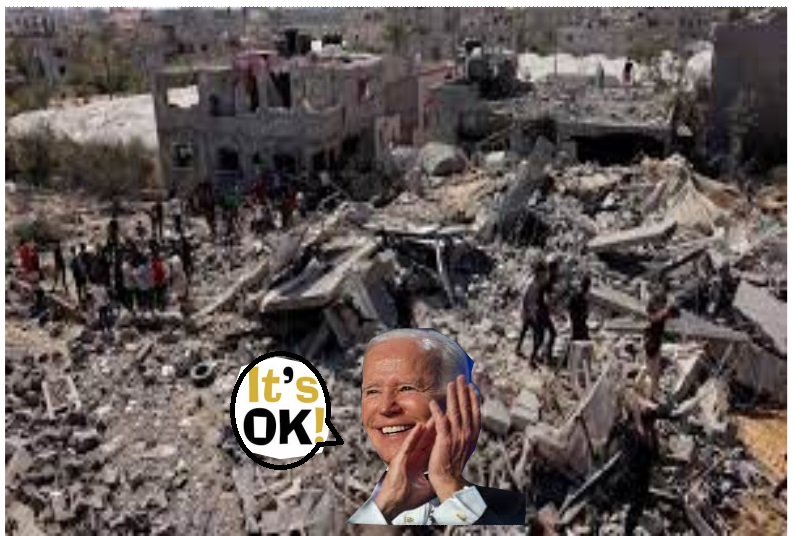
President Biden talks restraint and aid for besieged Palestinians, but pours in millions in weapons for Israel’s destruction and ethnic cleansing of Gaza.
Senate Majority Leader Chuck Schumer and House Speaker Mike Johnson attended the pro Israel rally in Washington D.C. Both offered total support for Israel’s war in Gaza. Schumer told the crowd “We stand with Israel. America feels your pain. We ache with you, we stand with you, and we will not rest until you get all the assistance you need.” He offered not a word a sympathy or aid to the 2.3 million Palestinians and their housing being systematically destroyed largely by US supplied weaponry.
Johnson was even crueler, responding “We stand with that” to crowd chants of “No ceasefire, no ceasefire.”
The top 3 US officials all ignore the electorate which favors immediate ceasefire. The Action for Progress and Reuters/Ipsos polls show 66% and 68% respectively favor ceasefire. The Reuters/Ipsos poll reveals support for Israel has dropped from 41% to 32% since the war started October 7. Just 31% favor US weapons for Israel compared to 43 opposed. A plurality, 39%, want the US to be a neutral mediator to end the war.
America has become a pariah worldwide thru its endless support of Israeli Apartheid, ethnic cleansing and destruction of the open-air prison Israel maintains in Gaza. It is bound by international law to protect, not destroy, the 2.3 million Palestinians imprisoned there under Israeli control. The US public is beginning to get that. The top 3 US leaders, Biden, Schumer and Johnson apparently never will.
UK nuclear lobby brainwashing young students, especially women
Science Fair connecting students to a future in nuclear, UK government 17 Nov 23
Nuclear Waste Services (NWS) and Women in Nuclear (WiN UK) hosted an event for young people to promote and showcase career opportunities in the nuclear industry
Around 150 students attended the first ever Nuclear Connection Science Fair in Oxford, hosted by NWS and Women in Nuclear (WiN UK) on 10 November.
The event was an opportunity for young people to learn more about the career prospects in the nuclear sector, and provided the opportunity to interact with successful professionals working in the industry today.
Nuclear Waste Services is part of the Nuclear Decommissioning Authority (NDA) group with a vision and mission that is vitally important to the UK today and for future generations………………………….
Students, teachers, parents and guardians from four secondary schools (Eden Girls Slough, Greyfriars, Didcot Girls and The Abbey) attended the fair in Oxsrad Sports and Leisure Centre in Headington, open to pupils from Year 9 to Sixth Form.
It was an opportunity for students to engage with presentations and have conversations to discover everything they want and need to know about nuclear science, and about the places it could take their future careers.
The event included interactive games and activities with nuclear professionals, talks by key industry figures and a student poster exhibition and prizegiving. Students participated in a poster competition that was opened ahead of the event, with the winners announced on the day. It also provided the opportunity to arrange work experience placements with significant nuclear industry players.
Louise Honeyman, Event Organiser, Co-leader for WiN UK Central England and Business Manager at NWS, said:…………………………………………………………..
The event was a great success, it was fantastic to see so many young people eagerly engaged and keen to learn about a career in the nuclear industry – and we are keen to attract them!
There are a huge range of careers on offer in the sector, looking for a variety of different skill sets. It’s an exciting, expanding and rewarding industry to work in…………………………………………………………..
NWS has an apprenticeship programme, a variety of work experience opportunities and recruits graduates through the NDA group graduate programme. ….. more https://www.gov.uk/government/news/science-fair-connecting-students-to-a-future-in-nuclear
The Latest Nuclear Boondoggle?

Congressional Budget Office (CBO) this year updated its cost of U.S. nuclear forces to $756 billion for the 2023-2032 period. That estimate is a shocking 19% above CBO’s 2021 estimate for the 2021-2030 period.
By Connor Murray, https://armscontrolcenter.org/the-latest-nuclear-boondoggle/ 17 Nov 23
The Pentagon recently announced plans to develop a new variant of the B61 nuclear gravity bomb, the B61-13. This proposed bomb would, as the name suggests, be the 13th variant of the B61 and “provide the President with additional options against certain harder and large-area military targets.”
The weapon would be delivered by strategic bombers, like the planned B-21, and have an explosive yield similar to the existing B61-7, including the guided tail kit recently debuted on the B61-12.
The B61-12, which is expensive and was a major priority for Pentagon officials over the past 13 years, seems to suddenly have taken a backseat along with the argument that the B61-12 was to cover all relevant missions with decreased collateral damage. B61-12s were designated mostly for Europe to support NATO’s nuclear sharing mission.
The need for the B61-13, as articulated, is nebulous at best. The weapon would have a significantly higher maximum yield than the B61-12 given its use of the B61-7’s warhead. The use of the tail kit may improve its earth penetration capabilities and will certainly increase its accuracy. Nothing in the Pentagon’s announcement makes it clear where the value added might be, at least not to any degree that might justify the likely multi-billion-dollar price tag that will accompany this new bomb.
Over the last two decades, U.S. planners have moved away from high-yield nuclear weapons, given improvements in accuracy and development of effective conventional alternatives. The last megaton-plus-yield weapon in the U.S. arsenal, the B83-1, was proposed for retirement in President Joe Biden’s 2022 Nuclear Posture Review (NPR) due to “increasing limitations on its capabilities and rising maintenance costs.” Importantly, the next sentence referred to the development of an “enduring capability for improved defeat of [hard and deeply buried] targets.”This final sentence was likely the hint at possible development of the B61-13. While retiring the B83-1 is certainly a worthy goal, replacing it with a brand-new weapon is not a worthwhile endeavor. Though the new weapon uses an existing warhead, it likely still would put additional stress on an already strained nuclear enterprise that regularly sees cost overruns.
Congressional Budget Office (CBO) this year updated its cost of U.S. nuclear forces to $756 billion for the 2023-2032 period. That estimate is a shocking 19% above CBO’s 2021 estimate for the 2021-2030 period. CBO updates these projections every two years. Inflation is taken into account in their estimates. However, the dramatic increase indicates struggles with existing programs, cost overruns and policy decisions that have been made since the 2021 estimate was published. Those include increased costs to the Sentinel intercontinental ballistic missile and other modernization initiatives. Further straining resources via the B61-13 spells possible disaster, delays and extreme cost.
A larger question remains unasked. The NPR states clearly that America’s nuclear weapons are for “defense and deterrence.” Despite the Pentagon’s consideration that destroying a large, hard target is defensive, the question remains how an additional capability to do so adds to “defense and deterrence” when other existing capabilities might already fill that need.
Rather than seeking to add to the mission set, the administration should work with congressional and nongovernmental experts to adapt current capabilities to fill defense and deterrence needs without expanding offensive capabilities. The United States should be looking for ways to increase efficiency in nuclear spending, not add yet another weapon at high cost with limited, if any, usefulness.
Russia Shuts Down Nuclear Plant Reactor Unit After Malfunction
Nov 16, 2023, https://www.newsweek.com/russia-shuts-down-nuclear-reactor-malfunction-1844413
Russia has reported the shutdown of a unit at a nuclear power plant after turbine blades broke.
Rosenergoatom, which runs Russia’s nuclear power stations, said it was not clear what caused the blades to malfunction at the Leningrad nuclear power plant west of St Petersburg on Sunday.
“The main thing now is to understand the reason for the destruction of the blades. This is a new phenomenon,” Alexander Shutikov, head of Rosenergoatom, told Reuters. Repairs should be completed by December 22, he said.
The unit where the malfunction occurred was built in 2018 with a next-generation VVER 1200, a pressurised water reactor, according to the news agency.
Russia is building units of this type at the Akkuyu nuclear power plant in Turkey. They are also planned for the Paks-2 plant in Hungary. Russia has already supplied such units to Belarus.
The blades that failed were part of a 1,200-megawatt high-speed steam turbine, Shutikov told Reuters.
The turbines are produced by Power Machines, owned by Russian billionaire Alexey Mordashov who was sanctioned by the U.S. and the EU following Russia’s invasion of Ukraine.
Turbines of the same type had operated without problems since 2016 at four power units, Power Machines told Reuters.
The company said it was taking steps to restart the affected unit as soon as possible and working with specialists to investigate the causes. “Based on the results, conclusions will be drawn and compensatory measures will be determined,” the company said.
Newsweek has contacted Rosenergoatom and Power Machines for further comment via email.
Earlier this week, European Commissioner for Energy Kadri Simson said Hungary needed to reduce its reliance on Russian energy because it left the country open to influence from Russia.
Speaking during Politico’s Sustainability Future Week summit on Tuesday, Simson said it was regrettable that Hungary was proceeding with construction of the Paks-2 nuclear reactor. The work is reportedly being financed with a 10-billion euro ($11.3 billion) loan from a Russian state bank.
“Our clear request to them is that like other member states, who are still using Russian technology, that nuclear fleet, they have to prepare a plan how to diversify,” Simson said.
The European Union and other Western leaders have largely shunned Russian President Vladimir Putin, but Hungarian Prime Minister Viktor Orbán held talks with him in October.
Orbán has been keen to maintain ties with Moscow—on which Hungary is highly dependant for natural gas, oil and nuclear fuel—and has been critical of Western sanctions against Russia.
1 This Month
23 April – WEBINAR – Why new nuclear reactors are the wrong tools for decarbonization Thursday, April 23 • 1 AM – 2 AM AEST
World Nuclear Power. Reactors 1951-2026, 75 Years of Nuclear Power.
Interactive Map– https://dv.worldnuclearreport.org/
Chernobyl: The Lost Tapes – A good documentary on Chernobyl on SBS available On Demand for the next 3 weeks– https://www.sbs.com.au/ondemand/tv-program/chernobyl-the-lost-tapes/2352741955560

of the week–London Campaign for Nuclear Disarmament

Tell the Ukrainian Government to Drop Prosecution of Peace Activist Yurii Sheliazhenko
To see nuclear-related stories in greater depth and intensity – go to https://nuclearinformation.wordpress.com
-
Archives
- April 2026 (220)
- March 2026 (251)
- February 2026 (268)
- January 2026 (308)
- December 2025 (358)
- November 2025 (359)
- October 2025 (376)
- September 2025 (257)
- August 2025 (319)
- July 2025 (230)
- June 2025 (348)
- May 2025 (261)
-
Categories
- 1
- 1 NUCLEAR ISSUES
- business and costs
- climate change
- culture and arts
- ENERGY
- environment
- health
- history
- indigenous issues
- Legal
- marketing of nuclear
- media
- opposition to nuclear
- PERSONAL STORIES
- politics
- politics international
- Religion and ethics
- safety
- secrets,lies and civil liberties
- spinbuster
- technology
- Uranium
- wastes
- weapons and war
- Women
- 2 WORLD
- ACTION
- AFRICA
- Atrocities
- AUSTRALIA
- Christina's notes
- Christina's themes
- culture and arts
- Events
- Fuk 2022
- Fuk 2023
- Fukushima 2017
- Fukushima 2018
- fukushima 2019
- Fukushima 2020
- Fukushima 2021
- general
- global warming
- Humour (God we need it)
- Nuclear
- RARE EARTHS
- Reference
- resources – print
- Resources -audiovicual
- Weekly Newsletter
- World
- World Nuclear
- YouTube
-
RSS
Entries RSS
Comments RSS
 nuclear-news