A Photographer Goes Inside the Ruins of the Fukushima Nuclear Power Plant
The first tests, during which remotely operated underwater robots were launched into the containment structure, were unsuccessful……… The extremely high levels of radiation (650 Sv/h) would destroy the vehicles’ electronic circuits in minutes. A person would die in seconds in such conditions..
Peta Pixel NOV 26, 2023, ARKADIUSZ PODNIESIŃSKI
This article has copious photographs. They are not very interesting, as the photographer was banned from photographing the seriously dangerous parts of place
For more than a dozen years, I have been documenting the aftermath of the disasters at the Chornobyl and Fukushima nuclear power plants, the progress of the cleanup, and the decontamination and revitalization of the contaminated areas. During this time, I made many visits to the Chornobyl plant. Finally, it was time to visit the Fukushima plant………………
Given my critical attitude towards nuclear power, as demonstrated by my published album about the tragic consequences of the two disasters as well as my photographs and films that have been shown around the world, obtaining permission was not easy or straightforward. However, after several months of trying and dozens of emails and phone calls, I finally managed to get approval.
Interestingly, I was told no photographer before me had ever had such an extensive itinerary for a visit. Despite this, I hope that my two-day visit will not be the last. The decommissioning of the power plant is a process that will take several decades, so I hope there will be more than one opportunity to return.
……………………………..nowhere else in the world have I seen so many workers guarding the exits of underground garages, building sites and intersections, or thousands of flashing bollards shaped like frogs, mice, and other animals.
..For security reasons, taking pictures of many places is prohibited……………………………………..
Similarities or Differences
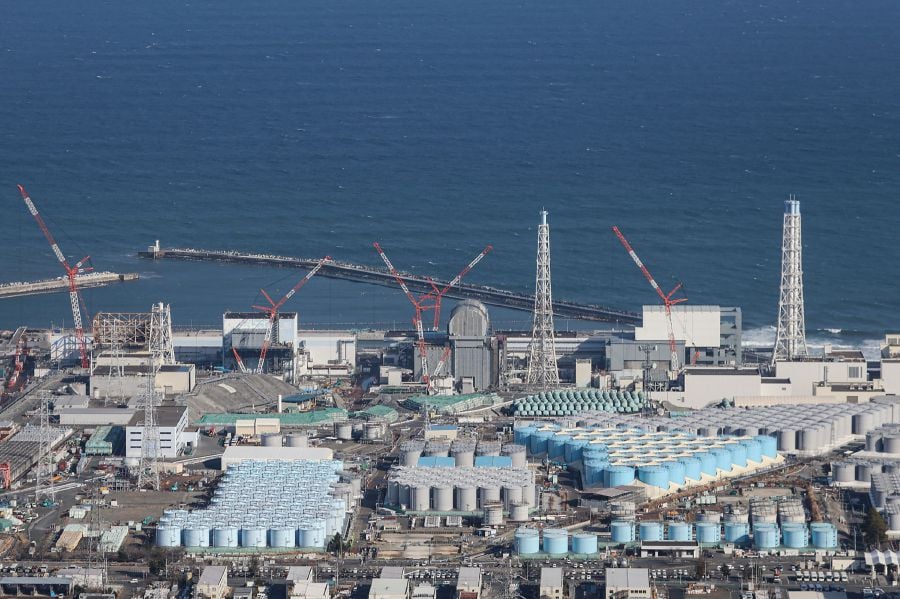
Only when I’m standing in front of the damaged units do I grasp the scale of the tragedy and destruction. The first unit has no roof, as it was destroyed by a hydrogen explosion. Only the jagged remnants of the steel skeleton now protrude from it. There is less external damage to the second unit, but inside the meltdown of the reactor core produced a similar effect. When I look at the exposed roof of the first reactor building, comparisons to Chornobyl automatically come to mind.
Units 3 and 4 have already been covered with new structures that are intended to strengthen their substructures and enable the removal of the spent fuel inside. Probably to avoid comparisons with Chornobyl, these are not called sarcophagi, but they serve an identical purpose – they reinforce the damaged buildings, prevent radioactive substances from escaping, and serve or will be used to extract the fuel inside. At Chornobyl, one reactor was damaged, while at Fukushima it was as many as three.
On the one hand, in Chornobyl, the areas around the nuclear power plant are still closed 37 years later. The damaged reactor has already been covered by a second sarcophagus and the removal of the fuel inside of it is still a subject of debate. On the other hand, in Japan, after 12 years most of the areas around the plant have already been cleaned and returned to their residents.
The process of removing the fuel from the damaged reactors is expected to begin in 2024. This very complex and dangerous task will be divided into two separate phases. The first involves removing the melted fuel from the damaged reactors, while the second consists of removing the spent fuel stored in the spent fuel pools. Fuel remains in the first two units as debris is still being cleaned up and other obstacles blocking access to the interior are being removed. The next two units are in much better condition: the spent fuel has already been removed from the pools, and only one of them has had a nuclear core meltdown.
After a while, we drive up to the reactor buildings themselves. Standing next to the vertical walls of the structure, I realize their magnitude. For obvious reasons, I can’t go inside any of them. It’s a red zone, where the damage is greatest, and the radiation levels are deadly high.
Inside of Primary Containment Vessel
I also visit Units 5 and 6, which sustained less damage. They were shut down when the earthquake and tsunami hit, although there was still nuclear fuel in the reactors and spent fuel pools the entire time. Due to the power outages and the cessation of the cooling processes, they did not operate properly and had to be monitored constantly. After the damage was repaired and cooling restored, the remaining fuel in the reactors was moved to a spent fuel pool several floors above. Besides having the chance to take photos, visiting these units is an excellent opportunity for me to better understand how the disaster unfolded and the work to clean up the resulting damage, particularly the melted fuel from inside the reactors.
In Unit 5, I enter the safety enclosure known as the PCV (Primary Containment Vessel) that houses the reactor. This is already a yellow – more radioactive – zone, so once again I must change my clothes. The safety enclosure is shaped like a huge steel pear, more than 30 meters high. Inside it is the reactor, which is surrounded by hundreds of pipes, valves, and pumps. I squeeze between them and come to a small opening in the wall. This leads to a tiny room where the control rod drive hydraulic system is located.
The room is cramped and not even a meter high – definitely not a place for people who have claustrophobia. The reactor is just a few meters above me. It is identical to the ones whose cores melted down due to the power outages and lack of cooling. Under the extreme heat, their uranium fuel rods melted like candle wax and dripped to the bottom of the reactor casing. The hot mass then burned through the steel walls and seeped into the bottom of the containment enclosure, exactly where I stand now.
Because of these similarities, Unit 5 is currently being used to test various methods of removing fuel from damaged reactors. The first tests, during which remotely operated underwater robots were launched into the containment structure, were unsuccessful. More often than not, they got stuck while maneuvering underwater amid piles of debris, cables, and rusted structures. The extremely high levels of radiation (650 Sv/h) would destroy the vehicles’ electronic circuits in minutes. A person would die in seconds in such conditions………………………………
According to a report by the Japanese Atomic Energy Commission – not disclosed to the public for fear of causing panic – in the event that the situation went completely out of control and the direction of the wind changed, there would have been so much contamination that it would have necessitated the evacuation of the 50 million people living within a 250 km radius of the plant, an area that includes Tokyo. Thus, the fact that the worst-case scenario was avoided is not only due to the superhuman efforts of hundreds of power plant workers, firefighters, and other emergency responders, but also to chance or, if you prefer, luck.
Although the danger was averted, fuel remains in the spent fuel pools in Units 1 and 2 (the most damaged ones) as well as in Units 5 and 6. I was allowed to enter the last of these. It stores over 1,600 fuel assemblies………………………………………………………………………………………………………………………………………………………………………………………..more https://petapixel.com/2023/11/26/a-photographer-goes-inside-the-ruins-of-the-fukushima-nuclear-power-plant/
No comments yet.
1 This Month


Tell the Ukrainian Government to Drop Prosecution of Peace Activist Yurii Sheliazhenko

Petition to revoke the licensing of the Near Surface Nuclear Disposal Facility (NSDF) at Chalk River. https://www.ourcommons.ca/petitions/en/Petition/Details?Petition=e-7247


of the week – STOP SMALL MODULAR REACTORS IN CANADA
To see nuclear-related stories in greater depth and intensity – go to https://nuclearinformation.wordpress.com
-
Archives
- March 2026 (176)
- February 2026 (268)
- January 2026 (308)
- December 2025 (358)
- November 2025 (359)
- October 2025 (376)
- September 2025 (258)
- August 2025 (319)
- July 2025 (230)
- June 2025 (348)
- May 2025 (261)
- April 2025 (305)
-
Categories
- 1
- 1 NUCLEAR ISSUES
- business and costs
- climate change
- culture and arts
- ENERGY
- environment
- health
- history
- indigenous issues
- Legal
- marketing of nuclear
- media
- opposition to nuclear
- PERSONAL STORIES
- politics
- politics international
- Religion and ethics
- safety
- secrets,lies and civil liberties
- spinbuster
- technology
- Uranium
- wastes
- weapons and war
- Women
- 2 WORLD
- ACTION
- AFRICA
- Atrocities
- AUSTRALIA
- Christina's notes
- Christina's themes
- culture and arts
- Events
- Fuk 2022
- Fuk 2023
- Fukushima 2017
- Fukushima 2018
- fukushima 2019
- Fukushima 2020
- Fukushima 2021
- general
- global warming
- Humour (God we need it)
- Nuclear
- RARE EARTHS
- Reference
- resources – print
- Resources -audiovicual
- Weekly Newsletter
- World
- World Nuclear
- YouTube
-
RSS
Entries RSS
Comments RSS
 nuclear-news
Leave a comment