Mercifully shorter nuclear news this week
This news roundup has become too long. I am going to try to limit the headlines about the Israeli and Ukraine wars, as not being actually “nuclear” news. That’s harder than you might think, as in each case we are brought closer to the brink of nuclear wars. (Those excluded items will still appear on nuclear-news.net.
*********************************

Some bits of good news. Blue whales have returned to a region of the Indian Ocean, where they were wiped out by commercial whalers. Millionaires implored the UK government to tax them.
Some Good News About Climate: Costs for renewables have plummeted and growth is exceeding expectations
************************
TOP STORIES. A new Palestinian state could never be free as long as its neighbor, Israel, possesses nuclear weapons.
What Would It Mean to ‘Absorb’ a Nuclear Attack?- nuclear missile silos as a “sponge”.
The Shape of Nuclear Abolition.
Soaring death rates raise concerns about Portsmouth nuclear plant .
Climate. COP28 must stick to 1.5°C target to save ice sheets, urge scientists. The great carbon divide: On the trail of the super-polluters.
Christina notes. The international political system of nuclear bullying must change, or it will kill us all. Rafael Grossi’s and the IAEA’s breath-taking hypocrisy , as the nuclear lobby revs up for COP 28.
***********************
CLIMATE. For climate summit the desperate nuclear lobby will pretend that nuclear fusion is a real solution . Energy and Climate Scenarios Paradoxically Assume Considerable Nuclear Energy Growth.
CIVIL LIBERTIES. First Tel Aviv Anti-War Demonstration Reveals the Limits on Protest in Today’s Israel.
ECONOMICS.
- Rolls Royce panicking, as UK government and investors are lukewarm about its small nuclear reactor project? Poor nuclear prospects in UK.
- Finland extends nuclear reactor outage, pushing up power price.
- The Russian nuclear industry during wartime, 2022 and early 2023.
- Etopia Report: the nuclear problem – economic realities.
- Engie demands close scrutiny of French nuclear power deal to ensure competition.
- Xcel’s Prairie Island nuclear plant will be out of commission until January.
ENVIRONMENT. Oceans. Japan’s Fukushima plant completes third water release.
INDIGENOUS ISSUES. The Members of This Reservation Learned They Live with Nuclear Weapons. Can Their Reality Ever Be the Same?
NUCLEAR TECHNOLOGY. Small Nuclear Reactors (SMRs) : Failed U.S. Nuclear Project Raises Cost Concerns for Canadian SMR Development . Small nuclear reactors are NOT emissions-free. Military revokes planned contract for small nuclear reactor plant at Eielson AFB.
OPPOSITION to NUCLEAR . South Texans are publicly fighting SpaceX after second Starship launch.
POLITICS. New Brunswick Premier Higgs says Canada’s federal government should give funding for small nuclear reactor projects. Malaysian Govt urged to halt Australian company Lynas’ thorium extraction plan. Revealed: Biden’s ‘nuclear football’ contains BOOK that tells president how to launch attack by contacting ‘Looking Glass’ plane and spherical bunker where four keys ignite missiles
POLITICS INTERNATIONAL and DIPLOMACY.
- Czech Republic, France and others will use “Declaration to Triple Nuclear Energy” to push for EU funding to the nuclear industry.
- UK’s Foreign Secretary urged to send observers to nuclear ban meeting in New York.
- IAEA urges Countries in Mideast, Israel to join nuclear ban treaty, open facilities for inspection.
- Second Meeting of State Parties to Treaty on Prohibition of Nuclear Weapons to Be Held at Headquarters, 27 November–1 December.
- In softening on China, the West may be trying to avoid a nuclear arms race.
- Japanese and Chinese top envoys eye more talks on Fukushima row.
SAFETY. Incidents. Nuclear submarine scare for 140 British crew due to ‘faulty’ gauge. Hacktivists breach U.S. nuclear research lab, steal employee data. K-219: Russia’s Worst Submarine Ever (And a Nuclear Disaster)?
SECRETS and LIES. Possibly irradiated items stolen at site 3 km from Fukushima plant.
WASTES. The Deeper Dig: A plan for what’s left of Vermont Yankee nuclear power plant. Decommissioning: Nuclear Power: UK’s Financial Challenge Unveiled. Tories, Labour clash over Milton Keynes nuclear waste claims. A Photographer Goes Inside the Ruins of the Fukushima Nuclear Power Plant.
WAR and CONFLICT. Israel expands Gaza operation amid hostage deal talks. Gaza Massacre could lead to Nuclear War.
We’re long past nuclear deterrence: Bring on mutually assured prevention. Disarmament Grows More Distant as US Plans Another “Upgrade” to Nuclear Bomb.
WEAPONS and WEAPONS SALES. Why is the US ramping up production of plutonium ‘pits’ for nuclear weapons?
What do we know about Israel’s nuclear weapons? Nuclear tinderbox’: Kim’s threats put North Korea on wrong side of history. South Korea does not need nuclear subs. Beyond Current Chaos: The Escalating Risks of Nuclear War.
Soaring death rates raise concerns about Portsmouth nuclear plant

A low-cancer county has now become a high-cancer county.
Joseph Mangano, 26 Nov 23, https://www.cincinnati.com/story/opinion/contributors/2023/11/26/reports-raise-concerns-about-radiation-exposure-from-portsmouth-plant/71664443007/
Death rates in southern Ohio, especially in Pike County, are rising sharply and are among the highest in the U.S., according to two recent reports, which raises concerns about past, present and future exposures to toxic radiation from the Portsmouth nuclear plant in Piketon.
Beginning in 1954, the Portsmouth plant enriched uranium for fuel, first for nuclear weapons and later for nuclear power reactors. The enrichment process involves the creation of various radioactive chemicals, including americium, neptunium, plutonium, technetium, and several forms of uranium.
Each of these toxins, which are among the most dangerous on the planet, have been detected in the local environment, raising questions about exposures to workers and residents, and whether their health has been affected. And while uranium enrichment at Portsmouth ceased in 2001, various operations proposed for the site by federal officials would create additional radioactive products, and pose new health threats.
Health studies have never been a priority in Portsmouth’s long history. A federal analysis of plant workers only looked at deaths before 1991. Another federal study near U.S. nuclear plants, including Portsmouth, only used data from 1950 to 1984. Both are outdated.
Last year, the Ohio Nuclear Free Network supported a current, updated and detailed evaluation of trends in cancer and other health measures in and around Pike County. Two reports have been issued, using statistics made public by the U.S. Centers for Disease Control and Prevention and the Ohio Cancer Registry.
The first report found the Pike County cancer death rate was below the U.S. rate for decades, but has exceeded the U.S. since the early 1990s, with the greatest excess (33% higher) occurring in the most recent period. Pike County also has the highest rate of cancer incidence (newly-diagnosed cases) of all 88 Ohio counties. A low-cancer county has now become a high-cancer county.
The report also reviewed death rates for all causes combined. Until the mid-1990s, the Pike County rate was slightly higher than the U.S. rate. But ever since the gap has grown, especially for premature deaths (persons dying before age 75); the current rate is a staggering 85% above the U.S. − among the highest of all U.S. counties.
A second report addressed several questions. One question was whether the unexpectedly high disease and death rates stopped at the Pike County border. The answer was a clear “no” − as similar trends occurred in six counties bordering Pike (although none quite as dramatic as Pike). Local death rates for persons are especially high for those in their mid-20s to mid-50s − the prime of life − more than double the U.S. rate.
Another question was whether socioeconomic needs could explain the decline in health, as Pike has high poverty rates, relatively low access to medical care, and higher unemployment rates. But increases in death rates in six equally-needy Ohio counties were much lower; thus, “it’s just Appalachia” could not explain most of the increases.
Pike County and surrounding areas consist of small towns and rural areas. Few large industries which pollute the environment exist locally. The exception is the Portsmouth nuclear plant, which creates the most hazardous chemicals known on earth. Other factors can increase risk of disease and death, but decades-long environmental radioactivity exposures must be regarded as a factor, even a major factor, in the sharp increase in local disease and death rates.
Currently, the U.S. Energy Department has proposed or is considering additional nuclear-related operations at the Portsmouth site. These include reprocessing, modular reactors, molten salt reactors, uranium enrichment and uranium purification.
Knowing a large decline in local health for decades means extra caution should be taken to protect residents from any health hazards. Expanding an industry that may have already harmed many who live near Portsmouth is not the answer. Public officials entrusted with reducing harm to the public should act accordingly, and oppose these new initiatives.
Joseph Mangano is executive director of the Radiation and Public Health Project and serves as a consultant to the Ohio Nuclear Free Network.
K-219: Russia’s Worst Submarine Ever (And a Nuclear Disaster)?

This article is all about the sinking of a ballistic missile submarine, carrying 6 nuclear missiles.
But – not a word about the radioactive pollution that must still be emanating from the undersea wreck nearly 30 years later.
The K-219 was clearly faulty and the crew did not react well to the emergency. It should be considered one of the worst submarines of all time because it carried nuclear missiles and there was a fire on board.
National Interest, Brent M. Eastwood 26 Nov 23
-219: The Worst or Most Dangerous Submarine of All Time? When it comes to figuring out what is the worst submarine of all time, it is difficult to blame the sub itself or the bad actions of the crew. Such is the case with the sinking of the Soviet submarine K-219. K-219 was a Yankee-class boomer, or ballistic missile submarine, that carried nuclear weapons.
On October 3, 1986, the K-219, with 16 R-27 nuclear missiles, sunk within 700 miles off the coast of Bermuda.
One of the missile tubes sprung a leak and seawater rushed in and blended with the missile fuel. This volatile combination made for a deadly mix that created dangerous levels of heat and gas. This is where the crew reacted slowly without the sailors exhibiting teamwork and conducting damage control.
Only one crew member moved to do something by venting the tube. A short circuit cropped up in the main power line that created a spark. Then a blast in the silo occurred that sent the missile and the warheads into the water. That’s when the sailors finally sprang into action. They battled the fire on board, eventually putting it out.
They had to shut down the nuclear reactors by hand because the control mechanisms were damaged. Three sailors died.
A Soviet ship tried to rescue the sub by pulling it to safety. But that did not work because the tow cord broke. The captain of the sub, Igor Britanov, decided to abandon ship. The sub sunk to the bottom of the ocean and the missiles were lost. The whole encounter lasted three days.
The Reagan administration even offered to help the Soviets and American officials appreciated that the Soviets informed them of the tragedy the day it happened. Fortunately, no radioactivity or nuclear explosion happened. The surviving sailors made it out and Captain Britanov was the last to leave the sub alive, in accordance with naval customs………………………………………………………………………………….
The K-219 was clearly faulty and the crew did not react well to the emergency. It should be considered one of the worst submarines of all time because it carried nuclear missiles and there was a fire on board. This made it one of the most dangerous submarines to ever float. Gorbachev feared the worst and he was correct to blame the crew. They reacted slowly to the original leak and did not check the power system before engaging the water pump.
They should have known that gas was present and that employing electrical power would be dangerous. This was one of the most hazardous maritime situations in the Cold War. The Soviets and the Americans were lucky it was not worse. https://nationalinterest.org/blog/buzz/k-219-why-russias-worst-submarine-ever-and-nuclear-disaster-207495
No Ceasefire in the Propaganda War

https://www.craigmurray.org.uk/archives/2023/11/no-ceasefire-in-the-propaganda-war/
I have had BBC News on in the background for the last two hours. In that time there have been three lengthy interviews with different relatives of Israeli hostages held by Hamas. There has not been a single interview with a Palestinian relative of a Palestinian prisoner held by Israel.
Today 13 Israeli prisoners and 39 Palestinian prisoners are due to be released. 90% of the BBC mentions of prisoner releases do not include the Palestinians at all. Just finished is a ten minute interview of a Professor in Kent on the psychological effects on Israeli hostages. Earlier there was an expert from Tel Aviv on the psychological impact on Israeli hostages’ families. There has been no report whatsoever of the impact on Palestinian prisoners and their families.
The BBC simply does not treat the Palestinians as human, whereas the emphasis on Israeli personal victimhood is incessant and unrelenting.
Of the 300 Palestinian women and children prisoners on the list possibly to be released during the ceasefire, 252 have never been charged with any crime. 23 were charged with stone throwing.
Since October 8 over 200 Palestinian children have been taken prisoner, none of whom had anything to do with the October 7 attacks. That rather puts the possible release of 33 children and six women today into perspective. But it is not a perspective the BBC would ever give you.
Over 2,000 Palestinians are held by Israel in “administrative detention”, without charge or trial. Some for over twenty years.
Since 1967 Israel has made over 1 million arrests of Palestinians. This “justice” system is an essential part of the imposition of apartheid and the slow genocide, which did not just start this autumn. The BBC won’t tell you that either, and appears to have no problem with permanently showcasing its Israel based correspondents churning out the Israeli propaganda narrative, with no attempt at either perspective or balance.
COP28 must stick to 1.5°C target to save ice sheets, urge scientists
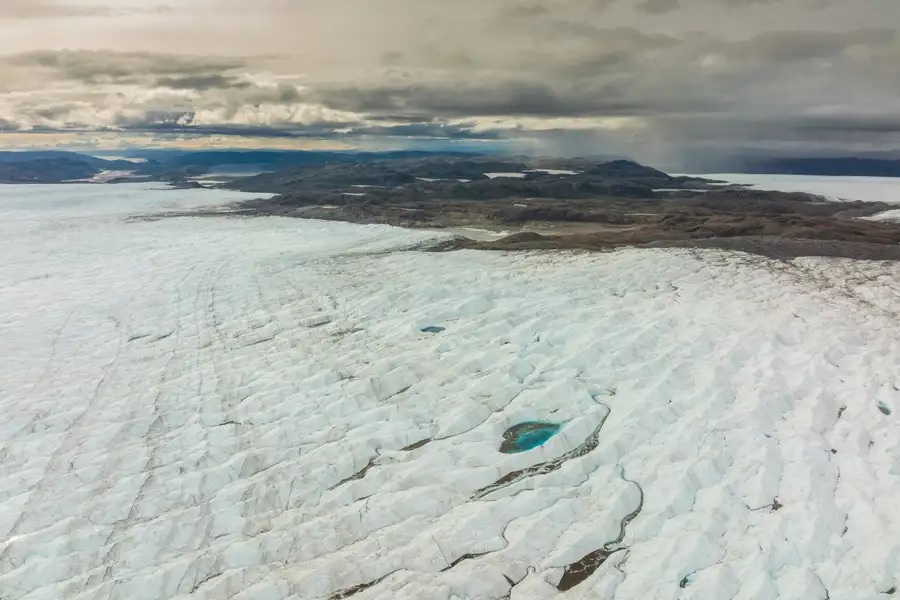
A report warns that 2°C of global warming would mean losing most of the world’s ice sheets and glaciers, leading to catastrophic sea level rise
By Alec Luhn, 16 November 2023
The world must stick to its target to limit climate warming to 1.5°C to avoid catastrophic melting of ice sheets and glaciers, according to a report.
The International Cryosphere Climate Initiative (ICCI), a group of scientists who study ice-covered parts of the world, warns that a rise of 2°C would liquidate most tropical and mid-latitude glaciers and set off long-term melting of the Greenland and Antarctic ice sheets, leading to 12 to 20 metres of sea level rise.
In the 2015 Paris Agreement, all countries committed to holding global average temperature to “well below 2°C” over pre-industrial levels and “pursuing efforts” to limit it to 1.5°C. Our still-rising greenhouse gas emissions have already caused almost 1.2°C of warming and put us on track to exceed 3°C.
More than 350 cryosphere scientists have signed an open letter calling on countries to commit to the 1.5°C limit at the upcoming COP28 climate summit in Dubai.
“From the cryosphere point of view, 1.5°C is not simply preferable to 2°C or higher. It is the only option,” Iceland’s prime minister Katrín Jakobsdóttir said in a statement.
Earth’s regions of snow and ice are melting faster than we expected and already approaching tipping points, says Jonathan Bamber at the University of Bristol, UK, who reviewed the ICCI report, while otherspoint to the rapid uptake of solar and wind energy as reason for continued hope. https://www.newscientist.com/article/2403404-cop28-must-stick-to-1-5c-target-to-save-ice-sheets-urge-scientists/
Hacktivists breach U.S. nuclear research lab, steal employee data.

Bleeping Computer, By Bill Toulas, 21 Nov 23
The Idaho National Laboratory (INL) confirms they suffered a cyberattack after ‘SiegedSec’ hacktivists leaked stolen human resources data online.
INL is a nuclear research center run by the U.S. Department of Energy that employs 5,700 specialists in atomic energy, integrated energy, and national security.
The INL complex extends over an 890-square-mile (2,310 km2) area, encompassing 50 experimental nuclear reactors, including the first ones in history to produce usable amounts of electricity and the first power plant designed for nuclear submarines.
Currently, INL is occupied with research on next-gen nuclear plants, light water reactors, control systems cybersecurity, advanced vehicle testing, bioenergy, robotics, nuclear waste processing, and other studies.
Hacktivists claim attack on INL
On Monday, SiegedSec announced it had gained access to INL data, including details on “hundreds of thousands” of employees, system users, and citizens.
As the group has done in previous breaches on NATO and Atlassian, they openly leaked stolen data on hacker forums and a Telegram channel run by the group, not caring to negotiate with the victim or demand ransoms.
The data leaked by SiegedSec includes:
- Full names
- Dates of birth
- Email addresses
- Phone numbers
- Social Security Numbers (SSN)
- Physical addresses
- Employment information
As the group has done in previous breaches on NATO and Atlassian, they openly leaked stolen data on hacker forums and a Telegram channel run by the group, not caring to negotiate with the victim or demand ransoms.
The data leaked by SiegedSec includes
As the group has done in previous breaches on NATO and Atlassian, they openly leaked stolen data on hacker forums and a Telegram channel run by the group, not caring to negotiate with the victim or demand ransoms.
The data leaked by SiegedSec includes:
- Full names
- Dates of birth
- Email addresses
- Phone numbers
- Social Security Numbers (SSN)
- Physical addresses
- Employment information
On Telegram, SiegedSec also posted alleged proof of the breach by sharing screenshots of tools used internally by INL for document access and announcement creation.
The attackers also showed the creation of a custom announcement on INL’s system to let everyone in the complex know about the breach………………………………….
Although SiegedSec has neither accessed nor disclosed any data on nuclear research, the incident will inevitably intensify law enforcement scrutiny of the hacktivist group, as INL is considered a vital part of U.S. critical infrastructure. https://www.bleepingcomputer.com/news/security/hacktivists-breach-us-nuclear-research-lab-steal-employee-data/
In softening on China, the West may be trying to avoid a nuclear arms race
SCMP, Bob Savic 26 Nov 23
Why the West is suddenly softening on China: power grows out of nuclear warheads
- Weeks before Xi Jinping met various leaders in San Francisco, the US released an estimate of China’s nuclear stockpile
- Now, the EU and UK seem to be holding out an olive branch to China, especially with the surprise appointment of David Cameron as foreign secretary
In a much-publicised report issued on October 19, the US Department of Defence estimated China’s stock of operational nuclear warheads to be at 500, and exceeding 1,000 by 2030. This contrasts with its 2020 report that estimated a stockpile “in the low-200s”, which would grow to about 400 by the end of the decade.
Beijing has consistently dismissed these reports, asserting they are used to serve Washington’s strategic interest of portraying China as a threat to global security.
Irrespective of whether the reports are accurate or fictional, the West has probably decided to err on the side of caution and accept the findings. There has been a discernible shift as Western governments actively seek areas of mutual cooperation with Beijing.
Ultimately, this turn of events probably reflects Western concern over a nuclear arms race fuelled by dangerously destabilising great-power rivalry between China and the United States, at a time when the West is grappling with so-called fatigue in its conflict with Russia over Ukraine.
Further, there is the Israel-Hamas conflict in Gaza. The major Western powers’ failure to back a non-binding UN resolution calling for a truce, which was supported by China and the vast majority of non-Western states, has opened a yawning rift between the West and the Global South.
In any case, one cannot rule out both factors in the West’s approach to China. The most high-profile rapprochement with China was clearly reached when Chinese President Xi Jinping met US President Joe Biden on the sidelines of the Apec summit in San Francisco.
After a year of hyper-tense relations between Beijing and Washington – over then US House speaker Nancy Pelosi’s visit to Taiwan and the Chinese “spy balloon” over mainland America – the Biden administration’s four-hour talks with Xi and senior Chinese officials signified a new strategy of constructive engagement.
As widely reported, the meeting concluded with an agreement to resume military-to-military communications, deemed vital in the context of increasingly knife-edge naval and air activities, by both sides, in the Taiwan Strait and South China Sea.
Also on the sidelines of the Asia-Pacific Economic Cooperation summit in San Francisco, Xi held talks with Japan’s Prime Minister Fumio Kishida for the first time in a year…………………………………………………………………….
Other leaders, further afield, may also be seeking to offer Beijing an olive branch. In early November, European Commission President Ursula von der Leyen said a summit with the Chinese government would take place in China in December, the first in-person European Union-China summit in four years………………
Lastly, and in an even greater surprise, was the appointment of Britain’s former prime minister David Cameron as the new foreign secretary on November 13. There has been much speculation about why the current British prime minister, Rishi Sunak, would bring Cameron back into the cabinet after he spent several years outside politics.
Among those reasons is likely to be that Cameron made high-level international contact when in office, not the least of which was crafting the “golden era” of relations with China, even having a pint of beer with Xi at a British pub…………………………………..
the new Pentagon report on China’s substantial upscaling of its nuclear stockpile, no matter whether it is accurate or not, may have been all that was necessary to prompt Western decision-makers to act swiftly, and in concert, thus averting any escalation of geopolitical tensions that might imperil the West’s still dominant global position. https://www.scmp.com/comment/opinion/article/3242540/why-west-suddenly-softening-china-power-grows-out-nuclear-warheads
Why is the US ramping up production of plutonium ‘pits’ for nuclear weapons?

The Pentagon is concerned about the the US nuclear arsenal’s viability, but critics worry about a renewed arms race
Guardian, Edward Helmore, 26 Nov 23
On one side of the US – on New York’s Staten Island – the US army corps of engineers began this month to remove the radioactive remnants of Robert Oppenheimer’s Manhattan Project that produced the atomic bombs that ended the second world war.
Meanwhile, 2,000 miles away, at the Los Alamos national laboratory north of Santa Fe in New Mexico, on the same site that developed and assembled the bombs dropped on Hiroshima and Nagasaki, work is being ramped up to produce plutonium “pits” – spherical shells about the size of bowling balls that are a vital component of warheads in the US nuclear arsenal.
Both in their own way tell the story of the nuclear age, but one is historic housekeeping – in 1939, 1,200 tons of high-grade uranium ore was purchased and transferred from the Belgian Congo to Staten Island, where there are still traces of radioactive contamination – and the other is far more controversial and very current.
Both arrive as concern over a conflict involving the use of nuclear weapons rises.
Increasing geopolitical tensions with Russia and a militarily expansionist China are behind a $1.5tn US effort to modernize the US nuclear arsenal, including tens of billions of dollars to replace aging, silo-launched Minuteman intercontinental ballistic missiles stationed in Wyoming, Montana and North Dakota with a successor, the Sentinel.
But the prospect of placing new missiles, with potentially more warheads, in the US heartlands is under scrutiny for its logic. “Why plant a $100-billion nuclear ‘kick me’ sign on the country’s breadbasket?” asked the authors of a report in Scientific American this month.
For two decades, the Pentagon and Congress have been concerned about the US ability to produce the cores of nuclear warheads, including the plutonium pits. Since 1989, the US has not been able to produce pits in quantities required to refresh or renew a stockpile of 3,708 warheads (about 1,770 warheads are deployed and 1,938 are held in reserve).
The issue is that plutonium degrades over time, but estimates vary on how quickly or at what point the pits become too soft to be usable. Most are already 40-plus years old, but some studies say they could be good up to 80 years. The Livermore lab in northern California announced in 2012 that it had found “no unexpected aging issues … in plutonium that has been accelerated to an equivalent of ~150 years of age”……………………………………………………………………..
In September, the UN secretary-general, António Guterres, warned that a “worrisome new arms race is brewing. The number of nuclear weapons could rise for the first time in decades.” Over the summer, a biopic of Robert Oppenheimer was released that touched on anxieties the physicist experienced over the development of the nuclear bomb and its use on Japan.
Those anxieties resurfaced in a recent weeks when a since-reprimanded Israeli minister speculated on dropping a nuclear bomb on Gaza, and the deployment of an 18,000-ton Ohio-class nuclear submarine to the Mediterranean.
Last week, Green party presidential hopeful Jill Stein warned that US leaders are “absolutely” risking the possibility of nuclear war in its support of Israel after sending the sub and missile groups to the region. “We’re not at nuclear war now, but could a nuclear war be triggered? Absolutely. And we’re seeing this become more dangerous every day,” Stein told Newsweek…………………………………………………..more https://www.theguardian.com/world/2023/nov/26/us-nuclear-arsenal-plutonium-pits
Poor nuclear prospects in UK

The Global Warming Policy Foundation, no stranger to controversy, has published a report on nuclear prospects, which is quite damning, with the GWPF claiming that it shows that the nuclear industry is now so dysfunctional it may have no future in the UK without a concerted policy and regulatory effort. The report’s author, energy consultant and Daily Telegraph columnist Kathryn Porter, says ‘most of our existing nuclear fleet will close in the next few years, with almost nothing to replace it, and I see little cause for optimism that the economic or regulatory environment will produce significant new capacity any time soon.’………………
In the report, Porter goes through the technical options in a quite neutral way, but warns that, at present, ‘the economic opportunities for nuclear power in Great Britain are mixed. The Government hopes that the new Regulated Asset Base model will attract investor interest by increasing income certainty and transferring some risks to consumers. However, Ofgem has been designated as the economic regulator in this area, and its track record in setting consistent and effective price controls for gas and electricity network operators has been mixed. It is now under significant pressure to contain energy company profits, which may make nuclear developers nervous about the model and how it may operate in practice’.
So she is concerned about funding. ………………………………..
Prof. Malcolm Grimson from Imperial College London focused more on the economics: ‘The paper is rightly very clear that the economic risks of nuclear power – in short, that compared to other power options, much more of the cost of nuclear generation is front-loaded in the construction phase, so managing risks of cost or schedule overruns is a practically insuperable task for private capital – are such that heavy state involvement, probably up to and including direct state investment in new nuclear construction, is unavoidable.’
He added ‘The paper is also probably right in saying that the CfD/strike price structure which was created to fund Hinkley Point C probably will not be repeated……………………..
It will be interesting to see how the government (and the nuclear industry) responds to Porters analysis of funding and energy pricing policy, and especially to the point that, given the zero fuel costs of renewable, but also their operational costs, ‘determining the optimal generation mix of nuclear and renewable energy when taking the full costs to consumers into account is challenging’………………………..
she backs off talking about nationalisation,……………………… https://renewextraweekly.blogspot.com/2023/11/poor-nuclear-prospects.html
Rolls Royce panicking, as UK government and investors are lukewarm about its small nuclear reactor project?

Rolls-Royce boss Tufan Erginbilgic: Britain must win nuclear race. The
boss of Rolls-Royce is this week expected to urge the Government to throw
its full weight behind ground-breaking British nuclear technology developed
by the country’s flagship engineering giant. Chief executive Tufan
Erginbilgic is pushing through a whirlwind transformation of the company.
He will on Tuesday unveil his blueprint for restoring Rolls to its former
glory. ‘Turbo-Tufan’ will be highlighting his company’s mini nuclear
power plants – known as SMRs, standing for small modular reactors.
Erginbilgic is a big believer in the SMR project, which is based on
technology honed for use in submarines over the last three decades.
Rolls-Royce, which has so far benefited from about £200 million
of Government backing for its work, is ahead of other companies in the UK
and abroad. But Erginbilgic is understood to be concerned that competitors
will catch up if the Government does not give its full-throated support.
There are also fears that potential overseas buyers of the technology are
hesitant because of the British Government’s apparently lukewarm attitude
towards Rolls-Royce’s technology.
Instead of backing Rolls outright, the
Government launched a competition to select an SMR provider, pitting the
company against foreign rivals. Six firms were selected for the next phase
of the competition last month, including EDF of France and a joint venture
between the US’s GE and Hitachi of Japan. Erginbilgic is likely to argue
that the process should be speeded up.
This is Money 25th Nov 2023
The EU Confirmed That Over Half A Million Ukrainian Men Fled To Escape Conscription
Zelensky’s forthcoming conscription drive might be the proverbial straw that breaks the camel’s back and could result in the Maidan scenario and/or perhaps even the Zaluzhny-led mutiny that he’s so afraid of nowadays.
The EU’s official statistics body Eurostat confirmed that an estimated 650,000 military-age Ukrainian men entered the bloc since the start of Russia’s special operation, though they acknowledged that it could be much more since their data only accounts for those who’ve officially registered their status. The BBC reported on this shortly after Zelensky promised that a new conscription drive will begin next week, and the timing of their article can thus be interpreted as a subtle signal that they expect this policy to fail.
As it turns out, Zelensky’s parliamentary ally David Arakhamia admitted just the other day that former British Prime Minister Boris Johnson convinced the Ukrainians to abandon spring 2022’s Istanbul peace process with Russia despite the two warring sides having been on the brink of a deal. This makes the UK state broadcaster’s aforesaid signal bittersweet since their country is morally responsible at least in part for all the deaths over the past 20 months since Kiev pulled out of those peace talks……………………………………… more https://korybko.substack.com/p/the-eu-confirmed-that-over-half-a?utm_source=post-email-title&publication_id=835783&post_id=139165040&utm_campaign=email-post-title&isFreemail=true&r=ln98x&utm_medium=email
Beyond Current Chaos: The Escalating Risks of Nuclear War
Though generally acclaimed, the recent film Oppenheimer did little to highlight any long-term implications of nuclear weapons and nuclear warfare.
Modern Diplomacy, BY PROF. LOUIS RENÉ BERES, NOVEMBER 26, 2023
Abstract: Though generally acclaimed, the recent film Oppenheimer did little to highlight any long-term implications of nuclear weapons and nuclear warfare. This is not an intended criticism of the film’s producers or directors, but merely a suggestion to commence much broader kinds of nuclear-related inquiry. Since that first test explosion in the New Mexico desert in 1945, there has never been a more compelling time to take seriously Oppenheimer’s illuminating reference to Bahgavad Gita, the sacred book of the Hindus. The following essay, written during the 2023 Gaza War and the ongoing Russian aggression against Ukraine, is offered as a systematic expression of such urgently needed seriousness.
“I am become death, the destroyer of worlds.” -J. Robert Oppenheimer citing to Bahgavad Gita at first atomic test on July 16, 1945
………………………………………………………………………………………………………………………………………………………….. Today, looking toward a grievously uncertain national and global future, the only rational course for humankind is to collectively eschew nuclear warfighting as a prospective benefit, and to do whatever is necessary in law and strategy to build more durable foundations of nuclear war avoidance. For the most part, this challenging task must be intellectual rather than political.[21] Moreover, to meet this unique task, nuclear war avoidance can never be accomplished in the explosive context of belligerent nationalism and global chaos. Among other things, this requires the will[22] to acknowledge that entire civilizations can have the same mortality as an individual human being, and that the nuclear weapon states themselves can “become death.”
Copious references…………………………………………………. https://moderndiplomacy.eu/2023/11/26/beyond-current-chaos-the-escalating-risks-of-nuclear-war/
Japanese and Chinese top envoys eye more talks on Fukushima row
Jsapan Times, BY JESSE JOHNSON, STAFF WRITER 26 Nov 23
Foreign Minister Yoko Kamikawa met her Chinese counterpart, Wang Yi, on Saturday, with the top Japanese diplomat “strongly urging” Beijing to immediately remove its complete ban on seafood imports from Japan over Tokyo’s release of treated wastewater from the Fukushima No. 1 nuclear plant.
The Fukushima issue has bedeviled Sino-Japanese relations already facing tensions over issues such as China’s growing military assertiveness in the region. Despite this, both sides agreed to find a way to resolve the wastewater matter “through discussion and dialogue in a constructive manner,” Japan’s Foreign Ministry said.
Wang repeated China’s opposition to the discharge of “nuclear-contaminated water,” a move that he labeled as “irresponsible,” according to the Chinese Foreign Ministry.
The two top diplomats also agreed to hold bilateral security talks “at an early date,”…………………………………………………………………………………………….
On Thursday, Wang met with Natsuo Yamaguchi, head of Komeito, the Liberal Democratic Party’s coalition partner in the ruling bloc, for talks in Beijing. China called for independent monitoring of the ongoing Fukushima discharge, according to Yamaguchi.
China’s seafood ban has hit Japanese exporters hard, with Chinese customs authorities reporting last week that imports of fish and shellfish from Japan in October dropped 99% from a year earlier to $332,000. https://www.japantimes.co.jp/news/2023/11/25/japan/politics/japan-china-yoko-kamikawa-wang-yi/
1 This Month
Chernobyl: The Lost Tapes – A good documentary on Chernobyl on SBS available On Demand for the next 3 weeks– https://www.sbs.com.au/ondemand/tv-program/chernobyl-the-lost-tapes/2352741955560

of the week–London Campaign for Nuclear Disarmament

Tell the Ukrainian Government to Drop Prosecution of Peace Activist Yurii Sheliazhenko
To see nuclear-related stories in greater depth and intensity – go to https://nuclearinformation.wordpress.com
-
Archives
- April 2026 (127)
- March 2026 (251)
- February 2026 (268)
- January 2026 (308)
- December 2025 (358)
- November 2025 (359)
- October 2025 (376)
- September 2025 (257)
- August 2025 (319)
- July 2025 (230)
- June 2025 (348)
- May 2025 (261)
-
Categories
- 1
- 1 NUCLEAR ISSUES
- business and costs
- climate change
- culture and arts
- ENERGY
- environment
- health
- history
- indigenous issues
- Legal
- marketing of nuclear
- media
- opposition to nuclear
- PERSONAL STORIES
- politics
- politics international
- Religion and ethics
- safety
- secrets,lies and civil liberties
- spinbuster
- technology
- Uranium
- wastes
- weapons and war
- Women
- 2 WORLD
- ACTION
- AFRICA
- Atrocities
- AUSTRALIA
- Christina's notes
- Christina's themes
- culture and arts
- Events
- Fuk 2022
- Fuk 2023
- Fukushima 2017
- Fukushima 2018
- fukushima 2019
- Fukushima 2020
- Fukushima 2021
- general
- global warming
- Humour (God we need it)
- Nuclear
- RARE EARTHS
- Reference
- resources – print
- Resources -audiovicual
- Weekly Newsletter
- World
- World Nuclear
- YouTube
-
RSS
Entries RSS
Comments RSS
 nuclear-news